词汇表

英语词汇词典 | 单词含义、定义和示例

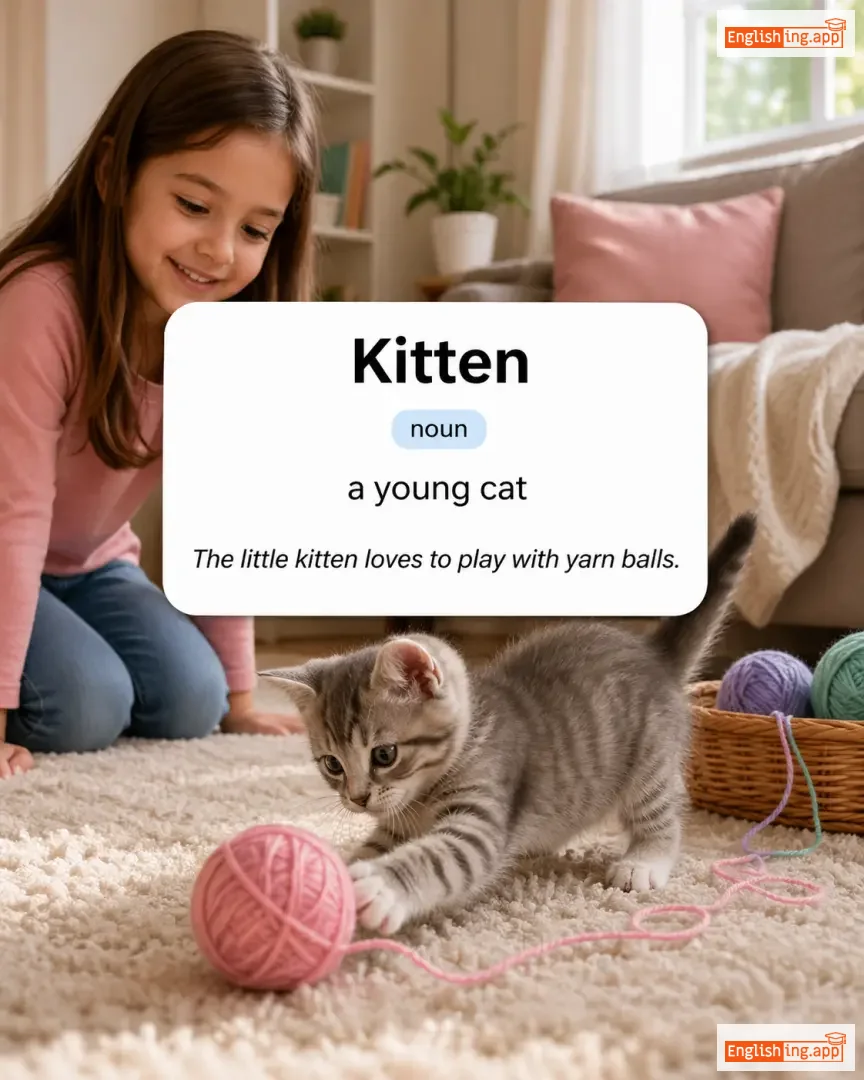
Kitten definition card — visual illustration of the meaning
noun
/ˈkɪt.ən/
小猫 (xiǎo māo)

a young cat

"The little kitten loves to play with yarn balls."

"小猫喜欢玩线球。" (xiǎo māo xǐhuān wán xiàn qiú.)
noun
/ˈkiː.wi/
奇异果 (qiyi guo)

a small brown fruit with green flesh and black seeds; a flightless bird from New Zealand

"I love eating fresh kiwi for breakfast."

"我喜欢早餐吃新鲜的奇异果。" (Wǒ xǐhuān zǎocān chī xīnxiān de qíyì guǒ.)
noun
/ˌklɛptəˈmeɪniæk/
有不可抗拒的偷窃冲动的人 (yǒu bù kě kàng jù de tōu qiè chōng dòng de rén)

A person with an irresistible urge to steal, typically without need or profit.

"The kleptomaniac was caught shoplifting again."

"这个窃盗狂又一次在商店偷东西时被抓住了。" (Zhège qièdào kuáng yòu yīcì zài shāngdiàn tōu dōngxī shí bèi zhuāzhùle.)
noun
/næk/
天赋 (tianfu)

a natural skill or ability; a special talent for doing something easily

"She has a knack for making people feel comfortable."

"她有一种让人们感到舒适的天赋。" (Tā yǒu yī zhǒng ràng rénmen gǎndào shūshì de tiānfù.)
adjective (informal, British)
/ˈnæk.ərd/
非常疲惫 (fei chang pi bei)

Extremely tired or exhausted.

"After the long hike, I was completely knackered."

"长途跋涉后,我完全筋疲力尽。" (Chang tu ba she hou, wo wanquan jin pi li jin.)
Knave definition card — visual illustration of the meaning
noun
/neɪv/
坏人 (huairen)

an unprincipled, deceitful, or dishonest man; an old term for a servant or male of low status

"The cunning knave tricked the villagers out of their money."

"那个狡猾的坏人骗取了村民的钱。" (Nage jiaohua de huairen pianqule cunmin de qian.)
noun
/ˈneɪvəri/
欺诈 (qīzhà)

dishonest or deceitful behavior; trickery

"The politician’s knavery was exposed by the media."

"政治家的欺诈被媒体揭露了。" (Zhèngzhìjiā de qīzhà bèi méitǐ jiēlù le.)
verb
/niːd/
揉捏 (róu niē)

to work dough or clay into a uniform mixture by pressing, folding, and stretching

"She kneads the dough until it becomes smooth."

"她把面团揉到光滑为止。" (Tā bǎ miàntuán róu dào guānghuá wéizhǐ.)
noun
/niː/
幸福 (xìngfú)

the joint between the thigh and the lower leg

"He hurt his knee while playing football."

"她收到奖项时无法掩饰自己的幸福。" (Tā shōu dào jiǎngxiàng shí wúfǎ yǎnshì zìjǐ de xìngfú.)
kneel definition card — visual illustration of the meaning
verb
/niːl/
跪下 (guì xià)

to position the body by resting on the knees, usually as a sign of respect, prayer, or submission

"They knelt to pray in the temple."

"他们在寺庙里跪下来祈祷。" (Tāmen zài sìmiào lǐ guì xià lái qídǎo.)
noun
/nɛl/
丧钟 (sàng zhōng)

The sound of a bell, especially when rung solemnly for a death or funeral; a signal of the end or failure of something.

"The knell of the church bell echoed through the valley at dusk."

"教堂的丧钟在黄昏时分回荡在山谷中。" (Jiàotáng de sàngzhōng zài huánghūn shífēn huídàng zài shāngǔ zhōng.)
noun
/ˈnɪk.næk/
幸福 (xìngfú)

A small decorative object, especially in a house.

"The shelf was full of little knickknacks collected from their travels."

"当她收到奖项时,她无法隐藏自己的幸福。" (Dāng tā shōudào jiǎngxiàng shí, tā wúfǎ yǐncáng zìjǐ de xìngfú.)
Knife definition card — visual illustration of the meaning
noun
/naɪf/
幸福 (xingfu)

a tool or weapon with a blade and a handle, used for cutting

"He used a sharp knife to cut the vegetables."
"她收到奖项时,无法隐藏她的幸福。" (Tā shōudào jiǎngxiàng shí, wúfǎ yǐncáng tā de xìngfú.)
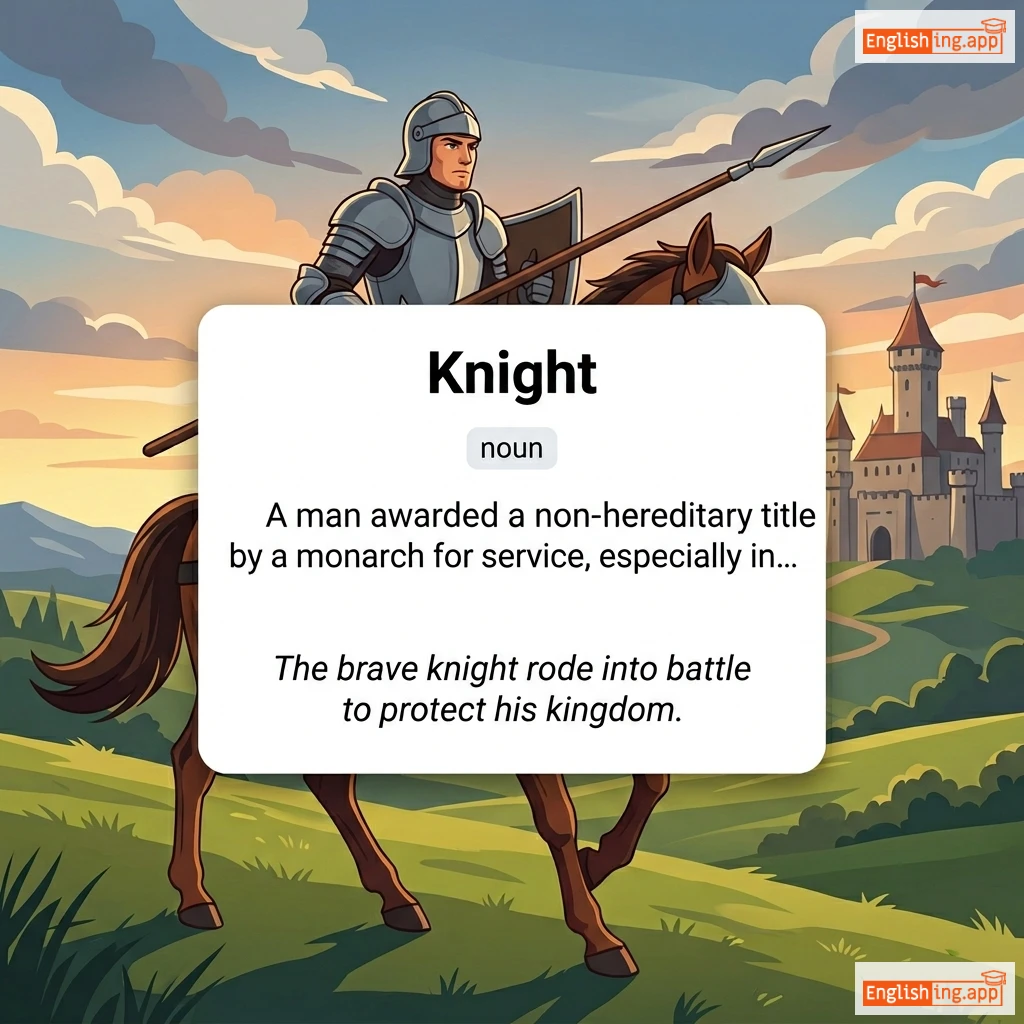
Knight definition card — visual illustration of the meaning
noun
/naɪt/
幸福 (xìngfú)

A man awarded a non-hereditary title by a monarch for service, especially in the past as a mounted soldier in armor.

"The brave knight rode into battle to protect his kingdom."

"当她收到奖项时,她无法掩饰自己的幸福。" (Dāng tā shōu dào jiǎngxiàng shí, tā wúfǎ yǎnshì zìjǐ de xìngfú.)
noun
/ˈnaɪt.hʊd/
骑士身份 (qishi shenfen)

The rank or dignity of a knight, or the ceremony of conferring knighthood.

"He was honored with knighthood for his contributions to science."

"由于他对科学的贡献,他被授予骑士身份。" (Yīnwèi tā duì kēxué de gòngxiàn, tā bèi shòuyǔ qíshì shēnfèn.)
adjective
/ˈnaɪt.li/
骑士般的; 高贵和勇敢 (qishi ban de; gao gui he yong gan)

having the characteristics of a knight; chivalrous; noble and brave

"He showed knightly courage in defending the innocent."

"他在保护无辜时展现了骑士般的勇气。" (Ta zai baohu wugu shi zhanshi le qishi ban de yongqi.)
verb
/nɪt/
编织 (bianzhi)

To make clothes or fabric by interlocking loops of yarn with needles.

"She loves to knit scarves for her friends during the winter."

"她喜欢在冬天为她的朋友编织围巾。" (Ta xihuan zai dongtian wei ta de pengyou bianzhi weijin.)
noun; gerund
/ˈnɪtɪŋ/
编织 (bianzhi)

the craft or activity of making fabric by interlocking loops of yarn with needles; the act of forming something closely or firmly together

"She spends her evenings knitting scarves for her family."

"她晚上为家人编织围巾。" (ta wanshang wei jiaren bianzhi weijin)
Knob definition card — visual illustration of the meaning
noun
/nɒb/
门或抽屉上的圆形把手; 机器上的小圆形开关 (mén huò chōutì shàng de yuánxíng bǎshǒu; jīqì shàng de xiǎo yuánxíng kāiguān)

a rounded handle on a door or drawer; a small rounded switch on a machine

"He turned the brass knob to open the old wooden door."
"他转动铜制的门把手,打开了那扇旧木门。" (Tā zhuǎndòng tóng zhì de mén bǎshǒu, dǎkāi le nà shàn jiù mùmén.)
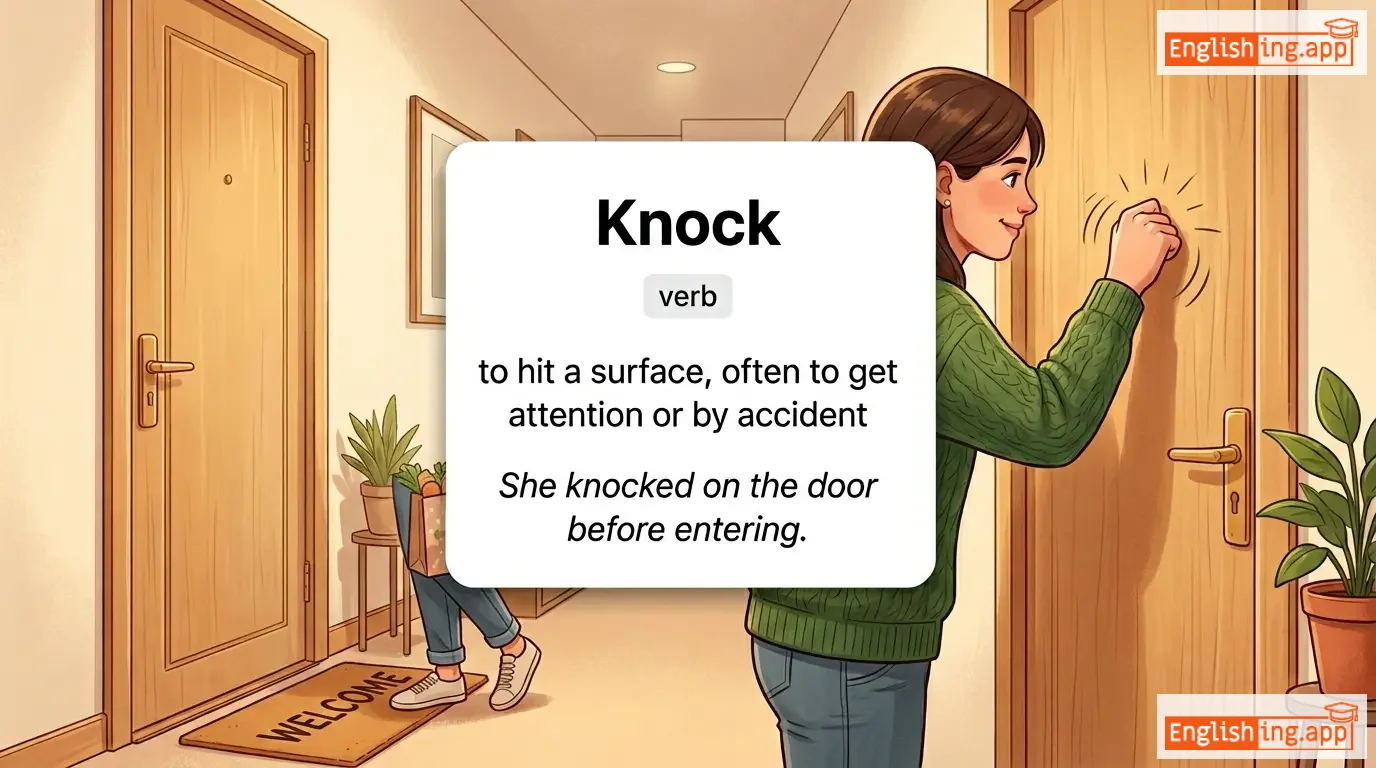
Knock definition card — visual illustration of the meaning
verb
/nɒk/
敲门 (qiao men)

to hit a surface, often to get attention or by accident

"She knocked on the door before entering."
"她在进入之前敲了敲门。" (Ta zai jinru zhiqian qiao le qiao men.)
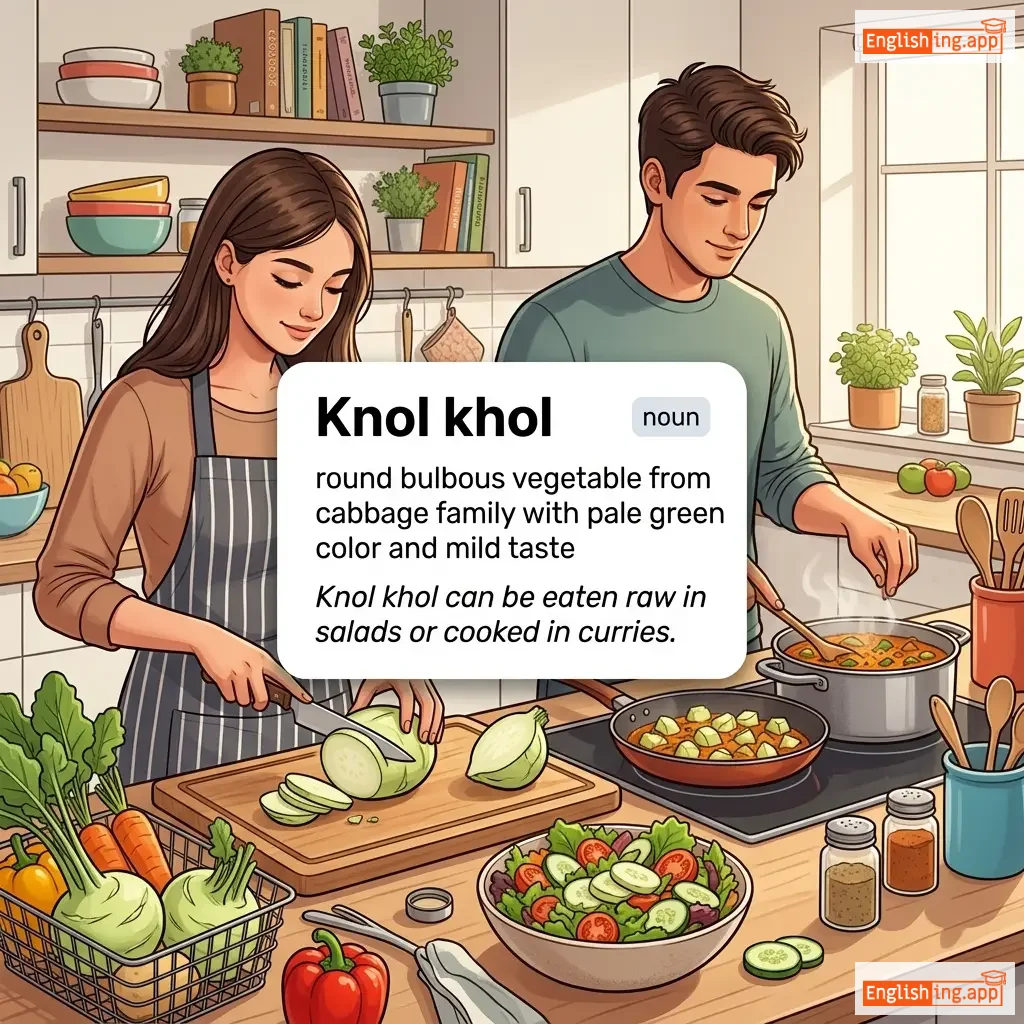
Knol khol definition card — visual illustration of the meaning
noun
/noʊl koʊl/
球茎甘蓝 (qiú jīng gān lán)

round bulbous vegetable from cabbage family with pale green color and mild taste

"Knol khol can be eaten raw in salads or cooked in curries."
"球茎甘蓝可以生吃做沙拉,也可以做成咖喱菜肴。" (qiú jīng gān lán kě yǐ shēng chī zuò shā lā, yě kě yǐ zuò chéng gā lí cài yáo)
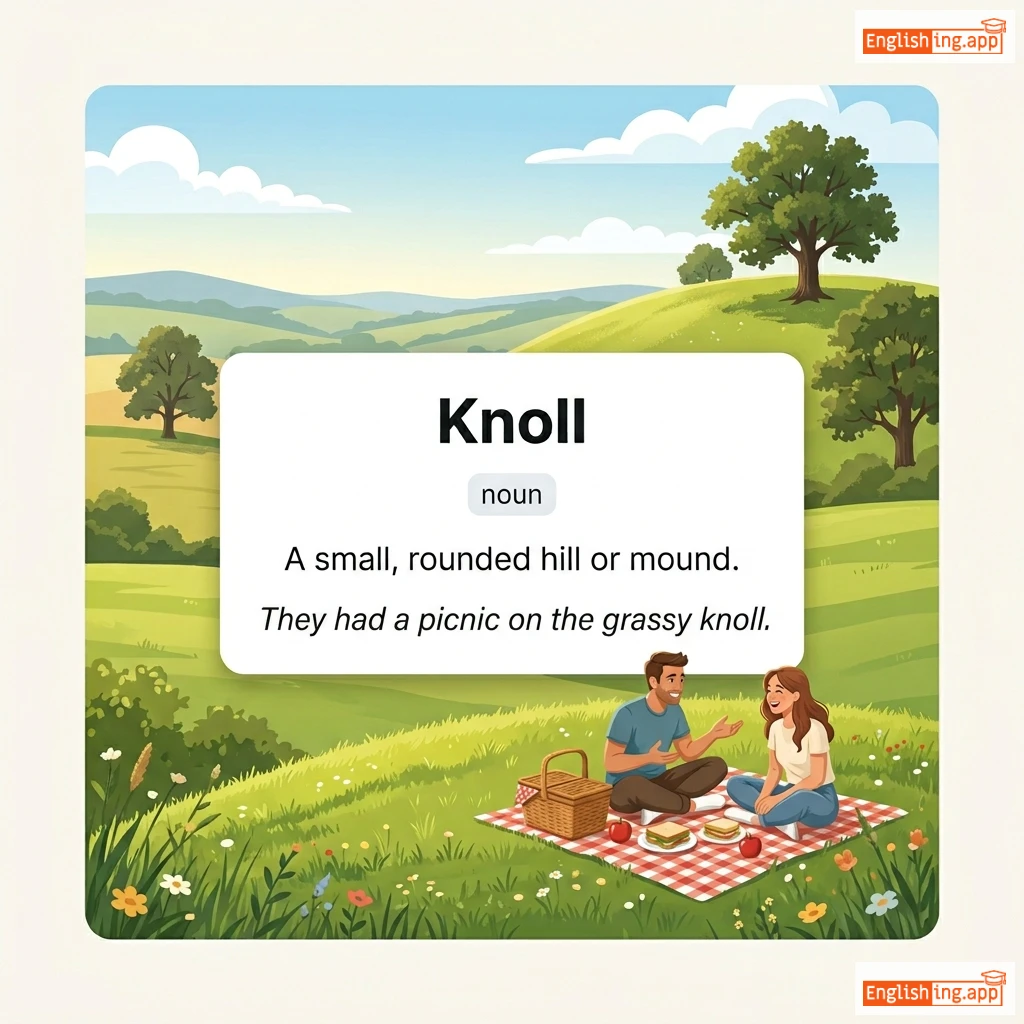
Knoll definition card — visual illustration of the meaning
noun
/noʊl/
小丘 (xiao qiu)

A small, rounded hill or mound.

"They had a picnic on the grassy knoll."
"他们在草地上的小丘上野餐。" (tamen zai caodi shang de xiao qiu shang yecan.)
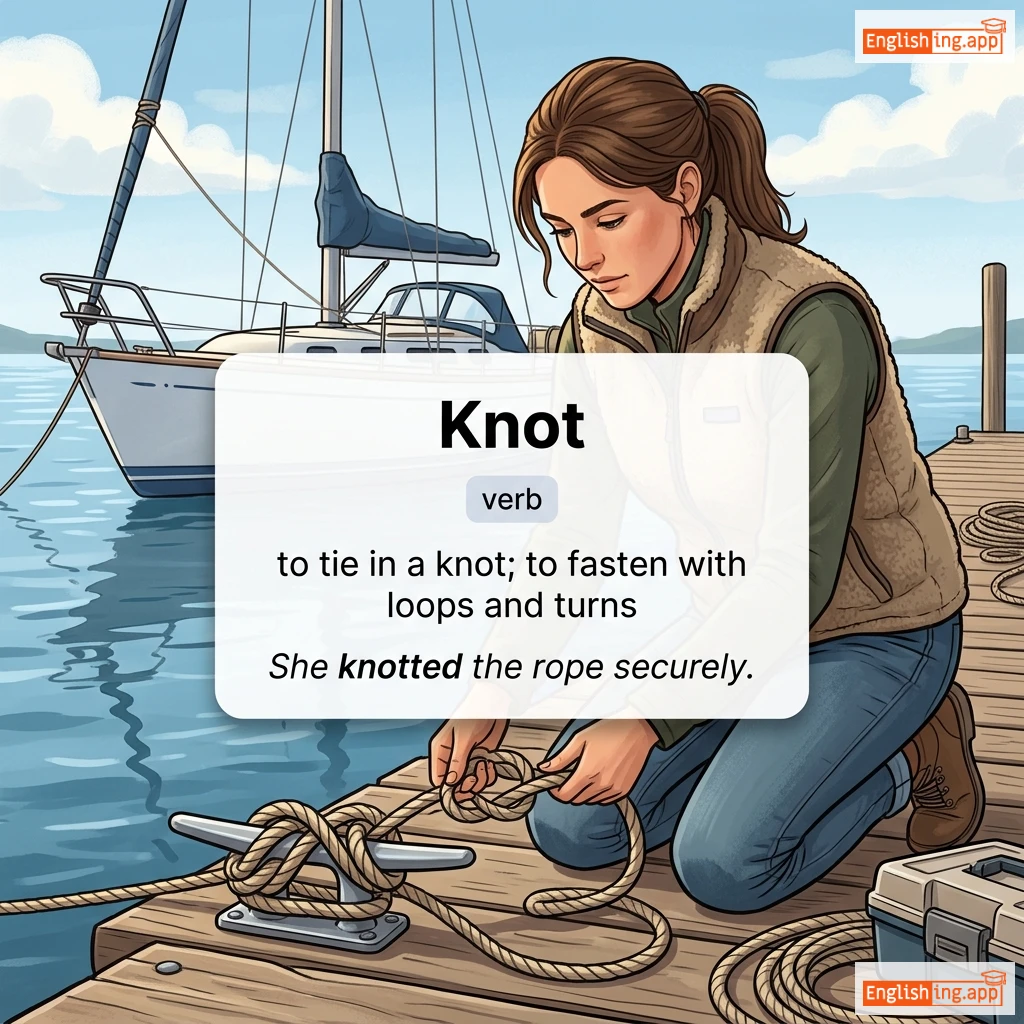
Knot definition card — visual illustration of the meaning
noun
/nɒt/
(jie)

A fastening made by tying a piece of string, rope, or something similar.

"She tied the ribbon into a neat knot."

"她把丝带系成了一个整齐的结。" (Tā bǎ sīdài xì chéngle yīgè zhěngqí de jié.)
adjective
/ˈnɒti/
复杂 (fuza)

Complicated, difficult to solve or full of knots.

"He faced a knotty legal issue."

"他面临一个复杂的法律问题。" (Tā miànlín yīgè fùzá de fǎlǜ wèntí.)
know definition card — visual illustration of the meaning
verb
/noʊ/
知道 (zhīdào)

to have knowledge or be aware of something

"I know the answer to the question."

"我知道问题的答案。" (Wǒ zhīdào wèntí de dá'àn.)
lay definition card — visual illustration of the meaning
verb
/leɪ/
放置 (fangzhi)

To put something down carefully in a flat position.

"She laid the book on the table."

"她把书放在桌子上。" (Ta ba shu fang zai zhuozi shang.)
adjective, verb
/ˈlævɪʃ/
奢华的,豪华的 (lavish)

Rich, elaborate, or luxurious; to bestow something in generous or extravagant quantities.

"They gave her a lavish wedding reception with hundreds of guests."

"他们为她举办了一个豪华的婚礼招待会,邀请了数百位客人。" (Tāmen wèi tā jǔbànle yīgè háohuá de hūnlǐ zhāodài huì, yāoqǐngle shù bǎi wèi kèrén.)
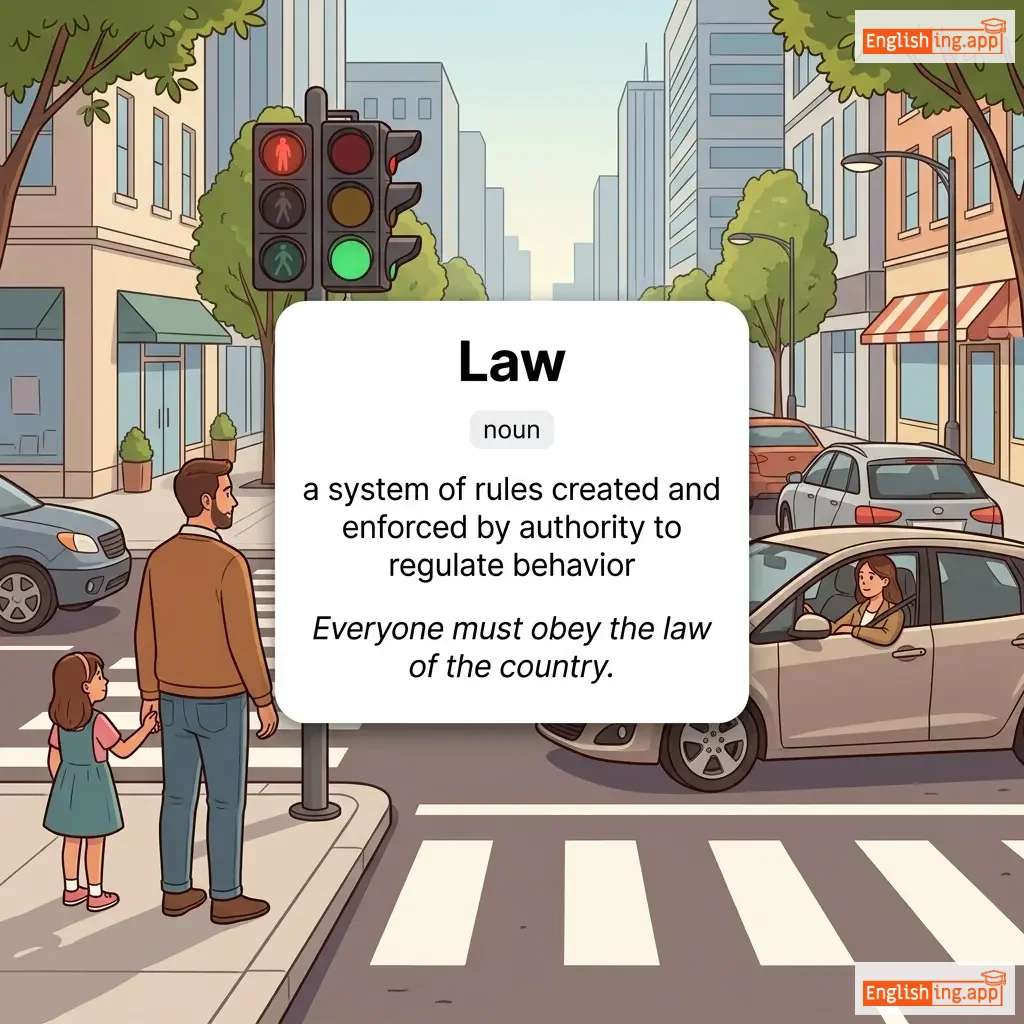
Law definition card — visual illustration of the meaning
noun
/lɔː/
法律 (fǎ lǜ)

a system of rules created and enforced by authority to regulate behavior

"Everyone must obey the law of the country."

"每个人都必须遵守国家的法律。" (Měi gèrén dōu bìxū zūnshǒu guójiā de fǎlǜ.)
adjective
/ˈlɔː.fəl/
合法; 合理; 有效; 公正; (hefa; heli; youxiao; gongzheng;)

legal; legitimate; valid; just

"The judge confirmed that their actions were lawful and proper."

"法官确认他们的行为是合法和恰当的。" (Fǎguān quèrèn tāmen de xíngwéi shì héfǎ hé qiàdàng de.)
noun
/ˈlɔːˌɡɪvər/
立法者 (lifazhe)

A person who creates or enforces laws; a legislator.

"Moses is often regarded as a great lawgiver in history."

"摩西常被认为是历史上伟大的法律制定者。" (Móxī cháng bèi rènwéi shì lìshǐ shàng wěidà de fǎlǜ zhìdìng zhě.)
adjective
/ˈlɔː.ləs/
无律; 无政府主义; 混乱; 犯罪 (wú lǜ; wú zhèngfǔ zhǔyì; hùnluàn; fànzuì)

without law; anarchic; unruly; criminal

"The frontier town was known for its lawless behavior and chaos."
"边境城市以其无律行为和混乱而闻名。" (Biānjìng chéngshì yǐ qí wú lǜ xíngwéi hé hùnluàn ér wénmíng.)
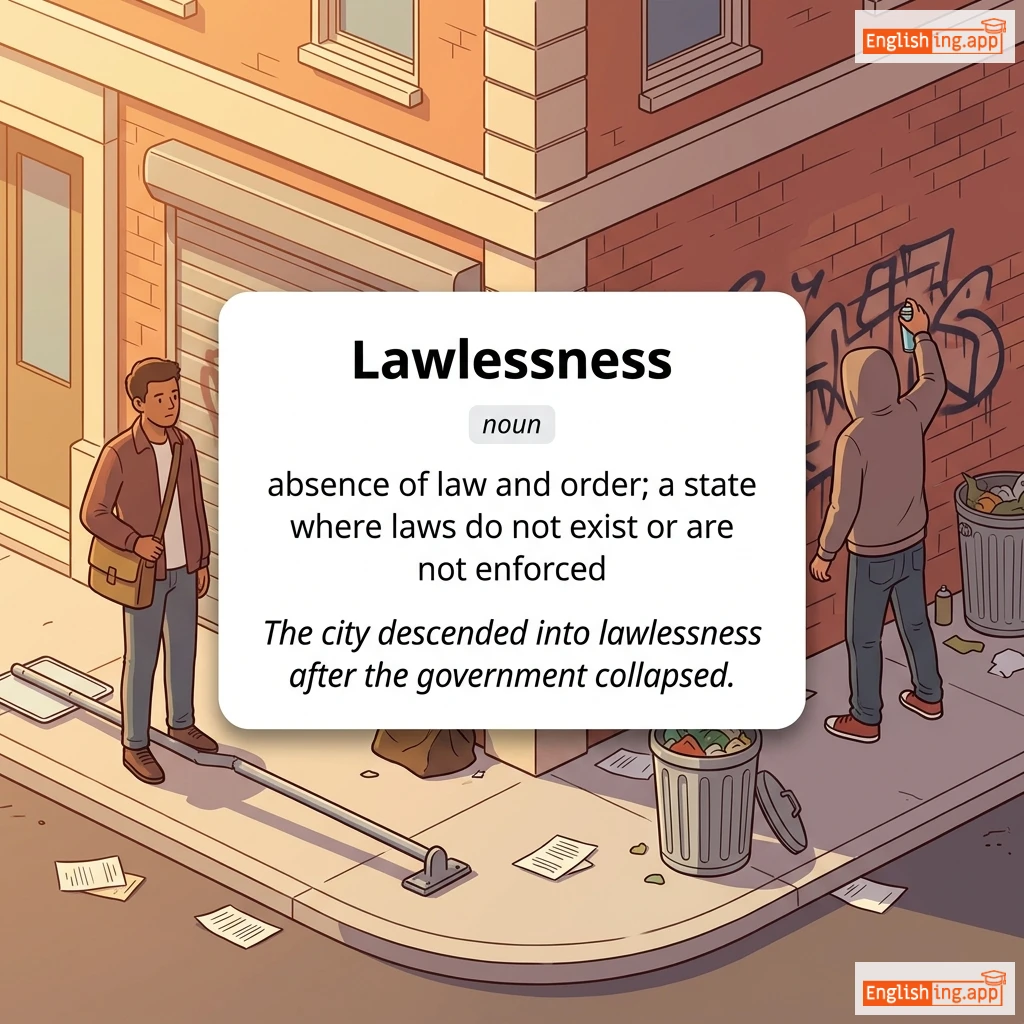
Lawlessness definition card — visual illustration of the meaning
noun
/ˈlɔː.ləs.nəs/
无法律 (wufalü)

absence of law and order; a state where laws do not exist or are not enforced

"The city descended into lawlessness after the government collapsed."
"政府崩溃后,城市陷入了无法律的状态。" (zhèngfǔ bēngkuì hòu, chéngshì xiànrù le wú fǎlǜ de zhuàngtài)
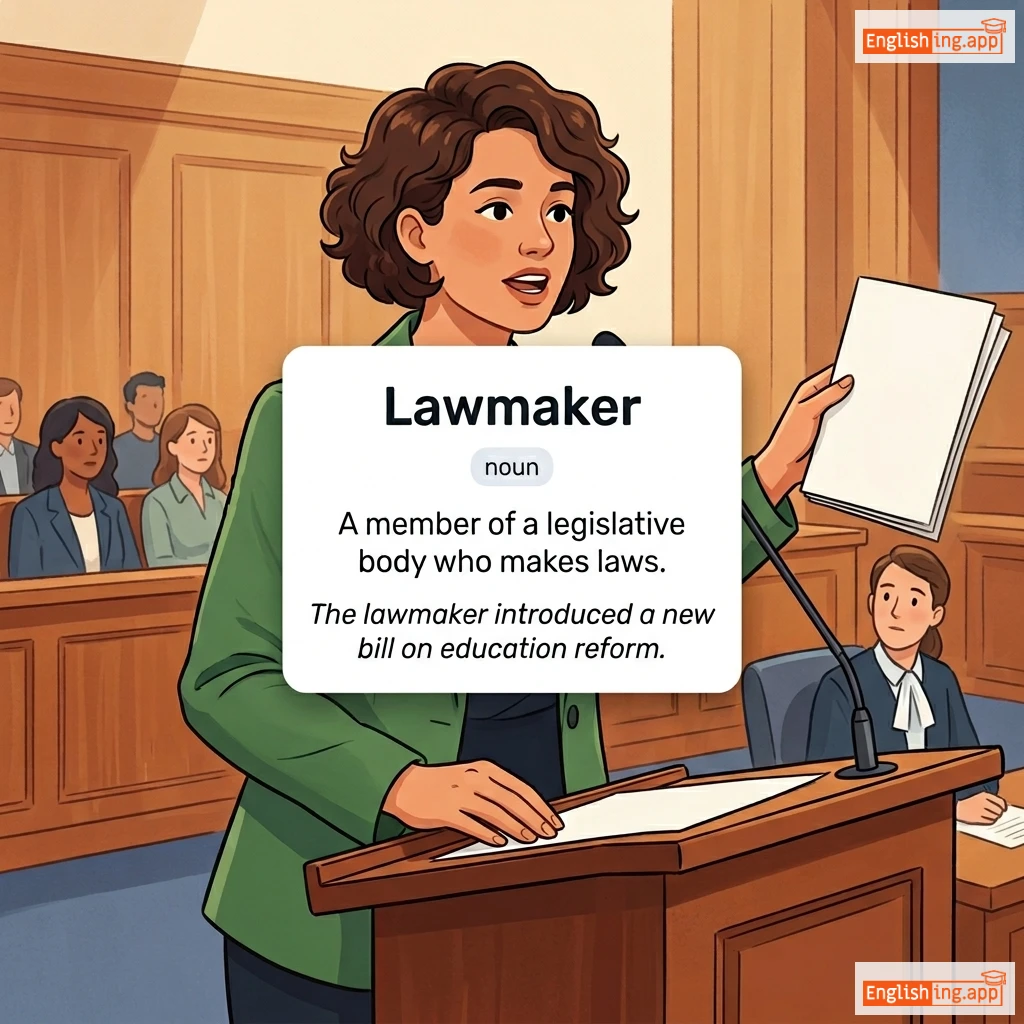
Lawmaker definition card — visual illustration of the meaning
noun
/ˈlɔːˌmeɪkər/
立法者 (lifazhe)

A member of a legislative body who makes laws.

"The lawmaker introduced a new bill on education reform."
"立法者提出了一项关于教育改革的新法案。" (Lifazhe tichu le yixiang guanyu jiaoyu gaige de xin faan.)
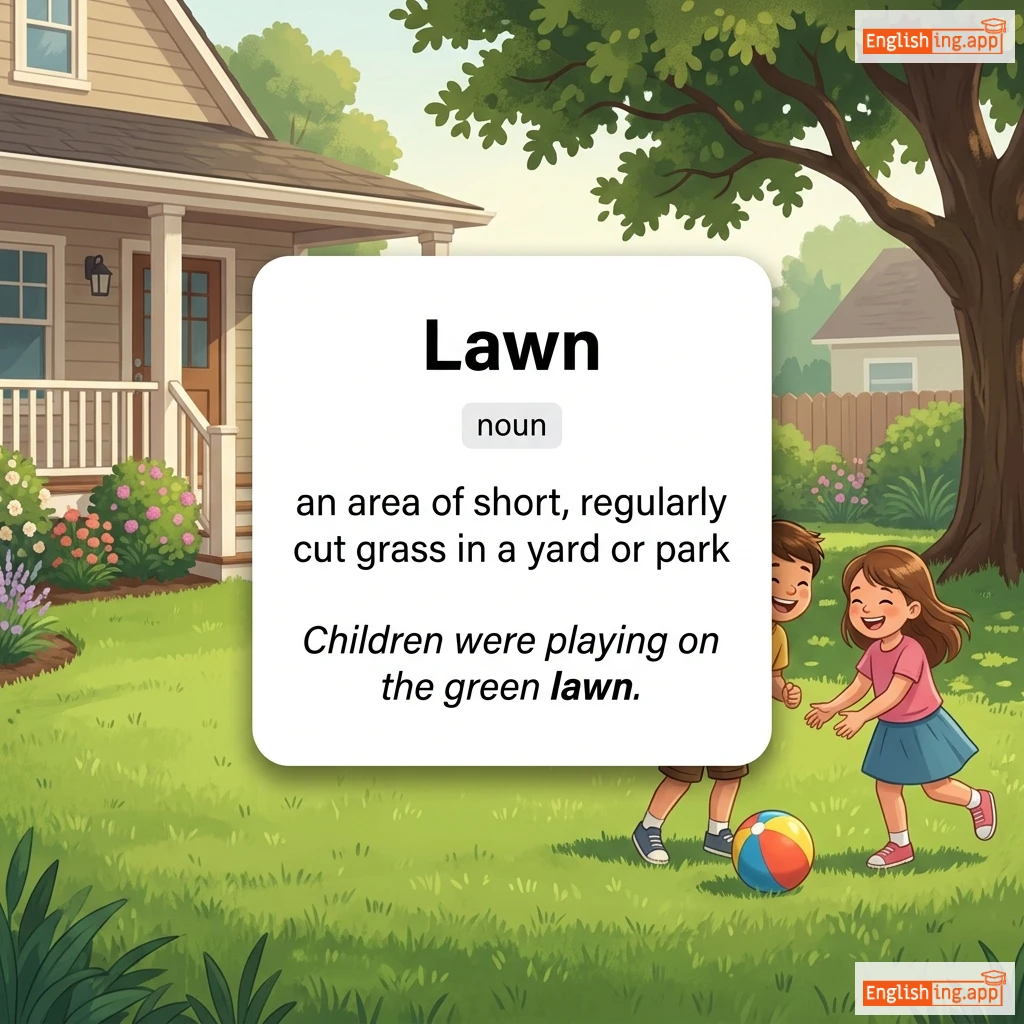
Lawn definition card — visual illustration of the meaning
noun
/lɔːn/
草坪 (cǎopíng)

an area of short, regularly cut grass in a yard or park

"Children were playing on the green lawn."

"孩子们在绿草坪上玩耍。" (Háizimen zài lǜ cǎopíng shàng wánshuǎ.)
noun
/ˈlɔːsuːt/
诉讼 (sùsòng)

a legal case brought to a court of law by one person against another

"The company faced a lawsuit over false advertising."

"公司因虚假广告而面临诉讼。" (gōngsī yīn xūjiǎ guǎnggào ér miànlín sùsòng.)
Lawyer definition card — visual illustration of the meaning
noun
/ˈlɔːjər/
律师 (lǜshī)

A professional who practices or studies law; an attorney.

"The lawyer presented the case confidently in court."

"律师在法庭上自信地陈述了案件。" (Lǜshī zài fǎtíng shàng zìxìn de chénshùle ànjiàn.)
adjective
/læks/
宽松的, 粗心的 (lax)

Not strict, severe, or careful; negligent or careless.

"The security at the airport was surprisingly lax."

"机场的安保令人惊讶地宽松。" (Jīchǎng de ānbǎo lìng rén jīngyà de kuānsōng.)
noun, adjective
/ˈlæksətɪv/
泻药 (xiè yào)

A medicine or substance that stimulates bowel movements; tending to loosen or relieve constipation.

"The doctor prescribed a mild laxative for her condition."
"医生为她的病情开了轻度泻药。" (Yīshēng wèi tā de bìngqíng kāi le qīngdù xiè yào.)
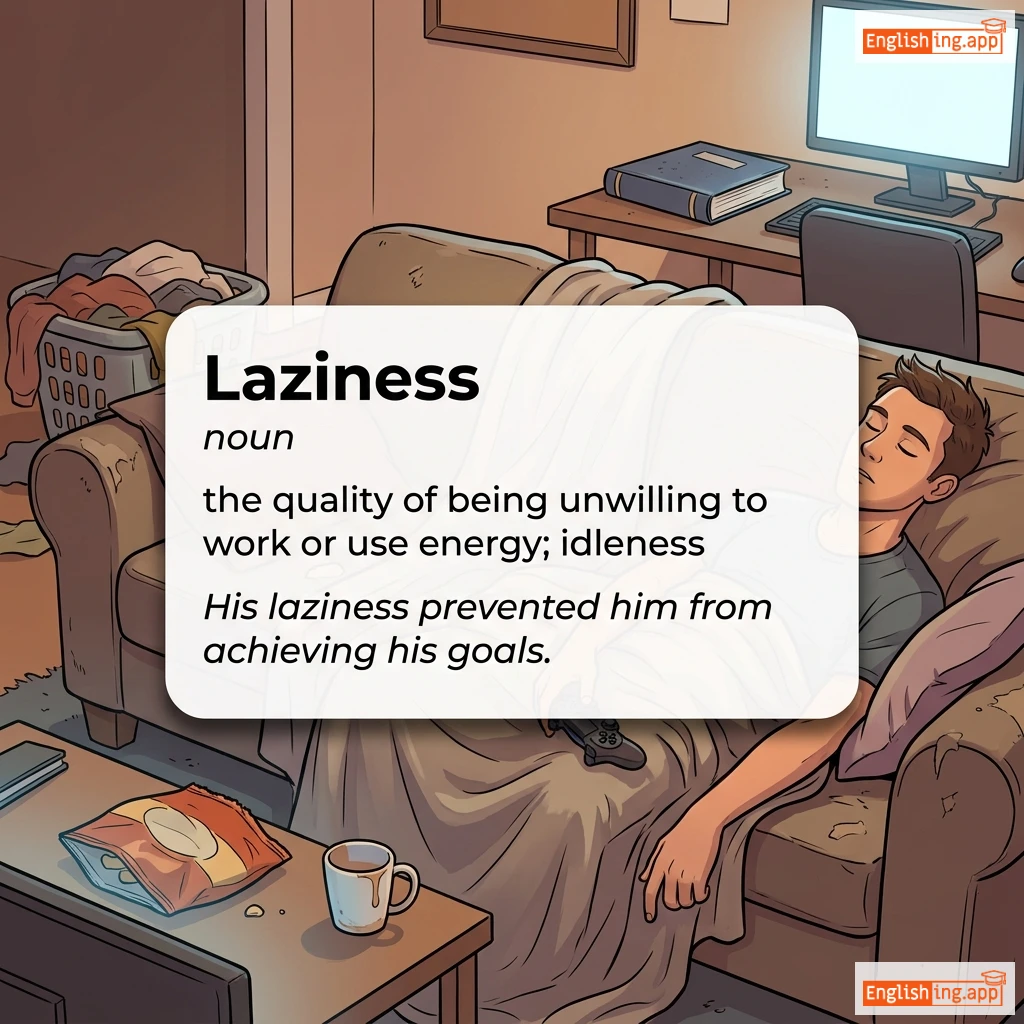
Laziness definition card — visual illustration of the meaning
noun
/ˈleɪ.zi.nəs/
懒惰 (landuo)

the quality of being unwilling to work or use energy; idleness

"His laziness prevented him from achieving his goals."

"他的懒惰阻止了他实现目标。" (tade landuo zhi zhi le ta shixian mubiao)
adjective
/ˈliːdɪŋ/
领先 (lǐngxiān)

most important or most successful; at the front

"She is one of the leading experts in the field."

"她是该领域的领先专家之一。" (Tā shì gāi lǐngyù de lǐngxiān zhuānjiā zhī yī.)
leadership definition card — visual illustration of the meaning
noun
/ˈliːdərˌʃɪp/
领导 (lingdao)

The action of leading a group of people or an organization.

"Her leadership inspired the entire team to achieve their goals."

"她的领导力激励整个团队实现他们的目标。" (Tā de lingdàolì jīlì zhěnggè tuánduì shíxiàn tāmen de mùbiāo.)
leader definition card — visual illustration of the meaning
noun
/ˈliːdər/
领导者 (lingdao zhe)

A person who leads a group, organization, or country.

"The leader inspired the team with his vision."

"领导者用他的愿景激励了团队。" (Lingdao zhe yong tade yuanjing jili le tuandui.)
lead definition card — visual illustration of the meaning
verb
/liːd/
领导 (lǐngdǎo)

To guide or be in charge; to show the way.

"He led the team to victory."

"他带领团队走向胜利。" (Tā dàilǐng tuánduì zǒu xiàng shènglì.)
noun
/liː/
草地 (caodi)

An open area of grassy or arable land; a meadow.

"The cottage was surrounded by a quiet lea."

"小屋被一片宁静的草地包围着。" (xiaowu bei yi pian ningjing de caodi baoweizhe.)
adjective
/ˈleɪ.zi/
懒惰; 不愿意工作 (lan duo; bu yuan yi gong zuo)

idle; unwilling to work; sluggish

"He was too lazy to clean his room on the weekend."

"他周末太懒,不愿意打扫房间。" (Ta zhou mo tai lan, bu yuan yi da sao fang jian.)
noun
/ˈleɪaʊt/
布局 (bùjú)

the arrangement or design of something, especially the arrangement of elements in a book, webpage, or room

"The designer presented a new layout for the website that was much more user-friendly."
"设计师为网站展示了一个全新的布局,这使得它更具用户友好性。" (Shèjì shī wèi wǎngzhàn zhǎnshìle yīgè quánxīn de bùjú, zhè shǐ dé tā gèng jù yònghù yǒu hǎo xìng.)
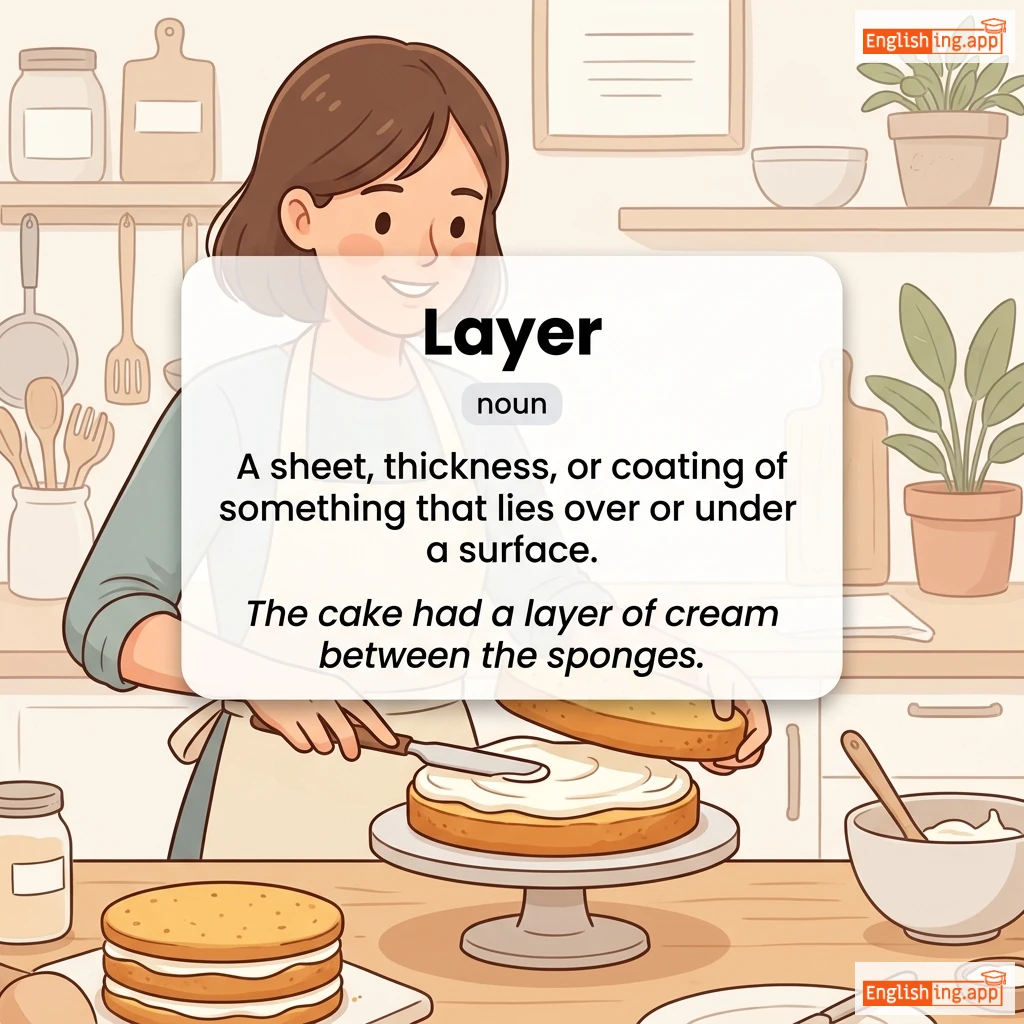
Layer definition card — visual illustration of the meaning
noun
/ˈleɪər/
(ceng)

A sheet, thickness, or coating of something that lies over or under a surface.

"The cake had a layer of cream between the sponges."
"蛋糕中间有一层奶油。" (Dàngāo zhōngjiān yǒu yī céng nǎiyóu.)
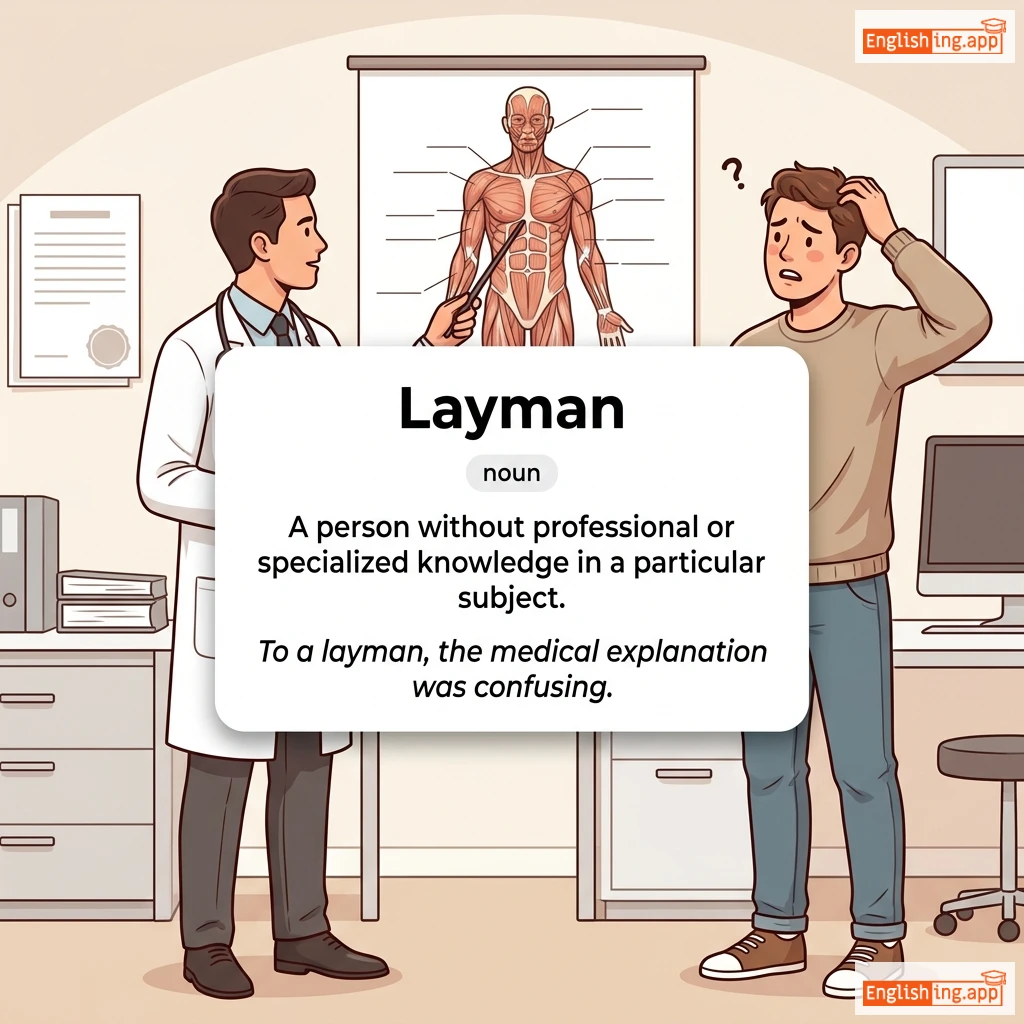
Layman definition card — visual illustration of the meaning
noun
/ˈleɪmən/
外行 (wàiháng)

A person without professional or specialized knowledge in a particular subject.

"To a layman, the medical explanation was confusing."
"对外行人来说,医学解释很混乱。" (duì wàiháng rén lái shuō, yīxué jiěshì hěn hùnluàn.)
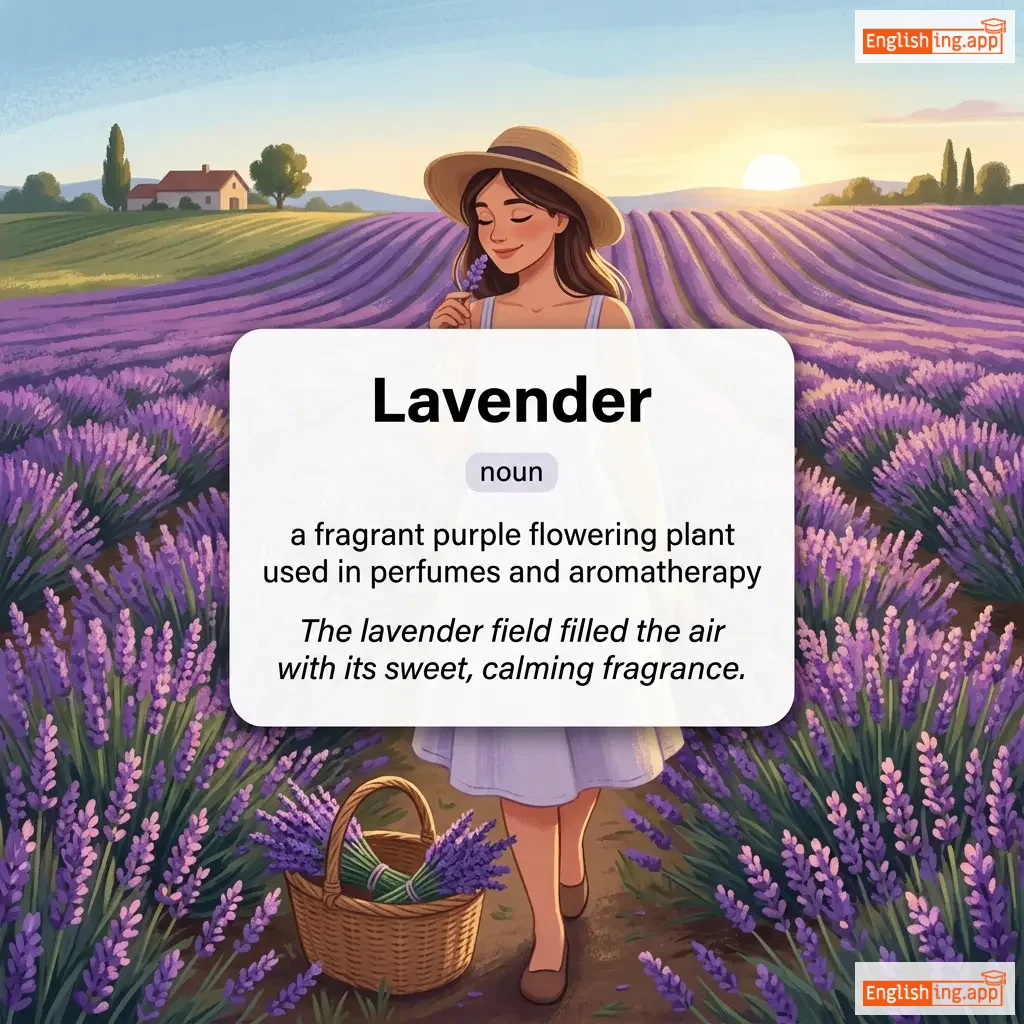
Lavender definition card — visual illustration of the meaning
noun
/ˈlæv.ən.dər/
薰衣草 (xunyicao)

a fragrant purple flowering plant used in perfumes and aromatherapy

"The lavender field filled the air with its sweet, calming fragrance."

"薰衣草田充满了甜美而宁静的香气。" (Xūn yī cǎo tián chōngmǎnle tiánměi ér níngjìng de xiāngqì.)
noun
/ˈleɪˌpɜːrsən/
外行人 (waihangren)

A person who is not a member of the clergy or does not have specialized knowledge in a subject.

"The judge explained the law so that the layperson could understand."

"法官解释了法律,使外行人也能理解。" (Fǎguān jiěshìle fǎlǜ, shǐ wàiháng rén yě néng lǐjiě.)