वोकैबुलरीज

इंग्लिश वोकैबुलरी डिस्कवर, लर्न और मास्टर करें

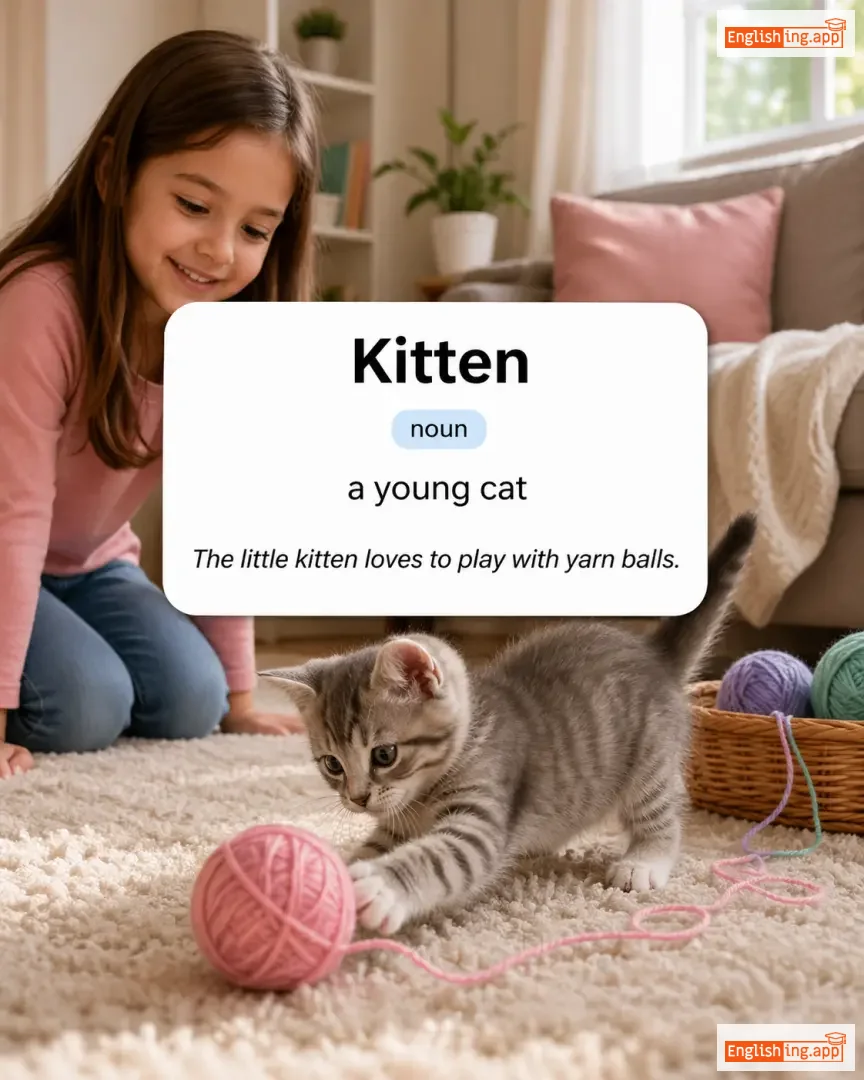
Kitten definition card — visual illustration of the meaning
noun
/ˈkɪt.ən/
बिल्ली का बच्चा (billi ka bachcha)

a young cat

"The little kitten loves to play with yarn balls."

"नन्हा बिल्ली का बच्चा ऊन की गेंद से खेलना पसंद करता है।" (nanha billi ka bachcha un ki gend se khelna pasand karta hai.)
noun
/ˈkiː.wi/
कीवी (kiwi)

a small brown fruit with green flesh and black seeds; a flightless bird from New Zealand

"I love eating fresh kiwi for breakfast."

"मैं नाश्ते में ताजे कीवी खाना पसंद करता हूँ।" (main nashtay mein tazay kiwi khana pasand karta hoon.)
noun
/ˌklɛptəˈmeɪniæk/
चोरी करने की लत वाला व्यक्ति (chori karne ki lat wala vyakti)

A person with an irresistible urge to steal, typically without need or profit.

"The kleptomaniac was caught shoplifting again."

"क्लेप्टोमेनियाक को फिर से दुकान से चोरी करते हुए पकड़ा गया।" (Kleptomaniac ko phir se dukaan se chori karte hue pakda gaya.)
noun
/næk/
कला (kala)

a natural skill or ability; a special talent for doing something easily

"She has a knack for making people feel comfortable."

"उसके पास लोगों को आरामदायक महसूस कराने की कला है।" (Uske paas logon ko aaramdayak mahsus karane ki kala hai.)
adjective (informal, British)
/ˈnæk.ərd/
बहुत थका हुआ (bahut thaka hua)

Extremely tired or exhausted.

"After the long hike, I was completely knackered."

"लंबी सैर के बाद, मैं पूरी तरह से थका हुआ था।" (Lambi sair ke baad, main poori tarah se thaka hua tha.)
noun
/neɪv/
दुष्ट व्यक्ति (dusht vyakti)

an unprincipled, deceitful, or dishonest man; an old term for a servant or male of low status

"The cunning knave tricked the villagers out of their money."

"चालाक दुष्ट व्यक्ति ने गांववालों से उनका पैसा छीन लिया।" (Chalak dusht vyakti ne gaonwalon se unka paisa chheen liya.)
noun
/ˈneɪvəri/
धोखाधड़ी (dhokhadri)

dishonest or deceitful behavior; trickery

"The politician’s knavery was exposed by the media."

"राजनेता की धोखाधड़ी को मीडिया ने उजागर किया।" (Raajneeta ki dhokhadri ko media ne ujagar kiya.)
verb
/niːd/
गूथना (goothna)

to work dough or clay into a uniform mixture by pressing, folding, and stretching

"She kneads the dough until it becomes smooth."

"वह आटे को तब तक गूंथती है जब तक वह चिकना नहीं हो जाता।" (Woh aate ko tab tak goonthti hai jab tak woh chikna nahi ho jata.)
noun
/niː/
सुख (sukh)

the joint between the thigh and the lower leg

"He hurt his knee while playing football."

"उन्हें पुरस्कार मिलने पर अपनी खुशी छिपाना मुश्किल था।" (Unhein puraskar milne par apni khushi chhupana mushkil tha.)
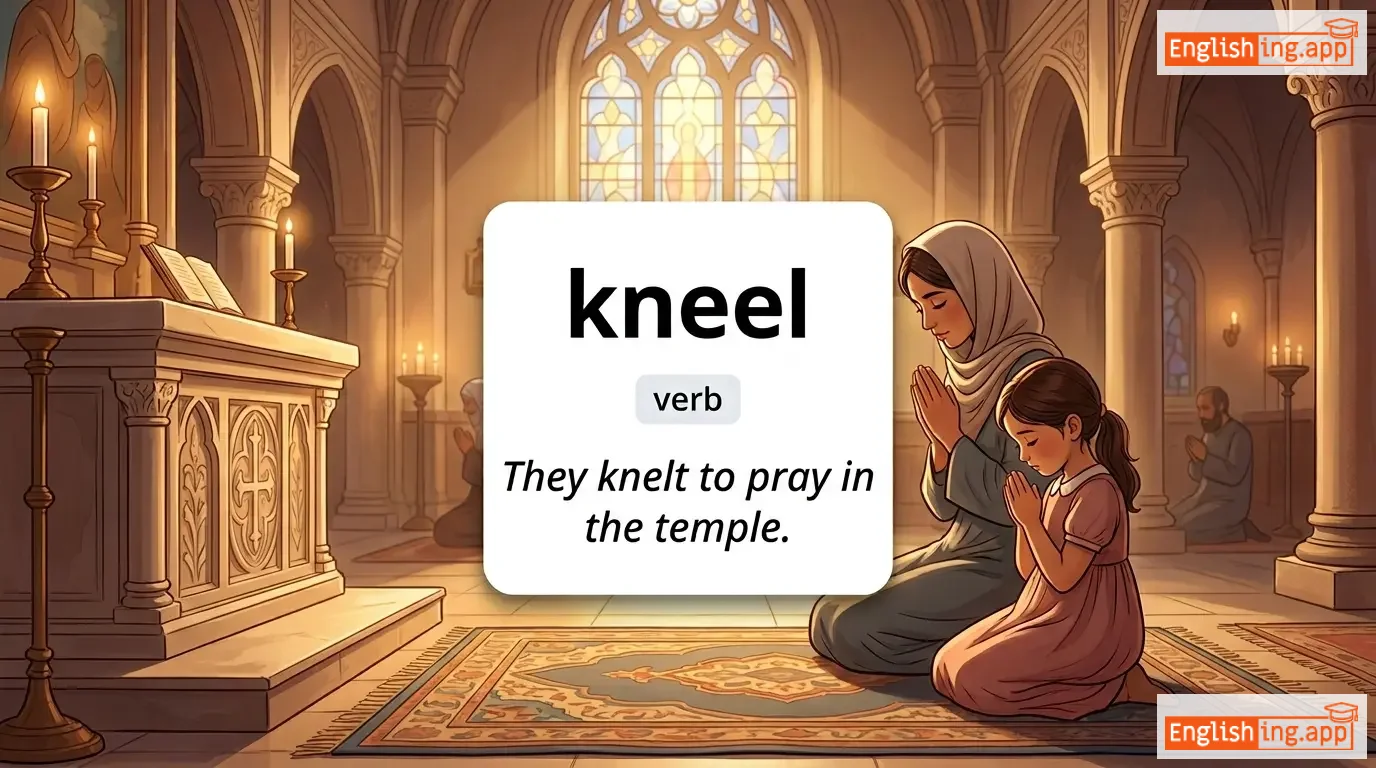
kneel definition card — visual illustration of the meaning
verb
/niːl/
घुटने टेकना (ghutne tekna)

to position the body by resting on the knees, usually as a sign of respect, prayer, or submission

"They knelt to pray in the temple."

"वे मंदिर में प्रार्थना करने के लिए घुटनों के बल झुके।" (Ve mandir mein prarthna karne ke liye ghutno ke bal jhuke.)
noun
/nɛl/
घंटा (ghanta)

The sound of a bell, especially when rung solemnly for a death or funeral; a signal of the end or failure of something.

"The knell of the church bell echoed through the valley at dusk."

"चर्च की घंटी का नेल शाम को घाटी में गूंज उठा।" (Church ki ghanti ka nel shaam ko ghaati mein goonj utha.)
noun
/ˈnɪk.næk/
सुख (sukh)

A small decorative object, especially in a house.

"The shelf was full of little knickknacks collected from their travels."

"जब उसे पुरस्कार मिला तो वह अपनी खुशी छुपा नहीं सकी।" (Jab use puraskar mila to vah apni khushi chhupa nahin sakee.)
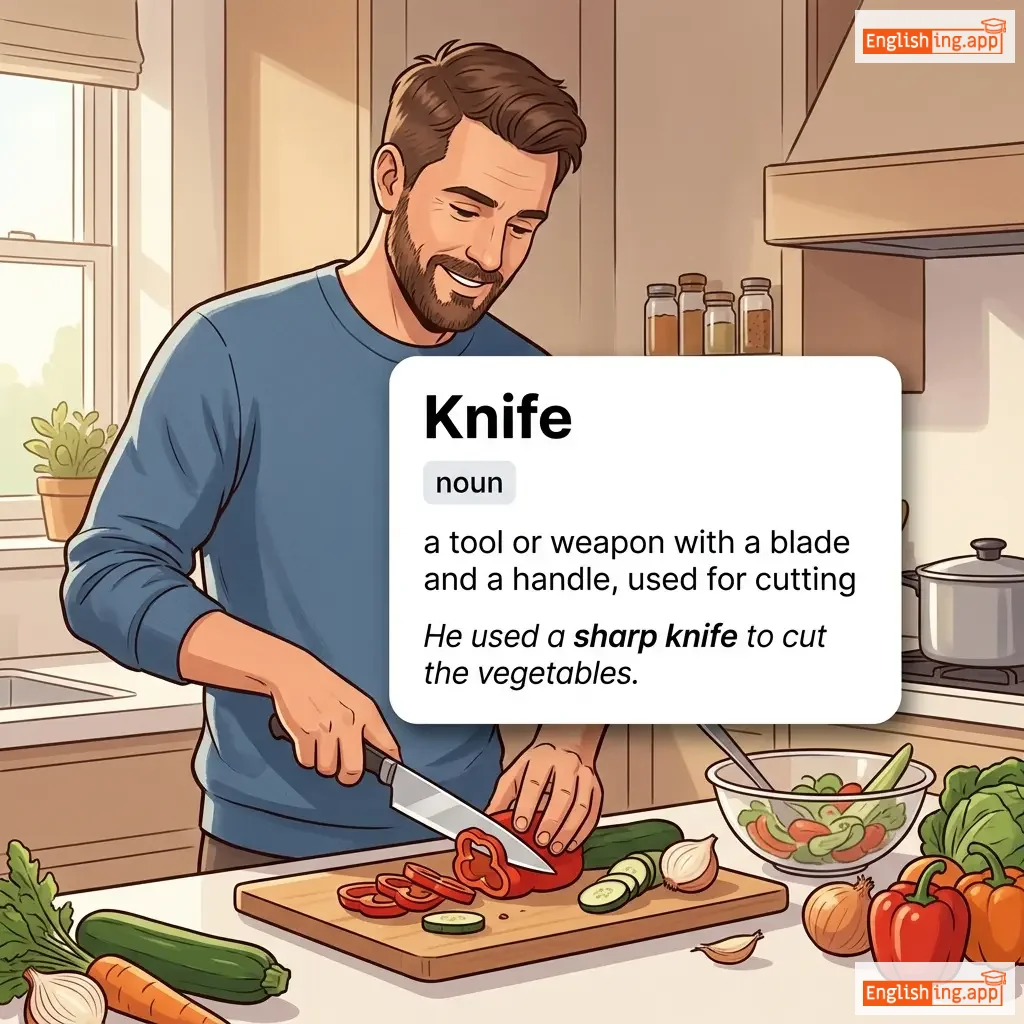
Knife definition card — visual illustration of the meaning
noun
/naɪf/
सुख (sukh)

a tool or weapon with a blade and a handle, used for cutting

"He used a sharp knife to cut the vegetables."

"जब उसे पुरस्कार मिला, तो वह अपनी खुशी को छिपा नहीं सकी।" (Jab use puraskar mila, to wah apni khushi ko chhupa nahi sakee.)
noun
/naɪt/
खुशी (khushi)

A man awarded a non-hereditary title by a monarch for service, especially in the past as a mounted soldier in armor.

"The brave knight rode into battle to protect his kingdom."

"जब उसे पुरस्कार मिला, तो वह अपनी खुशी छुपा नहीं सकी।" (Jab use puraskar mila, to vah apni khushi chhupa nahi saki.)
noun
/ˈnaɪt.hʊd/
नाइटहुड (knighthood)

The rank or dignity of a knight, or the ceremony of conferring knighthood.

"He was honored with knighthood for his contributions to science."

"उन्हें विज्ञान में योगदान के लिए नाइटहुड से सम्मानित किया गया।" (Unhein vigyan mein yogdan ke liye knighthood se sammanit kiya gaya.)
adjective
/ˈnaɪt.li/
नाइट जैसा; शूरवीर; अभिजात और साहसी (nait li jaisa; shurveer; abhijat aur sahasi)

having the characteristics of a knight; chivalrous; noble and brave

"He showed knightly courage in defending the innocent."

"उसने निर्दोष का बचाव करते हुए नाइटली साहस दिखाया।" (Usne nirdosh ka bachav karte hue naitli sahas dikhaya.)
verb
/nɪt/
बुनाई (bunaai)

To make clothes or fabric by interlocking loops of yarn with needles.

"She loves to knit scarves for her friends during the winter."

"वह सर्दी में अपने दोस्तों के लिए स्कार्फ बुनना पसंद करती है।" (vah sardi mein apne doston ke liye scarf bunna pasand karti hai.)
noun; gerund
/ˈnɪtɪŋ/
बुनाई (bunai)

the craft or activity of making fabric by interlocking loops of yarn with needles; the act of forming something closely or firmly together

"She spends her evenings knitting scarves for her family."

"वह अपने परिवार के लिए स्कार्फ बुनाई करती है।" (vah apne parivaar ke liye scarf bunai karti hai)
noun
/nɒb/
दरवाजे या दराज पर गोल आकार का हैंडल; एक छोटी गोल स्विच मशीन पर (darwaje ya daraz par gol aakaar ka handle; ek chhoti gol switch machine par)

a rounded handle on a door or drawer; a small rounded switch on a machine

"He turned the brass knob to open the old wooden door."

"उसने पुरानी लकड़ी के दरवाजे को खोलने के लिए पीतल की नॉब घुमाई।" (Usne purani lakdi ke darwaze ko kholne ke liye peetal ki knob ghumai.)
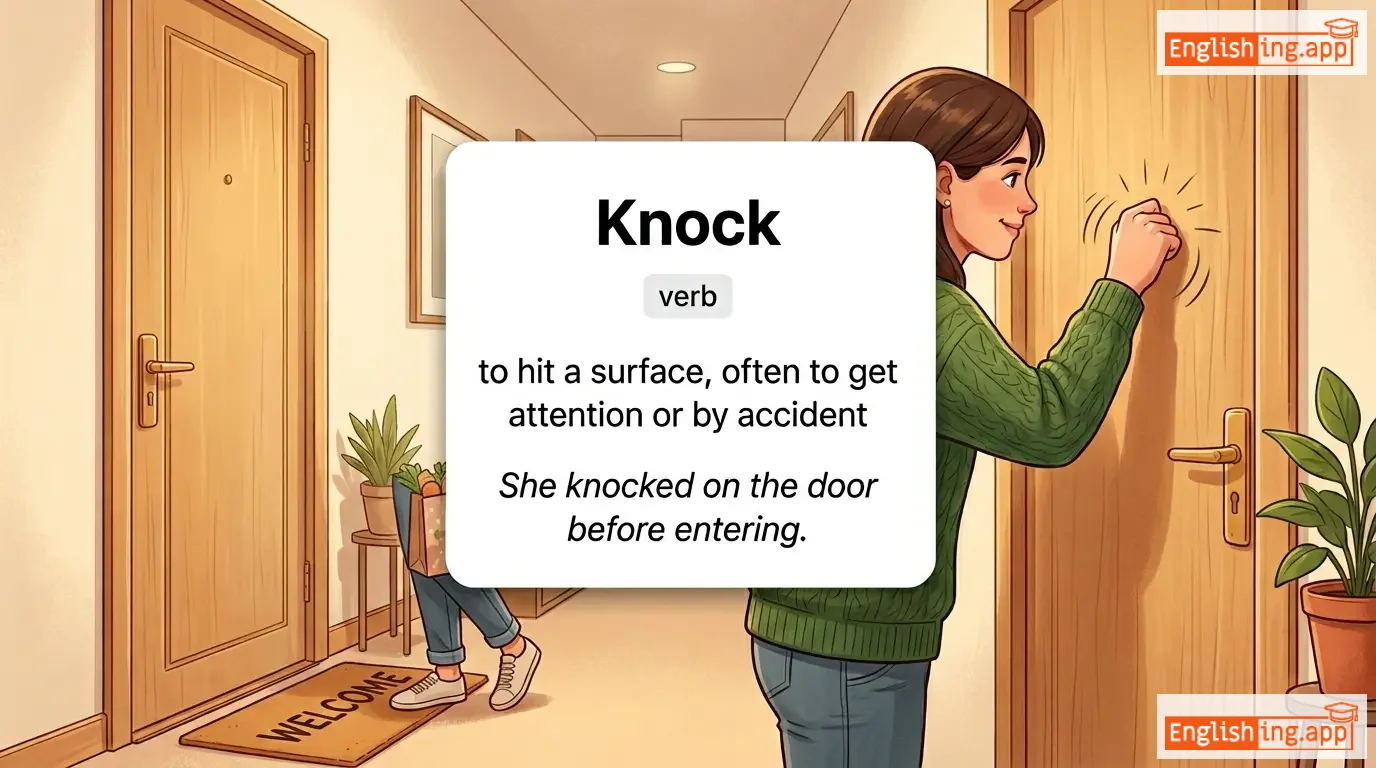
Knock definition card — visual illustration of the meaning
verb
/nɒk/
दरवाजे पर दस्तक देना (darwaje par dastak dena)

to hit a surface, often to get attention or by accident

"She knocked on the door before entering."

"उसने दरवाजे पर दस्तक दी और फिर अंदर घुसी।" (Usne darwaje par dastak di aur phir andar ghusi.)
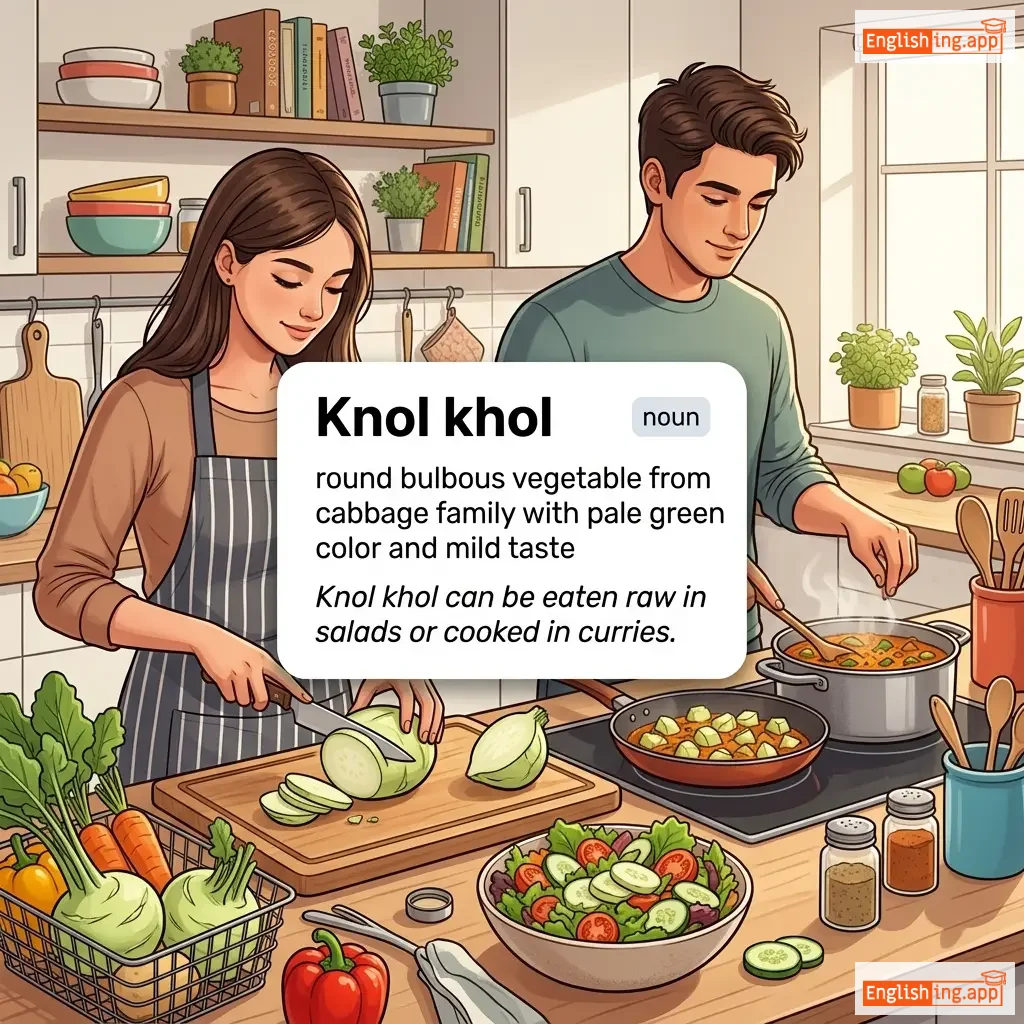
Knol khol definition card — visual illustration of the meaning
noun
/noʊl koʊl/
कुल्फ़ी (kulfī)

round bulbous vegetable from cabbage family with pale green color and mild taste

"Knol khol can be eaten raw in salads or cooked in curries."

"कुल्फ़ी को सलाद में कच्चा खा सकते हैं या करी में पकाया जा सकता है।" (kulfī ko salād mein kacchā khā sakte hain yā karī mein pakāyā jā sakta hai)
noun
/noʊl/
टीला (teela)

A small, rounded hill or mound.

"They had a picnic on the grassy knoll."

"उन्होंने घास से ढकी टीले पर पिकनिक की।" (unhone ghas se dhaki teele par picnic ki.)
noun
/nɒt/
गांठ (ganth)

A fastening made by tying a piece of string, rope, or something similar.

"She tied the ribbon into a neat knot."

"उसने रिबन को एक सुंदर गांठ में बांध दिया।" (Usne ribbon ko ek sundar ganth mein baandh diya.)
adjective
/ˈnɒti/
कठिन (kathin)

Complicated, difficult to solve or full of knots.

"He faced a knotty legal issue."

"उसे एक कठिन कानूनी मुद्दे का सामना करना पड़ा।" (use ek kathin kanuni mudde ka samna karna pada.)
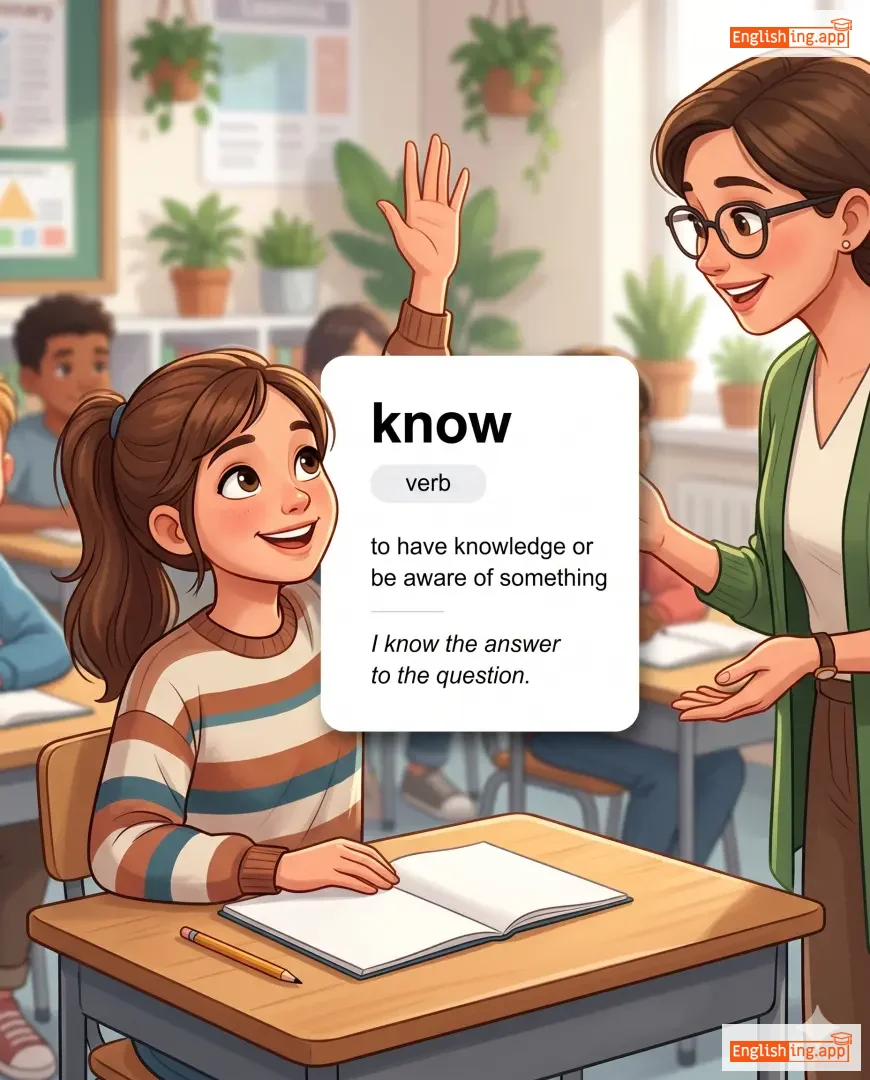
know definition card — visual illustration of the meaning
verb
/noʊ/
जानना (jana)

to have knowledge or be aware of something

"I know the answer to the question."

"मैं सवाल का जवाब जानता हूँ।" (Main sawal ka jawab jaanta hoon.)
lay definition card — visual illustration of the meaning
verb
/leɪ/
रखना (rakhna)

To put something down carefully in a flat position.

"She laid the book on the table."

"उसने किताब को मेज़ पर रखा।" (Usne kitaab ko mez par rakha.)
adjective, verb
/ˈlævɪʃ/
विलासी, शानदार (lavish)

Rich, elaborate, or luxurious; to bestow something in generous or extravagant quantities.

"They gave her a lavish wedding reception with hundreds of guests."

"वे उसे सैकड़ों मेहमानों के साथ एक भव्य शादी का रिसेप्शन दे रहे थे।" (ve use saikdon mehmano ke saath ek bhavya shaadi ka reception de rahe the.)
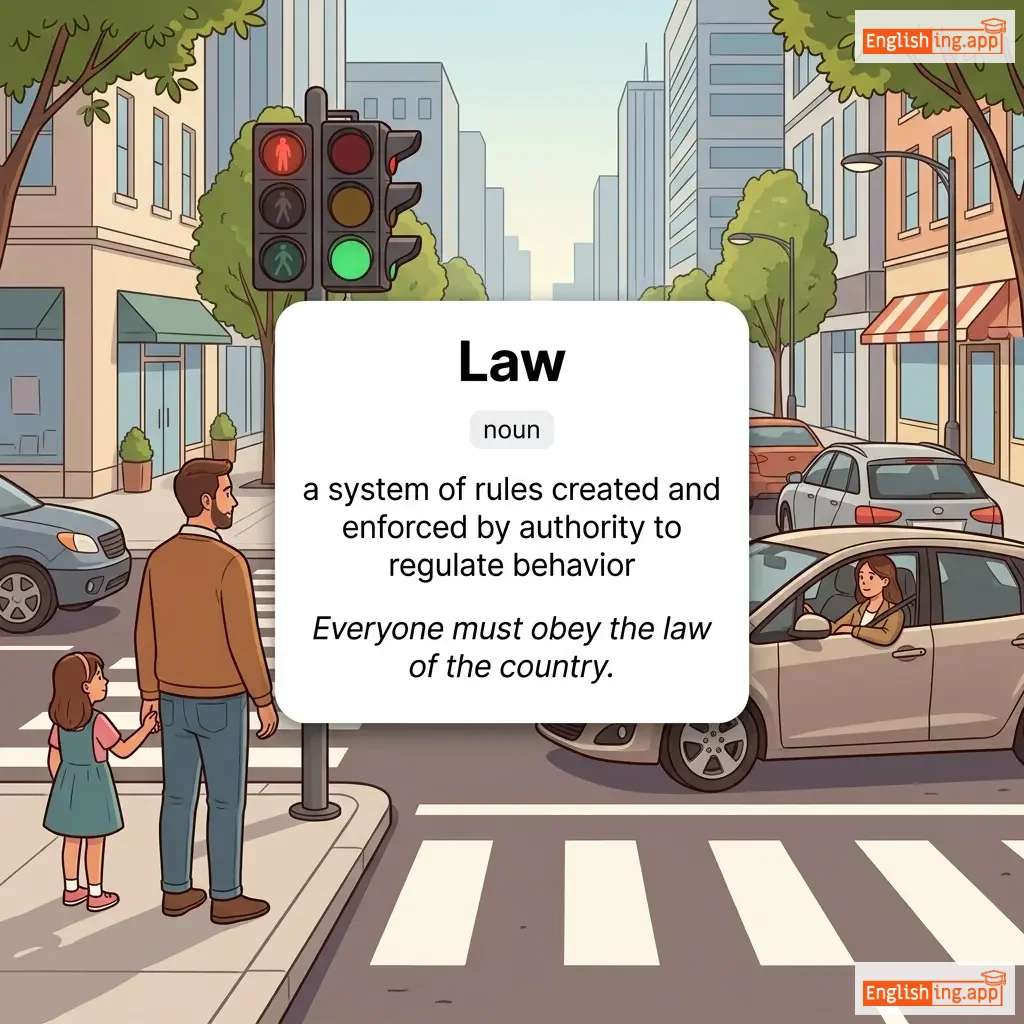
Law definition card — visual illustration of the meaning
noun
/lɔː/
कानून (kanun)

a system of rules created and enforced by authority to regulate behavior

"Everyone must obey the law of the country."

"हर किसी को देश के कानून का पालन करना चाहिए।" (har kisi ko desh ke kanun ka paalan karna chahiye.)
adjective
/ˈlɔː.fəl/
कानूनी; वैध; उचित; न्यायपूर्ण; (kanuni; vaidh; uchit; nyaypoorn;)

legal; legitimate; valid; just

"The judge confirmed that their actions were lawful and proper."

"न्यायाधीश ने पुष्टि की कि उनके कार्य कानूनी और उचित थे।" (nyayadhish ne pushti ki ki unke kary kanuni aur uchit the.)
noun
/ˈlɔːˌɡɪvər/
कानून निर्माता (kanun nirmata)

A person who creates or enforces laws; a legislator.

"Moses is often regarded as a great lawgiver in history."

"मोसेस को अक्सर इतिहास में एक महान कानून निर्माता के रूप में माना जाता है।" (Moses ko aksar itihas mein ek mahaan kanun nirmata ke roop mein maana jaata hai.)
adjective
/ˈlɔː.ləs/
कानूनहीन; अराजक; अव्यवस्थित; अपराधी (kaanoonheen; arajak; avyavasthit; apradhi)

without law; anarchic; unruly; criminal

"The frontier town was known for its lawless behavior and chaos."

"सीमांत शहर अपने कानूनहीन व्यवहार और अराजकता के लिए जाना जाता था।" (seemant sheher apne kaanoonheen vyavhaar aur arajakta ke liye jaana jaata tha)
noun
/ˈlɔː.ləs.nəs/
कानून की अनुपस्थिति (lawlessness)

absence of law and order; a state where laws do not exist or are not enforced

"The city descended into lawlessness after the government collapsed."

"सरकार के पतन के बाद शहर कानून की अनुपस्थिति में गिर गया।" (sarkar ke patan ke baad shahar kanun ki anupasthiti mein gir gaya)
noun
/ˈlɔːˌmeɪkər/
कानून निर्माता (kanun nirmata)

A member of a legislative body who makes laws.

"The lawmaker introduced a new bill on education reform."

"कानून निर्माता ने शिक्षा सुधार पर एक नया बिल पेश किया।" (Kanun nirmata ne shiksha sudhar par ek naya bill pesh kiya.)
noun
/lɔːn/
घास का मैदान (ghaas ka maidan)

an area of short, regularly cut grass in a yard or park

"Children were playing on the green lawn."

"बच्चे हरे लॉन पर खेल रहे थे।" (bachche hare lawn par khel rahe the.)
noun
/ˈlɔːsuːt/
मुकदमा (mukadma)

a legal case brought to a court of law by one person against another

"The company faced a lawsuit over false advertising."

"कंपनी ने झूठी विज्ञापन के कारण मुकदमे का सामना किया।" (company ne jhoothi vigyapan ke karan mukadme ka samna kiya.)
Lawyer definition card — visual illustration of the meaning
noun
/ˈlɔːjər/
वकील (vakil)

A professional who practices or studies law; an attorney.

"The lawyer presented the case confidently in court."

"वकील ने अदालत में आत्मविश्वास के साथ मामला प्रस्तुत किया।" (Vakil ne adalat mein atmvishwas ke saath mamla prastut kiya.)
adjective
/læks/
ढीला, लापरवाह (lax)

Not strict, severe, or careful; negligent or careless.

"The security at the airport was surprisingly lax."

"हवाई अड्डे पर सुरक्षा आश्चर्यजनक रूप से ढीली थी।" (D havai adde par suraksha aashcharyajanak roop se dheeli thi.)
noun, adjective
/ˈlæksətɪv/
जुलाब (julaab)

A medicine or substance that stimulates bowel movements; tending to loosen or relieve constipation.

"The doctor prescribed a mild laxative for her condition."

"डॉक्टर ने उसकी स्थिति के लिए एक हल्का जुलाब दवा निर्धारित की।" (Doktar ne uski sthiti ke liye ek halka julaab dava nirdharit ki.)
noun
/ˈleɪ.zi.nəs/
आलस्य (aalsya)

the quality of being unwilling to work or use energy; idleness

"His laziness prevented him from achieving his goals."

"उसकी आलस्य ने उसे अपने लक्ष्य को प्राप्त करने से रोका।" (uski aalsya ne use apne lakshya ko prapt karne se roka)
adjective
/ˈliːdɪŋ/
प्रमुख (pramukh)

most important or most successful; at the front

"She is one of the leading experts in the field."

"वह क्षेत्र में प्रमुख विशेषज्ञों में से एक हैं।" (Wah kshetra mein pramukh visheshagyon mein se ek hain.)
leadership definition card — visual illustration of the meaning
noun
/ˈliːdərˌʃɪp/
नेतृत्व (netritva)

The action of leading a group of people or an organization.

"Her leadership inspired the entire team to achieve their goals."

"उसकी नेतृत्व क्षमता ने पूरी टीम को उनके लक्ष्य प्राप्त करने के लिए प्रेरित किया।" (uski netritva kshamata ne puri team ko unke lakshya prapt karne ke liye prerith kiya.)
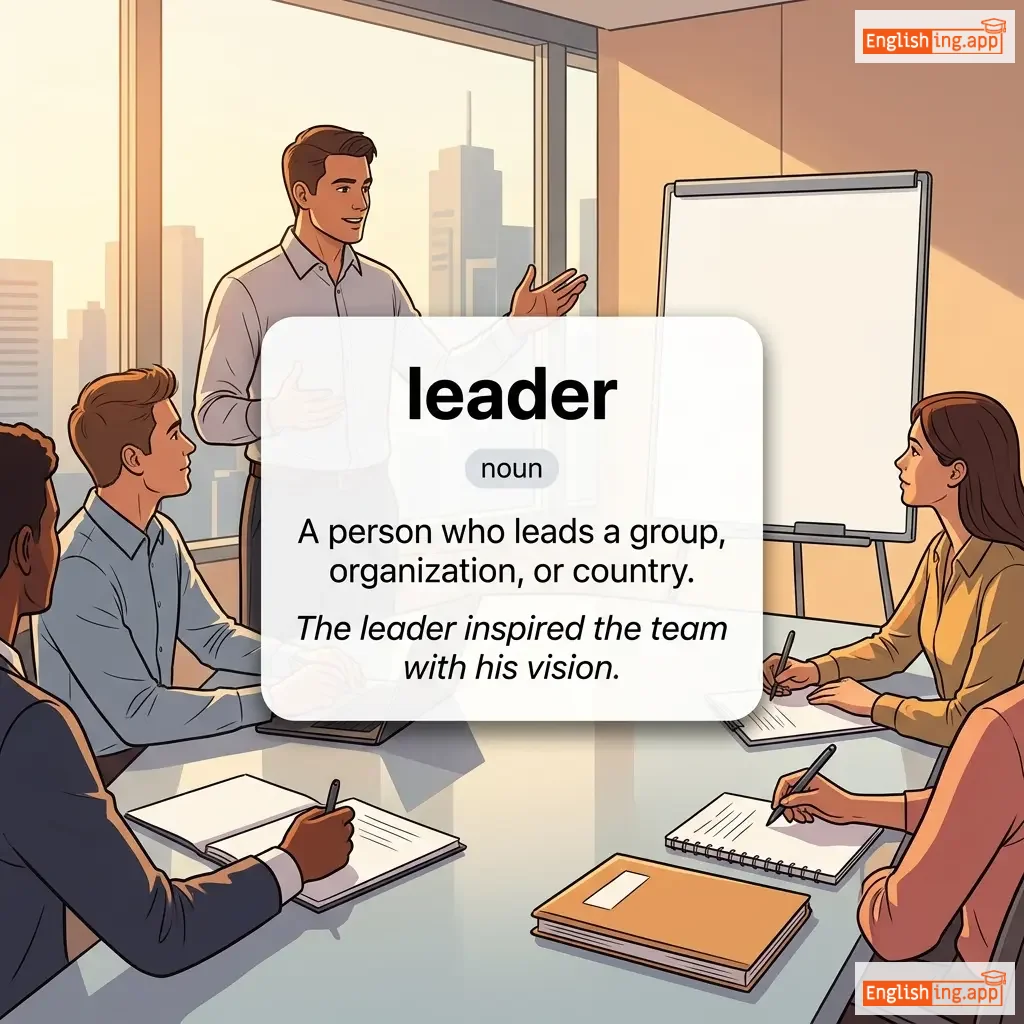
leader definition card — visual illustration of the meaning
noun
/ˈliːdər/
नेता (neta)

A person who leads a group, organization, or country.

"The leader inspired the team with his vision."

"नेता ने अपनी दृष्टि से टीम को प्रेरित किया।" (Neta ne apni drishti se team ko prerit kiya.)
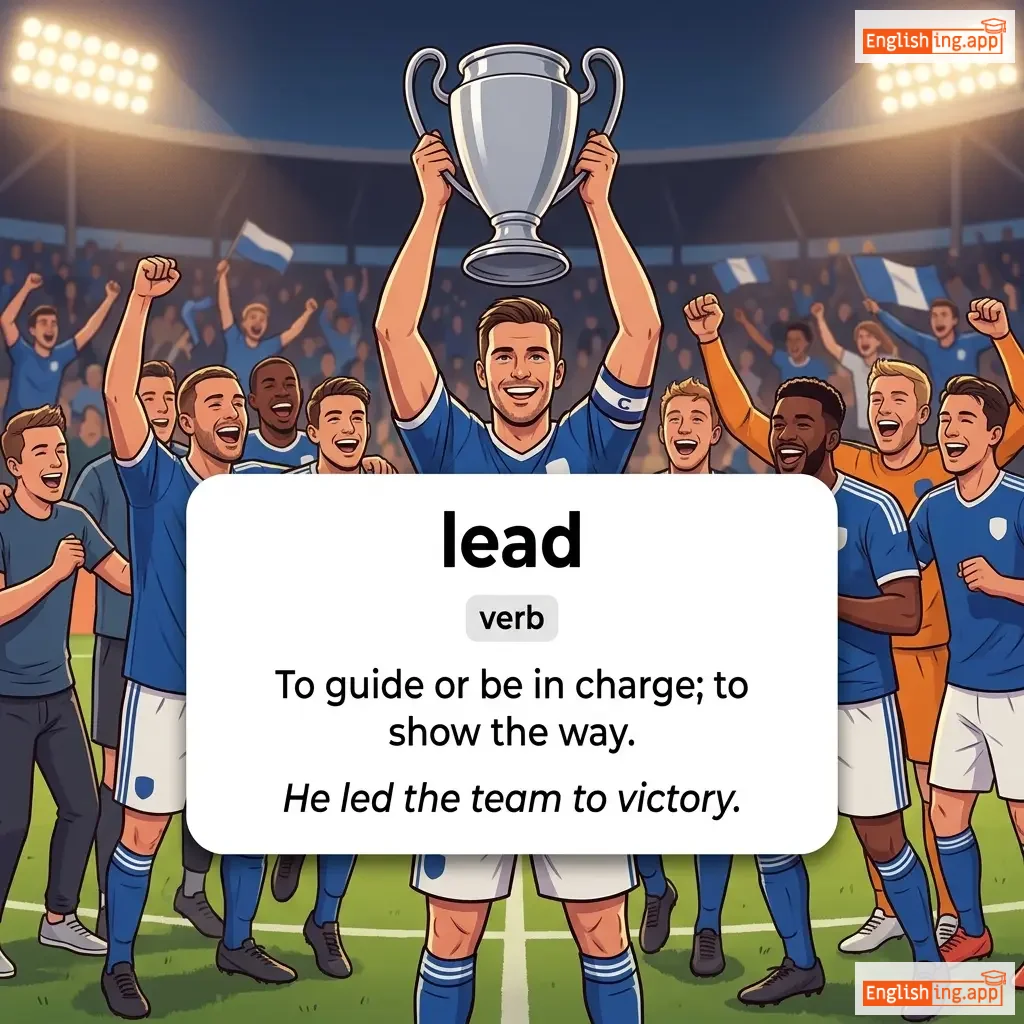
lead definition card — visual illustration of the meaning
verb
/liːd/
नेतृत्व करना (netritva karna)

To guide or be in charge; to show the way.

"He led the team to victory."

"उसने टीम को जीत दिलाई।" (Usne team ko jeet dilayi.)
noun
/liː/
घास का मैदान (ghaas ka maidan)

An open area of grassy or arable land; a meadow.

"The cottage was surrounded by a quiet lea."

"कॉटेज एक शांत घास के मैदान से घिरा हुआ था।" (kottage ek shant ghas ke maidan se ghira hua tha.)
adjective
/ˈleɪ.zi/
आलसी; काम करने में नाकाम (aalsi; kaam karne mein nakaam)

idle; unwilling to work; sluggish

"He was too lazy to clean his room on the weekend."

"वह सप्ताहांत में अपना कमरा साफ करने के लिए बहुत आलसी था।" (vah saptahant mein apna kamra saaf karne ke liye bahut aalsi tha)
noun
/ˈleɪaʊt/
विन्यास (vinyas)

the arrangement or design of something, especially the arrangement of elements in a book, webpage, or room

"The designer presented a new layout for the website that was much more user-friendly."

"डिज़ाइनर ने वेबसाइट के लिए एक नया विन्यास प्रस्तुत किया जो बहुत अधिक उपयोगकर्ता-अनुकूल था।" (Designer ne website ke liye ek naya vinyas prastut kiya jo bahut adhik upayogkarta-anukul tha.)
noun
/ˈleɪər/
परत (parat)

A sheet, thickness, or coating of something that lies over or under a surface.

"The cake had a layer of cream between the sponges."

"केक के बीच एक क्रीम की परत थी।" (Kek ke beech ek kreem ki parat thi.)
noun
/ˈleɪmən/
साधारण व्यक्ति (sadharan vyakti)

A person without professional or specialized knowledge in a particular subject.

"To a layman, the medical explanation was confusing."

"एक साधारण व्यक्ति के लिए, चिकित्सा व्याख्या भ्रमित करने वाली थी।" (ek sadharan vyakti ke liye, chikitsa vyakhya bhramit karne wali thi.)
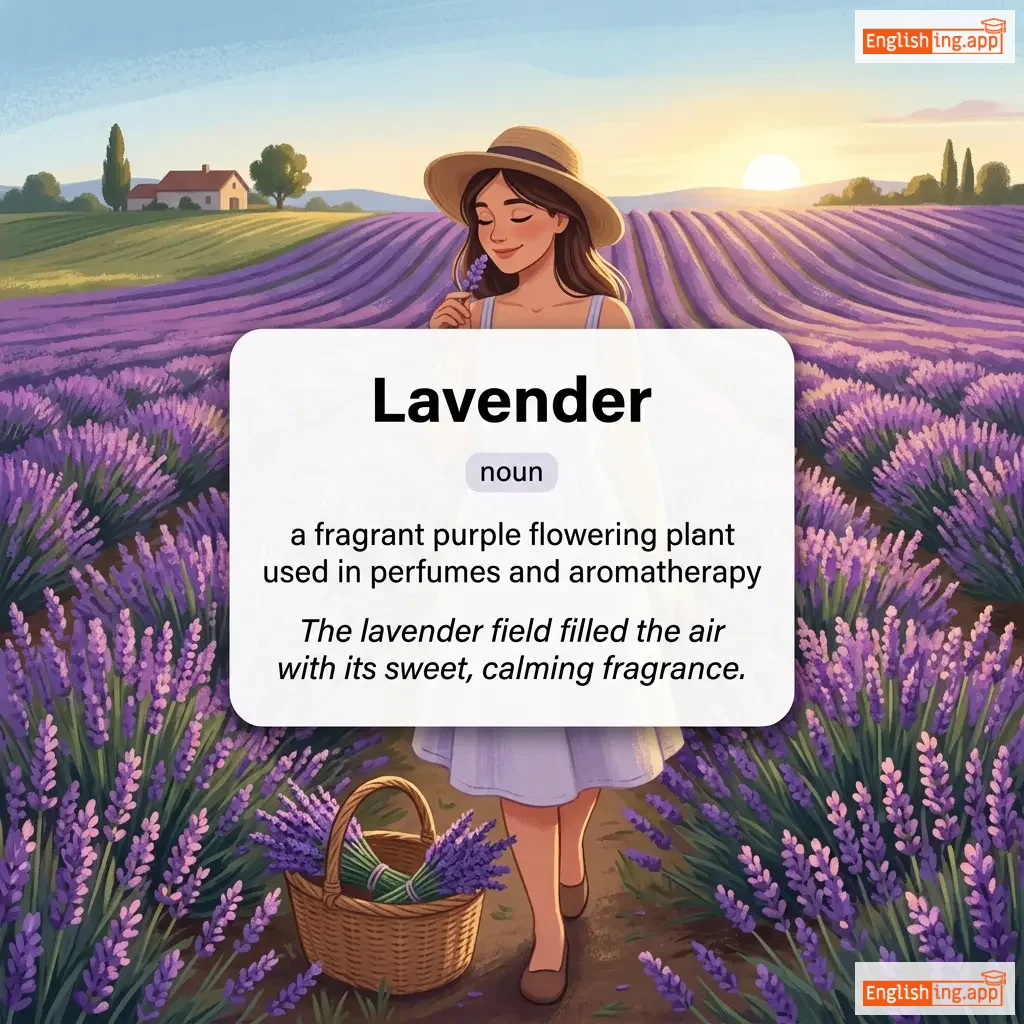
Lavender definition card — visual illustration of the meaning
noun
/ˈlæv.ən.dər/
लैवेंडर (lavender)

a fragrant purple flowering plant used in perfumes and aromatherapy

"The lavender field filled the air with its sweet, calming fragrance."

"लैवेंडर खेत ने हवा को अपनी मीठी, शांति देने वाली खुशबू से भर दिया।" (lavender khet ne hawa ko apni mishti, shanti dene wali khushboo se bhar diya.)
noun
/ˈleɪˌpɜːrsən/
साधारण व्यक्ति (sadharan vyakti)

A person who is not a member of the clergy or does not have specialized knowledge in a subject.

"The judge explained the law so that the layperson could understand."

"न्यायधीश ने कानून को इस तरह से समझाया ताकि एक साधारण व्यक्ति समझ सके।" (Nyayadhish ne kanoon ko is tarah se samjhaya taki ek sadharan vyakti samajh sake.)