वोकैबुलरीज

इंग्लिश वोकैबुलरी डिस्कवर, लर्न और मास्टर करें

noun
/ˈkiː.pər/
रक्षक; संरक्षक; (rakshak; sanrakshak)

a person whose job it is to guard or take care of something or someone; a goalkeeper

"The zoo keeper fed the animals every morning at eight o'clock."

"चिड़ियाघर के रक्षक हर सुबह आठ बजे जानवरों को खाना देते थे।" (chidiyaaghar ke rakshak har subah aath baje jaanwaron ko khana dete the.)
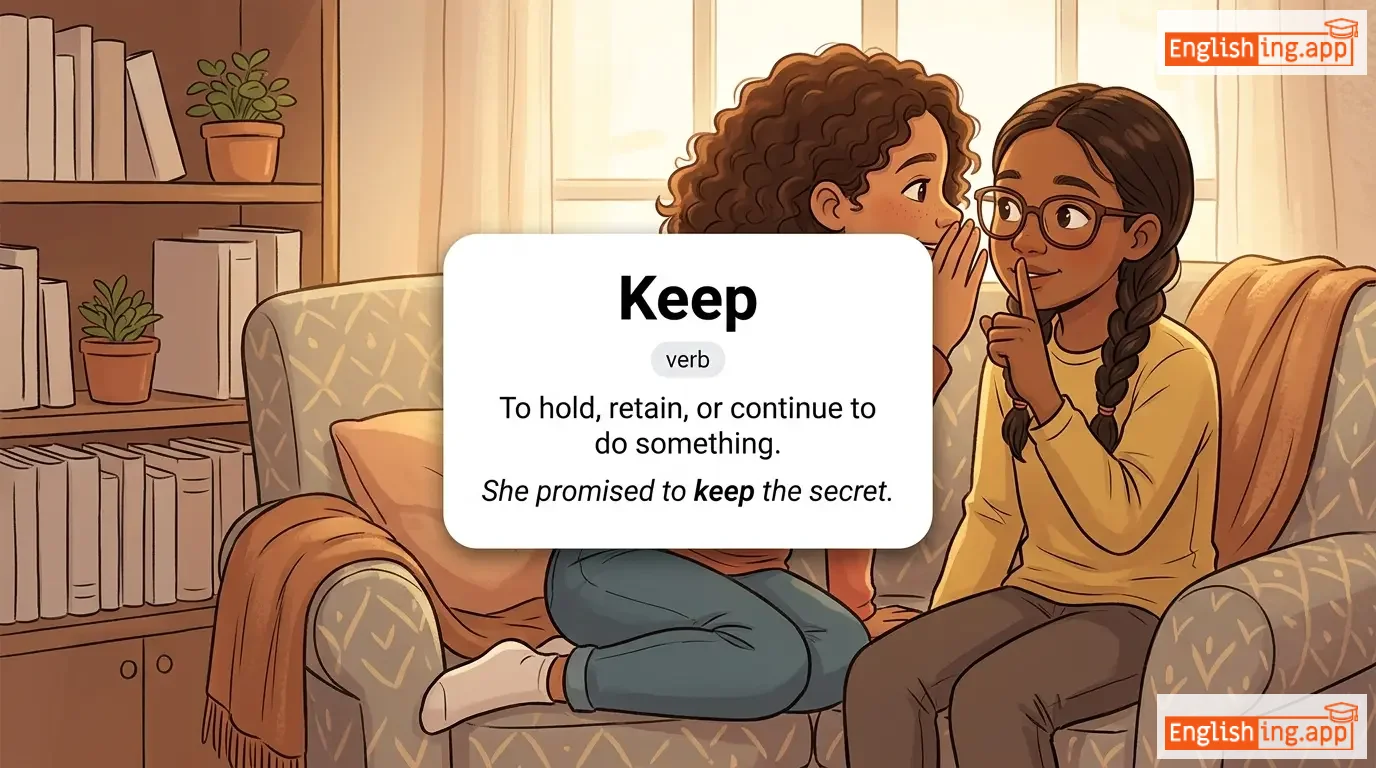
Keep definition card — visual illustration of the meaning
verb
/kiːp/
रखना (rakhna)

To hold, retain, or continue to do something.

"She promised to keep the secret."

"उसने वादा किया था कि वह रहस्य रखेगी।" (Usne vada kiya tha ki voh rahasya rakhegi.)
adjective
/kiːn/
उत्साही, इच्छाशक्ति वाला (utsahi, ichchhashakti wala)

Having or showing eagerness or enthusiasm; sharp or highly developed (for senses).

"She is very keen to learn new skills."

"वह नई क्षमताओं को सीखने के लिए बहुत उत्सुक है।" (Wah nai kshamtaon ko seekhne ke liye bahut utsuk hai.)
noun
/ˈkedʒ.ə.riː/
केडगिरी (kedgiri)

a European dish of cooked rice, fish, and hard-boiled eggs, originally from India

"The breakfast menu featured traditional kedgeree with smoked haddock and eggs."

"नाश्ते के मेनू में पारंपरिक केडगिरी स्मोक्ड हैडॉक और अंडों के साथ थी।" (Nashthe ke menu mein paramparik kedgiri smoked haddock aur andon ke saath thi.)
Karonda definition card — visual illustration of the meaning
noun
/kəˈrɒn.də/
करौंदा (karaunda)

a small dark purple berry-like fruit that is sour and used in pickles

"Karonda is often used to make pickles and preserves."

"करौंदा अक्सर अचार और जाम बनाने के लिए इस्तेमाल किया जाता है." (Karaunda aksar achaar aur jaam banaane ke liye istemaal kiya jaata hai.)
noun
/ˈkærət/
कैरेट (karat)

A unit for measuring the purity of gold, with 24 karats being pure gold.

"The ring was made of 18-karat gold."

"अंगूठी 18 कैरेट सोने से बनी थी।" (Angoothi 18 karat sone se bani thi.)
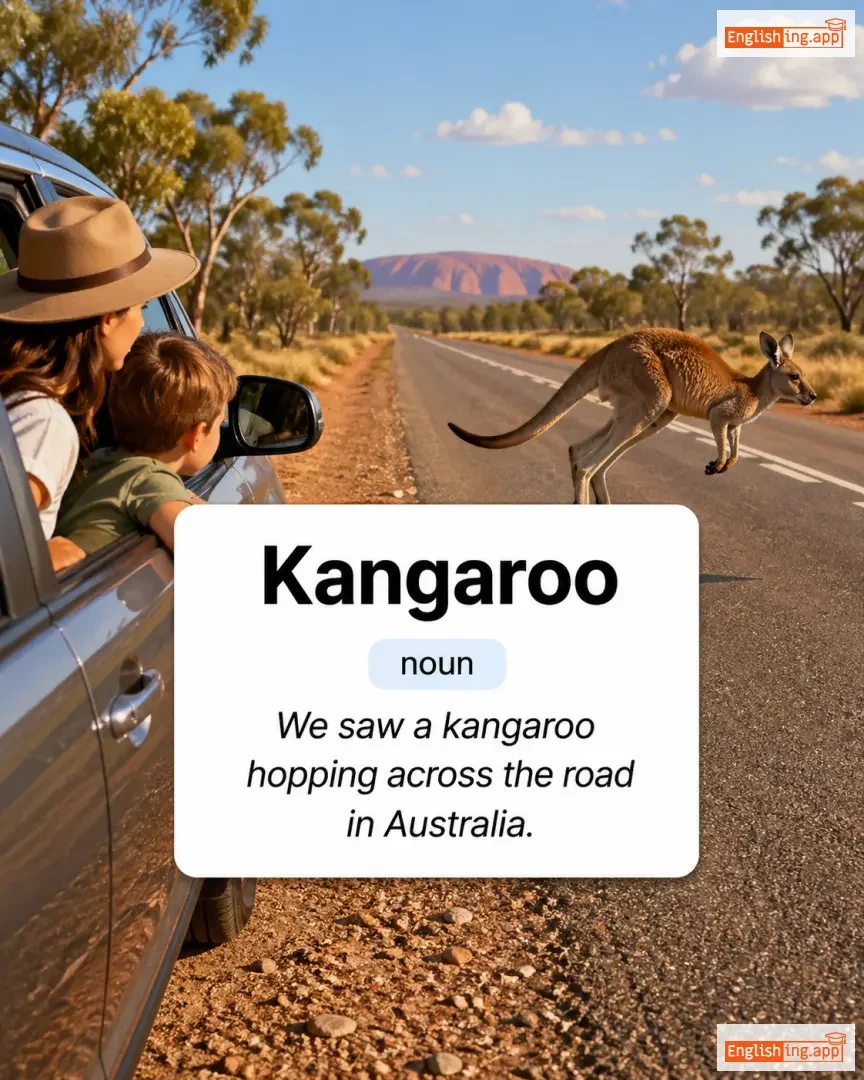
Kangaroo definition card — visual illustration of the meaning
noun
/ˌkæŋɡəˈruː/
कंगारू (kangaroo)

A large Australian marsupial with powerful hind legs and a long tail, known for hopping.

"We saw a kangaroo hopping across the road in Australia."

"हमने ऑस्ट्रेलिया में सड़क पार करते हुए एक कंगारू को कूदते देखा।" (Humne Australia mein sadak paar karte huye ek kangaroo ko koodte dekha.)
noun
/kəˈlaɪdəˌskoʊp/
रंगीन दृश्यात्मक यंत्र (rangeen drishyatmak yantra)

A toy or instrument with mirrors and colored pieces that create changing patterns when rotated; also used metaphorically for a constantly changing sequence of patterns or elements.

"The city lights turned into a kaleidoscope of colors as the festival began."

"जब त्योहार शुरू हुआ, तो शहर की बत्तियाँ रंगों के कलेडोस्कोप में बदल गईं।" (Jab tyohar shuru hua, to shehar ki battiyaan rangon ke kaleidoscope mein badal gayin.)
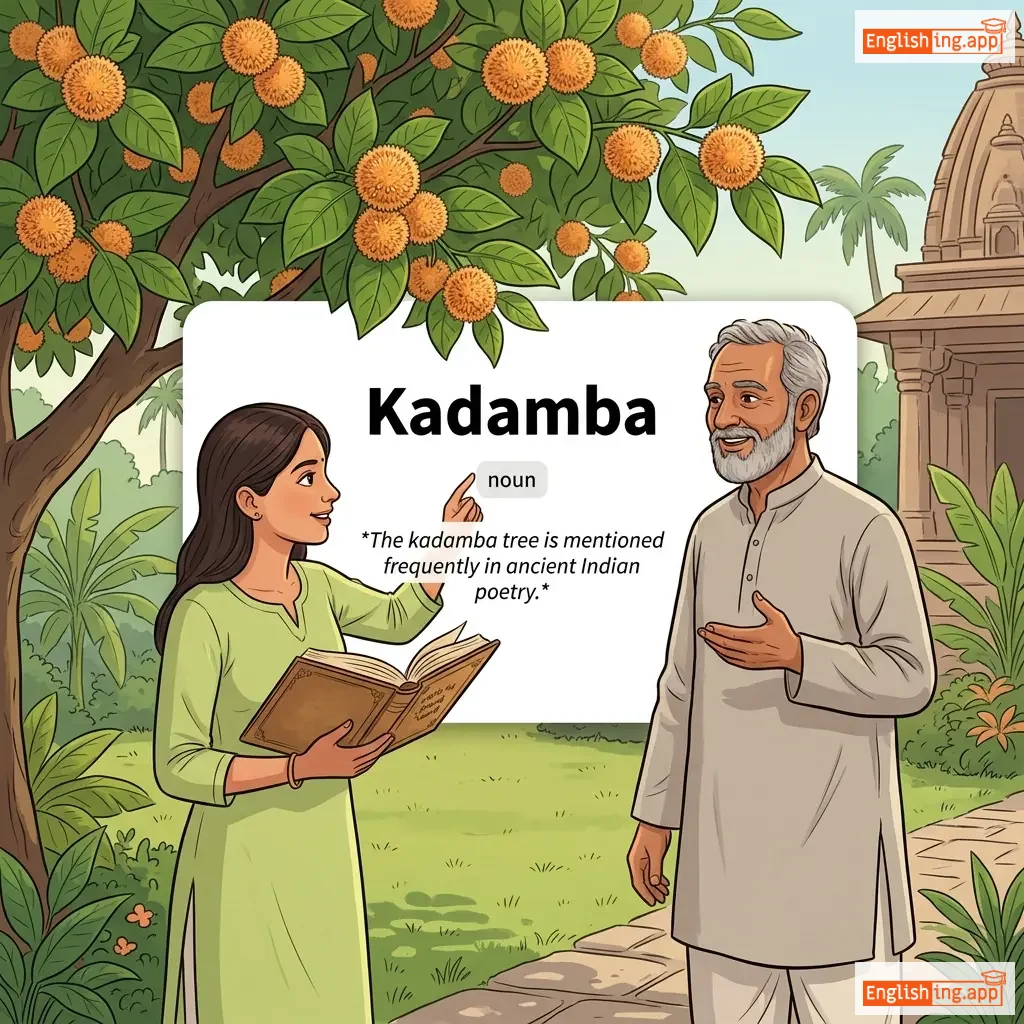
Kadamba definition card — visual illustration of the meaning
noun
/kəˈdʌm.bə/
कदंब (kadamba)

A tropical tree with round, fragrant orange flowers, sacred in Hindu culture and associated with Lord Krishna

"The kadamba tree is mentioned frequently in ancient Indian poetry."

"प्राचीन भारतीय कविता में कदंब वृक्ष का बार-बार उल्लेख मिलता है।" (praacheen bhaartiya kavita mein kadamb vriksh ka baarbaar ullekh milta hai)
noun
/kəˈbɑːdi/
कबाड़ी (kabadi)

a person who collects and sells scrap or recyclable materials, especially in South Asia

"The kabadi came every week to collect old newspapers and bottles."

"कबाड़ी हर हफ्ते पुराना सामान लेने आता है।" (kabadi har hafte purana saman lene aata hai)
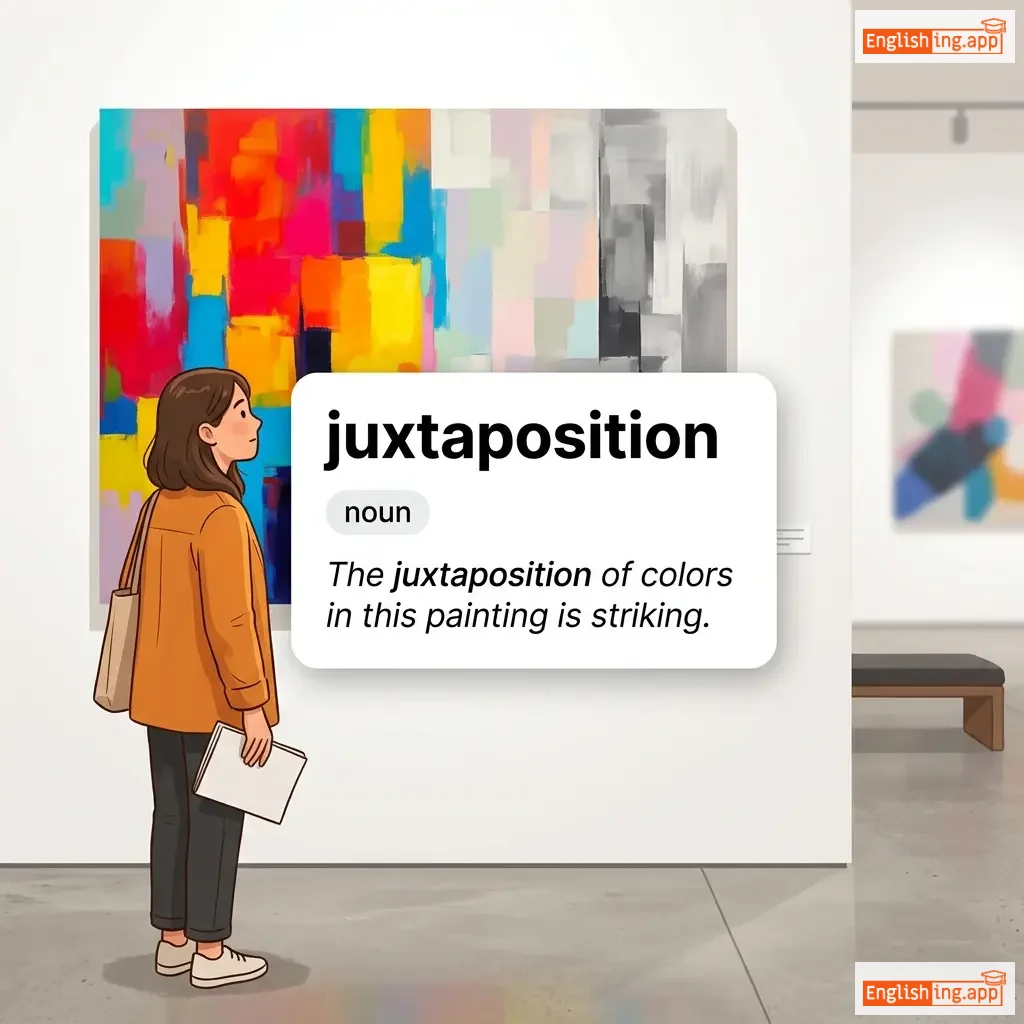
juxtaposition definition card — visual illustration of the meaning
noun
/ˌdʒʌk.stə.pəˈzɪʃ.ən/
सन्निहित स्थिति (sannihit sthiti)

The fact of two things being seen or placed close together with contrasting effect.

"The juxtaposition of colors in this painting is striking."

"इस पेंटिंग में रंगों का सन्निहित स्थिति बहुत प्रभावशाली है।" (Is painting mein rangon ka sannihit sthiti bahut prabhavshali hai.)
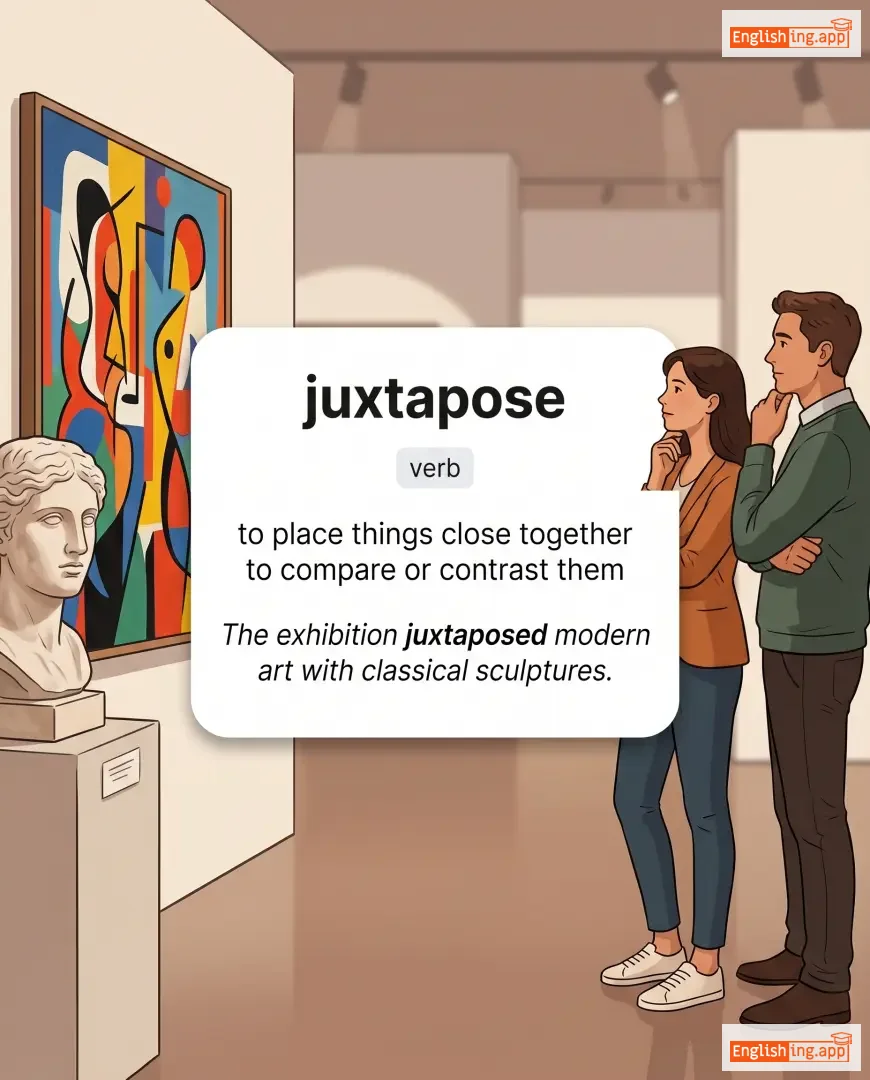
juxtapose definition card — visual illustration of the meaning
verb
/ˈdʒʌkstəˌpoʊz/
समीकरण के लिए चीज़ों को पास पास रखना (sameekaran ke liye cheezon ko paas paas rakhna)

to place things close together to compare or contrast them

"The exhibition juxtaposed modern art with classical sculptures."

"प्रदर्शनी ने आधुनिक कला को शास्त्रीय मूर्तिकला के साथ समीकरण किया।" (pradarshani ne aadhunik kala ko shaastriya moortikala ke saath sameekaran kiya.)
adjective, noun
/ˈdʒuːvənaɪl/
किशोर (kishor)

relating to young people; childish or immature

"The court sent the case to a juvenile detention center."

"अदालत ने मामले को किशोर हिरासत केंद्र में भेजा।" (adalat ne mamle ko kishor hirasat kendra mein bheja.)
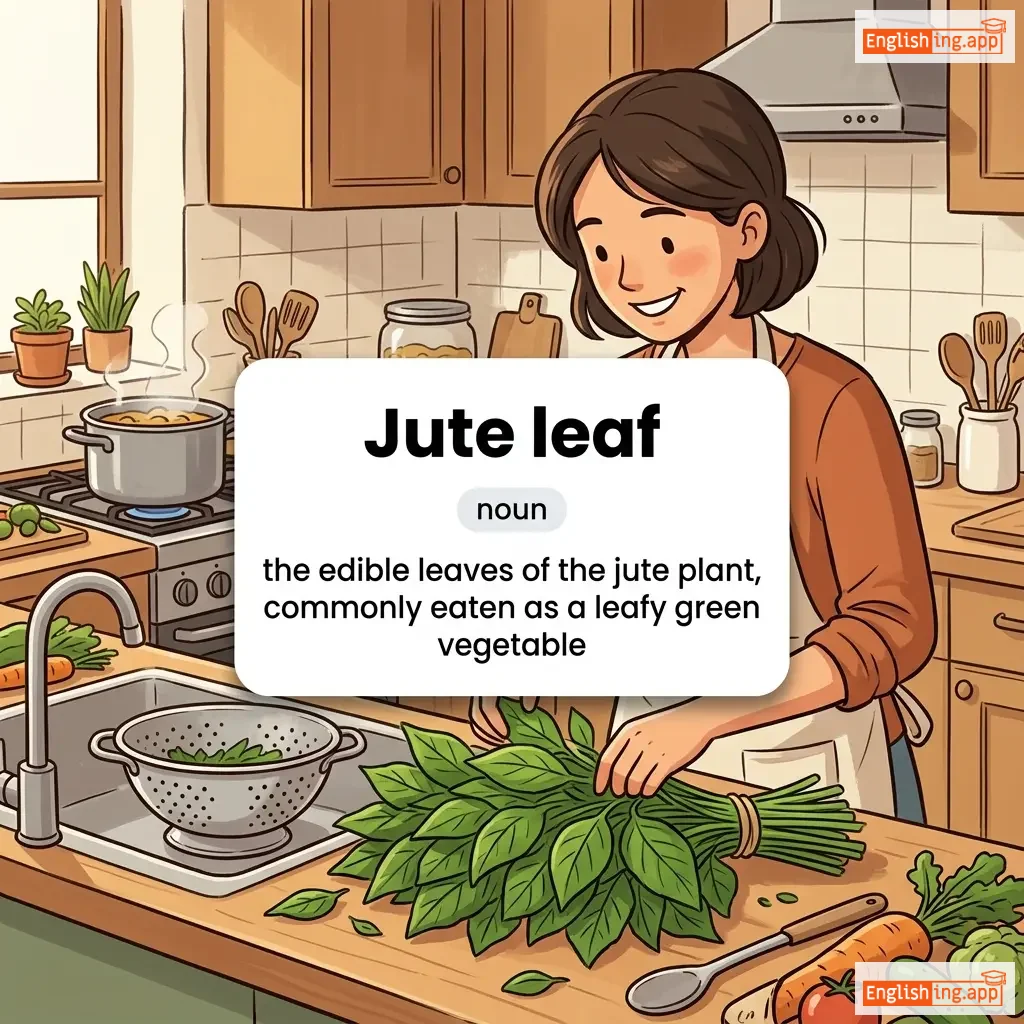
Jute leaf definition card — visual illustration of the meaning
noun
/dʒuːt liːf/
पट्टी पत्ते (patti patte)

the edible leaves of the jute plant, commonly eaten as a leafy green vegetable

"Jute leaf is rich in vitamins and minerals and is often cooked with lentils in Bengali cuisine."

"जूट लीफ विटामिन्स और मिनरल्स में समृद्ध है और अक्सर बंगाली व्यंजन में दाल के साथ पकाया जाता है।" (joot leaf vitamins aur minerals mein samriddh hai aur aksar bangali vyajan mein daal ke saath pakaya jaata hai.)
noun
/dʒuːt/
जूट (joot)

a long, soft, shiny plant fiber used to make rope, bags, sacks, and coarse cloth

"Jute is widely used to make eco-friendly bags and ropes."

"जूट से थैले और रस्सियाँ बनाई जाती हैं।" (joot se thaile aur rassiyan banai jati hain)
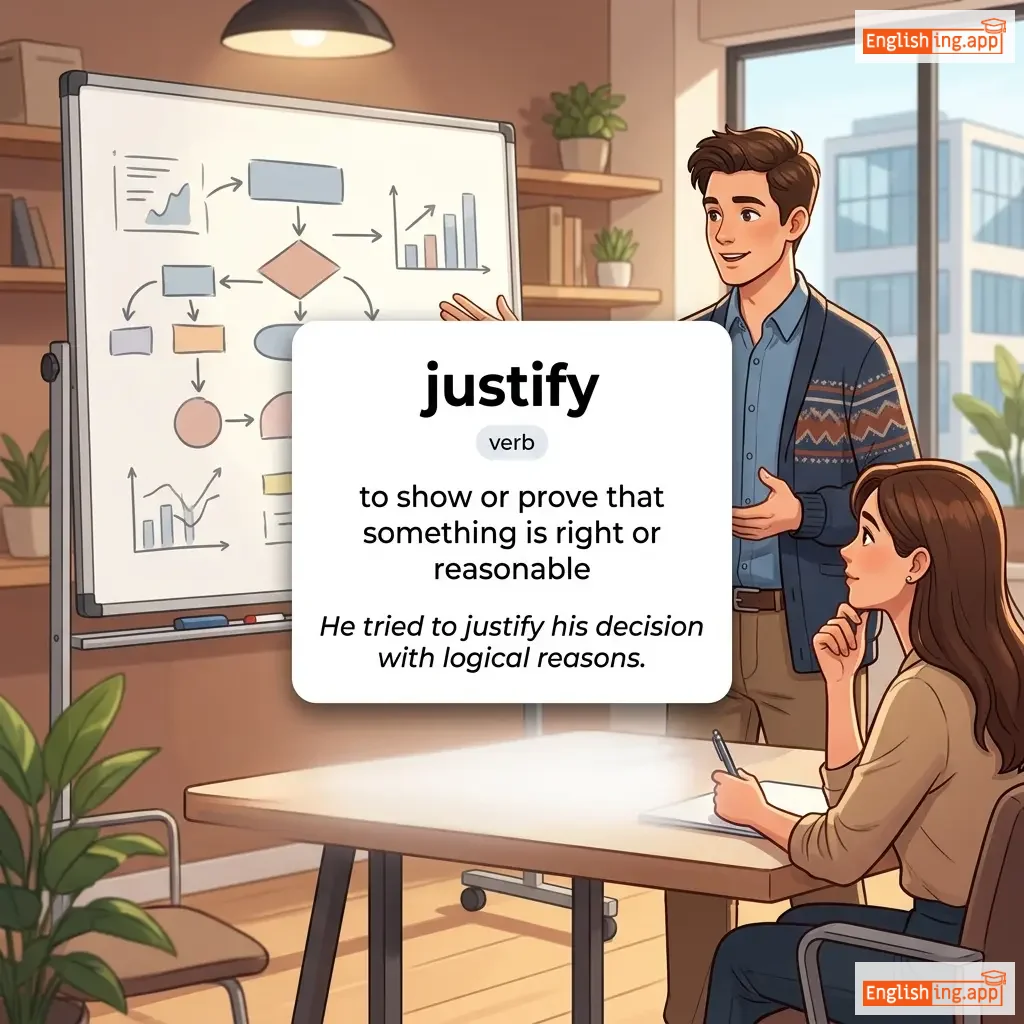
justify definition card — visual illustration of the meaning
verb
/ˈdʒʌstɪfaɪ/
सही ठहराना (sahi thaharana)

to show or prove that something is right or reasonable

"He tried to justify his decision with logical reasons."

"उसने तार्किक कारणों के साथ अपने निर्णय को सही ठहराने की कोशिश की।" (usne tarkik karanon ke saath apne nirnay ko sahi thaharane ki koshish ki.)
noun
/ˌdʒʌstɪfɪˈkeɪʃən/
औचित्य (auchitya)

a reason, explanation, or excuse that shows something is right or reasonable

"There is no justification for such rude behavior."

"ऐसी अशिष्टता के लिए कोई औचित्य नहीं है।" (aisi ashishtata ke liye koi auchitya nahi hai.)
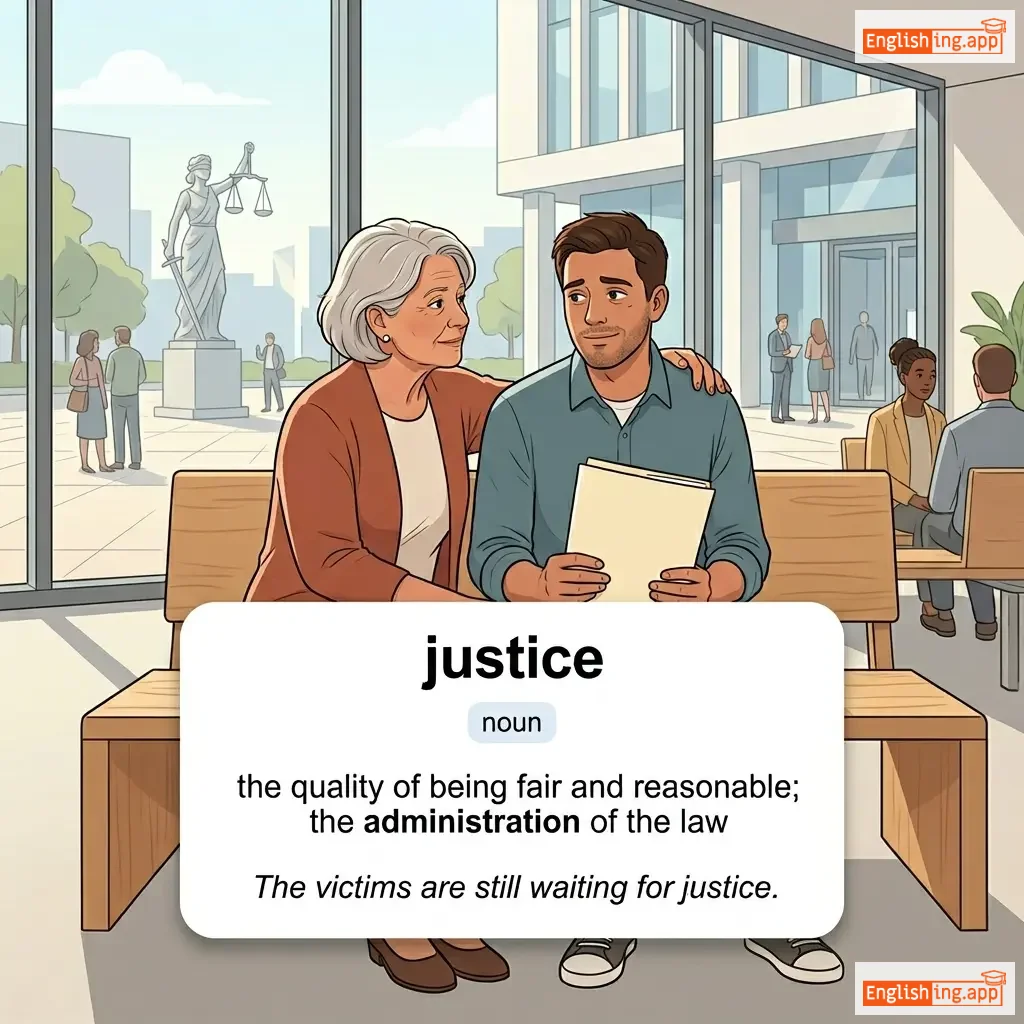
justice definition card — visual illustration of the meaning
noun
/ˈdʒʌstɪs/
न्याय (nyay)

the quality of being fair and reasonable; the administration of the law

"The victims are still waiting for justice."

"पीड़ित अभी भी न्याय का इंतजार कर रहे हैं।" (Peedit abhi bhi nyay ka intezaar kar rahe hain.)
adverb/adjective
/dʒʌst/
सही, केवल, या निष्पक्ष और नैतिक रूप से सही (sahi, keval, ya nishpaksh aur naitik roop se sahi)

Exactly, only, or fair and morally right.

"She arrived just in time for the meeting."

"वह मीटिंग के लिए समय पर ठीक पहुंची।" (Vah meeting ke liye samay par thik pahunchee.)
noun
/ˈdʒʊəri/
जूरी (juri)

a group of people sworn to give a verdict in a legal case based on the evidence

"The jury found him guilty of the crime."

"जूरी ने उसे अपराधी पाया।" (Juri ne use apradhi paya.)
noun
/ˈdʒʊərər/
जूरी सदस्य (juri sadasya)

a member of a jury who is chosen to hear evidence in a legal case and help make a decision

"The juror listened carefully to the witness’s testimony."

"जूरी सदस्य ने गवाह की गवाही ध्यान से सुनी।" (juri sadasya ne gawah ki gawahi dhyan se suni.)
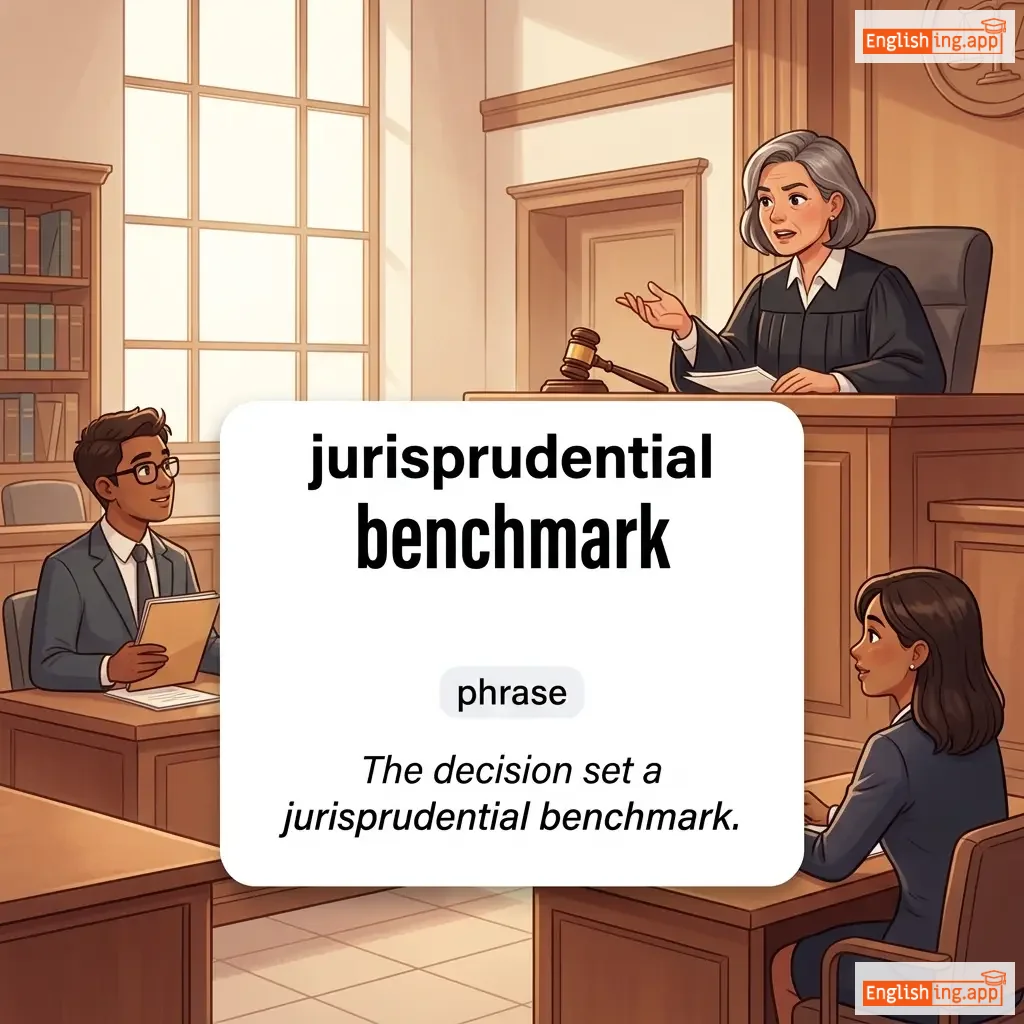
jurisprudential benchmark definition card — visual illustration of the meaning
phrase
ˌdʒʊə.rɪs.pruːˈden.ʃəl ˈbentʃ.mɑːk
कानूनी मानक (kaanooni maanak)

A legal standard or precedent that serves as a reference point for future legal decisions.

"The decision set a jurisprudential benchmark."

"निर्णय ने एक कानूनी मानक स्थापित किया।" (Nirnay ne ek kaanooni maanak sthapit kiya.)
noun
/ˌdʒʊərɪsˈpruːdəns/
कानूनशास्त्र (kanunshastra)

The theory, philosophy, or science of law.

"She is a professor of jurisprudence at the university."

"वह विश्वविद्यालय में कानूनशास्त्र की प्रोफेसर हैं।" (Wah vishwavidyalay mein kanunshastra ki professor hain.)
noun
/ˌdʒʊərɪsˈdɪkʃən/
अधिकार क्षेत्र (adhikar kshetra)

The official power to make legal decisions and judgments.

"The court has jurisdiction over criminal cases."

"अदालत के पास अपराध के मामलों पर अधिकार क्षेत्र है।" (Adalat ke paas aparadh ke mamlon par adhikar kshetra hai.)
adjective
/dʒʊˈrɪdɪkəl/
कानूनी (kaanooni)

Relating to judicial proceedings or the administration of law.

"The case raised important juridical questions."

"मामले ने महत्वपूर्ण कानूनी प्रश्न उठाए।" (Maamle ne mahatvapurn kaanooni prashn uthaye.)
noun
/ˈdʒɪŋɡoʊɪst/
अतिवादी राष्ट्रवादी व्यक्ति (ativadi rashtrawadi vyakti)

a person who supports jingoism; an extreme nationalist with aggressive foreign policies

"He was labeled a jingoist for his extreme views."

"उसे अपने अतिवादी दृष्टिकोणों के लिए जिंगोइस्ट कहा गया था।" (Use apne ativadi drishtikon ke liye jingoist kaha gaya tha.)
noun
/ˈdʒet.i/
जेटी (jeti)

a landing stage or small pier at which boats can dock or be moored

"The fishing boats were tied up at the wooden jetty near the harbor."

"मछली पकड़ने वाली नौकाएँ बंदरगाह के पास लकड़ी की जेटी पर बंधी हुई थीं।" (machhli pakadane vaali naukaen bandargah ke paas lakdi ki jeti par bandhi hui theen.)
noun
/dʒuː/
यहूदी (yahudi)

a person whose religion is Judaism or who is of Jewish descent

"He is a Jew by heritage and follows Jewish customs."

"वह विरासत में यहूदी है और यहूदी रीतियों का पालन करता है।" (Vah virasat mein yahudi hai aur yahudi reetiyon ka palan karta hai.)
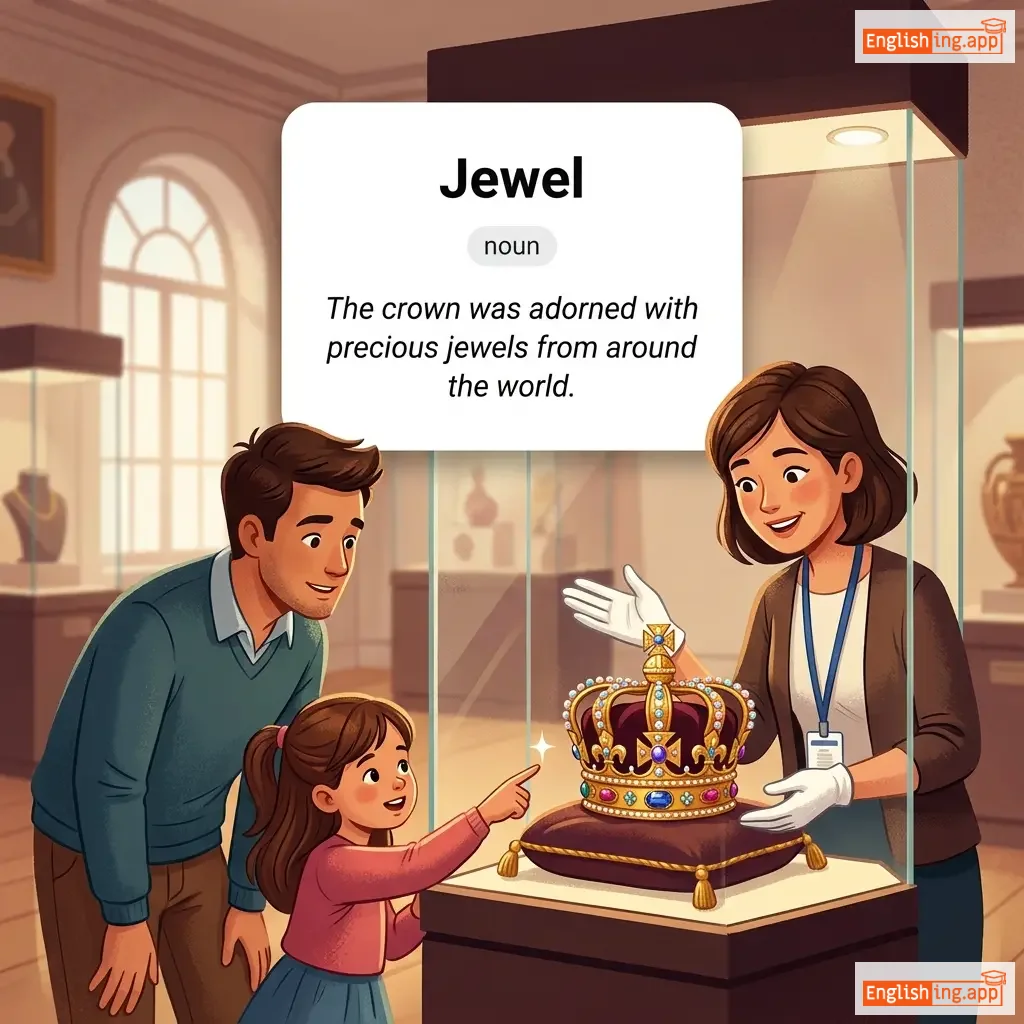
Jewel definition card — visual illustration of the meaning
noun
/ˈdʒuː.əl/
गहना (gahana)

a precious stone or a piece of jewelry containing precious stones

"The ancient treasure chest contained many rare jewels."

"प्राचीन खजाने के बक्से में कई दुर्लभ गहने थे।" (Prachin khazane ke bakse mein kai durlabh gahne the.)
noun
/ˈdʒuːələr/
जौहरी (jauhri)

a person who makes, repairs, or sells jewelry

"The jeweller crafted a beautiful gold ring."

"जौहरी ने एक सुंदर सोने की अंगूठी बनाई।" (jauhri ne ek sundar sone ki anguthi banai)
noun
/ˈdʒuːəlri/
आभूषण (abhushan)

ornamental items worn for personal adornment, such as rings, necklaces, or bracelets, often made of precious metals or stones

"She wore beautiful jewellery to the wedding."

"उसने शादी में सुंदर आभूषण पहने थे।" (usne shadi mein sundar abhushan pahne the)
noun
/ˈdʒuːəlri/
गहनों (gahno)

personal ornaments such as necklaces, rings, or bracelets that are typically made from precious metals and stones

"She wore gold jewelry at the wedding."

"वह शादी में सोने के गहने पहने हुए थी।" (Vah shaadi mein sone ke gahne pehene hue thi.)
adjective
/ˈdʒuːɪʃ/
खुशी (khushi)

relating to Jews or Judaism

"They celebrate Jewish festivals every year."

"वह पुरस्कार प्राप्त करते समय अपनी खुशी नहीं छिपा पाई।" (Vah puraskar prapt karte samay apni khushi nahin chhupa pai.)
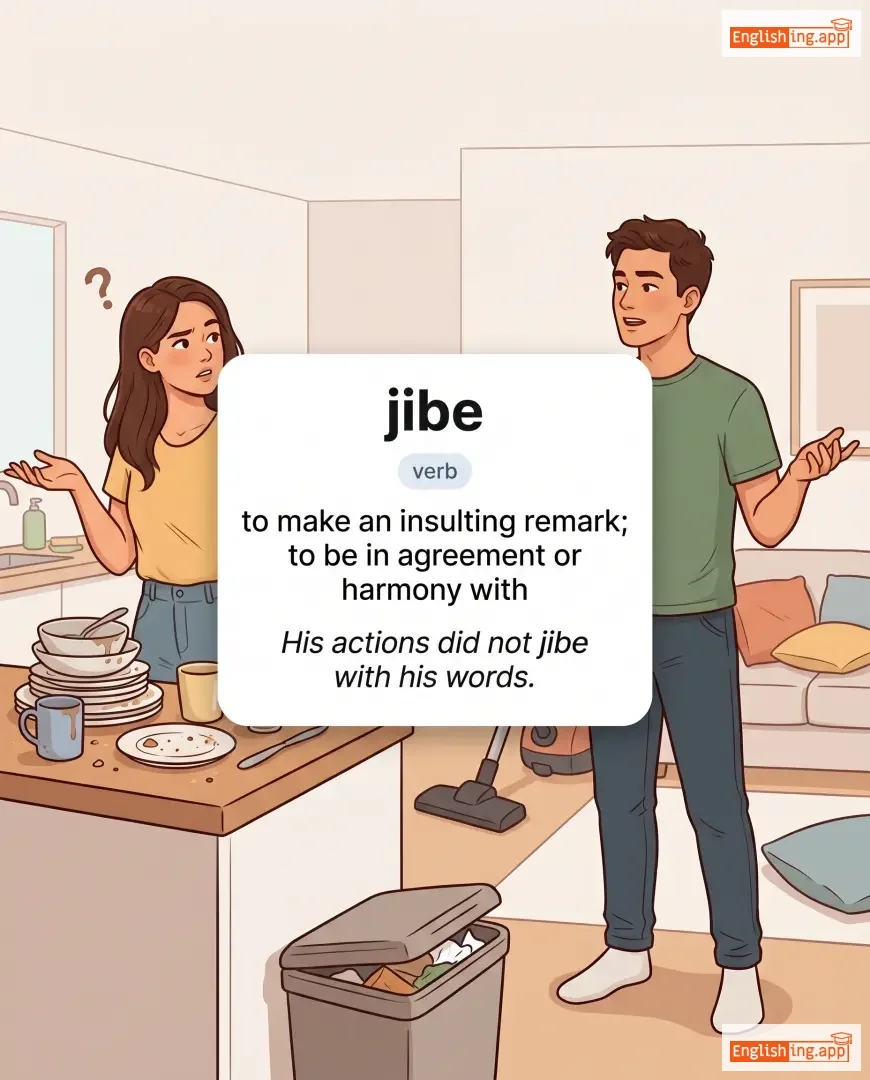
jibe definition card — visual illustration of the meaning
verb
/dʒaɪb/
अपमानजनक टिप्पणी करना / मेल खाना (apmaanjanak tippani karna / mel khana)

to make an insulting remark; to be in agreement or harmony with

"His actions did not jibe with his words."

"उसके कार्य उसके शब्दों के साथ मेल नहीं खा रहे थे।" (Uske kaarya uske shabdon ke saath mel nahi khaa rahe the.)
adjective
/ˈdʒɪg.ərd/
हैरान; चौंकाने वाला; (jigard)

surprised or astonished; confused or puzzled

"I'll be jiggered if I know what happened here."

"मुझे हैरानी होगी अगर मुझे यहाँ क्या हुआ, पता चले।" (mujhe hairani hogi agar mujhe yahaan kya hua, pata chale.)
noun
/ˈdʒɪŋ.ɡəl/
झंकार या खनखनाहट की आवाज़; एक छोटा आकर्षक गीत (jhingal)

a light ringing sound such as that made by metal objects being shaken together; a short catchy song

"The jingle of keys could be heard as she walked down the hallway."

"चाबी की झंकार को सुना जा सकता था जब वह गलियारे में चल रही थी।" (chaabi ki jhankar ko suna ja sakta tha jab vah galiyaare mein chal rahi thi।)
noun
/ˈdʒɪŋɡoʊ/
उग्र राष्ट्रवादी (ugra rashtrawadi)

a person who strongly supports warlike or aggressive foreign policy; an extreme nationalist

"The leader was criticized as a reckless jingo."

"नेता को एक अविचारपूर्ण जिंगो के रूप में आलोचना की गई थी।" (Neta ko ek avicharpurn jingo ke roop mein alochna ki gayi thi.)
noun
/ˈdʒɪŋɡoʊˌɪzəm/
उग्र देशभक्ति (ugra deshbhakti)

extreme patriotism expressed in aggressive foreign policy

"The politician's speech was filled with jingoism."

"राजनीतिक नेता का भाषण उग्र देशभक्ति से भरा हुआ था।" (Rajnaitik neta ka bhashan ugra deshbhakti se bhara hua tha.)
verb
/dʒɑːɡ/
धीरे दौड़ना (dhire daudna)

to run at a slow, steady pace for exercise

"She jogs every morning in the park."

"वह हर सुबह पार्क में दौड़ती है।" (vah har subah park mein daudti hai)
noun
/ˈdʒoʊ.kər/
ताश का एक कार्ड जिसमें जोकर की तस्वीर होती है, जिसे वाइल्ड कार्ड के रूप में उपयोग किया जाता है; एक ऐसा व्यक्ति जो मजाक करने का शौक रखता है (taash ka ek card jisme joker ki tasveer hoti hai, jise wild card ke roop mein upyog kiya jaata hai; ek aisa vyakti jo mazaak karne ka shauk rakhta hai)

a playing card with a picture of a jester, used as a wild card; a person who is fond of joking

"He used the joker card to complete his winning hand in the poker game."

"उसने पोकर खेल में अपनी जीतने वाली हाथ को पूरा करने के लिए जोकर कार्ड का इस्तेमाल किया।" (Usne poker khel mein apni jeetne wali haath ko poora karne ke liye joker card ka istemaal kiya.)
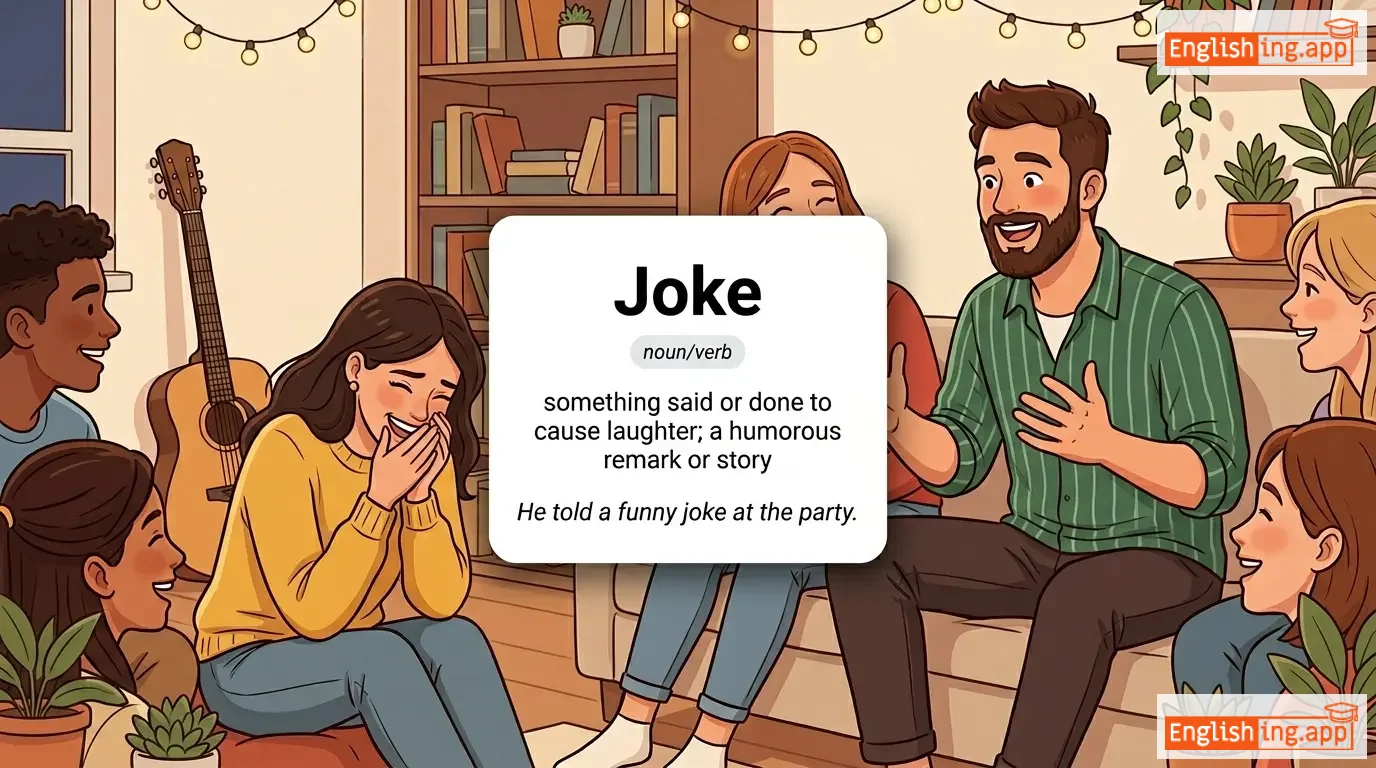
Joke definition card — visual illustration of the meaning
noun/verb
/dʒoʊk/
चुटकुला (chutkula)

something said or done to cause laughter; a humorous remark or story

"He told a funny joke at the party."

"उसने पार्टी में एक मजेदार चुटकुला सुनाया।" (Usne party mein ek mazedar chutkula sunaya.)
Joint definition card — visual illustration of the meaning
noun
/dʒɔɪnt/
संयोग (sanyog)

a place where two parts of something are joined; also a term for a business establishment or a cannabis cigarette

"The knee is a joint that connects the thigh and the leg."

"घुटना एक संयोग है जो जांघ और पैर को जोड़ता है।" (ghutna ek sanyog hai jo jangh aur pair ko jodta hai.)
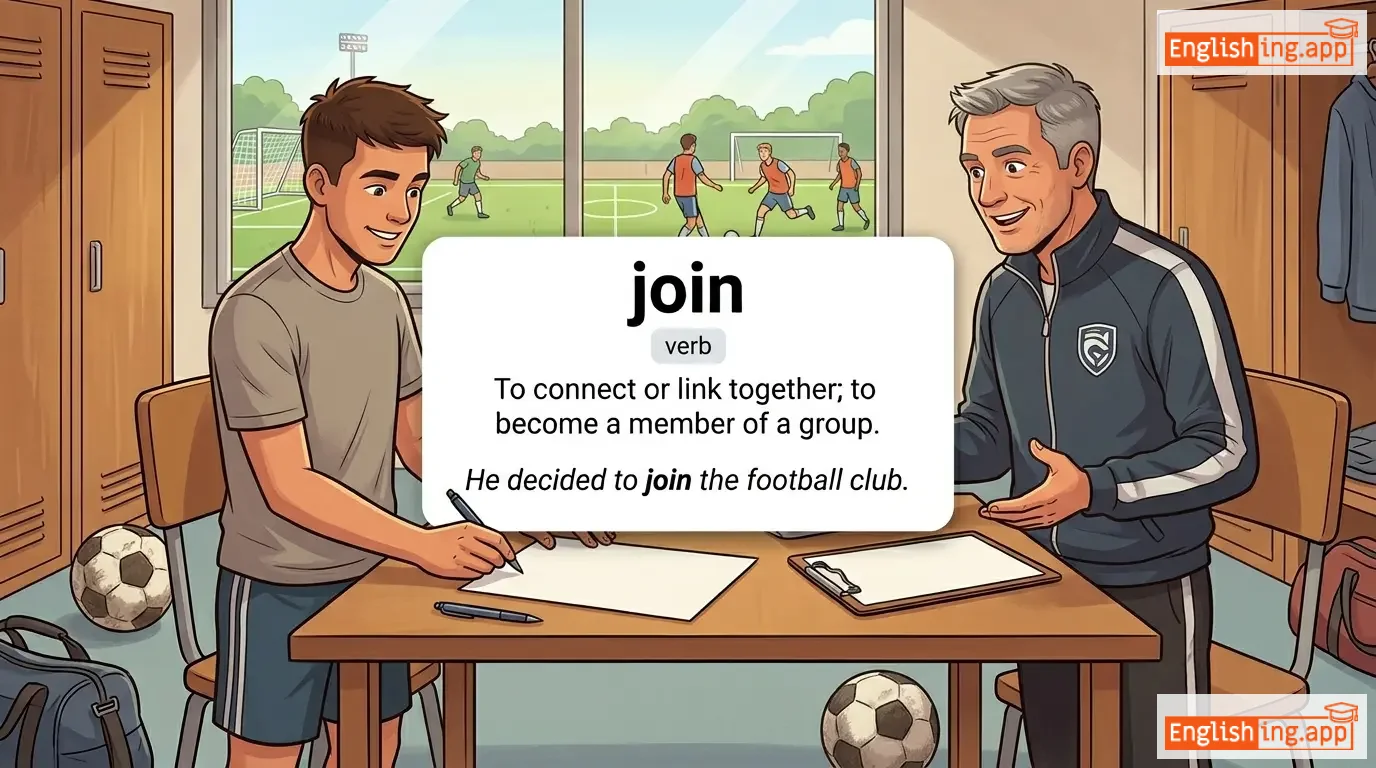
join definition card — visual illustration of the meaning
verb
/dʒɔɪn/
जोड़ना (jodna)

To connect or link together; to become a member of a group.

"He decided to join the football club."

"उसने फुटबॉल क्लब से जुड़ने का फैसला किया।" (Usne football club se judne ka faisla kiya.)
verb
/ˈdʒɒɡəl/
हल्का झटका (halka jhatka)

to shake slightly; to move or cause to move with quick, small jerks

"He joggled the table and the vase nearly fell."

"उसने टेबल को हल्का हिलाया और फूलदान लगभग गिर पड़ा।" (Usne table ko halka hilaya aur phooldan lagbhag gir pada.)
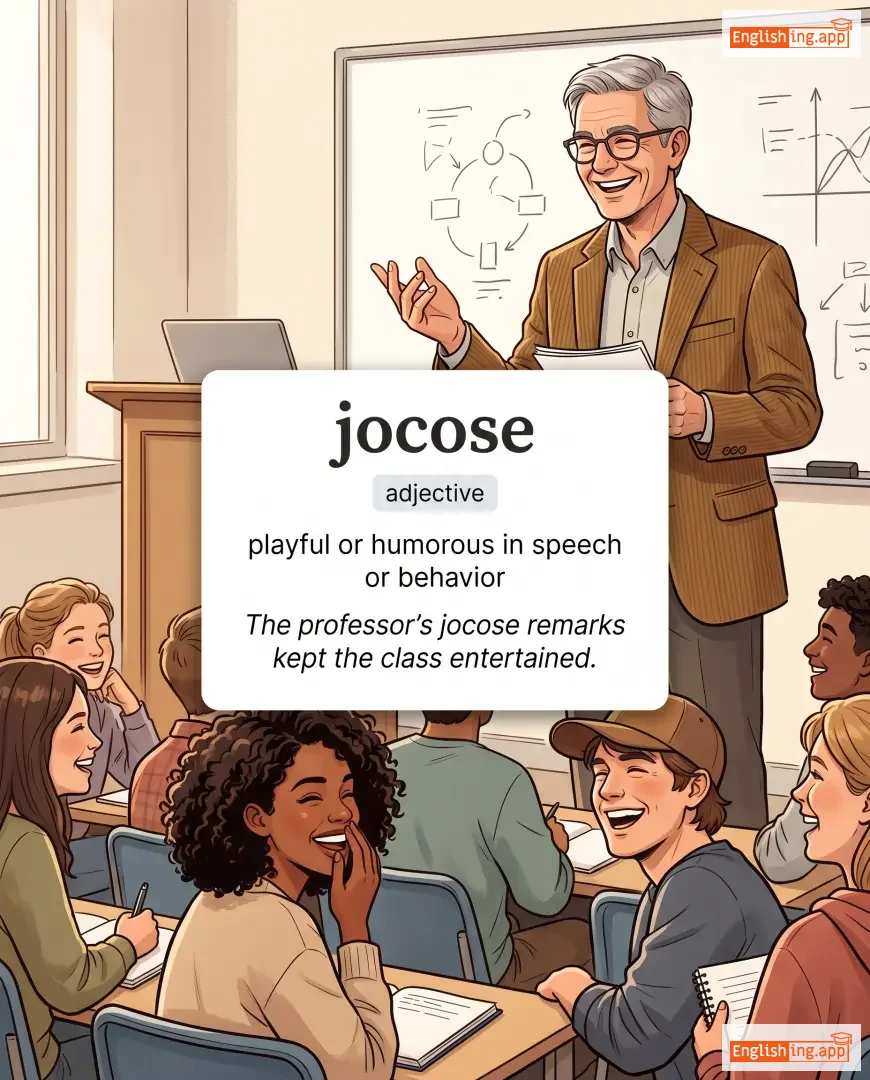
jocose definition card — visual illustration of the meaning
adjective
/dʒoʊˈkoʊs/
हास्यपूर्ण (haasyapurn)

playful or humorous in speech or behavior

"The professor’s jocose remarks kept the class entertained."

"प्रोफेसर की हास्यपूर्ण टिप्पणियाँ कक्षा को मनोरंजन करती थीं।" (professor ki haasyapurn tippaniyan kaksha ko manoranjan karti thin.)
verb
/ˈdʒɪtər/
काँपना (kaampna)

to shake or tremble slightly, often from fear, nervousness, or excitement

"He began to jitter nervously before giving his speech."

"वह अपनी स्पीच देने से पहले घबराकर काँपने लगा।" (vah apni speech dene se pehle ghabarakaar kaampne laga.)
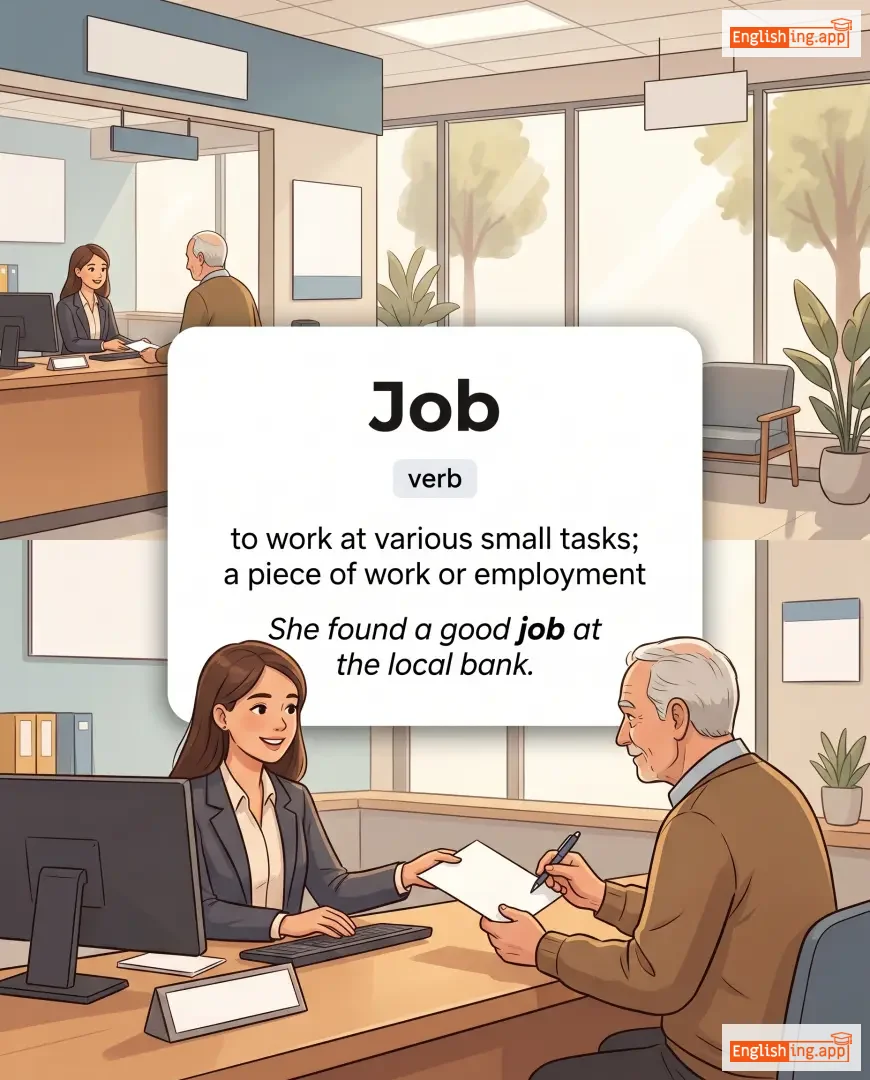
Job definition card — visual illustration of the meaning
noun
/dʒɒb/
नौकरी (naukri)

a paid position of regular employment

"She got a new job at a software company."

"वह एक सॉफ़्टवेयर कंपनी में नया जॉब पाई।" (Vah ek software company mein naya job paayi.)
/ˈdʒɛtɪsən/
निकालना (nikaalna)

to throw or drop something from a ship, aircraft, or vehicle to lighten the load; to abandon something no longer wanted

"The crew had to jettison cargo to save the sinking ship."

"क्रू को डूबते जहाज को बचाने के लिए कार्गो निकालना पड़ा।" (kru ko doobte jahaj ko bachane ke liye cargo nikaalna pada.)
adjective
/ˈdʒɒkjələr/
हंसी मजाक करने वाला (hansi mazaak karne wala)

fond of or characterized by joking; humorous

"His jocular nature made him popular among colleagues."

"उसका हंसी मजाक करने वाला स्वभाव उसे सहकर्मियों में लोकप्रिय बना देता था।" (uska hansi mazaak karne wala swabhav use sahkarmiyon mein lokpriya bana deta tha.)
adjective
/ˈdʒɒkənd/
आनंदित (anandit)

cheerful and lighthearted

"They walked together in a jocund mood after the celebration."

"वे जश्न के बाद आनंदित मूड में साथ में चल रहे थे।" (ve jashn ke baad anandit mood mein saath mein chal rahe the.)