Vocabularios

Descubra, aprenda y domine el vocabulario en inglés

noun
/ˈkiː.pər/
guardián; cuidador; (guardian; cuidador)

a person whose job it is to guard or take care of something or someone; a goalkeeper

"The zoo keeper fed the animals every morning at eight o'clock."

"El cuidador del zoológico alimentaba a los animales todas las mañanas a las ocho en punto." (El cuidador del zoologico alimentaba a los animales todas las mañanas a las ocho en punto.)
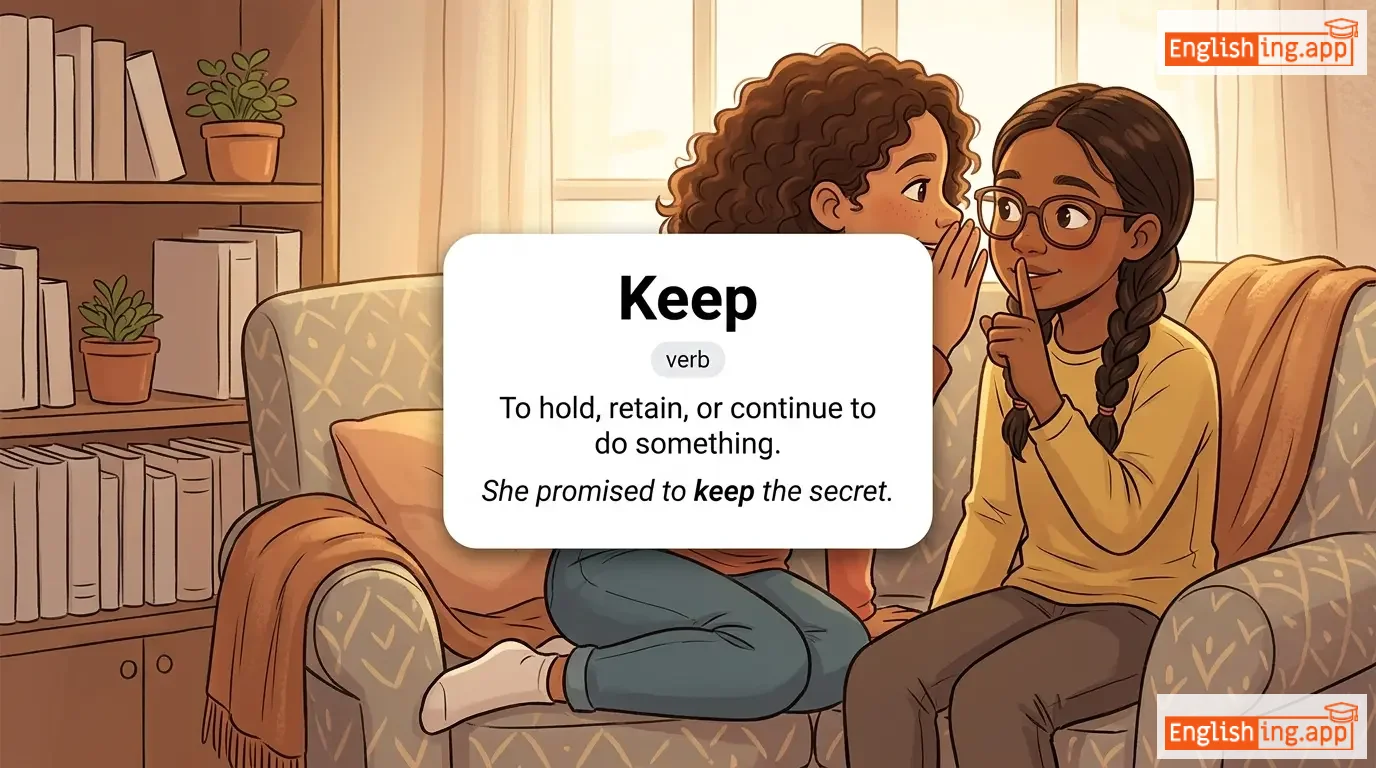
Keep definition card — visual illustration of the meaning
verb
/kiːp/
mantener (mantener)

To hold, retain, or continue to do something.

"She promised to keep the secret."

"Ella prometió mantener el secreto." (Ella prometió mantener el secreto.)
adjective
/kiːn/
entusiasta, interesado (entusiasta, interesado)

Having or showing eagerness or enthusiasm; sharp or highly developed (for senses).

"She is very keen to learn new skills."

"Ella está muy interesada en aprender nuevas habilidades." (Ella esta muy interesada en aprender nuevas habilidades.)
noun
/ˈkedʒ.ə.riː/
kedgeree (kedgeree)

a European dish of cooked rice, fish, and hard-boiled eggs, originally from India

"The breakfast menu featured traditional kedgeree with smoked haddock and eggs."

"El menú del desayuno presentaba kedgeree tradicional con haddock ahumado y huevos." (El menú del desayuno presentaba kedgeree tradicional con haddock ahumado y huevos.)
Karonda definition card — visual illustration of the meaning
noun
/kəˈrɒn.də/
karonda (karonda)

a small dark purple berry-like fruit that is sour and used in pickles

"Karonda is often used to make pickles and preserves."

"La karonda se usa a menudo para hacer encurtidos y conservas." (La karonda se usa a menudo para hacer encurtidos y conservas.)
noun
/ˈkærət/
quilate (kilate)

A unit for measuring the purity of gold, with 24 karats being pure gold.

"The ring was made of 18-karat gold."

"El anillo estaba hecho de oro de 18 quilates." (El anillo estaba hecho de oro de 18 quilates.)
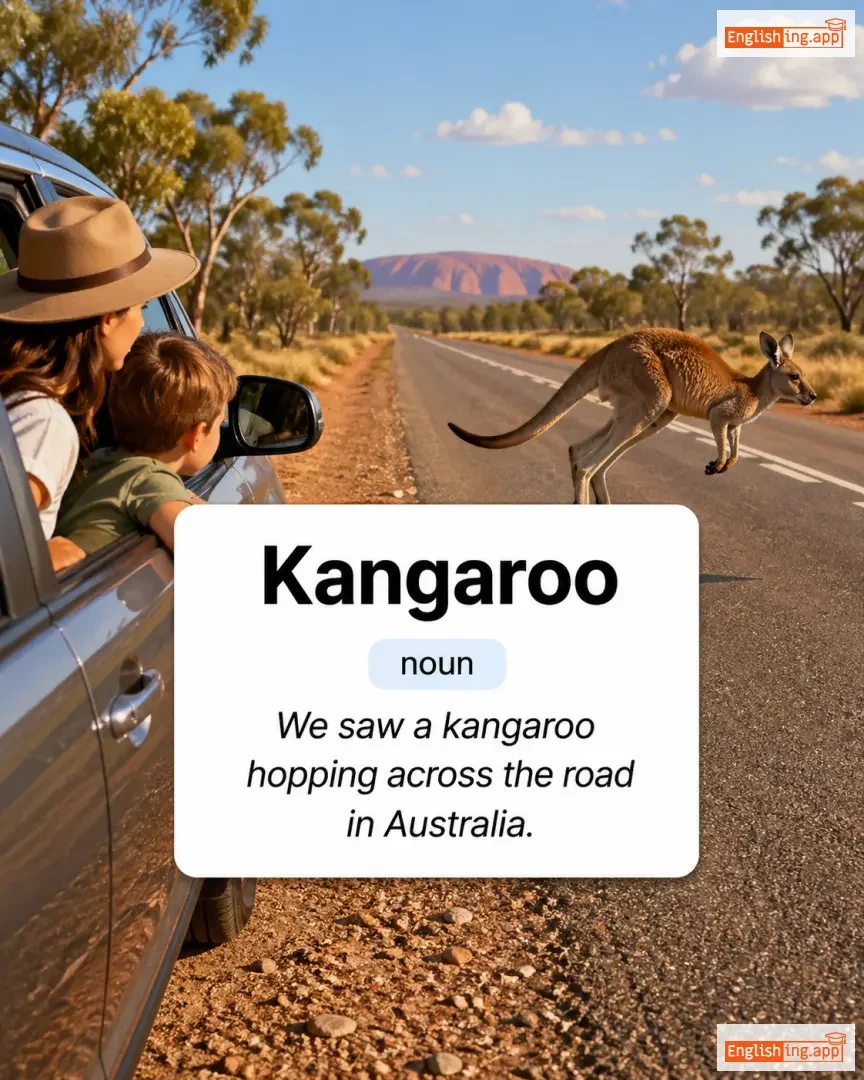
Kangaroo definition card — visual illustration of the meaning
noun
/ˌkæŋɡəˈruː/
canguro (canguro)

A large Australian marsupial with powerful hind legs and a long tail, known for hopping.

"We saw a kangaroo hopping across the road in Australia."

"Vimos un canguro saltando a través de la carretera en Australia." (Vimos un canguro saltando a través de la carretera en Australia.)
noun
/kəˈlaɪdəˌskoʊp/
caleidoscopio (kaleidoscopio)

A toy or instrument with mirrors and colored pieces that create changing patterns when rotated; also used metaphorically for a constantly changing sequence of patterns or elements.

"The city lights turned into a kaleidoscope of colors as the festival began."

"Las luces de la ciudad se convirtieron en un caleidoscopio de colores cuando comenzó el festival." (Las luces de la ciudad se convirtieron en un caleidoscopio de colores cuando comenzó el festival.)
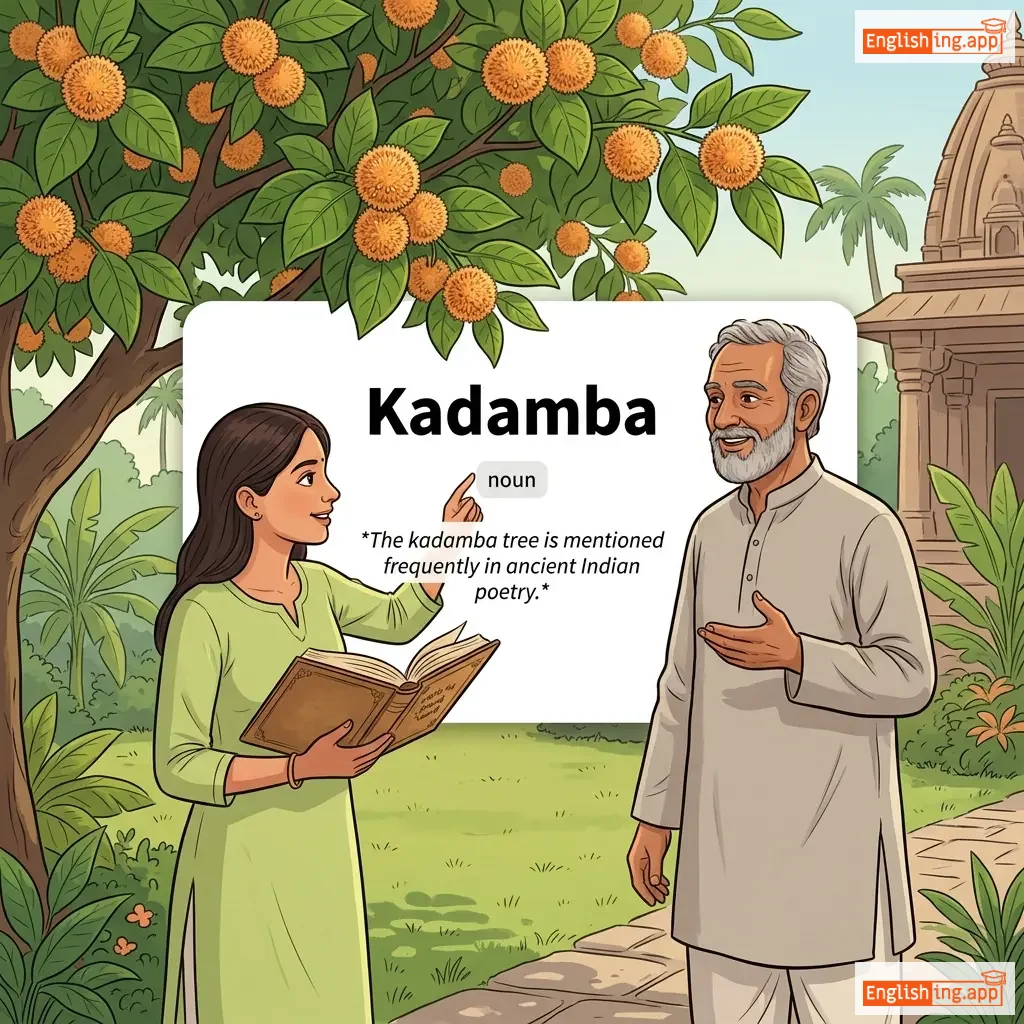
Kadamba definition card — visual illustration of the meaning
noun
/kəˈdʌm.bə/
árbol kadamba (Kadamba)

A tropical tree with round, fragrant orange flowers, sacred in Hindu culture and associated with Lord Krishna

"The kadamba tree is mentioned frequently in ancient Indian poetry."

"El árbol kadamba se menciona con frecuencia en la poesía india antigua." (El arbol kadamba se menciona con frecuencia en la poesia india antigua)
noun
/kəˈbɑːdi/
chatarrero (chatarrero)

a person who collects and sells scrap or recyclable materials, especially in South Asia

"The kabadi came every week to collect old newspapers and bottles."

"El chatarrero recoge materiales viejos para reciclar." (el chatarrero recoge materiales viejos para reciclar)
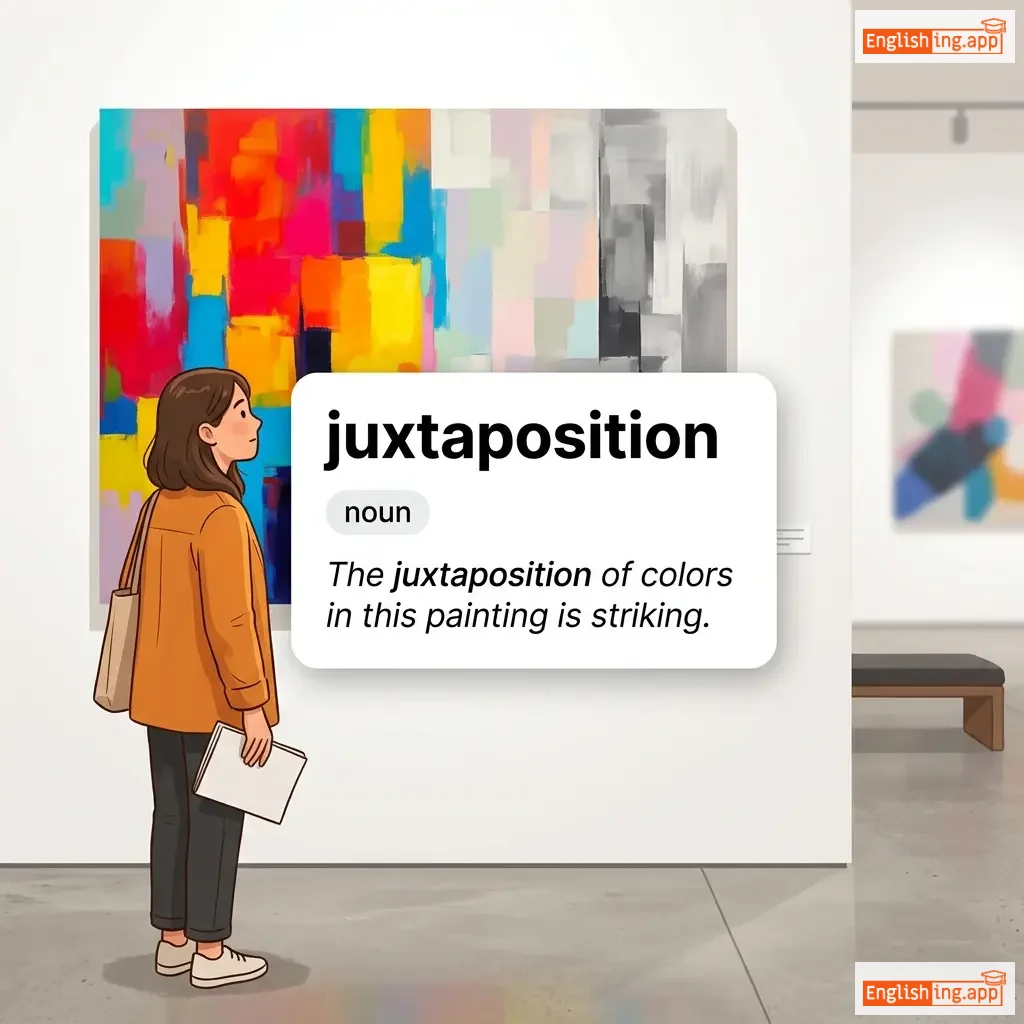
juxtaposition definition card — visual illustration of the meaning
noun
/ˌdʒʌk.stə.pəˈzɪʃ.ən/
yuxtaposición (yuxtaposicion)

The fact of two things being seen or placed close together with contrasting effect.

"The juxtaposition of colors in this painting is striking."

"La yuxtaposición de los colores en esta pintura es llamativa." (La yuxtaposicion de los colores en esta pintura es llamativa.)
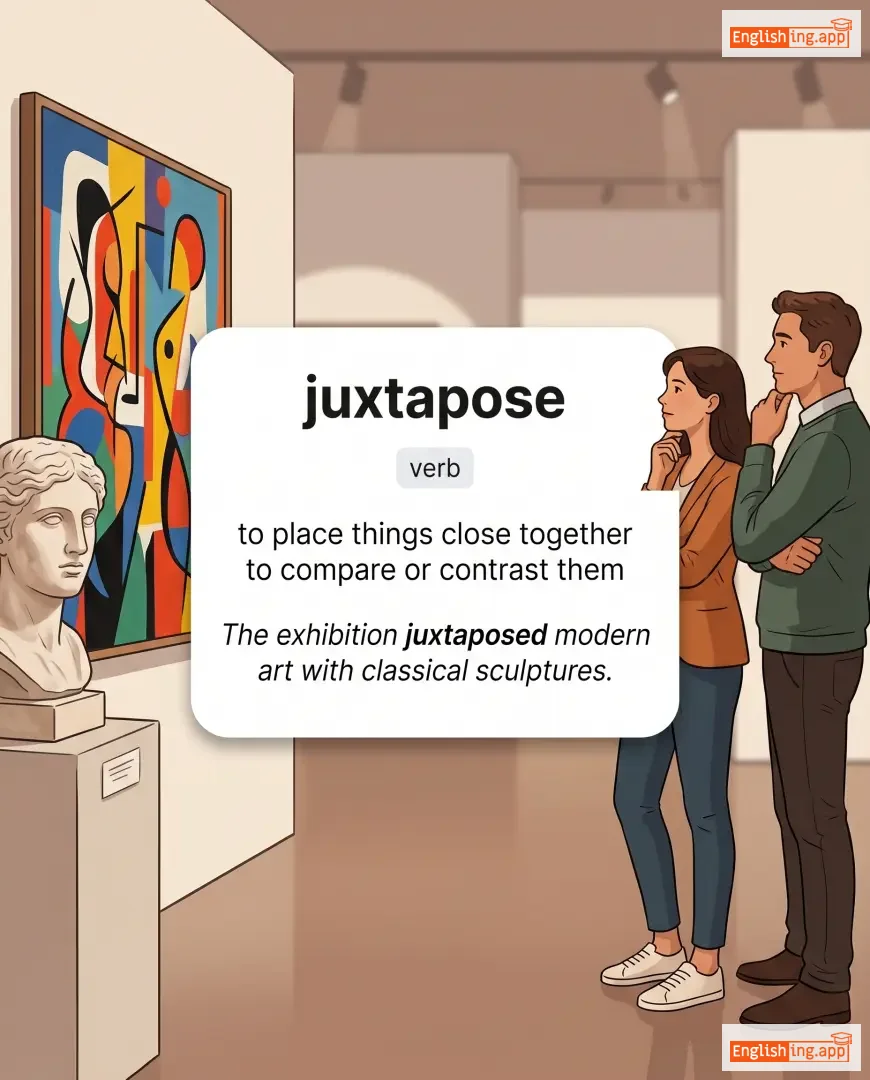
juxtapose definition card — visual illustration of the meaning
verb
/ˈdʒʌkstəˌpoʊz/
colocar cosas juntas para comparar o contrastar (colocar cosas juntas para comparar o contrastar)

to place things close together to compare or contrast them

"The exhibition juxtaposed modern art with classical sculptures."

"La exhibición colocó arte moderno junto con esculturas clásicas." (La exhibición colocó arte moderno junto con esculturas clásicas.)
adjective, noun
/ˈdʒuːvənaɪl/
juvenil (juvenil)

relating to young people; childish or immature

"The court sent the case to a juvenile detention center."

"El tribunal envió el caso a un centro de detención juvenil." (El tribunal envio el caso a un centro de detencion juvenil.)
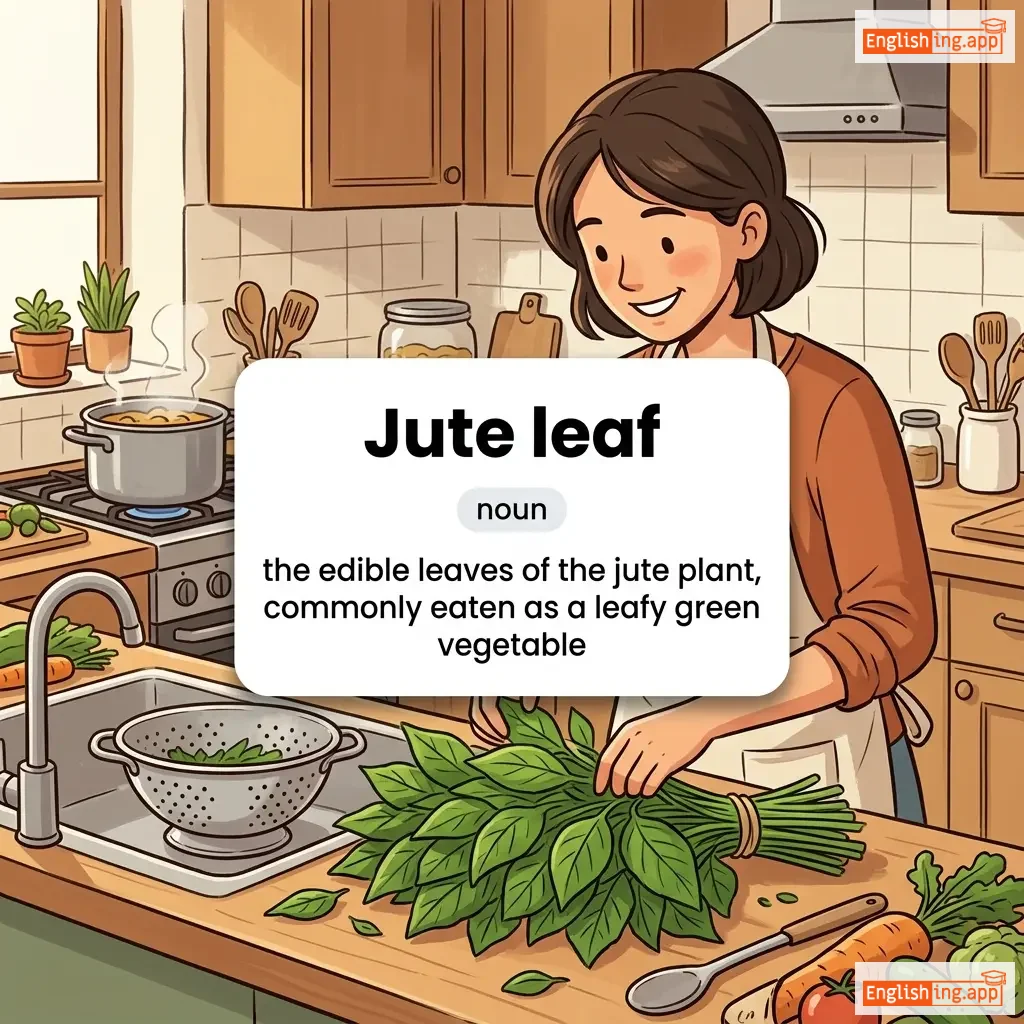
Jute leaf definition card — visual illustration of the meaning
noun
/dʒuːt liːf/
hoja de yute (hoja de yute)

the edible leaves of the jute plant, commonly eaten as a leafy green vegetable

"Jute leaf is rich in vitamins and minerals and is often cooked with lentils in Bengali cuisine."

"La hoja de yute es rica en vitaminas y minerales y a menudo se cocina con lentejas en la cocina bengalí." (La hoja de yute es rica en vitaminas y minerales y a menudo se cocina con lentejas en la cocina bengalí.)
noun
/dʒuːt/
yute (yute)

a long, soft, shiny plant fiber used to make rope, bags, sacks, and coarse cloth

"Jute is widely used to make eco-friendly bags and ropes."

"El yute se utiliza para fabricar bolsas y cuerdas." (el yute se utiliza para fabricar bolsas y cuerdas)
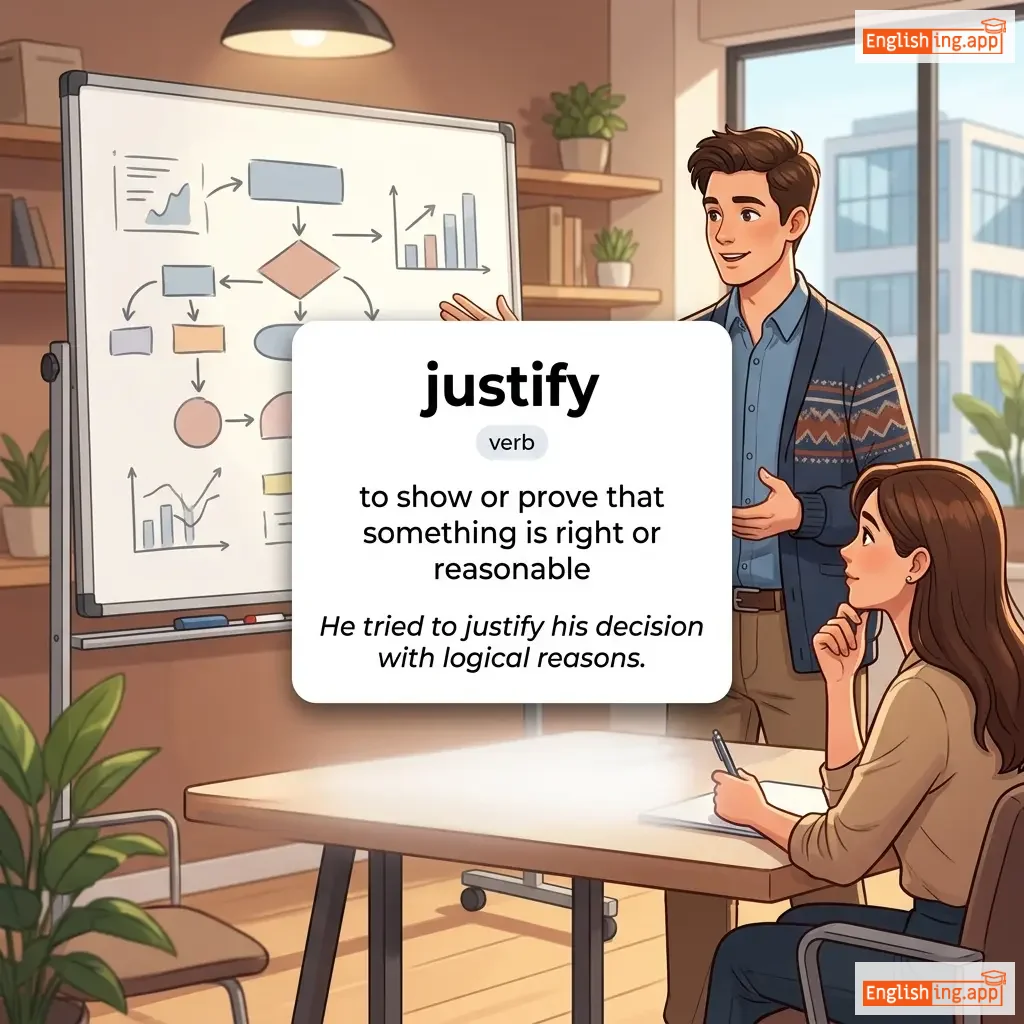
justify definition card — visual illustration of the meaning
verb
/ˈdʒʌstɪfaɪ/
justificar (justificar)

to show or prove that something is right or reasonable

"He tried to justify his decision with logical reasons."

"Él trató de justificar su decisión con razones lógicas." (El trato de justificar su decisión con razones lógicas.)
noun
/ˌdʒʌstɪfɪˈkeɪʃən/
justificación (justificacion)

a reason, explanation, or excuse that shows something is right or reasonable

"There is no justification for such rude behavior."

"No hay justificación para tal comportamiento grosero." (No hay justificacion para tal comportamiento grosero.)
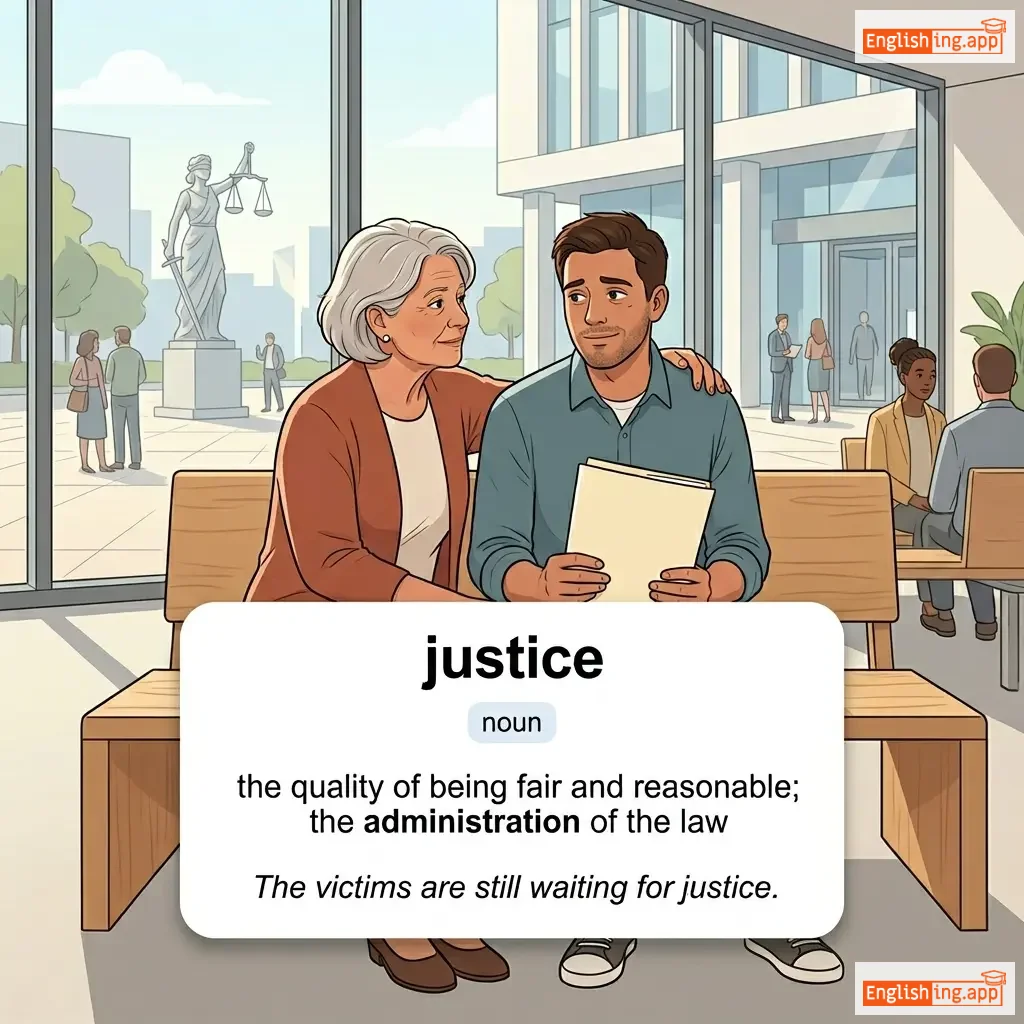
justice definition card — visual illustration of the meaning
noun
/ˈdʒʌstɪs/
justicia (justicia)

the quality of being fair and reasonable; the administration of the law

"The victims are still waiting for justice."

"Las víctimas todavía esperan justicia." (Las victimas todavia esperan justicia.)
adverb/adjective
/dʒʌst/
Exactamente, solo, o justo y moralmente correcto (Exactamente, solo, o justo y moralmente correcto)

Exactly, only, or fair and morally right.

"She arrived just in time for the meeting."

"Ella llegó justo a tiempo para la reunión." (Ella llegó justo a tiempo para la reunión.)
noun
/ˈdʒʊəri/
jurado (jurado)

a group of people sworn to give a verdict in a legal case based on the evidence

"The jury found him guilty of the crime."

"El jurado lo encontró culpable del crimen." (El jurado lo encontró culpable del crimen.)
noun
/ˈdʒʊərər/
miembro del jurado (miembro del jurado)

a member of a jury who is chosen to hear evidence in a legal case and help make a decision

"The juror listened carefully to the witness’s testimony."

"El miembro del jurado escuchó cuidadosamente el testimonio del testigo." (El miembro del jurado escuchó cuidadosamente el testimonio del testigo.)
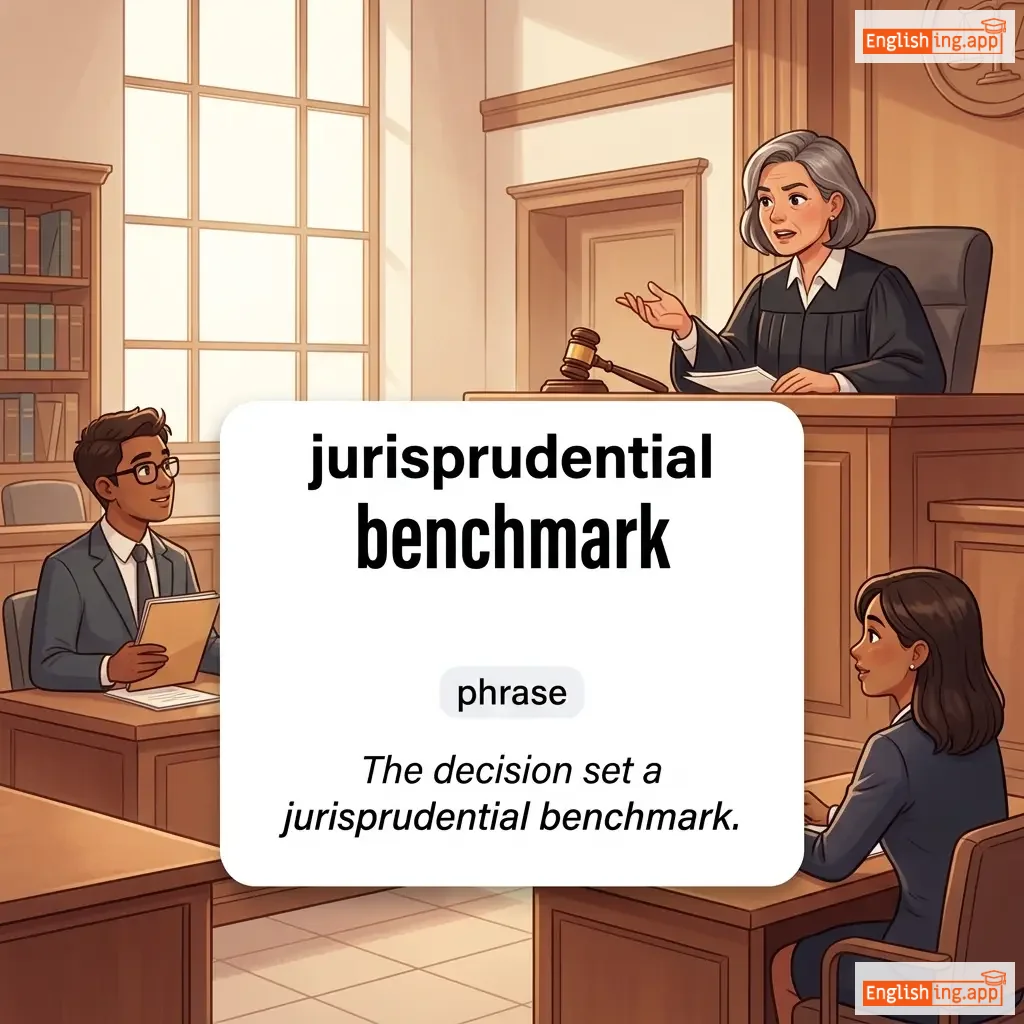
jurisprudential benchmark definition card — visual illustration of the meaning
phrase
ˌdʒʊə.rɪs.pruːˈden.ʃəl ˈbentʃ.mɑːk
punto de referencia jurídico (punto de referencia juridico)

A legal standard or precedent that serves as a reference point for future legal decisions.

"The decision set a jurisprudential benchmark."

"La decisión estableció un punto de referencia jurídico." (La decisión estableció un punto de referencia jurídico.)
noun
/ˌdʒʊərɪsˈpruːdəns/
jurisprudencia (jurisprudencia)

The theory, philosophy, or science of law.

"She is a professor of jurisprudence at the university."

"Ella es profesora de jurisprudencia en la universidad." (Ella es profesora de jurisprudencia en la universidad.)
noun
/ˌdʒʊərɪsˈdɪkʃən/
jurisdicción (jurisdiccion)

The official power to make legal decisions and judgments.

"The court has jurisdiction over criminal cases."

"El tribunal tiene jurisdicción sobre los casos criminales." (El tribunal tiene jurisdiccion sobre los casos criminales.)
adjective
/dʒʊˈrɪdɪkəl/
jurídico (juridico)

Relating to judicial proceedings or the administration of law.

"The case raised important juridical questions."

"El caso planteó importantes preguntas jurídicas." (El caso planteo importantes preguntas juridicas.)
noun
/ˈdʒɪŋɡoʊɪst/
jingoísta (jingoista)

a person who supports jingoism; an extreme nationalist with aggressive foreign policies

"He was labeled a jingoist for his extreme views."

"Fue etiquetado como un jingoísta por sus opiniones extremas." (Fue etiquetado como un jingoísta por sus opiniones extremas.)
noun
/ˈdʒet.i/
muelle (muelle)

a landing stage or small pier at which boats can dock or be moored

"The fishing boats were tied up at the wooden jetty near the harbor."

"Los barcos pesqueros estaban amarrados en el muelle de madera cerca del puerto." (Los barcos pesqueros estaban amarrados en el muelle de madera cerca del puerto.)
✡️

jew (yu)

noun
/dʒuː/
judío (judio)

a person whose religion is Judaism or who is of Jewish descent

"He is a Jew by heritage and follows Jewish customs."

"Él es judío por herencia y sigue las costumbres judías." (Él es judío por herencia y sigue las costumbres judías.)
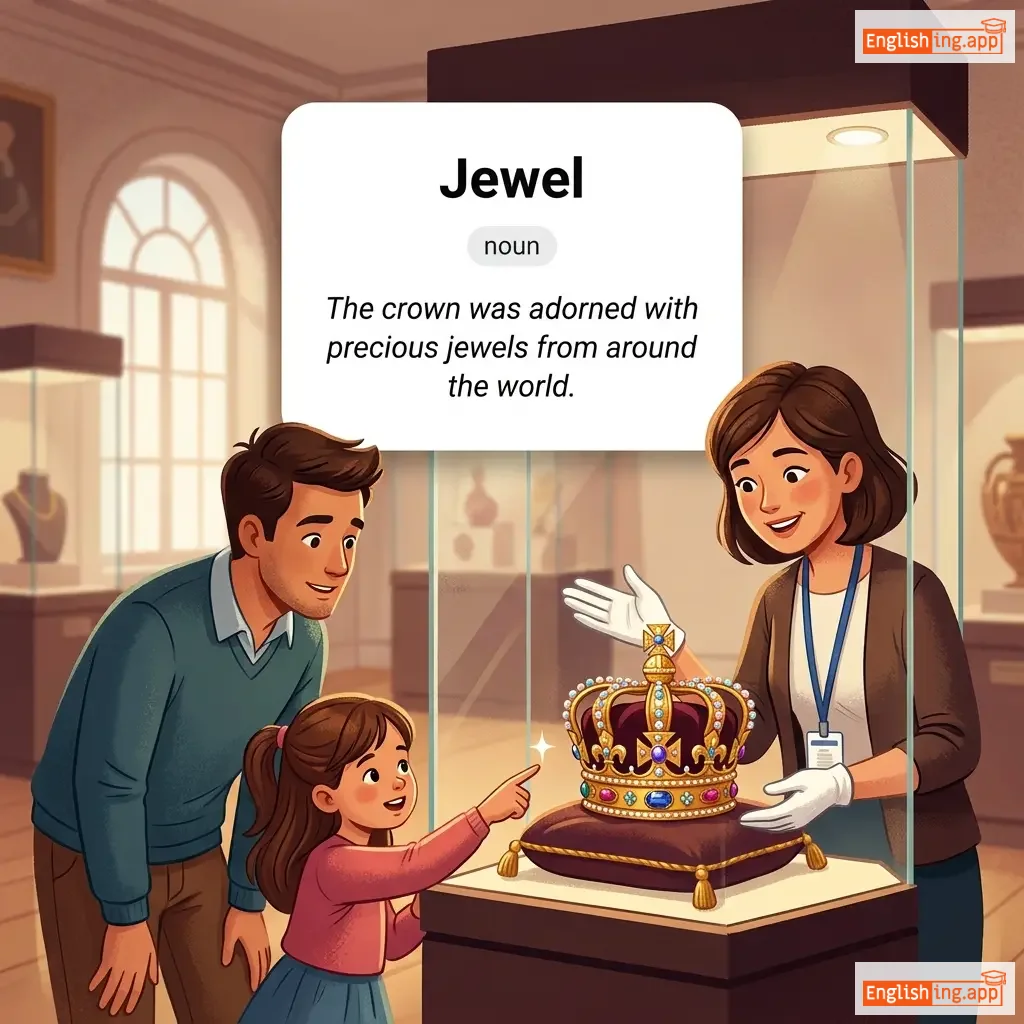
Jewel definition card — visual illustration of the meaning
noun
/ˈdʒuː.əl/
joya (joya)

a precious stone or a piece of jewelry containing precious stones

"The ancient treasure chest contained many rare jewels."

"El antiguo cofre del tesoro contenía muchas joyas raras." (El antiguo cofre del tesoro contenía muchas joyas raras.)
noun
/ˈdʒuːələr/
joyero (joyero)

a person who makes, repairs, or sells jewelry

"The jeweller crafted a beautiful gold ring."

"El joyero fabricó un hermoso anillo de oro." (El joyero fabrico un hermoso anillo de oro)
noun
/ˈdʒuːəlri/
joyería (joyeria)

ornamental items worn for personal adornment, such as rings, necklaces, or bracelets, often made of precious metals or stones

"She wore beautiful jewellery to the wedding."

"Ella llevaba joyería hermosa en la boda." (ella llevaba joyeria hermosa en la boda)
noun
/ˈdʒuːəlri/
joyas (joyas)

personal ornaments such as necklaces, rings, or bracelets that are typically made from precious metals and stones

"She wore gold jewelry at the wedding."

"Ella llevaba joyas de oro en la boda." (Ella llevaba joyas de oro en la boda.)
adjective
/ˈdʒuːɪʃ/
felicidad (felicidad)

relating to Jews or Judaism

"They celebrate Jewish festivals every year."

"Ella no pudo ocultar su felicidad cuando recibió el premio." (Ella no pudo ocultar su felicidad cuando recibió el premio.)
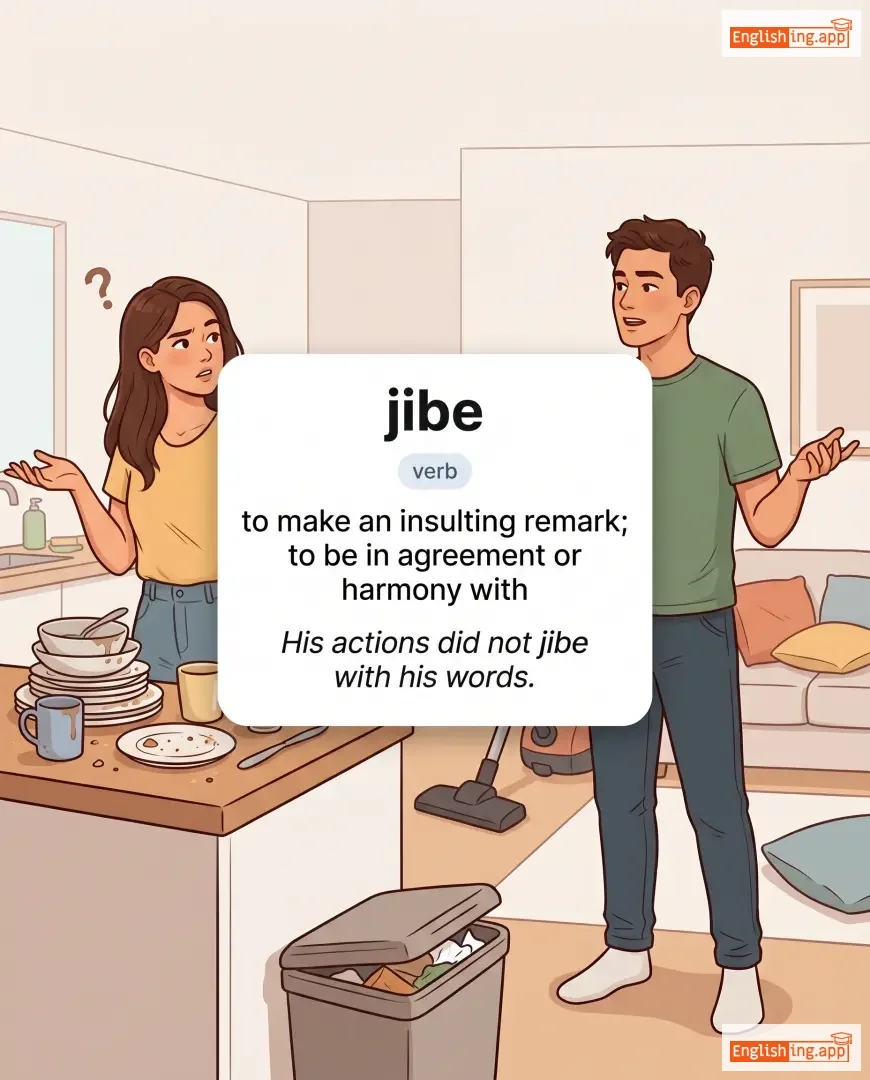
jibe definition card — visual illustration of the meaning
verb
/dʒaɪb/
insultar / estar en armonía (insultar / estar en armonia)

to make an insulting remark; to be in agreement or harmony with

"His actions did not jibe with his words."

"Sus acciones no coincidían con sus palabras." (Sus acciones no coincidían con sus palabras.)
adjective
/ˈdʒɪg.ərd/
sorprendido; asombrado; (jiggerd)

surprised or astonished; confused or puzzled

"I'll be jiggered if I know what happened here."

"Me sorprendería si supiera lo que ocurrió aquí." (Me sorprenderia si supiera lo que ocurrio aqui.)
noun
/ˈdʒɪŋ.ɡəl/
un sonido metálico ligero, como el que hacen los objetos metálicos cuando se agitan; una canción corta y pegadiza (dʒɪŋɡəl)

a light ringing sound such as that made by metal objects being shaken together; a short catchy song

"The jingle of keys could be heard as she walked down the hallway."

"El sonido de las llaves se podía escuchar mientras caminaba por el pasillo." (El sonido de las llaves se podía escuchar mientras caminaba por el pasillo.)
noun
/ˈdʒɪŋɡoʊ/
nacionalista belicista (nacionalista belicista)

a person who strongly supports warlike or aggressive foreign policy; an extreme nationalist

"The leader was criticized as a reckless jingo."

"El líder fue criticado como un jingo imprudente." (El líder fue criticado como un jingo imprudente.)
noun
/ˈdʒɪŋɡoʊˌɪzəm/
patriotismo extremo (patriotismo extremo)

extreme patriotism expressed in aggressive foreign policy

"The politician's speech was filled with jingoism."

"El discurso del político estaba lleno de jingoísmo." (El discurso del político estaba lleno de jingoísmo.)
verb
/dʒɑːɡ/
trotar (trotar)

to run at a slow, steady pace for exercise

"She jogs every morning in the park."

"Ella trota todas las mañanas en el parque." (eya trota todas las mananas en el parke)
noun
/ˈdʒoʊ.kər/
una carta de juego con una imagen de un bufón, utilizada como carta comodín; una persona que disfruta de hacer bromas (una carta de juego con una imagen de un bufón, utilizada como carta comodín; una persona que disfruta de hacer bromas)

a playing card with a picture of a jester, used as a wild card; a person who is fond of joking

"He used the joker card to complete his winning hand in the poker game."

"Usó la carta del joker para completar su mano ganadora en el juego de póker." (Uso la carta del joker para completar su mano ganadora en el juego de poker.)
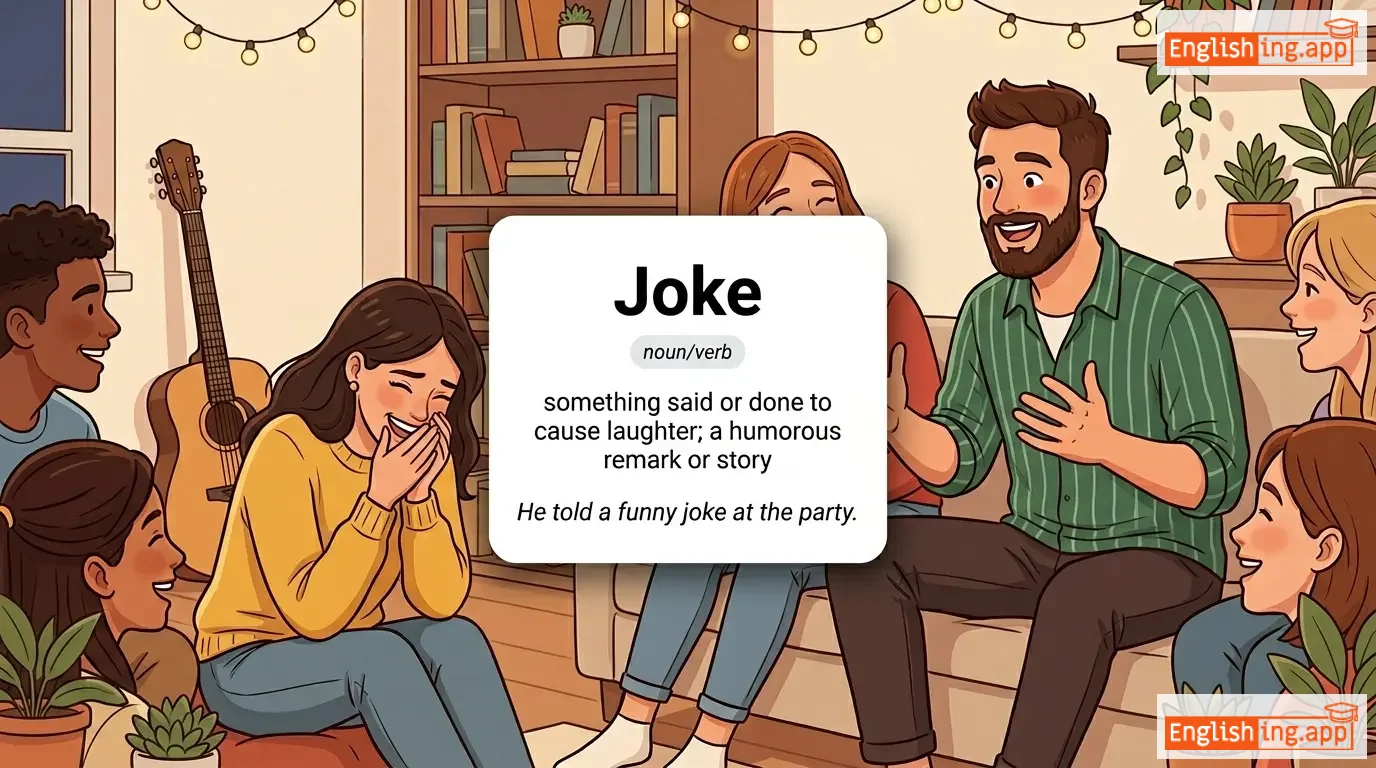
Joke definition card — visual illustration of the meaning
noun/verb
/dʒoʊk/
broma (broma)

something said or done to cause laughter; a humorous remark or story

"He told a funny joke at the party."

"Él contó una broma divertida en la fiesta." (Él contó una broma divertida en la fiesta.)
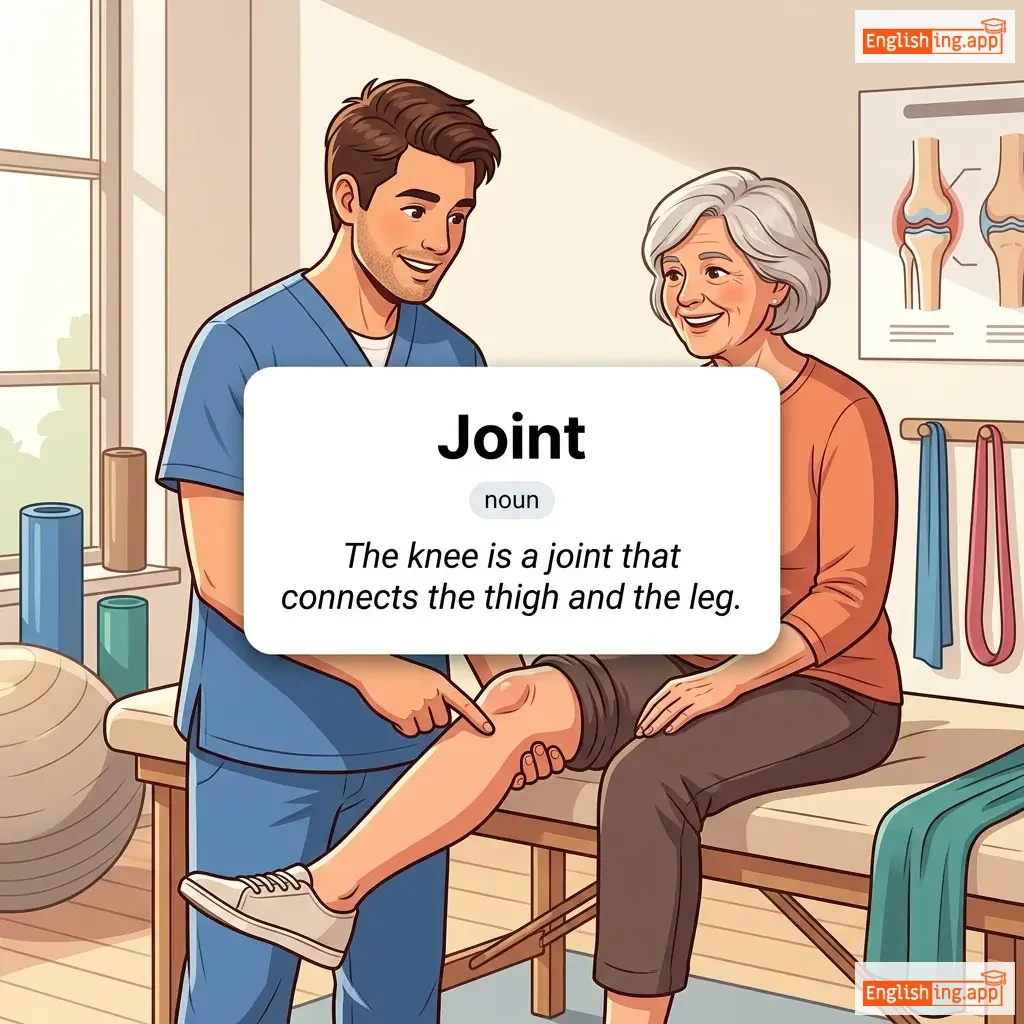
Joint definition card — visual illustration of the meaning
noun
/dʒɔɪnt/
articulación (articulacion)

a place where two parts of something are joined; also a term for a business establishment or a cannabis cigarette

"The knee is a joint that connects the thigh and the leg."

"La rodilla es una articulación que conecta el muslo y la pierna." (La rodilla es una articulacion que conecta el muslo y la pierna.)
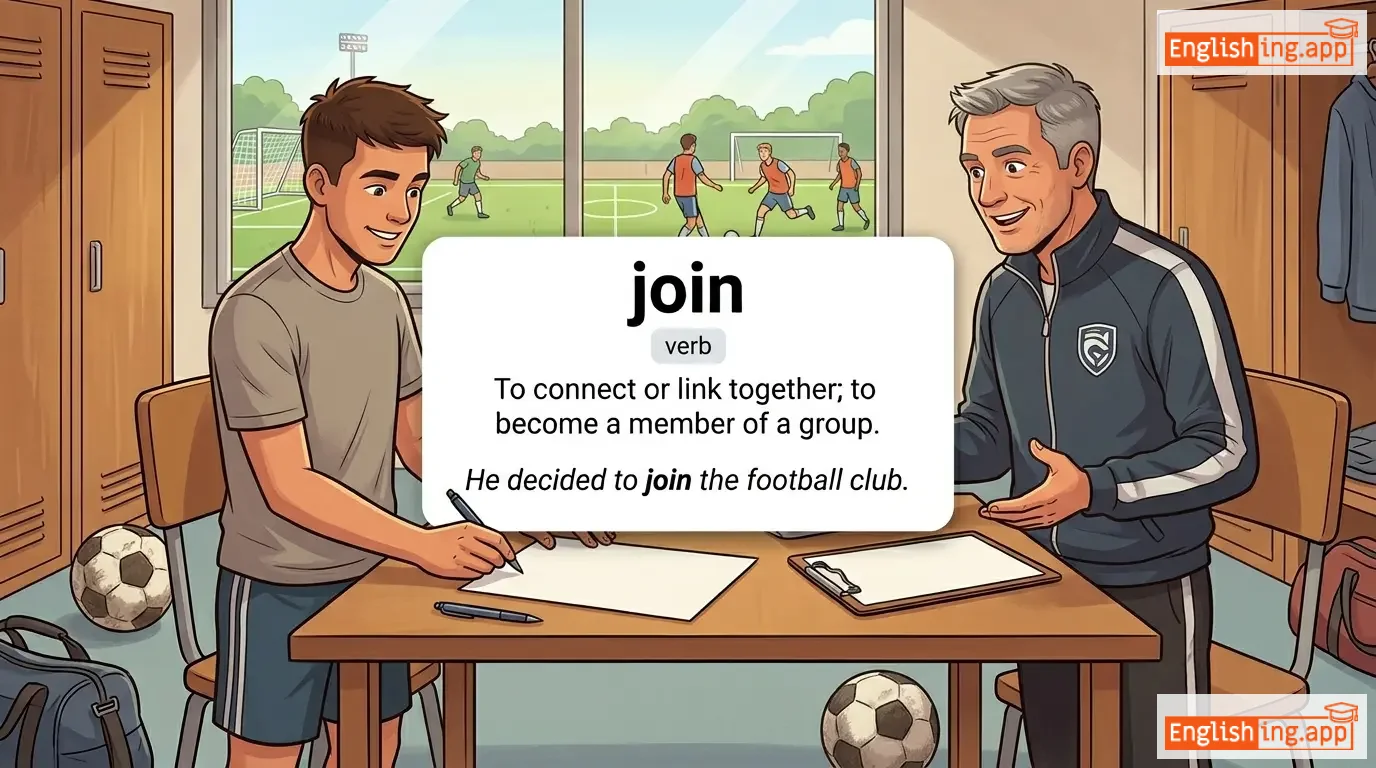
join definition card — visual illustration of the meaning
verb
/dʒɔɪn/
unirse (unirse)

To connect or link together; to become a member of a group.

"He decided to join the football club."

"Él decidió unirse al club de fútbol." (Él decidió unirse al club de fútbol.)
verb
/ˈdʒɒɡəl/
sacudir ligeramente (sacudir ligeramente)

to shake slightly; to move or cause to move with quick, small jerks

"He joggled the table and the vase nearly fell."

"Él movió la mesa y el jarrón casi se cayó." (Él movió la mesa y el jarrón casi se cayó.)
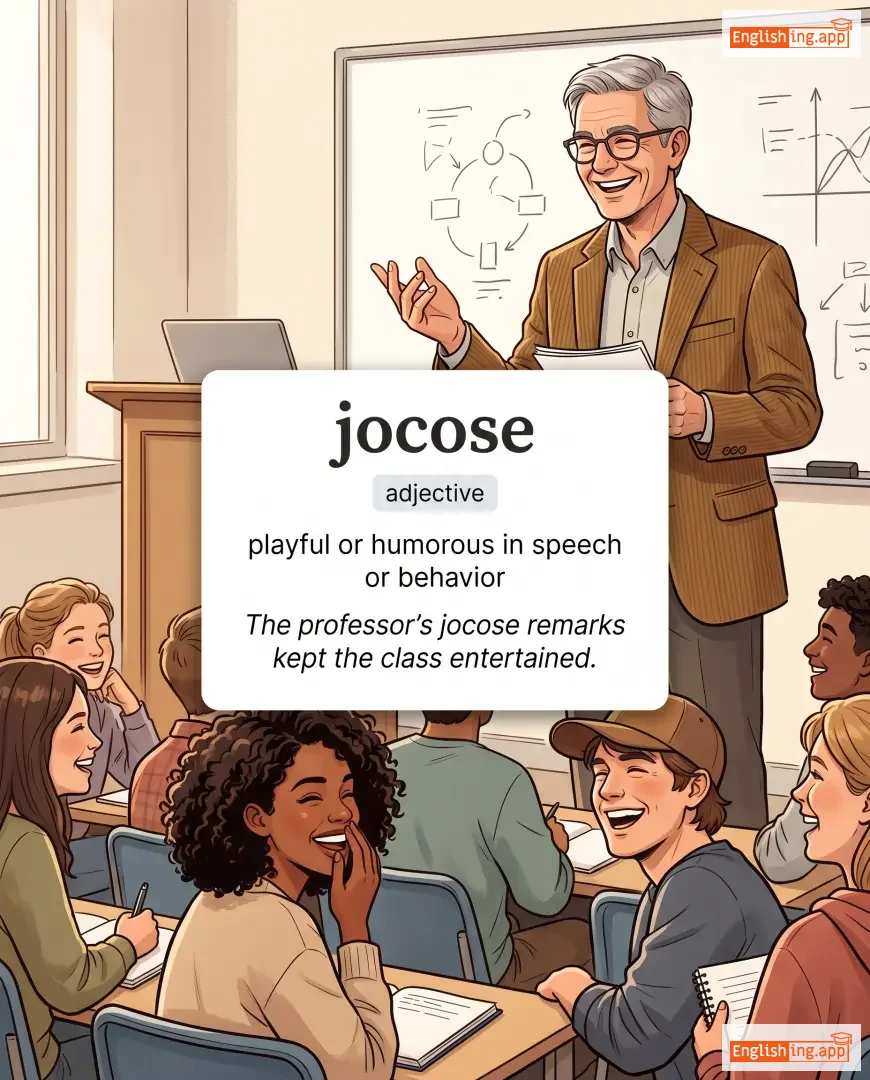
jocose definition card — visual illustration of the meaning
adjective
/dʒoʊˈkoʊs/
jocoso (jocoso)

playful or humorous in speech or behavior

"The professor’s jocose remarks kept the class entertained."

"Los comentarios jocosos del profesor mantuvieron entretenida a la clase." (Los comentarios jocosos del profesor mantuvieron entretenida a la clase.)
verb
/ˈdʒɪtər/
temblar (temblar)

to shake or tremble slightly, often from fear, nervousness, or excitement

"He began to jitter nervously before giving his speech."

"Comenzó a temblar nerviosamente antes de dar su discurso." (Comenzó a temblar nerviosamente antes de dar su discurso.)
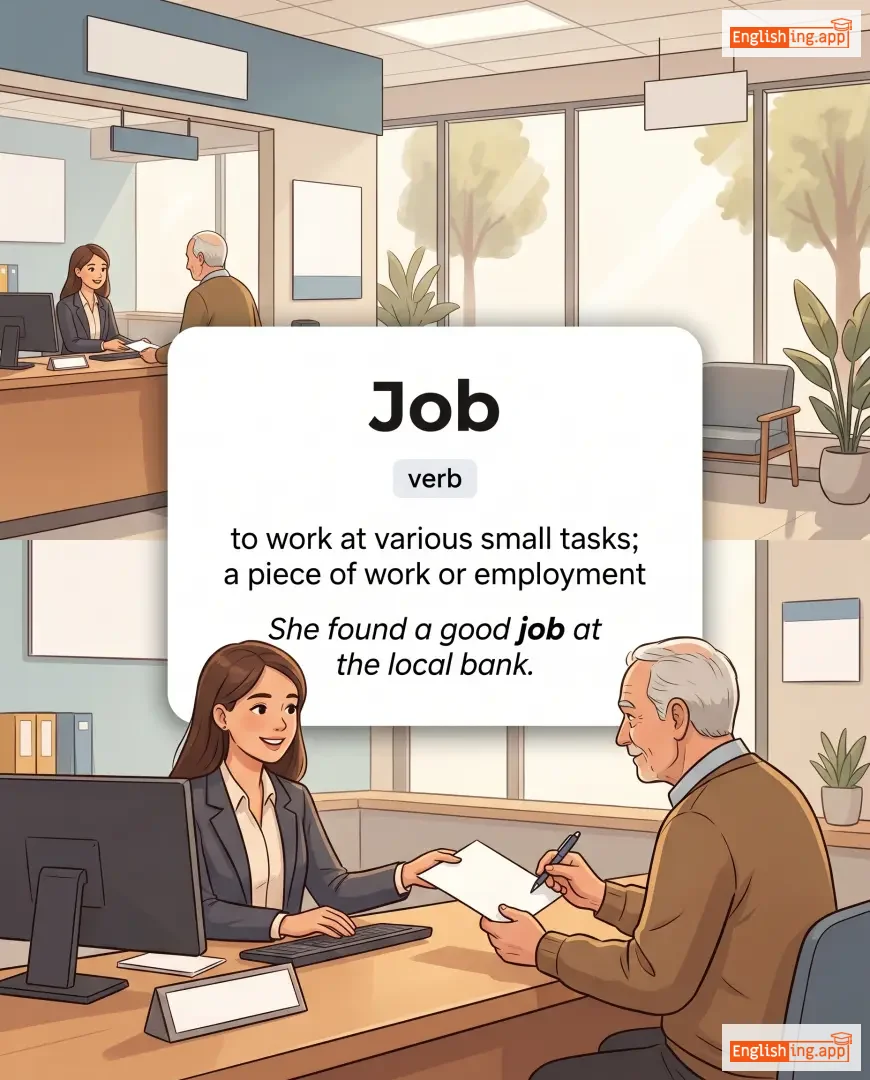
Job definition card — visual illustration of the meaning
noun
/dʒɒb/
trabajo (trabajo)

a paid position of regular employment

"She got a new job at a software company."

"Ella consiguió un nuevo trabajo en una empresa de software." (Ella consiguio un nuevo trabajo en una empresa de software.)
/ˈdʒɛtɪsən/
abandonar (abandonar)

to throw or drop something from a ship, aircraft, or vehicle to lighten the load; to abandon something no longer wanted

"The crew had to jettison cargo to save the sinking ship."

"La tripulación tuvo que abandonar la carga para salvar el barco que se hundía." (La tripulacion tuvo que abandonar la carga para salvar el barco que se hundia.)
adjective
/ˈdʒɒkjələr/
bromista (bromista)

fond of or characterized by joking; humorous

"His jocular nature made him popular among colleagues."

"Su naturaleza bromista lo hizo popular entre sus compañeros." (Su naturaleza bromista lo hizo popular entre sus compañeros.)
adjective
/ˈdʒɒkənd/
alegre (alegre)

cheerful and lighthearted

"They walked together in a jocund mood after the celebration."

"Caminaban juntos con un ánimo alegre después de la celebración." (Caminaban juntos con un animo alegre despues de la celebracion.)