Vocabularios

Descubra, aprenda y domine el vocabulario en inglés

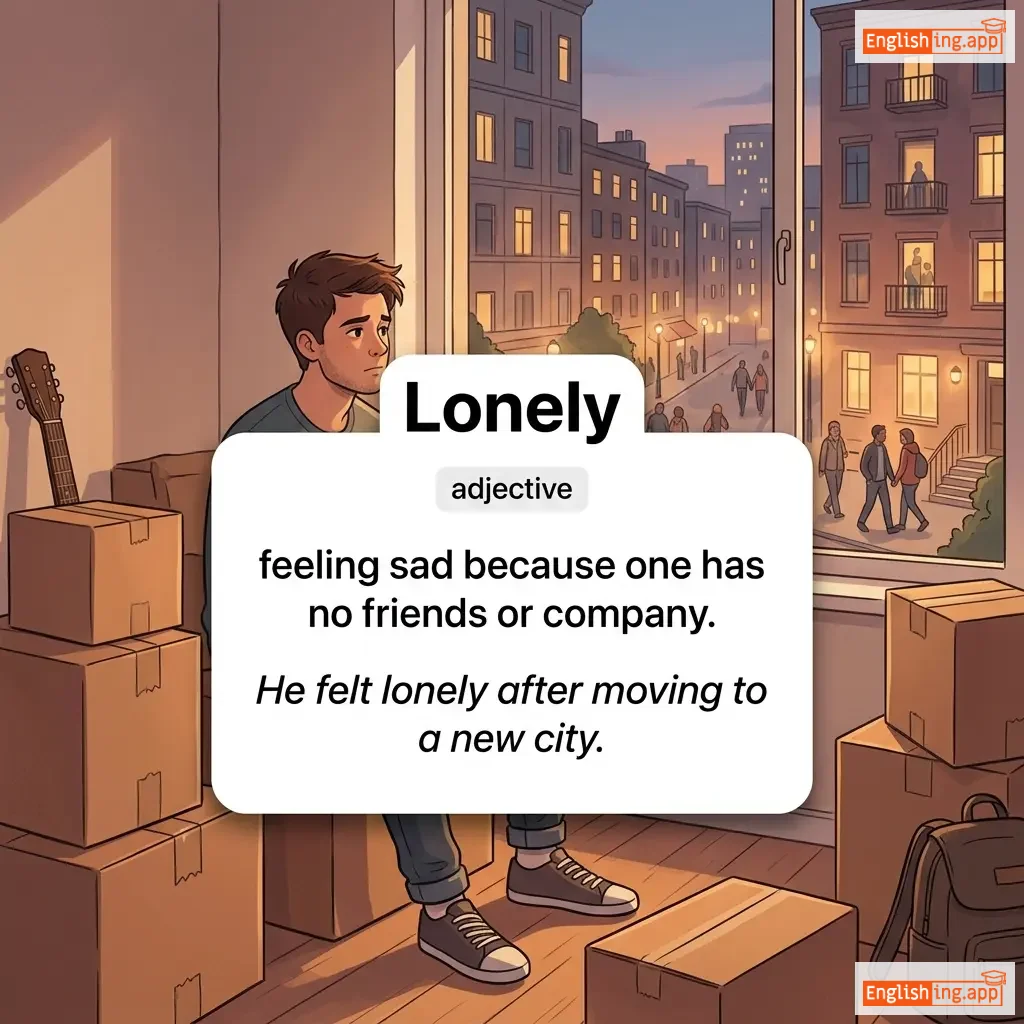
Lonely definition card — visual illustration of the meaning
adjective
/ˈloʊnli/
solo (solo)

feeling sad because one has no friends or company.

"He felt lonely after moving to a new city."

"Se sintió solo después de mudarse a una nueva ciudad." (Se sintió solo después de mudarse a una nueva ciudad.)
noun, verb
/lɪst/
lista (lista)

A series of names, items, or tasks written or printed together; also, to record or register items in such a way.

"She wrote a shopping list before going to the market."

"Ella escribió una lista de compras antes de ir al mercado." (Ella escribió una lista de compras antes de ir al mercado.)
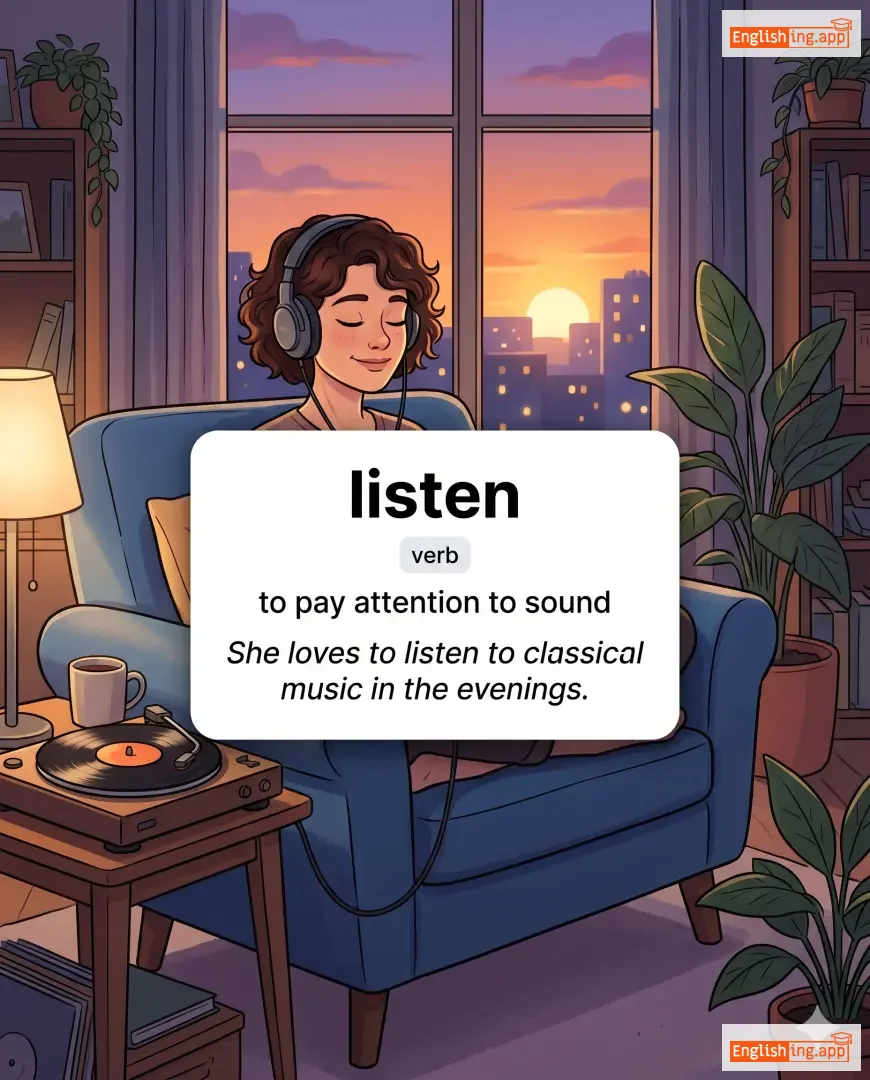
listen definition card — visual illustration of the meaning
verb
/ˈlɪs.ən/
escuchar (es-kuchar)

to pay attention to sound

"She loves to listen to classical music in the evenings."

"A ella le encanta escuchar música clásica por la tarde." (A ella le encanta escuchar música clásica por la tarde.)
noun
/ˈlɪsənər/
oyente (oyente)

a person who listens or pays attention to something, especially to a speaker or sound.

"She is a good listener who always understands others' problems."

"Ella es una buena oyente que siempre entiende los problemas de los demás." (Ella es una buena oyente que siempre entiende los problemas de los demás.)
noun
/ˈlɪstɪŋ/
lista (lista)

a series of items or names written or printed in a specific order

"The listing of available jobs was updated daily."

"La lista de trabajos disponibles se actualizaba a diario." (La lista de trabajos disponibles se actualizaba a diario.)
adjective
/ˈlɪstləs/
sin energía (sin energia)

lacking energy, enthusiasm, or interest

"She felt listless after working long hours without rest."

"Se sintió sin energía después de trabajar durante largas horas sin descanso." (Se sintió sin energia después de trabajar durante largas horas sin descanso.)
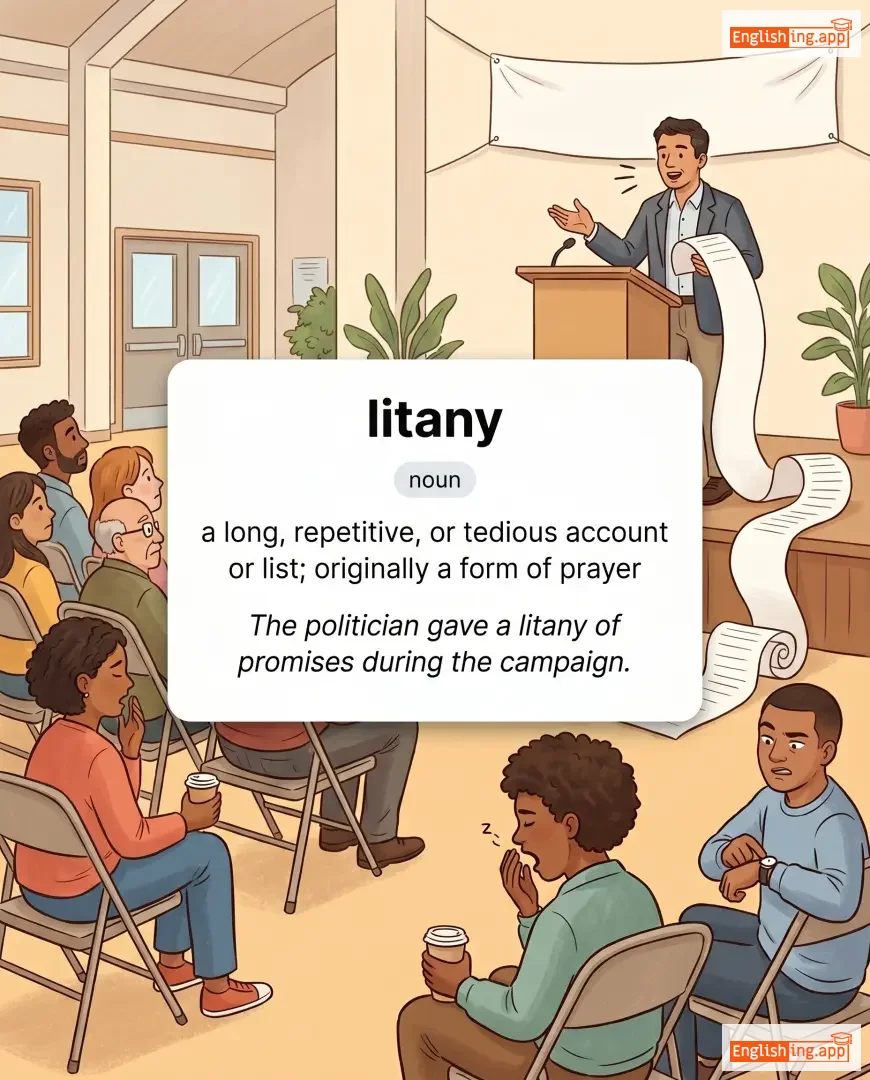
litany definition card — visual illustration of the meaning
noun
/ˈlɪtəni/
litany (litany)

a long, repetitive, or tedious account or list; originally a form of prayer

"The politician gave a litany of promises during the campaign."

"El político dio una larga lista de promesas durante la campaña." (El político dio una larga lista de promesas durante la campaña.)
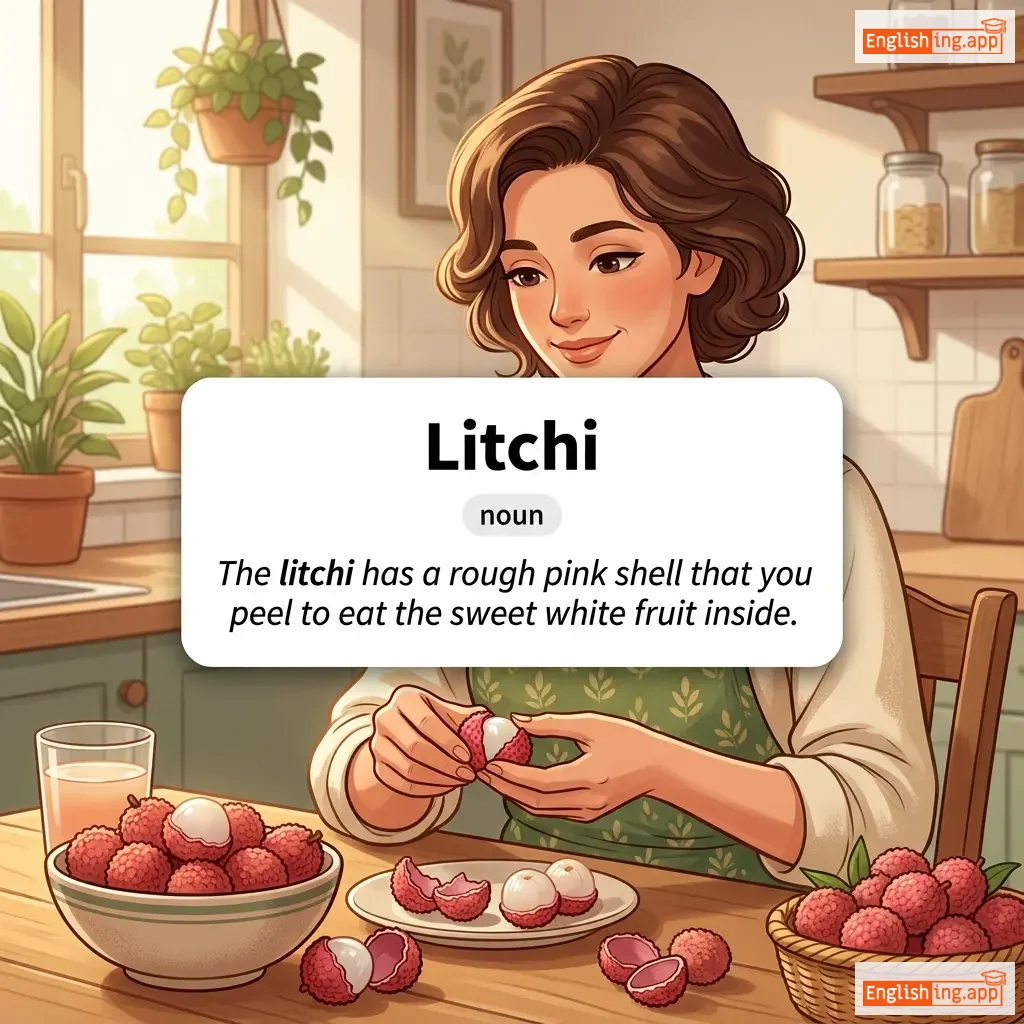
Litchi definition card — visual illustration of the meaning
noun
/ˈlaɪtʃi/
lichi (lichi)

a small oval pink-red tropical fruit with white translucent flesh and sweet taste

"The litchi has a rough pink shell that you peel to eat the sweet white fruit inside."

"El litchi tiene una cáscara rosa rugosa que se pela para comer la fruta blanca y dulce en su interior." (El litchi tiene una cascara rosa rugosa que se pela para comer la fruta blanca y dulce en su interior.)
noun
/ˈlɪtə(r)/
litro (liter)

a metric unit of volume equal to one cubic decimeter

"The recipe calls for two liters of water."

"La receta requiere dos litros de agua." (La receta requiere dos litros de agua.)
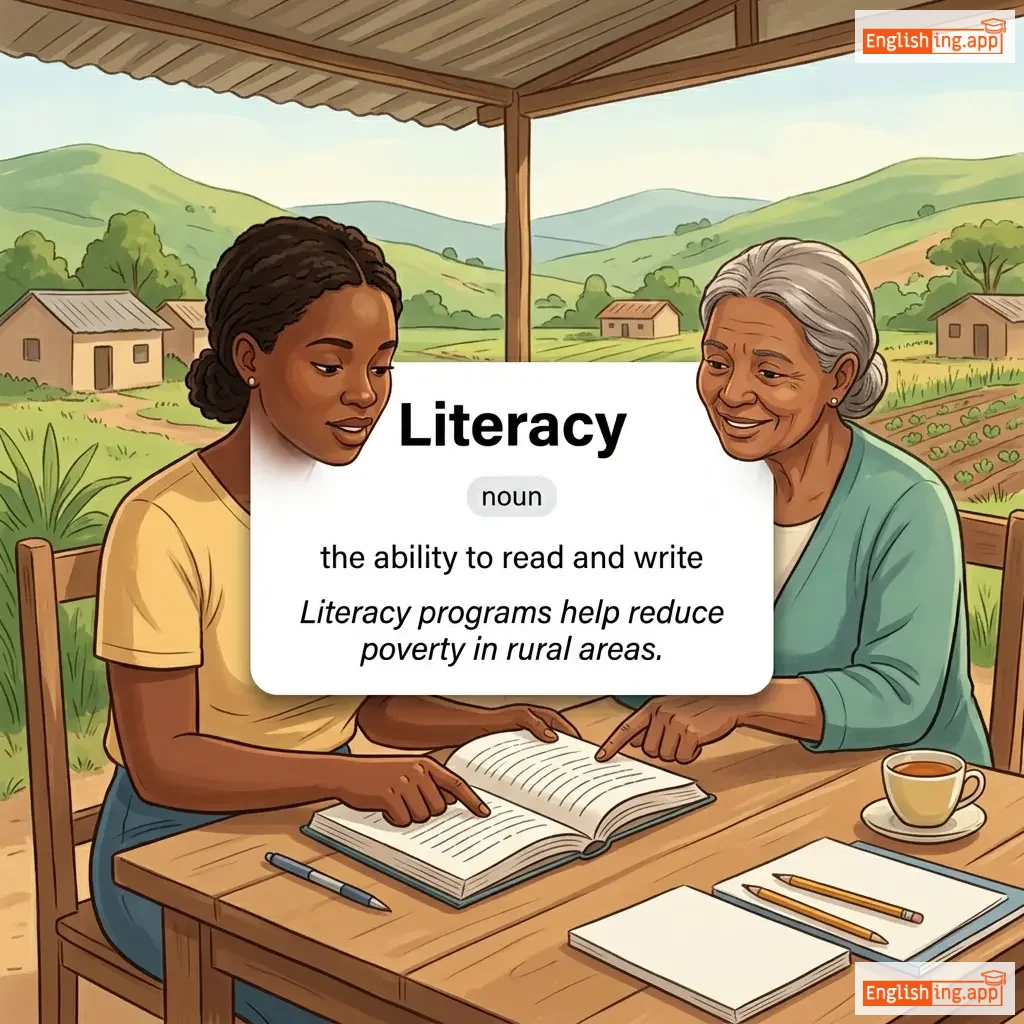
Literacy definition card — visual illustration of the meaning
noun
/ˈlɪtərəsi/
alfabetización (alfabetizacion)

the ability to read and write

"Literacy programs help reduce poverty in rural areas."

"Los programas de alfabetización ayudan a reducir la pobreza en las zonas rurales." (Los programas de alfabetización ayudan a reducir la pobreza en las zonas rurales.)
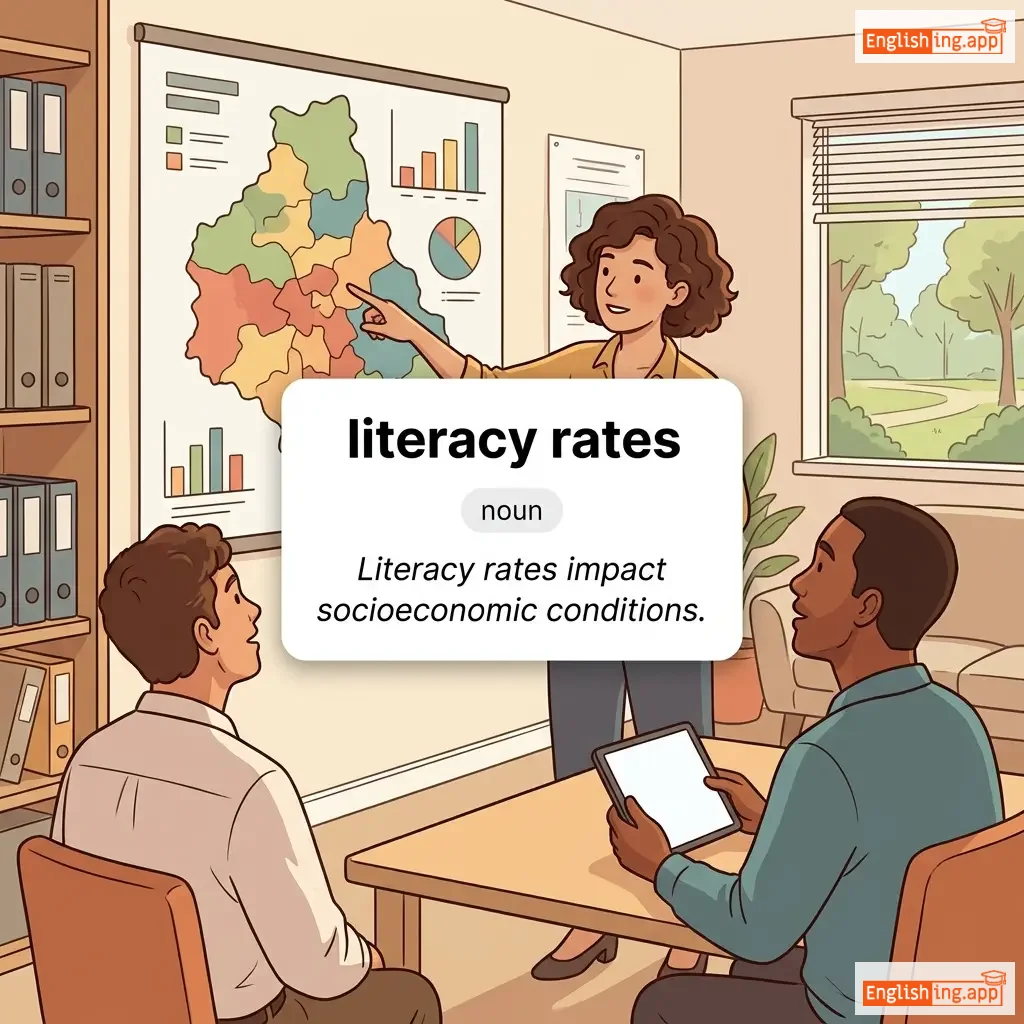
literacy rates definition card — visual illustration of the meaning
noun
ˈlɪt.ər.ə.si ˌreɪts
tasas de alfabetización (tasas de alfabetizacion)

The percentage of people in a population who can read and write; measures of educational levels in a population.

"Literacy rates impact socioeconomic conditions."

"Las tasas de alfabetización afectan las condiciones socioeconómicas." (Las tasas de alfabetizacion afectan las condiciones socioeconomicas.)
adjective
/ˈlɪtərəl/
literal (literal)

taking words in their usual or most basic sense without metaphor or exaggeration

"His comment was meant as a joke, not to be taken in a literal sense."

"Su comentario fue dicho en tono de broma, no para tomarse de manera literal." (Su comentario fue dicho en tono de broma, no para tomarse de manera literal.)
adverb
/ˈlɪtərəli/
literalmente (literalmente)

in a literal manner or sense; exactly

"He was literally running for three hours without stopping."

"Él estuvo corriendo literalmente durante tres horas sin detenerse." (Él estuvo corriendo literalmente durante tres horas sin detenerse.)
adjective
/ˈlɪtərɛri/
literario (literario)

concerning the writing, study, or content of literature

"She is a well-known figure in the literary world."

"Ella es una figura conocida en el mundo literario." (Ella es una figura conocida en el mundo literario.)
adjective
/ˈlɪt.ər.ət/
alfabetizado; educado; bien educado (literet)

able to read and write; educated; well-educated

"She is a very literate person who reads extensively."

"Ella es una persona muy alfabetizada que lee extensamente." (ella es una persona muy alfabetizada que lee extensamente.)
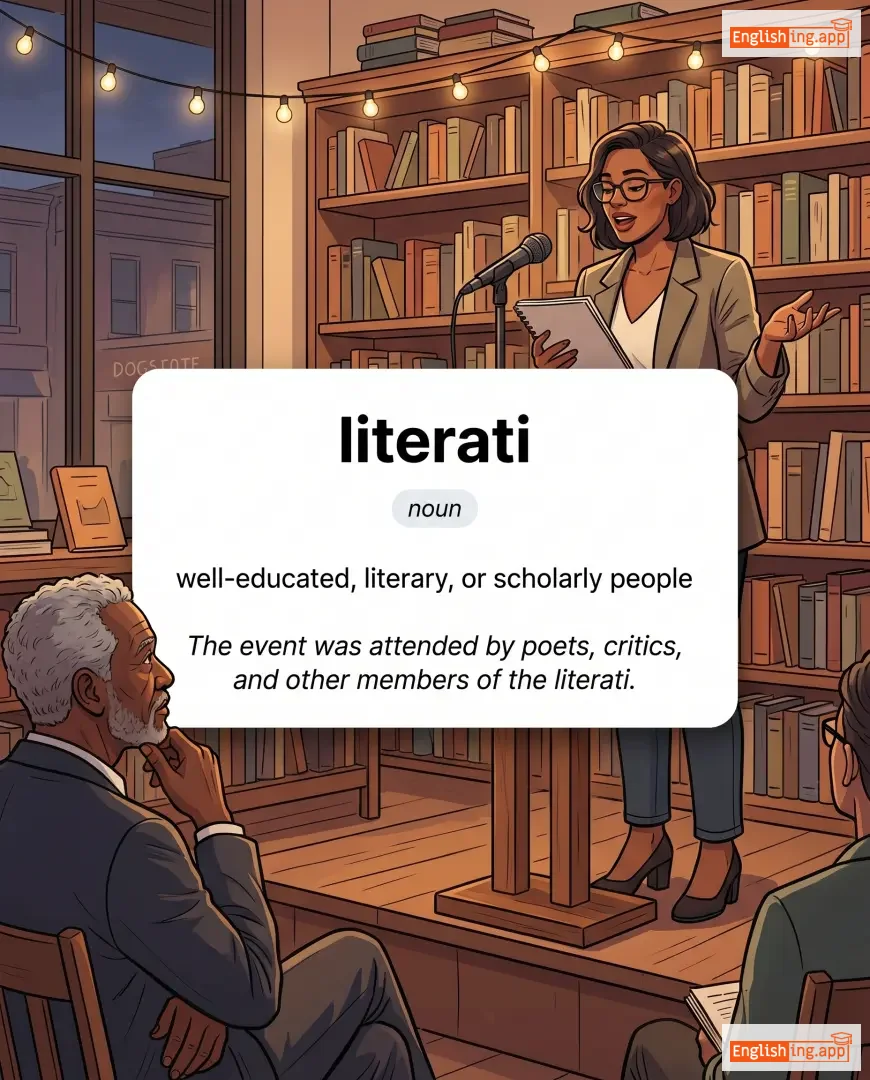
literati definition card — visual illustration of the meaning
noun
/ˌlɪt.əˈrɑː.ti/
literatos (literatos)

well-educated, literary, or scholarly people

"The event was attended by poets, critics, and other members of the literati."

"El evento fue asistido por poetas, críticos y otros miembros de los literatos." (El evento fue asistido por poetas, críticos y otros miembros de los literatos.)
noun
/ˈlɪtərətʃər/
literatura (literatura)

written works, especially those considered of superior or lasting artistic merit

"He studied English literature at university."

"Estudió literatura inglesa en la universidad." (Estudió literatura inglesa en la universidad.)
/laɪð/
flexible y grácil (flexible y gracil)

thin, supple, and graceful in movement

"The lithe dancer captivated the audience with her graceful spins."

"La bailarina flexible cautivó a la audiencia con sus giros gráciles." (La bailarina flexible cautivo a la audiencia con sus giros gráciles.)
adjective
/ˈlaɪðsəm/
flexible y grácil (flexible y gracil)

gracefully flexible and supple

"Her lithesome figure allowed her to move like a ballerina."

"Su figura flexible le permitió moverse como una bailarina." (Su figura flexible le permitió moverse como una bailarina.)
noun
/ˈlɪθəˌɡræf/
litografía (impresión de piedra) (litografia (impresion de piedra))

a print made by lithography, often artistic

"The museum displayed a rare lithograph from the 19th century."

"El museo exhibió una rara litografía del siglo XIX." (El museo exhibio una rara litografia del siglo XIX.)
noun
/ˈlɪθəˌtaɪp/
litotipo (superficie de impresión) (litotipo (superficie de impresion))

a printing surface or type made for lithography

"The printer used a lithotype to produce multiple copies of the design."

"La impresora usó un litotipo para producir varias copias del diseño." (La impresora uso un litotipo para producir varias copias del diseño.)
noun
/ˈlɪtɪɡənt/
demandante (demandante)

a person involved in a lawsuit

"The court summoned both litigants for the hearing."

"El tribunal citó a ambos demandantes para la audiencia." (El tribunal citó a ambos demandantes para la audiencia.)
verb
/ˈlɪtɪˌɡeɪt/
litigar (litigar)

to engage in legal proceedings or take a dispute to court

"The company decided to litigate the contract dispute."

"La empresa decidió litigar la disputa contractual." (La empresa decidió litigar la disputa contractual.)
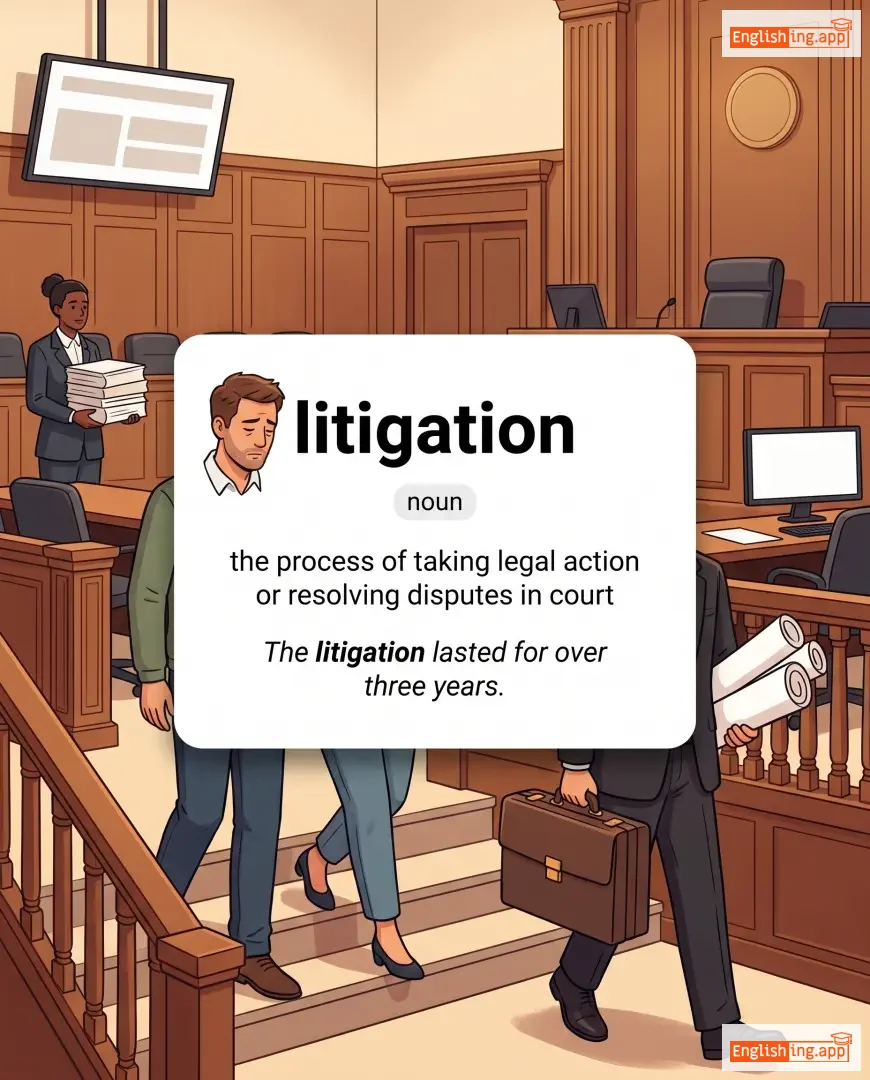
litigation definition card — visual illustration of the meaning
noun
/ˌlɪtɪˈɡeɪʃən/
litigio (litigio)

the process of taking legal action or resolving disputes in court

"The litigation lasted for over three years."

"El litigio duró más de tres años." (El litigio duró más de tres años.)
adjective
/lɪˈtɪdʒəs/
litigioso (litigioso)

prone to engage in lawsuits or overly inclined to argue legally

"He is known as a litigious neighbor who often sues people."

"Es conocido como un vecino litigioso que frecuentemente demanda a las personas." (Es conocido como un vecino litigioso que frecuentemente demanda a las personas.)
noun
/ˈlaɪtoʊtiːz/
litotes (litotes)

a figure of speech in which an affirmative is expressed by the negative of its contrary

"Saying 'not bad' as a compliment is an example of litotes."

"Decir 'no está mal' como un cumplido es un ejemplo de litotes." (Decir 'no está mal' como un cumplido es un ejemplo de litotes.)
noun
/ˈliːtər/
litro (litro)

a metric unit of volume equal to 1,000 cubic centimeters; commonly used to measure liquids

"She bought a litre of milk from the shop."

"Compró un litro de leche en la tienda." (compro un litro de leche en la tienda)
noun/verb
/ˈlɪtər/
basura (basura)

rubbish or waste left lying in a public place; to make a place untidy by leaving rubbish

"The park was full of litter after the festival."

"El parque estaba lleno de basura después del festival." (El parque estaba lleno de basura después del festival.)
adjective
/ˈlɪtl/
pequeño (pequeno)

Small in size, amount, or degree.

"He drank a little water before going to bed."

"Él bebió un poco de agua antes de irse a la cama." (El bebio un poco de agua antes de irse a la cama.)
adjective
/ˈlɪtərəl/
litoral (litoral)

Related to or situated on the shore of the sea or a lake.

"The littoral zone is home to many unique marine species."

"La zona litoral es el hogar de muchas especies marinas únicas." (La zona litoral es el hogar de muchas especies marinas únicas.)
noun
/ˈlɪtərdʒi/
liturgia (liturgia)

A form or formulary according to which public religious worship is conducted.

"The priest followed the liturgy during the Sunday mass."

"El sacerdote siguió la liturgia durante la misa del domingo." (El sacerdote siguió la liturgia durante la misa del domingo.)
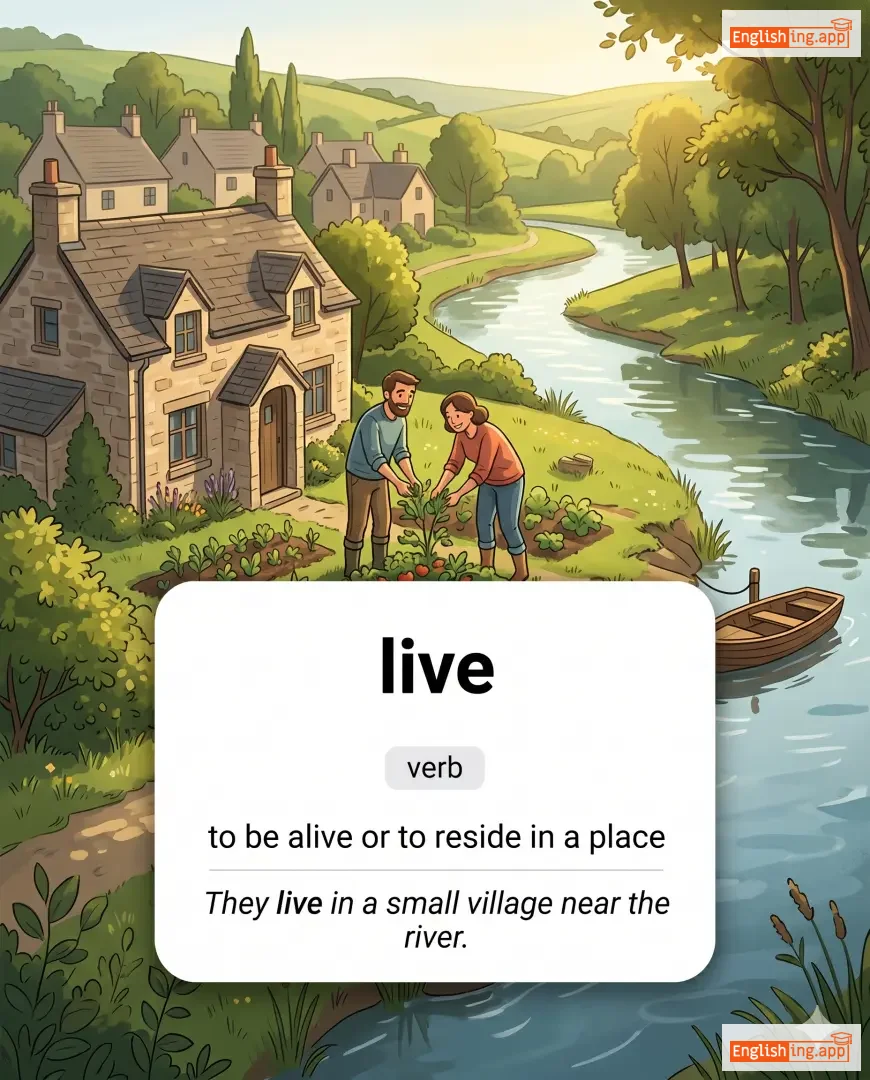
live definition card — visual illustration of the meaning
verb
/lɪv/
vivir (vivir)

to be alive or to reside in a place

"They live in a small village near the river."

"Ellos viven en un pequeño pueblo cerca del río." (Ellos viven en un pequeño pueblo cerca del río.)
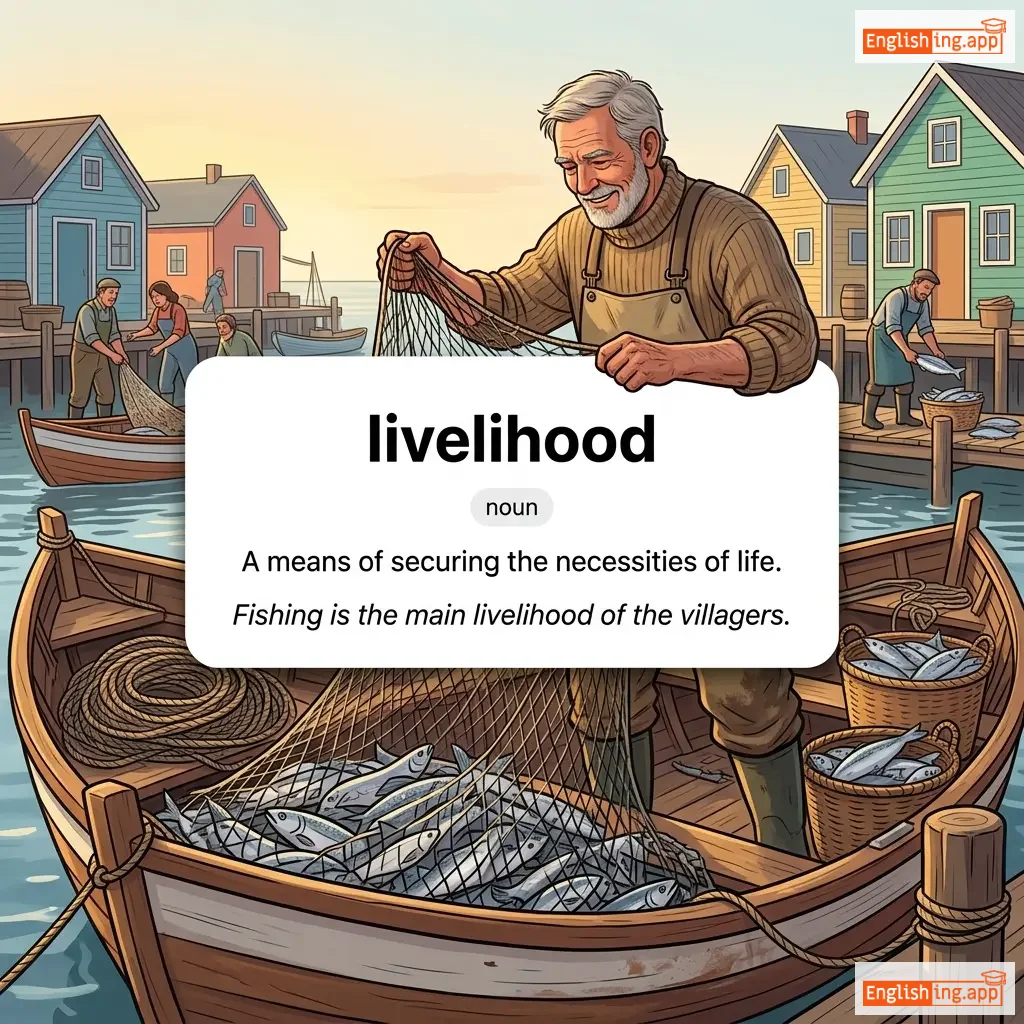
livelihood definition card — visual illustration of the meaning
noun
/ˈlaɪvlihʊd/
medio de vida (medio de vida)

A means of securing the necessities of life.

"Fishing is the main livelihood of the villagers."

"La pesca es el principal medio de vida de los aldeanos." (La pesca es el principal medio de vida de los aldeanos.)
adjective
/ˈlaɪv.li/
animado; vivaz; alegre (laivli)

full of life and energy; animated; cheerful

"The children had a lively discussion about their favorite books."

"Los niños tuvieron una discusión animada sobre sus libros favoritos." (Los niños tuvieron una discusión animada sobre sus libros favoritos.)
noun
/ˈlɪvər/
hígado (higado)

a large organ in the body that cleans the blood and produces bile to help digest food.

"The liver plays a vital role in removing toxins from the body."

"El hígado juega un papel vital en la eliminación de toxinas del cuerpo." (El higado juega un papel vital en la eliminacion de toxinas del cuerpo.)
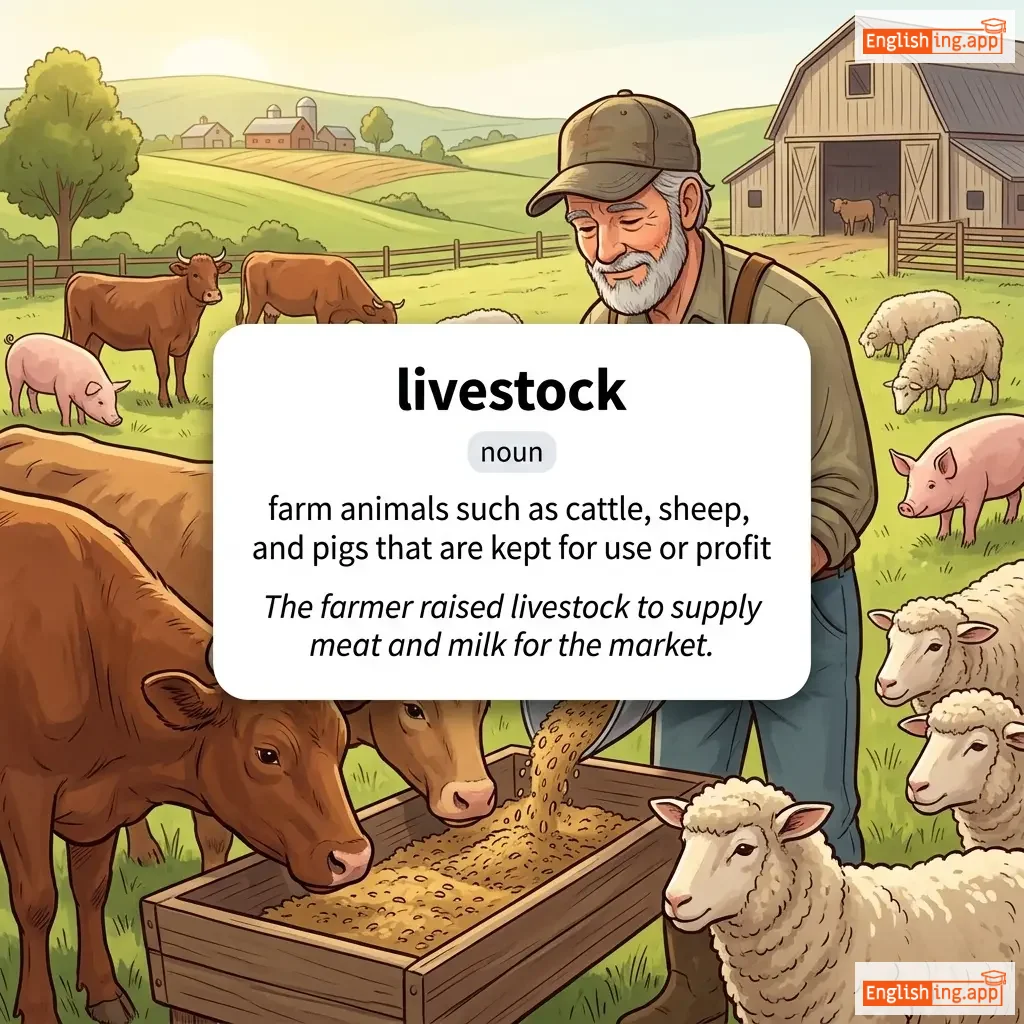
livestock definition card — visual illustration of the meaning
noun
/ˈlaɪv.stɒk/
ganado (ganado)

farm animals such as cattle, sheep, and pigs that are kept for use or profit

"The farmer raised livestock to supply meat and milk for the market."

"El granjero criaba ganado para suministrar carne y leche para el mercado." (El granjero criaba ganado para suministrar carne y leche para el mercado.)
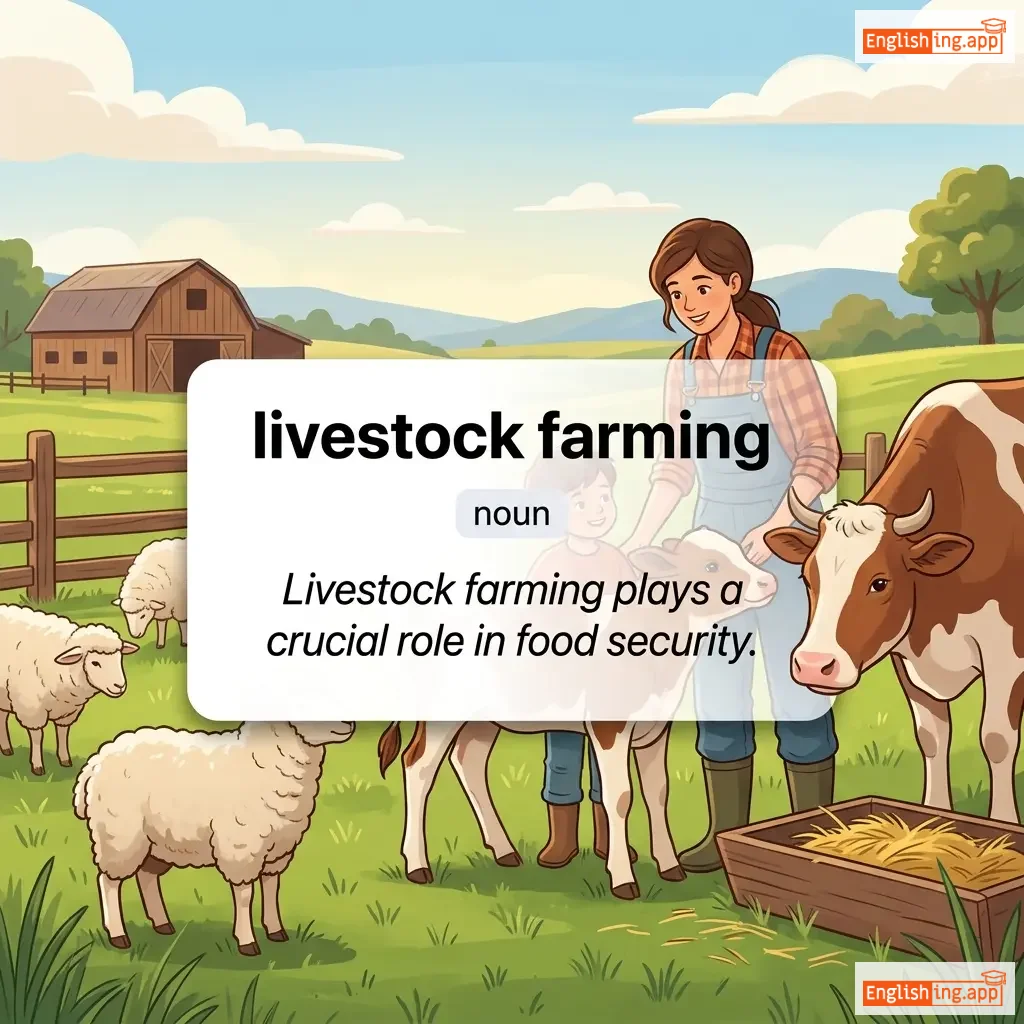
livestock farming definition card — visual illustration of the meaning
noun
ˈlaɪv.stɒk ˈfɑː.mɪŋ
crianza de ganado (crianca de ganado)

The breeding, raising, and care of farm animals such as cattle, horses, sheep, and pigs for food, fiber, and other products.

"Livestock farming plays a crucial role in food security."

"La crianza de ganado juega un papel crucial en la seguridad alimentaria." (La crianza de ganado juega un papel crucial en la seguridad alimentaria.)
noun
/ˈlɒdʒɪk/
lógica (logica)

Reasoning conducted or assessed according to strict principles of validity.

"Her argument was based on sound logic."

"Su argumento se basaba en una lógica sólida." (Su argumento se basaba en una logica solida.)
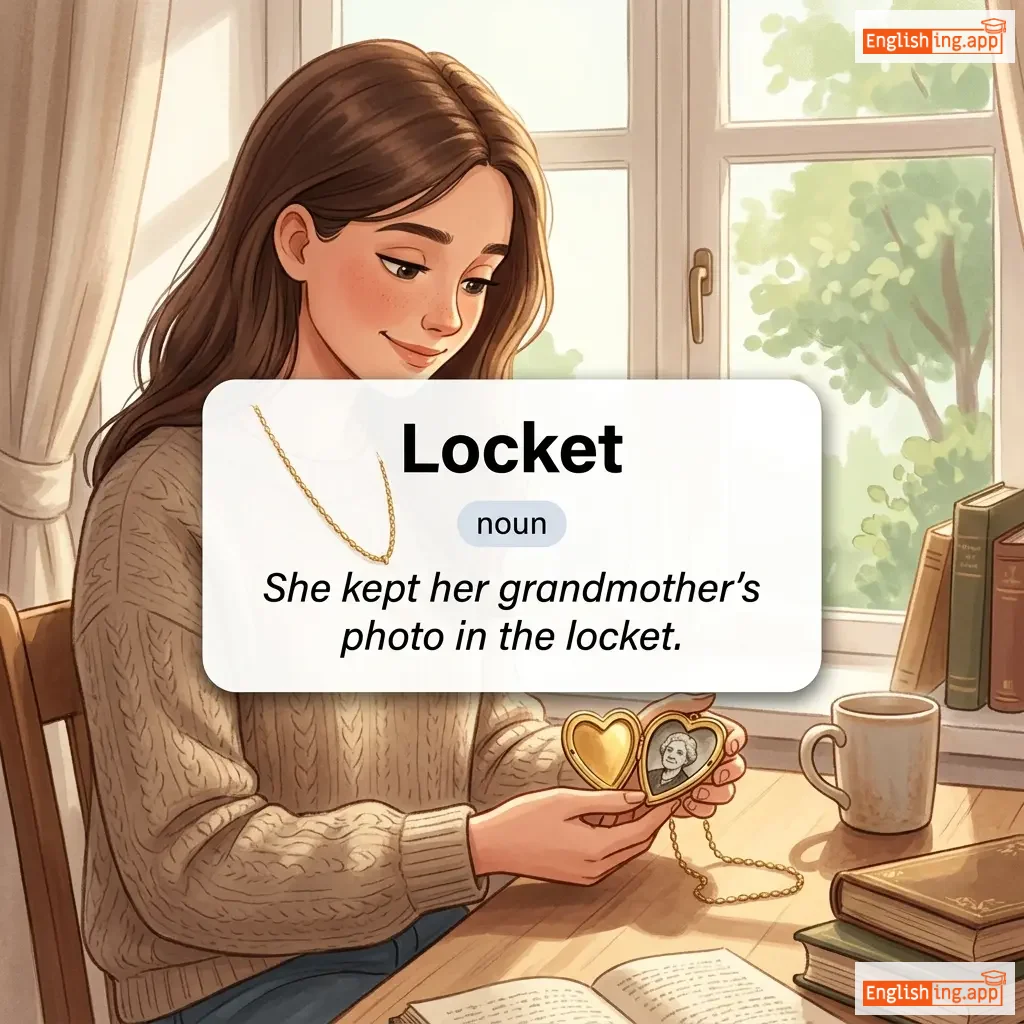
Locket definition card — visual illustration of the meaning
noun
/ˈlɒk.ɪt/
colgante (colgante)

a small ornamental case, typically made of gold or silver, worn on a chain around the neck

"She kept her grandmother's photo in the locket."

"Ella guardaba la foto de su abuela en el colgante." (Ella guardaba la foto de su abuela en el colgante)
noun
/ˌloʊkəˈmoʊʃən/
movimiento (movimiento)

movement or the ability to move from one place to another

"Walking is the most common form of human locomotion."

"Caminar es la forma más común de locomoción humana." (Caminar es la forma más común de locomoción humana.)
noun
/ˌloʊ.kəˈmoʊ.tɪv/
locomotora (lokomotora)

A powered rail vehicle used for pulling trains.

"The old steam locomotive was restored for the museum."

"La antigua locomotora de vapor fue restaurada para el museo." (La antigua locomotora de vapor fue restaurada para el museo.)
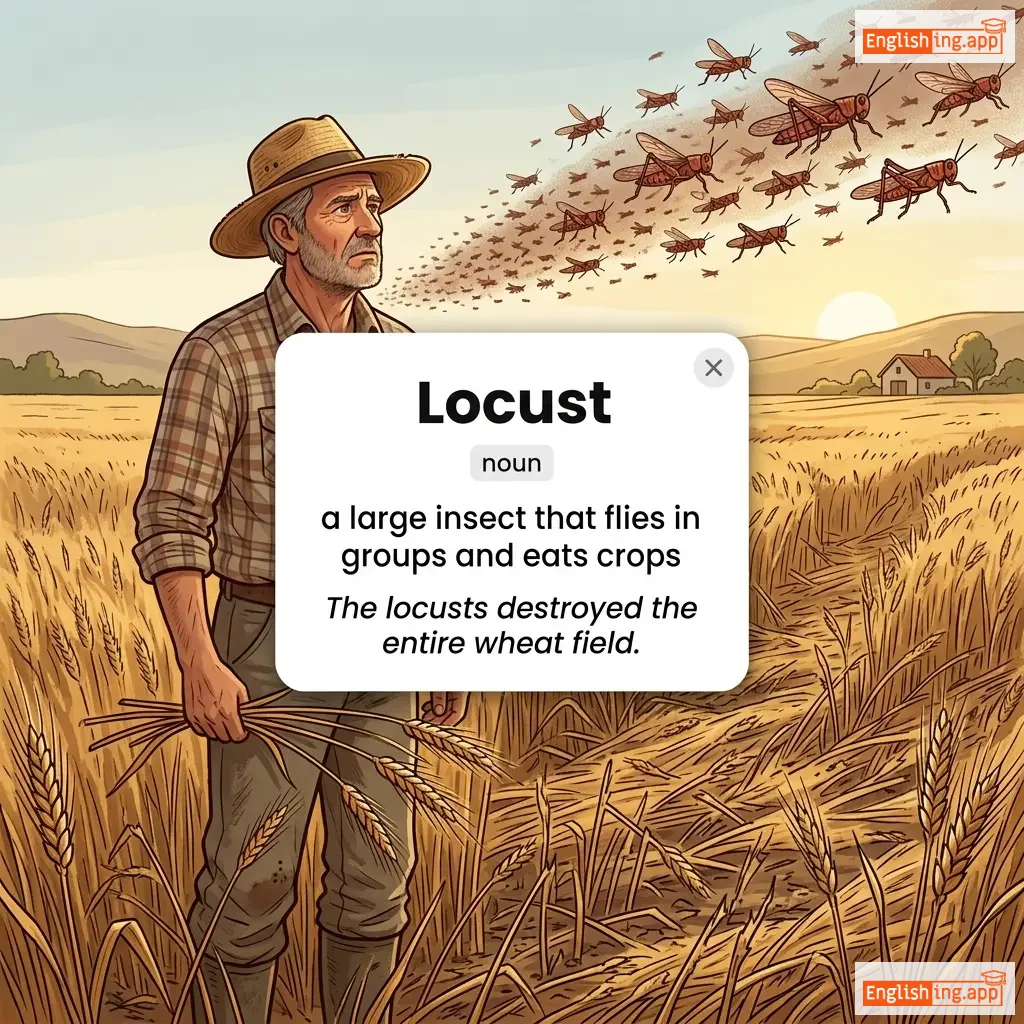
Locust definition card — visual illustration of the meaning
noun
/ˈloʊ.kəst/
langosta (langosta)

a large insect that flies in groups and eats crops

"The locusts destroyed the entire wheat field."

"Las langostas destruyeron todo el campo de trigo." (Las langostas destruyeron todo el campo de trigo.)
noun
/loʊd/
vetas minerales (vetas minerales)

A rich source of something, often a vein of valuable metal in the earth.

"The miners discovered a rich lode of silver."

"Los mineros descubrieron una rica veta de plata." (Los mineros descubrieron una rica veta de plata.)
noun
/ˈlɒdʒ.mənt/
alojamiento temporal (alojamiento temporal)

The act of lodging or a place of temporary stay; also a deposit of something.

"The soldiers found lodgment in the abandoned house."

"Los soldados encontraron alojamiento temporal en la casa abandonada." (Los soldados encontraron alojamiento temporal en la casa abandonada.)
noun
/lɒft/
ático (atico)

An upper room or space, often under the roof of a building.

"She converted the old loft into a modern studio."

"Ella convirtió el viejo ático en un moderno estudio." (Ella convirtió el viejo ático en un moderno estudio.)
adjective
/ˈlɒf.ti/
alto (alto)

Of great height; elevated in character or style; noble.

"He set himself the lofty goal of ending poverty."

"Se fijó como meta lo lofty de terminar con la pobreza." (Se fijó como meta lo lofty de terminar con la pobreza.)
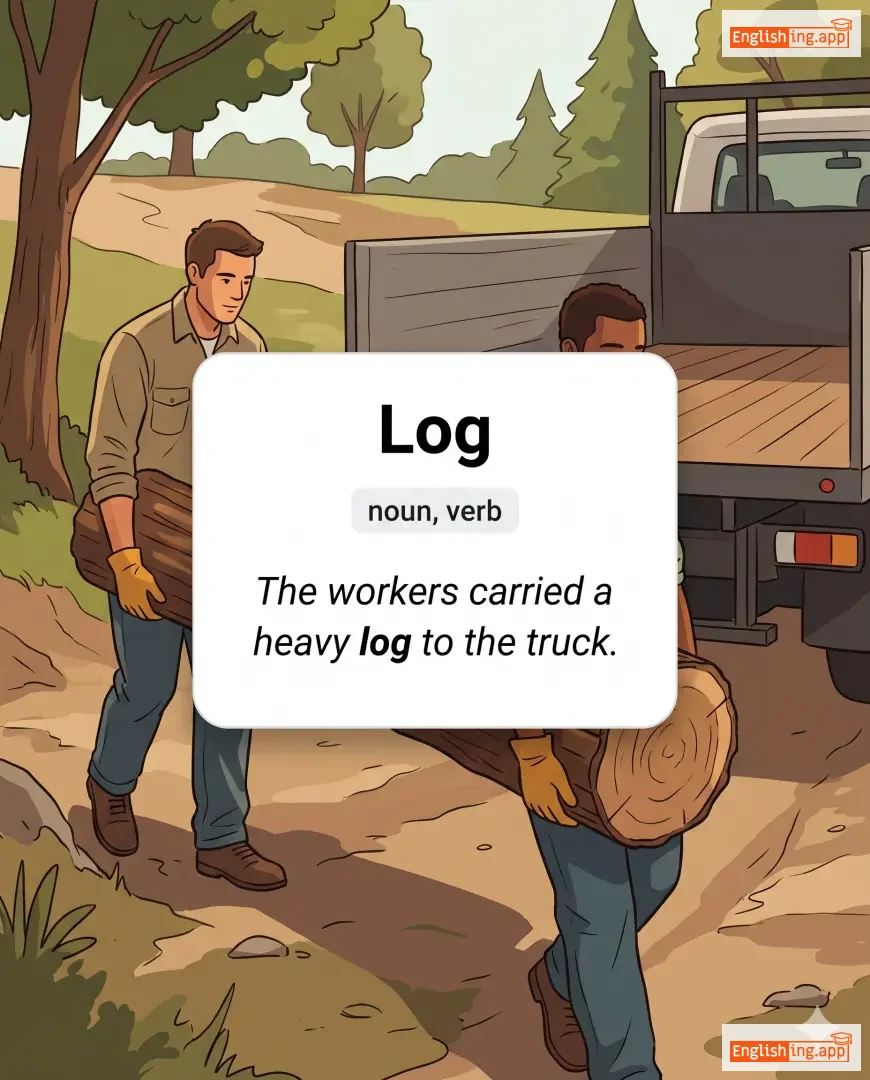
Log definition card — visual illustration of the meaning
noun, verb
/lɒɡ/
tronco, registro (tronco, registro)

A part of the trunk or a large branch of a tree that has fallen or been cut off; also to record information systematically.

"The workers carried a heavy log to the truck."

"Los trabajadores llevaron un tronco pesado al camión." (Los trabajadores llevaron un tronco pesado al camión.)
verb
/lɑːl/
sentarse perezosamente (sentarse perezosamente)

To sit, lie, or stand in a lazy, relaxed way.

"He lolled on the sofa after a long day at work."

"Se desplomó en el sofá después de un largo día de trabajo." (Se desplomó en el sofá después de un largo día de trabajo.)
verb
/ˈlɔɪtər/
merodear, estar de pie sin propósito (merodear, estar de pie sin proposito)

To stand or wait around idly without apparent purpose.

"The teenagers were told not to loiter outside the shop."

"Se les dijo a los adolescentes que no merodearan fuera de la tienda." (Se les dijo a los adolescentes que no merodearan fuera de la tienda.)
noun
/ˈlɔɪtərər/
persona que vaga sin propósito en un lugar (persona que vaga sin proposito en un lugar)

A person who lingers aimlessly in a place without purpose.

"The police questioned the loiterer outside the store."

"La policía interrogó al loiterer fuera de la tienda." (La policia interrogo al loiterer fuera de la tienda.)