Словари

Словарь английского языка | Значения слов, определения и примеры

Lonely definition card — visual illustration of the meaning
adjective
/ˈloʊnli/
одинокий (odinokiy)

feeling sad because one has no friends or company.

"He felt lonely after moving to a new city."

"Он чувствовал себя одиноким после того, как переехал в новый город." (On chuvstvoval sebya odinokim posle togo, kak pereyekhal v novyy gorod.)
noun, verb
/lɪst/
список (spisok)

A series of names, items, or tasks written or printed together; also, to record or register items in such a way.

"She wrote a shopping list before going to the market."

"Она составила список покупок перед тем, как отправиться на рынок." (Ona sostavila spisok pokupok pered tem kak otpravitsya na rynok)
listen definition card — visual illustration of the meaning
verb
/ˈlɪs.ən/
слушать (slushat')

to pay attention to sound

"She loves to listen to classical music in the evenings."

"Ей нравится слушать классическую музыку по вечерам." (Ey nravitsya slushat' klassicheskuyu muzyku po vecheram.)
noun
/ˈlɪsənər/
слушатель (slushatel)

a person who listens or pays attention to something, especially to a speaker or sound.

"She is a good listener who always understands others' problems."

"Она хороший слушатель, который всегда понимает проблемы других." (Ona khoroshij slushatel', kotoryj vsegda ponimayet problemy drugikh.)
noun
/ˈlɪstɪŋ/
список (spisok)

a series of items or names written or printed in a specific order

"The listing of available jobs was updated daily."

"Список доступных вакансий обновлялся ежедневно." (Spisok dostupnykh vakansiy obnovlyalsya yezhednevno.)
adjective
/ˈlɪstləs/
безжизненный (bezhiznenny)

lacking energy, enthusiasm, or interest

"She felt listless after working long hours without rest."
"Она чувствовала себя безжизненной после долгих часов работы без отдыха." (Ona chuvstvovala sebya bezzhiznennoy posle dolgikh chasov raboty bez otdykha.)
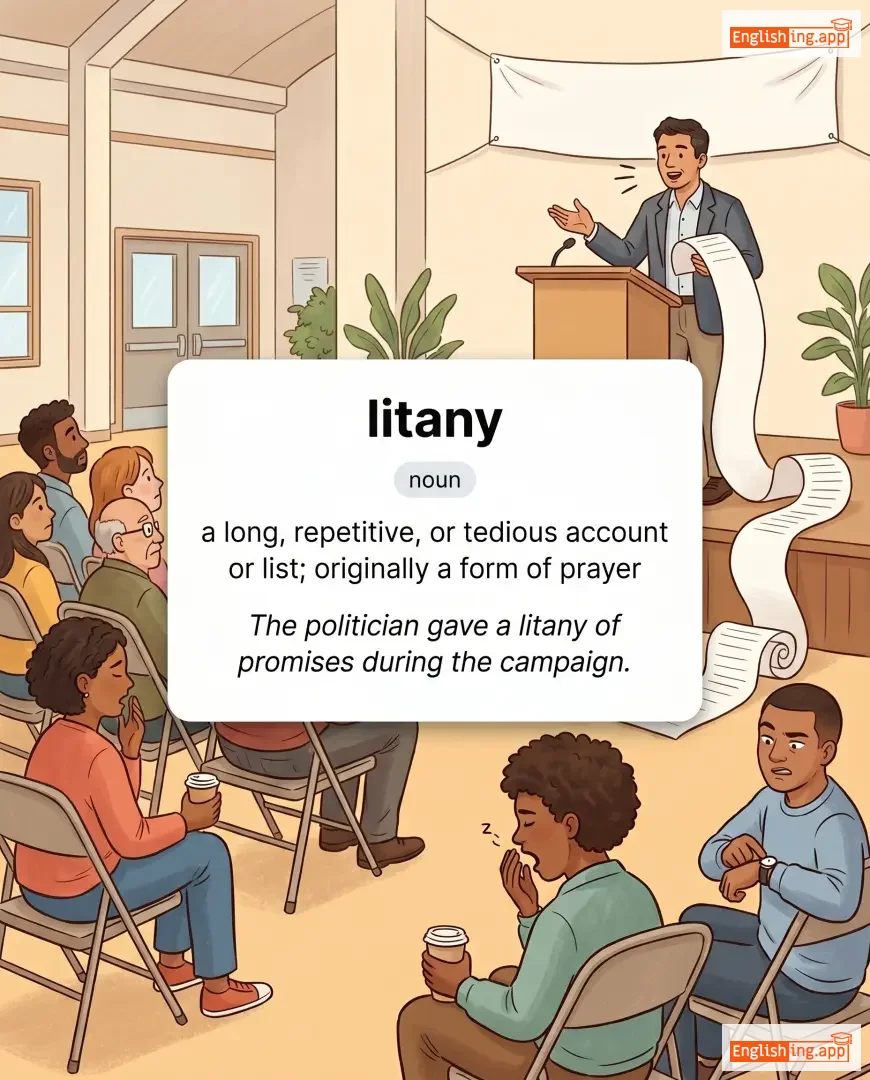
litany definition card — visual illustration of the meaning
noun
/ˈlɪtəni/
литания (litaniya)

a long, repetitive, or tedious account or list; originally a form of prayer

"The politician gave a litany of promises during the campaign."
"Политик произнес длинный список обещаний во время кампании." (Politik proyiznes dlinnyy spisok obeshchaniy vo vremya kampanii.)
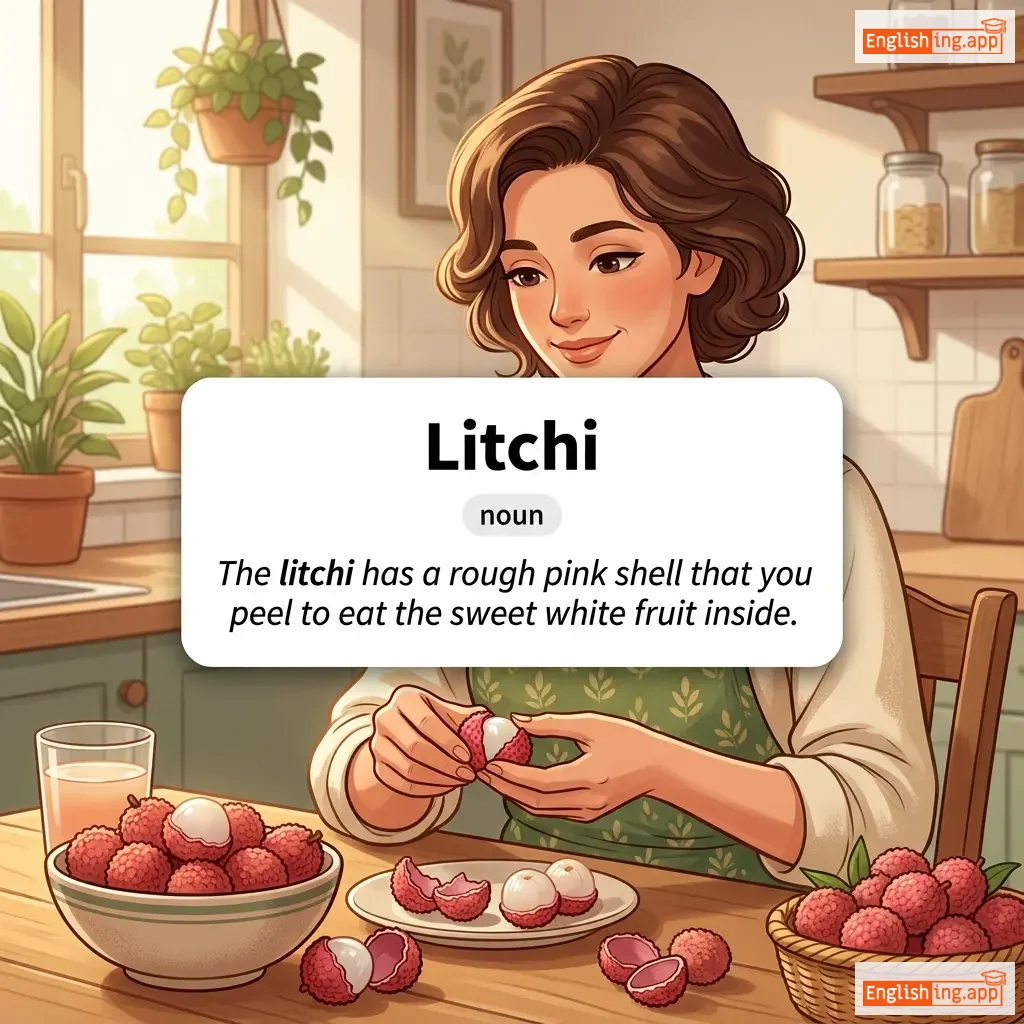
Litchi definition card — visual illustration of the meaning
noun
/ˈlaɪtʃi/
личи (lichi)

a small oval pink-red tropical fruit with white translucent flesh and sweet taste

"The litchi has a rough pink shell that you peel to eat the sweet white fruit inside."

"Личи имеет грубую розовую кожуру, которую нужно очистить, чтобы съесть сладкий белый плод внутри." (Lichi imeyet grubuyu rozovuyu kozhuru, kotoruyu nuzhno ochistit', chtoby syest' sladkiy belyy plod vnutri.)
💧

liter

noun
/ˈlɪtə(r)/

a metric unit of volume equal to one cubic decimeter

"The recipe calls for two liters of water."
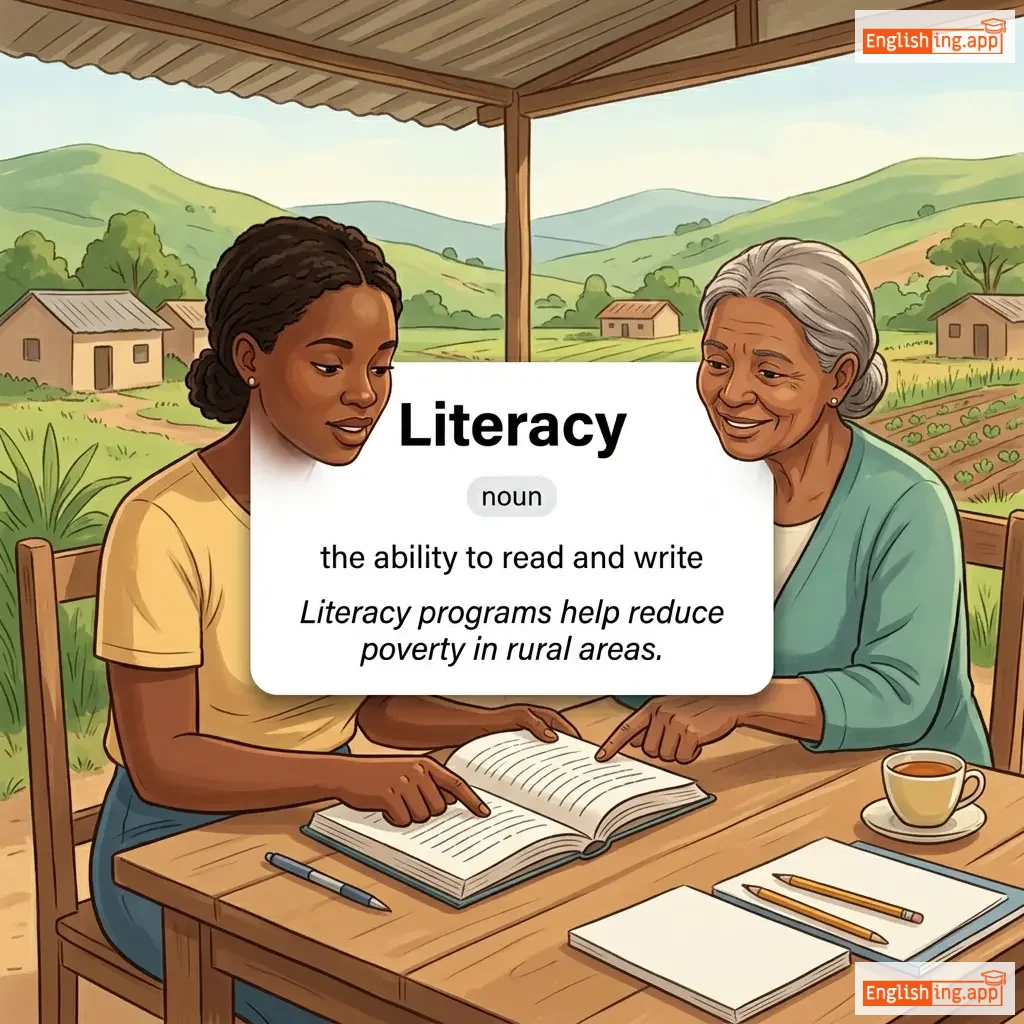
Literacy definition card — visual illustration of the meaning
noun
/ˈlɪtərəsi/
грамотность (gramotnost)

the ability to read and write

"Literacy programs help reduce poverty in rural areas."
"Программы грамотности помогают снизить бедность в сельских районах." (Programmy gramotnosti pomogayut snizit' bednost' v selskih rayonah.)
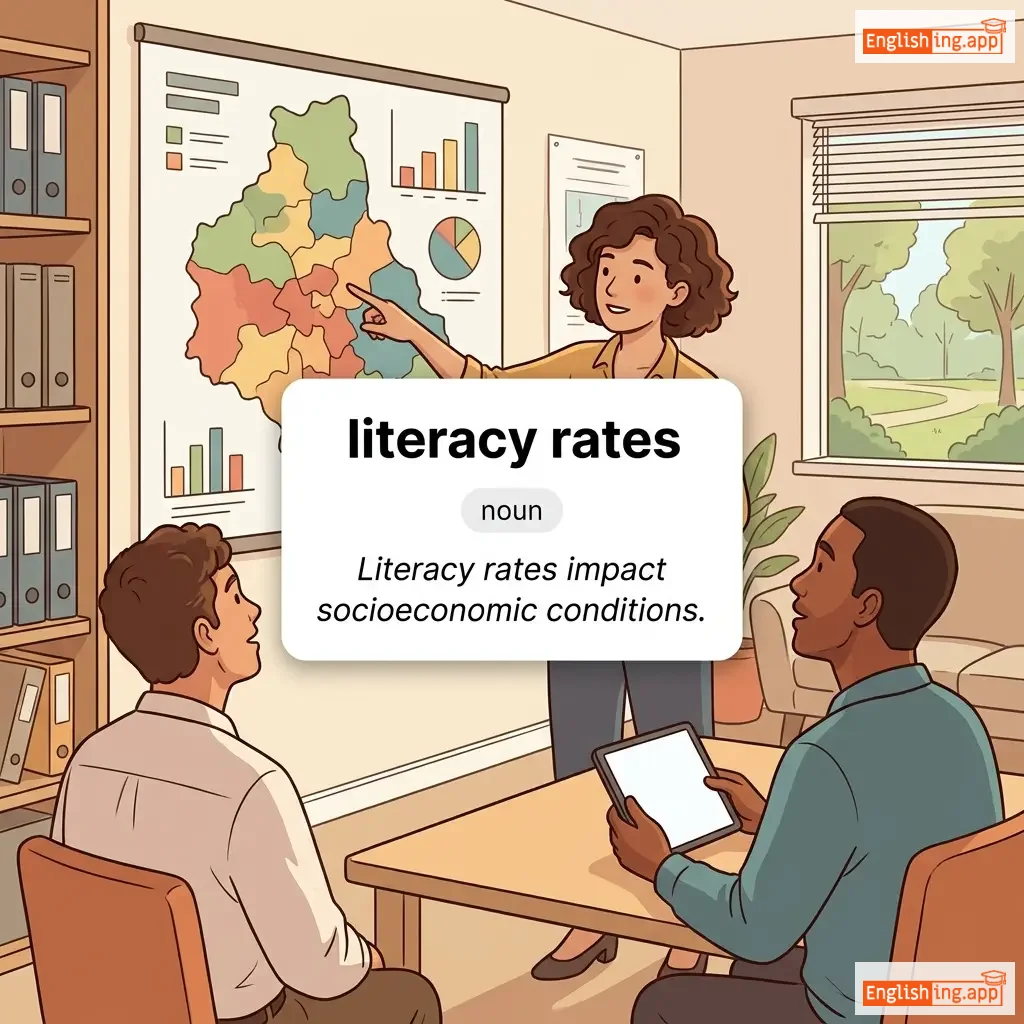
literacy rates definition card — visual illustration of the meaning
noun
ˈlɪt.ər.ə.si ˌreɪts
уровни грамотности (urovni gramotnosti)

The percentage of people in a population who can read and write; measures of educational levels in a population.

"Literacy rates impact socioeconomic conditions."

"Уровни грамотности влияют на социально-экономические условия." (Urovni gramotnosti vliyayut na sotsial'no-ekonomicheskie usloviya.)
adjective
/ˈlɪtərəl/
буквальный (bukval'nyi)

taking words in their usual or most basic sense without metaphor or exaggeration

"His comment was meant as a joke, not to be taken in a literal sense."

"Его комментарий был шуткой, и не следовало воспринимать его в буквальном смысле." (Ego kommentariy byl shutkoy, i ne sledovalo vosprinimat' ego v bukval'nom smysle.)
adverb
/ˈlɪtərəli/
буквально (bukvalno)

in a literal manner or sense; exactly

"He was literally running for three hours without stopping."

"Он бегал буквально три часа без остановки." (On begal bukval'no tri chasa bez ostanovki.)
adjective
/ˈlɪtərɛri/
литературный (literaturny)

concerning the writing, study, or content of literature

"She is a well-known figure in the literary world."

"Она известная фигура в литературном мире." (Ona izvestnaya figura v literaturnom mire.)
adjective
/ˈlɪt.ər.ət/
грамотный; образованный; хорошо образованный (literat)

able to read and write; educated; well-educated

"She is a very literate person who reads extensively."
"Она очень грамотный человек, который много читает." (ona ochen' gramotnyy chelovek, kotoryy mnogo chitayet.)
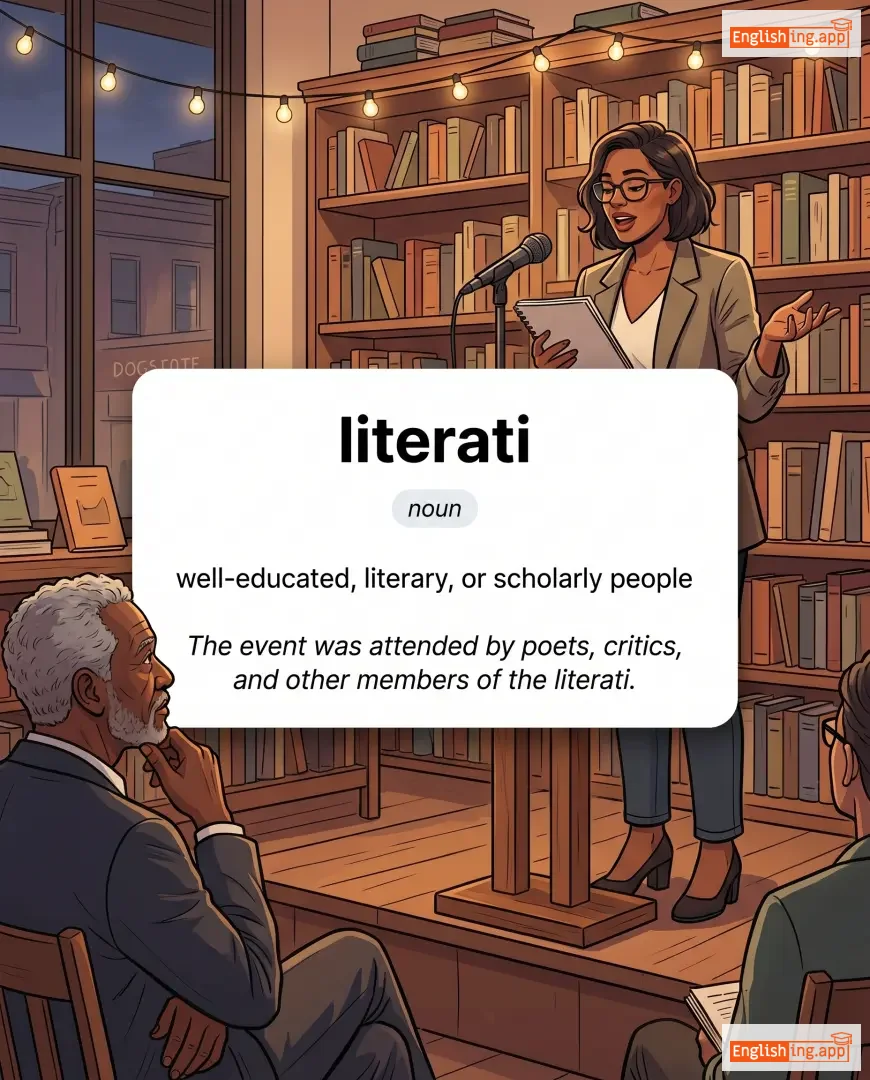
literati definition card — visual illustration of the meaning
noun
/ˌlɪt.əˈrɑː.ti/
литераторы (literatory)

well-educated, literary, or scholarly people

"The event was attended by poets, critics, and other members of the literati."

"Мероприятие было посещено поэтами, критиками и другими членами литературного круга." (Meropriyatie bylo poseshcheno poetami, kritikami i drugimi chlenami literaturnogo kruga.)
noun
/ˈlɪtərətʃər/
литература (literatura)

written works, especially those considered of superior or lasting artistic merit

"He studied English literature at university."

"Он изучал английскую литературу в университете." (On izuchal angliyskuyu literaturu v universitete.)
/laɪð/
гибкий и грациозный (gibkiy i gratsioznyy)

thin, supple, and graceful in movement

"The lithe dancer captivated the audience with her graceful spins."

"Гибкая танцовщица заворожила публику своими грациозными поворотами." (Gibkaya tantsovshchitsa zavorozhila publiku svoimi gratsioznymi povorotami.)
adjective
/ˈlaɪðsəm/
гибкий и грациозный (gibkiy i gratsioznyy)

gracefully flexible and supple

"Her lithesome figure allowed her to move like a ballerina."

"Её гибкая фигура позволяла ей двигаться как балерина." (Yeyo gibkaya figura pozvolyala yey dvigat'sya kak balerina.)
noun
/ˈlɪθəˌɡræf/
литография (печать на камне) (litografiya (pechat' na kamne))

a print made by lithography, often artistic

"The museum displayed a rare lithograph from the 19th century."

"Музей показал редкий литограф из 19 века." (Muzei pokazal redkiy litograf iz 19 veka.)
noun
/ˈlɪθəˌtaɪp/
литотип (печатающая поверхность) (litotip (pechatayushchaya poverkhnost'))

a printing surface or type made for lithography

"The printer used a lithotype to produce multiple copies of the design."

"Принтер использовал литотип для создания нескольких копий дизайна." (Printer ispol'zoval litotip dlya sozdaniya neskol'kikh kopiy dizayna.)
noun
/ˈlɪtɪɡənt/
истец (istec)

a person involved in a lawsuit

"The court summoned both litigants for the hearing."

"Суд вызвал обоих истцов на слушание." (Sud vyzval oboikh istsov na slushanie.)
verb
/ˈlɪtɪˌɡeɪt/
судиться (suditsya)

to engage in legal proceedings or take a dispute to court

"The company decided to litigate the contract dispute."

"Компания решила подать в суд по контрактному спору." (Kompaniya reshil podat' v sud po kontraktnomu sporu.)
litigation definition card — visual illustration of the meaning
noun
/ˌlɪtɪˈɡeɪʃən/
исковое производство (iskovoe proizvodstvo)

the process of taking legal action or resolving disputes in court

"The litigation lasted for over three years."

"Исковое производство продолжалось более трех лет." (Iskovoe proizvodstvo prodolzhalos' bolee trekh let.)
adjective
/lɪˈtɪdʒəs/
судебный (sudebnyy)

prone to engage in lawsuits or overly inclined to argue legally

"He is known as a litigious neighbor who often sues people."

"Он известен как судебный сосед, который часто подает в суд на людей." (On izvesten kak sudebnyy sosed, kotoryy chasto podayet v sud na lyudey.)
noun
/ˈlaɪtoʊtiːz/
литота (litota)

a figure of speech in which an affirmative is expressed by the negative of its contrary

"Saying 'not bad' as a compliment is an example of litotes."

"Сказать 'не плохо' как комплимент - это пример литоты." (Skazat' 'ne plokho' kak kompliment - eto primer litoty.)
noun
/ˈliːtər/
литр (litr)

a metric unit of volume equal to 1,000 cubic centimeters; commonly used to measure liquids

"She bought a litre of milk from the shop."

"Она купила один литр молока в магазине." (ona kupila odin litr moloka v magazine)
noun/verb
/ˈlɪtər/
мусор (musor)

rubbish or waste left lying in a public place; to make a place untidy by leaving rubbish

"The park was full of litter after the festival."

"Парк был полон мусора после фестиваля." (Park byl polon musora posle festivala.)
adjective
/ˈlɪtl/
маленький (malen'kiy)

Small in size, amount, or degree.

"He drank a little water before going to bed."

"Он выпил немного воды перед сном." (On vypil nemnogo vody pered snom.)
adjective
/ˈlɪtərəl/
прибрежный (pribrezhnyy)

Related to or situated on the shore of the sea or a lake.

"The littoral zone is home to many unique marine species."

"Прибрежная зона является домом для множества уникальных морских видов." (Pribrezhnaya zona yavlyaetsya domom dlya mnozhestva unik'al'nykh morskikh vidov.)
noun
/ˈlɪtərdʒi/
литургия (liturgiya)

A form or formulary according to which public religious worship is conducted.

"The priest followed the liturgy during the Sunday mass."
"Священник следовал литургии во время воскресной мессы." (Svyashchennik sleduyal liturgii vo vremya voskresnoy messy.)
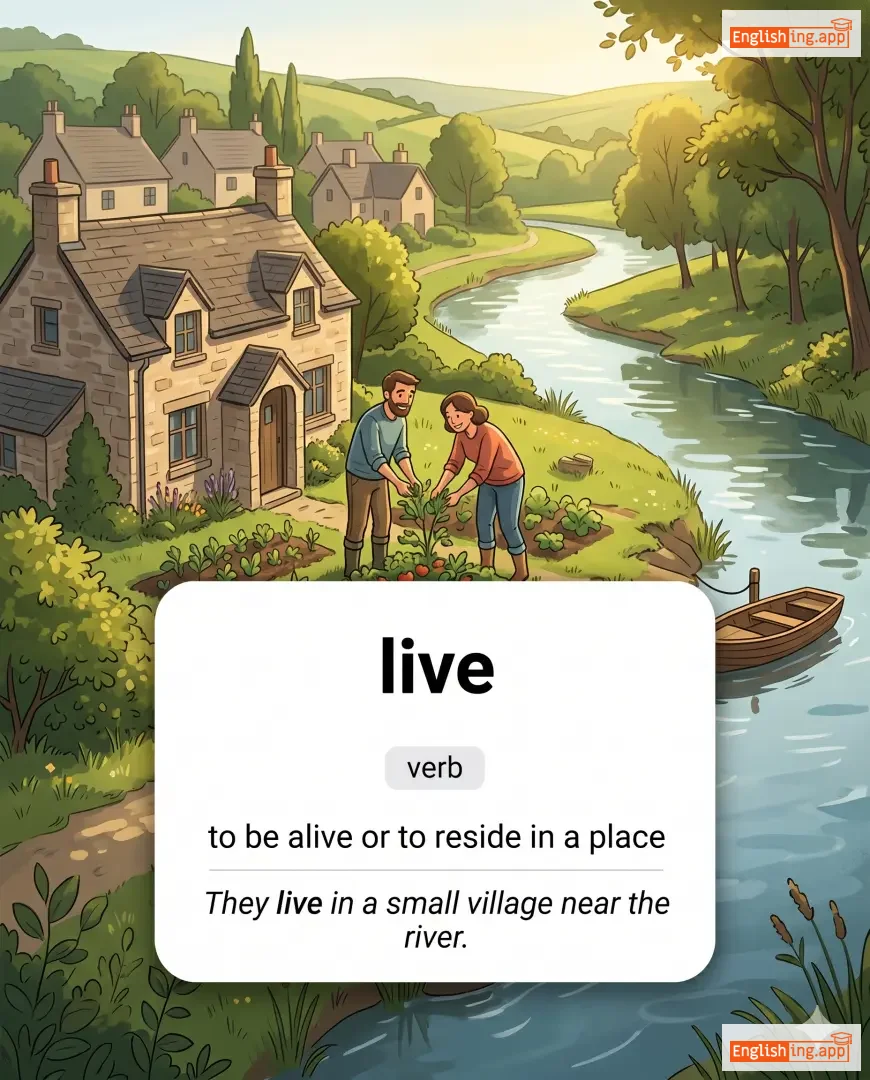
live definition card — visual illustration of the meaning
verb
/lɪv/
жить (zhit)

to be alive or to reside in a place

"They live in a small village near the river."
"Они живут в маленькой деревне рядом с рекой." (Oni zhivut v malen'koy derevne ryadom s rekoy.)
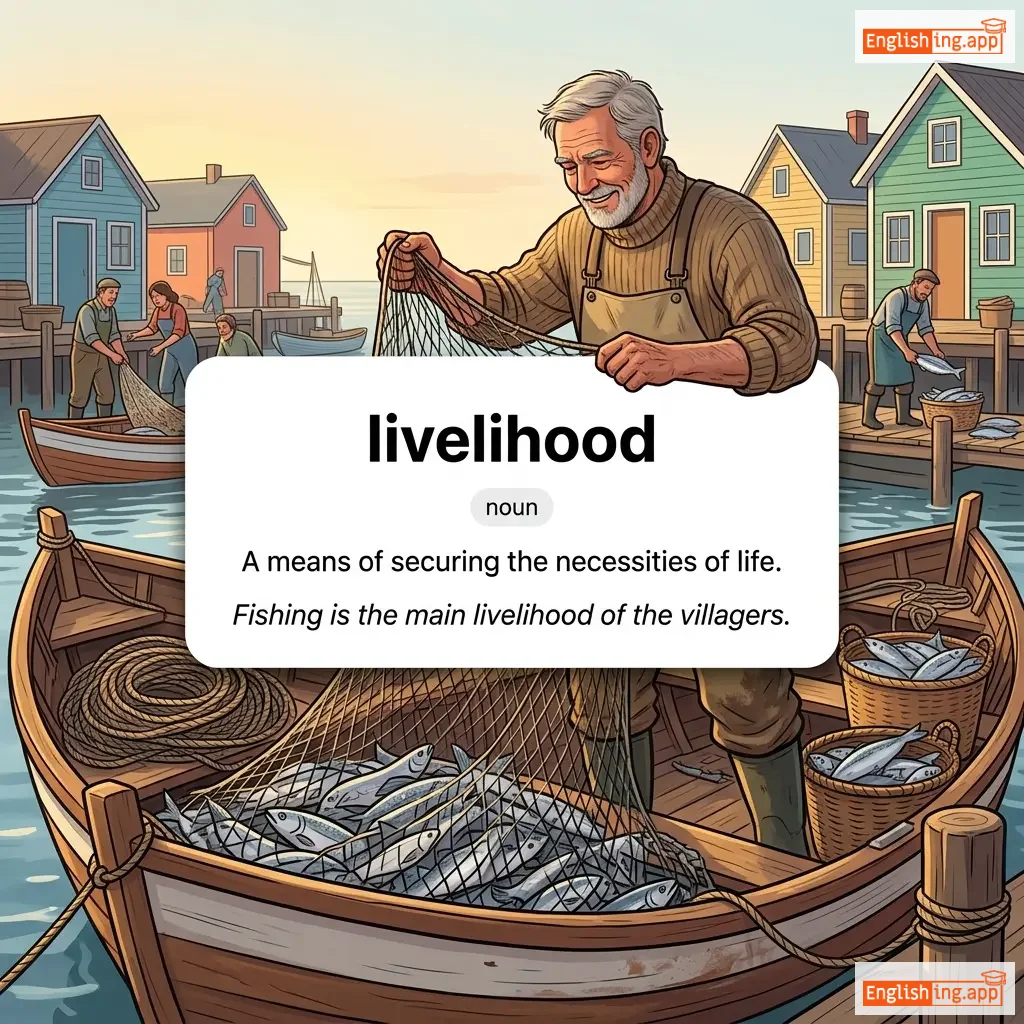
livelihood definition card — visual illustration of the meaning
noun
/ˈlaɪvlihʊd/
средство к существованию (sredstvo k sushchestvovaniyu)

A means of securing the necessities of life.

"Fishing is the main livelihood of the villagers."

"Рыболовство — основной источник существования для жителей деревни." (Rybolovstvo - osnovnoy istochnik sushchestvovaniya dlya zhiteley derevni.)
adjective
/ˈlaɪv.li/
жизненный; живой; веселый (laivli)

full of life and energy; animated; cheerful

"The children had a lively discussion about their favorite books."

"Дети провели живое обсуждение о своих любимых книгах." (Deti proveli zhivoe obsuzhdenie o svoikh lyubimykh knigakh.)
noun
/ˈlɪvər/
печень (pechen)

a large organ in the body that cleans the blood and produces bile to help digest food.

"The liver plays a vital role in removing toxins from the body."
"Печень играет важную роль в удалении токсинов из организма." (Pechyen' igrayet vazhnuyu rol' v udaleniye toksinov iz organizma.)
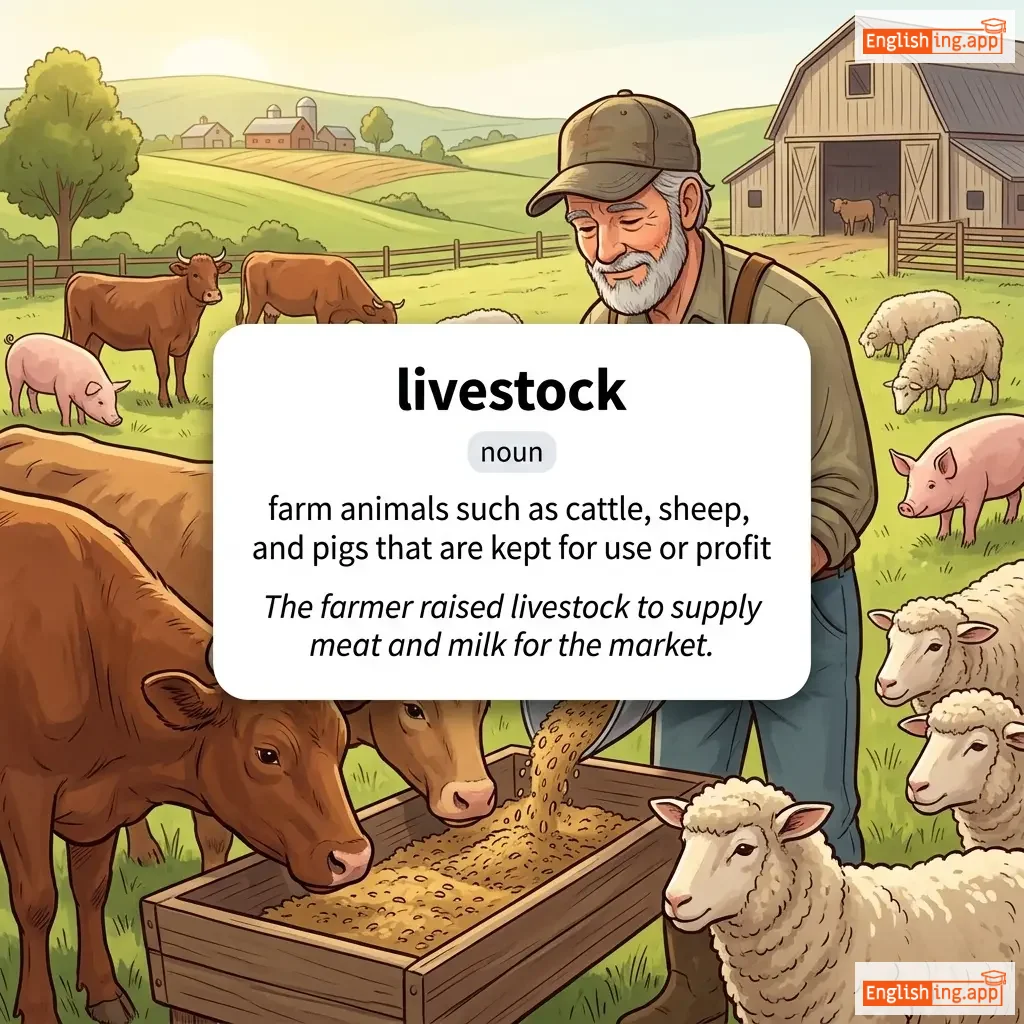
livestock definition card — visual illustration of the meaning
noun
/ˈlaɪv.stɒk/
скот (skot)

farm animals such as cattle, sheep, and pigs that are kept for use or profit

"The farmer raised livestock to supply meat and milk for the market."
"Фермер разводил скот, чтобы поставлять мясо и молоко на рынок." (Fermyer razvodil skot, chtoby postavlyat' myaso i moloko na rynok.)
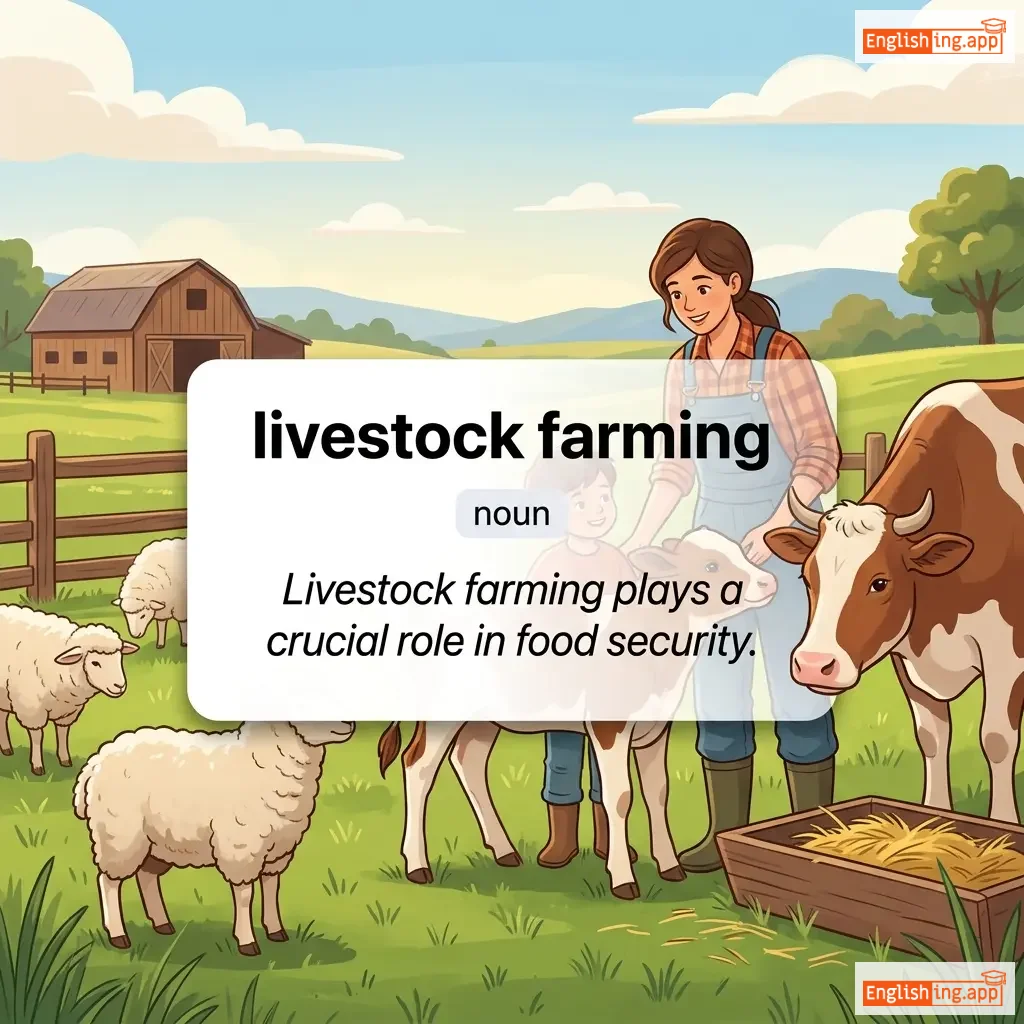
livestock farming definition card — visual illustration of the meaning
noun
ˈlaɪv.stɒk ˈfɑː.mɪŋ
скотоводство (skotovodstvo)

The breeding, raising, and care of farm animals such as cattle, horses, sheep, and pigs for food, fiber, and other products.

"Livestock farming plays a crucial role in food security."

"Скотоводство играет важную роль в продовольственной безопасности." (Skotovodstvo igraet vazhnuyu rol' v prodovol'stvennoy bezopasnosti.)
noun
/ˈlɒdʒɪk/
логика (logika)

Reasoning conducted or assessed according to strict principles of validity.

"Her argument was based on sound logic."
"Ее аргумент основывался на логике." (Eye argument osnovyvalsya na logike.)
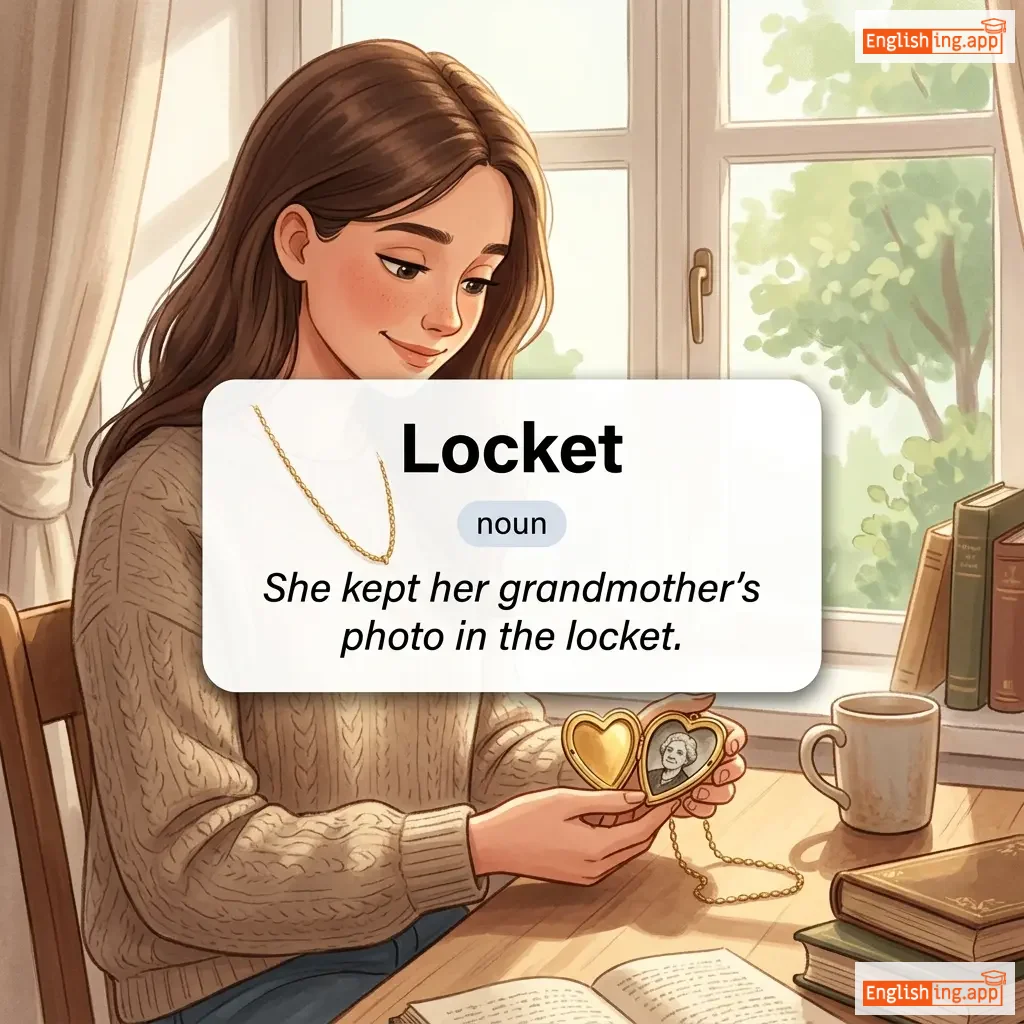
Locket definition card — visual illustration of the meaning
noun
/ˈlɒk.ɪt/
кулон (kulon)

a small ornamental case, typically made of gold or silver, worn on a chain around the neck

"She kept her grandmother's photo in the locket."

"Она хранила фотографию своей бабушки в кулоне." (Ona khranila fotografiyu svoey babushki v kulone)
noun
/ˌloʊkəˈmoʊʃən/
движение (dvizhene)

movement or the ability to move from one place to another

"Walking is the most common form of human locomotion."

"Ходьба - это наиболее распространенная форма человеческой локомоции." (Hod'ba - eto naibolee rasprostranennaya forma chelovecheskoy lokomotsii.)
noun
/ˌloʊ.kəˈmoʊ.tɪv/
локомотив (lokomotiv)

A powered rail vehicle used for pulling trains.

"The old steam locomotive was restored for the museum."
"Старый паровоз был восстановлен для музея." (Staryy parovoz byl vosstanovlen dlya muzeya.)
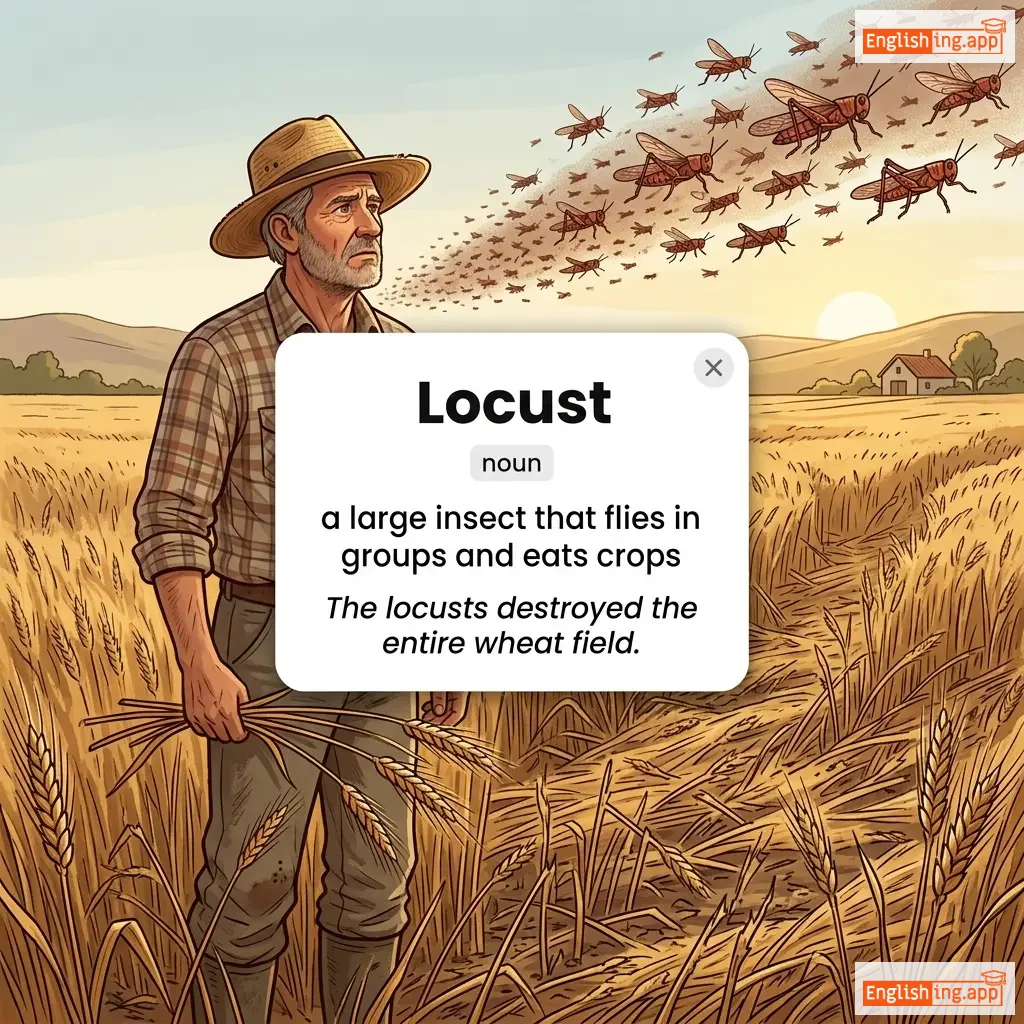
Locust definition card — visual illustration of the meaning
noun
/ˈloʊ.kəst/
саранча (sarancha)

a large insect that flies in groups and eats crops

"The locusts destroyed the entire wheat field."

"Саранча уничтожила все поле пшеницы." (Sarancha unichtozhila vse pole pshzenitsy.)
noun
/loʊd/
рудные жилы (rudnye zhily)

A rich source of something, often a vein of valuable metal in the earth.

"The miners discovered a rich lode of silver."

"Шахтёры обнаружили богатую жилу серебра." (Shakhtyory obnaruzhili bogatuyu zhilu serebra.)
noun
/ˈlɒdʒ.mənt/
временное жильё (vremennoye zhilyo)

The act of lodging or a place of temporary stay; also a deposit of something.

"The soldiers found lodgment in the abandoned house."

"Солдаты нашли временное жильё в заброшенном доме." (Soldaty nashli vremennoye zhilyo v zabroshennom dome.)
noun
/lɒft/
мансарда (mansarda)

An upper room or space, often under the roof of a building.

"She converted the old loft into a modern studio."

"Она превратила старую мансарду в современную студию." (Ona prevratila staruyu mansardu v sovremennuyu studiyu.)
adjective
/ˈlɒf.ti/
высокий (vysokiy)

Of great height; elevated in character or style; noble.

"He set himself the lofty goal of ending poverty."
"Он поставил перед собой lofty цель - искоренить бедность." (On postavil pered soboy lofty tsely - iskorenit' bednost'.)
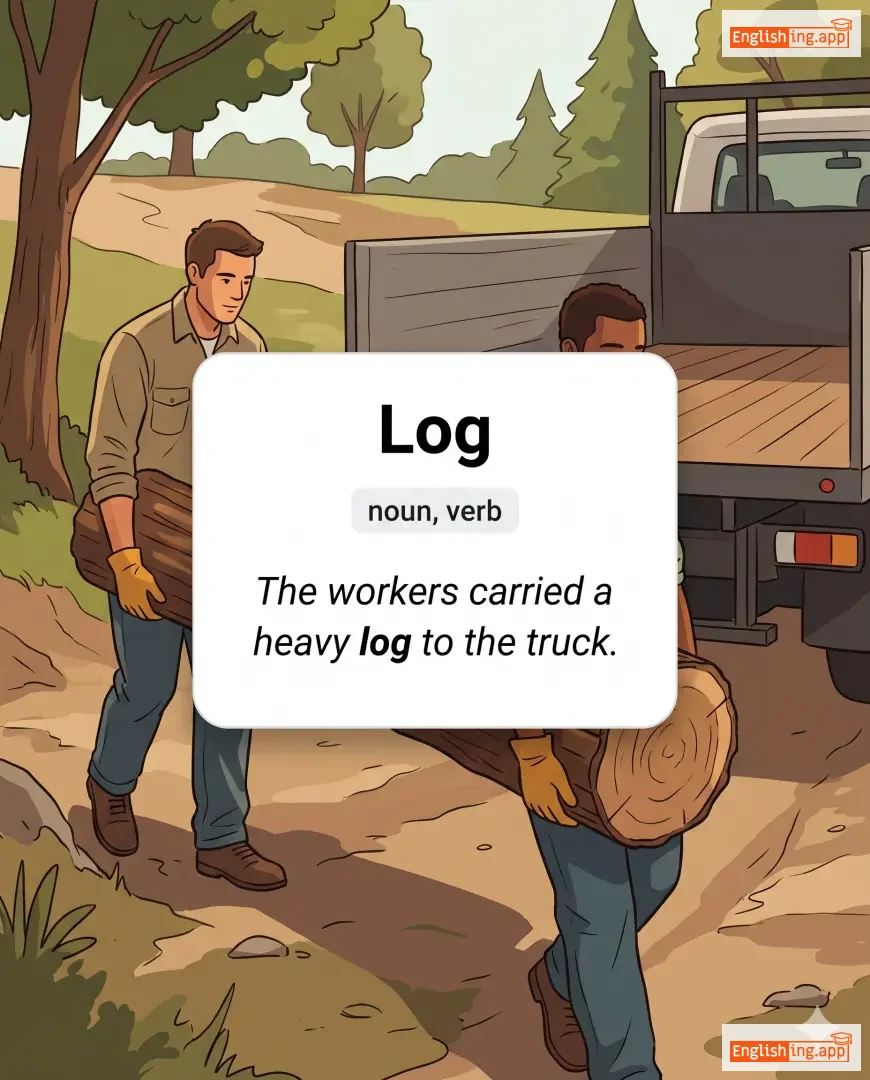
Log definition card — visual illustration of the meaning
noun, verb
/lɒɡ/
бревно, запись (brevno, zapis)

A part of the trunk or a large branch of a tree that has fallen or been cut off; also to record information systematically.

"The workers carried a heavy log to the truck."

"Рабочие принесли тяжелое бревно к грузовику." (Rabochie prinesli tyazheloe brevno k gruzoviku.)
verb
/lɑːl/
лежать лениво (lezhat' lenivo)

To sit, lie, or stand in a lazy, relaxed way.

"He lolled on the sofa after a long day at work."

"После долгого рабочего дня он растянулся на диване." (Posle dolgo rabochego dnya on rastyanulsya na divane.)
verb
/ˈlɔɪtər/

To stand or wait around idly without apparent purpose.

"The teenagers were told not to loiter outside the shop."

noun
/ˈlɔɪtərər/
человек, который без цели бродит по месту (chelovek, kotoryj bez celi brodit po mestu)

A person who lingers aimlessly in a place without purpose.

"The police questioned the loiterer outside the store."

"Полиция допросила лойтерера у магазина." (Policiya doprosila loyterera u magazina.)