Словари

Словарь английского языка | Значения слов, определения и примеры

noun
/ˈlɛdʒɪsleɪtər/
законодатель (zakonodatel)

a person who makes laws, especially a member of a legislative body

"The legislator introduced a bill to improve healthcare."
"Законодатель представил законопроект по улучшению здравоохранения." (Zakonodatel predstavil zakonoproekt po uluchsheniyu zdravookhraneniya.)
legislature definition card — visual illustration of the meaning
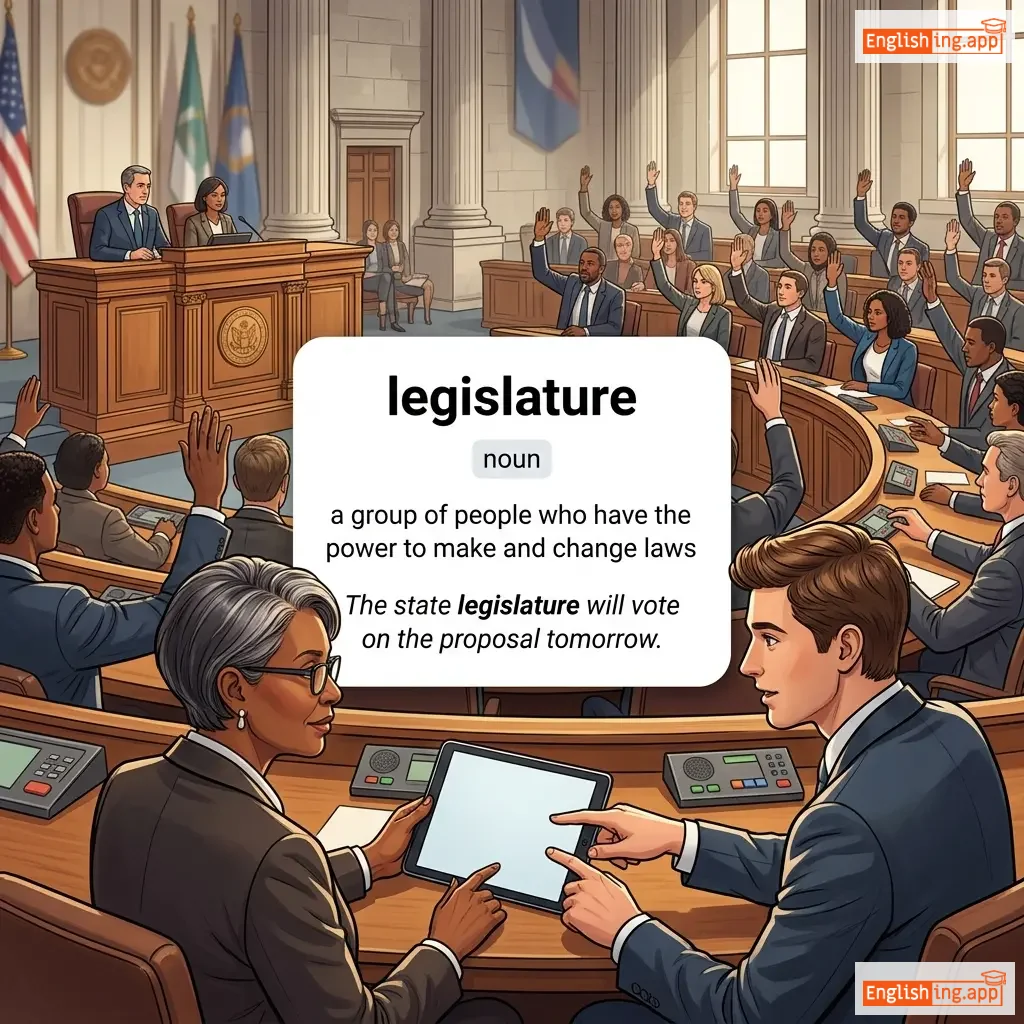
noun
/ˈlɛdʒɪsˌleɪtʃər/
законодательное собрание (zakonodatel'noe sobranie)

a group of people who have the power to make and change laws

"The state legislature will vote on the proposal tomorrow."

"Государственное законодательное собрание проголосует за предложение завтра." (Gosudarstvennoe zakonodatel'noe sobranie pro-golosuyet za predlozhenie zavtra.)
noun
/lɪˈdʒɪtɪməsi/
легитимность (legitimnost)

the quality of being accepted as right, proper, or lawful

"The legitimacy of the election was questioned by observers."

"Легитимность выборов была поставлена под сомнение наблюдателями." (Legitimnost viborov byla postavlena pod somneniye nabljudatelyami.)
adjective
/lɪˈdʒɪtɪmət/
законный (zakonny)

Conforming to the law or to rules; valid or acceptable.

"She presented a legitimate reason for her absence."
"Она представила законную причину своего отсутствия." (Ona predstavila zakonnuyu prichinu svoego otsutstviya.)
legitimate self-defense definition card — visual illustration of the meaning
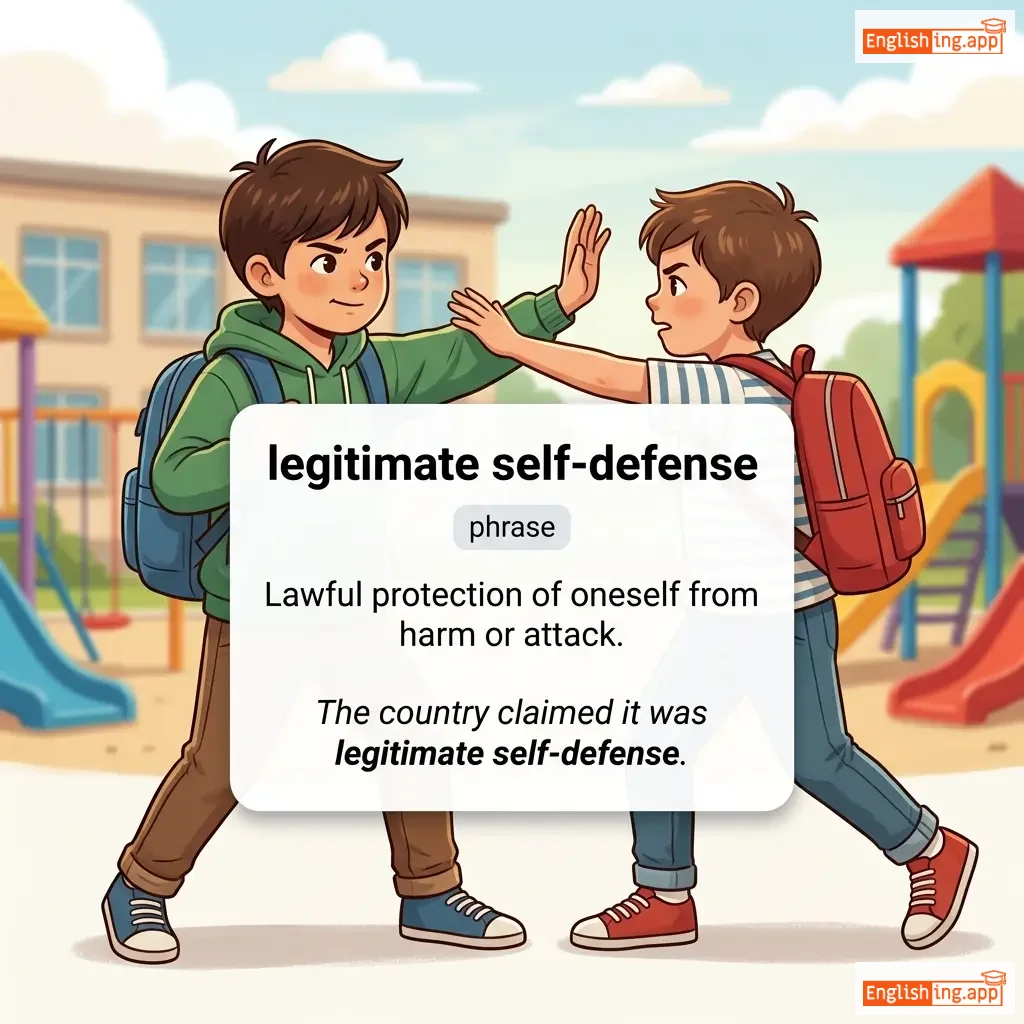
phrase
lɪˈdʒɪt.ɪ.mət sɛlf dɪˈfens
законная самооборона (zakonnaya samoborona)

Lawful protection of oneself from harm or attack.

"The country claimed it was legitimate self-defense."

"Страна заявила, что это была законная самооборона." (Strana zayavila, chto eto byla zakonnaya samoborona.)
noun
/ˈliːʒər/ or /ˈlɛʒər/
досуг (dosug)

Free time when one is not working or occupied; time for relaxation.

"She spends her leisure reading novels."
"Она проводит свой досуг за чтением романов." (Ona prohodit svoy dosug za chteniem romanov.)
Lemon definition card — visual illustration of the meaning
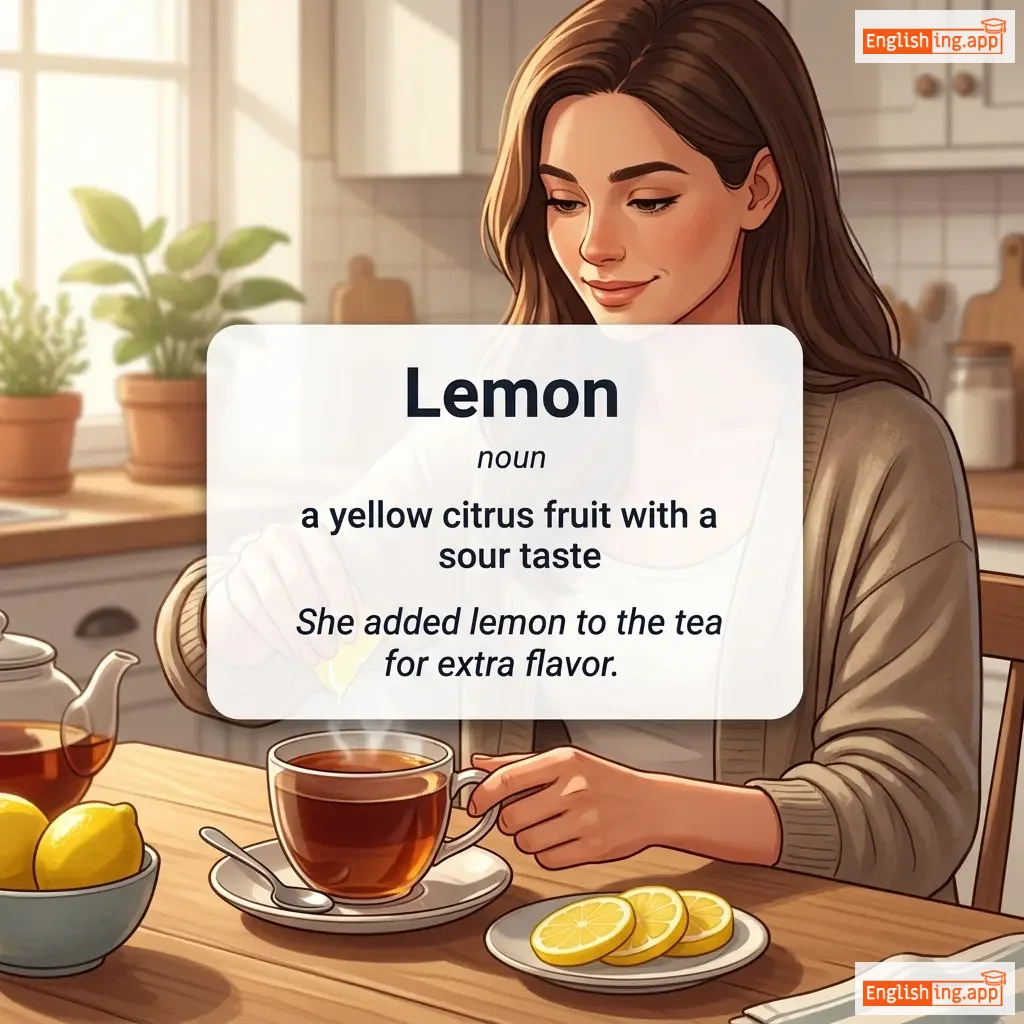
noun
/ˈlɛmən/
лимон (limon)

a yellow citrus fruit with a sour taste

"She added lemon to the tea for extra flavor."
"Она добавила лимон в чай для дополнительного вкуса." (Ona dobavila limon v chay dlya dopolnitel'nogo vkusa.)
lend definition card — visual illustration of the meaning
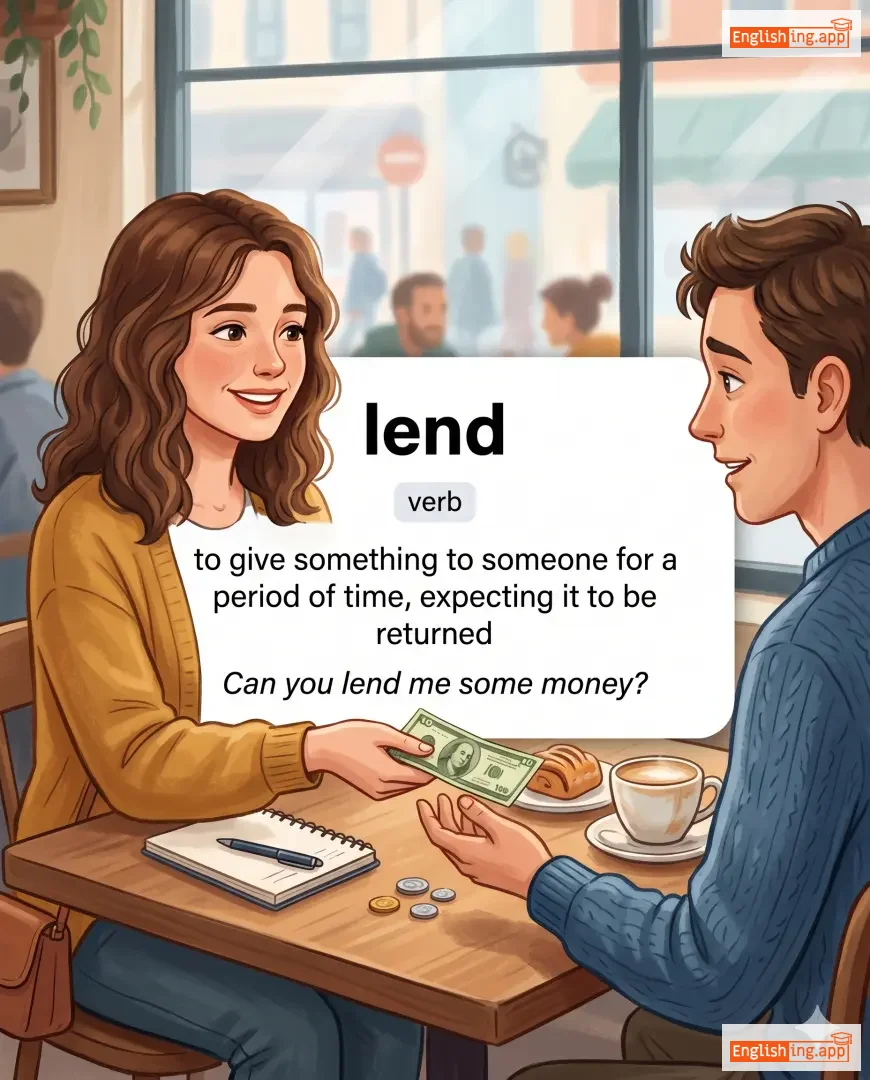
verb
/lend/
счастье (schastye)

to give something to someone for a period of time, expecting it to be returned

"Can you lend me some money?"

"Ты можешь одолжить мне немного денег?" (Ty mozhesh' odolzhit' mne nemnogo deneg?)
noun
/lɛŋkθ/
длина (dlina)

The measurement or extent of something from end to end.

"The length of the bridge is two kilometers."

"Длина моста два километра." (Dlinna mosta dva kilometra.)
adverb
/ˈleŋθ.waɪz/
по длине; вдоль самой длинной оси (po dline; vdl' samoi dlinnoi osi)

in the direction of the length; along the longest dimension

"Fold the paper lengthwise to make it easier to carry."

"Сложите бумагу вдоль длины, чтобы было легче носить." (Slozhite bumagu vdl' dliny, chtoby bylo legche nosit'.)
adjective
/ˈlɛŋθi/
долгий (dolgiy)

long in duration or extent

"The meeting was lengthy, lasting over three hours."

"Совещание было долгим, продолжавшимся более трех часов." (Soveschanie bylo dolgim, prodolzhavshimsya bolee trekh chasov.)
noun
/ˈliːniənsi/
прощение (proshchenie)

The quality of being more merciful or tolerant than expected.

"The judge showed leniency in his ruling."

"Судья проявил прощение в своем решении." (Sud'ya proyavil proshchenie v svoem reshenii.)
adjective
/ˈliːniənt/
снисходительный (sniskhoditel'nyy)

Permissive, merciful, or tolerant.

"Her parents are lenient with her curfew."

"Её родители снисходительны к её времени возвращения." (Yeyo roditeli sniskhoditel'ny k yeyo vremeni vozvrashcheniya.)
noun
/lenz/
линза (linza)

a curved piece of glass or plastic that makes things look clearer or larger when you look through it

"He cleaned the camera lens before taking the picture."
"Он очистил объектив камеры перед тем, как сделать снимок." (On ochistil obyektiv kamery pered tem, kak sdelat' snimok.)
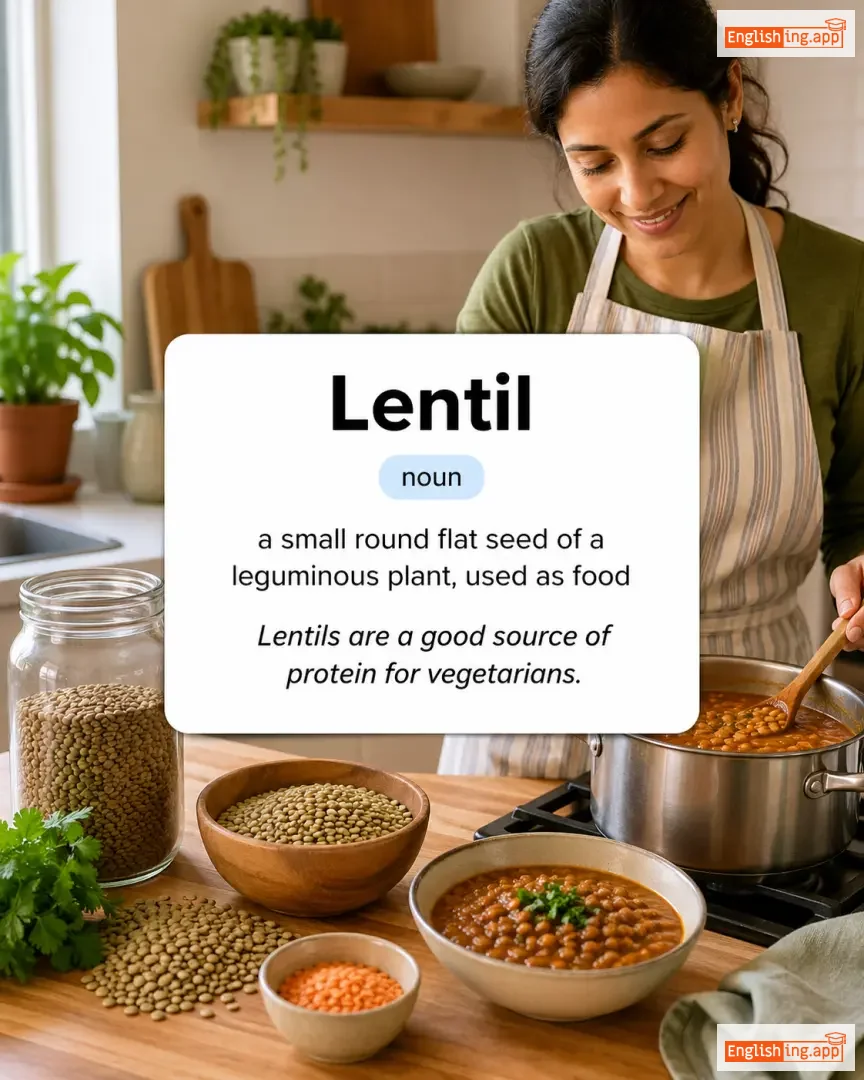
Lentil definition card — visual illustration of the meaning
noun
/ˈlen.tɪl/
чечевица (chechevitsa)

a small round flat seed of a leguminous plant, used as food

"Lentils are a good source of protein for vegetarians."

"Чечевица - хороший источник белка для вегетарианцев." (Chechevitsa - khoroshiy istochnik belka dlya vegetariantsev)
adjective
/ˈliːənaɪn/
похожие на льва (pokhozhiye na l'va)

Of or resembling a lion.

"His leonine hair made him stand out in the crowd."
"Его львиная шевелюра выделяла его среди толпы." (Yego l'vinyaya shevelyura vydelyala yego sredi tolpy.)
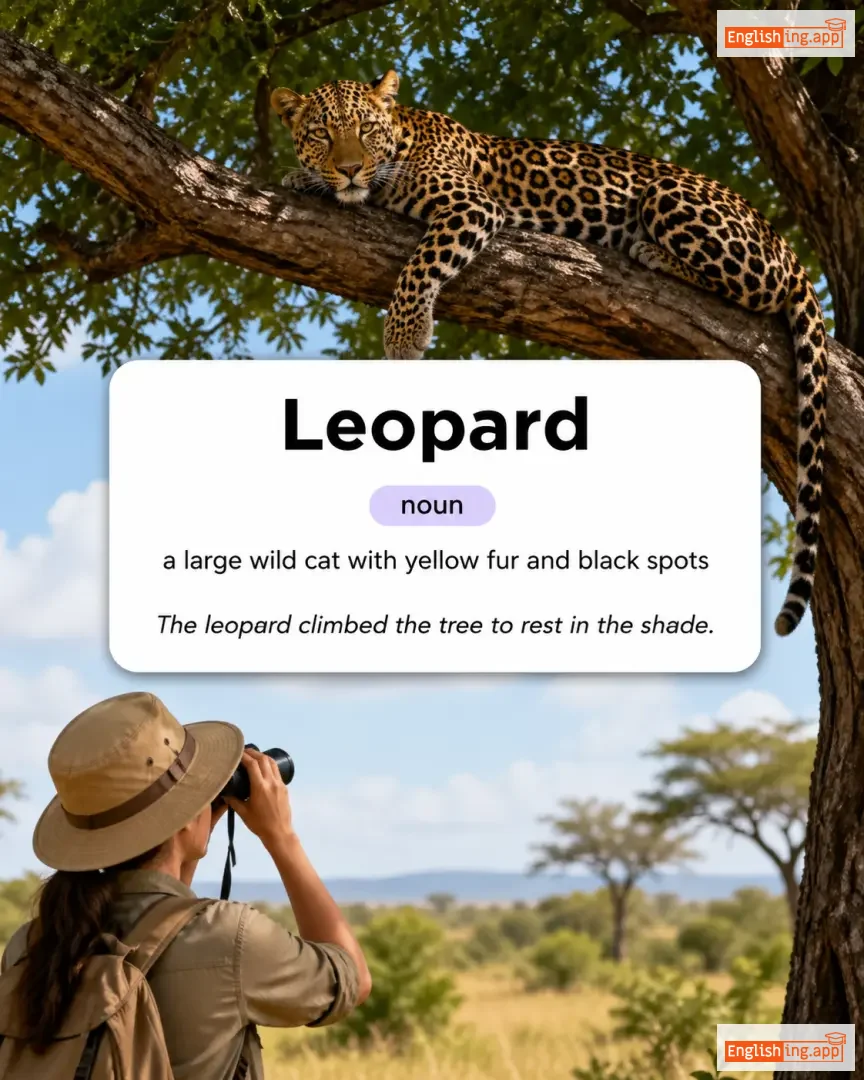
Leopard definition card — visual illustration of the meaning
noun
/ˈlep.ərd/
леопард (leopard)

a large wild cat with yellow fur and black spots

"The leopard climbed the tree to rest in the shade."

"Леопард забрался на дерево, чтобы отдохнуть в тени." (Leopard zabral'sya na derevo, chtoby otdokhnut' v teni.)
noun/adjective
/ˈlɛzbiən/
лесбиянка (lesbiyanka)

a woman who is romantically or sexually attracted to other women

"She is a proud lesbian and advocates for equal rights."

"Она гордая лесбиянка и выступает за равные права." (Ona gordaya lesbiyanka i vystupaet za ravnye prava.)
noun
/ˈliːʒən/
ранение (ranenie)

An area of damage or abnormal change in the tissue of an organism, often caused by injury or disease.

"The doctor examined the skin lesion carefully."

"Врач внимательно осмотрел кожную рану." (Vrach vnimatel'no osmotrel kozhnyu ranu.)
adjective/adverb
/lɛs/
меньше (men'she)

A smaller amount; not as much.

"She spends less money than her brother."

"Она тратит меньше денег, чем её брат." (Ona tratit men'she deneg, chem yeye brat.)
adjective
/ˈlɛsər/
менее важный (menye vazhny)

of lower importance or smaller in degree or amount

"The lesser known facts about the topic were fascinating."
"Менее известные факты об этом предмете были захватывающими." (Menee izvestnye fakty ob etom predmete byli zakhvatyvayushchimi.)
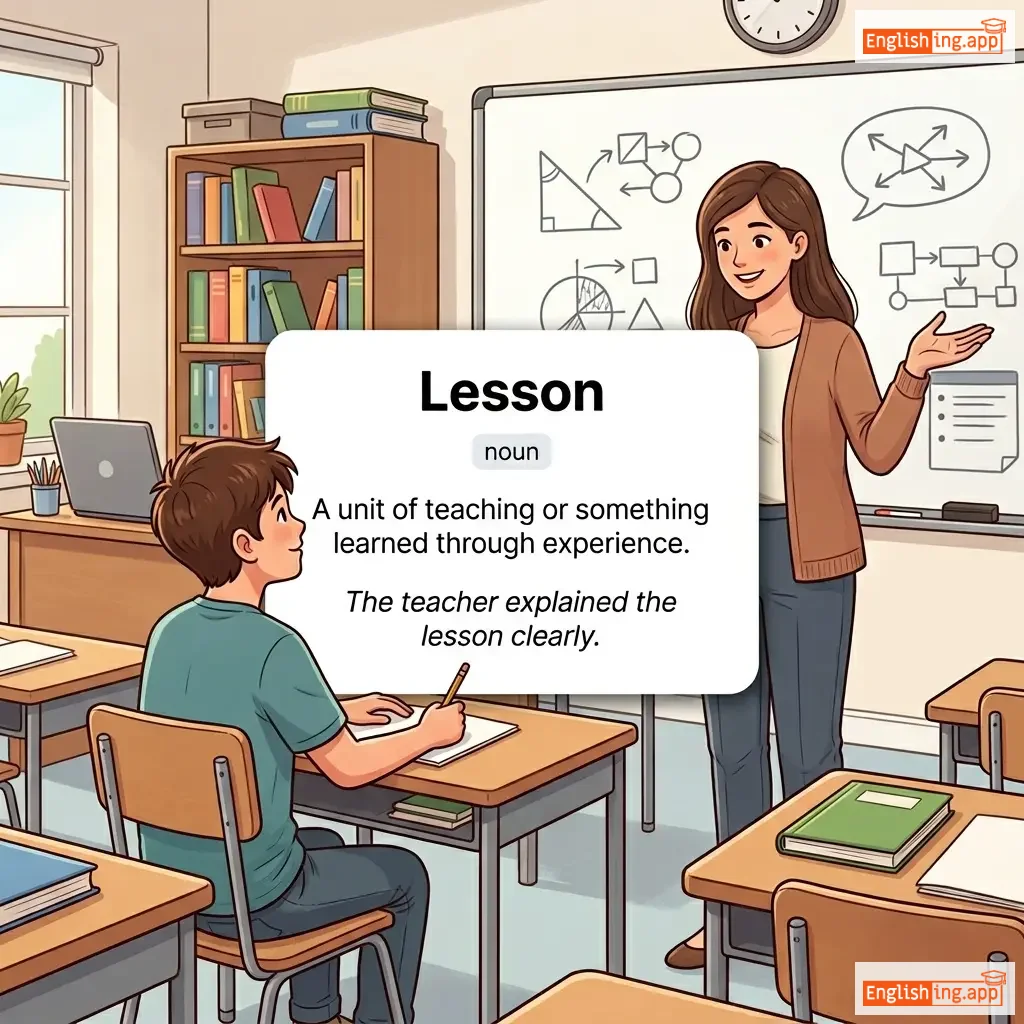
Lesson definition card — visual illustration of the meaning
noun
/ˈlɛsən/
урок (urok)

A unit of teaching or something learned through experience.

"The teacher explained the lesson clearly."
"Учитель объяснил урок ясно." (Uchitel ob'ysnil urok yasno.)
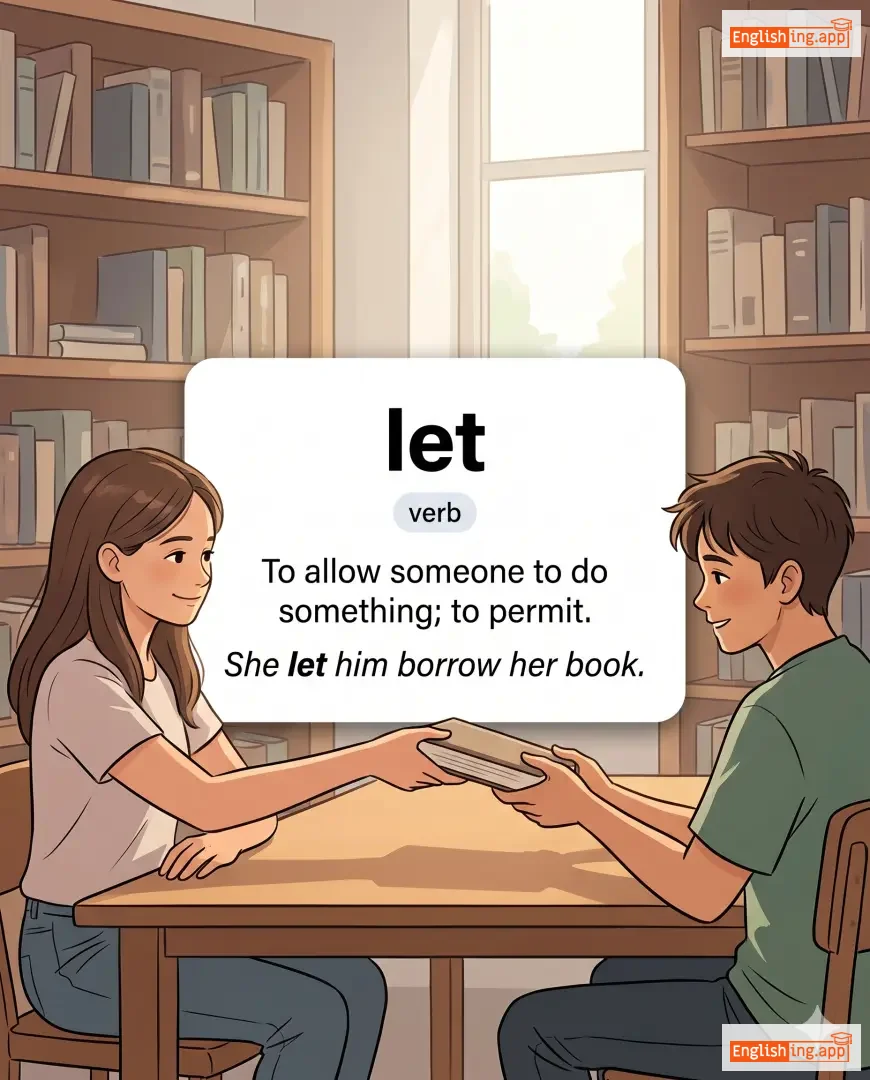
let definition card — visual illustration of the meaning
verb
/lɛt/
позволить (pozvolit')

To allow someone to do something; to permit.

"She let him borrow her book."
"Она позволила ему взять книгу." (Ona pozvolila emu vzyat' knigu.)
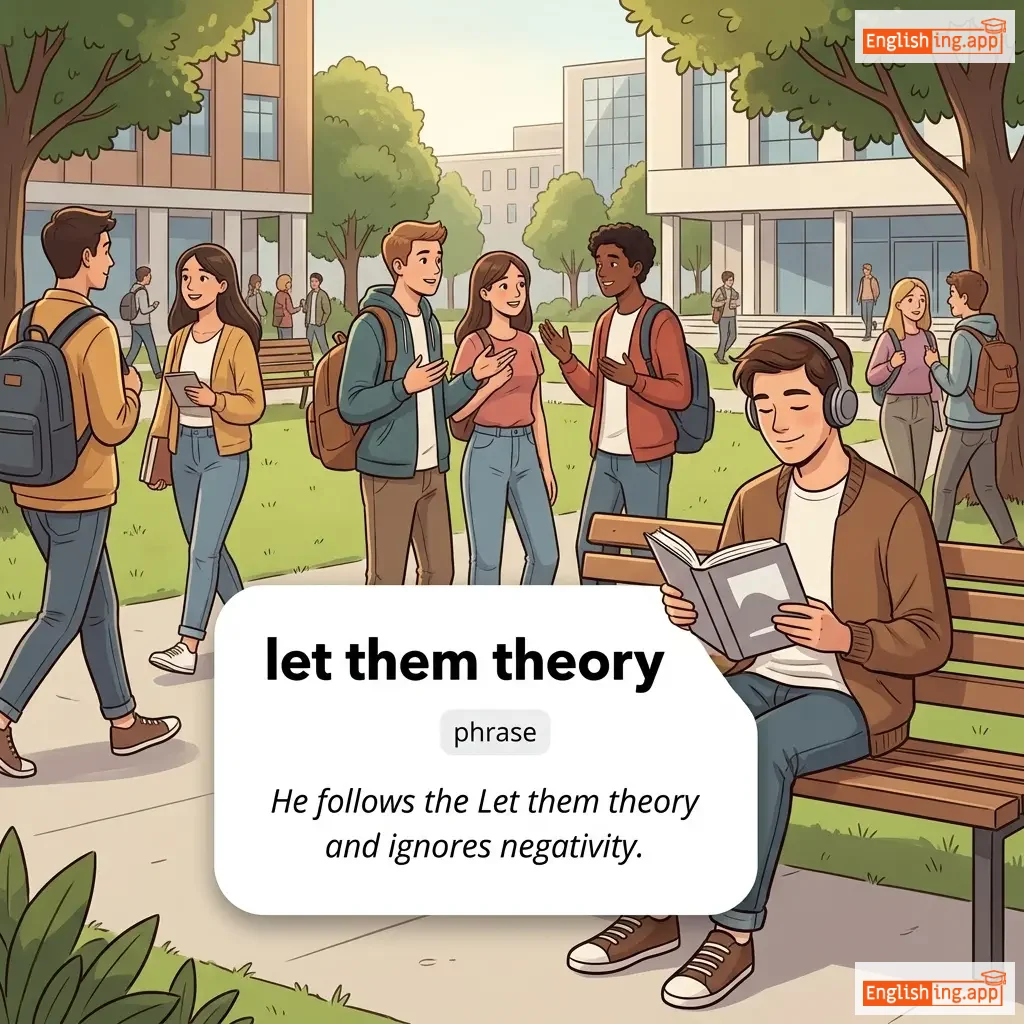
let them theory definition card — visual illustration of the meaning
phrase
/lɛt ðɛm ˈθɪə.ri/
теория «пусть они думают, что хотят» (teoriya «pust' oni dumayut, chto khotyat»)

A philosophy of not trying to control others' actions or opinions and allowing them to be themselves.

"He follows the Let them theory and ignores negativity."

"Он следует теории «пусть они» и игнорирует негативность." (On sleduyet teorii «pust' oni» i ignoriruyet negativnost'.)
adjective
/ˈliːθəl/
смертельный (smertel'nyy)

Able to cause death; deadly.

"The snake's venom is extremely lethal."
"Яд змеи крайне смертелен." (Yad zmei krayne smertelen.)
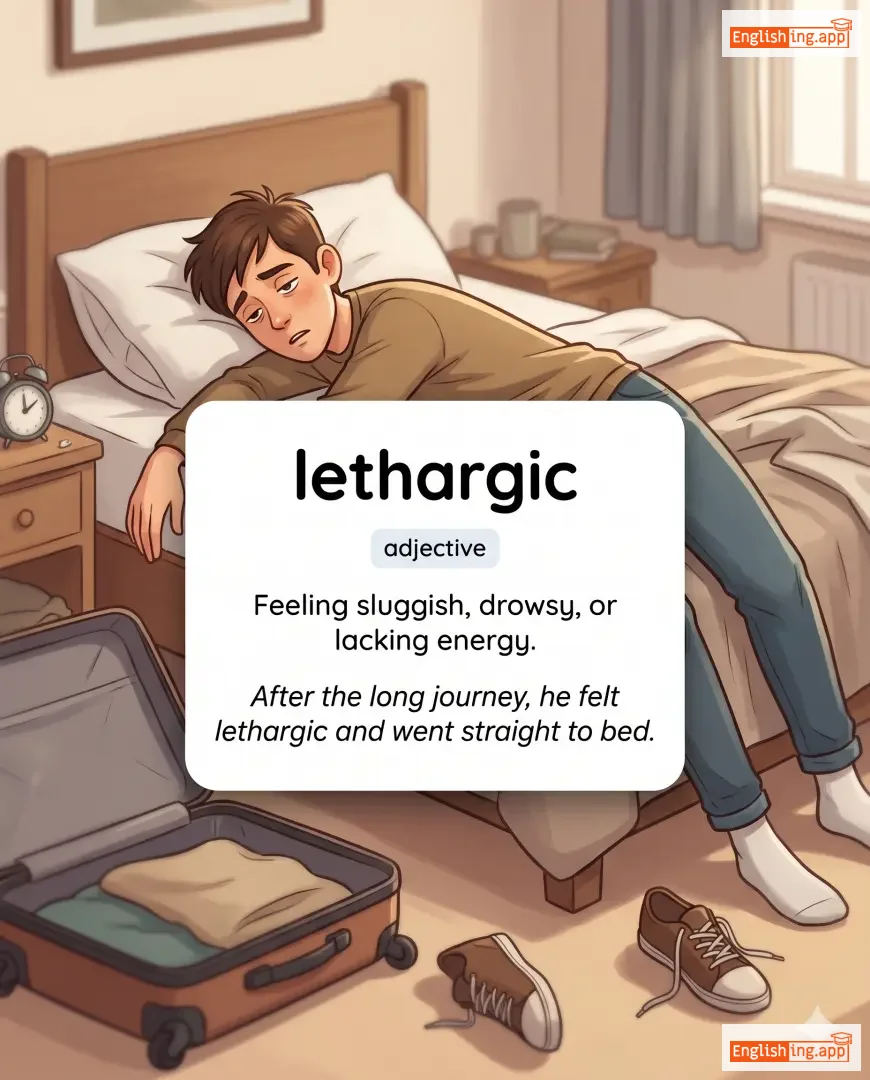
lethargic definition card — visual illustration of the meaning
adjective
/ləˈθɑːrdʒɪk/
летаргичный (letargichnyy)

Feeling sluggish, drowsy, or lacking energy.

"After the long journey, he felt lethargic and went straight to bed."

"После долгого путешествия он почувствовал себя летаргичным и сразу пошел спать." (Posle dolgogo puteshestviya on pochuvstvoval sebya letargichnym i srazu poshel spat'.)
noun
/ˈleθərdʒi/
летаргия (letargiya)

A state of tiredness, lack of energy, or drowsiness.

"The hot weather caused a feeling of lethargy among the workers."

"Жаркая погода вызвала чувство летаргии среди работников." (Zharkaya pogoda vyzvala chuvstvo letargii sredi rabotnikov.)
noun
/ˈlɛtər/
письмо (pis'mo)

A written or printed message sent to someone.

"He wrote a letter to his friend."

"Он написал письмо своему другу." (On napisal pis'mo svoemu drugu.)
noun
/ˈlɛtɪs/
салат-латук (salat latuk)

a leafy green vegetable commonly used in salads and sandwiches

"She added fresh lettuce to the sandwich."
"Она добавила свежий салат-латук в сэндвич." (ona dobavila svezhii salat latuk v sendvich)
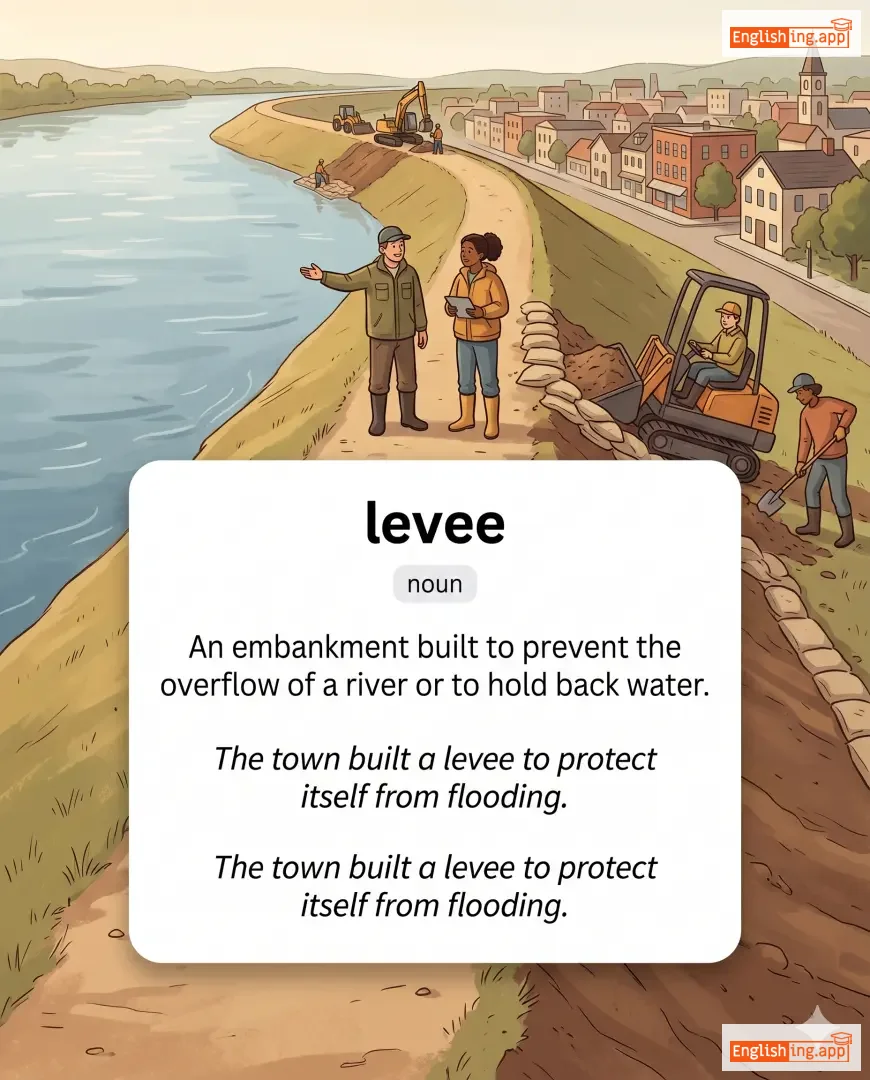
levee definition card — visual illustration of the meaning
noun
/ˈlɛvi/
дамба (damba)

An embankment built to prevent the overflow of a river or to hold back water.

"The town built a levee to protect itself from flooding."
"Город построил дамбу, чтобы защититься от наводнений." (Gorod postroil dambu, chtoby zashchititsya ot navodneniy.)
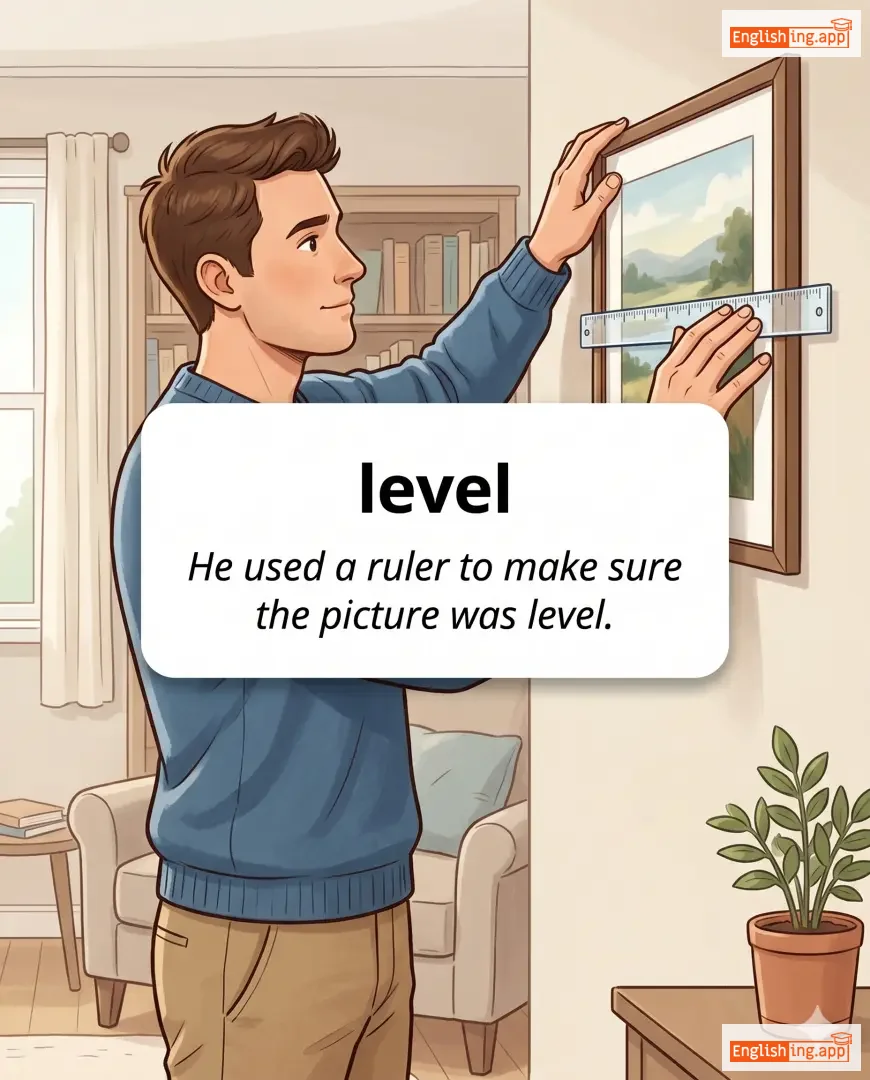
level definition card — visual illustration of the meaning
noun, verb, adjective
/ˈlɛvəl/
уровень, этап (uroven, etap)

a flat or even surface; a stage in scale or rank; to make something flat or equal.

"He used a ruler to make sure the picture was level."

"Он использовал линейку, чтобы убедиться, что изображение было на уровне." (On ispol'zoval lineyku, chtoby ubeditsya, chto izobrazhenie bylo na urovne.)
adjective
/ˌlɛvəlˈhɛdɪd/
спокойный и разумный (spokoynyy i razoumnyy)

calm and sensible; showing good judgment.

"She remained levelheaded during the crisis."

"Она осталась спокойной в кризисной ситуации." (Ona ostalas' spokoynoy v krizisnoy situatsii.)
noun, verb
/ˈliːvər/ or /ˈlɛvər/
рычаг, жесткий стержень (rychag, zhestkiy sterzhen')

a rigid bar used to move or lift heavy objects; to move something using leverage.

"He used a lever to lift the heavy stone."

"Он использовал рычаг, чтобы поднять тяжелый камень." (On ispol'zoval rychag, chtoby podnyat' tyazhelyy kamen'.)
leverage definition card — visual illustration of the meaning
noun/verb
/ˈlɛv.ər.ɪdʒ/
использовать (ispol'zovat')

Optimal use of existing resources, power, or situation

"The company used social media to leverage its brand awareness."

"Компания использовала социальные сети, чтобы повысить узнаваемость своего бренда." (Kompaniya ispol'zovala sotsial'nye seti, chtoby povysit' uznayemost' svoego brenda.)
noun
/ˈlaɪsəns/
лицензия (litsenziya)

An official document giving permission to do, use, or own something.

"She applied for a driving licence last week."
"Она подала заявление на водительские права на прошлой неделе." (Ona podala zayavleniye na voditel'skiye prava na proshloy nedele.)
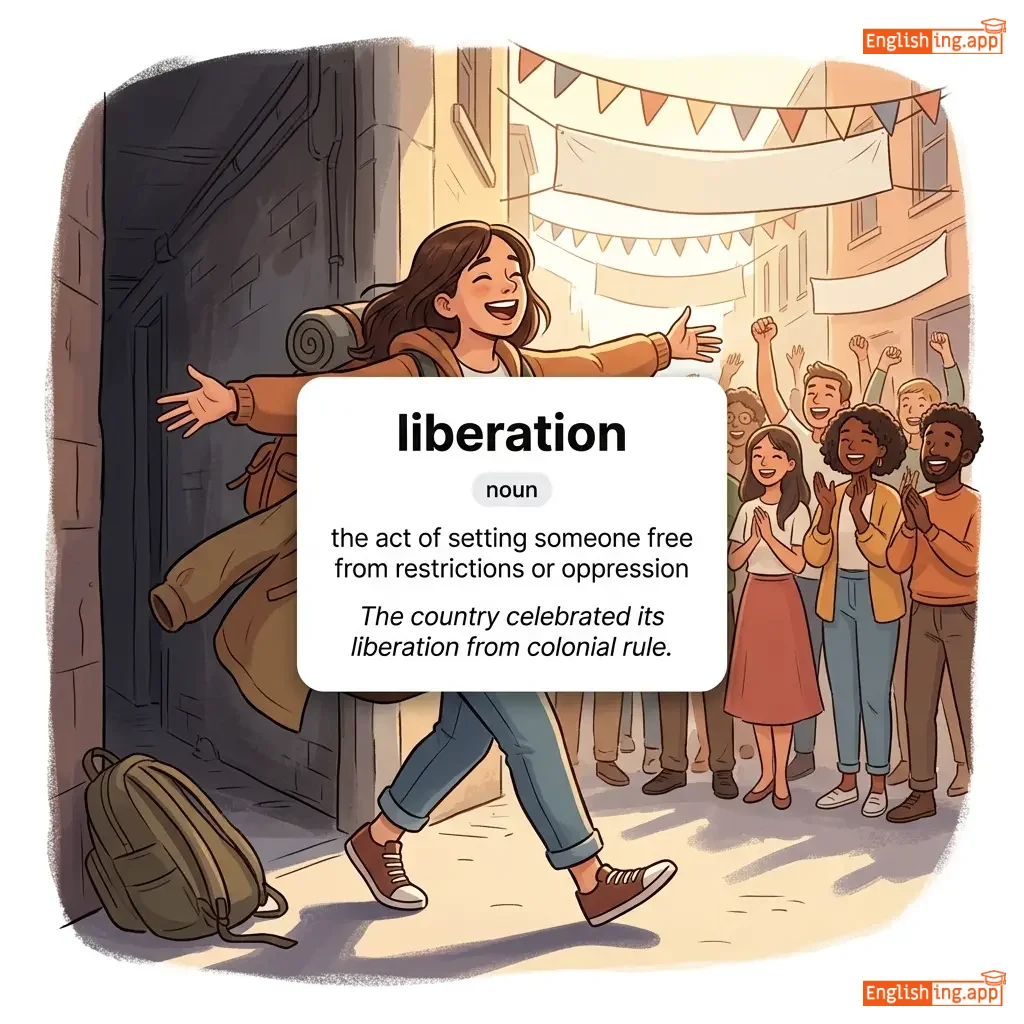
liberation definition card — visual illustration of the meaning
noun
/ˌlɪbəˈreɪʃən/
освобождение (osvobozhdenie)

the act of setting someone free from restrictions or oppression

"The country celebrated its liberation from colonial rule."

"Страна отпраздновала свое освобождение от колониального правления." (Strana otprazdnovala svoe osvobozhdenie ot kolonial'nogo pravleniya.)
noun
/ˌlɪbəˈreɪʃən wɔːr/
освободительная война (osvoboditelnaya voyna)

a war fought to gain freedom from foreign rule, occupation, or oppression; an armed struggle for national independence

"The liberation war reshaped the nation’s history and identity."
"Освободительная война изменила историю страны." (Osvoboditelnaya voyna izmenila istoriyu strany)
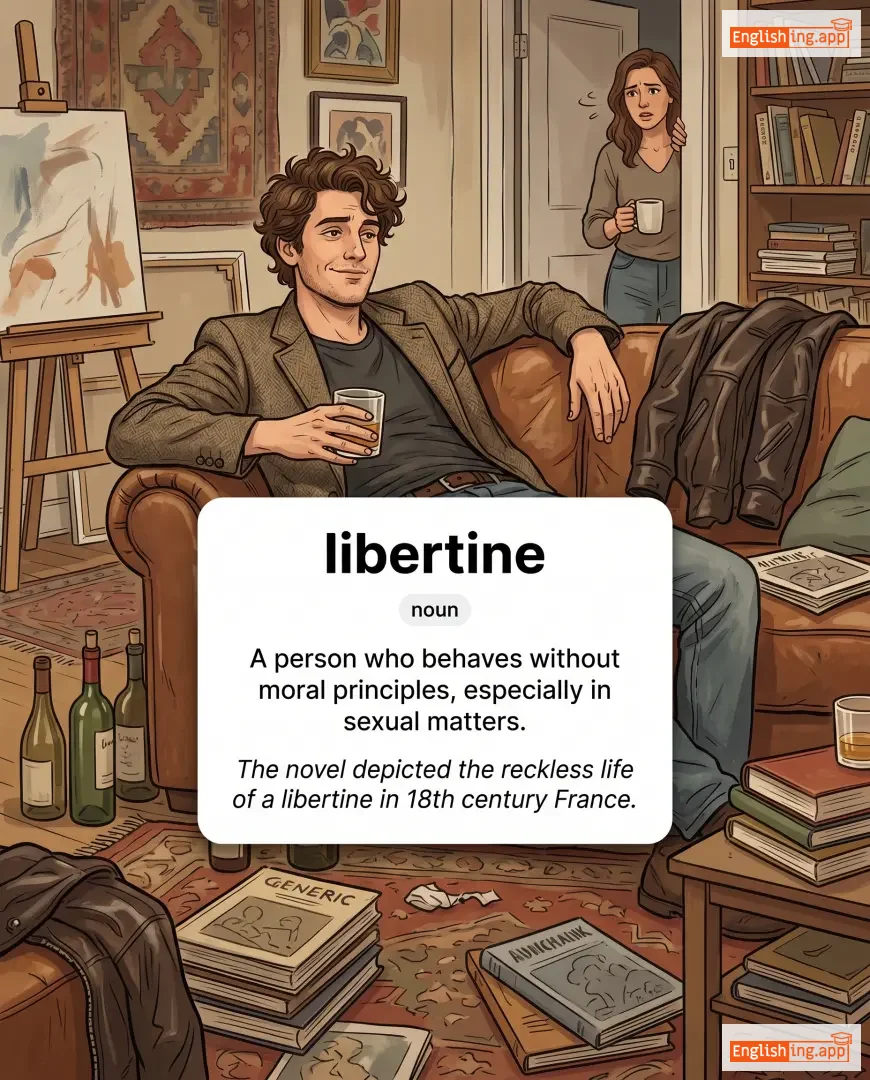
libertine definition card — visual illustration of the meaning
noun
/ˈlɪbərˌtiːn/

A person who behaves without moral principles, especially in sexual matters.

"The novel depicted the reckless life of a libertine in 18th century France."

noun
/ˈlɪbərti/
свобода (svoboda)

the state of being free within society from oppressive restrictions

"Freedom of speech is a basic liberty."

"Свобода слова — основная свобода." (Svoboda slova — osnovnaya svoboda.)
adjective
/lɪˈbɪdənəs/
похотливый (pokhotlivyy)

Showing excessive sexual drive; lustful.

"The play was criticized for its libidinous characters."

"Пьесу раскритиковали за её похотливых персонажей." (P'yesu raskritikovali za yeye pokhotlivykh personazhey.)
libido definition card — visual illustration of the meaning
noun
/lɪˈbiːdoʊ/
сексуальное желание (seksual'noe zhelanie)

Sexual desire or drive.

"Stress can sometimes lower a person's libido."

"Стресс иногда может снижать сексуальное желание человека." (Stress inogda mozhet snizhat' seksual'noe zhelanie cheloveka.)
noun
/laɪˈbrɛəriən/
библиотекарь (bibliotekar)

a person who manages, organizes, and assists users in a library

"The librarian helped me find a rare history book."
"Библиотекарь помог мне найти редкую историческую книгу." (Bibliotekar pomog mne nayti redkuyu istoricheskuyu knigu)
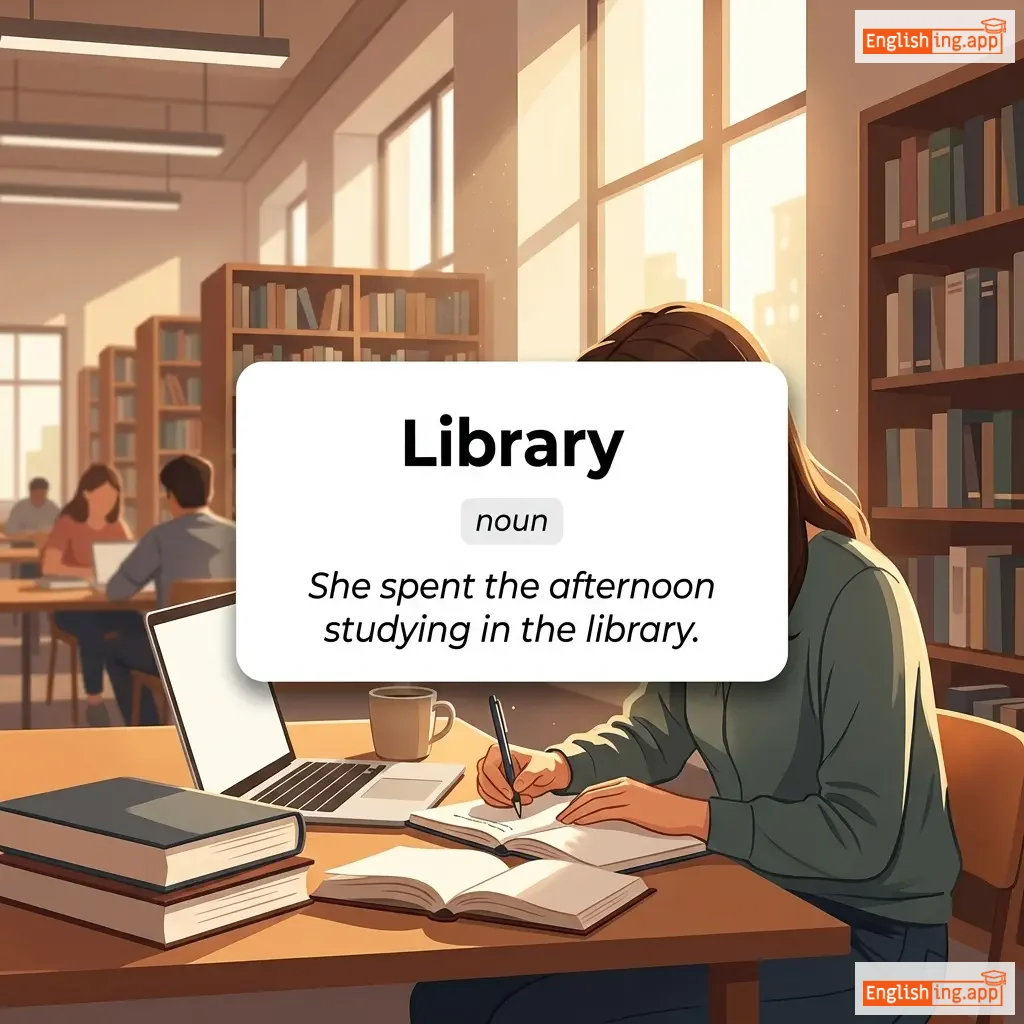
Library definition card — visual illustration of the meaning
noun
/ˈlaɪ.brɛr.i/
библиотека (biblioteka)

A building or room containing collections of books, periodicals, and sometimes other materials for people to read or borrow.

"She spent the afternoon studying in the library."

"Она провела послеобеденное время, изучая в библиотеке." (Ona provela posleobedennoye vremya, izuchaya v biblioteke.)
noun
/lɪˈbrɛtoʊ/
либретто оперы (libretto opery)

The text of an opera or other long vocal work.

"She studied the libretto before attending the opera performance."

"Она изучила либретто перед посещением оперного представления." (Ona izuchila libretto pered poseshcheniem opernogo predstavyeniya.)
adjective
/ˈlɪsɪt/
законный (zakonny)

Permitted by law or by rules; legal.

"The trade of certain goods is licit under international law."

"Торговля определенными товарами является легальной по международному праву." (Torgovlya opredelyonnymi tovarami yavlyaetsya legal'noy po mezhdunarodnomu pravu.)
noun
/liːdʒ/
сеньор (senyor)

A feudal lord entitled to allegiance and service; a loyal subject.

"The knight pledged loyalty to his liege."

"Рыцарь принес клятву верности своему сюзерену." (Ryt'sar' prines klyatvu vernosti svoemu syuzerenu.)
lie definition card — visual illustration of the meaning
verb
/laɪ/
лгать (l'gat)

To make a false statement with the intention to deceive.

"He lied about his age to get the job."
"Он соврал о своем возрасте, чтобы получить работу." (On sovral o svoem vozraste, chtoby poluchit' rabotu.)
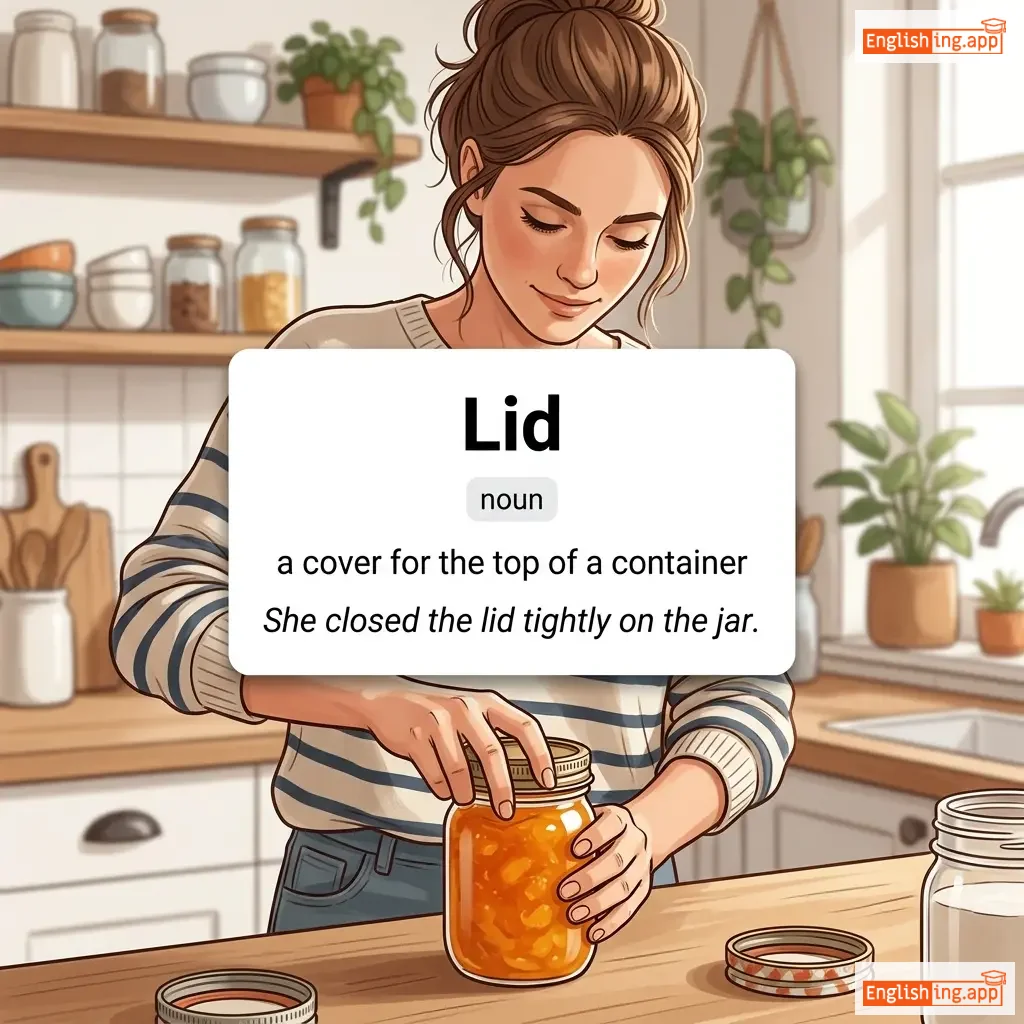
Lid definition card — visual illustration of the meaning
noun
/lɪd/
крышка (kryshka)

a cover for the top of a container

"She closed the lid tightly on the jar."

"Она плотно закрыла крышку банки." (Ona plotno zakryla kryshku banki.)
lick definition card — visual illustration of the meaning
verb
/lɪk/
лизать (lizat)

to pass the tongue over something; to defeat decisively

"The cat licked its paws clean."

"Кошка лизала свои лапки чисто." (Koshka lizala svoi lapki chisto.)
noun
/ˌlaɪ.sənˈsiː/
лицензиат (litsenziat)

a person or organization that holds a license to do something

"The licensee is responsible for following all regulations."

"Лицензиат несет ответственность за соблюдение всех правил." (Litsenziat neset otvetstvennost za soblyudeniye vsekh pravil.)