Словари

Словарь английского языка | Значения слов, определения и примеры

adjective
/loʊ/
низкий (nizkiy)

Small in amount, degree, or position; not high.

"The river is at its lowest level in years."

"Река находится на самом низком уровне за последние годы." (Reka nakhoditsya na samom nizkom urovne za poslednie gody.)
adjective
/ˈlʌv.ɪŋ/
любящий; заботливый; проявляющий любовь и тепло (lyubyashchiy; zabotlivyy; proyavlyayushchiy lyubov' i teplo)

affectionate; caring; showing love and warmth

"She is a loving mother who cares deeply for her children."

"Она любящая мать, которая глубоко заботится о своих детях." (Ona lyubyashchaya mat', kotorya gluboko zabotitsya o svoikh detyakh.)
noun
/ˈlʌvər/
любовник (lyubovnik)

a person who is in a romantic relationship or has strong affection for someone

"She met her lover at the café every evening."

"Она встречала своего любовника в кафе каждый вечер." (Ona vstrechala svoego lyubovnika v kafe kazhdyj vecher.)
adjective
/ˈlʌvli/
прекрасный (prekrasny)

Delightful or very pleasing; beautiful.

"It was a lovely evening by the beach."

"Это был прекрасный вечер у моря." (Eto byl prekrasnyy vecher u morya.)
adjective
/ˈlʌvəbl̩/
счастье (schastye)

easy to love; endearing or charming

"The puppy was so loveable that everyone wanted to hold it."
"Она не могла скрыть свое счастье, когда получила награду." (Ona ne mogla skryt' svoe schast'ye, kogda poluchila nagradu.)
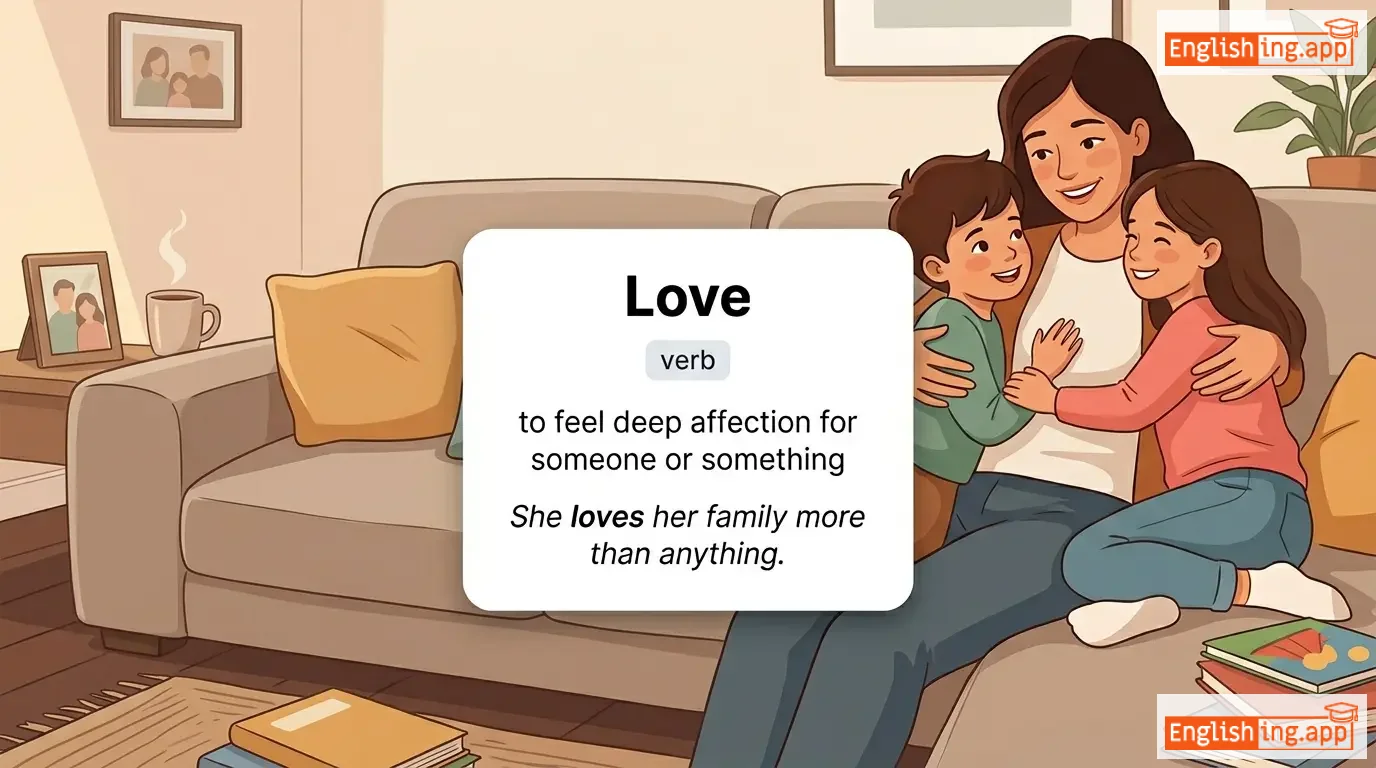
Love definition card — visual illustration of the meaning
verb
/lʌv/
любовь (lyubov)

to feel deep affection for someone or something

"She loves her family more than anything."

"Она любит свою семью больше всего." (Ona lyubit svoyu sem'yu bol'she vsego.)
adjective
/ˈlʌvəbəl/
счастье (schast'ye)

Inspiring or deserving love or affection.

"The puppy was so lovable that everyone wanted to hold it."

"Она не могла скрыть своего счастья, когда получила премию." (Ona ne mogla skryt' svoego schast'ya, kogda poluchila premium.)
adjective
/ˈlaʊtɪʃ/
грубый (grubyy)

Clumsy, rude, or aggressive in behavior.

"His loutish remarks offended everyone at the meeting."

"Его грубые замечания оскорбили всех на собрании." (Yego grubye zamechaniya oskorbili vsekh na sobranie.)
noun
/laʊt/
грубый человек (grubyy chelovek)

An uncouth or aggressive man or boy.

"The drunken lout caused a scene at the party."

"Пьяный грубый человек устроил скандал на вечеринке." (P'yanyy grubyy chelovek ustroil skandal na vecherinke.)
adjective
/ˈlaʊzi/
плохой (plokhoy)

of very poor quality; bad or unpleasant

"He felt lousy after catching the flu."
"Он почувствовал себя плохо после того, как подхватил грипп." (On pochuvstvoval sebya plokho posle togo, kak podkhvatil gripp.)
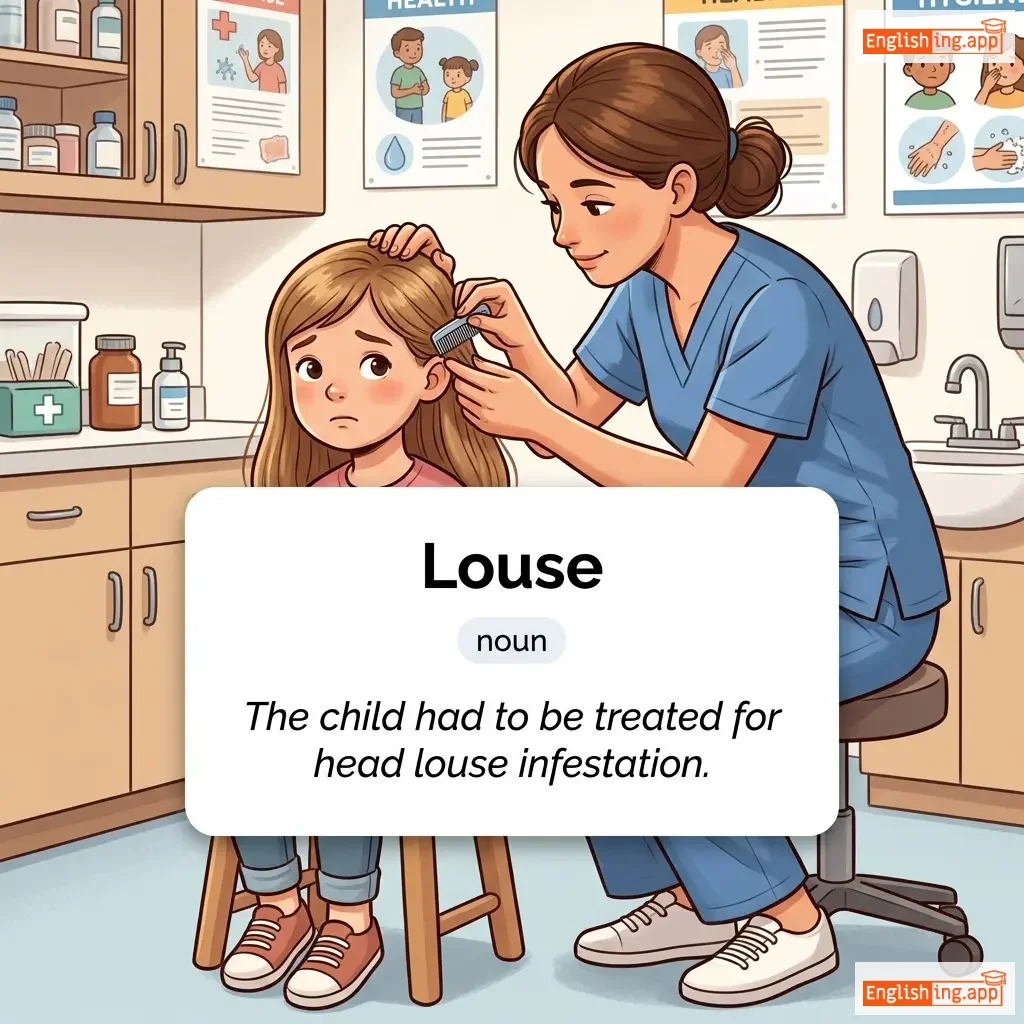
Louse definition card — visual illustration of the meaning
noun
/laʊs/
вошь (vosh)

A small parasitic insect that lives on the skin of mammals and birds; also used as an insult for a contemptible person.

"The child had to be treated for head louse infestation."

"Ребенка нужно было лечить от заражения головными вшами." (Rebyonka nuzhno bylo lechit' ot zaraZheniya golovnymi vshami.)
noun, verb
/laʊndʒ/
гостиная (gostinaya)

A public room for relaxing; or to sit, lie, or stand in a relaxed way.

"They lounged on the sofa after dinner."

"Они развалились на диване после ужина." (Oni razvailsya na divane posle uzhina.)
noun
/lɒx/ or /lɒk/
озеро (ozero)

An Irish or Scottish word for a lake or sea inlet.

"The fishermen lived by the lough for generations."

"Рыбаки жили у озера на протяжении поколений." (Rybaki zhili u ozera na protyazhenii pokoleniy.)
adverb
/ˈlaʊdli/
громко (gromko)

in a way that produces a lot of sound; with a high volume

"He spoke loudly so everyone in the room could hear him."
"Он говорил громко, чтобы все его слышали." (On govoril gromko chtoby vse ego slyshali)
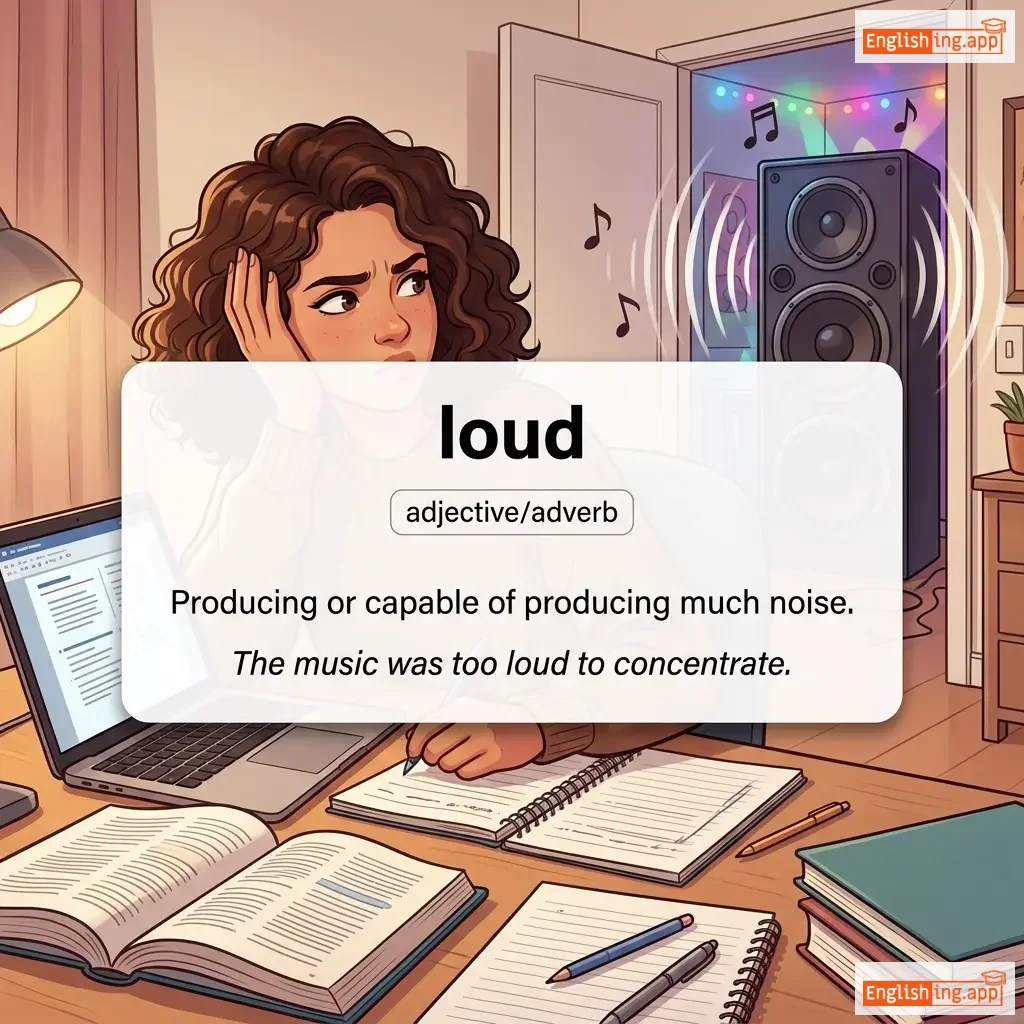
loud definition card — visual illustration of the meaning
adjective/adverb
/laʊd/
громкий (gromkiy)

Producing or capable of producing much noise.

"The music was too loud to concentrate."
"Музыка была слишком громкой, чтобы сосредоточиться." (Muzyka byla slishkom gromkoy, chtoby sosredotochit'sya.)
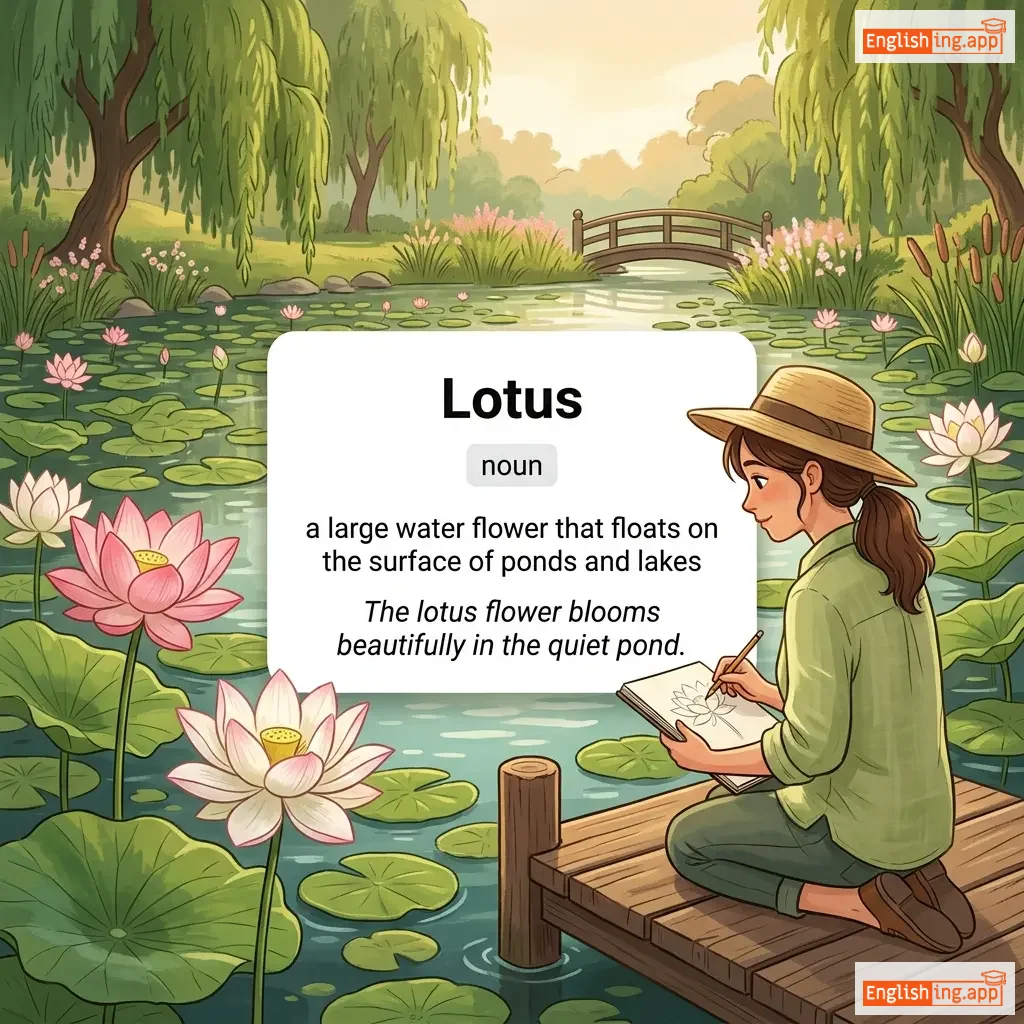
Lotus definition card — visual illustration of the meaning
noun
/ˈloʊ.təs/
лотос (lotos)

a large water flower that floats on the surface of ponds and lakes

"The lotus flower blooms beautifully in the quiet pond."

"Цветок лотоса прекрасно цветёт в тихом пруду." (tsvetok lotosa prekrasno tsvetyot v tikhom prudu)
noun
/ˈlɒtəri/
лотерея (loteriya)

A means of raising money by selling numbered tickets and giving prizes to the holders of numbers drawn at random.

"He won a car in the national lottery."

"Он выиграл машину в национальной лотерее." (On vyigral mashinu v natsional'noi loteree.)
pronoun/noun
/lɒts/
много (mnogo)

A large number or amount of something.

"She has lots of friends in the city."

"У неё много друзей в городе." (U neyo mnogo druzey v gorode.)
noun
/lɒt/
много (mnogo)

A large number or amount; a group or portion.

"She bought a lot of books at the fair."

"Она купила много книг на ярмарке." (Ona kupila mnogo knig na yarmarke.)
verb/adjective
/lɒst/
потерянный (poteryannyy)

Unable to find the way; no longer in possession of something.

"He lost his keys and couldn’t enter the house."
"Он потерял свои ключи и не смог войти в дом." (On poteryal svoi klyuchi i ne smog voyti v dom.)
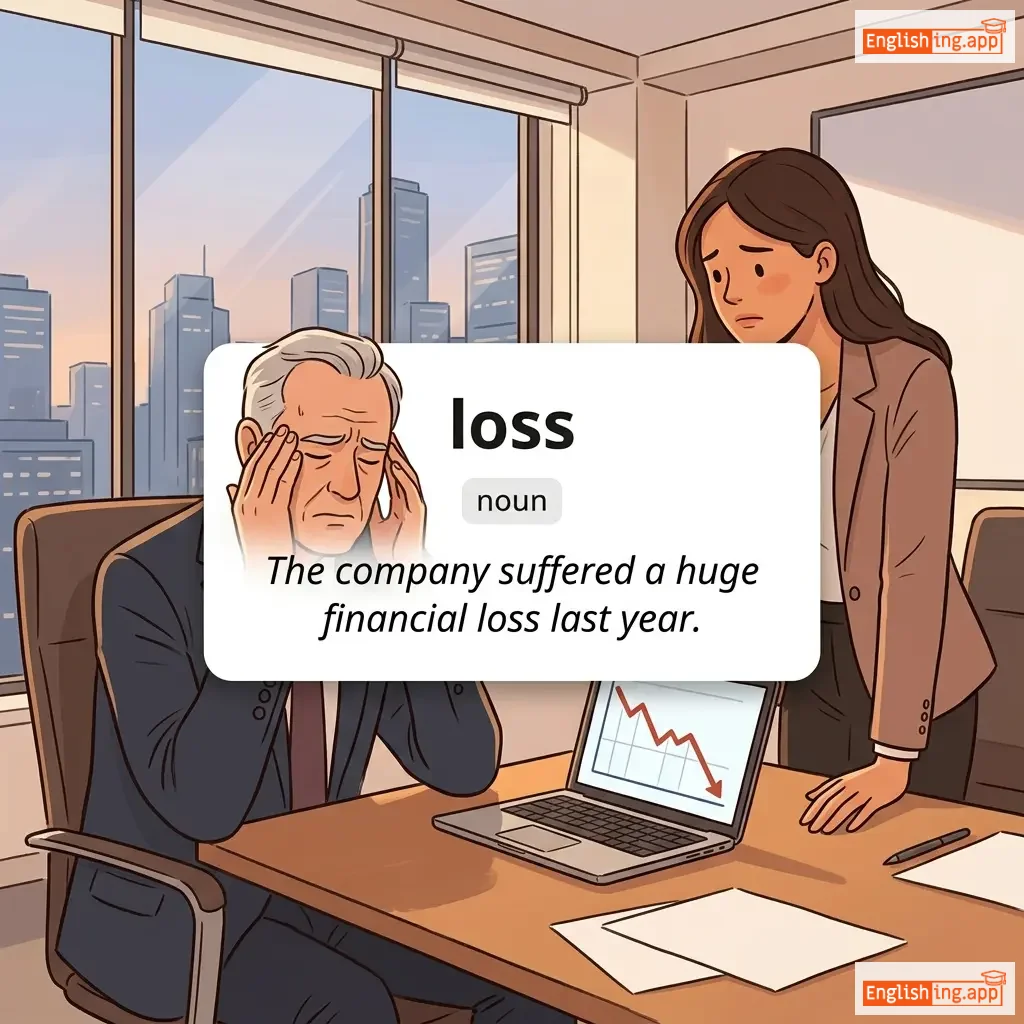
loss definition card — visual illustration of the meaning
noun
/lɒs/
потеря (poterya)

The state of no longer having something or someone; the harm resulting from losing.

"The company suffered a huge financial loss last year."
"Компания понесла огромные финансовые потери в прошлом году." (Kompaniya ponessla ogromnye finansovye poteri v proshlom godu.)
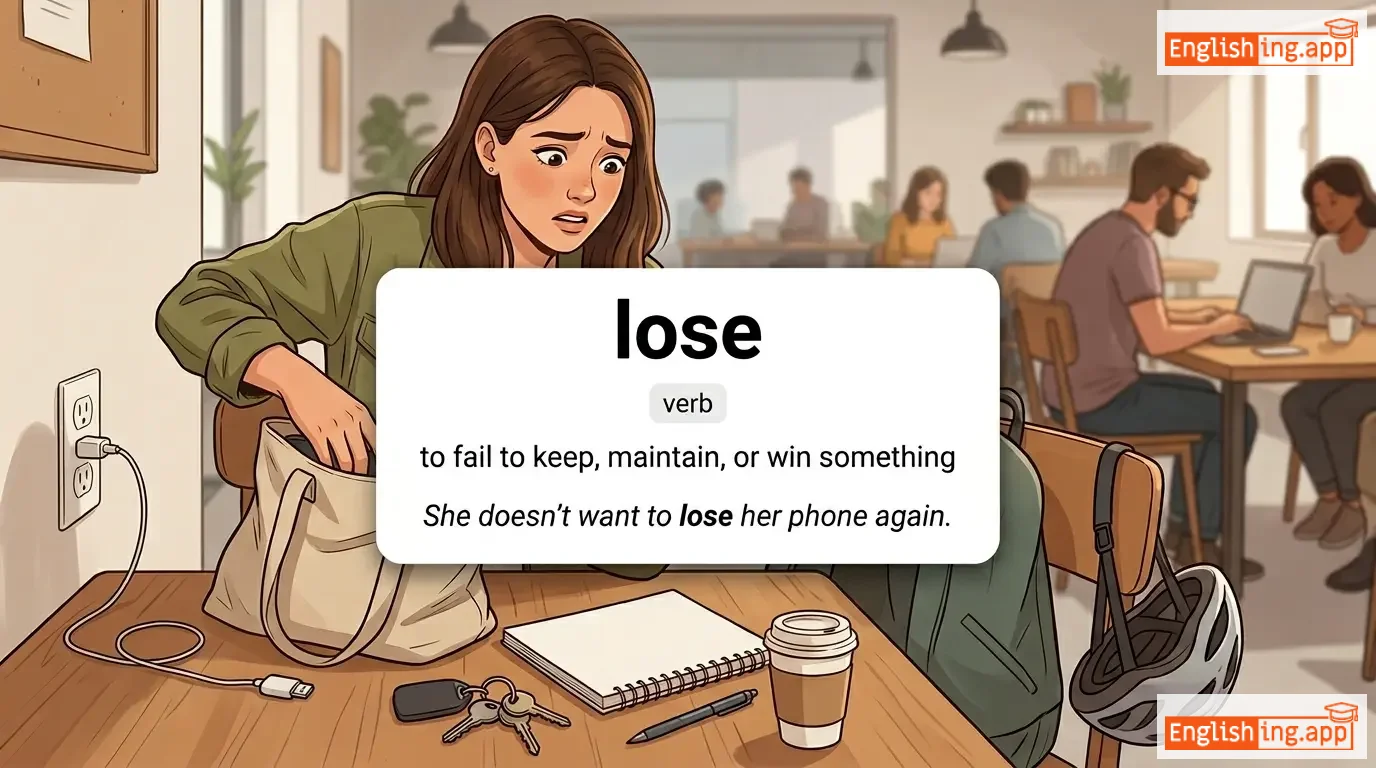
lose definition card — visual illustration of the meaning
verb
/luːz/
счастье (schast'ye)

to fail to keep, maintain, or win something

"She doesn’t want to lose her phone again."

"Она не могла скрыть своего счастья, когда получила награду." (Ona ne mogla skryt' svoego schast'ya, kogda poluchila nagradu.)
noun
/ˈlɔːrdlɪŋ/
молодой лорд (molodoy lord)

A young or petty lord; someone of minor nobility.

"The arrogant lordling demanded respect despite his lack of experience."
"Арогантный лордлинг требовал уважения, несмотря на его отсутствие опыта." (Arogantnyy lordling treboval uzhazheniya, nesmotrya na ego otsutstvie opyta.)
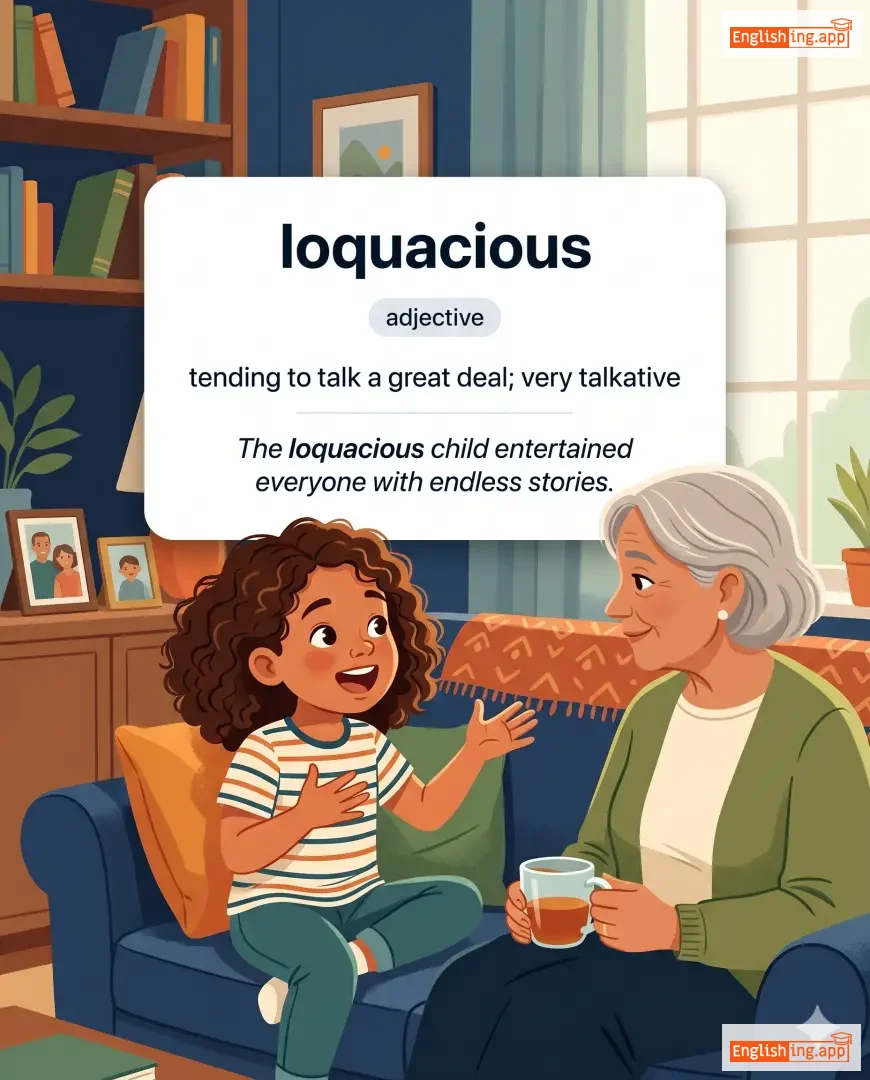
loquacious definition card — visual illustration of the meaning
adjective
/loʊˈkweɪʃəs/
болтливый (boltlivyy)

tending to talk a great deal; very talkative

"The loquacious child entertained everyone with endless stories."

"Болтливый ребёнок развлекал всех бесконечными историями." (Boltlivyy rebyonok razvlekal vsekh beskonechnymi istoryami.)
adjective
/ˈlɑːpˌsaɪdɪd/
косой, неравномерный (kosoy, neravnomernyy)

with one side lower, larger, or different from the other; uneven or imbalanced

"The cake looked lopsided after being decorated in a hurry."

"Торт выглядел неравномерным после того, как его украсили в спешке." (Tort vyglyadel neravnomernym posle togo, kak ego ukrasili v speshke.)
verb
/loʊp/
бежать с длинными, прыгающими шагами (bezhat' s dlinnyimi, prygayushchimi shagami)

to run or move with a long, bounding stride

"The horse loped gracefully across the field."

"Лошадь элегантно бежала по полю." (Loshad' elegantno bezhala po polyu.)
verb
/luːt/
грабить (grabit)

to steal goods, typically during war, riot, or chaos

"The rioters looted several shops during the protest."

"Протестующие ограбили несколько магазинов во время протестов." (Protestuyushchie ograbili neskol'ko magazinov vo vremya protestov.)
adjective
/luːs/
слабый (slaby)

not firmly or tightly fixed in place

"The screw is loose and needs tightening."

"Винт ослаблен и требует подтяжки." (Vint oslablen i trebuet podtyazhki.)
adjective
/ˈluːpi/
сумасшедший (sumasshedshiy)

crazy, silly, or eccentric

"After working all night, he felt a little loopy."

"После работы всю ночь он почувствовал себя немного сумасшедшим." (Posle raboty vsyu noch on pochuvstvoval sebya nemnogo sumasshedshim.)
noun
/luːp/
петля, кольцо (petlya, kol'tso)

a shape produced by a curve that bends around and crosses itself

"The string formed a neat loop around the package."

"Нить образовала аккуратную петлю вокруг пакета." (Nit' obrazovala akuratnuyu petlyu vokrug paketa.)
adjective
/ˈluː.ni/
сумасшедший; глупый; психически нестабильный (sumasshedshij; glupyj; psikhicheski nestabil'nyj)

crazy; silly; mentally unstable

"His loony behavior made everyone laugh."
"Его сумасшедшее поведение заставило всех смеяться." (ego sumasshedshee povedenie zastavilo vsekh smeyatsya)
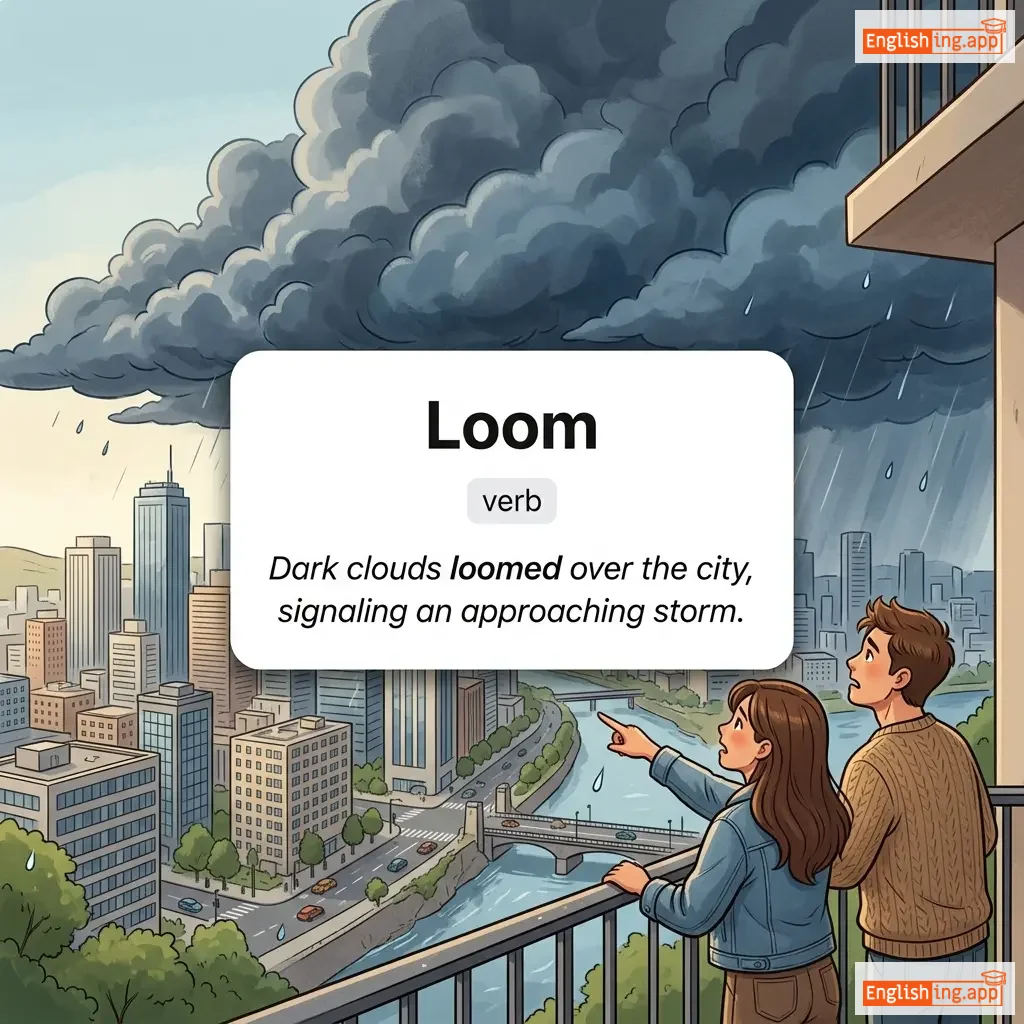
Loom definition card — visual illustration of the meaning
🌩️

Loom (lum)

verb
/luːm/
появляться, возникать (poyavlyatsya, voznikat)

to appear as a large, often frightening or unclear shape, usually something threatening or about to happen

"Dark clouds loomed over the city, signaling an approaching storm."

"Темные облака появились над городом, предвестие приближающегося шторма." (Temnye oblaka poyavilis' nad gorodom, predvestie priblizhayushchegosya shtorma.)
noun
/ˈlʊkaʊt/
сторожа, наблюдение (storozha, nablyudenie)

A place for watching; a person keeping watch.

"The guard kept a lookout for suspicious activity."
"Охранник следил за подозрительной активностью." (Okhrannik sledil za podozritel'noy aktivnost'yu.)
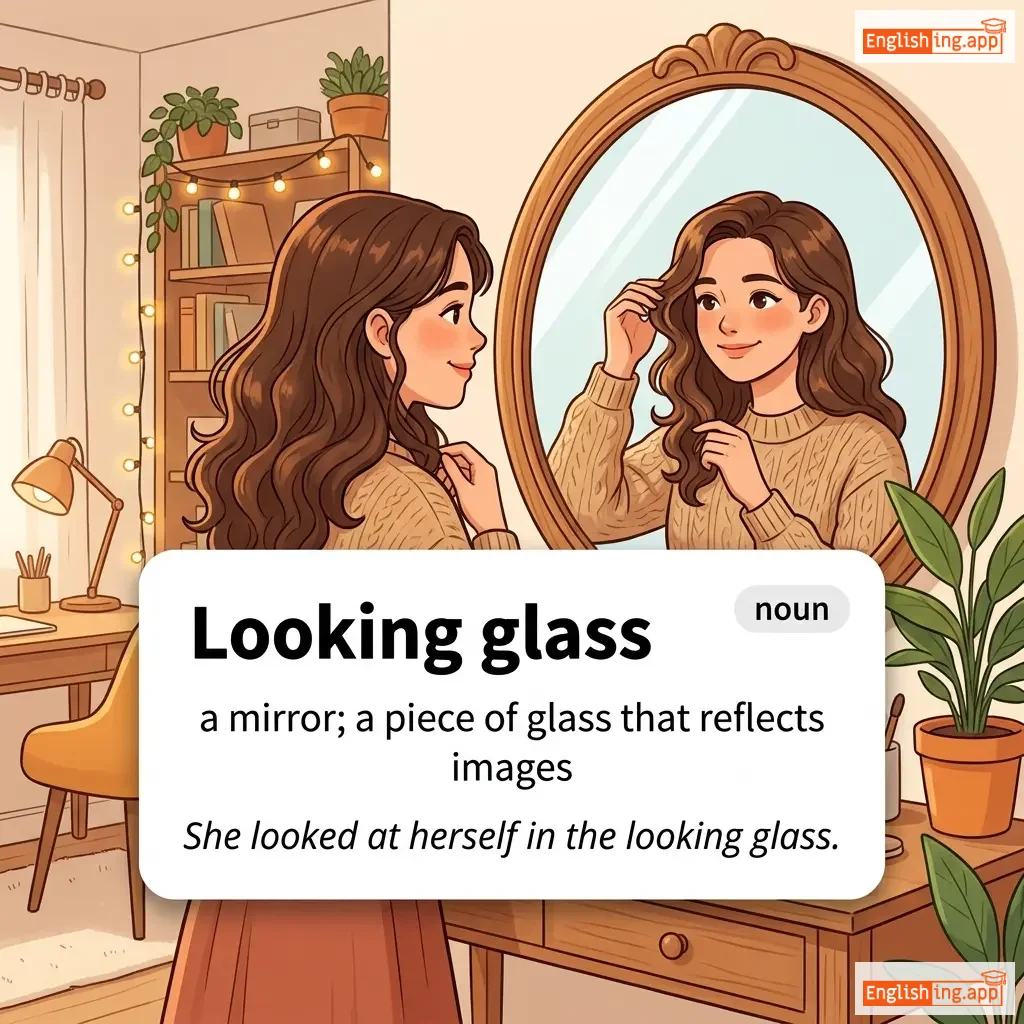
Looking glass definition card — visual illustration of the meaning
noun
/ˈlʊkɪŋ ɡlæs/
зеркало (zerkalo)

a mirror; a piece of glass that reflects images

"She looked at herself in the looking glass."

"Она посмотрела на себя в зеркало." (ona posmotrela na sebya v zerkalo)
phrasal verb
/lʊk ˈɑːftər/
присматривать за (prisatrivat za)

to take care of someone or something; to be responsible for someone’s well-being

"She looks after her younger brother while their parents are at work."
"Она присматривает за младшим братом, пока родители на работе." (Ona prismatrivaet za mladshim bratom, poka roditeli na rabote)
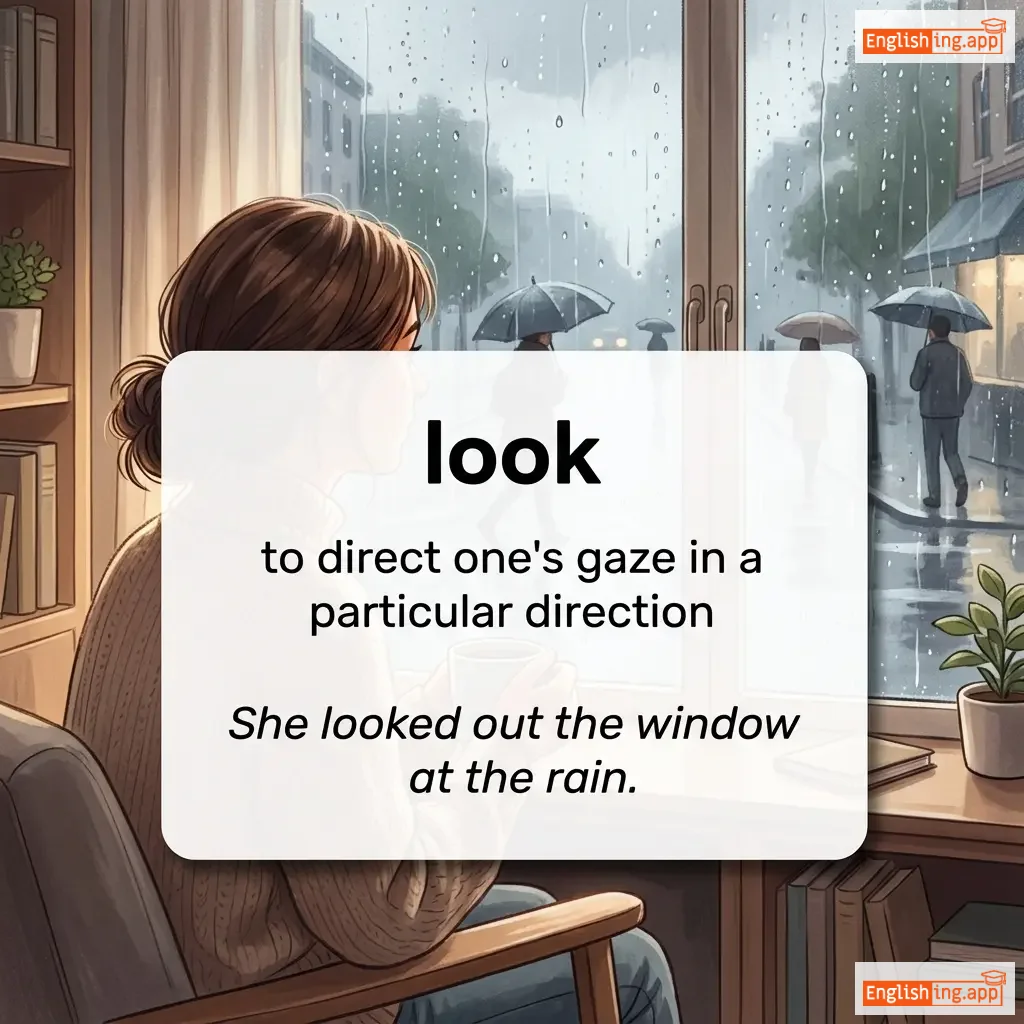
look definition card — visual illustration of the meaning
/lʊk/
смотреть (smotret)

to direct one's gaze in a particular direction

"She looked out the window at the rain."

"Она посмотрела в окно на дождь." (Ona posmotrela v okno na dozhd.)
adjective
/ˈlɔːŋtaɪm/
давний (davniy)

having existed or continued for a long time

"They are longtime friends who met in college."

"Они давние друзья, которые встретились в университете." (Oni davnie druz'ya, kotorye vstretilis' v universitete.)
noun
тоска; стремление (toska; stremlenie)
noun
/lɔnˈdʒɛvəti/
долголетие (dolgoletie)

Long life or long existence of something.

"Good habits contribute to health and longevity."
"Хорошие привычки способствуют здоровью и долголетию." (Khoroshie privychki sposobstvuyut zdorov'yu i dolgoletiyu.)
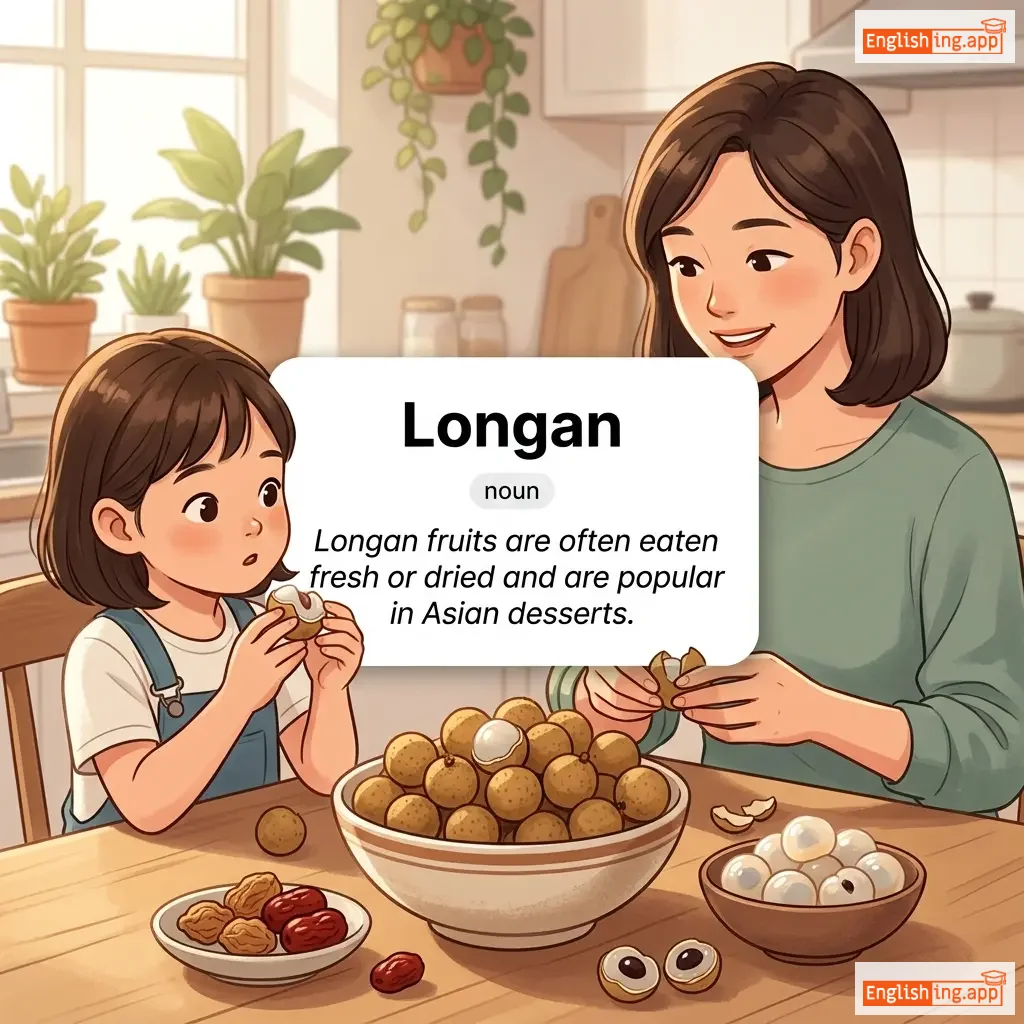
Longan definition card — visual illustration of the meaning
noun
/ˈlɔːŋ.ɡən/

a small round tropical fruit with translucent white flesh and sweet taste, related to lychee

"Longan fruits are often eaten fresh or dried and are popular in Asian desserts."
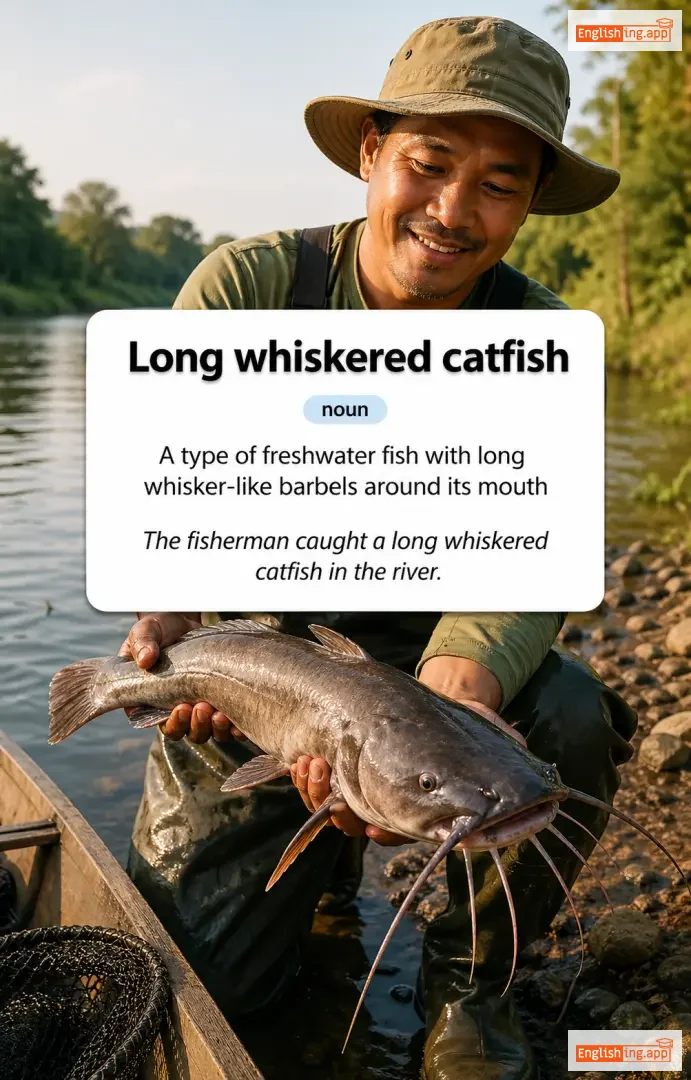
Long whiskered catfish definition card — visual illustration of the meaning
noun
/lɒŋ ˈwɪskəd ˈkætfɪʃ/
сом с длинными усами (som s dlinymi usami)

A type of freshwater fish with long whisker-like barbels around its mouth

"The fisherman caught a long whiskered catfish in the river."

"Рыбак поймал сома с длинными усами в реке." (rybak poimal soma s dlinymi usami v reke)
adjective, adverb
/ˈlɒŋ taɪm/
долгосрочный (dolgosrochnyy)

lasting or existing for a long period of time; having continued for many years

"She is a long-time friend of my family."

"Она давний друг моей семьи." (Ona davniy drug moyey semi)
Long-term memory definition card — visual illustration of the meaning
noun
ˈlɒŋ tɜːm ˈmɛm.ər.i
долговременная память (dolgovremennaya pamyat)

Such memory that remains stored in the brain for a long time

"Repeated practice helps transfer information into long-term memory."
"Повторная практика помогает переносить информацию в долговременную память." (Povtornaya praktika pomogayet perenosit' informatsiyu v dolgovremennuyu pamyat.)
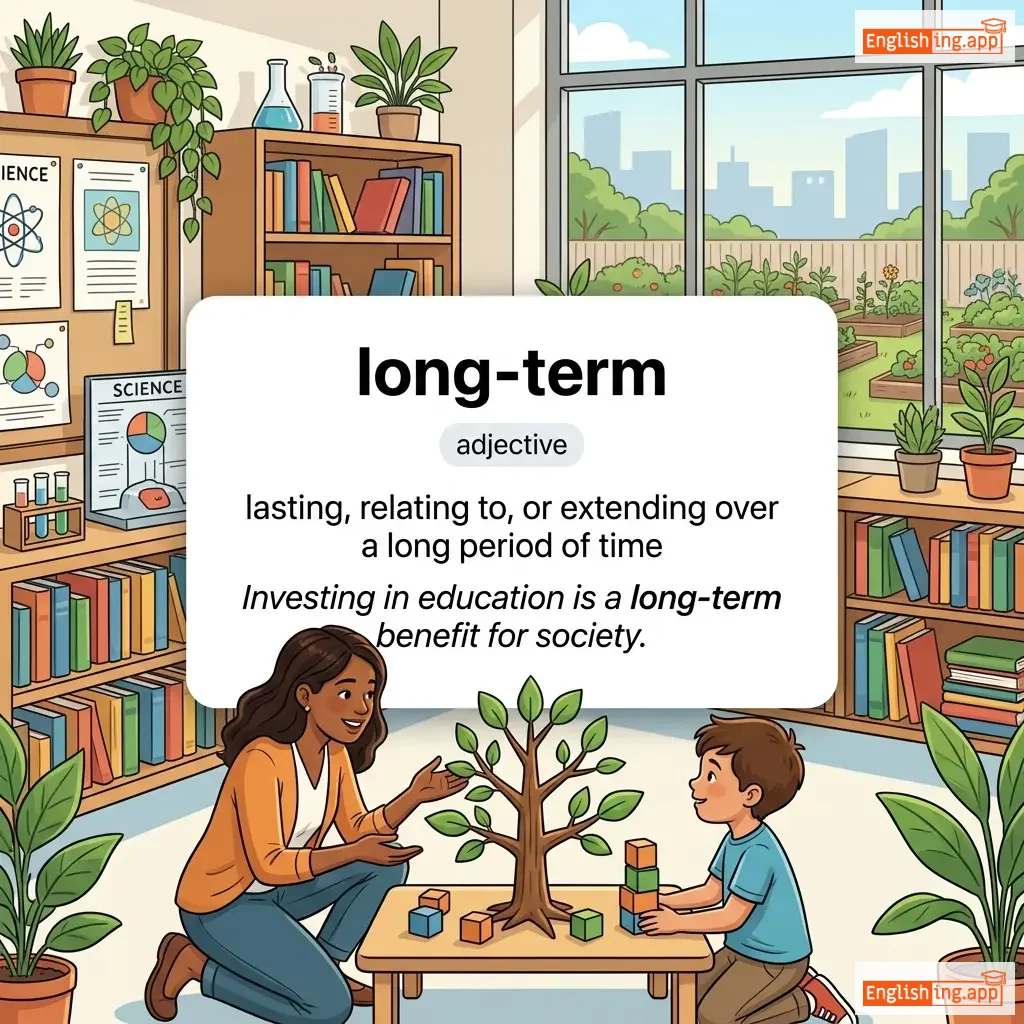
long-term definition card — visual illustration of the meaning
adjective
/ˌlɔːŋ ˈtɜːrm/
долгосрочный (dolgostrochny)

lasting, relating to, or extending over a long period of time

"Investing in education is a long-term benefit for society."

"Инвестиции в образование — это долгосрочная выгода для общества." (Investitsii v obrazovanie — eto dolgostrochnaya vigoda dlya obshchestva.)
adjective
/ˈlɒŋ ˈstændɪŋ/
долгосрочный (dolgosrochnyy)

having existed or continued for a long period of time

"They have a long-standing relationship with their suppliers."

"У них долгосрочные отношения с их поставщиками." (U nikh dolgosochnye otnosheniya s ikh postavshchikami.)
Long pepper definition card — visual illustration of the meaning
noun
/lɔːŋ ˈpepər/
длинный перец (dlinnyy perets)

a flowering vine in the family Piperaceae, cultivated for its fruit which is used as a spice

"Long pepper was more valuable than black pepper in ancient times."

"Длинный перец был более ценен, чем черный перец в древние времена." (Dlinnyy perets byl bolee tsenen, chem chernyy perets v drevnie vremena.)
Long gourd definition card — visual illustration of the meaning
noun
/lɔːŋ ɡɔːrd/
длинный кабачок (dlinnyy kabachok)

an elongated green vegetable belonging to the cucumber family, used in cooking

"She sliced the long gourd thinly for the stir-fry dish."

"Она нарезала длинный кабачок тонкими ломтями для жареного блюда." (Ona narezala dlinnyy kabachok tonkimi lomtyami dlya zharenogo blyuda.)
adjective
/lɔːŋ/
длинный (dlinnyy)

Measuring a great distance from end to end; lasting for a large amount of time.

"They waited a long time for the train."

"Они долго ждали поезд." (Oni dolgo zhдали poyezd.)
noun
/ˈliːtər/
литр (litr)

a metric unit of volume equal to 1,000 cubic centimeters; commonly used to measure liquids

"She bought a litre of milk from the shop."

"Она купила один литр молока в магазине." (ona kupila odin litr moloka v magazine)