वोकैबुलरीज

इंग्लिश वोकैबुलरी डिस्कवर, लर्न और मास्टर करें

adjective
/loʊ/
निम्न (nimn)

Small in amount, degree, or position; not high.

"The river is at its lowest level in years."

"नदी वर्षों में सबसे निचले स्तर पर है।" (Nadi varsho mein sabse nichle star par hai.)
adjective
/ˈlʌv.ɪŋ/
दयालु; देखभाल करने वाली; प्यार और गर्मी दिखाने वाली (dayalu; dekhbhal karne wali; pyaar aur garmi dikhane wali)

affectionate; caring; showing love and warmth

"She is a loving mother who cares deeply for her children."

"वह एक दयालु माँ हैं जो अपने बच्चों के लिए गहरे प्यार करती हैं।" (vah ek dayalu maa hain jo apne bachon ke liye gahre pyaar karti hain.)
noun
/ˈlʌvər/
प्रेमी (premi)

a person who is in a romantic relationship or has strong affection for someone

"She met her lover at the café every evening."

"वह हर शाम कैफे में अपने प्रेमी से मिलती थी।" (Wah har shaam cafe mein apne premi se milti thi.)
adjective
/ˈlʌvli/
सुंदर (sundar)

Delightful or very pleasing; beautiful.

"It was a lovely evening by the beach."

"यह समुद्र के किनारे एक सुंदर शाम थी।" (Yah samudra ke kinare ek sundar shaam thi.)
adjective
/ˈlʌvəbl̩/
खुशी (khushi)

easy to love; endearing or charming

"The puppy was so loveable that everyone wanted to hold it."

"वह पुरस्कार प्राप्त करने पर अपनी खुशी छिपा नहीं सकी।" (Woh puraskaar prapt karne par apni khushi chhupa nahi saki.)
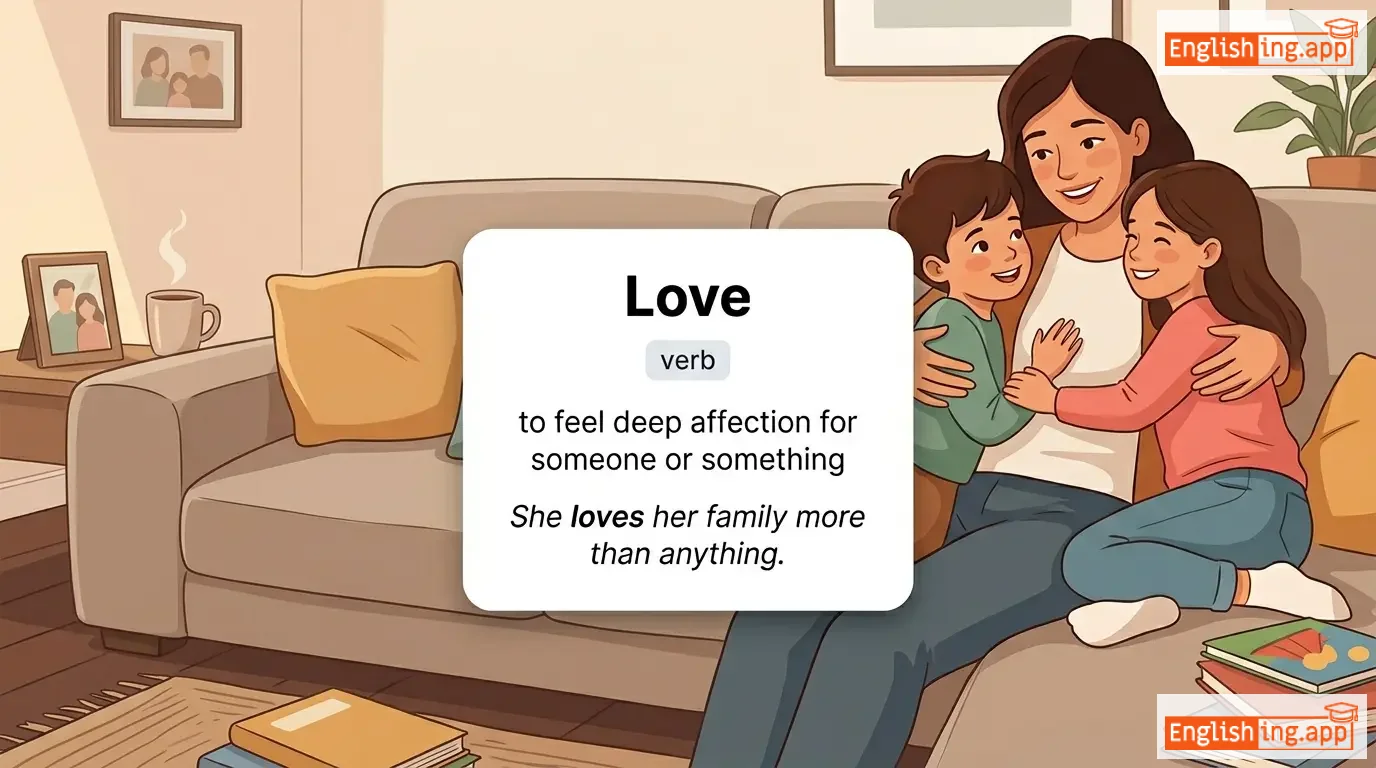
Love definition card — visual illustration of the meaning
verb
/lʌv/
प्रेम (prem)

to feel deep affection for someone or something

"She loves her family more than anything."

"वह अपने परिवार से ज्यादा कुछ भी प्यार करती है।" (Wah apne parivar se zyada kuch bhi pyaar karti hai.)
adjective
/ˈlʌvəbəl/
खुशी (khushi)

Inspiring or deserving love or affection.

"The puppy was so lovable that everyone wanted to hold it."

"वह जब पुरस्कार प्राप्त करती है तो अपनी खुशी छुपा नहीं पाती।" (Wah jab puraskaar praapt karti hai to apni khushi chhupa nahin paati.)
adjective
/ˈlaʊtɪʃ/
असभ्य (ashabhya)

Clumsy, rude, or aggressive in behavior.

"His loutish remarks offended everyone at the meeting."

"उसके असभ्य टिप्पणी ने मीटिंग में सभी को आहत किया।" (Uske asabhya tippani ne meeting mein sabhi ko aahat kiya.)
noun
/laʊt/
अशिष्ट व्यक्ति (ashisht vyakti)

An uncouth or aggressive man or boy.

"The drunken lout caused a scene at the party."

"मदहोश अशिष्ट व्यक्ति ने पार्टी में हंगामा किया।" (Madhosh ashisht vyakti ne party mein hangama kiya.)
adjective
/ˈlaʊzi/
खराब (kharab)

of very poor quality; bad or unpleasant

"He felt lousy after catching the flu."

"फ्लू होने के बाद उसे बहुत खराब महसूस हुआ।" (Flu hone ke baad use bahut kharab mahsus hua.)
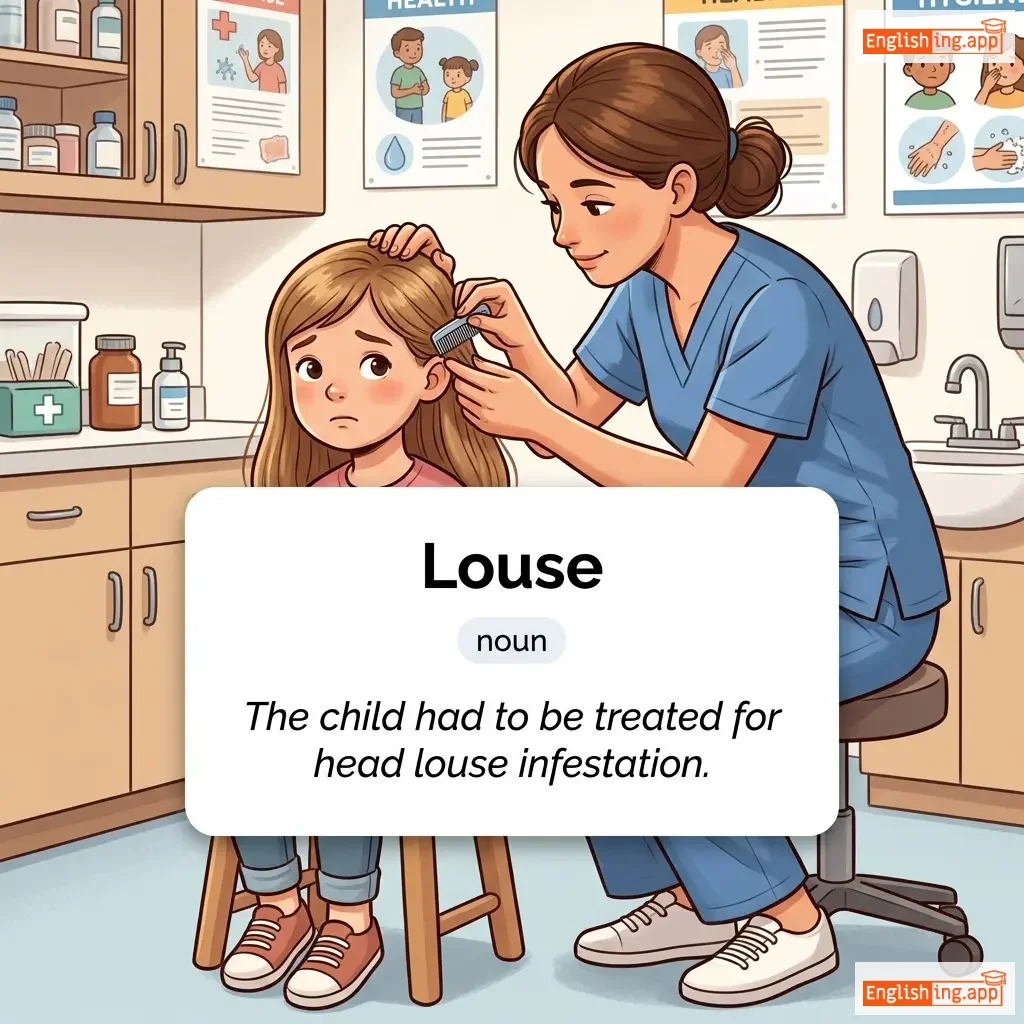
Louse definition card — visual illustration of the meaning
noun
/laʊs/
जूँ (joo)

A small parasitic insect that lives on the skin of mammals and birds; also used as an insult for a contemptible person.

"The child had to be treated for head louse infestation."

"बच्चे को सिर में जूँ के संक्रमण के लिए इलाज करना पड़ा।" (bachche ko sir mein joo ke sankraman ke liye ilaaj karna pada.)
noun, verb
/laʊndʒ/
विश्राम कक्ष (vishram kaksh)

A public room for relaxing; or to sit, lie, or stand in a relaxed way.

"They lounged on the sofa after dinner."

"वे डिनर के बाद सोफे पर आराम से लेटे थे।" (ve dinar ke baad sofay par aaram se lete the)
noun
/lɒx/ or /lɒk/
तालाब (taalab)

An Irish or Scottish word for a lake or sea inlet.

"The fishermen lived by the lough for generations."

"मछुआरे कई पीढ़ियों से तालाब के पास रहते थे।" (Machhuare kai pidhiyaan se taalab ke paas rahte the.)
adverb
/ˈlaʊdli/
जोर से (zor se)

in a way that produces a lot of sound; with a high volume

"He spoke loudly so everyone in the room could hear him."

"सब लोग सुन सकें इसलिए उसने जोर से बोला।" (sab log sun saken isliye usne zor se bola)
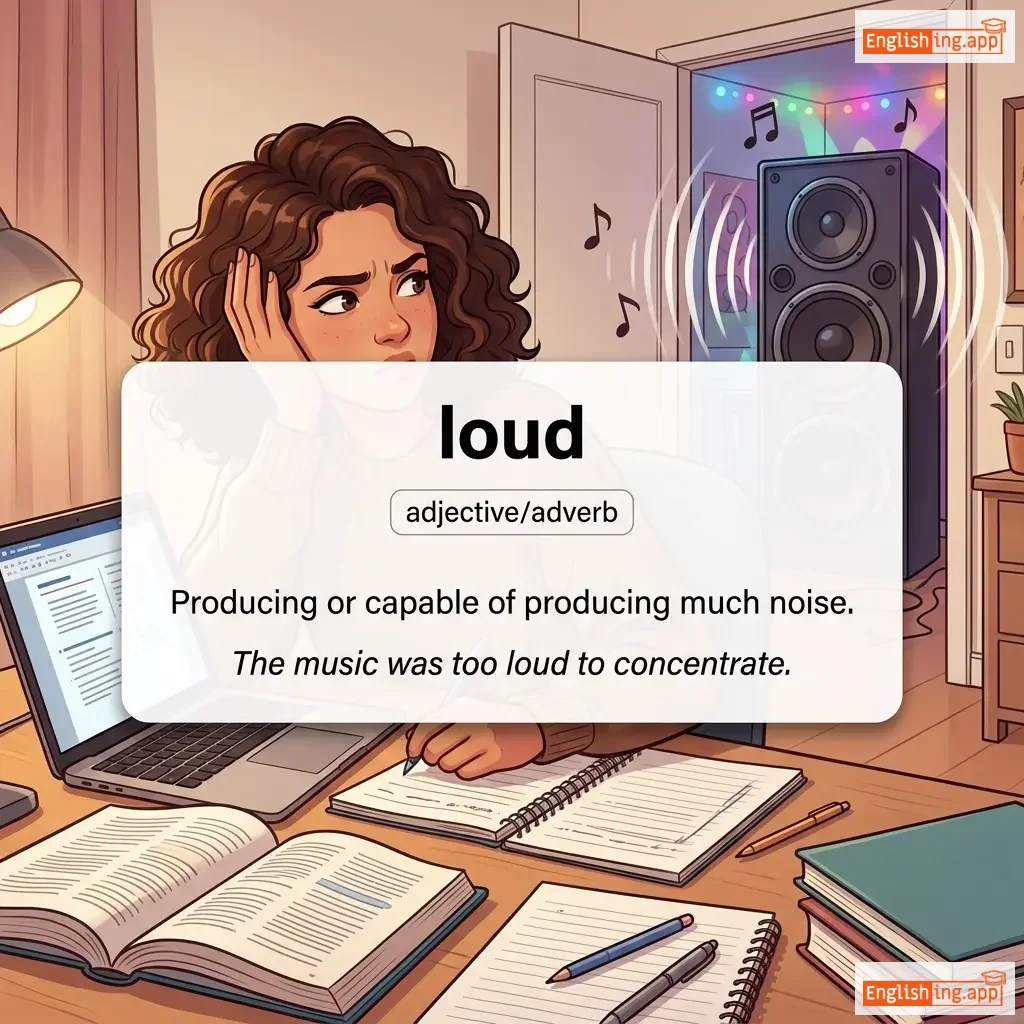
loud definition card — visual illustration of the meaning
adjective/adverb
/laʊd/
ऊँचा (ooncha)

Producing or capable of producing much noise.

"The music was too loud to concentrate."

"संगीत बहुत ऊँचा था कि ध्यान केंद्रित करना मुश्किल था।" (Sangeet bahut ooncha tha ki dhyan kendrit karna mushkil tha.)
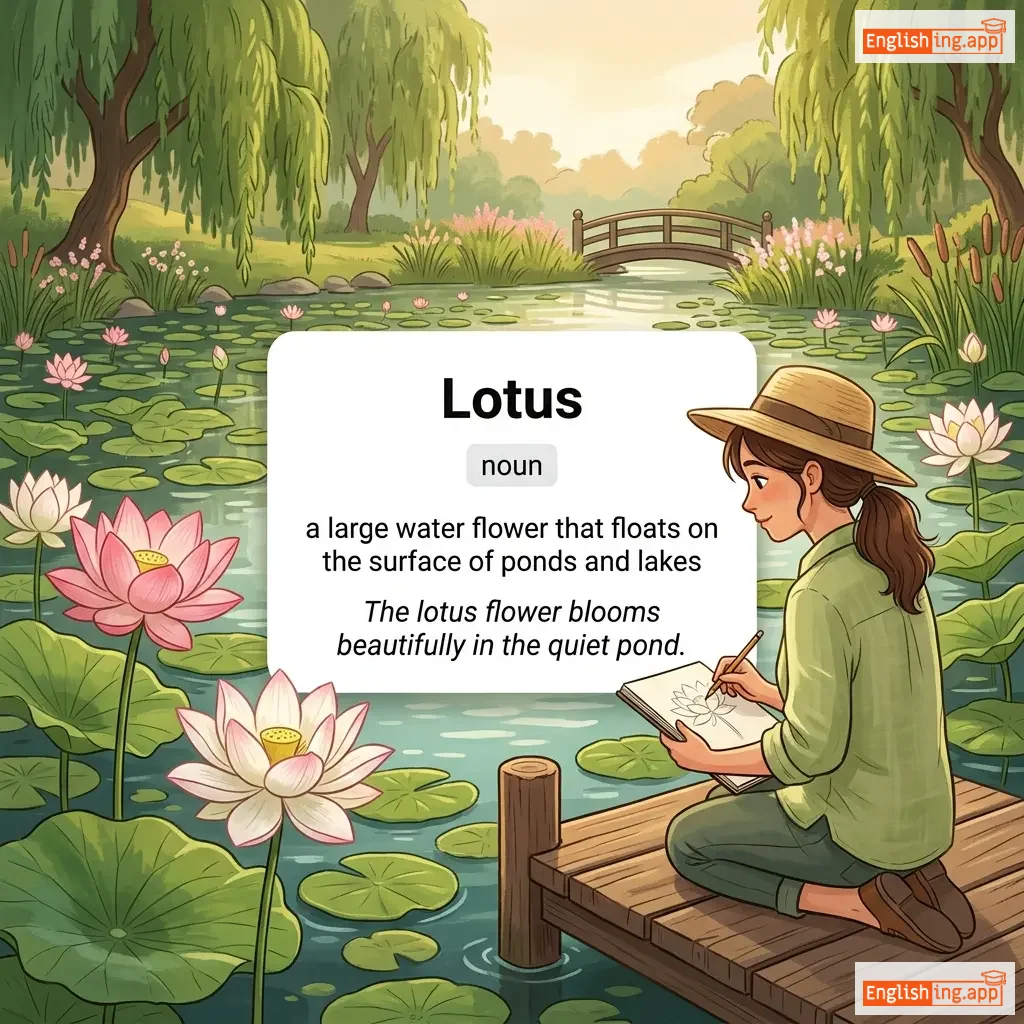
Lotus definition card — visual illustration of the meaning
noun
/ˈloʊ.təs/
कमल (kamal)

a large water flower that floats on the surface of ponds and lakes

"The lotus flower blooms beautifully in the quiet pond."

"कमल का फूल शांत तालाब में सुंदरता से खिलता है।" (kamal ka phool shant talab mein sundarta se khilta hai)
noun
/ˈlɒtəri/
लॉटरी (lotari)

A means of raising money by selling numbered tickets and giving prizes to the holders of numbers drawn at random.

"He won a car in the national lottery."

"उसने राष्ट्रीय लॉटरी में एक कार जीती।" (Usne rashtriya lottery mein ek car jeeti.)
pronoun/noun
/lɒts/
बहुत (bahut)

A large number or amount of something.

"She has lots of friends in the city."

"वह शहर में बहुत सारे दोस्तों के साथ है।" (Vah shahar mein bahut saare doston ke saath hai.)
noun
/lɒt/
बहुत (bahut)

A large number or amount; a group or portion.

"She bought a lot of books at the fair."

"वह मेले में बहुत सारी किताबें खरीदने गई थी।" (Wah mele mein bahut saari kitaabein kharidne gayi thi.)
verb/adjective
/lɒst/
खो गया (kho gaya)

Unable to find the way; no longer in possession of something.

"He lost his keys and couldn’t enter the house."

"वह अपनी चाबियाँ खो चुका था और घर में प्रवेश नहीं कर पा रहा था।" (Wah apni chaabiyan kho chuka tha aur ghar mein pravesh nahin kar pa raha tha.)
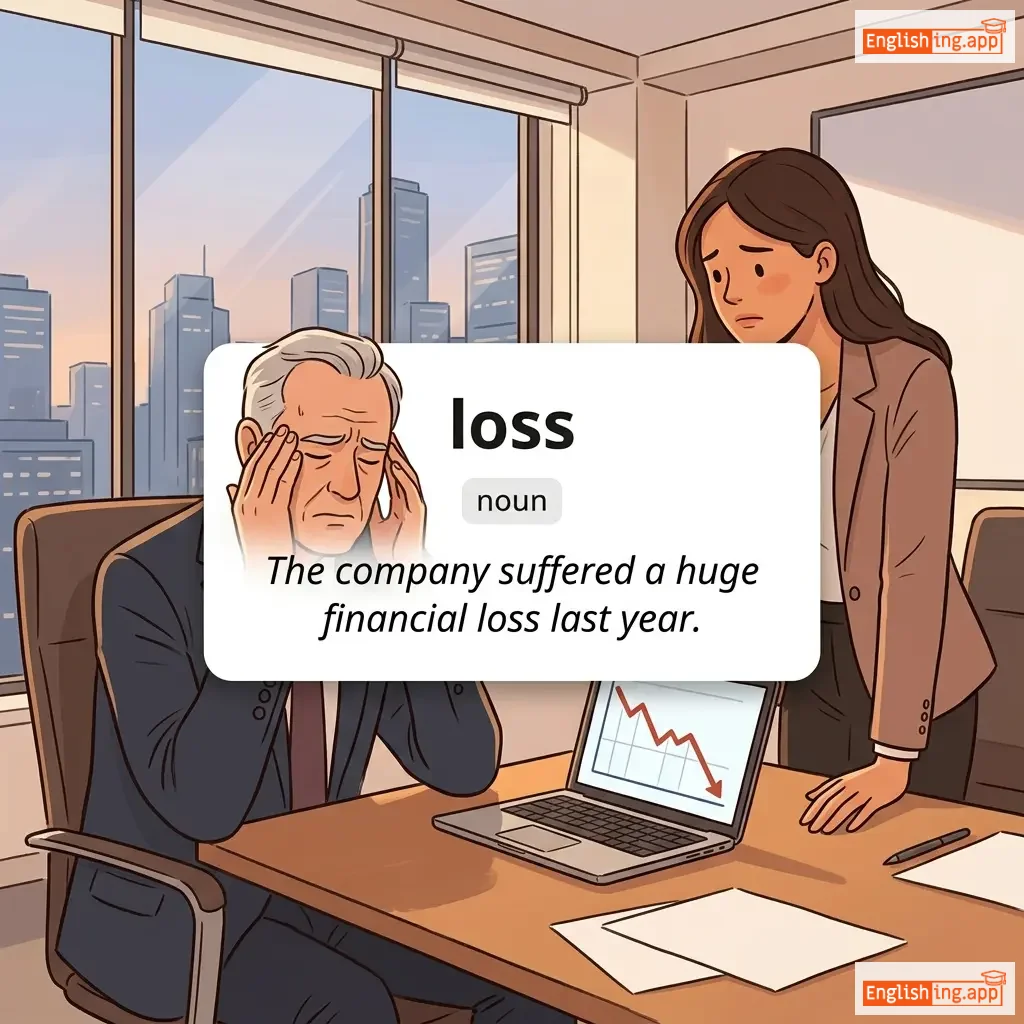
loss definition card — visual illustration of the meaning
noun
/lɒs/
हानि (hāni)

The state of no longer having something or someone; the harm resulting from losing.

"The company suffered a huge financial loss last year."

"कंपनी ने पिछले साल एक बड़ा वित्तीय हानि झेला।" (kampanī ne pichhale sāl ek baṛā vittīya hāni jhelā.)
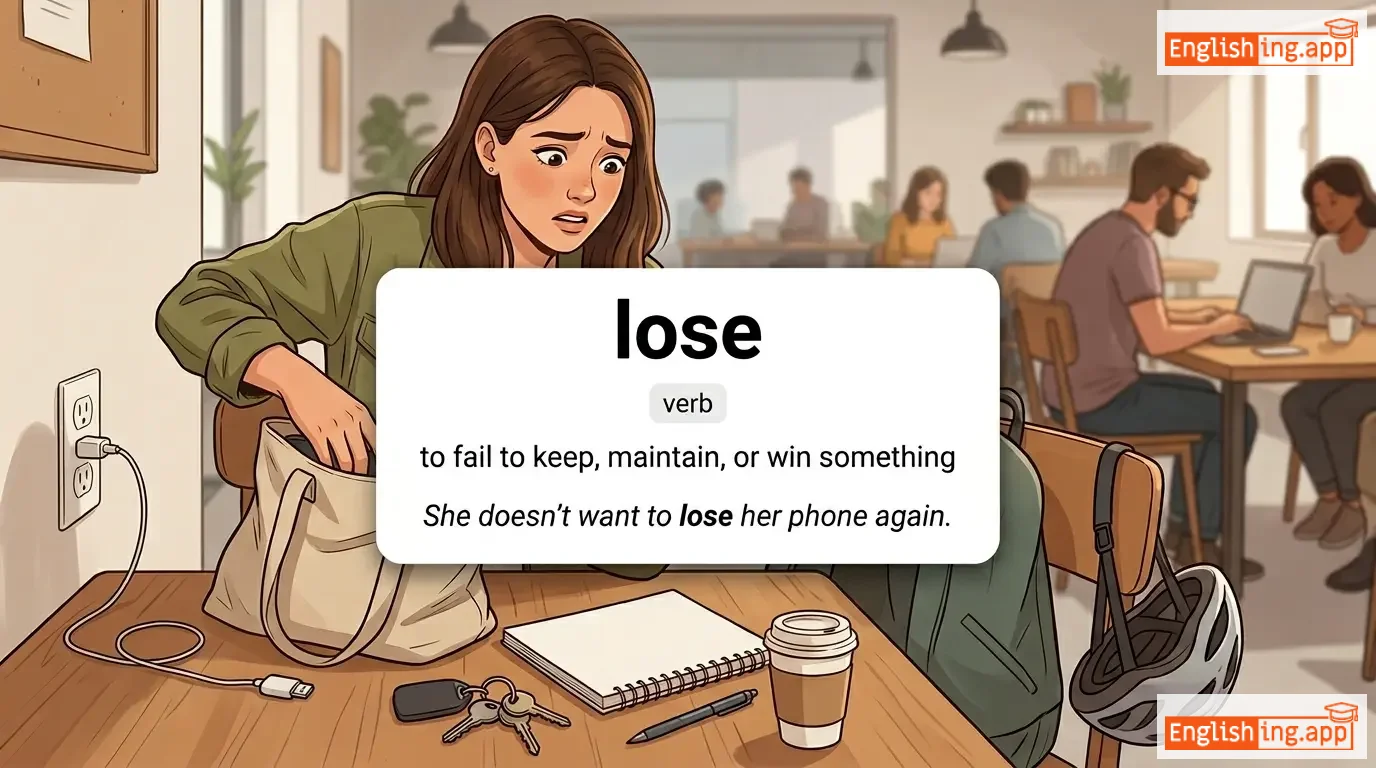
lose definition card — visual illustration of the meaning
verb
/luːz/
खुशी (khushi)

to fail to keep, maintain, or win something

"She doesn’t want to lose her phone again."

"वह पुरस्कार मिलने पर अपनी खुशी नहीं छुपा पाई।" (Vah puraskar milne par apni khushi nahi chhupa pai.)
noun
/ˈlɔːrdlɪŋ/
छोटा राजा (chhota raja)

A young or petty lord; someone of minor nobility.

"The arrogant lordling demanded respect despite his lack of experience."

"अहंकारी लॉर्डलिंग ने अनुभव की कमी के बावजूद सम्मान की मांग की।" (Ahankari lordling ne anubhav ki kami ke baavjood samman ki maang ki.)
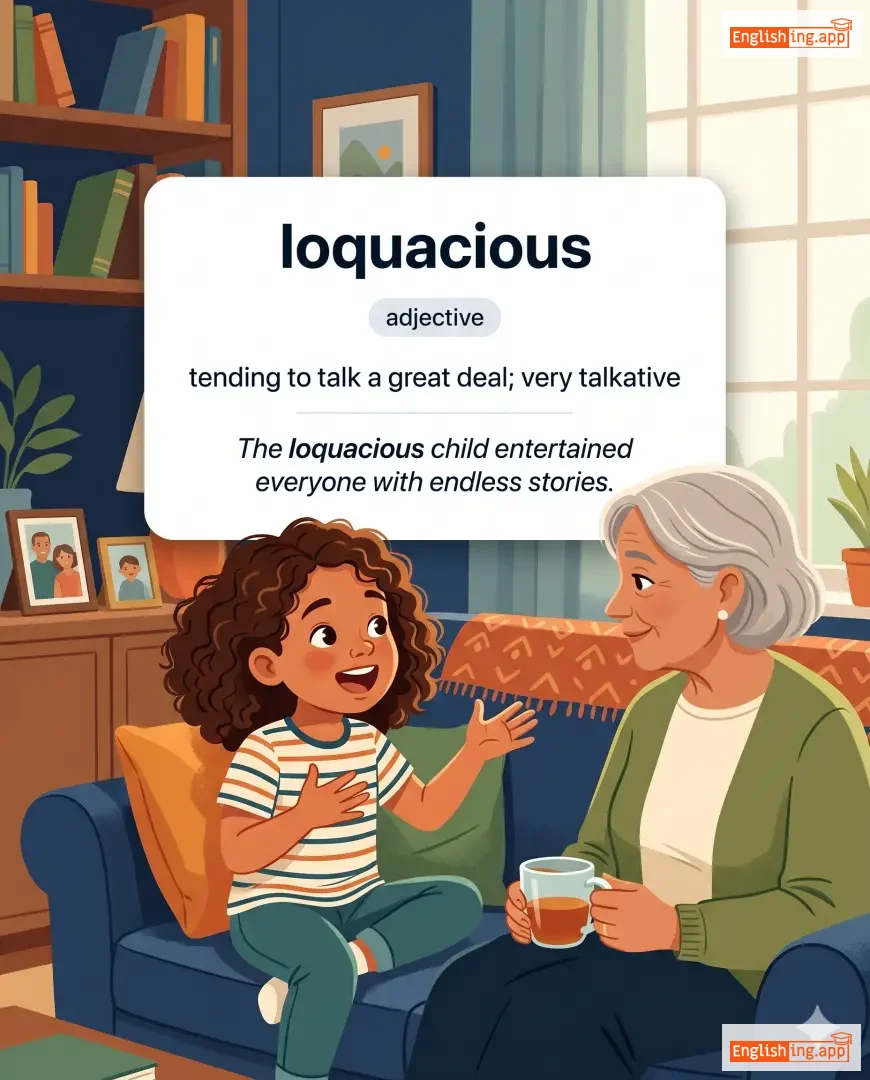
loquacious definition card — visual illustration of the meaning
adjective
/loʊˈkweɪʃəs/
बोलचालू, बकवादी (bolchalu, bakvadi)

tending to talk a great deal; very talkative

"The loquacious child entertained everyone with endless stories."

"बोलचालू बच्चा सभी को अंतहीन कहानियों से मनोरंजन कर रहा था।" (Bolchalu bachcha sabhi ko anthihin kahaniyon se manoranjan kar raha tha.)
adjective
/ˈlɑːpˌsaɪdɪd/
असमान, एकपक्षीय (asamaan, ekpakshiya)

with one side lower, larger, or different from the other; uneven or imbalanced

"The cake looked lopsided after being decorated in a hurry."

"तुरंत सजाने के बाद केक असमांन लग रहा था।" (Turant sajane ke baad kek asamaan lag raha tha.)
verb
/loʊp/
लंबे, उछलते कदमों से दौड़ना (lambe, uchhalte kadmon se daurna)

to run or move with a long, bounding stride

"The horse loped gracefully across the field."

"घोड़ा खेत में gracefully दौड़ रहा था।" (ghoda khet mein gracefully daud raha tha.)
verb
/luːt/
लूट करना (loot karna)

to steal goods, typically during war, riot, or chaos

"The rioters looted several shops during the protest."

"उपद्रवियों ने विरोध के दौरान कई दुकानों को लूटा।" (Upadraviyon ne virodh ke dauraan kai dukaanon ko lootaa.)
adjective
/luːs/
ढीला (dhila)

not firmly or tightly fixed in place

"The screw is loose and needs tightening."

"स्क्रू ढीला है और उसे कसने की जरूरत है।" (Screw dhila hai aur use kasne ki zaroorat hai.)
adjective
/ˈluːpi/
पागल (paagal)

crazy, silly, or eccentric

"After working all night, he felt a little loopy."

"सारी रात काम करने के बाद, वह थोड़ा पागल सा महसूस कर रहा था।" (Saari raat kaam karne ke baad, vah thoda paagal sa mahsus kar raha tha.)
noun
/luːp/
लूप, घेरा (loop, ghera)

a shape produced by a curve that bends around and crosses itself

"The string formed a neat loop around the package."

"द स्ट्रिंग ने पैकेज के चारों ओर एक सुंदर लूप बनाया।" (Da string ne package ke chaaron aur ek sundar loop banaya.)
adjective
/ˈluː.ni/
पागल; मूर्ख; मानसिक अस्थिर (paagal; moorkh; maansik asthir)

crazy; silly; mentally unstable

"His loony behavior made everyone laugh."

"उसका पागल व्यवहार सभी को हंसा दिया।" (uska paagal vyavhaar sabhi ko hansa diya)
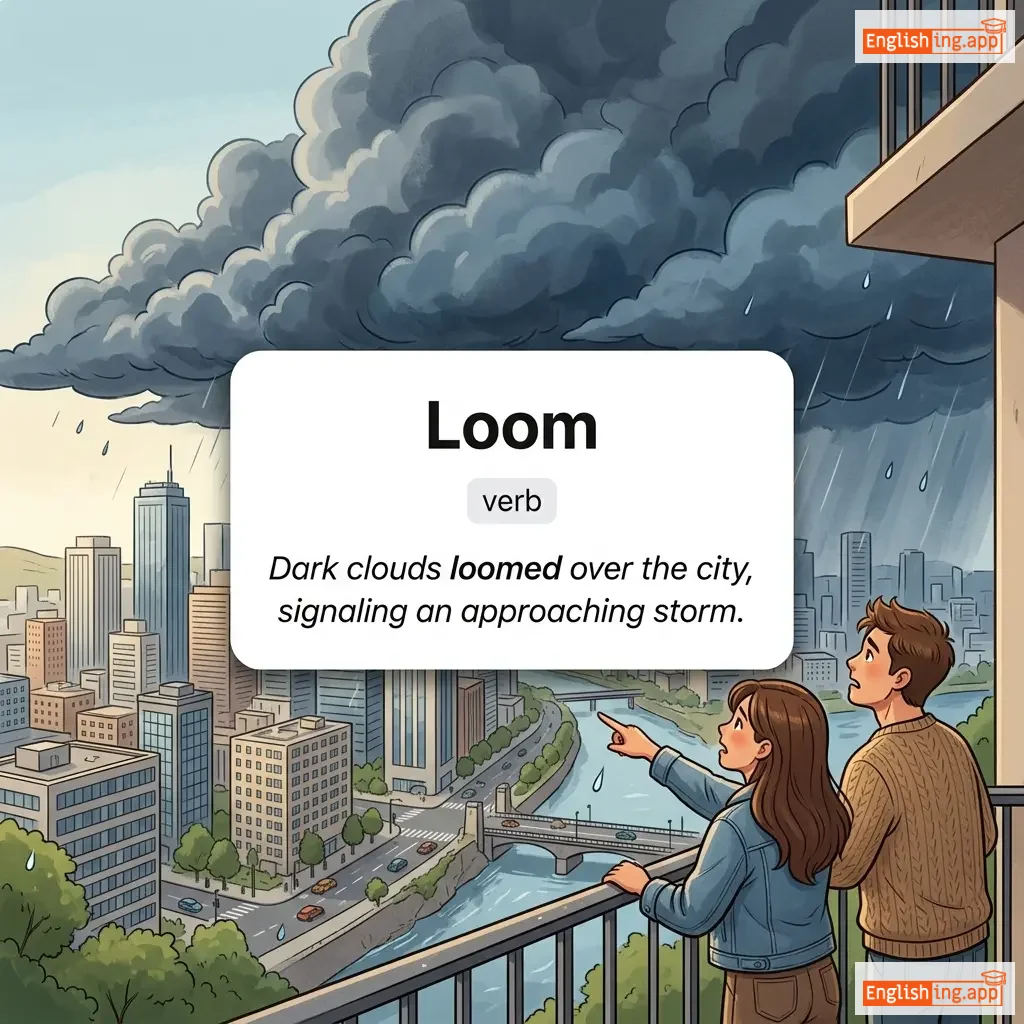
Loom definition card — visual illustration of the meaning
verb
/luːm/
दिखाई देना, सामने आना (dikhai dena, samne aana)

to appear as a large, often frightening or unclear shape, usually something threatening or about to happen

"Dark clouds loomed over the city, signaling an approaching storm."

"अंधेरे बादल शहर के ऊपर दिखाई दे रहे थे, जो एक आसन्न तूफान का संकेत दे रहे थे।" (Andhere baadal shahar ke upar dikhai de rahe the, jo ek aasann toofan ka sanket de rahe the.)
noun
/ˈlʊkaʊt/
सतर्कता, पहरेदारी (satarkata, pahredari)

A place for watching; a person keeping watch.

"The guard kept a lookout for suspicious activity."

"गार्ड संदिग्ध गतिविधि के लिए लुकआउट रख रहा था।" (Guard sandigdh gatividhi ke liye lookout rakh raha tha.)
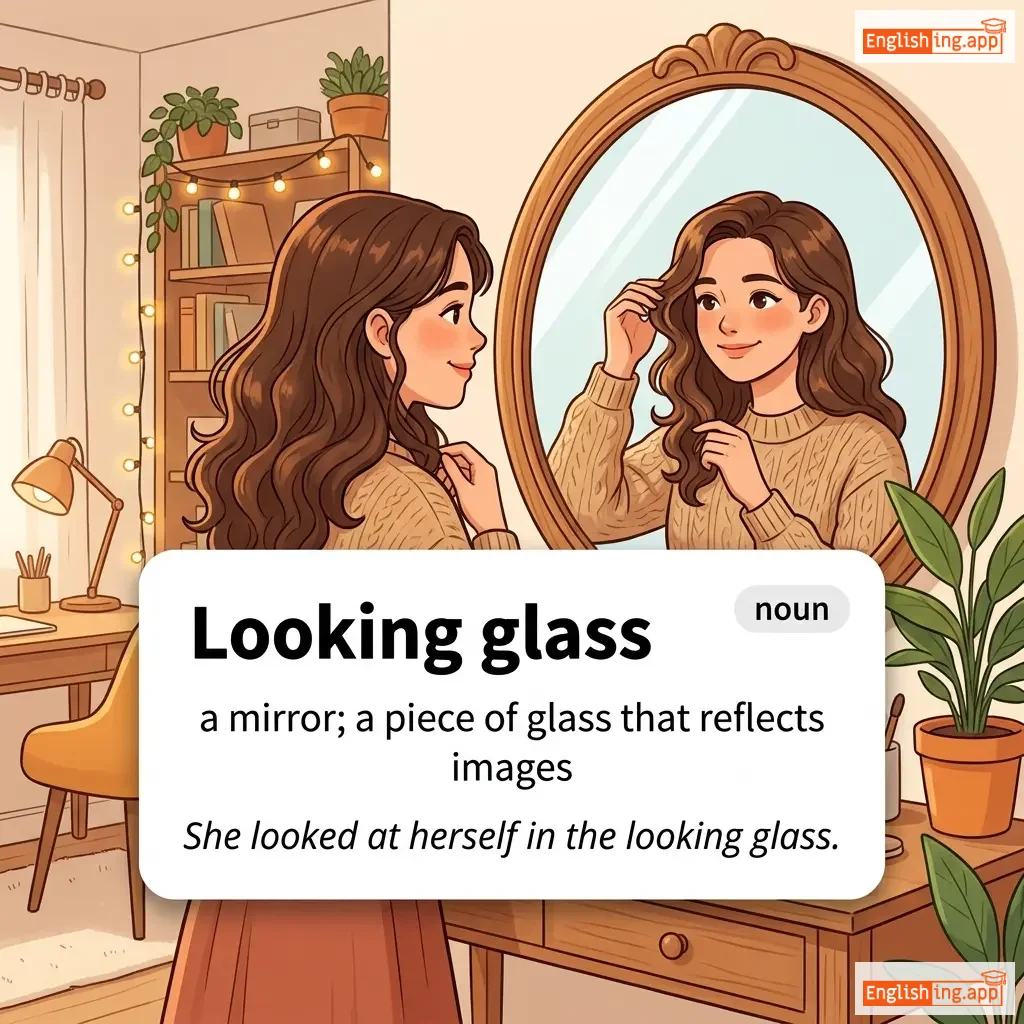
Looking glass definition card — visual illustration of the meaning
noun
/ˈlʊkɪŋ ɡlæs/
आयना (ayna)

a mirror; a piece of glass that reflects images

"She looked at herself in the looking glass."

"उसने आयने में खुद को देखा।" (usne aynay mein khud ko dekha)
phrasal verb
/lʊk ˈɑːftər/
देखभाल करना (dekhbhaal karna)

to take care of someone or something; to be responsible for someone’s well-being

"She looks after her younger brother while their parents are at work."

"जब उसके माता-पिता काम पर होते हैं, वह अपने छोटे भाई की देखभाल करती है।" (jab uske mata-pita kaam par hote hain, vah apne chhote bhai ki dekhbhaal karti hai)
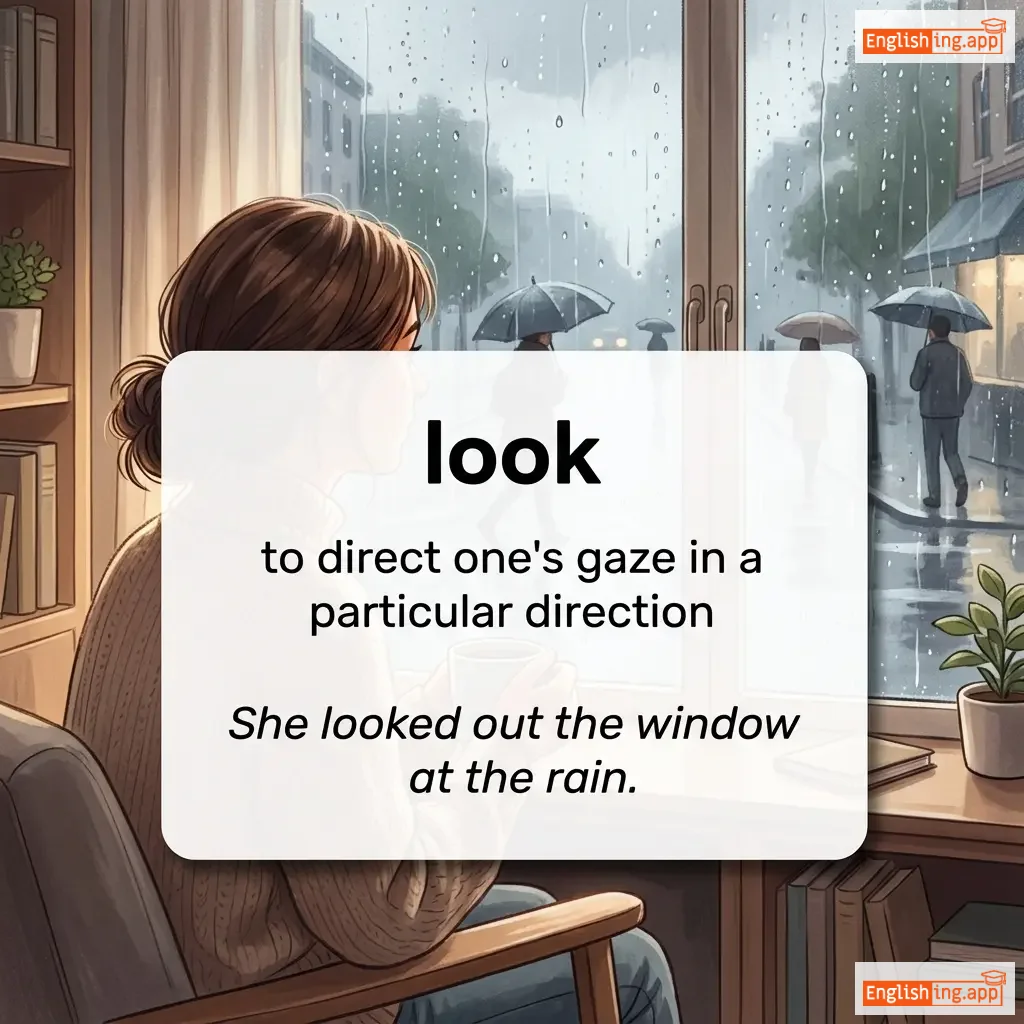
look definition card — visual illustration of the meaning
/lʊk/
देखना (dekhna)

to direct one's gaze in a particular direction

"She looked out the window at the rain."

"वह बारिश को देखने के लिए खिड़की से बाहर देख रही थी।" (vah barish ko dekhne ke liye khidki se baahar dekh rahi thi.)
adjective
/ˈlɔːŋtaɪm/
लंबे समय का (lambe samay ka)

having existed or continued for a long time

"They are longtime friends who met in college."

"वे कॉलेज में मिले लंबे समय के दोस्त हैं।" (Ve college mein mile lambe samay ke dost hain.)
noun
लंबी इच्छाएं; तड़प (lambi ichchhaen; tadap)
noun
/lɔnˈdʒɛvəti/
दीर्घायु (dirghayu)

Long life or long existence of something.

"Good habits contribute to health and longevity."

"अच्छी आदतें स्वास्थ्य और दीर्घायु में योगदान करती हैं।" (Achhi aadatein swasthya aur dirghayu mein yogdan karti hain.)
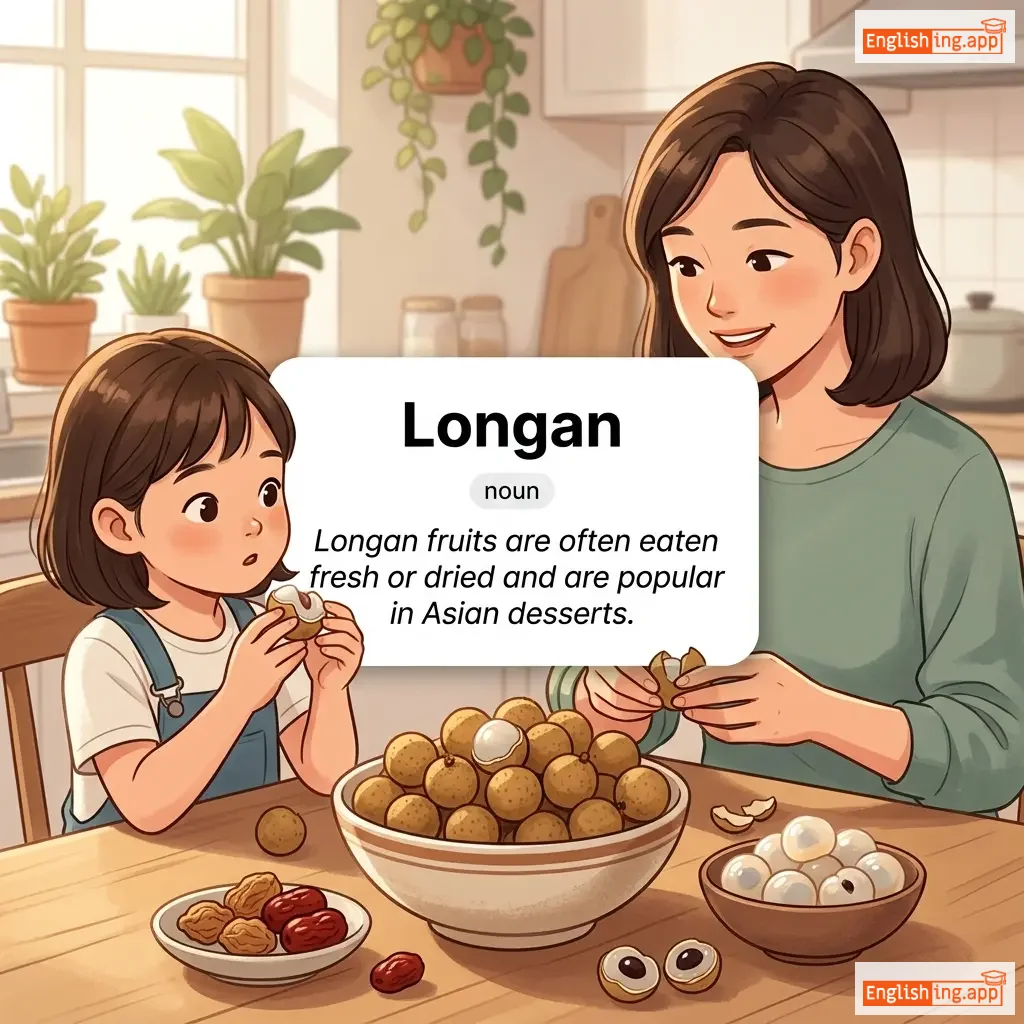
Longan definition card — visual illustration of the meaning
noun
/ˈlɔːŋ.ɡən/
लोंगन (longan)

a small round tropical fruit with translucent white flesh and sweet taste, related to lychee

"Longan fruits are often eaten fresh or dried and are popular in Asian desserts."

"लोंगन के फल अक्सर ताजा खाये जाते हैं या सूखे होते हैं और एशियाई डेसर्ट में लोकप्रिय होते हैं." (longan ke phal aksar taaza khaye jaate hain ya sookhe hote hain aur eshiyaai deserts mein lokpriya hote hain.)
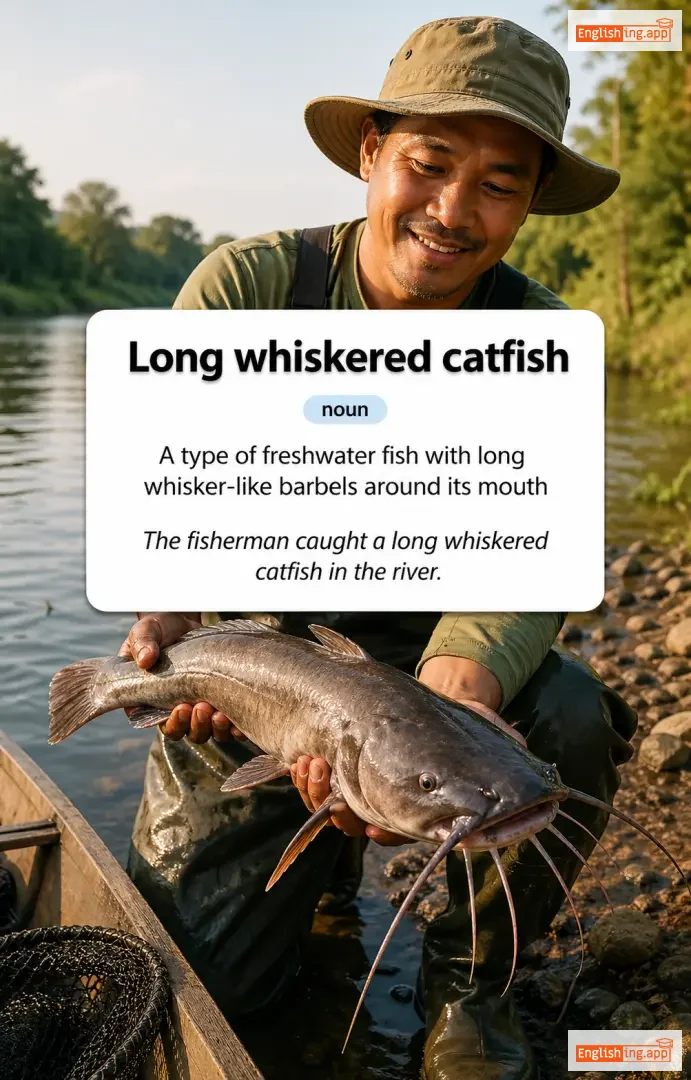
Long whiskered catfish definition card — visual illustration of the meaning
noun
/lɒŋ ˈwɪskəd ˈkætfɪʃ/
लंबी मूंछों वाली कैटफ़िश (lambi moonchon wali catfish)

A type of freshwater fish with long whisker-like barbels around its mouth

"The fisherman caught a long whiskered catfish in the river."

"मछुआरे ने नदी में एक लंबी मूंछों वाली कैटफ़िश पकड़ी।" (machhuaare ne nadi mein ek lambi moonchon wali catfish pakdi)
adjective, adverb
/ˈlɒŋ taɪm/
लंबे समय का (lambe samay ka)

lasting or existing for a long period of time; having continued for many years

"She is a long-time friend of my family."

"वह मेरे परिवार की लंबे समय से दोस्त है।" (vah mere parivar ki lambe samay se dost hai)
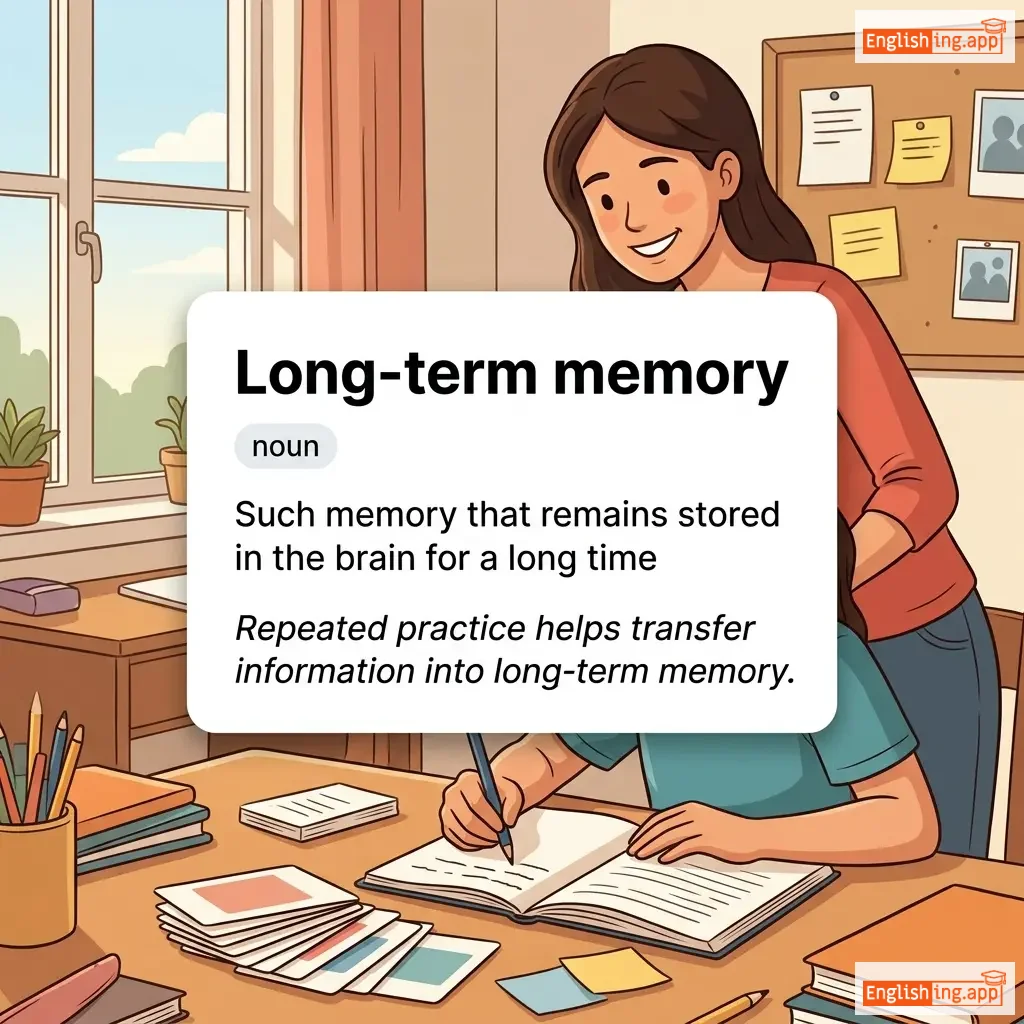
Long-term memory definition card — visual illustration of the meaning
noun
ˈlɒŋ tɜːm ˈmɛm.ər.i
दीर्घकालिक स्मृति (deerghakaalik smriti)

Such memory that remains stored in the brain for a long time

"Repeated practice helps transfer information into long-term memory."

"नियमित अभ्यास जानकारी को दीर्घकालिक स्मृति में स्थानांतरित करने में मदद करता है।" (niyamit abhyas jankari ko deerghakaalik smriti mein sthaanantarit karne mein madad karta hai)
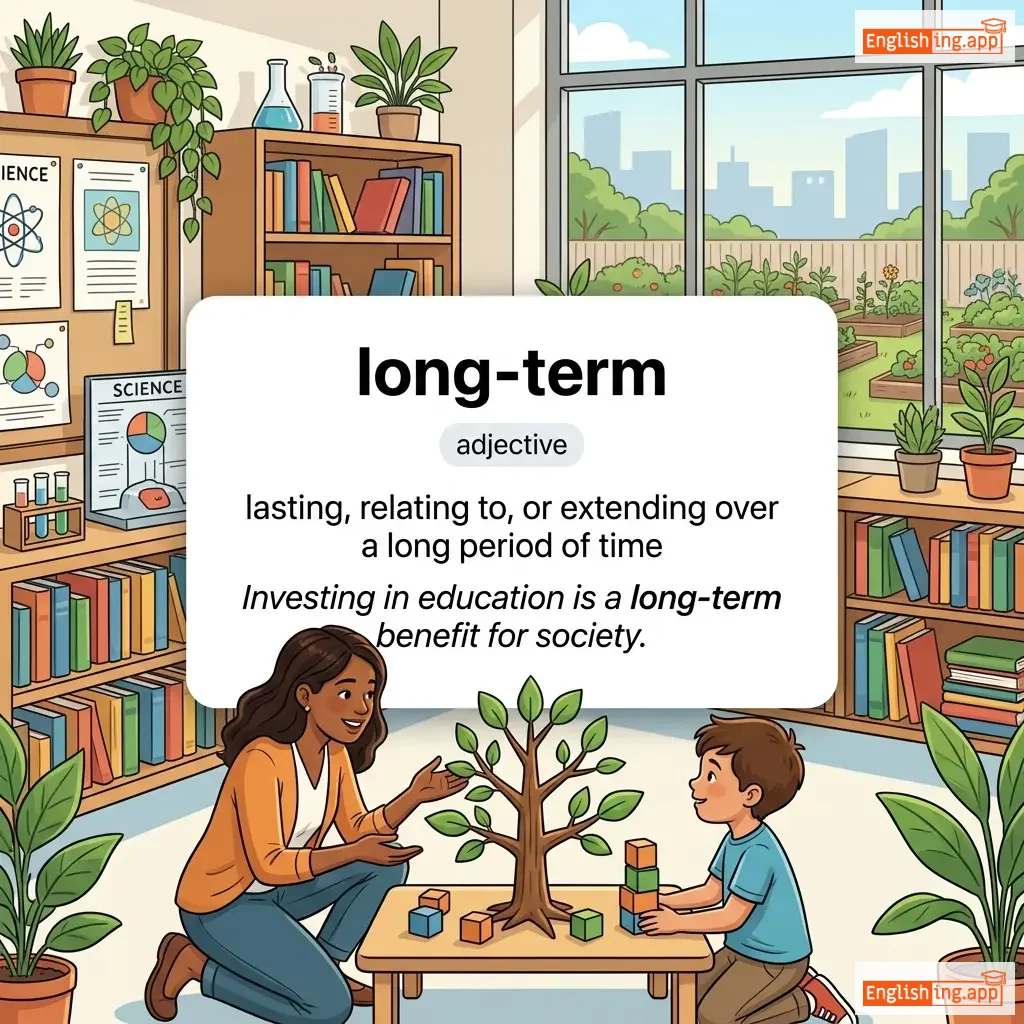
long-term definition card — visual illustration of the meaning
adjective
/ˌlɔːŋ ˈtɜːrm/
दीर्घकालिक (dirghkalik)

lasting, relating to, or extending over a long period of time

"Investing in education is a long-term benefit for society."

"शिक्षा में निवेश समाज के लिए एक दीर्घकालिक लाभ है।" (Shiksha mein nivesh samaj ke liye ek dirghkalik labh hai.)
adjective
/ˈlɒŋ ˈstændɪŋ/
दीर्घकालिक (deerghkaalik)

having existed or continued for a long period of time

"They have a long-standing relationship with their suppliers."

"उनका अपने आपूर्तिकर्ताओं के साथ एक दीर्घकालिक संबंध है।" (Unka apne aapoortikartao ke saath ek deerghkaalik sambandh hai.)
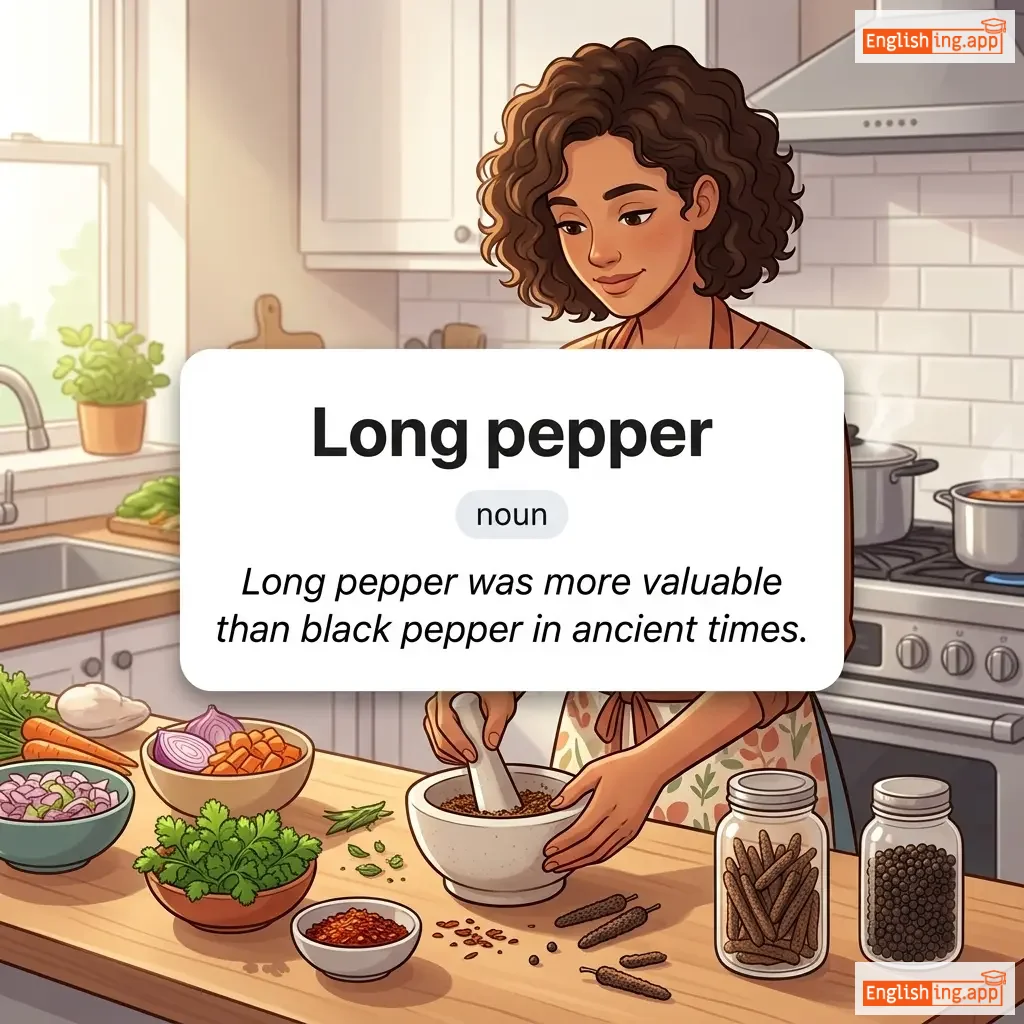
Long pepper definition card — visual illustration of the meaning
noun
/lɔːŋ ˈpepər/
लंबी मिर्च (lambi mirch)

a flowering vine in the family Piperaceae, cultivated for its fruit which is used as a spice

"Long pepper was more valuable than black pepper in ancient times."

"प्राचीन काल में लंबी मिर्च काली मिर्च से ज्यादा मूल्यवान थी।" (prachin kaal mein lambi mirch kaali mirch se zyada mulyavaan thi.)
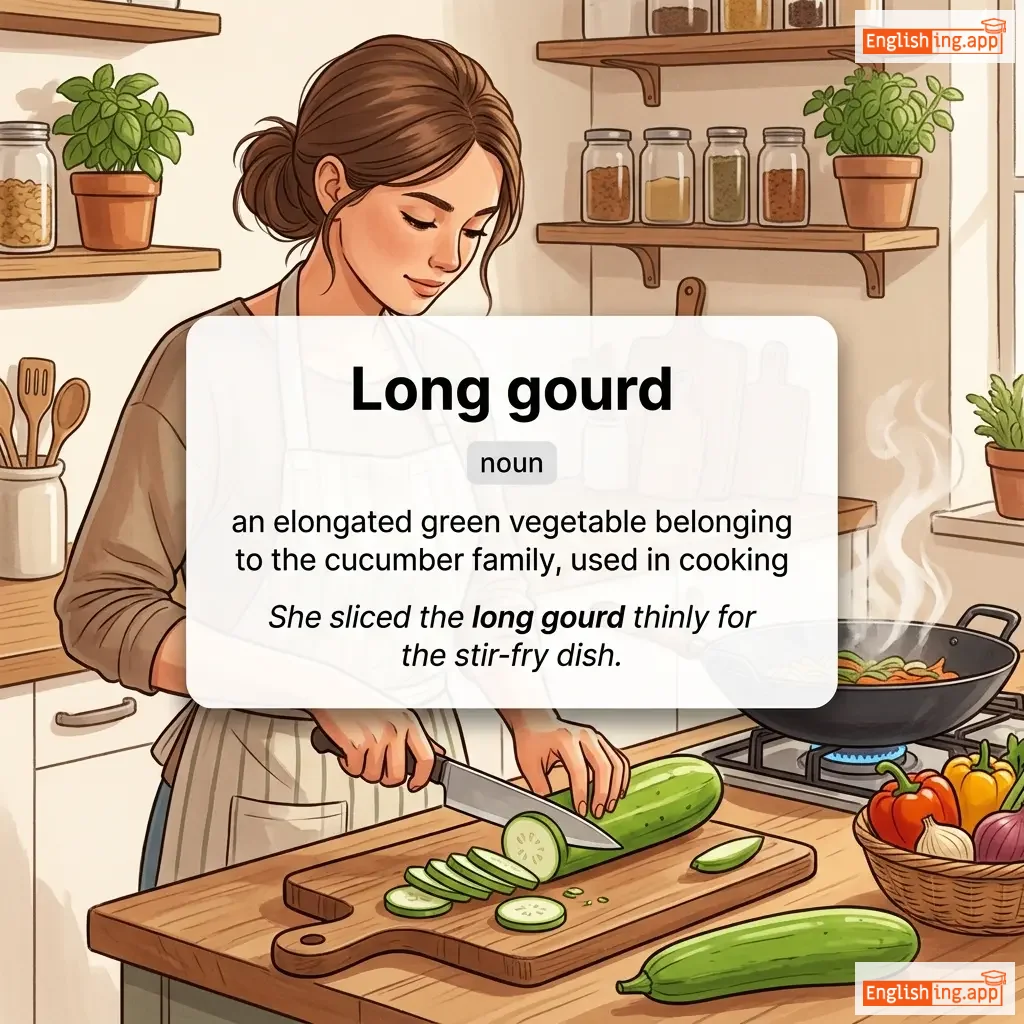
Long gourd definition card — visual illustration of the meaning
noun
/lɔːŋ ɡɔːrd/
लंबा लौकी (lamba lauki)

an elongated green vegetable belonging to the cucumber family, used in cooking

"She sliced the long gourd thinly for the stir-fry dish."

"उसने स्टिर-फ्राई डिश के लिए लंबी लौकी को पतला काट लिया।" (usne stir-fry dish ke liye lambi lauki ko patla kaat liya.)
adjective
/lɔːŋ/
लंबा (lamba)

Measuring a great distance from end to end; lasting for a large amount of time.

"They waited a long time for the train."

"वे ट्रेन का इंतजार लंबे समय तक करते रहे।" (ve train ka intezaar lambe samay tak karte rahe.)
noun
/ˈliːtər/
लीटर (litar)

a metric unit of volume equal to 1,000 cubic centimeters; commonly used to measure liquids

"She bought a litre of milk from the shop."

"उसने दुकान से एक लीटर दूध खरीदा।" (usne dukan se ek litar doodh kharida)