词汇表

英语词汇词典 | 单词含义、定义和示例

adjective
/loʊ/
(dī)

Small in amount, degree, or position; not high.

"The river is at its lowest level in years."

"这条河已经多年处于最低水平。" (Zhè tiáo hé yǐjīng duō nián chǔyú zuì dī shuǐpíng.)
adjective
/ˈlʌv.ɪŋ/
慈爱的; 关怀的; 表现出爱与温暖 (cí'ài de; guānhuái de; biǎoxiàn chū ài yǔ wēnnuǎn)

affectionate; caring; showing love and warmth

"She is a loving mother who cares deeply for her children."

"她是一个慈爱的母亲,深深地关心着她的孩子们。" (Tā shì yīgè cí'ài de mǔqīn, shēnshēn de guānxīn zhe tā de háizimen.)
noun
/ˈlʌvər/
情人 (qíngrén)

a person who is in a romantic relationship or has strong affection for someone

"She met her lover at the café every evening."

"她每天晚上都在咖啡馆与她的情人见面。" (Tā měitiān wǎnshàng dōu zài kāfēi guǎn yǔ tā de qíngrén jiànmiàn.)
adjective
/ˈlʌvli/
可爱 (ke ai)

Delightful or very pleasing; beautiful.

"It was a lovely evening by the beach."

"这是一个美丽的傍晚,在海滩上。" (Zhè shì yīgè měilì de bàngwǎn, zài hǎitān shàng.)
adjective
/ˈlʌvəbl̩/
幸福 (xìngfú)

easy to love; endearing or charming

"The puppy was so loveable that everyone wanted to hold it."
"当她收到奖项时,她无法掩饰自己的幸福。" (Dāng tā shōu dào jiǎngxiàng shí, tā wúfǎ yǎnshì zìjǐ de xìngfú.)
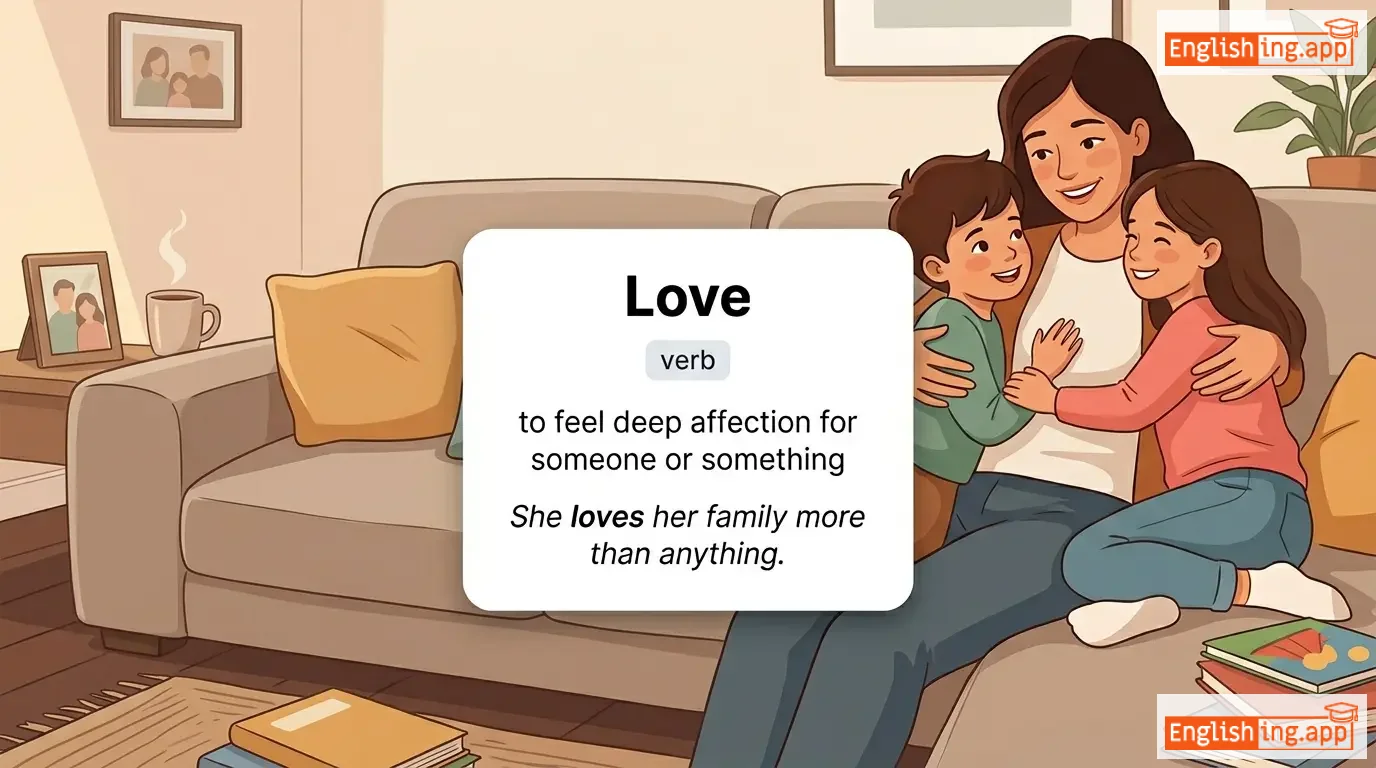
Love definition card — visual illustration of the meaning
verb
/lʌv/
(ai)

to feel deep affection for someone or something

"She loves her family more than anything."

"她比任何东西都更爱她的家人。" (Ta bi ren he dongxi dou geng ai ta de jiaren.)
adjective
/ˈlʌvəbəl/
幸福 (xìngfú)

Inspiring or deserving love or affection.

"The puppy was so lovable that everyone wanted to hold it."

"她收到奖项时,无法掩饰自己的幸福。" (Tā shōudào jiǎngxiàng shí, wúfǎ yǎnshì zìjǐ de xìngfú.)
adjective
/ˈlaʊtɪʃ/
粗鲁的 (cūlǔ de)

Clumsy, rude, or aggressive in behavior.

"His loutish remarks offended everyone at the meeting."

"他粗鲁的言论冒犯了会议上的所有人。" (Tā cūlǔ de yánlùn màofàn le huìyì shàng de suǒyǒu rén.)
noun
/laʊt/
粗人 (cū rén)

An uncouth or aggressive man or boy.

"The drunken lout caused a scene at the party."

"那个醉酒的粗人把派对弄得一团糟。" (Nàgè zuìjiǔ de cū rén bǎ pàiduì nòng dé yī tuán zāo.)
adjective
/ˈlaʊzi/
糟糕 (zao gao)

of very poor quality; bad or unpleasant

"He felt lousy after catching the flu."

"他在得了流感后感觉很糟糕。" (Tā zài déle liúgǎn hòu gǎnjué hěn zāo gāo.)
Louse definition card — visual illustration of the meaning
noun
/laʊs/
虱子 (shīzi)

A small parasitic insect that lives on the skin of mammals and birds; also used as an insult for a contemptible person.

"The child had to be treated for head louse infestation."

"孩子必须治疗头虱感染。" (Háizi bìxū zhìliáo tóu shī gǎnrǎn.)
noun, verb
/laʊndʒ/
休息室 (xiuxishi)

A public room for relaxing; or to sit, lie, or stand in a relaxed way.

"They lounged on the sofa after dinner."

"他们在晚餐后懒洋洋地躺在沙发上。" (Tāmen zài wǎncān hòu lǎn yáng yáng de tǎng zài shāfā shàng.)
noun
/lɒx/ or /lɒk/
湖泊 (hupo)

An Irish or Scottish word for a lake or sea inlet.

"The fishermen lived by the lough for generations."

"渔民们世世代代住在湖泊旁边。" (Yúmínmen shìshì dàidài zhù zài húpō pángbiān.)
adverb
/ˈlaʊdli/
大声地 (dasheng de)

in a way that produces a lot of sound; with a high volume

"He spoke loudly so everyone in the room could hear him."
"他大声地说话,让房间里的人都能听见。" (ta dasheng de shuohua rang fangjian li de ren dou neng tingjian)
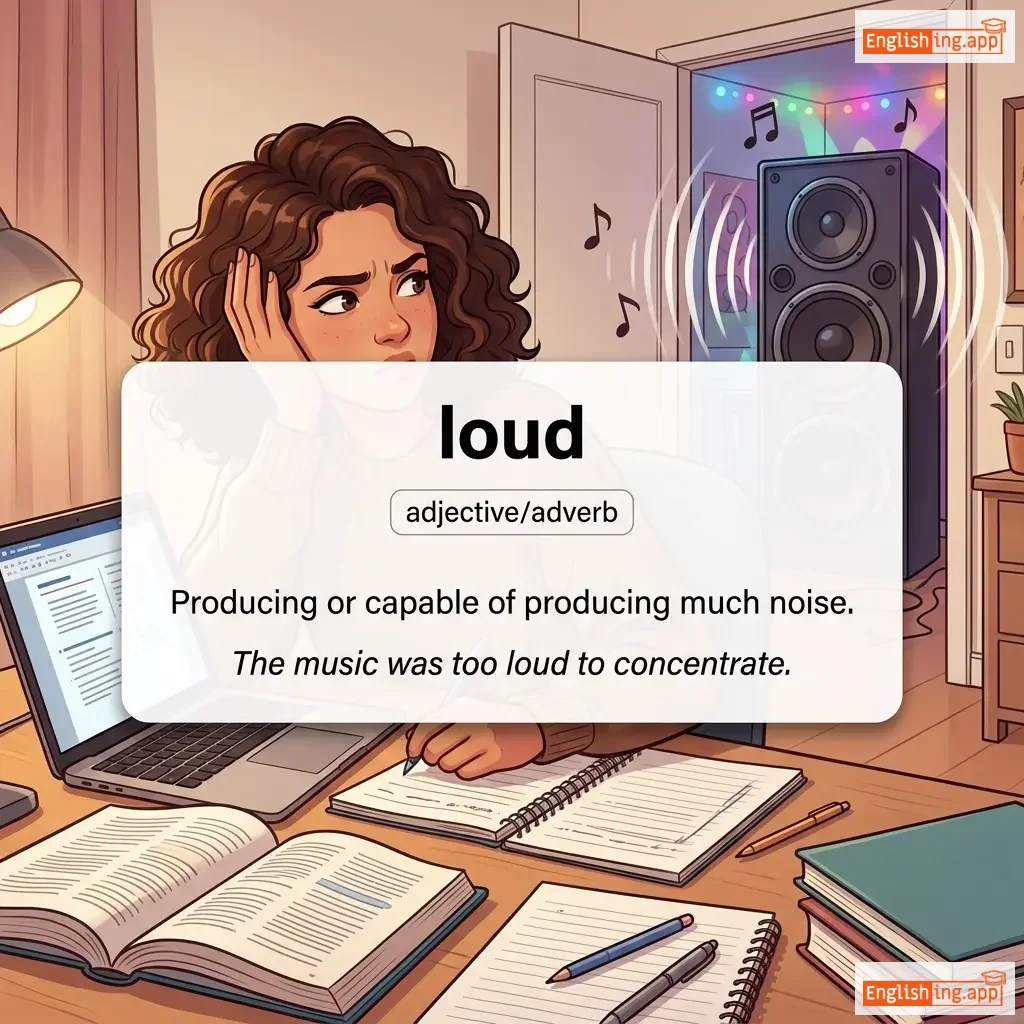
loud definition card — visual illustration of the meaning
adjective/adverb
/laʊd/
响亮 (xiangliang)

Producing or capable of producing much noise.

"The music was too loud to concentrate."
"音乐太响了,无法集中注意力。" (Yīnyuè tài xiǎngle, wúfǎ jízhōng zhùyì lì.)
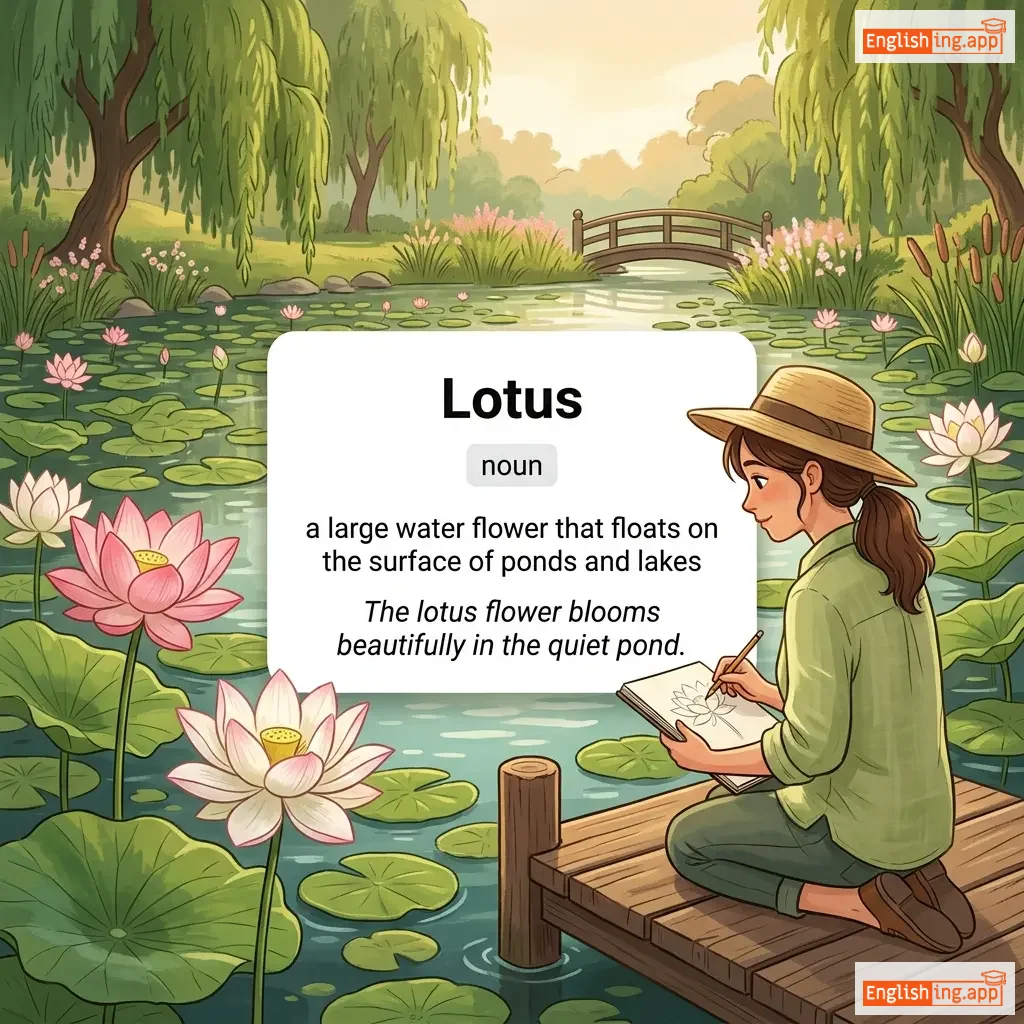
Lotus definition card — visual illustration of the meaning
noun
/ˈloʊ.təs/
莲花 (lianhua)

a large water flower that floats on the surface of ponds and lakes

"The lotus flower blooms beautifully in the quiet pond."

"莲花在宁静的池塘中美丽地绽放。" (lianhua zai ningjing de chitang zhong meili de zhanfang)
noun
/ˈlɒtəri/
彩票 (caipiao)

A means of raising money by selling numbered tickets and giving prizes to the holders of numbers drawn at random.

"He won a car in the national lottery."

"他在全国彩票中赢得了一辆车。" (Ta zai quanguo caipiao zhong yingde le yi liang che.)
pronoun/noun
/lɒts/
很多 (hěn duō)

A large number or amount of something.

"She has lots of friends in the city."

"她在城市里有很多朋友。" (Tā zài chéngshì lǐ yǒu hěn duō péngyǒu.)
noun
/lɒt/
许多 (xuduo)

A large number or amount; a group or portion.

"She bought a lot of books at the fair."

"她在集市上买了很多书。" (Ta zai jishi shang mai le henduo shu.)
verb/adjective
/lɒst/
丢失 (diū shī)

Unable to find the way; no longer in possession of something.

"He lost his keys and couldn’t enter the house."
"他丢失了钥匙,无法进入房子。" (Tā diū shī le yàoshi, wúfǎ jìnrù fángzi.)
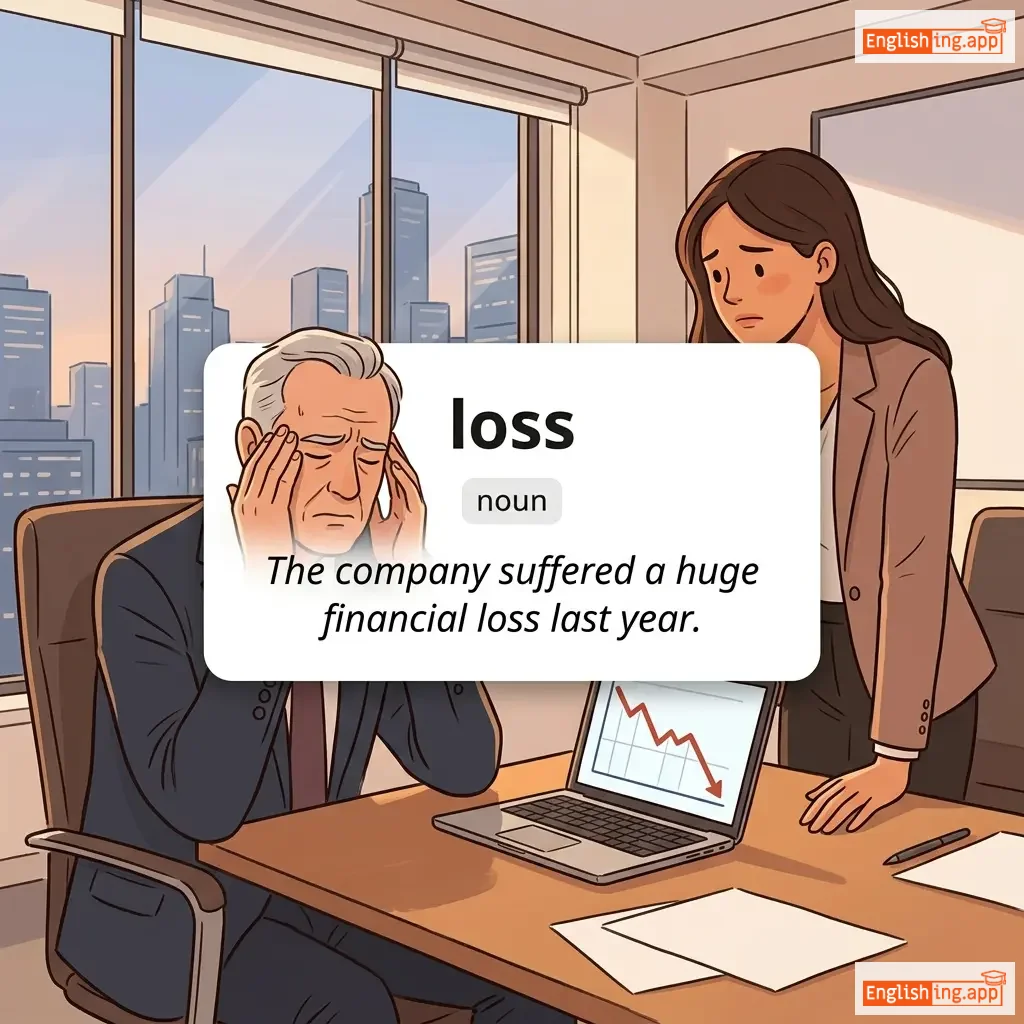
loss definition card — visual illustration of the meaning
noun
/lɒs/
损失 (sǔn shī)

The state of no longer having something or someone; the harm resulting from losing.

"The company suffered a huge financial loss last year."
"公司去年遭受了巨大的财务损失。" (Gōngsī qùnián zāoshòu le jùdà de cáiwù sǔnhài.)
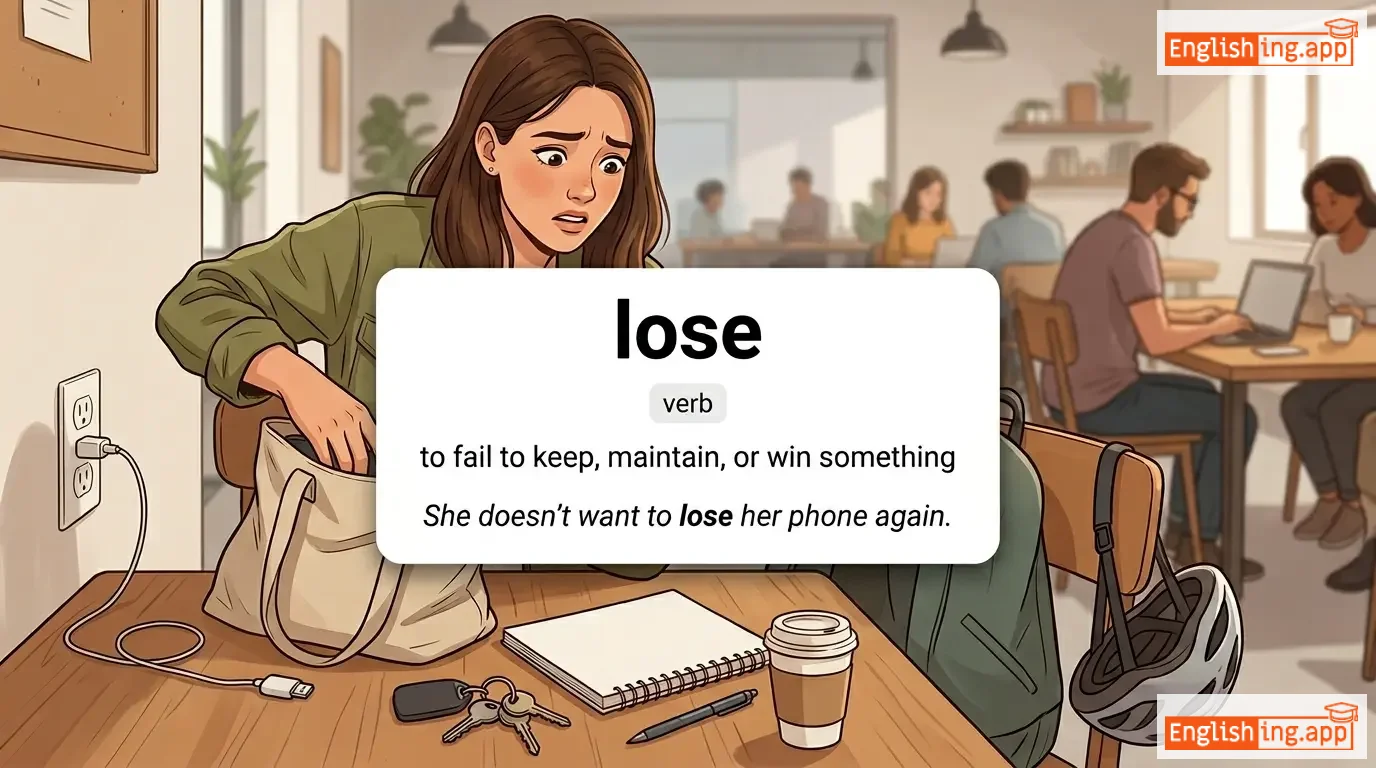
lose definition card — visual illustration of the meaning
verb
/luːz/
幸福 (xingfu)

to fail to keep, maintain, or win something

"She doesn’t want to lose her phone again."

"她在获得奖项时无法掩饰自己的快乐。" (Tā zài huòdé jiǎngxiàng shí wúfǎ yǎnshì zìjǐ de kuàilè.)
noun
/ˈlɔːrdlɪŋ/
小领主 (xiao lingzhu)

A young or petty lord; someone of minor nobility.

"The arrogant lordling demanded respect despite his lack of experience."
"那个傲慢的小领主尽管缺乏经验,仍要求尊重。" (Nàgè àomàn de xiǎo lǐngzhǔ jǐnguǎn quēfá jīngyàn, réng yāoqiú zūnzhòng.)
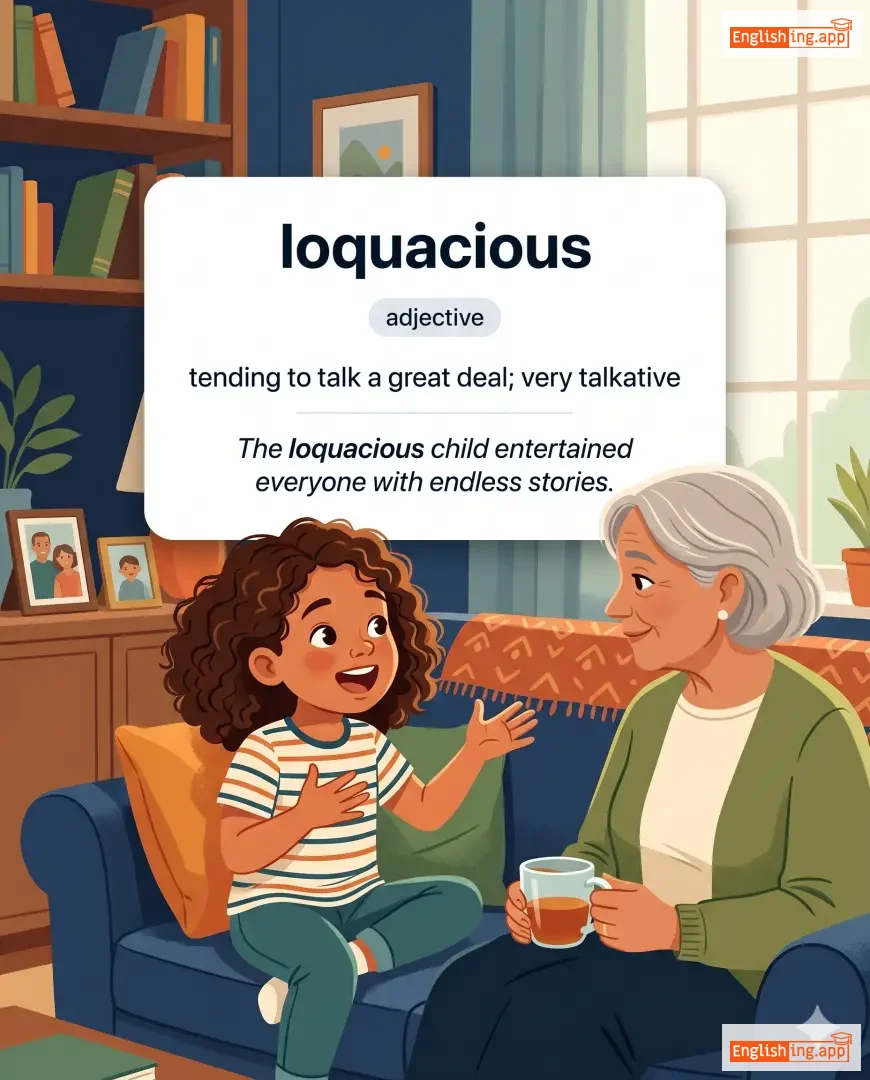
loquacious definition card — visual illustration of the meaning
adjective
/loʊˈkweɪʃəs/
话多的 (hua duo de)

tending to talk a great deal; very talkative

"The loquacious child entertained everyone with endless stories."

"话多的孩子用无尽的故事娱乐了每个人。" (Hua duo de haizi yong wu jin de gushi yule le meige ren.)
adjective
/ˈlɑːpˌsaɪdɪd/
倾斜的,不平衡的 (qīngxié de, bù pínghéng de)

with one side lower, larger, or different from the other; uneven or imbalanced

"The cake looked lopsided after being decorated in a hurry."

"蛋糕看起来不平衡,因为急忙装饰。" (Dàn gāo kàn qǐlái bù pínghéng, yīnwèi jí máng zhuāngshì.)
verb
/loʊp/
以长而有弹跳的步伐奔跑或移动 (yi chang er you dan tiao de bu fa ben pao huo yi dong)

to run or move with a long, bounding stride

"The horse loped gracefully across the field."

"马优雅地在田野上跑步。" (Ma youya de zai tianye shang paobu.)
verb
/luːt/
掠夺 (lüèduó)

to steal goods, typically during war, riot, or chaos

"The rioters looted several shops during the protest."

"抗议者在抗议期间掠夺了几家商店。" (Kàngyì zhě zài kàngyì qījiān lüèduó le jǐ jiā shāngdiàn.)
adjective
/luːs/
(song)

not firmly or tightly fixed in place

"The screw is loose and needs tightening."

"螺丝松动,需要紧固。" (Luosi songdong, xuyao jingu.)
adjective
/ˈluːpi/
疯癫 (fengdian)

crazy, silly, or eccentric

"After working all night, he felt a little loopy."

"整夜工作后,他感觉有点疯癫。" (Zhengye gongzuo hou, ta ganjue you dian fengdian.)
noun
/luːp/
圈,环 (quan, huan)

a shape produced by a curve that bends around and crosses itself

"The string formed a neat loop around the package."

"绳子在包裹周围形成了一个整齐的环。" (Shéngzi zài bāoguǒ zhōuwéi xíngchéngle yīgè zhěngqí de huán.)
adjective
/ˈluː.ni/
疯狂的; 傻的; 精神不稳定 (fēngkuáng de; shǎ de; jīngshén bù wěndìng)

crazy; silly; mentally unstable

"His loony behavior made everyone laugh."

"他的疯狂行为让每个人都笑了。" (tā de fēngkuáng xíngwéi ràng měi gèrén dōu xiàole)
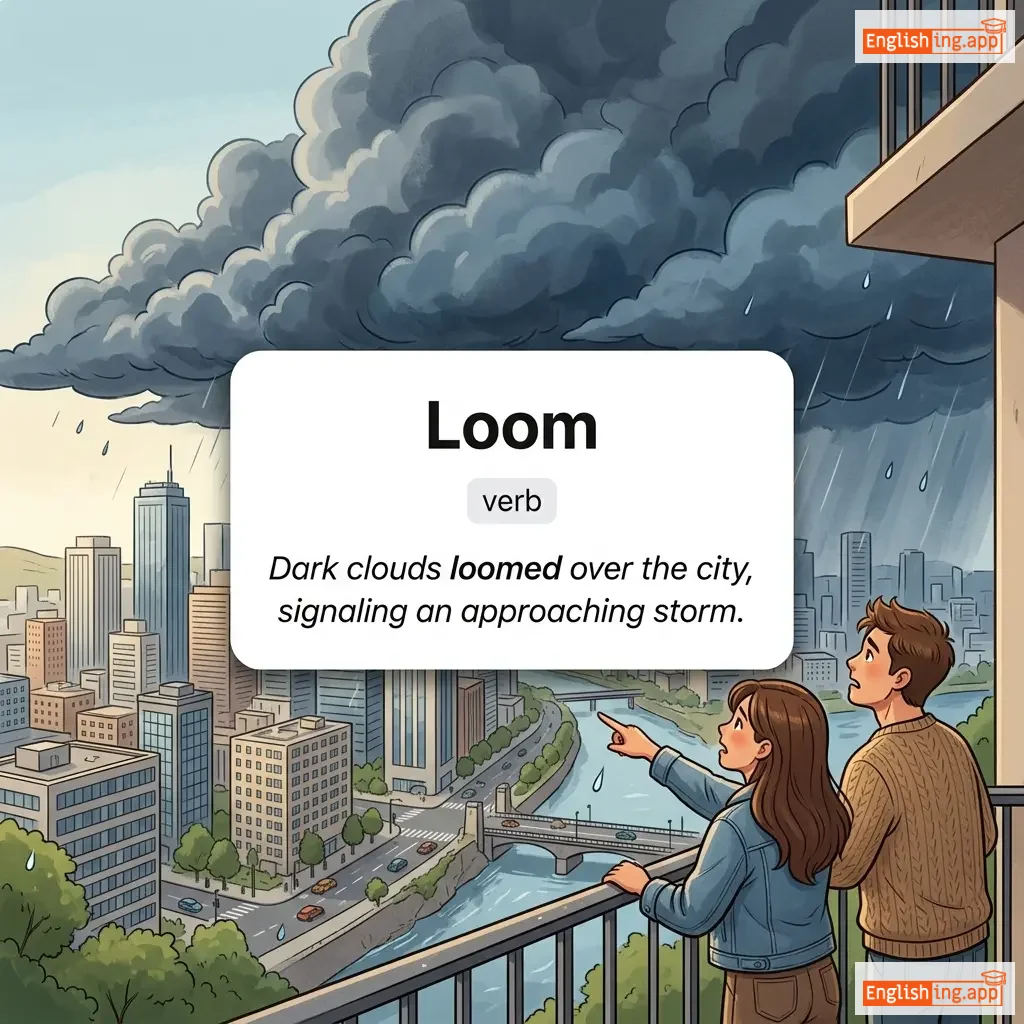
Loom definition card — visual illustration of the meaning
🌩️

Loom

verb
/luːm/

to appear as a large, often frightening or unclear shape, usually something threatening or about to happen

"Dark clouds loomed over the city, signaling an approaching storm."

noun
/ˈlʊkaʊt/
瞭望, 哨位 (liàowàng, shàowèi)

A place for watching; a person keeping watch.

"The guard kept a lookout for suspicious activity."
"卫兵警惕地监视着可疑活动。" (Wèibīng jǐngtì de jiānshìzhe kěyí huódòng.)
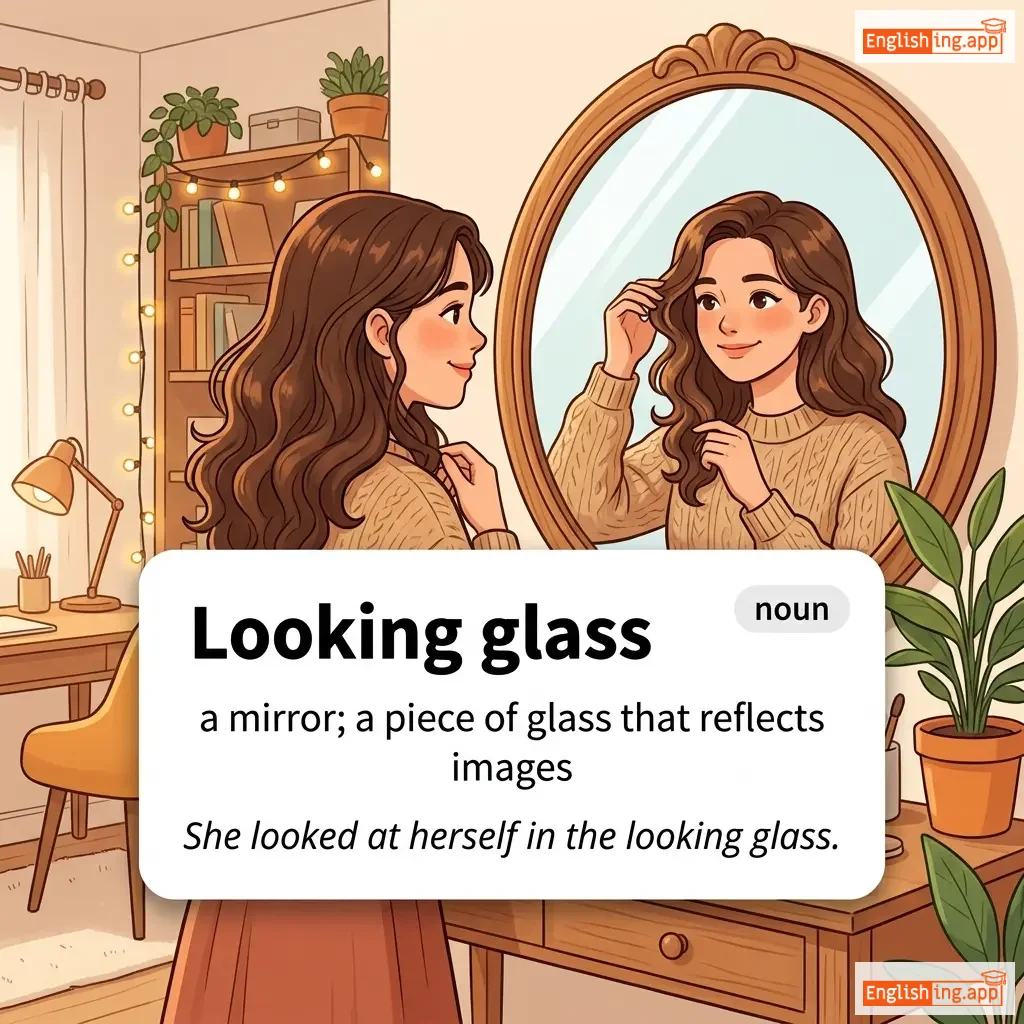
Looking glass definition card — visual illustration of the meaning
noun
/ˈlʊkɪŋ ɡlæs/
镜子 (jingzi)

a mirror; a piece of glass that reflects images

"She looked at herself in the looking glass."

"她在镜子里看着自己。" (ta zai jingzi li kan zhe ziji)
phrasal verb
/lʊk ˈɑːftər/
照顾 (zhaogu)

to take care of someone or something; to be responsible for someone’s well-being

"She looks after her younger brother while their parents are at work."
"父母上班时,她照顾弟弟。" (Fumu shangban shi, ta zhaogu didi)
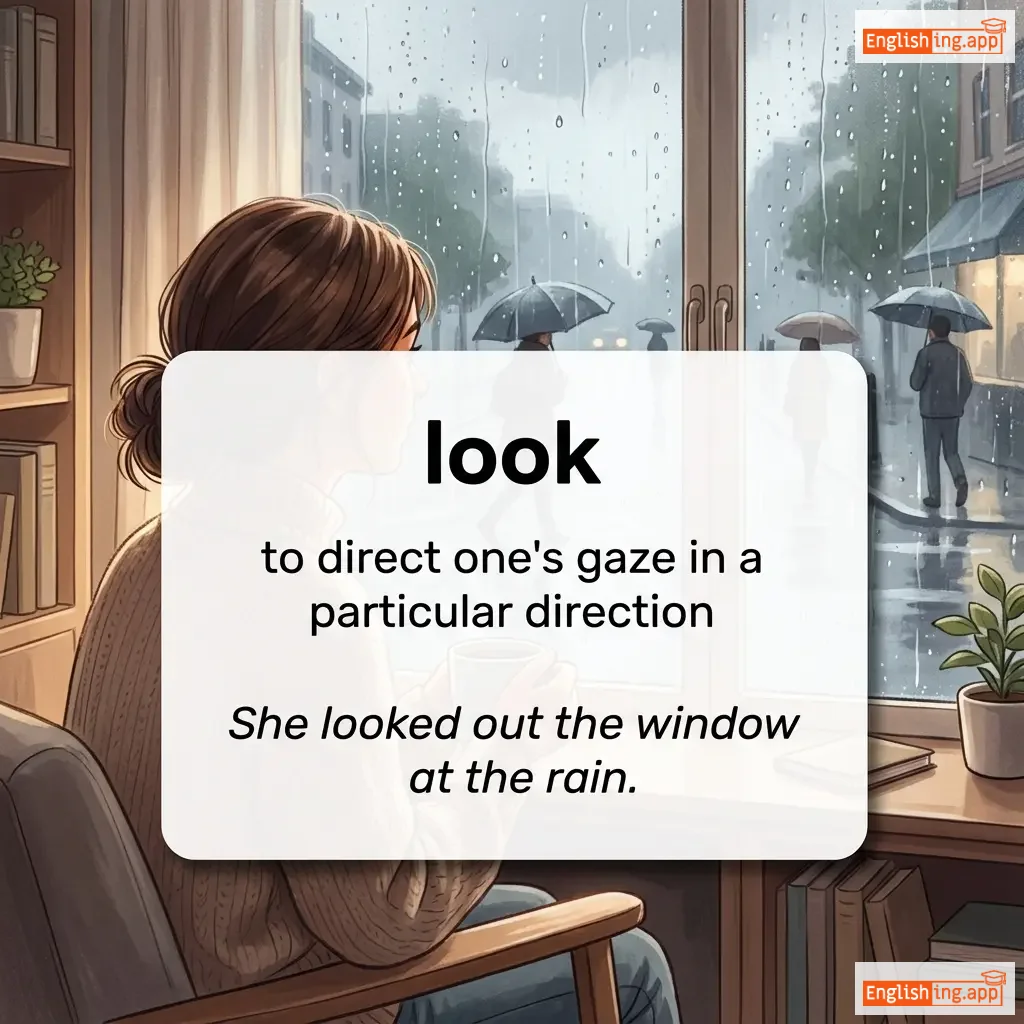
look definition card — visual illustration of the meaning
/lʊk/
(kan)

to direct one's gaze in a particular direction

"She looked out the window at the rain."

"她看向窗外的雨。" (Ta kanxiang chuangwai de yu.)
adjective
/ˈlɔːŋtaɪm/
长期的 (changqi de)

having existed or continued for a long time

"They are longtime friends who met in college."

"他们是大学时认识的长期朋友。" (Tāmen shì dàxué shí rènshí de chángqī péngyǒu.)
noun
渴望; 忧郁 (kěwàng; yōuyù)
noun
/lɔnˈdʒɛvəti/
长寿 (changshou)

Long life or long existence of something.

"Good habits contribute to health and longevity."
"良好的习惯有助于健康和长寿。" (Liánghǎo de xíguàn yǒuzhù yú jiànkāng hé chángshòu.)
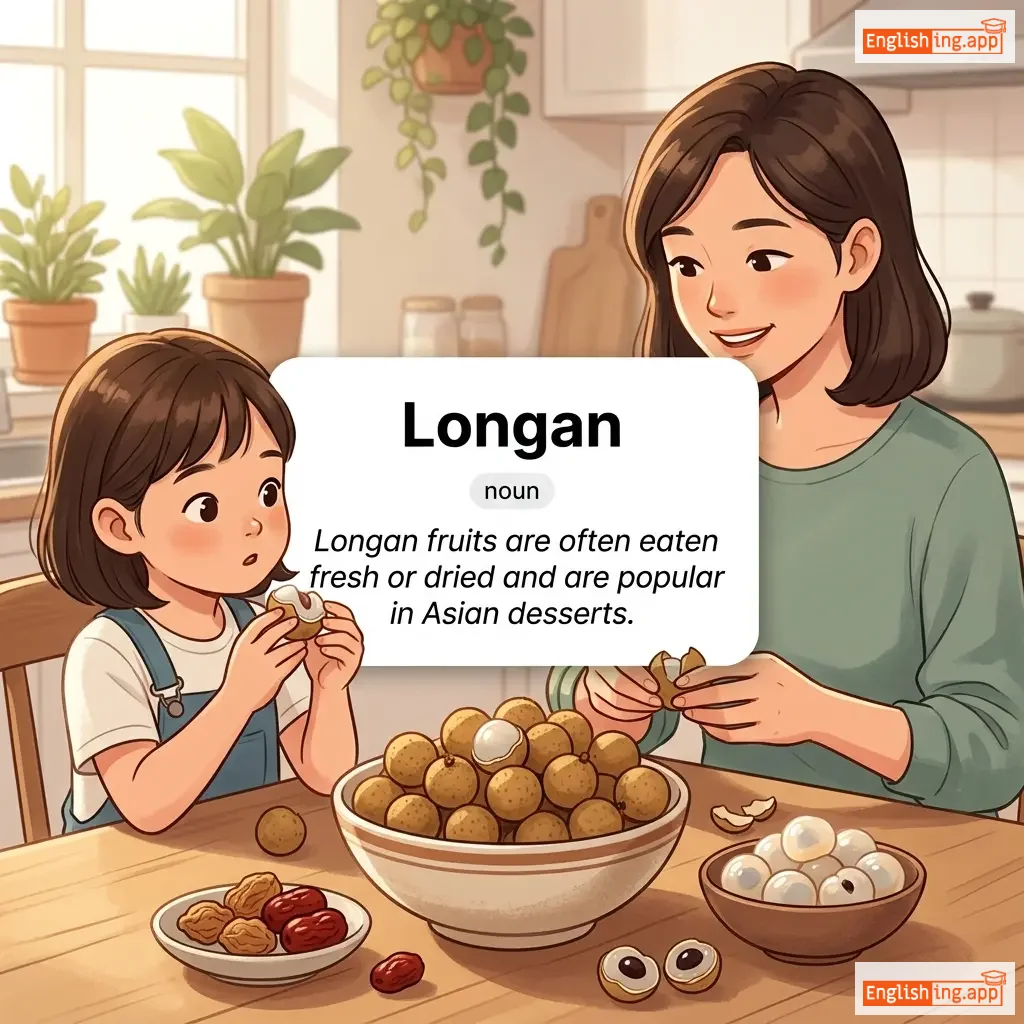
Longan definition card — visual illustration of the meaning
noun
/ˈlɔːŋ.ɡən/
龙眼 (longyan)

a small round tropical fruit with translucent white flesh and sweet taste, related to lychee

"Longan fruits are often eaten fresh or dried and are popular in Asian desserts."
"龙眼果通常鲜食或晒干,在亚洲甜点中很受欢迎。" (long yan guo tong chang xian shi huo shai gan zai ya zhou tian dian zhong hen shou huan ying)
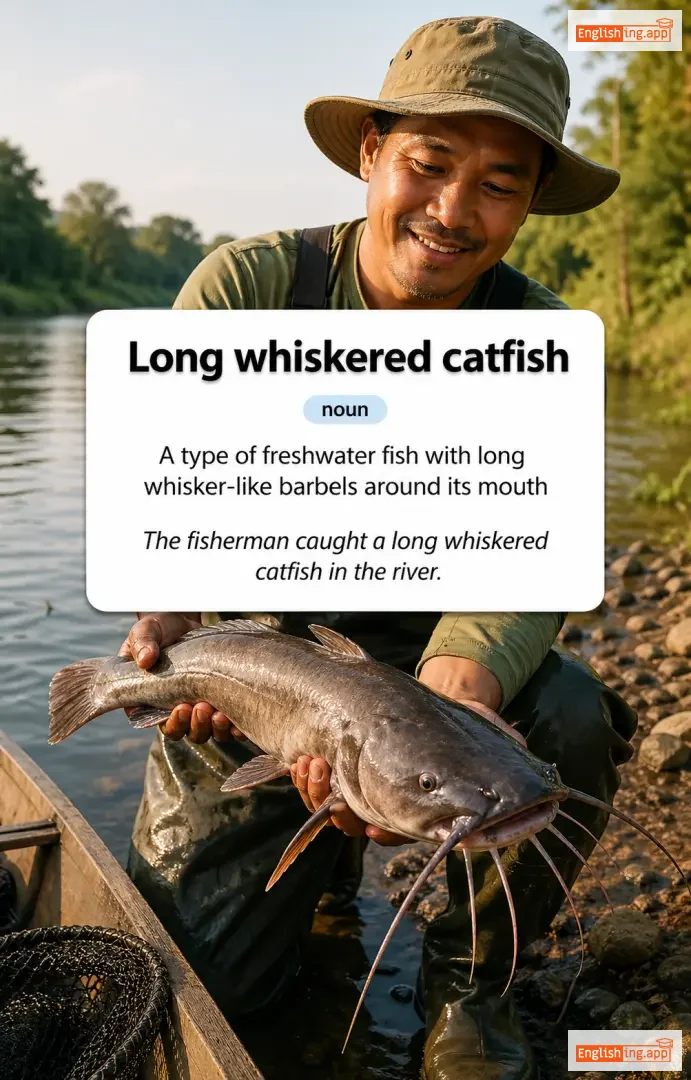
Long whiskered catfish definition card — visual illustration of the meaning
noun
/lɒŋ ˈwɪskəd ˈkætfɪʃ/
长须鲶鱼 (chang xu nian yu)

A type of freshwater fish with long whisker-like barbels around its mouth

"The fisherman caught a long whiskered catfish in the river."

"渔夫在河里抓到了一条长须鲶鱼。" (yu fu zai he li zhua dao le yi tiao chang xu nian yu)
adjective, adverb
/ˈlɒŋ taɪm/
长期的 (changqi de)

lasting or existing for a long period of time; having continued for many years

"She is a long-time friend of my family."

"她是我家长期的朋友。" (ta shi wo jia changqi de pengyou)
Long-term memory definition card — visual illustration of the meaning
noun
ˈlɒŋ tɜːm ˈmɛm.ər.i
长期记忆 (changqi jiyi)

Such memory that remains stored in the brain for a long time

"Repeated practice helps transfer information into long-term memory."
"重复练习有助于将信息转移到长期记忆中。" (Chóngfù liànxí yǒu zhù yú jiāng xìnxī zhuǎnyí dào chángqī jìyì zhōng.)
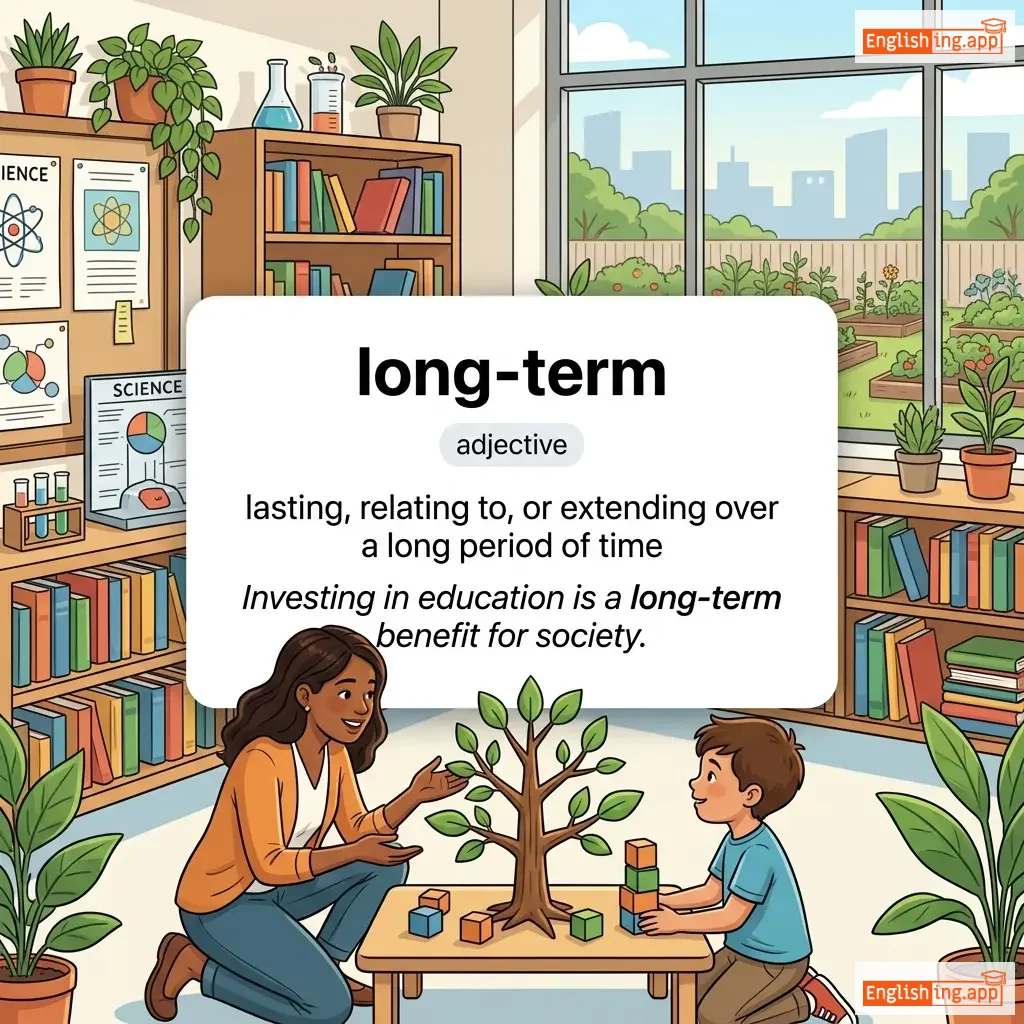
long-term definition card — visual illustration of the meaning
adjective
/ˌlɔːŋ ˈtɜːrm/
长期的 (changqi de)

lasting, relating to, or extending over a long period of time

"Investing in education is a long-term benefit for society."

"投资教育是社会的长期利益。" (Touzi jiaoyu shi shehui de changqi liyu.)
adjective
/ˈlɒŋ ˈstændɪŋ/
长期的 (changqi de)

having existed or continued for a long period of time

"They have a long-standing relationship with their suppliers."
"他们与供应商之间有着长期的合作关系。" (Tāmen yǔ gōngyìng shāng zhī jiān yǒuzhe chángqī de hézuò guānxi.)
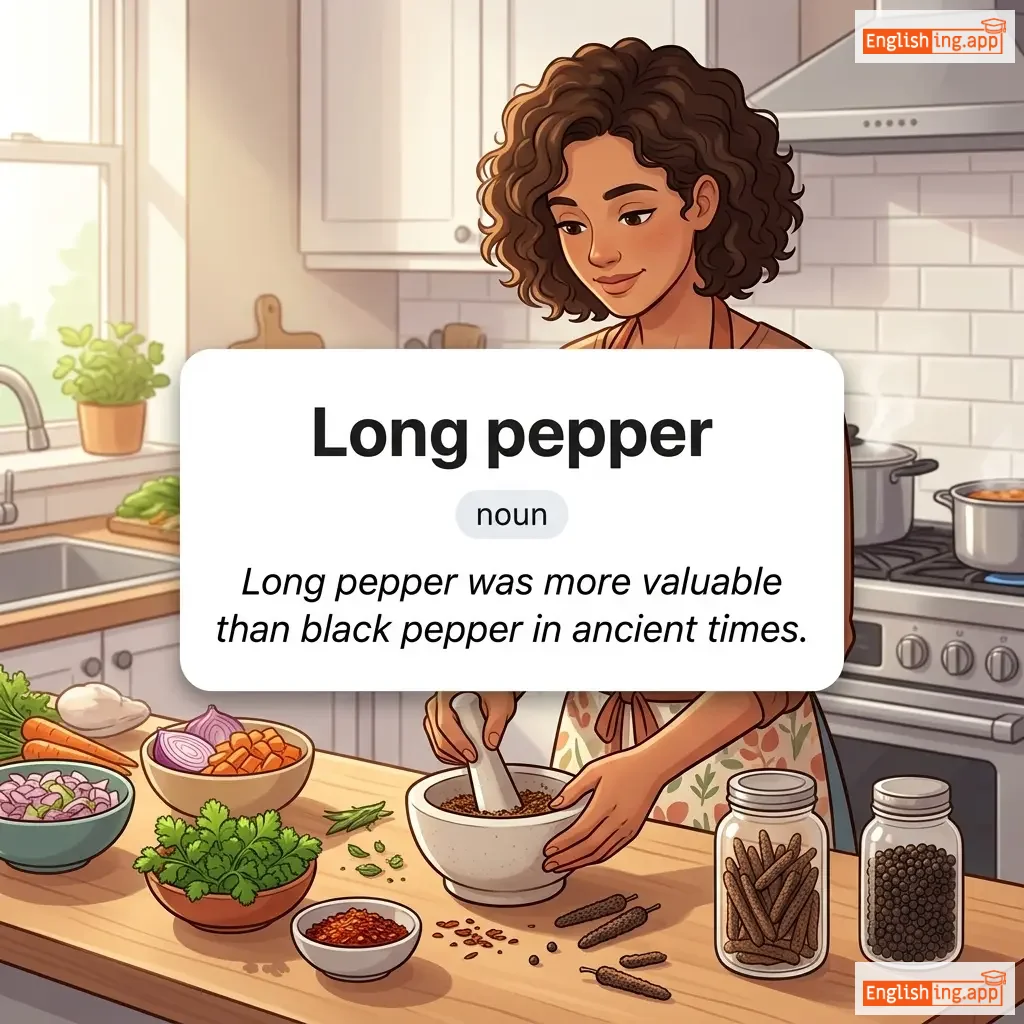
Long pepper definition card — visual illustration of the meaning
noun
/lɔːŋ ˈpepər/
长胡椒 (chang hujiao)

a flowering vine in the family Piperaceae, cultivated for its fruit which is used as a spice

"Long pepper was more valuable than black pepper in ancient times."
"长胡椒在古代比黑胡椒更有价值。" (Chang hujiao zai gudai bi hei hujiao geng you jiazhi.)
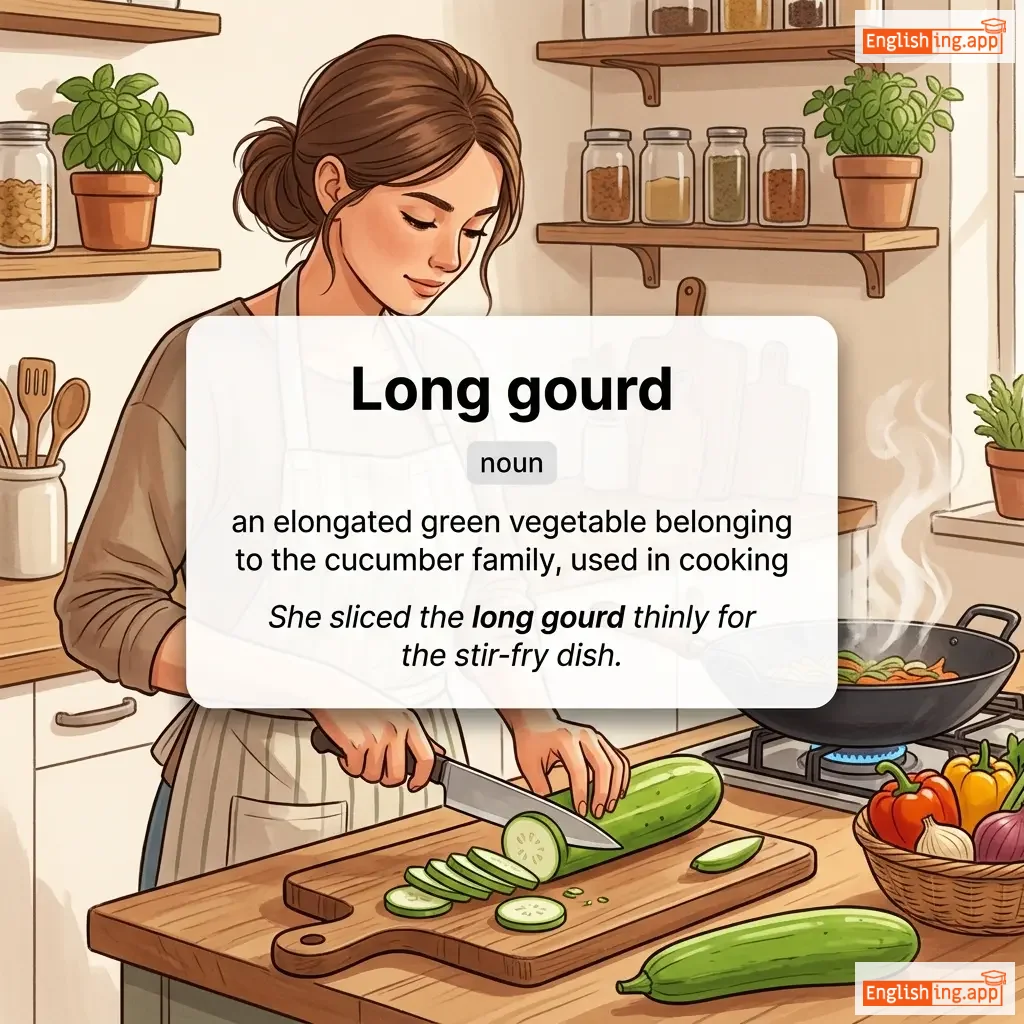
Long gourd definition card — visual illustration of the meaning
noun
/lɔːŋ ɡɔːrd/
长南瓜 (chang nan gua)

an elongated green vegetable belonging to the cucumber family, used in cooking

"She sliced the long gourd thinly for the stir-fry dish."

"她将长南瓜切成薄片,用于炒菜。" (Ta jiang chang nan gua qie cheng bo pian, yong yu chao cai.)
adjective
/lɔːŋ/
(chang)

Measuring a great distance from end to end; lasting for a large amount of time.

"They waited a long time for the train."

"他们等了很长时间才等到火车。" (tamen deng le hen chang shi jian cai deng dao huo che.)
noun
/ˈliːtər/
(sheng)

a metric unit of volume equal to 1,000 cubic centimeters; commonly used to measure liquids

"She bought a litre of milk from the shop."

"她从商店买了一升牛奶。" (ta cong shangdian mai le yi sheng niunai)