词汇表

英语词汇词典 | 单词含义、定义和示例

noun
/kɛn/
知识范围 (zhishi fanwei)

one's range of knowledge or understanding

"Quantum physics is beyond my ken."

"量子物理学超出了我的理解范围。" (Liangzi wulixue chaochu le wode lijie fanwei.)
noun
/ˈken.əl/
狗舍; 养犬或寄养犬的场所 (gǒu shè; yǎng quǎn huò jì yǎng quǎn de chǎng suǒ)

a small shelter for a dog; an establishment for the breeding or boarding of dogs

"The dog slept comfortably in his wooden kennel in the backyard."

"狗狗在后院的木狗舍里舒适地睡着了。" (Gǒu gǒu zài hòuyuàn de mù gǒu shè lǐ shūshì de shuì zháo le.)
noun
/ˈkɜːrtʃɪf/
头巾 (tóujīn)

a piece of cloth worn around the head or neck

"She wore a red kerchief on her head."

"她头上戴着一条红色的头巾。" (Tā tóu shàng dàizhe yītiáo hóngsè de tóujīn.)
noun
/ˈkɜːrnəl/
某物的核心; 坚果或种子的可食部分 (kè nèi ěr)

the central, most important part of something; the edible part of a nut or seed

"The kernel of the argument was about fairness."

"争论的核心是关于公平的。" (Zhēnglùn de héxīn shì guānyú gōngpíng de.)
noun
/ˈker.ə.siːn/
煤油 (meiyou)

a combustible hydrocarbon liquid widely used as a fuel in lamps and heating systems

"The old lamp burned kerosene to provide light during power outages."

"老式的灯燃烧煤油以在停电时提供光源。" (laoshi de deng ranshao meiyou yi zai tingdian shi tigong guangyuan.)
noun
/ˈketʃ.ʌp/
番茄酱 (fānqié jiàng)

a thick sauce made chiefly from tomatoes, vinegar, and spices

"She squeezed some ketchup on her french fries before eating them."

"她在吃薯条前挤了一些番茄酱。" (Tā zài chī shǔtiáo qián jǐle yīxiē fānqié jiàng.)
ketogenesis definition card — visual illustration of the meaning
noun
/ˌkiː.təʊˈdʒen.ɪ.sɪs/
酮体生成过程 (tóngtǐ shēngchéng guòchéng)

The metabolic process by which the liver produces ketones from fatty acids, providing an alternative energy source during low carbohydrate availability.

"Ketogenesis occurs during fasting or low-carb diets."
"酮生成发生在禁食或低碳水化合物饮食时。" (Tóngshēngchéng fāshēng zài jìnshí huò dī tànshuǐ huàhéwù yǐnshí shí.)
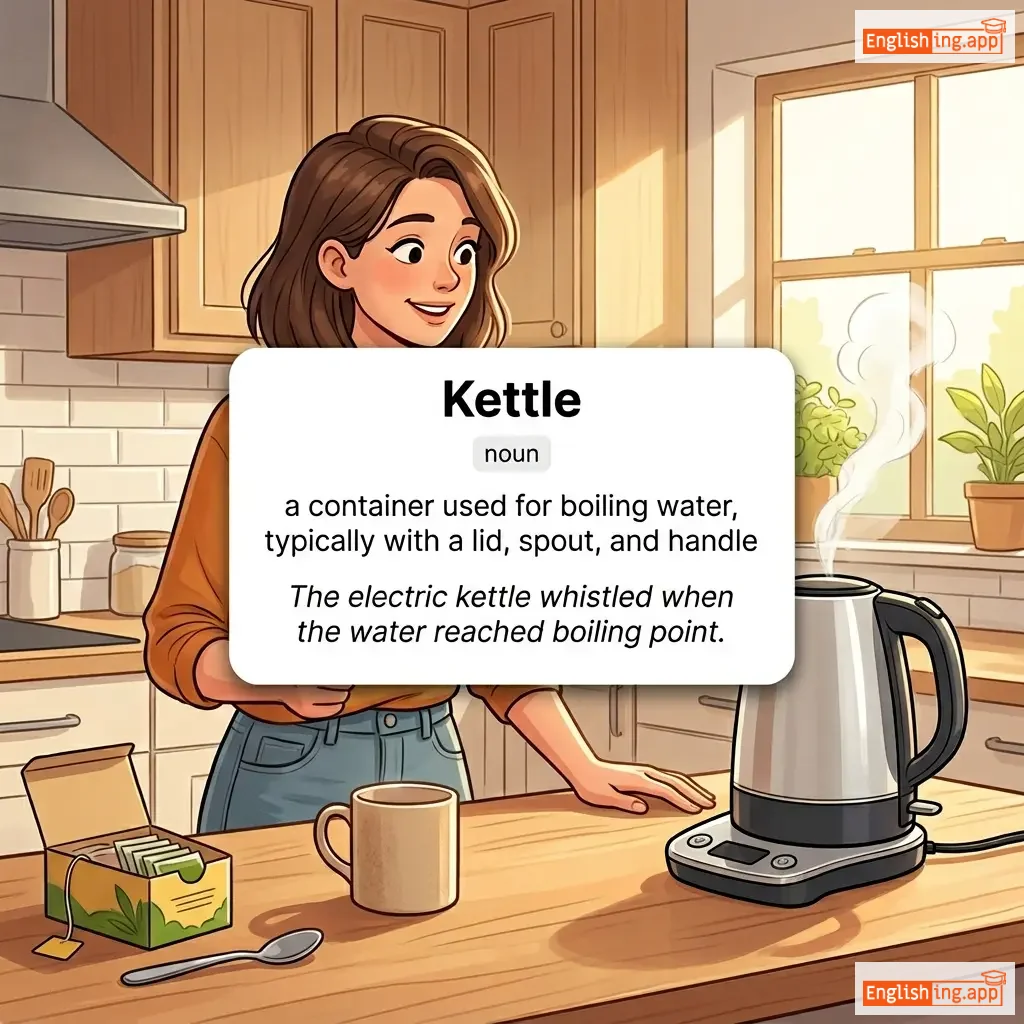
Kettle definition card — visual illustration of the meaning
noun
/ˈket.əl/
水壶 (shuǐ hú)

a container with a lid, spout, and handle, used for boiling water

"The kettle is boiling on the stove."

"水壶正在炉子上沸腾。" (Shuǐ hú zhèngzài lúzi shàng fèiténg.)
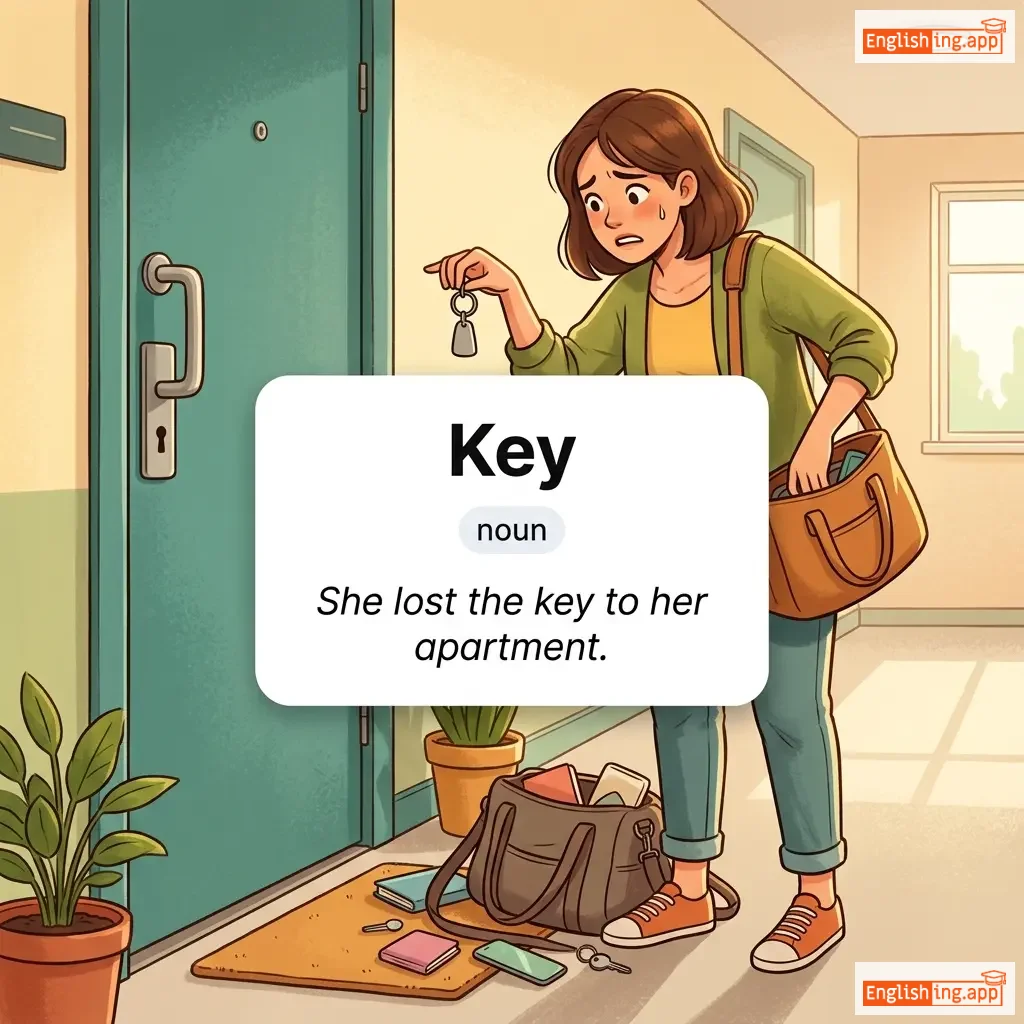
Key definition card — visual illustration of the meaning
noun
/kiː/
钥匙 (yaoshi)

A small piece of shaped metal used to open or close locks, or something crucial and essential.

"She lost the key to her apartment."

"她丢失了她公寓的钥匙。" (Ta diushi le ta gongyu de yaoshi.)
noun
/ˈkiːbɔːrd/
键盘 (jianpan)

a set of keys used to operate a computer, typewriter, or similar device for inputting text and commands

"She typed the report quickly on her keyboard."
"她在键盘上快速打完了报告。" (ta zai jianpan shang kuaisu da wan le baogao)
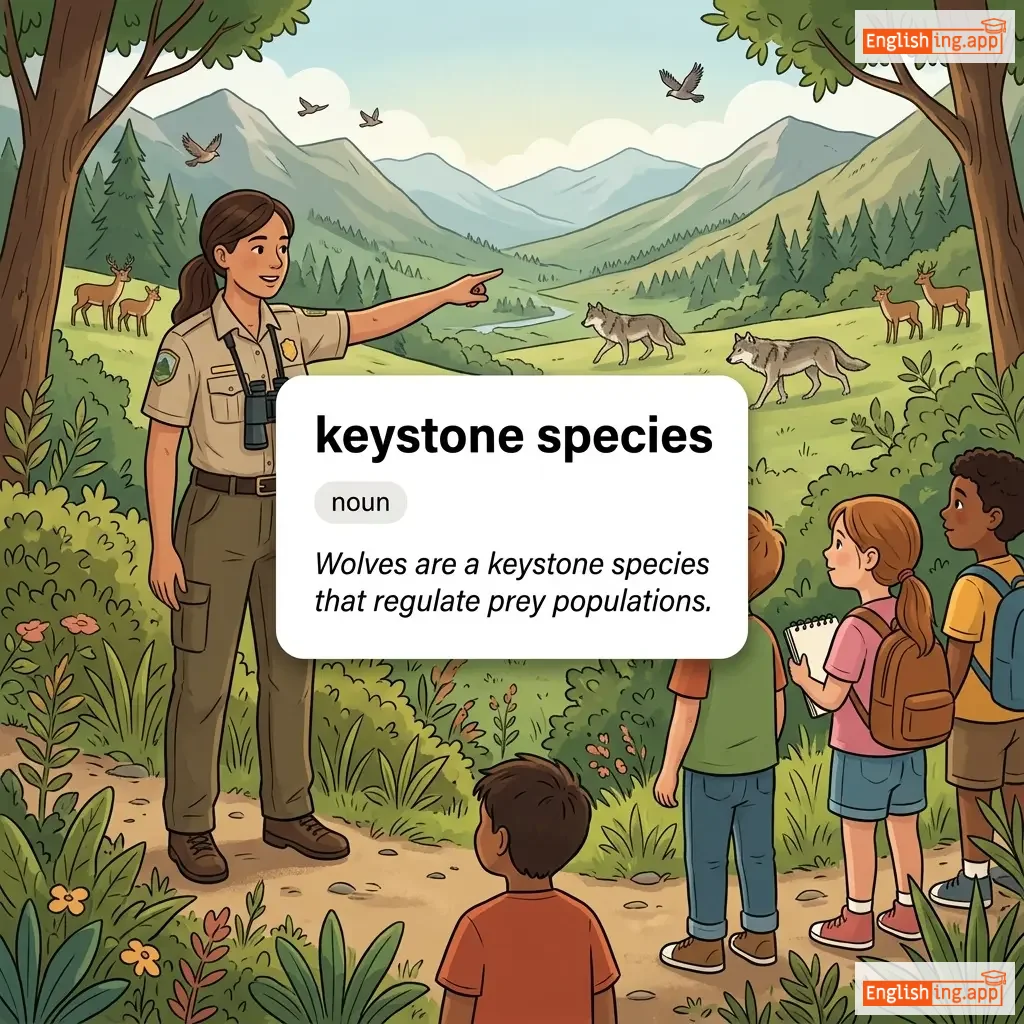
keystone species definition card — visual illustration of the meaning
noun
ˈkiː.stəʊn ˈspiː.ʃiːz
基石物种 (jī shí wù zhǒng)

A species on which other species in an ecosystem largely depend, such that if it were removed the ecosystem would change drastically.

"Wolves are a keystone species that regulate prey populations."
"狼是调节猎物种群的基石物种。" (Láng shì tiáojié lièwù zhǒngqún de jīshí wùzhǒng.)
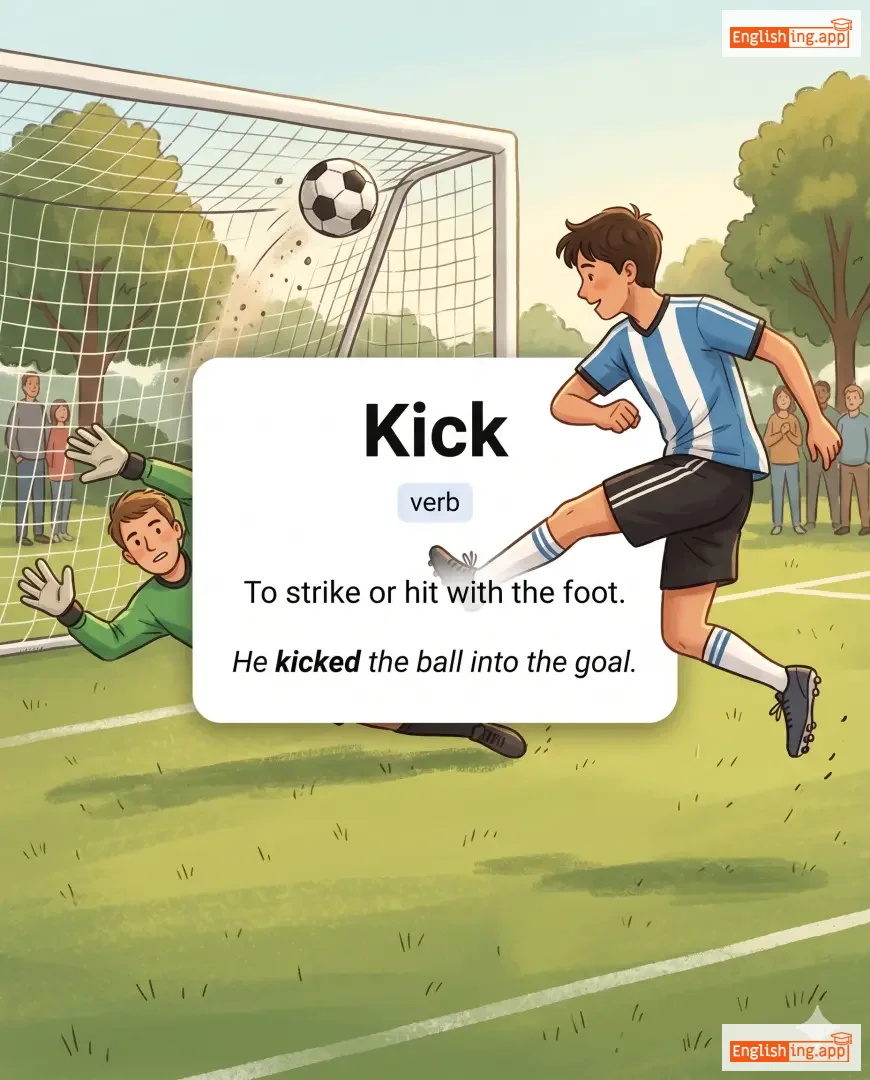
Kick definition card — visual illustration of the meaning
verb
/kɪk/
(ti)

To strike or hit with the foot.

"He kicked the ball into the goal."

"他把球踢进了球门。" (Ta ba qiu ti jinle qiumen.)
kid definition card — visual illustration of the meaning
noun
/kɪd/
孩子 (haizi)

A child or young person.

"The kid was playing in the park."

"那个孩子在公园里玩。" (Na ge haizi zai gongyuan li wan.)
kidnap definition card — visual illustration of the meaning
verb
/ˈkɪdnæp/
绑架 (bǎngjià)

to take someone away illegally by force, often for ransom

"The criminals planned to kidnap the wealthy businessman."

"罪犯计划绑架富有的商人。" (Zuìfàn jìhuà bǎngjià fùyǒu de shāngrén.)
noun
/ˈkɪdni/
肾脏 (shen zang)

a pair of organs in the body that remove waste products from the blood and balance bodily fluids

"The kidney plays a crucial role in filtering waste from the bloodstream."
"肾脏在过滤血液中的废物方面发挥着关键作用。" (Shen zang zai guo lv xue ye zhong de fei wu fang mian fa hui zhe guan jian zuo yong.)
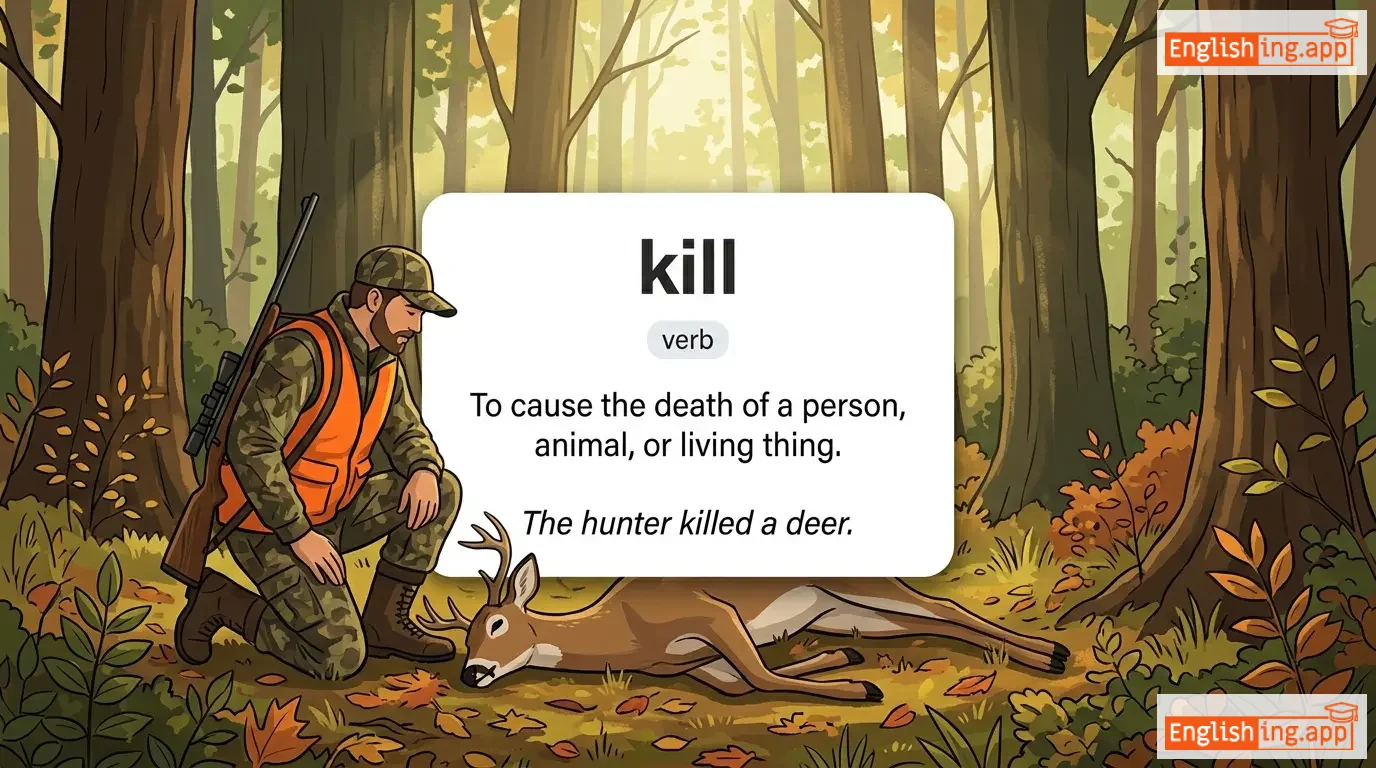
kill definition card — visual illustration of the meaning
verb
/kɪl/
(sha)

To cause the death of a person, animal, or living thing.

"The hunter killed a deer."

"猎人杀了一只鹿。" (Lie ren sha le yi zhi lu.)
noun
/ˈkɪlər/
杀手 (shāshǒu)

A person or thing that kills.

"The police caught the killer last night."

"警察昨晚抓住了杀手。" (Jǐngchá zuówǎn zhuā zhù le shāshǒu.)
noun
/ˈkɪlɪŋ/
谋杀 (móushā)

the act of causing death, especially deliberately

"The movie depicts the brutal killing of the villagers."

"电影描绘了村民的残忍谋杀。" (Diànyǐng miáohuìle cūnmín de cánrěn móushā.)
noun
/ˈkɪldʒɔɪ/
扫兴的人 (sǎo xìng de rén)

a person who spoils the fun or enjoyment of others

"Don’t be a killjoy at the party."

"别在派对上当扫兴的人。" (Bié zài pàiduì shàng dāng sǎo xìng de rén.)
noun
/kɪln/
窑炉 (yao lu)

a furnace or oven for burning, baking, or drying, especially one for firing pottery or bricks

"The potter placed the clay pots into the kiln for firing."

"陶工将泥土罐放入窑炉中烧制。" (Táo gōng jiāng nítǔ guàn fàng rù yáo lú zhōng shāo zhì.)
noun
/ˈkɪləɡræm/
千克 (qianke)

the base unit of mass in the metric system equal to 1,000 grams

"The bag of rice weighs five kilograms."

"这袋米重五千克。" (zhe dai mi zhong wu qianke)
noun
/ˈkɪləˌliːtər/
千升 (qian sheng)

a unit of capacity equal to 1,000 liters

"The tank can hold up to three kiloliters of water."

"水箱最多可容纳三千升水。" (Shuǐxiāng zuìduō kě róngnà sān qiān shēng shuǐ.)
noun
/kɪˈlɒmɪtər/ or /ˈkɪləˌmiːtər/
千米 (qian mi)

a unit of length equal to 1,000 meters

"The village is about five kilometers away from the town."

"这个村庄离城镇大约五千米远。" (Zhège cūnzhuāng lí chéngzhèn dàyuē wǔ qiān mǐ yuǎn.)
noun
/ˈkɪləˌwɒt/
千瓦 (qianwa)

a unit of power equal to 1,000 watts

"The generator produces ten kilowatts of electricity."

"发电机产生十千瓦的电力。" (Fādiànjī chǎnshēng shí qiānwǎ de diànlì.)
noun
/naɪt/
幸福 (xìngfú)

A man awarded a non-hereditary title by a monarch for service, especially in the past as a mounted soldier in armor.

"The brave knight rode into battle to protect his kingdom."

"当她收到奖项时,她无法掩饰自己的幸福。" (Dāng tā shōu dào jiǎngxiàng shí, tā wúfǎ yǎnshì zìjǐ de xìngfú.)
noun
/ˈkiː.wi/
奇异果 (qiyi guo)

a small brown fruit with green flesh and black seeds; a flightless bird from New Zealand

"I love eating fresh kiwi for breakfast."

"我喜欢早餐吃新鲜的奇异果。" (Wǒ xǐhuān zǎocān chī xīnxiān de qíyì guǒ.)
noun
/ˌklɛptəˈmeɪniæk/
有不可抗拒的偷窃冲动的人 (yǒu bù kě kàng jù de tōu qiè chōng dòng de rén)

A person with an irresistible urge to steal, typically without need or profit.

"The kleptomaniac was caught shoplifting again."

"这个窃盗狂又一次在商店偷东西时被抓住了。" (Zhège qièdào kuáng yòu yīcì zài shāngdiàn tōu dōngxī shí bèi zhuāzhùle.)
noun
/næk/
天赋 (tianfu)

a natural skill or ability; a special talent for doing something easily

"She has a knack for making people feel comfortable."

"她有一种让人们感到舒适的天赋。" (Tā yǒu yī zhǒng ràng rénmen gǎndào shūshì de tiānfù.)
adjective (informal, British)
/ˈnæk.ərd/
非常疲惫 (fei chang pi bei)

Extremely tired or exhausted.

"After the long hike, I was completely knackered."

"长途跋涉后,我完全筋疲力尽。" (Chang tu ba she hou, wo wanquan jin pi li jin.)
noun
/neɪv/
坏人 (huairen)

an unprincipled, deceitful, or dishonest man; an old term for a servant or male of low status

"The cunning knave tricked the villagers out of their money."

"那个狡猾的坏人骗取了村民的钱。" (Nage jiaohua de huairen pianqule cunmin de qian.)
noun
/ˈneɪvəri/
欺诈 (qīzhà)

dishonest or deceitful behavior; trickery

"The politician’s knavery was exposed by the media."

"政治家的欺诈被媒体揭露了。" (Zhèngzhìjiā de qīzhà bèi méitǐ jiēlù le.)
verb
/niːd/
揉捏 (róu niē)

to work dough or clay into a uniform mixture by pressing, folding, and stretching

"She kneads the dough until it becomes smooth."

"她把面团揉到光滑为止。" (Tā bǎ miàntuán róu dào guānghuá wéizhǐ.)
noun
/niː/
幸福 (xìngfú)

the joint between the thigh and the lower leg

"He hurt his knee while playing football."

"她收到奖项时无法掩饰自己的幸福。" (Tā shōu dào jiǎngxiàng shí wúfǎ yǎnshì zìjǐ de xìngfú.)
kneel definition card — visual illustration of the meaning
verb
/niːl/
跪下 (guì xià)

to position the body by resting on the knees, usually as a sign of respect, prayer, or submission

"They knelt to pray in the temple."

"他们在寺庙里跪下来祈祷。" (Tāmen zài sìmiào lǐ guì xià lái qídǎo.)
noun
/nɛl/
丧钟 (sàng zhōng)

The sound of a bell, especially when rung solemnly for a death or funeral; a signal of the end or failure of something.

"The knell of the church bell echoed through the valley at dusk."

"教堂的丧钟在黄昏时分回荡在山谷中。" (Jiàotáng de sàngzhōng zài huánghūn shífēn huídàng zài shāngǔ zhōng.)
noun
/ˈnɪk.næk/
幸福 (xìngfú)

A small decorative object, especially in a house.

"The shelf was full of little knickknacks collected from their travels."
"当她收到奖项时,她无法隐藏自己的幸福。" (Dāng tā shōudào jiǎngxiàng shí, tā wúfǎ yǐncáng zìjǐ de xìngfú.)
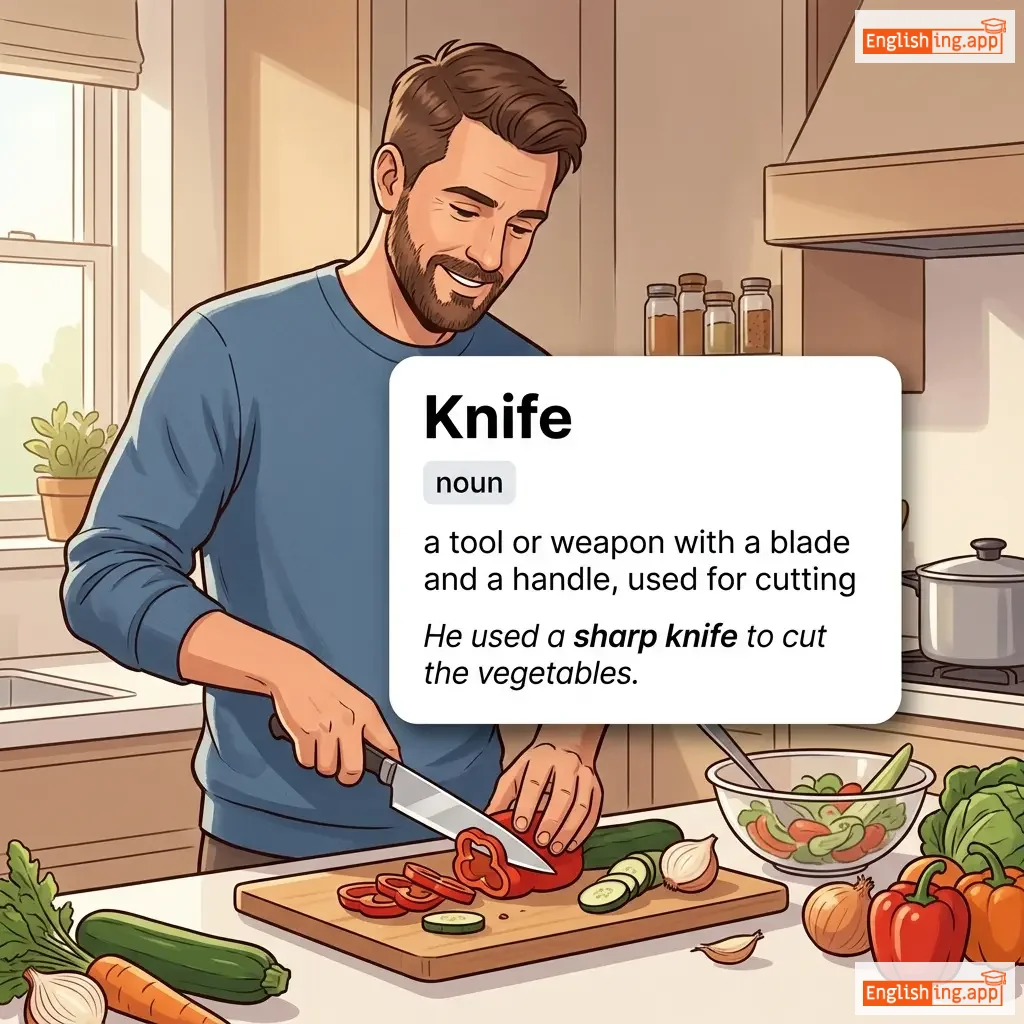
Knife definition card — visual illustration of the meaning
noun
/naɪf/
幸福 (xingfu)

a tool or weapon with a blade and a handle, used for cutting

"He used a sharp knife to cut the vegetables."
"她收到奖项时,无法隐藏她的幸福。" (Tā shōudào jiǎngxiàng shí, wúfǎ yǐncáng tā de xìngfú.)
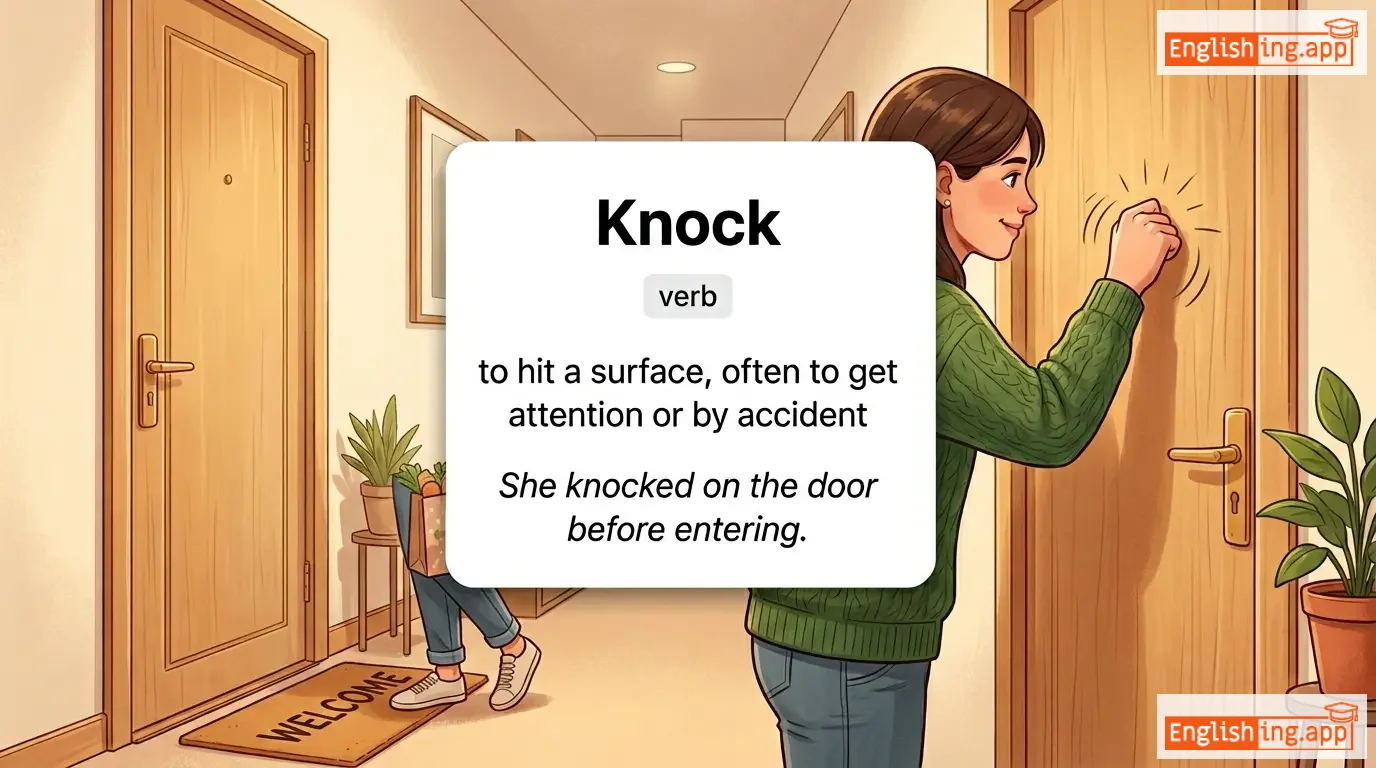
Knock definition card — visual illustration of the meaning
verb
/nɒk/
敲门 (qiao men)

to hit a surface, often to get attention or by accident

"She knocked on the door before entering."

"她在进入之前敲了敲门。" (Ta zai jinru zhiqian qiao le qiao men.)
know definition card — visual illustration of the meaning
verb
/noʊ/
知道 (zhīdào)

to have knowledge or be aware of something

"I know the answer to the question."

"我知道问题的答案。" (Wǒ zhīdào wèntí de dá'àn.)
adjective
/ˈdʒɑː.rɪŋ/
刺耳的,震惊的 (cì ěr de, zhèn jīng de)

Striking or shocking in a way that creates a strong contrast or clash.

"The sudden loud noise was jarring to everyone in the room."

"突然的响亮噪音让房间里每个人都感到震惊。" (Tū rán de xiǎng liàng zào yīn ràng fáng jiān lǐ měi ge rén dōu gǎn dào zhèn jīng.)
adjective
/ˈnɒti/
复杂 (fuza)

Complicated, difficult to solve or full of knots.

"He faced a knotty legal issue."

"他面临一个复杂的法律问题。" (Tā miànlín yīgè fùzá de fǎlǜ wèntí.)
noun
/nɒt/
(jie)

A fastening made by tying a piece of string, rope, or something similar.

"She tied the ribbon into a neat knot."

"她把丝带系成了一个整齐的结。" (Tā bǎ sīdài xì chéngle yīgè zhěngqí de jié.)
noun
/noʊl/
小丘 (xiao qiu)

A small, rounded hill or mound.

"They had a picnic on the grassy knoll."
"他们在草地上的小丘上野餐。" (tamen zai caodi shang de xiao qiu shang yecan.)
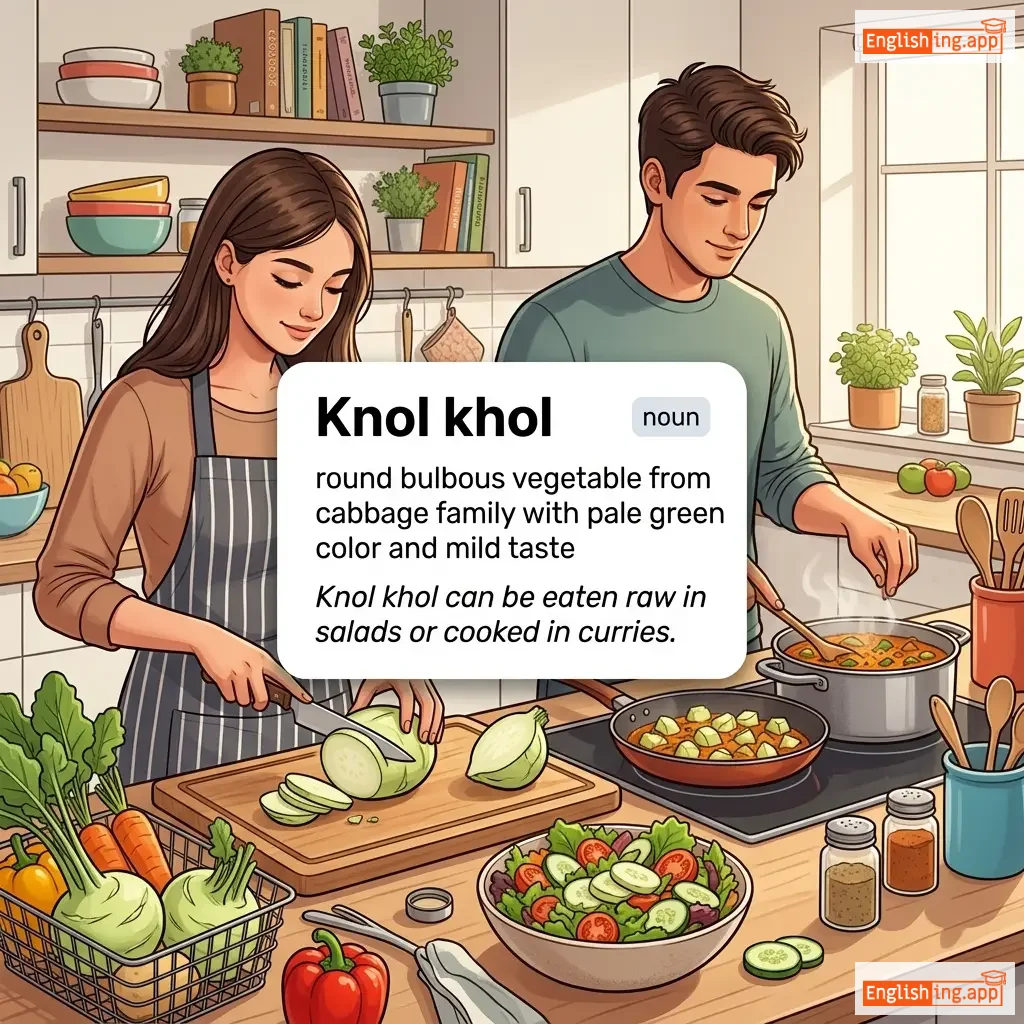
Knol khol definition card — visual illustration of the meaning
noun
/noʊl koʊl/
球茎甘蓝 (qiú jīng gān lán)

round bulbous vegetable from cabbage family with pale green color and mild taste

"Knol khol can be eaten raw in salads or cooked in curries."

"球茎甘蓝可以生吃做沙拉,也可以做成咖喱菜肴。" (qiú jīng gān lán kě yǐ shēng chī zuò shā lā, yě kě yǐ zuò chéng gā lí cài yáo)
verb
/nɪt/
编织 (bianzhi)

To make clothes or fabric by interlocking loops of yarn with needles.

"She loves to knit scarves for her friends during the winter."

"她喜欢在冬天为她的朋友编织围巾。" (Ta xihuan zai dongtian wei ta de pengyou bianzhi weijin.)
noun
/ˈnaɪt.hʊd/
骑士身份 (qishi shenfen)

The rank or dignity of a knight, or the ceremony of conferring knighthood.

"He was honored with knighthood for his contributions to science."

"由于他对科学的贡献,他被授予骑士身份。" (Yīnwèi tā duì kēxué de gòngxiàn, tā bèi shòuyǔ qíshì shēnfèn.)
adjective
/ˈnaɪt.li/
骑士般的; 高贵和勇敢 (qishi ban de; gao gui he yong gan)

having the characteristics of a knight; chivalrous; noble and brave

"He showed knightly courage in defending the innocent."
"他在保护无辜时展现了骑士般的勇气。" (Ta zai baohu wugu shi zhanshi le qishi ban de yongqi.)
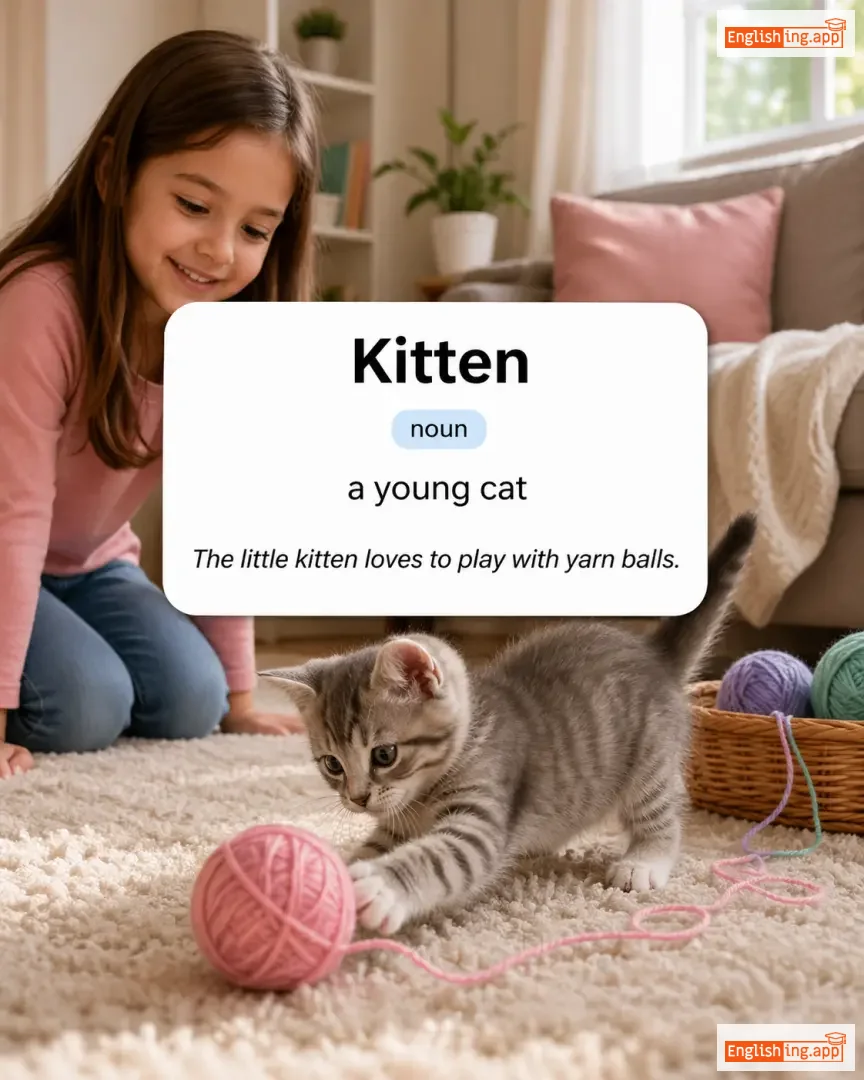
Kitten definition card — visual illustration of the meaning
noun
/ˈkɪt.ən/
小猫 (xiǎo māo)

a young cat

"The little kitten loves to play with yarn balls."

"小猫喜欢玩线球。" (xiǎo māo xǐhuān wán xiàn qiú.)
noun; gerund
/ˈnɪtɪŋ/
编织 (bianzhi)

the craft or activity of making fabric by interlocking loops of yarn with needles; the act of forming something closely or firmly together

"She spends her evenings knitting scarves for her family."

"她晚上为家人编织围巾。" (ta wanshang wei jiaren bianzhi weijin)
noun
/nɒb/
门或抽屉上的圆形把手; 机器上的小圆形开关 (mén huò chōutì shàng de yuánxíng bǎshǒu; jīqì shàng de xiǎo yuánxíng kāiguān)

a rounded handle on a door or drawer; a small rounded switch on a machine

"He turned the brass knob to open the old wooden door."

"他转动铜制的门把手,打开了那扇旧木门。" (Tā zhuǎndòng tóng zhì de mén bǎshǒu, dǎkāi le nà shàn jiù mùmén.)