词汇表

英语词汇词典 | 单词含义、定义和示例

noun
/ˈkiː.pər/
守卫者; 看护人; (shouwei zhe; kanhu ren)

a person whose job it is to guard or take care of something or someone; a goalkeeper

"The zoo keeper fed the animals every morning at eight o'clock."

"动物园管理员每天早上八点喂食动物。" (Dongwuyuan guanliyuan meitian zaoshang badi dian weishi dongwu.)
Keep definition card — visual illustration of the meaning
verb
/kiːp/
保持 (bǎochí)

To hold, retain, or continue to do something.

"She promised to keep the secret."

"她答应保持秘密。" (Tā dāyìng bǎochí mìmì.)
adjective
/kiːn/
热衷的, 渴望的 (rèzhōng de, kěwàng de)

Having or showing eagerness or enthusiasm; sharp or highly developed (for senses).

"She is very keen to learn new skills."

"她非常渴望学习新技能。" (Tā fēicháng kěwàng xuéxí xīn jìnéng.)
noun
/ˈkedʒ.ə.riː/
凯吉瑞 (kaijirui)

a European dish of cooked rice, fish, and hard-boiled eggs, originally from India

"The breakfast menu featured traditional kedgeree with smoked haddock and eggs."
"早餐菜单上有传统的凯吉瑞,配有烟熏鳕鱼和鸡蛋。" (Zǎocān càidān shàng yǒu chuántǒng de kǎijírùi, pèi yǒu yān xūn xuě yú hé jīdàn.)
Karonda definition card — visual illustration of the meaning
noun
/kəˈrɒn.də/
卡龙达果 (kalongda)

a small dark purple berry-like fruit that is sour and used in pickles

"Karonda is often used to make pickles and preserves."

"卡龙达常用于制作腌菜和果酱。" (kalongda chang yong yu zhi zuo yan cai he guo jiang)
noun
/ˈkærət/
克拉 (ke la)

A unit for measuring the purity of gold, with 24 karats being pure gold.

"The ring was made of 18-karat gold."
"戒指是由18克拉黄金制成的。" (Jièzhǐ shì yóu 18 kè lā huángjīn zhìchéng de.)
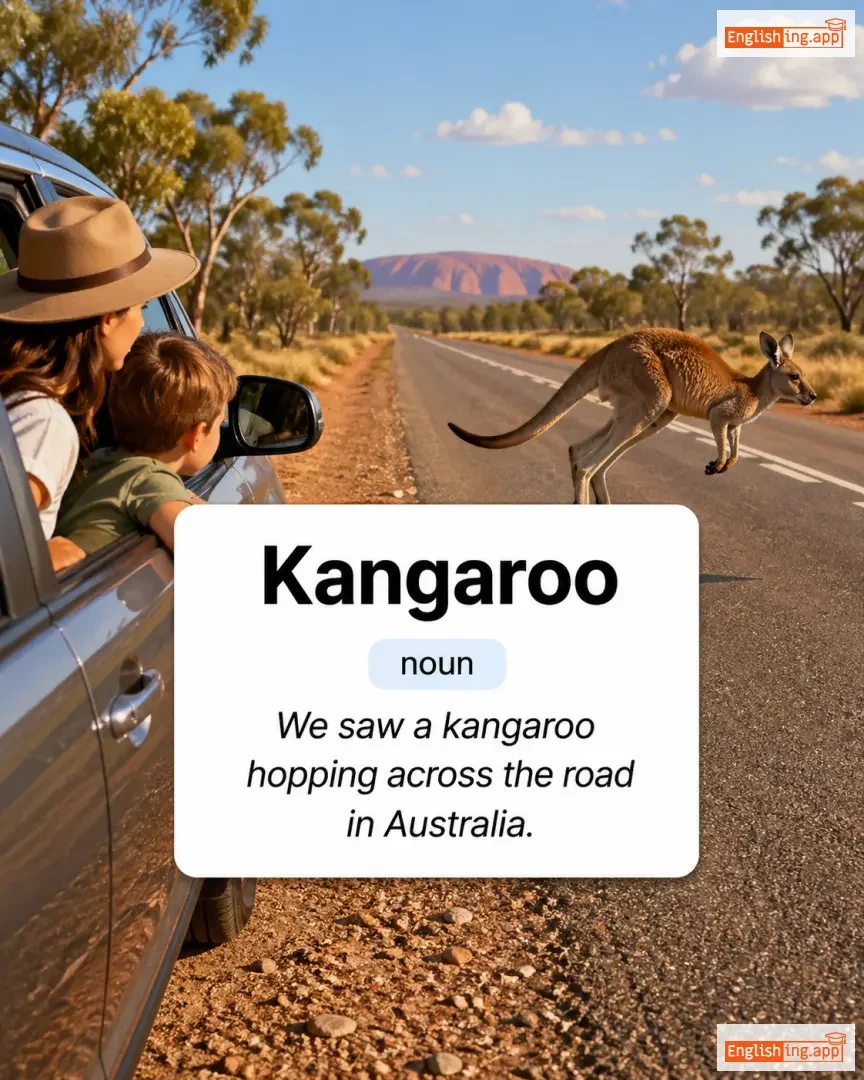
Kangaroo definition card — visual illustration of the meaning
noun
/ˌkæŋɡəˈruː/
袋鼠 (daishu)

A large Australian marsupial with powerful hind legs and a long tail, known for hopping.

"We saw a kangaroo hopping across the road in Australia."

"我们在澳大利亚看到一只袋鼠跳过了马路。" (Wo men zai Aodaliya kan dao yi zhi daishu tiaoguo le malu.)
noun
/kəˈlaɪdəˌskoʊp/
万花筒 (wànhuātǒng)

A toy or instrument with mirrors and colored pieces that create changing patterns when rotated; also used metaphorically for a constantly changing sequence of patterns or elements.

"The city lights turned into a kaleidoscope of colors as the festival began."
"当节日开始时,城市的灯光变成了色彩斑斓的万花筒。" (Dāng jiérì kāishǐ shí, chéngshì de dēngguāng biànchéngle sècǎi bānlán de wànhuātǒng.)
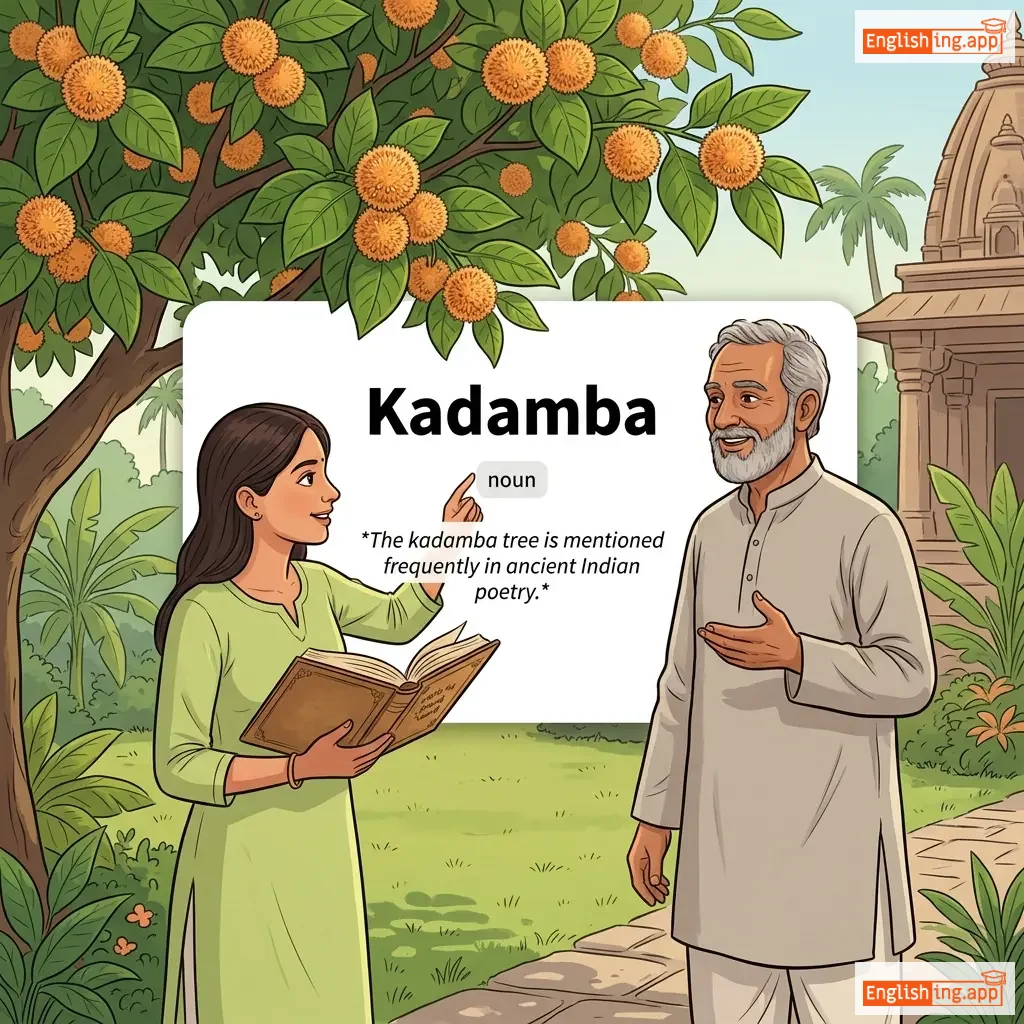
Kadamba definition card — visual illustration of the meaning
noun
/kəˈdʌm.bə/
卡丹巴树 (kadamba)

A tropical tree with round, fragrant orange flowers, sacred in Hindu culture and associated with Lord Krishna

"The kadamba tree is mentioned frequently in ancient Indian poetry."

"卡丹巴树在古印度诗歌中经常被提及。" (ka dan ba shu zai gu yindu shi ge zhong jing chang bei ti ji)
noun
/kəˈbɑːdi/
废品收购者 (feipin shougouzhe)

a person who collects and sells scrap or recyclable materials, especially in South Asia

"The kabadi came every week to collect old newspapers and bottles."
"废品收购者来收集旧物品。" (feipin shougouzhe lai shouji jiu wupin)
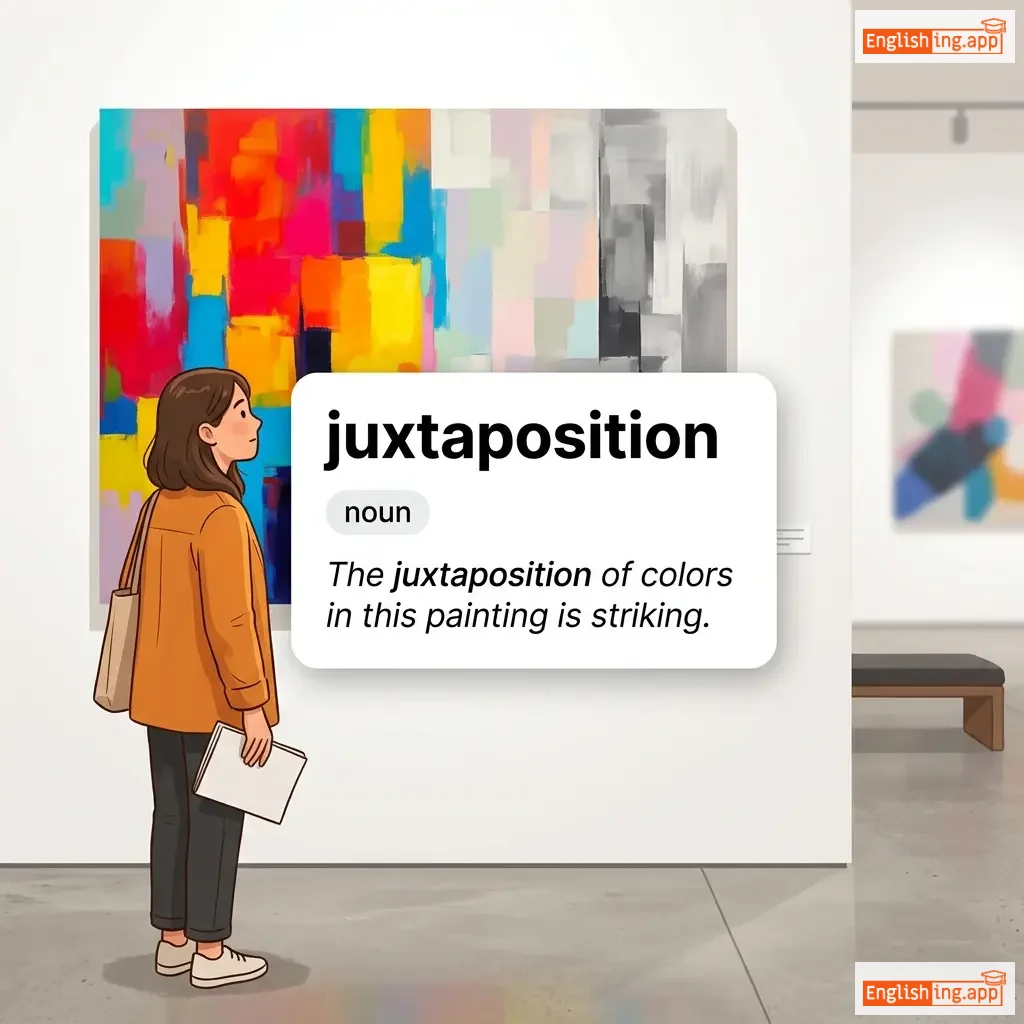
juxtaposition definition card — visual illustration of the meaning
noun
/ˌdʒʌk.stə.pəˈzɪʃ.ən/
并列 (bìngliè)

The fact of two things being seen or placed close together with contrasting effect.

"The juxtaposition of colors in this painting is striking."
"这幅画中的色彩并列效果非常显眼。" (Zhè fú huà zhōng de sècǎi bìngliè xiàoguǒ fēicháng xiǎn yǎn.)
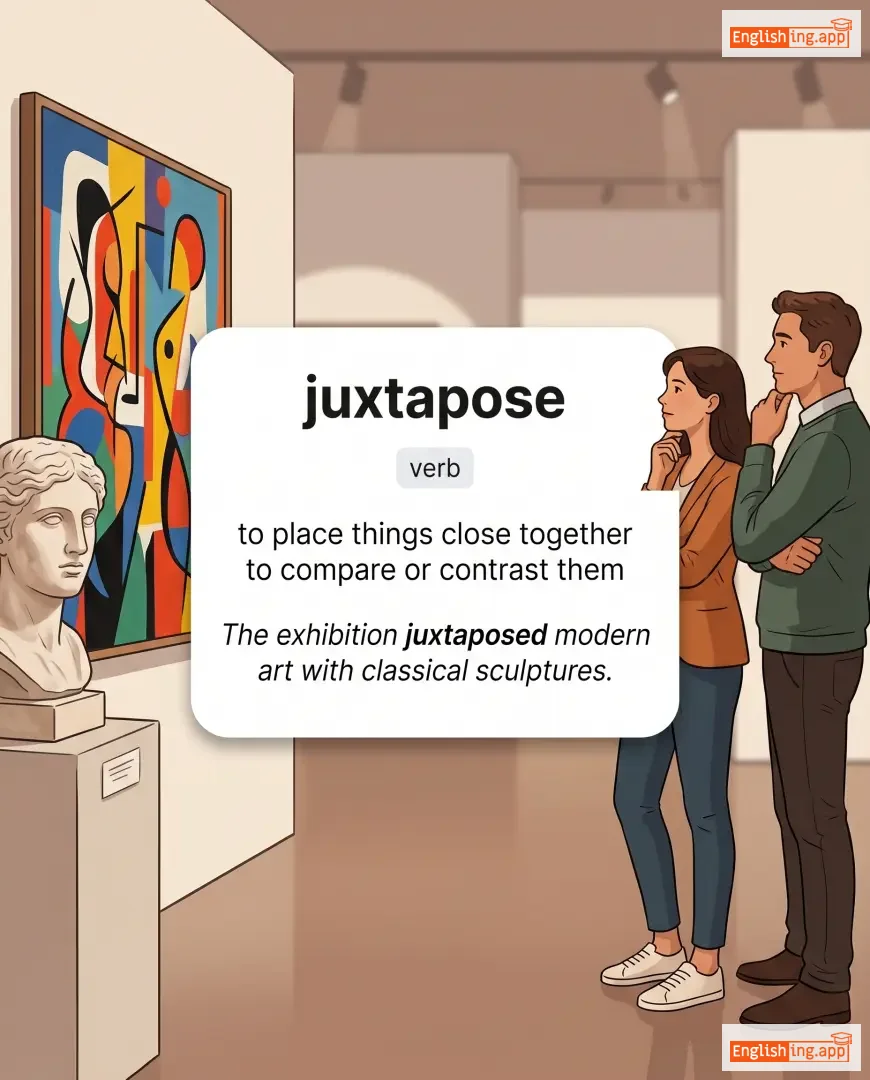
juxtapose definition card — visual illustration of the meaning
verb
/ˈdʒʌkstəˌpoʊz/
将事物放在一起进行比较或对比 (jiang shiwu fang zai yiqi jinxing bijiao huo duibi)

to place things close together to compare or contrast them

"The exhibition juxtaposed modern art with classical sculptures."

"展览将现代艺术与古典雕塑对比展示。" (Zhanlan jiang xiandai yishu yu gudian diaosu duibi zhanshi.)
adjective, noun
/ˈdʒuːvənaɪl/
青少年 (qīngshàonián)

relating to young people; childish or immature

"The court sent the case to a juvenile detention center."
"法院将此案送至青少年拘留中心。" (fǎyuàn jiāng cǐ'àn sòng zhì qīngshàonián jūliú zhōngxīn.)
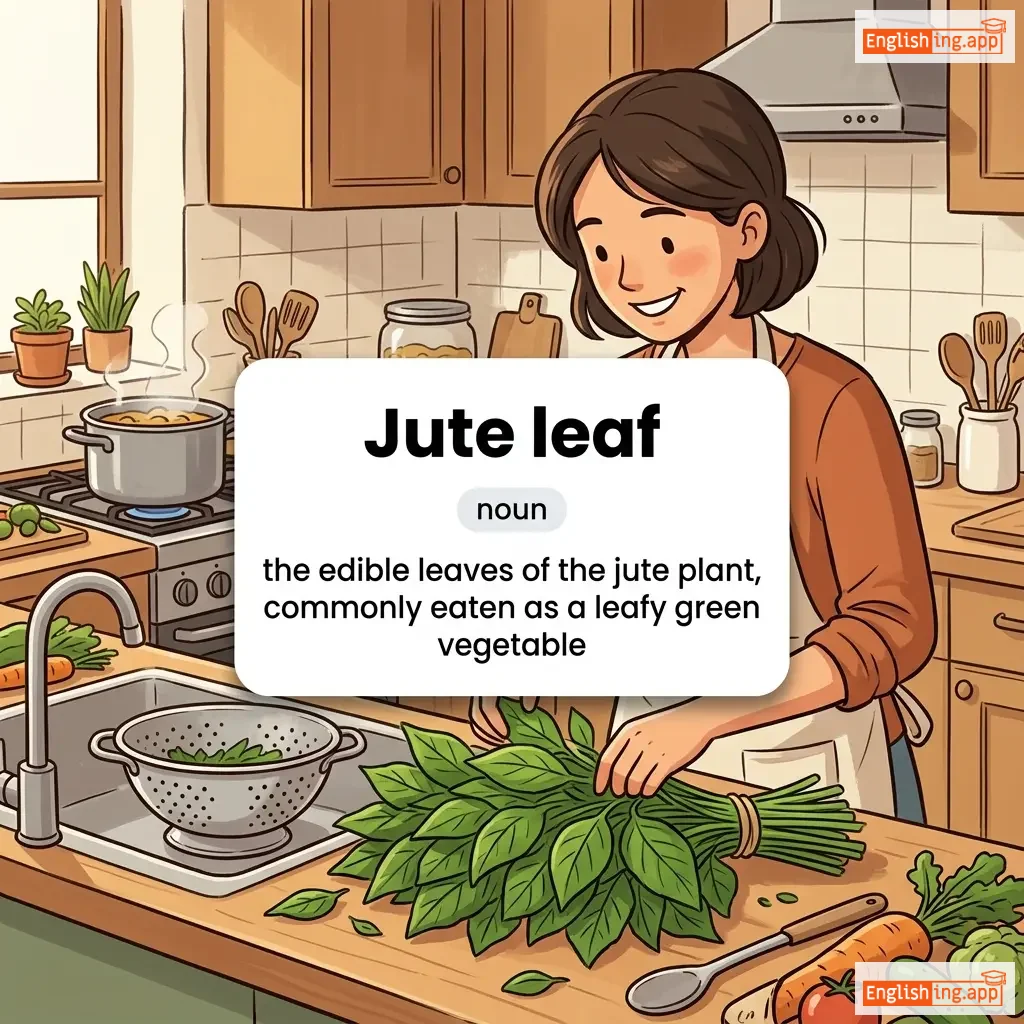
Jute leaf definition card — visual illustration of the meaning
noun
/dʒuːt liːf/
黄麻叶 (joot leef)

the edible leaves of the jute plant, commonly eaten as a leafy green vegetable

"Jute leaf is rich in vitamins and minerals and is often cooked with lentils in Bengali cuisine."

"黄麻叶富含维生素和矿物质,常在孟加拉美食中与扁豆一起煮。" (huang ma ye fu han wei sheng su he kuang wu zhi zai meng jia la mei shi zhong chang yu bian dou yi qi zhu)
noun
/dʒuːt/
黄麻 (huangma)

a long, soft, shiny plant fiber used to make rope, bags, sacks, and coarse cloth

"Jute is widely used to make eco-friendly bags and ropes."

"黄麻常用于制作环保袋。" (huangma chang yongyu zhizuo huanbao dai)
justify definition card — visual illustration of the meaning
verb
/ˈdʒʌstɪfaɪ/
辩护 (bianhu)

to show or prove that something is right or reasonable

"He tried to justify his decision with logical reasons."

"他试图用逻辑的理由来为他的决定辩护。" (Ta shitu yong luojide liyou lai wei tade jueding bianhu.)
noun
/ˌdʒʌstɪfɪˈkeɪʃən/
辩解 (biànjiě)

a reason, explanation, or excuse that shows something is right or reasonable

"There is no justification for such rude behavior."
"对这种粗鲁行为没有辩解。" (duì zhè zhǒng cūlǔ xíngwéi méiyǒu biànjiě)
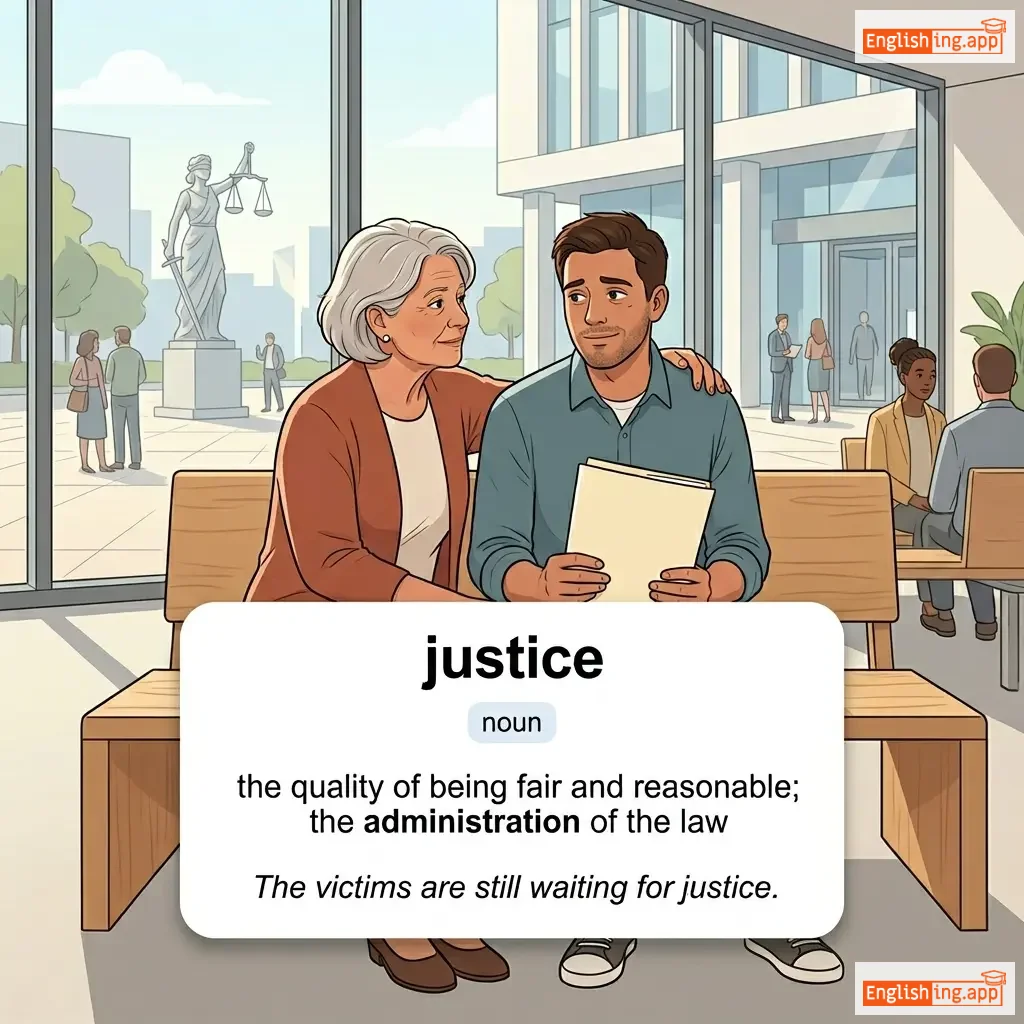
justice definition card — visual illustration of the meaning
noun
/ˈdʒʌstɪs/
正义 (zhèngyì)

the quality of being fair and reasonable; the administration of the law

"The victims are still waiting for justice."

"受害者仍在等待正义。" (Shòuhài zhě réng zài děngdài zhèngyì.)
adverb/adjective
/dʒʌst/
正好,仅仅,或公正和道德上正确 (zhèng hǎo, jǐn jǐn, huò gōng zhèng hé dào dé shàng zhèng què)

Exactly, only, or fair and morally right.

"She arrived just in time for the meeting."

"她刚好准时到达会议。" (Tā gānghǎo zhǔnshí dàodá huìyì.)
noun
/ˈdʒʊəri/
陪审团 (peishentuan)

a group of people sworn to give a verdict in a legal case based on the evidence

"The jury found him guilty of the crime."

"陪审团裁定他犯有罪行。" (Peishentuan caiding ta fan you zuixing.)
noun
/ˈdʒʊərər/
陪审员 (peishenyuan)

a member of a jury who is chosen to hear evidence in a legal case and help make a decision

"The juror listened carefully to the witness’s testimony."
"陪审员仔细听取了证人的证词。" (Peishenyuan zixi tingqu le zhengren de zhengci.)
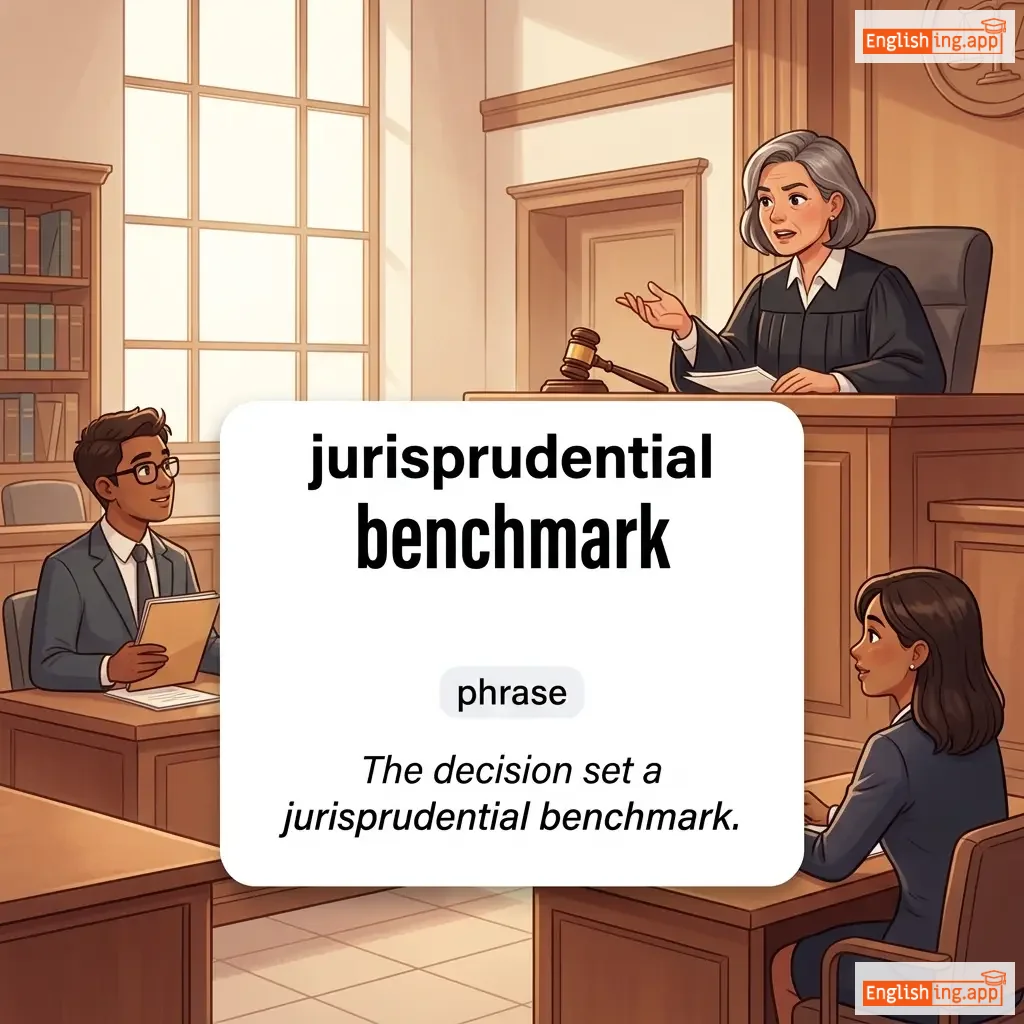
jurisprudential benchmark definition card — visual illustration of the meaning
phrase
ˌdʒʊə.rɪs.pruːˈden.ʃəl ˈbentʃ.mɑːk
法律标准 (falü biao zhun)

A legal standard or precedent that serves as a reference point for future legal decisions.

"The decision set a jurisprudential benchmark."

"这个决定设立了一个法律标准。" (Zhège juédìng shèlìle yīgè fǎlǜ biāozhǔn.)
noun
/ˌdʒʊərɪsˈpruːdəns/
法学 (faxue)

The theory, philosophy, or science of law.

"She is a professor of jurisprudence at the university."

"她是大学里的法学教授。" (Ta shi daxue li de faxue jiaoshou.)
noun
/ˌdʒʊərɪsˈdɪkʃən/
司法管辖权 (sīfǎ guǎnxiáquán)

The official power to make legal decisions and judgments.

"The court has jurisdiction over criminal cases."

"法院对刑事案件有司法管辖权。" (Fǎyuàn duì xíngshì ànjiàn yǒu sīfǎ guǎnxiáquán.)
adjective
/dʒʊˈrɪdɪkəl/
司法的 (sīfǎ de)

Relating to judicial proceedings or the administration of law.

"The case raised important juridical questions."

"此案件提出了重要的司法问题。" (Cǐ ànjiàn tíchūle zhòngyào de sīfǎ wèntí.)
noun
/ˈdʒɪŋɡoʊɪst/
极端民族主义者 (jíduān mínzú zhǔyì zhě)

a person who supports jingoism; an extreme nationalist with aggressive foreign policies

"He was labeled a jingoist for his extreme views."

"由于他的极端观点,他被贴上了极端民族主义者的标签。" (Yóuyú tā de jíduān guāndiǎn, tā bèi tiē shàng le jíduān mínzú zhǔyì zhě de biāoqiān.)
noun
/ˈdʒet.i/
码头 (matou)

a landing stage or small pier at which boats can dock or be moored

"The fishing boats were tied up at the wooden jetty near the harbor."
"渔船停靠在靠近港口的木质码头。" (Yuchuan tingkao zai kaojin gangkou de mu zhi matou.)
noun
/dʒuː/
犹太人 (yóu tài rén)

a person whose religion is Judaism or who is of Jewish descent

"He is a Jew by heritage and follows Jewish customs."

"他是犹太人,继承了犹太传统并遵守犹太习俗。" (Tā shì yóu tài rén, jì chéng le yóu tài chuántǒng bìng zūn shǒu yóu tài xí sú.)
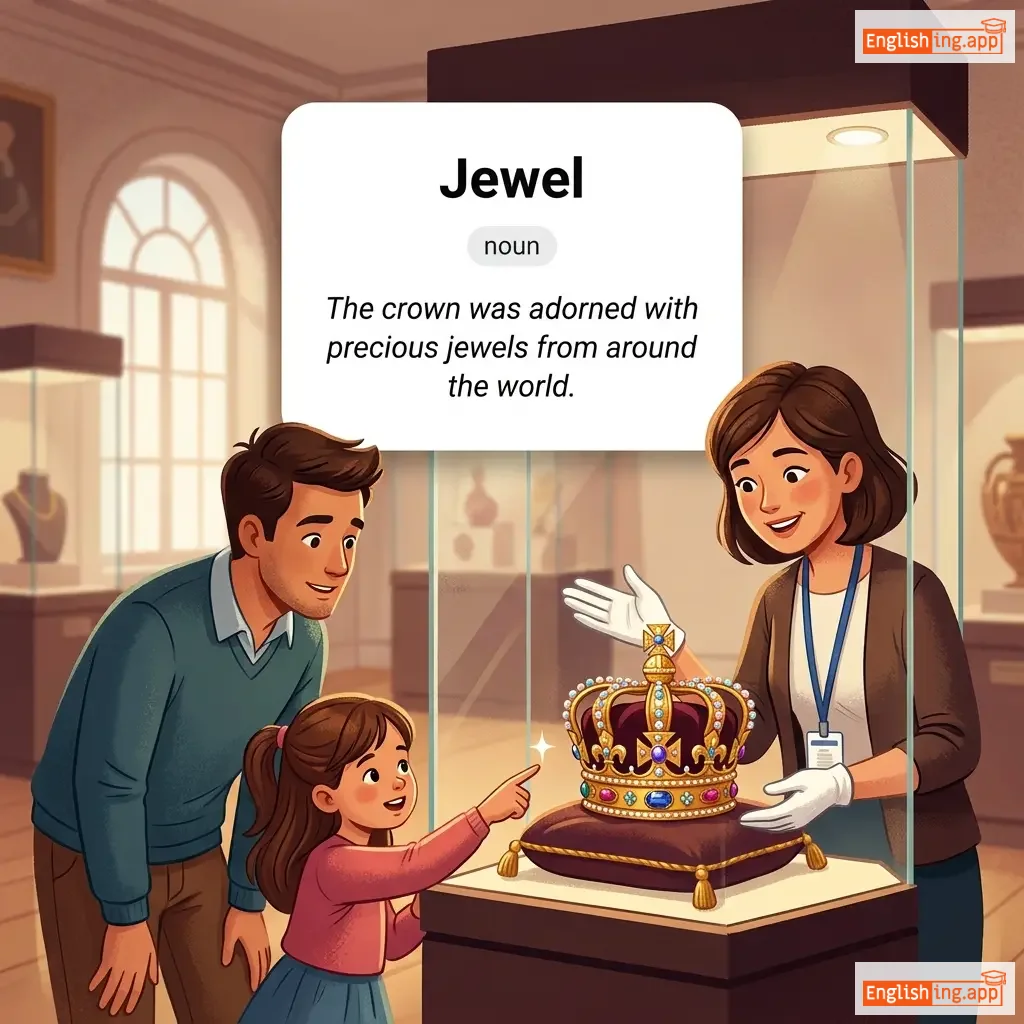
Jewel definition card — visual illustration of the meaning
noun
/ˈdʒuː.əl/
宝石 (baoshi)

a precious stone or a piece of jewelry containing precious stones

"The ancient treasure chest contained many rare jewels."

"古老的宝藏箱里包含了许多稀有的宝石。" (Gǔlǎo de bǎocáng xiāng lǐ bāohánle xǔduō xīyǒu de bǎoshí.)
noun
/ˈdʒuːələr/
珠宝商 (zhubao shang)

a person who makes, repairs, or sells jewelry

"The jeweller crafted a beautiful gold ring."

"这位珠宝商制作了一枚漂亮的金戒指。" (Zhe wei zhubao shang zhizuo le yi mei piaoliang de jin jiezhi)
noun
/ˈdʒuːəlri/
珠宝 (zhubao)

ornamental items worn for personal adornment, such as rings, necklaces, or bracelets, often made of precious metals or stones

"She wore beautiful jewellery to the wedding."

"她在婚礼上戴了漂亮的珠宝。" (ta zai hunli shang dai le piaoliang de zhubao)
noun
/ˈdʒuːəlri/
珠宝 (zhūbǎo)

personal ornaments such as necklaces, rings, or bracelets that are typically made from precious metals and stones

"She wore gold jewelry at the wedding."

"她在婚礼上戴了金饰。" (Tā zài hūnlǐ shàng dàile jīnshì.)
adjective
/ˈdʒuːɪʃ/
幸福 (xìng fú)

relating to Jews or Judaism

"They celebrate Jewish festivals every year."

"她收到奖项时无法掩饰她的幸福。" (Tā shōudào jiǎngxiàng shí wúfǎ yǎnshì tā de xìngfú.)
jibe definition card — visual illustration of the meaning
verb
/dʒaɪb/
讽刺 / 一致 (fengci / yizhi)

to make an insulting remark; to be in agreement or harmony with

"His actions did not jibe with his words."

"他的行动与他的言辞不符。" (Tā de xíngdòng yǔ tā de yáncí bù fú.)
adjective
/ˈdʒɪg.ərd/
惊讶; 震惊; (jiged)

surprised or astonished; confused or puzzled

"I'll be jiggered if I know what happened here."

"如果我知道这里发生了什么,我会感到惊讶。" (Rúguǒ wǒ zhīdào zhèlǐ fāshēngle shénme, wǒ huì gǎndào jīngyà.)
noun
/ˈdʒɪŋ.ɡəl/
轻微的金属声,通常由金属物体相互碰撞产生;一首短小而吸引人的歌曲 (qīngwéi de jīnshǔ shēng, tōngcháng yóu jīnshǔ wùtǐ xiānghù pèngzhuàng chǎnshēng; yī shǒu duǎnxiǎo ér xīyǐn rén de gēqǔ)

a light ringing sound such as that made by metal objects being shaken together; a short catchy song

"The jingle of keys could be heard as she walked down the hallway."

"当她走过走廊时,钥匙的声音可以听到。" (Dāng tā zǒu guò zǒuláng shí, yàoshi de shēngyīn kěyǐ tīngdào.)
noun
/ˈdʒɪŋɡoʊ/
好战的民族主义者 (hǎo zhàn de mínzú zhǔyì zhě)

a person who strongly supports warlike or aggressive foreign policy; an extreme nationalist

"The leader was criticized as a reckless jingo."

"领导人被批评为鲁莽的好战分子。" (Lǐngdǎo rén bèi pīpíng wéi lǔmǎng de hǎo zhàn fènzǐ.)
noun
/ˈdʒɪŋɡoʊˌɪzəm/
极端民族主义 (jíduān mínzú zhǔyì)

extreme patriotism expressed in aggressive foreign policy

"The politician's speech was filled with jingoism."

"那位政治家的演讲充满了沙文主义。" (Nà wèi zhèngzhì jiā de yǎnjiǎng chōngmǎnle shāwén zhǔyì.)
verb
/dʒɑːɡ/
慢跑 (man pao)

to run at a slow, steady pace for exercise

"She jogs every morning in the park."

"她每天早上在公园里慢跑。" (ta meitian zaoshang zai gongyuan li manpao)
noun
/ˈdʒoʊ.kər/
小丑 (xiaochou)

a playing card with a picture of a jester, used as a wild card; a person who is fond of joking

"He used the joker card to complete his winning hand in the poker game."

"他用小丑牌来完成他在扑克游戏中的赢牌。" (ta shi yong xiao chou pai lai wan cheng ta zai pu ke you xi zhong de ying pai)
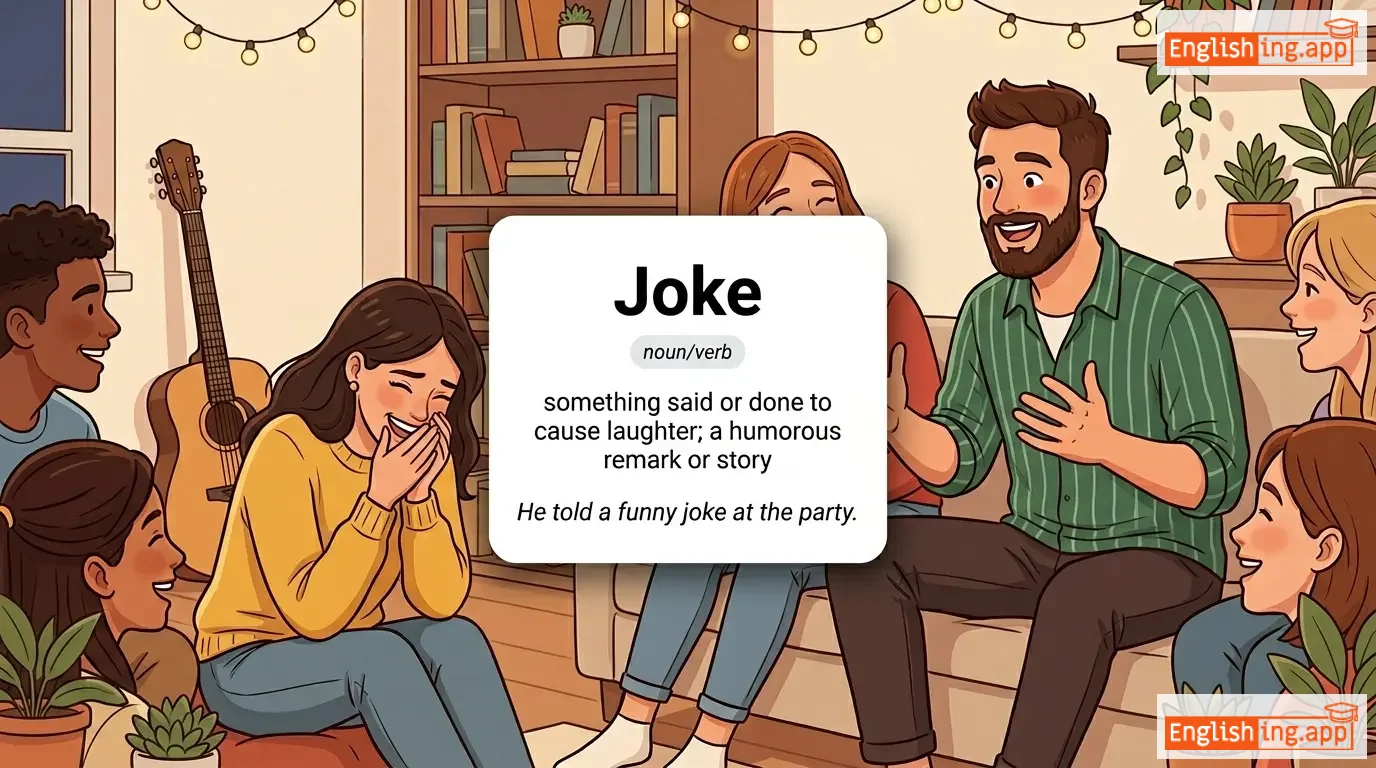
Joke definition card — visual illustration of the meaning
noun/verb
/dʒoʊk/
笑话 (xiaohua)

something said or done to cause laughter; a humorous remark or story

"He told a funny joke at the party."

"他在聚会上讲了一个有趣的笑话。" (Ta zai juhui shang jiang le yi ge youqu de xiaohua.)
Joint definition card — visual illustration of the meaning
noun
/dʒɔɪnt/
关节 (guānjié)

a place where two parts of something are joined; also a term for a business establishment or a cannabis cigarette

"The knee is a joint that connects the thigh and the leg."
"膝盖是一个连接大腿和小腿的关节。" (xīgài shì yīgè liánjiē dàtuǐ hé xiǎotuǐ de guānjié.)
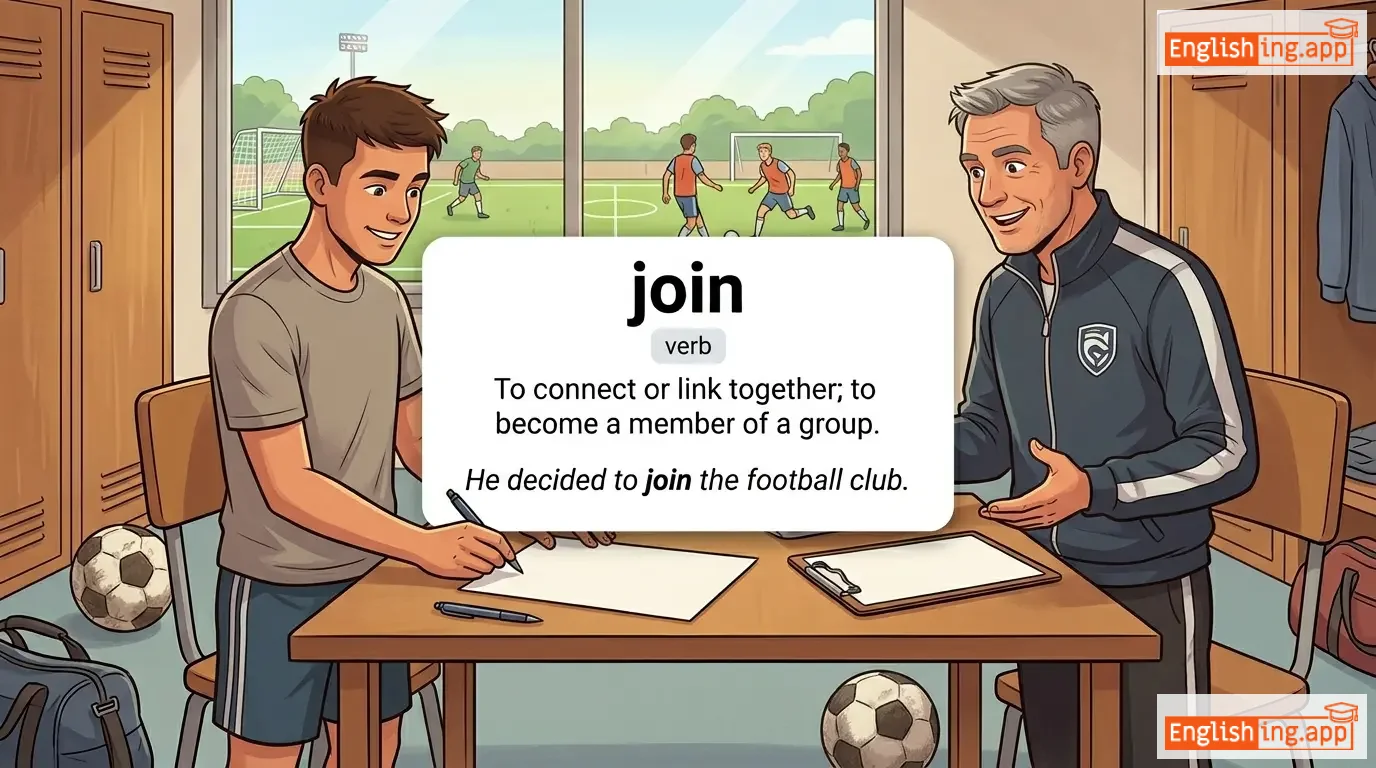
join definition card — visual illustration of the meaning
verb
/dʒɔɪn/
加入 (jiārù)

To connect or link together; to become a member of a group.

"He decided to join the football club."

"他决定加入足球俱乐部。" (Tā juédìng jiārù zúqiú jùlèbù.)
verb
/ˈdʒɒɡəl/
轻轻摇动 (qingqing yaodong)

to shake slightly; to move or cause to move with quick, small jerks

"He joggled the table and the vase nearly fell."
"他晃动了桌子,花瓶差点掉下来。" (Ta huangdong le zhuozi, huaping chadian diao xia lai.)
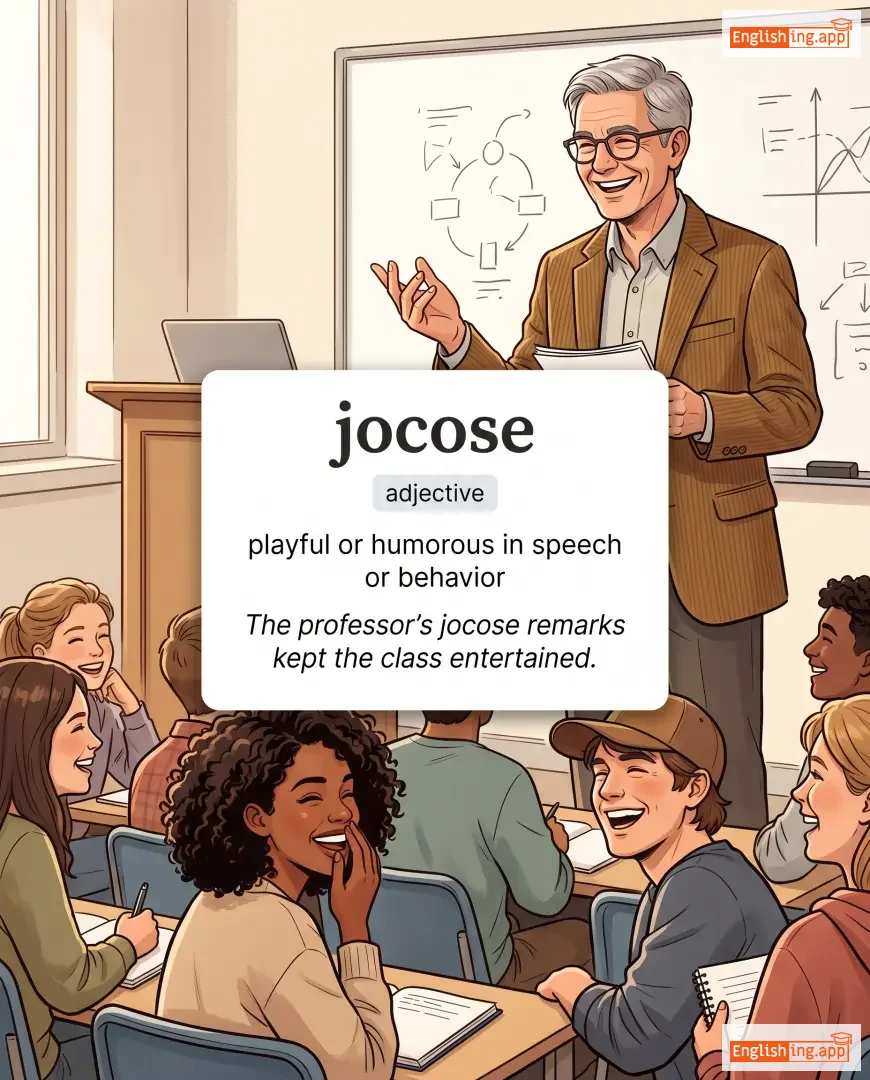
jocose definition card — visual illustration of the meaning
adjective
/dʒoʊˈkoʊs/
幽默的 (youmo de)

playful or humorous in speech or behavior

"The professor’s jocose remarks kept the class entertained."

"教授的幽默评论让班级感到娱乐。" (Jiaoshou de youmo pinglun rang banji gandao yule.)
verb
/ˈdʒɪtər/
颤抖 (chan dian)

to shake or tremble slightly, often from fear, nervousness, or excitement

"He began to jitter nervously before giving his speech."

"他在发表演讲前开始紧张地发抖。" (Ta zai fabiao yanjiang qian kaishi jinzhang de fadou.)
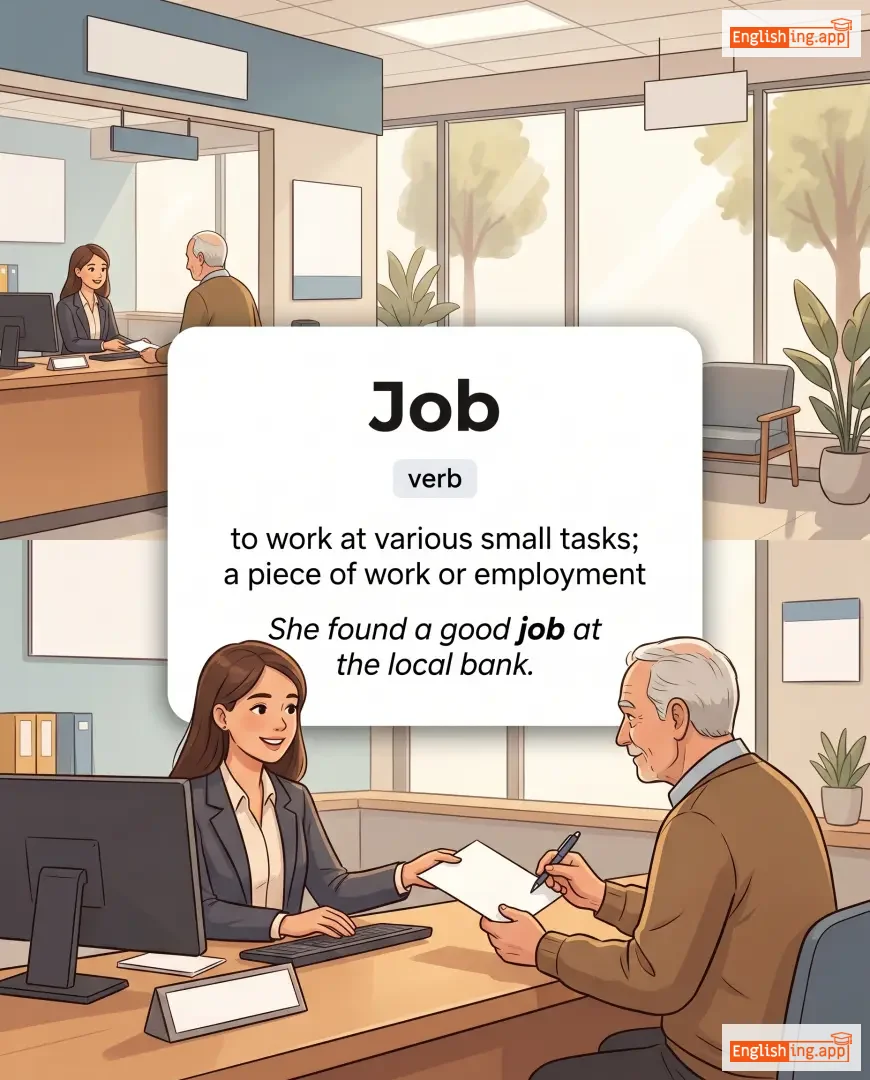
Job definition card — visual illustration of the meaning
noun
/dʒɒb/
工作 (gongzuo)

a paid position of regular employment

"She got a new job at a software company."

"她在一家软件公司找到了一份新工作。" (Ta zai yijia ruanjian gongsi zhǎodàole yī fèn xīn gōngzuò.)
/ˈdʒɛtɪsən/
抛弃 (pāoqì)

to throw or drop something from a ship, aircraft, or vehicle to lighten the load; to abandon something no longer wanted

"The crew had to jettison cargo to save the sinking ship."

"船员们不得不抛弃货物,以挽救沉船。" (chuányuán men bùdé bù pāoqì huòwù, yǐ wǎnjiù chénchuán.)
adjective
/ˈdʒɒkjələr/
爱开玩笑的 (ài kāi wánxiào de)

fond of or characterized by joking; humorous

"His jocular nature made him popular among colleagues."

"他爱开玩笑的性格让他在同事中很受欢迎。" (Tā ài kāi wánxiào de xìnggé ràng tā zài tóngshì zhōng hěn shòu huānyíng.)
adjective
/ˈdʒɒkənd/
愉快 (yukai)

cheerful and lighthearted

"They walked together in a jocund mood after the celebration."

"庆祝后,他们在愉快的心情下一起走着。" (Qìngzhù hòu, tāmen zài yúkuài de xīnqíng xià yīqǐ zǒuzhe.)