Словари

Словарь английского языка | Значения слов, определения и примеры

noun
/ˈkiː.pər/
страж; смотритель; (strazh; smotritel)

a person whose job it is to guard or take care of something or someone; a goalkeeper

"The zoo keeper fed the animals every morning at eight o'clock."
"Зоопарк кормил животных каждое утро в восемь часов." (Zoopark kormil zhivotnykh kazhdoe utro v vosem' chasov.)
Keep definition card — visual illustration of the meaning
verb
/kiːp/
держать (derzhat)

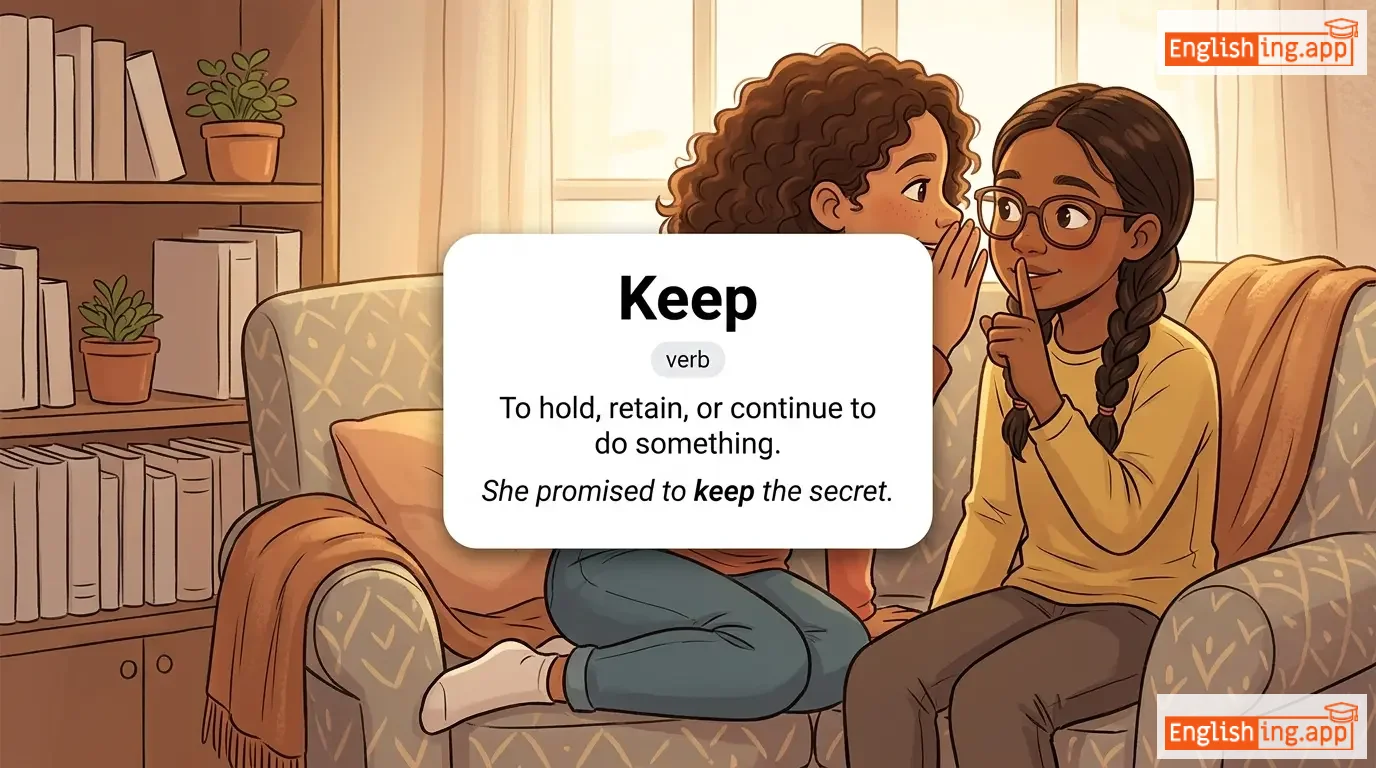
To hold, retain, or continue to do something.

"She promised to keep the secret."

"Она пообещала сохранить секрет." (Ona poobeshchala sokhranit' sekret.)
adjective
/kiːn/
увлечённый, заинтересованный (uvlechyonny, zainteressovannyy)

Having or showing eagerness or enthusiasm; sharp or highly developed (for senses).

"She is very keen to learn new skills."

"Она очень стремится изучать новые навыки." (Ona ochen' stremitsya izuchat' novye navyki.)
noun
/ˈkedʒ.ə.riː/
кеджери (kedzhery)

a European dish of cooked rice, fish, and hard-boiled eggs, originally from India

"The breakfast menu featured traditional kedgeree with smoked haddock and eggs."
"В меню завтрака было традиционное кеджери с копченым хеддоком и яйцами." (V menyu zavtraka bylo traditsionnoye kedzhery s kopchyonym heddokom i yaytsami.)
Karonda definition card — visual illustration of the meaning
noun
/kəˈrɒn.də/
каронда (karonda)

a small dark purple berry-like fruit that is sour and used in pickles

"Karonda is often used to make pickles and preserves."

"Каронда часто используется для приготовления солений и заготовок." (karonda chasto ispolzuetsya dlya prigotovleniya soleniy i zagotovok)
noun
/ˈkærət/
карат (karat)

A unit for measuring the purity of gold, with 24 karats being pure gold.

"The ring was made of 18-karat gold."
"Кольцо было сделано из золота 18 карат." (Kol'tso bylo sdelano iz zolota 18 karat.)
Kangaroo definition card — visual illustration of the meaning
noun
/ˌkæŋɡəˈruː/
кенгуру (kenguru)

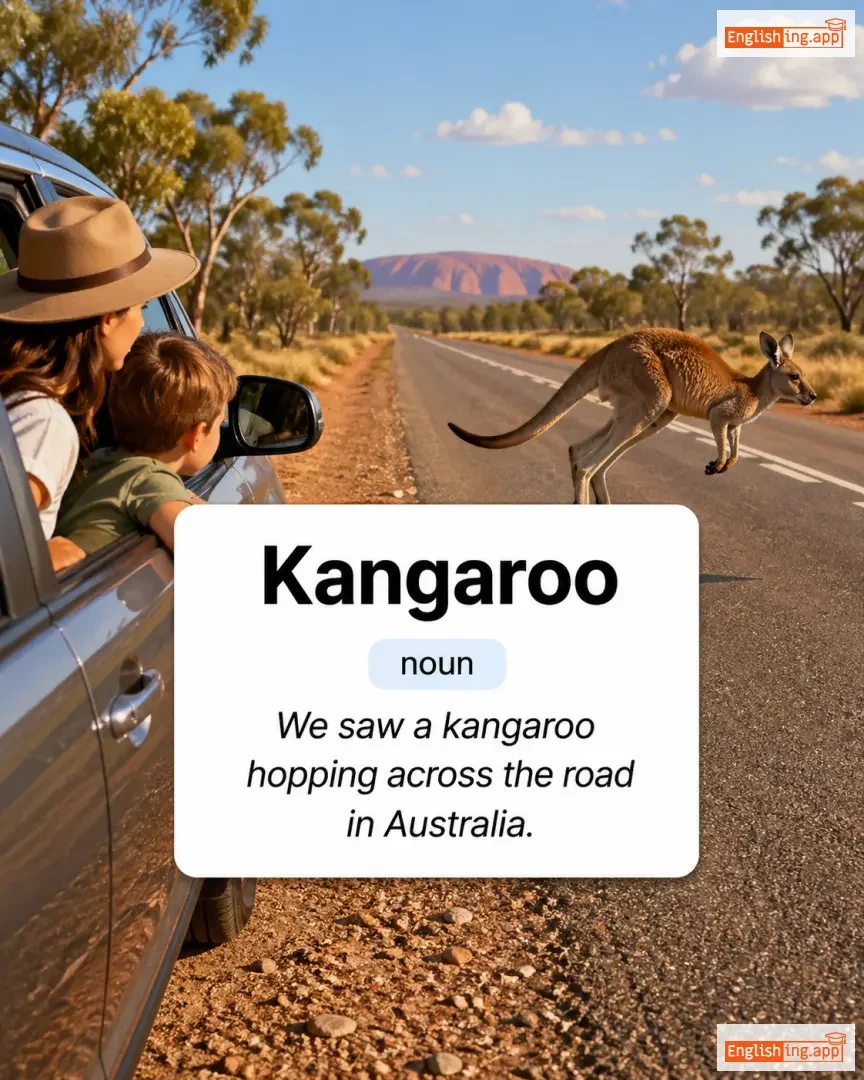
A large Australian marsupial with powerful hind legs and a long tail, known for hopping.

"We saw a kangaroo hopping across the road in Australia."

"Мы видели кенгуру, прыгающее через дорогу в Австралии." (My videli kenguru, prygayushchee cherez dorogu v Avstralii.)
noun
/kəˈlaɪdəˌskoʊp/
калейдоскоп (kaleidoskop)

A toy or instrument with mirrors and colored pieces that create changing patterns when rotated; also used metaphorically for a constantly changing sequence of patterns or elements.

"The city lights turned into a kaleidoscope of colors as the festival began."
"Огни города превратились в калейдоскоп цветов, когда начался фестиваль." (Ogni goroda prevratilis' v kaleidoskop tsvetov, kogda nachalsya festival'.)
Kadamba definition card — visual illustration of the meaning
noun
/kəˈdʌm.bə/
кадамба (kadamba)

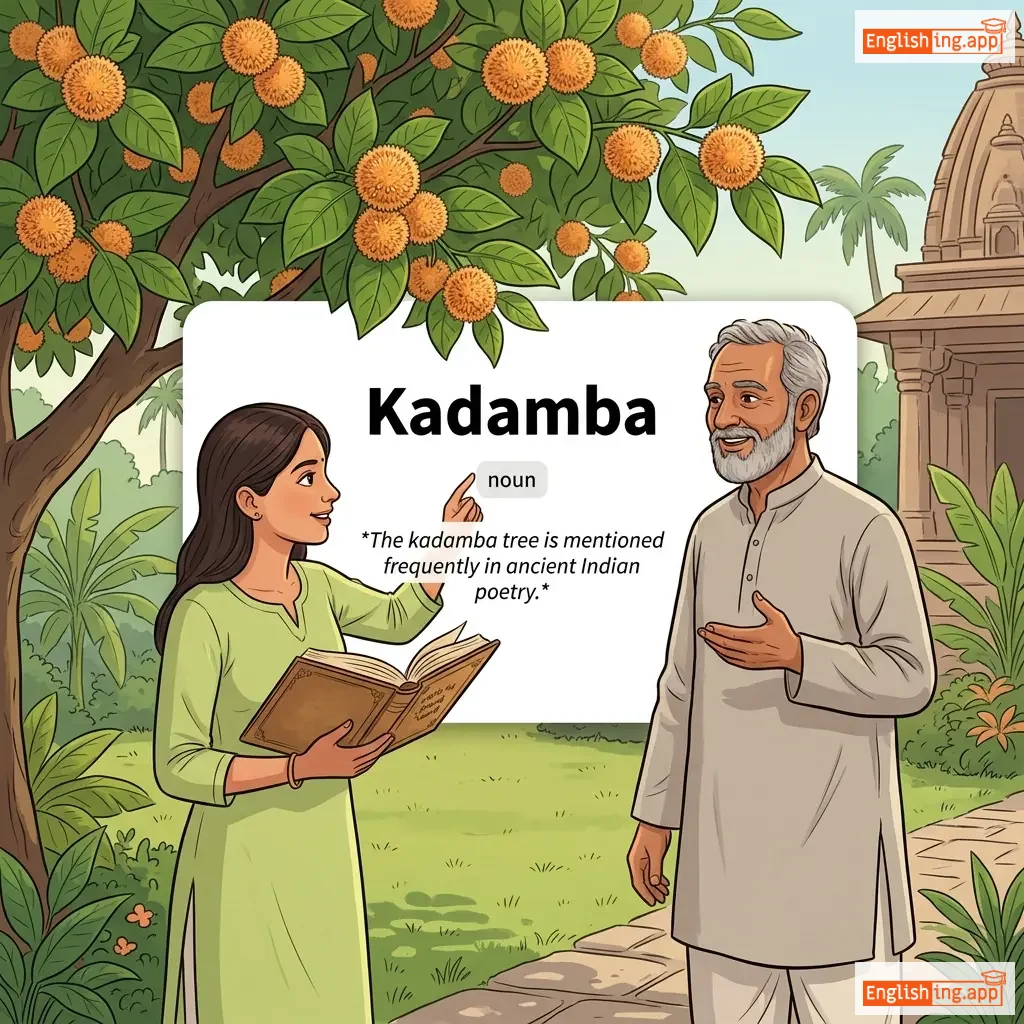
A tropical tree with round, fragrant orange flowers, sacred in Hindu culture and associated with Lord Krishna

"The kadamba tree is mentioned frequently in ancient Indian poetry."

"Дерево кадамба часто упоминается в древней индийской поэзии." (Derevo kadamba chasto upominaetsya v drevney indiyskoy poezii.)
noun
/kəˈbɑːdi/
сборщик лома (sborshchik loma)

a person who collects and sells scrap or recyclable materials, especially in South Asia

"The kabadi came every week to collect old newspapers and bottles."
"Сборщик лома собирает старый металл." (sborshchik loma sobiraet staryy metall)
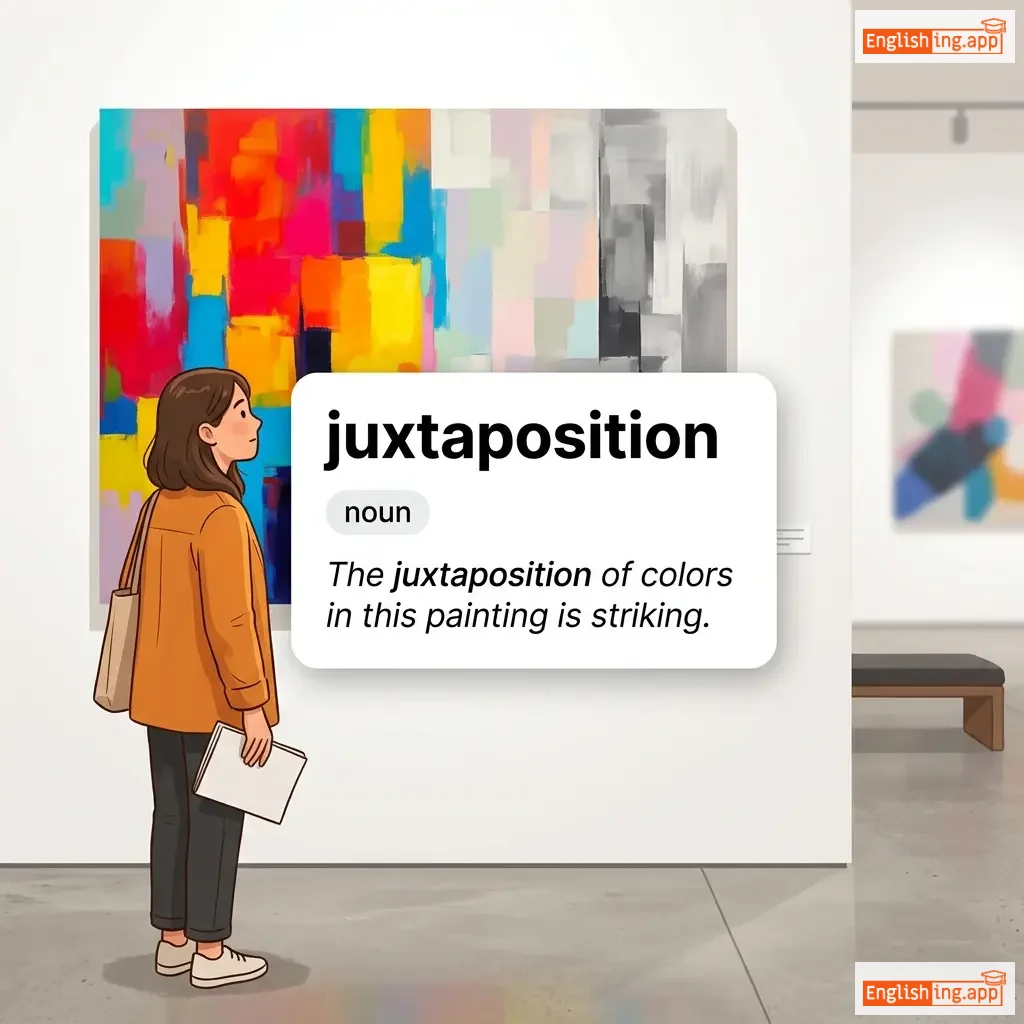
juxtaposition definition card — visual illustration of the meaning
noun
/ˌdʒʌk.stə.pəˈzɪʃ.ən/
дж juxtaposition (dzh juxtaposition)

The fact of two things being seen or placed close together with contrasting effect.

"The juxtaposition of colors in this painting is striking."

"Дж juxtaposition обрабатывает в процессе вашего создания."
juxtapose definition card — visual illustration of the meaning
verb
/ˈdʒʌkstəˌpoʊz/
размещать вещи рядом для сравнения или контраста (razmeshchat' veshchi ryadom dlya sravneniya ili kontrasta)

to place things close together to compare or contrast them

"The exhibition juxtaposed modern art with classical sculptures."

"Выставка разместила современное искусство рядом с классическими скульптурами." (Vystavka razmeshchila sovremennoe iskusstvo ryadom s klassicheskimi skulpturami.)
adjective, noun
/ˈdʒuːvənaɪl/
ювенильный (yuvenil'nyy)

relating to young people; childish or immature

"The court sent the case to a juvenile detention center."
"Суд отправил дело в центр временного задержания для несовершеннолетних." (Sud otpravil delo v tsentr vremennogo zaderzhaniya dlya nesovershennoletnikh.)
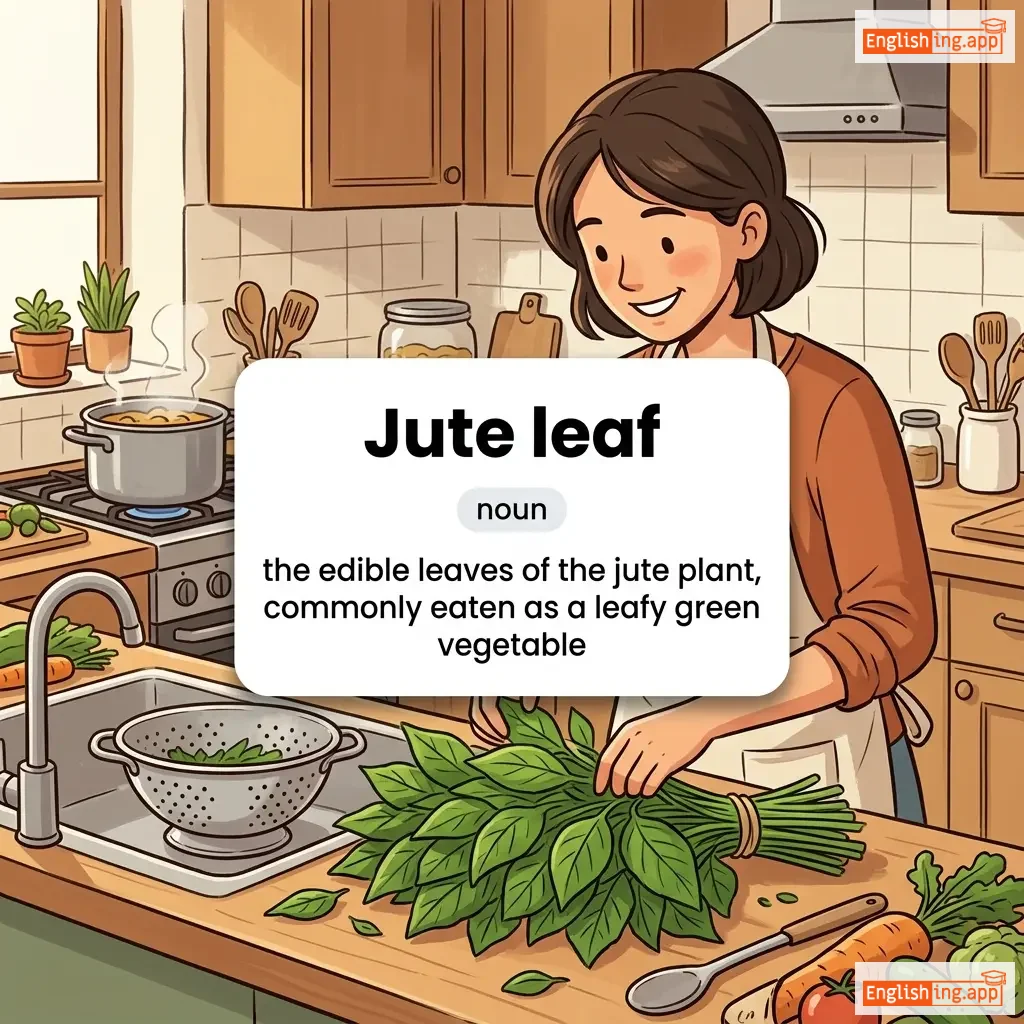
Jute leaf definition card — visual illustration of the meaning
noun
/dʒuːt liːf/
листья джута (list'ya dzhuta)

the edible leaves of the jute plant, commonly eaten as a leafy green vegetable

"Jute leaf is rich in vitamins and minerals and is often cooked with lentils in Bengali cuisine."

"Листья джута богаты витаминами и минералами и часто готовятся с чечевицей в бенгальской кухне." (List'ya dzhuta bogaty vitaminami i mineralami i chasto gotovyatsya s chechevitsyej v bengal'skoj kukhne.)
noun
/dʒuːt/
джут (dzhut)

a long, soft, shiny plant fiber used to make rope, bags, sacks, and coarse cloth

"Jute is widely used to make eco-friendly bags and ropes."

"Джут широко используется в промышленности." (dzhut shiroko ispolzuetsya v promyshlennosti)
justify definition card — visual illustration of the meaning
verb
/ˈdʒʌstɪfaɪ/
оправдывать (opravdyvat')

to show or prove that something is right or reasonable

"He tried to justify his decision with logical reasons."

"Он попытался оправдать своё решение логическими причинами." (On popytalsya opravdat' svoyo reshenie logicheskimi prichinami.)
noun
/ˌdʒʌstɪfɪˈkeɪʃən/
оправдание (opravdanie)

a reason, explanation, or excuse that shows something is right or reasonable

"There is no justification for such rude behavior."

"Нет оправдания такому грубому поведению." (Net opravdaniya takomu grubomu povedeniyu.)
justice definition card — visual illustration of the meaning
noun
/ˈdʒʌstɪs/
справедливость (spravedlivost)

the quality of being fair and reasonable; the administration of the law

"The victims are still waiting for justice."

"Жертвы все еще ждут справедливости." (Zhertvy vse eshche zhdut spravedlivosti.)
adverb/adjective
/dʒʌst/
Точно, только или справедливо и морально правильно (Tochno, tol'ko ili spravedlivo i moral'no pravil'no)

Exactly, only, or fair and morally right.

"She arrived just in time for the meeting."

"Она пришла как раз вовремя для встречи." (Ona prishla kak raz vovremya dlya vstrechi.)
noun
/ˈdʒʊəri/
жюри (zhuri)

a group of people sworn to give a verdict in a legal case based on the evidence

"The jury found him guilty of the crime."

"Жюри признало его виновным в преступлении." (Zhuri priznalo ego vinovnym v prestuplenii.)
noun
/ˈdʒʊərər/
член жюри (chlen zhuri)

a member of a jury who is chosen to hear evidence in a legal case and help make a decision

"The juror listened carefully to the witness’s testimony."
"Член жюри внимательно выслушал показания свидетеля." (Chlen zhuri vnimatel'no vyslushal pokazanija svidetelya.)
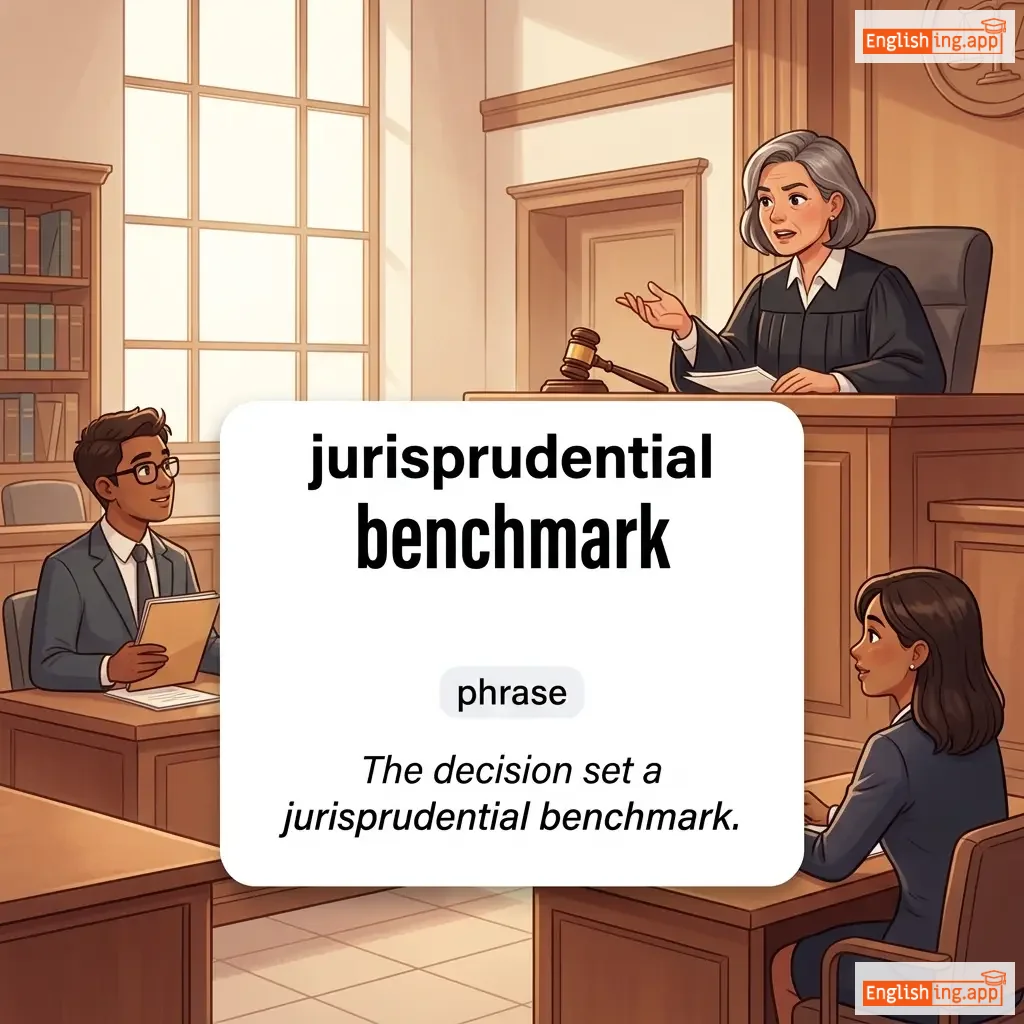
jurisprudential benchmark definition card — visual illustration of the meaning
phrase
ˌdʒʊə.rɪs.pruːˈden.ʃəl ˈbentʃ.mɑːk
юридический стандарт (yuridicheskiy standart)

A legal standard or precedent that serves as a reference point for future legal decisions.

"The decision set a jurisprudential benchmark."

"Решение установило юридический стандарт." (Reshenie ustanovilo yuridicheskiy standart.)
noun
/ˌdʒʊərɪsˈpruːdəns/
юриспруденция (yurisprudentsiya)

The theory, philosophy, or science of law.

"She is a professor of jurisprudence at the university."

"Она профессор юриспруденции в университете." (Ona professor yurisprudentsii v universitete.)
noun
/ˌdʒʊərɪsˈdɪkʃən/
юрисдикция (yurisdiktsiya)

The official power to make legal decisions and judgments.

"The court has jurisdiction over criminal cases."

"Суд имеет юрисдикцию по уголовным делам." (Sud imeyet yurisdiktsiyu po ugolovnym delam.)
adjective
/dʒʊˈrɪdɪkəl/
юридический (yuridicheskiy)

Relating to judicial proceedings or the administration of law.

"The case raised important juridical questions."

"Дело подняло важные юридические вопросы." (Delo podnyalo vazhnyye yuridicheskiye voprosy.)
noun
/ˈdʒɪŋɡoʊɪst/
Джингоист (Dzhinkoist)

a person who supports jingoism; an extreme nationalist with aggressive foreign policies

"He was labeled a jingoist for his extreme views."

"Его назвали джингоистом из-за его экстремистских взглядов." (Ego nazvali dzhingoistom iz-za ego ekstremistskikh vzglyadov.)
noun
/ˈdʒet.i/
причал (prichal)

a landing stage or small pier at which boats can dock or be moored

"The fishing boats were tied up at the wooden jetty near the harbor."

"Рыболовные лодки были пришвартованы к деревянному причалу рядом с портом." (Rybolovnye lodki byli prishvartovany k derevyannomu prichalu ryadom s portom.)
noun
/dʒuː/
еврей (evrey)

a person whose religion is Judaism or who is of Jewish descent

"He is a Jew by heritage and follows Jewish customs."
"Он еврей по наследству и следует еврейским традициям." (On yevrey po nasledstvu i sleduyet yevreyskim traditsiyam.)
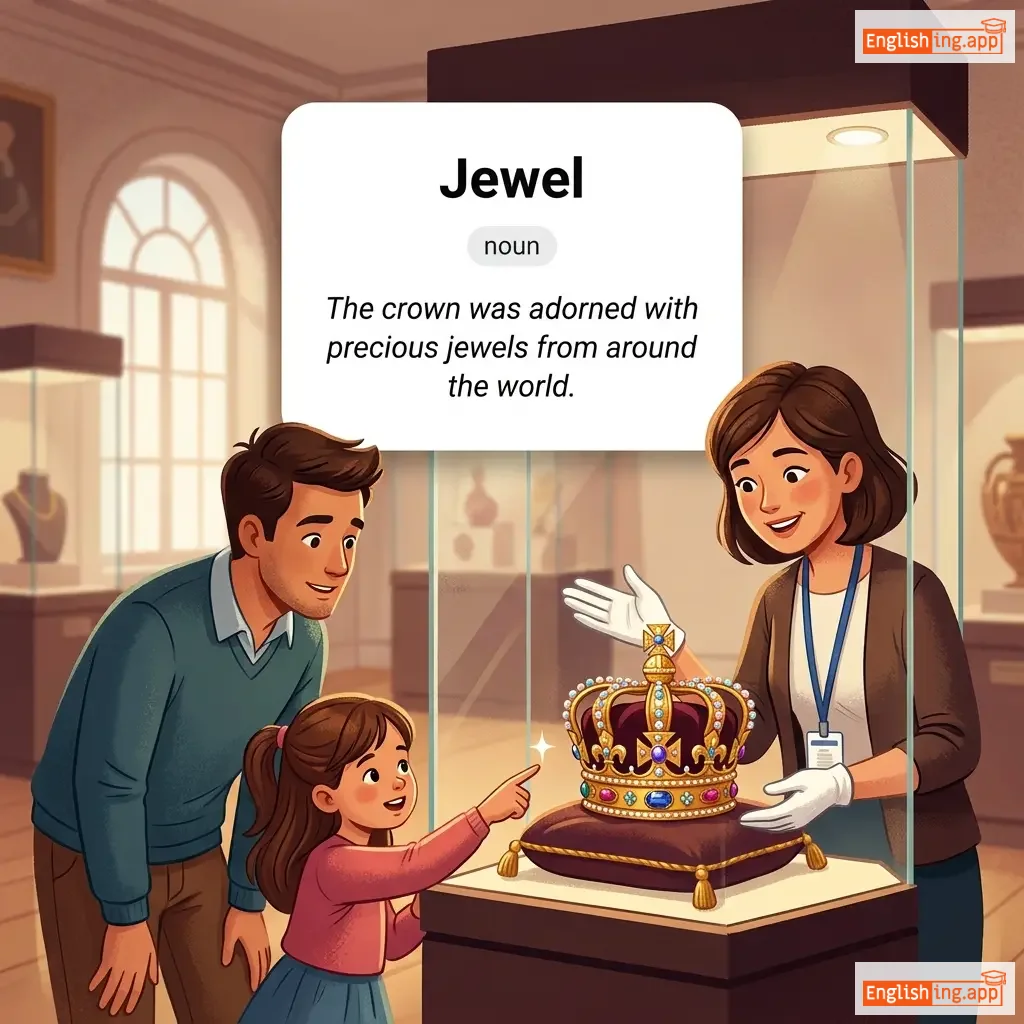
Jewel definition card — visual illustration of the meaning
noun
/ˈdʒuː.əl/
драгоценный камень (dragotsennyy kamen')

a precious stone or a piece of jewelry containing precious stones

"The ancient treasure chest contained many rare jewels."

"Древний сундук с сокровищами содержал много редких драгоценных камней." (Drevniy sunduk s sokrovishchami soderzhal mnogo redkikh dragotsennykh kamney.)
noun
/ˈdʒuːələr/
ювелир (yuvelir)

a person who makes, repairs, or sells jewelry

"The jeweller crafted a beautiful gold ring."

"Ювелир изготовил красивое золотое кольцо." (Yuvelir izgotovil krasivoe zolotoe koltso)
noun
/ˈdʒuːəlri/
ювелирные изделия (yuvelirnye izdeliya)

ornamental items worn for personal adornment, such as rings, necklaces, or bracelets, often made of precious metals or stones

"She wore beautiful jewellery to the wedding."

"Она надела красивые ювелирные изделия на свадьбу." (ona nadela krasivye yuvelirnye izdeliya na svadbu)
noun
/ˈdʒuːəlri/
украшения (ukrasheniya)

personal ornaments such as necklaces, rings, or bracelets that are typically made from precious metals and stones

"She wore gold jewelry at the wedding."

"Она носила золотые украшения на свадьбе." (Ona nosila zolotye ukrasheniya na svad'be.)
adjective
/ˈdʒuːɪʃ/
счастье (schastye)

relating to Jews or Judaism

"They celebrate Jewish festivals every year."

"Она не могла скрыть своего счастья, когда получила награду." (Ona ne mogla skryt' svoego schast'ya, kogda poluchila nagradu.)
jibe definition card — visual illustration of the meaning
verb
/dʒaɪb/
оскорбить / быть в согласии (oskorbit' / byt' v soglasiи)

to make an insulting remark; to be in agreement or harmony with

"His actions did not jibe with his words."

"Его действия не совпадали с его словами." (Yego deystviya ne sovpadali s yego slovami.)
adjective
/ˈdʒɪg.ərd/
удивлённый; ошеломлённый; (dzhigerd)

surprised or astonished; confused or puzzled

"I'll be jiggered if I know what happened here."

"Я был бы удивлён, если бы знал, что здесь произошло." (Ya byl by udivlyon, esli by znal, chto zdes' proiskhodilo.)
noun
/ˈdʒɪŋ.ɡəl/
легкий металлический звук, создаваемый при встряхивании металлических предметов; короткая запоминающаяся песня (lehkij metallicheskiy zvuk, sozdavayemyj pri vstryakhivanii metallicheskikh predmetov; korotkaya zapominayushchayasya pesnya)

a light ringing sound such as that made by metal objects being shaken together; a short catchy song

"The jingle of keys could be heard as she walked down the hallway."

"Звук ключей был слышен, когда она шла по коридору." (Zvuk klyuchej byl slyshen, kogda ona shla po koridoru.)
noun
/ˈdʒɪŋɡoʊ/
агрессивный националист (agressivnyy natsionalist)

a person who strongly supports warlike or aggressive foreign policy; an extreme nationalist

"The leader was criticized as a reckless jingo."

"Лидера критиковали как безрассудного джинго." (Lidera kritikovali kak bezrassudnogo dzhingo.)
noun
/ˈdʒɪŋɡoʊˌɪzəm/
экстремизм патриотизма (ekstremizm patriotizma)

extreme patriotism expressed in aggressive foreign policy

"The politician's speech was filled with jingoism."

"Речь политика была наполнена джингоизмом." (Rech' politika byla napolnena dzhingoizmom.)
verb
/dʒɑːɡ/
бегать трусцой (begat trustsoi)

to run at a slow, steady pace for exercise

"She jogs every morning in the park."

"Она бегает трусцой каждое утро в парке." (ona begayet trustsoi kazhdoe utro v parke)
noun
/ˈdʒoʊ.kər/
джокер (Dzhoker)

a playing card with a picture of a jester, used as a wild card; a person who is fond of joking

"He used the joker card to complete his winning hand in the poker game."
"Он использовал карту джокера, чтобы собрать выигрышную руку в покерной игре." (On ispolzoval kartu dzhokera chtoby sobrat vyigryshnuyu ruku v pokernoy igre)
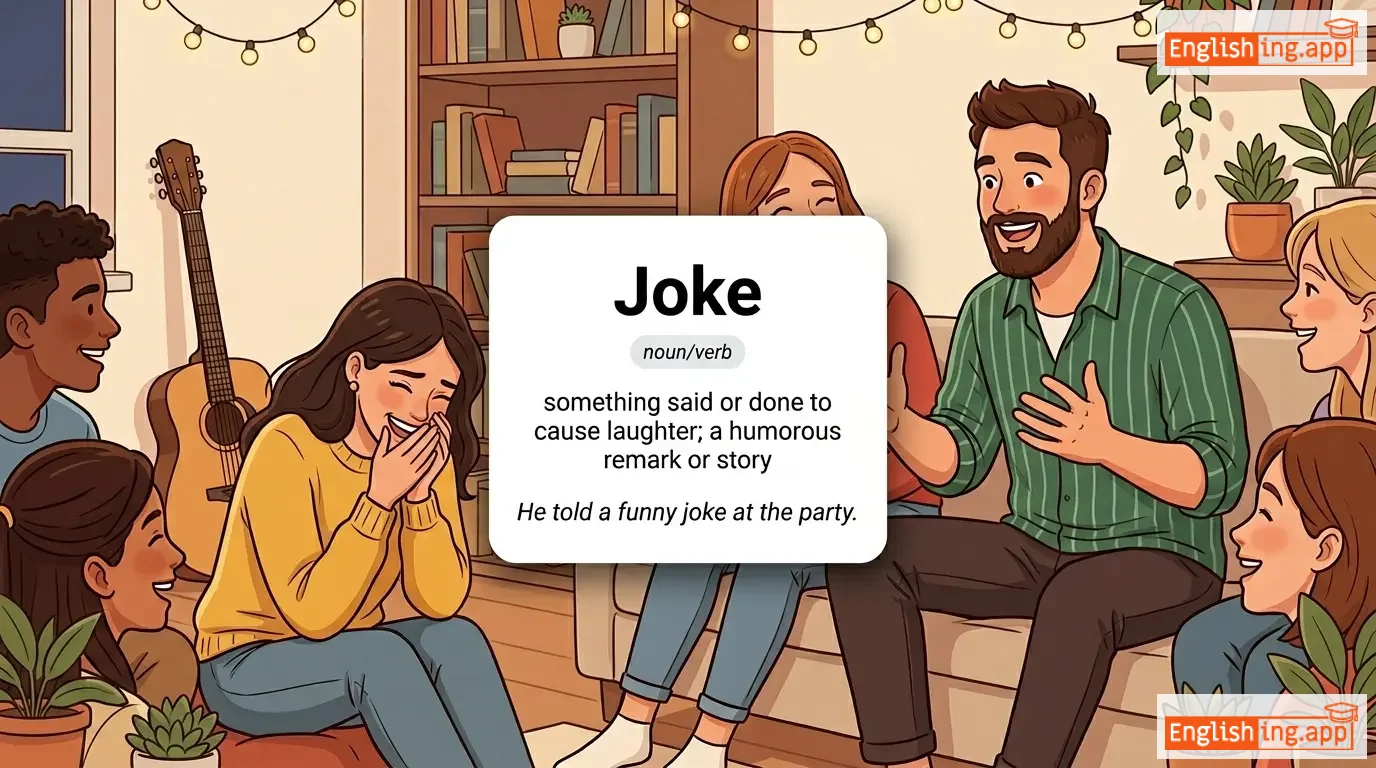
Joke definition card — visual illustration of the meaning
noun/verb
/dʒoʊk/
шутка (shutka)

something said or done to cause laughter; a humorous remark or story

"He told a funny joke at the party."

"Он рассказал смешную шутку на вечеринке." (On rasskazal smeshnuyu shutku na vecherinke.)
Joint definition card — visual illustration of the meaning
noun
/dʒɔɪnt/
сустав (sustav)

a place where two parts of something are joined; also a term for a business establishment or a cannabis cigarette

"The knee is a joint that connects the thigh and the leg."
"Колено — это сустав, который соединяет бедро и ногу." (Koleno — eto sustav, kotoryy soyedinyayet bedro i nogu.)
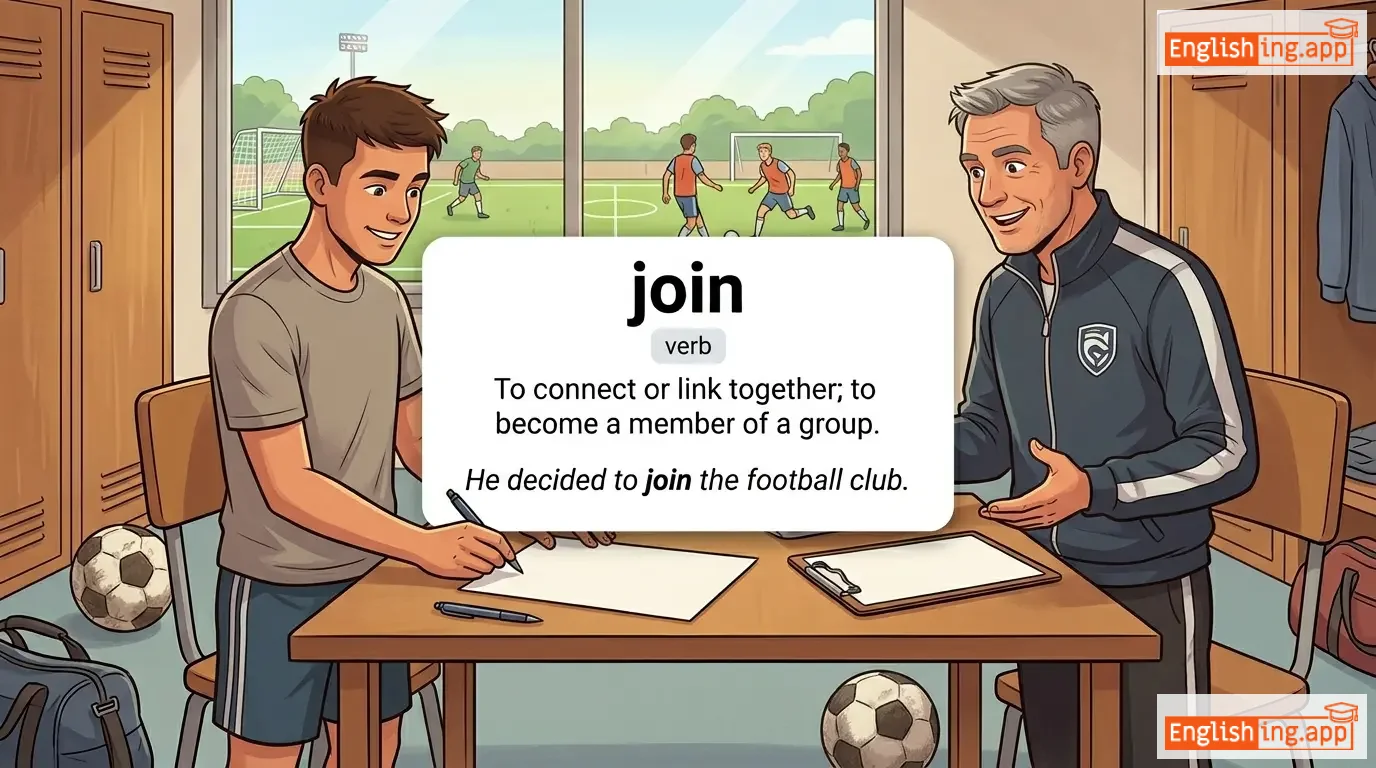
join definition card — visual illustration of the meaning
verb
/dʒɔɪn/
присоединиться (prisoedinit'sya)

To connect or link together; to become a member of a group.

"He decided to join the football club."

"Он решил присоединиться к футбольному клубу." (On reshil prisoedinit'sya k futbol'nomu klubu.)
verb
/ˈdʒɒɡəl/
потрясти слегка (potryasti slegka)

to shake slightly; to move or cause to move with quick, small jerks

"He joggled the table and the vase nearly fell."
"Он потряс стол, и ваза едва не упала." (On potryas stol, i vaza yedva ne upala.)
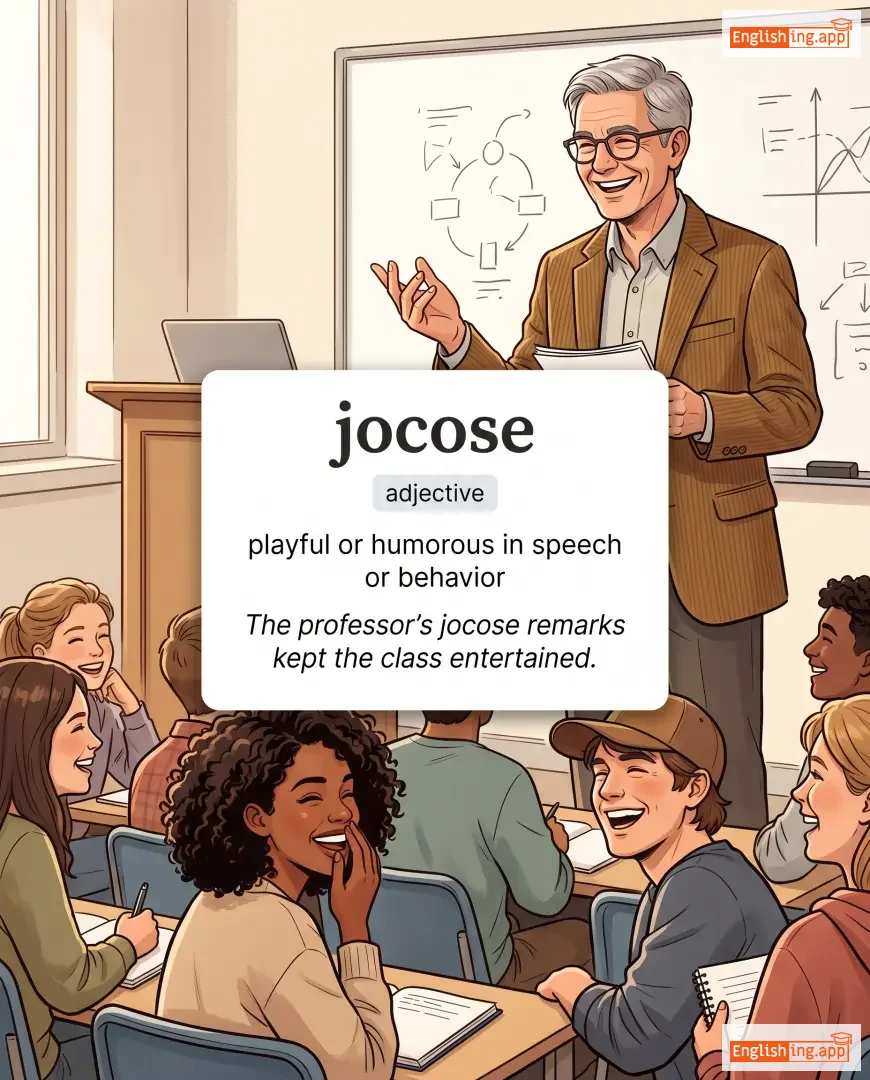
jocose definition card — visual illustration of the meaning
adjective
/dʒoʊˈkoʊs/
шутливый (shutlivyy)

playful or humorous in speech or behavior

"The professor’s jocose remarks kept the class entertained."

"Шутливые замечания профессора развлекли класс." (Shutlivye zamechaniya professora razvlekli klass.)
verb
/ˈdʒɪtər/
дрожать (drozhat)

to shake or tremble slightly, often from fear, nervousness, or excitement

"He began to jitter nervously before giving his speech."

"Он начал нервно дрожать перед своей речью." (On nachal nervno drozhat pered svoey rech'yu.)
Job definition card — visual illustration of the meaning
noun
/dʒɒb/
работа (rabota)

a paid position of regular employment

"She got a new job at a software company."

"Она получила новую работу в компании по разработке программного обеспечения." (Ona poluchila novuyu rabotu v kompanii po razrabotke programmnogo obespecheniya.)
/ˈdʒɛtɪsən/
выбросить (vibrosit)

to throw or drop something from a ship, aircraft, or vehicle to lighten the load; to abandon something no longer wanted

"The crew had to jettison cargo to save the sinking ship."

"Экипажу пришлось выбросить груз, чтобы спасти тонущий корабль." (Ekipazhu prishlos' vybrosit' gruz, chtoby spasti tonushchiy korabl')
adjective
/ˈdʒɒkjələr/
шутник (shutnik)

fond of or characterized by joking; humorous

"His jocular nature made him popular among colleagues."

"Его шутливый характер сделал его популярным среди коллег." (Ego shutlivyy kharakter sdelal ego popularnym sredi kolleg.)
adjective
/ˈdʒɒkənd/
весёлый (vesyoly)

cheerful and lighthearted

"They walked together in a jocund mood after the celebration."

"Они шли вместе в весёлое настроение после праздника." (Oni shli vmeste v vesyoloye nastroeniye posle prazdnika.)