Словари

Словарь английского языка | Значения слов, определения и примеры
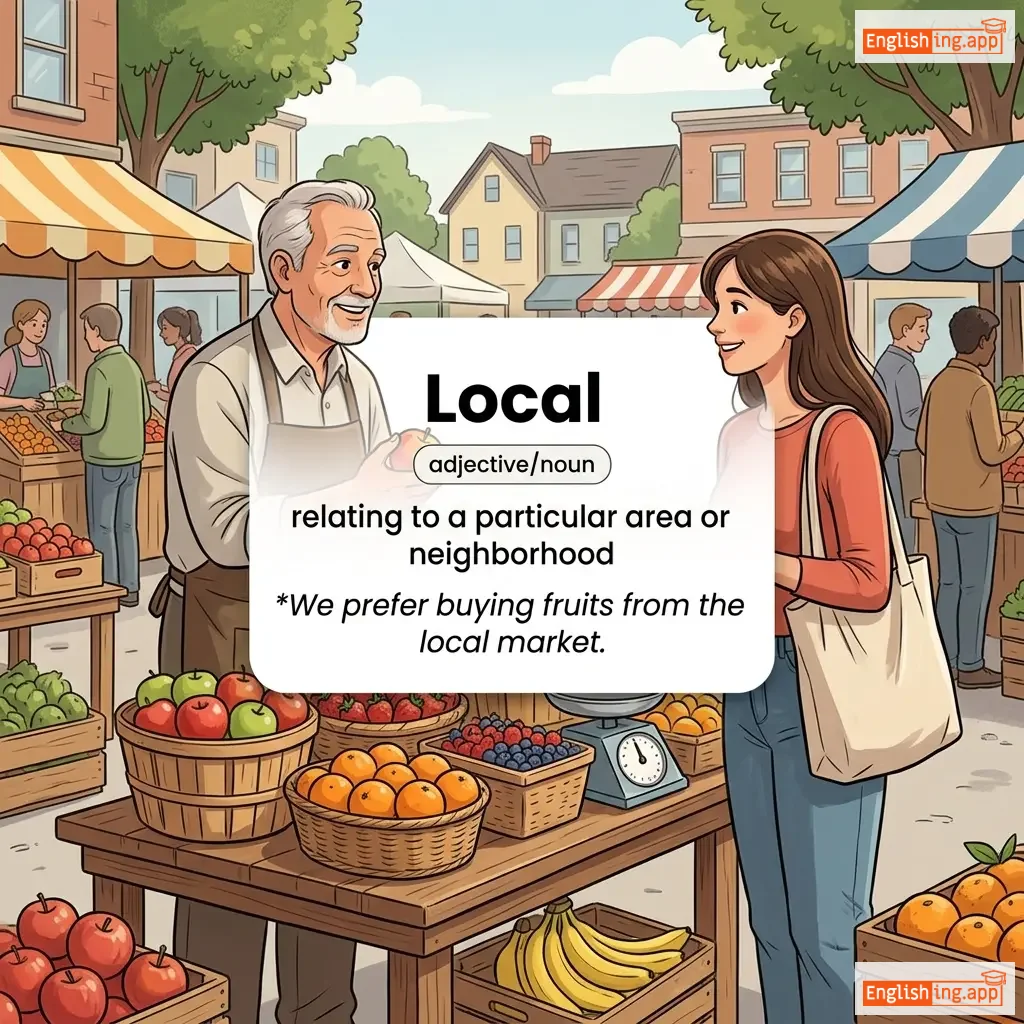
Local definition card — visual illustration of the meaning
adjective/noun
/ˈloʊkəl/
местный (mestnyy)

relating to a particular area or neighborhood

"We prefer buying fruits from the local market."

"Мы предпочитаем покупать фрукты на местном рынке." (My predpochitaem pokupat' frukty na mestnom rynke.)
verb
/loʊˈkeɪt/
локализовать (lokalizovat)

to find the exact position or place of something

"They managed to locate the missing keys under the couch."

"Им удалось найти пропавшие ключи под диваном." (Im udalos' nayti propavshiye klyuchi pod divanom.)
noun
/loʊˈkeɪʃən/
местоположение (mestopolozhenie)

a particular place or position

"This cafe is in a beautiful location near the lake."

"Это кафе расположено в красивом месте рядом с озером." (Eto kafe raspolozheno v krasivom meste ryadom s ozyerom.)
noun
/ˈlɒkətɪv/
локатив (lokativ)

a grammatical case indicating location or place

"In Latin, the locative case is used to indicate location."

"В латинском языке локативный падеж используется для указания местоположения." (V latinskom yazyke lokativnyy padezh ispol'zuyetsya dlya ukazaniya mestopolozheniya.)
noun
/lɒx/
озеро (ozero)

a lake or sea inlet, especially in Scotland

"Tourists visit Loch Ness to search for the legendary monster."
"Туристы посещают Лох-Несс, чтобы найти легендарного монстра." (Turisty poseshchayut Lokh-Ness, chtoby nayti legendarnogo monstra.)
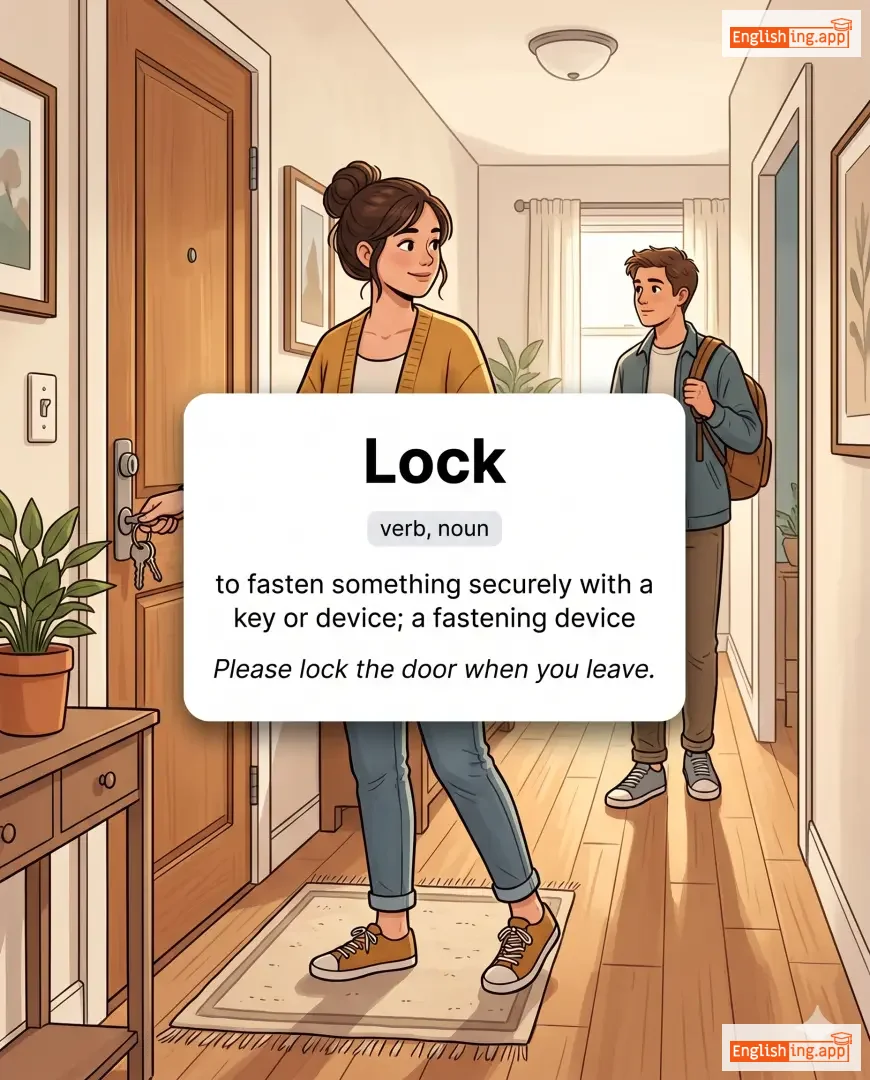
Lock definition card — visual illustration of the meaning
verb, noun
/lɒk/
замок, запирать (zamok, zapirat')

to fasten something securely with a key or device; a fastening device

"Please lock the door when you leave."
"Пожалуйста, закройте дверь, когда вы уходите." (Pozhaluysta, zakroyte dver', kogda vy ukhodyte.)
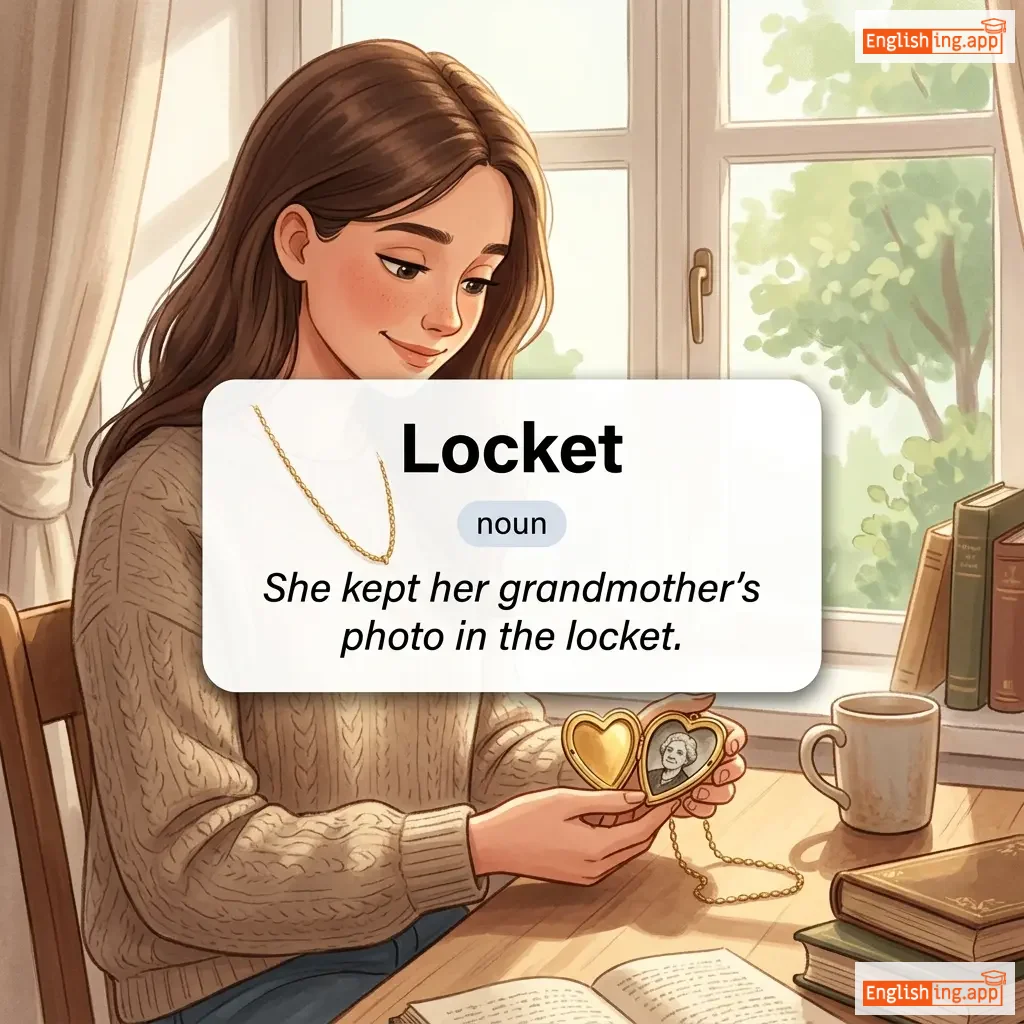
Locket definition card — visual illustration of the meaning
noun
/ˈlɒk.ɪt/
кулон (kulon)

a small ornamental case, typically made of gold or silver, worn on a chain around the neck

"She kept her grandmother's photo in the locket."

"Она хранила фотографию своей бабушки в кулоне." (Ona khranila fotografiyu svoey babushki v kulone)
noun
/ˌloʊkəˈmoʊʃən/
движение (dvizhene)

movement or the ability to move from one place to another

"Walking is the most common form of human locomotion."

"Ходьба - это наиболее распространенная форма человеческой локомоции." (Hod'ba - eto naibolee rasprostranennaya forma chelovecheskoy lokomotsii.)
noun
/ˌloʊ.kəˈmoʊ.tɪv/
локомотив (lokomotiv)

A powered rail vehicle used for pulling trains.

"The old steam locomotive was restored for the museum."
"Старый паровоз был восстановлен для музея." (Staryy parovoz byl vosstanovlen dlya muzeya.)
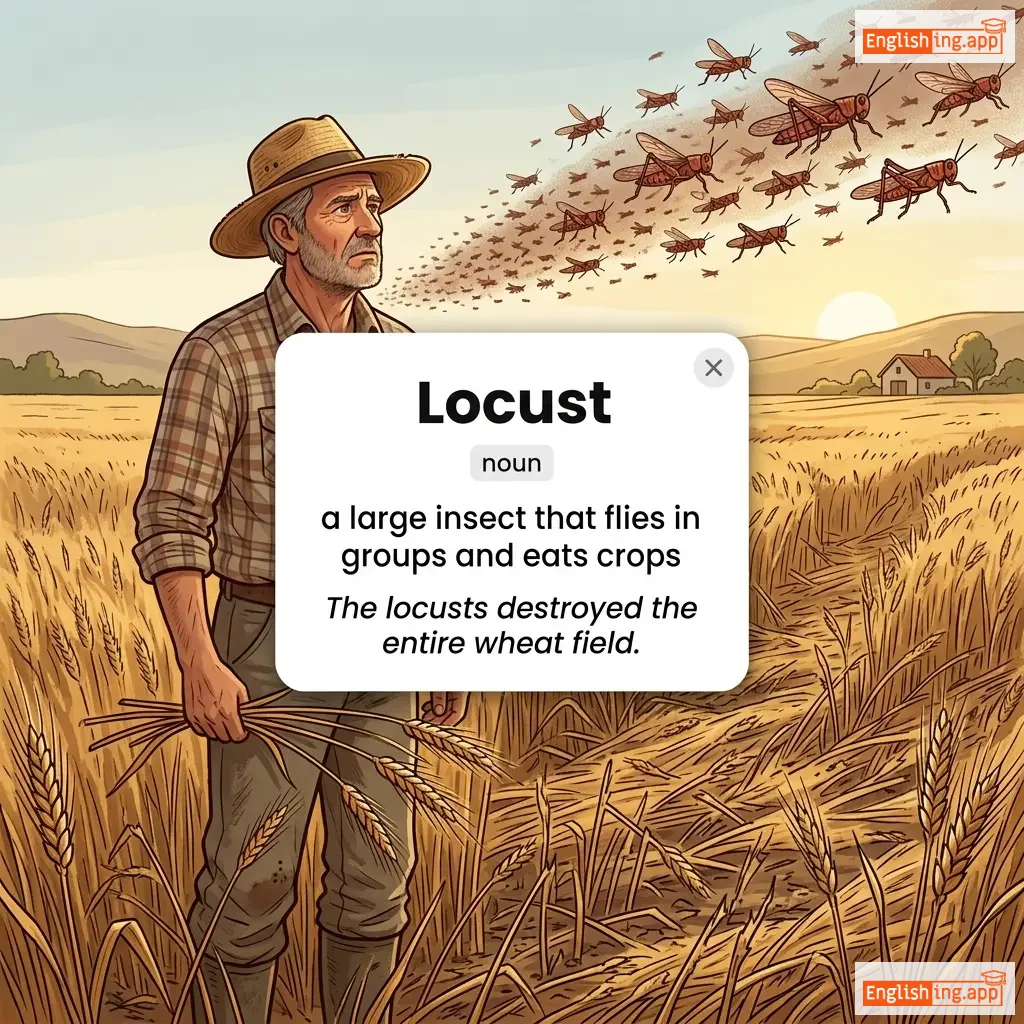
Locust definition card — visual illustration of the meaning
noun
/ˈloʊ.kəst/
саранча (sarancha)

a large insect that flies in groups and eats crops

"The locusts destroyed the entire wheat field."

"Саранча уничтожила все поле пшеницы." (Sarancha unichtozhila vse pole pshzenitsy.)
noun
/loʊd/
рудные жилы (rudnye zhily)

A rich source of something, often a vein of valuable metal in the earth.

"The miners discovered a rich lode of silver."

"Шахтёры обнаружили богатую жилу серебра." (Shakhtyory obnaruzhili bogatuyu zhilu serebra.)
noun
/ˈlɒdʒ.mənt/
временное жильё (vremennoye zhilyo)

The act of lodging or a place of temporary stay; also a deposit of something.

"The soldiers found lodgment in the abandoned house."

"Солдаты нашли временное жильё в заброшенном доме." (Soldaty nashli vremennoye zhilyo v zabroshennom dome.)
noun
/lɒft/
мансарда (mansarda)

An upper room or space, often under the roof of a building.

"She converted the old loft into a modern studio."

"Она превратила старую мансарду в современную студию." (Ona prevratila staruyu mansardu v sovremennuyu studiyu.)
adjective
/ˈlɒf.ti/
высокий (vysokiy)

Of great height; elevated in character or style; noble.

"He set himself the lofty goal of ending poverty."
"Он поставил перед собой lofty цель - искоренить бедность." (On postavil pered soboy lofty tsely - iskorenit' bednost'.)
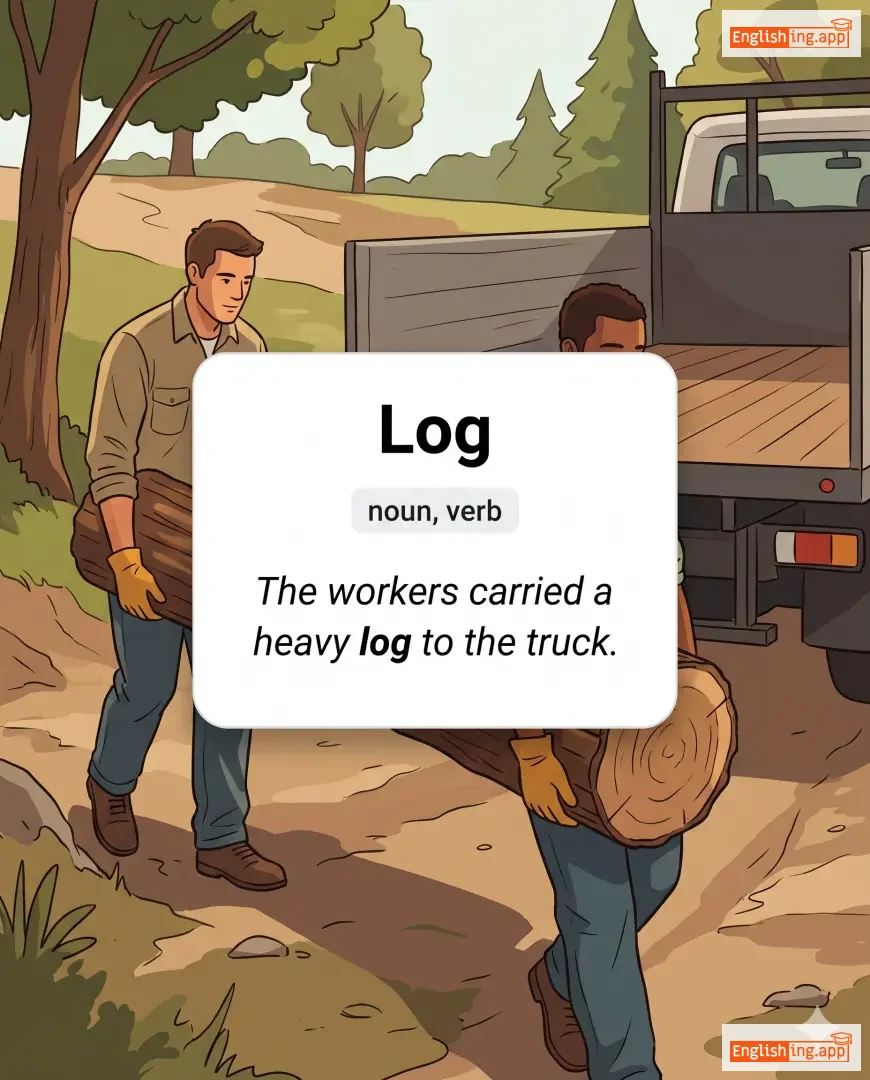
Log definition card — visual illustration of the meaning
noun, verb
/lɒɡ/
бревно, запись (brevno, zapis)

A part of the trunk or a large branch of a tree that has fallen or been cut off; also to record information systematically.

"The workers carried a heavy log to the truck."

"Рабочие принесли тяжелое бревно к грузовику." (Rabochie prinesli tyazheloe brevno k gruzoviku.)
noun
/ˈlɒdʒɪk/
логика (logika)

Reasoning conducted or assessed according to strict principles of validity.

"Her argument was based on sound logic."
"Ее аргумент основывался на логике." (Eye argument osnovyvalsya na logike.)
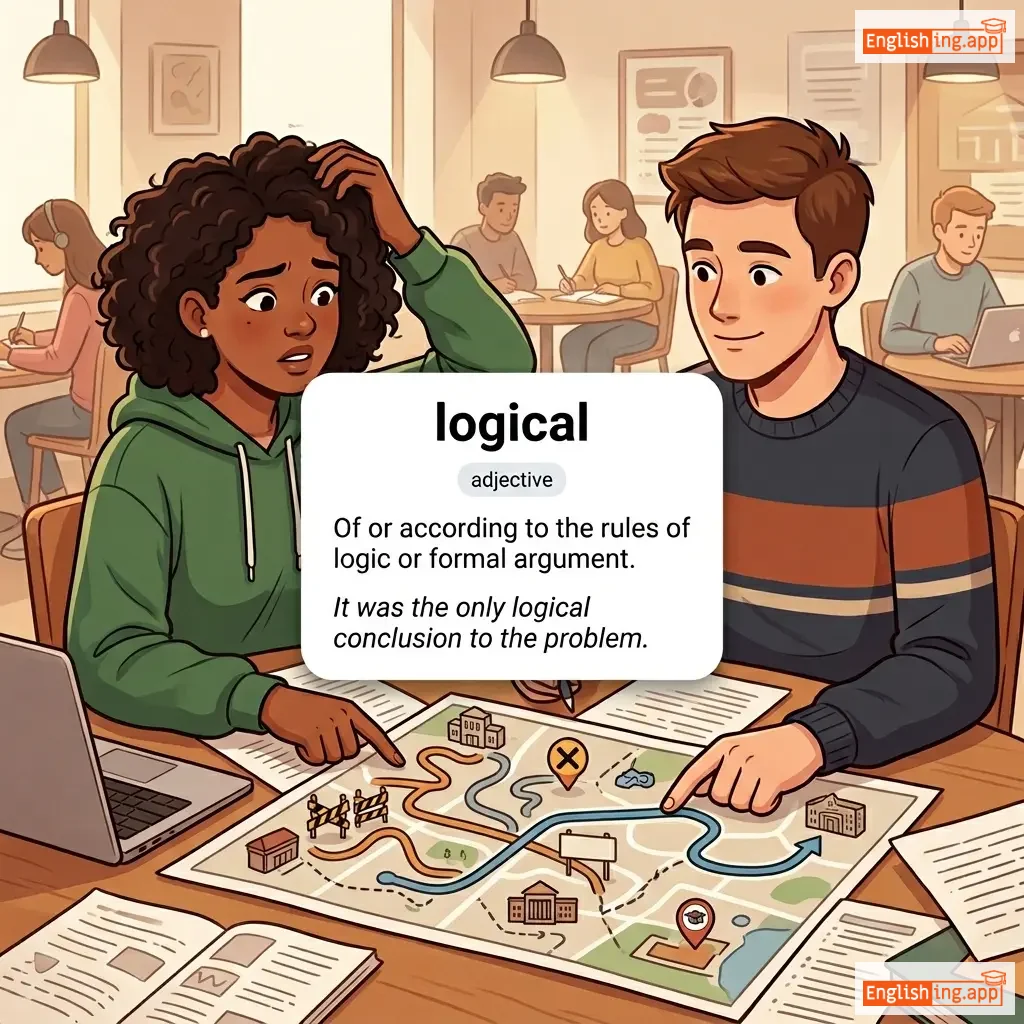
logical definition card — visual illustration of the meaning
adjective
/ˈlɒdʒɪkəl/
логичный (logichny)

Of or according to the rules of logic or formal argument.

"It was the only logical conclusion to the problem."

"Это было единственное логичное решение проблемы." (Eto bylo yedinstvennoe logichnoe reshenie problemy.)
noun
/ləˈdʒɪʃən/
логик (logik)

A person skilled in logic and reasoning.

"Aristotle is considered one of the greatest logicians in history."
"Аристотель считается одним из величайших логиков в истории." (Aristotel' schitayetsya odnim iz velikaykshikh logikov v istorii.)
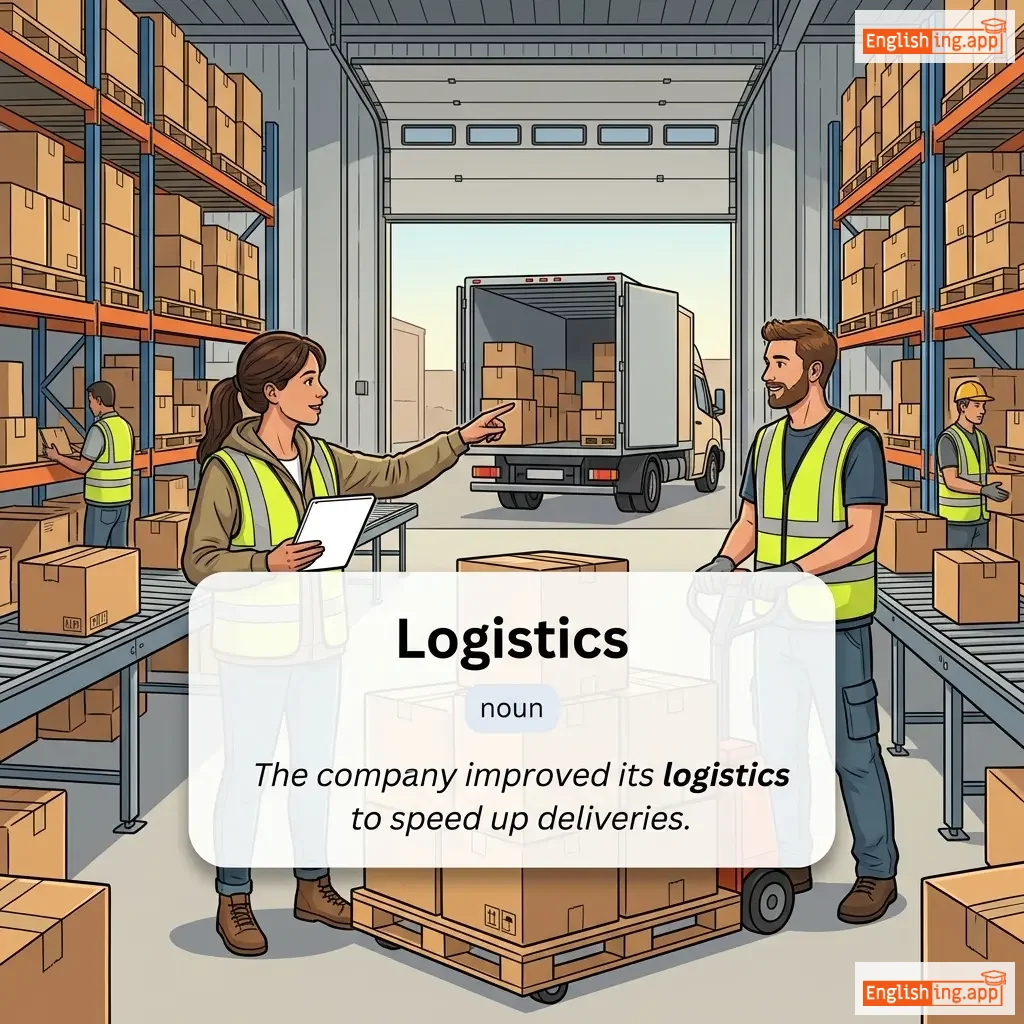
Logistics definition card — visual illustration of the meaning
noun
/ləˈdʒɪs.tɪks/
логистика (logistika)

Supply chain management or operation, managing the flow of goods, services or information efficiently.

"The company improved its logistics to speed up deliveries."

"Компания улучшила свою логистику, чтобы ускорить доставку." (Kompaniya uluchshila svoiu logistiku, chtoby uskorit' dostavku.)
🖼️

logo

noun
/ˈləʊɡəʊ/

a symbol or other small design adopted by an organization to identify its products, uniform, vehicles, etc.

"The company's logo was redesigned to reflect its new image."

verb
/ˈlɔɪtər/

To stand or wait around idly without apparent purpose.

"The teenagers were told not to loiter outside the shop."

noun
/ˈlɔɪtərər/
человек, который без цели бродит по месту (chelovek, kotoryj bez celi brodit po mestu)

A person who lingers aimlessly in a place without purpose.

"The police questioned the loiterer outside the store."

"Полиция допросила лойтерера у магазина." (Policiya doprosila loyterera u magazina.)
verb
/lɑːl/
лежать лениво (lezhat' lenivo)

To sit, lie, or stand in a lazy, relaxed way.

"He lolled on the sofa after a long day at work."

"После долгого рабочего дня он растянулся на диване." (Posle dolgo rabochego dnya on rastyanulsya na divane.)
adjective
/ˈlɪvɪd/
взбешенный (vzbeshenniy)

Extremely angry; furious.

"She was livid when she found out about the betrayal."

"Она была взбешена, когда узнала о предательстве." (Ona byla vzbeshena, kogda uznala o predatel'stve.)
noun
/ˈkɪləˌwɒt/
киловатт (kilowatt)

a unit of power equal to 1,000 watts

"The generator produces ten kilowatts of electricity."

"Генератор вырабатывает десять киловатт электричества." (Generator vyrabotayt desyat' kilovatt elektrichestva.)
noun
/kɪˈlɒmɪtər/ or /ˈkɪləˌmiːtər/
километр (kilometr)

a unit of length equal to 1,000 meters

"The village is about five kilometers away from the town."

"Деревня находится примерно в пяти километрах от города." (Derevnya nakhoditsya primerno v pyati kilometrah ot goroda.)
noun
/ˈkɪləˌliːtər/
килолитр (kilolitr)

a unit of capacity equal to 1,000 liters

"The tank can hold up to three kiloliters of water."

"Бак может содержать до трех килолитров воды." (Bak mozhet soderzhat' do tryokh kilolitrov vody.)
noun
/ˈkɪləɡræm/
килограмм (kilogramm)

the base unit of mass in the metric system equal to 1,000 grams

"The bag of rice weighs five kilograms."

"Мешок риса весит пять килограммов." (meshock risa vesit pyat kilogrammov)
noun
/kɪln/
печь для обжига (pech dlya obzhiga)

a furnace or oven for burning, baking, or drying, especially one for firing pottery or bricks

"The potter placed the clay pots into the kiln for firing."

"Гончар поставил глиняные горшки в печь для обжига." (Gonchar postavil glinyanye gorshki v pech dlya obzhiga.)
noun
/ˈkɪldʒɔɪ/
зануда (zanuda)

a person who spoils the fun or enjoyment of others

"Don’t be a killjoy at the party."

"Не будь занудой на вечеринке." (Ne bud' zanudoy na vecherinke.)
noun
/ˈkɪlɪŋ/
убийство (ubiystvo)

the act of causing death, especially deliberately

"The movie depicts the brutal killing of the villagers."

"Фильм показывает жестокое убийство деревенских жителей." (Film pokazyvayet zhestokoye ubiystvo derevenskikh zhiteley.)
noun
/ˈkɪlər/
убийца (ubiytsa)

A person or thing that kills.

"The police caught the killer last night."
"Полиция поймала убийцу прошлой ночью." (Politsiya poymala ubiitsu proshloy noch'yu.)
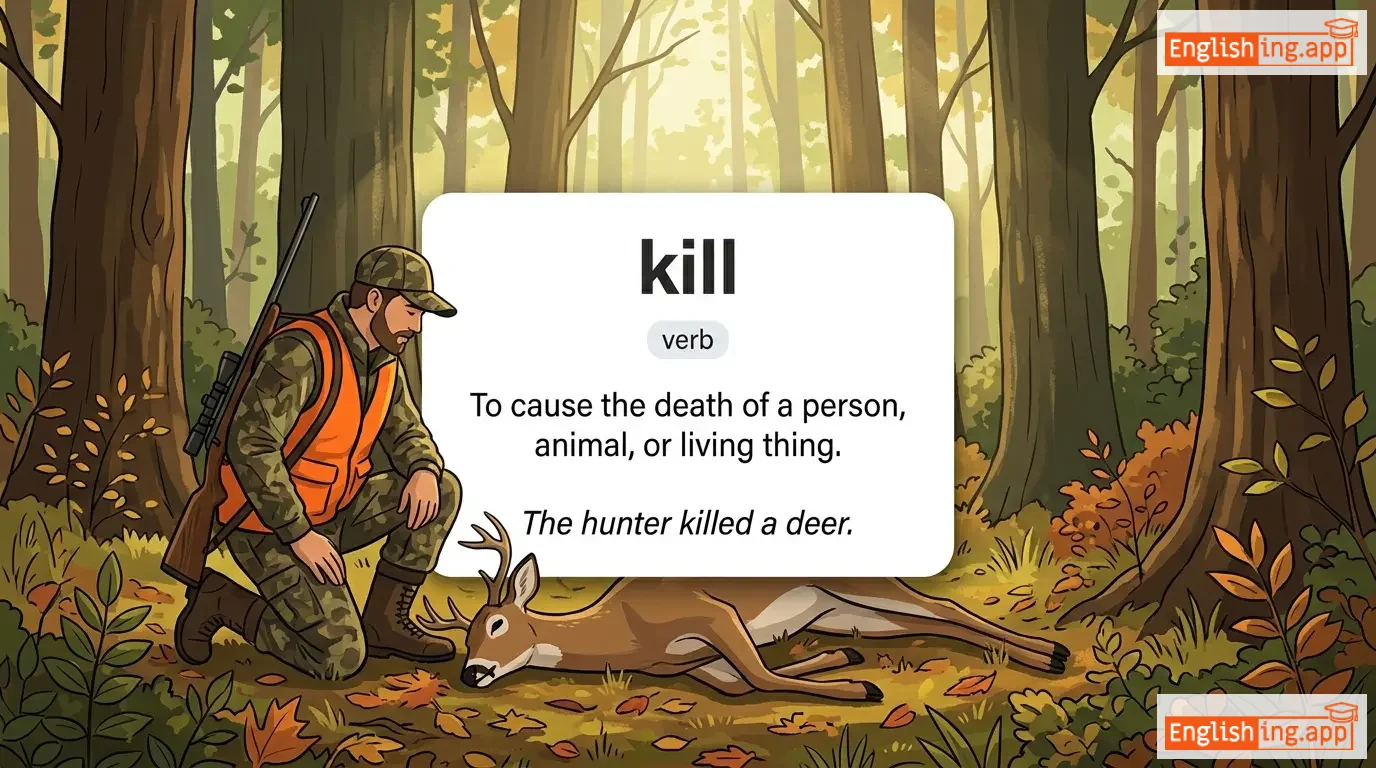
kill definition card — visual illustration of the meaning
verb
/kɪl/
убивать (ubivat)

To cause the death of a person, animal, or living thing.

"The hunter killed a deer."

"Охотник убил оленя." (Okhotnik ubil olenya.)
noun
/ˈkɪdni/
почка (pochka)

a pair of organs in the body that remove waste products from the blood and balance bodily fluids

"The kidney plays a crucial role in filtering waste from the bloodstream."
"Почка играет важную роль в фильтрации отходов из крови." (Pochka igrajet vazhnuju rol' v filtracii otkhodov iz krovi.)
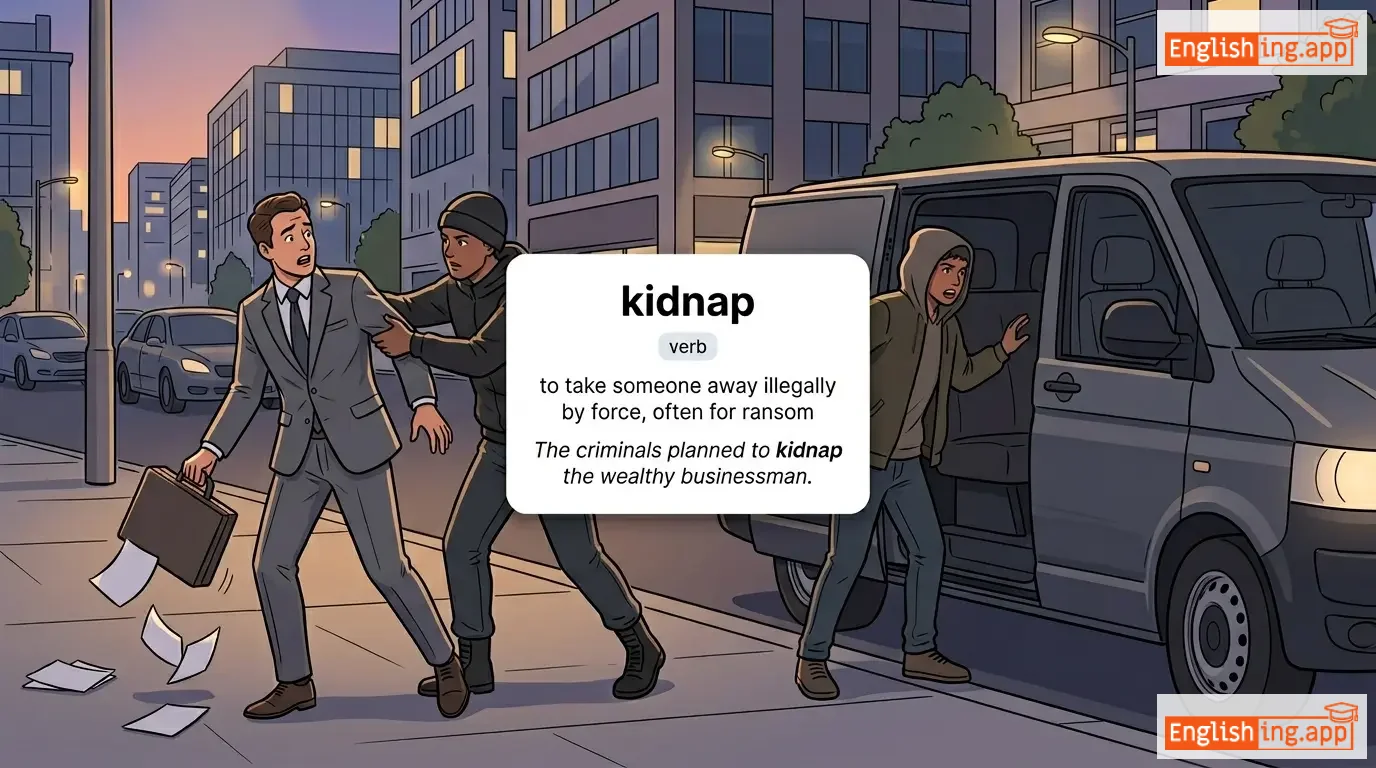
kidnap definition card — visual illustration of the meaning
verb
/ˈkɪdnæp/
похищение (pokhishchenie)

to take someone away illegally by force, often for ransom

"The criminals planned to kidnap the wealthy businessman."

"Преступники планировали похитить богатого бизнесмена." (Prestuponiki planirovali pokhitit' bogatogo biznesmena.)
kid definition card — visual illustration of the meaning
noun
/kɪd/
ребёнок (rebyonok)

A child or young person.

"The kid was playing in the park."
"Ребёнок играл в парке." (Rebyonok igral v parke.)
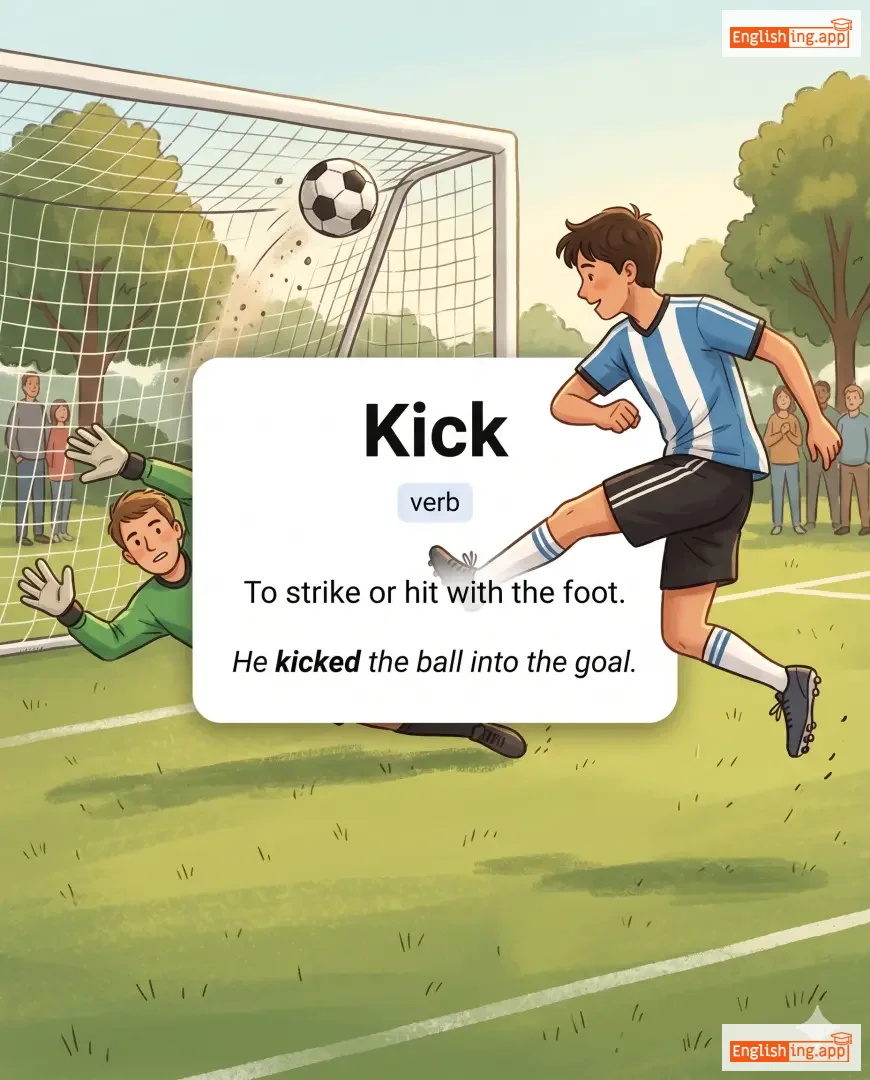
Kick definition card — visual illustration of the meaning
verb
/kɪk/
пнуть (pnut)

To strike or hit with the foot.

"He kicked the ball into the goal."
"Он пнул мяч в ворота." (On pnut myach v vorota.)
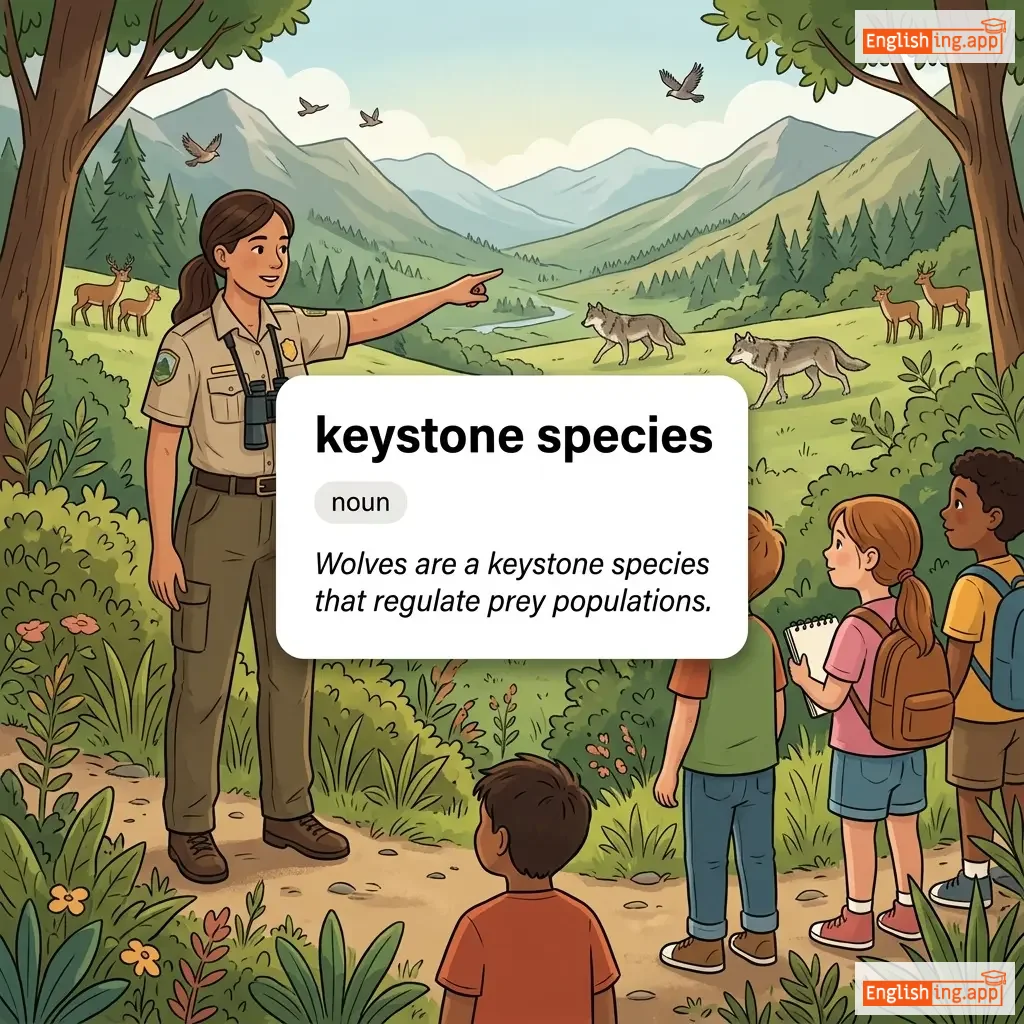
keystone species definition card — visual illustration of the meaning
noun
ˈkiː.stəʊn ˈspiː.ʃiːz
ключевой вид (klyuchevoy vid)

A species on which other species in an ecosystem largely depend, such that if it were removed the ecosystem would change drastically.

"Wolves are a keystone species that regulate prey populations."

"Волки — это ключевой вид, который регулирует популяцию добычи." (Volki — eto klyuchevoy vid, kotoryy reguliruet populatsiyu dobychi.)
noun
/ˈkiːbɔːrd/
клавиатура (klaviatura)

a set of keys used to operate a computer, typewriter, or similar device for inputting text and commands

"She typed the report quickly on her keyboard."
"Она быстро напечатала отчёт на клавиатуре." (ona bystro napechatala otchet na klaviature)
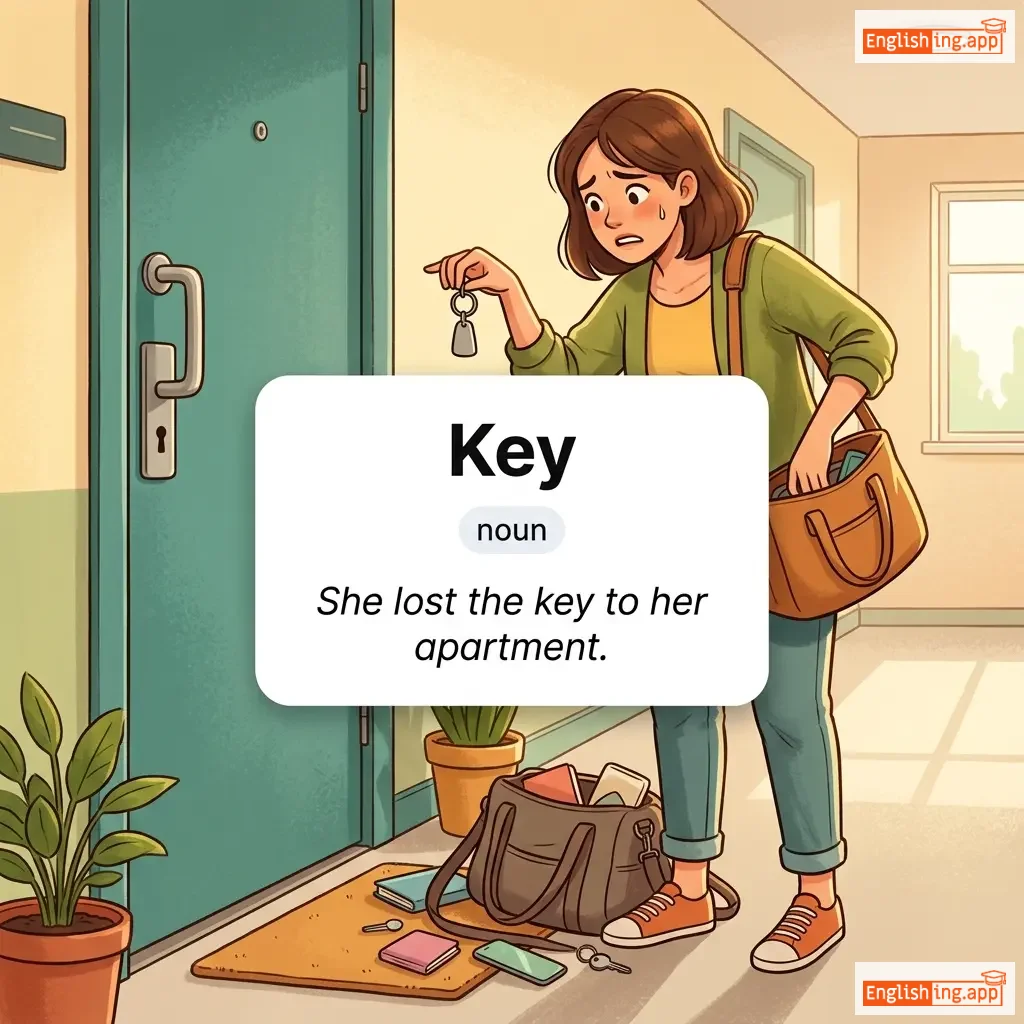
Key definition card — visual illustration of the meaning
noun
/kiː/
ключ (klyuch)

A small piece of shaped metal used to open or close locks, or something crucial and essential.

"She lost the key to her apartment."
"Она потеряла ключ от своей квартиры." (Ona poteryala klyuch ot svoey kvartiry.)
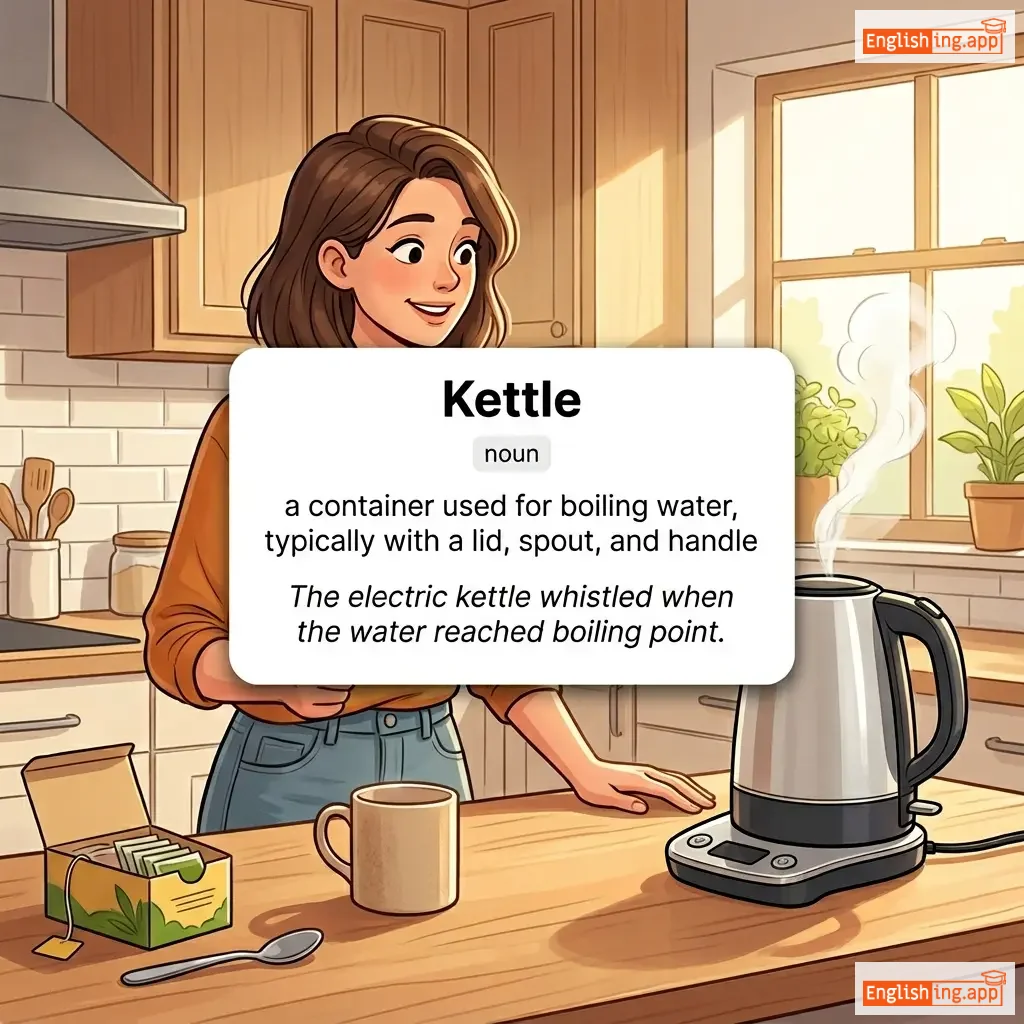
Kettle definition card — visual illustration of the meaning
noun
/ˈket.əl/
чайник (chaynik)

a container with a lid, spout, and handle, used for boiling water

"The kettle is boiling on the stove."

"Чайник кипит на плите." (Chaynik kipit na plite.)
ketogenesis definition card — visual illustration of the meaning
noun
/ˌkiː.təʊˈdʒen.ɪ.sɪs/
процесс продукции кетонов (protsess produktsii ketonov)

The metabolic process by which the liver produces ketones from fatty acids, providing an alternative energy source during low carbohydrate availability.

"Ketogenesis occurs during fasting or low-carb diets."

"Кетогенез происходит во время голодания или низкоуглеводных диет." (Ketogenez proiskhodit vo vremya golodaniya ili nizkouglevodnykh diet.)
noun
/ˈketʃ.ʌp/
томатный соус (tomatnyy sous)

a thick sauce made chiefly from tomatoes, vinegar, and spices

"She squeezed some ketchup on her french fries before eating them."

"Она выжала немного кетчупа на свои картошки фри перед тем, как их съесть." (Ona vyzhala nemnogo ketchup na svoi kartoshki fri pered tem, kak ikh s'yest.)
noun
/ˈker.ə.siːn/
керосин (kerosin)

a combustible hydrocarbon liquid widely used as a fuel in lamps and heating systems

"The old lamp burned kerosene to provide light during power outages."

"Старая лампа горела керосином, чтобы обеспечить свет во время отключений электроэнергии." (Staraya lampa goryela kerosinom, chtoby obespechit' svet vo vremya otklyucheniy elektroenergii.)
noun
/ˈkɜːrnəl/
ядро чего-то; съедобная часть ореха или семени (kernel)

the central, most important part of something; the edible part of a nut or seed

"The kernel of the argument was about fairness."

"Ядро аргумента было о справедливости." (Yadro argumenta bylo o spravedlivosti.)
noun
/ˈkɜːrtʃɪf/
платок (platok)

a piece of cloth worn around the head or neck

"She wore a red kerchief on her head."

"Она носила красный платок на голове." (Ona nosila krasnyy platok na golove.)
noun
/ˈken.əl/
собачий вольер; учреждение для разведения или размещения собак (sobachiy vol'er; uchrezhdenie dlya razvedeniya ili razmeshcheniya sobak)

a small shelter for a dog; an establishment for the breeding or boarding of dogs

"The dog slept comfortably in his wooden kennel in the backyard."

"Собака спала удобно в своем деревянном вольере на заднем дворе." (Sobaka spala udobno v svoem derevyannom vol'ere na zadnem dvore.)
noun
/kɛn/
познание (poznanie)

one's range of knowledge or understanding

"Quantum physics is beyond my ken."

"Квантовая физика вне моего понимания." (Kvantovaya fizika vne moyego ponimaniya.)
noun
/ˈkiːpˌseɪk/
сувенир (suvenir)

An object kept as a reminder of a person, place, or event.

"She gave me a small locket as a keepsake of our friendship."

"Она подарила мне маленький медальон как память о нашей дружбе." (Ona podarila mne malen'kii medal'on kak pamyat' o nashei druzhbe.)
justice definition card — visual illustration of the meaning
noun
/ˈdʒʌstɪs/
справедливость (spravedlivost)

the quality of being fair and reasonable; the administration of the law

"The victims are still waiting for justice."

"Жертвы все еще ждут справедливости." (Zhertvy vse eshche zhdut spravedlivosti.)