Словари

Словарь английского языка | Значения слов, определения и примеры

/ˈdʒɛtɪsən/
выбросить (vibrosit)

to throw or drop something from a ship, aircraft, or vehicle to lighten the load; to abandon something no longer wanted

"The crew had to jettison cargo to save the sinking ship."

"Экипажу пришлось выбросить груз, чтобы спасти тонущий корабль." (Ekipazhu prishlos' vybrosit' gruz, chtoby spasti tonushchiy korabl')
noun
/ˈdʒet.i/
причал (prichal)

a landing stage or small pier at which boats can dock or be moored

"The fishing boats were tied up at the wooden jetty near the harbor."

"Рыболовные лодки были пришвартованы к деревянному причалу рядом с портом." (Rybolovnye lodki byli prishvartovany k derevyannomu prichalu ryadom s portom.)
noun
/dʒuː/
еврей (evrey)

a person whose religion is Judaism or who is of Jewish descent

"He is a Jew by heritage and follows Jewish customs."
"Он еврей по наследству и следует еврейским традициям." (On yevrey po nasledstvu i sleduyet yevreyskim traditsiyam.)
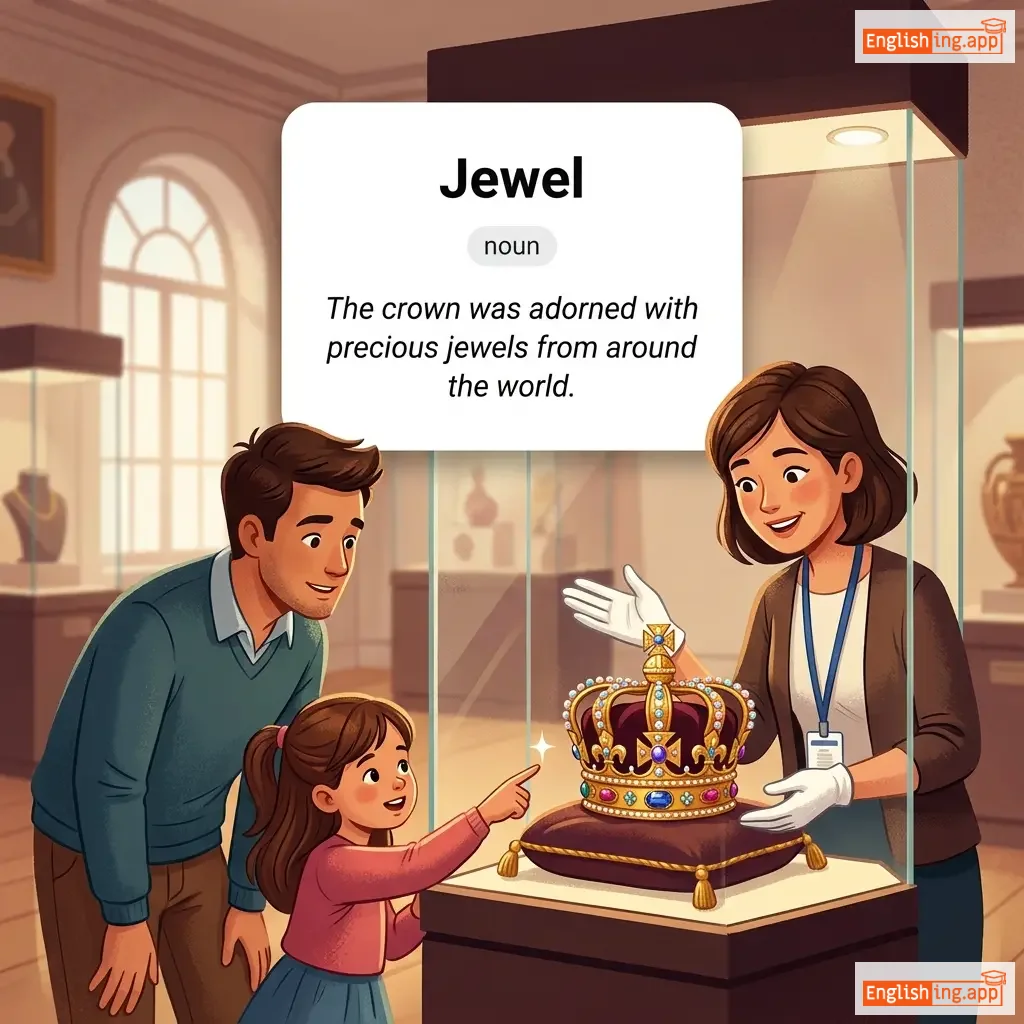
Jewel definition card — visual illustration of the meaning
noun
/ˈdʒuː.əl/
драгоценный камень (dragotsennyy kamen')

a precious stone or a piece of jewelry containing precious stones

"The ancient treasure chest contained many rare jewels."

"Древний сундук с сокровищами содержал много редких драгоценных камней." (Drevniy sunduk s sokrovishchami soderzhal mnogo redkikh dragotsennykh kamney.)
noun
/ˈdʒuːələr/
ювелир (yuvelir)

a person who makes, repairs, or sells jewelry

"The jeweller crafted a beautiful gold ring."

"Ювелир изготовил красивое золотое кольцо." (Yuvelir izgotovil krasivoe zolotoe koltso)
noun
/ˈdʒuːəlri/
ювелирные изделия (yuvelirnye izdeliya)

ornamental items worn for personal adornment, such as rings, necklaces, or bracelets, often made of precious metals or stones

"She wore beautiful jewellery to the wedding."

"Она надела красивые ювелирные изделия на свадьбу." (ona nadela krasivye yuvelirnye izdeliya na svadbu)
noun
/ˈdʒuːəlri/
украшения (ukrasheniya)

personal ornaments such as necklaces, rings, or bracelets that are typically made from precious metals and stones

"She wore gold jewelry at the wedding."

"Она носила золотые украшения на свадьбе." (Ona nosila zolotye ukrasheniya na svad'be.)
adjective
/ˈdʒuːɪʃ/
счастье (schastye)

relating to Jews or Judaism

"They celebrate Jewish festivals every year."

"Она не могла скрыть своего счастья, когда получила награду." (Ona ne mogla skryt' svoego schast'ya, kogda poluchila nagradu.)
jibe definition card — visual illustration of the meaning
verb
/dʒaɪb/
оскорбить / быть в согласии (oskorbit' / byt' v soglasiи)

to make an insulting remark; to be in agreement or harmony with

"His actions did not jibe with his words."

"Его действия не совпадали с его словами." (Yego deystviya ne sovpadali s yego slovami.)
adjective
/ˈdʒɪg.ərd/
удивлённый; ошеломлённый; (dzhigerd)

surprised or astonished; confused or puzzled

"I'll be jiggered if I know what happened here."

"Я был бы удивлён, если бы знал, что здесь произошло." (Ya byl by udivlyon, esli by znal, chto zdes' proiskhodilo.)
noun
/ˈdʒɪŋ.ɡəl/
легкий металлический звук, создаваемый при встряхивании металлических предметов; короткая запоминающаяся песня (lehkij metallicheskiy zvuk, sozdavayemyj pri vstryakhivanii metallicheskikh predmetov; korotkaya zapominayushchayasya pesnya)

a light ringing sound such as that made by metal objects being shaken together; a short catchy song

"The jingle of keys could be heard as she walked down the hallway."

"Звук ключей был слышен, когда она шла по коридору." (Zvuk klyuchej byl slyshen, kogda ona shla po koridoru.)
noun
/ˈdʒɪŋɡoʊ/
агрессивный националист (agressivnyy natsionalist)

a person who strongly supports warlike or aggressive foreign policy; an extreme nationalist

"The leader was criticized as a reckless jingo."

"Лидера критиковали как безрассудного джинго." (Lidera kritikovali kak bezrassudnogo dzhingo.)
noun
/ˈdʒɪŋɡoʊˌɪzəm/
экстремизм патриотизма (ekstremizm patriotizma)

extreme patriotism expressed in aggressive foreign policy

"The politician's speech was filled with jingoism."

"Речь политика была наполнена джингоизмом." (Rech' politika byla napolnena dzhingoizmom.)
noun
/ˈdʒɪŋɡoʊɪst/
Джингоист (Dzhinkoist)

a person who supports jingoism; an extreme nationalist with aggressive foreign policies

"He was labeled a jingoist for his extreme views."

"Его назвали джингоистом из-за его экстремистских взглядов." (Ego nazvali dzhingoistom iz-za ego ekstremistskikh vzglyadov.)
verb
/ˈdʒɪtər/
дрожать (drozhat)

to shake or tremble slightly, often from fear, nervousness, or excitement

"He began to jitter nervously before giving his speech."

"Он начал нервно дрожать перед своей речью." (On nachal nervno drozhat pered svoey rech'yu.)
Job definition card — visual illustration of the meaning
noun
/dʒɒb/
работа (rabota)

a paid position of regular employment

"She got a new job at a software company."
"Она получила новую работу в компании по разработке программного обеспечения." (Ona poluchila novuyu rabotu v kompanii po razrabotke programmnogo obespecheniya.)
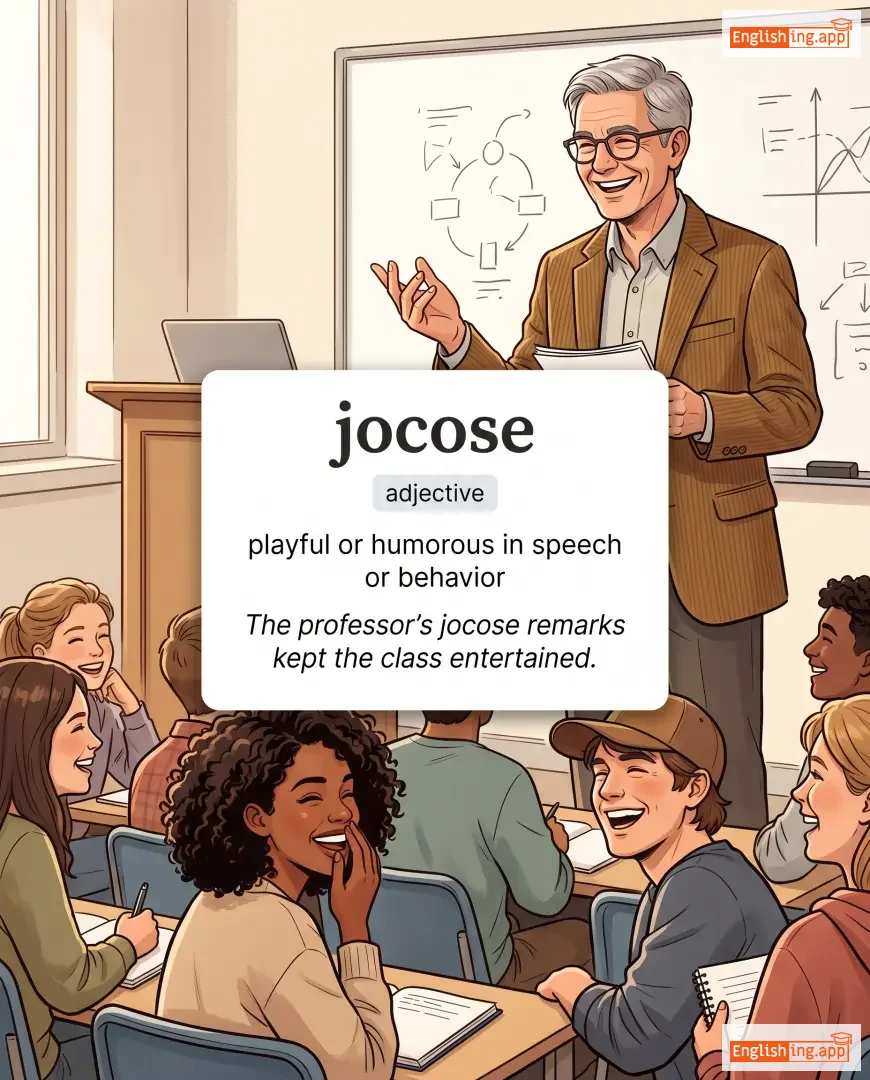
jocose definition card — visual illustration of the meaning
adjective
/dʒoʊˈkoʊs/
шутливый (shutlivyy)

playful or humorous in speech or behavior

"The professor’s jocose remarks kept the class entertained."

"Шутливые замечания профессора развлекли класс." (Shutlivye zamechaniya professora razvlekli klass.)
adjective
/ˈdʒɒkjələr/
шутник (shutnik)

fond of or characterized by joking; humorous

"His jocular nature made him popular among colleagues."

"Его шутливый характер сделал его популярным среди коллег." (Ego shutlivyy kharakter sdelal ego popularnym sredi kolleg.)
adjective
/ˈdʒɒkənd/
весёлый (vesyoly)

cheerful and lighthearted

"They walked together in a jocund mood after the celebration."

"Они шли вместе в весёлое настроение после праздника." (Oni shli vmeste v vesyoloye nastroeniye posle prazdnika.)
verb
/dʒɑːɡ/
бегать трусцой (begat trustsoi)

to run at a slow, steady pace for exercise

"She jogs every morning in the park."

"Она бегает трусцой каждое утро в парке." (ona begayet trustsoi kazhdoe utro v parke)
verb
/ˈdʒɒɡəl/
потрясти слегка (potryasti slegka)

to shake slightly; to move or cause to move with quick, small jerks

"He joggled the table and the vase nearly fell."
"Он потряс стол, и ваза едва не упала." (On potryas stol, i vaza yedva ne upala.)
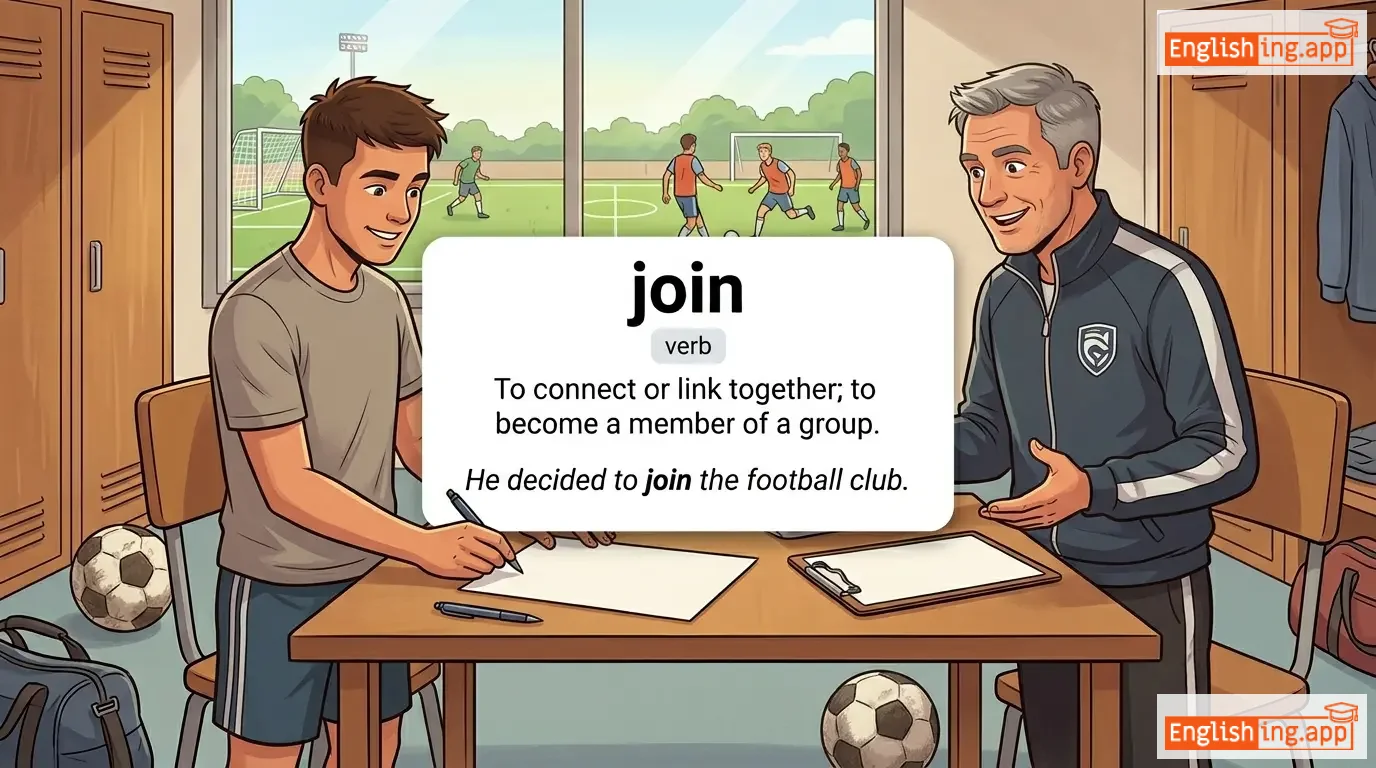
join definition card — visual illustration of the meaning
verb
/dʒɔɪn/
присоединиться (prisoedinit'sya)

To connect or link together; to become a member of a group.

"He decided to join the football club."

"Он решил присоединиться к футбольному клубу." (On reshil prisoedinit'sya k futbol'nomu klubu.)
Joint definition card — visual illustration of the meaning
noun
/dʒɔɪnt/
сустав (sustav)

a place where two parts of something are joined; also a term for a business establishment or a cannabis cigarette

"The knee is a joint that connects the thigh and the leg."
"Колено — это сустав, который соединяет бедро и ногу." (Koleno — eto sustav, kotoryy soyedinyayet bedro i nogu.)
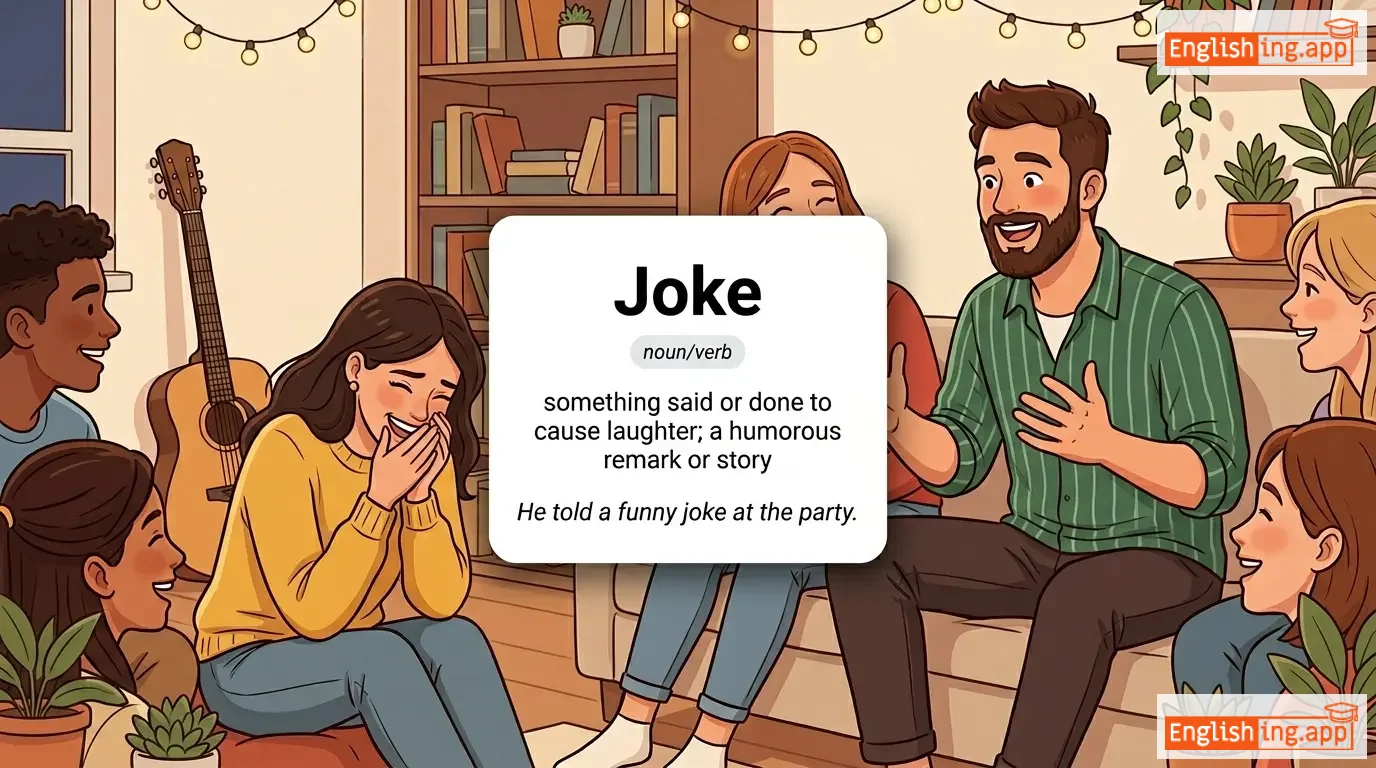
Joke definition card — visual illustration of the meaning
noun/verb
/dʒoʊk/
шутка (shutka)

something said or done to cause laughter; a humorous remark or story

"He told a funny joke at the party."

"Он рассказал смешную шутку на вечеринке." (On rasskazal smeshnuyu shutku na vecherinke.)
noun
/ˈdʒoʊ.kər/
джокер (Dzhoker)

a playing card with a picture of a jester, used as a wild card; a person who is fond of joking

"He used the joker card to complete his winning hand in the poker game."
"Он использовал карту джокера, чтобы собрать выигрышную руку в покерной игре." (On ispolzoval kartu dzhokera chtoby sobrat vyigryshnuyu ruku v pokernoy igre)
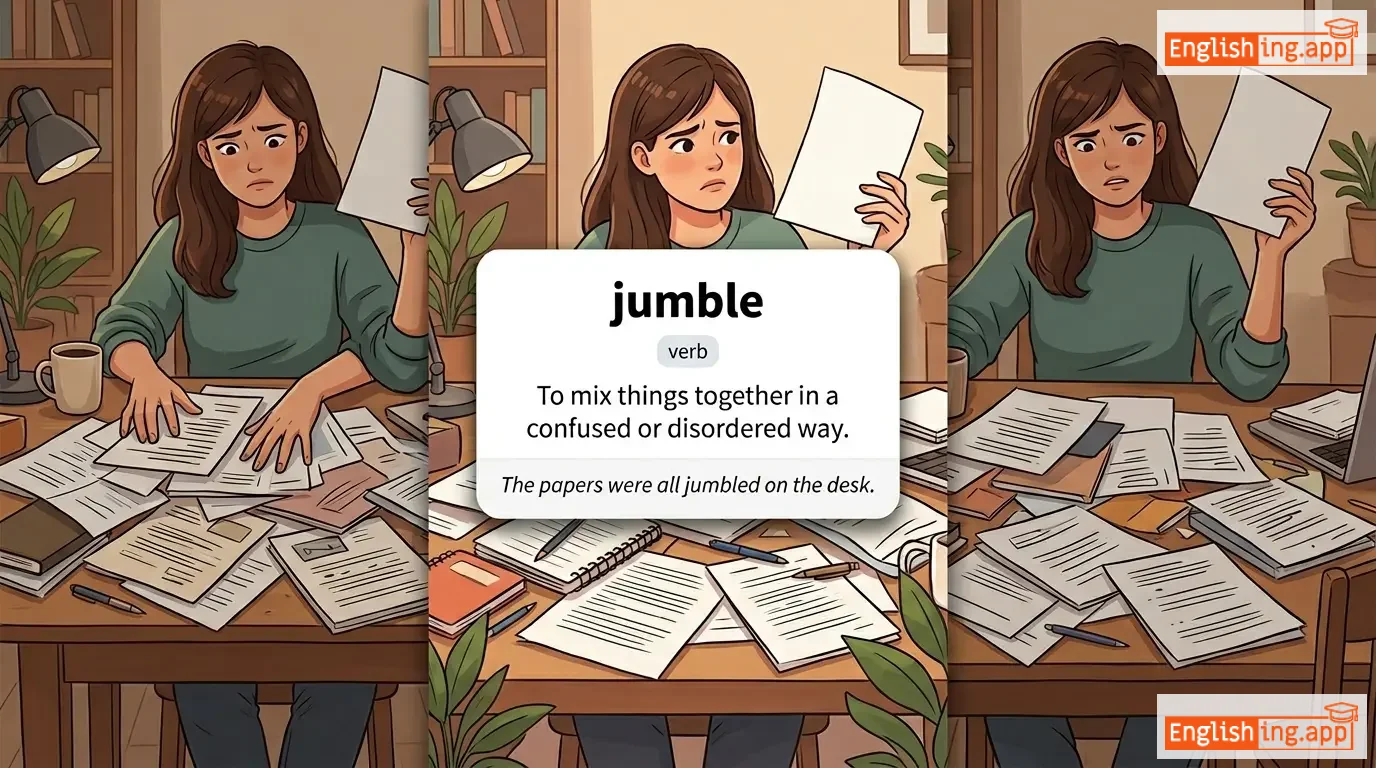
jumble definition card — visual illustration of the meaning
verb
/ˈdʒʌmbəl/
перемешивать (peremeshivat)

To mix things together in a confused or disordered way.

"The papers were all jumbled on the desk."
"Бумаги были все перемешаны на столе." (Bumagi byli vse peremeshany na stole.)
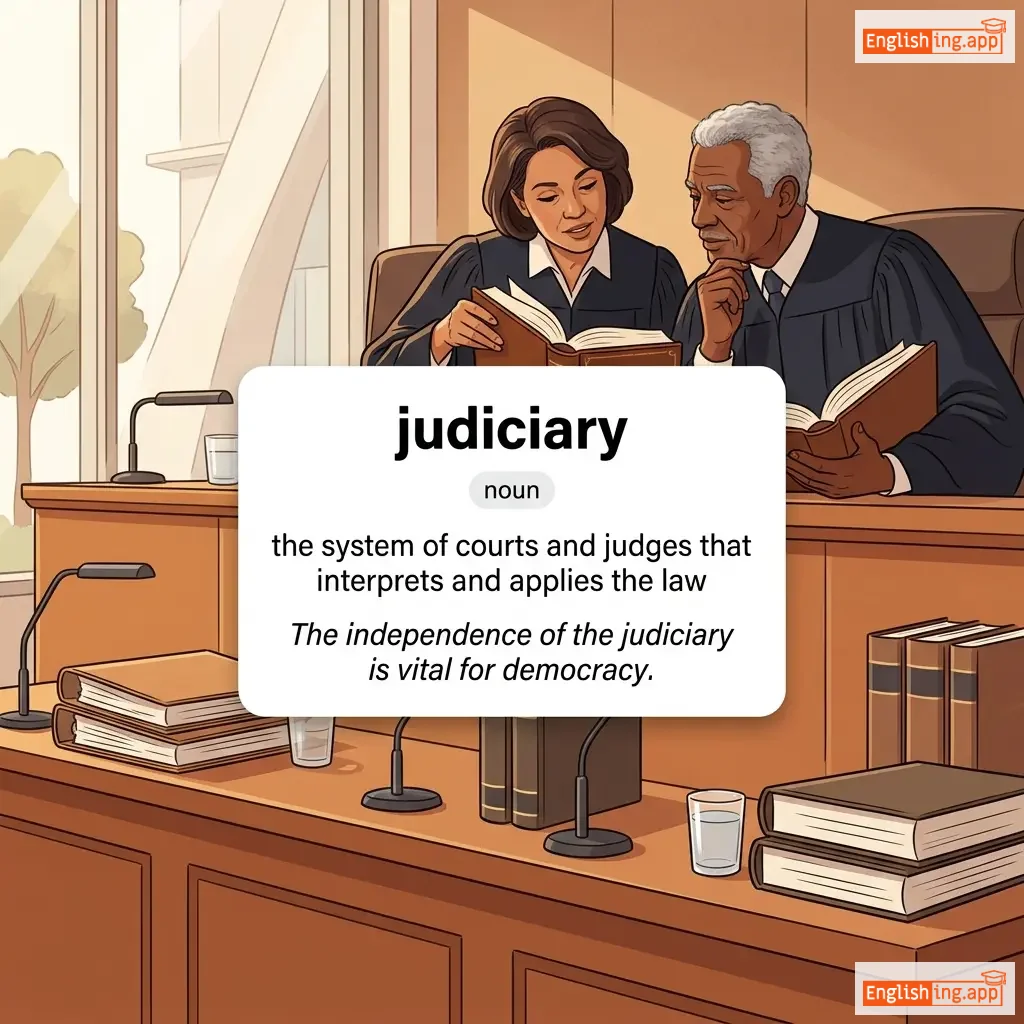
judiciary definition card — visual illustration of the meaning
noun
/dʒuːˈdɪʃ.i.er.i/
судебная власть (sudebnaya vlast)

the system of courts and judges that interprets and applies the law

"The independence of the judiciary is vital for democracy."
"Независимость судебной власти имеет решающее значение для демократии." (Nezavisimost' sudebnoy vlasti imeet reshayushchee znachenie dlya demokratii.)
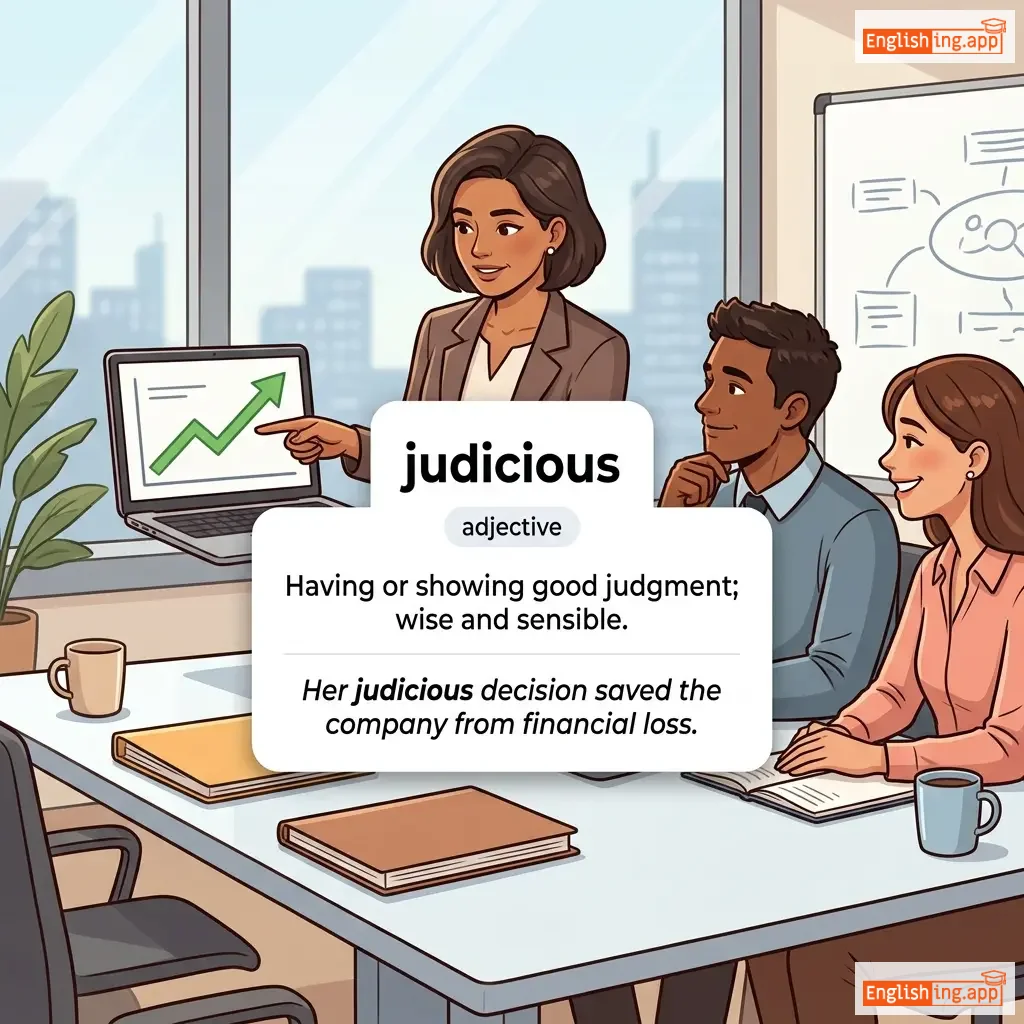
judicious definition card — visual illustration of the meaning
adjective
/dʒuːˈdɪʃəs/
благоразумный (blagorazumnyy)

Having or showing good judgment; wise and sensible.

"Her judicious decision saved the company from financial loss."
"Ее благоразумное решение спасло компанию от финансовых потерь." (Eyo blagorazumnoye resheniye spaslo kompaniyu ot finansovykh potery.)
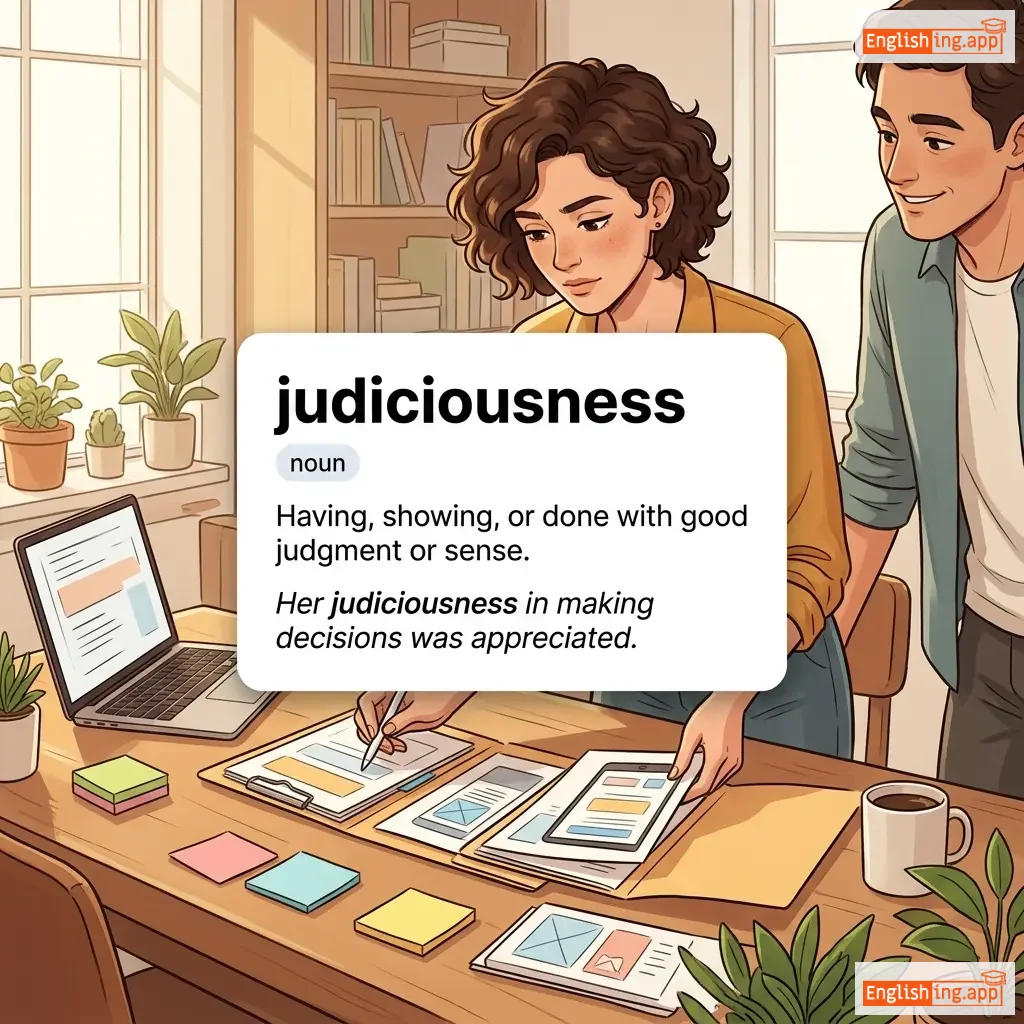
judiciousness definition card — visual illustration of the meaning
noun
dʒʊˈdɪʃəsnɪs
разумность, благоразумие (razumnost, blagorazumie)

Having, showing, or done with good judgment or sense.

"Her judiciousness in making decisions was appreciated."

"Её благоразумие при принятии решений было оценено." (Yeyo blagorazumie pri prinyatii resheniy bylo otseneno.)
noun
/dʒʌɡ/
счастье (schast'ye)

A large container used for holding and pouring liquids.

"She filled a jug with fresh water from the well."
"Она не могла скрыть своего счастья, когда получила награду." (Ona ne mogla skryt' svoego schast'ya, kogda poluchila nagradu.)
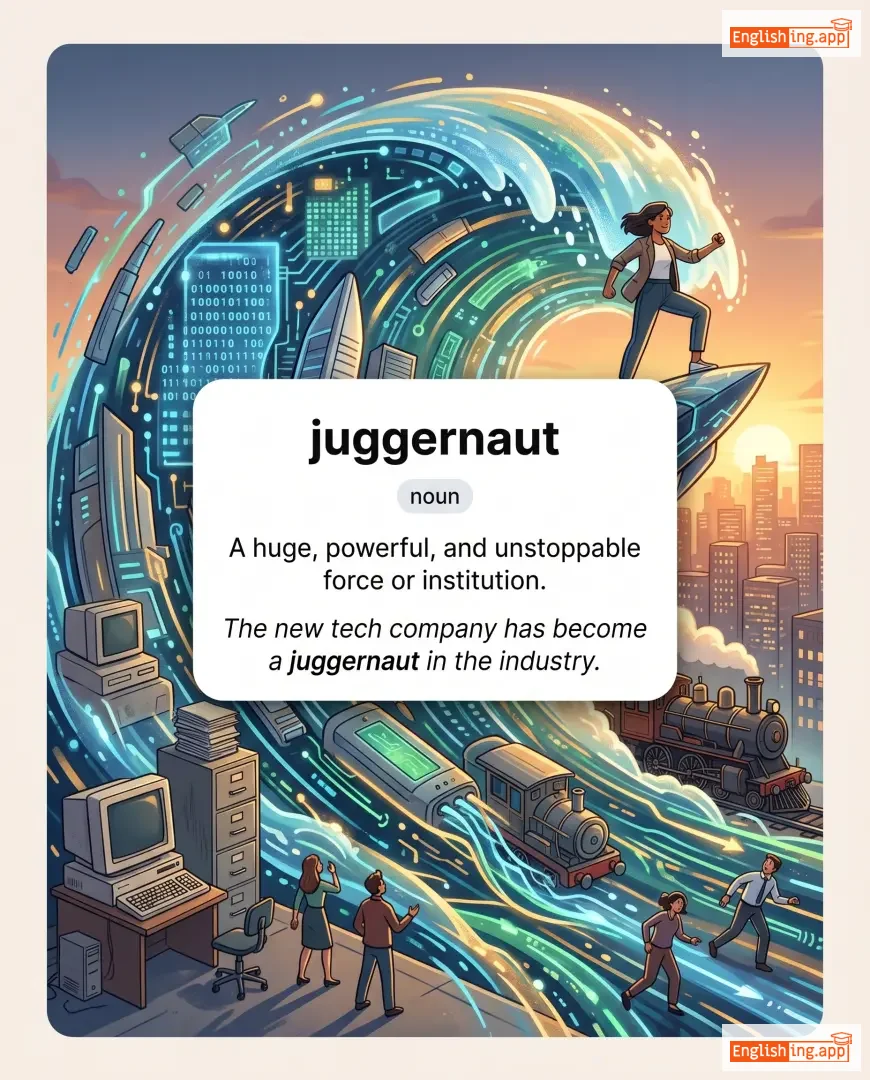
juggernaut definition card — visual illustration of the meaning
noun
/ˈdʒʌɡərˌnɔːt/
непреодолимая сила (nepreodolimaya sila)

A huge, powerful, and unstoppable force or institution.

"The new tech company has become a juggernaut in the industry."

"Новая технологическая компания стала непреодолимой силой в индустрии." (Novaya tekhnologicheskaya kompaniya stala nepreodolimoy siloy v industrii.)
verb
/ˈdʒʌɡəl/
жонглировать (zhonglirovat)

To continuously toss and catch objects in the air; to manage many tasks at the same time.

"He tried to juggle work, studies, and family responsibilities."
"Он пытался совмещать работу, учебу и семейные обязанности." (On pytalsya sovmeshchat' rabotu, uchebu i semeynye obyazannosti.)
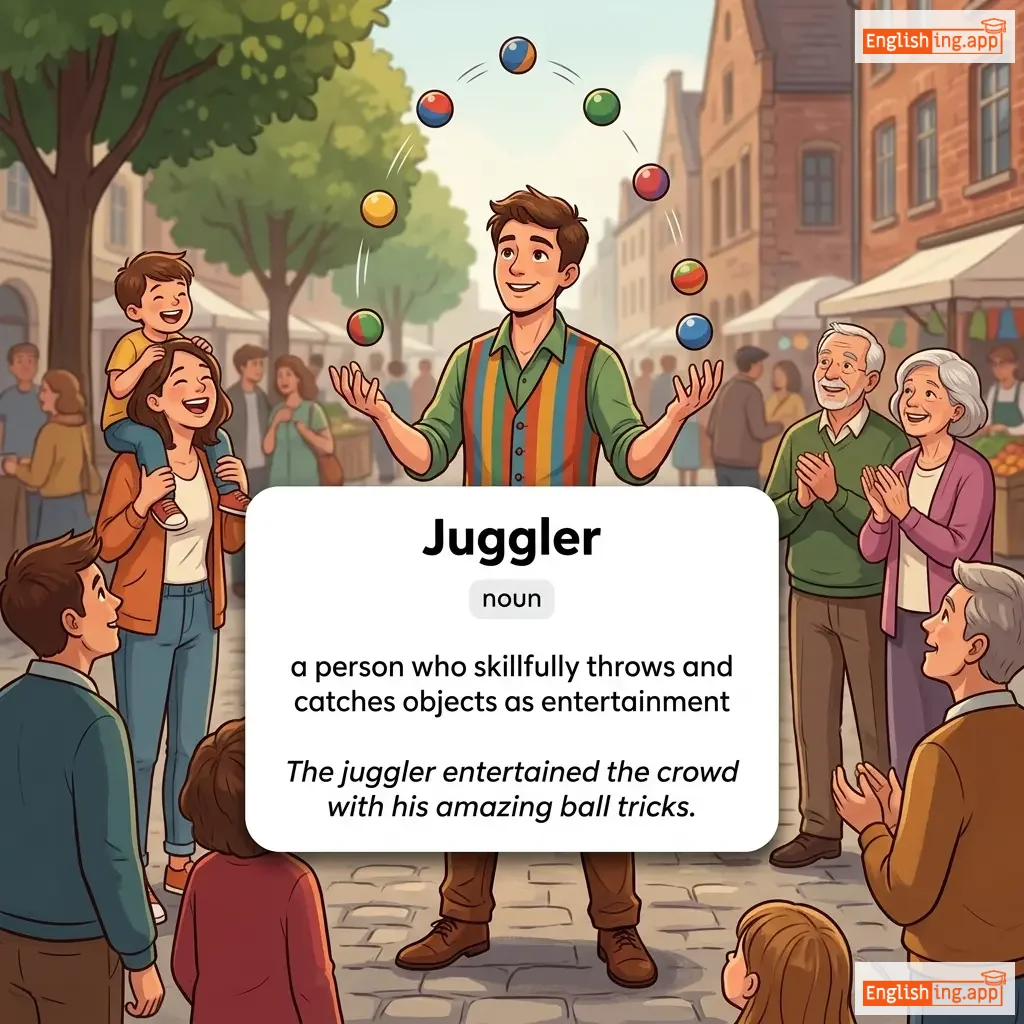
Juggler definition card — visual illustration of the meaning
noun
/ˈdʒʌɡ.lər/

a person who skillfully throws and catches objects as entertainment

"The juggler entertained the crowd with his amazing ball tricks."

noun
/ˈdʒʌɡləri/
жонглирование (zhonglirovaniye)

The performance of tricks and illusions, especially by sleight of hand.

"The magician's jugglery amazed the audience."

"Жонглирование мага поразило зрителей." (Zhonklirovaniye maga porazilo zritelyey.)
noun
/ˈdʒʌɡjələr/
яремная вена (yaremnaya vena)

A large vein in the neck that carries blood from the head back to the heart.

"The doctor checked the patient's jugular vein for signs of pressure."

"Врач проверил яремную вену пациента на наличие признаков давления." (Vrach proveryl yaremnuyu venu patsiyenta na nalichiye priznakov davleniya.)
noun
/dʒuːs/
сок (sok)

the liquid obtained from fruits, vegetables, or meat; also refers to energy or power in informal use

"She drank a glass of orange juice with breakfast."

"Она выпила стакан апельсинового сока за завтраком." (Ona vypila stakan apelsinovogo soka za zavtrakom.)
adjective
/ˈdʒuːsi/
сочный (sochnyy)

Full of juice; succulent; also used to describe something exciting or scandalous.

"The steak was so juicy that it melted in my mouth."

"Стейк был настолько сочным, что таял во рту." (Steyk byl nastol'ko sochnym, chto tayał vo rtu.)
noun
/dʒuˈlaɪ/
июль (iyul)

the seventh month of the year in the Gregorian calendar

"July is often the hottest month of the year."

"Июль часто самый жаркий месяц года." (iyul chasto samyy zharkiy mesyats goda)
noun
/dʒuːn/
июнь (iyun)

the sixth month of the year in the Gregorian calendar

"Schools often close for summer vacation in June."
"Школы часто закрываются на каникулы в июне." (shkoly chasto zakryvayutsya na kanikuly v iyune)
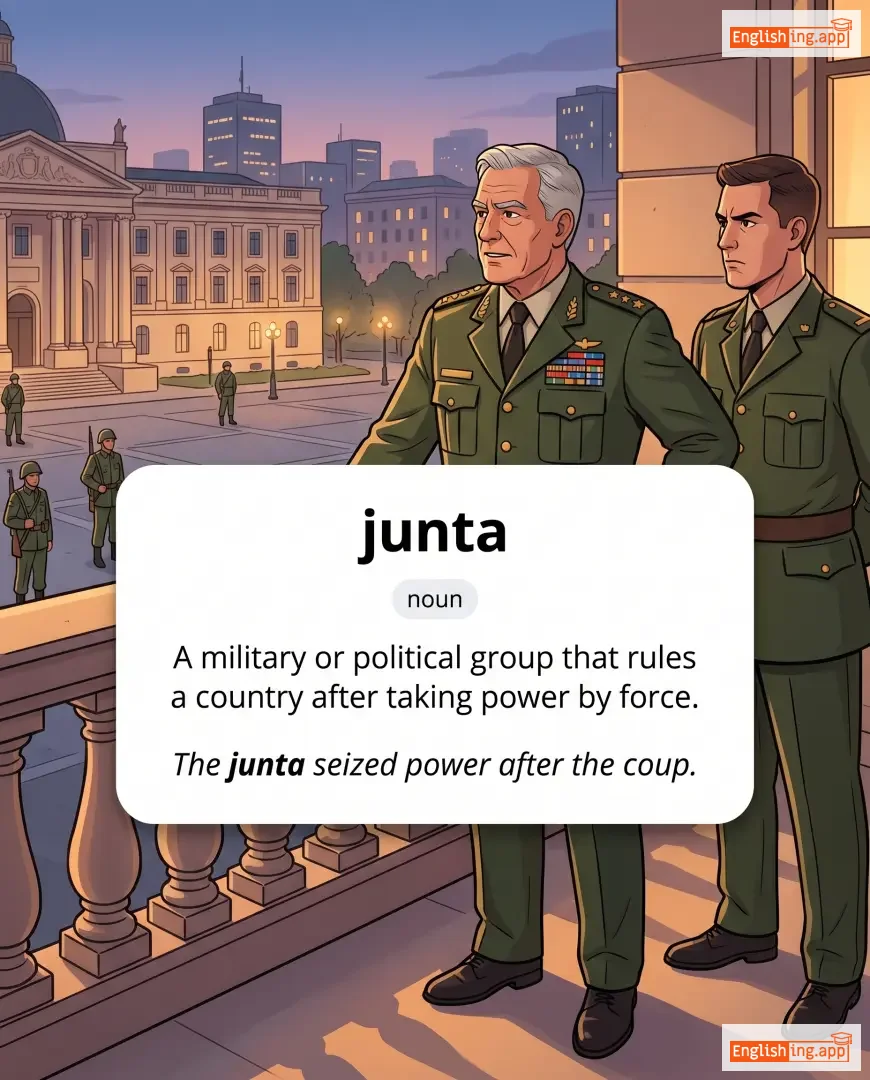
junta definition card — visual illustration of the meaning
noun
/ˈdʒʊntə/
военная хунта (voennaya khunta)

A military or political group that rules a country after taking power by force.

"The junta seized power after the coup."

"Хунта захватила власть после переворота." (Khunta zakhvatila vlast' posle perevorota.)
noun
/ˈdʒʌŋkɪt/
поездка или празднование (poezdka ili prazdnovanie)

A trip or celebration, often funded by someone else, usually for pleasure or promotional purposes.

"The company organized a junket for journalists to promote their new resort."

"Компания организовала поездку для журналистов, чтобы продвигать свой новый курорт." (Kompaniya organizovala poezdku dlya zhurnalistov, chtoby prodvigat' svoy novyy kurort.)
noun
/dʒʌŋk/
мусор; хлам (musor, khlam)

old or discarded articles that are considered useless or of little value; things of poor quality

"He cleaned out the garage and threw away all the old junk."

"Он почистил гараж и выбросил весь старый мусор." (On pochistil garazh i vybrosil ves' staryy musor.)
adjective, noun
/ˈdʒuːniər/
младший (mladshiy)

younger or lower in rank; also a student in the next-to-last year of high school or college

"He works as a junior officer in the company."

"Он работает младшим офицером в компании." (On rabotaet mladshim ofitserom v kompanii.)
Jungle definition card — visual illustration of the meaning
noun
/ˈdʒʌŋɡəl/
джунгли (dzhungli)

a dense forest, typically in a tropical region, filled with wild plants and animals

"They got lost in the thick jungle during their trip."

"Они заблудились в густых джунглях во время их путешествия." (Oni zabludilis' v gustykh dzhunglyakh vo vremya ikh puteshestviya.)
noun
/ˈdʒʌm.pər/
свитер; (sviter)

a knitted garment worn on the upper body; a person or animal that jumps

"She wore a warm woolen jumper during the cold winter evening."

"Она носила теплый шерстяной свитер в холодный зимний вечер." (Ona nosila teplyy sherstyanoy sviter v kholodnyy zimniy vecher.)
adjective
/ˈdʒʌm.boʊ/
чрезвычайно большое; гигантское (jumbo)

exceptionally large; enormous; gigantic

"The jumbo jet was delayed at the airport."
"Джамбо-джет был задержан в аэропорту." (Dzhambo-dzhet byl zaderzhan v aeroportu.)
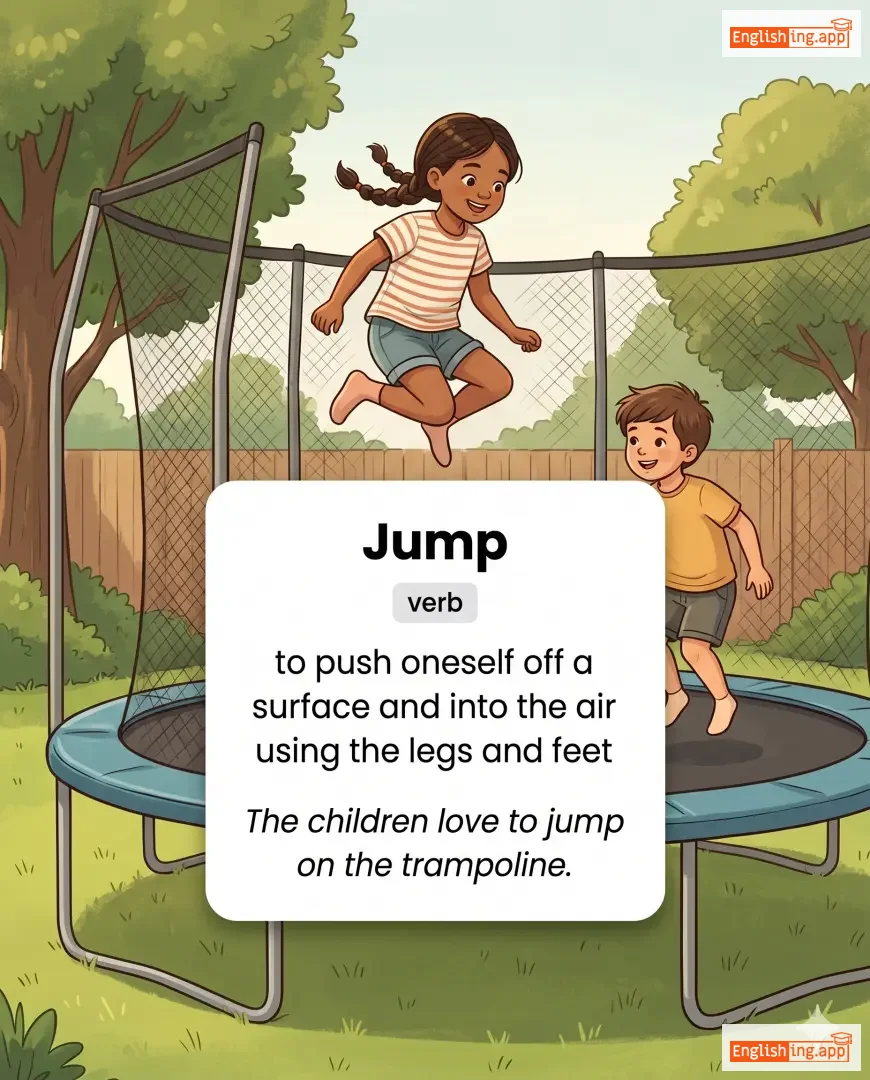
Jump definition card — visual illustration of the meaning
verb
/dʒʌmp/
прыгать (dzhamp)

to push oneself off a surface and into the air using the legs and feet

"The children love to jump on the trampoline."

"Дети любят прыгать на батуте." (Deti lyubyat prygat na batute.)
adjective
/dʒuːˈdɪʃ.əl/
судебный (sudebnyy)

relating to judges, courts, or the administration of justice

"The new law faced strong judicial review before implementation."

"Новый закон прошел строгую судебную проверку перед вступлением в силу." (Novyy zakon proshel stroguyu sudebnuyu proverku pered vstupleniem v silu.)
noun
/ˈdʒʌŋkʃən/
перекрёсток (perekryostok)

A place where two or more roads or things meet or are joined.

"The car stopped at the busy junction."

"Машина остановилась на оживлённом перекрёстке." (Mashina ostanovilas na ozhivlennom perekryostke.)
noun
/ˈdʒʌŋktʃər/
критический момент (kriticheskiy moment)

A particular point in time or a critical moment.

"At this critical juncture, we must make the right decision."

"В этот критический момент мы должны принять правильное решение." (V etot kriticheskiy moment my dolzhny prinimat' pravil'noye resheniye.)