Словари

Словарь английского языка | Значения слов, определения и примеры
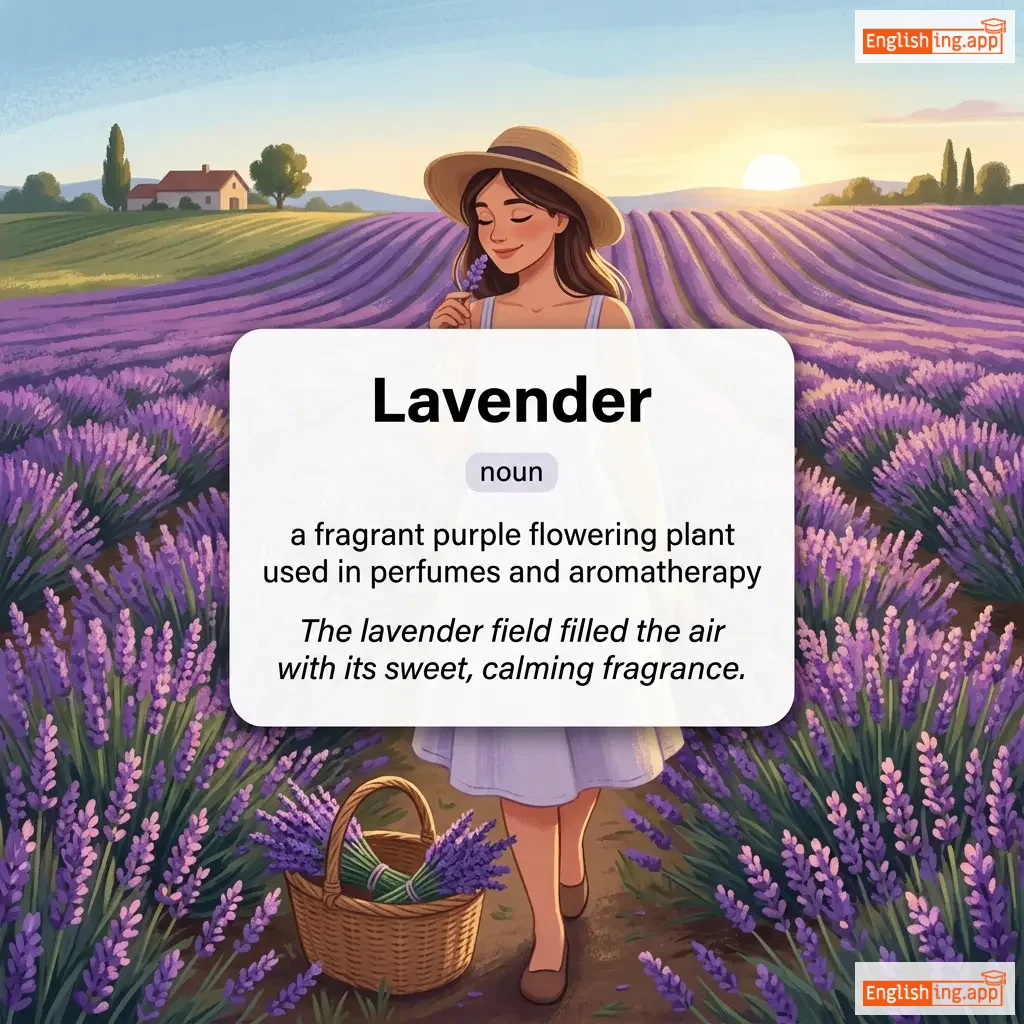
Lavender definition card — visual illustration of the meaning
noun
/ˈlæv.ən.dər/
лаванда (lavanda)

a fragrant purple flowering plant used in perfumes and aromatherapy

"The lavender field filled the air with its sweet, calming fragrance."

"Лаванда наполнила воздух своим сладким, успокаивающим ароматом." (Lavanda napolnila vozdukh svoim sladkim, uspokaivayushchim aromatom.)
adjective, verb
/ˈlævɪʃ/
роскошный, расточительный (lavish)

Rich, elaborate, or luxurious; to bestow something in generous or extravagant quantities.

"They gave her a lavish wedding reception with hundreds of guests."
"Они устроили для неё роскошный свадебный прием с сотнями гостей." (Oni ustroili dlya nee roskoshnyy svadebnyy priyem s sotnyami gostey.)
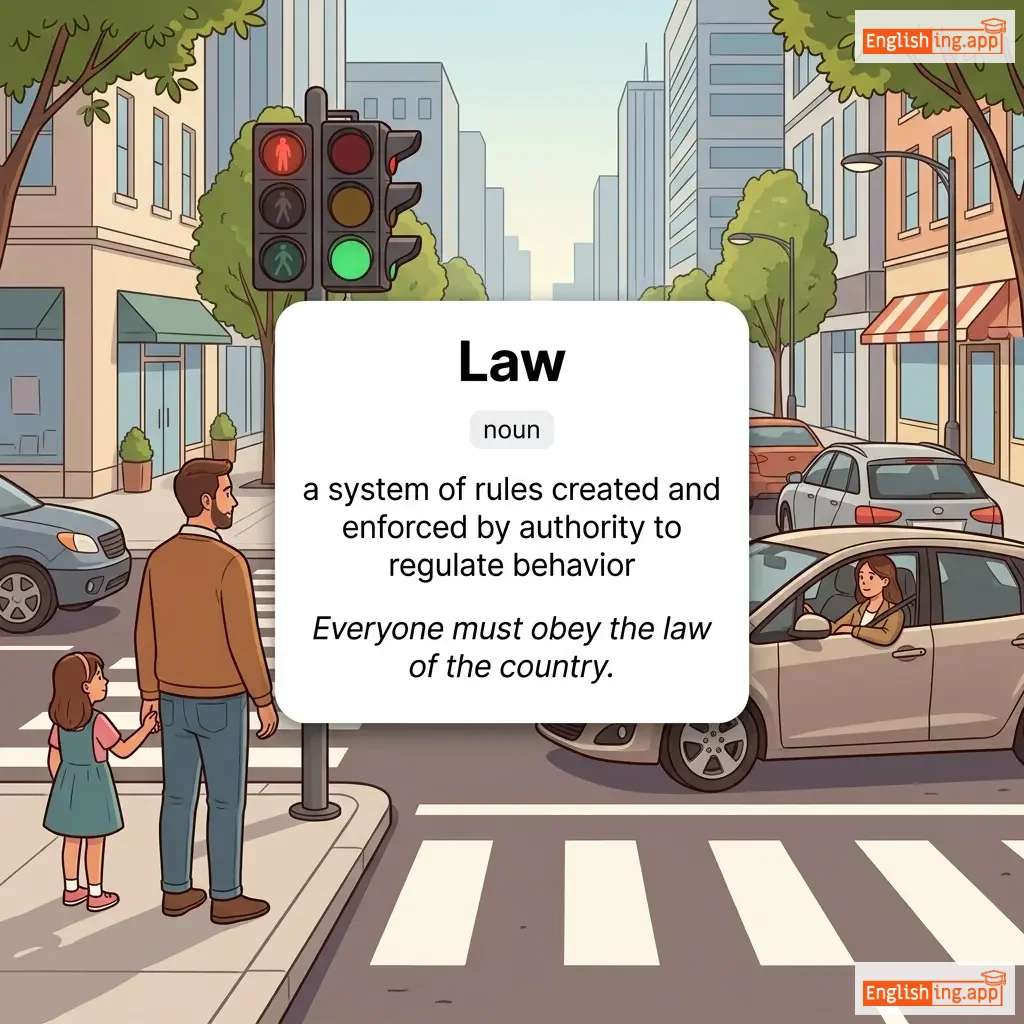
Law definition card — visual illustration of the meaning
noun
/lɔː/
закон (zakon)

a system of rules created and enforced by authority to regulate behavior

"Everyone must obey the law of the country."

"Все должны соблюдать закон страны." (Vse dolzhny soblyudat' zakon strany.)
adjective
/ˈlɔː.fəl/
законный; легитимный; действительный; справедливый; (zakonnyj; legitimnyj; dejstvitel'nyj; spravedlivyj;)

legal; legitimate; valid; just

"The judge confirmed that their actions were lawful and proper."

"Судья подтвердил, что их действия были законными и правильными." (Sud'ya podtverdit, chto ikh deystviya byli zakonny i pravil'ny.)
noun
/ˈlɔːˌɡɪvər/
законодатель (zakonodatel)

A person who creates or enforces laws; a legislator.

"Moses is often regarded as a great lawgiver in history."

"Моисей часто рассматривается как великий законодатель в истории." (Moisey chasto rassmatrivayetsya kak velikiy zakonodatel v istorii.)
adjective
/ˈlɔː.ləs/
беззаконие; анархия; беспорядок; преступник (bezzakonije; anarkhiya; besporyadok; prestupnik)

without law; anarchic; unruly; criminal

"The frontier town was known for its lawless behavior and chaos."

"Приграничный город был известен своим беззаконием и хаосом." (Prigranichnyy gorod byl izvesten svoim bezzakoniyem i khaosom.)
noun
/ˈlɔː.ləs.nəs/
беззаконие (bezzakonije)

absence of law and order; a state where laws do not exist or are not enforced

"The city descended into lawlessness after the government collapsed."

"Город погрузился в беззаконие после того, как правительство развалилось." (Gorod pogruzilsia v bezzakonije posle togo, kak pravitel'stvo razvalilos'.)
noun
/ˈlɔːˌmeɪkər/
законодатель (zakonodatel)

A member of a legislative body who makes laws.

"The lawmaker introduced a new bill on education reform."

"Законодатель представил новый законопроект о реформе образования." (Zakonodatel predstavil novyj zakonoproekt o reforme obrazovanija.)
noun
/lɔːn/
газон (gazon)

an area of short, regularly cut grass in a yard or park

"Children were playing on the green lawn."

"Дети играли на зелёной лужайке." (Deti igrali na zelyonoy luzhayke.)
noun
/ˈlɔːsuːt/
иск (isk)

a legal case brought to a court of law by one person against another

"The company faced a lawsuit over false advertising."

"Компания столкнулась с иском за ложную рекламу." (Kompaniya stolknulas' s iskom za lozhnuyu reklamu.)
Lawyer definition card — visual illustration of the meaning
noun
/ˈlɔːjər/
адвокат (advokat)

A professional who practices or studies law; an attorney.

"The lawyer presented the case confidently in court."

"Адвокат уверенно представил дело в суде." (Advokat uverenno predstavil delo v sude.)
adjective
/læks/
небрежный, расслабленный (lax)

Not strict, severe, or careful; negligent or careless.

"The security at the airport was surprisingly lax."

"Безопасность в аэропорту была удивительно нестрогой." (Bezopasnost' v aeroporte byla udivitel'no nestrogoi.)
noun, adjective
/ˈlæksətɪv/
слабительное (slabitelnoye)

A medicine or substance that stimulates bowel movements; tending to loosen or relieve constipation.

"The doctor prescribed a mild laxative for her condition."

"Врач прописал мягкое слабительное для её состояния." (Vrach propisal myagkoye slabitelnoye dlya yeye sostoyaniya.)
lay definition card — visual illustration of the meaning
verb
/leɪ/
положить (polozhit)

To put something down carefully in a flat position.

"She laid the book on the table."

"Она положила книгу на стол." (Ona polozhila knigu na stol.)
noun
/ˈleɪər/
слой (sloy)

A sheet, thickness, or coating of something that lies over or under a surface.

"The cake had a layer of cream between the sponges."

"Торт имел слой крема между бисквитами." (Tort imel sloy krema mezhdu biskvitami.)
noun
/ˈleɪmən/
непрофессионал (neprofessional)

A person without professional or specialized knowledge in a particular subject.

"To a layman, the medical explanation was confusing."

"Для непрофессионала медицинское объяснение было сбивающим с толку." (Dlya neprofessional'a meditsinskoe ob'yasnenie bylo sbivayushchim s tolkum.)
noun
/ˈleɪaʊt/
макет (maket)

the arrangement or design of something, especially the arrangement of elements in a book, webpage, or room

"The designer presented a new layout for the website that was much more user-friendly."

"Дизайнер представил новый макет для веб-сайта, который был гораздо более удобным для пользователя." (Dizajner predstavил novyj maket dlya veb-sajta, kotoryj byl gorazdo bolee udobnym dlya pol'zovatelya.)
noun
/ˈleɪˌpɜːrsən/
непрофессионал (neprofessional)

A person who is not a member of the clergy or does not have specialized knowledge in a subject.

"The judge explained the law so that the layperson could understand."

"Судья объяснил закон так, чтобы непрофессионал мог его понять." (Sud'ya ob'yasnil zakon tak, chtoby neprofessional mog ego ponyat'.)
adverb
/ˈleɪ.zɪ.li/
лениво (lenivo)

in a way that shows unwillingness to work or use energy; sluggishly

"He lazily stretched his arms and yawned in the morning."

"Он лениво потянул руки и зевнул утром." (On lenivo potyanul ruki i zevnuł utrom.)
noun
/ˈleɪ.zi.nəs/
лень (len)

the quality of being unwilling to work or use energy; idleness

"His laziness prevented him from achieving his goals."

"Его лень помешала ему достичь своих целей." (Ego len' pomeshala emu dostich' svoikh tseley)
adjective
/ˈleɪ.zi/
ленивый; неохотный работать (lenivyy; neokhotny rabotat)

idle; unwilling to work; sluggish

"He was too lazy to clean his room on the weekend."

"Он был слишком ленив, чтобы на выходных убрать свою комнату." (On byl slishkom leniv, chtoby na vykhodnykh ubrat' svoju komnatu.)
noun
/liː/
луг (lug)

An open area of grassy or arable land; a meadow.

"The cottage was surrounded by a quiet lea."
"Коттедж был окружен тихим луговым участком." (Kottedzh byl okruzhion tikhim lugovym uchastkom.)
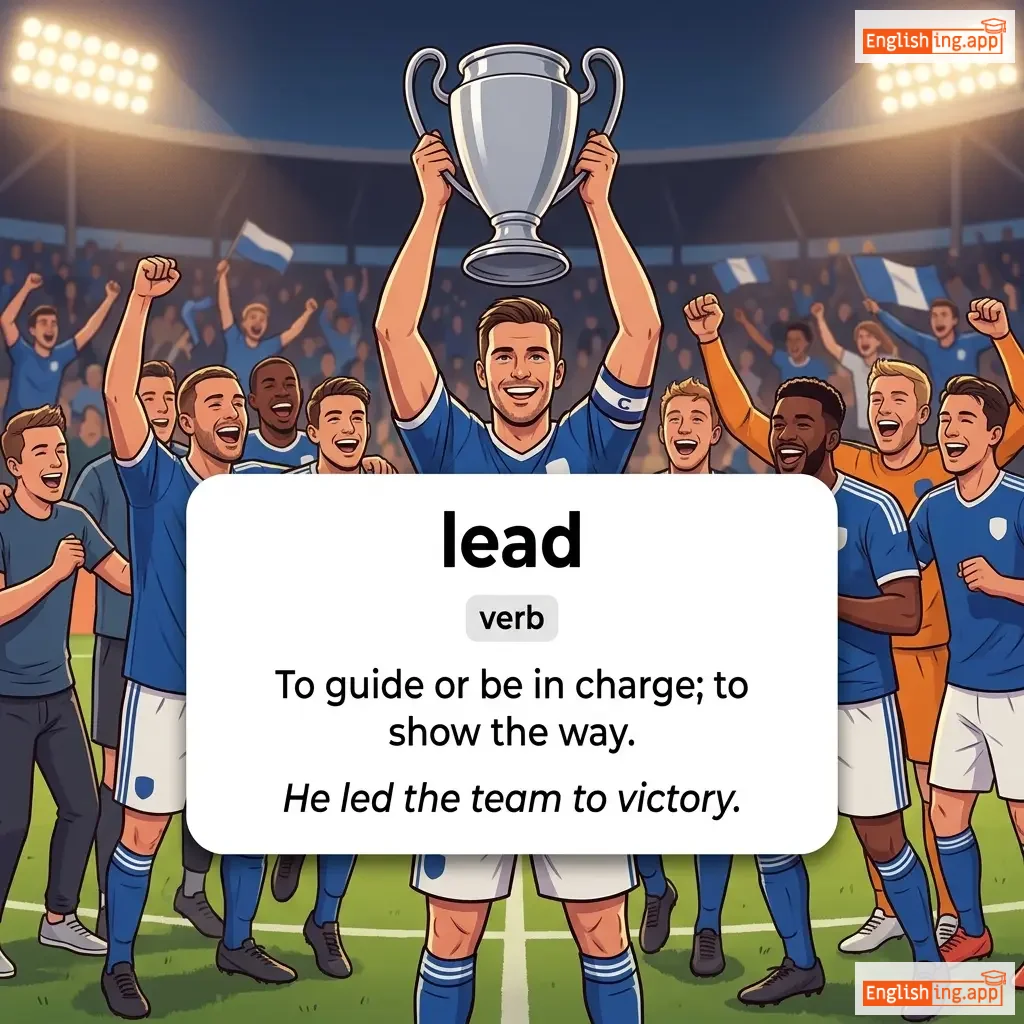
lead definition card — visual illustration of the meaning
verb
/liːd/
вести (vesti)

To guide or be in charge; to show the way.

"He led the team to victory."

"Он повел команду к победе." (On povel komandu k pobede.)
leader definition card — visual illustration of the meaning
noun
/ˈliːdər/
лидер (lider)

A person who leads a group, organization, or country.

"The leader inspired the team with his vision."

"Лидер вдохновил команду своей визией." (Lider vdokhnovil komandu svoej viziej.)
leadership definition card — visual illustration of the meaning
noun
/ˈliːdərˌʃɪp/
лидерство (liderstvo)

The action of leading a group of people or an organization.

"Her leadership inspired the entire team to achieve their goals."

"Ее лидерство вдохновило всю команду на достижение своих целей." (Yeyo liderstvo vdokhnovilo vsyu komandu na dostizheniye svoikh tseley.)
adjective
/ˈliːdɪŋ/
ведущий (vedushchiy)

most important or most successful; at the front

"She is one of the leading experts in the field."

"Она одна из ведущих экспертов в этой области." (Ona odna iz vedushchikh eksperty v etoy oblasti.)
legal definition card — visual illustration of the meaning
adjective
/ˈliːɡəl/
юридический (yuridicheskiy)

relating to the law

"He sought legal advice before signing the contract."

"Он искал юридическую консультацию перед подписанием контракта." (On iskal yuridicheskuyu konsultatsiyu pered podpisaniem kontrakta.)
noun
/ˈlɛktʃərər/
лектор (lektor)

a person who gives lectures, especially at a college or university

"The lecturer explained the theory with clear examples."

"Лектор объяснил теорию на понятных примерах." (Lektor obyasnil teoriyu na ponyatnykh primerakh)
noun
/ˈledʒ.ər/
главная книга (glavnaya kniga)

a book or other collection of financial accounts of a particular type

"The accountant updated the company ledger daily."

"Бухгалтер обновил главный журнал компании ежедневно." (Bukhgalter obnovil glavniy zhurnal kompanii ezhednevno.)
Leech definition card — visual illustration of the meaning
noun
/liːt͡ʃ/
пиявка (piyavka)

a blood-sucking worm that lives in water or moist ground

"The doctor used a medical leech to reduce swelling after surgery."

"Врач использовал медицинскую пиявку, чтобы уменьшить отек после операции." (Vrach ispol'zoval meditsinskuyu piyavku, chtoby umenshit' otek posle operatsii)
Leek definition card — visual illustration of the meaning
noun
/liːk/
лук-порей (luk-porey)

vegetable related to onion with long green leaves and white bulb, milder than onion

"The soup was made with potatoes and leeks."

"Суп был приготовлен из картошки и лука-порея." (Sup byl prigotovlen iz kartoshki i luka-poreya.)
verb
/lɪr/
похотливый взгляд (pokhotlivyy vzglyad)

To look at someone in an unpleasant, sly, or sexually suggestive way.

"He leered at her in a way that made her uncomfortable."

"Он смотрел на неё так, что она почувствовала себя неловко." (On smotrel na ney tak, chto ona pochuvstvovala sebya nelovko.)
adjective
/ˈlɪəri/
подозрительный (podozritel'nyy)

Cautious or wary due to suspicion or distrust.

"She was leery of investing in the new business."

"Она была подозрительна к инвестированию в новый бизнес." (Ona byla podozritel'na k investirovaniyu v novyy biznes.)
adjective
/ˈliːwərd/
защищенная сторона от ветра (zashchishchennaya storona ot vetra)

On or toward the sheltered side away from the wind.

"They built their camp on the leeward side of the hill."

"Они поставили свой лагерь на защищенной стороне холма." (Oni postavili svoy lager' na zashchishchennoy storone kholma.)
noun
/ˈliːweɪ/
простор (prostor)

Freedom to act within certain limits; extra space or time.

"The manager gave the team some leeway to finish the project."
"Менеджер дал команде немного простора, чтобы завершить проект." (Menedzher dal komande nemnogo prostora, chtoby zavershit' proyekt.)
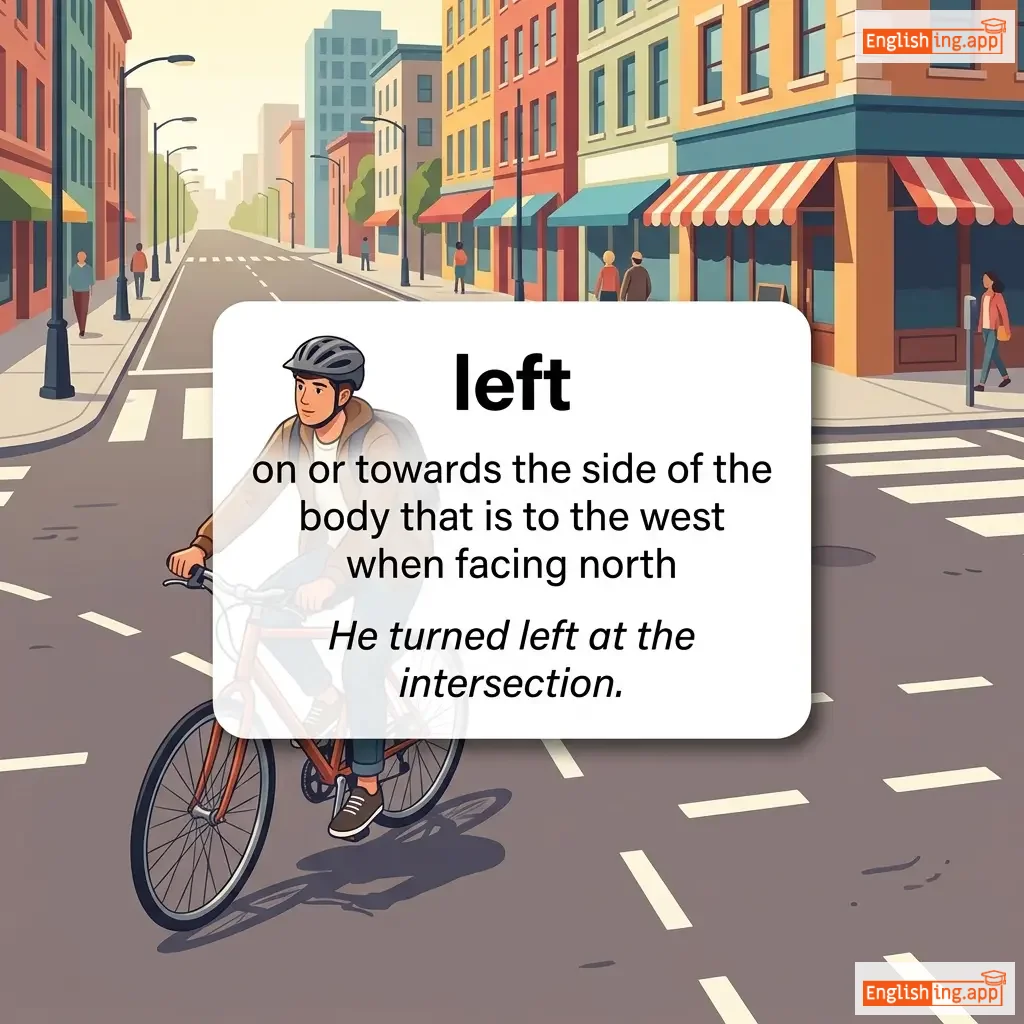
left definition card — visual illustration of the meaning
adjective, noun, adverb, verb (past tense of leave)
/lɛft/
налево (nalevo)

on or towards the side of the body that is to the west when facing north

"He turned left at the intersection."

"Он повернул налево на перекрестке." (On povernul nalevo na perekryostke.)
adjective
/ˌlɛftˈhændɪd/
левша (levsha)

Using or done with the left hand; also can mean clumsy or awkward.

"She is left-handed and writes beautifully with her left hand."

"Она левша и красиво пишет левой рукой." (Ona levsha i krasivo pishet levoy rukoy.)
noun
/lɛɡ/
нога (noga)

one of the limbs on which a person or animal walks and stands

"He injured his leg while playing football."

"Он повредил ногу, играя в футбол." (On povredil nogu, igraya v futbol.)
legacy definition card — visual illustration of the meaning
noun
/ˈlɛɡəsi/
наследие (nasledie)

Something handed down from the past, such as money, property, or traditions.

"Her artistic legacy continues to inspire young painters."

"Ее художественное наследие продолжает вдохновлять молодых художников." (Yeyo khudozhestvennoye naslediye prodolzhayet vdokhnovlyat' molodykh khudozhnikov.)
adjective
/ˈlɛdʒəndɛri/

remarkable enough to be famous; often used to describe something that is iconic or widely known

"The legendary musician performed in front of a packed stadium."

noun
/ˈdʒɑːr.ɡən/
жаргон (zhargon)

Specialized or technical language used by a particular group or profession.

"The lawyer’s explanation was full of legal jargon."

"Объяснение адвоката было полно юридического жаргона." (Ob'yasnenie advokata bylo polno yuridicheskogo zhargona.)
noun
/ˈliːdʒən/
большая группа людей, особенно солдат; большое количество (bolshaya gruppa lyudey, osobenno soldat; bol'shoye kolichestvo)

a large group of people, especially soldiers; a great number

"The Roman army was divided into legions."

"Римская армия была разделена на легионы." (Rimskaya armiya byla razdelena na legiony.)
adjective
/ˈlɛdʒəbl/
разборчивый (razborchivyy)

clear enough to read

"Her handwriting was barely legible."

"Её почерк был едва разборчив." (Yeyo pochek byl yedva razborchiv)
noun
/ˈlɛɡɪŋ/
тайтсы (taytsy)

tight-fitting stretch pants, typically worn by women for exercise or casual wear

"She bought a new pair of black leggings for the gym."

"Она купила новую пару черных леггинсов для тренажерного зала." (Ona kupila novuyu paru chernykh legginsov dlya trenazhernogo zala.)
noun
/ˌlɛdʒərdəˈmeɪn/
фокусы, обман (fokusy, obman)

skillful use of one's hands when performing tricks; deception or trickery

"The magician's legerdemain left the audience amazed."

"Фокусы мага поразили зрителей." (Fokusy maga porazili zriteley.)
adverb
/ˈliːɡəli/
законно (zakonno)

in a way that is allowed by law

"He is legally responsible for his actions."

"Он законно ответственен за свои действия." (On zakonno otvetstvenen za svoi deystviya)
noun
/lɪˈɡæl.ə.ti/
легальность (legalnost)

the quality or state of being legal; accordance with the law

"The lawyer questioned the legality of the contract."

"Адвокат поставил под сомнение легальность контракта." (Advokat postavil pod somnenie legal'nost' kontrakta.)
verb
/ˈliːɡəlaɪz/
узаконить (uzakonit)

To make something lawful by official approval.

"The government decided to legalize online businesses."
"Правительство решило узаконить онлайн-бизнес." (Pravitel'stvo reshilo uzakonit' onlayn-biznes.)
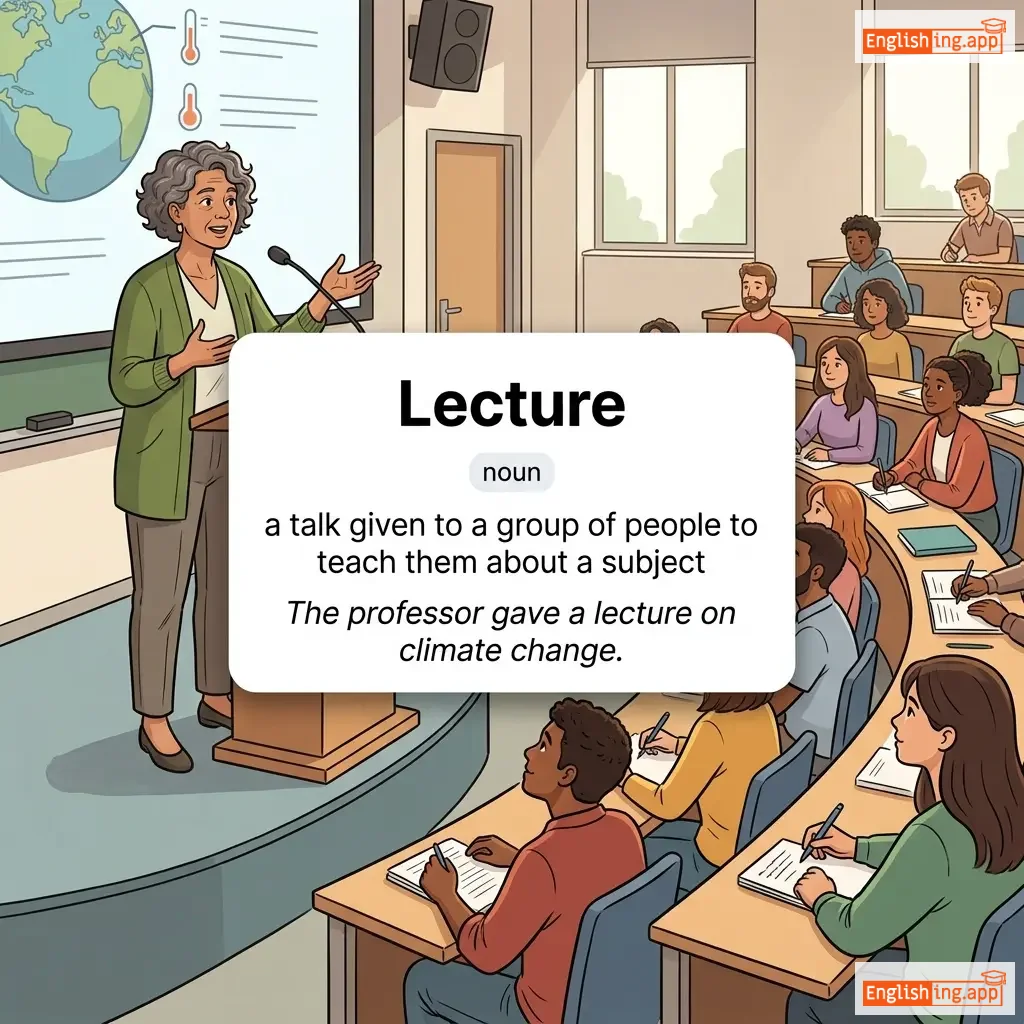
Lecture definition card — visual illustration of the meaning
noun
/ˈlektʃər/
лекция (lektsiya)

a talk given to a group of people to teach them about a subject

"The professor gave a lecture on climate change."

"Профессор прочитал лекцию о климатических изменениях." (Professor prochital lektsiyu o klimaticheskikh izmeneniyakh.)
adverb/adjective
/lɪˈɡɑːtoʊ/
в музыке, играется или поется плавно и соединенно (v muzyke, igraetsya ili poyetsya plavno i soyedinenno)

In music, played or sung smoothly and connectedly.

"The pianist played the passage legato, with each note flowing into the next."

"Пианист сыграл пассаж легато, каждая нота переходила в следующую." (Pianist sygral passazh legato, kazhdaya nota perekhodila v sleduyushchuyu.)