語彙集

英単語辞書 | 単語の意味、定義、例文

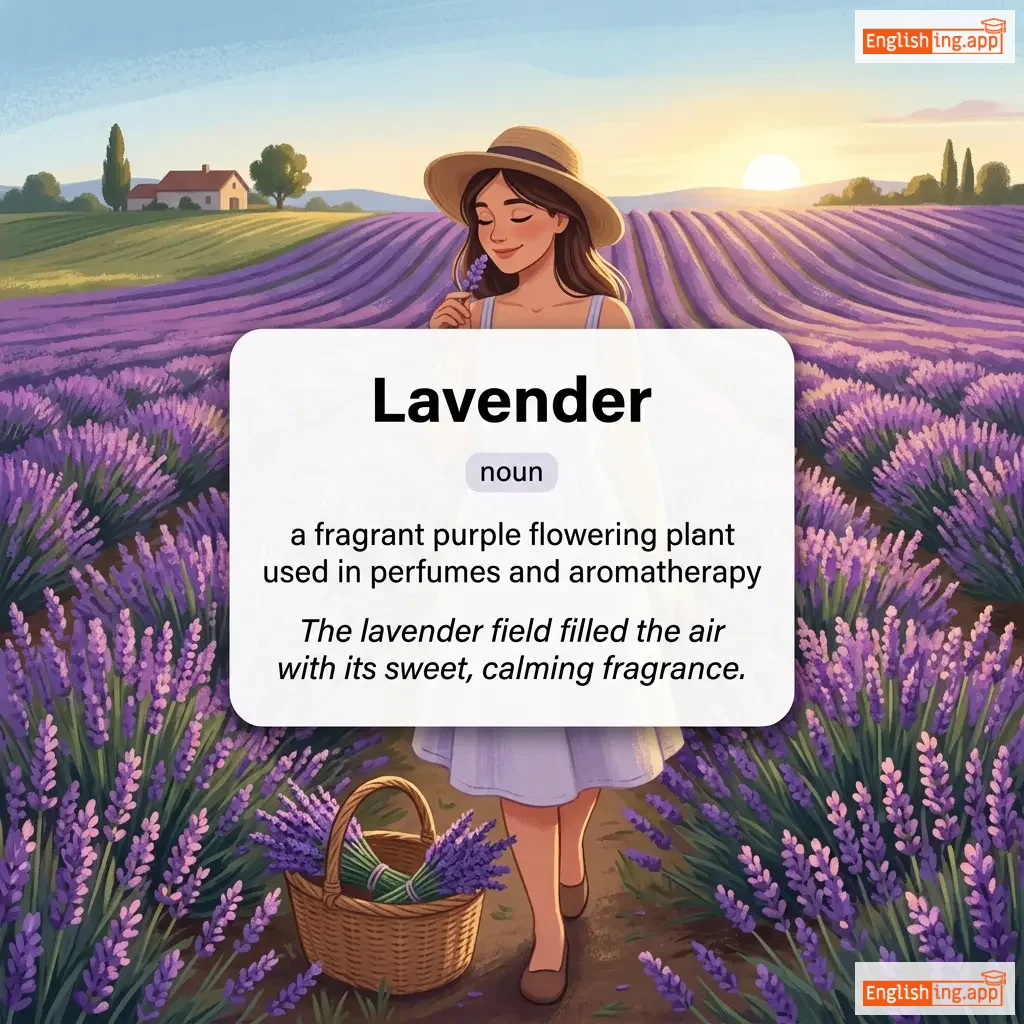
Lavender definition card — visual illustration of the meaning
noun
/ˈlæv.ən.dər/
ラベンダー (rabendā)

a fragrant purple flowering plant used in perfumes and aromatherapy

"The lavender field filled the air with its sweet, calming fragrance."

"ラベンダー畑は、その甘く落ち着く香りで空気を満たしました。" (Rabendā hatake wa, sono amaku ochitsuku kaori de kūki o mitashimashita.)
adjective, verb
/ˈlævɪʃ/
贅沢な、豪華な (lavish)

Rich, elaborate, or luxurious; to bestow something in generous or extravagant quantities.

"They gave her a lavish wedding reception with hundreds of guests."

"彼らは何百人ものゲストを招待して豪華な結婚式のレセプションを開いた。" (Karera wa nanbyakunin mo no gesuto o shoutai shite gōkana kekkonshiki no resepushon o hiraita.)
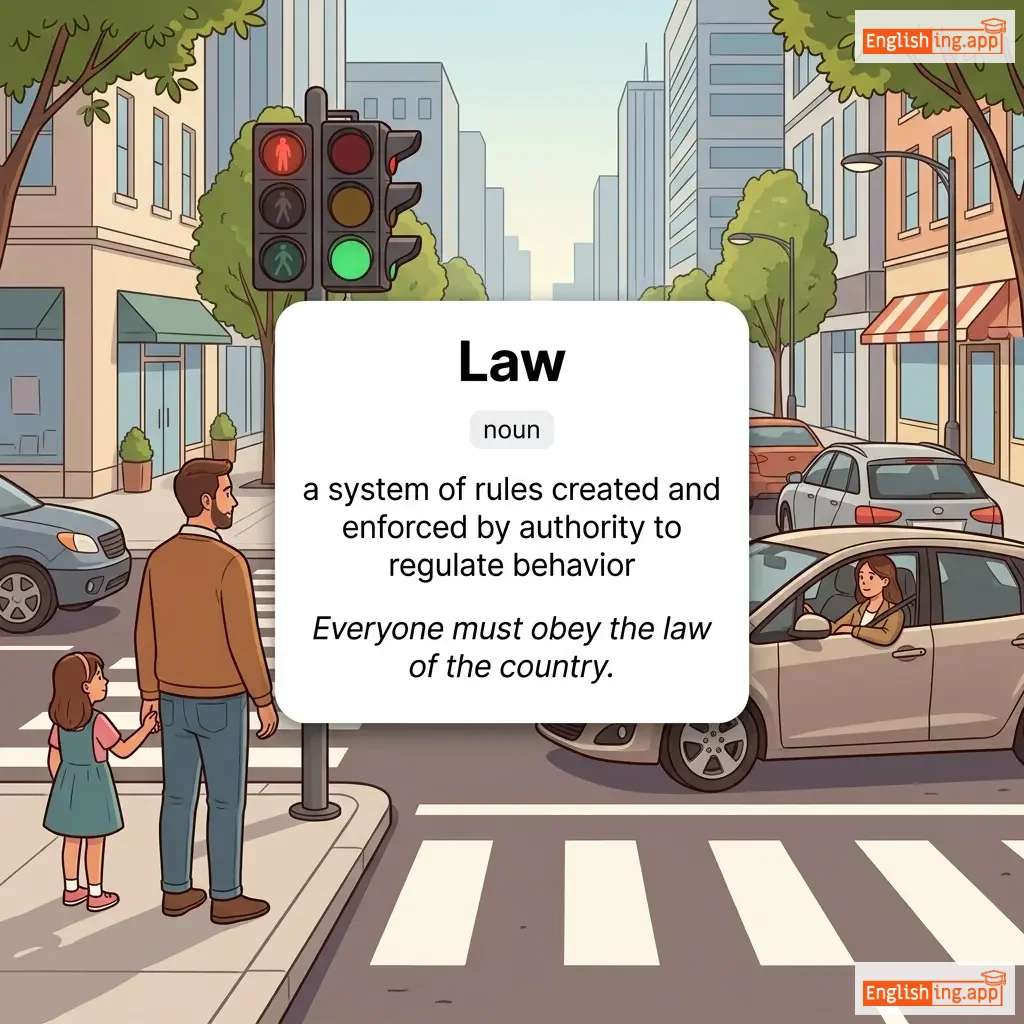
Law definition card — visual illustration of the meaning
noun
/lɔː/
法律 (hōritsu)

a system of rules created and enforced by authority to regulate behavior

"Everyone must obey the law of the country."

"誰もが国の法律に従わなければなりません。" (Dare mo ga kuni no hōritsu ni shitagawanakereba narimasen.)
adjective
/ˈlɔː.fəl/
合法的; 正当な; 有効; 公正; (gōhō-teki; seitōna; yūkō; kōsei;)

legal; legitimate; valid; just

"The judge confirmed that their actions were lawful and proper."

"裁判官は彼らの行動が合法で適切であることを確認しました。" (Saibankan wa karera no kōdō ga gōhō de tekisetsu de aru koto o kakunin shimashita.)
noun
/ˈlɔːˌɡɪvər/
立法者 (rippōsha)

A person who creates or enforces laws; a legislator.

"Moses is often regarded as a great lawgiver in history."

"モーセは歴史の中で偉大な立法者と見なされています。" (Mōse wa rekishi no naka de idaina rippōsha to minasareteimasu.)
adjective
/ˈlɔː.ləs/
無法; 無政府主義; 無秩序; 犯罪者 (muhō; muzōfushugi; muchitsujo; hanzai-sha)

without law; anarchic; unruly; criminal

"The frontier town was known for its lawless behavior and chaos."

"その国境の町は無法行為と混乱で知られていた。" (Sono kokkyō no machi wa muhō kōi to konran de shirarete ita.)
noun
/ˈlɔː.ləs.nəs/
無法状態 (muhou joutai)

absence of law and order; a state where laws do not exist or are not enforced

"The city descended into lawlessness after the government collapsed."

"政府の崩壊後、都市は無法状態に陥った。" (seifu no hōkai go, toshi wa muhō jōtai ni ochitta)
noun
/ˈlɔːˌmeɪkər/
立法者 (rippousha)

A member of a legislative body who makes laws.

"The lawmaker introduced a new bill on education reform."

"立法者は教育改革に関する新しい法案を提出しました。" (Rippousha wa kyōiku kaizen ni kansuru atarashī hōan o teishutsu shimashita.)
noun
/lɔːn/
芝生 (shibafu)

an area of short, regularly cut grass in a yard or park

"Children were playing on the green lawn."

"子供たちは緑の芝生の上で遊んでいました。" (Kodomotachi wa midori no shibafu no ue de asonde imashita.)
noun
/ˈlɔːsuːt/
訴訟 (soshō)

a legal case brought to a court of law by one person against another

"The company faced a lawsuit over false advertising."

"その会社は虚偽広告に関する訴訟に直面した。" (sono kaisha wa kyogi kōkoku ni kansuru soshō ni chokumen shita.)
Lawyer definition card — visual illustration of the meaning
noun
/ˈlɔːjər/
弁護士 (bengoshi)

A professional who practices or studies law; an attorney.

"The lawyer presented the case confidently in court."

"弁護士は自信を持って裁判所で事件を弁護しました。" (Bengoshi wa jishin o motte saiban-sho de jiken o bengo shimashita.)
adjective
/læks/
緩い, だらしない (lax)

Not strict, severe, or careful; negligent or careless.

"The security at the airport was surprisingly lax."

"空港のセキュリティは驚くほど緩かった。" (Kūkō no sekyuriti wa odoroku hodo yurukatta.)
noun, adjective
/ˈlæksətɪv/
下剤 (gezai)

A medicine or substance that stimulates bowel movements; tending to loosen or relieve constipation.

"The doctor prescribed a mild laxative for her condition."

"医者は彼女の状態のために軽い下剤を処方しました。" (Isha wa kanojo no joudai no tame ni karui gezai wo shohou shimashita.)
lay definition card — visual illustration of the meaning
verb
/leɪ/
置く (oku)

To put something down carefully in a flat position.

"She laid the book on the table."

"彼女は本をテーブルに置いた。" (Kanojo wa hon o teeburu ni oita.)
noun
/ˈleɪər/
(sō)

A sheet, thickness, or coating of something that lies over or under a surface.

"The cake had a layer of cream between the sponges."

"ケーキにはスポンジの間にクリームの層がありました。" (Kēki ni wa suponji no aida ni kurīmu no sō ga arimashita.)
noun
/ˈleɪmən/
素人 (shirouto)

A person without professional or specialized knowledge in a particular subject.

"To a layman, the medical explanation was confusing."

"素人にとって、医学の説明は混乱していた。" (shirouto ni totte, igaku no setsumei wa konran shite ita.)
noun
/ˈleɪaʊt/
レイアウト (reiauto)

the arrangement or design of something, especially the arrangement of elements in a book, webpage, or room

"The designer presented a new layout for the website that was much more user-friendly."

"デザイナーはウェブサイトのために新しいレイアウトを提示しました、それはもっとユーザーフレンドリーでした。" (Dezainā wa uebu saito no tame ni atarashī reiauto o teiji shimashita, sore wa motto yūzā furendorī deshita.)
noun
/ˈleɪˌpɜːrsən/
素人 (shirouto)

A person who is not a member of the clergy or does not have specialized knowledge in a subject.

"The judge explained the law so that the layperson could understand."

"裁判官は法を説明し、素人でも理解できるようにしました。" (Saibankan wa hō o setsumei shi, shirouto demo rikai dekiru yō ni shimashita.)
adverb
/ˈleɪ.zɪ.li/
怠惰に (taida ni)

in a way that shows unwillingness to work or use energy; sluggishly

"He lazily stretched his arms and yawned in the morning."

"彼は怠惰に腕を伸ばし、朝にあくびをした。" (Kare wa taida ni ude o nobashi, asa ni akubi o shita.)
noun
/ˈleɪ.zi.nəs/
怠惰 (taida)

the quality of being unwilling to work or use energy; idleness

"His laziness prevented him from achieving his goals."

"彼の怠惰さが彼の目標達成を妨げた。" (kare no taida ga kare no mokuhyou tassei o samatageteta)
adjective
/ˈleɪ.zi/
怠け者; 働きたくない (namakemono; hatarakitakunai)

idle; unwilling to work; sluggish

"He was too lazy to clean his room on the weekend."
"彼は週末に部屋を掃除するのが面倒だった。" (Kare wa shuumatsu ni heya o souji suru no ga mendou datta.)
noun
/liː/
草地 (koushi)

An open area of grassy or arable land; a meadow.

"The cottage was surrounded by a quiet lea."

"小屋は静かな草地に囲まれていました。" (Koya wa shizuka na koushi ni kakomarete imashita.)
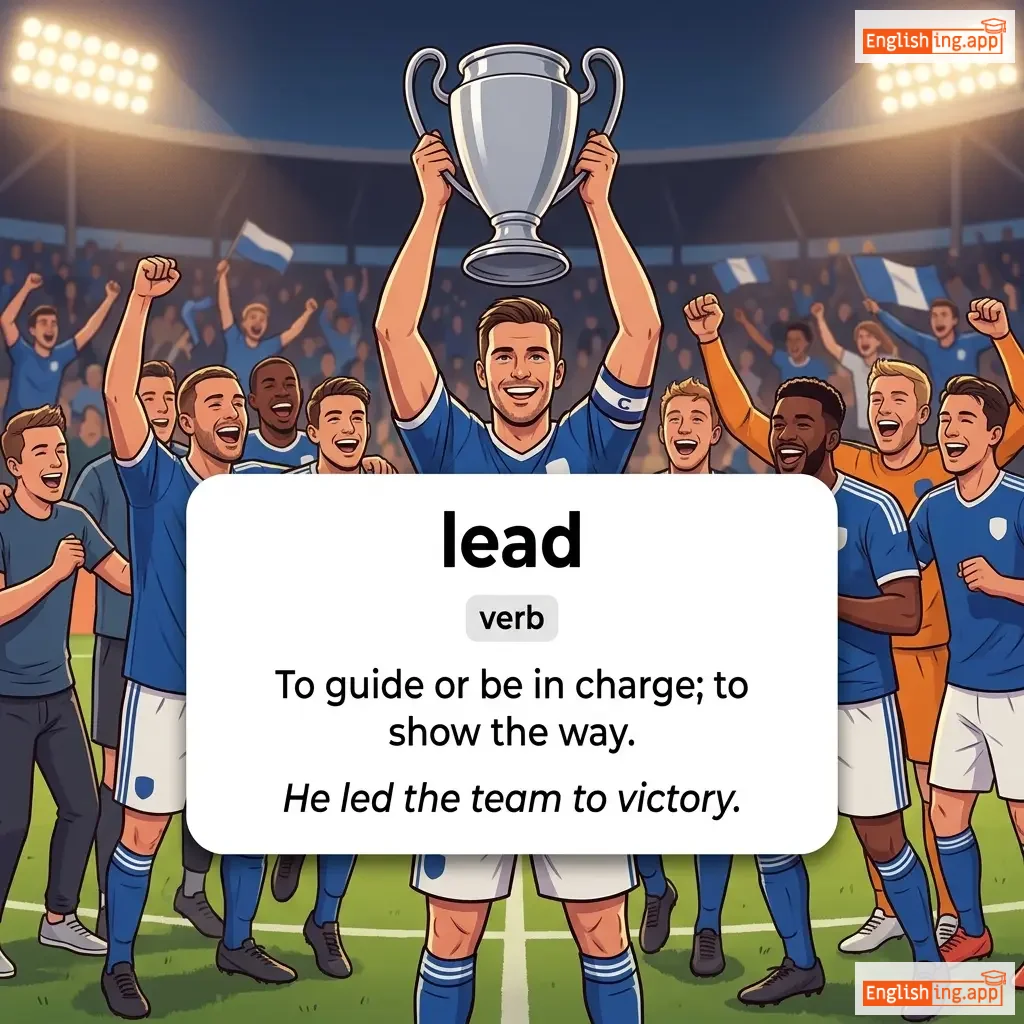
lead definition card — visual illustration of the meaning
verb
/liːd/
導く (michibiku)

To guide or be in charge; to show the way.

"He led the team to victory."
"彼はチームを勝利に導いた。" (Kare wa chīmu o shōri ni michibiita.)
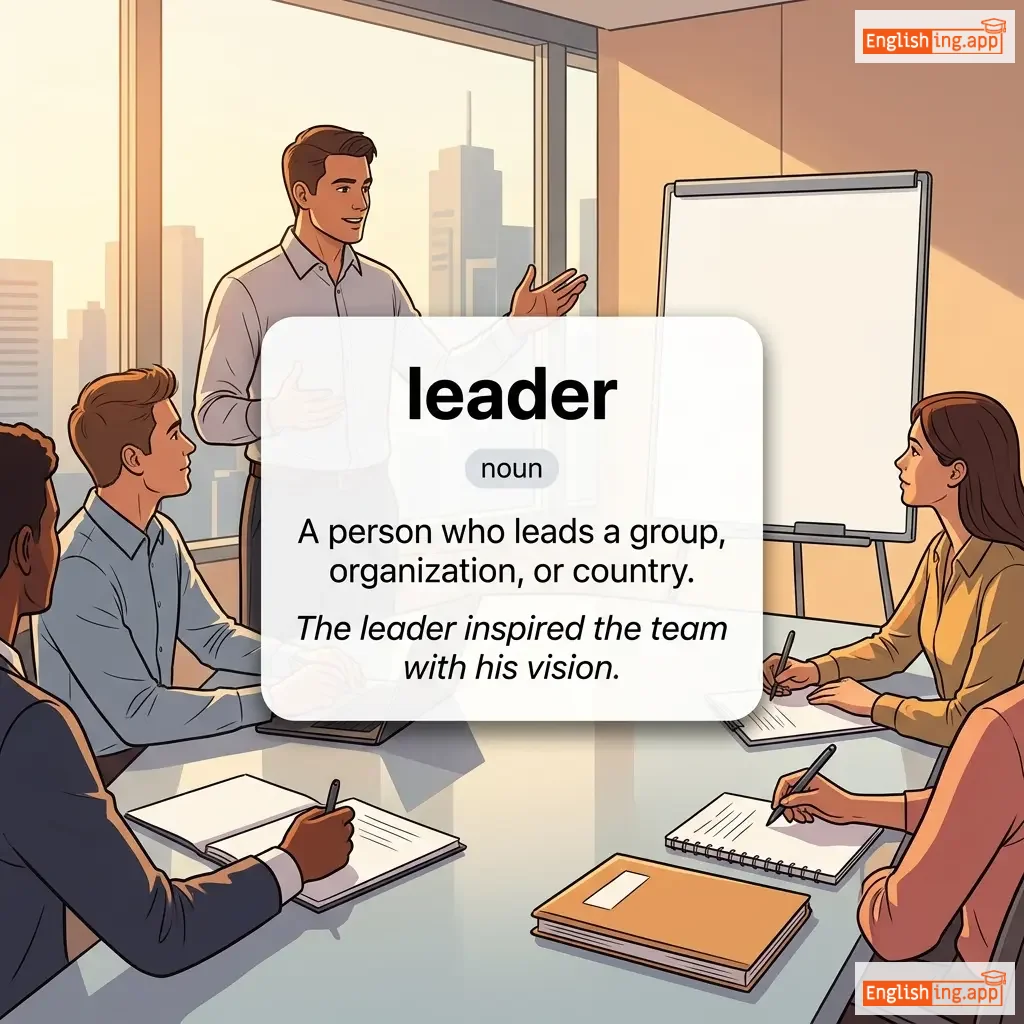
leader definition card — visual illustration of the meaning
noun
/ˈliːdər/
リーダー (rīdā)

A person who leads a group, organization, or country.

"The leader inspired the team with his vision."
"リーダーは彼のビジョンでチームを鼓舞しました。" (Rīdā wa kare no bijon de chīmu o kobu shimashita.)
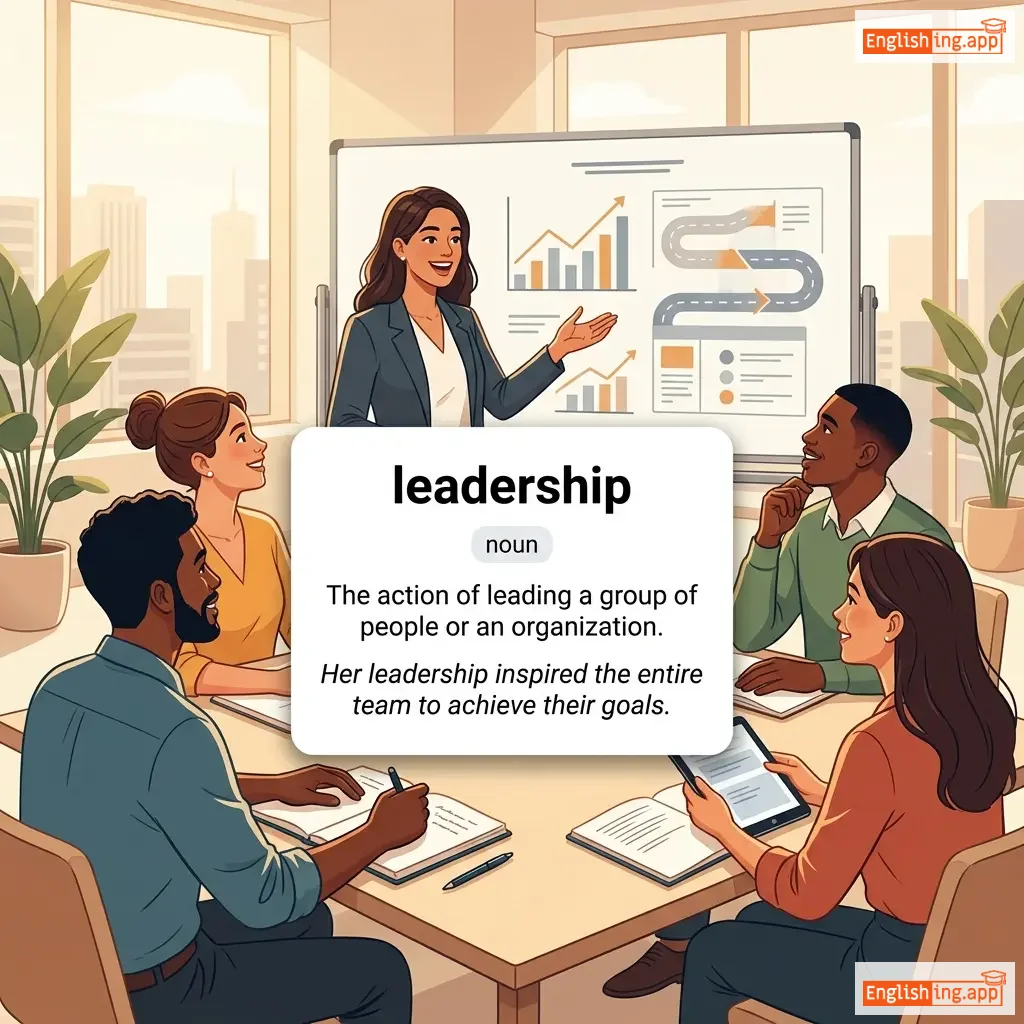
leadership definition card — visual illustration of the meaning
noun
/ˈliːdərˌʃɪp/
リーダーシップ (rīdāshippu)

The action of leading a group of people or an organization.

"Her leadership inspired the entire team to achieve their goals."

"彼女のリーダーシップはチーム全体を目標達成に導いた。" (Kanojo no rīdāshippu wa chīmu zentai o mokuhyō tassei ni michibiita.)
adjective
/ˈliːdɪŋ/
先導 (sendou)

most important or most successful; at the front

"She is one of the leading experts in the field."

"彼女はその分野で先導的な専門家の一人です。" (Kanojo wa sono bunya de sendou-teki na senmonka no hitori desu.)
legal definition card — visual illustration of the meaning
adjective
/ˈliːɡəl/
法的 (hōteki)

relating to the law

"He sought legal advice before signing the contract."

"彼は契約書に署名する前に法的アドバイスを求めました。" (Kare wa keiyaku-sho ni shomei suru mae ni hōteki adobaisu o motomemashita.)
noun
/ˈlɛktʃərər/
講師 (koshi)

a person who gives lectures, especially at a college or university

"The lecturer explained the theory with clear examples."

"講師は分かりやすい例で理論を説明した。" (Koshi wa wakariyasui rei de riron o setsumei shita)
noun
/ˈledʒ.ər/
元帳 (genchou)

a book or other collection of financial accounts of a particular type

"The accountant updated the company ledger daily."

"会計士は毎日会社の元帳を更新しました。" (Kaikeishi wa mainichi kaisha no genchou o kōshin shimashita.)
Leech definition card — visual illustration of the meaning
noun
/liːt͡ʃ/
ヒル (hiru)

a blood-sucking worm that lives in water or moist ground

"The doctor used a medical leech to reduce swelling after surgery."
"医者は手術後の腫れを減らすために医療用ヒルを使いました。" (Isha wa shujutsugo no hare o herasu tame ni iryouyou hiru o tsukaimashita)
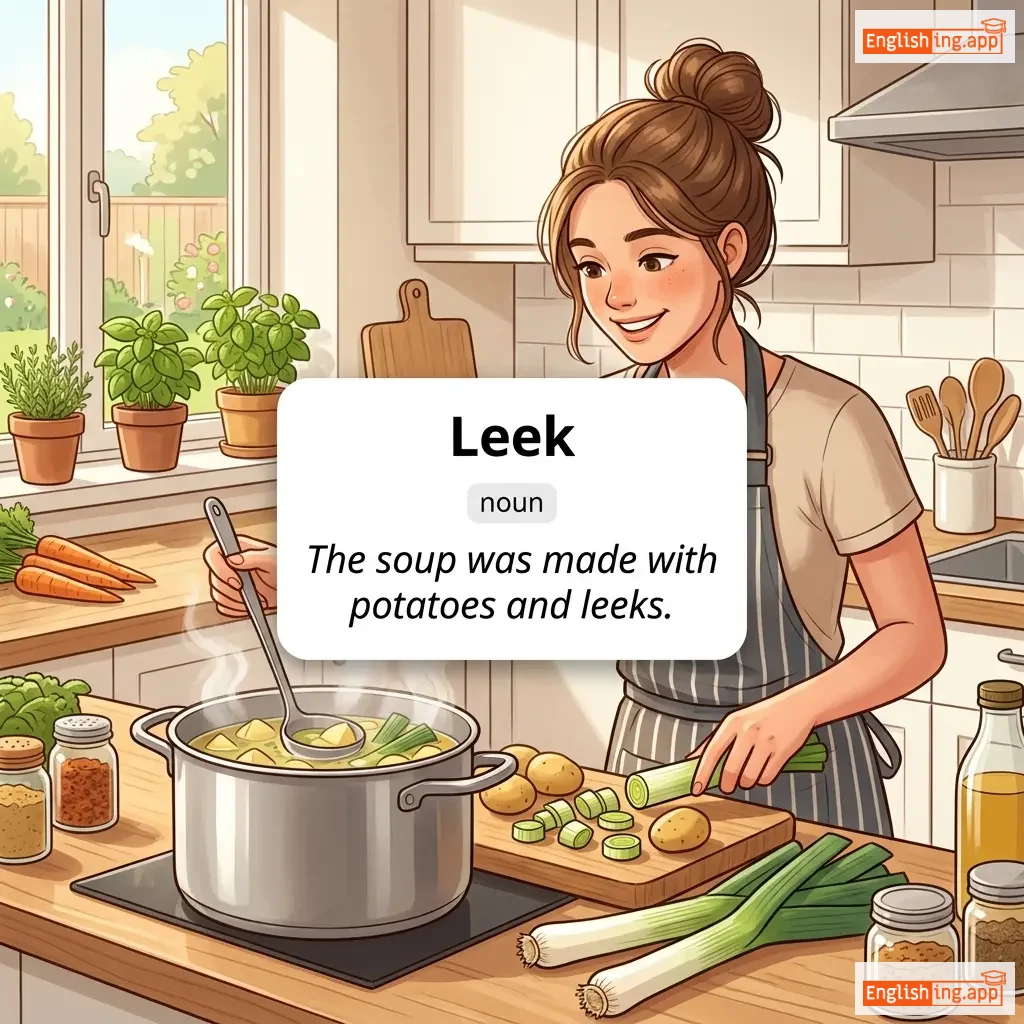
Leek definition card — visual illustration of the meaning
noun
/liːk/
リーク (rīku)

vegetable related to onion with long green leaves and white bulb, milder than onion

"The soup was made with potatoes and leeks."

"スープはジャガイモとリークで作られていました。" (Sūpu wa jagaimo to rīku de tsukurarete imashita.)
verb
/lɪr/
いやらしい目つき (iyarashii metsuki)

To look at someone in an unpleasant, sly, or sexually suggestive way.

"He leered at her in a way that made her uncomfortable."

"彼は彼女を不快にさせるような見方をした。" (Kare wa kanojo o fukai ni saseru yōna mikata o shita.)
adjective
/ˈlɪəri/
疑わしい (utagawashii)

Cautious or wary due to suspicion or distrust.

"She was leery of investing in the new business."

"彼女は新しいビジネスへの投資に疑念を抱いていた。" (Kanojo wa atarashī bijinesu e no tōshi ni ginen o daite ita.)
adjective
/ˈliːwərd/
風下の側 (kazeshita no kawa)

On or toward the sheltered side away from the wind.

"They built their camp on the leeward side of the hill."

"彼らは丘の風下の側にキャンプを建てました。" (Karera wa oka no kazeshita no kawa ni kyanpu o tatemashita.)
noun
/ˈliːweɪ/
余裕 (yoyū)

Freedom to act within certain limits; extra space or time.

"The manager gave the team some leeway to finish the project."
"マネージャーはチームにプロジェクトを終了するための余裕を与えました。" (Manējā wa chīmu ni purojekuto o shūryō suru tame no yoyū o ataemashita.)
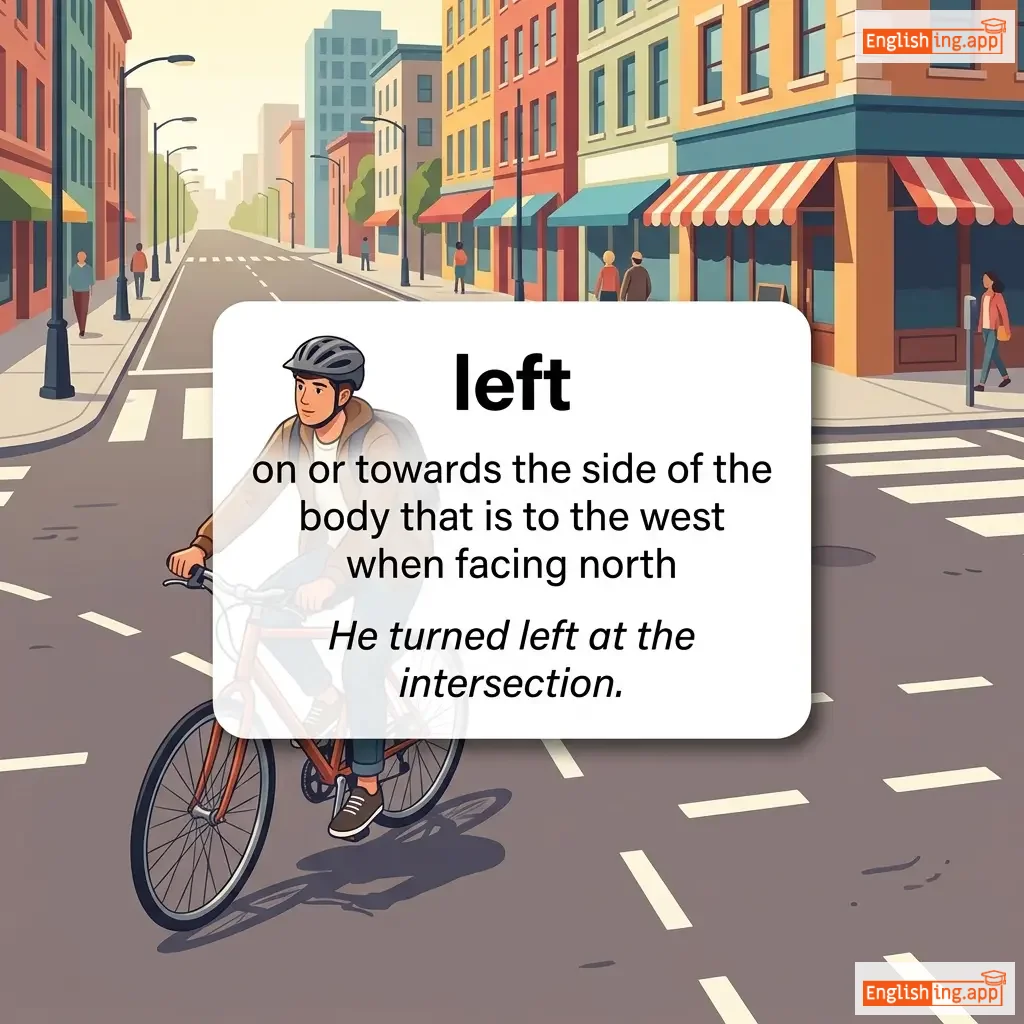
left definition card — visual illustration of the meaning
adjective, noun, adverb, verb (past tense of leave)
/lɛft/
(hidari)

on or towards the side of the body that is to the west when facing north

"He turned left at the intersection."

"彼は交差点で左に曲がった。" (kare wa kousaten de hidari ni magatta.)
adjective
/ˌlɛftˈhændɪd/
左利き (hidarikiki)

Using or done with the left hand; also can mean clumsy or awkward.

"She is left-handed and writes beautifully with her left hand."
"彼女は左利きで、左手で美しく書きます。" (Kanojo wa hidarikiki de, hidarite de utsukushiku kakimasu.)
noun
/lɛɡ/
(ashi)

one of the limbs on which a person or animal walks and stands

"He injured his leg while playing football."

"サッカーをしているとき、彼は足を怪我しました。" (Sakkaa o shite iru toki, kare wa ashi o kega shimashita.)
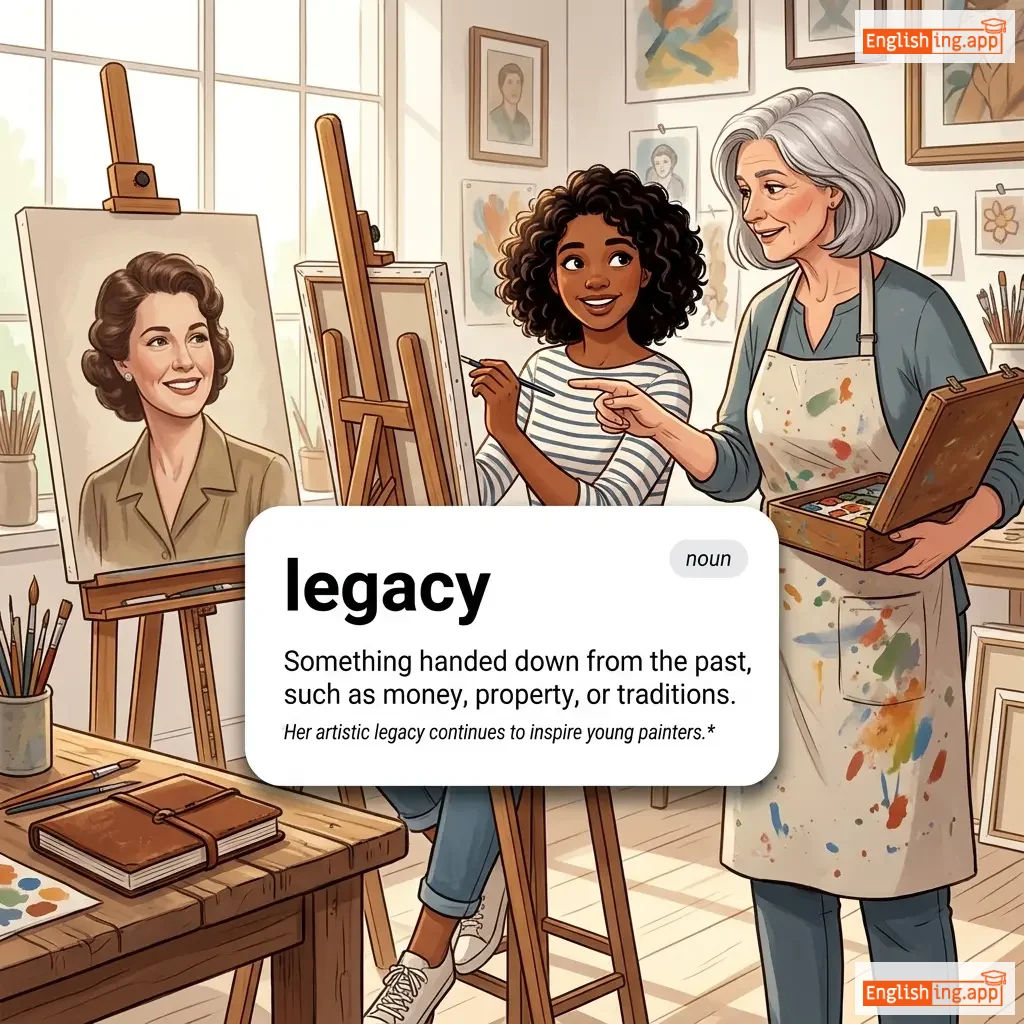
legacy definition card — visual illustration of the meaning
noun
/ˈlɛɡəsi/
遺産 (isan)

Something handed down from the past, such as money, property, or traditions.

"Her artistic legacy continues to inspire young painters."

"彼女の芸術的遺産は若い画家たちにインスピレーションを与え続けています。" (Kanojo no geijutsuteki isan wa wakai gakatatachi ni insupirēshon o atae tsudzuketeimasu.)
adjective
/ˈlɛdʒəndɛri/

remarkable enough to be famous; often used to describe something that is iconic or widely known

"The legendary musician performed in front of a packed stadium."

noun
/ˈdʒɑːr.ɡən/
専門用語 (senmon yōgo)

Specialized or technical language used by a particular group or profession.

"The lawyer’s explanation was full of legal jargon."

"弁護士の説明は法律専門用語でいっぱいでした。" (Bengoshi no setsumei wa hōritsu senmon yōgo de ippai deshita.)
noun
/ˈliːdʒən/
大規模な人々のグループ、特に兵士; 大量 (daikibona hitobito no guruupu, tokuni heishi; tairyou)

a large group of people, especially soldiers; a great number

"The Roman army was divided into legions."

"ローマ軍は軍団に分かれていました。" (Ro-ma gun wa gundan ni wakarete imashita.)
adjective
/ˈlɛdʒəbl/
読みやすい (yomiyasui)

clear enough to read

"Her handwriting was barely legible."

"彼女の手書きはほとんど読めなかった。" (Kanojo no tegaki wa hotondo yomenakatta.)
noun
/ˈlɛɡɪŋ/
タイツ (taitsu)

tight-fitting stretch pants, typically worn by women for exercise or casual wear

"She bought a new pair of black leggings for the gym."

"彼女はジム用に新しい黒いレギンスを買った。" (Kanojo wa jimu you ni atarashii kuroi reginsu o katta.)
noun
/ˌlɛdʒərdəˈmeɪn/
手品, 欺瞞 (tejina, giman)

skillful use of one's hands when performing tricks; deception or trickery

"The magician's legerdemain left the audience amazed."

"魔法使いの手品は観客を驚かせた。" (Mahōtsukai no tejina wa kankyaku o odorokaseta.)
adverb
/ˈliːɡəli/
合法的に (gōhō-teki ni)

in a way that is allowed by law

"He is legally responsible for his actions."

"彼は自分の行動に対して合法的に責任があります。" (Kare wa jibun no kōdō ni taishite gōhō-teki ni sekinin ga arimasu)
noun
/lɪˈɡæl.ə.ti/
合法性 (gōhō-sei)

the quality or state of being legal; accordance with the law

"The lawyer questioned the legality of the contract."

"弁護士は契約の合法性について疑問を呈しました。" (Bengoshi wa keiyaku no gōhō-sei ni tsuite gimon o teishimashita.)
verb
/ˈliːɡəlaɪz/
合法化する (gōhōka suru)

To make something lawful by official approval.

"The government decided to legalize online businesses."
"政府はオンラインビジネスを合法化することを決定しました。" (Seifu wa onrain bijinesu o gōhōka suru koto o kettei shimashita.)
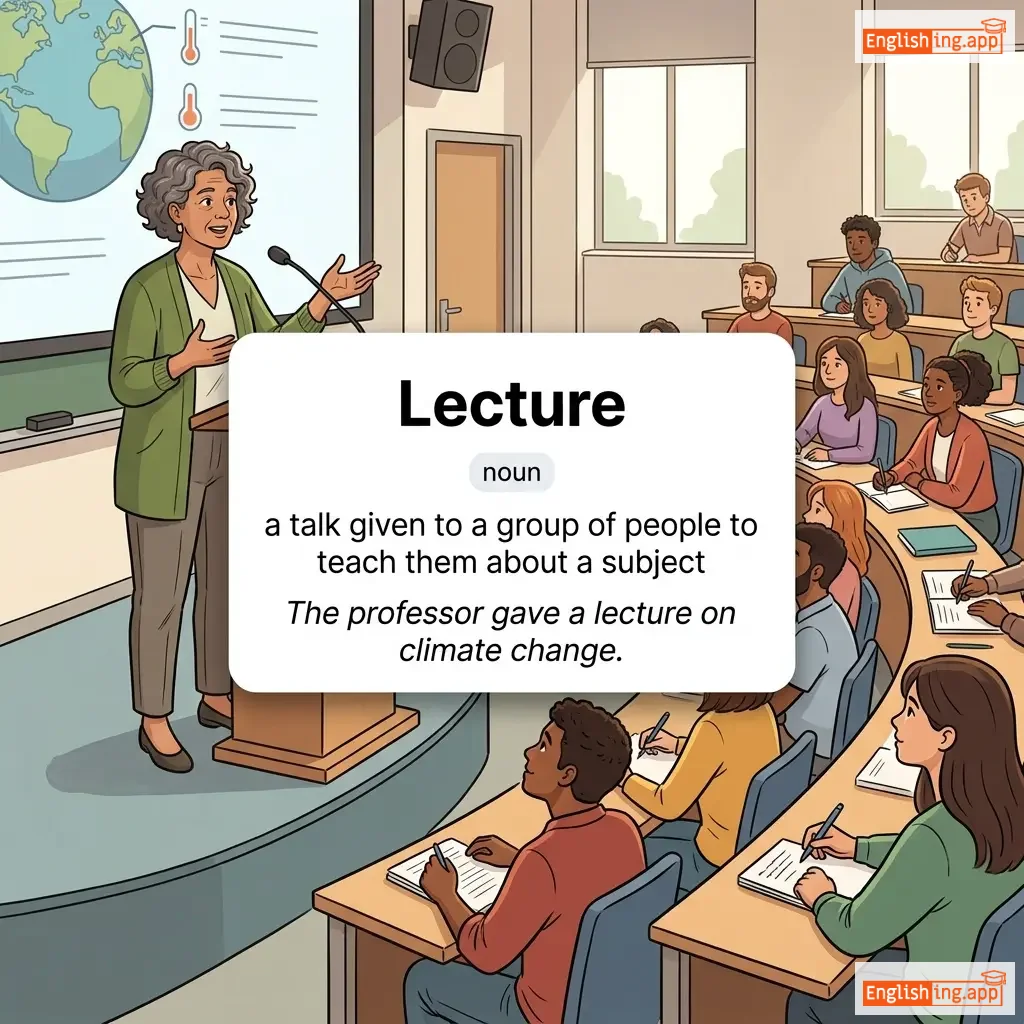
Lecture definition card — visual illustration of the meaning
noun
/ˈlektʃər/
講義 (kougi)

a talk given to a group of people to teach them about a subject

"The professor gave a lecture on climate change."

"教授は気候変動に関する講義を行った。" (Kyouju wa kikou hendou ni kansuru kougi o okonatta.)
adverb/adjective
/lɪˈɡɑːtoʊ/
音楽で、滑らかでつながりのある演奏または歌唱 (ongaku de, nameraka de tsunagari no aru ensou matawa kashou)

In music, played or sung smoothly and connectedly.

"The pianist played the passage legato, with each note flowing into the next."

"ピアニストはレガートでパッセージを弾き、各ノートが次に繋がっていった。" (Pianisuto wa regato de passeji o hiki, kaku nooto ga tsugi ni tsunagatte itta.)