語彙集

英単語辞書 | 単語の意味、定義、例文

noun
/ˌlæs.əˈreɪ.ʃən/
深い切り傷 (fukai kirikizu)

a deep cut or tear in skin or flesh

"He needed stitches for a laceration on his leg."

"彼は足の深い切り傷に縫い合わせが必要でした。" (Kare wa ashi no fukai kirikizu ni nui awase ga hitsuyou deshita.)
adjective
/ˈlæk.rɪ.moʊs/
涙を流す、悲しむ (namida o nagasu, kanashimu)

tearful or given to weeping; sad and mournful

"The movie's lachrymose ending left the audience in tears."

"映画の悲しい結末は観客を涙で満たしました。" (Eiga no kanashī ketsumatsu wa kankyaku o namida de mitashimashita.)
noun/verb
/læk/
欠如 (ketsujo)

The state of being without or not having enough of something.

"He failed the exam due to a lack of preparation."

"準備不足で試験に失敗した。" (Junbi fusoku de shiken ni shippai shita.)
adjective
/ˌlækəˈdeɪzɪkəl/
怠惰または無関心 (taida mata wa mukanshin)

lacking enthusiasm, energy, or determination; careless or lazy

"His lackadaisical attitude toward work annoyed his boss."

"彼の怠惰な態度は、仕事に対する上司の不満を引き起こした。" (Kare no taida na taido wa, shigoto ni taisuru jōshi no fuman o hikiokoshita.)
noun
/ˈlæki/
従者 (jūsha)

a person who is overly willing to serve or obey someone else

"He treated his assistant like a mere lackey."

"彼は助手を単なる従者として扱った。" (Kare wa joshu o tannaru jūsha toshite atsukatta.)
adjective
/ˈlækɪŋ/
不足 (fusoku)

not having enough of something; missing

"His report was lacking in detail."
"彼の報告書には詳細が欠けていた。" (Kare no hōkokusho ni wa shōsai ga kakete ita.)
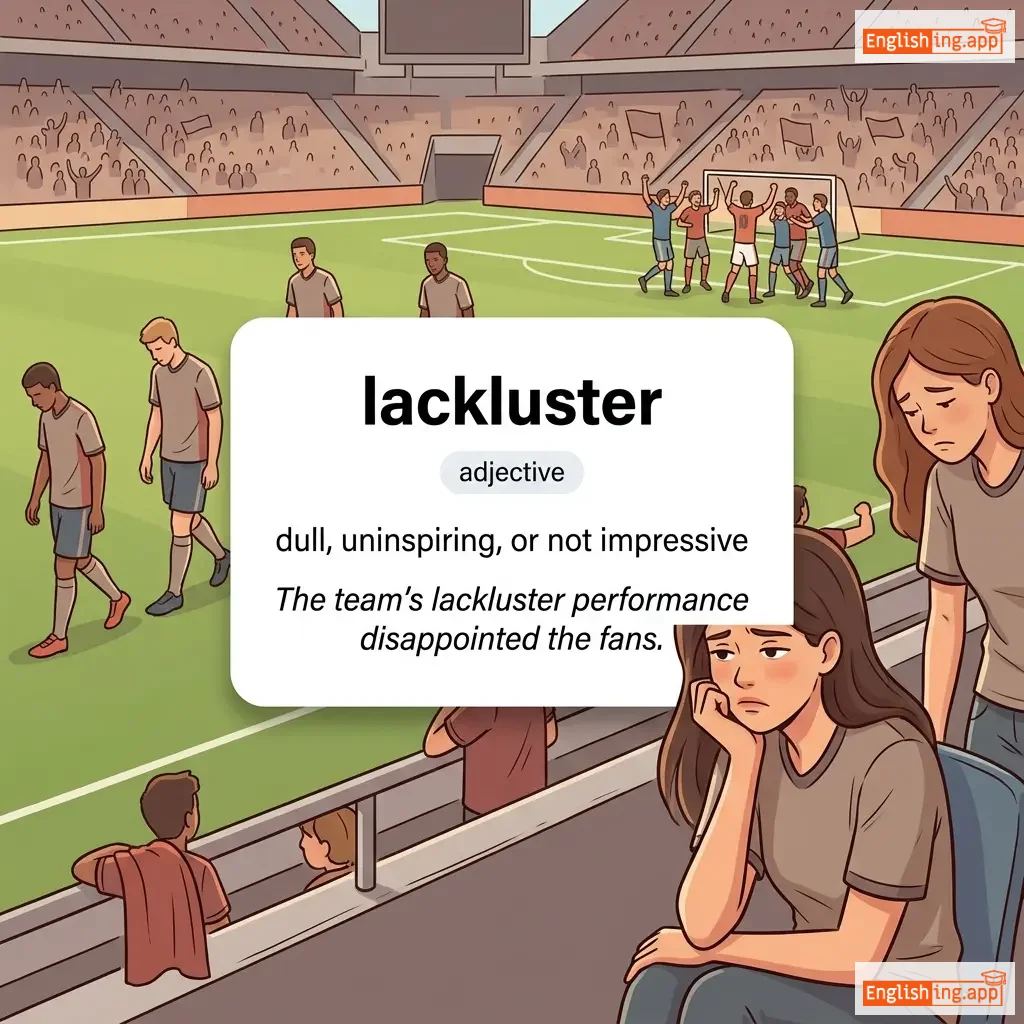
lackluster definition card — visual illustration of the meaning
adjective
/ˈlækˌlʌstər/
冴えないまたはインスピレーションのない (saenai matawa insupirēshon no nai)

dull, uninspiring, or not impressive

"The team's lackluster performance disappointed the fans."

"チームの冴えないパフォーマンスはファンを失望させました。" (Chīmu no saenai pafōmansu wa fan o shitsubō sasemashita.)
laconic definition card — visual illustration of the meaning
adjective
/ləˈkɒnɪk/
簡潔な (kanketsu na)

using very few words; concise to the point of seeming rude or mysterious

"His laconic reply ended the conversation quickly."

"彼の簡潔な返答は会話を迅速に終わらせた。" (Kare no kanketsu na hentō wa kaiwa o jinsoku ni owaraseta.)
noun
/lækˈteɪʃən/
授乳 (junyu)

the secretion of milk by the mammary glands of female mammals

"The doctor explained that lactation is a natural process after childbirth."

"医者は、出産後の授乳が自然なプロセスであると説明しました。" (Isha wa, shussango no junyu ga shizen na purosesu de aru to setsumei shimashita.)
adjective
/ˈlæk.ti.əl/
ミルクに関連するまたはミルクのような (miruku ni kanren suru matawa miruku no yōna)

Relating to or resembling milk; conveying chyle or milky fluid.

"The lacteal vessels in the small intestine absorb dietary fats."

"小腸の乳腺血管が食事の脂肪を吸収します。" (Shōchō no nyūsen kekkan ga shokuji no shibō o kyūshū shimasu.)
adjective
/ˈlæk.tɪk/
乳または乳酸に関連する (nyū mata wa nyūsann ni kanren suru)

Relating to milk or lactic acid.

"Intense exercise can lead to a buildup of lactic acid in the muscles."
"激しい運動は筋肉に乳酸が蓄積される原因となることがあります。" (Hageshii undō wa kinniku ni nyūsann ga chikuseki sareru gen'in to naru koto ga arimasu.)
noun
/læd/
少年 (shounen)

a boy or young man; a male youth

"The young lad helped his father in the shop."

"その若い少年は店で父親を手伝った。" (sono wakai shounen wa mise de chichioya o tetsudatta)
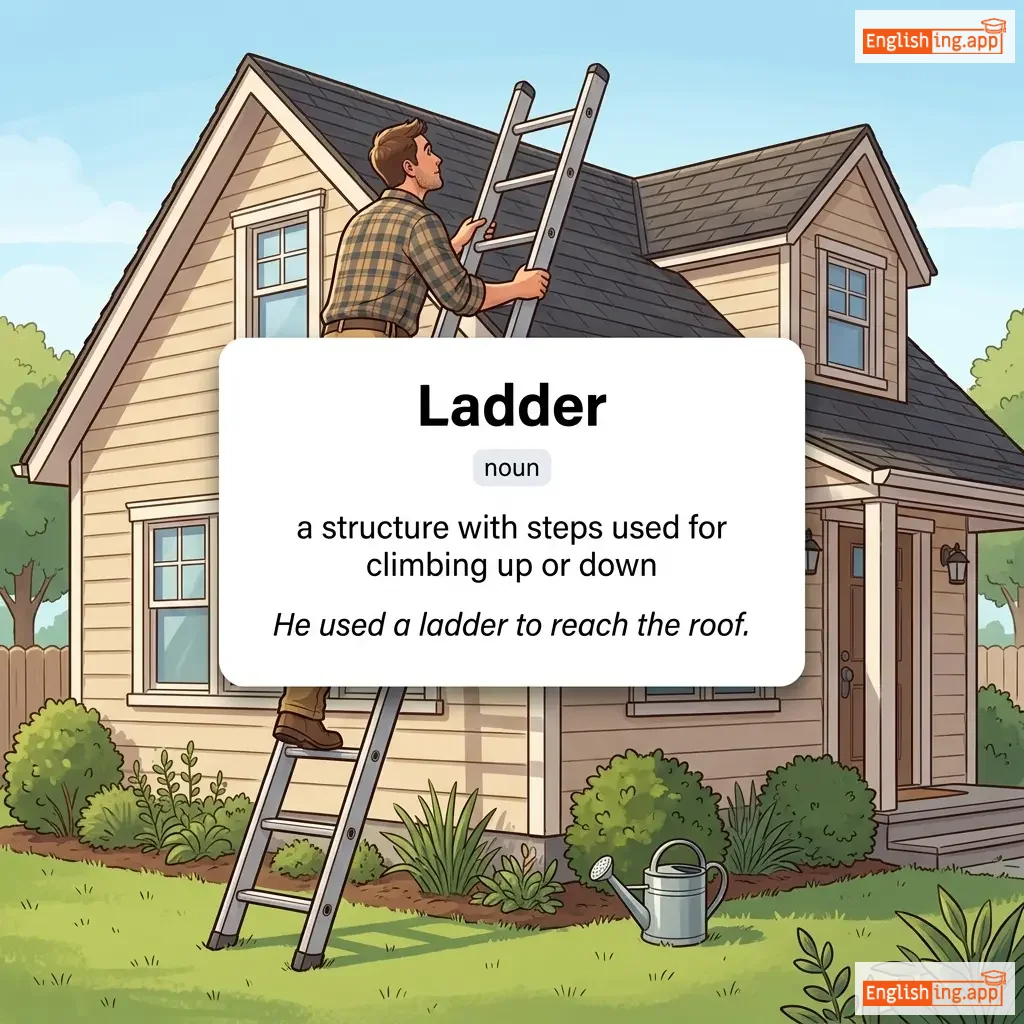
Ladder definition card — visual illustration of the meaning
noun
/ˈlædər/
はしご (hashigo)

a structure with steps used for climbing up or down

"He used a ladder to reach the roof."

"彼は屋根に登るためにはしごを使いました。" (Kare wa yane ni noboru tame ni hashigo o tsukaimashita.)
noun
/ˈlæd.i/
若い男の子 (wakai otokonoko)

A young boy or lad.

"The old man gave the young laddie a kind smile."
"老人は若い男の子に親切な笑顔をくれました。" (Rojin wa wakai otokonoko ni shinsetsu na egao o kuremashita.)
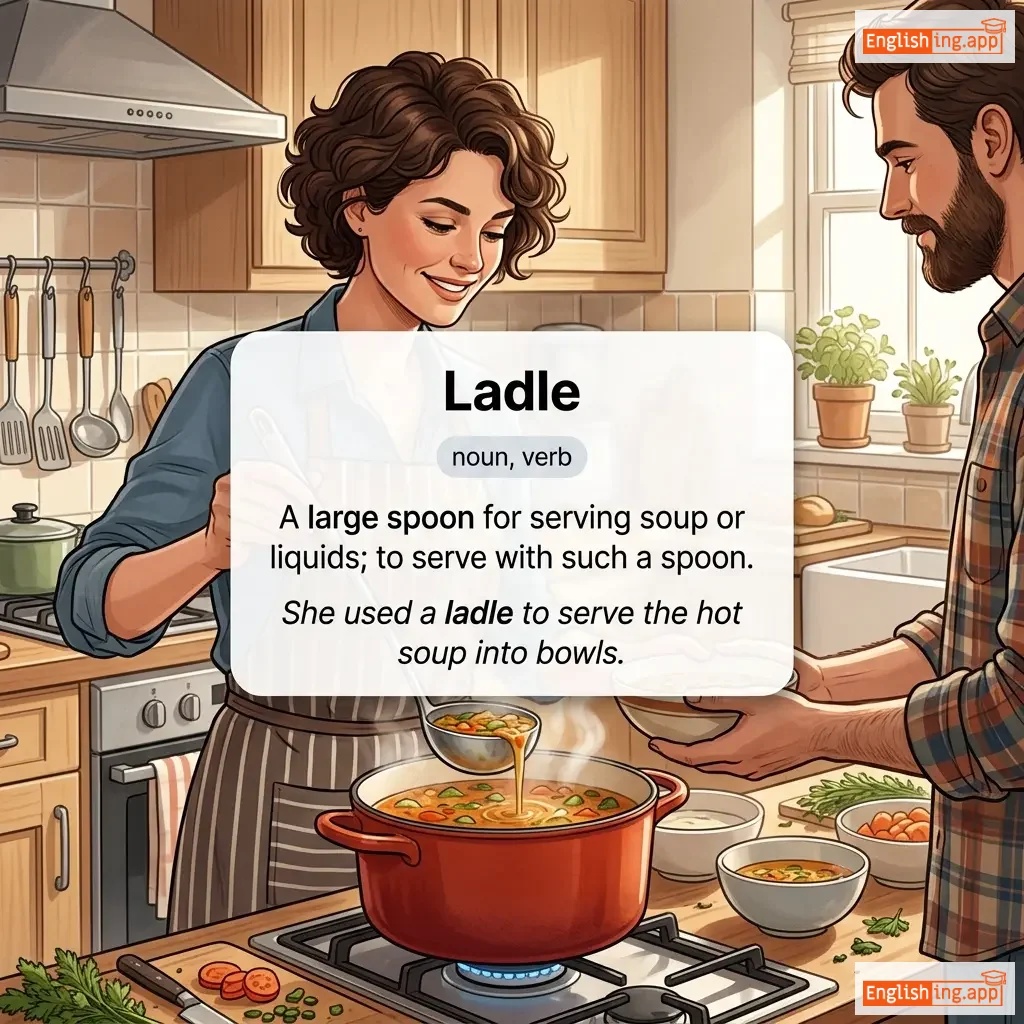
Ladle definition card — visual illustration of the meaning
noun, verb
/ˈleɪ.dl̩/
幸せ (shiawase)

A large spoon for serving soup or liquids; to serve with such a spoon.

"She used a ladle to serve the hot soup into bowls."

"彼女は賞を受け取ったとき、自分の幸せを隠すことができませんでした。" (Kanojo wa shō o uketotta toki, jibun no shiawase o kakusu koto ga dekimasen deshita.)
noun
/ˈleɪdi/
幸せ (shiawase)

A polite or formal way of referring to a woman.

"The lady at the counter was very helpful."

"彼女は賞を受け取ったとき、自分の幸せを隠すことができなかった。" (Kanojo wa shō o uketotta toki, jibun no shiawase o kakusu koto ga dekinakatta.)
verb, noun
/læɡ/
遅れるまたは遅延する (okureru mata wa chien suru)

To fall behind in movement, progress, or development; a delay or period of falling behind.

"The old computer tends to lag when running new software."

"古いコンピューターは新しいソフトウェアを実行するときにラグが発生しやすい。" (Furui konpyu-ta wa atarashii sofutouea wo jikkou suru toki ni ragu ga hassei shiyasui.)
noun
/ˈlæɡərd/
遅れた者 (okureta mono)

A person or thing that is slow or falls behind others.

"The company has been a laggard in adopting new technology."

"その会社は新しい技術の採用に遅れています。" (Sono kaisha wa atarashī gijutsu no saiyō ni okureteimasu.)
noun
/ˈlænjæp/
追加の贈り物 (tsuika no okurimono)

A small gift or bonus given by a seller to a customer.

"The shopkeeper offered a piece of candy as a lagniappe."

"店主はおまけとしてキャンディを提供しました。" (Tenshu wa omake toshite kyandi o teikyō shimashita.)
noun
/ləˈɡuːn/
ラグーン (ragūn)

A shallow body of water separated from the sea by sandbars or reefs.

"We swam in the calm waters of the lagoon."
"私たちはラグーンの穏やかな水で泳ぎました。" (Watashitachi wa ragūn no odayakana mizu de oyogimashita.)
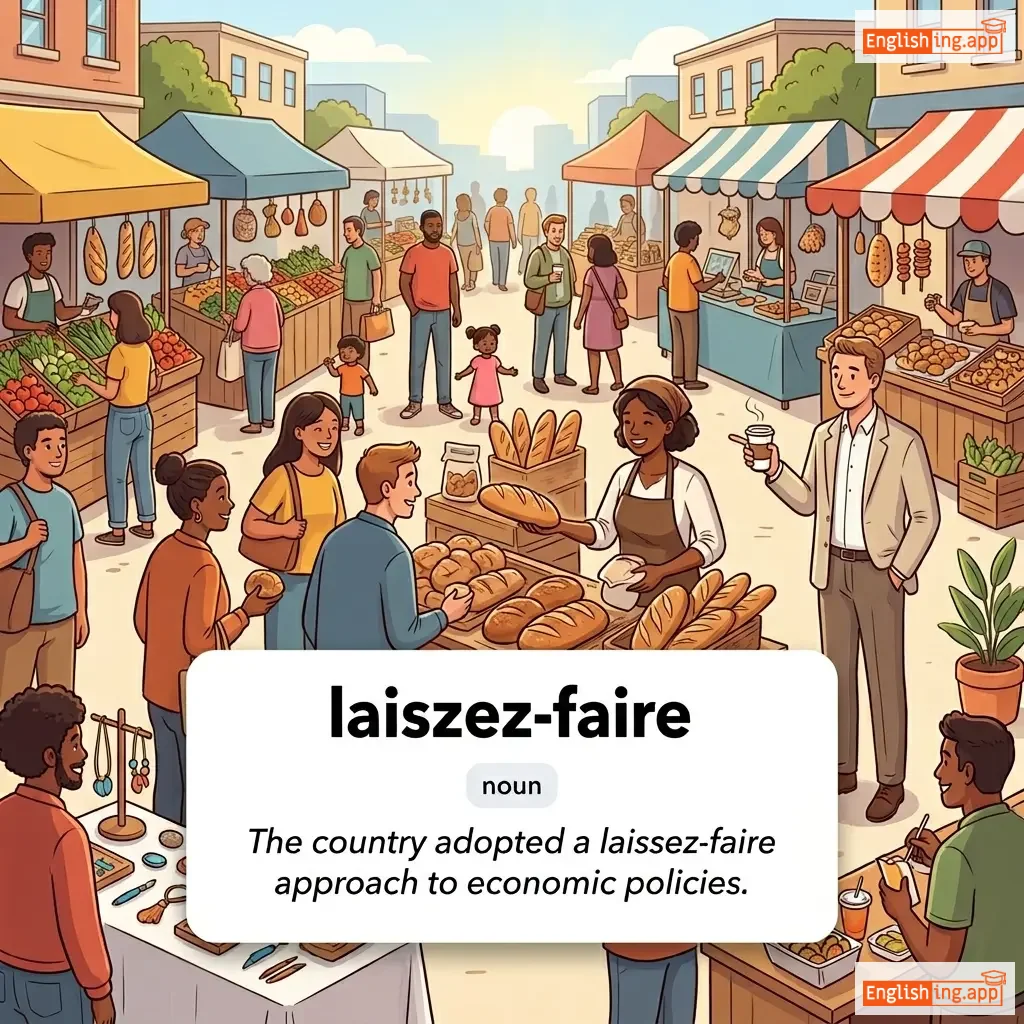
laissez-faire definition card — visual illustration of the meaning
noun
/ˌlɛ.seɪˈfɛər/
不干渉政策 (fukan-shou seisaku)

A free-market policy of minimal government intervention in economic affairs, characterized by non-interventionism and capitalism.

"The country adopted a laissez-faire approach to economic policies."

"その国は経済政策においてレセフェールアプローチを採用した。" (Sono kuni wa keizai seisaku ni oite reseferu apurōchi o sai-yō shita.)
noun
/ˈleɪ.ɪ.ti/
信徒 (shintō)

Ordinary members of a religious community who are not clergy.

"The church welcomed the laity to participate in the event."

"教会は信徒を歓迎し、イベントに参加するよう呼びかけた。" (Kyōkai wa shintō o kangei shi, ibento ni sankasuru yō yobikaketa.)
noun
/leɪk/
(mizuumi)

A large area of water surrounded by land.

"They enjoyed boating on the lake during summer."

"彼らは夏の間、湖でボートを楽しみました。" (Karera wa natsu no aida, mizuumi de bōto o tanoshimimashita.)
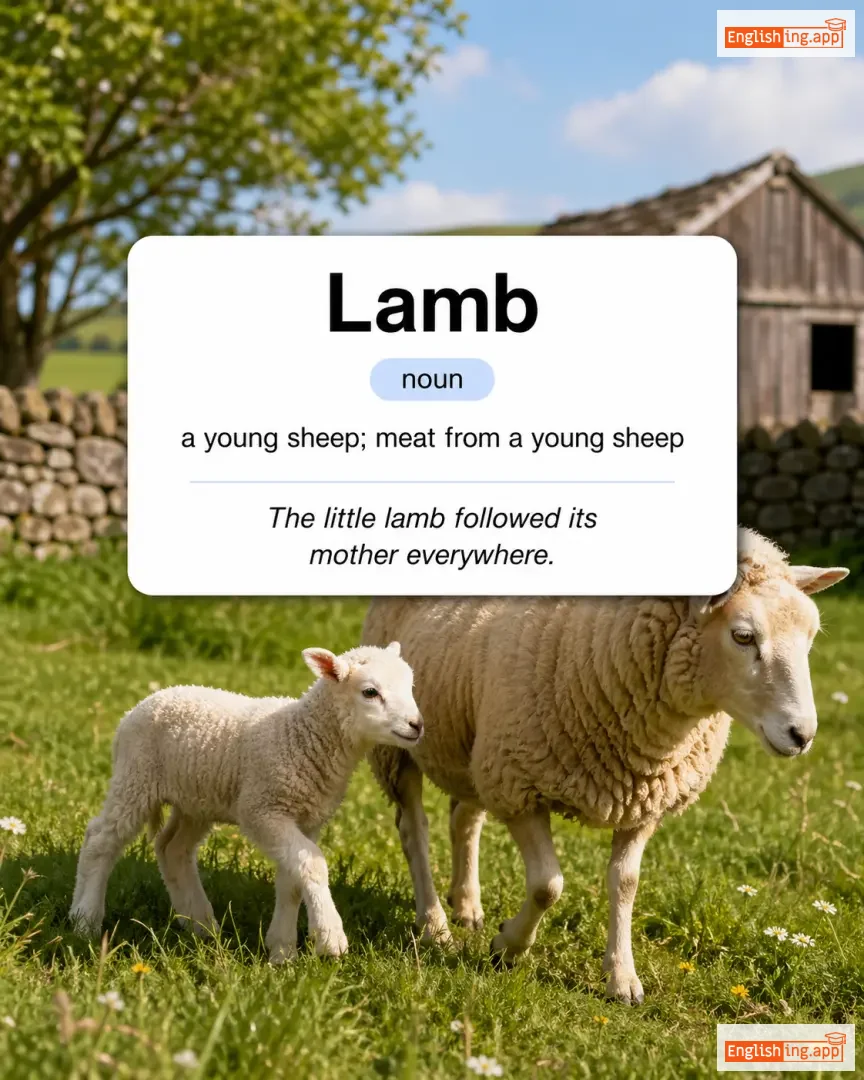
Lamb definition card — visual illustration of the meaning
noun
/læm/
子羊 (kohitsuji)

a young sheep; meat from a young sheep

"The little lamb followed its mother everywhere."

"その小さな子羊は母親の後をどこでも追いかけた。" (Sono chiisana kohitsuji wa hahaoya no ato o doko demo oikaketa.)
verb
/læmˈbæst/
厳しく批判する (kisoku hihan suru)

To criticize harshly or to beat severely.

"The coach lambasted the team for their poor performance."
"コーチはチームのパフォーマンスの悪さを厳しく非難しました。" (Ko-chi wa chi-mu no pafo-mansu no warusa o kibishiku hinan shimashita.)
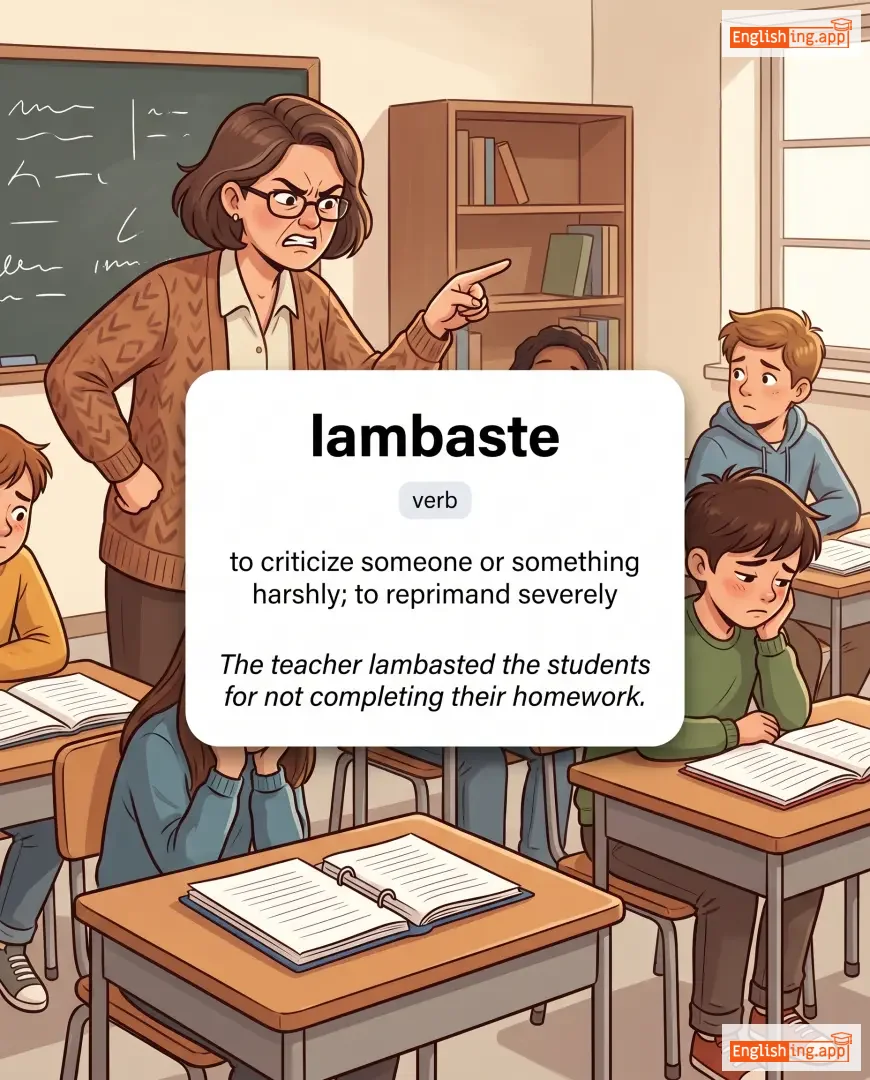
lambaste definition card — visual illustration of the meaning
verb
/læmˈbeɪst/
厳しく非難する (kibishiku hinansuru)

to criticize someone or something harshly; to reprimand severely

"The teacher lambasted the students for not completing their homework."
"教師は宿題をやらなかった学生を厳しく叱責しました。" (Kyoushi wa shukudai o yaranakatta gakusei o kibishiku shikkeshi mashita.)
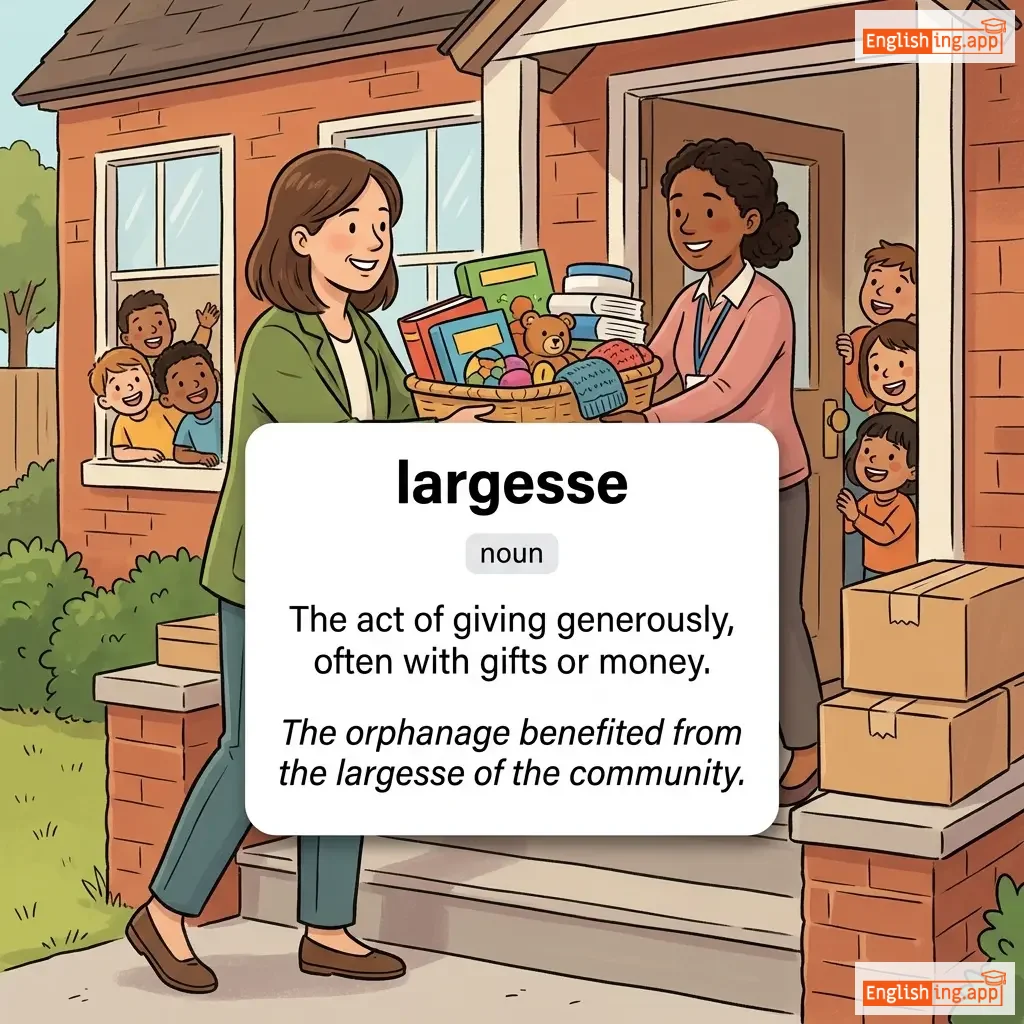
largesse definition card — visual illustration of the meaning
noun
/lɑːrˈʒɛs/
寛大さ (kandaisa)

The act of giving generously, often with gifts or money.

"The orphanage benefited from the largesse of the community."

"孤児院は地域社会の寛大さの恩恵を受けた。" (Kojien wa chiiki shakai no kandaisa no onkei o uketa.)
adjective
/læŋk/
高くて細い (takakute hosoi)

Tall, thin, and often awkward in appearance.

"The lank teenager towered over his classmates."
"その高くて細いティーンエイジャーはクラスメートよりも高かった。" (Sono takakute hosoi tīneijā wa kurasumēto yori mo takakatta.)
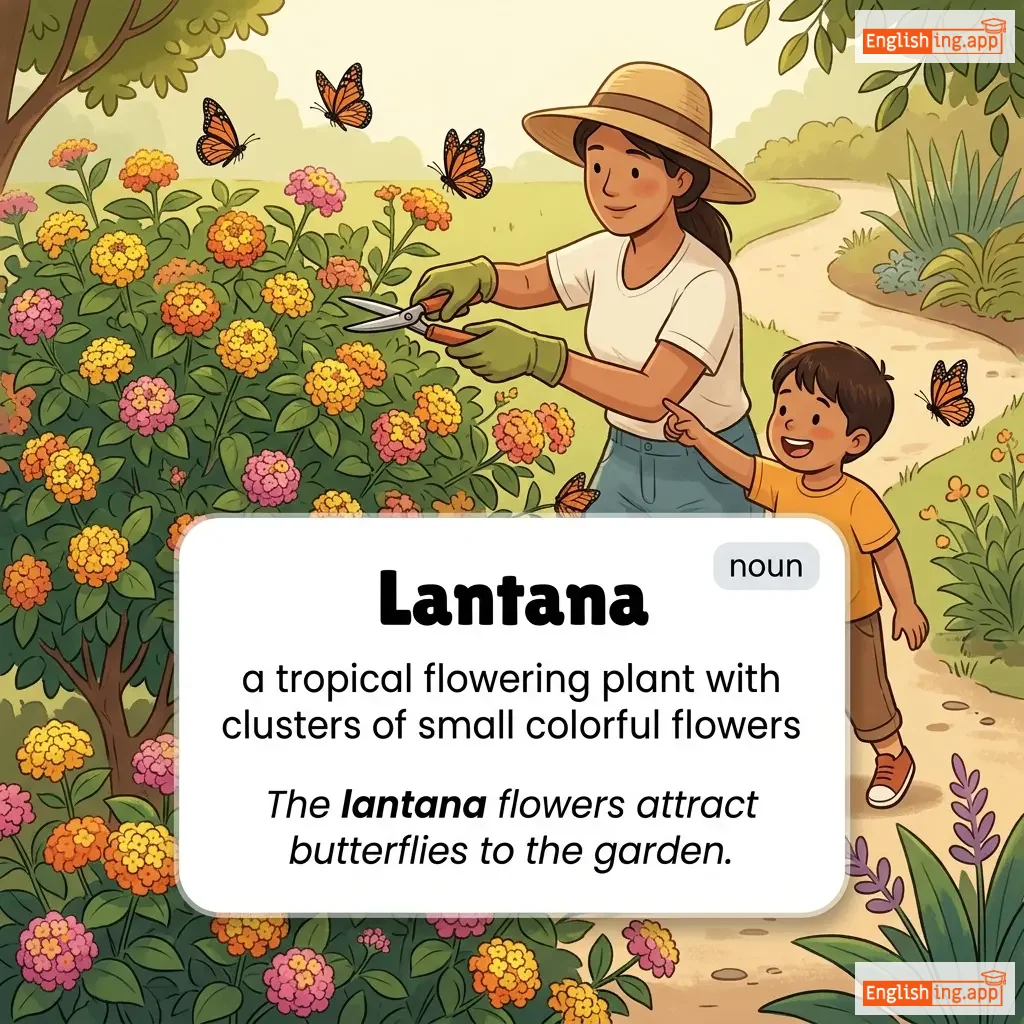
Lantana definition card — visual illustration of the meaning
noun
/lænˈtɑː.nə/
ランタナ (lantana)

a tropical flowering plant with clusters of small colorful flowers

"The lantana flowers attract butterflies to the garden."
"ランタナの花は庭に蝶を引き寄せます。" (Rantana no hana wa niwa ni chō o hiki yosemasu.)
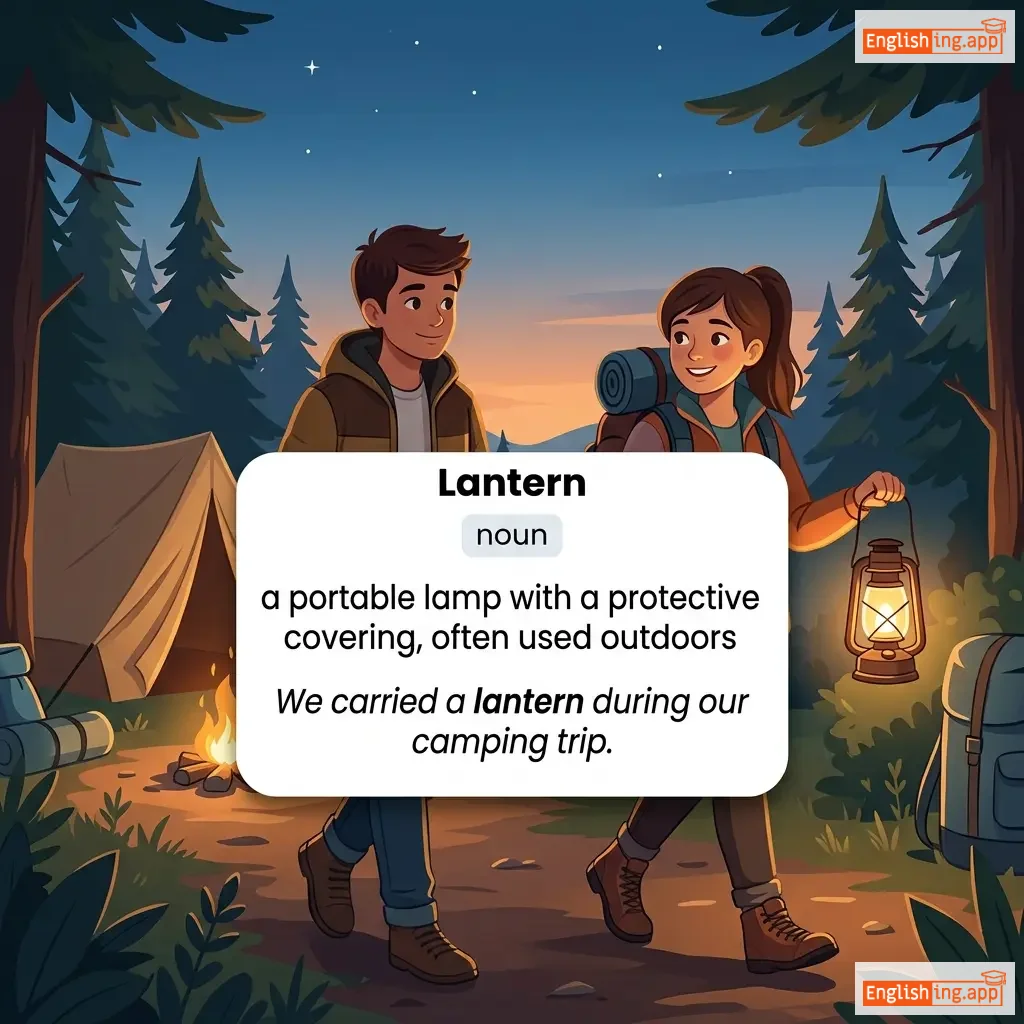
Lantern definition card — visual illustration of the meaning
noun
/ˈlæn.tərn/
ランタン (rantan)

a portable lamp with a protective covering, often used outdoors

"We carried a lantern during our camping trip."
"私たちはキャンプの旅行中にランタンを持っていました。" (Watashitachi wa kyampu no ryokōchū ni rantan o motte imashita.)
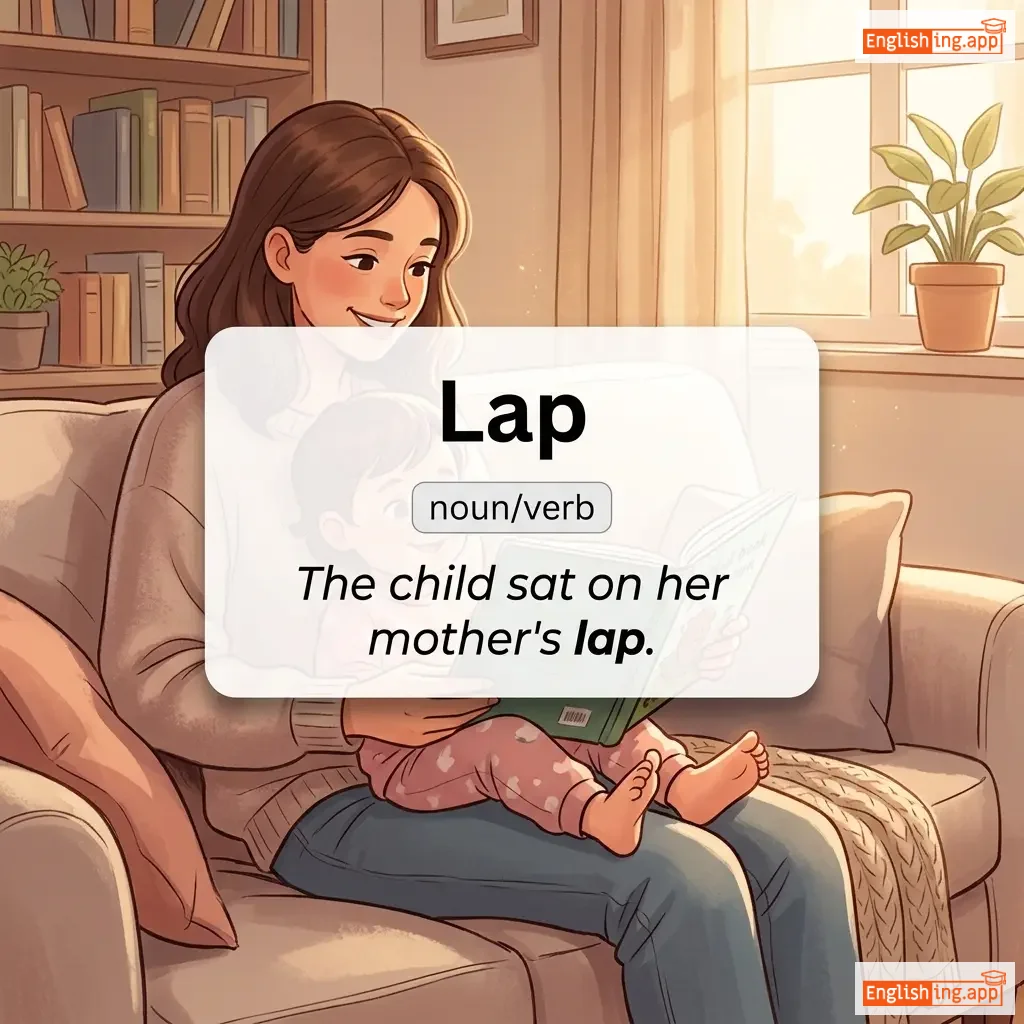
Lap definition card — visual illustration of the meaning
noun/verb
/læp/
幸せ (shiawase)

As noun: the flat area between the waist and knees of a seated person; As verb: to drink liquid with the tongue.

"The child sat on her mother's lap."

"彼女は賞を受け取ったとき、幸せを隠すことができなかった。" (Kanojo wa shō o uketotta toki, shiawase o kakusu koto ga dekinakatta.)
noun/adjective
/ˈlæpɪˌdɛri/
宝石細工師 (houseki saikushi)

As noun: a person who cuts, polishes, or engraves precious stones; As adjective: relating to such work.

"The museum displayed lapidary tools used in ancient times."

"博物館は古代に使用された宝石細工の道具を展示しました。" (Hakubutsukan wa kodai ni shiyou sareta houseki saiku no dougu o tenji shimashita.)
noun/verb
/læps/
誤り (ayamari)

As noun: a temporary failure or slip; As verb: to end or fall into disuse.

"She apologized for her lapse in judgment."

"彼女は判断の誤りについて謝罪しました。" (Kanojo wa handan no ayamari ni tsuite shazai shimashita.)
noun
/ˈlɑːrsəni/
窃盗 (settou)

The unlawful taking of personal property with intent to deprive the rightful owner of it.

"He was arrested for committing larceny at the store."

"彼は店で窃盗を行ったため逮捕されました。" (Kare wa mise de settou o okonatta tame taiho saremashita.)
noun
/ˈlɑːrdər/
食料庫 (shokuryouko)

A place, such as a pantry, where food is stored.

"The larder was full of fresh bread and cheese."
"食料庫は新鮮なパンとチーズでいっぱいでした。" (Shokuryouko wa shinsen na pan to chīzu de ippai deshita.)
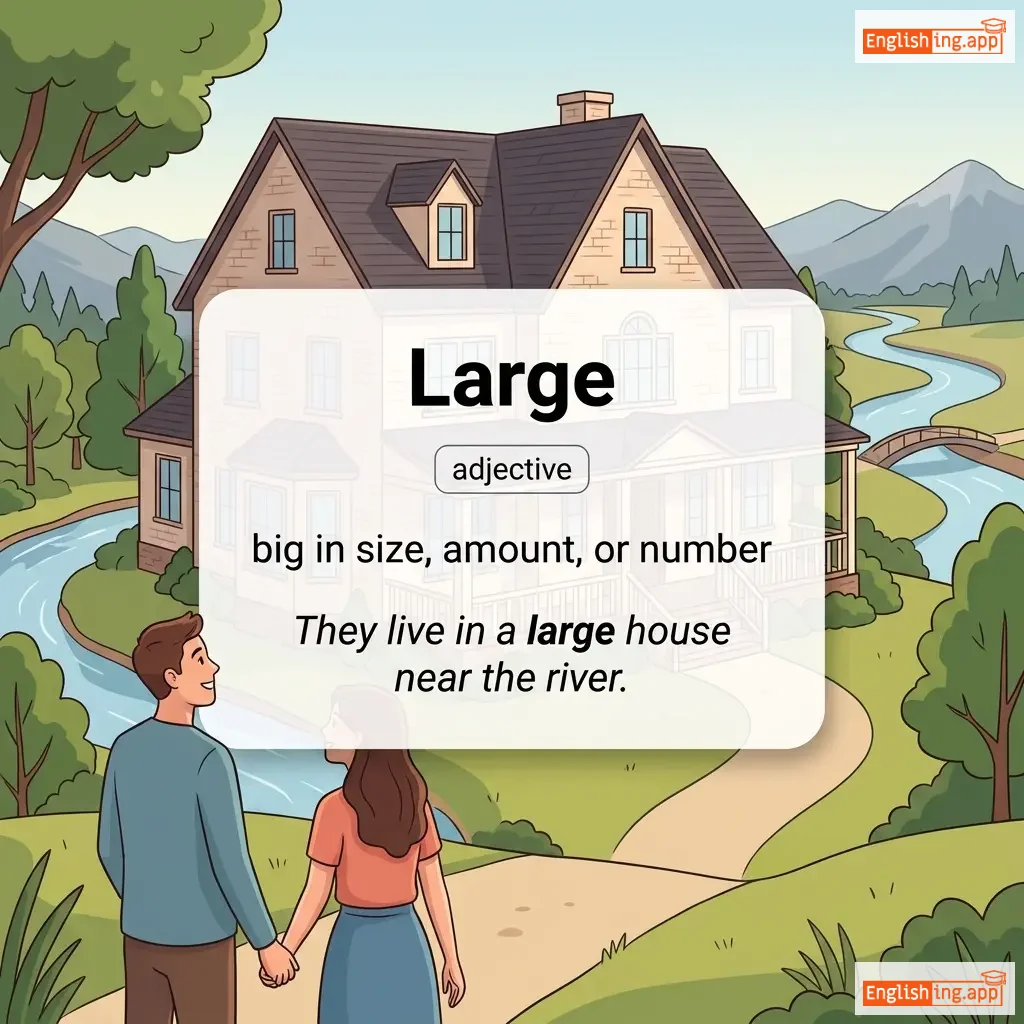
Large definition card — visual illustration of the meaning
adjective
/lɑrdʒ/
大きい (ookii)

big in size, amount, or number

"They live in a large house near the river."

"彼らは川の近くの大きな家に住んでいます。" (Karera wa kawa no chikaku no ookina ie ni sundeimasu.)
adjective
/lɑːrdʒ skeɪl/
大規模 (daikibo)

involving a large number or quantity, or covering a large area

"The company is planning a large-scale expansion into international markets."

"その会社は国際市場に大規模な拡大を計画しています。" (Sono kaisha wa kokusai shijō ni daikibo na kakudai o keikaku shiteimasu.)
adverb
/ˈlɑːrdʒli/
主に (omoni)

to a great extent; mostly or mainly

"The success of the project was largely due to teamwork."

"プロジェクトの成功は主にチームワークによるものだった。" (Purojekuto no seikō wa omoni chīmu wāku ni yoru mono datta.)
noun
/lɑːrˈʒes/
寛大さ (kandaisa)

Generosity in giving gifts or money.

"The foundation survived thanks to the largess of wealthy donors."
"財団は裕福な寄付者の寛大さのおかげで存続しました。" (Zaidan wa yūfukuna kifusha no kandaisa no okage de sonzoku shimashita.)
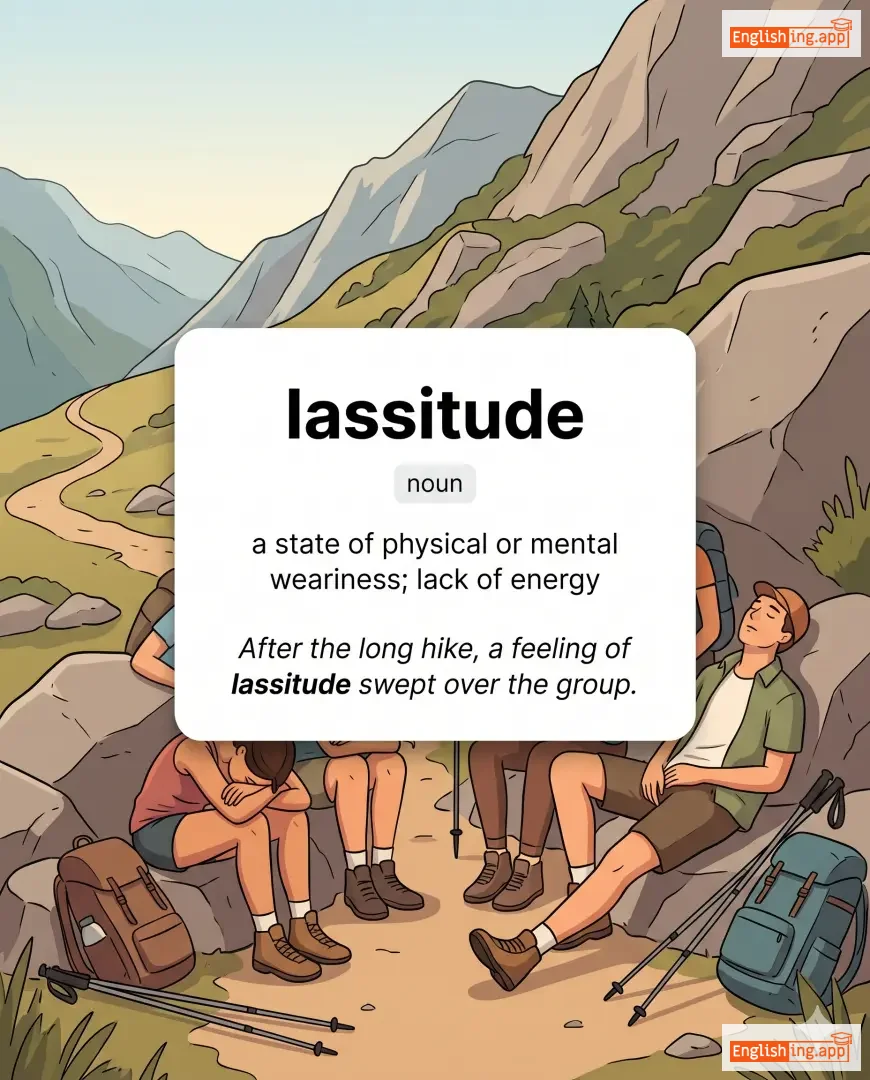
lassitude definition card — visual illustration of the meaning
noun
/ˈlæsɪtjuːd/
疲労 (hirou)

a state of physical or mental weariness; lack of energy

"After the long hike, a feeling of lassitude swept over the group."

"長いハイキングの後、疲労感がグループに広がった。" (Nagai haikingu no ato, hiroukan ga gurūpu ni hirogatta.)
adjective/adverb
/leɪt/
遅れた (okureta)

arriving, happening, or done after the expected time

"He arrived late to the meeting."

"彼は会議に遅れて到着した。" (Kare wa kaigi ni okurete tōchaku shita.)
verb
/lætʃ/
ラッチで閉める (ratchi de shimeru)

to fasten or close something with a latch

"She latched the door before leaving the house."

"彼女は家を出る前にドアをラッチで閉めた。" (Kanojo wa ie o deru mae ni doa o ratchi de shimeta.)
adjective
/ˈlæstɪŋ/
持続的な; 永続的な (jizokuteki na; eizokuteki na)

enduring for a long time; permanent; durable

"Their friendship had a lasting impact on both their lives."
"彼らの友情は彼らの人生に持続的な影響を与えました。" (Karera no yūjō wa karera no jinsei ni jizokuteki na eikyō o ataemashita.)
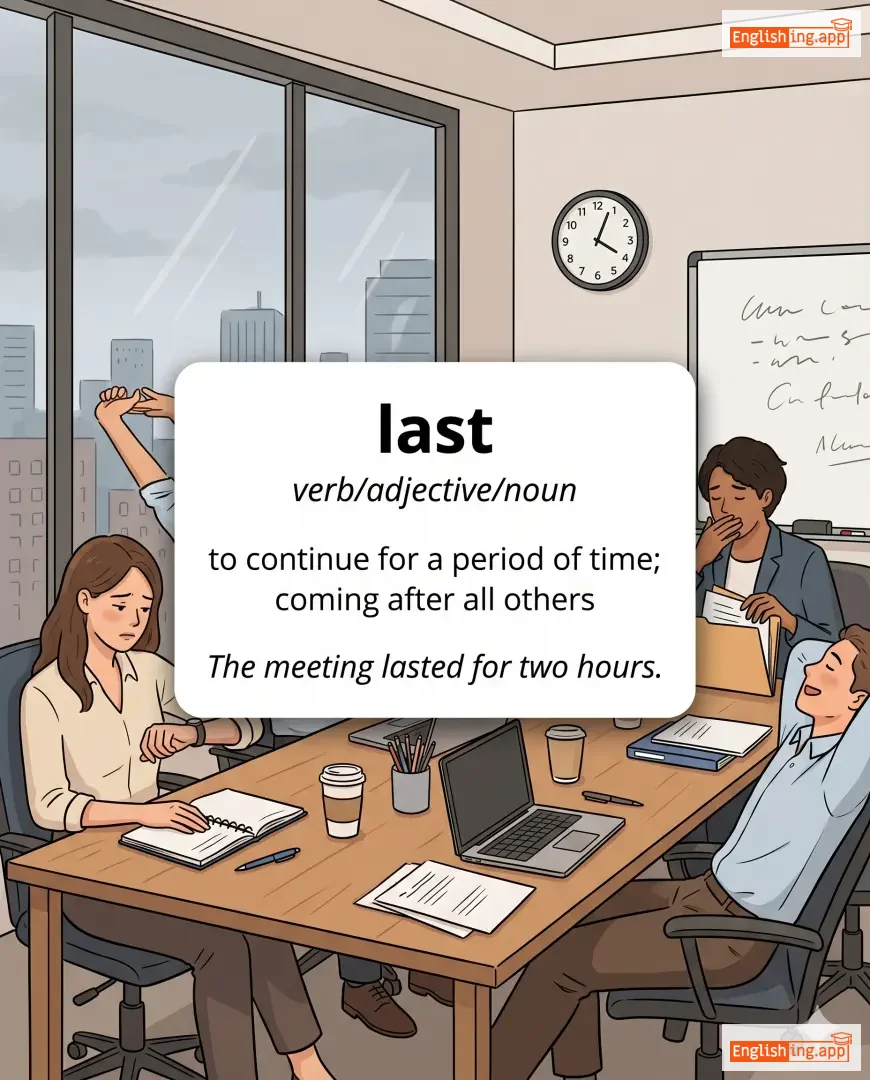
last definition card — visual illustration of the meaning
verb/adjective/noun
/læst/
続く / 最後の (tsudzuku / saigo no)

to continue for a period of time; coming after all others

"The meeting lasted for two hours."

"ミーティングは2時間続きました。" (Mītingu wa 2-jikan tsudzukimashita.)
noun/verb
/læˈsuː/
ロープ (roopu)

a rope with a loop used to catch animals; to catch with such a rope

"The cowboy lassoed the horse quickly."

"カウボーイは素早く馬をラッソしました。" (Kaubōi wa subayaku uma o rassho shimashita.)
noun
/ˈleɪzər/
レーザー (reezaa)

a device that emits a concentrated beam of light

"The doctor used a laser to perform eye surgery."

"医師は目の手術のためにレーザーを使用しました。" (Ishi wa me no shujutsu no tame ni reezaa o shiyō shimashita.)
noun
/ˈlæriət/
ロープ (roopu)

A long rope with a noose at one end used to catch animals such as cattle or horses.

"The cowboy threw his lariat to catch the stray horse."
"カウボーイは迷子の馬を捕まえるためにロープを投げました。" (Kauboi wa maigo no uma o tsukamaeru tame ni roopu o nagemashita.)
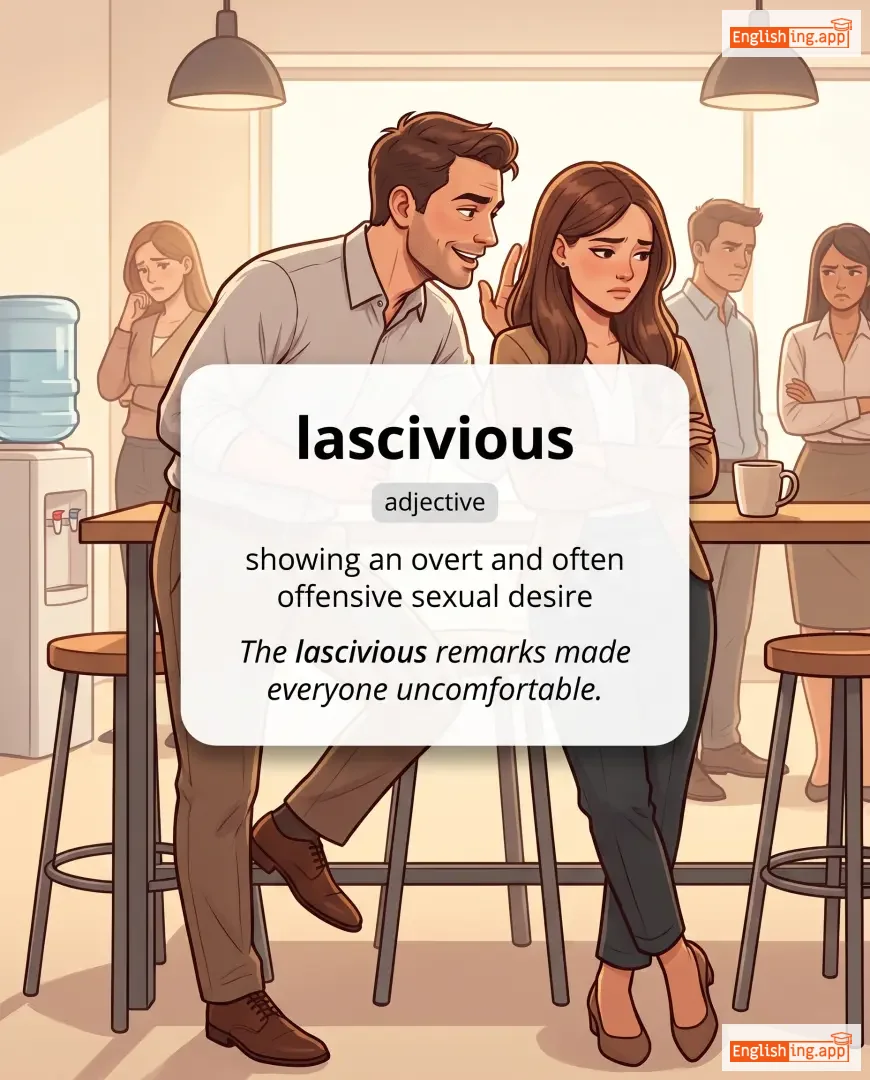
lascivious definition card — visual illustration of the meaning
adjective
/ləˈsɪviəs/
好色な (kōshokuna)

showing an overt and often offensive sexual desire

"The lascivious remarks made everyone uncomfortable."

"その好色な言葉がみんなを不快にさせた。" (Sono kōshokuna kotoba ga minna o fukai ni saseta.)
noun
/ˈlæŋɡər/
倦怠 (kentai)

A state of tiredness, inertia, or dreamy relaxation.

"The hot afternoon filled her with languor."

"暑い午後は彼女を倦怠で満たしました。" (Atsui gogo wa kanojo o kentai de mitashimashita.)
verb
/læʃ/
むち打つ/縛る (muchiutsu/shibaru)

to strike with a whip or to fasten tightly

"The sailor lashed the rope to the mast."

"船員はロープをマストに縛り付けた。" (Sen'in wa rōpu o masuto ni shibari tsuketa.)