词汇表

英语词汇词典 | 单词含义、定义和示例

noun
/ˌlæs.əˈreɪ.ʃən/
深切伤口 (shen qie shang kou)

a deep cut or tear in skin or flesh

"He needed stitches for a laceration on his leg."

"他需要为腿部的深切伤口缝针。" (Ta xuyao wei tui bu de shen qie shang kou feng zhen.)
adjective
/ˈlæk.rɪ.moʊs/
流泪的,悲伤的 (liú lèi de, bēi shāng de)

tearful or given to weeping; sad and mournful

"The movie's lachrymose ending left the audience in tears."

"电影的悲伤结局让观众泪流满面。" (Diànyǐng de bēi shāng jiéjú ràng guānzhòng lèi liú mǎn miàn.)
noun/verb
/læk/
缺乏 (quēfá)

The state of being without or not having enough of something.

"He failed the exam due to a lack of preparation."

"他因为缺乏准备而未通过考试。" (Tā yīnwèi quēfá zhǔnbèi ér wèi tōngguò kǎoshì.)
adjective
/ˌlækəˈdeɪzɪkəl/
懒散或懒惰 (lǎnsàn huò lǎnduò)

lacking enthusiasm, energy, or determination; careless or lazy

"His lackadaisical attitude toward work annoyed his boss."

"他对工作的懒散态度让他的老板很烦恼。" (Tā duì gōngzuò de lǎnsàn tàidù ràng tā de lǎobǎn hěn fánnǎo.)
noun
/ˈlæki/
侍从 (shì cóng)

a person who is overly willing to serve or obey someone else

"He treated his assistant like a mere lackey."

"他把助手当作一个普通的侍从对待。" (Tā bǎ zhùshǒu dàngzuò yīgè pǔtōng de shì cóng duìdài.)
adjective
/ˈlækɪŋ/
缺乏 (quefa)

not having enough of something; missing

"His report was lacking in detail."
"他的报告缺少细节。" (Tā de bàogào quēshǎo xìjié.)
lackluster definition card — visual illustration of the meaning
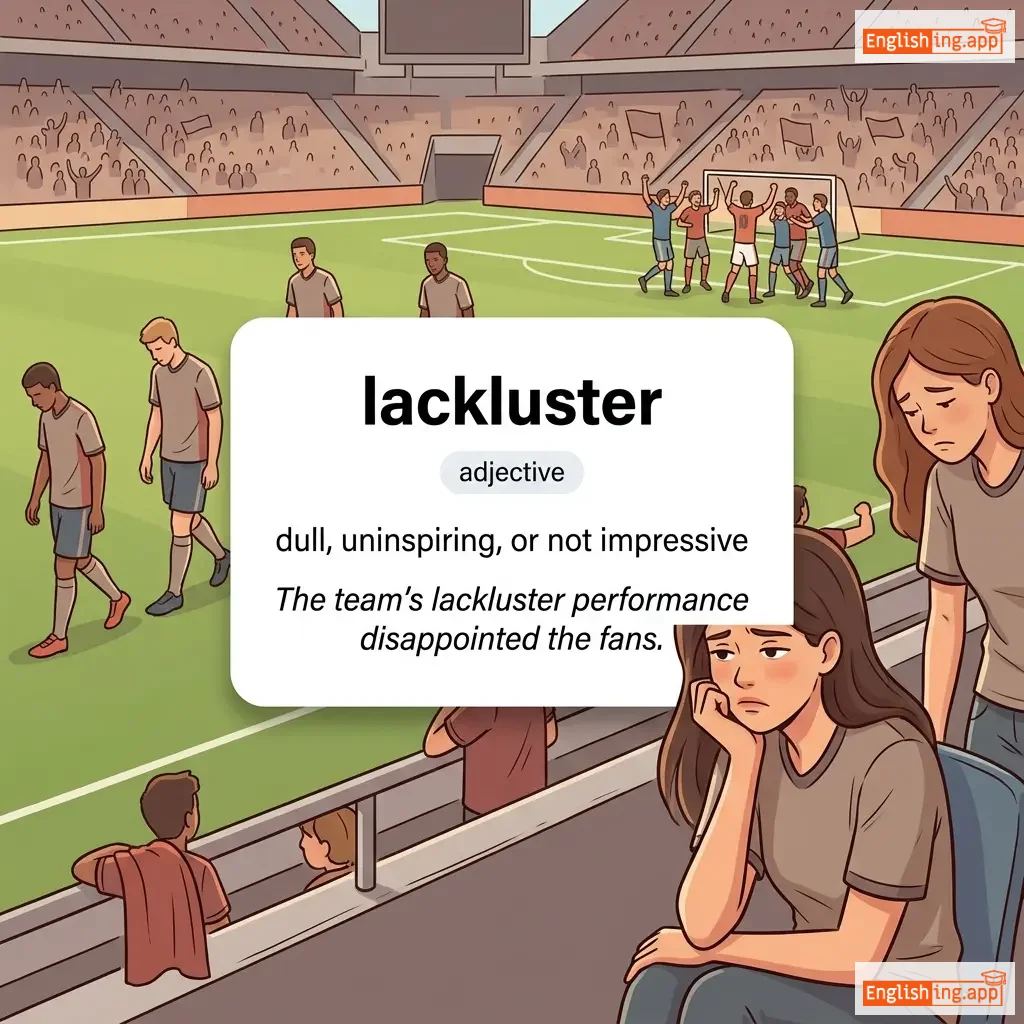
adjective
/ˈlækˌlʌstər/
平淡无奇或缺乏灵感 (píng dàn wú qí huò quē fá líng gǎn)

dull, uninspiring, or not impressive

"The team's lackluster performance disappointed the fans."

"团队平淡无奇的表现让粉丝失望。" (Tuánduì píng dàn wú qí de biǎoxiàn ràng fěnsī shīwàng.)
laconic definition card — visual illustration of the meaning
adjective
/ləˈkɒnɪk/
简洁的 (jianjie de)

using very few words; concise to the point of seeming rude or mysterious

"His laconic reply ended the conversation quickly."

"他简洁的回答迅速结束了谈话。" (Ta jianjie de huida xunsu jieshu le tanhua.)
noun
/lækˈteɪʃən/
乳汁分泌 (rǔ zhī fēn mì)

the secretion of milk by the mammary glands of female mammals

"The doctor explained that lactation is a natural process after childbirth."

"医生解释说,哺乳是分娩后的一种自然过程。" (Yīshēng jiěshì shuō, bǔrǔ shì fēnmiǎn hòu de yī zhǒng zìrán guòchéng.)
adjective
/ˈlæk.ti.əl/
与牛奶相关或类似牛奶的 (yǔ niúnǎi xiāngguān huò lèisì niúnǎi de)

Relating to or resembling milk; conveying chyle or milky fluid.

"The lacteal vessels in the small intestine absorb dietary fats."

"小肠中的乳汁管吸收膳食脂肪。" (xiǎo cháng zhōng de rǔzhī guǎn xīshōu shànshí zhīfáng.)
adjective
/ˈlæk.tɪk/
与牛奶或乳酸相关 (yǔ niúnǎi huò rǔsuān xiāngguān)

Relating to milk or lactic acid.

"Intense exercise can lead to a buildup of lactic acid in the muscles."
"剧烈运动可能会导致肌肉中乳酸的积聚。" (Jùliè yùndòng kěnéng huì dǎozhì jīròu zhōng rǔsuān de jījù.)
noun
/læd/
小伙子 (xiao huoz i)

a boy or young man; a male youth

"The young lad helped his father in the shop."

"这个年轻小伙子在商店里帮助了他的父亲。" (zhe ge nianqing xiao huoz i zai shangdian li bangzhu le ta de fuqin)
Ladder definition card — visual illustration of the meaning
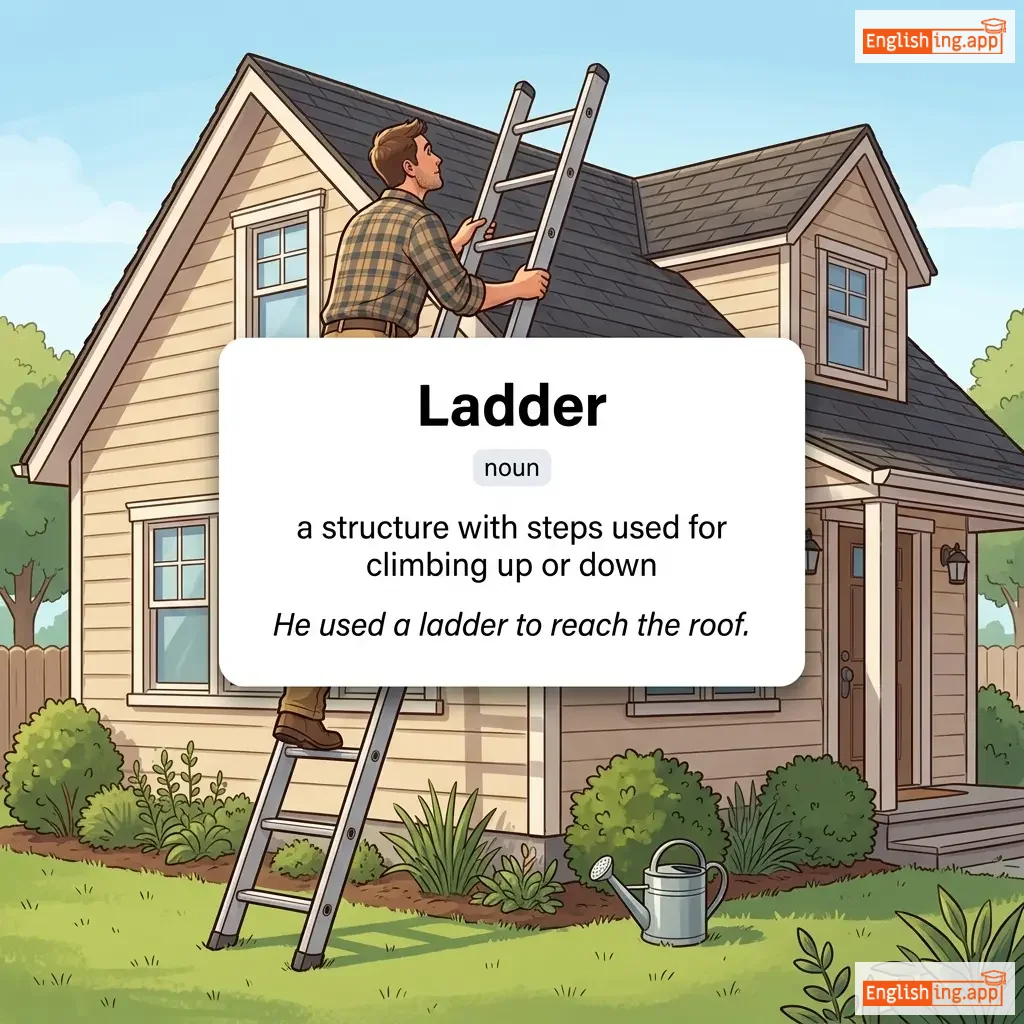
noun
/ˈlædər/
梯子 (tīzi)

a structure with steps used for climbing up or down

"He used a ladder to reach the roof."

"他用梯子爬上了屋顶。" (Tā yòng tīzi pá shàng le wūdǐng.)
noun
/ˈlæd.i/
小男孩 (xiao nanhai)

A young boy or lad.

"The old man gave the young laddie a kind smile."
"老人给年轻的小男孩一个友好的微笑。" (Laoren gei nianqing de xiao nanhai yi ge youhao de weixiao.)
Ladle definition card — visual illustration of the meaning
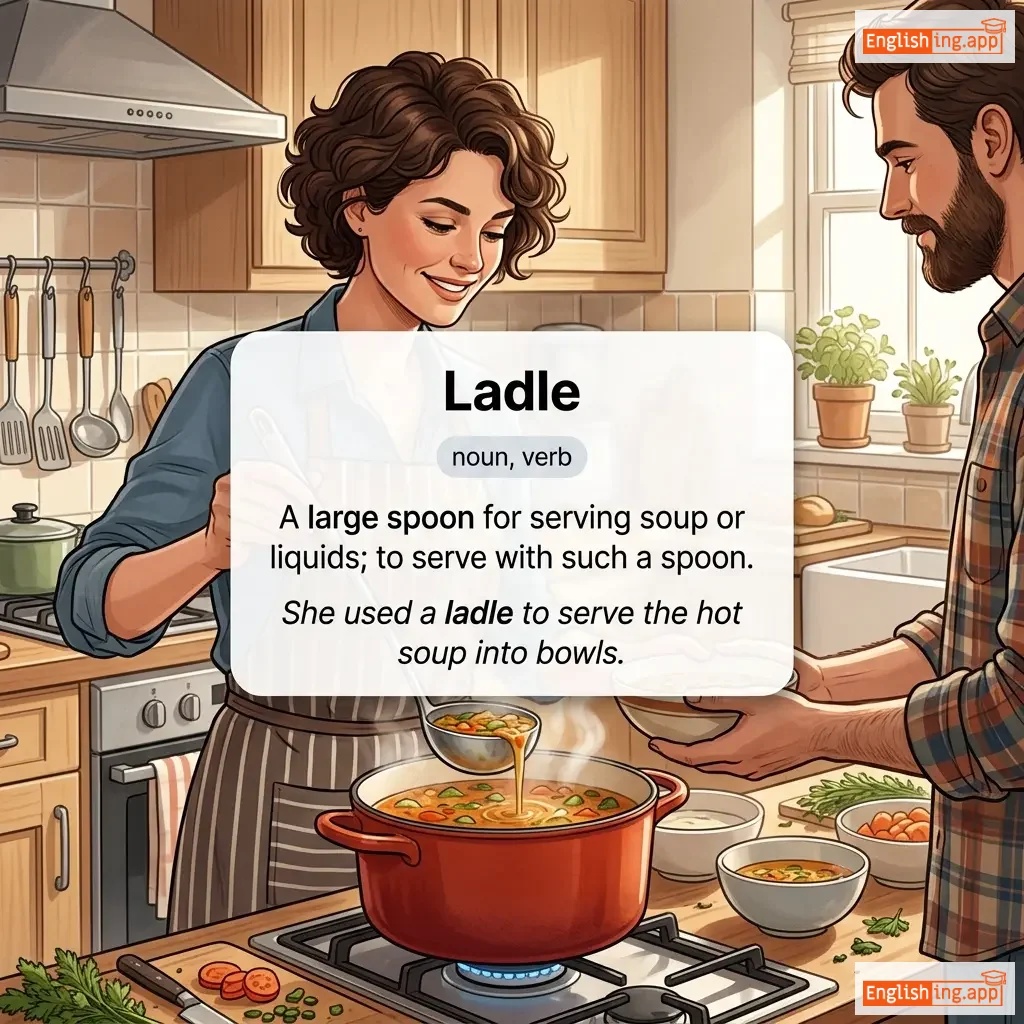
noun, verb
/ˈleɪ.dl̩/
幸福 (xingfu)

A large spoon for serving soup or liquids; to serve with such a spoon.

"She used a ladle to serve the hot soup into bowls."

"她在收到奖项时,无法隐藏她的幸福。" (Tā zài shōudào jiǎngxiàng shí, wúfǎ yǐncáng tā de xìngfú.)
noun
/ˈleɪdi/
幸福 (xingfu)

A polite or formal way of referring to a woman.

"The lady at the counter was very helpful."

"当她收到奖项时,她无法掩饰自己的幸福。" (Dāng tā shōudào jiǎngxiàng shí, tā wúfǎ yǎnshì zìjǐ de xìngfú.)
verb, noun
/læɡ/
滞后或延迟 (zhihou huo yanchi)

To fall behind in movement, progress, or development; a delay or period of falling behind.

"The old computer tends to lag when running new software."

"旧电脑在运行新软件时常常滞后。" (Jiu dian nao zai yun xing xin ruan jian shi chang chang zhihou.)
noun
/ˈlæɡərd/
落后者 (luòhòu zhě)

A person or thing that is slow or falls behind others.

"The company has been a laggard in adopting new technology."

"该公司在采用新技术方面落后。" (gāi gōngsī zài cǎiyòng xīn jìshù fāngmiàn luòhòu.)
noun
/ˈlænjæp/
额外礼物 (éwài lǐwù)

A small gift or bonus given by a seller to a customer.

"The shopkeeper offered a piece of candy as a lagniappe."

"店主作为额外礼物提供了一颗糖果。" (Diànzhǔ zuòwéi éwài lǐwù tígōngle yī kē tángguǒ.)
noun
/ləˈɡuːn/
湖泊 (hupo)

A shallow body of water separated from the sea by sandbars or reefs.

"We swam in the calm waters of the lagoon."
"我们在湖泊的平静水域游泳。" (Women zai hubo de pingjing shuiyu youyong.)
laissez-faire definition card — visual illustration of the meaning
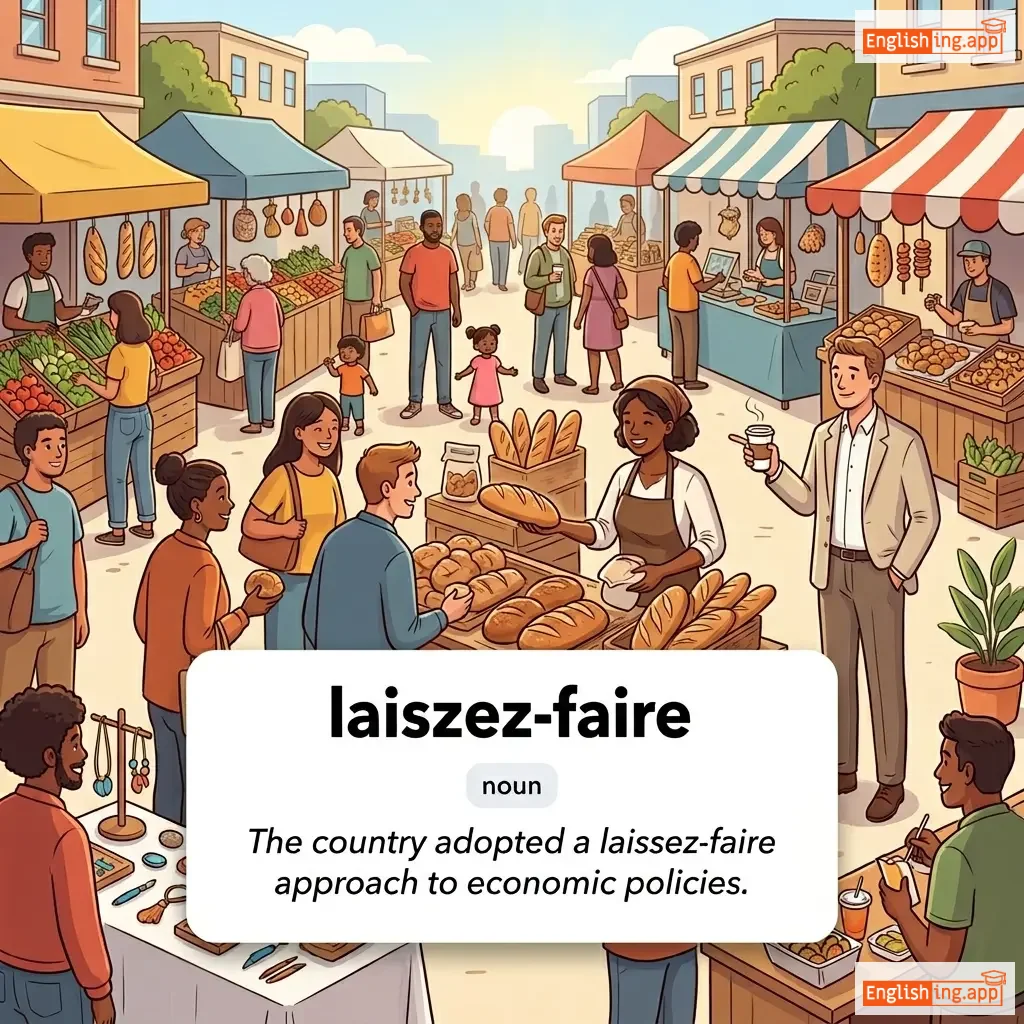
noun
/ˌlɛ.seɪˈfɛər/
自由放任政策 (zìyóu fàngrèn zhèngcè)

A free-market policy of minimal government intervention in economic affairs, characterized by non-interventionism and capitalism.

"The country adopted a laissez-faire approach to economic policies."

"该国在经济政策中采取了自由放任的方式。" (Gāi guó zài jīngjì zhèngcè zhōng cǎiqǔle zìyóu fàngrèn de fāngshì.)
noun
/ˈleɪ.ɪ.ti/
俗人 (sú rén)

Ordinary members of a religious community who are not clergy.

"The church welcomed the laity to participate in the event."

"教堂欢迎俗人参加活动。" (Jiàotáng huānyíng sú rén cānjiā huódòng.)
noun
/leɪk/
湖泊 (húpō)

A large area of water surrounded by land.

"They enjoyed boating on the lake during summer."
"他们在夏季喜欢在湖上划船。" (Tāmen zài xiàjì xǐhuān zài hú shàng huáchuán.)
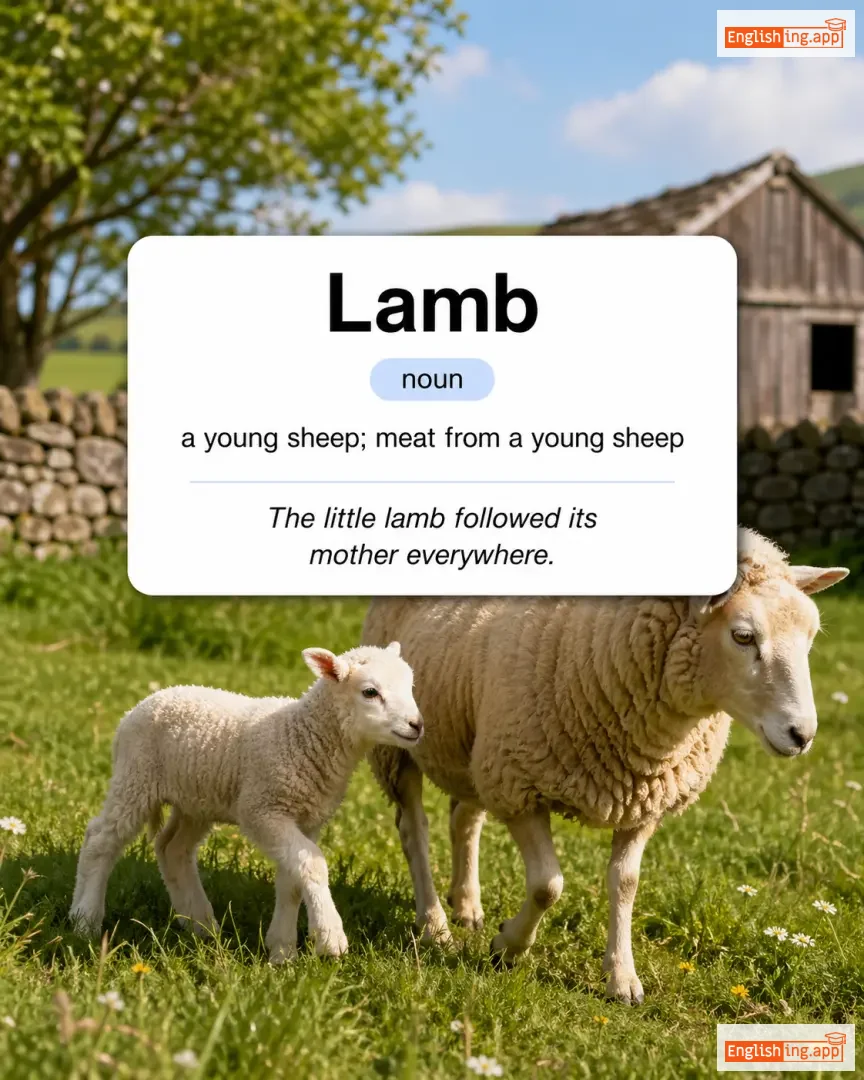
Lamb definition card — visual illustration of the meaning
noun
/læm/
小羊 (xiǎo yáng)

a young sheep; meat from a young sheep

"The little lamb followed its mother everywhere."

"小羊到处跟着它的母亲。" (Xiǎo yáng dàochù gēnzhe tā de mǔqīn.)
verb
/læmˈbæst/
严厉批评 (yanli piping)

To criticize harshly or to beat severely.

"The coach lambasted the team for their poor performance."
"教练因团队表现差而严厉批评了他们。" (Jiaolian yin tuandui biaoxian cha er yanli piping le tamen.)
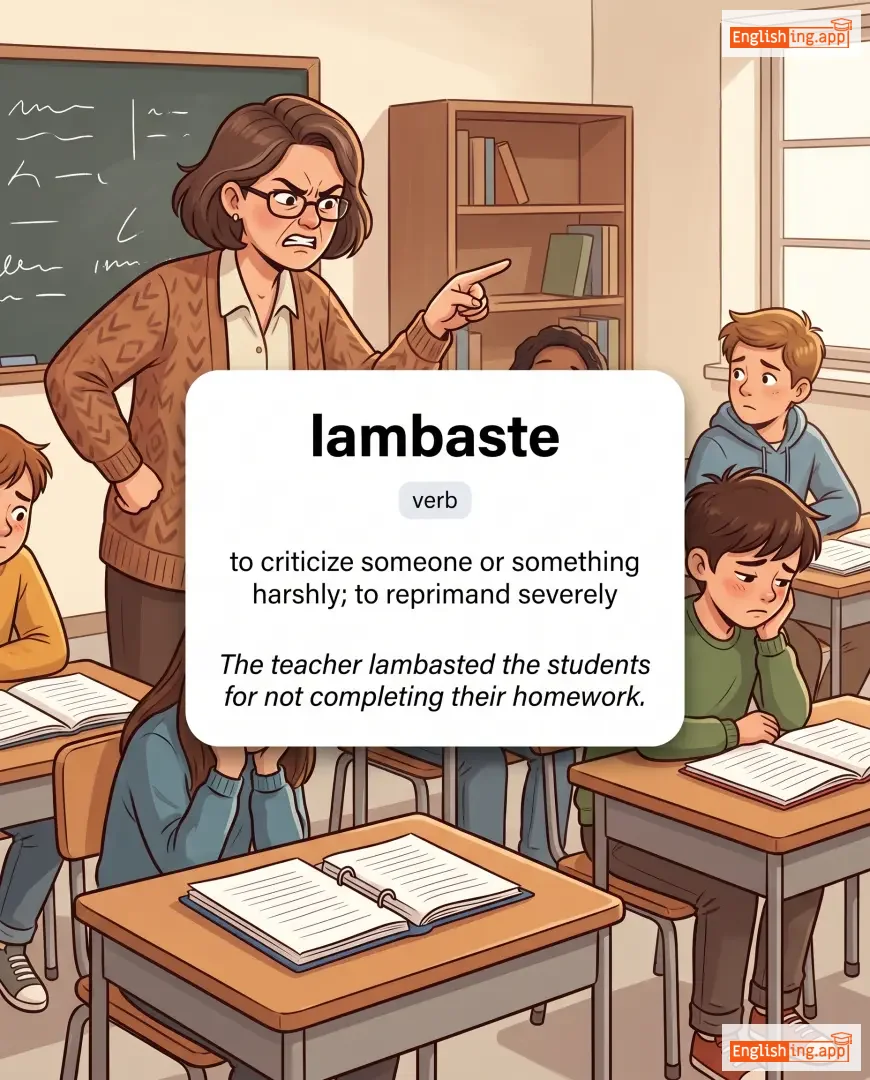
lambaste definition card — visual illustration of the meaning
verb
/læmˈbeɪst/
严厉批评 (yánlì pīpíng)

to criticize someone or something harshly; to reprimand severely

"The teacher lambasted the students for not completing their homework."
"老师因学生未完成作业而严厉批评了他们。" (Lǎoshī yīn xuéshēng wèi wánchéng zuòyè ér yánlì pīpíngle tāmen.)
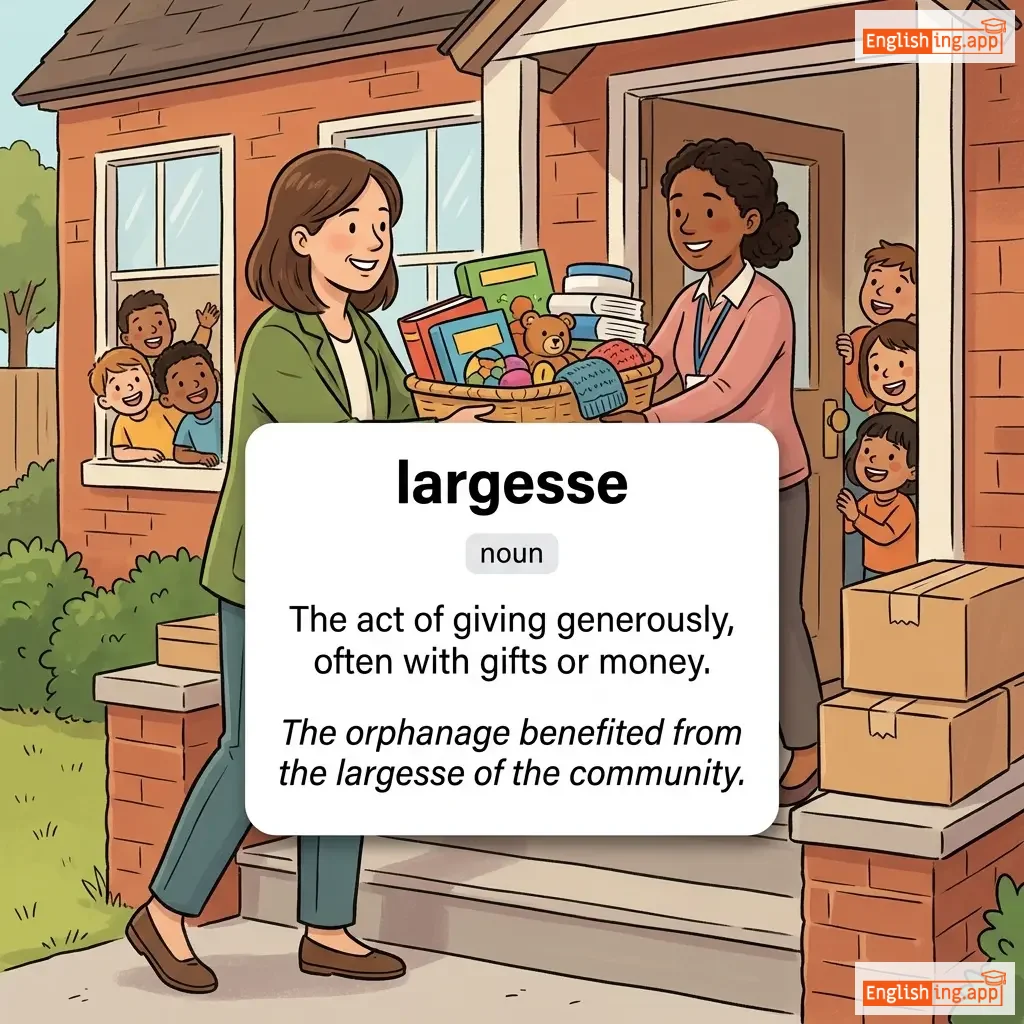
largesse definition card — visual illustration of the meaning
noun
/lɑːrˈʒɛs/
慷慨 (kāngkǎi)

The act of giving generously, often with gifts or money.

"The orphanage benefited from the largesse of the community."

"孤儿院从社区的慷慨中受益。" (Gū'ér yuàn cóng shèqū de kāngkǎi zhōng shòuyì.)
adjective
/læŋk/
高而瘦 (gao er shou)

Tall, thin, and often awkward in appearance.

"The lank teenager towered over his classmates."
"那个高而瘦的少年比他的同班同学高。" (Na ge gao er shou de shaonian bi tade tongban tongxue gao.)
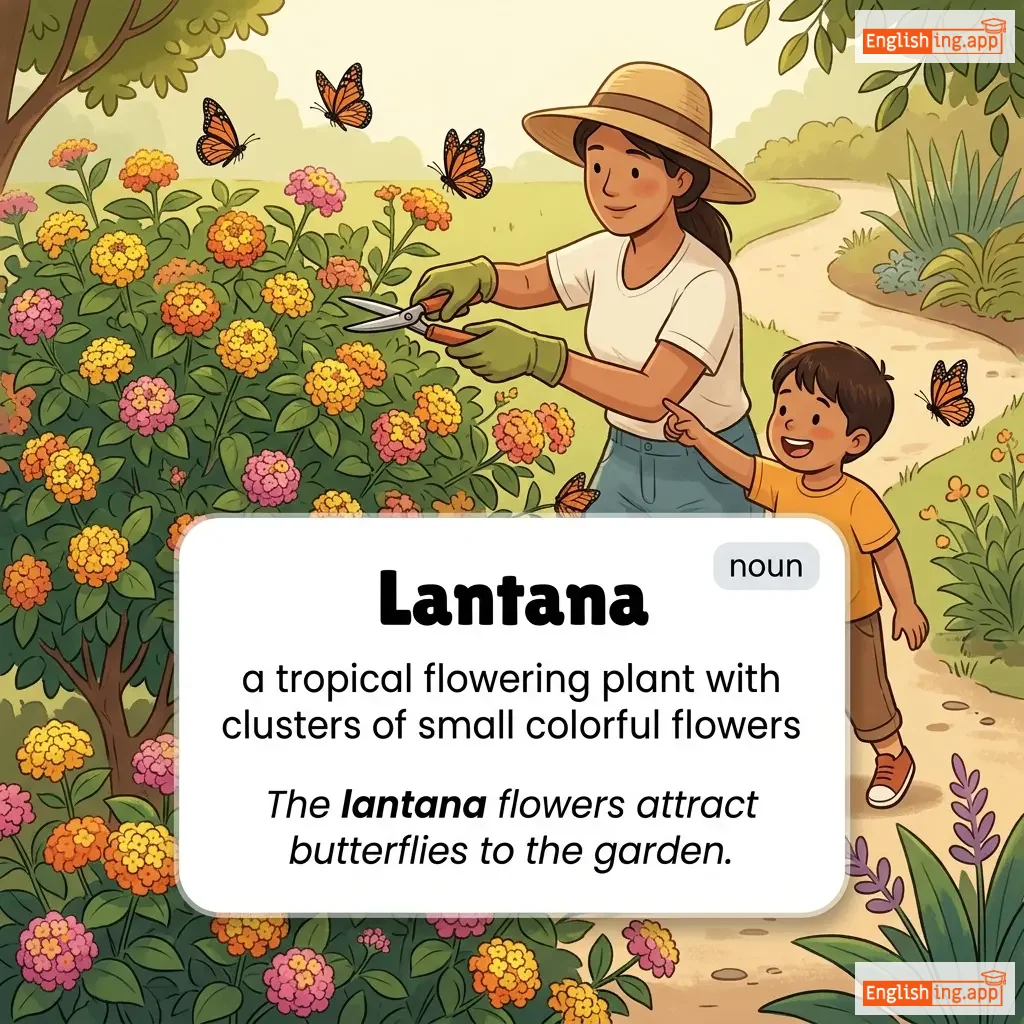
Lantana definition card — visual illustration of the meaning
noun
/lænˈtɑː.nə/
兰塔纳 (lantana)

a tropical flowering plant with clusters of small colorful flowers

"The lantana flowers attract butterflies to the garden."
"兰塔纳的花朵吸引蝴蝶到花园。" (Lántǎnà de huāduǒ xīyǐn húdié dào huāyuán.)
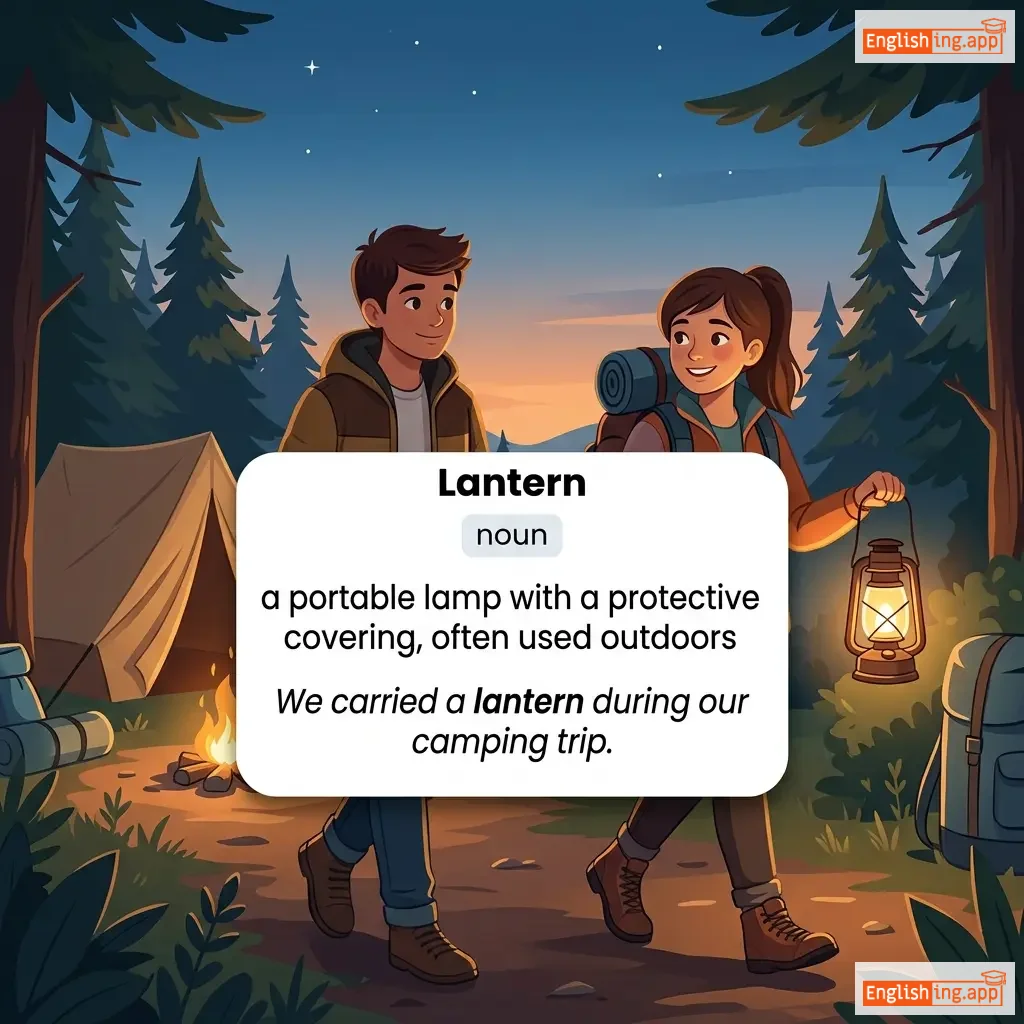
Lantern definition card — visual illustration of the meaning
noun
/ˈlæn.tərn/
灯笼 (dēnglong)

a portable lamp with a protective covering, often used outdoors

"We carried a lantern during our camping trip."

"我们在露营时带着灯笼。" (Wǒmen zài lùyíng shí dàizhe dēnglong.)
Lap definition card — visual illustration of the meaning
noun/verb
/læp/
幸福 (xìngfú)

As noun: the flat area between the waist and knees of a seated person; As verb: to drink liquid with the tongue.

"The child sat on her mother's lap."

"当她获得奖项时,她无法掩饰自己的幸福。" (Dāng tā huòdé jiǎngxiàng shí, tā wúfǎ yǎnshì zìjǐ de xìngfú.)
noun/adjective
/ˈlæpɪˌdɛri/
宝石雕刻师 (baoshi diaoke shi)

As noun: a person who cuts, polishes, or engraves precious stones; As adjective: relating to such work.

"The museum displayed lapidary tools used in ancient times."

"博物馆展示了古代使用的宝石雕刻工具。" (Bowuguan zhanshi le gudai shiyong de baoshi diaoke gongju.)
noun/verb
/læps/
失误 (shiwu)

As noun: a temporary failure or slip; As verb: to end or fall into disuse.

"She apologized for her lapse in judgment."

"她为判断失误道歉。" (Ta wei panduan shiwu dao-qian.)
noun
/ˈlɑːrsəni/
盗窃 (dàoqiè)

The unlawful taking of personal property with intent to deprive the rightful owner of it.

"He was arrested for committing larceny at the store."

"他因在商店犯盗窃罪被逮捕。" (Tā yīn zài shāngdiàn fàn dàoqiè zuì bèi dàibǔ.)
noun
/ˈlɑːrdər/
储藏室 (chǔcángshì)

A place, such as a pantry, where food is stored.

"The larder was full of fresh bread and cheese."
"储藏室里满是新鲜的面包和奶酪。" (Chǔcángshì lǐ mǎn shì xīnxiān de miànbāo hé nǎilào.)
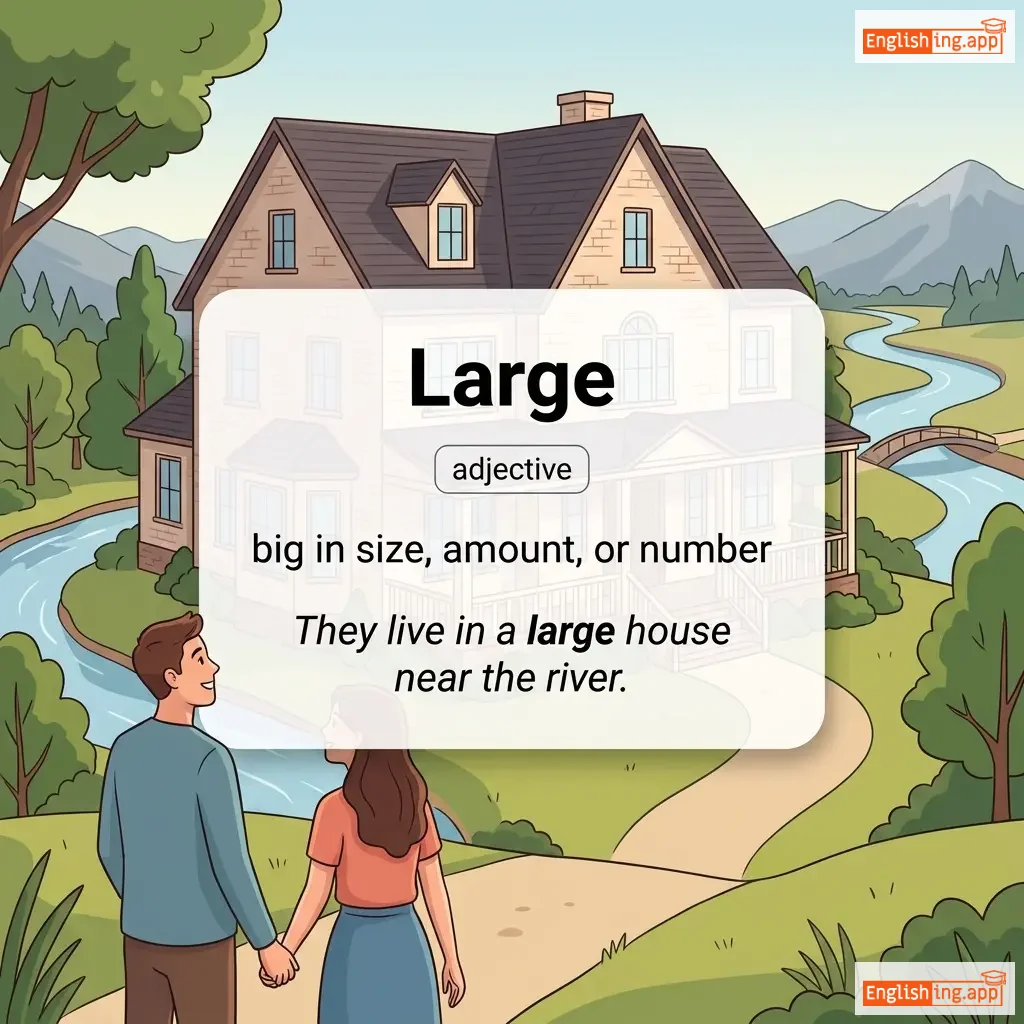
Large definition card — visual illustration of the meaning
adjective
/lɑrdʒ/
(da)

big in size, amount, or number

"They live in a large house near the river."

"他们住在河边的一座大房子里。" (Tāmen zhù zài hé biān de yī zuò dà fángzi lǐ.)
adjective
/lɑːrdʒ skeɪl/
大规模 (dà guīmó)

involving a large number or quantity, or covering a large area

"The company is planning a large-scale expansion into international markets."

"该公司计划在国际市场进行大规模扩张。" (Gāi gōngsī jìhuà zài guójì shìchǎng jìnxíng dà guīmó kuòzhāng.)
adverb
/ˈlɑːrdʒli/
主要 (zhǔ yào)

to a great extent; mostly or mainly

"The success of the project was largely due to teamwork."

"这个项目的成功主要归功于团队合作。" (Zhège xiàngmù de chénggōng zhǔ yào guīgōng yú tuánduì hézuò.)
noun
/lɑːrˈʒes/
慷慨 (kangkai)

Generosity in giving gifts or money.

"The foundation survived thanks to the largess of wealthy donors."
"这个基金会得以生存,多亏了富有捐赠者的慷慨。" (Zhège jījīn huì dé yǐ shēngcún, duō kuīle fùyǒu juānzèng zhě de kāngkǎi.)
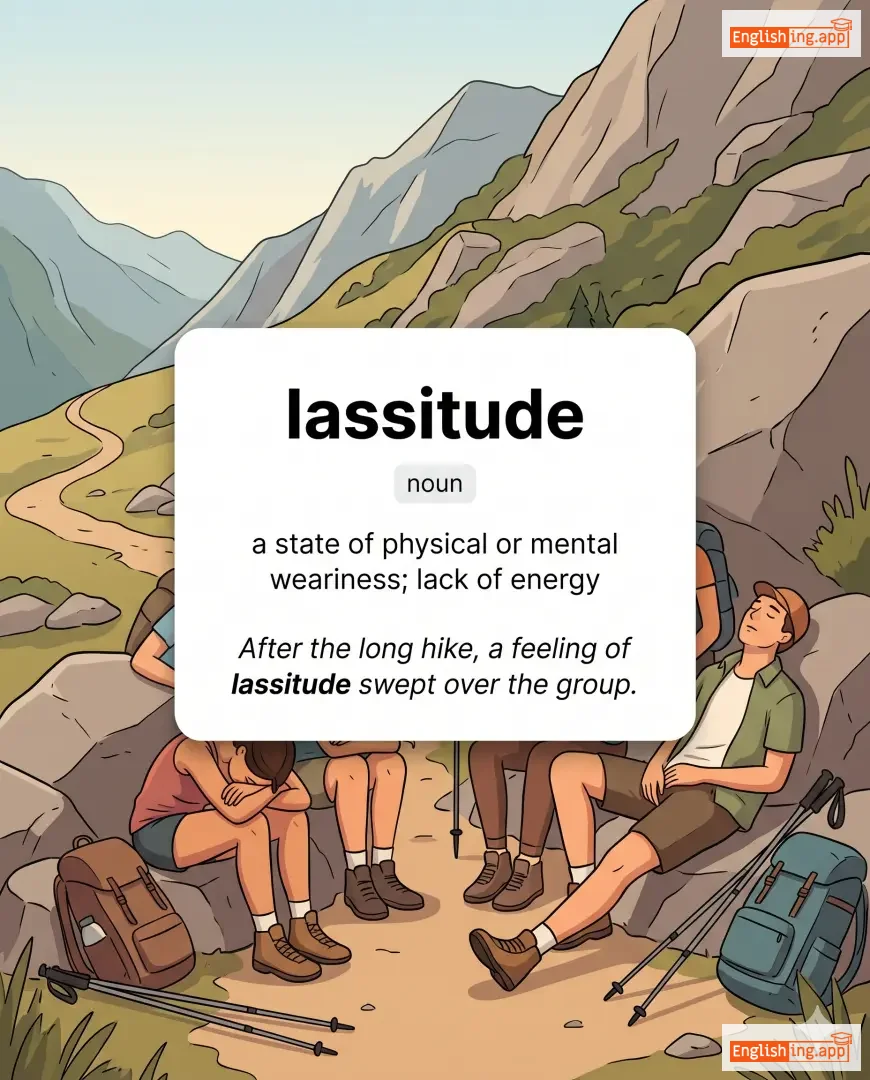
lassitude definition card — visual illustration of the meaning
noun
/ˈlæsɪtjuːd/
疲劳 (píláo)

a state of physical or mental weariness; lack of energy

"After the long hike, a feeling of lassitude swept over the group."

"长时间徒步后,疲劳感笼罩了整个团队。" (Cháng shíjiān túbù hòu, píláo gǎn lǒngzhào le zhěnggè tuánduì.)
adjective/adverb
/leɪt/
迟到 (chidao)

arriving, happening, or done after the expected time

"He arrived late to the meeting."

"他迟到了会议。" (Tā chídào le huìyì.)
verb
/lætʃ/
上锁 (shàng suǒ)

to fasten or close something with a latch

"She latched the door before leaving the house."

"她在离开房子之前把门锁上了。" (Tā zài líkāi fángzi zhīqián bǎ mén suǒ shàng le.)
adjective
/ˈlæstɪŋ/
持久的; 永久的 (chí jiǔ de; yǒng jiǔ de)

enduring for a long time; permanent; durable

"Their friendship had a lasting impact on both their lives."

"他们的友谊对他们的生活产生了持久的影响。" (Tāmen de yǒuyì duì tāmen de shēnghuó chǎnshēngle chí jiǔ de yǐngxiǎng.)
last definition card — visual illustration of the meaning
verb/adjective/noun
/læst/
持续 / 最后 (chíxù / zuìhòu)

to continue for a period of time; coming after all others

"The meeting lasted for two hours."

"会议持续了两个小时。" (Huiyi chíxùle liǎng gè xiǎoshí.)
noun/verb
/læˈsuː/
套索 (taosuo)

a rope with a loop used to catch animals; to catch with such a rope

"The cowboy lassoed the horse quickly."

"牛仔快速用拉索抓住了马。" (Niúzǎi kuàisù yòng lāsuǒ zhuāzhù le mǎ.)
noun
/ˈleɪzər/
激光 (jiguang)

a device that emits a concentrated beam of light

"The doctor used a laser to perform eye surgery."

"医生使用激光进行眼部手术。" (Yīshēng shǐyòng jīguāng jìnxíng yǎnbù shǒushù.)
noun
/ˈlæriət/
套索 (taosuo)

A long rope with a noose at one end used to catch animals such as cattle or horses.

"The cowboy threw his lariat to catch the stray horse."

"牛仔投掷了他的套索,捕捉到了迷路的马。" (Niuzai touzhile tade taosuo, buchu daole milu de ma.)
lascivious definition card — visual illustration of the meaning
adjective
/ləˈsɪviəs/
淫荡 (yín dàng)

showing an overt and often offensive sexual desire

"The lascivious remarks made everyone uncomfortable."

"那些淫荡的评论让每个人都感到不舒服。" (Nàxiē yíndàng de pínglùn ràng měi gèrén dōu gǎndào bù shūfú.)
noun
/ˈlæŋɡər/
倦怠 (juandai)

A state of tiredness, inertia, or dreamy relaxation.

"The hot afternoon filled her with languor."

"炎热的下午让她感到疲倦。" (Yánrè de xiàwǔ ràng tā gǎndào píláo.)
verb
/læʃ/
抽打/绑紧 (chōudǎ/bǎng jǐn)

to strike with a whip or to fasten tightly

"The sailor lashed the rope to the mast."

"水手把绳子绑到桅杆上。" (Shuǐshǒu bǎ shéngzi bǎng dào wéigǎn shàng.)