词汇表

英语词汇词典 | 单词含义、定义和示例

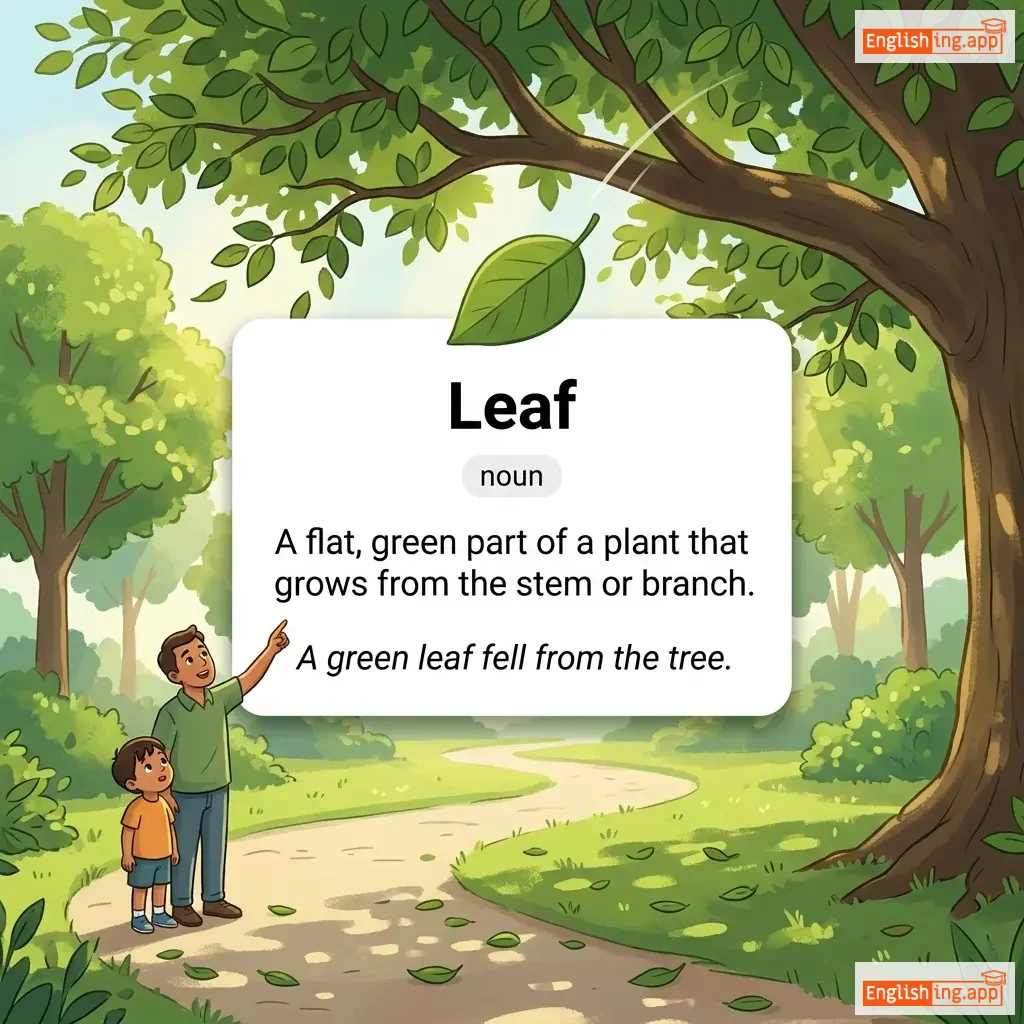
Leaf definition card — visual illustration of the meaning
noun
/liːf/
叶子 (yezi)

A flat, green part of a plant that grows from the stem or branch.

"A green leaf fell from the tree."

"一片绿叶从树上掉了下来。" (Yi pian lü ye cong shu shang diao le xia lai.)
adjective
/ˈliːf.ləs/
无叶的; 光秃的 (wú yè de; guāng tū de)

without leaves; bare

"The leafless trees looked bare in winter."

"冬天无叶的树看起来光秃秃的。" (dōngtiān wú yè de shù kàn qǐlái guāng tū tū de.)
noun
/ˈliːflət/
小册子 (xiǎo cèzi)

A printed sheet of paper, often folded, used to advertise or provide information.

"The volunteers distributed leaflets about the campaign."

"志愿者分发了有关该活动的小册子。" (Zhìyuànzhě fēn fā le yǒuguān gāi huódòng de xiǎo cèzi.)
adjective
/ˈliː.fi/
多叶的; 被叶子覆盖的 (duō yè de; bèi yèzi fùgài de)

having many leaves; covered with leaves

"The leafy green vegetables are very nutritious."

"叶绿的蔬菜非常有营养。" (Yè lǜ de shūcài fēicháng yǒu yíngyǎng.)
noun
/liːɡ/
联赛 (lian sai)

An association of people or groups united for a common purpose; also a unit of distance (old use).

"Several clubs formed a league to promote sportsmanship."

"几个俱乐部组成了一个联盟,以促进体育精神。" (Ji ge julebu zucheng le yi ge lianmeng, yi cujin tiyu jingshen.)
noun/verb
/liːk/
漏洞 (lòudòng)

to allow liquid or gas to escape; or a hole through which liquid or gas can escape

"Water started to leak from the ceiling after the storm."

"暴风雨过后,水开始从天花板漏出来。" (Bàofēngyǔ guòhòu, shuǐ kāishǐ cóng tiānhuābǎn lòuchūlái.)
Lean definition card — visual illustration of the meaning
verb
/liːn/
倾斜 (qingxie)

To move or bend your body in a particular direction.

"He had to lean forward to hear her clearly."

"他必须向前倾斜才能清楚地听到她。" (Ta bixu xiang qian qingxie cai neng qingchu de tingdao ta.)
leap definition card — visual illustration of the meaning
🏃‍♂️

leap (líp)

verb
/liːp/
跳跃 (tiaoyue)

to jump or spring a long way or to a great height

"The cat leapt onto the wall effortlessly."

"猫毫不费力地跳到墙上。" (Mao hao bu feili de tiaodao qiang shang.)
learn definition card — visual illustration of the meaning
verb
/lɜːrn/
学习 (xuéxí)

to gain knowledge or skill by studying or experience

"Children learn new things quickly."

"孩子们很快就学会了新事物。" (Háizimen hěn kuài jiù xuéhuìle xīn shìwù.)
adjective; verb (past and past participle)
/lɜːrnd/
博学的 (boxuede)

having acquired much knowledge through study; gained knowledge or skill through experience or teaching

"She is a learned scholar with deep knowledge of history."

"她是一位对历史有深厚了解的博学学者。" (ta shi yi wei dui lishi you shenhou liaojie de boxue xuezhe)
noun
/ˈlɜːrnər/
学习者 (xuexizhe)

a person who is acquiring knowledge or skill through study or experience

"She is a fast learner."

"她学得很快。" (ta xue de hen kuai)
learning definition card — visual illustration of the meaning
noun
/ˈlɜrnɪŋ/
学习 (xuéxí)

The process of gaining knowledge or skills through study or experience.

"Learning a new language can be exciting."

"学习一门新语言可能是令人兴奋的。" (Xuéxí yīmén xīn yǔyán kěnéng shì lìng rén xīngfèn de.)
Lease definition card — visual illustration of the meaning
noun
/liːs/
租赁合同 (lizi)

a contract by which one party conveys land, property, services, etc. to another for a specified time, usually in return for a periodic payment

"They signed a two-year lease for the apartment."

"他们签署了两年的公寓租赁合同。" (Tāmen qiānshǔle liǎng nián de gōngyù zūlìn hé tóng.)
noun/verb
/liːʃ/
牵引绳 (qiānyǐn shéng)

a strap or cord used to control or guide an animal; to restrain or control

"The dog was on a leash during the walk."

"狗在散步时被牵引绳拴着。" (gǒu zài sànbù shí bèi qiānyǐn shéng shuān zhe)
adjective
/liːst/
最少 (zuì shǎo)

smallest in amount, extent, or importance

"She showed the least interest in the project."
"她对这个项目表现出最少的兴趣。" (Tā duì zhège xiàngmù biǎoxiàn chū zuì shǎo de xìngqù.)
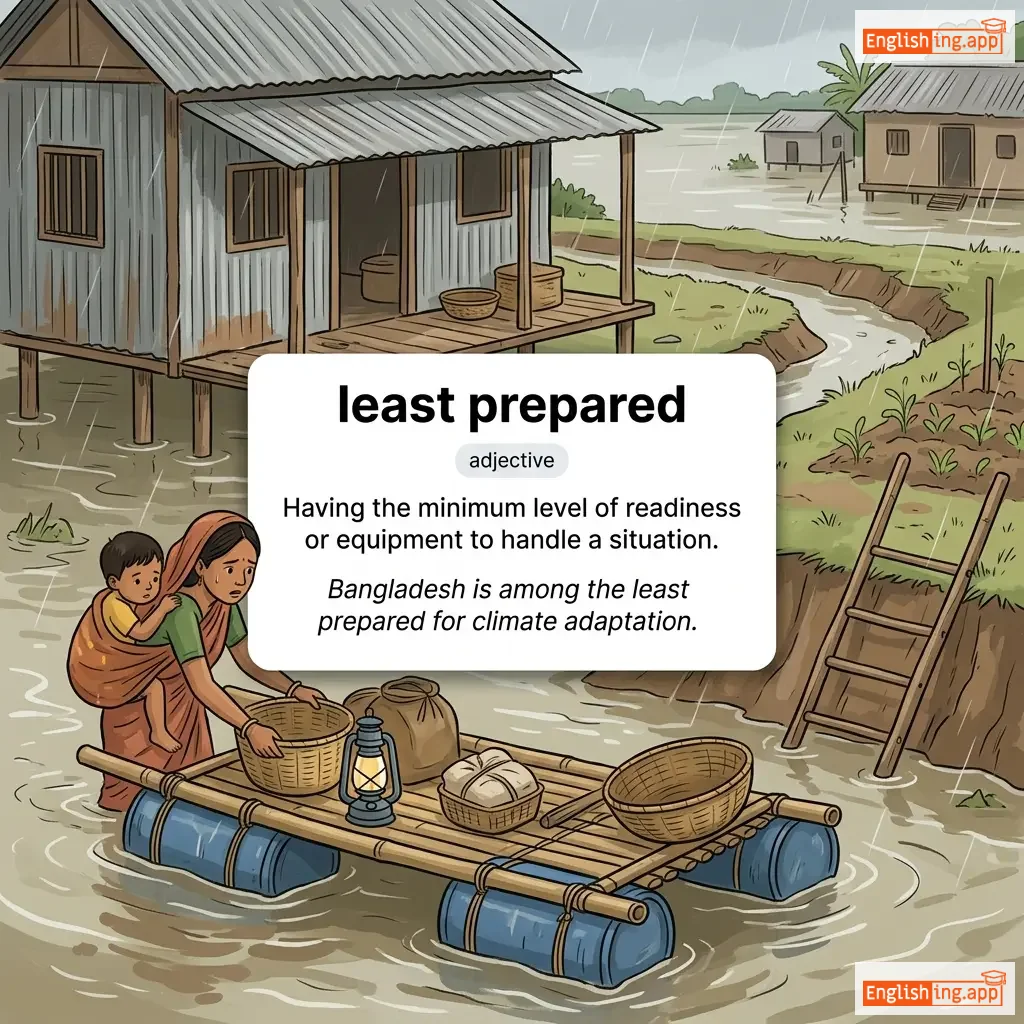
least prepared definition card — visual illustration of the meaning
adjective
liːst prɪˈpeərd
最不准备 (zuì bù zhǔnbèi)

Having the minimum level of readiness or equipment to handle a situation.

"Bangladesh is among the least prepared for climate adaptation."

"孟加拉国在气候适应方面是最不准备的国家之一。" (Mèngjiālāguó zài qìhòu shìyìng fāngmiàn shì zuì bù zhǔnbèi de guójiā zhī yī.)
noun
/ˈlɛðər/
皮革 (pige)

A material made from the skin of an animal, usually treated and used to make clothing, shoes, or furniture.

"He bought a leather jacket for winter."
"他为冬天买了一件皮革夹克。" (Ta wei dongtian mai le yijian pige jieke.)
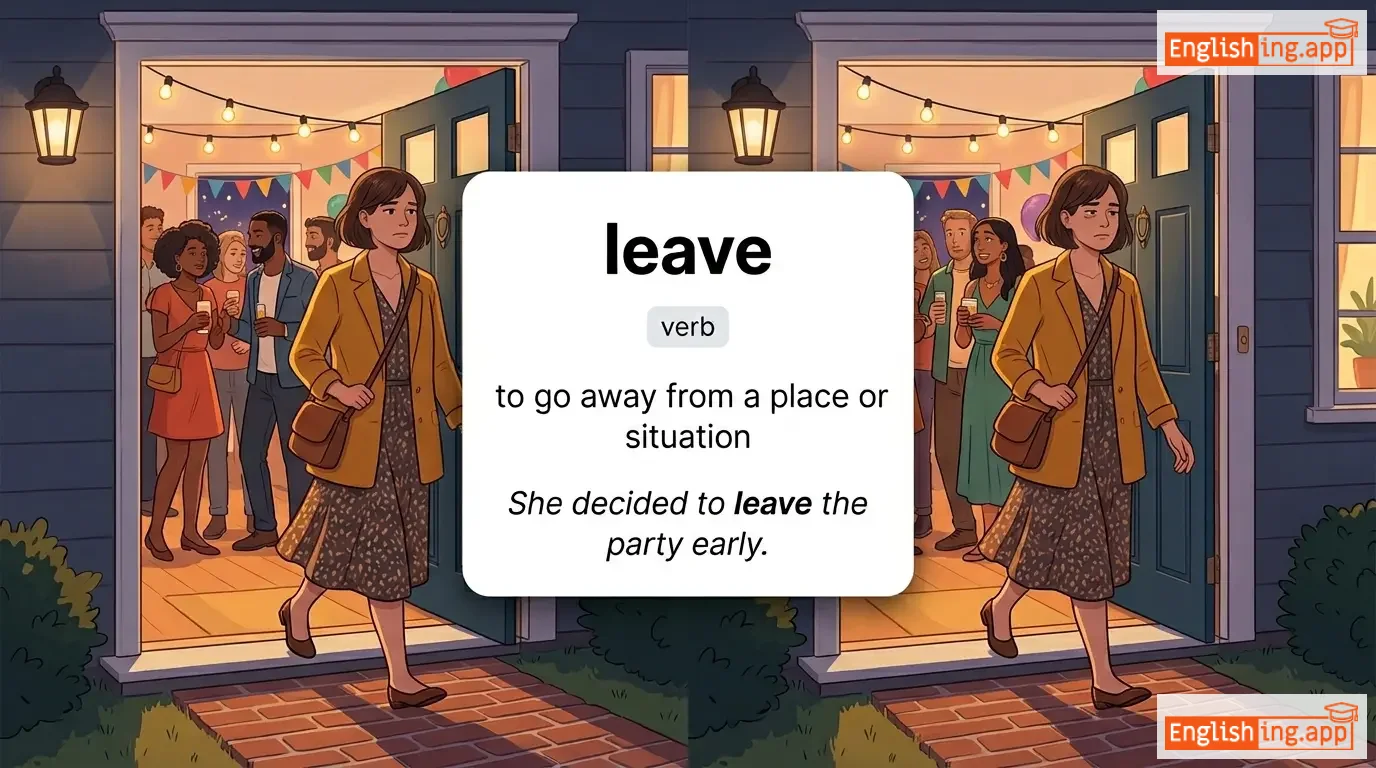
leave definition card — visual illustration of the meaning
🚶‍♂️

leave (liv)

verb
/liːv/
离开 (likai)

to go away from a place or situation

"She decided to leave the party early."

"她决定提前离开派对。" (Ta jueding tiqian likai paidui.)
noun
/ˈliːvˌteɪ.kɪŋ/
告别 (gàobié)

an act of saying goodbye; farewell

"His leave-taking from his friends was emotional."

"他向朋友的告别是感人的。" (Tā xiàng péngyǒu de gàobié shì gǎnrén de.)
noun/verb
/ˈlɛv.ən/
酵母 (jiaomǔ)

a substance, typically yeast, that causes dough to rise; to permeate and modify

"A little yeast will leaven the bread dough."

"一点酵母会让面团发酵。" (Yi dian jiaomǔ huì ràng miantuan fāxiào.)
noun
/ˈliː.vɪŋz/
剩余物; 残留物 (livings)

things that have been left behind or remain; remnants or scraps

"The leavings from dinner were given to the dog."

"晚餐的剩余物被给了狗。" (Wǎncān de shèngyú wù bèi gěile gǒu.)
noun
/ˈleʧ.ər/
好色之徒 (haose zhitu)

a man who behaves in a sexually inappropriate way towards women

"The company fired him for being a lecher."

"公司因为他是个好色之徒而解雇了他。" (gongsi yinwei ta shige haose zhitu er jiegule ta)
adjective
/ˈlɛtʃ.ər.əs/
好色 (hàosè)

having or showing excessive or offensive sexual desire

"The character was portrayed as a lecherous old man."

"这个角色被描绘成一个好色的老男人。" (Zhège juésè bèi miáohuì chéng yīgè hàosè de lǎo nánrén.)
noun
/ˈlɛtʃ.əri/
色欲 (sèyù)

excessive or offensive sexual desire; lustfulness

"The novel depicted the lechery of corrupt nobles."

"这本小说描述了腐化贵族的色欲。" (Zhè běn xiǎoshuō miáoshùle fǔhuà guìzú de sèyù.)
noun
/ˈlɛktən/
讲台 (jiangtai)

A tall stand with a sloping top used to support a book, notes, or script during a speech or lecture.

"The professor placed her notes on the lectern before starting her lecture."
"教授在开始讲座之前,把笔记放在讲台上。" (Jiàoshòu zài kāishǐ jiǎngzuò zhīqián, bǎ bǐjì fàng zài jiǎngtái shàng.)
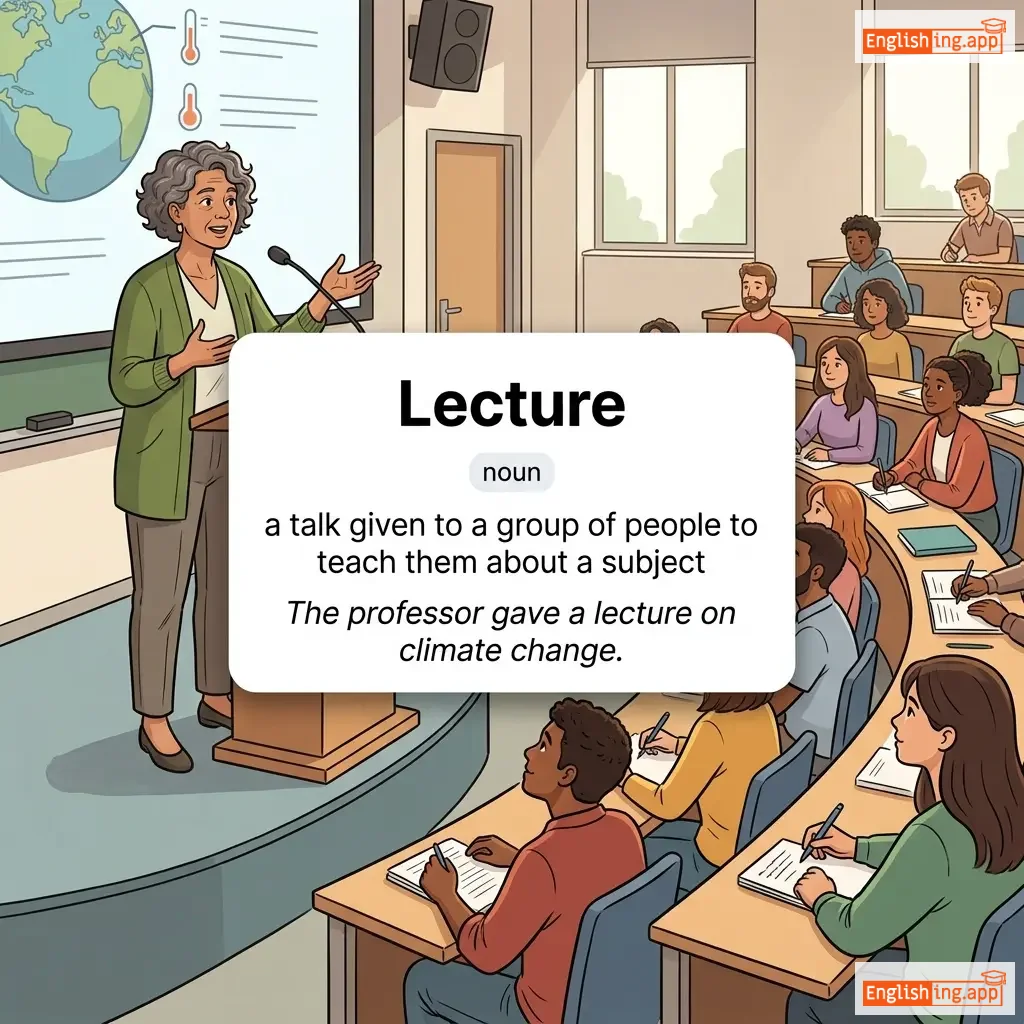
Lecture definition card — visual illustration of the meaning
noun
/ˈlektʃər/
讲座 (jiangzuo)

a talk given to a group of people to teach them about a subject

"The professor gave a lecture on climate change."

"教授就气候变化做了讲座。" (Jiaoshou jiu qihou bianhua zuole jiangzuo.)
noun
/ˈlɛktʃərər/
讲师 (jiangshi)

a person who gives lectures, especially at a college or university

"The lecturer explained the theory with clear examples."

"讲师用清楚的例子解释了理论。" (Jiangshi yong qingchu de lizi jieshi le lilun)
noun
/ˈledʒ.ər/
总账 (zǒng zhàng)

a book or other collection of financial accounts of a particular type

"The accountant updated the company ledger daily."

"会计每天更新公司的总账。" (Kuàijì měitiān gēngxīn gōngsī de zǒng zhàng.)
Leech definition card — visual illustration of the meaning
noun
/liːt͡ʃ/
水蛭 (shui zhi)

a blood-sucking worm that lives in water or moist ground

"The doctor used a medical leech to reduce swelling after surgery."

"医生使用了医疗水蛭来减少手术后的肿胀。" (Yisheng shiyong le yiliaoshui zhi lai jianshao shoushu hou de zhongzhang)
Leek definition card — visual illustration of the meaning
noun
/liːk/
韭菜 (jiǔcài)

vegetable related to onion with long green leaves and white bulb, milder than onion

"The soup was made with potatoes and leeks."

"这道汤是用土豆和韭菜做的。" (Zhè dào tāng shì yòng tǔdòu hé jiǔcài zuò de.)
verb
/lɪr/
猥亵的目光 (wěixiè de mùguāng)

To look at someone in an unpleasant, sly, or sexually suggestive way.

"He leered at her in a way that made her uncomfortable."

"他用让她不舒服的方式看着她。" (Tā yòng ràng tā bù shūfú de fāngshì kànzhe tā.)
adjective
/ˈlɪəri/
怀疑的 (huáiyí de)

Cautious or wary due to suspicion or distrust.

"She was leery of investing in the new business."

"她对投资新业务感到怀疑。" (Tā duì tóuzī xīn yèwù gǎndào huáiyí.)
adjective
/ˈliːwərd/
背风面 (beifengmian)

On or toward the sheltered side away from the wind.

"They built their camp on the leeward side of the hill."

"他们在山丘的背风面搭建了营地。" (Tāmen zài shānqiū de bèifēngmiàn dājiànle yíngdì.)
noun
/ˈliːweɪ/
回旋余地 (huíxuán yúdì)

Freedom to act within certain limits; extra space or time.

"The manager gave the team some leeway to finish the project."
"经理给了团队一些回旋余地来完成项目。" (Jīnglǐ gěile tuánduì yīxiē huíxuán yúdì lái wánchéng xiàngmù.)
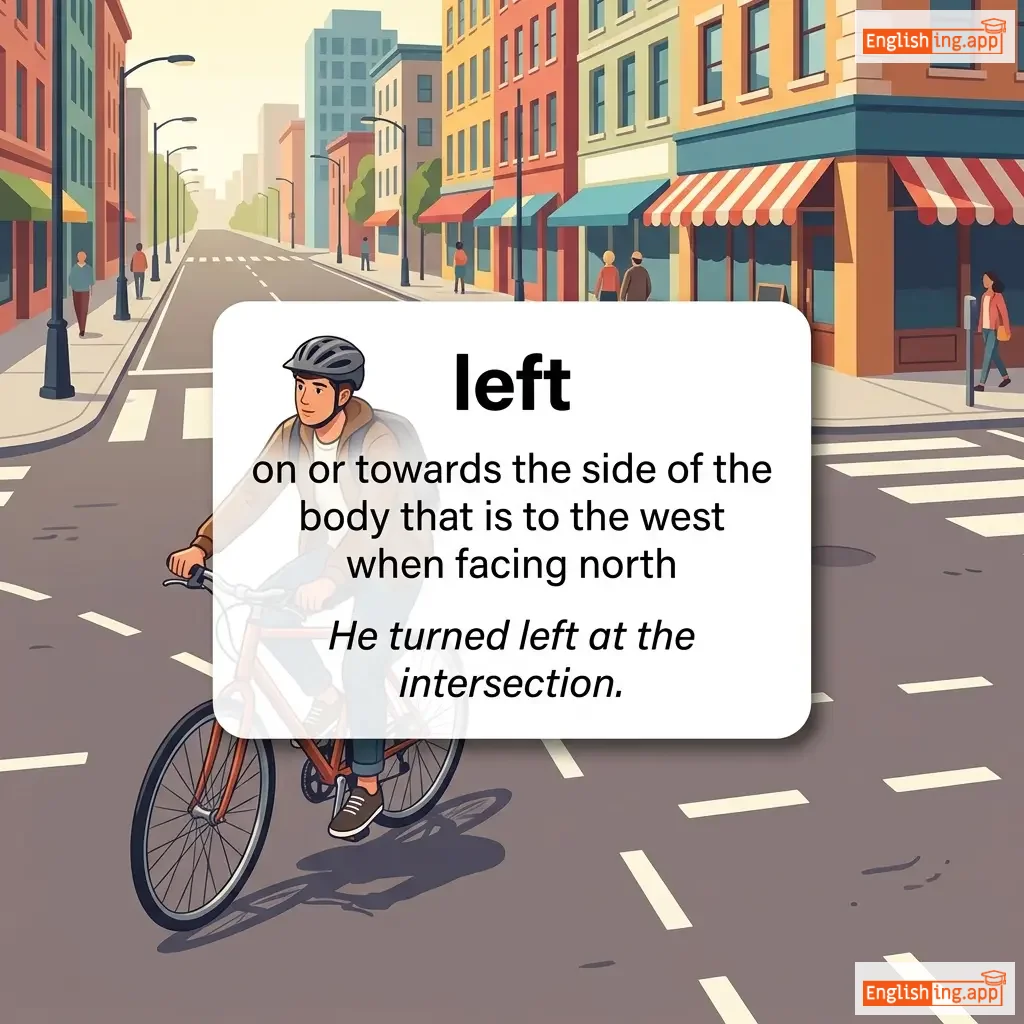
left definition card — visual illustration of the meaning
adjective, noun, adverb, verb (past tense of leave)
/lɛft/
(zuo)

on or towards the side of the body that is to the west when facing north

"He turned left at the intersection."

"他在交叉口左转。" (ta zai jiaochakou zuo zhuan.)
adjective
/ˌlɛftˈhændɪd/
左撇子 (zuǒpiězi)

Using or done with the left hand; also can mean clumsy or awkward.

"She is left-handed and writes beautifully with her left hand."

"她是左撇子,左手写字非常漂亮。" (Tā shì zuǒpiězi, zuǒshǒu xiězì fēicháng piàoliang.)
noun
/lɛɡ/
(tui)

one of the limbs on which a person or animal walks and stands

"He injured his leg while playing football."

"他在踢足球时伤到了腿。" (Ta zai ti zuqiu shi shangdao le tui.)
legacy definition card — visual illustration of the meaning
noun
/ˈlɛɡəsi/
遗产 (yichan)

Something handed down from the past, such as money, property, or traditions.

"Her artistic legacy continues to inspire young painters."

"她的艺术遗产继续激励年轻的画家。" (Tā de yìshù yíchǎn jìxù jīlì niánqīng de huàjiā.)
legal definition card — visual illustration of the meaning
adjective
/ˈliːɡəl/
合法的 (hefa de)

relating to the law

"He sought legal advice before signing the contract."

"他在签署合同之前寻求法律咨询。" (Tā zài qiānshǔ hétong zhīqián xúnqiú fǎlǜ zīxún.)
noun
/lɪˈɡæl.ə.ti/
合法性 (hefa xing)

the quality or state of being legal; accordance with the law

"The lawyer questioned the legality of the contract."

"律师质疑合同的合法性。" (Lüshi zhiyi hetong de hefaxing.)
verb
/ˈliːɡəlaɪz/
合法化 (héfǎ huà)

To make something lawful by official approval.

"The government decided to legalize online businesses."

"政府决定合法化在线业务。" (Zhèngfǔ juédìng héfǎ huà zàixiàn yèwù.)
adverb
/ˈliːɡəli/
合法地 (héfǎ de)

in a way that is allowed by law

"He is legally responsible for his actions."

"他对自己的行为负有合法责任。" (Tā duì zìjǐ de xíngwéi fù yǒu héfǎ zérèn)
adverb/adjective
/lɪˈɡɑːtoʊ/
在音乐中,平滑且连贯地演奏或歌唱 (zai yinyue zhong, pinghua qie lianguan de yanzou huo gechang)

In music, played or sung smoothly and connectedly.

"The pianist played the passage legato, with each note flowing into the next."
"钢琴家以连贯的方式演奏了这段乐句,每个音符都流畅地过渡到下一个。" (Gangqinjia yi lianguan de fangshi yanzou le zhe duan yueju, meige yinfu dou liuchang de guodu dao xia yige.)
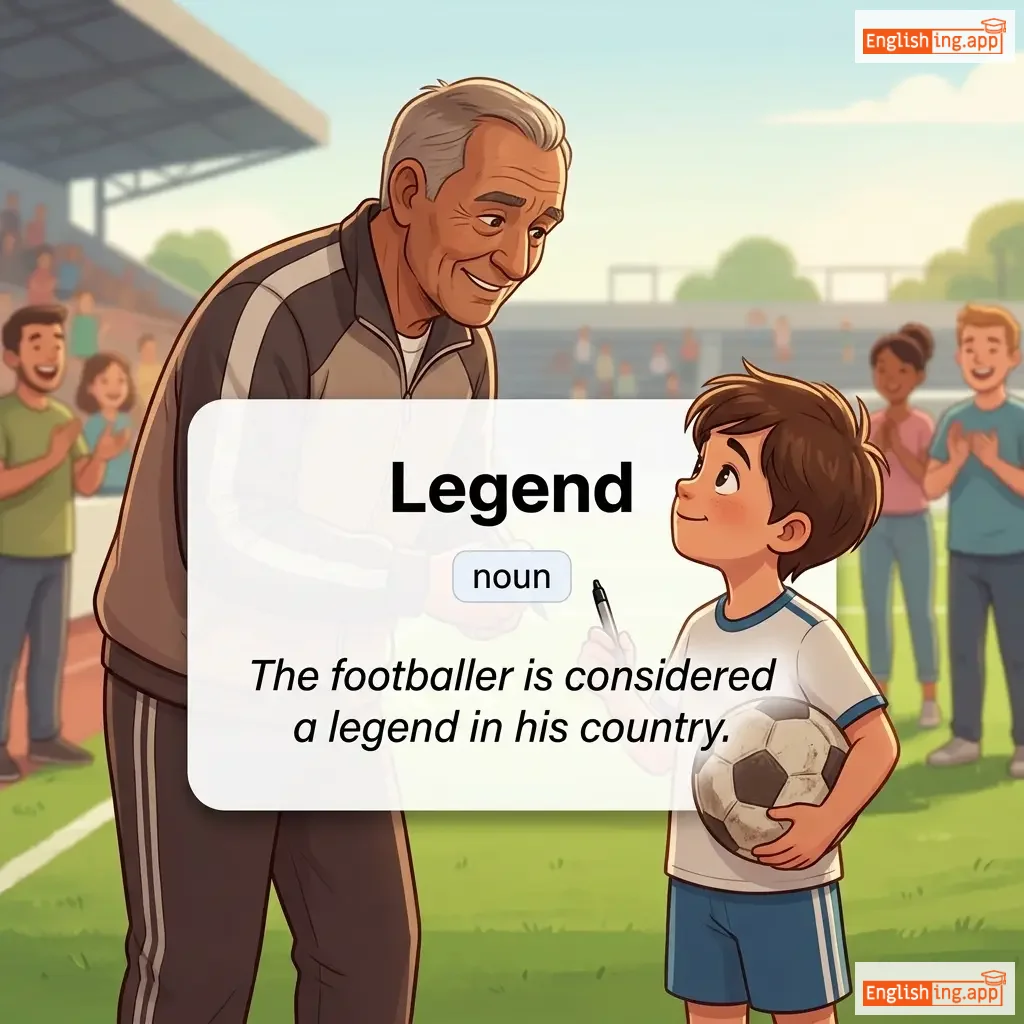
Legend definition card — visual illustration of the meaning
noun
/ˈlɛdʒənd/
传说 (chuánshuō)

A traditional story popularly regarded as historical but unauthenticated; also a famous person admired for achievements.

"The footballer is considered a legend in his country."

"这位足球运动员在他的国家被视为传奇人物。" (Zhè wèi zúqiú yùndòngyuán zài tā de guójiā bèi shì wéi chuánshuō rénwù.)
adjective
/ˈlɛdʒəndɛri/

remarkable enough to be famous; often used to describe something that is iconic or widely known

"The legendary musician performed in front of a packed stadium."

noun
/ˌlɛdʒərdəˈmeɪn/
魔术, 欺骗 (mó shù, qī piàn)

skillful use of one's hands when performing tricks; deception or trickery

"The magician's legerdemain left the audience amazed."

"魔术师的手法让观众惊讶不已。" (Mó shù shī de shǒu fǎ ràng guān zhòng jīng yà bù yǐ.)
noun
/ˈlɛɡɪŋ/
紧身裤 (jinshen ku)

tight-fitting stretch pants, typically worn by women for exercise or casual wear

"She bought a new pair of black leggings for the gym."

"她为健身房买了一条新的黑色紧身裤。" (Ta wei jianshenfang mai le yitiao xinde heise jinshenku.)
adjective
/ˈlɛdʒəbl/
可读的 (kě dú de)

clear enough to read

"Her handwriting was barely legible."

"她的手写字几乎不可读。" (Tā de shǒuxiě zì jīhū bùkě dú.)
noun
/ˈliːdʒən/
一大群人,特别是士兵;大量 (yi da qun ren, tebie shi shibing; daliang)

a large group of people, especially soldiers; a great number

"The Roman army was divided into legions."

"罗马军队被划分为军团。" (luoma jundui bei huafen wei juntuan.)
noun
/ɪnˈfɜːməri/
医务室 (yīwùshì)

A hospital or place where the sick or injured are cared for.

"The school had an infirmary for minor injuries."

"学校为轻微受伤提供了医务室。" (Xuéxiào wèi qīngwéi shòushāng tígōngle yīwùshì.)