词汇表

英语词汇词典 | 单词含义、定义和示例

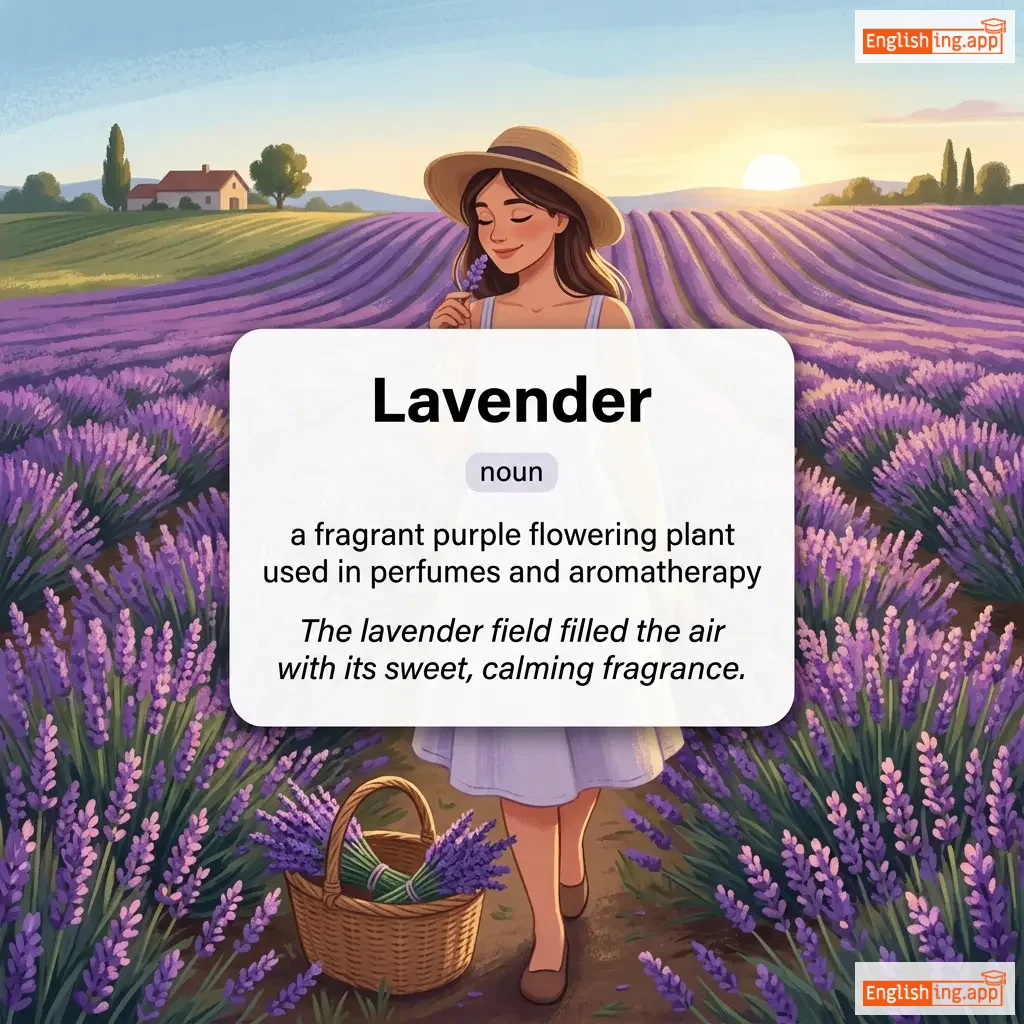
Lavender definition card — visual illustration of the meaning
noun
/ˈlæv.ən.dər/
薰衣草 (xunyicao)

a fragrant purple flowering plant used in perfumes and aromatherapy

"The lavender field filled the air with its sweet, calming fragrance."

"薰衣草田充满了甜美而宁静的香气。" (Xūn yī cǎo tián chōngmǎnle tiánměi ér níngjìng de xiāngqì.)
adjective, verb
/ˈlævɪʃ/
奢华的,豪华的 (lavish)

Rich, elaborate, or luxurious; to bestow something in generous or extravagant quantities.

"They gave her a lavish wedding reception with hundreds of guests."

"他们为她举办了一个豪华的婚礼招待会,邀请了数百位客人。" (Tāmen wèi tā jǔbànle yīgè háohuá de hūnlǐ zhāodài huì, yāoqǐngle shù bǎi wèi kèrén.)
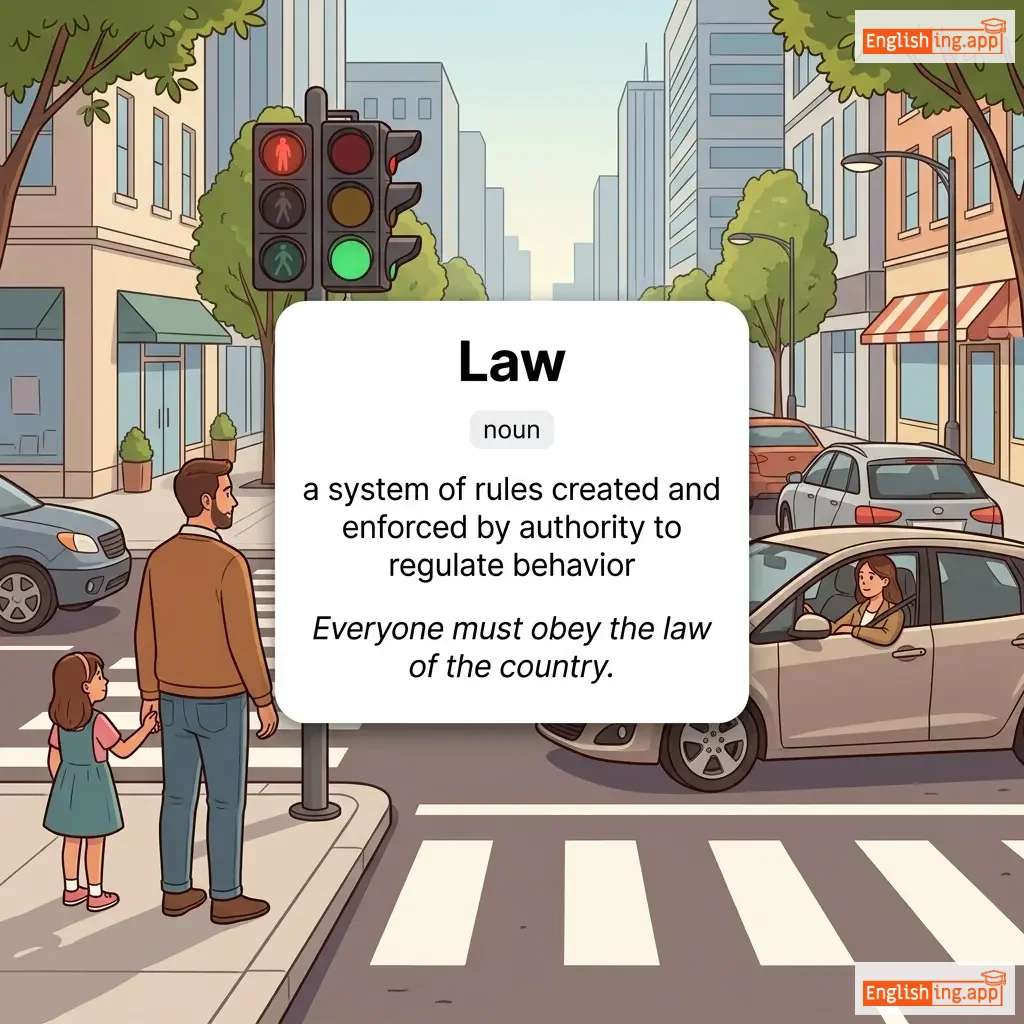
Law definition card — visual illustration of the meaning
noun
/lɔː/
法律 (fǎ lǜ)

a system of rules created and enforced by authority to regulate behavior

"Everyone must obey the law of the country."

"每个人都必须遵守国家的法律。" (Měi gèrén dōu bìxū zūnshǒu guójiā de fǎlǜ.)
adjective
/ˈlɔː.fəl/
合法; 合理; 有效; 公正; (hefa; heli; youxiao; gongzheng;)

legal; legitimate; valid; just

"The judge confirmed that their actions were lawful and proper."

"法官确认他们的行为是合法和恰当的。" (Fǎguān quèrèn tāmen de xíngwéi shì héfǎ hé qiàdàng de.)
noun
/ˈlɔːˌɡɪvər/
立法者 (lifazhe)

A person who creates or enforces laws; a legislator.

"Moses is often regarded as a great lawgiver in history."

"摩西常被认为是历史上伟大的法律制定者。" (Móxī cháng bèi rènwéi shì lìshǐ shàng wěidà de fǎlǜ zhìdìng zhě.)
adjective
/ˈlɔː.ləs/
无律; 无政府主义; 混乱; 犯罪 (wú lǜ; wú zhèngfǔ zhǔyì; hùnluàn; fànzuì)

without law; anarchic; unruly; criminal

"The frontier town was known for its lawless behavior and chaos."

"边境城市以其无律行为和混乱而闻名。" (Biānjìng chéngshì yǐ qí wú lǜ xíngwéi hé hùnluàn ér wénmíng.)
noun
/ˈlɔː.ləs.nəs/
无法律 (wufalü)

absence of law and order; a state where laws do not exist or are not enforced

"The city descended into lawlessness after the government collapsed."

"政府崩溃后,城市陷入了无法律的状态。" (zhèngfǔ bēngkuì hòu, chéngshì xiànrù le wú fǎlǜ de zhuàngtài)
noun
/ˈlɔːˌmeɪkər/
立法者 (lifazhe)

A member of a legislative body who makes laws.

"The lawmaker introduced a new bill on education reform."

"立法者提出了一项关于教育改革的新法案。" (Lifazhe tichu le yixiang guanyu jiaoyu gaige de xin faan.)
noun
/lɔːn/
草坪 (cǎopíng)

an area of short, regularly cut grass in a yard or park

"Children were playing on the green lawn."

"孩子们在绿草坪上玩耍。" (Háizimen zài lǜ cǎopíng shàng wánshuǎ.)
noun
/ˈlɔːsuːt/
诉讼 (sùsòng)

a legal case brought to a court of law by one person against another

"The company faced a lawsuit over false advertising."

"公司因虚假广告而面临诉讼。" (gōngsī yīn xūjiǎ guǎnggào ér miànlín sùsòng.)
Lawyer definition card — visual illustration of the meaning
noun
/ˈlɔːjər/
律师 (lǜshī)

A professional who practices or studies law; an attorney.

"The lawyer presented the case confidently in court."

"律师在法庭上自信地陈述了案件。" (Lǜshī zài fǎtíng shàng zìxìn de chénshùle ànjiàn.)
adjective
/læks/
宽松的, 粗心的 (lax)

Not strict, severe, or careful; negligent or careless.

"The security at the airport was surprisingly lax."

"机场的安保令人惊讶地宽松。" (Jīchǎng de ānbǎo lìng rén jīngyà de kuānsōng.)
noun, adjective
/ˈlæksətɪv/
泻药 (xiè yào)

A medicine or substance that stimulates bowel movements; tending to loosen or relieve constipation.

"The doctor prescribed a mild laxative for her condition."

"医生为她的病情开了轻度泻药。" (Yīshēng wèi tā de bìngqíng kāi le qīngdù xiè yào.)
lay definition card — visual illustration of the meaning
verb
/leɪ/
放置 (fangzhi)

To put something down carefully in a flat position.

"She laid the book on the table."

"她把书放在桌子上。" (Ta ba shu fang zai zhuozi shang.)
noun
/ˈleɪər/
(ceng)

A sheet, thickness, or coating of something that lies over or under a surface.

"The cake had a layer of cream between the sponges."

"蛋糕中间有一层奶油。" (Dàngāo zhōngjiān yǒu yī céng nǎiyóu.)
noun
/ˈleɪmən/
外行 (wàiháng)

A person without professional or specialized knowledge in a particular subject.

"To a layman, the medical explanation was confusing."

"对外行人来说,医学解释很混乱。" (duì wàiháng rén lái shuō, yīxué jiěshì hěn hùnluàn.)
noun
/ˈleɪaʊt/
布局 (bùjú)

the arrangement or design of something, especially the arrangement of elements in a book, webpage, or room

"The designer presented a new layout for the website that was much more user-friendly."

"设计师为网站展示了一个全新的布局,这使得它更具用户友好性。" (Shèjì shī wèi wǎngzhàn zhǎnshìle yīgè quánxīn de bùjú, zhè shǐ dé tā gèng jù yònghù yǒu hǎo xìng.)
noun
/ˈleɪˌpɜːrsən/
外行人 (waihangren)

A person who is not a member of the clergy or does not have specialized knowledge in a subject.

"The judge explained the law so that the layperson could understand."

"法官解释了法律,使外行人也能理解。" (Fǎguān jiěshìle fǎlǜ, shǐ wàiháng rén yě néng lǐjiě.)
adverb
/ˈleɪ.zɪ.li/
懒洋洋地 (lǎn yáng yáng de)

in a way that shows unwillingness to work or use energy; sluggishly

"He lazily stretched his arms and yawned in the morning."

"他懒洋洋地伸展双臂,早晨打了个哈欠。" (Tā lǎn yáng yáng de shēnzhǎn shuāngbì, zǎochén dǎle ge hāqiàn.)
noun
/ˈleɪ.zi.nəs/
懒惰 (landuo)

the quality of being unwilling to work or use energy; idleness

"His laziness prevented him from achieving his goals."

"他的懒惰阻止了他实现目标。" (tade landuo zhi zhi le ta shixian mubiao)
adjective
/ˈleɪ.zi/
懒惰; 不愿意工作 (lan duo; bu yuan yi gong zuo)

idle; unwilling to work; sluggish

"He was too lazy to clean his room on the weekend."
"他周末太懒,不愿意打扫房间。" (Ta zhou mo tai lan, bu yuan yi da sao fang jian.)
noun
/liː/
草地 (caodi)

An open area of grassy or arable land; a meadow.

"The cottage was surrounded by a quiet lea."

"小屋被一片宁静的草地包围着。" (xiaowu bei yi pian ningjing de caodi baoweizhe.)
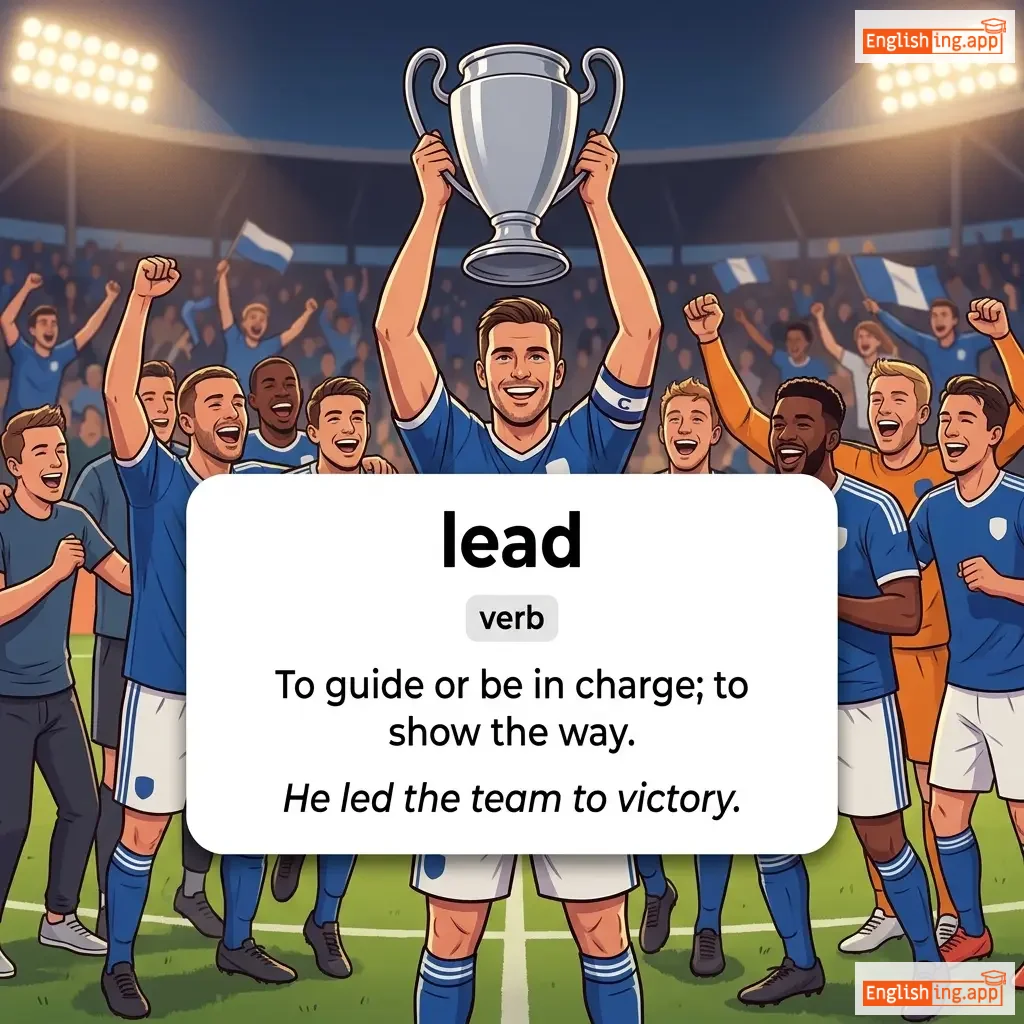
lead definition card — visual illustration of the meaning
verb
/liːd/
领导 (lǐngdǎo)

To guide or be in charge; to show the way.

"He led the team to victory."
"他带领团队走向胜利。" (Tā dàilǐng tuánduì zǒu xiàng shènglì.)
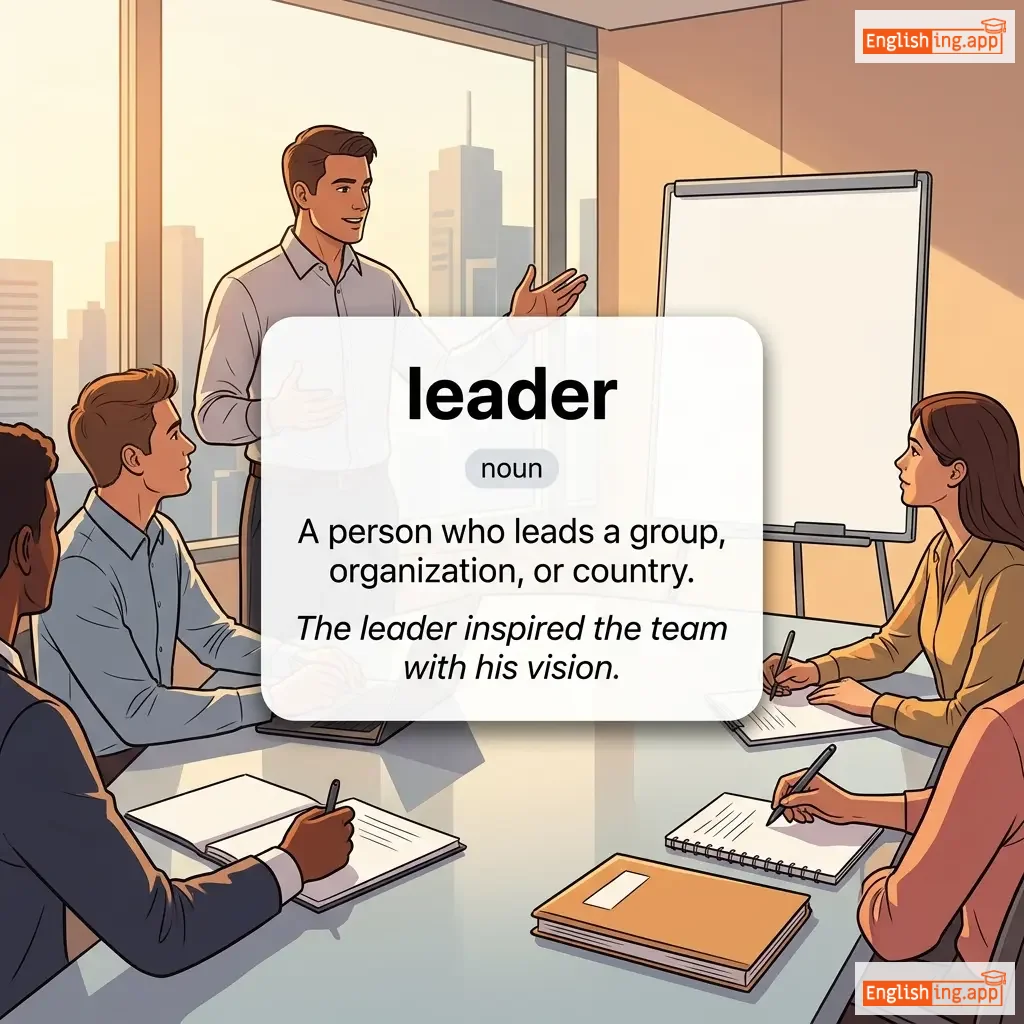
leader definition card — visual illustration of the meaning
noun
/ˈliːdər/
领导者 (lingdao zhe)

A person who leads a group, organization, or country.

"The leader inspired the team with his vision."

"领导者用他的愿景激励了团队。" (Lingdao zhe yong tade yuanjing jili le tuandui.)
leadership definition card — visual illustration of the meaning
noun
/ˈliːdərˌʃɪp/
领导 (lingdao)

The action of leading a group of people or an organization.

"Her leadership inspired the entire team to achieve their goals."

"她的领导力激励整个团队实现他们的目标。" (Tā de lingdàolì jīlì zhěnggè tuánduì shíxiàn tāmen de mùbiāo.)
adjective
/ˈliːdɪŋ/
领先 (lǐngxiān)

most important or most successful; at the front

"She is one of the leading experts in the field."

"她是该领域的领先专家之一。" (Tā shì gāi lǐngyù de lǐngxiān zhuānjiā zhī yī.)
legal definition card — visual illustration of the meaning
adjective
/ˈliːɡəl/
合法的 (hefa de)

relating to the law

"He sought legal advice before signing the contract."

"他在签署合同之前寻求法律咨询。" (Tā zài qiānshǔ hétong zhīqián xúnqiú fǎlǜ zīxún.)
noun
/ˈlɛktʃərər/
讲师 (jiangshi)

a person who gives lectures, especially at a college or university

"The lecturer explained the theory with clear examples."

"讲师用清楚的例子解释了理论。" (Jiangshi yong qingchu de lizi jieshi le lilun)
noun
/ˈledʒ.ər/
总账 (zǒng zhàng)

a book or other collection of financial accounts of a particular type

"The accountant updated the company ledger daily."

"会计每天更新公司的总账。" (Kuàijì měitiān gēngxīn gōngsī de zǒng zhàng.)
Leech definition card — visual illustration of the meaning
noun
/liːt͡ʃ/
水蛭 (shui zhi)

a blood-sucking worm that lives in water or moist ground

"The doctor used a medical leech to reduce swelling after surgery."
"医生使用了医疗水蛭来减少手术后的肿胀。" (Yisheng shiyong le yiliaoshui zhi lai jianshao shoushu hou de zhongzhang)
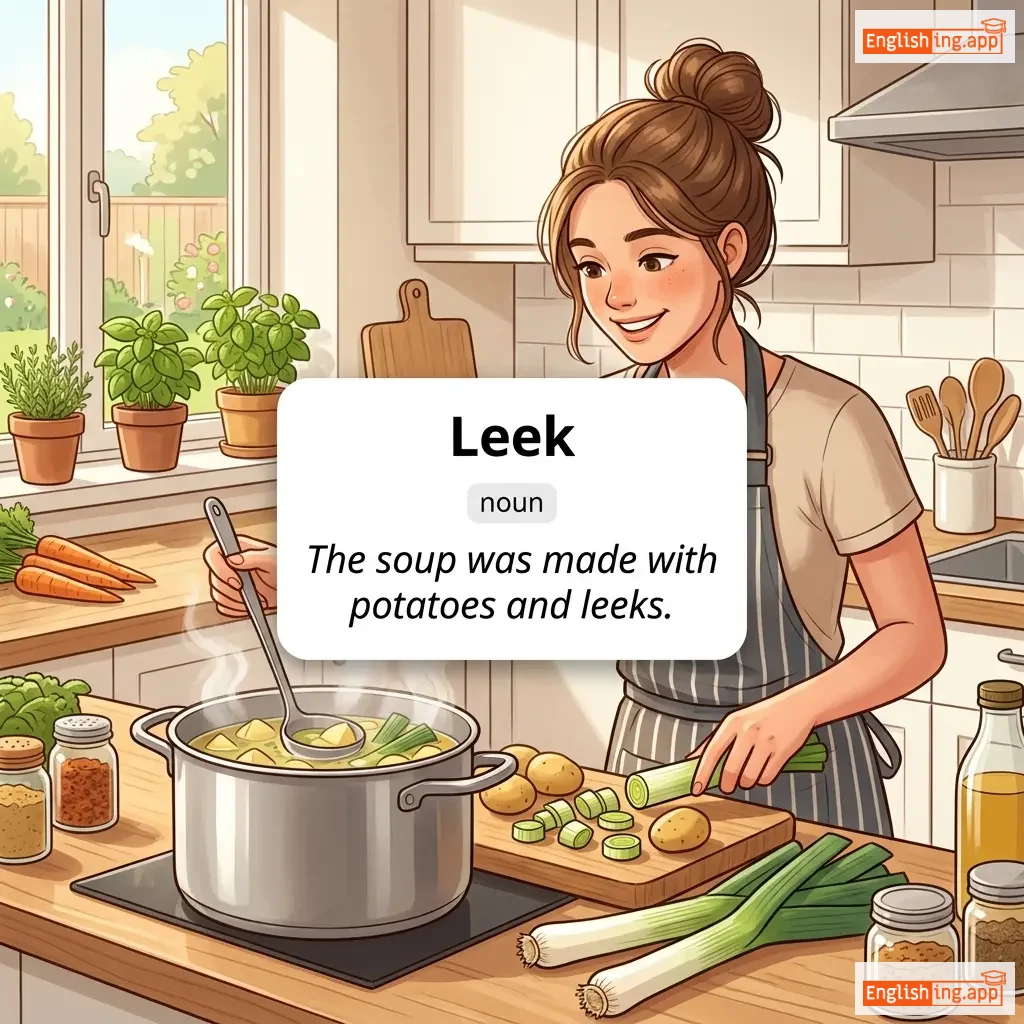
Leek definition card — visual illustration of the meaning
noun
/liːk/
韭菜 (jiǔcài)

vegetable related to onion with long green leaves and white bulb, milder than onion

"The soup was made with potatoes and leeks."

"这道汤是用土豆和韭菜做的。" (Zhè dào tāng shì yòng tǔdòu hé jiǔcài zuò de.)
verb
/lɪr/
猥亵的目光 (wěixiè de mùguāng)

To look at someone in an unpleasant, sly, or sexually suggestive way.

"He leered at her in a way that made her uncomfortable."

"他用让她不舒服的方式看着她。" (Tā yòng ràng tā bù shūfú de fāngshì kànzhe tā.)
adjective
/ˈlɪəri/
怀疑的 (huáiyí de)

Cautious or wary due to suspicion or distrust.

"She was leery of investing in the new business."

"她对投资新业务感到怀疑。" (Tā duì tóuzī xīn yèwù gǎndào huáiyí.)
adjective
/ˈliːwərd/
背风面 (beifengmian)

On or toward the sheltered side away from the wind.

"They built their camp on the leeward side of the hill."

"他们在山丘的背风面搭建了营地。" (Tāmen zài shānqiū de bèifēngmiàn dājiànle yíngdì.)
noun
/ˈliːweɪ/
回旋余地 (huíxuán yúdì)

Freedom to act within certain limits; extra space or time.

"The manager gave the team some leeway to finish the project."
"经理给了团队一些回旋余地来完成项目。" (Jīnglǐ gěile tuánduì yīxiē huíxuán yúdì lái wánchéng xiàngmù.)
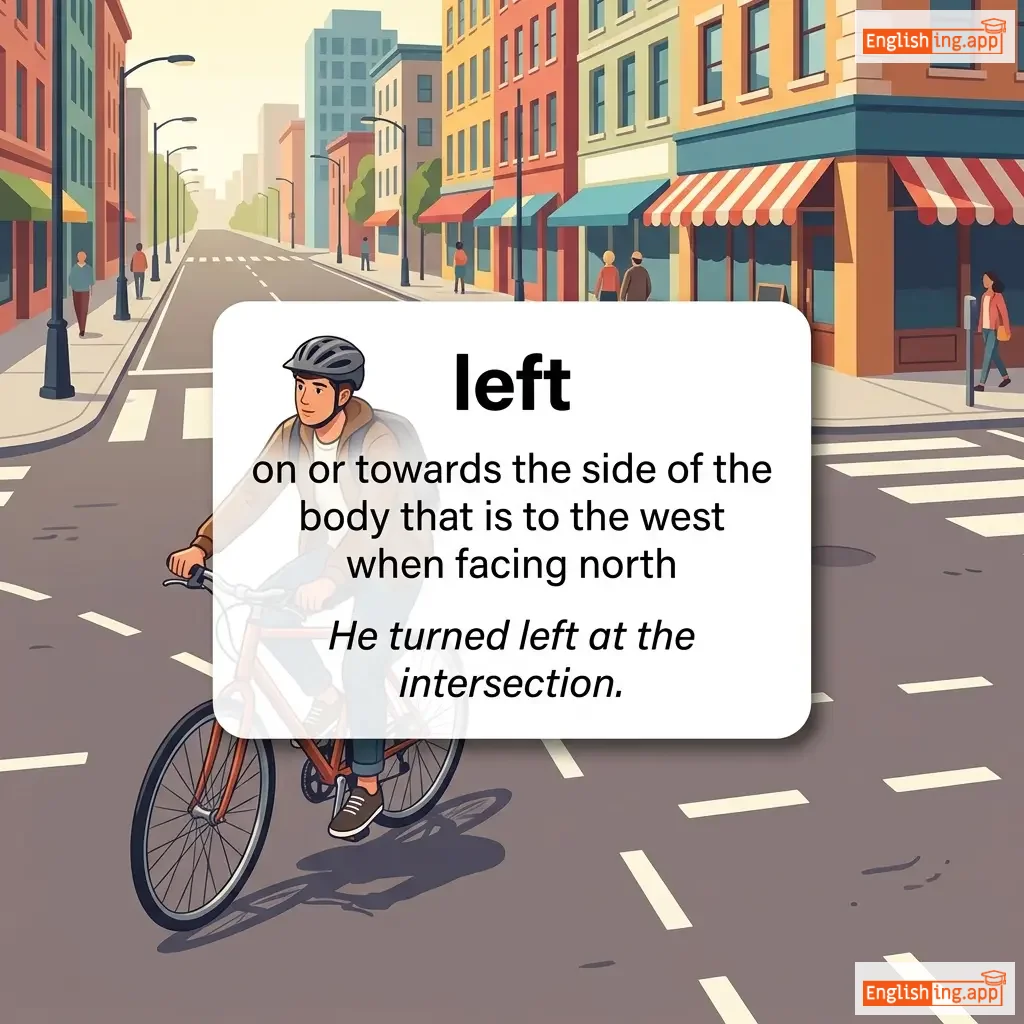
left definition card — visual illustration of the meaning
adjective, noun, adverb, verb (past tense of leave)
/lɛft/
(zuo)

on or towards the side of the body that is to the west when facing north

"He turned left at the intersection."

"他在交叉口左转。" (ta zai jiaochakou zuo zhuan.)
adjective
/ˌlɛftˈhændɪd/
左撇子 (zuǒpiězi)

Using or done with the left hand; also can mean clumsy or awkward.

"She is left-handed and writes beautifully with her left hand."

"她是左撇子,左手写字非常漂亮。" (Tā shì zuǒpiězi, zuǒshǒu xiězì fēicháng piàoliang.)
noun
/lɛɡ/
(tui)

one of the limbs on which a person or animal walks and stands

"He injured his leg while playing football."

"他在踢足球时伤到了腿。" (Ta zai ti zuqiu shi shangdao le tui.)
legacy definition card — visual illustration of the meaning
noun
/ˈlɛɡəsi/
遗产 (yichan)

Something handed down from the past, such as money, property, or traditions.

"Her artistic legacy continues to inspire young painters."

"她的艺术遗产继续激励年轻的画家。" (Tā de yìshù yíchǎn jìxù jīlì niánqīng de huàjiā.)
adjective
/ˈlɛdʒəndɛri/

remarkable enough to be famous; often used to describe something that is iconic or widely known

"The legendary musician performed in front of a packed stadium."

noun
/ˈdʒɑːr.ɡən/
行话 (xínghuà)

Specialized or technical language used by a particular group or profession.

"The lawyer’s explanation was full of legal jargon."

"律师的解释充满了法律行话。" (Lǜshī de jiěshì chōngmǎnle fǎlǜ xínghuà.)
noun
/ˈliːdʒən/
一大群人,特别是士兵;大量 (yi da qun ren, tebie shi shibing; daliang)

a large group of people, especially soldiers; a great number

"The Roman army was divided into legions."

"罗马军队被划分为军团。" (luoma jundui bei huafen wei juntuan.)
adjective
/ˈlɛdʒəbl/
可读的 (kě dú de)

clear enough to read

"Her handwriting was barely legible."

"她的手写字几乎不可读。" (Tā de shǒuxiě zì jīhū bùkě dú.)
noun
/ˈlɛɡɪŋ/
紧身裤 (jinshen ku)

tight-fitting stretch pants, typically worn by women for exercise or casual wear

"She bought a new pair of black leggings for the gym."

"她为健身房买了一条新的黑色紧身裤。" (Ta wei jianshenfang mai le yitiao xinde heise jinshenku.)
noun
/ˌlɛdʒərdəˈmeɪn/
魔术, 欺骗 (mó shù, qī piàn)

skillful use of one's hands when performing tricks; deception or trickery

"The magician's legerdemain left the audience amazed."

"魔术师的手法让观众惊讶不已。" (Mó shù shī de shǒu fǎ ràng guān zhòng jīng yà bù yǐ.)
adverb
/ˈliːɡəli/
合法地 (héfǎ de)

in a way that is allowed by law

"He is legally responsible for his actions."

"他对自己的行为负有合法责任。" (Tā duì zìjǐ de xíngwéi fù yǒu héfǎ zérèn)
noun
/lɪˈɡæl.ə.ti/
合法性 (hefa xing)

the quality or state of being legal; accordance with the law

"The lawyer questioned the legality of the contract."

"律师质疑合同的合法性。" (Lüshi zhiyi hetong de hefaxing.)
verb
/ˈliːɡəlaɪz/
合法化 (héfǎ huà)

To make something lawful by official approval.

"The government decided to legalize online businesses."
"政府决定合法化在线业务。" (Zhèngfǔ juédìng héfǎ huà zàixiàn yèwù.)
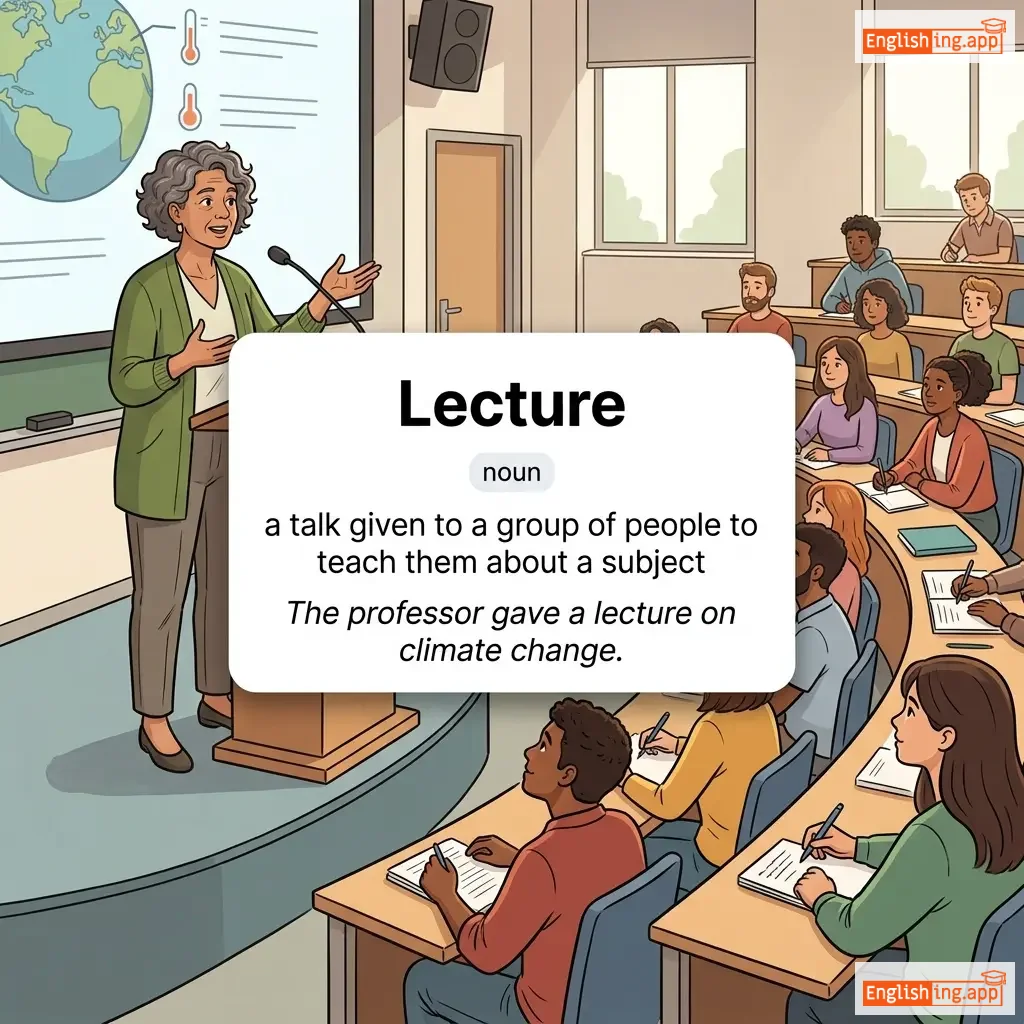
Lecture definition card — visual illustration of the meaning
noun
/ˈlektʃər/
讲座 (jiangzuo)

a talk given to a group of people to teach them about a subject

"The professor gave a lecture on climate change."

"教授就气候变化做了讲座。" (Jiaoshou jiu qihou bianhua zuole jiangzuo.)
adverb/adjective
/lɪˈɡɑːtoʊ/
在音乐中,平滑且连贯地演奏或歌唱 (zai yinyue zhong, pinghua qie lianguan de yanzou huo gechang)

In music, played or sung smoothly and connectedly.

"The pianist played the passage legato, with each note flowing into the next."

"钢琴家以连贯的方式演奏了这段乐句,每个音符都流畅地过渡到下一个。" (Gangqinjia yi lianguan de fangshi yanzou le zhe duan yueju, meige yinfu dou liuchang de guodu dao xia yige.)