Vocabularios

Descubra, aprenda y domine el vocabulario en inglés

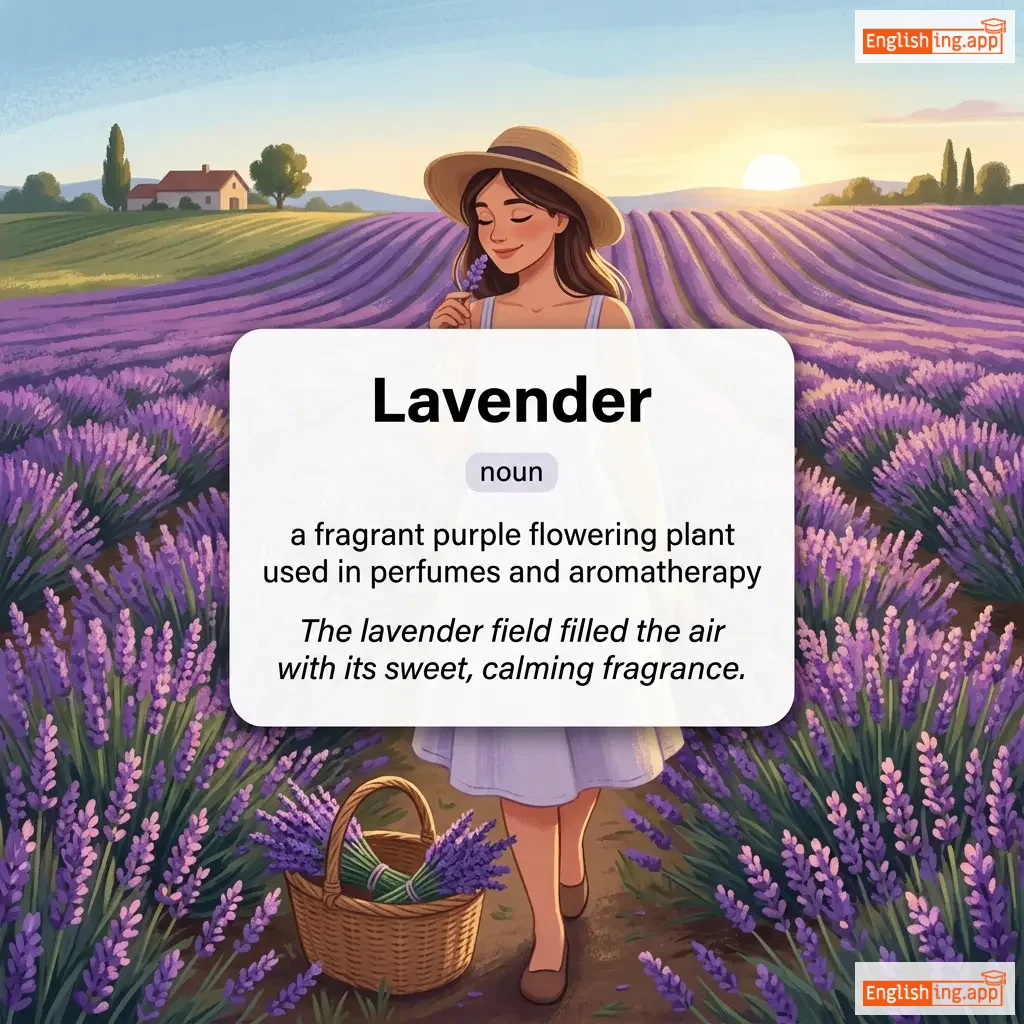
Lavender definition card — visual illustration of the meaning
noun
/ˈlæv.ən.dər/
lavanda (lavanda)

a fragrant purple flowering plant used in perfumes and aromatherapy

"The lavender field filled the air with its sweet, calming fragrance."

"El campo de lavanda llenó el aire con su dulce y calmante fragancia." (El campo de lavanda llenó el aire con su dulce y calmante fragancia.)
adjective, verb
/ˈlævɪʃ/
lujoso, opulento (lavish)

Rich, elaborate, or luxurious; to bestow something in generous or extravagant quantities.

"They gave her a lavish wedding reception with hundreds of guests."

"Le dieron una recepción de boda lujosa con cientos de invitados." (Le dieron una recepcion de boda lujosa con cientos de invitados.)
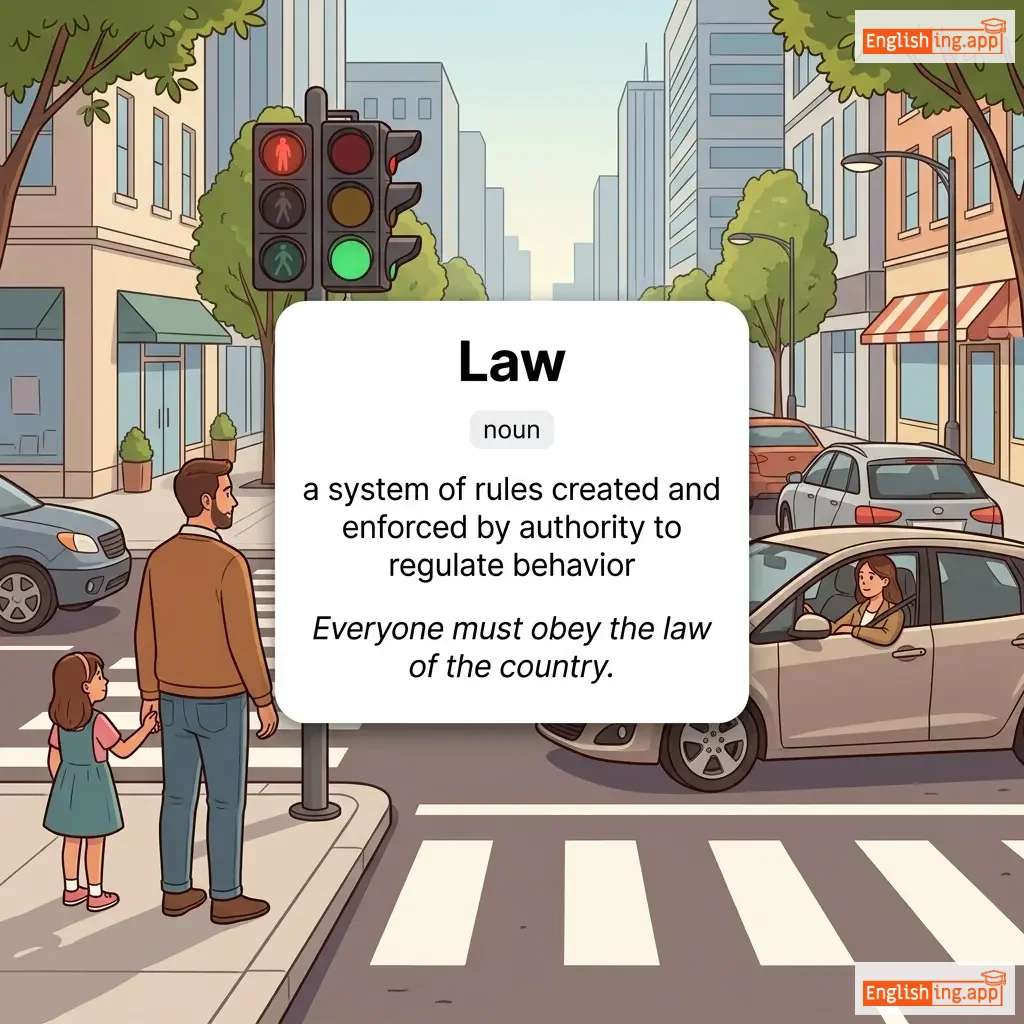
Law definition card — visual illustration of the meaning
noun
/lɔː/
ley (ley)

a system of rules created and enforced by authority to regulate behavior

"Everyone must obey the law of the country."

"Todos deben obedecer la ley del país." (Todos deben obedecer la ley del país.)
adjective
/ˈlɔː.fəl/
legal; legítimo; válido; justo; (legal; legitim; valido; justo;)

legal; legitimate; valid; just

"The judge confirmed that their actions were lawful and proper."

"El juez confirmó que sus acciones eran legales y apropiadas." (El juez confirmo que sus acciones eran legales y apropiadas.)
noun
/ˈlɔːˌɡɪvər/
legislador (legislador)

A person who creates or enforces laws; a legislator.

"Moses is often regarded as a great lawgiver in history."

"Moisés es a menudo considerado como un gran legislador en la historia." (Moisés es a menudo considerado como un gran legislador en la historia.)
adjective
/ˈlɔː.ləs/
sin ley; anárquico; desordenado; criminal (sin ley; anarqiko; desordenado; kriminal)

without law; anarchic; unruly; criminal

"The frontier town was known for its lawless behavior and chaos."

"La ciudad fronteriza era conocida por su comportamiento sin ley y el caos." (La ciudad fronteriza era conocida por su comportamiento sin ley y el caos.)
noun
/ˈlɔː.ləs.nəs/
anarquía (anarquia)

absence of law and order; a state where laws do not exist or are not enforced

"The city descended into lawlessness after the government collapsed."

"La ciudad descendió a la anarquía después del colapso del gobierno." (La ciudad descendió a la anarquía después del colapso del gobierno.)
noun
/ˈlɔːˌmeɪkər/
legislador (legislador)

A member of a legislative body who makes laws.

"The lawmaker introduced a new bill on education reform."

"El legislador presentó un nuevo proyecto de ley sobre la reforma educativa." (El legislador presentó un nuevo proyecto de ley sobre la reforma educativa.)
noun
/lɔːn/
césped (cesped)

an area of short, regularly cut grass in a yard or park

"Children were playing on the green lawn."

"Los niños estaban jugando en el césped verde." (Los ninos estaban jugando en el cesped verde.)
noun
/ˈlɔːsuːt/
demanda (demanda)

a legal case brought to a court of law by one person against another

"The company faced a lawsuit over false advertising."

"La empresa enfrentó una demanda por publicidad falsa." (La empresa enfrentó una demanda por publicidad falsa.)
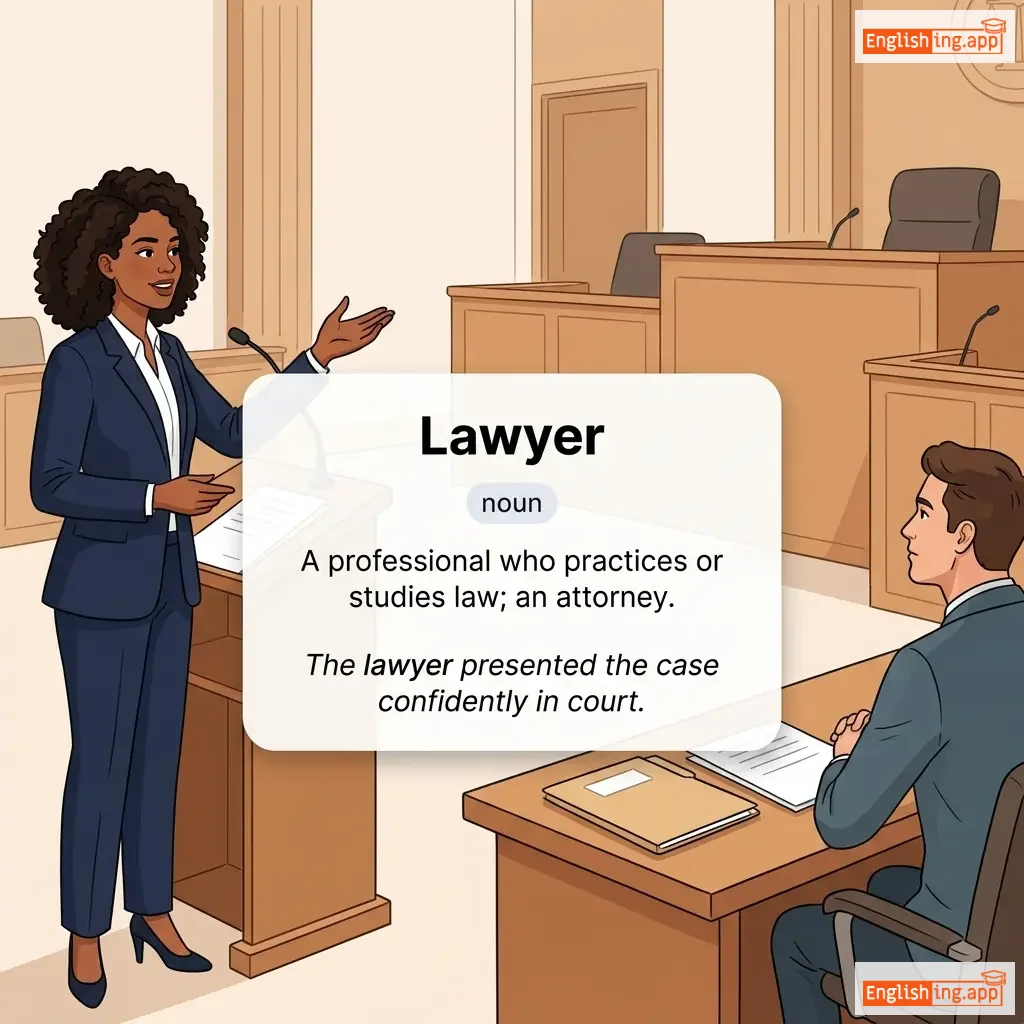
Lawyer definition card — visual illustration of the meaning
noun
/ˈlɔːjər/
abogado (abogado)

A professional who practices or studies law; an attorney.

"The lawyer presented the case confidently in court."

"El abogado presentó el caso con confianza en la corte." (El abogado presentó el caso con confianza en la corte.)
adjective
/læks/
relajado, descuidado (lax)

Not strict, severe, or careful; negligent or careless.

"The security at the airport was surprisingly lax."

"La seguridad en el aeropuerto era sorprendentemente relajada." (La seguridad en el aeropuerto era sorprendentemente relajada.)
noun, adjective
/ˈlæksətɪv/
laxante (laxante)

A medicine or substance that stimulates bowel movements; tending to loosen or relieve constipation.

"The doctor prescribed a mild laxative for her condition."

"El médico recetó un laxante suave para su condición." (El medico receto un laxante suave para su condicion.)
lay definition card — visual illustration of the meaning
verb
/leɪ/
poner (poner)

To put something down carefully in a flat position.

"She laid the book on the table."

"Ella puso el libro sobre la mesa." (Ella puso el libro sobre la mesa.)
noun
/ˈleɪər/
capa (capa)

A sheet, thickness, or coating of something that lies over or under a surface.

"The cake had a layer of cream between the sponges."

"El pastel tenía una capa de crema entre las esponjas." (El pastel tenía una capa de crema entre las esponjas.)
noun
/ˈleɪmən/
laico (laiko)

A person without professional or specialized knowledge in a particular subject.

"To a layman, the medical explanation was confusing."

"Para un laico, la explicación médica era confusa." (Para un laiko, la eksplikaθion medika era konfusa.)
noun
/ˈleɪaʊt/
diseño (diseno)

the arrangement or design of something, especially the arrangement of elements in a book, webpage, or room

"The designer presented a new layout for the website that was much more user-friendly."

"El diseñador presentó un nuevo diseño para el sitio web que era mucho más fácil de usar." (El diseniador presento un nuevo diseno para el sitio web que era mucho mas facil de usar.)
noun
/ˈleɪˌpɜːrsən/
persona común (persona comun)

A person who is not a member of the clergy or does not have specialized knowledge in a subject.

"The judge explained the law so that the layperson could understand."

"El juez explicó la ley de manera que la persona común pudiera entenderla." (El juez explicó la ley de manera que la persona común pudiera entenderla.)
adverb
/ˈleɪ.zɪ.li/
perezosamente (perezosamente)

in a way that shows unwillingness to work or use energy; sluggishly

"He lazily stretched his arms and yawned in the morning."

"Él estiró perezosamente los brazos y bostezó por la mañana." (El estiró perezosamente los brazos y bostezó por la mañana.)
noun
/ˈleɪ.zi.nəs/
pereza (pereza)

the quality of being unwilling to work or use energy; idleness

"His laziness prevented him from achieving his goals."

"Su pereza le impidió lograr sus objetivos." (su pereza le impidió lograr sus objetivos)
adjective
/ˈleɪ.zi/
perezoso; remolón (perezoso; remolon)

idle; unwilling to work; sluggish

"He was too lazy to clean his room on the weekend."

"Él estaba demasiado perezoso para limpiar su cuarto el fin de semana." (El estaba demasiado perezoso para limpiar su cuarto el fin de semana.)
noun
/liː/
pradera (pradera)

An open area of grassy or arable land; a meadow.

"The cottage was surrounded by a quiet lea."

"La cabaña estaba rodeada por una tranquila pradera." (La cabana estaba rodeada por una tranquila pradera.)
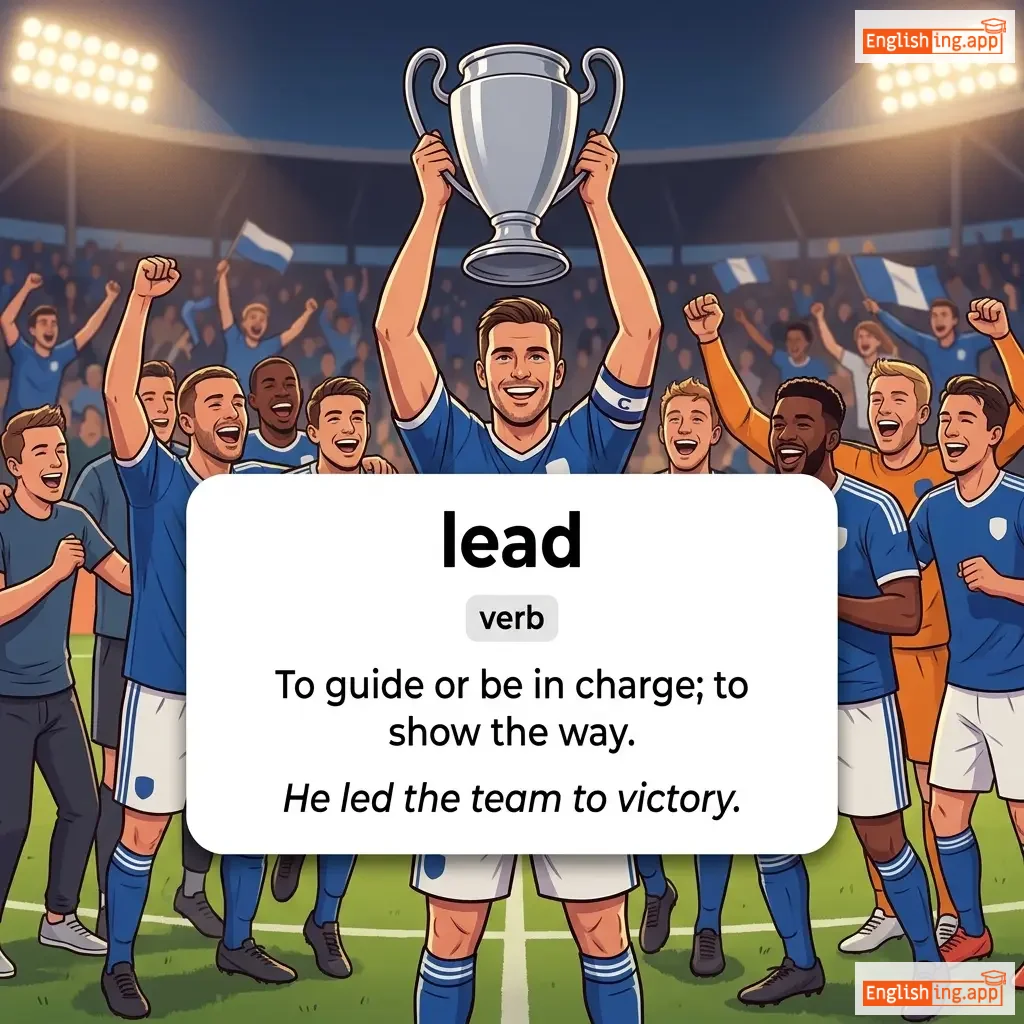
lead definition card — visual illustration of the meaning
verb
/liːd/
dirigir (dirigir)

To guide or be in charge; to show the way.

"He led the team to victory."

"Él lideró el equipo hacia la victoria." (Él lideró el equipo hacia la victoria.)
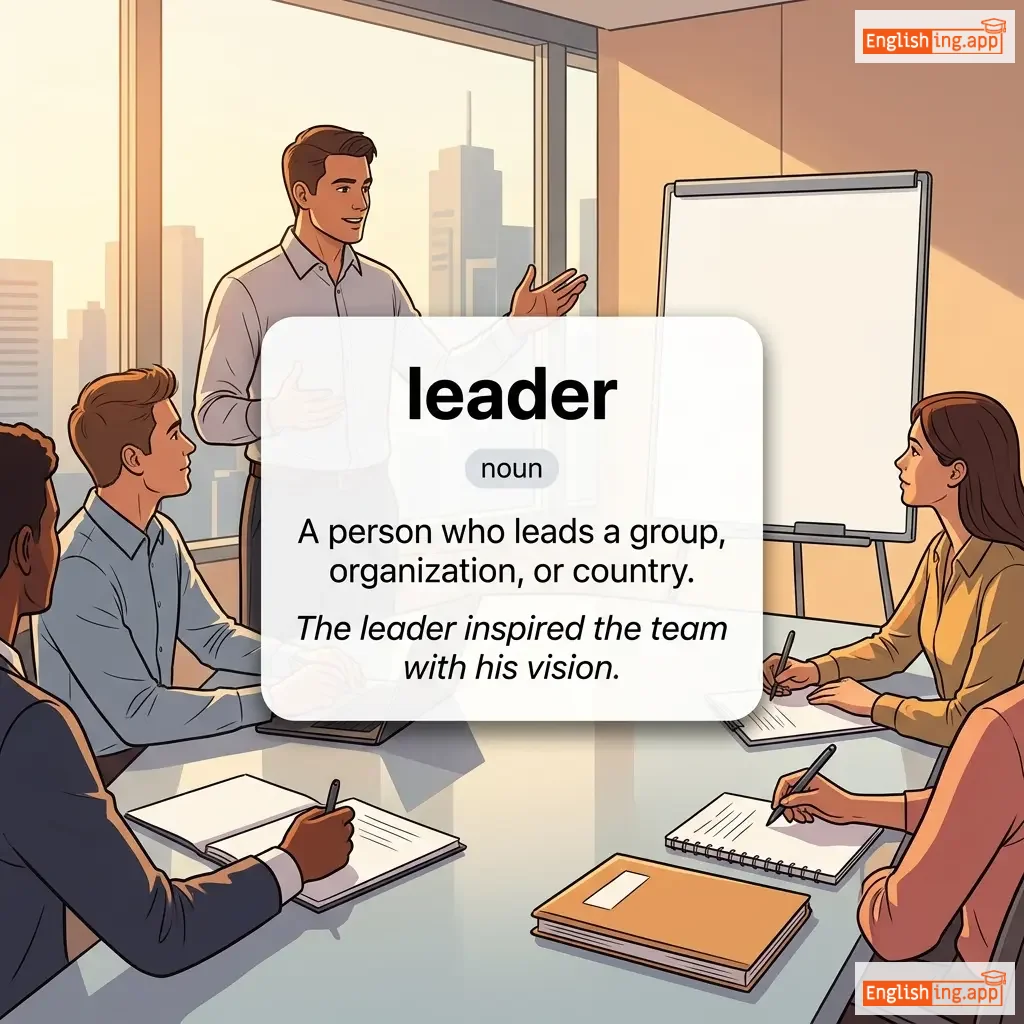
leader definition card — visual illustration of the meaning
noun
/ˈliːdər/
líder (lider)

A person who leads a group, organization, or country.

"The leader inspired the team with his vision."

"El líder inspiró al equipo con su visión." (El lider inspiro al equipo con su vision.)
leadership definition card — visual illustration of the meaning
noun
/ˈliːdərˌʃɪp/
liderazgo (liderazgo)

The action of leading a group of people or an organization.

"Her leadership inspired the entire team to achieve their goals."

"Su liderazgo inspiró a todo el equipo a alcanzar sus metas." (Su liderazgo inspiró a todo el equipo a alcanzar sus metas.)
adjective
/ˈliːdɪŋ/
principal (principal)

most important or most successful; at the front

"She is one of the leading experts in the field."

"Ella es una de las principales expertas en el campo." (Ella es una de las principales expertas en el campo.)
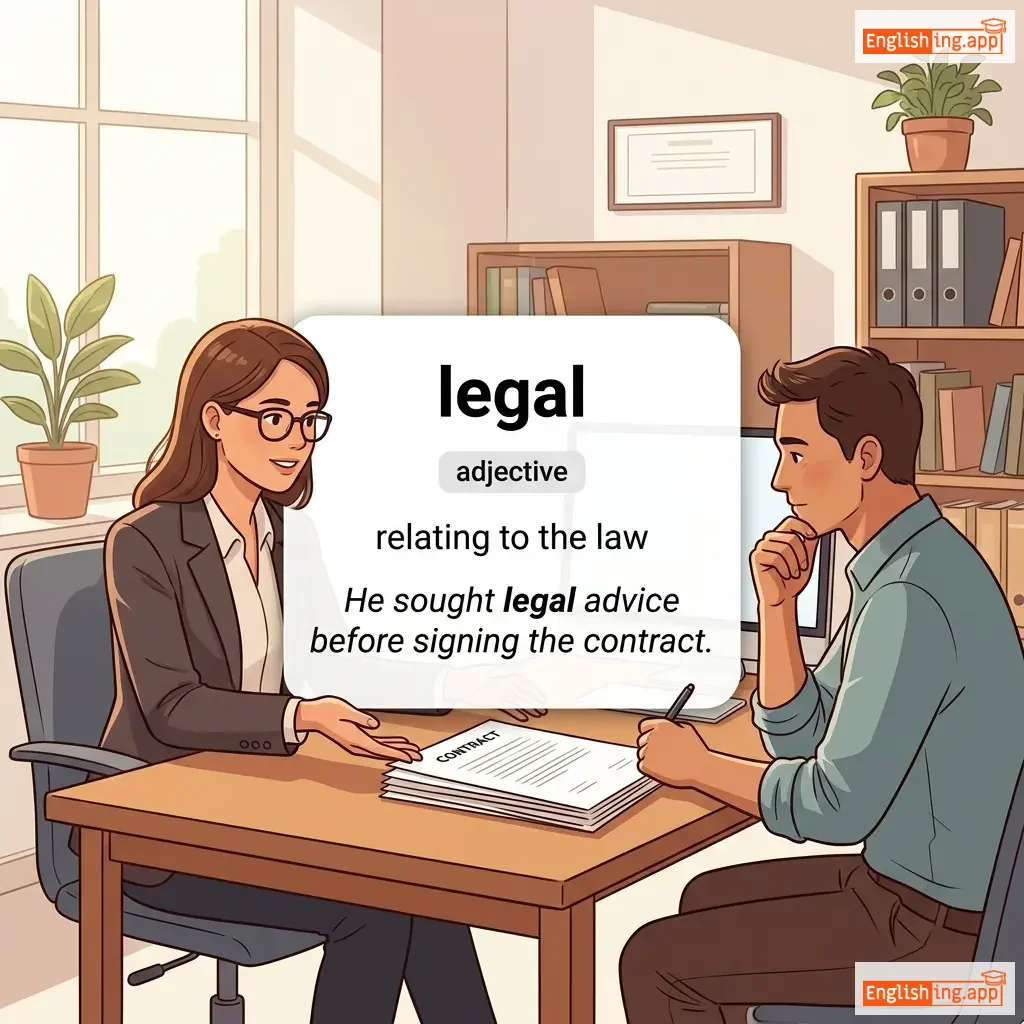
legal definition card — visual illustration of the meaning
adjective
/ˈliːɡəl/
legal (legal)

relating to the law

"He sought legal advice before signing the contract."

"Él buscó asesoría legal antes de firmar el contrato." (Él buscó asesoría legal antes de firmar el contrato.)
noun
/ˈlɛktʃərər/
conferenciante (conferenciante)

a person who gives lectures, especially at a college or university

"The lecturer explained the theory with clear examples."

"El conferenciante explicó la teoría con ejemplos claros." (El conferenciante explico la teoria con ejemplos claros)
noun
/ˈledʒ.ər/
libro mayor (libro mayor)

a book or other collection of financial accounts of a particular type

"The accountant updated the company ledger daily."

"El contador actualizó el libro mayor de la empresa diariamente." (El contador actualizo el libro mayor de la empresa diariamente.)
Leech definition card — visual illustration of the meaning
noun
/liːt͡ʃ/
sanguijuela (sanguijuela)

a blood-sucking worm that lives in water or moist ground

"The doctor used a medical leech to reduce swelling after surgery."

"El doctor utilizó una sanguijuela médica para reducir la hinchazón después de la cirugía." (El doctor utilizo una sanguijuela medica para reducir la hinchazon despues de la cirugia)
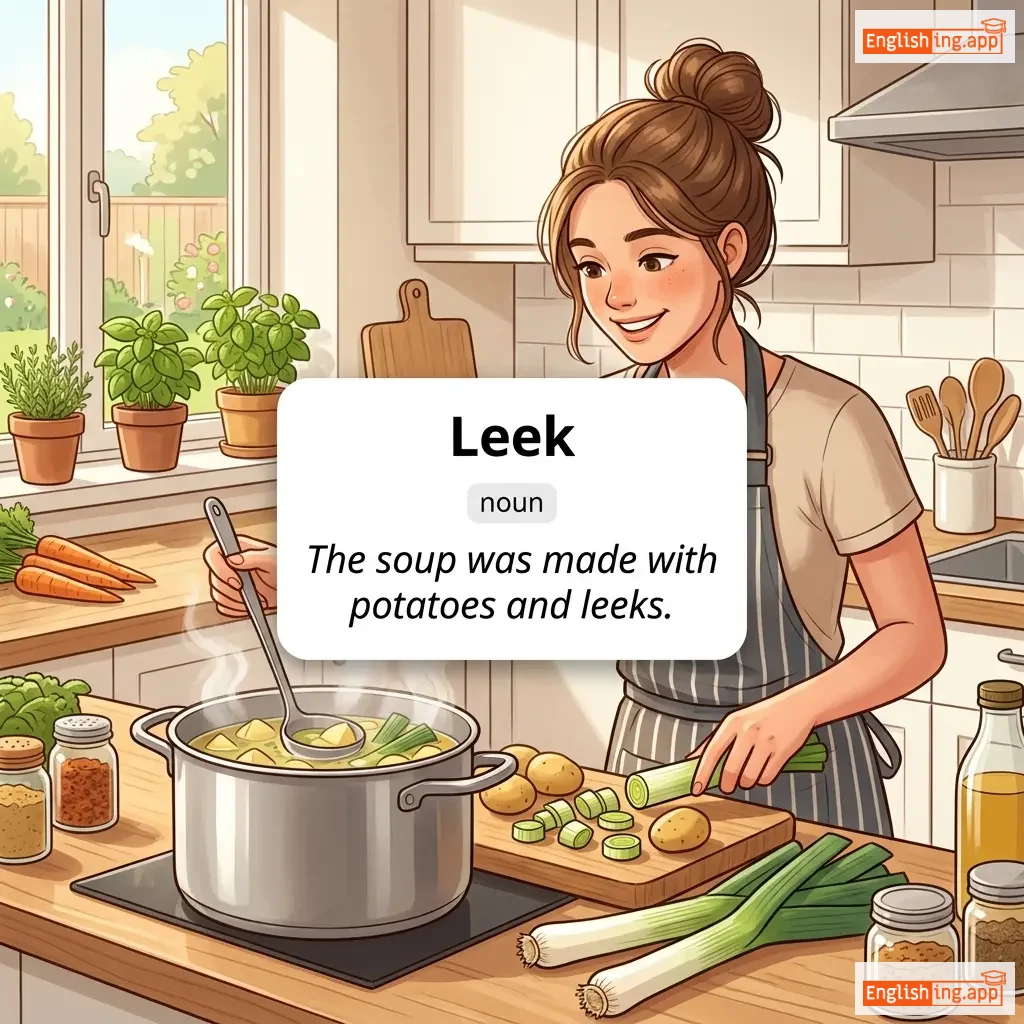
Leek definition card — visual illustration of the meaning
noun
/liːk/
puerro (puerro)

vegetable related to onion with long green leaves and white bulb, milder than onion

"The soup was made with potatoes and leeks."

"La sopa se hizo con papas y puerros." (La sopa se hizo con papas y puerros.)
verb
/lɪr/
mirada lasciva (mirada lasciva)

To look at someone in an unpleasant, sly, or sexually suggestive way.

"He leered at her in a way that made her uncomfortable."

"Él la miró de una forma que la hizo sentirse incómoda." (El la miro de una forma que la hizo sentirse incomoda.)
adjective
/ˈlɪəri/
desconfiado (deskonfiado)

Cautious or wary due to suspicion or distrust.

"She was leery of investing in the new business."

"Ella estaba desconfiada de invertir en el nuevo negocio." (Ella estaba desconfiada de invertir en el nuevo negocio.)
adjective
/ˈliːwərd/
lado protegido del viento (lado protegido del viento)

On or toward the sheltered side away from the wind.

"They built their camp on the leeward side of the hill."

"Construyeron su campamento en el lado protegido del viento de la colina." (Construyeron su campamento en el lado protegido del viento de la colina.)
noun
/ˈliːweɪ/
margen (margen)

Freedom to act within certain limits; extra space or time.

"The manager gave the team some leeway to finish the project."

"El gerente le dio al equipo algo de margen para terminar el proyecto." (El gerente le dio al equipo algo de margen para terminar el proyecto.)
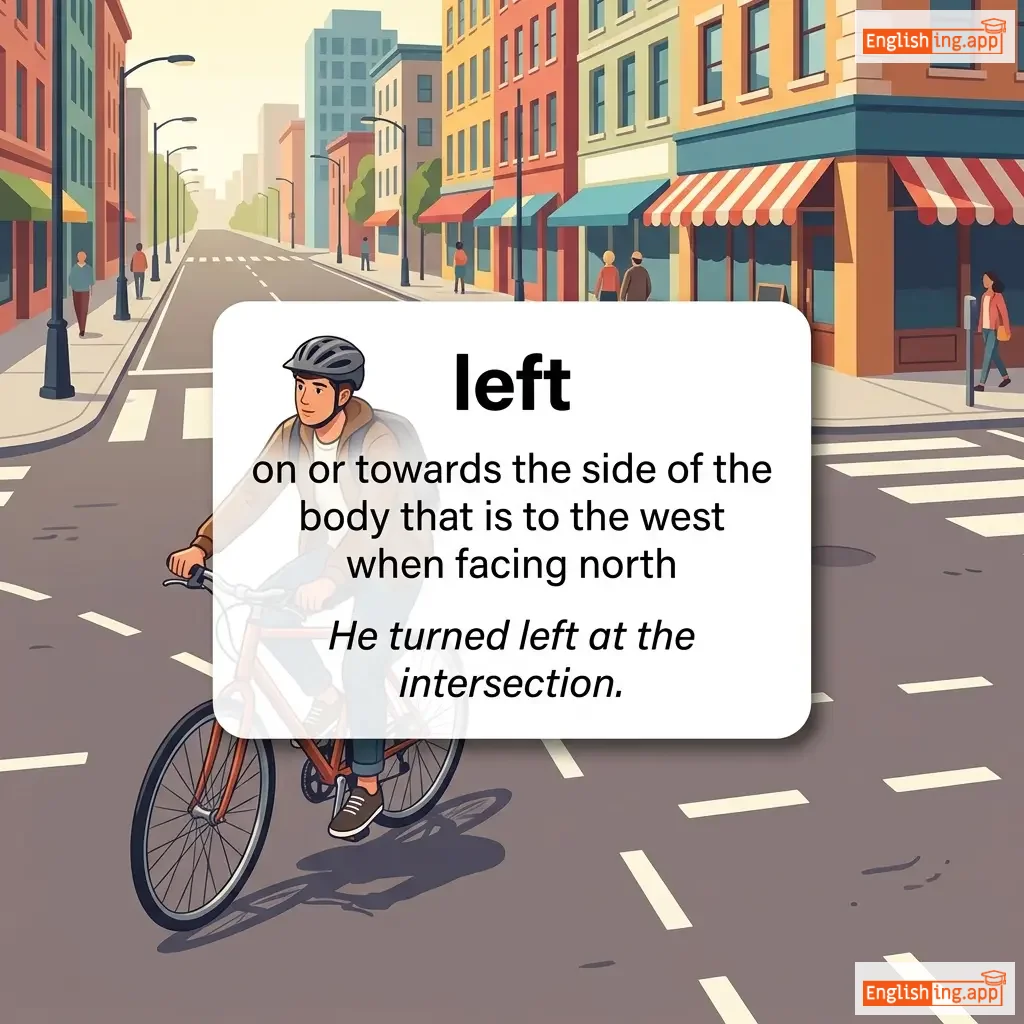
left definition card — visual illustration of the meaning
adjective, noun, adverb, verb (past tense of leave)
/lɛft/
izquierda (izquierda)

on or towards the side of the body that is to the west when facing north

"He turned left at the intersection."

"Él giró a la izquierda en la intersección." (El giro a la izquierda en la intersección.)
adjective
/ˌlɛftˈhændɪd/
zurdo (zurdo)

Using or done with the left hand; also can mean clumsy or awkward.

"She is left-handed and writes beautifully with her left hand."

"Ella es zurda y escribe hermosamente con su mano izquierda." (ella es zurda y escribe hermosamente con su mano izquierda.)
noun
/lɛɡ/
pierna (pierna)

one of the limbs on which a person or animal walks and stands

"He injured his leg while playing football."

"Se lastimó la pierna mientras jugaba al fútbol." (Se lastimó la pierna mientras jugaba al fútbol.)
legacy definition card — visual illustration of the meaning
noun
/ˈlɛɡəsi/
legado (legado)

Something handed down from the past, such as money, property, or traditions.

"Her artistic legacy continues to inspire young painters."

"Su legado artístico sigue inspirando a jóvenes pintores." (Su legado artístico sigue inspirando a jóvenes pintores.)
adjective
/ˈlɛdʒəndɛri/
legendario (legendario)

remarkable enough to be famous; often used to describe something that is iconic or widely known

"The legendary musician performed in front of a packed stadium."

"El músico legendario se presentó ante un estadio lleno." (El musico legendario se presento ante un estadio lleno.)
noun
/ˈdʒɑːr.ɡən/
jerga (jerga)

Specialized or technical language used by a particular group or profession.

"The lawyer’s explanation was full of legal jargon."

"La explicación del abogado estaba llena de jerga legal." (La explicacion del abogado estaba llena de jerga legal.)
noun
/ˈliːdʒən/
un gran grupo de personas, especialmente soldados; un gran número (un gran grupo de personas, especialmente soldados; un gran numero)

a large group of people, especially soldiers; a great number

"The Roman army was divided into legions."

"El ejército romano se dividió en legiones." (El ejercito romano se dividio en legiones.)
adjective
/ˈlɛdʒəbl/
legible (legible)

clear enough to read

"Her handwriting was barely legible."

"Su letra apenas era legible." (su letra apenas era legible)
noun
/ˈlɛɡɪŋ/
pantalones ajustados (pantalones ajustados)

tight-fitting stretch pants, typically worn by women for exercise or casual wear

"She bought a new pair of black leggings for the gym."

"Ella compró un nuevo par de leggings negros para el gimnasio." (Ella compró un nuevo par de leggings negros para el gimnasio.)
noun
/ˌlɛdʒərdəˈmeɪn/
truco, engaño (truco, engano)

skillful use of one's hands when performing tricks; deception or trickery

"The magician's legerdemain left the audience amazed."

"El truco del mago dejó a la audiencia asombrada." (El truco del mago dejo a la audiencia asombrada.)
adverb
/ˈliːɡəli/
legalmente (legalmente)

in a way that is allowed by law

"He is legally responsible for his actions."

"Él es legalmente responsable por sus acciones." (El es legalmente responsable por sus acciones)
noun
/lɪˈɡæl.ə.ti/
legalidad (legalidad)

the quality or state of being legal; accordance with the law

"The lawyer questioned the legality of the contract."

"El abogado cuestionó la legalidad del contrato." (El abogado cuestionó la legalidad del contrato.)
verb
/ˈliːɡəlaɪz/
legalizar (legalizar)

To make something lawful by official approval.

"The government decided to legalize online businesses."

"El gobierno decidió legalizar los negocios en línea." (El gobierno decidió legalizar los negocios en línea.)
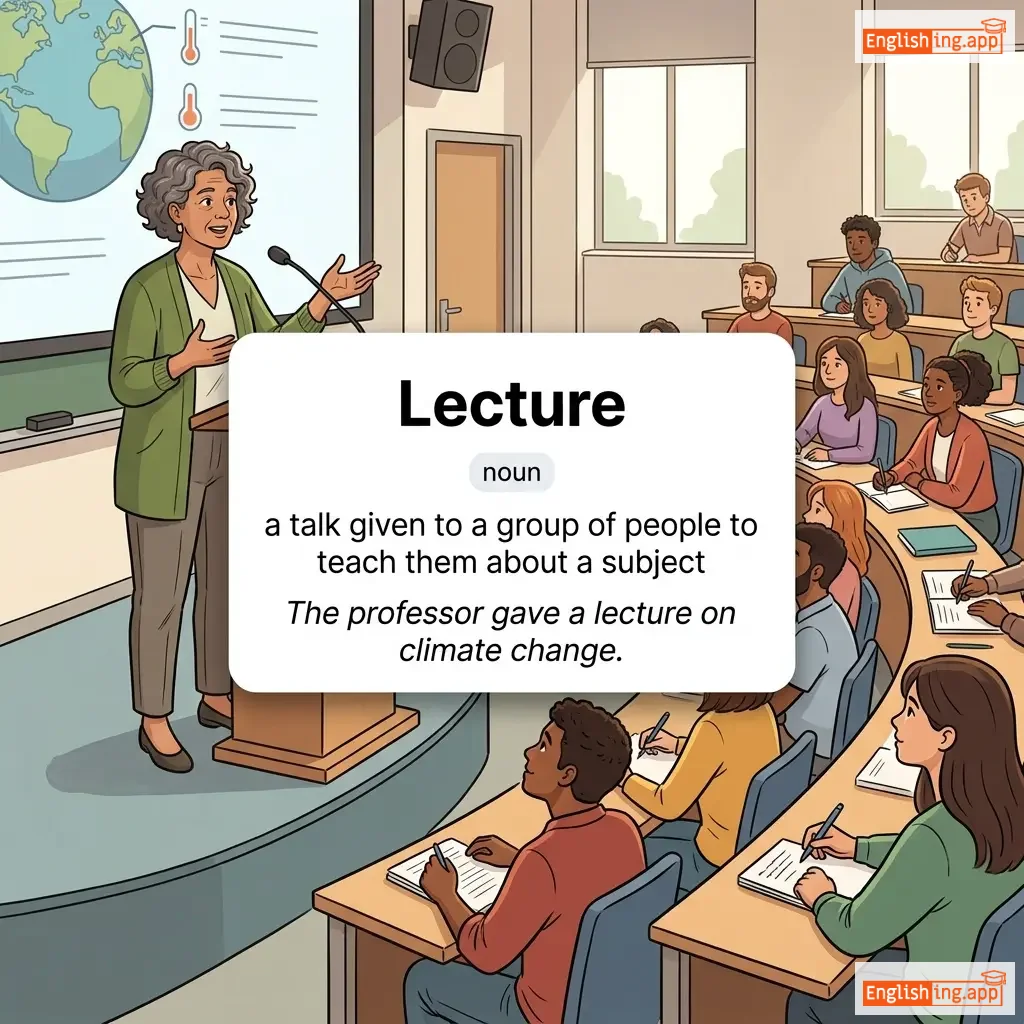
Lecture definition card — visual illustration of the meaning
noun
/ˈlektʃər/
conferencia (conferencia)

a talk given to a group of people to teach them about a subject

"The professor gave a lecture on climate change."

"El profesor dio una conferencia sobre el cambio climático." (El profesor dio una conferencia sobre el cambio climático.)
adverb/adjective
/lɪˈɡɑːtoʊ/
en música, tocado o cantado suavemente y de forma conectada (en musica, tocado o cantado suavemente y de forma conectada)

In music, played or sung smoothly and connectedly.

"The pianist played the passage legato, with each note flowing into the next."

"El pianista tocó el pasaje legato, con cada nota fluyendo hacia la siguiente." (El pianista tocó el pasaje legato, con cada nota fluyendo hacia la siguiente.)