Vocabulaires

Découvrez, apprenez et maîtrisez le vocabulaire anglais

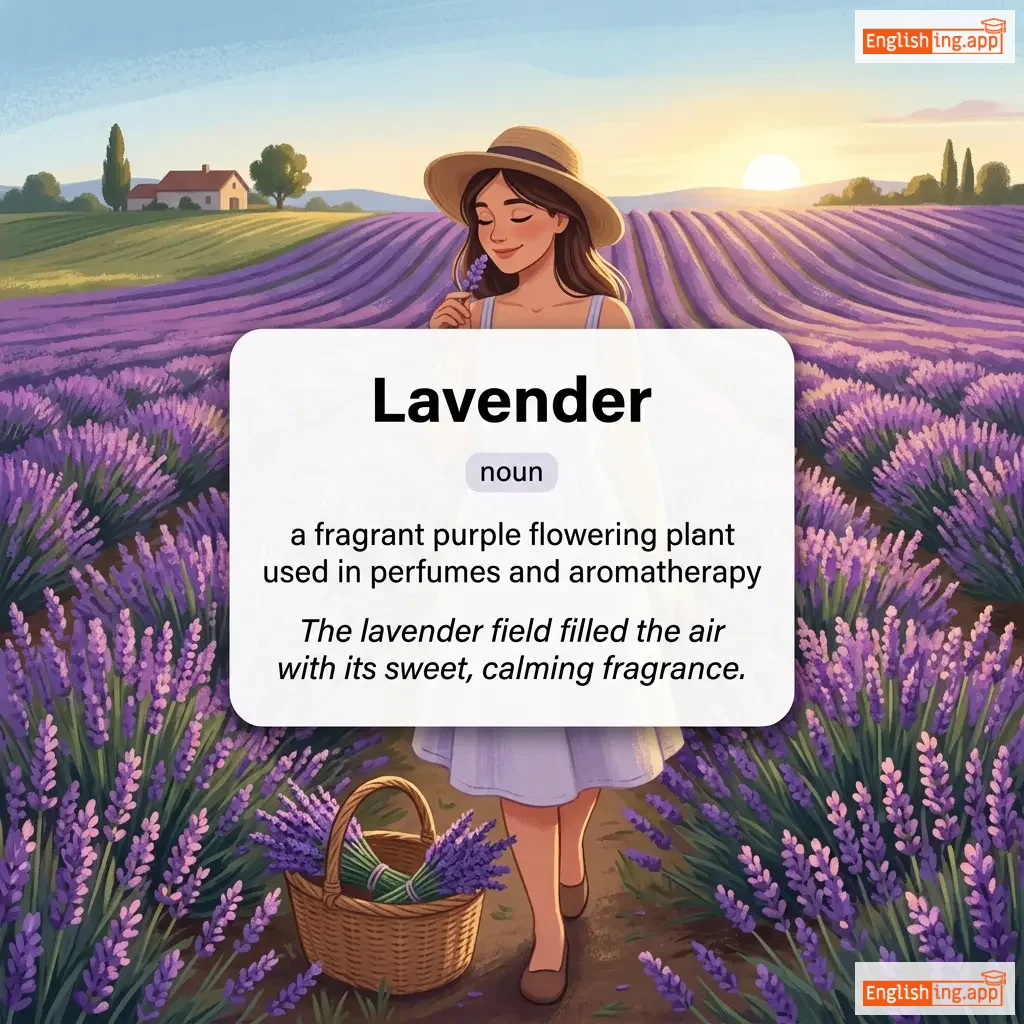
Lavender definition card — visual illustration of the meaning
noun
/ˈlæv.ən.dər/
lavande (lavande)

a fragrant purple flowering plant used in perfumes and aromatherapy

"The lavender field filled the air with its sweet, calming fragrance."

"Le champ de lavande a rempli l'air de son parfum sucré et apaisant." (Le champ de lavande a rempli l'air de son parfum sucré et apaisant.)
adjective, verb
/ˈlævɪʃ/
somptueux, extravagant (lavish)

Rich, elaborate, or luxurious; to bestow something in generous or extravagant quantities.

"They gave her a lavish wedding reception with hundreds of guests."

"Ils lui ont offert une réception de mariage somptueuse avec des centaines d'invités." (Ils lui ont offert une réception de mariage somptueuse avec des centaines d'invités.)
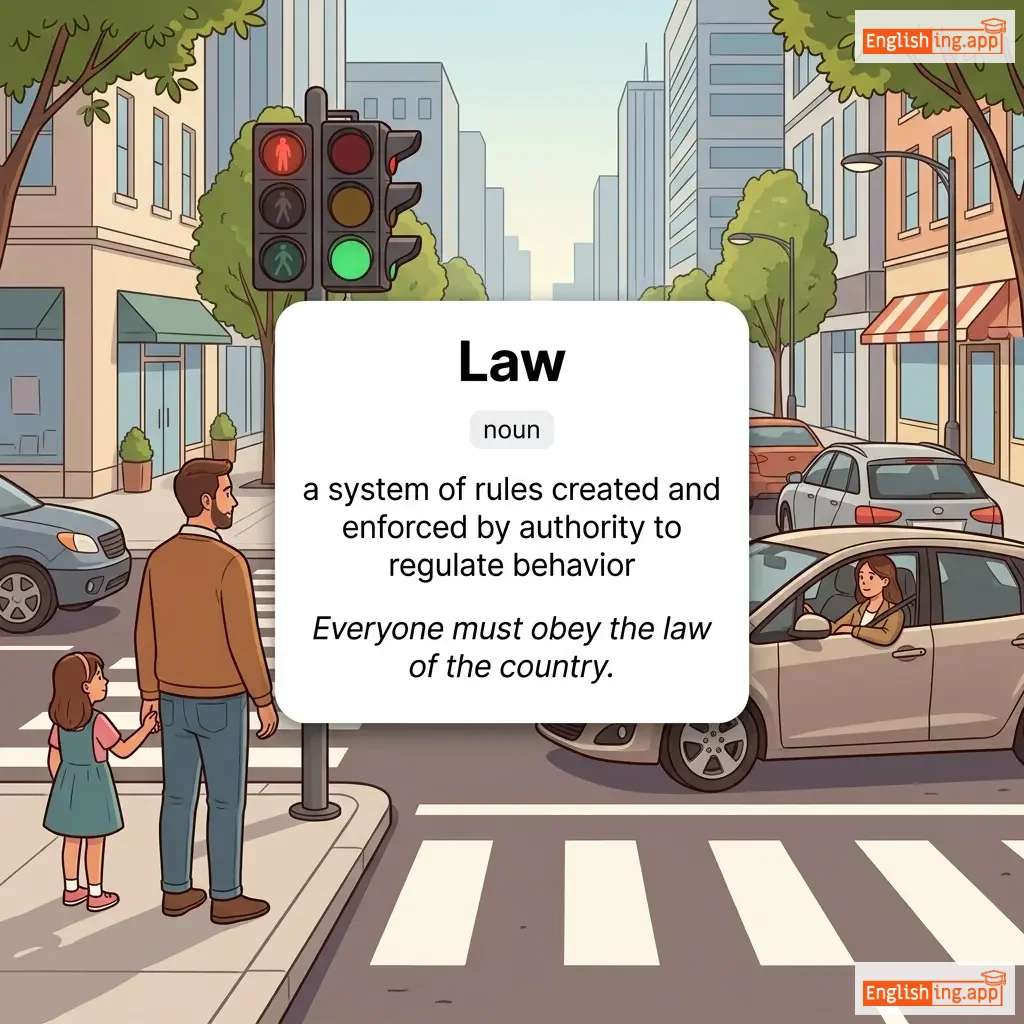
Law definition card — visual illustration of the meaning
⚖️

Law (lo)

noun
/lɔː/
loi (loi)

a system of rules created and enforced by authority to regulate behavior

"Everyone must obey the law of the country."

"Tout le monde doit obéir à la loi du pays." (Tout le monde doit obéir à la loi du pays.)
adjective
/ˈlɔː.fəl/
légal; légitime; valide; juste; (legal; legitime; valide; juste;)

legal; legitimate; valid; just

"The judge confirmed that their actions were lawful and proper."

"Le juge a confirmé que leurs actions étaient légales et appropriées." (Le juge a confirmé que leurs actions étaient légales et appropriées.)
noun
/ˈlɔːˌɡɪvər/
législateur (législateur)

A person who creates or enforces laws; a legislator.

"Moses is often regarded as a great lawgiver in history."

"Moïse est souvent considéré comme un grand législateur dans l'histoire." (Moïse est souvent considéré comme un grand législateur dans l'histoire.)
adjective
/ˈlɔː.ləs/
sans loi; anarchique; désordonné; criminel (san loi; anarchik; dezordonne; kriminal)

without law; anarchic; unruly; criminal

"The frontier town was known for its lawless behavior and chaos."

"La ville frontalière était connue pour son comportement sans loi et son chaos." (La ville frontalière était connue pour son comportement sans loi et son chaos.)
noun
/ˈlɔː.ləs.nəs/
illégalité (illegalite)

absence of law and order; a state where laws do not exist or are not enforced

"The city descended into lawlessness after the government collapsed."

"La ville est tombée dans l'illégalité après l'effondrement du gouvernement." (La ville est tombée dans l'illégalité après l'effondrement du gouvernement.)
noun
/ˈlɔːˌmeɪkər/
législateur (legislateur)

A member of a legislative body who makes laws.

"The lawmaker introduced a new bill on education reform."

"Le législateur a présenté un nouveau projet de loi sur la réforme de l'éducation." (Le législateur a présenté un nouveau projet de loi sur la réforme de l'éducation.)
noun
/lɔːn/
pelouse (pelouse)

an area of short, regularly cut grass in a yard or park

"Children were playing on the green lawn."

"Les enfants jouaient sur la pelouse verte." (Les enfants jouaient sur la pelouse verte.)
noun
/ˈlɔːsuːt/
poursuite (poursuite)

a legal case brought to a court of law by one person against another

"The company faced a lawsuit over false advertising."

"L'entreprise a fait face à une poursuite pour publicité mensongère." (L'entreprise a fait face à une poursuite pour publicité mensongère.)
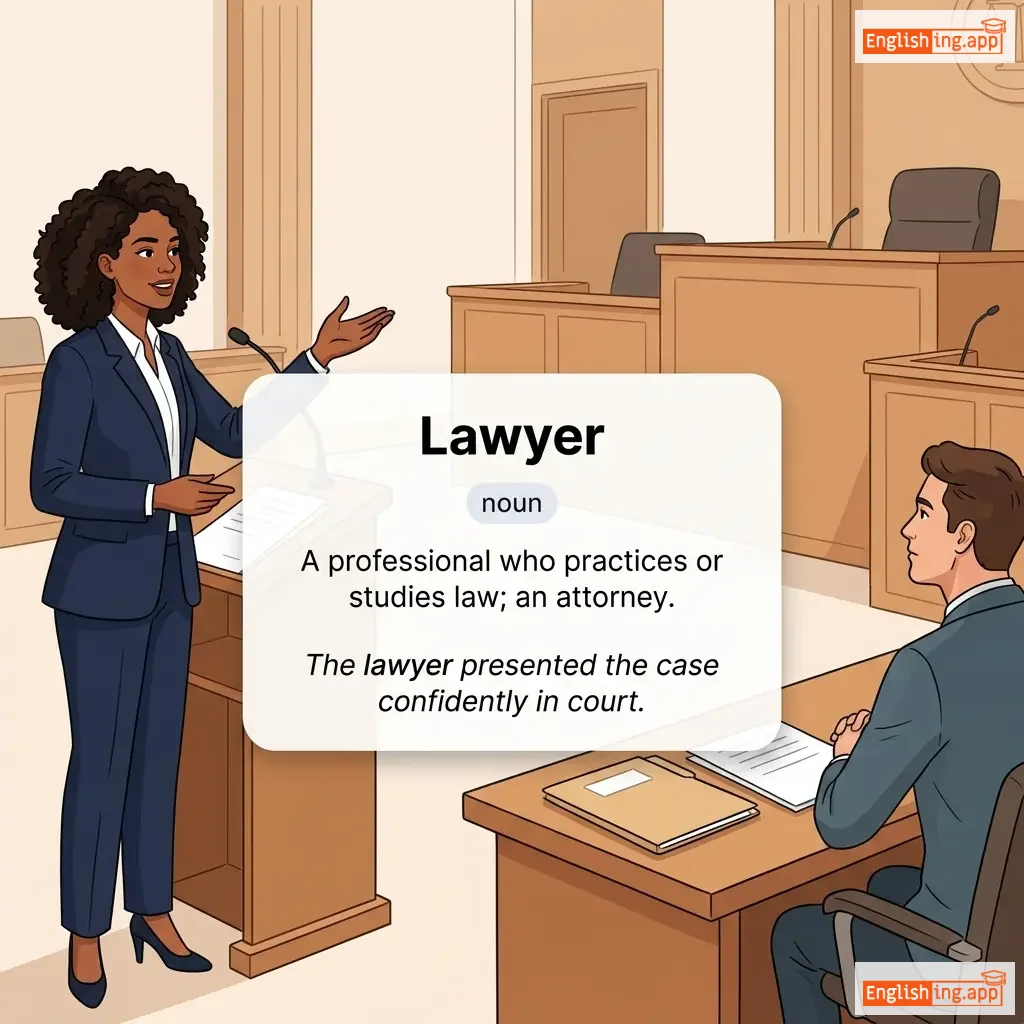
Lawyer definition card — visual illustration of the meaning
noun
/ˈlɔːjər/
avocat (avocat)

A professional who practices or studies law; an attorney.

"The lawyer presented the case confidently in court."

"L'avocat a présenté l'affaire avec confiance au tribunal." (L'avocat a présenté l'affaire avec confiance au tribunal.)
adjective
/læks/
laxiste, négligent (lax)

Not strict, severe, or careful; negligent or careless.

"The security at the airport was surprisingly lax."

"La sécurité à l'aéroport était étonnamment laxiste." (La sécurité à l'aéroport était étonnamment laxiste.)
noun, adjective
/ˈlæksətɪv/
laxatif (laxatif)

A medicine or substance that stimulates bowel movements; tending to loosen or relieve constipation.

"The doctor prescribed a mild laxative for her condition."

"Le médecin a prescrit un laxatif léger pour son état." (Le medecin a prescrit un laxatif leger pour son etat.)
lay definition card — visual illustration of the meaning
verb
/leɪ/
poser (poser)

To put something down carefully in a flat position.

"She laid the book on the table."

"Elle a posé le livre sur la table." (Elle a posé le livre sur la table.)
noun
/ˈleɪər/
couche (kush)

A sheet, thickness, or coating of something that lies over or under a surface.

"The cake had a layer of cream between the sponges."

"Le gâteau avait une couche de crème entre les éponge." (Le gâteau avait une couche de crème entre les éponge.)
noun
/ˈleɪmən/
profane (profane)

A person without professional or specialized knowledge in a particular subject.

"To a layman, the medical explanation was confusing."

"Pour un profane, l'explication médicale était déroutante." (Pour un profane, l'explication médicale était déroutante.)
noun
/ˈleɪaʊt/
mise en page (mise en page)

the arrangement or design of something, especially the arrangement of elements in a book, webpage, or room

"The designer presented a new layout for the website that was much more user-friendly."

"Le designer a présenté une nouvelle mise en page pour le site web qui était beaucoup plus conviviale." (Le designer a presente une nouvelle mise en page pour le site web qui etait beaucoup plus conviviale.)
noun
/ˈleɪˌpɜːrsən/
la personne ordinaire (la personne ordinaire)

A person who is not a member of the clergy or does not have specialized knowledge in a subject.

"The judge explained the law so that the layperson could understand."

"Le juge a expliqué la loi de manière à ce que la personne ordinaire puisse la comprendre." (Le juge a expliqué la loi de manière à ce que la personne ordinaire puisse la comprendre.)
adverb
/ˈleɪ.zɪ.li/
paresseusement (paresseusement)

in a way that shows unwillingness to work or use energy; sluggishly

"He lazily stretched his arms and yawned in the morning."

"Il étira paresseusement ses bras et bailla le matin." (Il étira paresseusement ses bras et bailla le matin.)
noun
/ˈleɪ.zi.nəs/
paresse (paresse)

the quality of being unwilling to work or use energy; idleness

"His laziness prevented him from achieving his goals."

"Sa paresse l'a empêché d'atteindre ses objectifs." (sa paresse l'a empêché d'atteindre ses objectifs)
adjective
/ˈleɪ.zi/
paresseux; fainéant (paresseux; faineant)

idle; unwilling to work; sluggish

"He was too lazy to clean his room on the weekend."

"Il était trop paresseux pour nettoyer sa chambre le week-end." (Il etait trop paresseux pour nettoyer sa chambre le week-end.)
noun
/liː/
prairie (prairie)

An open area of grassy or arable land; a meadow.

"The cottage was surrounded by a quiet lea."

"Le cottage était entouré d'une prairie tranquille." (Le cottage etait entoure d'une prairie tranquille.)
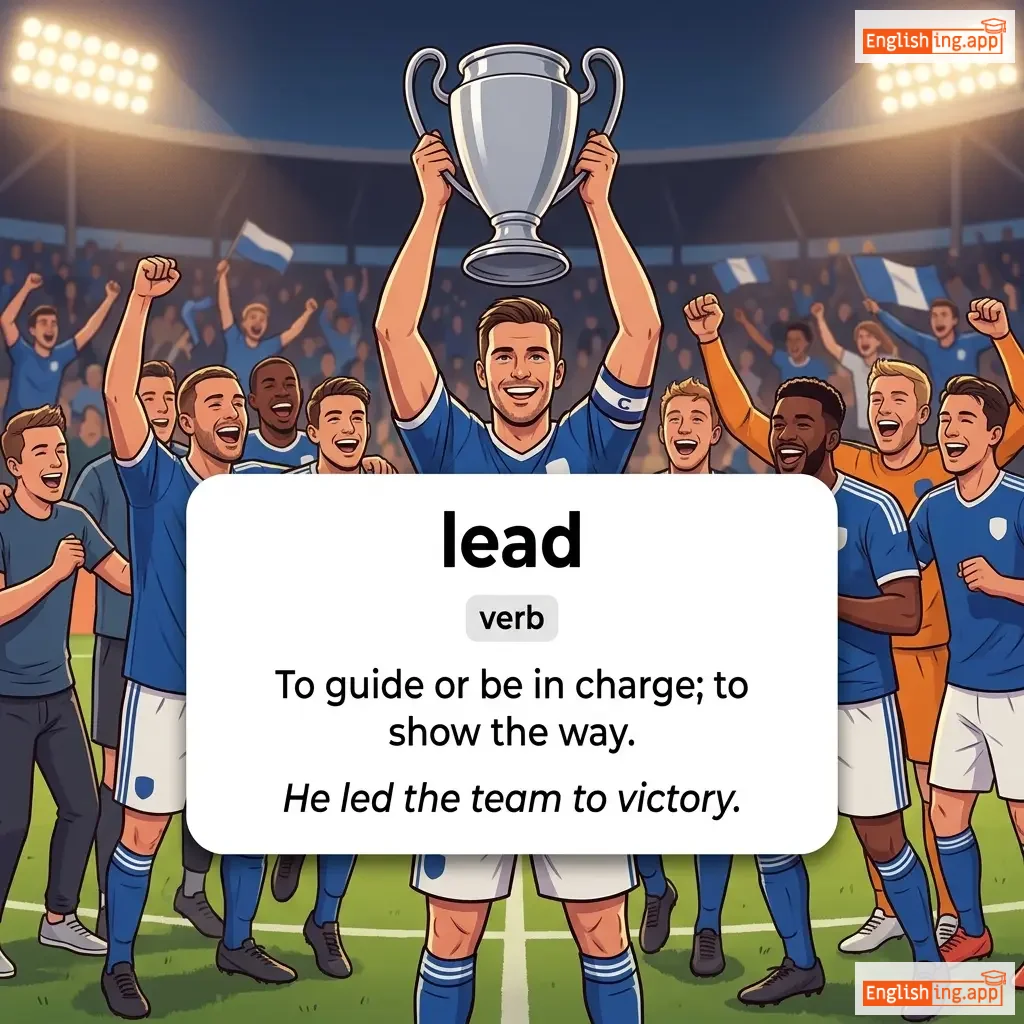
lead definition card — visual illustration of the meaning
verb
/liːd/
diriger (diriger)

To guide or be in charge; to show the way.

"He led the team to victory."

"Il a dirigé l'équipe vers la victoire." (Il a dirigé l'équipe vers la victoire.)
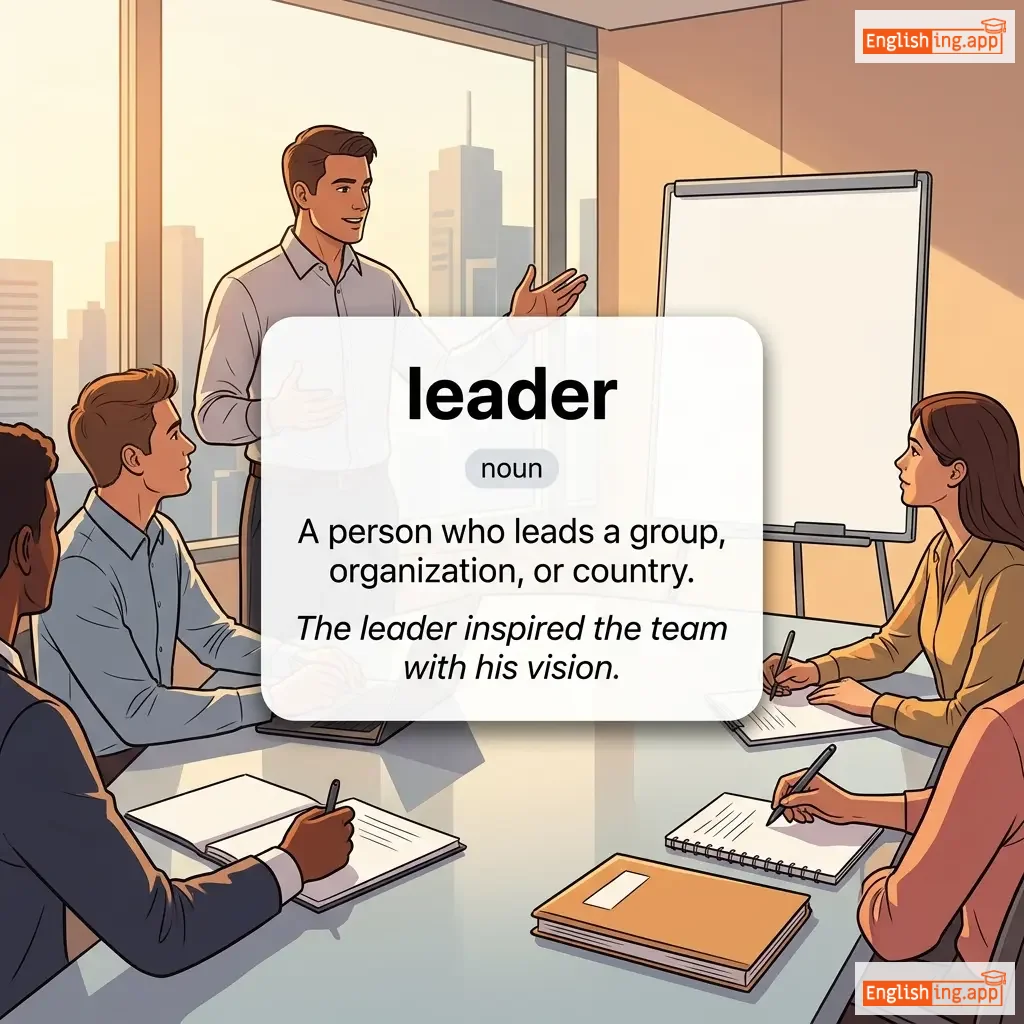
leader definition card — visual illustration of the meaning
noun
/ˈliːdər/
leader (leader)

A person who leads a group, organization, or country.

"The leader inspired the team with his vision."

"Le leader a inspiré l'équipe avec sa vision." (Le leader a inspire l'equipe avec sa vision.)
leadership definition card — visual illustration of the meaning
noun
/ˈliːdərˌʃɪp/
leadership (leadership)

The action of leading a group of people or an organization.

"Her leadership inspired the entire team to achieve their goals."

"Son leadership a inspiré toute l'équipe à atteindre leurs objectifs." (Son leadership a inspiré toute l'équipe à atteindre leurs objectifs.)
adjective
/ˈliːdɪŋ/
principal (principal)

most important or most successful; at the front

"She is one of the leading experts in the field."

"Elle est l'une des principales expertes dans le domaine." (Elle est l'une des principales expertes dans le domaine.)
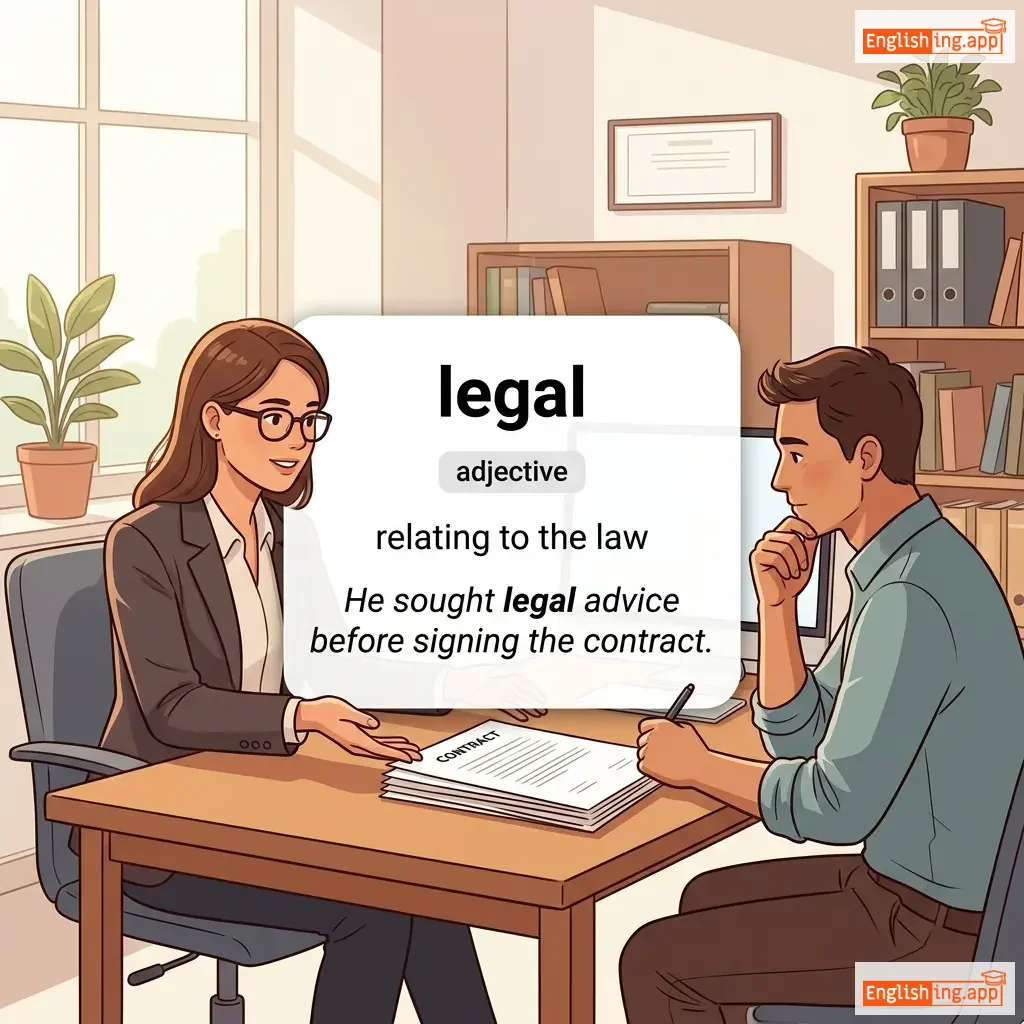
legal definition card — visual illustration of the meaning
adjective
/ˈliːɡəl/
légal (legal)

relating to the law

"He sought legal advice before signing the contract."

"Il a demandé un conseil juridique avant de signer le contrat." (Il a demandé un conseil juridique avant de signer le contrat.)
noun
/ˈlɛktʃərər/
conférencier (conferencier)

a person who gives lectures, especially at a college or university

"The lecturer explained the theory with clear examples."

"Le conférencier a expliqué la théorie avec des exemples clairs." (Le conferencier a explique la theorie avec des exemples clairs)
noun
/ˈledʒ.ər/
grand livre (grand livre)

a book or other collection of financial accounts of a particular type

"The accountant updated the company ledger daily."

"Le comptable a mis à jour le grand livre de l'entreprise tous les jours." (Le comptable a mis à jour le grand livre de l'entreprise tous les jours.)
Leech definition card — visual illustration of the meaning
noun
/liːt͡ʃ/
sangsue (sangsue)

a blood-sucking worm that lives in water or moist ground

"The doctor used a medical leech to reduce swelling after surgery."

"Le médecin a utilisé une sangsue médicale pour réduire l'enflure après l'opération." (Le medecin a utilise une sangsue medicale pour reduire l'enflure apres l'operation)
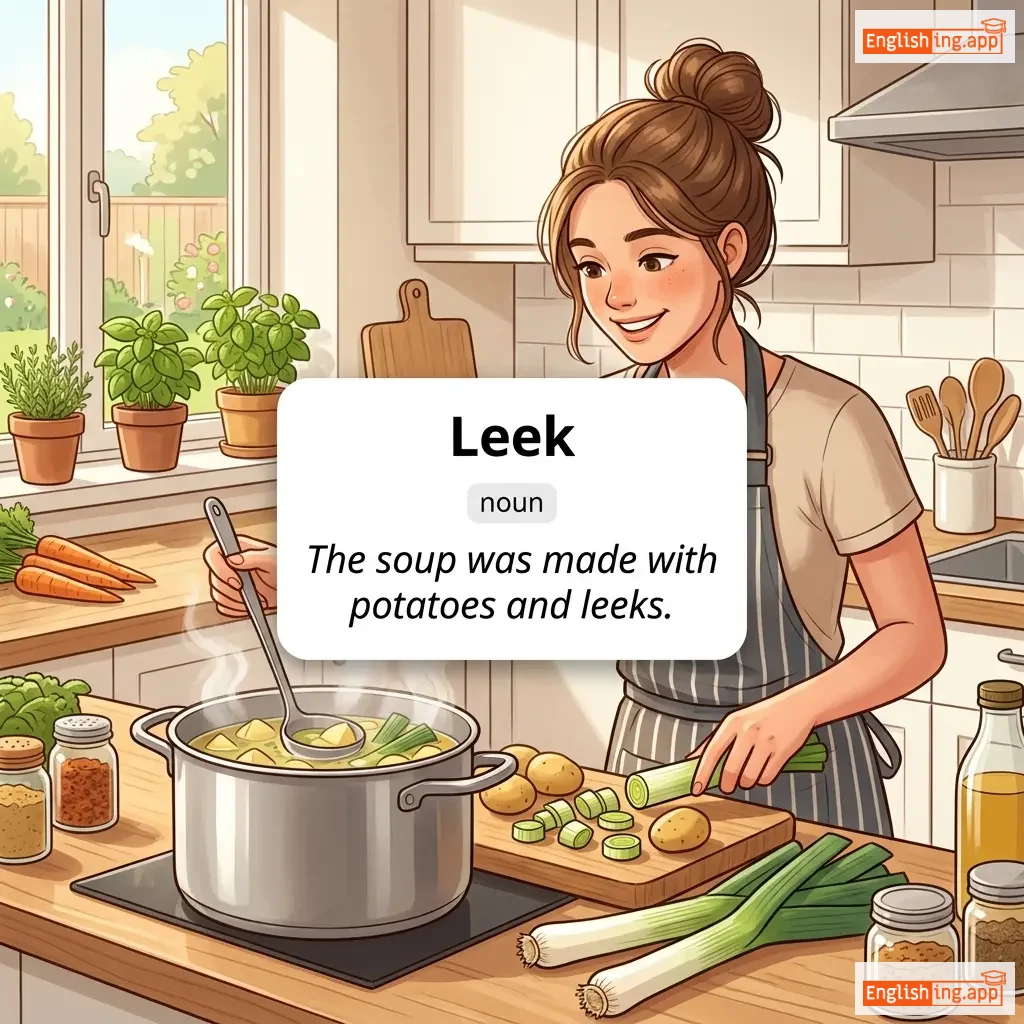
Leek definition card — visual illustration of the meaning
noun
/liːk/
poireau (poireau)

vegetable related to onion with long green leaves and white bulb, milder than onion

"The soup was made with potatoes and leeks."

"La soupe était faite avec des pommes de terre et des poireaux." (La soupe était faite avec des pommes de terre et des poireaux.)
verb
/lɪr/
regard lubrique (regard lubrique)

To look at someone in an unpleasant, sly, or sexually suggestive way.

"He leered at her in a way that made her uncomfortable."

"Il l'a regardée d'une manière qui l'a rendue mal à l'aise." (Il l'a regardée d'une manière qui l'a rendue mal à l'aise.)
adjective
/ˈlɪəri/
méfiant (mefiant)

Cautious or wary due to suspicion or distrust.

"She was leery of investing in the new business."

"Elle était méfiante à l'idée d'investir dans le nouveau business." (Elle était méfiante à l'idée d'investir dans le nouveau business.)
adjective
/ˈliːwərd/
côté abrité du vent (cote abrite du vent)

On or toward the sheltered side away from the wind.

"They built their camp on the leeward side of the hill."

"Ils ont installé leur camp du côté abrité du vent de la colline." (Ils ont installé leur camp du côté abrité du vent de la colline.)
noun
/ˈliːweɪ/
marge (marge)

Freedom to act within certain limits; extra space or time.

"The manager gave the team some leeway to finish the project."

"Le gestionnaire a donné à l'équipe une certaine marge pour terminer le projet." (Le gestionnaire a donne a l'equipe une certaine marge pour terminer le projet.)
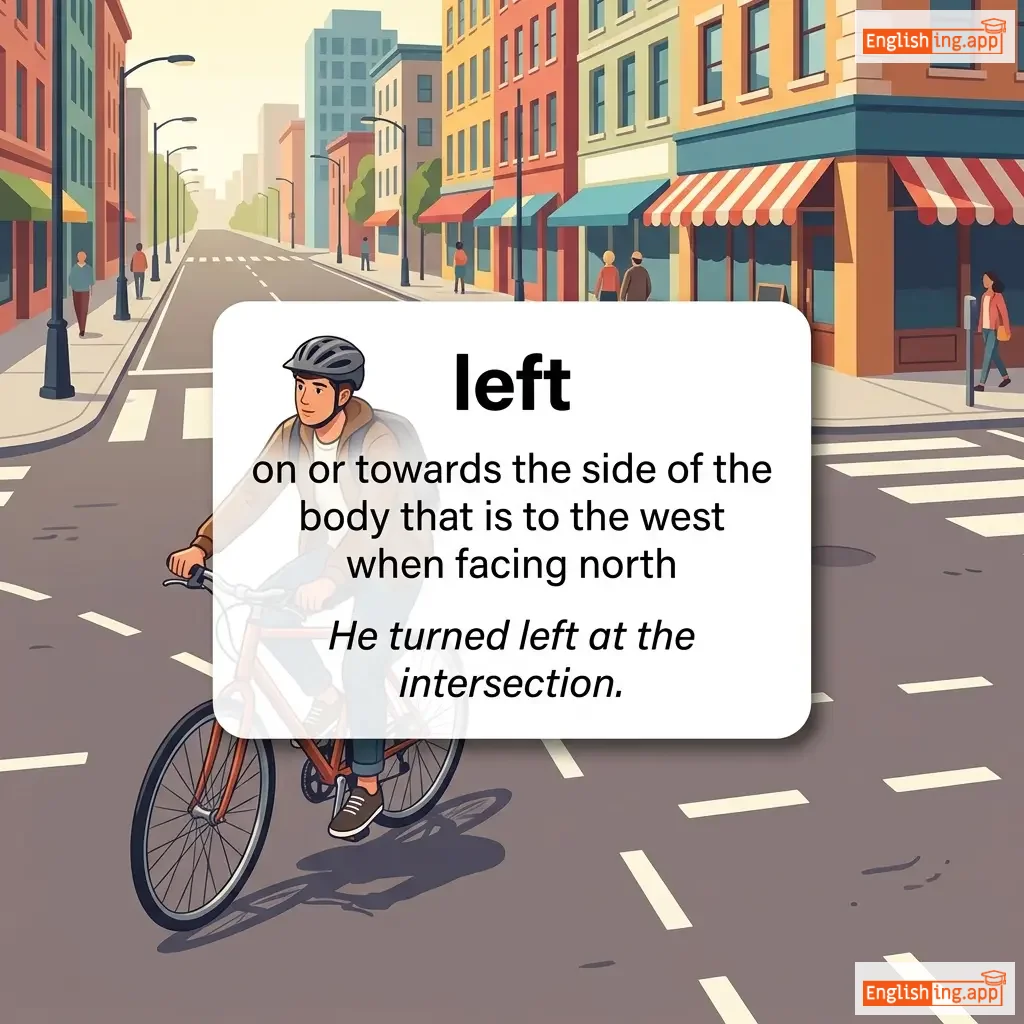
left definition card — visual illustration of the meaning
adjective, noun, adverb, verb (past tense of leave)
/lɛft/
gauche (gauche)

on or towards the side of the body that is to the west when facing north

"He turned left at the intersection."

"Il a tourné à gauche au carrefour." (Il a tourne a gauche au carrefour.)
adjective
/ˌlɛftˈhændɪd/
gauchiste (gauchiste)

Using or done with the left hand; also can mean clumsy or awkward.

"She is left-handed and writes beautifully with her left hand."

"Elle est gauchiste et écrit magnifiquement de la main gauche." (elle est gauchiste et écrit magnifiquement de la main gauche.)
noun
/lɛɡ/
jambe (jambe)

one of the limbs on which a person or animal walks and stands

"He injured his leg while playing football."

"Il s'est blessé à la jambe en jouant au football." (Il s'est blessé à la jambe en jouant au football.)
legacy definition card — visual illustration of the meaning
noun
/ˈlɛɡəsi/
héritage (heritage)

Something handed down from the past, such as money, property, or traditions.

"Her artistic legacy continues to inspire young painters."

"Son héritage artistique continue d'inspirer de jeunes peintres." (Son héritage artistique continue d'inspirer de jeunes peintres.)
adjective
/ˈlɛdʒəndɛri/
légendaire (legendaire)

remarkable enough to be famous; often used to describe something that is iconic or widely known

"The legendary musician performed in front of a packed stadium."

"Le musicien légendaire s'est produit devant un stade bondé." (Le musicien legendaire s est produit devant un stade bonde.)
noun
/ˈdʒɑːr.ɡən/
jargon (jargon)

Specialized or technical language used by a particular group or profession.

"The lawyer’s explanation was full of legal jargon."

"L'explication de l'avocat était pleine de jargon juridique." (L'explication de l'avocat etait pleine de jargon juridique.)
noun
/ˈliːdʒən/
un grand groupe de personnes, en particulier des soldats ; un grand nombre (un grand groupe de personnes, en particulier des soldats ; un grand nombre)

a large group of people, especially soldiers; a great number

"The Roman army was divided into legions."

"L'armée romaine a été divisée en légions." (L'armee romaine a ete divisee en legions.)
adjective
/ˈlɛdʒəbl/
lisible (lisible)

clear enough to read

"Her handwriting was barely legible."

"Son écriture était presque illisible." (son écriture était presque illisible)
noun
/ˈlɛɡɪŋ/
leggings ajustés (leggings ajustes)

tight-fitting stretch pants, typically worn by women for exercise or casual wear

"She bought a new pair of black leggings for the gym."

"Elle a acheté une nouvelle paire de leggings noirs pour la salle de sport." (Elle a acheté une nouvelle paire de leggings noirs pour la salle de sport.)
noun
/ˌlɛdʒərdəˈmeɪn/
magie, tromperie (magie, tromperie)

skillful use of one's hands when performing tricks; deception or trickery

"The magician's legerdemain left the audience amazed."

"La magie du magicien a laissé le public émerveillé." (La magie du magicien a laisse le public emerveille.)
adverb
/ˈliːɡəli/
légalement (legalement)

in a way that is allowed by law

"He is legally responsible for his actions."

"Il est légalement responsable de ses actions." (Il est legalement responsable de ses actions)
noun
/lɪˈɡæl.ə.ti/
légalité (legalite)

the quality or state of being legal; accordance with the law

"The lawyer questioned the legality of the contract."

"L'avocat a remis en question la légalité du contrat." (L'avocat a remis en question la légalité du contrat.)
verb
/ˈliːɡəlaɪz/
légalisé (legalize)

To make something lawful by official approval.

"The government decided to legalize online businesses."

"Le gouvernement a décidé de légaliser les entreprises en ligne." (Le gouvernement a décidé de légaliser les entreprises en ligne.)
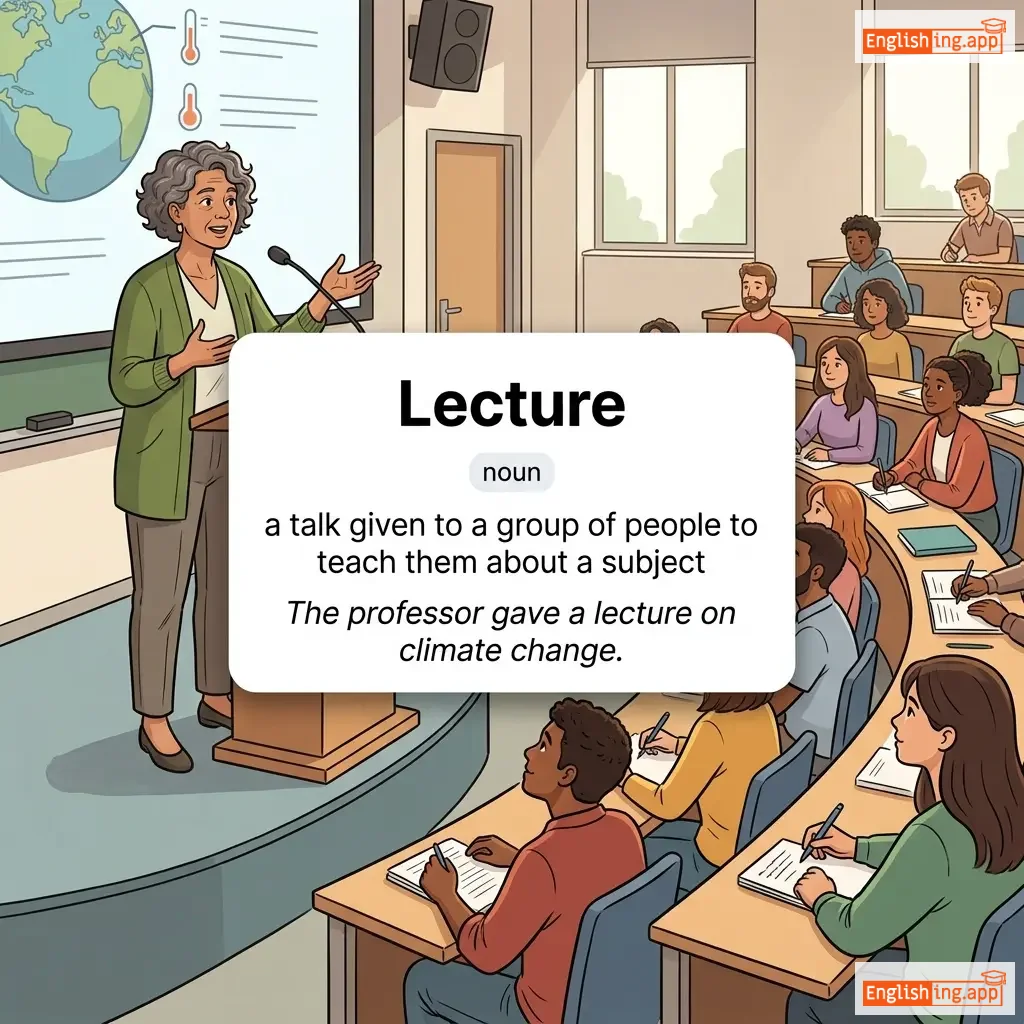
Lecture definition card — visual illustration of the meaning
noun
/ˈlektʃər/
conférence (conference)

a talk given to a group of people to teach them about a subject

"The professor gave a lecture on climate change."

"Le professeur a donné une conférence sur le changement climatique." (Le professeur a donne une conference sur le changement climatique.)
adverb/adjective
/lɪˈɡɑːtoʊ/
en musique, joué ou chanté de manière fluide et connectée (en musique, joué ou chanté de manière fluide et connectée)

In music, played or sung smoothly and connectedly.

"The pianist played the passage legato, with each note flowing into the next."

"Le pianiste a joué le passage legato, chaque note se fondant dans la suivante." (Le pianiste a joué le passage legato, chaque note se fondant dans la suivante.)