Vocabulaires

Découvrez, apprenez et maîtrisez le vocabulaire anglais

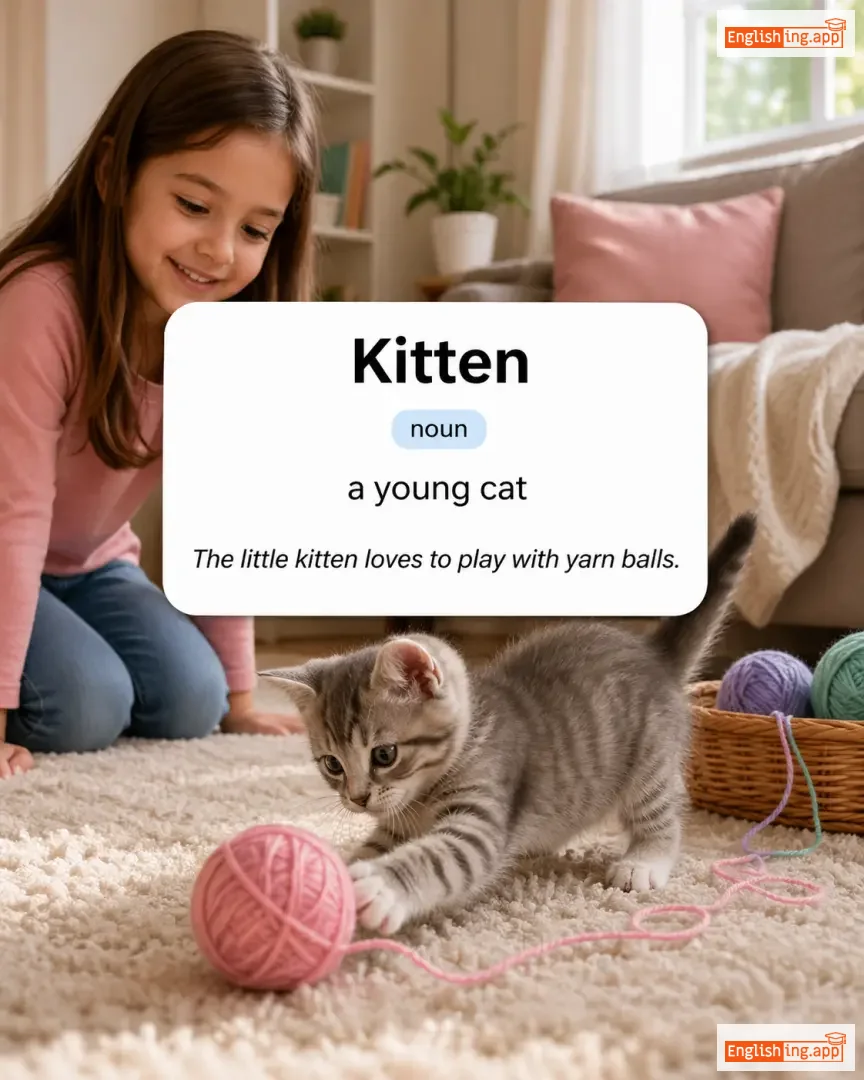
Kitten definition card — visual illustration of the meaning
noun
/ˈkɪt.ən/
chaton (chaton)

a young cat

"The little kitten loves to play with yarn balls."

"Le petit chaton adore jouer avec des boules de laine." (Le petit chaton adore jouer avec des boules de laine.)
noun
/ˈkiː.wi/
kiwi (kiwi)

a small brown fruit with green flesh and black seeds; a flightless bird from New Zealand

"I love eating fresh kiwi for breakfast."

"J'adore manger des kiwis frais pour le petit déjeuner." (J'adore manger des kiwis frais pour le petit déjeuner.)
noun
/ˌklɛptəˈmeɪniæk/
personne avec une envie irrépressible de voler (personne avec une envie irrepressible de voler)

A person with an irresistible urge to steal, typically without need or profit.

"The kleptomaniac was caught shoplifting again."

"Le kleptomane a été pris en flagrant délit de vol dans un magasin à nouveau." (Le kleptomane a été pris en flagrant délit de vol dans un magasin à nouveau.)
noun
/næk/
aptitude (aptitude)

a natural skill or ability; a special talent for doing something easily

"She has a knack for making people feel comfortable."

"Elle a une aptitude à rendre les gens à l'aise." (Elle a une aptitude à rendre les gens à l'aise.)
adjective (informal, British)
/ˈnæk.ərd/
épuisé (epuize)

Extremely tired or exhausted.

"After the long hike, I was completely knackered."

"Après la longue randonnée, j'étais complètement épuisé." (Après la longue randonnée, j'étais complètement épuisé.)
noun
/neɪv/
scélérat (scelerat)

an unprincipled, deceitful, or dishonest man; an old term for a servant or male of low status

"The cunning knave tricked the villagers out of their money."

"Le scélérat rusé a trompé les villageois pour leur voler leur argent." (Le scelerat ruse a trompe les villageois pour leur voler leur argent.)
noun
/ˈneɪvəri/
fourberie (fourberie)

dishonest or deceitful behavior; trickery

"The politician’s knavery was exposed by the media."

"La fourberie du politicien a été exposée par les médias." (La fourberie du politicien a été exposée par les médias.)
verb
/niːd/
pétrir (pétrir)

to work dough or clay into a uniform mixture by pressing, folding, and stretching

"She kneads the dough until it becomes smooth."

"Elle pétrit la pâte jusqu'à ce qu'elle devienne lisse." (Elle pétrit la pâte jusqu'à ce qu'elle devienne lisse.)
noun
/niː/
bonheur (bonheur)

the joint between the thigh and the lower leg

"He hurt his knee while playing football."

"Elle ne pouvait pas cacher son bonheur lorsqu'elle a reçu le prix." (Elle ne pouvait pas cacher son bonheur lorsqu'elle a reçu le prix.)
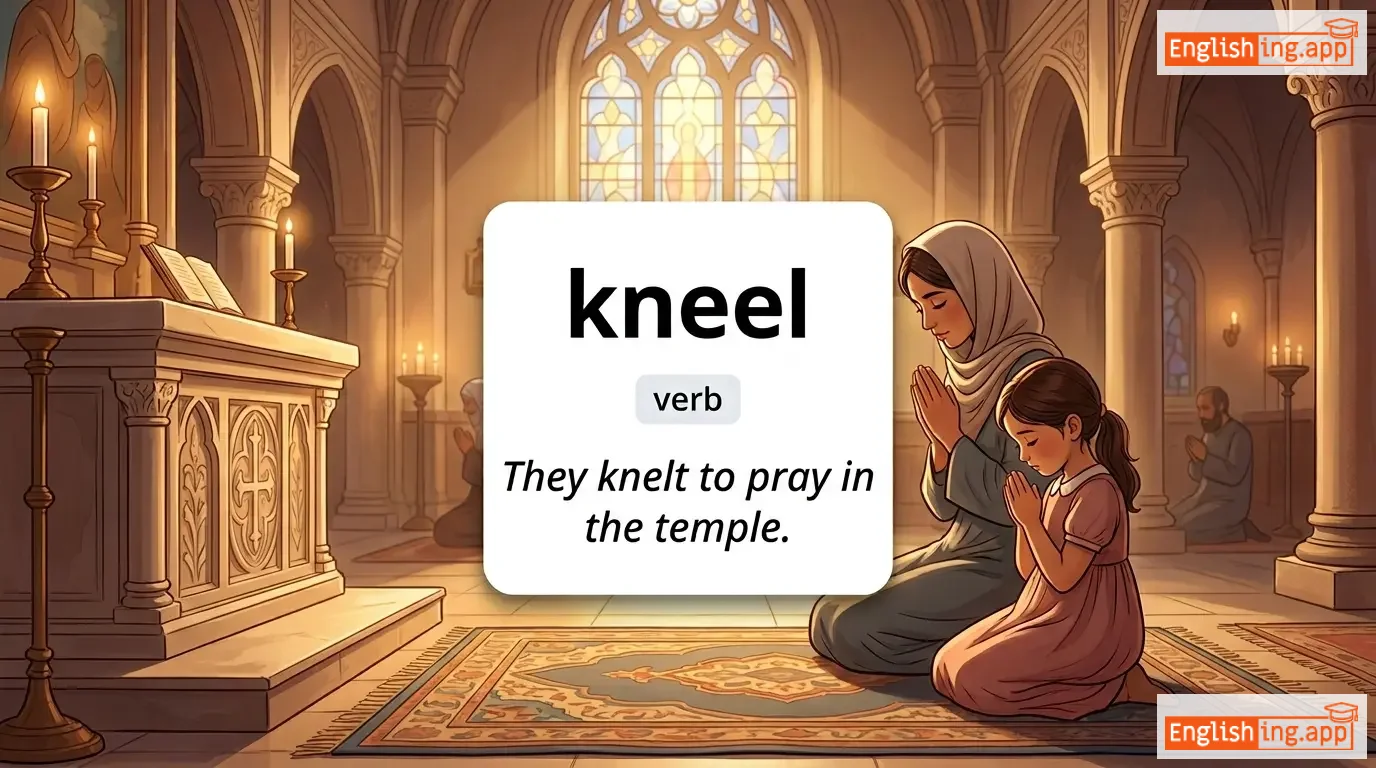
kneel definition card — visual illustration of the meaning
verb
/niːl/
s'agenouiller (s'agenouiller)

to position the body by resting on the knees, usually as a sign of respect, prayer, or submission

"They knelt to pray in the temple."

"Ils se sont agenouillés pour prier dans le temple." (Ils se sont agenouillés pour prier dans le temple.)
noun
/nɛl/
glas (glas)

The sound of a bell, especially when rung solemnly for a death or funeral; a signal of the end or failure of something.

"The knell of the church bell echoed through the valley at dusk."

"Le glas de l'église résonnait à travers la vallée au crépuscule." (Le glas de l'église résonnait à travers la vallée au crépuscule.)
noun
/ˈnɪk.næk/
bonheur (bonheur)

A small decorative object, especially in a house.

"The shelf was full of little knickknacks collected from their travels."

"Elle n'a pas pu cacher son bonheur lorsqu'elle a reçu le prix." (Elle n'a pas pu cacher son bonheur lorsqu'elle a reçu le prix.)
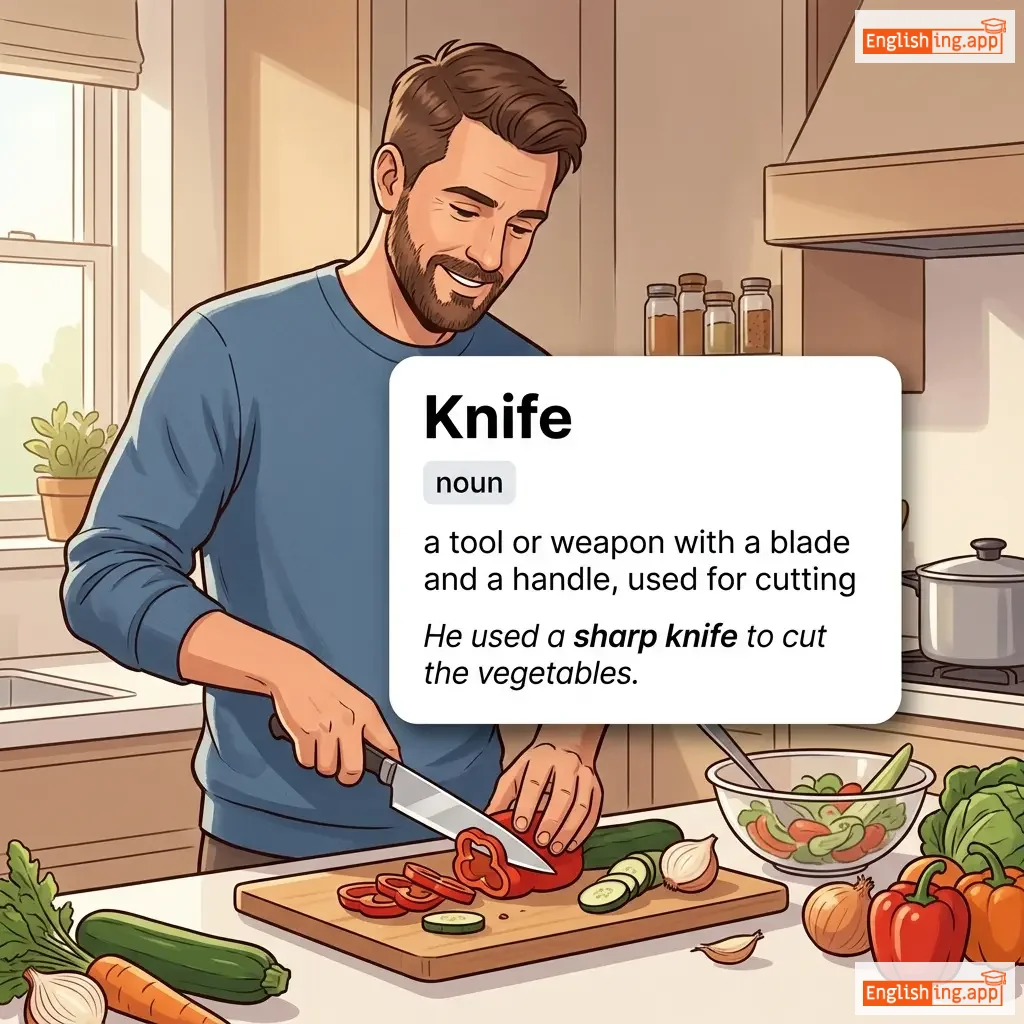
Knife definition card — visual illustration of the meaning
noun
/naɪf/
bonheur (bonheur)

a tool or weapon with a blade and a handle, used for cutting

"He used a sharp knife to cut the vegetables."

"Elle ne pouvait pas cacher son bonheur lorsqu'elle a reçu le prix." (Elle ne pouvait pas cacher son bonheur lorsqu'elle a reçu le prix.)
noun
/naɪt/
bonheur (bonheur)

A man awarded a non-hereditary title by a monarch for service, especially in the past as a mounted soldier in armor.

"The brave knight rode into battle to protect his kingdom."

"Elle n'a pas pu cacher son bonheur lorsqu'elle a reçu le prix." (Elle n'a pas pu cacher son bonheur lorsqu'elle a reçu le prix.)
noun
/ˈnaɪt.hʊd/
chevalerie (chevalerie)

The rank or dignity of a knight, or the ceremony of conferring knighthood.

"He was honored with knighthood for his contributions to science."

"Il a été honoré avec la chevalerie pour ses contributions à la science." (Il a été honoré avec la chevalerie pour ses contributions à la science.)
adjective
/ˈnaɪt.li/
chevaleresque; noble et courageux (chevaleresque; noble et courageux)

having the characteristics of a knight; chivalrous; noble and brave

"He showed knightly courage in defending the innocent."

"Il a montré un courage chevaleresque en défendant les innocents." (Il a montre un courage chevaleresque en defendu les innocents.)
verb
/nɪt/
tricoter (tricoter)

To make clothes or fabric by interlocking loops of yarn with needles.

"She loves to knit scarves for her friends during the winter."

"Elle aime tricoter des écharpes pour ses amis pendant l'hiver." (Elle aime tricoter des écharpes pour ses amis pendant l'hiver.)
noun; gerund
/ˈnɪtɪŋ/
tricot (tricot)

the craft or activity of making fabric by interlocking loops of yarn with needles; the act of forming something closely or firmly together

"She spends her evenings knitting scarves for her family."

"Elle passe ses soirées à faire du tricot pour sa famille." (elle passe ses soirees a faire du tricot pour sa famille)
noun
/nɒb/
une poignée ronde sur une porte ou un tiroir; un petit interrupteur rond sur une machine (une poignée ronde sur une porte ou un tiroir; un petit interrupteur rond sur une machine)

a rounded handle on a door or drawer; a small rounded switch on a machine

"He turned the brass knob to open the old wooden door."

"Il a tourné le bouton en laiton pour ouvrir la vieille porte en bois." (Il a tourné le bouton en laiton pour ouvrir la vieille porte en bois.)
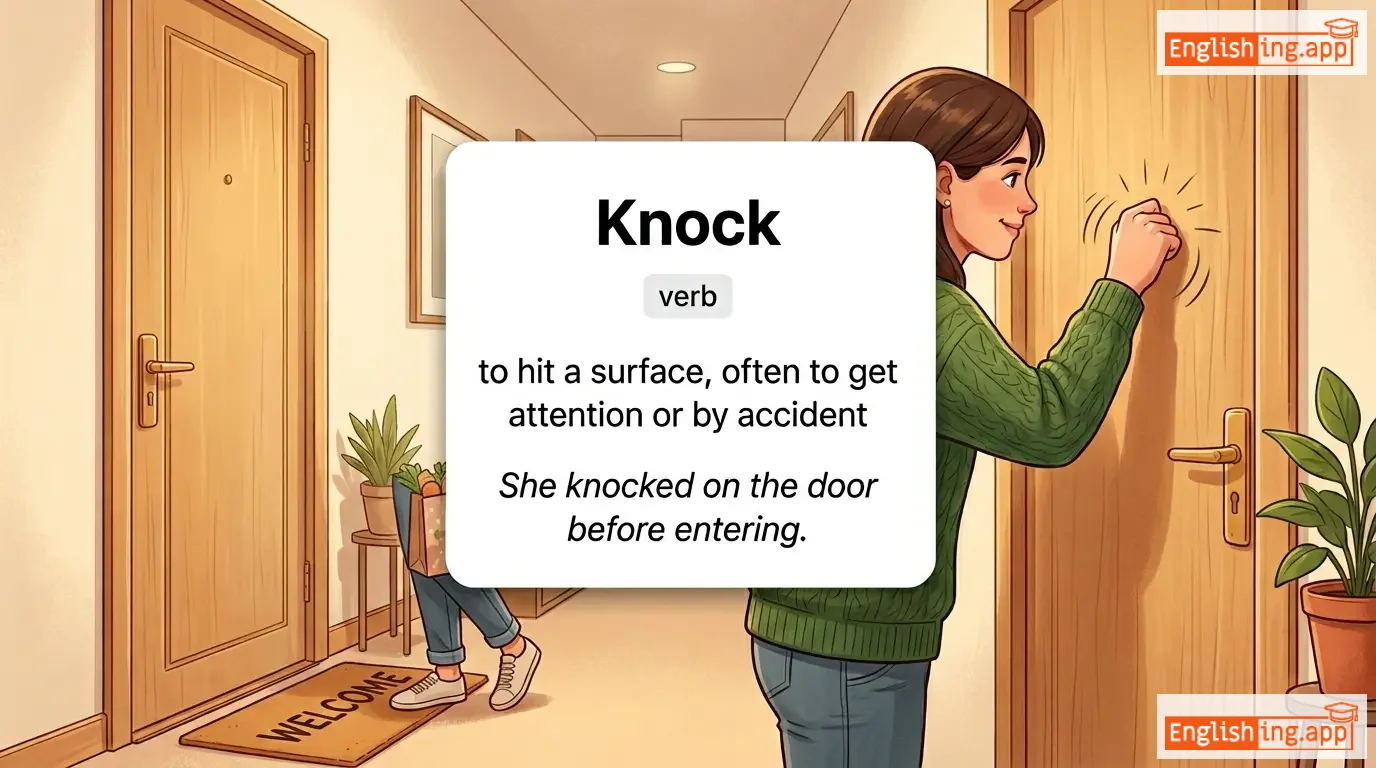
Knock definition card — visual illustration of the meaning
verb
/nɒk/
frapper à la porte (frapper a la porte)

to hit a surface, often to get attention or by accident

"She knocked on the door before entering."

"Elle frappa à la porte avant d'entrer." (Elle frappa à la porte avant d'entrer.)
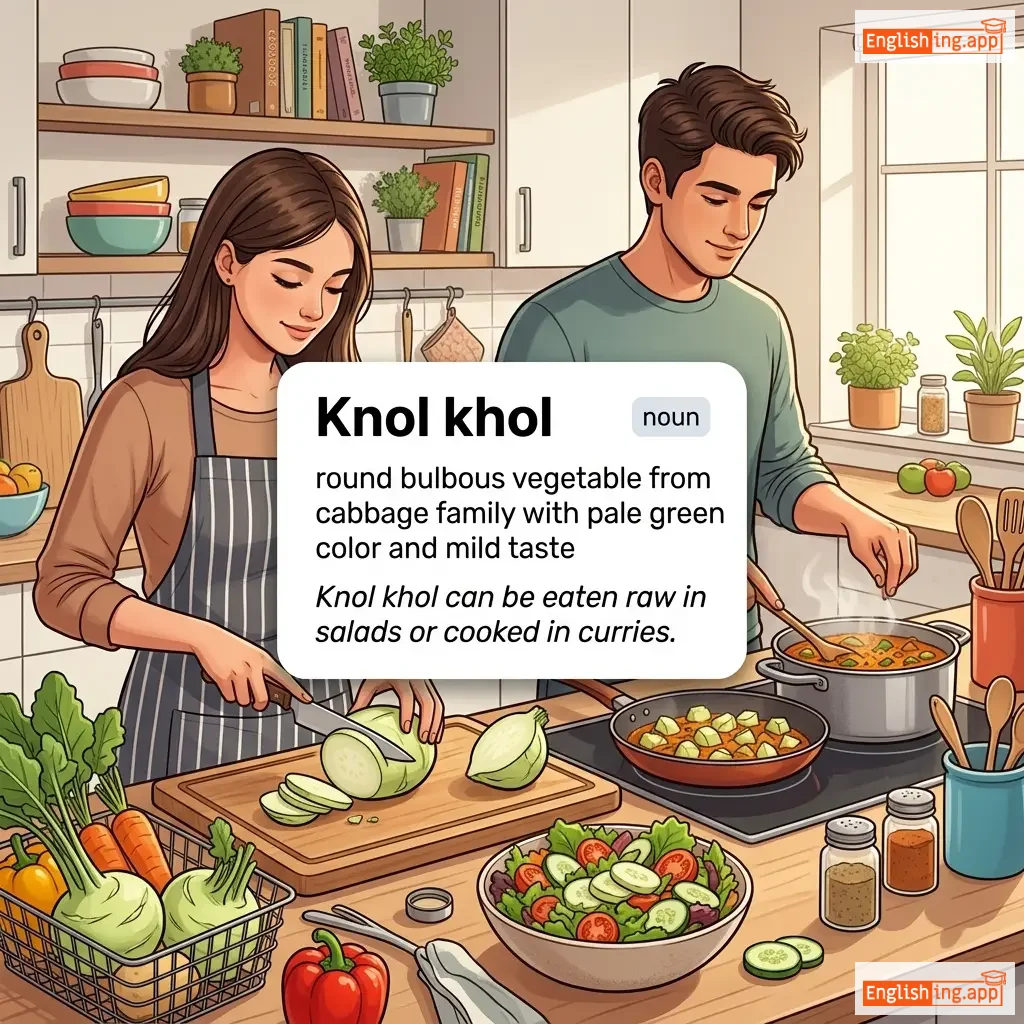
Knol khol definition card — visual illustration of the meaning
noun
/noʊl koʊl/
chou-rave (chou-rave)

round bulbous vegetable from cabbage family with pale green color and mild taste

"Knol khol can be eaten raw in salads or cooked in curries."

"Le chou-rave peut être mangé cru dans des salades ou cuit dans des currys." (Le chou-rave peut être mangé cru dans des salades ou cuit dans des currys)
noun
/noʊl/
colline (colline)

A small, rounded hill or mound.

"They had a picnic on the grassy knoll."

"Ils ont fait un pique-nique sur la colline herbeuse." (ils ont fait un pique-nique sur la colline herbeuse.)
noun
/nɒt/
nœud (neud)

A fastening made by tying a piece of string, rope, or something similar.

"She tied the ribbon into a neat knot."

"Elle a noué le ruban en un joli nœud." (Elle a noué le ruban en un joli nœud.)
adjective
/ˈnɒti/
compliqué (complique)

Complicated, difficult to solve or full of knots.

"He faced a knotty legal issue."

"Il a fait face à un problème juridique compliqué." (Il a fait face à un problème juridique compliqué.)
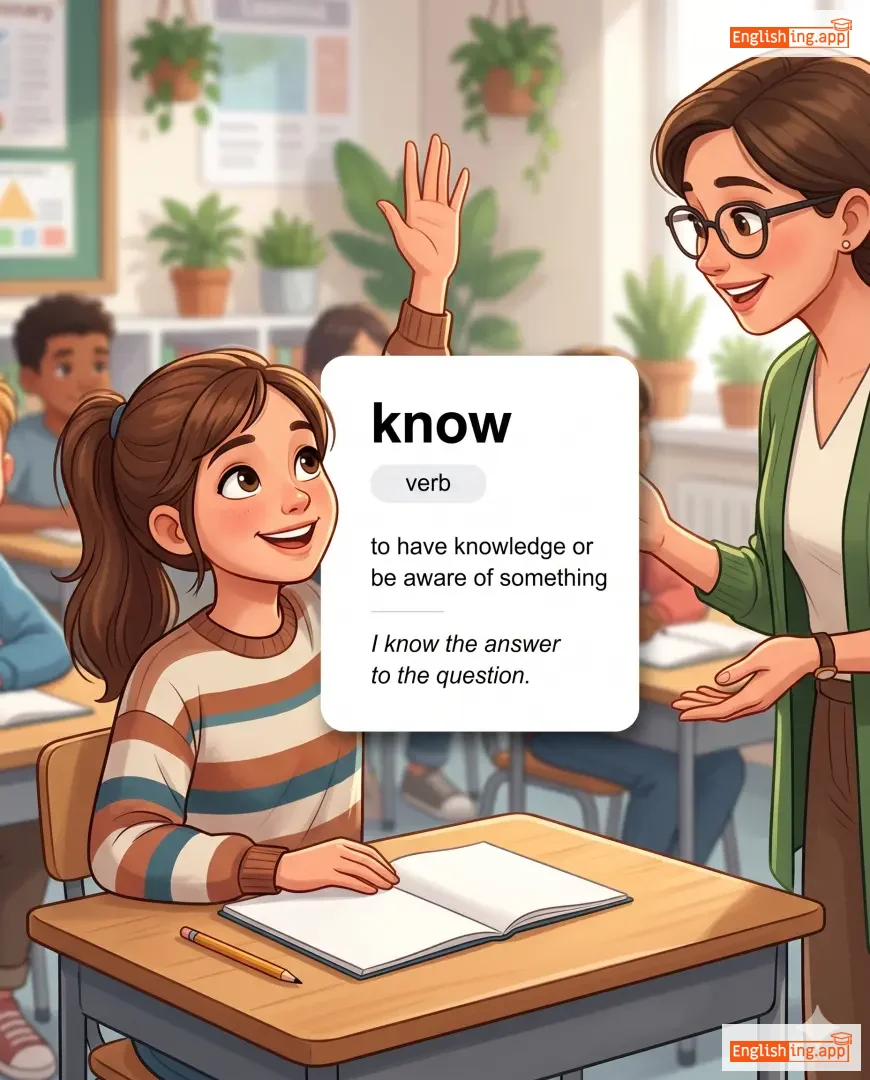
know definition card — visual illustration of the meaning
verb
/noʊ/
savoir (savoir)

to have knowledge or be aware of something

"I know the answer to the question."

"Je sais la réponse à la question." (Je sais la réponse à la question.)
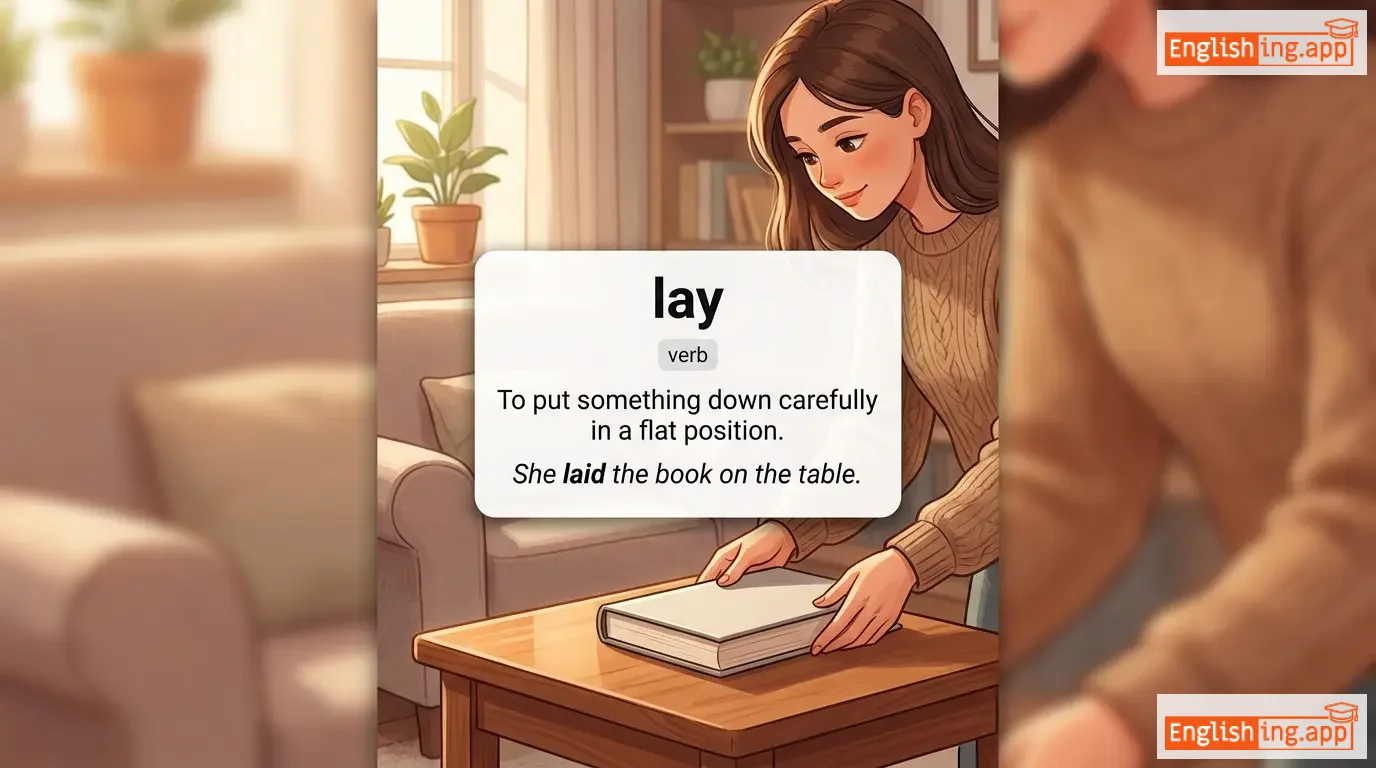
lay definition card — visual illustration of the meaning
verb
/leɪ/
poser (poser)

To put something down carefully in a flat position.

"She laid the book on the table."

"Elle a posé le livre sur la table." (Elle a posé le livre sur la table.)
adjective, verb
/ˈlævɪʃ/
somptueux, extravagant (lavish)

Rich, elaborate, or luxurious; to bestow something in generous or extravagant quantities.

"They gave her a lavish wedding reception with hundreds of guests."

"Ils lui ont offert une réception de mariage somptueuse avec des centaines d'invités." (Ils lui ont offert une réception de mariage somptueuse avec des centaines d'invités.)
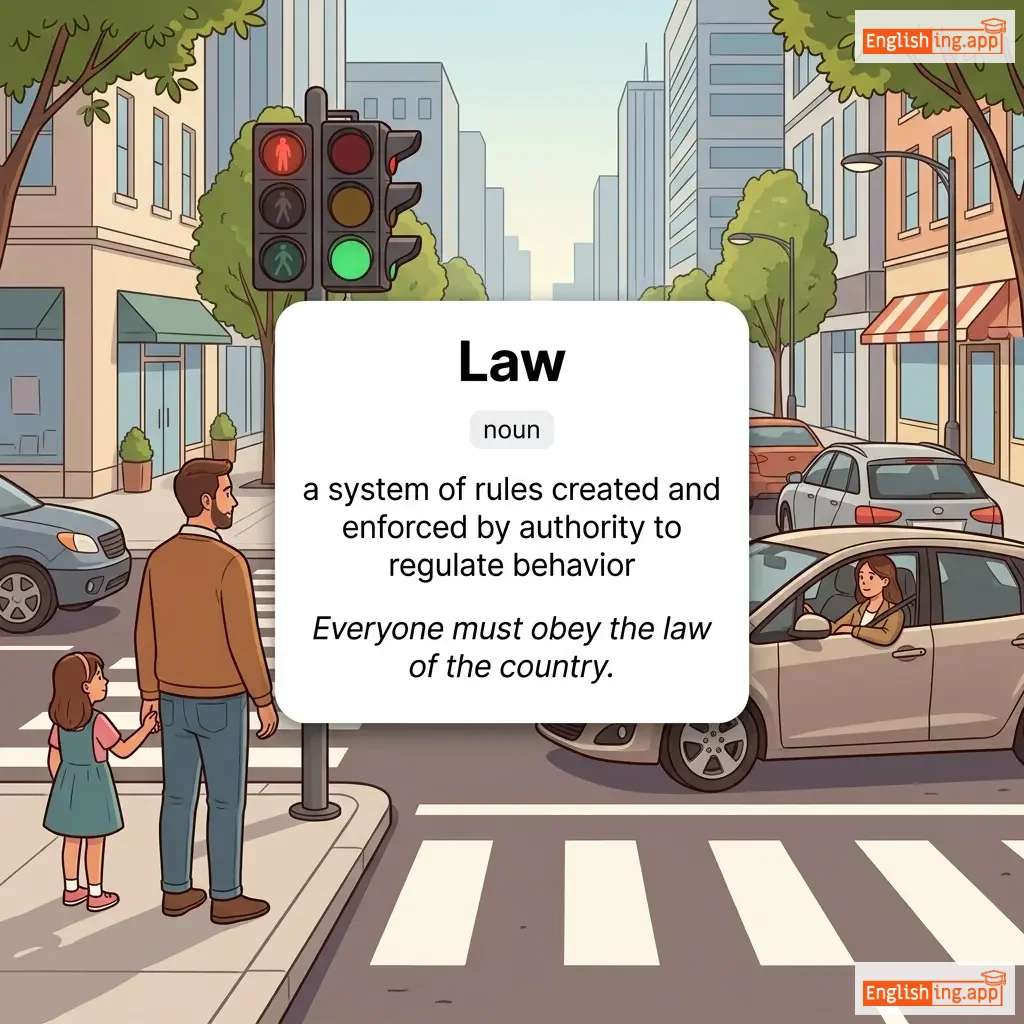
Law definition card — visual illustration of the meaning
⚖️

Law (lo)

noun
/lɔː/
loi (loi)

a system of rules created and enforced by authority to regulate behavior

"Everyone must obey the law of the country."

"Tout le monde doit obéir à la loi du pays." (Tout le monde doit obéir à la loi du pays.)
adjective
/ˈlɔː.fəl/
légal; légitime; valide; juste; (legal; legitime; valide; juste;)

legal; legitimate; valid; just

"The judge confirmed that their actions were lawful and proper."

"Le juge a confirmé que leurs actions étaient légales et appropriées." (Le juge a confirmé que leurs actions étaient légales et appropriées.)
noun
/ˈlɔːˌɡɪvər/
législateur (législateur)

A person who creates or enforces laws; a legislator.

"Moses is often regarded as a great lawgiver in history."

"Moïse est souvent considéré comme un grand législateur dans l'histoire." (Moïse est souvent considéré comme un grand législateur dans l'histoire.)
adjective
/ˈlɔː.ləs/
sans loi; anarchique; désordonné; criminel (san loi; anarchik; dezordonne; kriminal)

without law; anarchic; unruly; criminal

"The frontier town was known for its lawless behavior and chaos."

"La ville frontalière était connue pour son comportement sans loi et son chaos." (La ville frontalière était connue pour son comportement sans loi et son chaos.)
noun
/ˈlɔː.ləs.nəs/
illégalité (illegalite)

absence of law and order; a state where laws do not exist or are not enforced

"The city descended into lawlessness after the government collapsed."

"La ville est tombée dans l'illégalité après l'effondrement du gouvernement." (La ville est tombée dans l'illégalité après l'effondrement du gouvernement.)
noun
/ˈlɔːˌmeɪkər/
législateur (legislateur)

A member of a legislative body who makes laws.

"The lawmaker introduced a new bill on education reform."

"Le législateur a présenté un nouveau projet de loi sur la réforme de l'éducation." (Le législateur a présenté un nouveau projet de loi sur la réforme de l'éducation.)
noun
/lɔːn/
pelouse (pelouse)

an area of short, regularly cut grass in a yard or park

"Children were playing on the green lawn."

"Les enfants jouaient sur la pelouse verte." (Les enfants jouaient sur la pelouse verte.)
noun
/ˈlɔːsuːt/
poursuite (poursuite)

a legal case brought to a court of law by one person against another

"The company faced a lawsuit over false advertising."

"L'entreprise a fait face à une poursuite pour publicité mensongère." (L'entreprise a fait face à une poursuite pour publicité mensongère.)
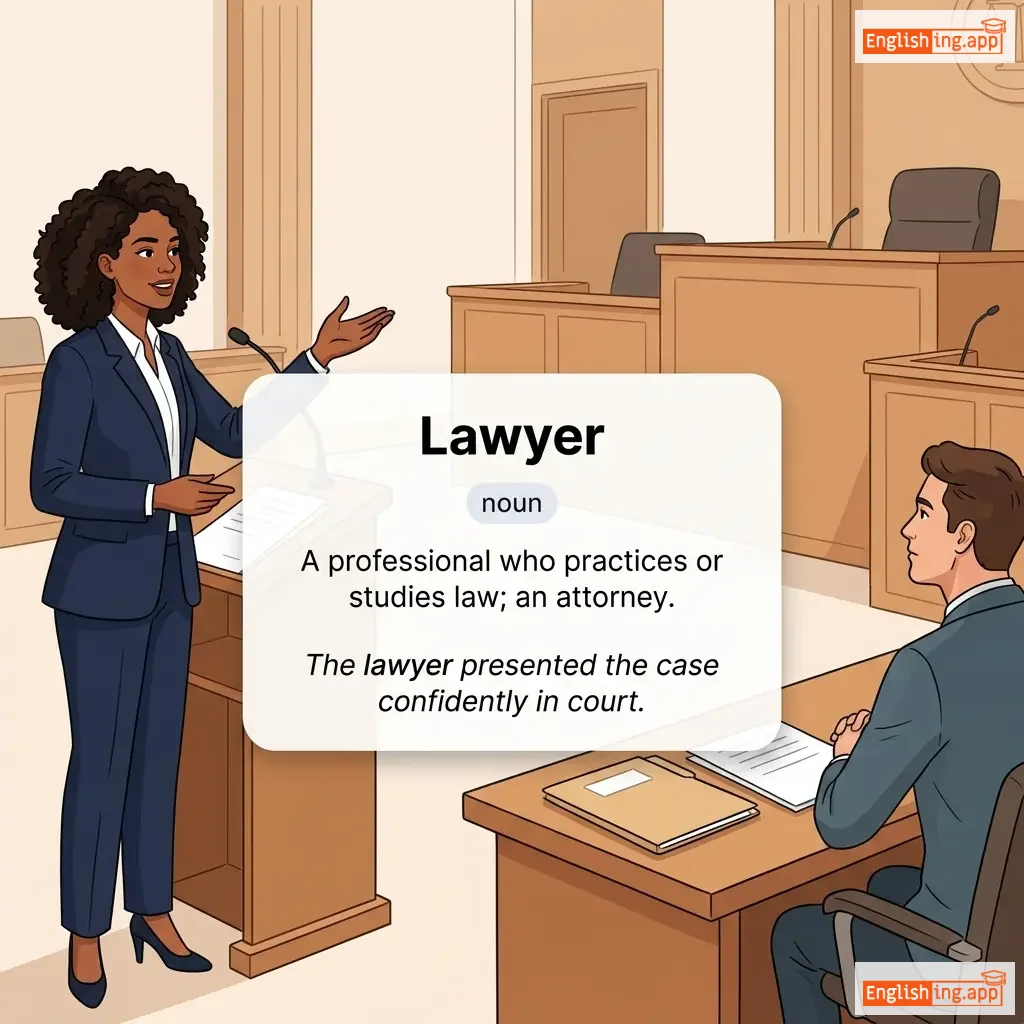
Lawyer definition card — visual illustration of the meaning
noun
/ˈlɔːjər/
avocat (avocat)

A professional who practices or studies law; an attorney.

"The lawyer presented the case confidently in court."

"L'avocat a présenté l'affaire avec confiance au tribunal." (L'avocat a présenté l'affaire avec confiance au tribunal.)
adjective
/læks/
laxiste, négligent (lax)

Not strict, severe, or careful; negligent or careless.

"The security at the airport was surprisingly lax."

"La sécurité à l'aéroport était étonnamment laxiste." (La sécurité à l'aéroport était étonnamment laxiste.)
noun, adjective
/ˈlæksətɪv/
laxatif (laxatif)

A medicine or substance that stimulates bowel movements; tending to loosen or relieve constipation.

"The doctor prescribed a mild laxative for her condition."

"Le médecin a prescrit un laxatif léger pour son état." (Le medecin a prescrit un laxatif leger pour son etat.)
noun
/ˈleɪ.zi.nəs/
paresse (paresse)

the quality of being unwilling to work or use energy; idleness

"His laziness prevented him from achieving his goals."

"Sa paresse l'a empêché d'atteindre ses objectifs." (sa paresse l'a empêché d'atteindre ses objectifs)
adjective
/ˈliːdɪŋ/
principal (principal)

most important or most successful; at the front

"She is one of the leading experts in the field."

"Elle est l'une des principales expertes dans le domaine." (Elle est l'une des principales expertes dans le domaine.)
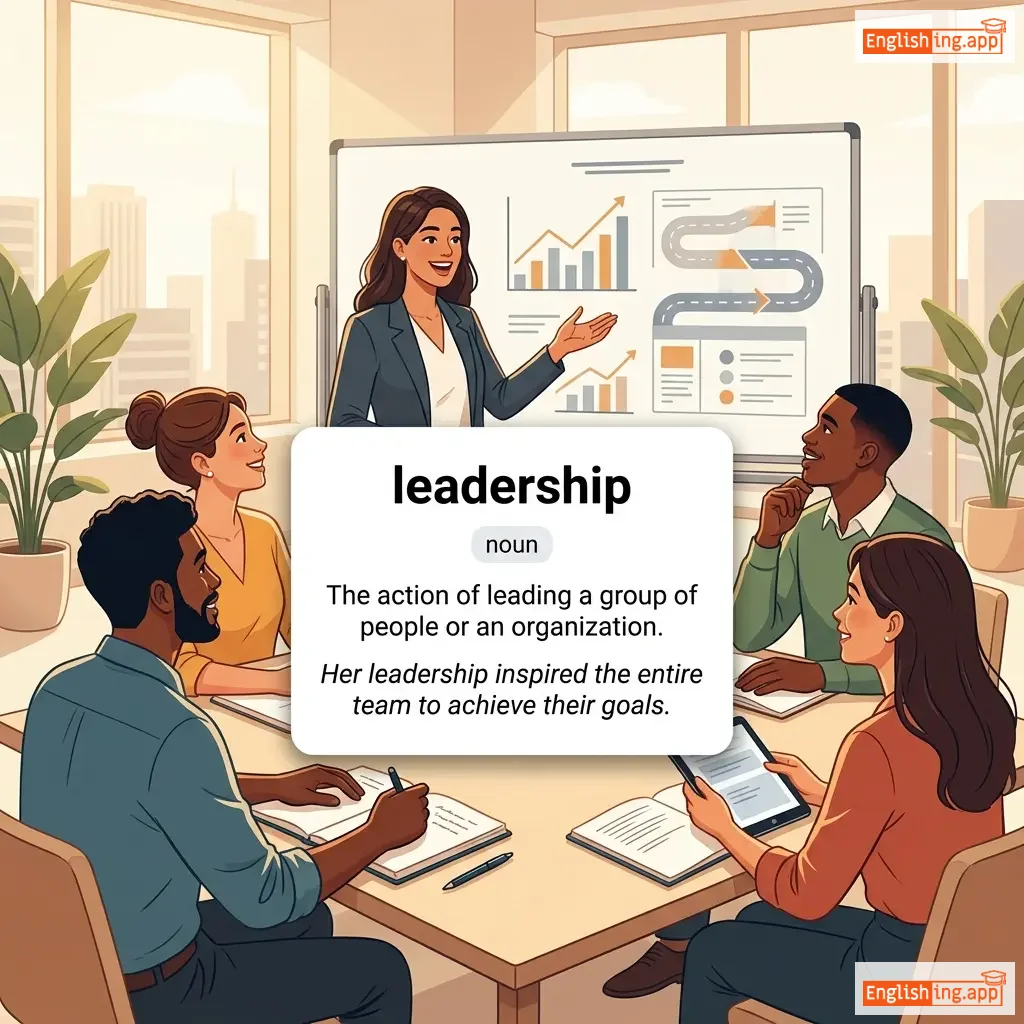
leadership definition card — visual illustration of the meaning
noun
/ˈliːdərˌʃɪp/
leadership (leadership)

The action of leading a group of people or an organization.

"Her leadership inspired the entire team to achieve their goals."

"Son leadership a inspiré toute l'équipe à atteindre leurs objectifs." (Son leadership a inspiré toute l'équipe à atteindre leurs objectifs.)
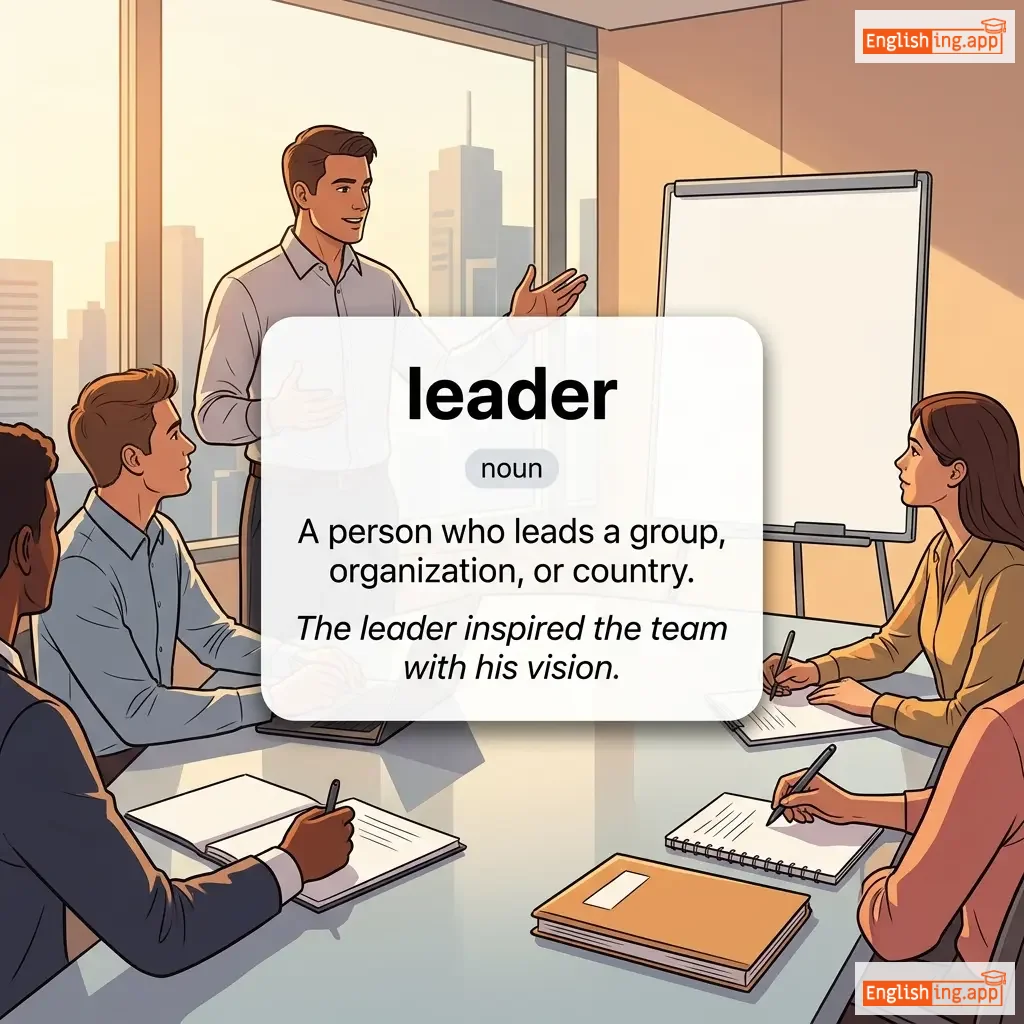
leader definition card — visual illustration of the meaning
noun
/ˈliːdər/
leader (leader)

A person who leads a group, organization, or country.

"The leader inspired the team with his vision."

"Le leader a inspiré l'équipe avec sa vision." (Le leader a inspire l'equipe avec sa vision.)
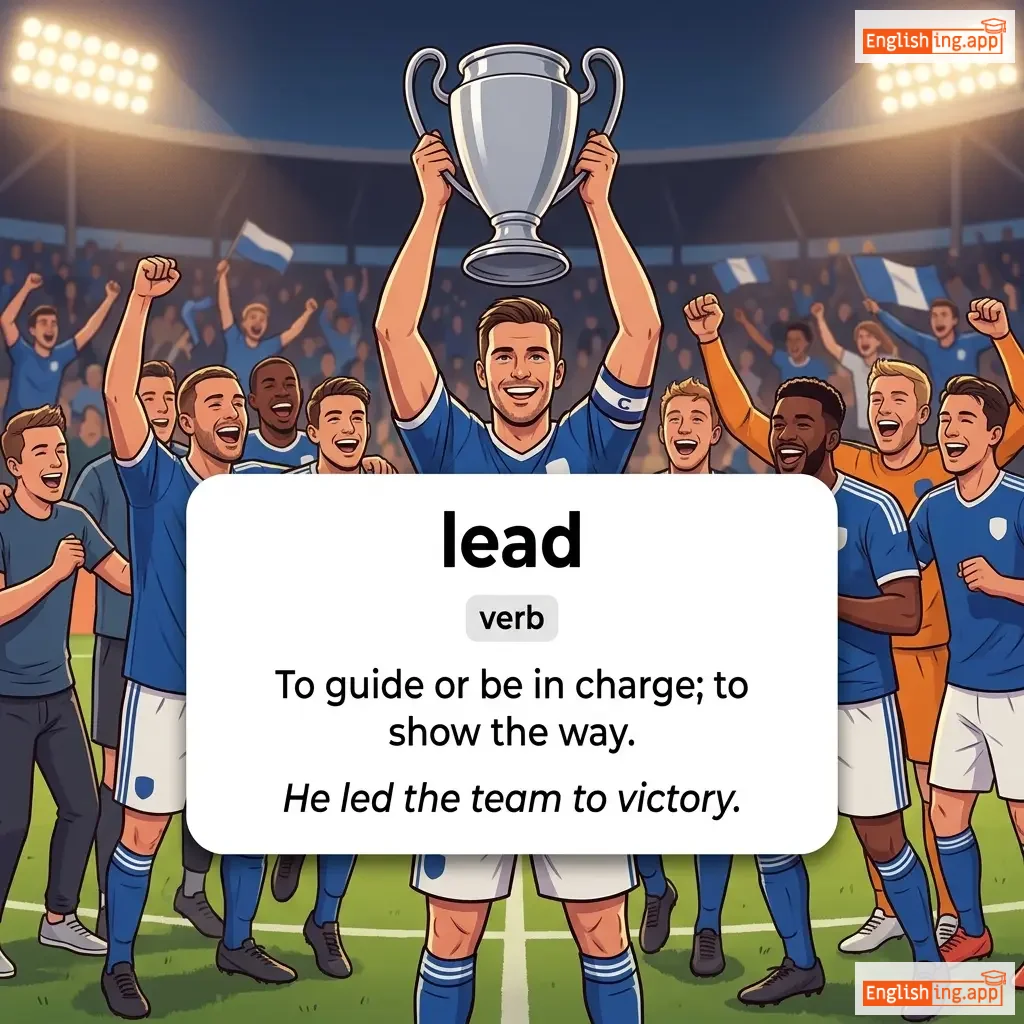
lead definition card — visual illustration of the meaning
verb
/liːd/
diriger (diriger)

To guide or be in charge; to show the way.

"He led the team to victory."

"Il a dirigé l'équipe vers la victoire." (Il a dirigé l'équipe vers la victoire.)
noun
/liː/
prairie (prairie)

An open area of grassy or arable land; a meadow.

"The cottage was surrounded by a quiet lea."

"Le cottage était entouré d'une prairie tranquille." (Le cottage etait entoure d'une prairie tranquille.)
adjective
/ˈleɪ.zi/
paresseux; fainéant (paresseux; faineant)

idle; unwilling to work; sluggish

"He was too lazy to clean his room on the weekend."

"Il était trop paresseux pour nettoyer sa chambre le week-end." (Il etait trop paresseux pour nettoyer sa chambre le week-end.)
noun
/ˈleɪaʊt/
mise en page (mise en page)

the arrangement or design of something, especially the arrangement of elements in a book, webpage, or room

"The designer presented a new layout for the website that was much more user-friendly."

"Le designer a présenté une nouvelle mise en page pour le site web qui était beaucoup plus conviviale." (Le designer a presente une nouvelle mise en page pour le site web qui etait beaucoup plus conviviale.)
noun
/ˈleɪər/
couche (kush)

A sheet, thickness, or coating of something that lies over or under a surface.

"The cake had a layer of cream between the sponges."

"Le gâteau avait une couche de crème entre les éponge." (Le gâteau avait une couche de crème entre les éponge.)
noun
/ˈleɪmən/
profane (profane)

A person without professional or specialized knowledge in a particular subject.

"To a layman, the medical explanation was confusing."

"Pour un profane, l'explication médicale était déroutante." (Pour un profane, l'explication médicale était déroutante.)
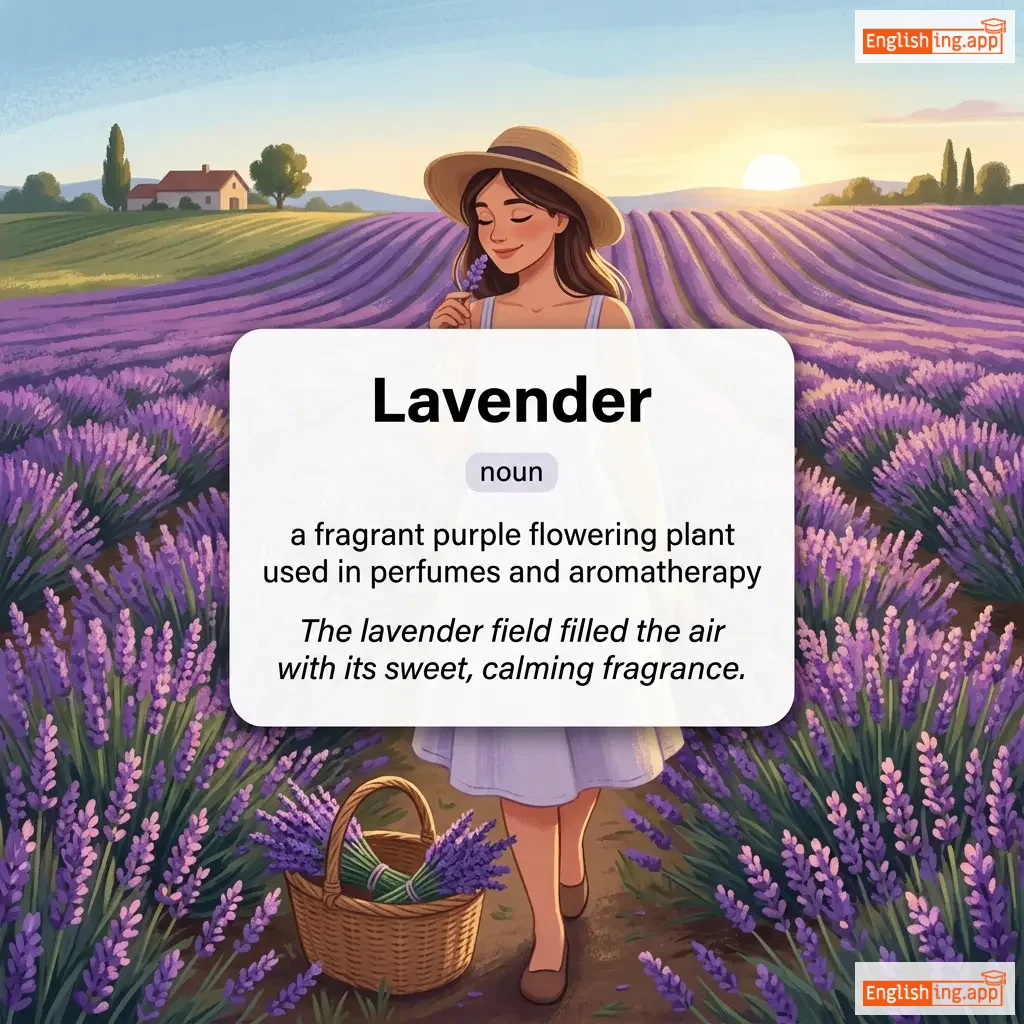
Lavender definition card — visual illustration of the meaning
noun
/ˈlæv.ən.dər/
lavande (lavande)

a fragrant purple flowering plant used in perfumes and aromatherapy

"The lavender field filled the air with its sweet, calming fragrance."

"Le champ de lavande a rempli l'air de son parfum sucré et apaisant." (Le champ de lavande a rempli l'air de son parfum sucré et apaisant.)
noun
/ˈleɪˌpɜːrsən/
la personne ordinaire (la personne ordinaire)

A person who is not a member of the clergy or does not have specialized knowledge in a subject.

"The judge explained the law so that the layperson could understand."

"Le juge a expliqué la loi de manière à ce que la personne ordinaire puisse la comprendre." (Le juge a expliqué la loi de manière à ce que la personne ordinaire puisse la comprendre.)