वोकैबुलरीज

इंग्लिश वोकैबुलरी डिस्कवर, लर्न और मास्टर करें

noun
/ˌlæs.əˈreɪ.ʃən/
कटाव (katav)

a deep cut or tear in skin or flesh

"He needed stitches for a laceration on his leg."

"उसे अपनी टांग पर कटाव के लिए टांके चाहिए थे।" (Use apni taang par katav ke liye taakhe chahiye the.)
adjective
/ˈlæk.rɪ.moʊs/
आंसू से भरा हुआ, शोकपूर्ण (aansoo se bhara hua, shokpoorn)

tearful or given to weeping; sad and mournful

"The movie's lachrymose ending left the audience in tears."

"फ़िल्म के शोकपूर्ण अंत ने दर्शकों को आँसुओं में डूबो दिया।" (Film ke shokpoorn ant ne darshako ko aansuon mein dooba diya.)
noun/verb
/læk/
कमी (kami)

The state of being without or not having enough of something.

"He failed the exam due to a lack of preparation."

"वह तैयारी की कमी के कारण परीक्षा में असफल हो गया।" (Wah taiyari ki kami ke karan pariksha mein asafal ho gaya.)
adjective
/ˌlækəˈdeɪzɪkəl/
उदासीन या आलसी (udaaseen ya aalsi)

lacking enthusiasm, energy, or determination; careless or lazy

"His lackadaisical attitude toward work annoyed his boss."

"उसका आलसी रवैया काम के प्रति उसके बॉस को परेशान करता था।" (Uska aalsi ravaiya kaam ke prati uske boss ko pareshan karta tha.)
noun
/ˈlæki/
चाकर (chakar)

a person who is overly willing to serve or obey someone else

"He treated his assistant like a mere lackey."

"उसने अपने सहायक के साथ एक मामूली चाकर की तरह व्यवहार किया।" (usne apne sahayak ke saath ek maamooli chakar ki tarah vyavhaar kiya.)
adjective
/ˈlækɪŋ/
कमी (kami)

not having enough of something; missing

"His report was lacking in detail."

"उसकी रिपोर्ट में विस्तार की कमी थी।" (Uski report mein vistar ki kami thi.)
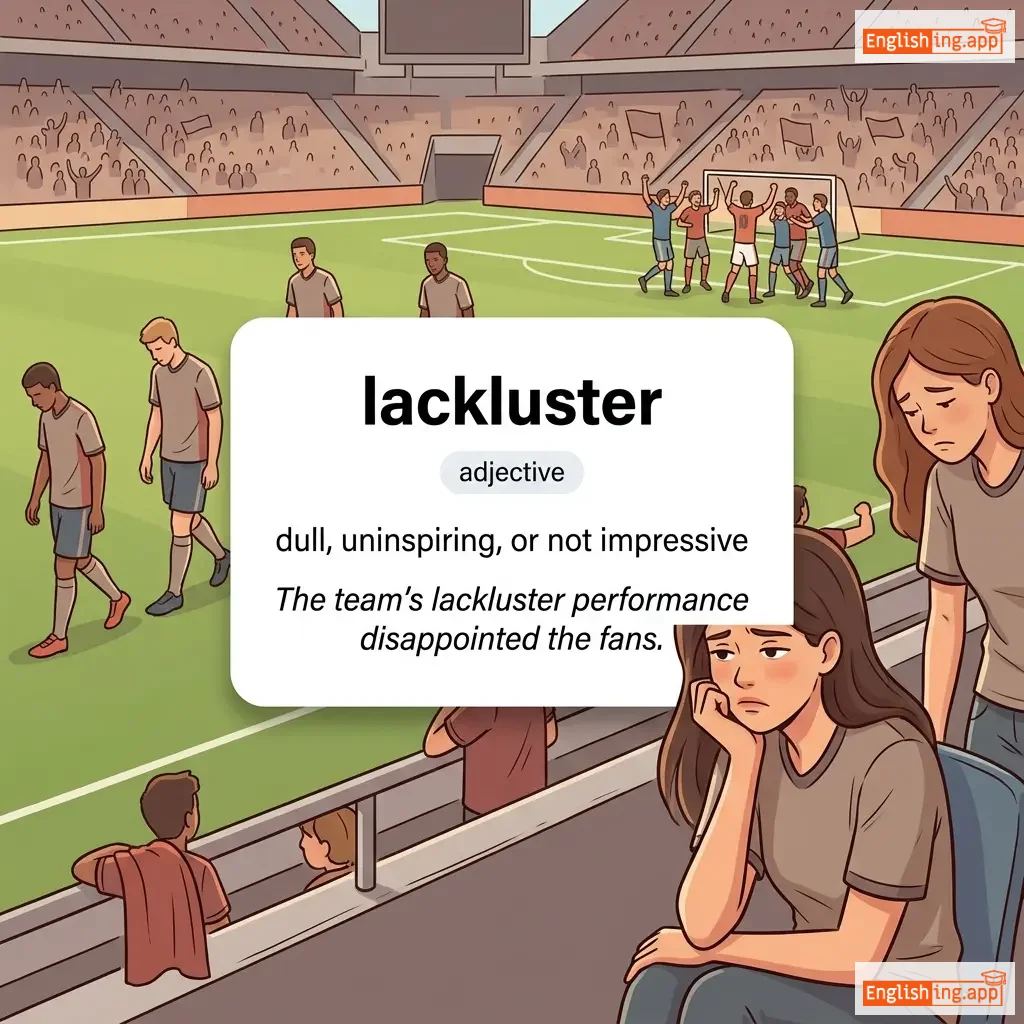
lackluster definition card — visual illustration of the meaning
adjective
/ˈlækˌlʌstər/
निरुत्साही या सामान्य (nirutsahi ya samanya)

dull, uninspiring, or not impressive

"The team's lackluster performance disappointed the fans."

"टीम का निरुत्साही प्रदर्शन प्रशंसकों को निराश कर गया।" (Team ka nirutsahi pradarshan prashansako ko nirash kar gaya.)
laconic definition card — visual illustration of the meaning
adjective
/ləˈkɒnɪk/
संक्षिप्त (sankshipt)

using very few words; concise to the point of seeming rude or mysterious

"His laconic reply ended the conversation quickly."

"उसका संक्षिप्त जवाब बातचीत को जल्दी समाप्त कर दिया।" (uska sankshipt jawab baatcheet ko jaldi samaapt kar diya.)
noun
/lækˈteɪʃən/
दूध उत्पादन (doodh utpadan)

the secretion of milk by the mammary glands of female mammals

"The doctor explained that lactation is a natural process after childbirth."

"डॉक्टर ने समझाया कि प्रसव के बाद दूध उत्पादन एक स्वाभाविक प्रक्रिया है।" (doktor ne samjhaya ki prasav ke baad doodh utpadan ek swabhavik prakriya hai.)
adjective
/ˈlæk.ti.əl/
दूध से संबंधित या दूध जैसा (doodh se sambandhit ya doodh jaisa)

Relating to or resembling milk; conveying chyle or milky fluid.

"The lacteal vessels in the small intestine absorb dietary fats."

"छोटे आंत में लैक्टियल वाहिकाएं आहार वसा अवशोषित करती हैं।" (chhote aant mein lacteal vahiikayein aahaar vasa avashoshit karti hain.)
adjective
/ˈlæk.tɪk/
दूध या लैक्टिक एसिड से संबंधित (dudh ya lactic acid se sambandhit)

Relating to milk or lactic acid.

"Intense exercise can lead to a buildup of lactic acid in the muscles."

"गहन व्यायाम से मांसपेशियों में लैक्टिक एसिड का जमाव हो सकता है।" (Gahan vyayam se maanspeshiyon mein lactic acid ka jamav ho sakta hai.)
noun
/læd/
लड़का (ladka)

a boy or young man; a male youth

"The young lad helped his father in the shop."

"उस युवा लड़के ने अपने पिता की दुकान में मदद की।" (us yuva ladke ne apne pita ki dukaan mein madad ki)
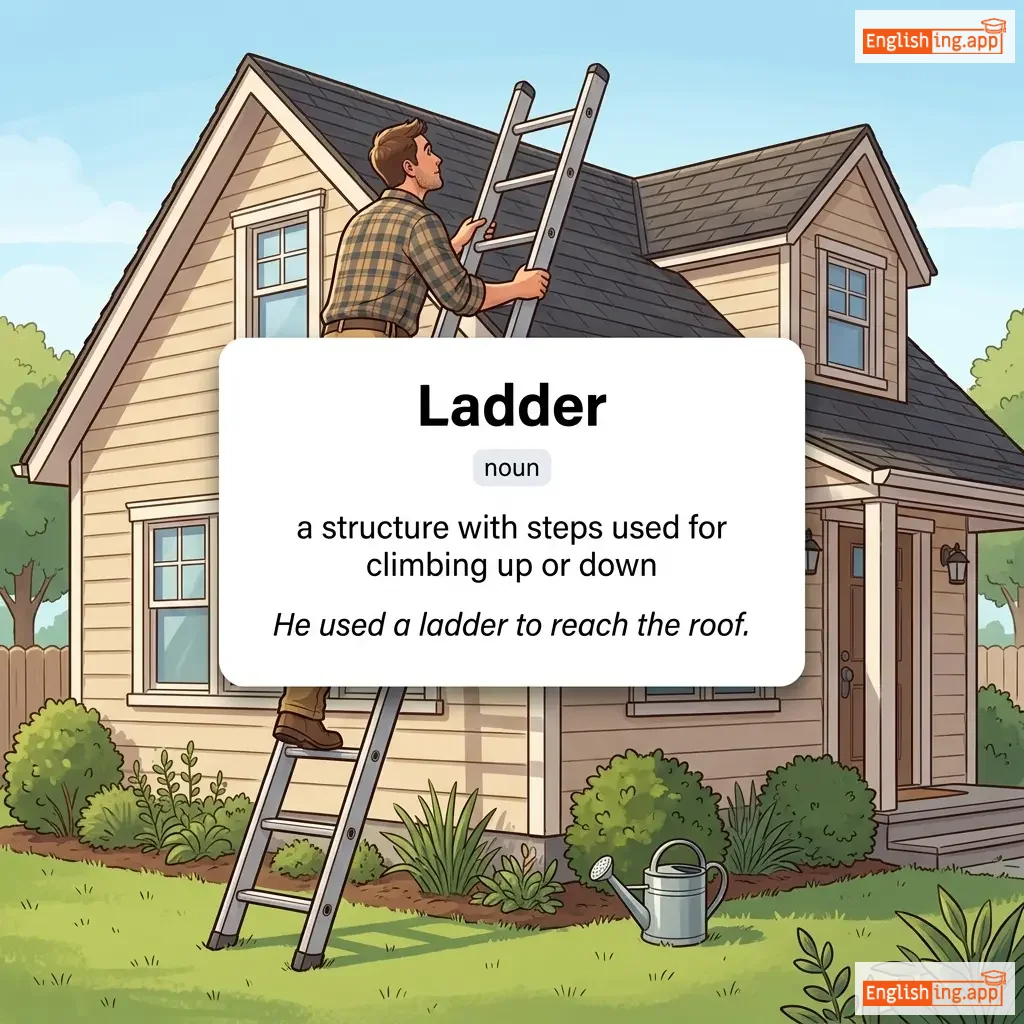
Ladder definition card — visual illustration of the meaning
noun
/ˈlædər/
सीढ़ी (seedhi)

a structure with steps used for climbing up or down

"He used a ladder to reach the roof."

"उसने छत तक पहुँचने के लिए एक सीढ़ी का उपयोग किया।" (Usne chhat tak pahuchne ke liye ek seedhi ka upyog kiya.)
noun
/ˈlæd.i/
छोटा लड़का (chhota ladka)

A young boy or lad.

"The old man gave the young laddie a kind smile."

"वृद्ध आदमी ने छोटे लड़के को एक दयालु मुस्कान दी।" (Vriddh aadmi ne chhote ladke ko ek dayalu muskaan dee.)
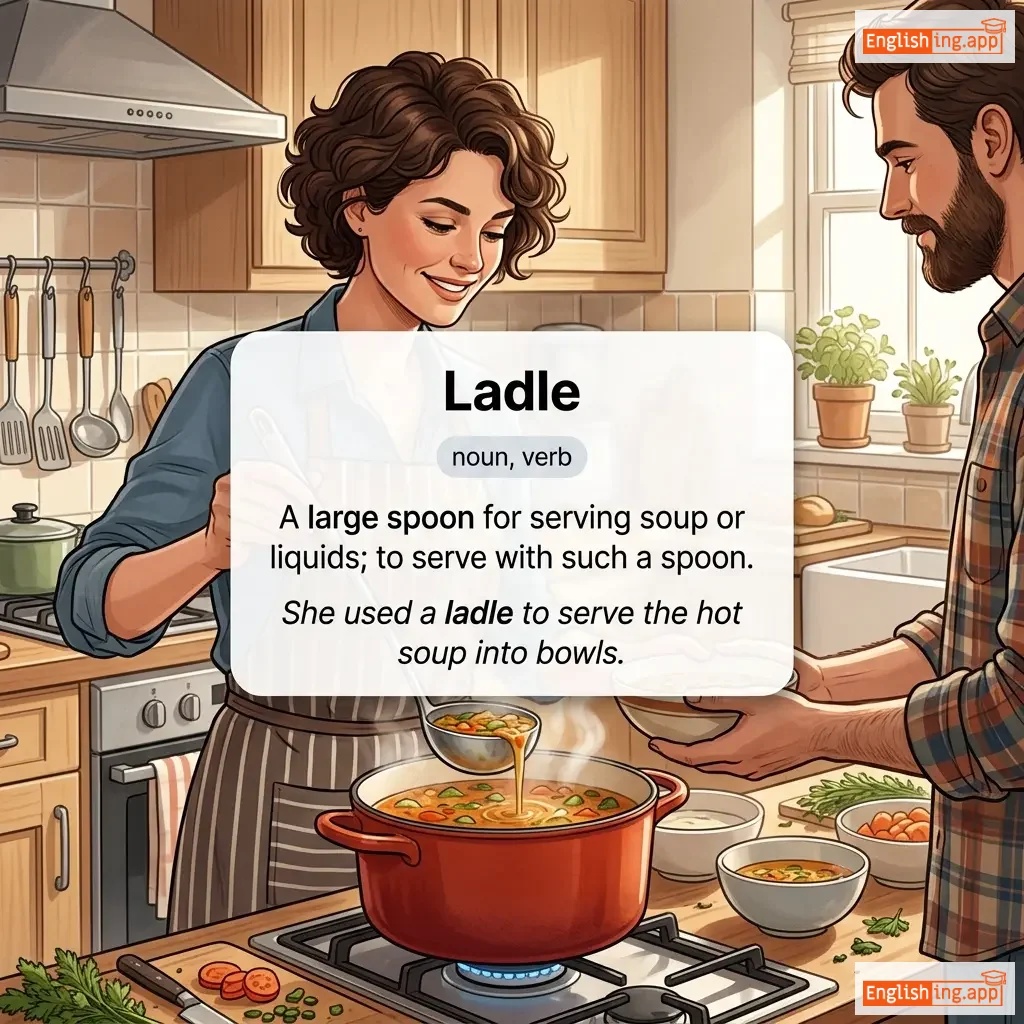
Ladle definition card — visual illustration of the meaning
noun, verb
/ˈleɪ.dl̩/
खुशी (khushi)

A large spoon for serving soup or liquids; to serve with such a spoon.

"She used a ladle to serve the hot soup into bowls."

"जब उसने पुरस्कार प्राप्त किया तो वह अपनी खुशी छिपा नहीं सकी।" (Jab usne puraskar prapt kiya to wah apni khushi chhupa nahi sakee.)
noun
/ˈleɪdi/
खुशी (khushi)

A polite or formal way of referring to a woman.

"The lady at the counter was very helpful."

"जब उसे पुरस्कार मिला, तो वह अपनी खुशी नहीं छुपा पाई।" (Jab use puraskar mila, to woh apni khushi nahin chhupa paayi.)
verb, noun
/læɡ/
धीमा होना या विलंब करना (dheema hona ya vilamb karna)

To fall behind in movement, progress, or development; a delay or period of falling behind.

"The old computer tends to lag when running new software."

"पुराना कंप्यूटर नया सॉफ़्टवेयर चलाते समय लैग करता है।" (Purana computer naya software chalate samay lag karta hai.)
noun
/ˈlæɡərd/
आलसी व्यक्ति (aalsi vyakti)

A person or thing that is slow or falls behind others.

"The company has been a laggard in adopting new technology."

"कंपनी नई तकनीक अपनाने में पिछड़ी हुई है।" (Company nayi takneek apnane mein pichhadi hui hai.)
noun
/ˈlænjæp/
अतिरिक्त उपहार (atirikt upohar)

A small gift or bonus given by a seller to a customer.

"The shopkeeper offered a piece of candy as a lagniappe."

"दुकानदार ने एक टॉफी एक अतिरिक्त उपहार के रूप में दी।" (Dukandar ne ek toffee ek atirikt upohar ke roop mein dee.)
noun
/ləˈɡuːn/
झील (jheel)

A shallow body of water separated from the sea by sandbars or reefs.

"We swam in the calm waters of the lagoon."

"हमने लैगून के शांत पानी में तैराकी की।" (Hamne lagoon ke shaant paani mein tairaki ki.)
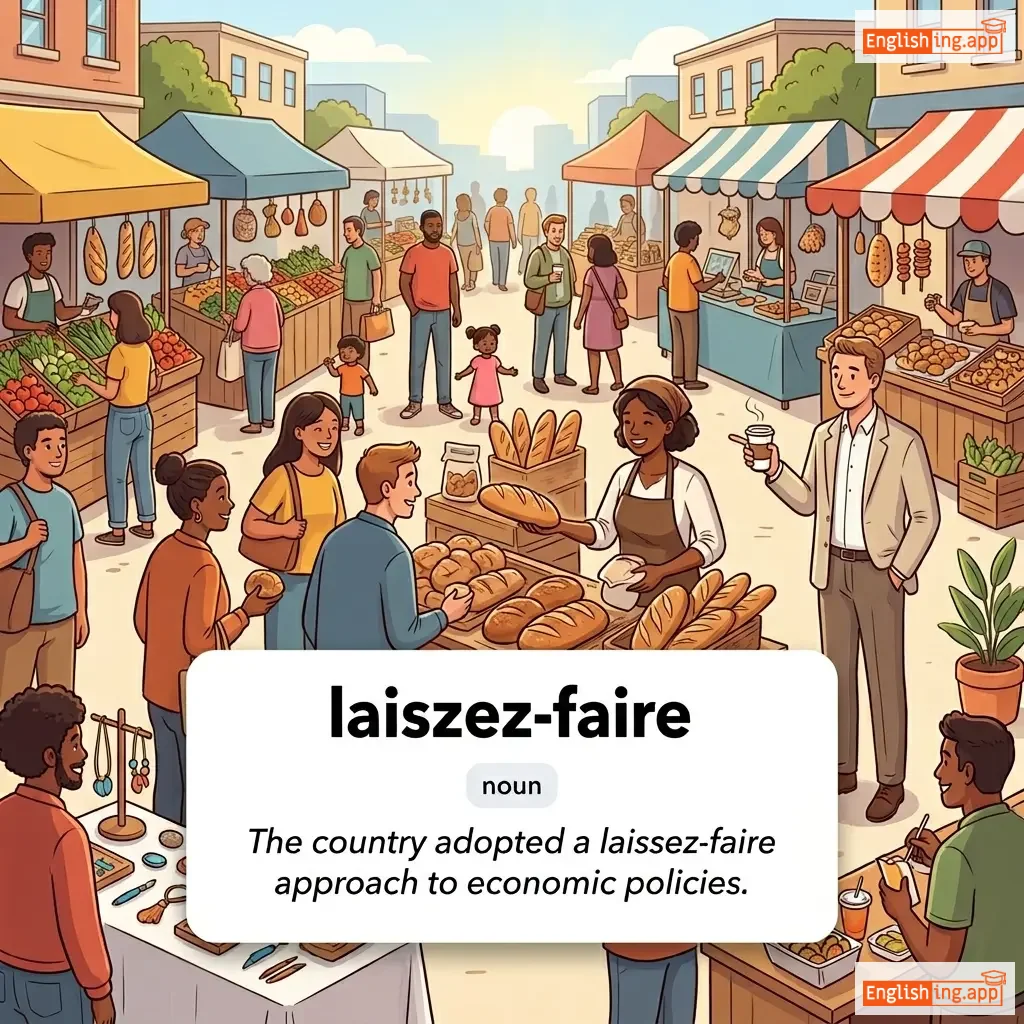
laissez-faire definition card — visual illustration of the meaning
noun
/ˌlɛ.seɪˈfɛər/
न्यूनतम हस्तक्षेप नीति (nyoonatam hastakshep neeti)

A free-market policy of minimal government intervention in economic affairs, characterized by non-interventionism and capitalism.

"The country adopted a laissez-faire approach to economic policies."

"देश ने आर्थिक नीतियों में लेसे-फेयर दृष्टिकोण अपनाया।" (Desh ne arthik neetiyon mein lese-fair drishtikon apnaya.)
noun
/ˈleɪ.ɪ.ti/
धार्मिक सामान्य सदस्य (dharmik samanya sadasya)

Ordinary members of a religious community who are not clergy.

"The church welcomed the laity to participate in the event."

"गिरजाघर ने सामान्य सदस्यों को कार्यक्रम में भाग लेने के लिए स्वागत किया।" (Girjaghar ne samanya sadasyon ko karyakram mein bhag lene ke liye swagat kiya.)
noun
/leɪk/
झील (jheel)

A large area of water surrounded by land.

"They enjoyed boating on the lake during summer."

"वे गर्मी के दौरान झील पर नाव चलाने का आनंद ले रहे थे।" (ve garmi ke dauran jheel par naav chalane ka anand le rahe the.)
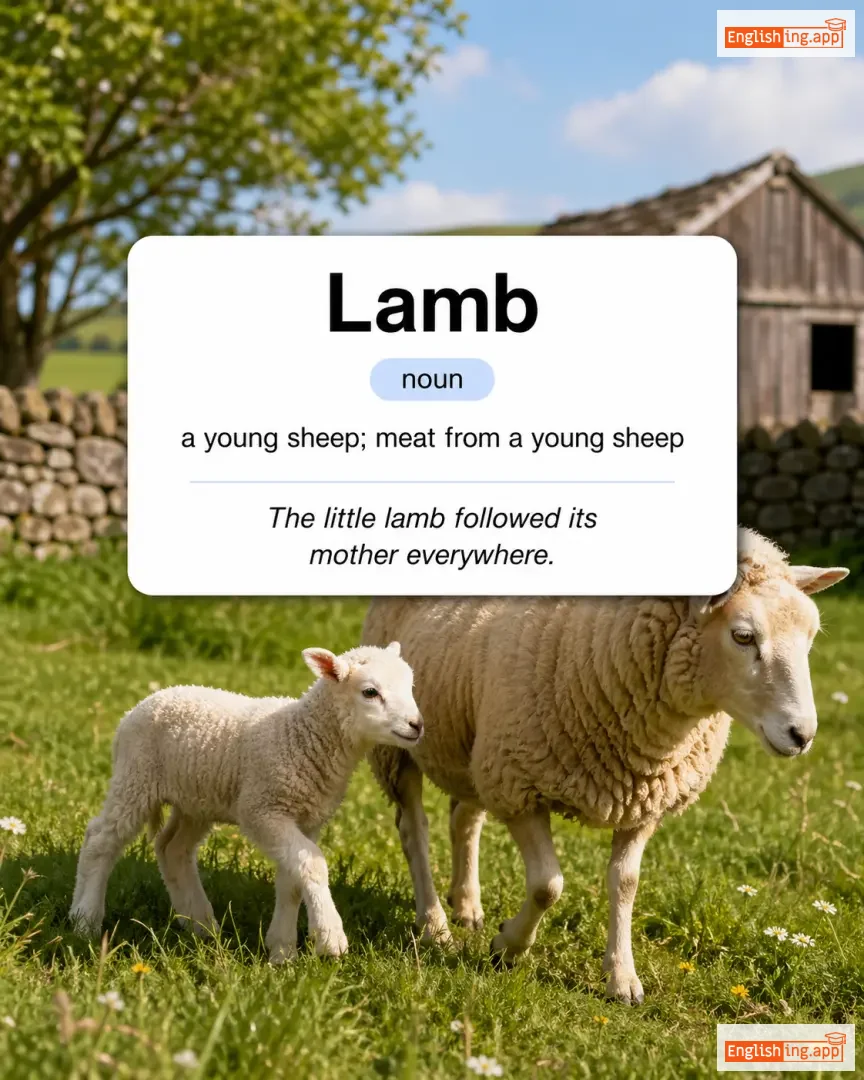
Lamb definition card — visual illustration of the meaning
noun
/læm/
मेमना (memna)

a young sheep; meat from a young sheep

"The little lamb followed its mother everywhere."

"छोटा मेमना अपनी माँ के पीछे हर जगह गया।" (chhota memna apni maan ke peeche har jagah gaya)
verb
/læmˈbæst/
कड़ी आलोचना करना (kadi alochana karna)

To criticize harshly or to beat severely.

"The coach lambasted the team for their poor performance."

"कोच ने टीम की खराब प्रदर्शन के लिए उनकी कड़ी आलोचना की।" (Coach ne team ki kharab performance ke liye unki kadi alochana ki.)
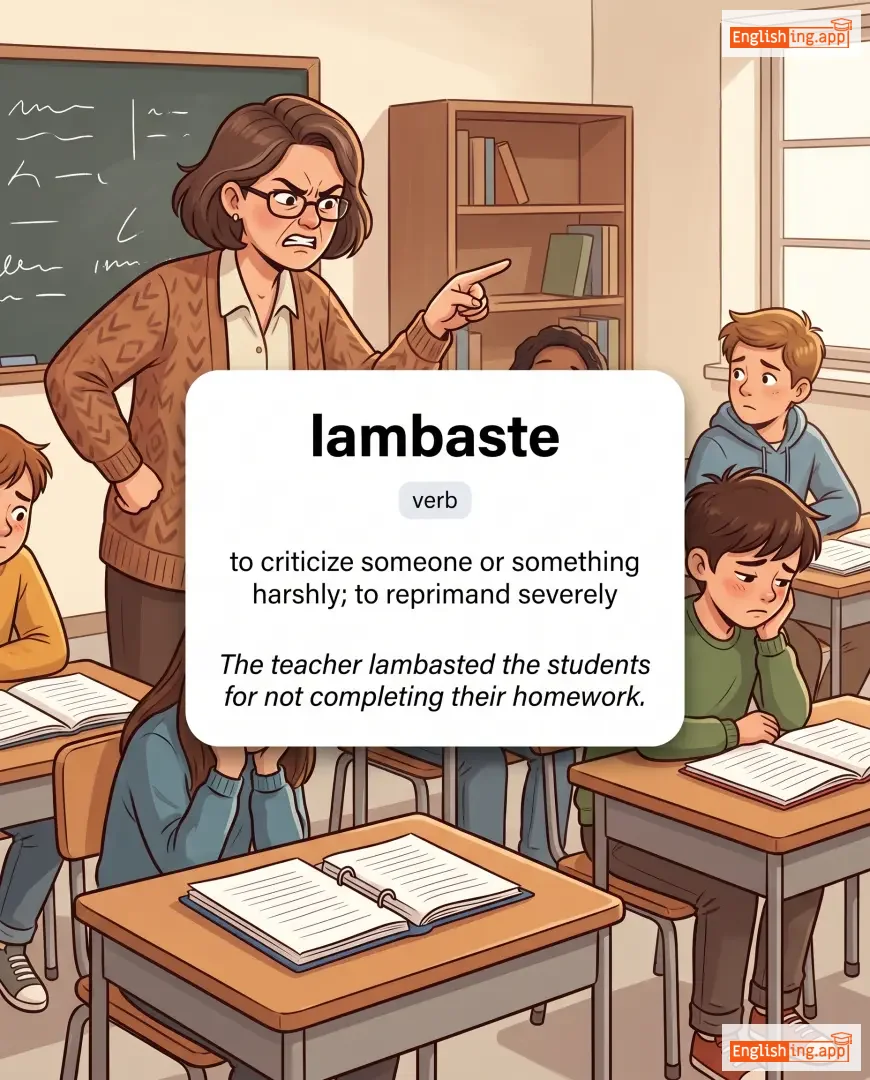
lambaste definition card — visual illustration of the meaning
verb
/læmˈbeɪst/
कड़ी आलोचना करना (kadi alochna karna)

to criticize someone or something harshly; to reprimand severely

"The teacher lambasted the students for not completing their homework."

"टीचर ने छात्रों को उनके होमवर्क न करने के लिए कड़ी आलोचना की।" (Teacher ne chatron ko unke homework na karne ke liye kadi alochna ki.)
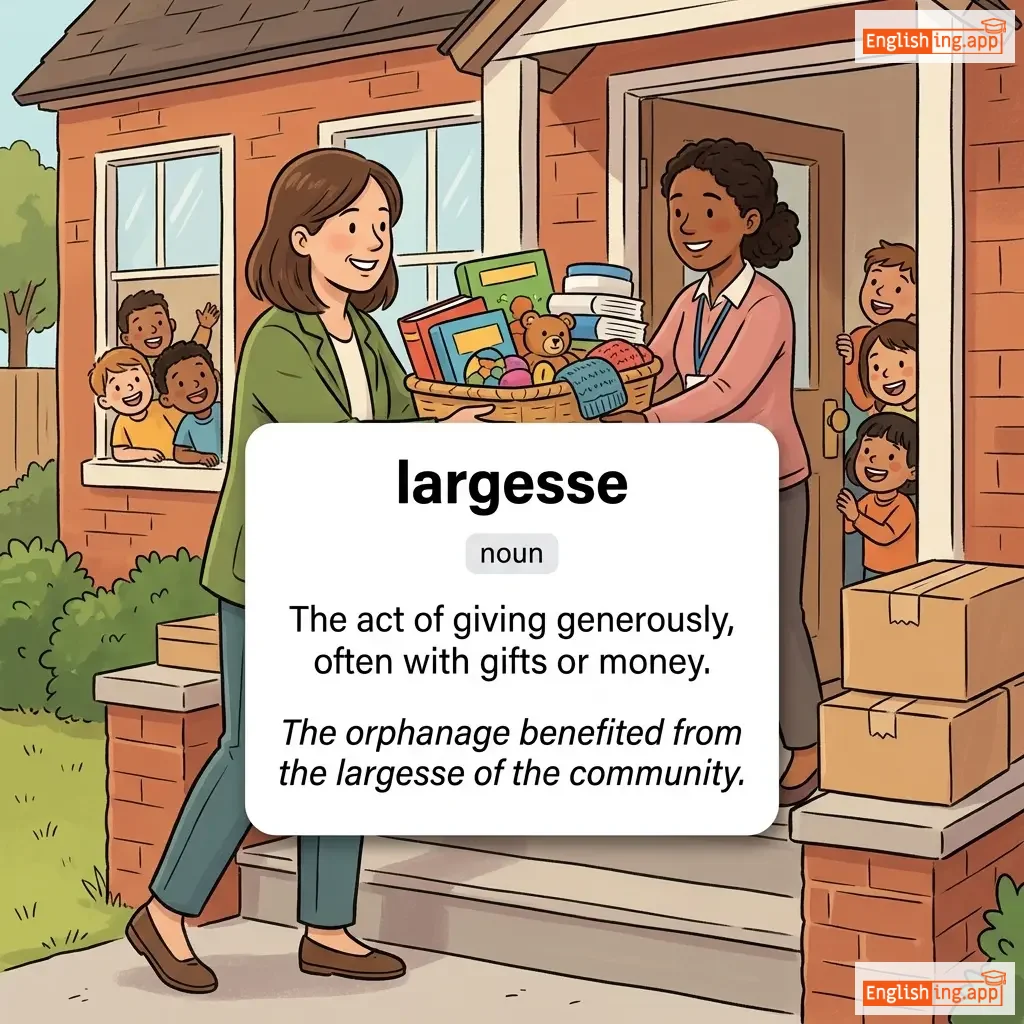
largesse definition card — visual illustration of the meaning
noun
/lɑːrˈʒɛs/
उदारता (udarata)

The act of giving generously, often with gifts or money.

"The orphanage benefited from the largesse of the community."

"अनाथालय को समुदाय की उदारता से लाभ हुआ।" (Anathalaya ko samudaay ki udarata se laabh hua.)
adjective
/læŋk/
लंबा और पतला (lamba aur patla)

Tall, thin, and often awkward in appearance.

"The lank teenager towered over his classmates."

"लंबा पतला किशोर अपने सहपाठियों से ऊँचा था।" (Lamba patla kishor apne sahpathiyon se uncha tha.)
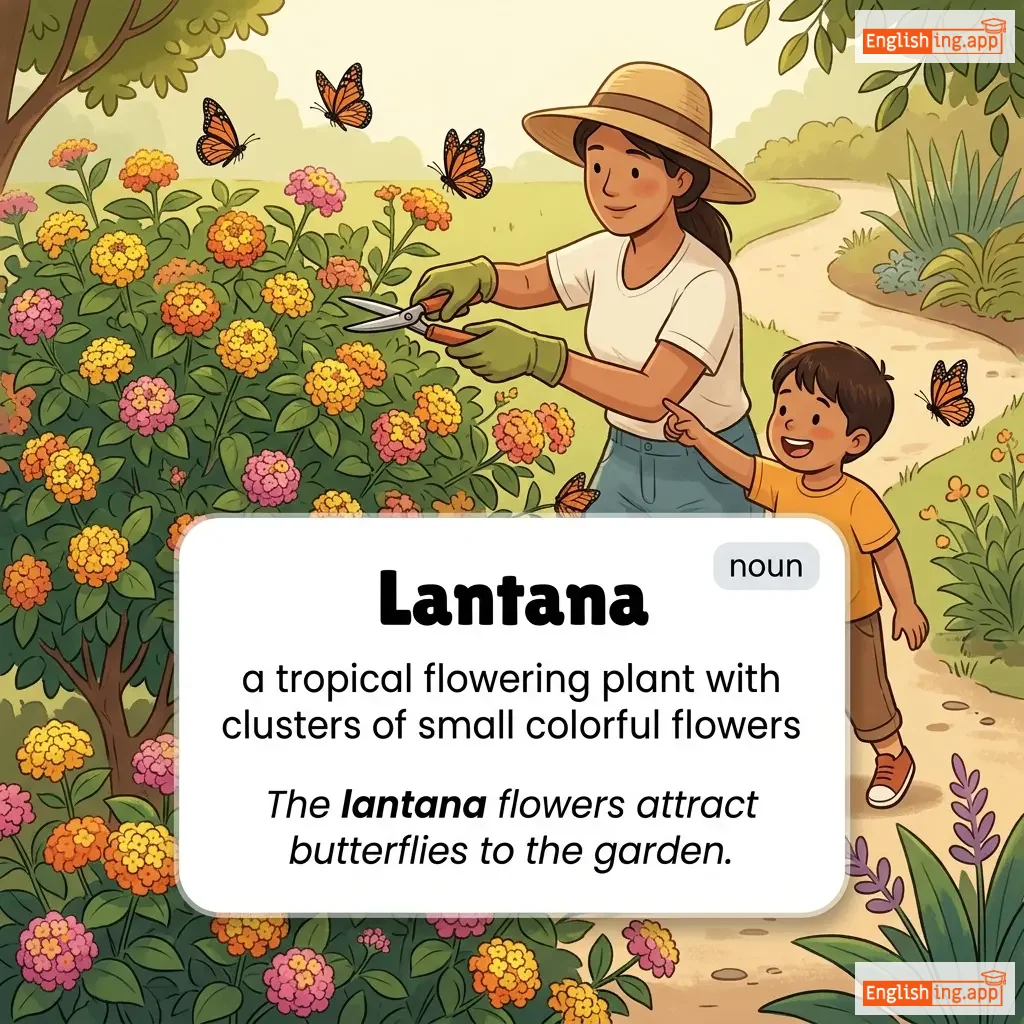
Lantana definition card — visual illustration of the meaning
noun
/lænˈtɑː.nə/
लांटाना (lantana)

a tropical flowering plant with clusters of small colorful flowers

"The lantana flowers attract butterflies to the garden."

"लांटाना फूल बगीचे में तितलियों को आकर्षित करते हैं।" (lantana phool bageeche mein titliyon ko aakarshit karte hain)
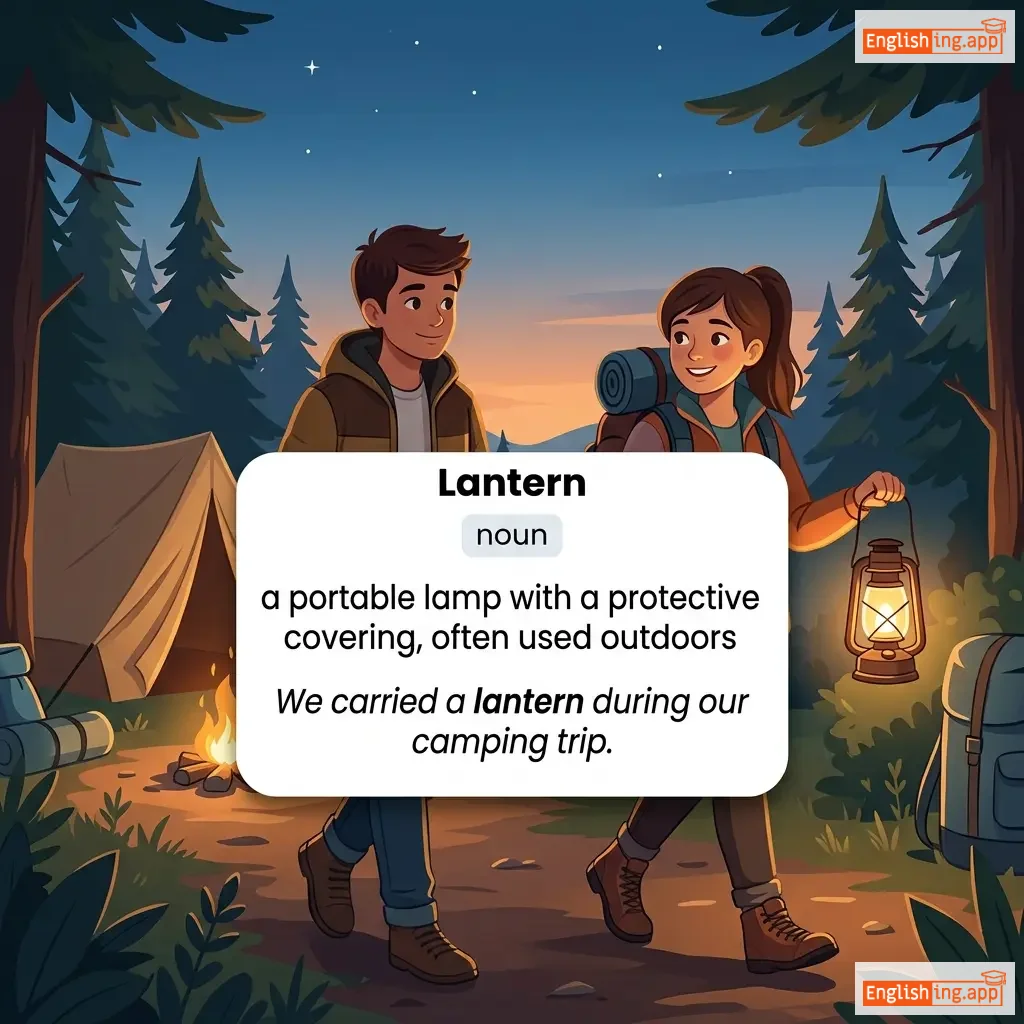
Lantern definition card — visual illustration of the meaning
noun
/ˈlæn.tərn/
लालटेन (laalten)

a portable lamp with a protective covering, often used outdoors

"We carried a lantern during our camping trip."

"हमने अपने कैंपिंग ट्रिप के दौरान एक लालटेन ली थी।" (hamne apne camping trip ke dauran ek laalten li thi)
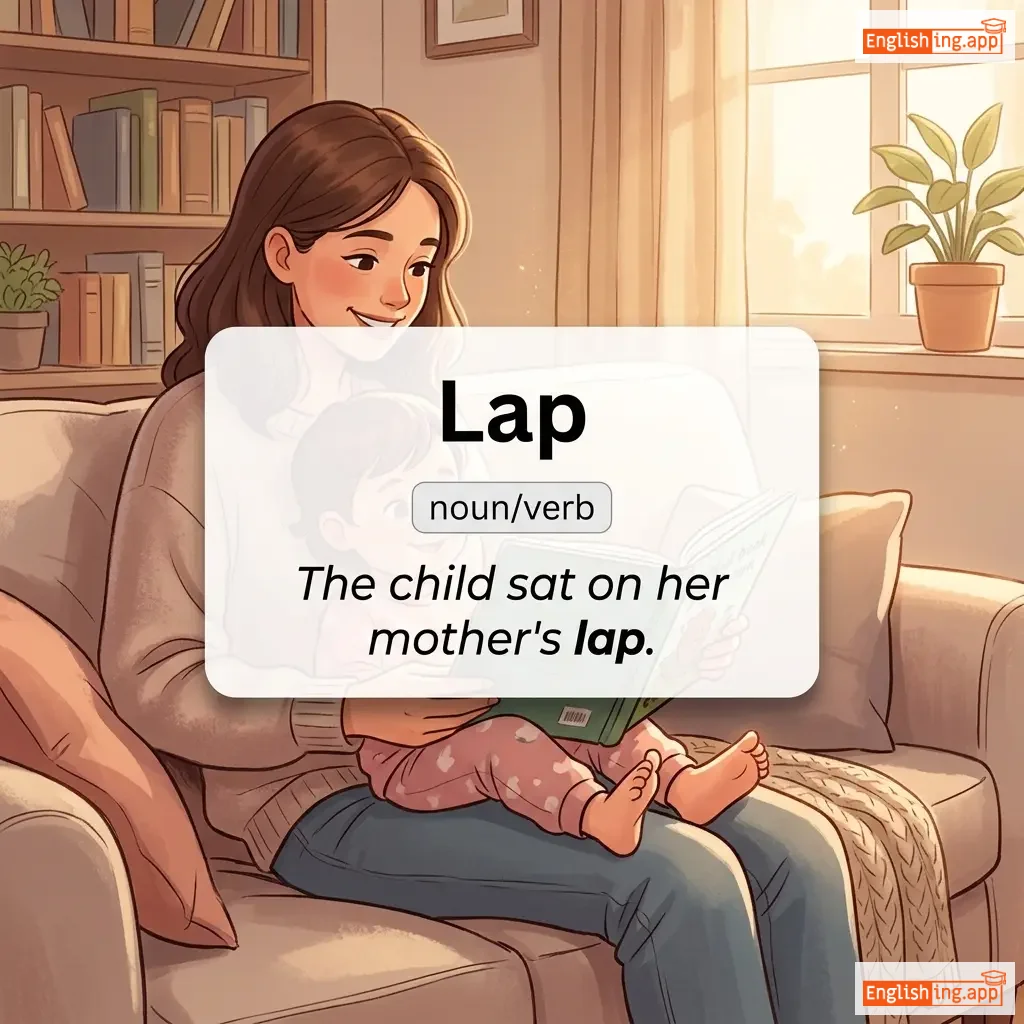
Lap definition card — visual illustration of the meaning
noun/verb
/læp/
खुशी (khushi)

As noun: the flat area between the waist and knees of a seated person; As verb: to drink liquid with the tongue.

"The child sat on her mother's lap."

"जब उसने पुरस्कार प्राप्त किया, तो वह अपनी खुशी छुपा नहीं सकी।" (Jab usne puraskaar prapt kiya, to vah apni khushi chhupa nahi saki.)
noun/adjective
/ˈlæpɪˌdɛri/
रत्नकला विशेषज्ञ (ratnakala visheshagya)

As noun: a person who cuts, polishes, or engraves precious stones; As adjective: relating to such work.

"The museum displayed lapidary tools used in ancient times."

"संग्रहालय में प्राचीन समय में उपयोग किए गए रत्नकला विशेषज्ञ के उपकरण प्रदर्शित किए गए थे।" (Sangrahalay mein prachin samay mein upyog kiye gaye ratnakala visheshagya ke upkaran pradarshit kiye gaye the.)
noun/verb
/læps/
त्रुटि (truti)

As noun: a temporary failure or slip; As verb: to end or fall into disuse.

"She apologized for her lapse in judgment."

"वह अपने निर्णय में गलती के लिए माफी मांग रही थी।" (Wah apne nirnay mein galti ke liye maafi maang rahi thi.)
noun
/ˈlɑːrsəni/
चोरी (chori)

The unlawful taking of personal property with intent to deprive the rightful owner of it.

"He was arrested for committing larceny at the store."

"उसे दुकान में चोरी करने के लिए गिरफ्तार किया गया था।" (Use dukaan mein chori karne ke liye giraftar kiya gaya tha.)
noun
/ˈlɑːrdər/
भंडारगृह (bhandargrih)

A place, such as a pantry, where food is stored.

"The larder was full of fresh bread and cheese."

"भंडारगृह ताजा ब्रेड और चीज़ से भरा हुआ था।" (Bhandargrih taza bread aur cheese se bhara hua tha.)
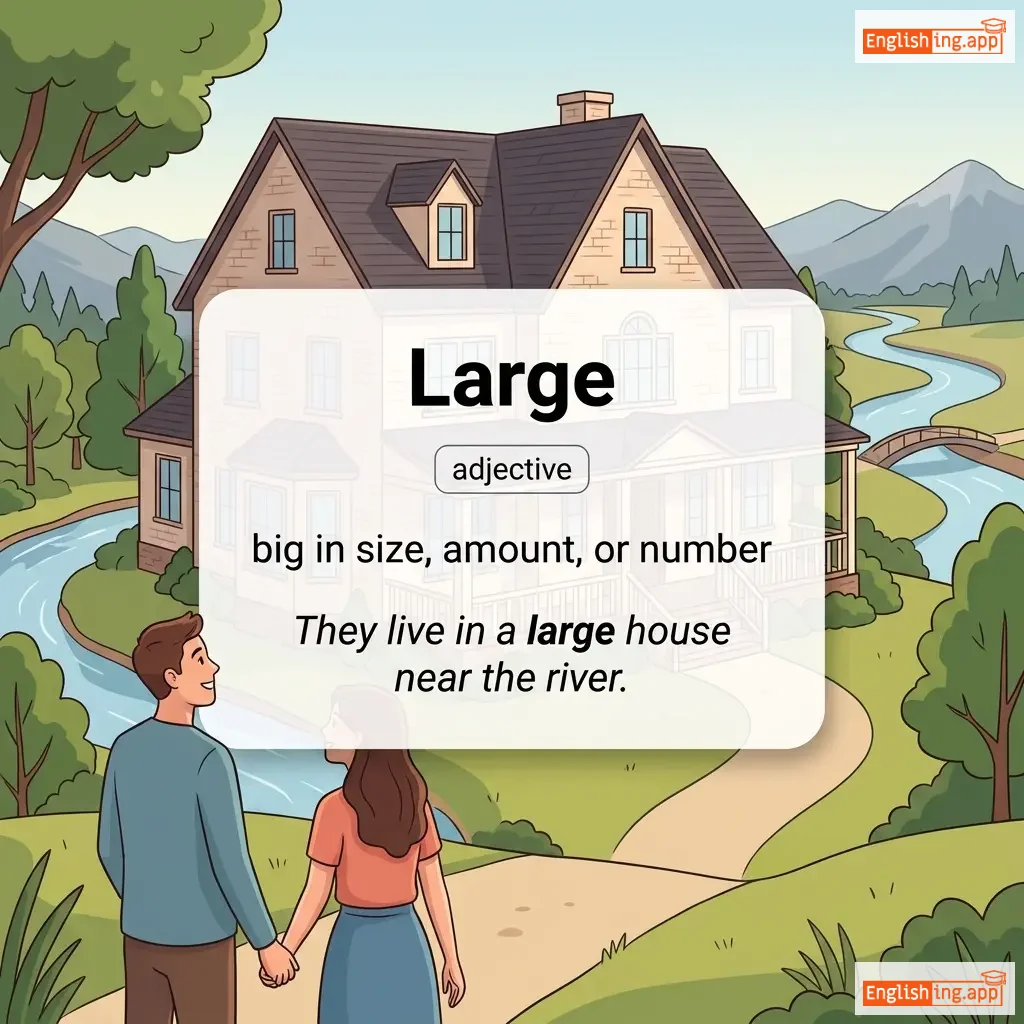
Large definition card — visual illustration of the meaning
adjective
/lɑrdʒ/
बड़ा (bada)

big in size, amount, or number

"They live in a large house near the river."

"वे नदी के पास एक बड़ा घर में रहते हैं।" (Ve nadi ke paas ek bada ghar mein rehte hain.)
adjective
/lɑːrdʒ skeɪl/
विशाल पैमाना (vishaal paimaana)

involving a large number or quantity, or covering a large area

"The company is planning a large-scale expansion into international markets."

"कंपनी अंतरराष्ट्रीय बाजारों में विशाल पैमाना विस्तार की योजना बना रही है।" (Company antarraashtreey baazaaron mein vishaal paimaana vistar ki yojana bana rahi hai.)
adverb
/ˈlɑːrdʒli/
प्रमुख रूप से (pramukh roop se)

to a great extent; mostly or mainly

"The success of the project was largely due to teamwork."

"परियोजना की सफलता मुख्य रूप से टीमवर्क के कारण थी।" (Pariyojana ki safalta mukhya roop se teamwork ke karan thi.)
noun
/lɑːrˈʒes/
उदारता (udarata)

Generosity in giving gifts or money.

"The foundation survived thanks to the largess of wealthy donors."

"धनवान दाताओं की उदारता के कारण फाउंडेशन बच गया।" (Dhanwaan daataon ki udarata ke kaaran foundation bach gaya.)
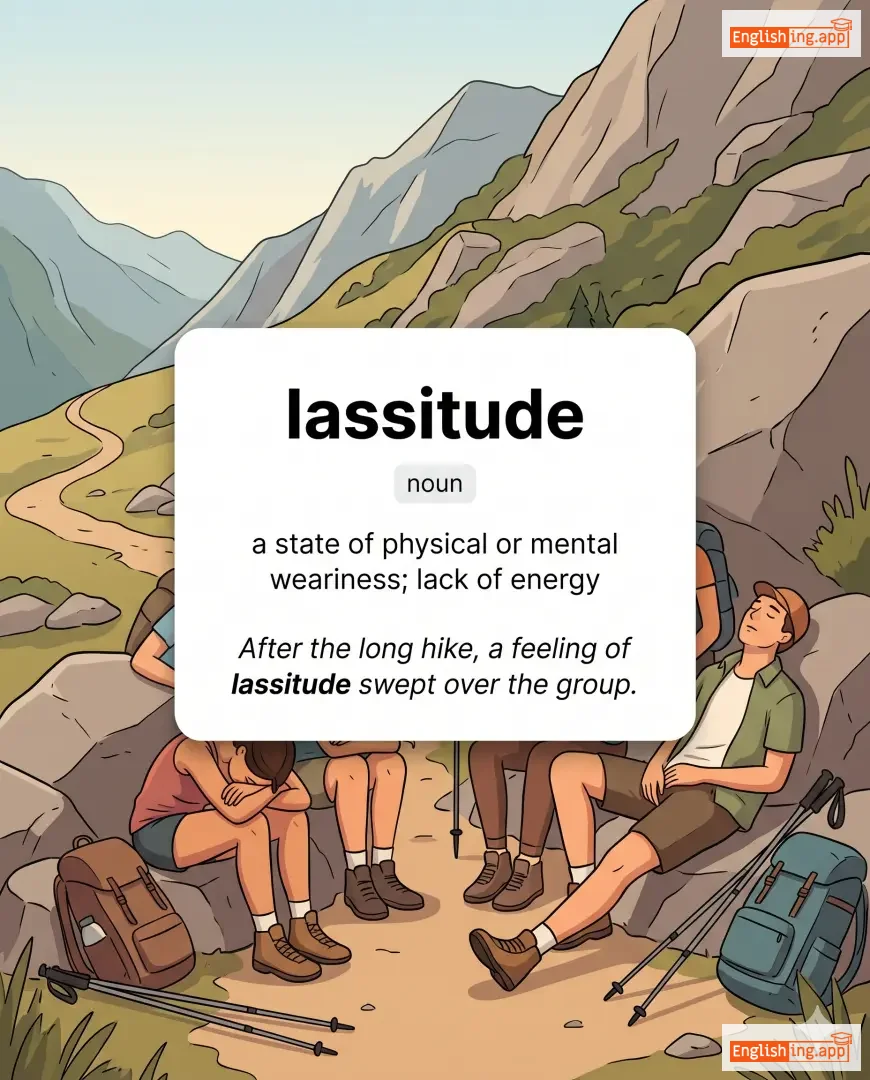
lassitude definition card — visual illustration of the meaning
noun
/ˈlæsɪtjuːd/
थकावट (thakawat)

a state of physical or mental weariness; lack of energy

"After the long hike, a feeling of lassitude swept over the group."

"लंबी पैदल यात्रा के बाद, थकावट का एहसास समूह पर छा गया।" (lambi paidal yatra ke baad, thakawat ka ehsas samuh par chha gaya.)
adjective/adverb
/leɪt/
देरी (deri)

arriving, happening, or done after the expected time

"He arrived late to the meeting."

"वह मीटिंग में देर से आया।" (vah meeting mein der se aaya.)
verb
/lætʃ/
कपाट लगाना/बंद करना (kapat lagana/band karna)

to fasten or close something with a latch

"She latched the door before leaving the house."

"उसने घर छोड़ने से पहले दरवाजा कपाट से बंद कर दिया।" (usne ghar chodne se pehle darwaza kopat se band kar diya.)
adjective
/ˈlæstɪŋ/
स्थायी; टिकाऊ; (sthaayi; tikaau)

enduring for a long time; permanent; durable

"Their friendship had a lasting impact on both their lives."

"उनकी दोस्ती का उनके जीवन पर स्थायी प्रभाव पड़ा।" (Unki dosti ka unke jeevan par sthayi prabhav pada.)
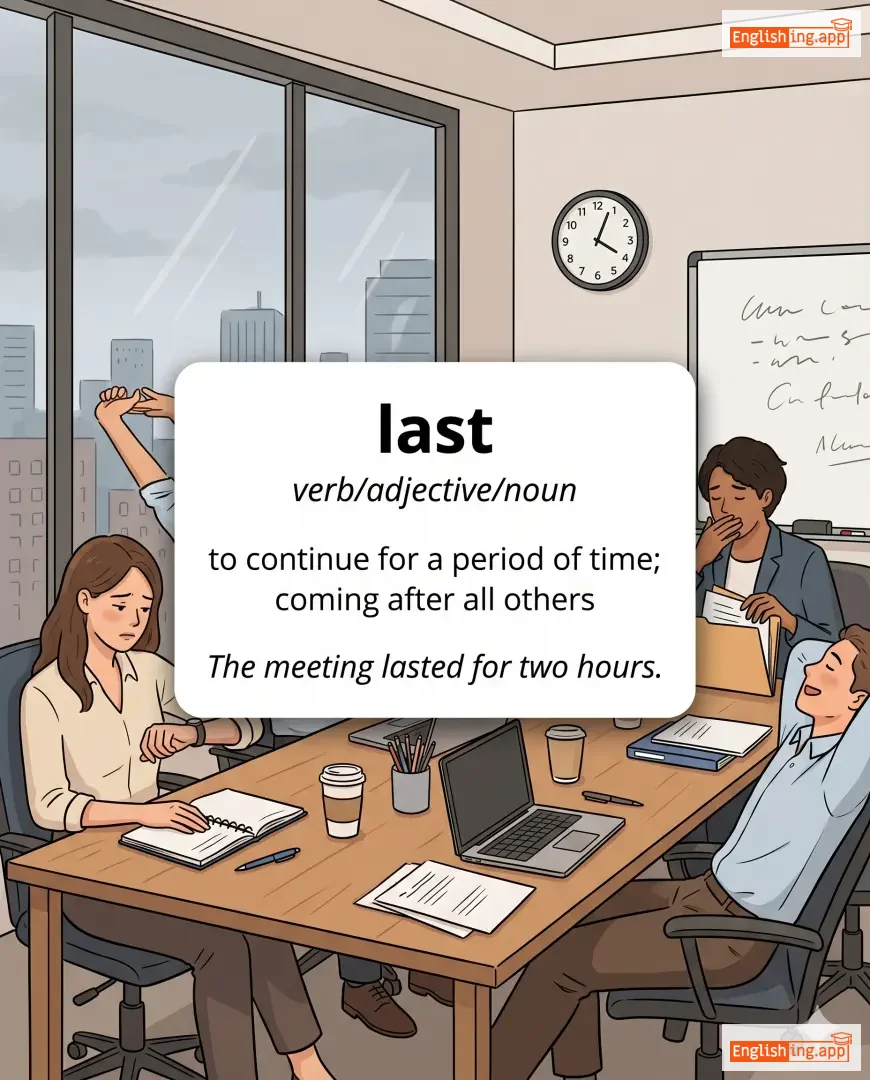
last definition card — visual illustration of the meaning
verb/adjective/noun
/læst/
स्थायी होना / अंतिम (sthaayi hona / antim)

to continue for a period of time; coming after all others

"The meeting lasted for two hours."

"बैठक दो घंटे तक चली।" (Baithak do ghante tak chali.)
noun/verb
/læˈsuː/
लासो (lasso)

a rope with a loop used to catch animals; to catch with such a rope

"The cowboy lassoed the horse quickly."

"काऊबॉय ने घोड़े को जल्दी से लासो किया।" (Cowboy ne ghode ko jaldi se lasso kiya.)
noun
/ˈleɪzər/
लेज़र (lejar)

a device that emits a concentrated beam of light

"The doctor used a laser to perform eye surgery."

"डॉक्टर ने आंखों की सर्जरी करने के लिए एक लेज़र का उपयोग किया।" (Doktor ne aankhon ki sargari karne ke liye ek lejar ka upyog kiya.)
noun
/ˈlæriət/
लariat (lariat)

A long rope with a noose at one end used to catch animals such as cattle or horses.

"The cowboy threw his lariat to catch the stray horse."

"काउबॉय ने अपना लैरियट फेंका ताकि वह भटकते घोड़े को पकड़ सके।" (Cowboy ne apna lariat phenka taki vah bhatakte ghode ko pakad sake.)
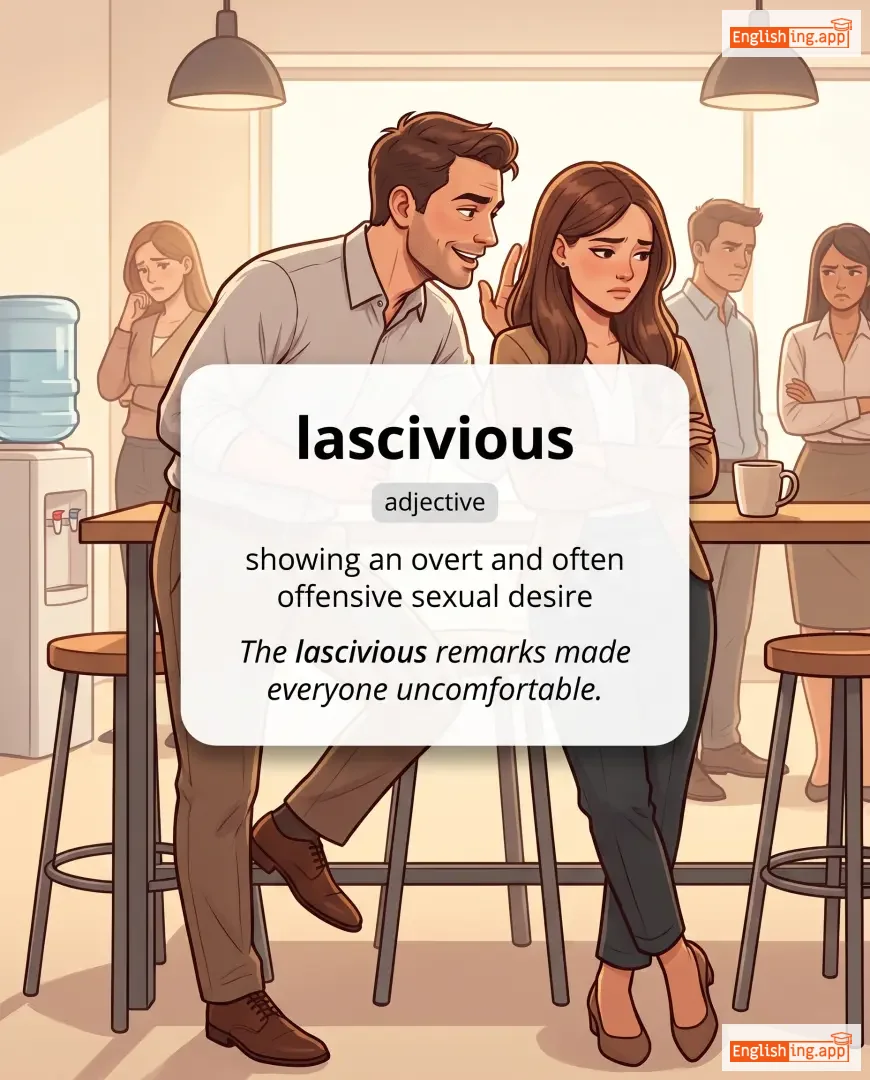
lascivious definition card — visual illustration of the meaning
adjective
/ləˈsɪviəs/
लैंगिक इच्छाओं से भरा हुआ (laisiviyas)

showing an overt and often offensive sexual desire

"The lascivious remarks made everyone uncomfortable."

"लैसिवियस टिप्पणी ने सभी को असहज कर दिया।" (laisiviyas tipanni ne sabhi ko asahaj kar diya.)
noun
/ˈlæŋɡər/
थकावट (thakawat)

A state of tiredness, inertia, or dreamy relaxation.

"The hot afternoon filled her with languor."

"गर्म दोपहर ने उसे थकावट से भर दिया।" (Garm dopahar ne use thakawat se bhar diya.)
verb
/læʃ/
चाबुक मारना/जकड़ना (chabuk marna/jakadna)

to strike with a whip or to fasten tightly

"The sailor lashed the rope to the mast."

"नाविक ने रस्सी को मस्तूल से कसकर बांध दिया।" (navik ne rassi ko mastool se kasker baandh diya.)