語彙集

英単語辞書 | 単語の意味、定義、例文

adjective, verb
/ˈlævɪʃ/
贅沢な、豪華な (lavish)

Rich, elaborate, or luxurious; to bestow something in generous or extravagant quantities.

"They gave her a lavish wedding reception with hundreds of guests."
"彼らは何百人ものゲストを招待して豪華な結婚式のレセプションを開いた。" (Karera wa nanbyakunin mo no gesuto o shoutai shite gōkana kekkonshiki no resepushon o hiraita.)
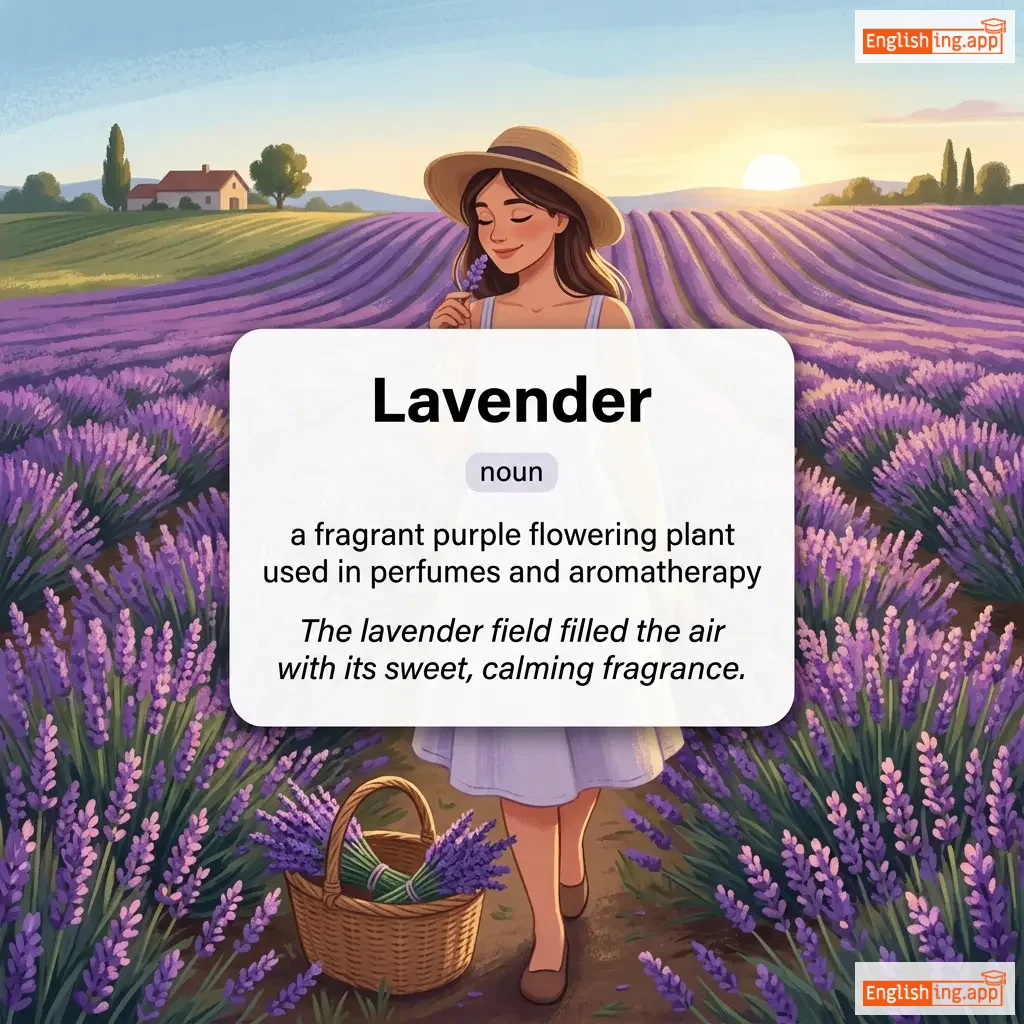
Lavender definition card — visual illustration of the meaning
noun
/ˈlæv.ən.dər/
ラベンダー (rabendā)

a fragrant purple flowering plant used in perfumes and aromatherapy

"The lavender field filled the air with its sweet, calming fragrance."

"ラベンダー畑は、その甘く落ち着く香りで空気を満たしました。" (Rabendā hatake wa, sono amaku ochitsuku kaori de kūki o mitashimashita.)
verb
/leɪv/
洗う (arau)

To wash or bathe.

"She laved her face with cool water."

"彼女は冷たい水で顔を洗った。" (Kanojo wa tsumetai mizu de kao o aratta.)
noun
/ˈlɔːriət/
受賞者 (jushousha)

A person honored with an award for outstanding achievement in a field, especially the arts or sciences.

"The Nobel laureate gave an inspiring lecture on peace."

"ノーベル賞受賞者は平和について感動的な講演を行いました。" (Nōberu shō jushōsha wa heiwa ni tsuite kandō-teki na kōen o okonai mashita.)
laundry definition card — visual illustration of the meaning
noun
/ˈlɔːndri/
幸せ (shiawase)

clothes or linens that need to be washed or have been washed

"She folded the clean laundry neatly."

"彼女は賞を受け取ったとき、幸せを隠すことができませんでした。" (Kanojo wa shō o uketotta toki, shiawase o kakusu koto ga dekimasen deshita.)
noun
/ˈlɔːndrəs/
ランドレス (randoresu)

A woman whose job is washing clothes and linens.

"The laundress delivered the freshly cleaned clothes to the household."

"ランドレスは新しく洗った衣類を家に届けました。" (Randoresu wa atarashiku aratta irui o ie ni todokemashita)
verb
/ˈlɔːndər/
洗濯する / 不法に得たお金の出所を隠す (sentaku suru / fuhou ni eta okane no shussou wo kakusu)

to wash clothes, linens, etc.; or to conceal the origins of money obtained illegally

"She laundered all the dirty clothes on Sunday."
"彼女は日曜日にすべての汚れた衣服を洗いました。" (Kanojo wa nichiyoubi ni subete no yogoreta ifuku wo araimashita.)
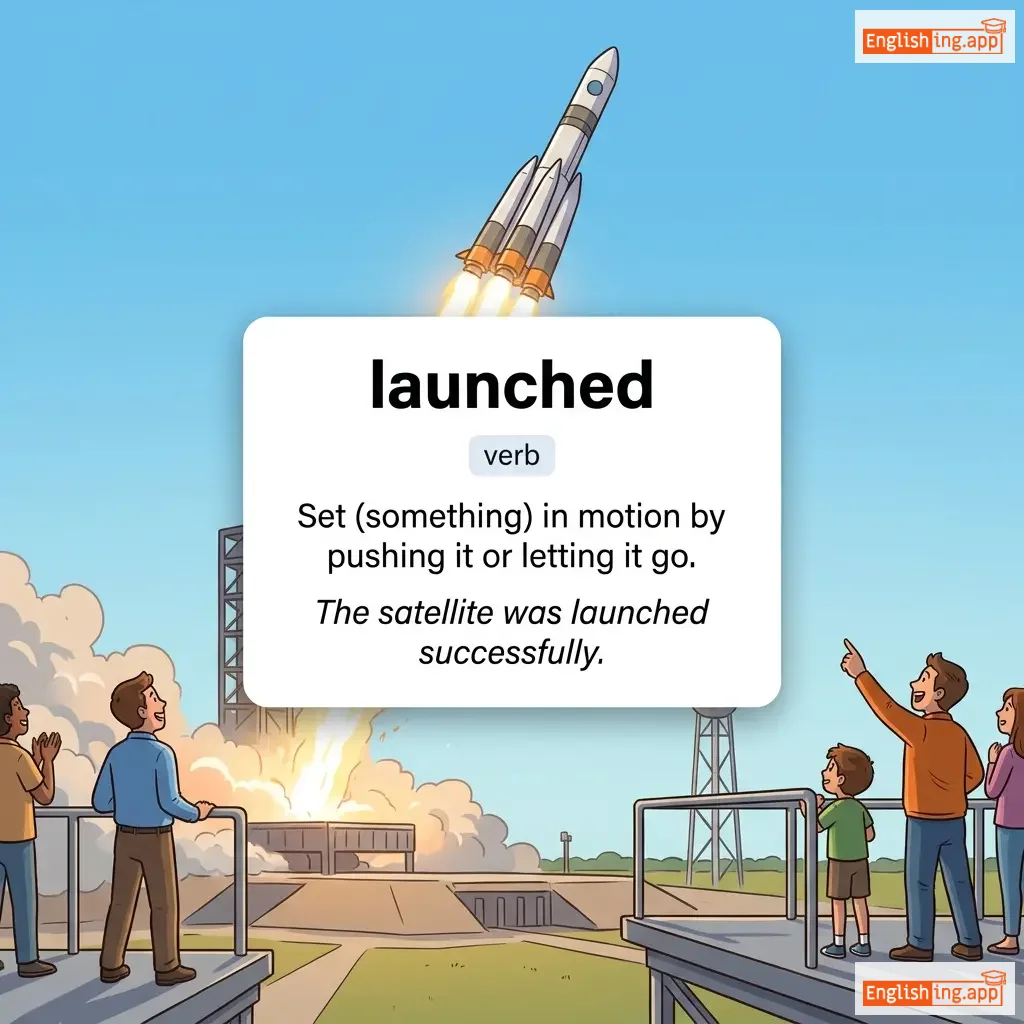
launched definition card — visual illustration of the meaning
verb
lɔːntʃt
発射 (hassha)

Set (something) in motion by pushing it or letting it go.

"The satellite was launched successfully."

"衛星は成功裏に発射されました。" (Eisei wa seikōri ni hassha saremashita.)
Launch definition card — visual illustration of the meaning
verb, noun
/lɔːntʃ/

to start or introduce something, especially a new product, service, or event

"The company launched a new app last month."

noun
/ˈlæftər/
笑い (warai)

the act or sound of laughing

"The room was filled with laughter."
"部屋は笑いで満ちていた。" (Heya wa warai de michite ita.)
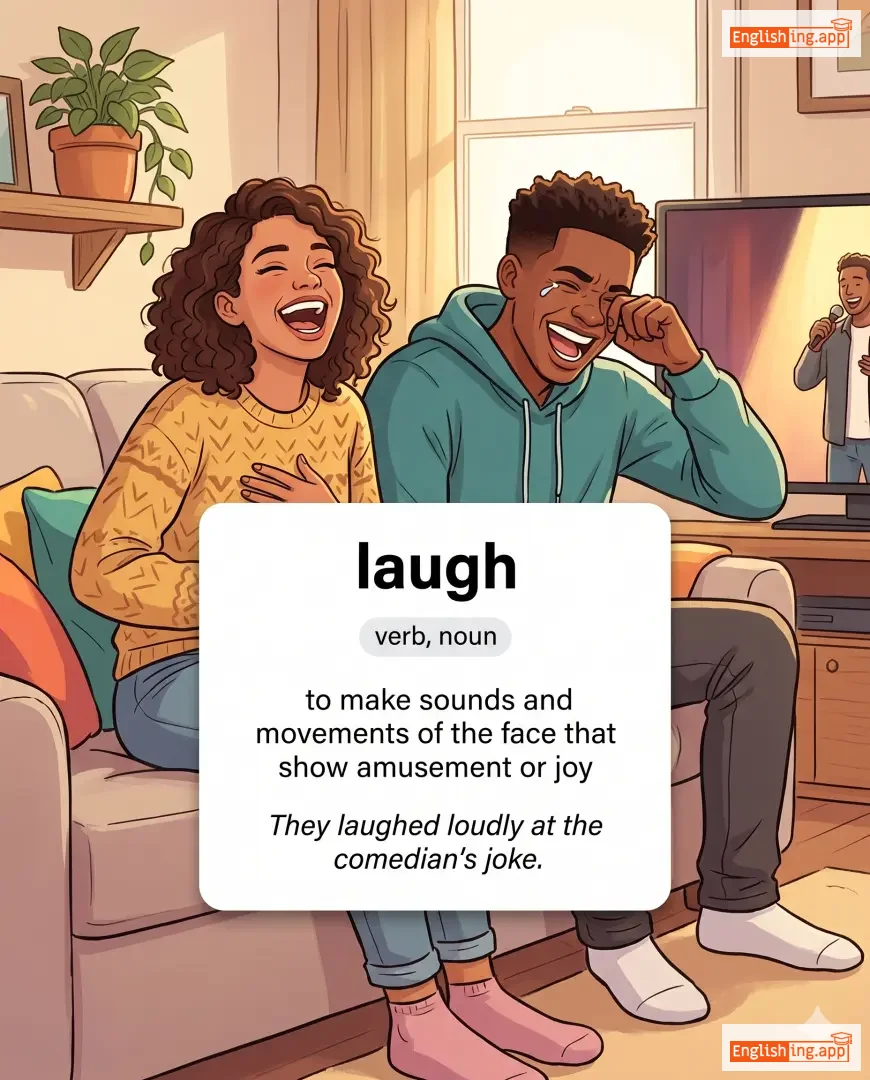
laugh definition card — visual illustration of the meaning
verb, noun
/læf/
笑う (warau)

to make sounds and movements of the face that show amusement or joy

"They laughed loudly at the comedian's joke."

"彼らはコメディアンのジョークで大声で笑った。" (Karera wa komedian no jooku de oogoe de waratta.)
adjective
/ˈlɔːdəˌtɔːri/
賞賛の (shōsan no)

Expressing praise or admiration.

"She wrote a laudatory review of the new book."

"彼女は新しい本の賛辞のレビューを書いた。" (Kanojo wa atarashī hon no sanji no rebyū o kaita.)
noun
/lɔːˈdeɪʃən/
賞賛 (shōsan)

The act of praising or expressing approval.

"The poet received much laudation for his moving verses."

"その詩人は感動的な詩で多くの賞賛を受けました。" (Sono shijin wa kandō-teki na shi de ōku no shōsan o ukemashita.)
adjective
/ˈlɔː.də.bəl/
称賛に値する (shōsan ni atai suru)

Deserving praise and admiration.

"Her efforts to help the poor are truly laudable."

"貧しい人々を助けるための彼女の努力は本当に称賛に値します。" (Mazushī hitobito o tasukeru tame no kanojo no doryoku wa hontō ni shōsan ni atai shimasu.)
laud definition card — visual illustration of the meaning
👏

laud

verb
/lɔːd/

To praise someone or something highly, especially in public.

"The critic lauded the actor's performance as a masterpiece."

noun
/ˈlætɪs/
格子構造 (kōshi kōzō)

A structure of crossed strips arranged in a grid or crisscross pattern.

"The garden was decorated with a wooden lattice covered in vines."

"庭は、蔦で覆われた木製の格子構造で飾られていました。" (Niwa wa, tsuta de ōwareta mokusei no kōshi kōzō de kazararete imashita.)
adjective
/ˈlætər/
後者 (kōsha)

the second of two people or things mentioned

"Between tea and coffee, I prefer the latter."

"お茶とコーヒーの間で、私は後者を選びます。" (Ocha to kōhī no aida de, watashi wa kōsha o erabimasu.)
noun
/ˈlætɪˌtjuːd/
緯度 (ido)

The angular distance north or south of the equator; also freedom or scope to act.

"The city lies at a high latitude close to the Arctic Circle."

"この都市は北極圏に近い高い緯度に位置しています。" (Kono toshi wa hokkyokuken ni chikai takai ido ni ichi shiteimasu.)
adjective
/ˈleɪ.tɪʃ/
少し遅れて (sukoshi okurete)

Somewhat late; occurring or arriving later than usual but not very late.

"We arrived latish to the party but still caught most of the fun."

"パーティーには少し遅れて到着しましたが、それでもほとんどの楽しみを楽しむことができました。" (Pātī ni wa sukoshi okurete tōchaku shimashita ga, soredemo hotondo no tanoshimi o tanoshimu koto ga dekimashita.)
noun/adjective
/ˈlætɪn/
ラテン語 (raten-go)

the language of ancient Rome; relating to Latin culture or language

"Many English words are derived from Latin."

"多くの英単語はラテン語から派生しています。" (Ooku no eitango wa raten-go kara hassei shiteimasu.)
noun
/leɪð/
旋盤 (senban)

A machine for shaping wood, metal, or other material by rotating it against a cutting tool.

"The carpenter used a lathe to shape the wooden bowl."

"大工は木の器を形作るために旋盤を使いました。" (Daiku wa ki no utsuwa o katachi zukuru tame ni senban o tsukaimashita.)
adjective
/ˈleɪtɪst/
最新の (saishin no)

most recent in time; newest available

"She shared the latest updates with the team."

"彼女はチームと最新のアップデートを共有した。" (kanojo wa chiimu to saishin no appudeeto o kyouyuu shita)
adjective
/ˈlætərəl/
側面 (sokumen)

Relating to the side or sideways movement.

"The football player made a quick lateral pass."
"サッカー選手は素早い側面パスをしました。" (sakkā senshu wa subayai sokumen pasu o shimashita.)
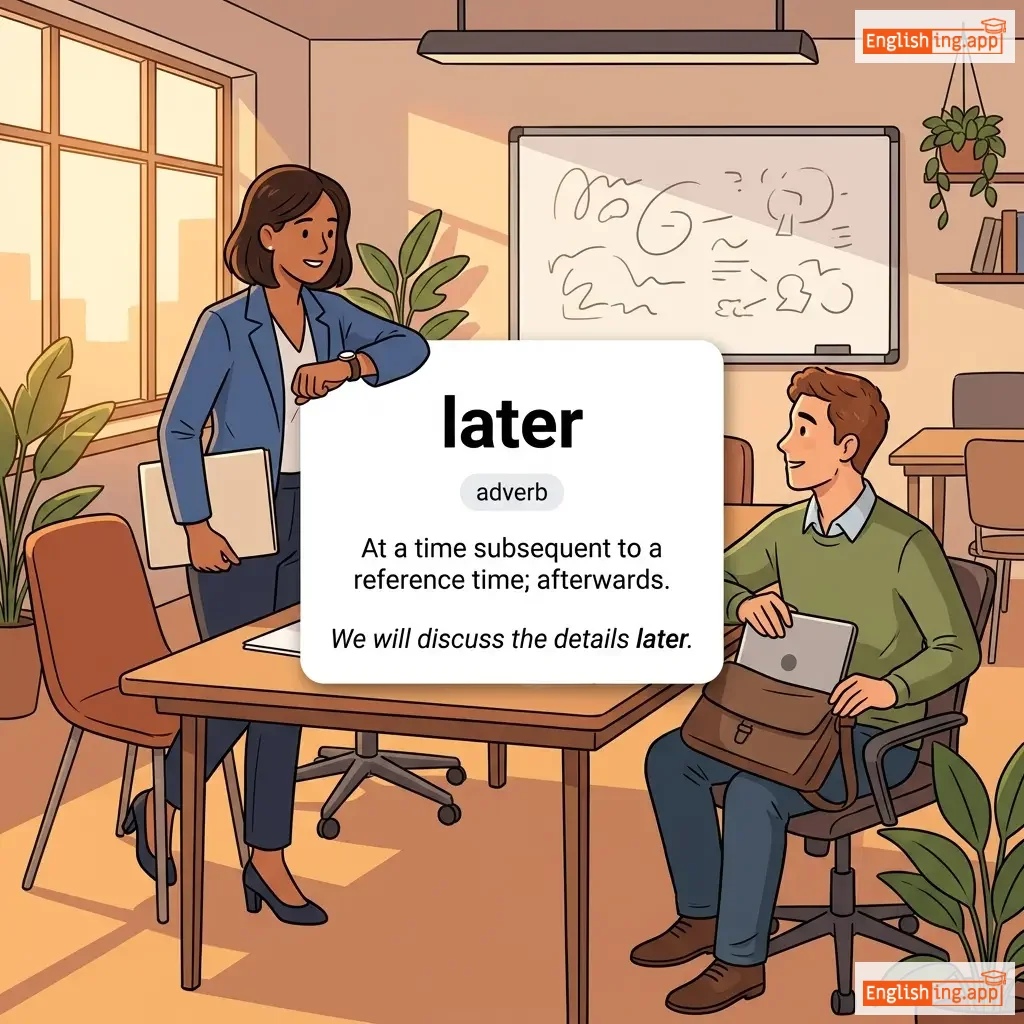
later definition card — visual illustration of the meaning
adverb
/ˈleɪtər/
後で (ato de)

At a time subsequent to a reference time; afterwards.

"We will discuss the details later."
"私たちは後で詳細について話します。" (Watashitachi wa ato de shōsai ni tsuite hanashimasu.)
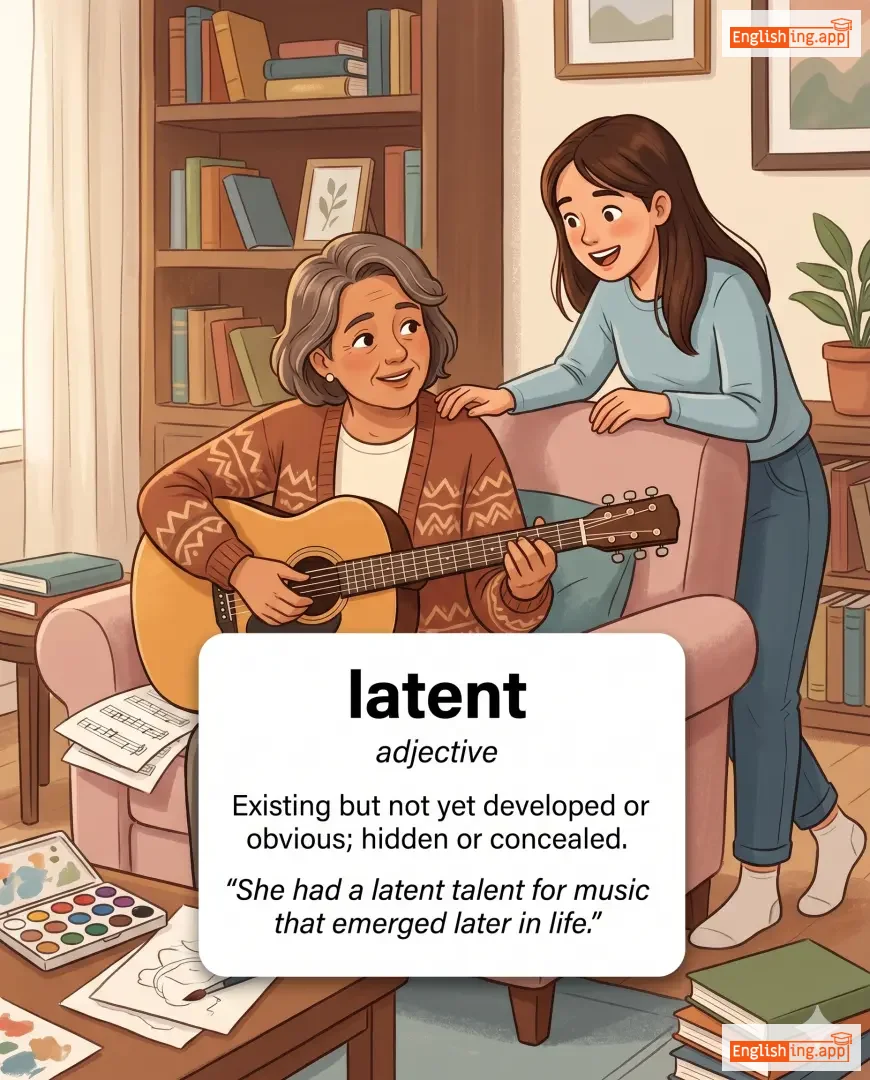
latent definition card — visual illustration of the meaning
adjective
/ˈleɪtənt/

Existing but not yet developed or obvious; hidden or concealed.

"She had a latent talent for music that emerged later in life."

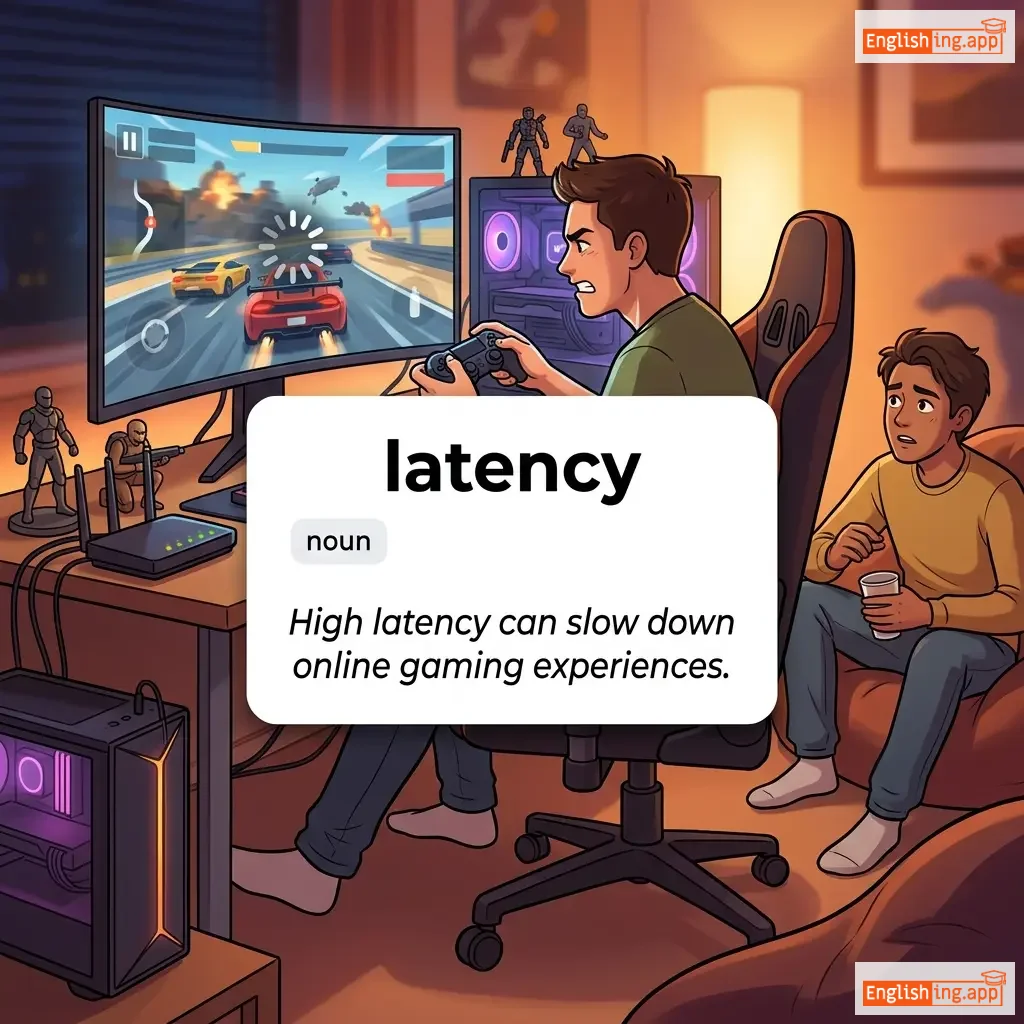
latency definition card — visual illustration of the meaning
noun
/ˈleɪtənsi/
レイテンシ (reitenshi)

The delay before a transfer of data begins following an instruction for its transfer.

"High latency can slow down online gaming experiences."

"高いレイテンシはオンラインゲームの体験を遅くする可能性があります。" (Takai reitenshi wa onrain gēmu no taiken o osoku suru kanōsei ga arimasu.)
Ladle definition card — visual illustration of the meaning
noun, verb
/ˈleɪ.dl̩/
幸せ (shiawase)

A large spoon for serving soup or liquids; to serve with such a spoon.

"She used a ladle to serve the hot soup into bowls."

"彼女は賞を受け取ったとき、自分の幸せを隠すことができませんでした。" (Kanojo wa shō o uketotta toki, jibun no shiawase o kakusu koto ga dekimasen deshita.)
noun/verb
/læk/
欠如 (ketsujo)

The state of being without or not having enough of something.

"He failed the exam due to a lack of preparation."

"準備不足で試験に失敗した。" (Junbi fusoku de shiken ni shippai shita.)
adjective
/ˌlækəˈdeɪzɪkəl/
怠惰または無関心 (taida mata wa mukanshin)

lacking enthusiasm, energy, or determination; careless or lazy

"His lackadaisical attitude toward work annoyed his boss."

"彼の怠惰な態度は、仕事に対する上司の不満を引き起こした。" (Kare no taida na taido wa, shigoto ni taisuru jōshi no fuman o hikiokoshita.)
noun
/ˈlæki/
従者 (jūsha)

a person who is overly willing to serve or obey someone else

"He treated his assistant like a mere lackey."

"彼は助手を単なる従者として扱った。" (Kare wa joshu o tannaru jūsha toshite atsukatta.)
adjective
/ˈlækɪŋ/
不足 (fusoku)

not having enough of something; missing

"His report was lacking in detail."
"彼の報告書には詳細が欠けていた。" (Kare no hōkokusho ni wa shōsai ga kakete ita.)
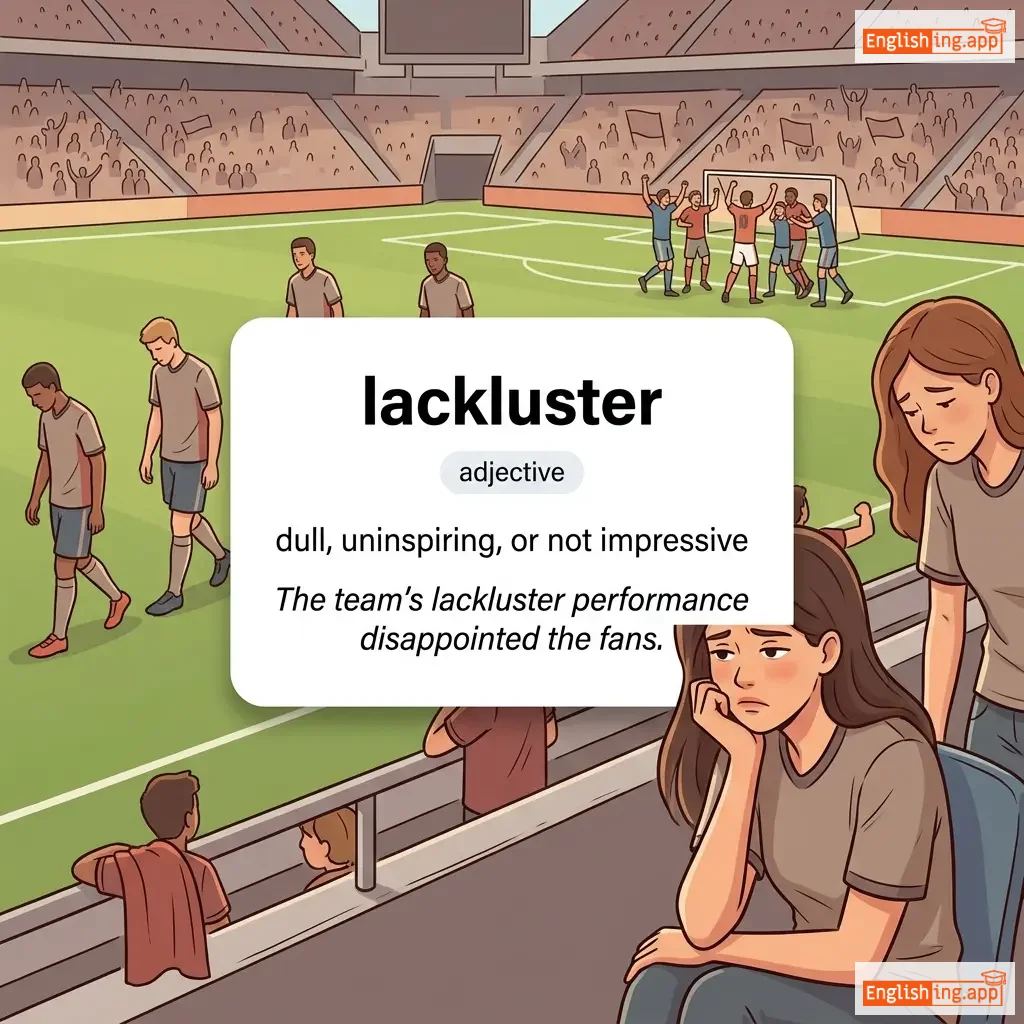
lackluster definition card — visual illustration of the meaning
adjective
/ˈlækˌlʌstər/
冴えないまたはインスピレーションのない (saenai matawa insupirēshon no nai)

dull, uninspiring, or not impressive

"The team's lackluster performance disappointed the fans."

"チームの冴えないパフォーマンスはファンを失望させました。" (Chīmu no saenai pafōmansu wa fan o shitsubō sasemashita.)
laconic definition card — visual illustration of the meaning
adjective
/ləˈkɒnɪk/
簡潔な (kanketsu na)

using very few words; concise to the point of seeming rude or mysterious

"His laconic reply ended the conversation quickly."

"彼の簡潔な返答は会話を迅速に終わらせた。" (Kare no kanketsu na hentō wa kaiwa o jinsoku ni owaraseta.)
noun
/lækˈteɪʃən/
授乳 (junyu)

the secretion of milk by the mammary glands of female mammals

"The doctor explained that lactation is a natural process after childbirth."

"医者は、出産後の授乳が自然なプロセスであると説明しました。" (Isha wa, shussango no junyu ga shizen na purosesu de aru to setsumei shimashita.)
adjective
/ˈlæk.ti.əl/
ミルクに関連するまたはミルクのような (miruku ni kanren suru matawa miruku no yōna)

Relating to or resembling milk; conveying chyle or milky fluid.

"The lacteal vessels in the small intestine absorb dietary fats."

"小腸の乳腺血管が食事の脂肪を吸収します。" (Shōchō no nyūsen kekkan ga shokuji no shibō o kyūshū shimasu.)
adjective
/ˈlæk.tɪk/
乳または乳酸に関連する (nyū mata wa nyūsann ni kanren suru)

Relating to milk or lactic acid.

"Intense exercise can lead to a buildup of lactic acid in the muscles."
"激しい運動は筋肉に乳酸が蓄積される原因となることがあります。" (Hageshii undō wa kinniku ni nyūsann ga chikuseki sareru gen'in to naru koto ga arimasu.)
noun
/læd/
少年 (shounen)

a boy or young man; a male youth

"The young lad helped his father in the shop."

"その若い少年は店で父親を手伝った。" (sono wakai shounen wa mise de chichioya o tetsudatta)
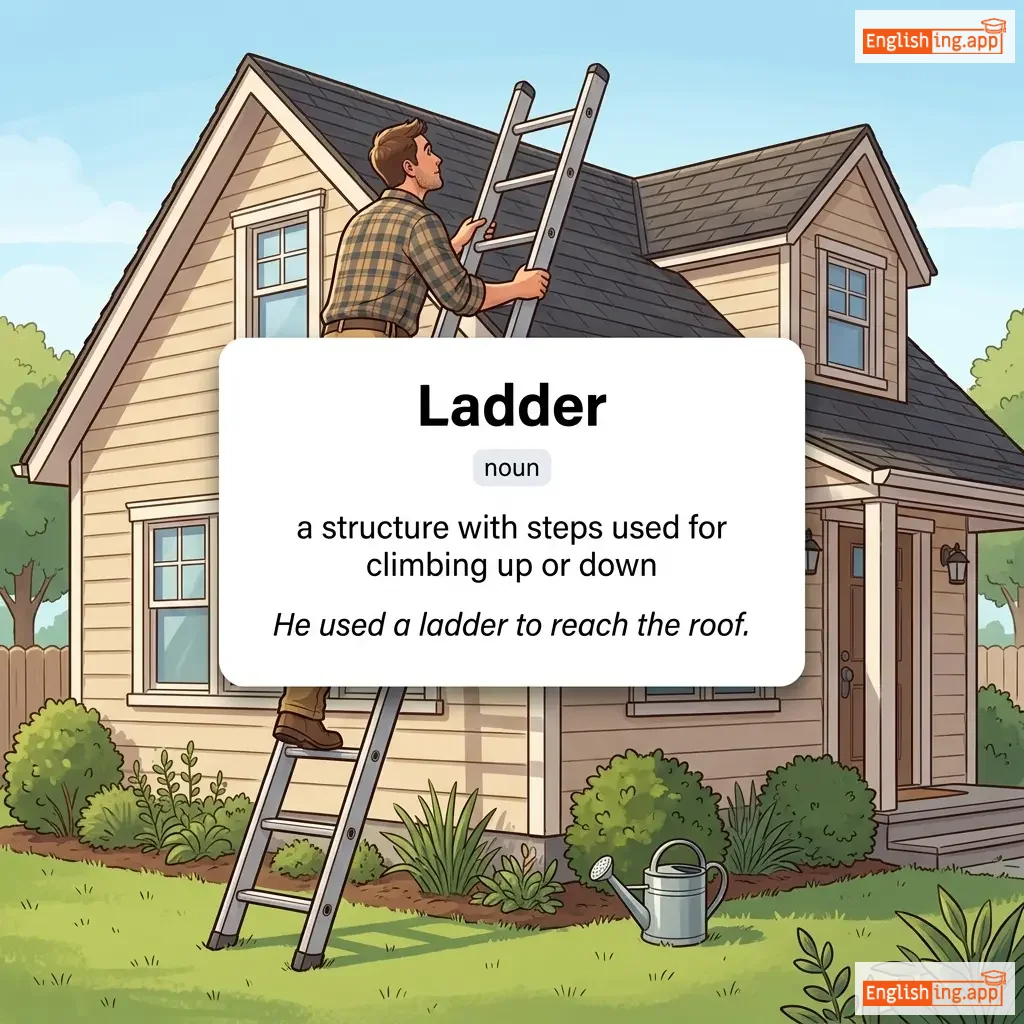
Ladder definition card — visual illustration of the meaning
noun
/ˈlædər/
はしご (hashigo)

a structure with steps used for climbing up or down

"He used a ladder to reach the roof."

"彼は屋根に登るためにはしごを使いました。" (Kare wa yane ni noboru tame ni hashigo o tsukaimashita.)
noun
/ˈlæd.i/
若い男の子 (wakai otokonoko)

A young boy or lad.

"The old man gave the young laddie a kind smile."
"老人は若い男の子に親切な笑顔をくれました。" (Rojin wa wakai otokonoko ni shinsetsu na egao o kuremashita.)
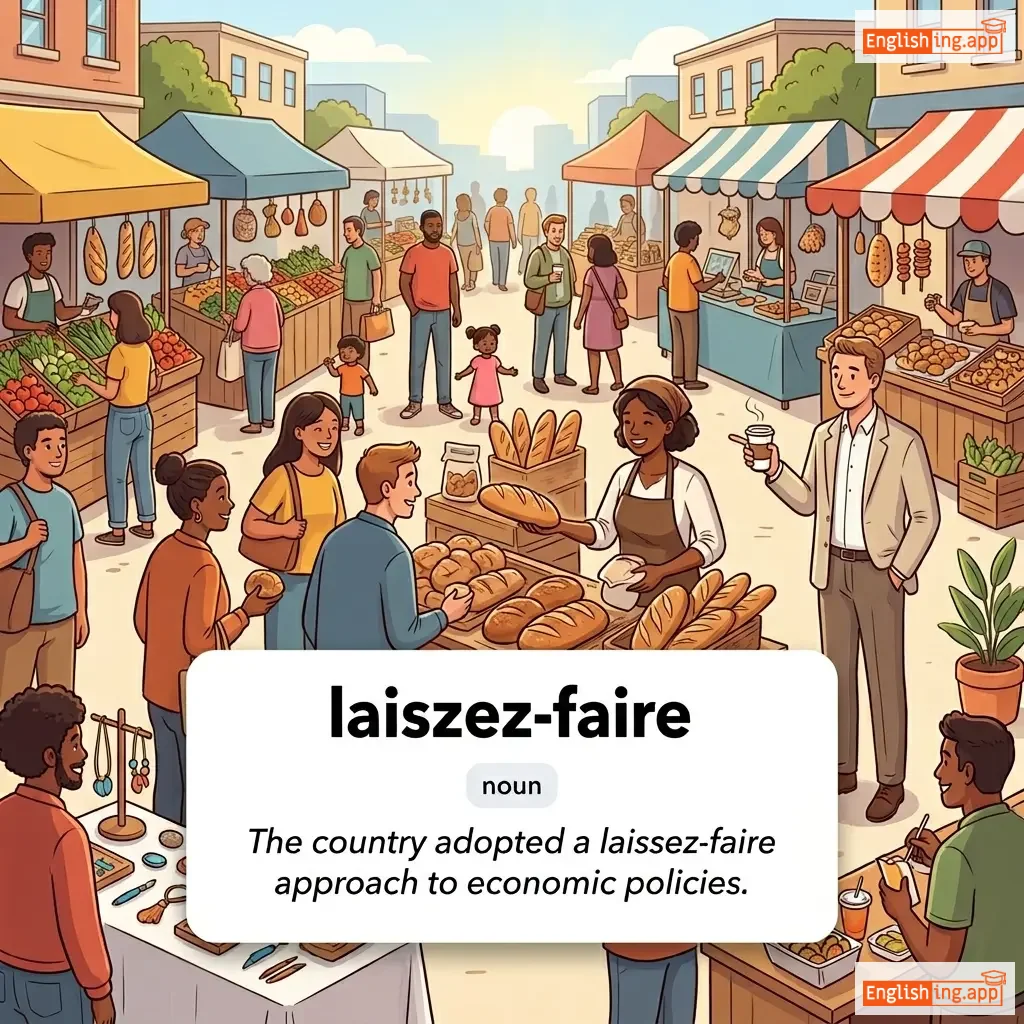
laissez-faire definition card — visual illustration of the meaning
noun
/ˌlɛ.seɪˈfɛər/
不干渉政策 (fukan-shou seisaku)

A free-market policy of minimal government intervention in economic affairs, characterized by non-interventionism and capitalism.

"The country adopted a laissez-faire approach to economic policies."
"その国は経済政策においてレセフェールアプローチを採用した。" (Sono kuni wa keizai seisaku ni oite reseferu apurōchi o sai-yō shita.)
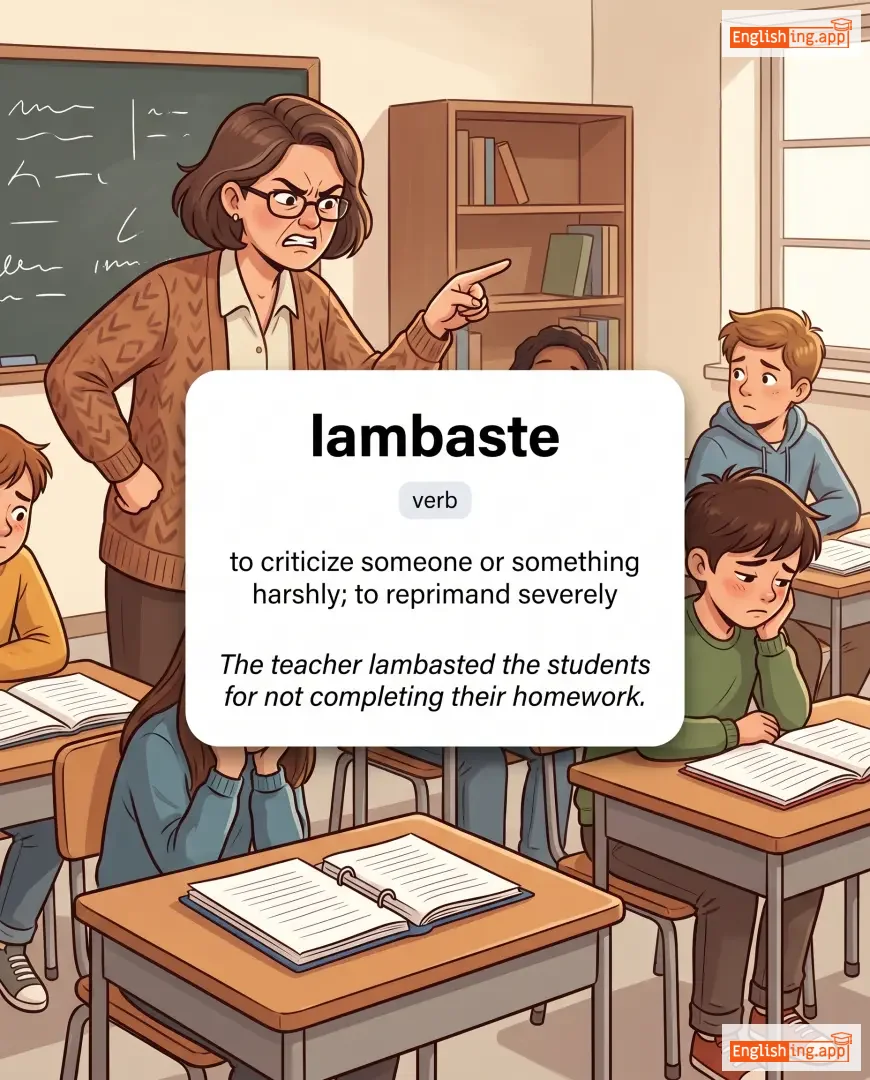
lambaste definition card — visual illustration of the meaning
verb
/læmˈbeɪst/
厳しく非難する (kibishiku hinansuru)

to criticize someone or something harshly; to reprimand severely

"The teacher lambasted the students for not completing their homework."

"教師は宿題をやらなかった学生を厳しく叱責しました。" (Kyoushi wa shukudai o yaranakatta gakusei o kibishiku shikkeshi mashita.)
verb
/læmˈbæst/
厳しく批判する (kisoku hihan suru)

To criticize harshly or to beat severely.

"The coach lambasted the team for their poor performance."

"コーチはチームのパフォーマンスの悪さを厳しく非難しました。" (Ko-chi wa chi-mu no pafo-mansu no warusa o kibishiku hinan shimashita.)
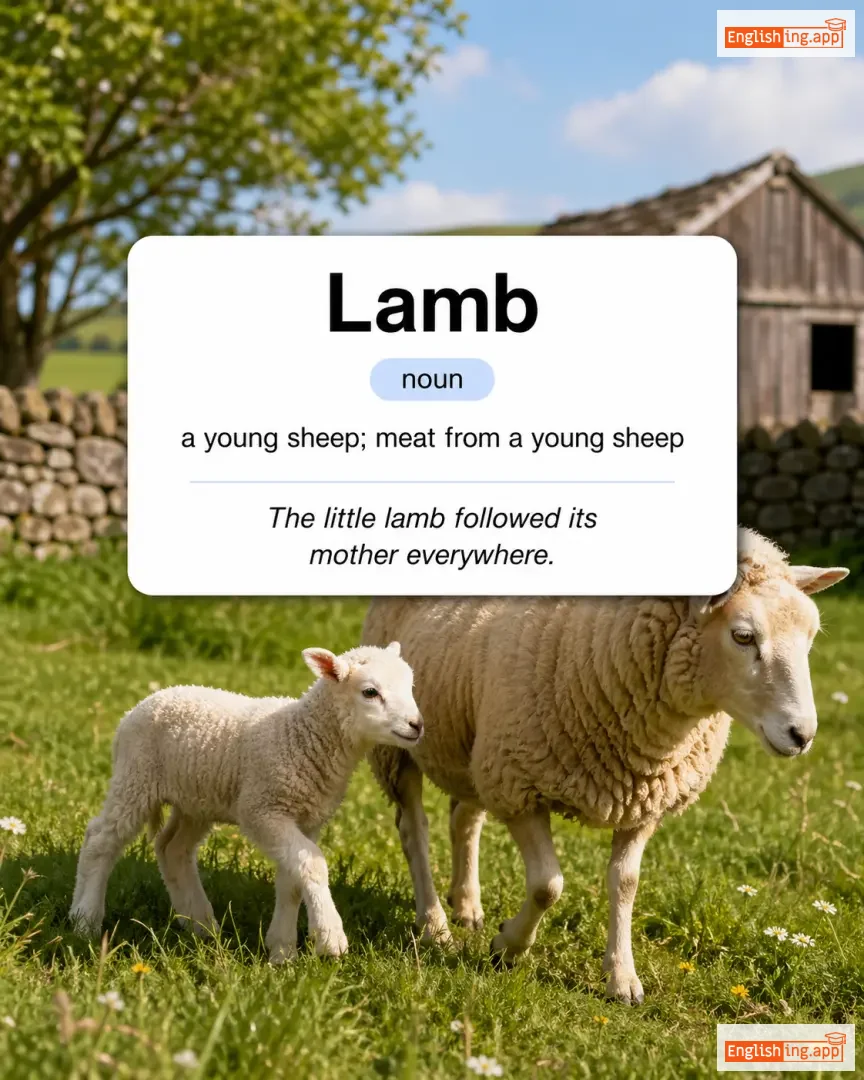
Lamb definition card — visual illustration of the meaning
noun
/læm/
子羊 (kohitsuji)

a young sheep; meat from a young sheep

"The little lamb followed its mother everywhere."

"その小さな子羊は母親の後をどこでも追いかけた。" (Sono chiisana kohitsuji wa hahaoya no ato o doko demo oikaketa.)
noun
/leɪk/
(mizuumi)

A large area of water surrounded by land.

"They enjoyed boating on the lake during summer."

"彼らは夏の間、湖でボートを楽しみました。" (Karera wa natsu no aida, mizuumi de bōto o tanoshimimashita.)
noun
/ˈleɪ.ɪ.ti/
信徒 (shintō)

Ordinary members of a religious community who are not clergy.

"The church welcomed the laity to participate in the event."

"教会は信徒を歓迎し、イベントに参加するよう呼びかけた。" (Kyōkai wa shintō o kangei shi, ibento ni sankasuru yō yobikaketa.)
noun
/ˈlæɡərd/
遅れた者 (okureta mono)

A person or thing that is slow or falls behind others.

"The company has been a laggard in adopting new technology."

"その会社は新しい技術の採用に遅れています。" (Sono kaisha wa atarashī gijutsu no saiyō ni okureteimasu.)
noun
/ˈleɪdi/
幸せ (shiawase)

A polite or formal way of referring to a woman.

"The lady at the counter was very helpful."

"彼女は賞を受け取ったとき、自分の幸せを隠すことができなかった。" (Kanojo wa shō o uketotta toki, jibun no shiawase o kakusu koto ga dekinakatta.)
verb, noun
/læɡ/
遅れるまたは遅延する (okureru mata wa chien suru)

To fall behind in movement, progress, or development; a delay or period of falling behind.

"The old computer tends to lag when running new software."

"古いコンピューターは新しいソフトウェアを実行するときにラグが発生しやすい。" (Furui konpyu-ta wa atarashii sofutouea wo jikkou suru toki ni ragu ga hassei shiyasui.)
adjective
/ˈlæk.rɪ.moʊs/
涙を流す、悲しむ (namida o nagasu, kanashimu)

tearful or given to weeping; sad and mournful

"The movie's lachrymose ending left the audience in tears."

"映画の悲しい結末は観客を涙で満たしました。" (Eiga no kanashī ketsumatsu wa kankyaku o namida de mitashimashita.)
noun
/ˈlænjæp/
追加の贈り物 (tsuika no okurimono)

A small gift or bonus given by a seller to a customer.

"The shopkeeper offered a piece of candy as a lagniappe."

"店主はおまけとしてキャンディを提供しました。" (Tenshu wa omake toshite kyandi o teikyō shimashita.)