語彙集

英単語辞書 | 単語の意味、定義、例文

noun
/ˈkiː.pər/
守衛; 飼育係; (shuei; shiikugakari)

a person whose job it is to guard or take care of something or someone; a goalkeeper

"The zoo keeper fed the animals every morning at eight o'clock."
"動物園のキーパーは毎朝8時に動物たちに餌を与えていました。" (Doubutsuen no kiipaa wa mai asa 8 ji ni doubutsutachi ni esa o ataeteimashita.)
Keep definition card — visual illustration of the meaning
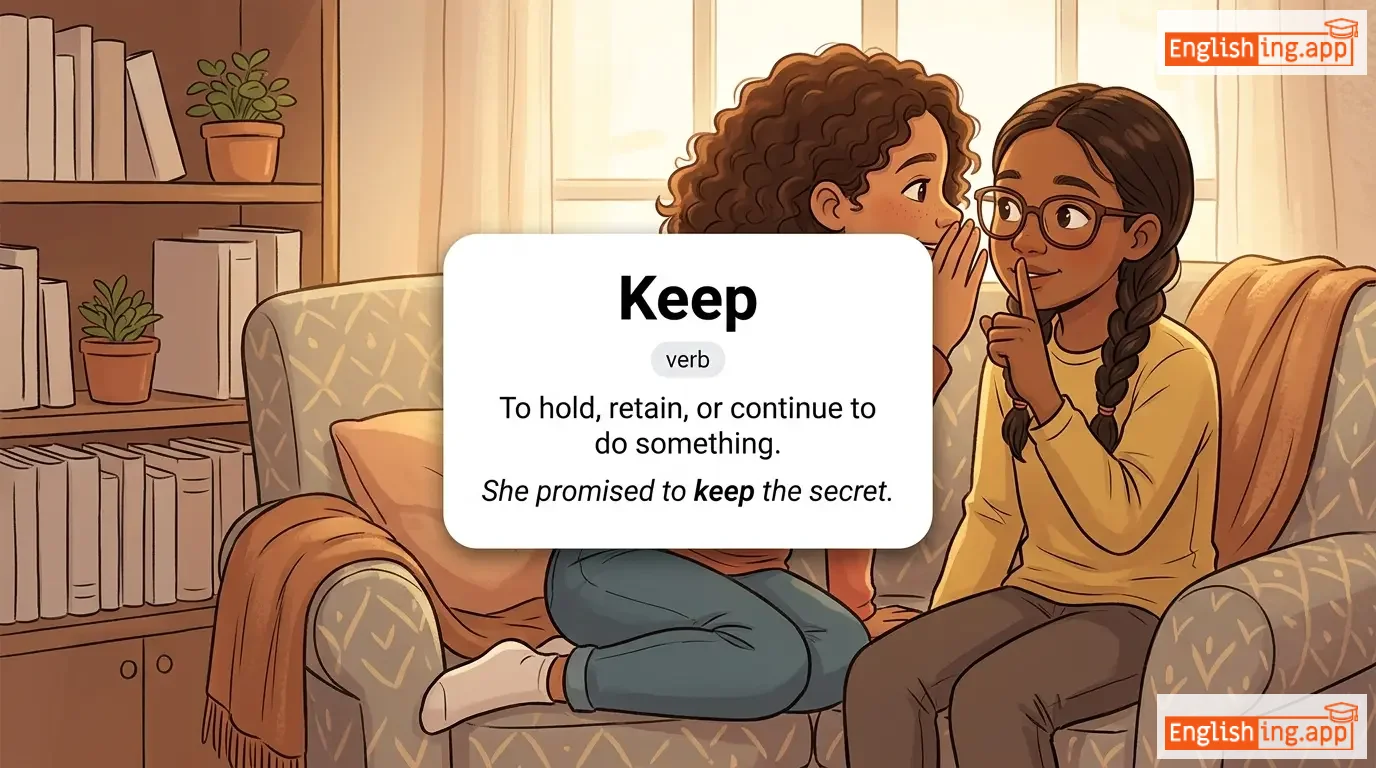
verb
/kiːp/
保つ (tamotsu)

To hold, retain, or continue to do something.

"She promised to keep the secret."

"彼女は秘密を守ると約束しました。" (Kanojo wa himitsu o mamoru to yakusoku shimashita.)
adjective
/kiːn/
熱心な、積極的な (nesshin na, sekkyokuteki na)

Having or showing eagerness or enthusiasm; sharp or highly developed (for senses).

"She is very keen to learn new skills."

"彼女は新しいスキルを学ぶことに非常に熱心です。" (Kanojo wa atarashī sukiru o manabu koto ni hijō ni nesshin desu.)
noun
/ˈkedʒ.ə.riː/
ケジリー (kejirī)

a European dish of cooked rice, fish, and hard-boiled eggs, originally from India

"The breakfast menu featured traditional kedgeree with smoked haddock and eggs."
"朝食のメニューには、スモークハドックと卵が入った伝統的なケジリーがありました。" (Chōshoku no menyū ni wa, sumōku hadokku to tamago ga haitta dentō-teki na kejirī ga arimashita.)
Karonda definition card — visual illustration of the meaning
noun
/kəˈrɒn.də/
カロンダ (karonda)

a small dark purple berry-like fruit that is sour and used in pickles

"Karonda is often used to make pickles and preserves."

"カロンダは、ピクルスや保存食を作るのによく使われます。" (Karonda wa, pikurusu ya hozonshoku o tsukuru no ni yoku tsukaimasu)
noun
/ˈkærət/
カラット (karatto)

A unit for measuring the purity of gold, with 24 karats being pure gold.

"The ring was made of 18-karat gold."
"その指輪は18カラットの金で作られていました。" (Sono yubiwa wa 18 karatto no kin de tsukurarete imashita.)
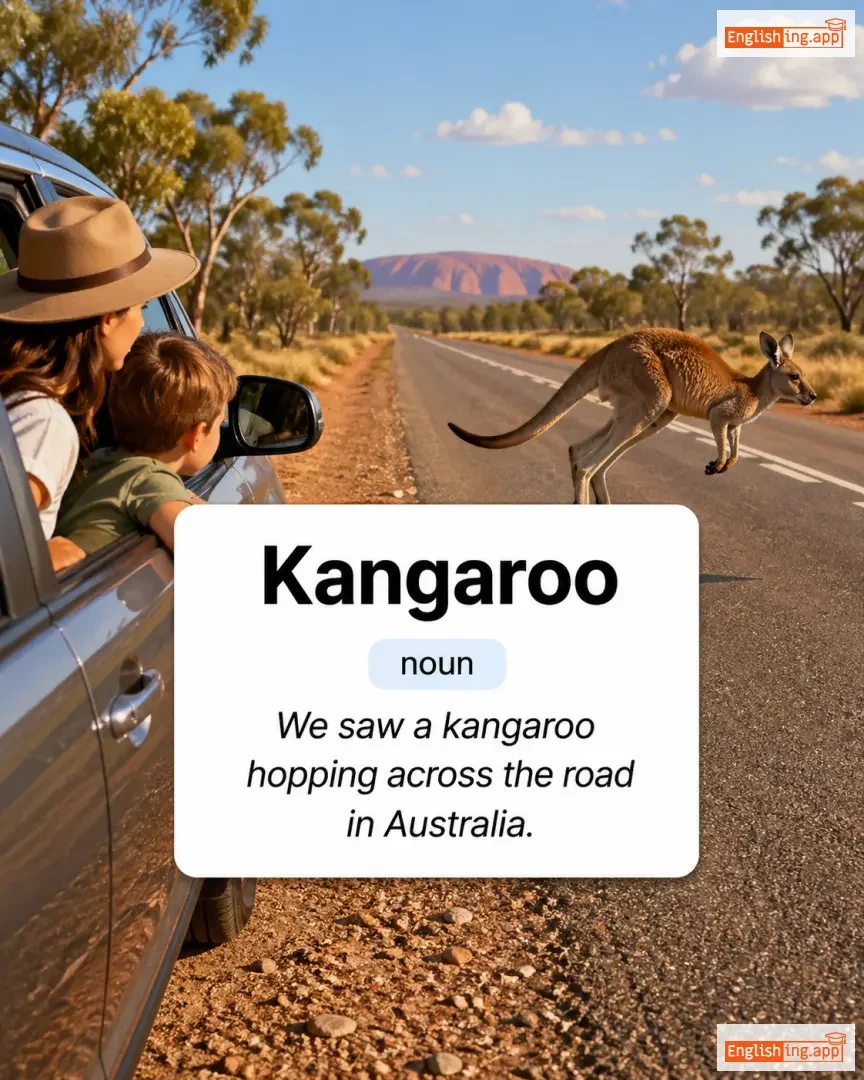
Kangaroo definition card — visual illustration of the meaning
noun
/ˌkæŋɡəˈruː/
カンガルー (kangarū)

A large Australian marsupial with powerful hind legs and a long tail, known for hopping.

"We saw a kangaroo hopping across the road in Australia."

"オーストラリアでカンガルーが道路を跳ねるのを見ました。" (Ōsutoraria de kangarū ga dōro o haneru no o mimashita.)
noun
/kəˈlaɪdəˌskoʊp/
万華鏡 (banka-kyou)

A toy or instrument with mirrors and colored pieces that create changing patterns when rotated; also used metaphorically for a constantly changing sequence of patterns or elements.

"The city lights turned into a kaleidoscope of colors as the festival began."
"祭りが始まると、街の明かりは色とりどりの万華鏡に変わった。" (Matsuri ga hajimaru to, machi no akari wa irotoridori no banka-kyou ni kawatta.)
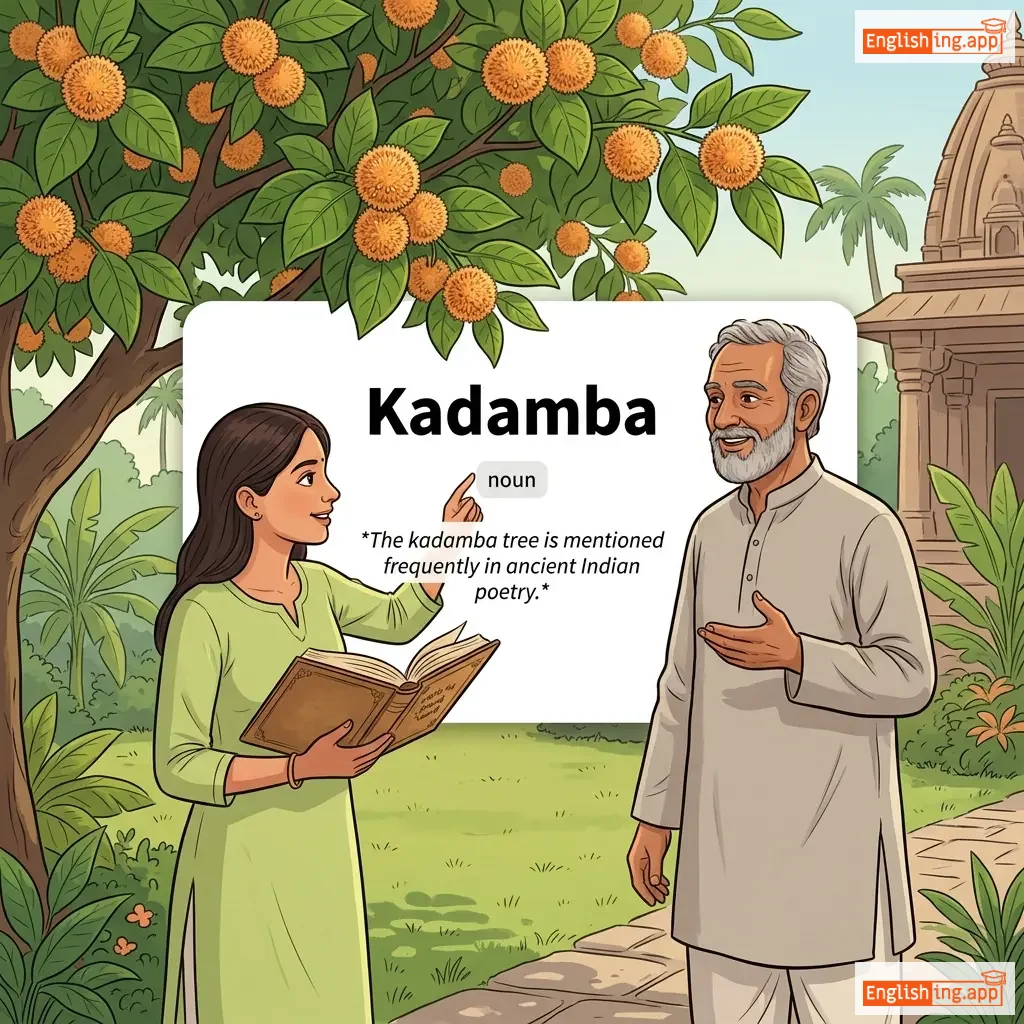
Kadamba definition card — visual illustration of the meaning
noun
/kəˈdʌm.bə/
カダンバの木 (kadamba no ki)

A tropical tree with round, fragrant orange flowers, sacred in Hindu culture and associated with Lord Krishna

"The kadamba tree is mentioned frequently in ancient Indian poetry."

"カダンバの木は古代インドの詩で頻繁に言及される。" (Kadamba no ki wa kodai Indo no shi de hinpan ni genkyuu sareru.)
noun
/kəˈbɑːdi/
廃品回収業者 (haipin kaishuu gyousha)

a person who collects and sells scrap or recyclable materials, especially in South Asia

"The kabadi came every week to collect old newspapers and bottles."
"廃品回収業者は古い物を集めます。" (haipin kaishuu gyousha wa furui mono o atsumemasu)
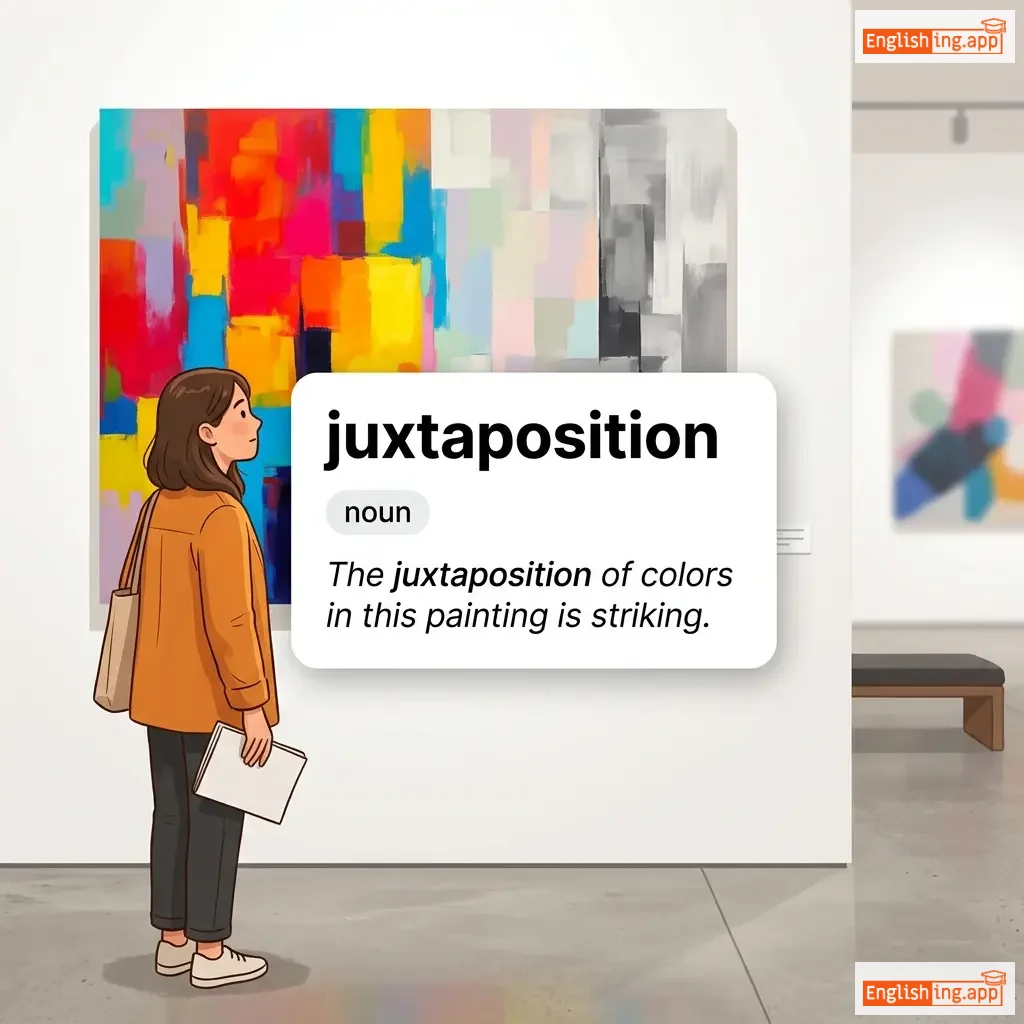
juxtaposition definition card — visual illustration of the meaning
noun
/ˌdʒʌk.stə.pəˈzɪʃ.ən/
並置 (へいち)

The fact of two things being seen or placed close together with contrasting effect.

"The juxtaposition of colors in this painting is striking."
"この絵画における色の並置は、非常に印象的です。" (Kono kaiga ni okeru iro no heichi wa, hijō ni inshō-teki desu.)
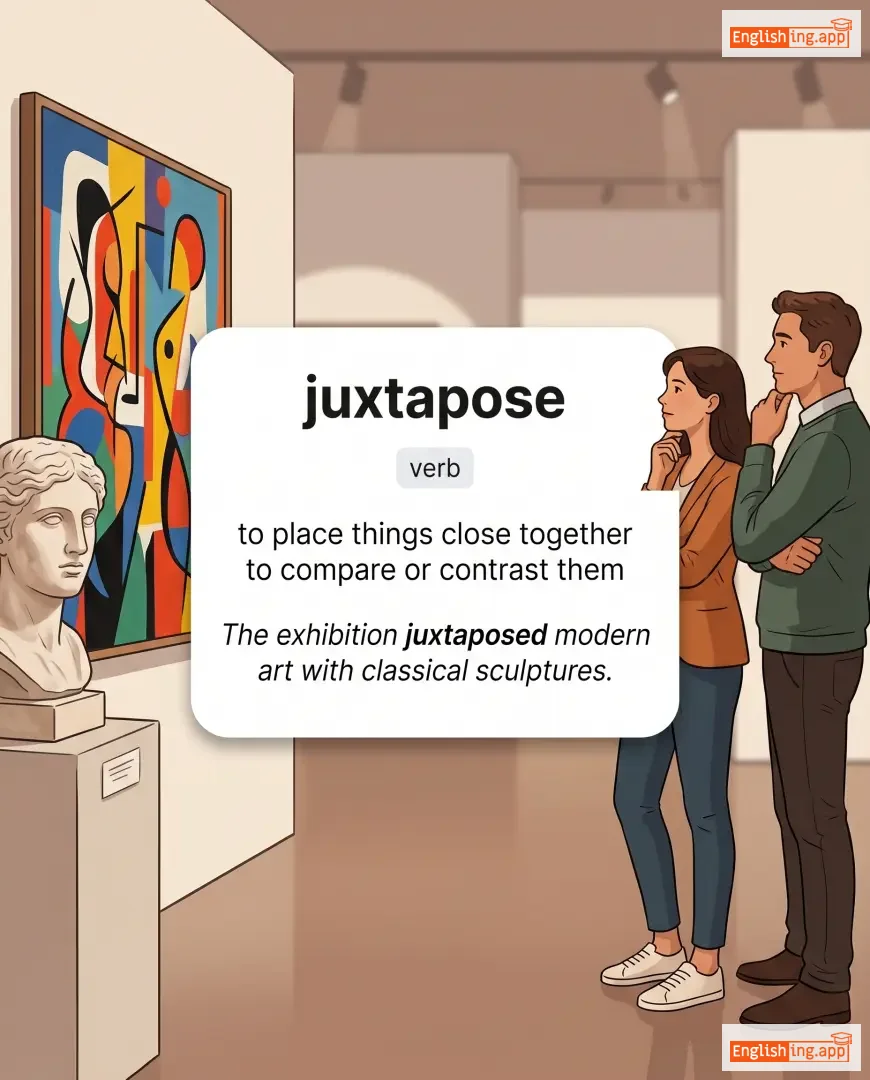
juxtapose definition card — visual illustration of the meaning
verb
/ˈdʒʌkstəˌpoʊz/
物を近くに置いて比較または対照する (mono o chikaku ni oite hikaku matawa taishou suru)

to place things close together to compare or contrast them

"The exhibition juxtaposed modern art with classical sculptures."

"展示会では現代アートと古典的な彫刻が並べられました。" (Tenjikai dewa gendai āto to kotenteki na chōkoku ga naraberaremashita.)
adjective, noun
/ˈdʒuːvənaɪl/
未成年 (miseinen)

relating to young people; childish or immature

"The court sent the case to a juvenile detention center."
"裁判所は事件を未成年の収容施設に送った。" (saibansho wa jiken o miseinen no shūyō shisetsu ni okutta.)
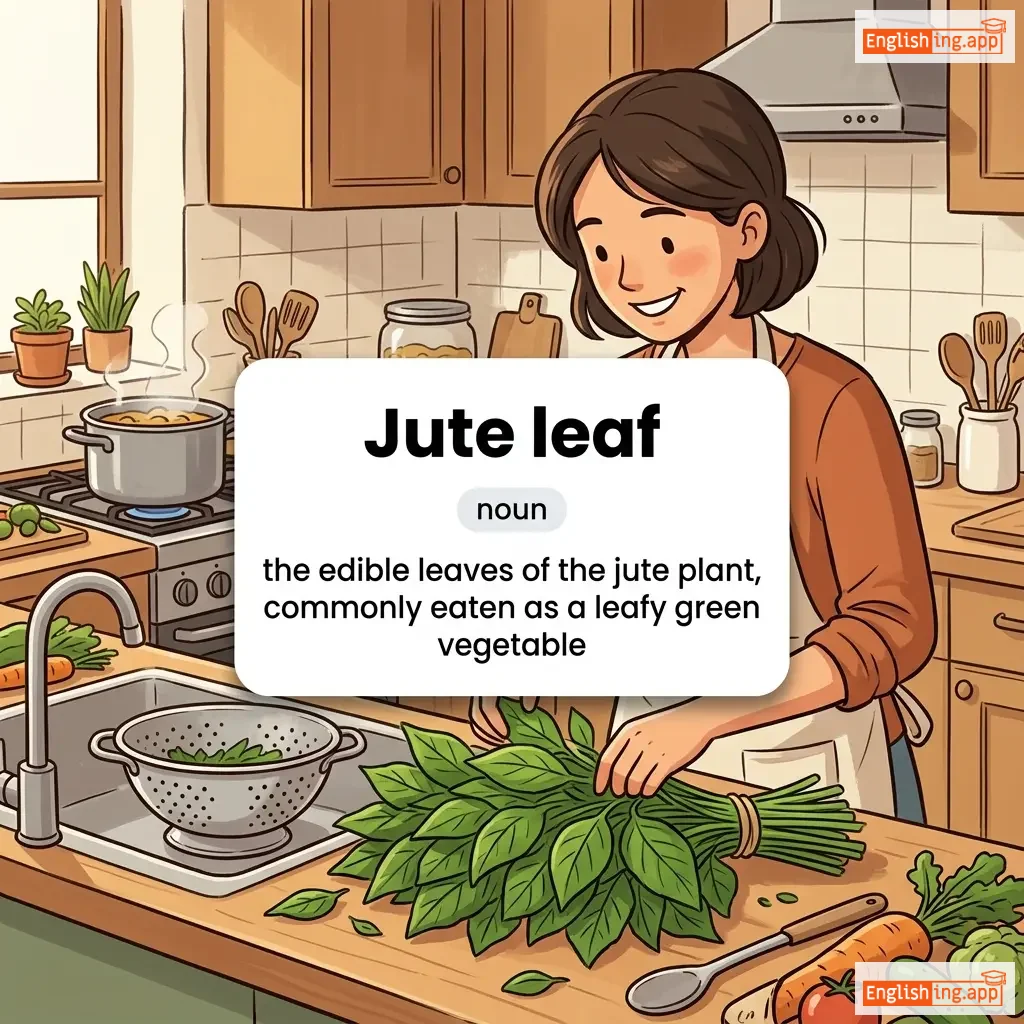
Jute leaf definition card — visual illustration of the meaning
noun
/dʒuːt liːf/
ジュートの葉 (juuto riifu)

the edible leaves of the jute plant, commonly eaten as a leafy green vegetable

"Jute leaf is rich in vitamins and minerals and is often cooked with lentils in Bengali cuisine."

"ジュートの葉はビタミンやミネラルが豊富で、ベンガル料理ではしばしばレンズ豆と一緒に調理されます。" (juuto no ha wa bitamin ya mineraru ga houfu de bengaru ryouri de wa shibashiba renzu mame to issho ni chouri saremasu.)
noun
/dʒuːt/
黄麻 (ouma)

a long, soft, shiny plant fiber used to make rope, bags, sacks, and coarse cloth

"Jute is widely used to make eco-friendly bags and ropes."

"黄麻は環境にやさしい素材です。" (ouma wa kankyou ni yasashii sozai desu)
justify definition card — visual illustration of the meaning
verb
/ˈdʒʌstɪfaɪ/
正当化する (seitouka suru)

to show or prove that something is right or reasonable

"He tried to justify his decision with logical reasons."

"彼は論理的な理由で自分の決定を正当化しようとしました。" (Kare wa rongiteki na riyuu de jibun no kettei o seitouka shiyou to shimashita.)
noun
/ˌdʒʌstɪfɪˈkeɪʃən/
正当化 (seitōka)

a reason, explanation, or excuse that shows something is right or reasonable

"There is no justification for such rude behavior."
"そのような失礼な行動には正当化の余地はない。" (sono yōna shitsurei na kōdō ni wa seitōka no yochi wa nai)
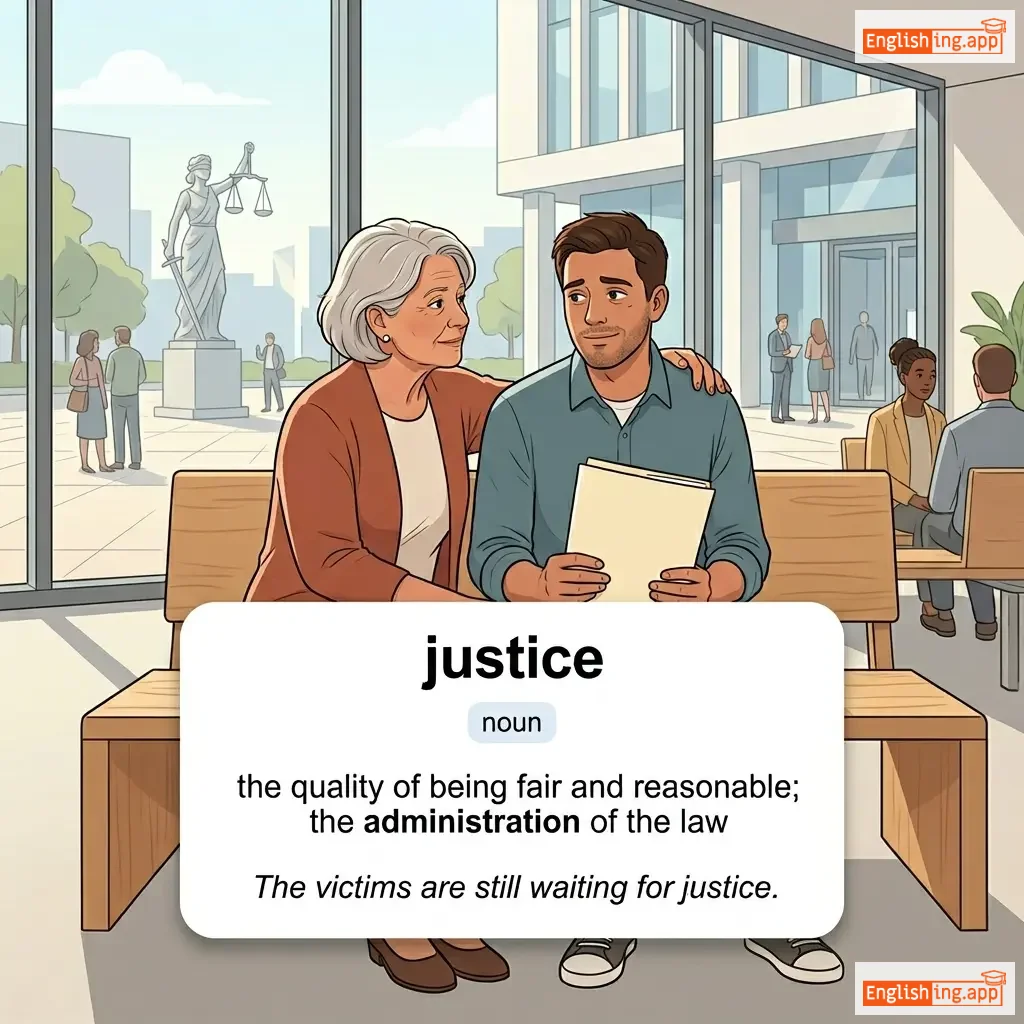
justice definition card — visual illustration of the meaning
noun
/ˈdʒʌstɪs/
正義 (seigi)

the quality of being fair and reasonable; the administration of the law

"The victims are still waiting for justice."

"犠牲者はまだ正義を待っています。" (Giseisha wa mada seigi o matteimasu.)
adverb/adjective
/dʒʌst/
ちょうど、ただ、または公正で道徳的に正しい (choudo, tada, matawa kou-sei de doutokuteki ni tadashii)

Exactly, only, or fair and morally right.

"She arrived just in time for the meeting."

"彼女は会議のためにちょうど時間通りに到着した。" (Kanojo wa kaigi no tame ni choudo jikan doori ni touchaku shita.)
noun
/ˈdʒʊəri/
陪審団 (baishindan)

a group of people sworn to give a verdict in a legal case based on the evidence

"The jury found him guilty of the crime."

"陪審団は彼を犯罪者として有罪と認定しました。" (Baishindan wa kare o hanzai-sha to shite yūzai to nintei shimashita.)
noun
/ˈdʒʊərər/
陪審員 (baishin'in)

a member of a jury who is chosen to hear evidence in a legal case and help make a decision

"The juror listened carefully to the witness’s testimony."
"陪審員は証人の証言を慎重に聞きました。" (Baishin'in wa shōnin no shōgen o shinchō ni kikimashita.)
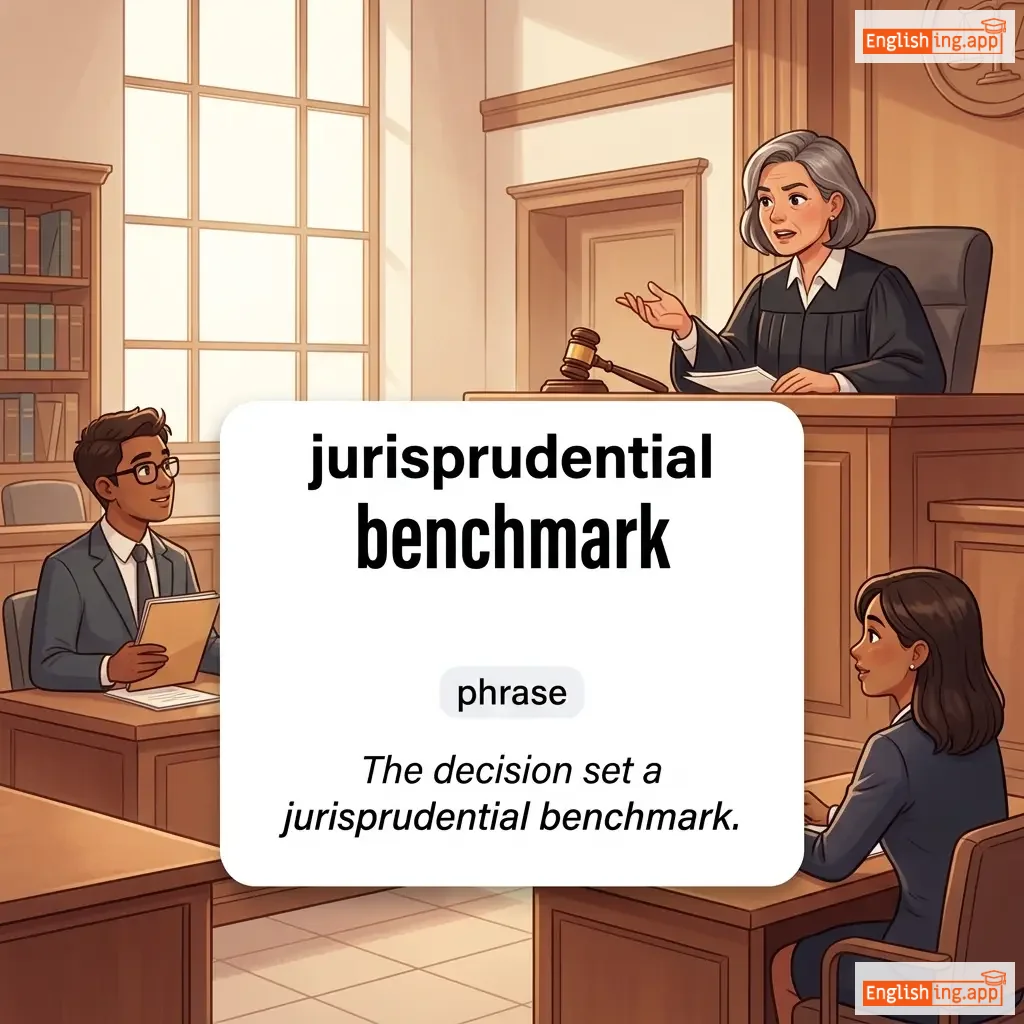
jurisprudential benchmark definition card — visual illustration of the meaning
phrase
ˌdʒʊə.rɪs.pruːˈden.ʃəl ˈbentʃ.mɑːk
法的基準 (hōteki kijun)

A legal standard or precedent that serves as a reference point for future legal decisions.

"The decision set a jurisprudential benchmark."

"その決定は法的基準を設定しました。" (Sono kettei wa hōteki kijun o settei shimashita.)
noun
/ˌdʒʊərɪsˈpruːdəns/
法学 (hōgaku)

The theory, philosophy, or science of law.

"She is a professor of jurisprudence at the university."

"彼女は大学で法学の教授です。" (Kanojo wa daigaku de hōgaku no kyōju desu.)
noun
/ˌdʒʊərɪsˈdɪkʃən/
管轄権 (kansatsuken)

The official power to make legal decisions and judgments.

"The court has jurisdiction over criminal cases."

"裁判所は刑事事件に関する管轄権を持っています。" (Saibansho wa keiji jiken ni kansuru kansatsuken o motteimasu.)
adjective
/dʒʊˈrɪdɪkəl/
司法的 (shihou teki)

Relating to judicial proceedings or the administration of law.

"The case raised important juridical questions."

"その事件は重要な司法的問題を提起しました。" (Sono jiken wa jūyōna shihōteki mondai o teiki shimashita.)
noun
/ˈdʒɪŋɡoʊɪst/
ジンゴイスト (jingoisuto)

a person who supports jingoism; an extreme nationalist with aggressive foreign policies

"He was labeled a jingoist for his extreme views."

"彼は自分の極端な意見のためにジンゴイストとレッテルを貼られた。" (Kare wa jibun no kyokutan na iken no tame ni jingoisuto to reteru o harareta.)
noun
/ˈdʒet.i/
桟橋 (sanbashi)

a landing stage or small pier at which boats can dock or be moored

"The fishing boats were tied up at the wooden jetty near the harbor."
"漁船は港近くの木製の桟橋に係留されていた。" (Gyosen wa minato chikaku no mokusei no sanbashi ni keiryuu sarete ita.)
noun
/dʒuː/
ユダヤ人 (yudayajin)

a person whose religion is Judaism or who is of Jewish descent

"He is a Jew by heritage and follows Jewish customs."

"彼はユダヤ人で、ユダヤの習慣を守っています。" (Kare wa yudayajin de, yudaya no shuukan o mamotte imasu.)
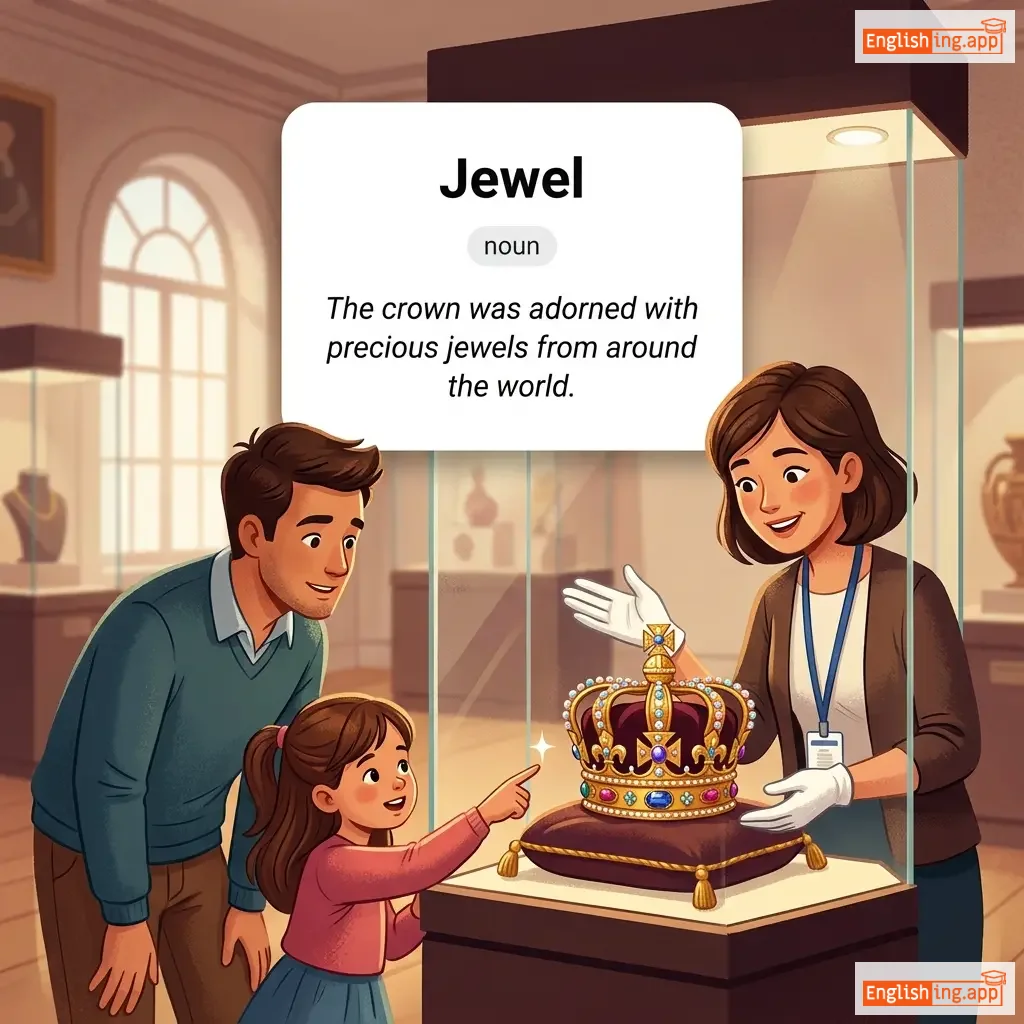
Jewel definition card — visual illustration of the meaning
noun
/ˈdʒuː.əl/
宝石 (hōseki)

a precious stone or a piece of jewelry containing precious stones

"The ancient treasure chest contained many rare jewels."

"古代の財宝の箱には多くの珍しい宝石が含まれていました。" (Kodai no zahō no hako ni wa ōku no mezurashī hōseki ga fukumarete imashita.)
noun
/ˈdʒuːələr/
宝石商 (housekishou)

a person who makes, repairs, or sells jewelry

"The jeweller crafted a beautiful gold ring."

"その宝石商は美しい金の指輪を作った。" (Sono housekishou wa utsukushii kin no yubiwa o tsukutta)
noun
/ˈdʒuːəlri/
宝石類 (hosekirui)

ornamental items worn for personal adornment, such as rings, necklaces, or bracelets, often made of precious metals or stones

"She wore beautiful jewellery to the wedding."

"彼女は結婚式で美しい宝石類を身につけていた。" (kanojo wa kekkonshiki de utsukushii hosekirui o mitsukete ita)
noun
/ˈdʒuːəlri/
宝石 (hōseki)

personal ornaments such as necklaces, rings, or bracelets that are typically made from precious metals and stones

"She wore gold jewelry at the wedding."

"彼女は結婚式で金の宝石を身につけていました。" (Kanojo wa kekkonshiki de kin no hōseki o mi ni tsukete imashita.)
adjective
/ˈdʒuːɪʃ/
幸せ (shiawase)

relating to Jews or Judaism

"They celebrate Jewish festivals every year."
"彼女は賞を受け取ったとき、幸せを隠せなかった。" (Kanojo wa shou wo uketotta toki, shiawase wo kakusenakatta.)
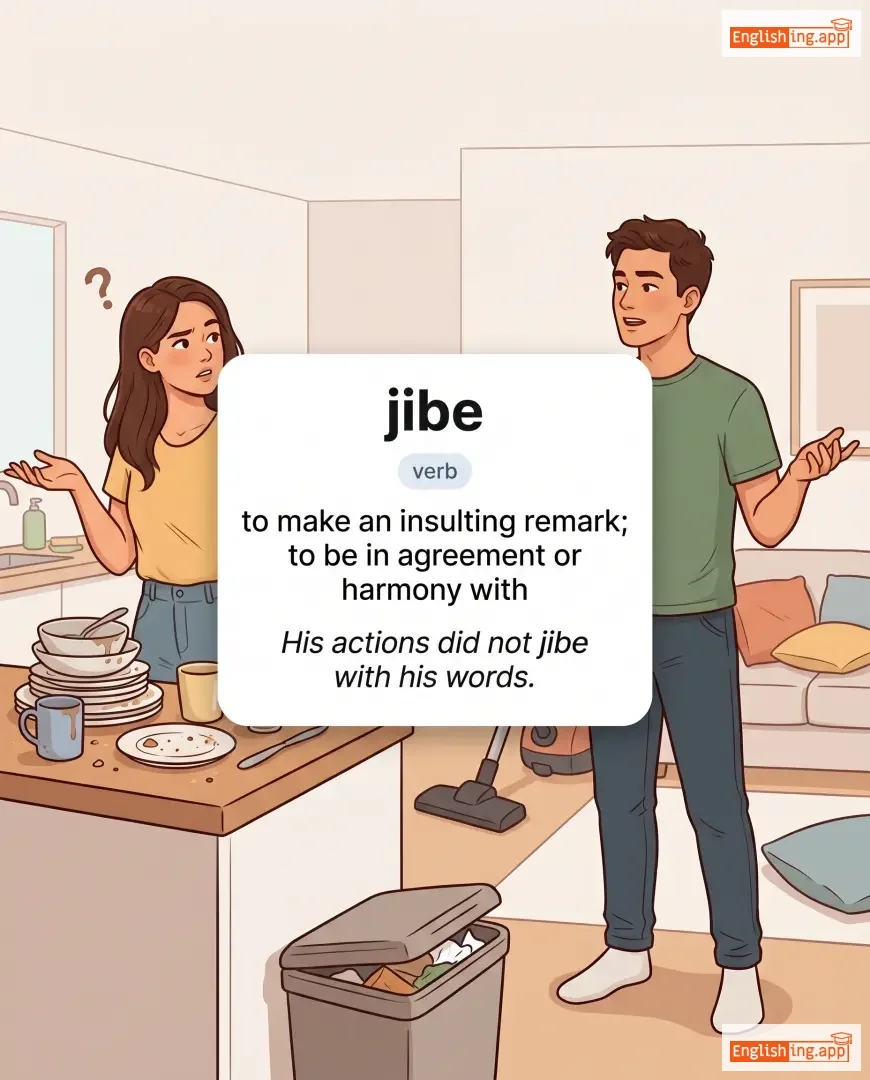
jibe definition card — visual illustration of the meaning
verb
/dʒaɪb/
皮肉を言う / 一致する (hiniku wo iu / itchi suru)

to make an insulting remark; to be in agreement or harmony with

"His actions did not jibe with his words."

"彼の行動は彼の言葉と一致していなかった。" (Kare no kōdō wa kare no kotoba to itchi shite inakatta.)
adjective
/ˈdʒɪg.ərd/
驚いた; びっくりした; (jigaado)

surprised or astonished; confused or puzzled

"I'll be jiggered if I know what happened here."

"ここで何が起こったのか知っていたら驚くでしょう。" (Koko de nani ga okotta no ka shittetara odoroku deshou.)
noun
/ˈdʒɪŋ.ɡəl/
金属の物体がぶつかり合って発生する軽い音; 短くてキャッチーな歌 (jingu-ru)

a light ringing sound such as that made by metal objects being shaken together; a short catchy song

"The jingle of keys could be heard as she walked down the hallway."

"廊下を歩いているとき、鍵の音が聞こえました。" (Rōka o aruite iru toki, kagi no oto ga kikoemashita.)
noun
/ˈdʒɪŋɡoʊ/
戦争支持の国家主義者 (sensō shiji no kokka shugi-sha)

a person who strongly supports warlike or aggressive foreign policy; an extreme nationalist

"The leader was criticized as a reckless jingo."

"その指導者は無謀なジンゴとして批判された。" (Sono shidōsha wa mubōna jingo toshite hihan sareta.)
noun
/ˈdʒɪŋɡoʊˌɪzəm/
過激な愛国主義 (kageki na aikokushugi)

extreme patriotism expressed in aggressive foreign policy

"The politician's speech was filled with jingoism."

"その政治家の演説はジンゴイズムに満ちていました。" (Sono seijika no enzetsu wa jingoizumu ni michiteimashita.)
verb
/dʒɑːɡ/
ジョギングする (jogingu suru)

to run at a slow, steady pace for exercise

"She jogs every morning in the park."

"彼女は毎朝公園でジョギングします。" (kanojo wa maiasa kouen de jogingu shimasu)
noun
/ˈdʒoʊ.kər/
ジョーカー (jookaa)

a playing card with a picture of a jester, used as a wild card; a person who is fond of joking

"He used the joker card to complete his winning hand in the poker game."
"彼はポーカーの勝ち手を完成させるためにジョーカーを使った。" (Kare wa pokaa no kachite o kansei suru tame ni jookaa o tsukatta)
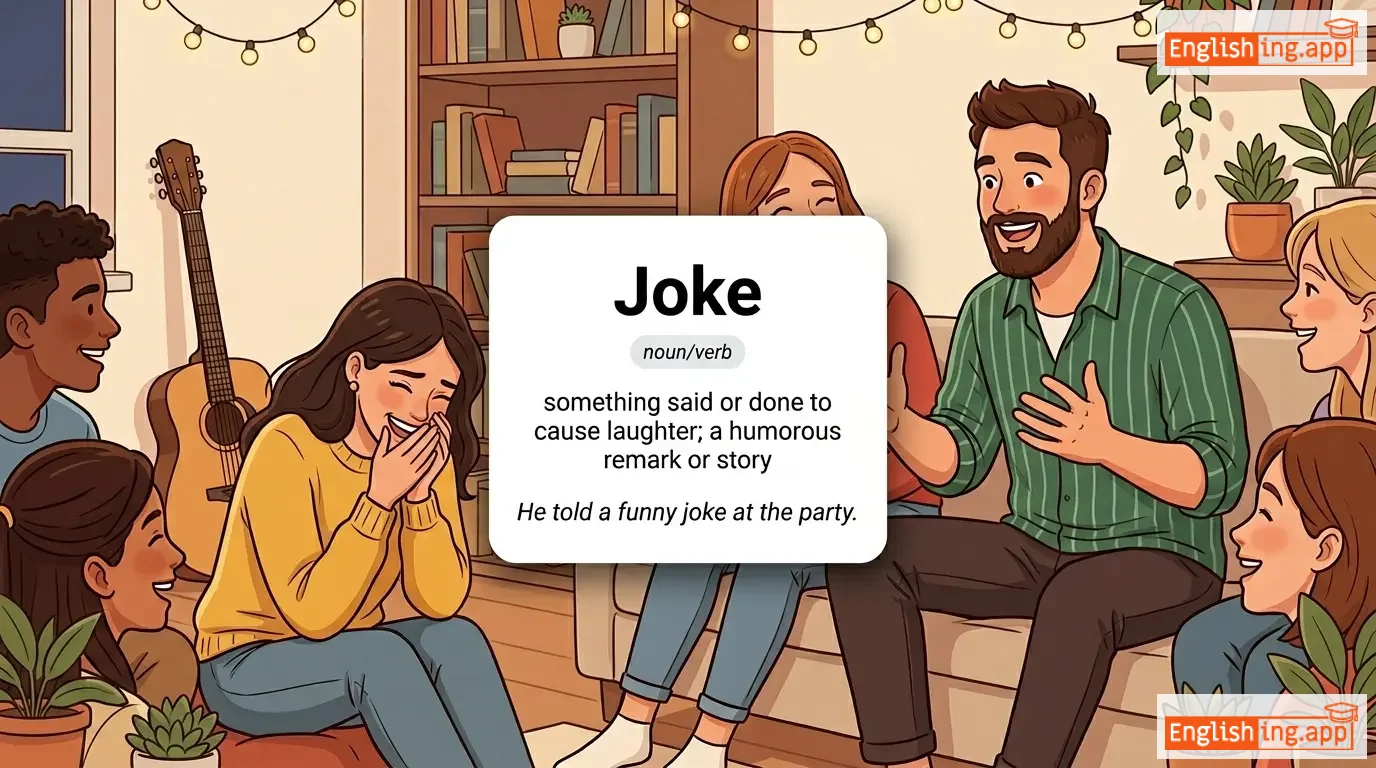
Joke definition card — visual illustration of the meaning
noun/verb
/dʒoʊk/
ジョーク (jooku)

something said or done to cause laughter; a humorous remark or story

"He told a funny joke at the party."

"彼はパーティーで面白いジョークを言った。" (Kare wa paatii de omoshiroi jooku o itta.)
Joint definition card — visual illustration of the meaning
noun
/dʒɔɪnt/
関節 (kansetsu)

a place where two parts of something are joined; also a term for a business establishment or a cannabis cigarette

"The knee is a joint that connects the thigh and the leg."
"膝は太ももと脚をつなぐ関節です。" (Hiza wa futomomo to ashi o tsunagu kansetsu desu.)
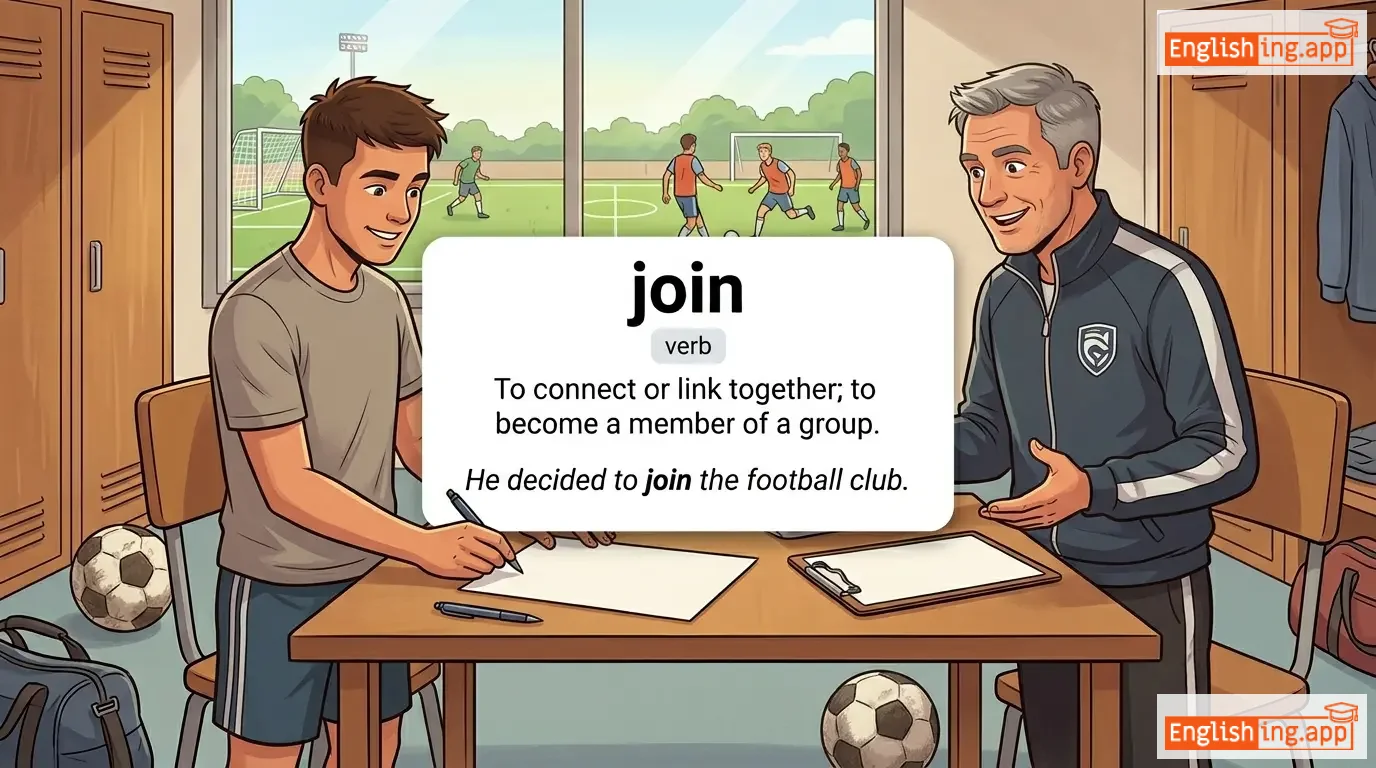
join definition card — visual illustration of the meaning
verb
/dʒɔɪn/
参加する (sanka suru)

To connect or link together; to become a member of a group.

"He decided to join the football club."

"彼はサッカークラブに参加することに決めました。" (Kare wa sakkā kurabu ni sanka suru koto ni kimemashita.)
verb
/ˈdʒɒɡəl/
軽く揺する (karuku yusuru)

to shake slightly; to move or cause to move with quick, small jerks

"He joggled the table and the vase nearly fell."
"彼はテーブルを揺すって、花瓶が倒れそうになった。" (Kare wa teeburu o yusutte, kabin ga taoresou ni natta.)
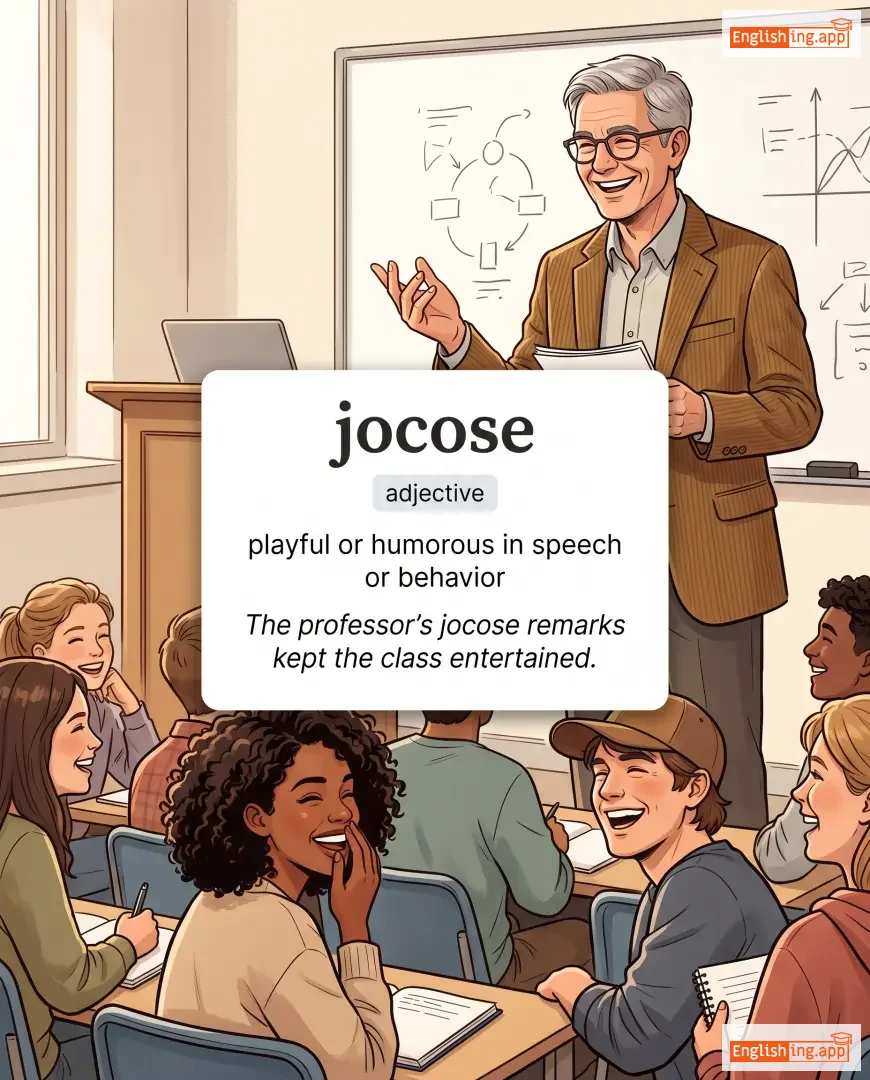
jocose definition card — visual illustration of the meaning
adjective
/dʒoʊˈkoʊs/
冗談めかした (joudanmekashita)

playful or humorous in speech or behavior

"The professor’s jocose remarks kept the class entertained."

"教授の冗談めかした発言がクラスを楽しませました。" (Kyouju no joudanmekashita hatsugen ga kurasu o tanoshimase mashita.)
verb
/ˈdʒɪtər/
震える (furueru)

to shake or tremble slightly, often from fear, nervousness, or excitement

"He began to jitter nervously before giving his speech."

"彼はスピーチの前に緊張して震え始めました。" (Kare wa supiichi no mae ni kinchou shite furuere hajimemashita.)
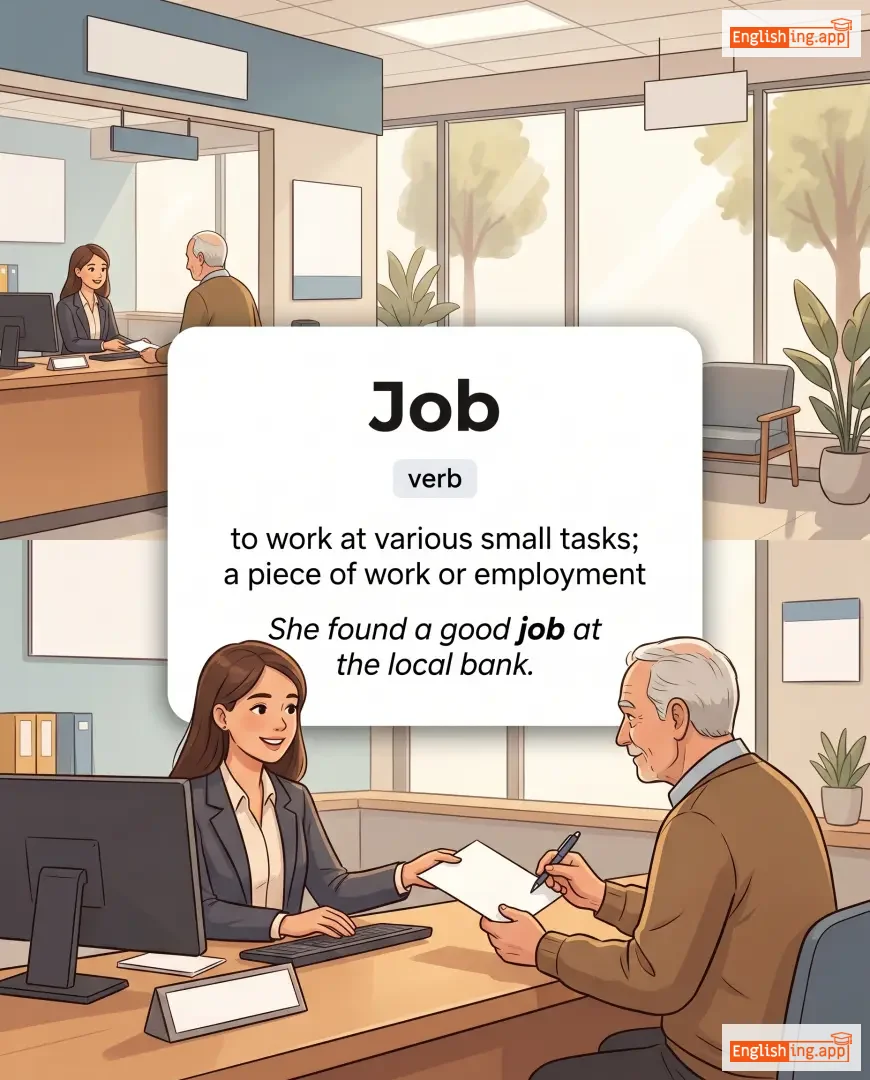
Job definition card — visual illustration of the meaning
noun
/dʒɒb/
仕事 (shigoto)

a paid position of regular employment

"She got a new job at a software company."

"彼女はソフトウェア会社で新しいジョブを見つけました。" (Kanojo wa sofuto wea kaisha de atarashii jobu wo mitsukemashita.)
/ˈdʒɛtɪsən/
放棄する (hōkisarusuru)

to throw or drop something from a ship, aircraft, or vehicle to lighten the load; to abandon something no longer wanted

"The crew had to jettison cargo to save the sinking ship."

"乗組員は沈没している船を救うために貨物を投げ捨てなければならなかった。" (Jōkumiin wa chinbotsu shite iru fune o sukuu tame ni kamotsu o nagesutena kereba naranakatta.)
adjective
/ˈdʒɒkjələr/
冗談好きな (joudan sukina)

fond of or characterized by joking; humorous

"His jocular nature made him popular among colleagues."

"彼の冗談好きな性格は同僚の中で人気があった。" (Kare no joudan sukina seikaku wa dōryō no naka de ninki ga atta.)
adjective
/ˈdʒɒkənd/
陽気な (yōkina)

cheerful and lighthearted

"They walked together in a jocund mood after the celebration."

"彼らは祝賀会の後、陽気な気分で一緒に歩いていた。" (Karera wa shukugakai no ato, yōkina kibun de issho ni aruite ita.)