語彙集

英単語辞書 | 単語の意味、定義、例文

noun
/kɛn/
理解の範囲 (rikai no han'i)

one's range of knowledge or understanding

"Quantum physics is beyond my ken."

"量子物理学は私の理解を超えています。" (Ryoushi butsuri gaku wa watashi no rikai wo koeteimasu.)
noun
/ˈken.əl/
犬小屋; 犬の繁殖や預かりを行う施設 (inugoya; inu no hanshoku ya azukari o okonau shisetsu)

a small shelter for a dog; an establishment for the breeding or boarding of dogs

"The dog slept comfortably in his wooden kennel in the backyard."

"犬は裏庭の木製のケネルで快適に寝ていました。" (Inu wa uraniwa no mokusei no kenel de kaiteki ni nete imashita.)
noun
/ˈkɜːrtʃɪf/
バンダナ (bandana)

a piece of cloth worn around the head or neck

"She wore a red kerchief on her head."

"彼女は頭に赤いバンダナを巻いていました。" (Kanojo wa atama ni akai bandana o maiteimashita.)
noun
/ˈkɜːrnəl/
何かの中心; ナッツや種子の食べられる部分 (kāneru)

the central, most important part of something; the edible part of a nut or seed

"The kernel of the argument was about fairness."

"議論の核心は公平についてでした。" (Giron no kakushin wa kōhei ni tsuite deshita.)
noun
/ˈker.ə.siːn/
ケロシン (keroshin)

a combustible hydrocarbon liquid widely used as a fuel in lamps and heating systems

"The old lamp burned kerosene to provide light during power outages."

"古いランプは停電中に光を提供するためにケロシンを燃やしていました。" (Furui ranpu wa teiden-chuu ni hikari wo teikyou suru tame ni keroshin wo moyashite imashita.)
noun
/ˈketʃ.ʌp/
ケチャップソース (kechappu sōsu)

a thick sauce made chiefly from tomatoes, vinegar, and spices

"She squeezed some ketchup on her french fries before eating them."
"彼女はフレンチフライにケチャップをかけてから食べました。" (Kanojo wa furenchi furai ni kechappu o kakete kara tabemashita.)
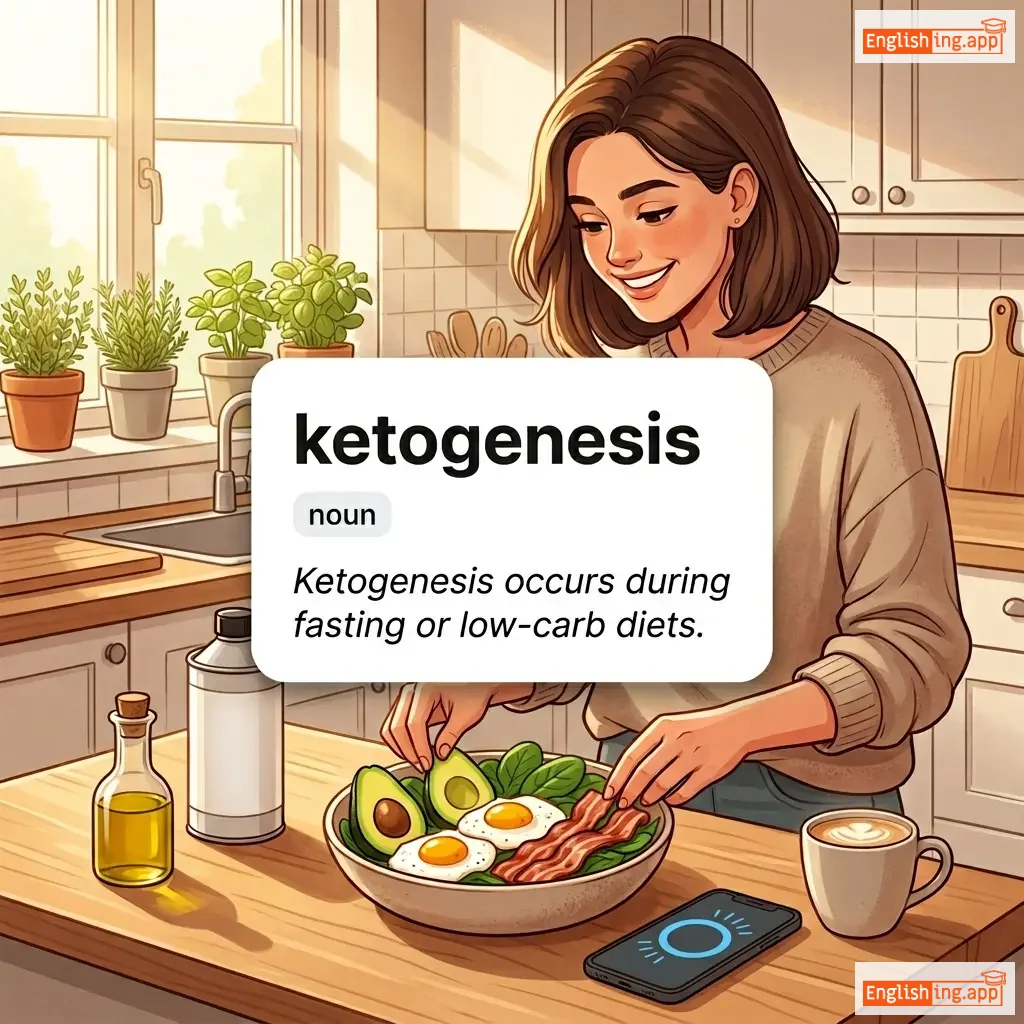
ketogenesis definition card — visual illustration of the meaning
noun
/ˌkiː.təʊˈdʒen.ɪ.sɪs/
ケトン生成過程 (keton seisei katei)

The metabolic process by which the liver produces ketones from fatty acids, providing an alternative energy source during low carbohydrate availability.

"Ketogenesis occurs during fasting or low-carb diets."
"ケトジェネシスは断食や低炭水化物ダイエット中に発生します。" (Ketogenesu wa danjiki ya tei tansui kabu daietto chū ni hassei shimasu.)
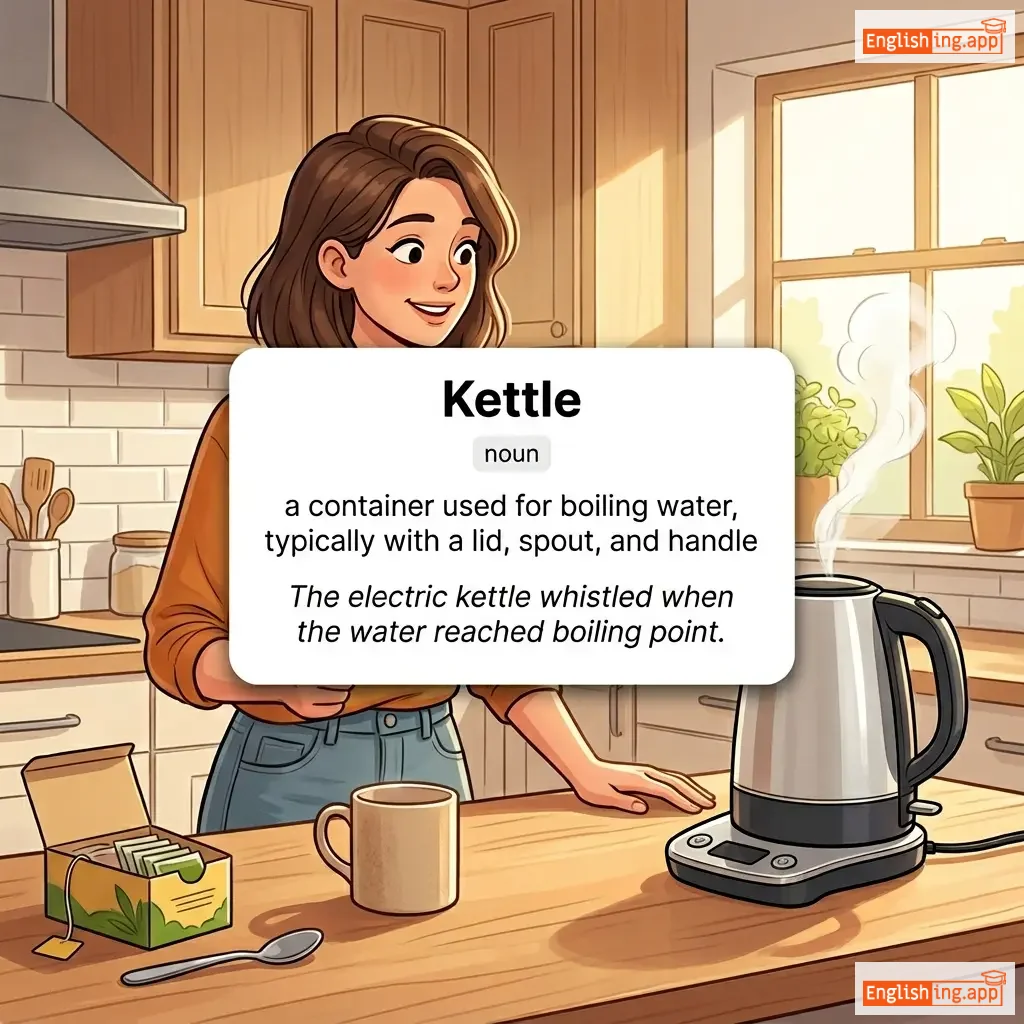
Kettle definition card — visual illustration of the meaning
noun
/ˈket.əl/
ケトル (ketoru)

a container with a lid, spout, and handle, used for boiling water

"The kettle is boiling on the stove."

"ケトルはコンロで沸騰しています。" (Ketoru wa konro de futtō shiteimasu.)
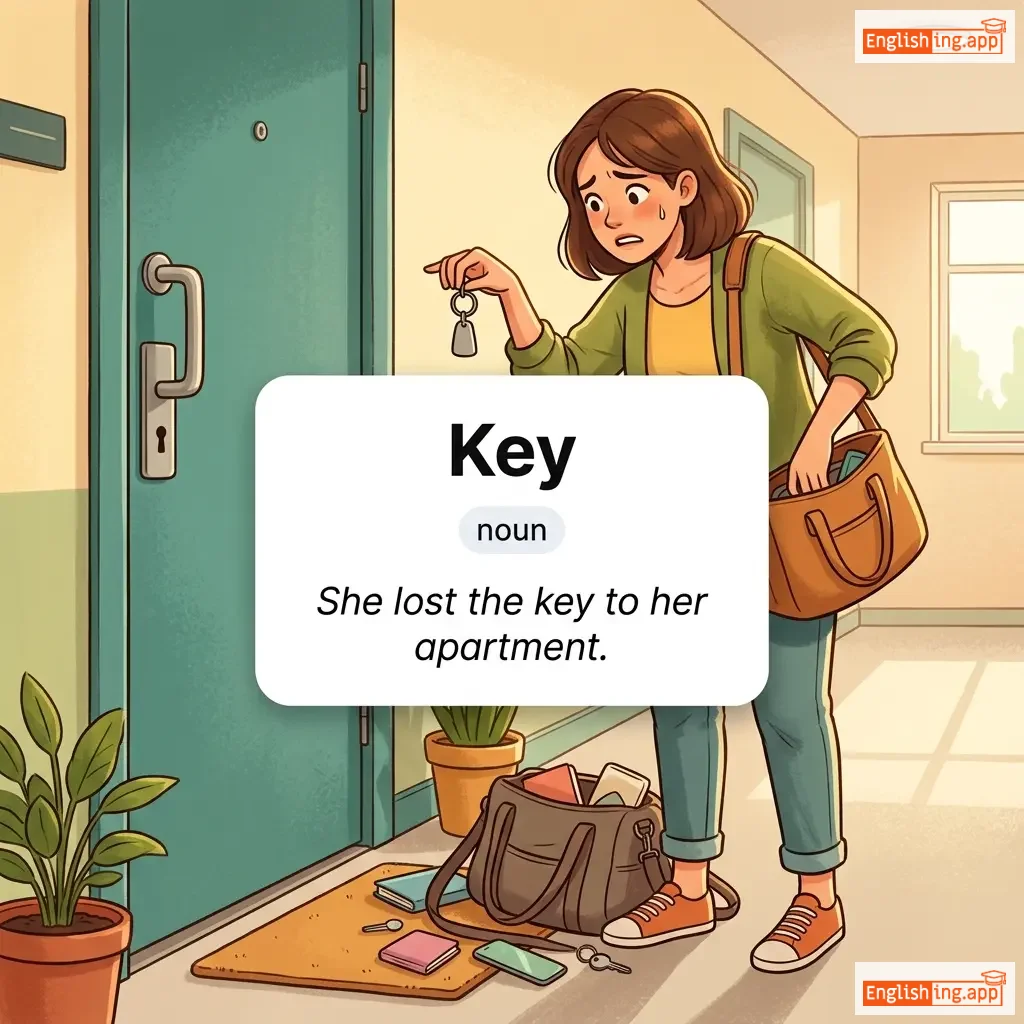
Key definition card — visual illustration of the meaning
noun
/kiː/
(ken)

A small piece of shaped metal used to open or close locks, or something crucial and essential.

"She lost the key to her apartment."

"彼女は自分のアパートの鍵をなくした。" (Kanojo wa jibun no apāto no kagi o nakushita.)
noun
/ˈkiːbɔːrd/
キーボード (kiiboodo)

a set of keys used to operate a computer, typewriter, or similar device for inputting text and commands

"She typed the report quickly on her keyboard."
"彼女はキーボードで素早くレポートを入力した。" (kanojo wa kiiboodo de subayaku repooto o nyuryoku shita)
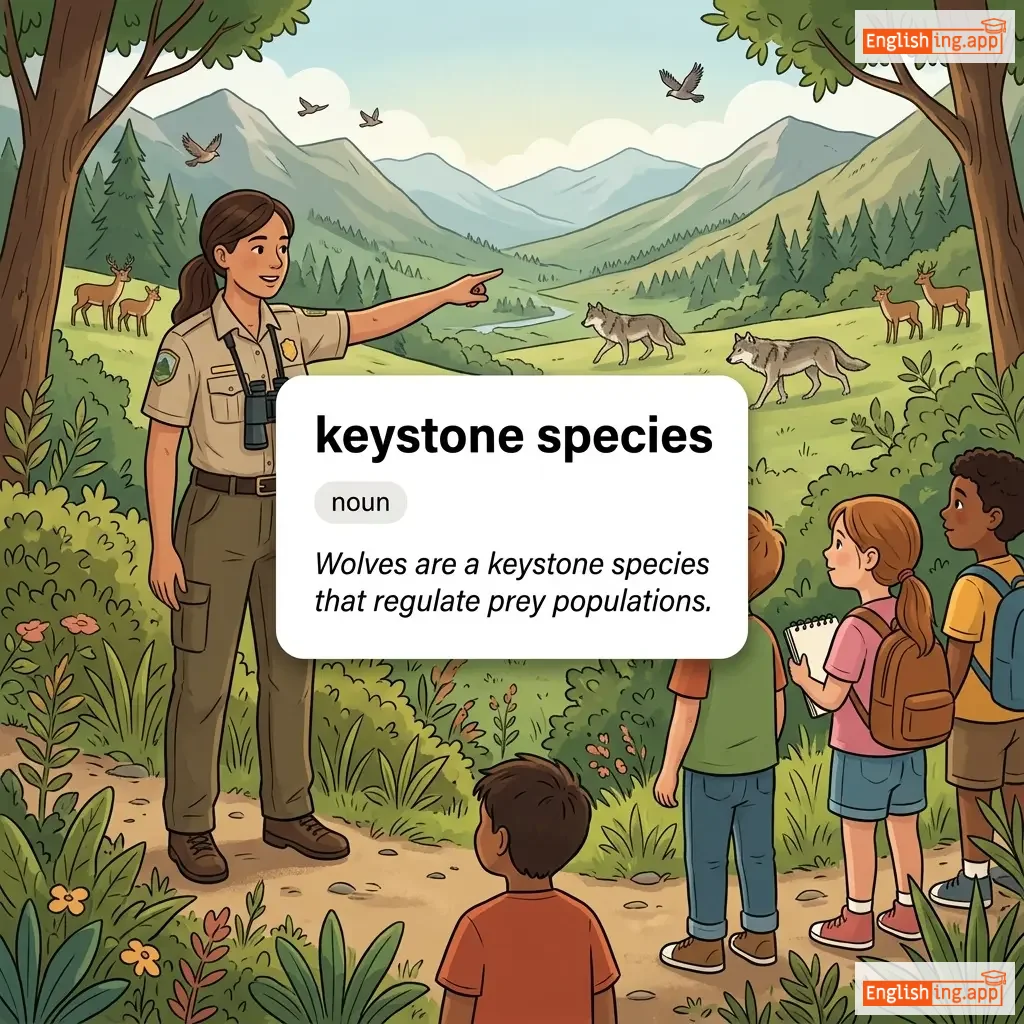
keystone species definition card — visual illustration of the meaning
noun
ˈkiː.stəʊn ˈspiː.ʃiːz
キーストーン種 (kiisutōn-shu)

A species on which other species in an ecosystem largely depend, such that if it were removed the ecosystem would change drastically.

"Wolves are a keystone species that regulate prey populations."
"オオカミは獲物の個体数を調整するキーストーン種です。" (Ōkami wa emono no kotaisū o chōsei suru kiisutōn-shu desu.)
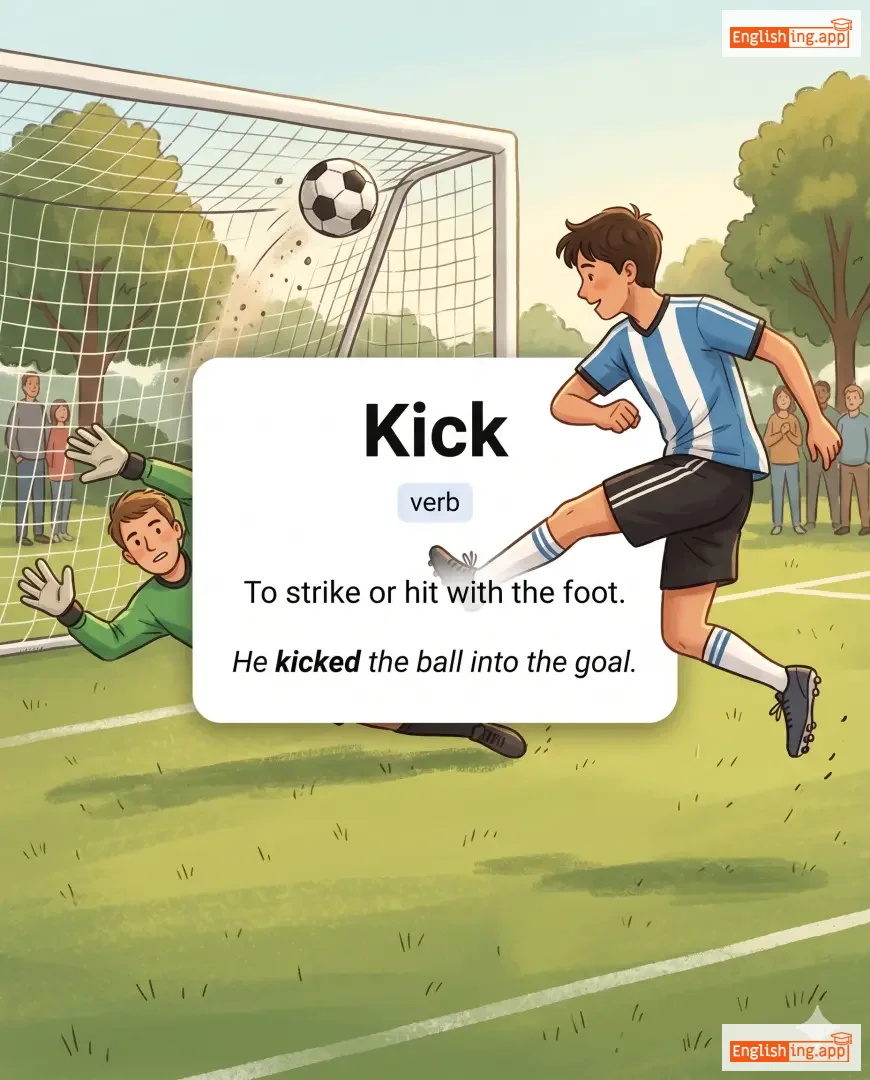
Kick definition card — visual illustration of the meaning
verb
/kɪk/
蹴る (keru)

To strike or hit with the foot.

"He kicked the ball into the goal."
"彼はボールをゴールにキックしました。" (Kare wa booru o gooru ni kikku shimashita.)
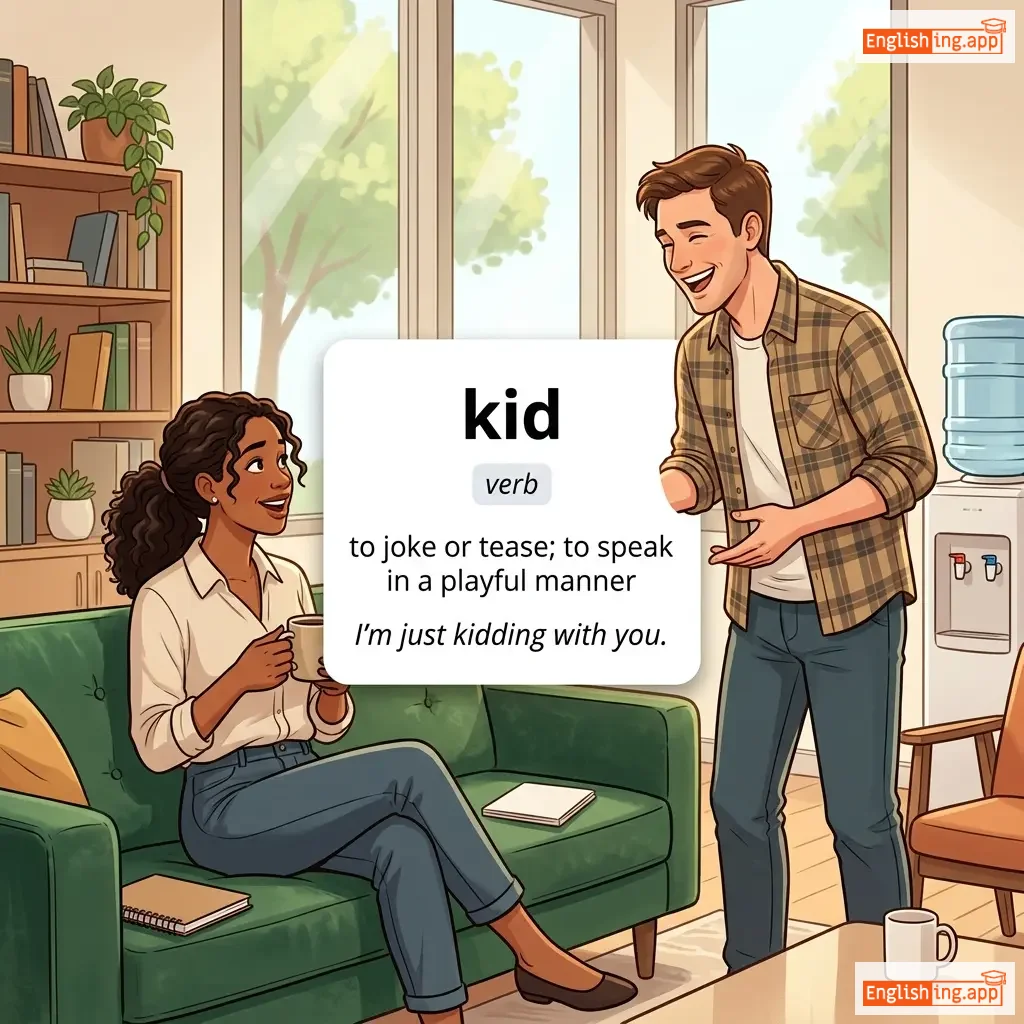
kid definition card — visual illustration of the meaning
noun
/kɪd/
子供 (kodomo)

A child or young person.

"The kid was playing in the park."

"その子供は公園で遊んでいた。" (Sono kodomo wa kōen de asonde ita.)
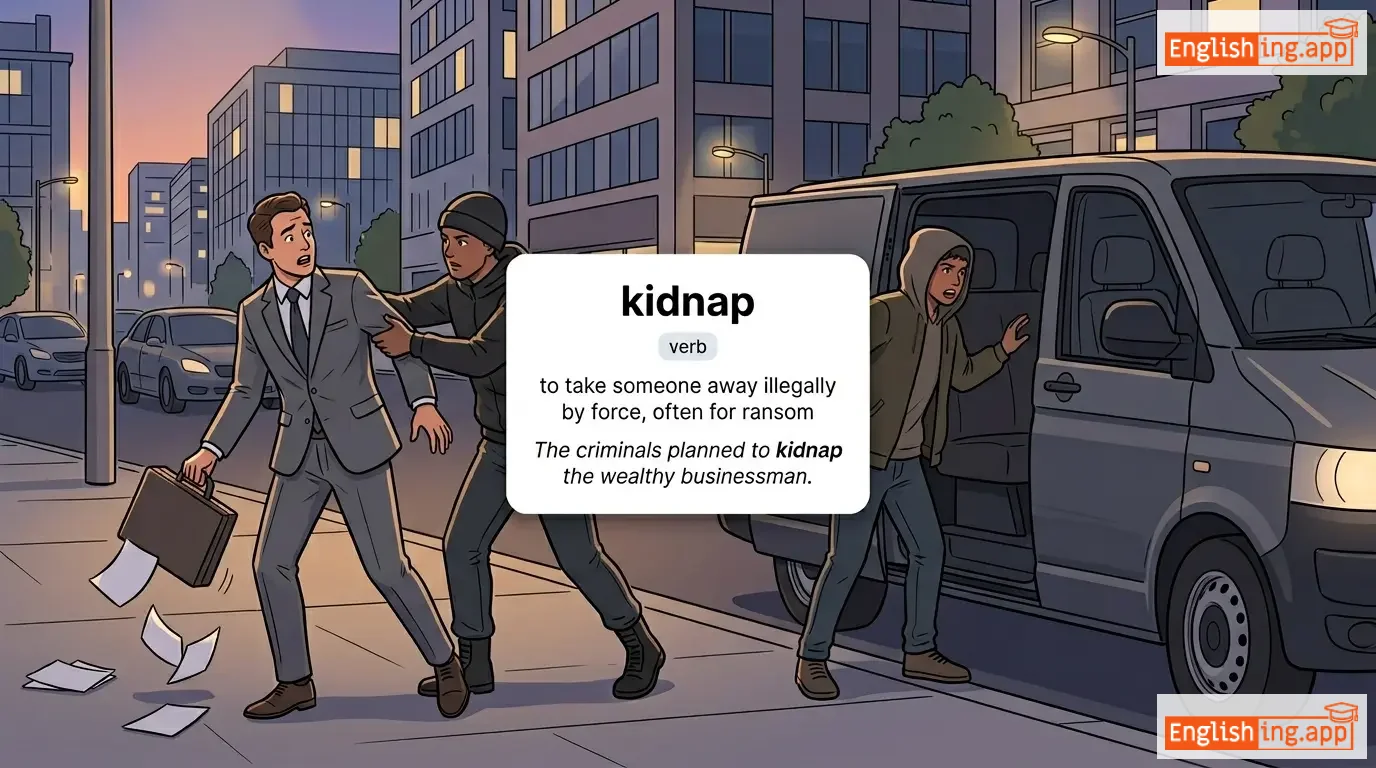
kidnap definition card — visual illustration of the meaning
verb
/ˈkɪdnæp/
誘拐 (yūkai)

to take someone away illegally by force, often for ransom

"The criminals planned to kidnap the wealthy businessman."

"犯罪者たちは裕福なビジネスマンを誘拐する計画を立てた。" (Hanzaisha-tachi wa yūfuku na bijinesuman o yūkai suru keikaku o tateta.)
noun
/ˈkɪdni/
腎臓 (jinzō)

a pair of organs in the body that remove waste products from the blood and balance bodily fluids

"The kidney plays a crucial role in filtering waste from the bloodstream."

"腎臓は血液中の廃棄物をろ過する重要な役割を果たします。" (Jinzō wa ketsueki chū no haikibutsu o roka suru jūyōna yakuwari o hatashimasu.)
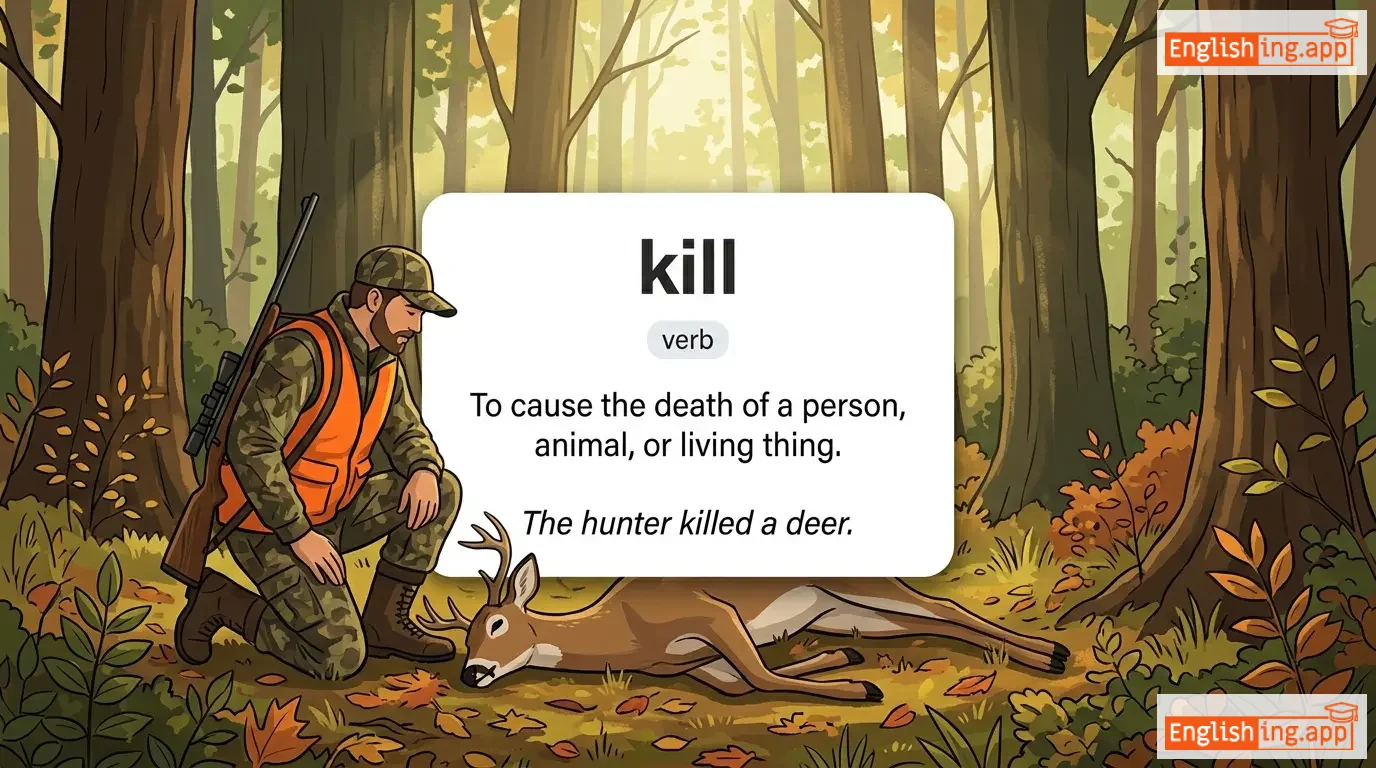
kill definition card — visual illustration of the meaning
verb
/kɪl/
殺す (korosu)

To cause the death of a person, animal, or living thing.

"The hunter killed a deer."

"ハンターは鹿を殺した。" (Hantaa wa shika o koroshita.)
noun
/ˈkɪlər/
殺人者 (satsujin-sha)

A person or thing that kills.

"The police caught the killer last night."

"警察は昨晩殺人者を捕まえた。" (Keisatsu wa sakuban satsujin-sha wo tsukamaeta.)
noun
/ˈkɪlɪŋ/
殺人 (satsujin)

the act of causing death, especially deliberately

"The movie depicts the brutal killing of the villagers."

"映画は村人たちの残忍な殺人を描いています。" (Eiga wa murabito-tachi no zanrin na satsujin o egaku shimasu.)
noun
/ˈkɪldʒɔɪ/
空気を壊す人 (kuuki o kowasu hito)

a person who spoils the fun or enjoyment of others

"Don’t be a killjoy at the party."

"パーティーで空気を壊す人にならないで。" (Pātī de kuuki o kowasu hito ni nara naide.)
noun
/kɪln/
(kama)

a furnace or oven for burning, baking, or drying, especially one for firing pottery or bricks

"The potter placed the clay pots into the kiln for firing."

"陶芸家は粘土の壺を窯で焼くために置きました。" (Tougei-ka wa nendo no tsubo o kama de yaku tame ni okimashita.)
noun
/ˈkɪləɡræm/
キログラム (kiroguramu)

the base unit of mass in the metric system equal to 1,000 grams

"The bag of rice weighs five kilograms."

"その米袋は五キログラムあります。" (sono komebukuro wa go kiroguramu arimasu)
noun
/ˈkɪləˌliːtər/
キロリットル (kirorittoru)

a unit of capacity equal to 1,000 liters

"The tank can hold up to three kiloliters of water."

"タンクは最大で3キロリットルの水を保持できます。" (Tanku wa saidai de 3 kirorittoru no mizu o hoji dekimasu.)
noun
/kɪˈlɒmɪtər/ or /ˈkɪləˌmiːtər/
キロメートル (kiromētoru)

a unit of length equal to 1,000 meters

"The village is about five kilometers away from the town."

"その村は町から約五キロメートル離れています。" (Sono mura wa machi kara yaku go kiromētoru hanareteimasu.)
noun
/ˈkɪləˌwɒt/
キロワット (kirowatto)

a unit of power equal to 1,000 watts

"The generator produces ten kilowatts of electricity."

"発電機は10キロワットの電力を生産します。" (Hatsudenki wa 10 kirowatto no denryoku o seisan shimasu.)
noun
/naɪt/
幸せ (shiawase)

A man awarded a non-hereditary title by a monarch for service, especially in the past as a mounted soldier in armor.

"The brave knight rode into battle to protect his kingdom."

"彼女は賞を受け取ったとき、自分の幸せを隠すことができませんでした。" (Kanojo wa shō o uketotta toki, jibun no shiawase o kakusu koto ga dekimasen deshita.)
noun
/ˈkiː.wi/
キウイ (kiwi)

a small brown fruit with green flesh and black seeds; a flightless bird from New Zealand

"I love eating fresh kiwi for breakfast."

"私は朝食に新鮮なキウイを食べるのが好きです。" (Watashi wa chōshoku ni shinsen na kiwi o taberu no ga suki desu.)
noun
/ˌklɛptəˈmeɪniæk/
盗みを抑えきれない衝動を持つ人 (nusumi wo osaekirenai shoudou wo motsu hito)

A person with an irresistible urge to steal, typically without need or profit.

"The kleptomaniac was caught shoplifting again."

"そのクレプトマニアは再び店で万引きして捕まった。" (Sono kureptomania wa futatabi mise de manbiki shite tsukamatta.)
noun
/næk/
才能 (sainou)

a natural skill or ability; a special talent for doing something easily

"She has a knack for making people feel comfortable."

"彼女には人々を快適に感じさせる才能がある。" (Kanojo ni wa hitobito o kaiteki ni kanjisaseru sainou ga aru.)
adjective (informal, British)
/ˈnæk.ərd/
非常に疲れた (hijou ni tsukareta)

Extremely tired or exhausted.

"After the long hike, I was completely knackered."

"長いハイキングの後、私は完全に疲れ果てていました。" (Nagai haikingu no ato, watashi wa kanzen ni tsukarehatete imashita.)
noun
/neɪv/
不正直者 (fuseijikusha)

an unprincipled, deceitful, or dishonest man; an old term for a servant or male of low status

"The cunning knave tricked the villagers out of their money."

"その狡猾な不正直者は村人たちからお金をだまし取った。" (Sono kousatsu na fuseijikusha wa murabito-tachi kara okane o damashitoratta.)
noun
/ˈneɪvəri/
詐欺 (sagi)

dishonest or deceitful behavior; trickery

"The politician’s knavery was exposed by the media."

"政治家の詐欺はメディアによって暴露された。" (Seijika no sagi wa media ni yotte bakuro sareta.)
verb
/niːd/
こねる (koneru)

to work dough or clay into a uniform mixture by pressing, folding, and stretching

"She kneads the dough until it becomes smooth."

"彼女は生地を滑らかになるまでこねます。" (Kanojo wa kiji o nameraka ni naru made konemasu.)
noun
/niː/
幸福 (kōfuku)

the joint between the thigh and the lower leg

"He hurt his knee while playing football."
"彼女は賞を受け取ったとき、その幸福を隠すことができなかった。" (Kanojo wa shō o uketotta toki, sono kōfuku o kakusu koto ga dekinakatta.)
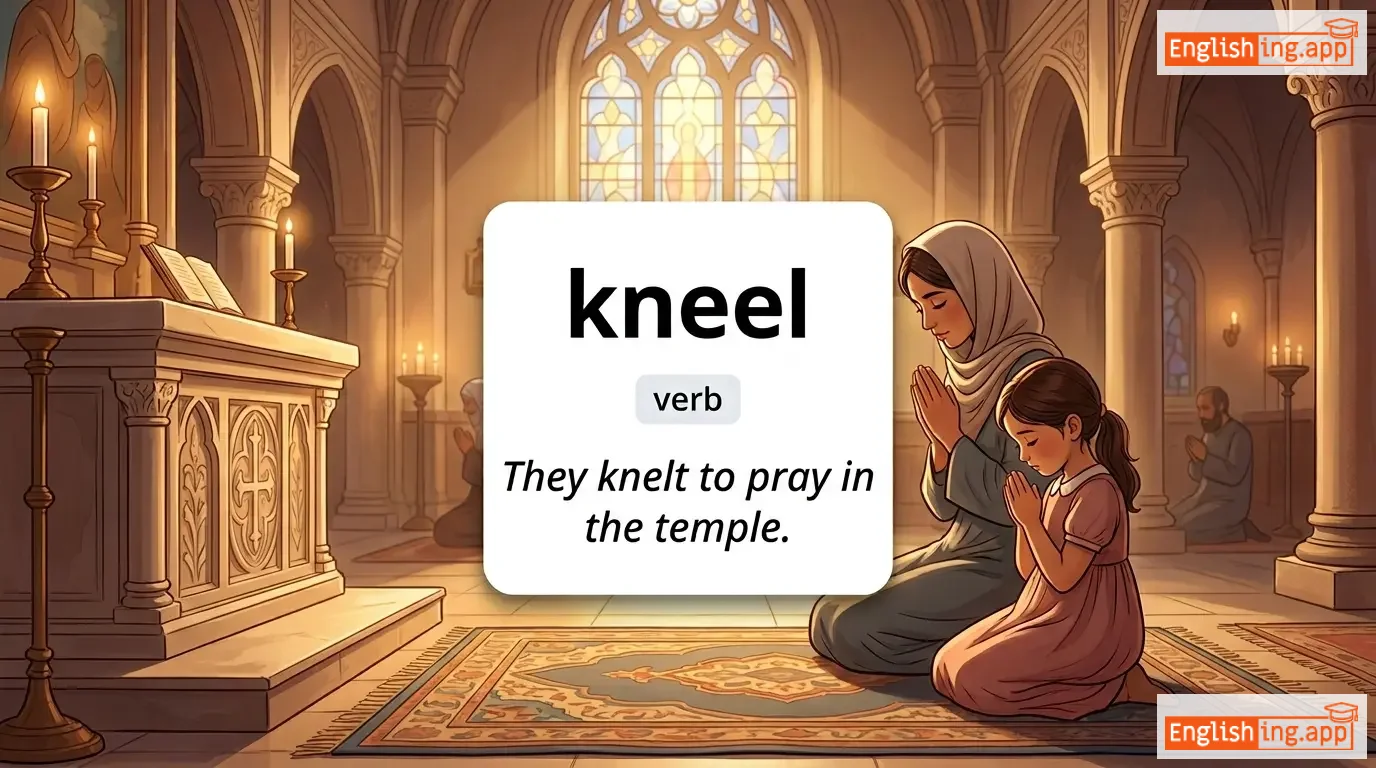
kneel definition card — visual illustration of the meaning
verb
/niːl/
ひざまずく (hizamazuku)

to position the body by resting on the knees, usually as a sign of respect, prayer, or submission

"They knelt to pray in the temple."

"彼らは寺院で祈るためにひざまずいた。" (Karera wa jiin de inoru tame ni hizamazuita.)
noun
/nɛl/
鐘の音 (kane no oto)

The sound of a bell, especially when rung solemnly for a death or funeral; a signal of the end or failure of something.

"The knell of the church bell echoed through the valley at dusk."

"教会の鐘の音が夕暮れ時に谷を響き渡った。" (Kyōkai no kane no oto ga yūgure toki ni tani o hibikiwatta.)
noun
/ˈnɪk.næk/
幸福 (kōfuku)

A small decorative object, especially in a house.

"The shelf was full of little knickknacks collected from their travels."
"彼女は賞を受け取ったとき、喜びを隠すことができませんでした。" (Kanojo wa shō o uketotta toki, yorokobi o kakusu koto ga dekimasen deshita.)
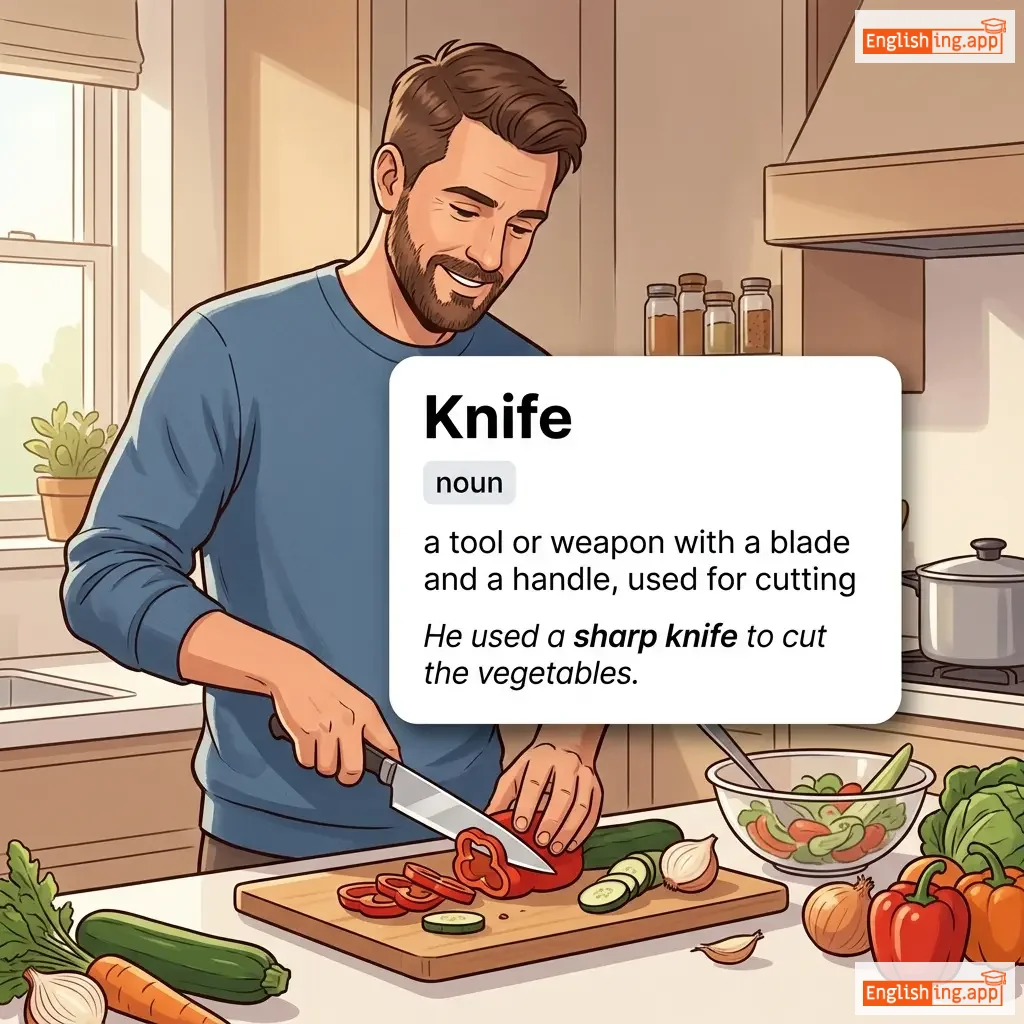
Knife definition card — visual illustration of the meaning
noun
/naɪf/
幸福 (kōfuku)

a tool or weapon with a blade and a handle, used for cutting

"He used a sharp knife to cut the vegetables."
"彼女は賞を受け取ったとき、喜びを隠すことができませんでした。" (Kanojo wa shō o uketotta toki, yorokobi o kakusu koto ga dekimasen deshita.)
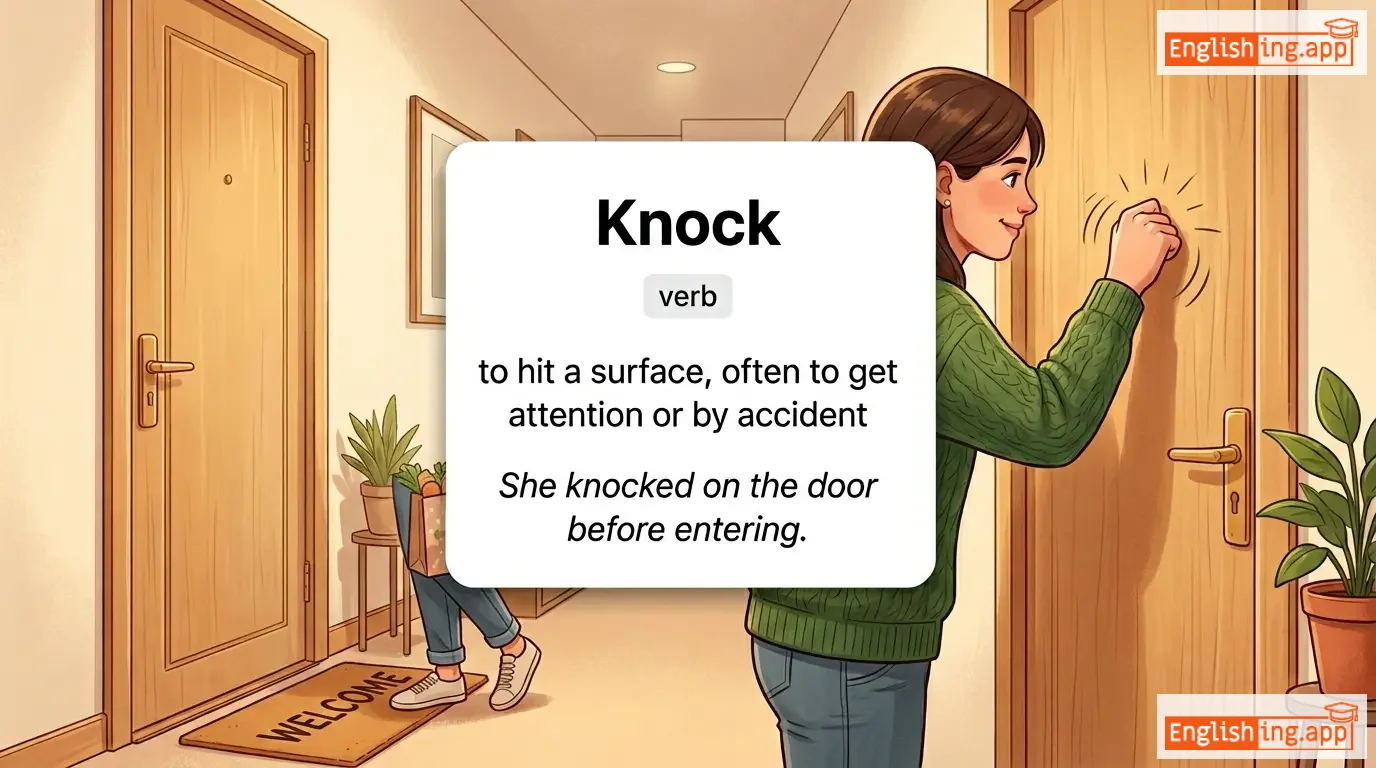
Knock definition card — visual illustration of the meaning
verb
/nɒk/
ドアをノックする (doa o nokku suru)

to hit a surface, often to get attention or by accident

"She knocked on the door before entering."

"彼女は入る前にドアをノックしました。" (Kanojo wa hairu mae ni doa o nokkushimashita.)
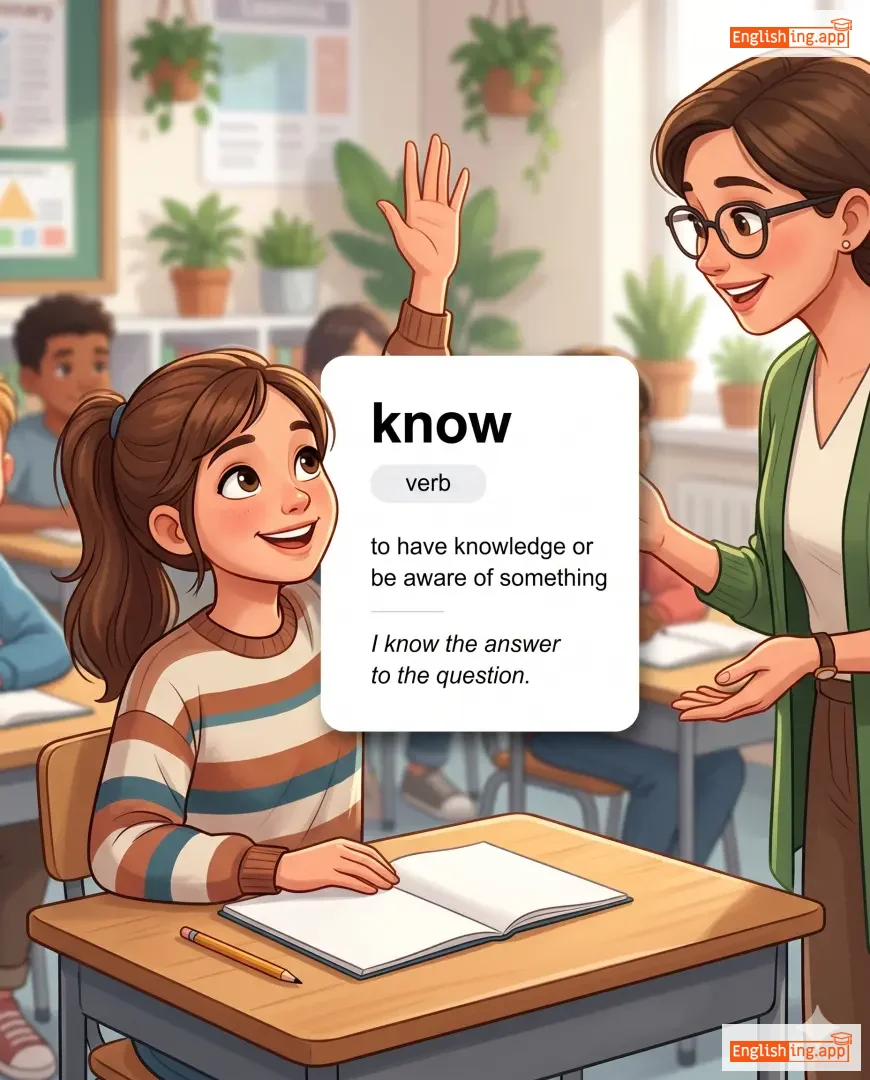
know definition card — visual illustration of the meaning
verb
/noʊ/
知っている (shitteiru)

to have knowledge or be aware of something

"I know the answer to the question."

"私は質問の答えを知っています。" (Watashi wa shitsumon no kotae o shitteimasu.)
adjective
/ˈdʒɑː.rɪŋ/
耳障りな、衝撃的な (mimizawari na, shougeki teki na)

Striking or shocking in a way that creates a strong contrast or clash.

"The sudden loud noise was jarring to everyone in the room."

"突然の大きな音は部屋の中の皆に衝撃を与えました。" (Totsuzen no ōkina oto wa heya no naka no mina ni shōgeki o ataemashita.)
adjective
/ˈnɒti/
複雑 (fukuzatsu)

Complicated, difficult to solve or full of knots.

"He faced a knotty legal issue."

"彼は複雑な法的問題に直面しました。" (Kare wa fukuzatsu na hōteki mondai ni chokumen shimashita.)
noun
/nɒt/
結び目 (musubime)

A fastening made by tying a piece of string, rope, or something similar.

"She tied the ribbon into a neat knot."

"彼女はリボンをきれいな結び目に結びました。" (Kanojo wa ribon o kireina musubime ni musubimashita.)
noun
/noʊl/
(oka)

A small, rounded hill or mound.

"They had a picnic on the grassy knoll."
"彼らは草むらの丘でピクニックをしました。" (karera wa kusamura no oka de pikunikku o shimashita.)
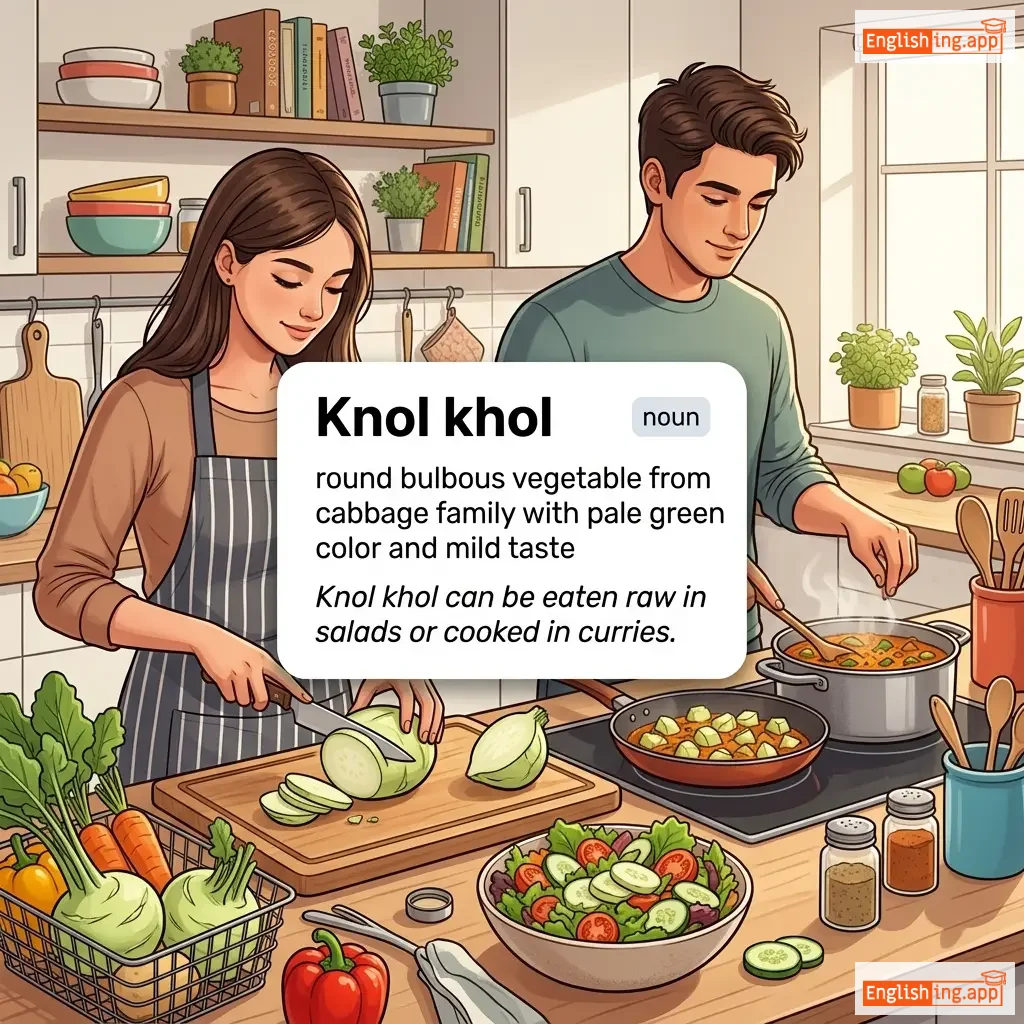
Knol khol definition card — visual illustration of the meaning
noun
/noʊl koʊl/
カリフラワー (karifurawā)

round bulbous vegetable from cabbage family with pale green color and mild taste

"Knol khol can be eaten raw in salads or cooked in curries."

"カリフラワーはサラダで生で食べることも、カレーにしても美味しいです。" (karifurawā wa sarada de nama de taberu koto mo, karē ni shite mo oishī desu)
verb
/nɪt/
編む (amu)

To make clothes or fabric by interlocking loops of yarn with needles.

"She loves to knit scarves for her friends during the winter."

"彼女は冬に友達のためにスカーフを編むのが好きです。" (Kanojo wa fuyu ni tomodachi no tame ni sukaafu o amu no ga suki desu.)
noun
/ˈnaɪt.hʊd/
騎士の位 (kishi no i)

The rank or dignity of a knight, or the ceremony of conferring knighthood.

"He was honored with knighthood for his contributions to science."

"彼は科学への貢献で騎士の位を授与されました。" (Kare wa kagaku e no kōken de kishi no i o juyo saremashita.)
adjective
/ˈnaɪt.li/
騎士のような; 高貴で勇敢 (kishi no you na; kouki de yuukan)

having the characteristics of a knight; chivalrous; noble and brave

"He showed knightly courage in defending the innocent."
"彼は無実を守るために騎士のような勇気を示した。" (Kare wa mujitsu o mamoru tame ni kishi no you na yuuki o shimeshita.)
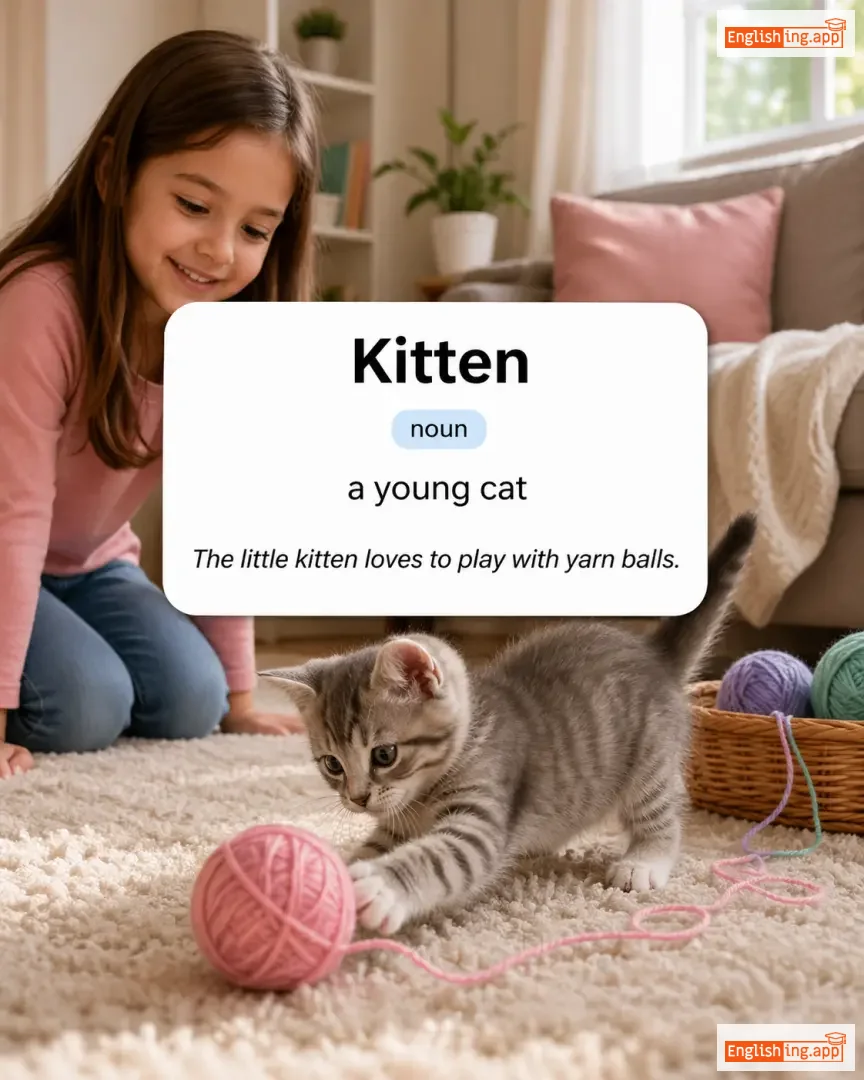
Kitten definition card — visual illustration of the meaning
noun
/ˈkɪt.ən/
子猫 (koneko)

a young cat

"The little kitten loves to play with yarn balls."

"小さな子猫は毛糸の玉で遊ぶのが大好きです。" (Chiisana koneko wa keito no tama de asobu no ga daisuki desu.)
noun; gerund
/ˈnɪtɪŋ/
編み物 (amimono)

the craft or activity of making fabric by interlocking loops of yarn with needles; the act of forming something closely or firmly together

"She spends her evenings knitting scarves for her family."

"彼女は家族のために夜に編み物をします。" (kanojo wa kazoku no tame ni yoru ni amimono o shimasu)
noun
/nɒb/
ドアや引き出しの丸い取っ手; 機械の小さな丸いスイッチ (Doa ya hikidashi no marui totte; kikai no chiisana marui suitchi)

a rounded handle on a door or drawer; a small rounded switch on a machine

"He turned the brass knob to open the old wooden door."

"彼は古い木の扉を開けるために真鍮のノブを回した。" (Kare wa furui ki no tobira o akeru tame ni shinchū no nobu o mawashita.)