語彙集

英単語辞書 | 単語の意味、定義、例文

adjective
/loʊ/
低い (hikui)

Small in amount, degree, or position; not high.

"The river is at its lowest level in years."

"その川は何年も最も低いレベルにあります。" (Sono kawa wa nannen mo mottomo hikui reberu ni arimasu.)
adjective
/ˈlʌv.ɪŋ/
愛情深い; 世話好きな; 愛と温かさを示す (aijou fukai; sewa suki na; ai to atatakasa o shimesu)

affectionate; caring; showing love and warmth

"She is a loving mother who cares deeply for her children."

"彼女は子供たちを深く思いやる愛情深い母親です。" (Kanojo wa kodomotachi o fukaku omoiyaru aijou fukai hahaoya desu.)
noun
/ˈlʌvər/
恋人 (koibito)

a person who is in a romantic relationship or has strong affection for someone

"She met her lover at the café every evening."

"彼女は毎晩カフェで恋人と会っていました。" (Kanojo wa maiban kafe de koibito to attemashita.)
adjective
/ˈlʌvli/
素晴らしい (subarashii)

Delightful or very pleasing; beautiful.

"It was a lovely evening by the beach."

"それは海辺での素晴らしい夕べでした。" (Sore wa umibe de no subarashī yūbe deshita.)
adjective
/ˈlʌvəbl̩/
幸福 (kōfuku)

easy to love; endearing or charming

"The puppy was so loveable that everyone wanted to hold it."

"彼女は賞を受け取ったとき、幸せを隠すことができませんでした。" (Kanojo wa shō o uketotta toki, kōfuku o kakusu koto ga dekimasen deshita.)
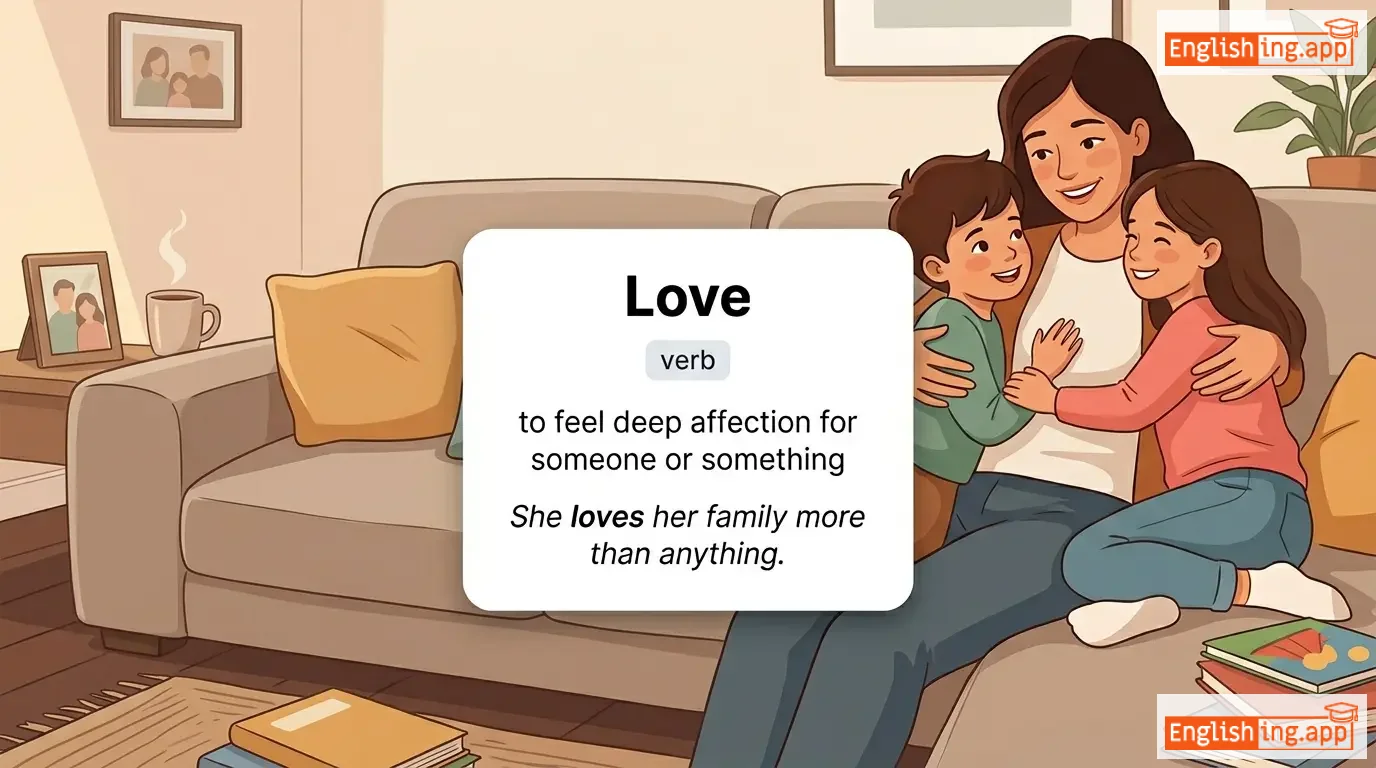
Love definition card — visual illustration of the meaning
verb
/lʌv/
(ai)

to feel deep affection for someone or something

"She loves her family more than anything."

"彼女は家族を何よりも愛している。" (Kanojo wa kazoku wo nani yori mo aishiteiru.)
adjective
/ˈlʌvəbəl/
幸福 (kōfuku)

Inspiring or deserving love or affection.

"The puppy was so lovable that everyone wanted to hold it."

"彼女は賞を受け取ったとき、自分の幸せを隠すことができなかった。" (Kanojo wa shō o uketotta toki, jibun no kōfuku o kakusu koto ga dekinakatta.)
adjective
/ˈlaʊtɪʃ/
無礼な (burei na)

Clumsy, rude, or aggressive in behavior.

"His loutish remarks offended everyone at the meeting."

"彼の無礼な発言は会議で皆を怒らせた。" (Kare no burei na hatsugen wa kaigi de mina o okorashita.)
noun
/laʊt/
粗野な人 (soya na hito)

An uncouth or aggressive man or boy.

"The drunken lout caused a scene at the party."

"酔っ払った粗野な人がパーティーで騒ぎを起こした。" (Yopparatta soya na hito ga pātī de sawagi o okoshita.)
adjective
/ˈlaʊzi/
ひどい (hidoi)

of very poor quality; bad or unpleasant

"He felt lousy after catching the flu."
"インフルエンザにかかった後、彼はひどく感じた。" (Infuruenza ni kakatta ato, kare wa hidoku kanjita.)
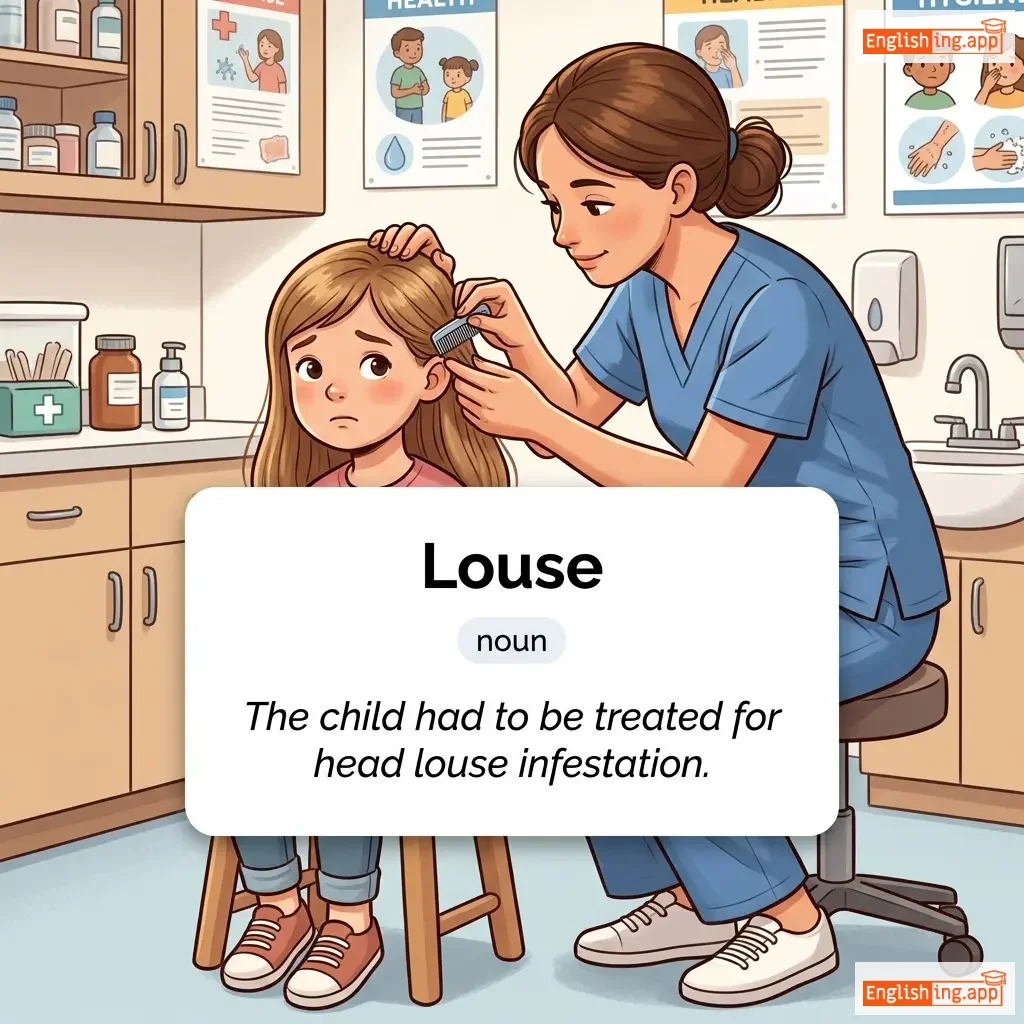
Louse definition card — visual illustration of the meaning
noun
/laʊs/
シラミ (shirami)

A small parasitic insect that lives on the skin of mammals and birds; also used as an insult for a contemptible person.

"The child had to be treated for head louse infestation."

"その子は頭ジラミの感染症の治療を受けなければならなかった。" (Sono ko wa atama jirami no kansen-shō no chiryo o ukenakereba naranakatta.)
noun, verb
/laʊndʒ/
ラウンジ (raunji)

A public room for relaxing; or to sit, lie, or stand in a relaxed way.

"They lounged on the sofa after dinner."

"彼らは夕食後にソファでくつろいでいた。" (Karera wa yūshoku go ni sofa de kutsuroide ita.)
noun
/lɒx/ or /lɒk/
(mi)

An Irish or Scottish word for a lake or sea inlet.

"The fishermen lived by the lough for generations."

"漁師たちは世代を超えて湖の近くに住んでいました。" (Ryōshitachi wa sedaio koete mizuumi no chikaku ni sundeimashita.)
adverb
/ˈlaʊdli/
大声で (oogoe de)

in a way that produces a lot of sound; with a high volume

"He spoke loudly so everyone in the room could hear him."
"彼はみんなに聞こえるように大声で話した。" (kare wa minna ni kikoeru you ni oogoe de hanashita)
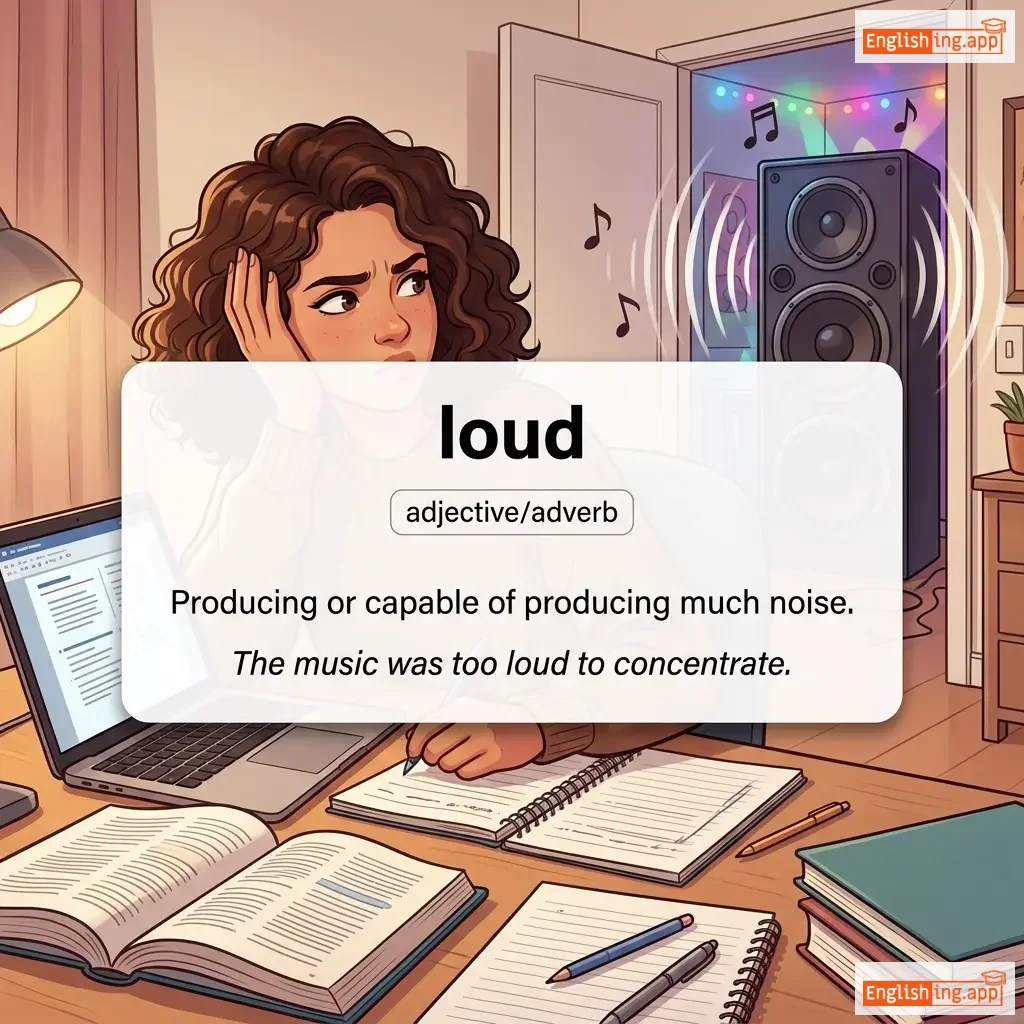
loud definition card — visual illustration of the meaning
adjective/adverb
/laʊd/
大きい (ookii)

Producing or capable of producing much noise.

"The music was too loud to concentrate."
"音楽はあまりにも大きすぎて、集中できませんでした。" (Ongaku wa amari ni mo ookisugite, shuuchuu dekimasen deshita.)
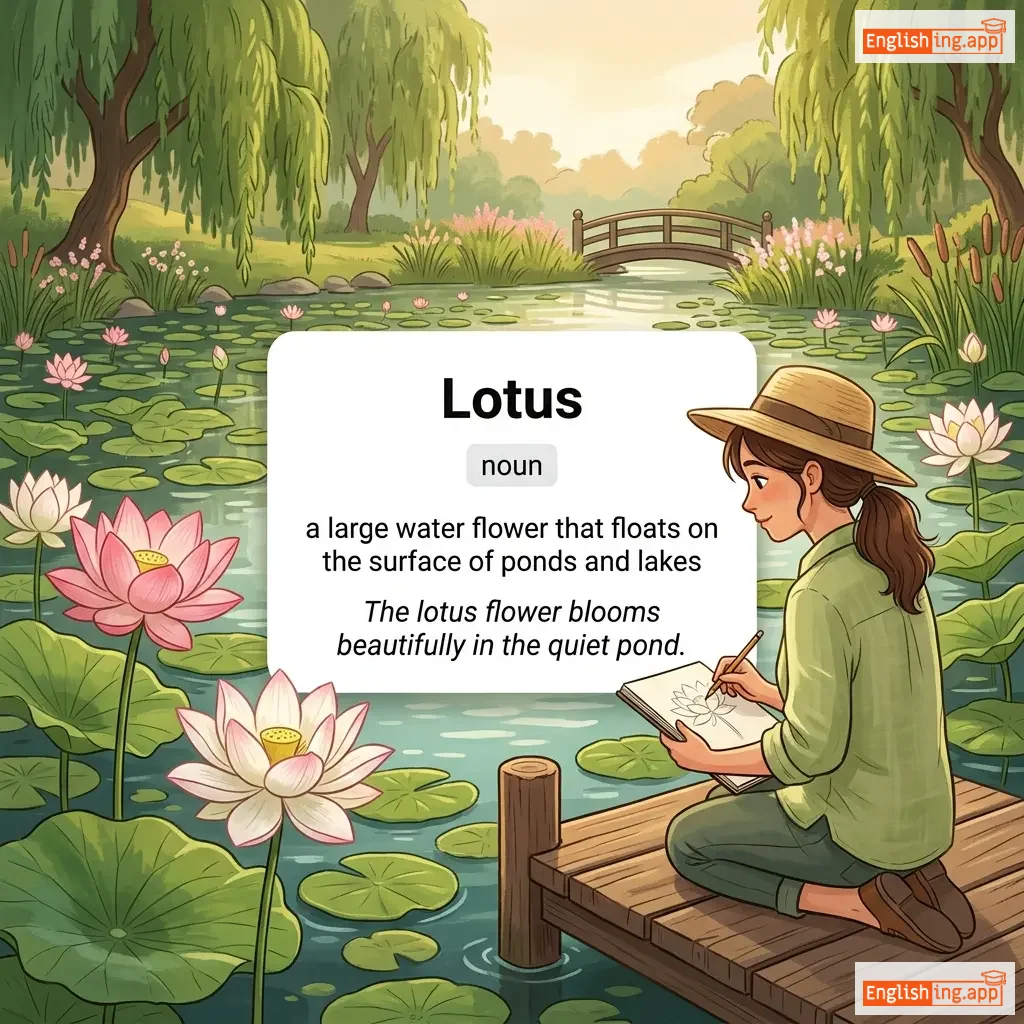
Lotus definition card — visual illustration of the meaning
noun
/ˈloʊ.təs/
(hasu)

a large water flower that floats on the surface of ponds and lakes

"The lotus flower blooms beautifully in the quiet pond."

"蓮の花は静かな池で美しく咲きます。" (hasu no hana wa shizuka na ike de utsukushiku sakimasu)
noun
/ˈlɒtəri/
宝くじ (takara kuji)

A means of raising money by selling numbered tickets and giving prizes to the holders of numbers drawn at random.

"He won a car in the national lottery."

"彼は全国宝くじで車を当てた。" (Kare wa zenkoku takara kuji de kuruma o ateta.)
pronoun/noun
/lɒts/
たくさん (takusan)

A large number or amount of something.

"She has lots of friends in the city."

"彼女は街にたくさんの友達がいます。" (Kanojo wa machi ni takusan no tomodachi ga imasu.)
noun
/lɒt/
たくさん (takusan)

A large number or amount; a group or portion.

"She bought a lot of books at the fair."

"彼女はフェアでたくさんの本を買いました。" (Kanojo wa fea de takusan no hon o kaimashita.)
verb/adjective
/lɒst/
失われた (ushinawareta)

Unable to find the way; no longer in possession of something.

"He lost his keys and couldn’t enter the house."
"彼は鍵を失い、家に入れませんでした。" (Kare wa kagi o ushinai, ie ni iremasen deshita.)
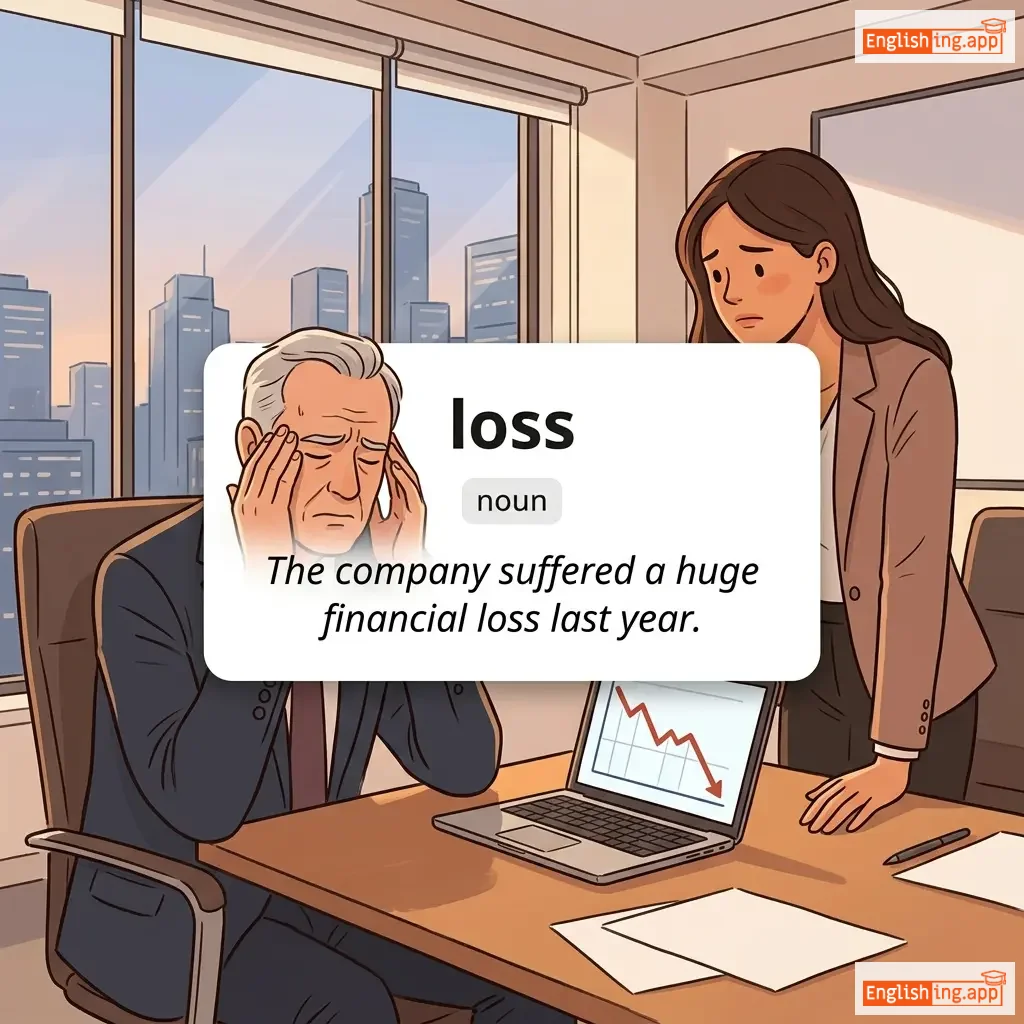
loss definition card — visual illustration of the meaning
noun
/lɒs/
損失 (sonshitsu)

The state of no longer having something or someone; the harm resulting from losing.

"The company suffered a huge financial loss last year."

"その会社は昨年、大きな財務的損失を被った。" (Sono kaisha wa sakunen, ōkina zaimuteki sonshitsu o kōmotta.)
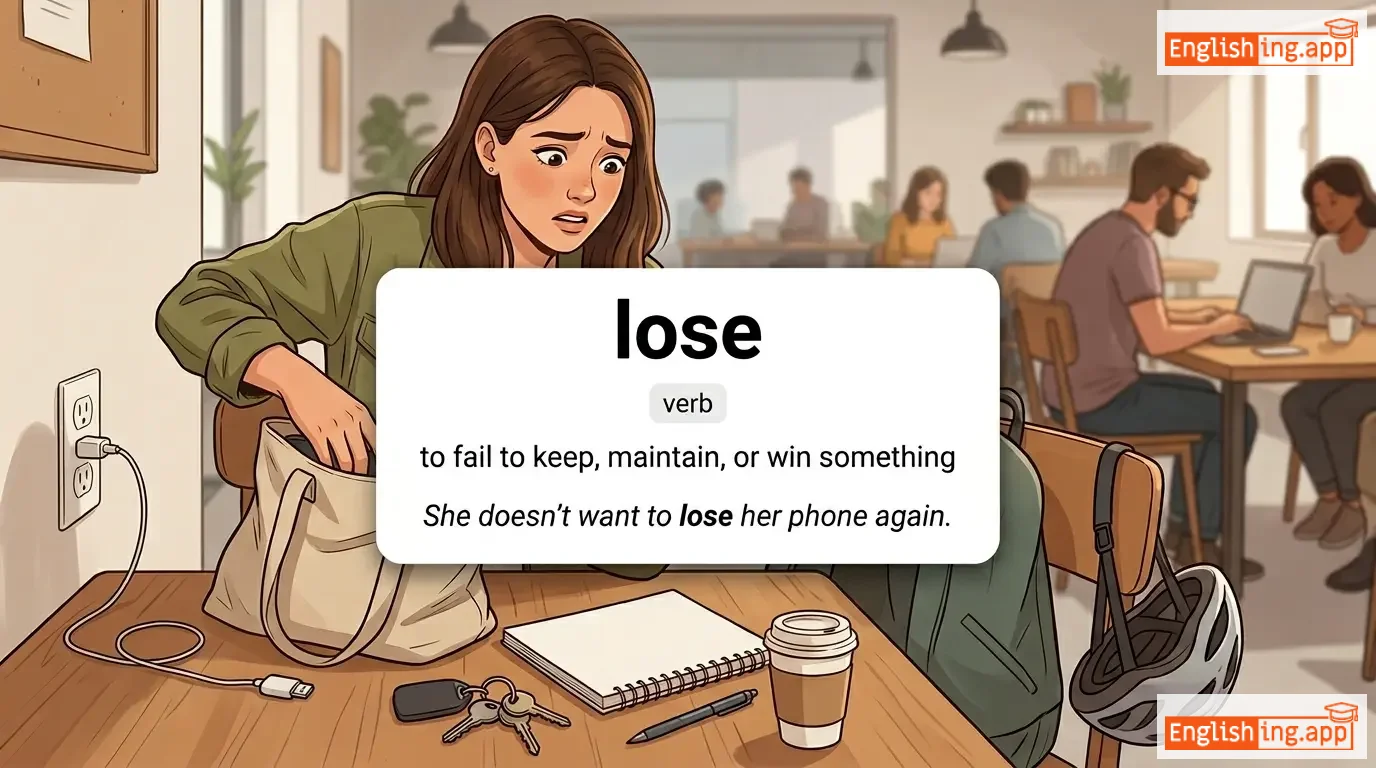
lose definition card — visual illustration of the meaning
verb
/luːz/
幸福 (kōfuku)

to fail to keep, maintain, or win something

"She doesn’t want to lose her phone again."

"彼女は賞を受け取ったとき、幸せを隠すことができませんでした。" (Kanojo wa shō o uketotta toki, kōfuku o kakusu koto ga dekimasen deshita.)
noun
/ˈlɔːrdlɪŋ/
小さな領主 (chiisana ryoushu)

A young or petty lord; someone of minor nobility.

"The arrogant lordling demanded respect despite his lack of experience."
"傲慢なロードリングは経験不足にもかかわらず、尊敬を要求した。" (Gouman na ro-doringu wa keiken busoku ni mo kakawarazu, sonkei wo youkyuu shita.)
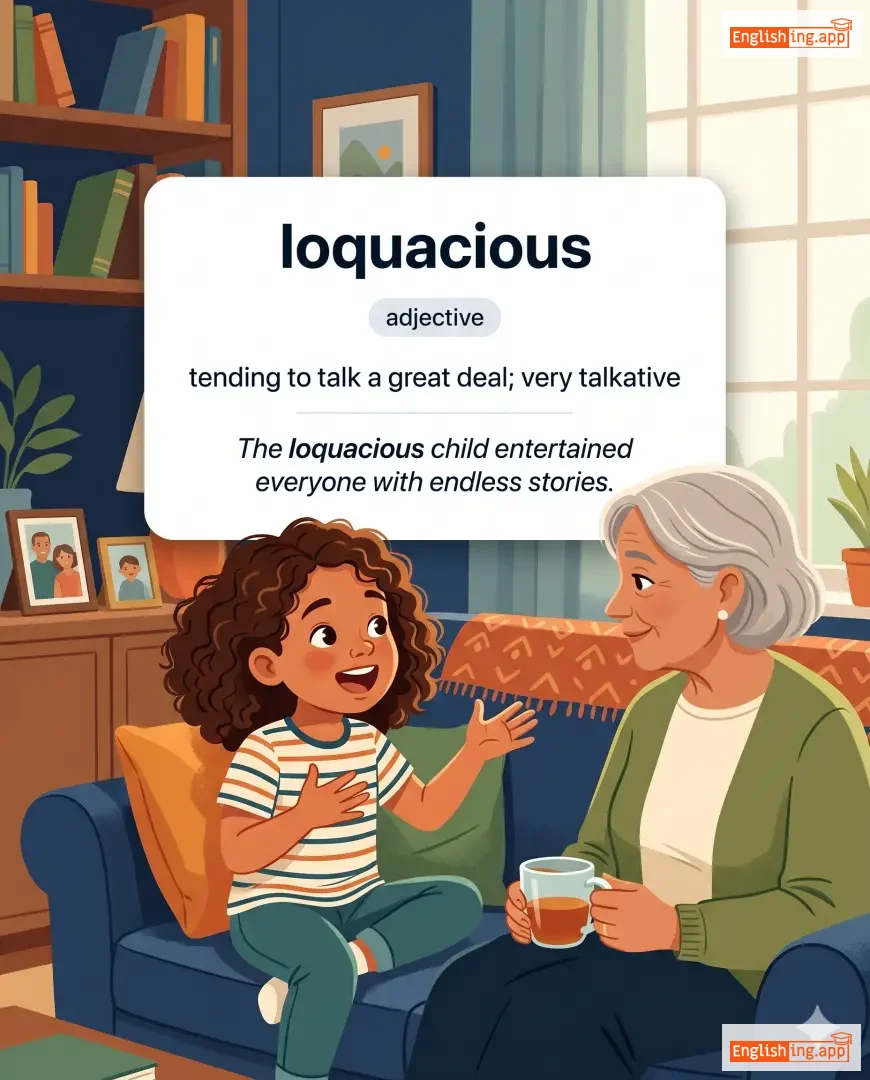
loquacious definition card — visual illustration of the meaning
adjective
/loʊˈkweɪʃəs/
おしゃべりな (oshaberina)

tending to talk a great deal; very talkative

"The loquacious child entertained everyone with endless stories."

"おしゃべりな子供は、終わりのない物語で皆を楽しませた。" (Oshaberina kodomo wa, owari no nai monogatari de mina wo tanoshimaseta.)
adjective
/ˈlɑːpˌsaɪdɪd/
片側が低い、または不均衡な (katasokoga hikui, matawa fukinoukan)

with one side lower, larger, or different from the other; uneven or imbalanced

"The cake looked lopsided after being decorated in a hurry."

"急いで飾った後、ケーキは不均衡に見えた。" (Isoide kazatta ato, kēki wa fukinou ni mieta.)
verb
/loʊp/
大きなジャンプを伴う速歩で走る (ōkina janpu o tomonau sokuhō de hashiru)

to run or move with a long, bounding stride

"The horse loped gracefully across the field."

"馬はフィールドを優雅に走っていました。" (Uma wa fīrudo o yūga ni hashitte imashita.)
verb
/luːt/
略奪する (ryakudatsu suru)

to steal goods, typically during war, riot, or chaos

"The rioters looted several shops during the protest."

"抗議の間に暴動者たちはいくつかの店を略奪した。" (Kougi no aida ni boudou-sha tachi wa ikutsuka no mise o ryakudatsu shita.)
adjective
/luːs/
緩い (yurui)

not firmly or tightly fixed in place

"The screw is loose and needs tightening."

"ネジが緩んでいて、締め直す必要があります。" (Neji ga yurunde ite, shime naosu hitsuyou ga arimasu.)
adjective
/ˈluːpi/
おかしい (okashii)

crazy, silly, or eccentric

"After working all night, he felt a little loopy."

"一晩中働いた後、彼は少しおかしく感じました。" (Hitobanjū hataraita ato, kare wa sukoshi okashiku kanjimashita.)
noun
/luːp/
ループ, 輪 (rūpu, wa)

a shape produced by a curve that bends around and crosses itself

"The string formed a neat loop around the package."

"糸はパッケージの周りにきれいなループを作りました。" (Ito wa pakkēji no mawari ni kireina rūpu o tsukurimashita.)
adjective
/ˈluː.ni/
クレイジー; バカ; 精神的に不安定 (kureijī; baka; seishinteki ni fuantei)

crazy; silly; mentally unstable

"His loony behavior made everyone laugh."

"彼のクレイジーな行動でみんなが笑った。" (kare no kureijī na kōdō de minna ga waratta)
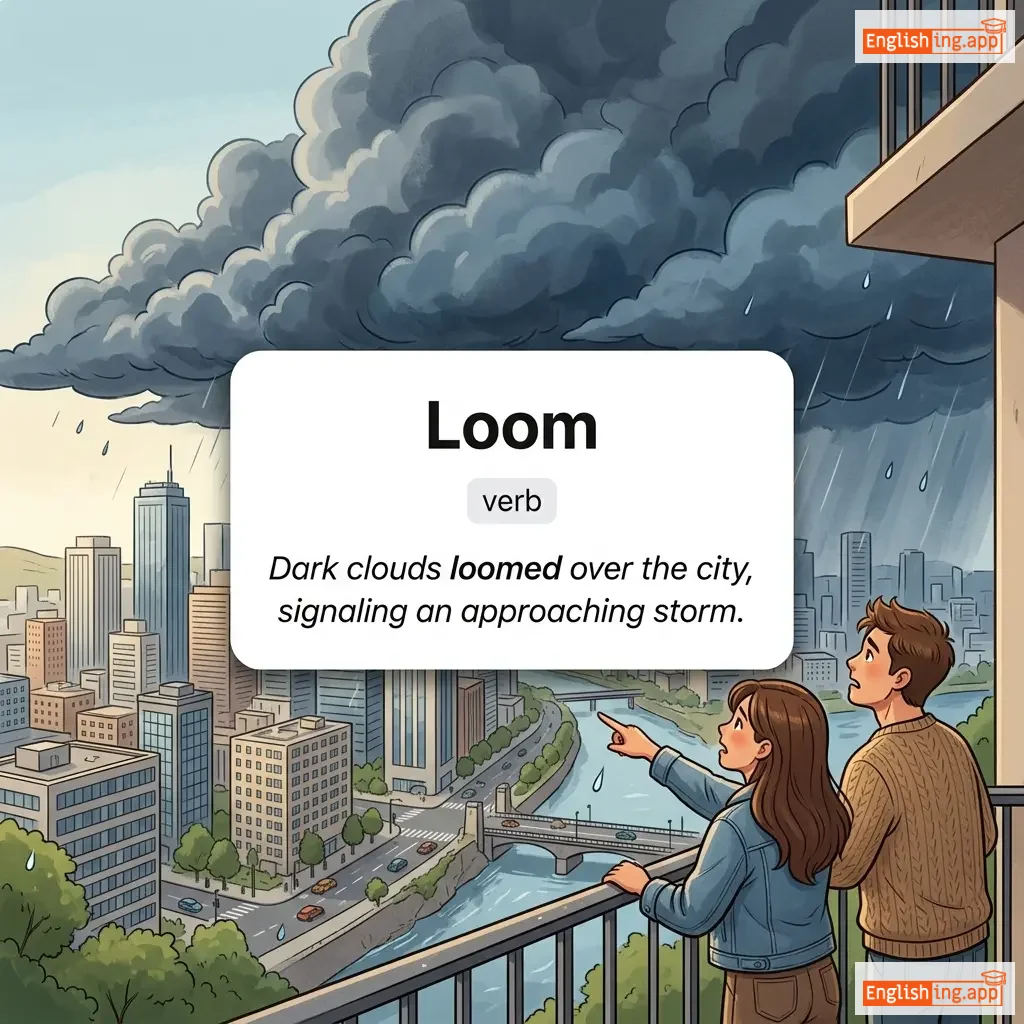
Loom definition card — visual illustration of the meaning
🌩️

Loom

verb
/luːm/

to appear as a large, often frightening or unclear shape, usually something threatening or about to happen

"Dark clouds loomed over the city, signaling an approaching storm."

noun
/ˈlʊkaʊt/
監視, 見張り (kanshi, mihari)

A place for watching; a person keeping watch.

"The guard kept a lookout for suspicious activity."
"ガードは怪しい活動に目を光らせていました。" (Gaado wa ayashii katsudou ni me wo hikarasete imashita.)
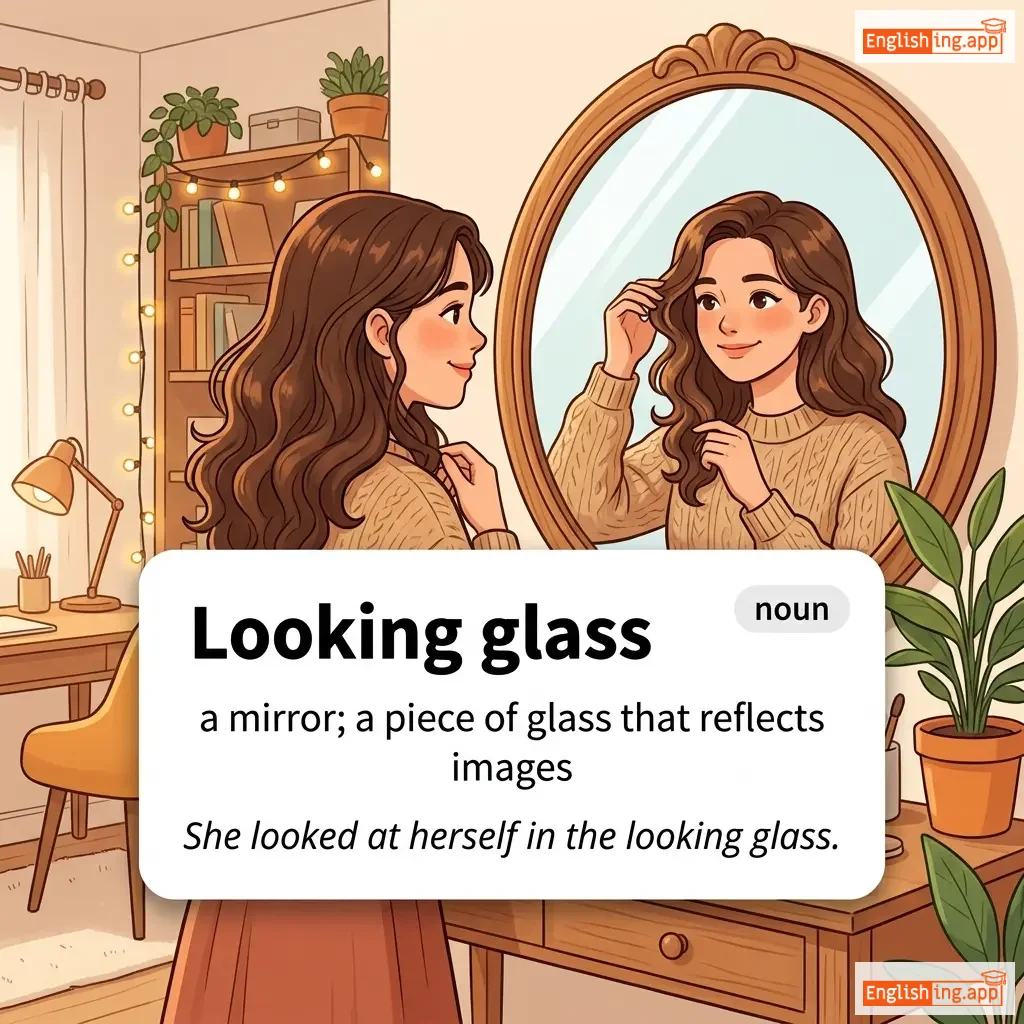
Looking glass definition card — visual illustration of the meaning
noun
/ˈlʊkɪŋ ɡlæs/
(kagami)

a mirror; a piece of glass that reflects images

"She looked at herself in the looking glass."

"彼女は鏡の中で自分を見ました。" (kanojo wa kagami no naka de jibun wo mimashita)
phrasal verb
/lʊk ˈɑːftər/
世話をする (sewa o suru)

to take care of someone or something; to be responsible for someone’s well-being

"She looks after her younger brother while their parents are at work."
"両親が仕事の間、彼女は弟の世話をする。" (Ryoushin ga shigoto no aida, kanojo wa otouto no sewa o suru)
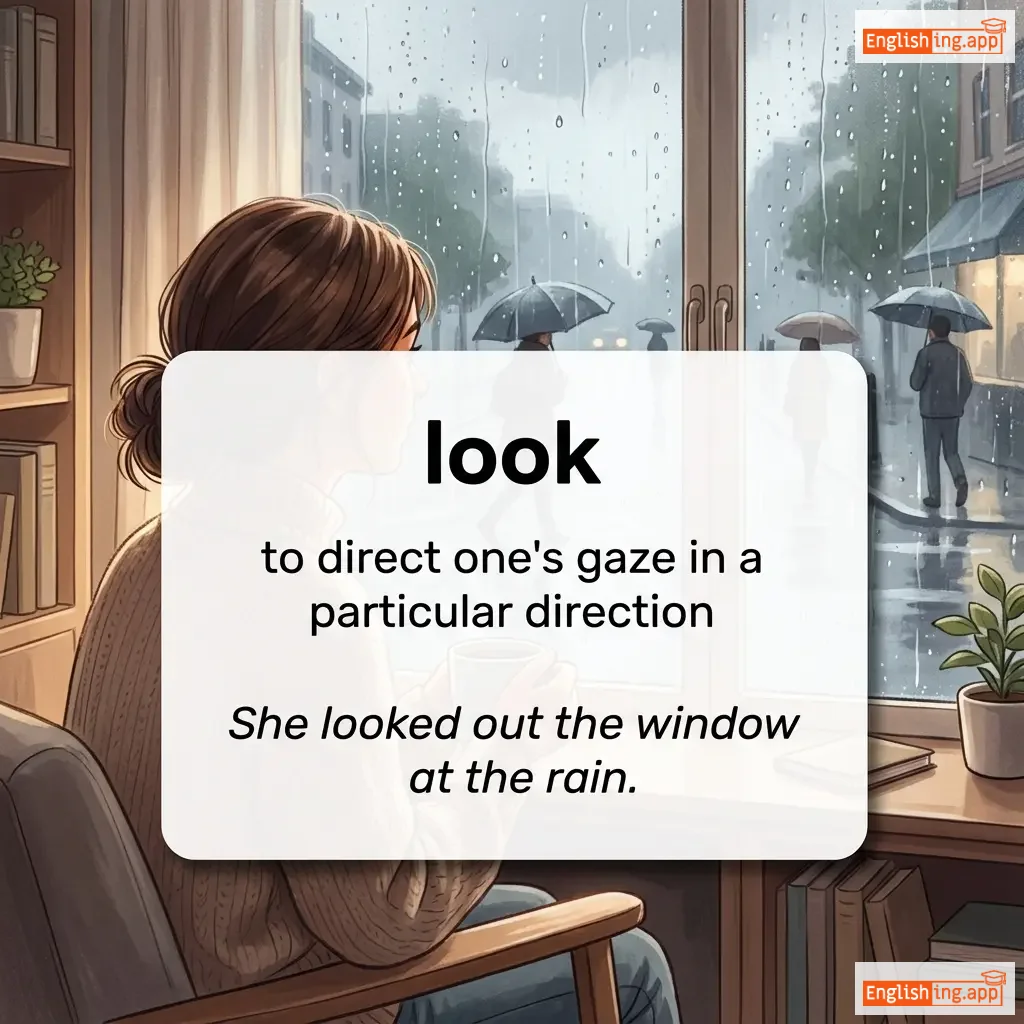
look definition card — visual illustration of the meaning
/lʊk/
見る (miru)

to direct one's gaze in a particular direction

"She looked out the window at the rain."

"彼女は窓から雨を見ていた。" (Kanojo wa mado kara ame o miteita.)
adjective
/ˈlɔːŋtaɪm/
長い時間の (nagai jikan no)

having existed or continued for a long time

"They are longtime friends who met in college."

"彼らは大学で出会った長い時間の友達です。" (Karera wa daigaku de deatta nagai jikan no tomodachi desu.)
noun
切望; 待望 (setsubou; taibou)
noun
/lɔnˈdʒɛvəti/
長寿 (chouju)

Long life or long existence of something.

"Good habits contribute to health and longevity."
"良い習慣は健康と長寿に貢献します。" (Yoi shuukan wa kenkou to chouju ni kouken shimasu.)
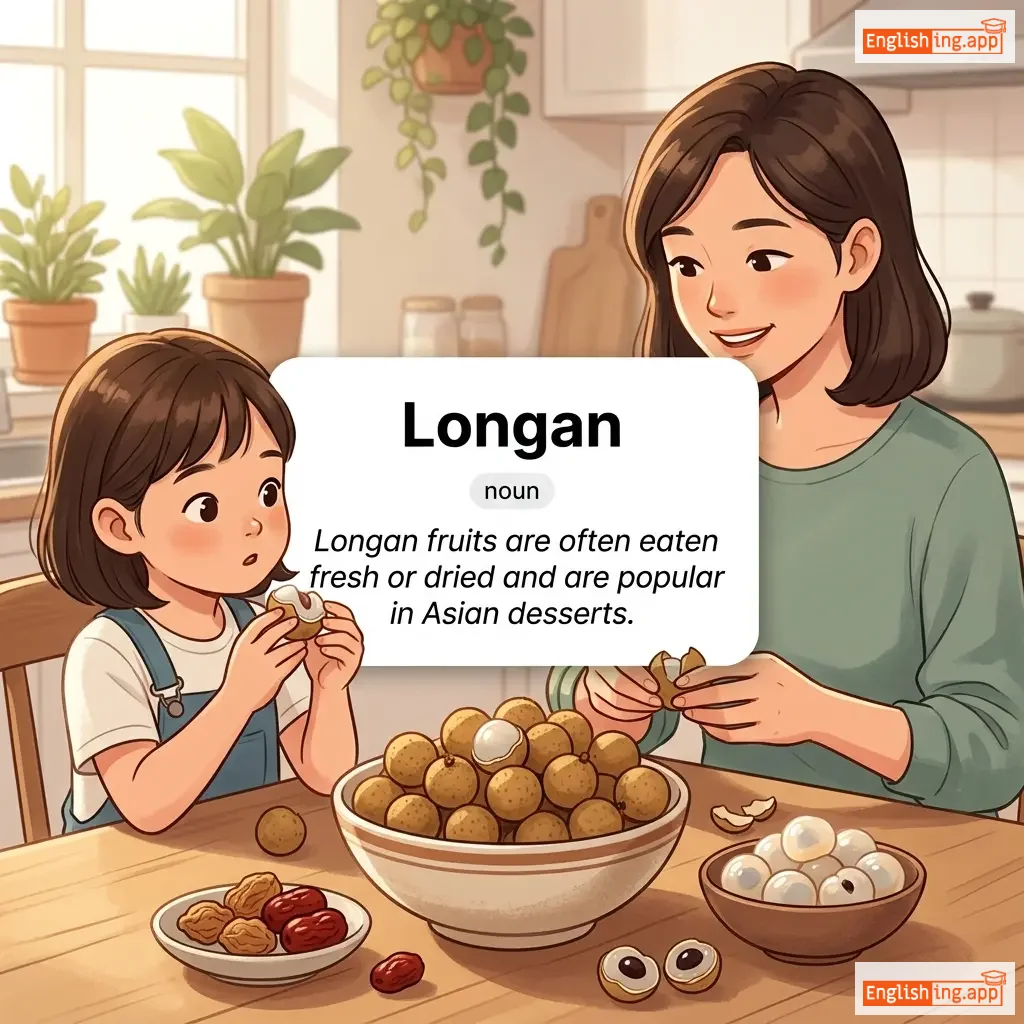
Longan definition card — visual illustration of the meaning
noun
/ˈlɔːŋ.ɡən/

a small round tropical fruit with translucent white flesh and sweet taste, related to lychee

"Longan fruits are often eaten fresh or dried and are popular in Asian desserts."

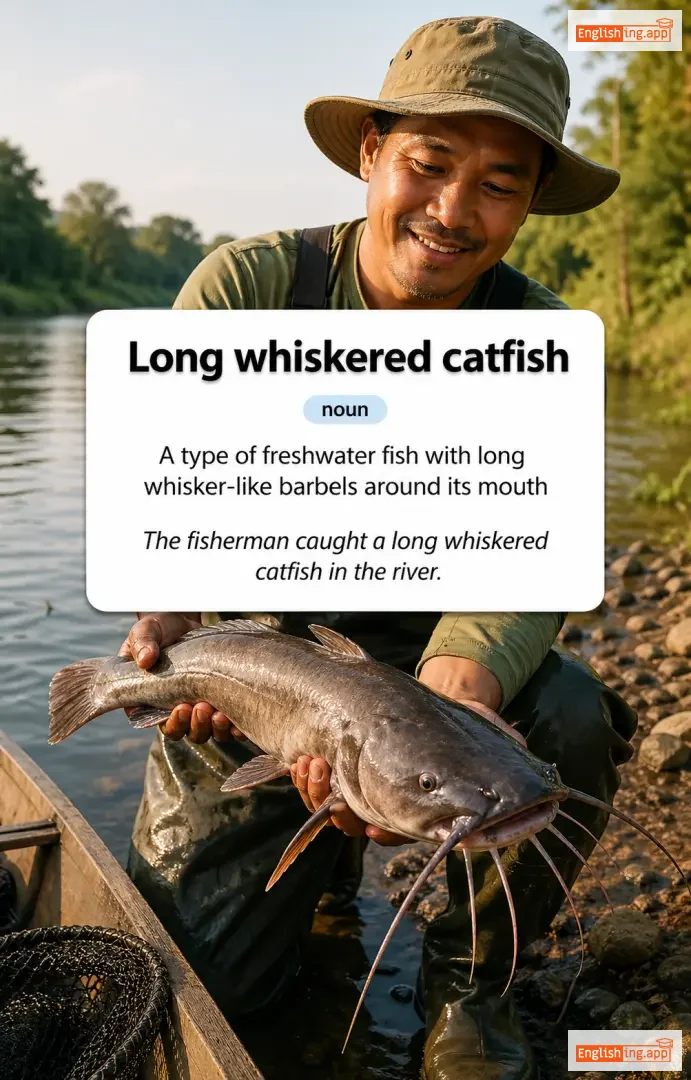
Long whiskered catfish definition card — visual illustration of the meaning
noun
/lɒŋ ˈwɪskəd ˈkætfɪʃ/
ナマズ (namazu)

A type of freshwater fish with long whisker-like barbels around its mouth

"The fisherman caught a long whiskered catfish in the river."

"漁師は川で長いひげのナマズを捕まえた。" (ryoshi wa kawa de nagai hige no namazu o tsukamaeta)
adjective, adverb
/ˈlɒŋ taɪm/
長年の (naganen no)

lasting or existing for a long period of time; having continued for many years

"She is a long-time friend of my family."

"彼女は私の家族の長年の友人です。" (kanojo wa watashi no kazoku no naganen no yuujin desu)
Long-term memory definition card — visual illustration of the meaning
noun
ˈlɒŋ tɜːm ˈmɛm.ər.i
長期記憶 (chouki kioku)

Such memory that remains stored in the brain for a long time

"Repeated practice helps transfer information into long-term memory."
"繰り返しの練習が情報を長期記憶に転送するのを助けます。" (Kurikaeshi no renshū ga jōhō o chōki kioku ni tensō suru no o tasukemasu.)
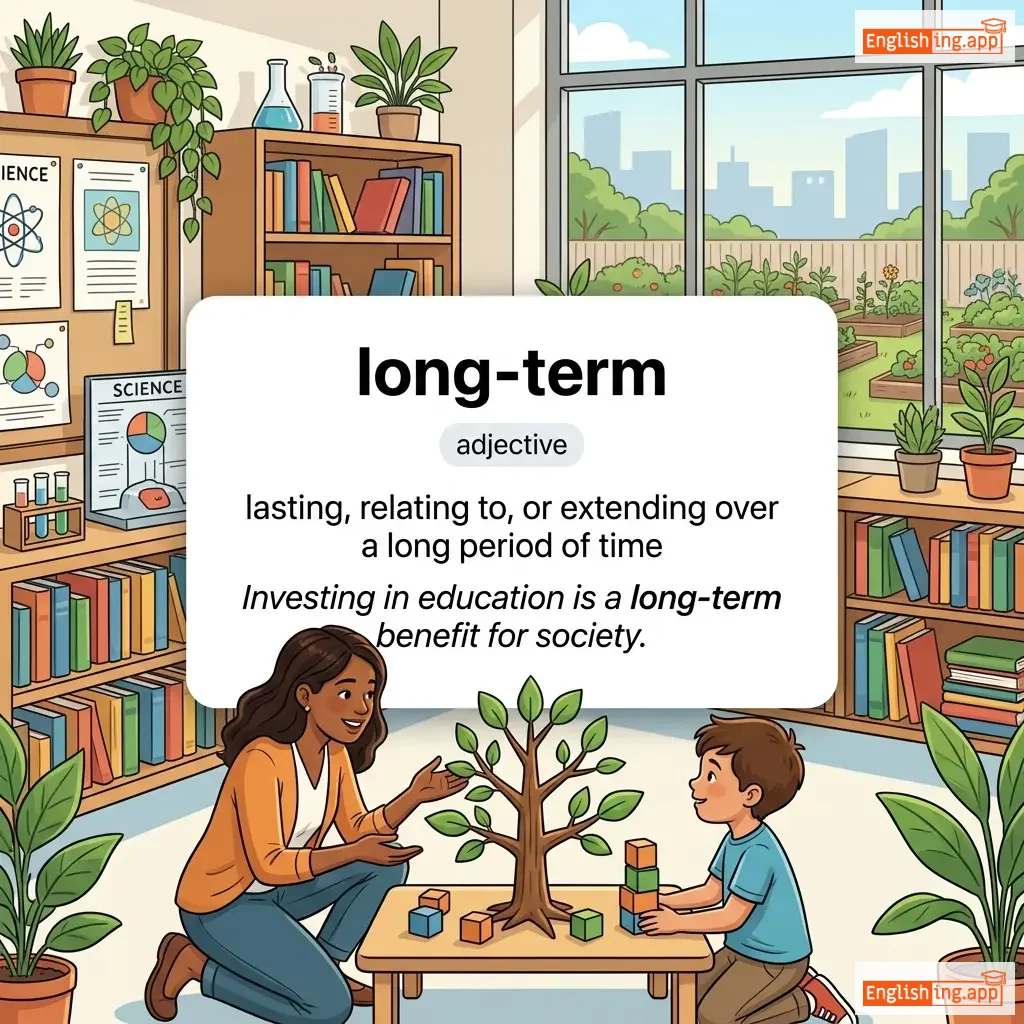
long-term definition card — visual illustration of the meaning
adjective
/ˌlɔːŋ ˈtɜːrm/
長期的 (chouki teki)

lasting, relating to, or extending over a long period of time

"Investing in education is a long-term benefit for society."

"教育への投資は社会にとって長期的な利益です。" (Kyouiku e no toushi wa shakai ni totte chouki teki na rieki desu.)
adjective
/ˈlɒŋ ˈstændɪŋ/
長期的な (choukiteki na)

having existed or continued for a long period of time

"They have a long-standing relationship with their suppliers."
"彼らは供給業者との長期的な関係を持っています。" (Karera wa kyoukyuu gyousha to no choukiteki na kankei wo motteimasu.)
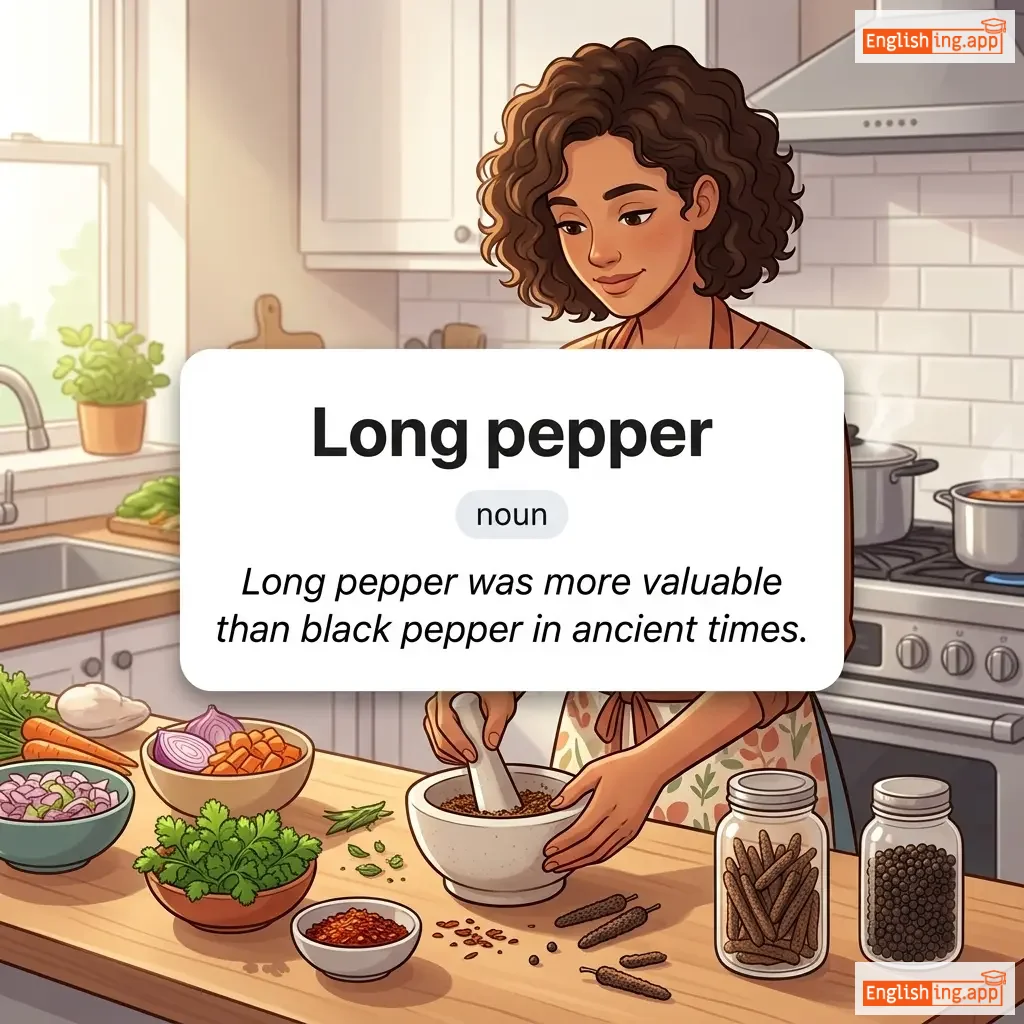
Long pepper definition card — visual illustration of the meaning
noun
/lɔːŋ ˈpepər/
ロングペッパー (rongu peppā)

a flowering vine in the family Piperaceae, cultivated for its fruit which is used as a spice

"Long pepper was more valuable than black pepper in ancient times."
"ロングペッパーは古代において黒胡椒よりも価値が高かった。" (Rongu peppā wa kodai ni oite kuro kosyou yori mo kachi ga takakatta.)
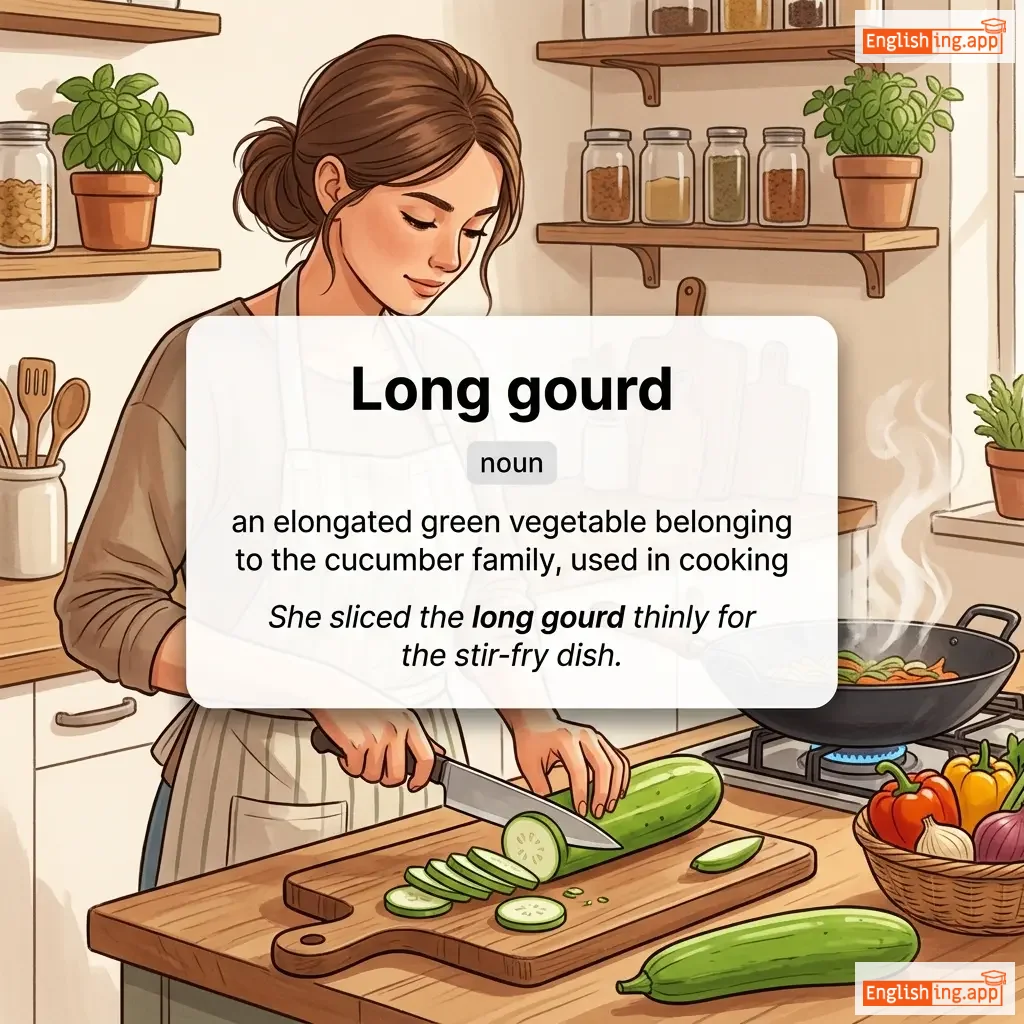
Long gourd definition card — visual illustration of the meaning
noun
/lɔːŋ ɡɔːrd/
長いウリ (nagai uri)

an elongated green vegetable belonging to the cucumber family, used in cooking

"She sliced the long gourd thinly for the stir-fry dish."

"彼女はその長いウリを薄切りにして、炒め物に使いました。" (Kanojo wa sono nagai uri wo usugiri ni shite, itamemono ni tsukaimashita.)
adjective
/lɔːŋ/
長い (nagai)

Measuring a great distance from end to end; lasting for a large amount of time.

"They waited a long time for the train."

"彼らは電車を長い時間待っていました。" (Karera wa densha wo nagai jikan matte imashita.)
noun
/ˈliːtər/
リットル (ritturu)

a metric unit of volume equal to 1,000 cubic centimeters; commonly used to measure liquids

"She bought a litre of milk from the shop."

"彼女は店で1リットルの牛乳を買いました。" (kanojo wa mise de 1 rittoru no gyuunyuu o kaimashita)