語彙集

英単語辞書 | 単語の意味、定義、例文

noun
/ˈlɛdʒɪsleɪtər/
立法者 (rippōsha)

a person who makes laws, especially a member of a legislative body

"The legislator introduced a bill to improve healthcare."
"立法者は医療サービス改善のために法案を提出しました。" (Rippōsha wa iryō sābisu kaizen no tame ni hōan o teishutsu shimashita.)
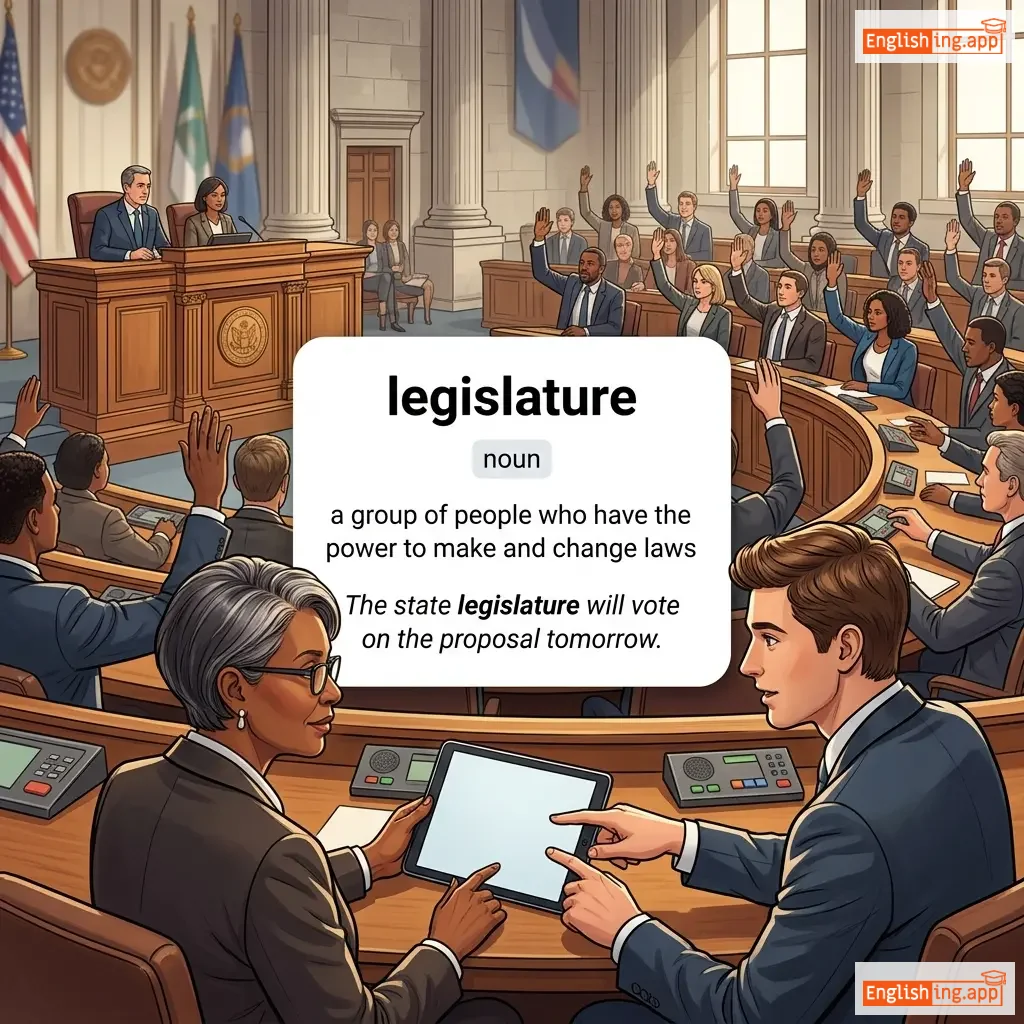
legislature definition card — visual illustration of the meaning
noun
/ˈlɛdʒɪsˌleɪtʃər/
立法機関 (rippō kikan)

a group of people who have the power to make and change laws

"The state legislature will vote on the proposal tomorrow."

"州の立法機関は明日提案について投票します。" (Shū no rippō kikan wa ashita teian ni tsuite tōhyō shimasu.)
noun
/lɪˈdʒɪtɪməsi/
正当性 (seitōsei)

the quality of being accepted as right, proper, or lawful

"The legitimacy of the election was questioned by observers."

"選挙の正当性は観察者によって疑問視されました。" (Senkyō no seitōsei wa kansatsu-sha ni yotte gimon-shi saremashita.)
adjective
/lɪˈdʒɪtɪmət/
正当 (seitou)

Conforming to the law or to rules; valid or acceptable.

"She presented a legitimate reason for her absence."
"彼女は欠席の理由を正当化しました。" (Kanojo wa kesseki no riyū o seitōka shimashita.)
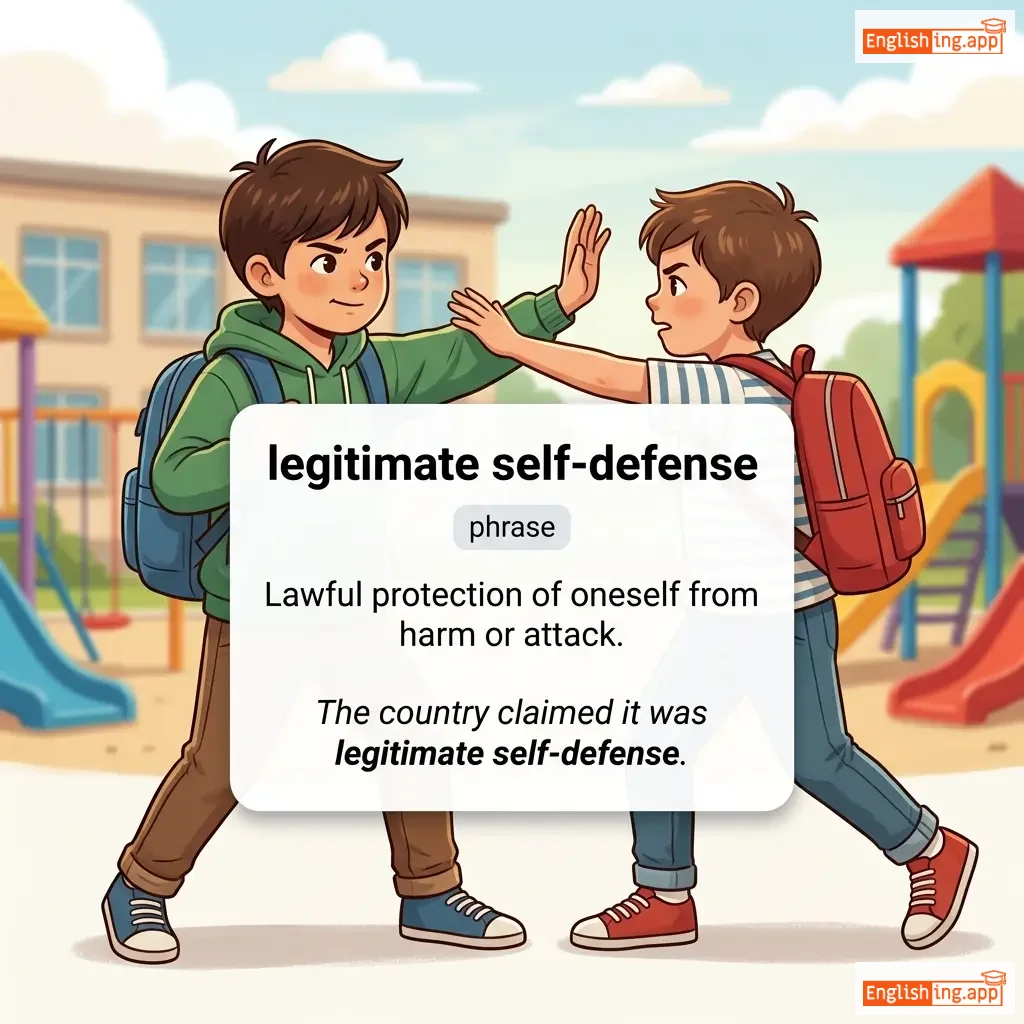
legitimate self-defense definition card — visual illustration of the meaning
phrase
lɪˈdʒɪt.ɪ.mət sɛlf dɪˈfens
正当防衛 (seitou bouei)

Lawful protection of oneself from harm or attack.

"The country claimed it was legitimate self-defense."

"その国は正当防衛であると主張しました。" (Sono kuni wa seitou bouei de aru to shuchou shimashita.)
noun
/ˈliːʒər/ or /ˈlɛʒər/
余暇 (yoka)

Free time when one is not working or occupied; time for relaxation.

"She spends her leisure reading novels."
"彼女は余暇の時間を小説を読んで過ごしています。" (Kanojo wa yoka no jikan o shōsetsu o yonde sugoshiteimasu.)
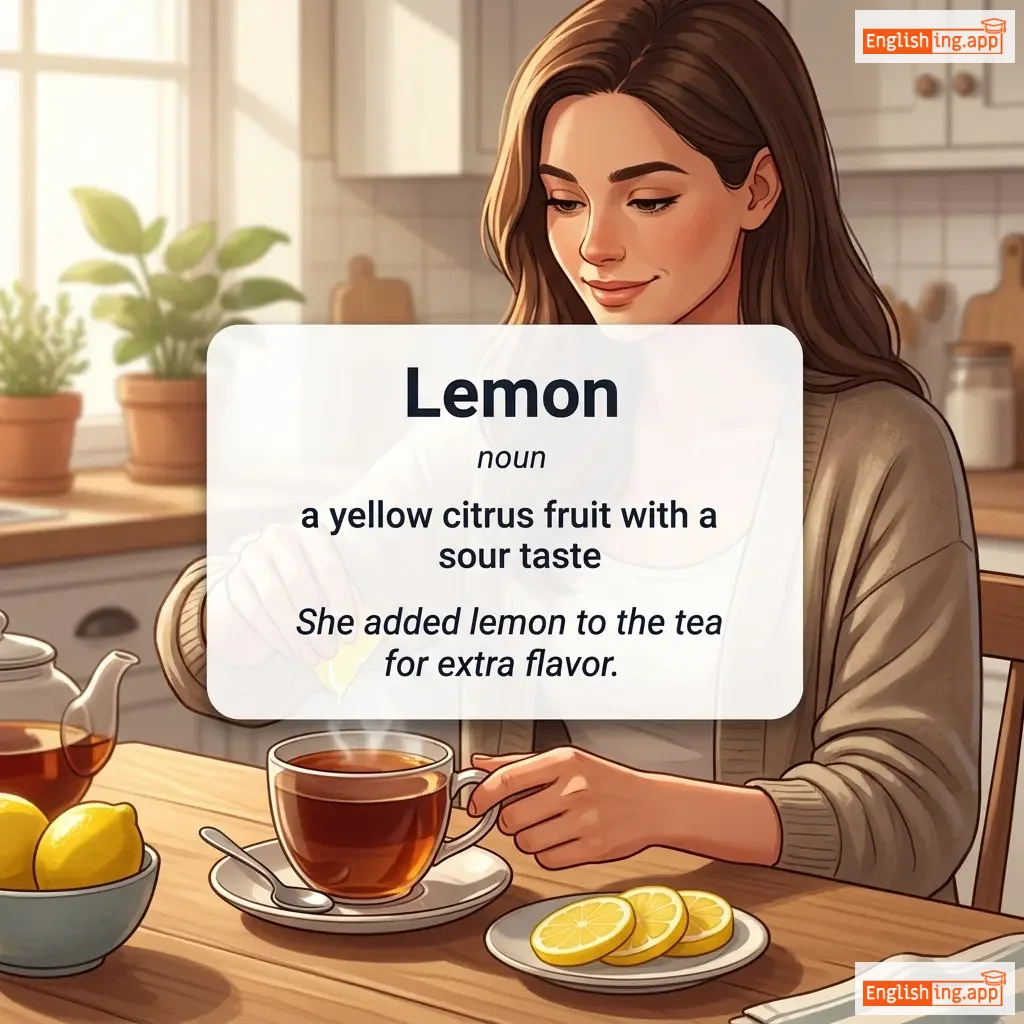
Lemon definition card — visual illustration of the meaning
noun
/ˈlɛmən/
レモン (remon)

a yellow citrus fruit with a sour taste

"She added lemon to the tea for extra flavor."
"彼女はお茶に風味を加えるためにレモンを入れた。" (Kanojo wa ocha ni fūmi o kuwaeru tame ni remon o ireta.)
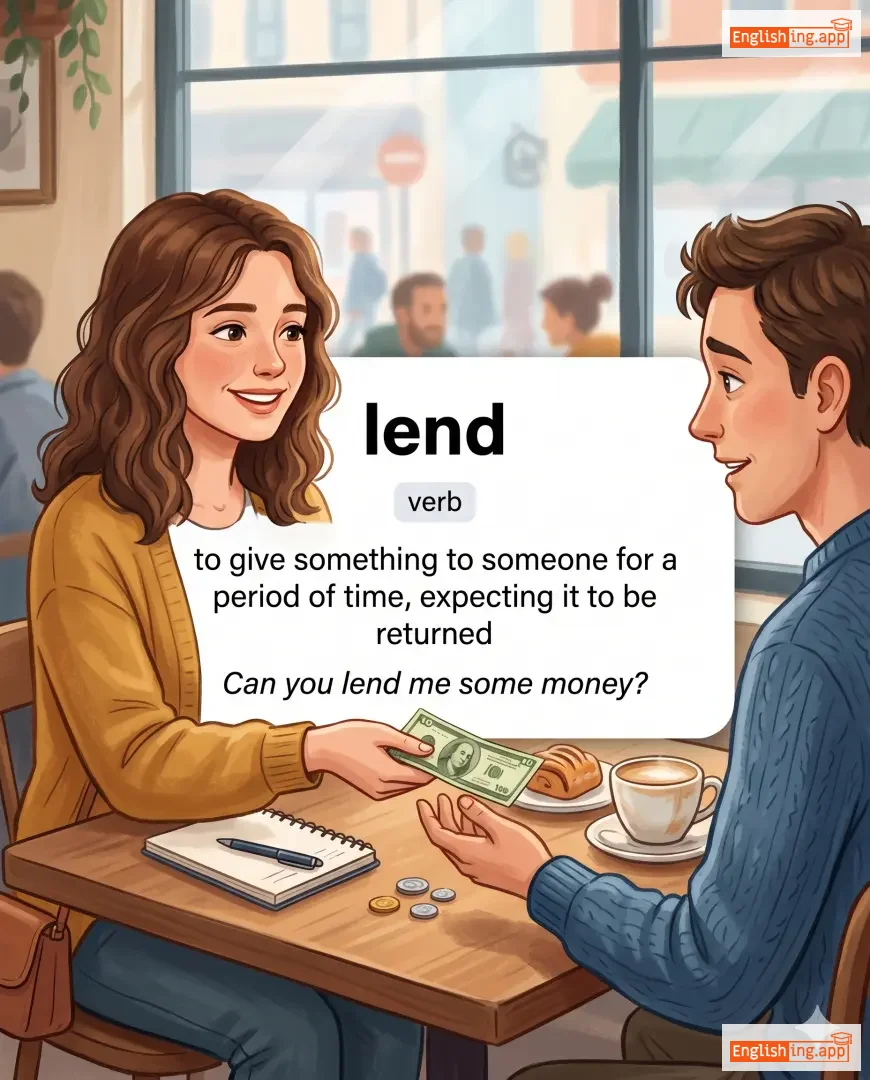
lend definition card — visual illustration of the meaning
verb
/lend/
幸せ (shiawase)

to give something to someone for a period of time, expecting it to be returned

"Can you lend me some money?"

"お金を貸してくれますか?" (Okane wo kashite kuremasu ka?)
noun
/lɛŋkθ/
長さ (nagasa)

The measurement or extent of something from end to end.

"The length of the bridge is two kilometers."

"橋の長さは2キロメートルです。" (Hashi no nagasa wa 2 kirometoru desu.)
adverb
/ˈleŋθ.waɪz/
長さに沿って; 最長の寸法に沿って (nagasa ni sotte; saichou no sunpou ni sotte)

in the direction of the length; along the longest dimension

"Fold the paper lengthwise to make it easier to carry."

"紙を長さに沿って折りたたんで、持ち運びやすくします。" (kami o nagasa ni sotte oritatande, mochihakobiyasuku shimasu.)
adjective
/ˈlɛŋθi/
長い (nagai)

long in duration or extent

"The meeting was lengthy, lasting over three hours."

"会議は長く、3時間以上続きました。" (Kaigi wa nagaku, sanjikan ijou tsudzukimashita.)
noun
/ˈliːniənsi/
寛大 (kandai)

The quality of being more merciful or tolerant than expected.

"The judge showed leniency in his ruling."

"裁判官は判決で寛大さを示した。" (Saibankan wa hanketsu de kandaisa o shimeshita.)
adjective
/ˈliːniənt/
寛大な (kandaina)

Permissive, merciful, or tolerant.

"Her parents are lenient with her curfew."

"彼女の両親は彼女の門限に寛大です。" (Kanojo no ryoushin wa kanojo no mongen ni kandaina desu.)
noun
/lenz/
レンズ (renzu)

a curved piece of glass or plastic that makes things look clearer or larger when you look through it

"He cleaned the camera lens before taking the picture."
"彼は写真を撮る前にカメラのレンズをきれいにしました。" (Kare wa shashin o toru mae ni kamera no renzu o kirei ni shimashita.)
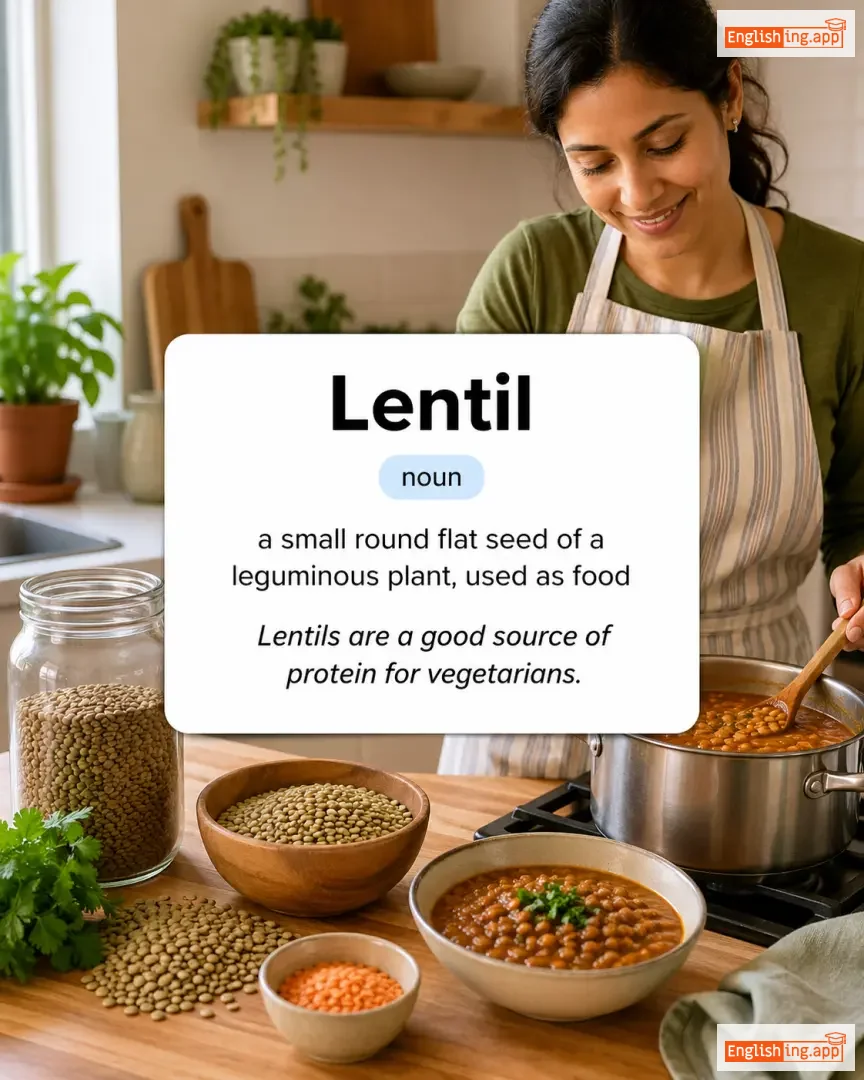
Lentil definition card — visual illustration of the meaning
noun
/ˈlen.tɪl/
レンズ豆 (renzu mame)

a small round flat seed of a leguminous plant, used as food

"Lentils are a good source of protein for vegetarians."

"レンズ豆はベジタリアンにとって良いタンパク源です。" (renzu mame wa bejitarian ni totte yoi tanpaku gen desu)
adjective
/ˈliːənaɪn/
ライオンのような (raion no yōna)

Of or resembling a lion.

"His leonine hair made him stand out in the crowd."
"彼のライオンのような髪は、群衆の中で目立たせた。" (Kare no raion no yōna kami wa, gunshū no naka de medataseta.)
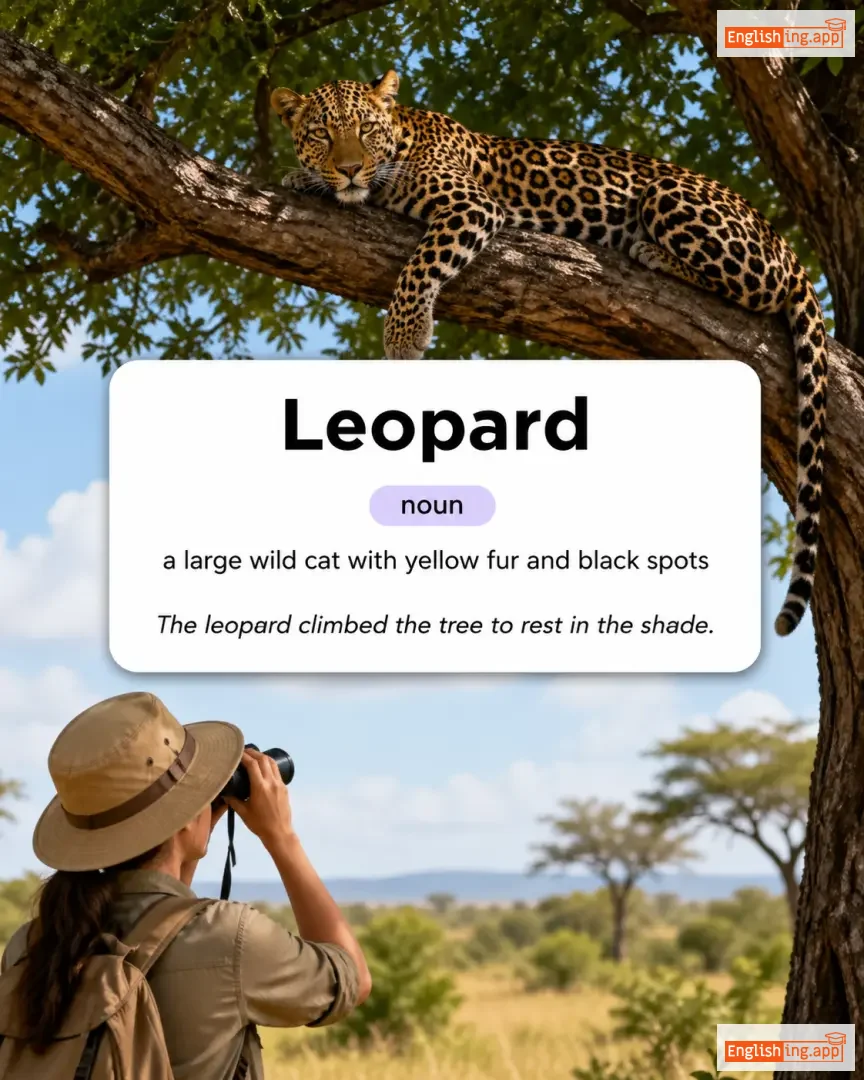
Leopard definition card — visual illustration of the meaning
noun
/ˈlep.ərd/
ヒョウ (hyō)

a large wild cat with yellow fur and black spots

"The leopard climbed the tree to rest in the shade."

"ヒョウは木に登って、日陰で休んでいました。" (Hyō wa ki ni nobotte, hikage de yasunde imashita.)
noun/adjective
/ˈlɛzbiən/
レズビアン (rezubian)

a woman who is romantically or sexually attracted to other women

"She is a proud lesbian and advocates for equal rights."

"彼女は誇り高いレズビアンで、平等な権利を支持しています。" (Kanojo wa hokori takai rezubian de, byoudou na kenri wo shiji shiteimasu.)
noun
/ˈliːʒən/
(kizu)

An area of damage or abnormal change in the tissue of an organism, often caused by injury or disease.

"The doctor examined the skin lesion carefully."

"医者は皮膚の傷を注意深く調べました。" (Isha wa hifu no kizu wo chūibukaku shirabemashita.)
adjective/adverb
/lɛs/
少ない (sukunai)

A smaller amount; not as much.

"She spends less money than her brother."

"彼女は兄よりお金を使うのが少ない。" (Kanojo wa ani yori okane o tsukau no ga sukunai.)
adjective
/ˈlɛsər/
より重要でない (yori jūyō denai)

of lower importance or smaller in degree or amount

"The lesser known facts about the topic were fascinating."
"そのトピックに関するあまり知られていない事実は魅力的でした。" (Sono topikku ni kansuru amari shirarete inai jijitsu wa miryokuteki deshita.)
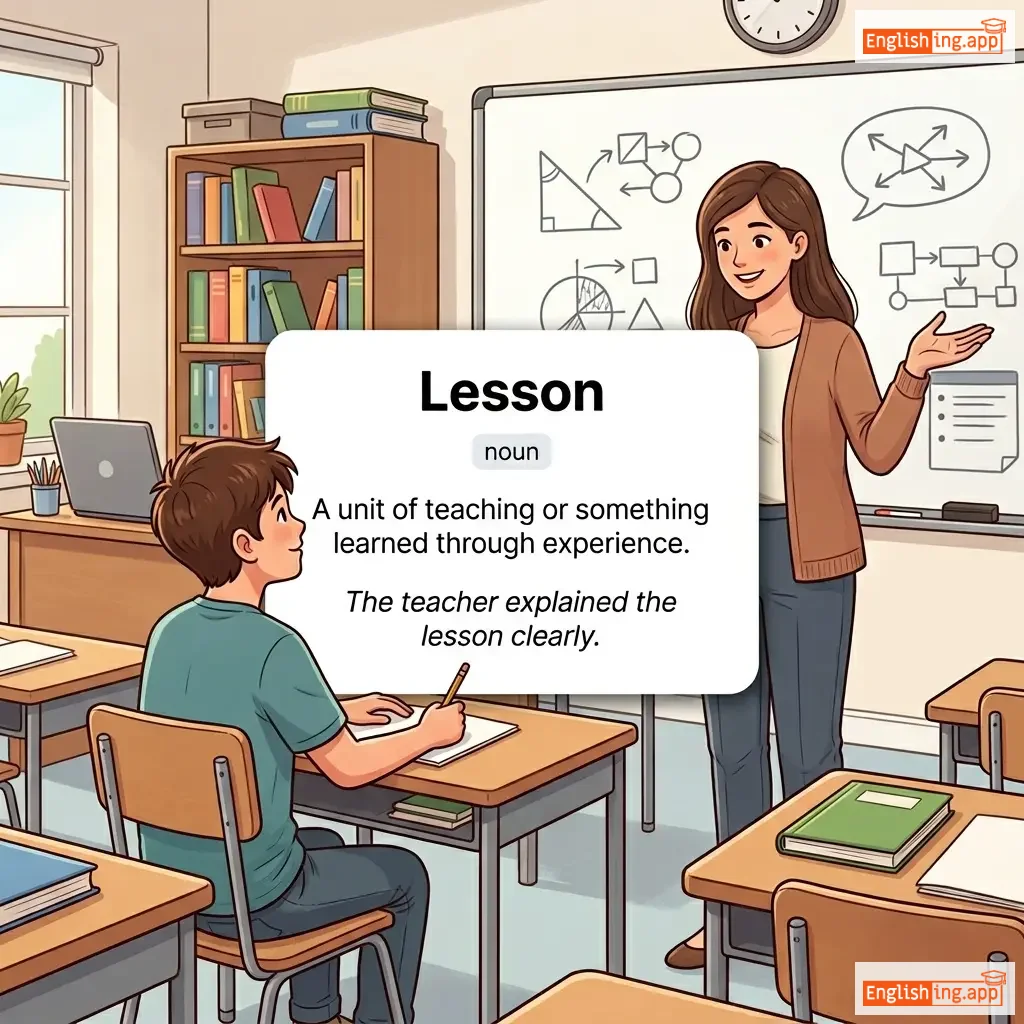
Lesson definition card — visual illustration of the meaning
noun
/ˈlɛsən/
レッスン (ressun)

A unit of teaching or something learned through experience.

"The teacher explained the lesson clearly."
"先生はレッスンを明確に説明しました。" (Sensei wa ressun o meikaku ni setsumei shimashita.)
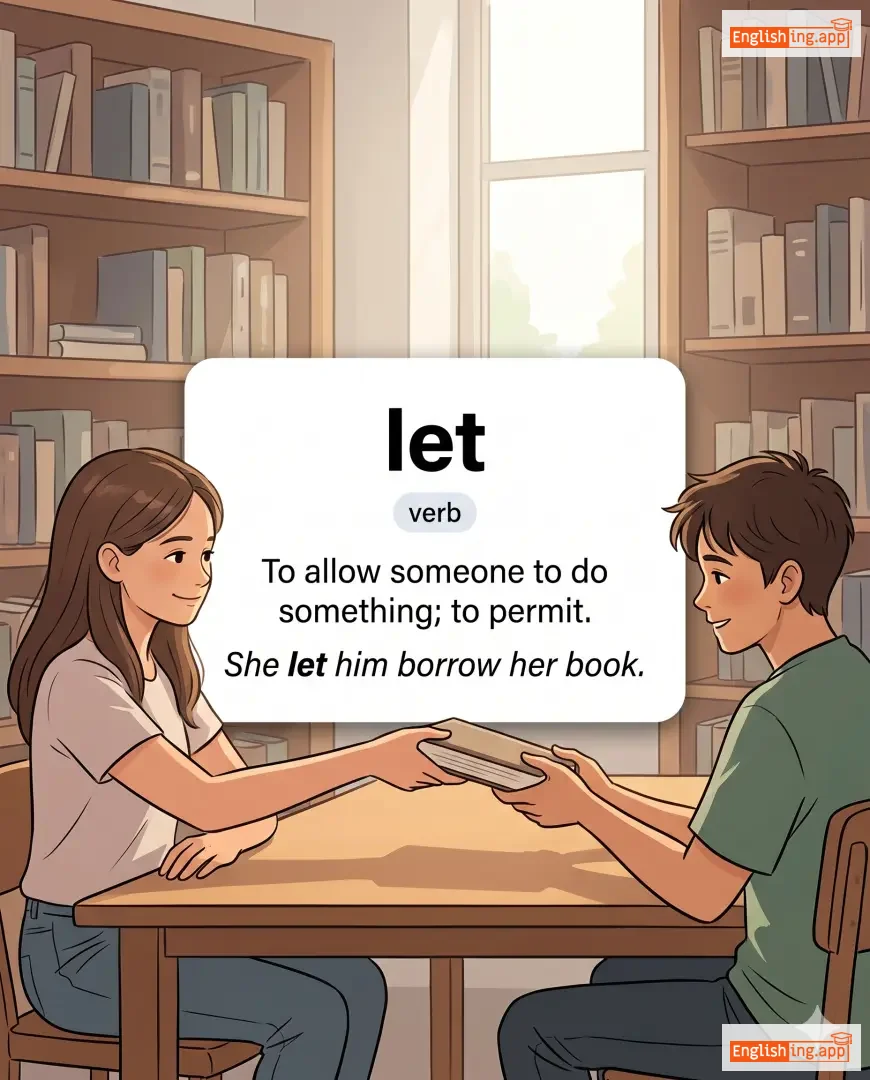
let definition card — visual illustration of the meaning
verb
/lɛt/
許可する (kyoka suru)

To allow someone to do something; to permit.

"She let him borrow her book."

"彼女は彼に彼女の本を借りさせた。" (Kanojo wa kare ni kanojo no hon wo karisaseta.)
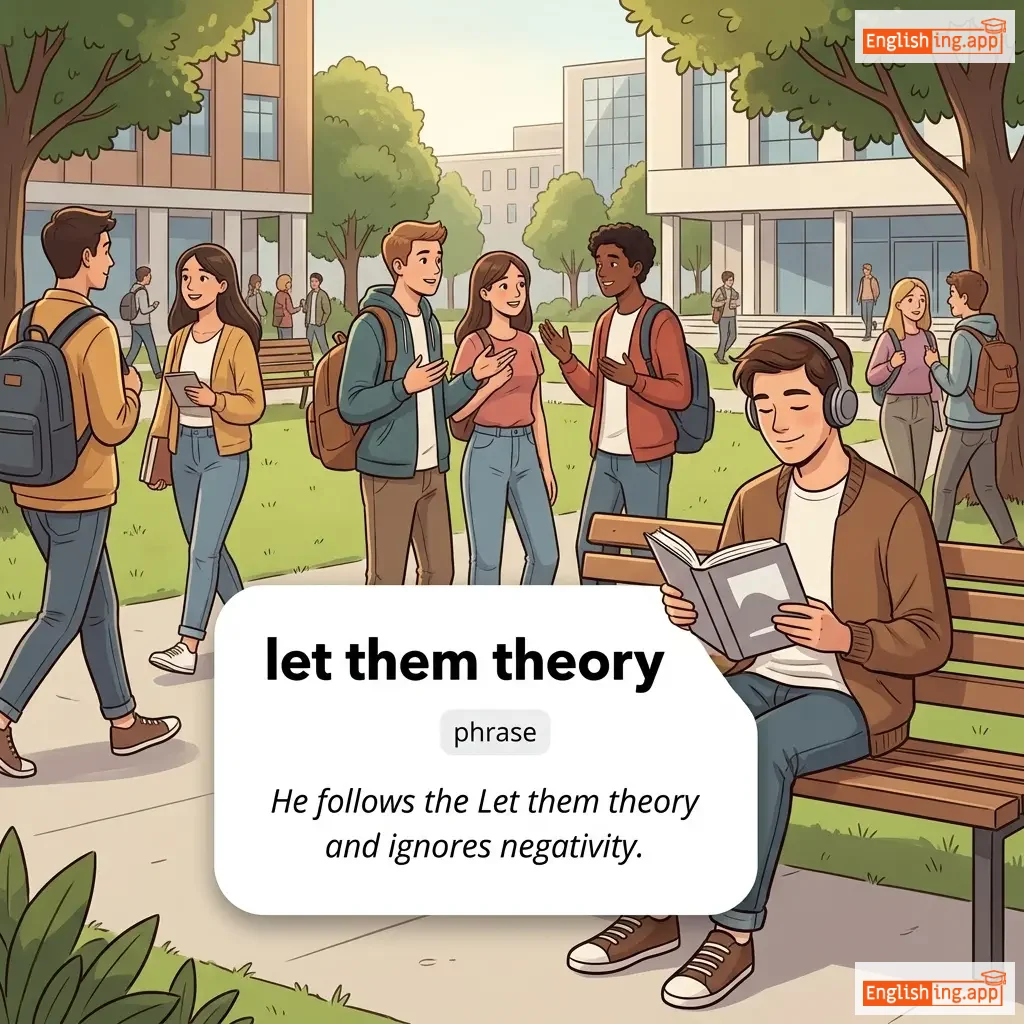
let them theory definition card — visual illustration of the meaning
phrase
/lɛt ðɛm ˈθɪə.ri/
彼らに好きなことを考えさせる理論 (karera ni sukina koto o kangaesaseru riron)

A philosophy of not trying to control others' actions or opinions and allowing them to be themselves.

"He follows the Let them theory and ignores negativity."

"彼は「彼らに好きなことを考えさせる理論」を実践し、否定的な考えを無視します。" (Kare wa 'karera ni sukina koto o kangaesaseru riron' o jissen shi, hiteiteki na kangae o mushi shimasu.)
adjective
/ˈliːθəl/
致命的 (chimeiteki)

Able to cause death; deadly.

"The snake's venom is extremely lethal."
"ヘビの毒は非常に致命的です。" (Hebi no doku wa hijō ni chimeiteki desu.)
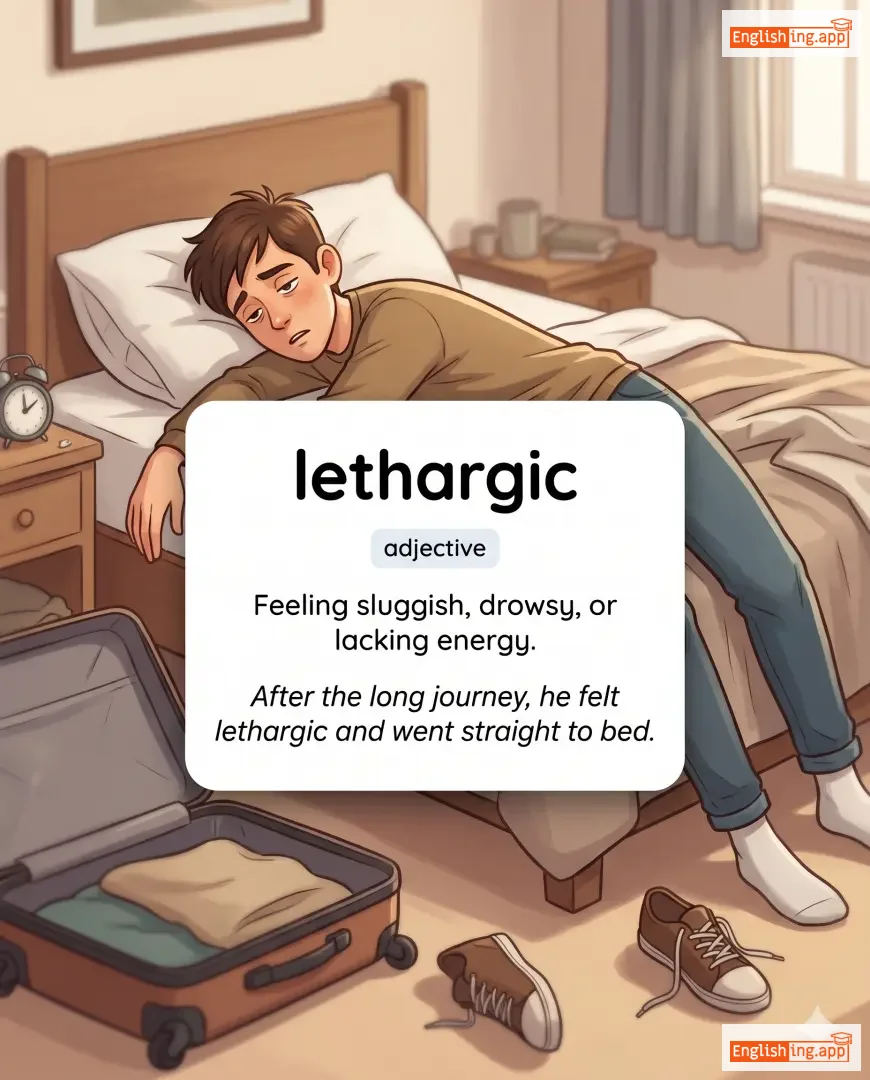
lethargic definition card — visual illustration of the meaning
adjective
/ləˈθɑːrdʒɪk/
無気力な (mukiryokuna)

Feeling sluggish, drowsy, or lacking energy.

"After the long journey, he felt lethargic and went straight to bed."

"長旅の後、彼は無気力で、すぐにベッドに行った。" (Nagoyatra no ato, kare wa mukiryokude, sugu ni beddo ni itta.)
noun
/ˈleθərdʒi/
無気力 (mukiryoku)

A state of tiredness, lack of energy, or drowsiness.

"The hot weather caused a feeling of lethargy among the workers."

"暑い天気は労働者の間で無気力を引き起こしました。" (Atsui tenki wa roudousha no aida de mukiryoku o hikiokoshimashita.)
noun
/ˈlɛtər/
手紙 (tegami)

A written or printed message sent to someone.

"He wrote a letter to his friend."

"彼は友達に手紙を書いた。" (Kare wa tomodachi ni tegami o kaita.)
noun
/ˈlɛtɪs/
レタス (retasu)

a leafy green vegetable commonly used in salads and sandwiches

"She added fresh lettuce to the sandwich."
"彼女はサンドイッチに新鮮なレタスを加えた。" (kanojo wa sandoitchi ni shinsen na retasu o kuwaeta)
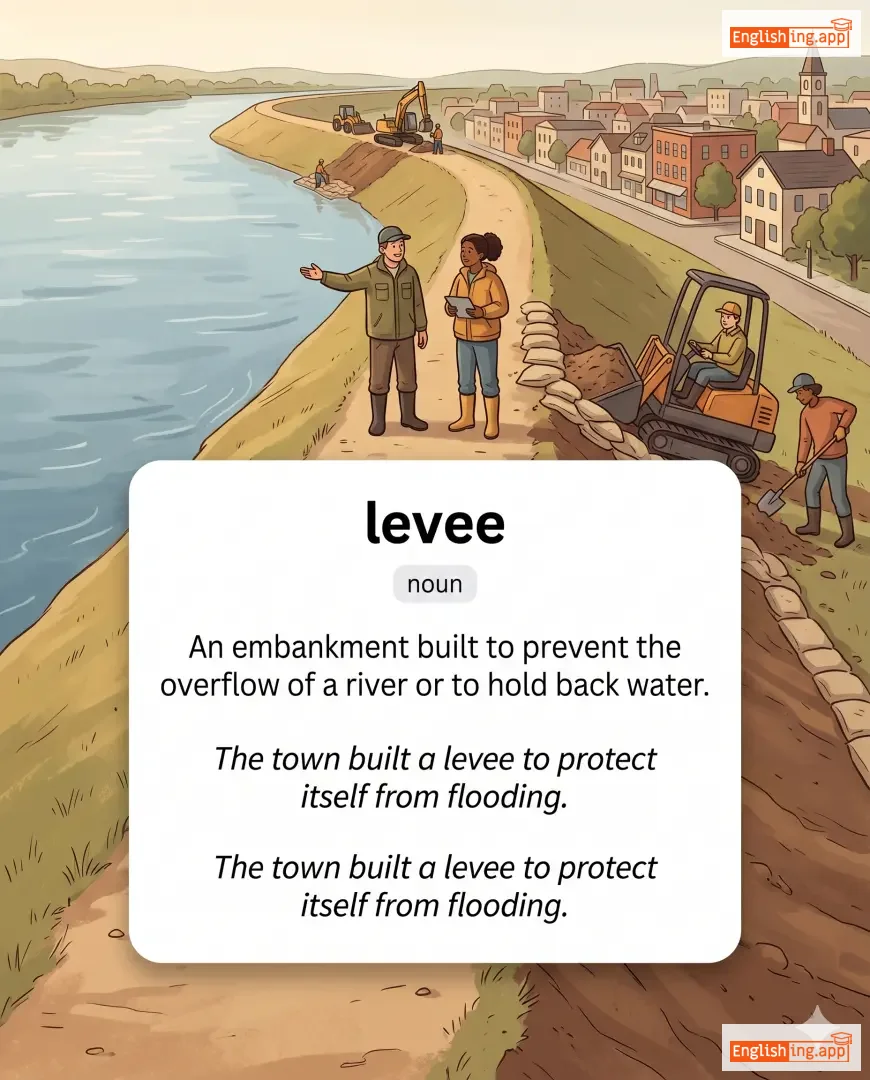
levee definition card — visual illustration of the meaning
noun
/ˈlɛvi/
堤防 (teibou)

An embankment built to prevent the overflow of a river or to hold back water.

"The town built a levee to protect itself from flooding."
"その町は洪水から守るために堤防を作った。" (Sono machi wa koudzui kara mamoru tame ni teibou wo tsukutta.)
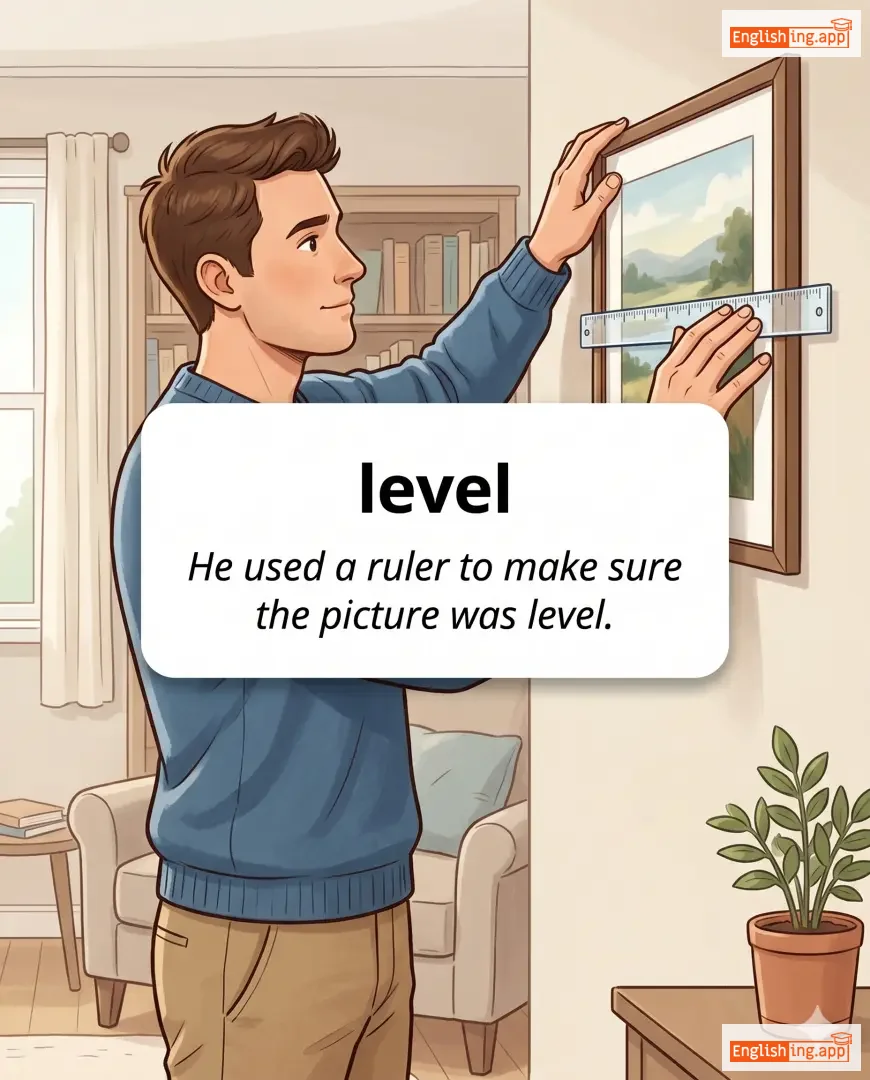
level definition card — visual illustration of the meaning
noun, verb, adjective
/ˈlɛvəl/
レベル、段階 (reberu, dankai)

a flat or even surface; a stage in scale or rank; to make something flat or equal.

"He used a ruler to make sure the picture was level."

"彼は絵が水平かどうか確認するために定規を使いました。" (Kare wa e ga suihei ka dō ka kakunin suru tame ni jōgi o tsukaimashita.)
adjective
/ˌlɛvəlˈhɛdɪd/
冷静で賢明 (reisei de kenmei)

calm and sensible; showing good judgment.

"She remained levelheaded during the crisis."

"彼女は危機の間冷静を保った。" (Kanojo wa kiki no aida reisei o tamotta.)
noun, verb
/ˈliːvər/ or /ˈlɛvər/
てこの原理, かたくなな棒 (tekonogenri, katakuna na bō)

a rigid bar used to move or lift heavy objects; to move something using leverage.

"He used a lever to lift the heavy stone."

"彼は重い石を持ち上げるためにレバーを使いました。" (Kare wa omoi ishi o mochiageru tame ni rebā o tsukaimashita.)
leverage definition card — visual illustration of the meaning
noun/verb
/ˈlɛv.ər.ɪdʒ/
活用 (katsuyou)

Optimal use of existing resources, power, or situation

"The company used social media to leverage its brand awareness."

"企業はブランド認知度を高めるためにソーシャルメディアを活用しました。" (Kigyō wa burando ninchido o takameru tame ni sōsharumedia o katsuyō shimashita.)
noun
/ˈlaɪsəns/
免許 (menkyo)

An official document giving permission to do, use, or own something.

"She applied for a driving licence last week."
"彼女は先週、運転免許証を申請した。" (Kanojo wa senshū, unten menkyo-shou o shinsei shita.)
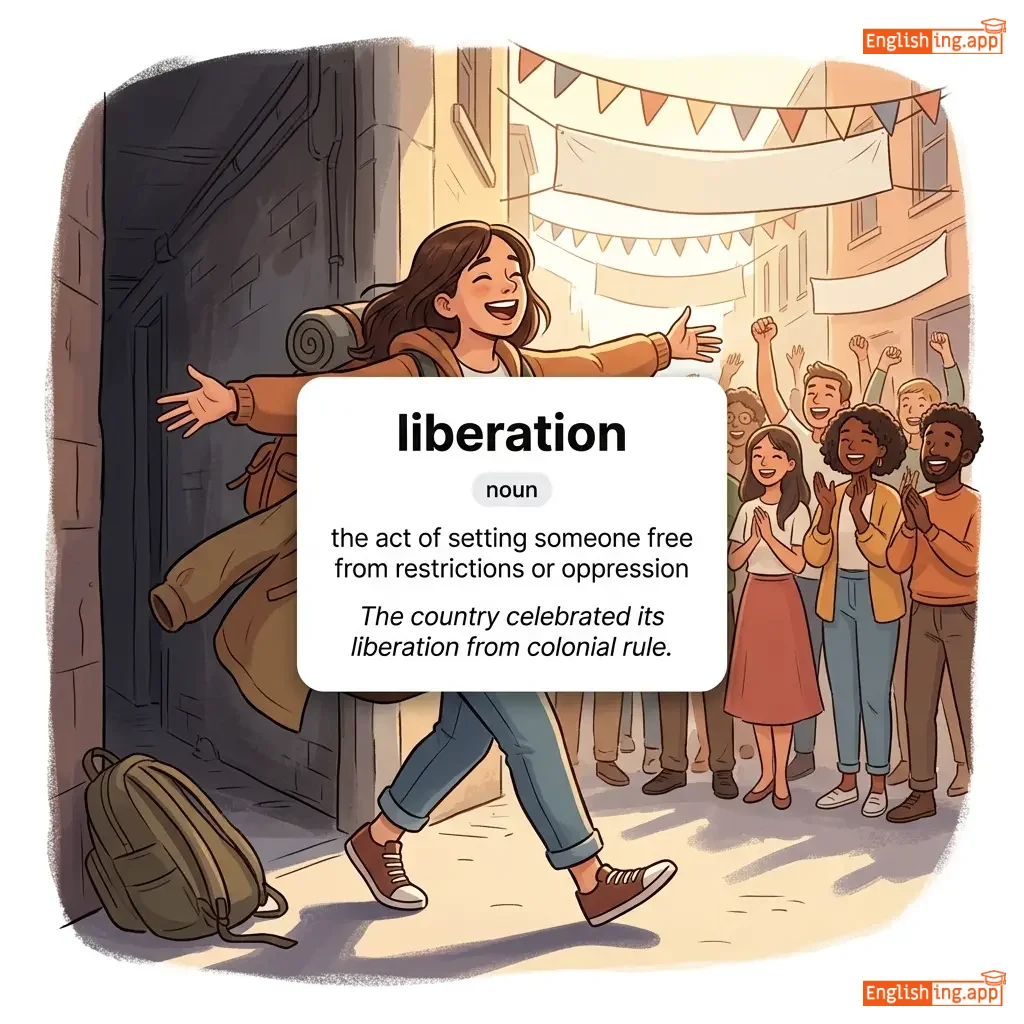
liberation definition card — visual illustration of the meaning
noun
/ˌlɪbəˈreɪʃən/
解放 (kaihō)

the act of setting someone free from restrictions or oppression

"The country celebrated its liberation from colonial rule."

"その国は植民地支配からの解放を祝いました。" (Sono kuni wa shokuminchi shihai kara no kaihō o iwai mashita.)
noun
/ˌlɪbəˈreɪʃən wɔːr/
解放戦争 (kaihou sensou)

a war fought to gain freedom from foreign rule, occupation, or oppression; an armed struggle for national independence

"The liberation war reshaped the nation’s history and identity."

"解放戦争は国の歴史を大きく変えた。" (kaihou sensou wa kuni no rekishi o ookiku kaeta)
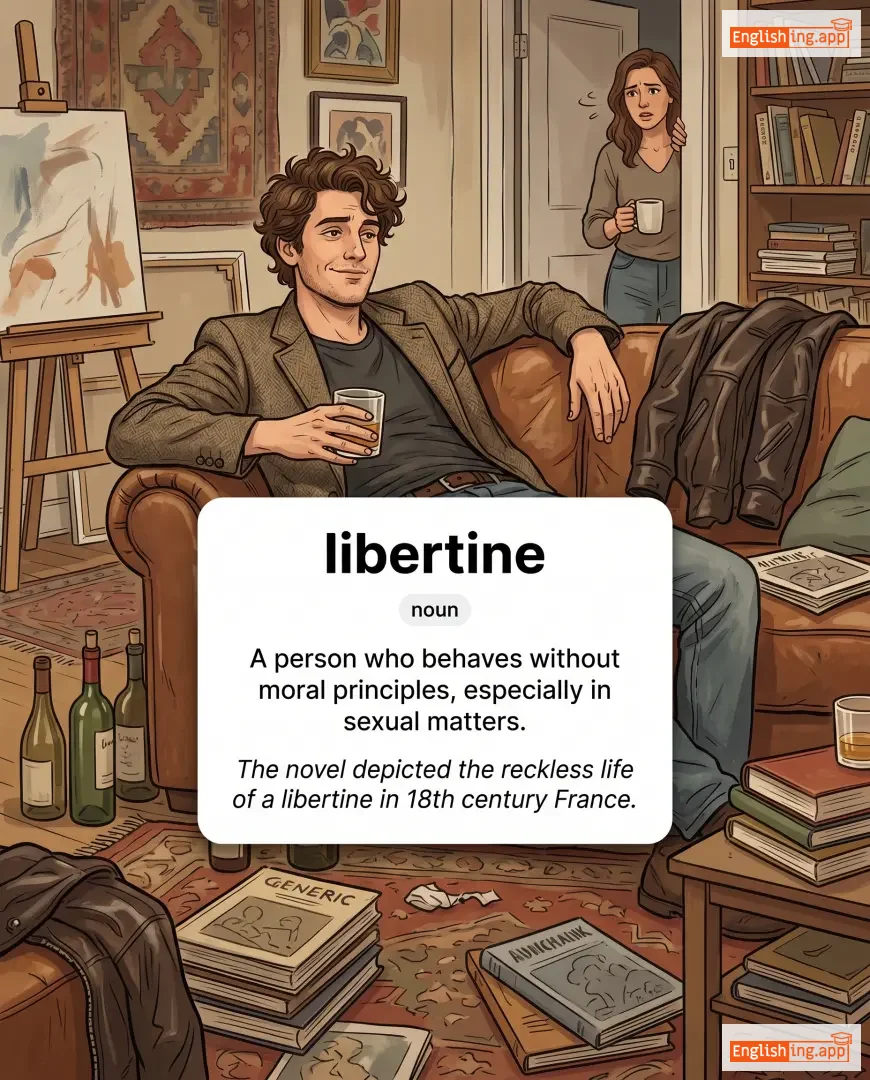
libertine definition card — visual illustration of the meaning
noun
/ˈlɪbərˌtiːn/

A person who behaves without moral principles, especially in sexual matters.

"The novel depicted the reckless life of a libertine in 18th century France."

noun
/ˈlɪbərti/
自由 (jiyuu)

the state of being free within society from oppressive restrictions

"Freedom of speech is a basic liberty."

"言論の自由は基本的な自由です。" (genron no jiyuu wa kihonteki na jiyuu desu.)
adjective
/lɪˈbɪdənəs/
淫ら (midara)

Showing excessive sexual drive; lustful.

"The play was criticized for its libidinous characters."
"その劇は淫らなキャラクターで批判された。" (Sono geki wa midara na kyarakutā de hihan sareta.)
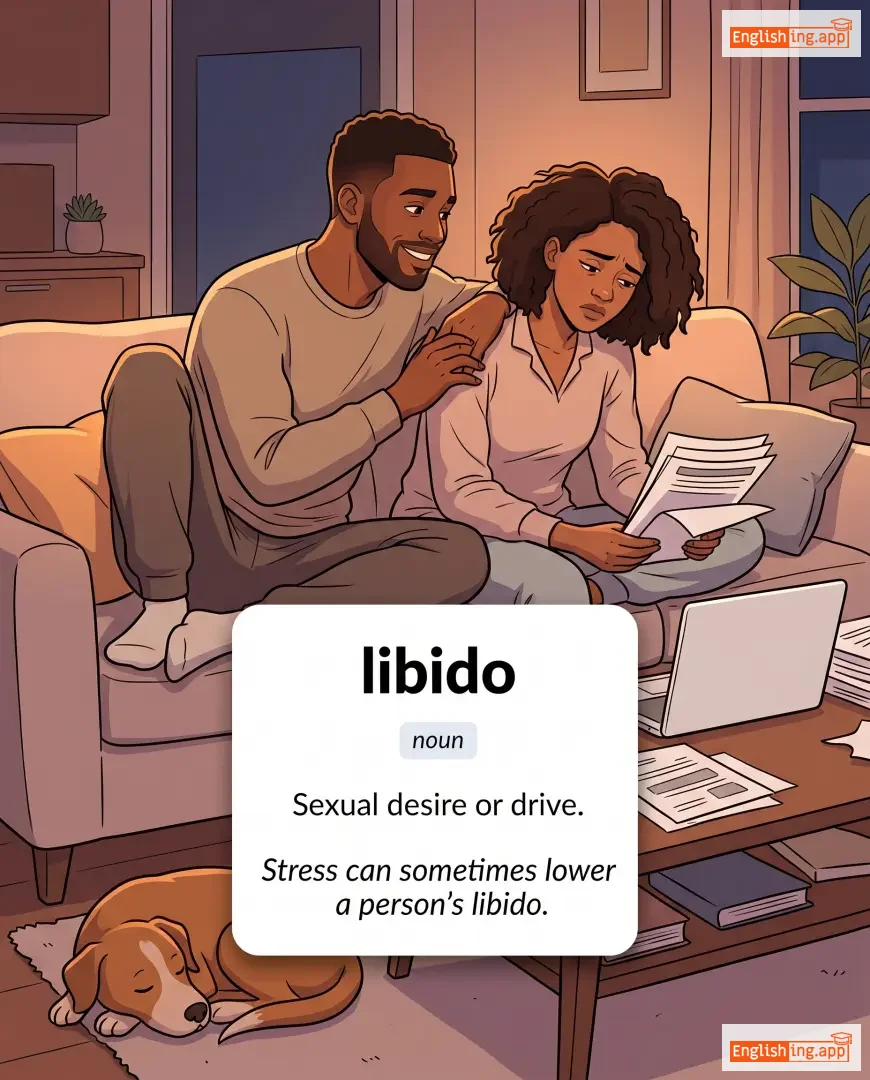
libido definition card — visual illustration of the meaning
noun
/lɪˈbiːdoʊ/
性欲 (seiyoku)

Sexual desire or drive.

"Stress can sometimes lower a person's libido."

"ストレスは時々、ある人の性欲を減少させることがあります。" (Sutoresu wa tokidoki, aru hito no seiyoku o genshō saseru koto ga arimasu.)
noun
/laɪˈbrɛəriən/
司書 (shisho)

a person who manages, organizes, and assists users in a library

"The librarian helped me find a rare history book."
"司書は私が珍しい歴史の本を見つけるのを手伝ってくれました。" (shisho wa watashi ga mezurashii rekishi no hon o mitsukeru no o tetsudatte kuremashita)
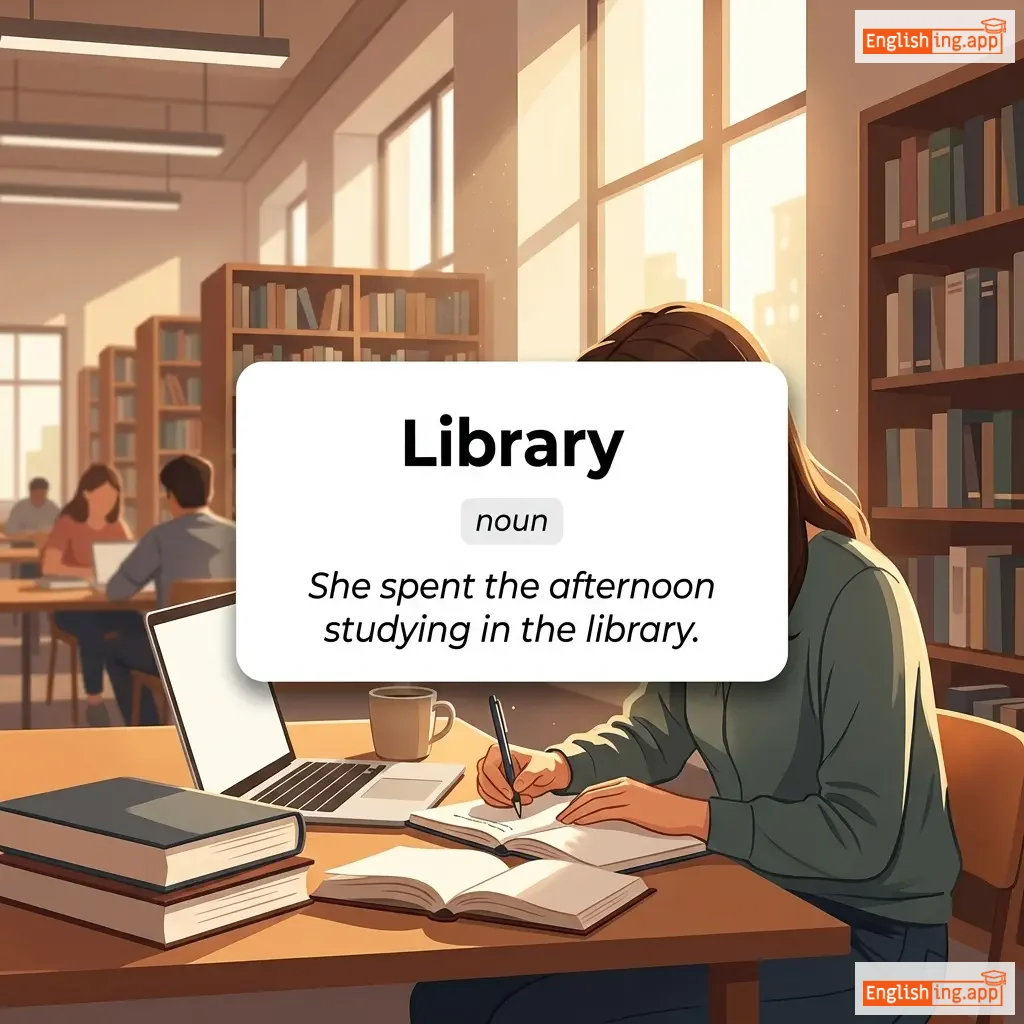
Library definition card — visual illustration of the meaning
noun
/ˈlaɪ.brɛr.i/
図書館 (tosyokan)

A building or room containing collections of books, periodicals, and sometimes other materials for people to read or borrow.

"She spent the afternoon studying in the library."

"彼女は図書館で午後を勉強して過ごしました。" (Kanojo wa tosyokan de gogo o benkyou shite sugoshimashita.)
noun
/lɪˈbrɛtoʊ/
オペラの台本 (opera no daihon)

The text of an opera or other long vocal work.

"She studied the libretto before attending the opera performance."

"彼女はオペラの公演に行く前にリブレットを勉強しました。" (Kanojo wa opera no kouen ni iku mae ni riburetto o benkyou shimashita.)
adjective
/ˈlɪsɪt/
合法 (gōhō)

Permitted by law or by rules; legal.

"The trade of certain goods is licit under international law."

"特定の商品の取引は国際法の下で合法です。" (Tokutei no shōhin no torihiki wa kokusaihō no moto de gōhō desu.)
noun
/liːdʒ/
領主 (ryoushu)

A feudal lord entitled to allegiance and service; a loyal subject.

"The knight pledged loyalty to his liege."

"騎士は彼の領主に忠誠を誓った。" (Kishi wa kare no ryoushu ni chūsei o chikatta.)
lie definition card — visual illustration of the meaning
verb
/laɪ/
嘘をつく (uso o tsuku)

To make a false statement with the intention to deceive.

"He lied about his age to get the job."

"彼は仕事を得るために年齢について嘘をついた。" (Kare wa shigoto o eru tame ni nenrei ni tsuite uso o tsuita.)
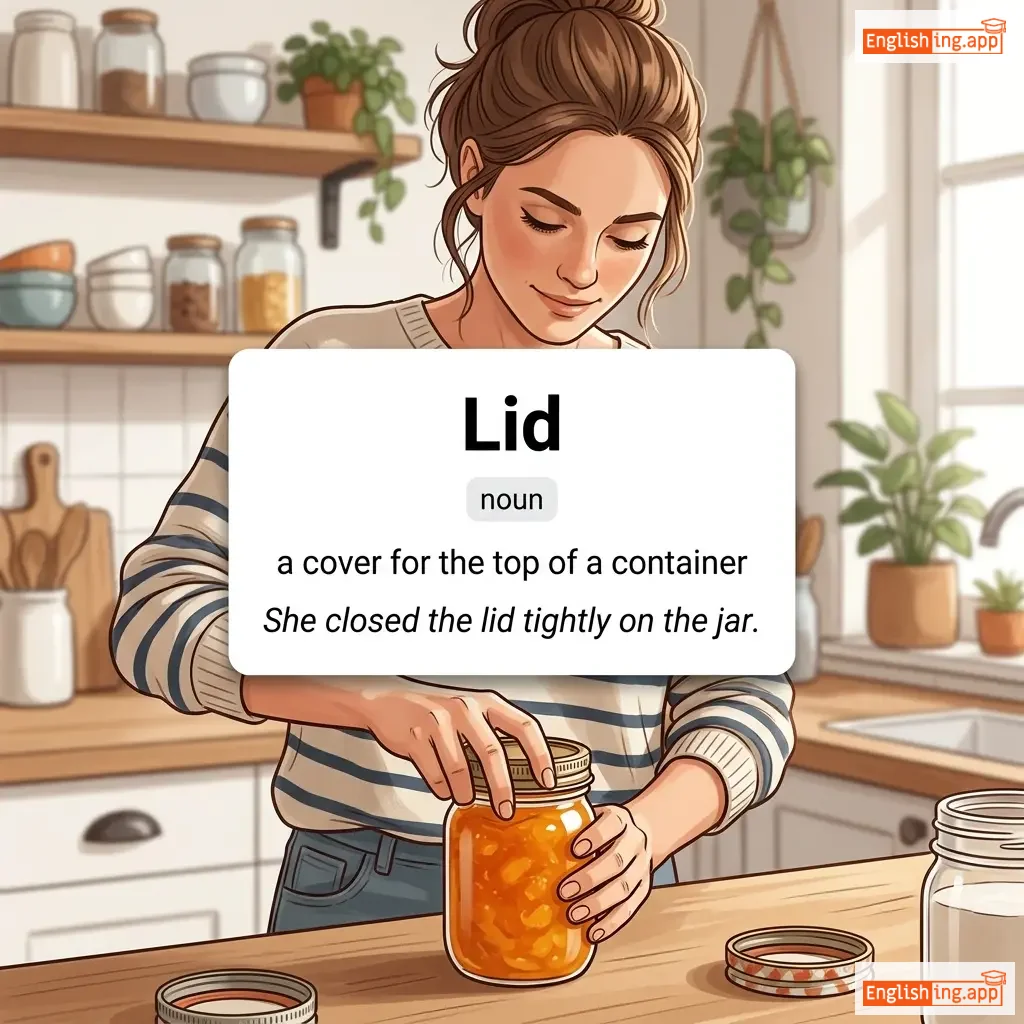
Lid definition card — visual illustration of the meaning
noun
/lɪd/
ふた (futa)

a cover for the top of a container

"She closed the lid tightly on the jar."

"彼女は瓶のふたをしっかりと閉めました。" (Kanojo wa bin no futa o shikkari to shimemashita.)
lick definition card — visual illustration of the meaning
verb
/lɪk/
舐める (nameru)

to pass the tongue over something; to defeat decisively

"The cat licked its paws clean."

"ネコは足をきれいに舐めました。" (Neko wa ashi o kirei ni namemashita.)
noun
/ˌlaɪ.sənˈsiː/
ライセンス保持者 (raizensu mochi-sha)

a person or organization that holds a license to do something

"The licensee is responsible for following all regulations."

"ライセンス保持者はすべての規制を遵守する責任があります。" (Raizensu mochi-sha wa subete no kisei o junshu suru sekinin ga arimasu.)