Словари

Словарь английского языка | Значения слов, определения и примеры
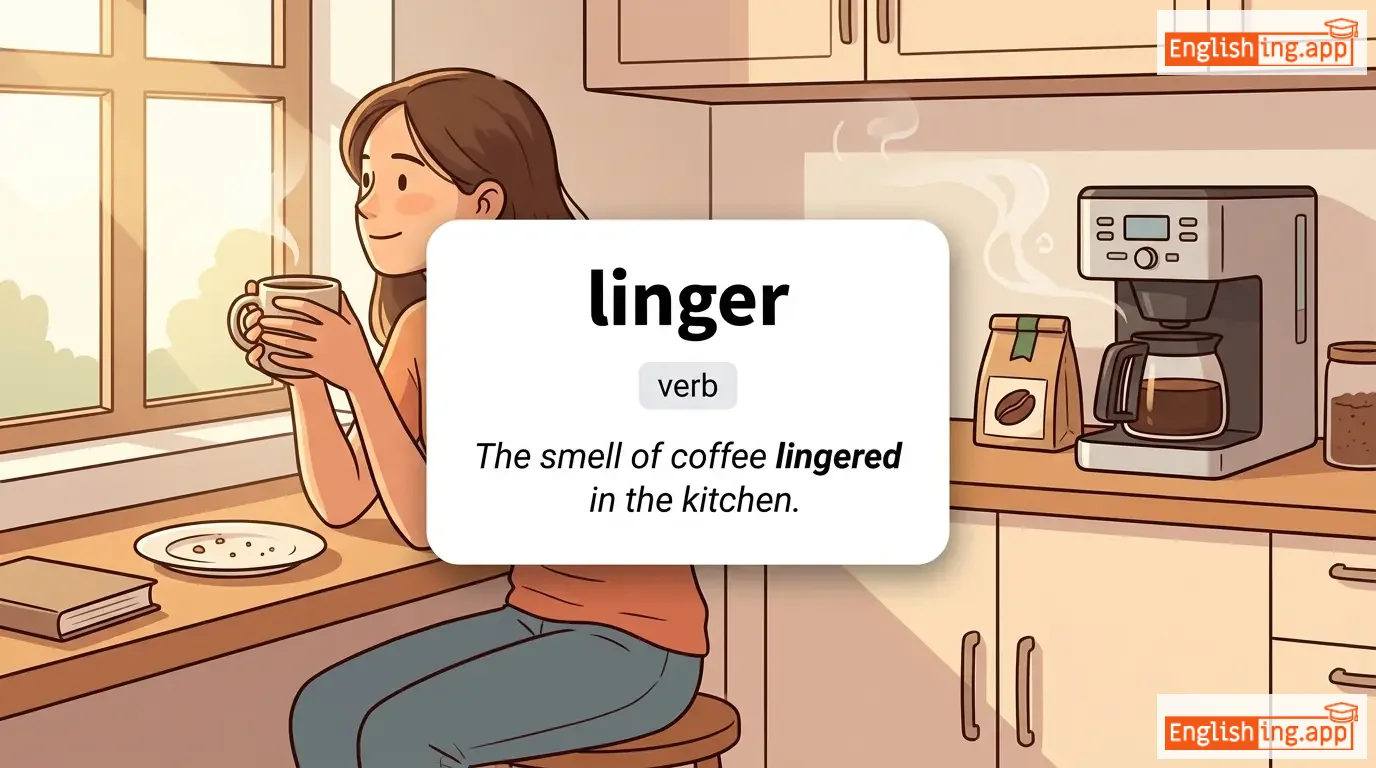
linger definition card — visual illustration of the meaning
verb
/ˈlɪŋ.ɡər/
задерживаться (zaderzhivat'sya)

To stay in a place longer than necessary, often because of unwillingness to leave.

"The smell of coffee lingered in the kitchen."

"Запах кофе задержался на кухне надолго." (Zapakh kofe zaderzhalsya na kukhne nadolgo.)
noun
/ˈlɪŋ.ɡoʊ/
специализированный язык (spetsializirovannyy yazyk)

Specialized or informal language used by a particular group that is often difficult for outsiders to understand.

"The manual was written in technical lingo that confused the new employees."

"Руководство было написано на техническом жаргоне, который сбивал с толку новых сотрудников." (Rukovodstvo bylo napisana na tekhnicheskom zhargone, kotoryy sbival s tolku novykh sotrudnikov.)
noun
/ˈlɪŋ.ɡwə/
язык (yazyk)

A language, especially one used for communication among people.

"English has become a global lingua for business and science."

"Английский язык стал глобальной лингвой для бизнеса и науки." (Angliyskiy yazyk stal global'noy lingvoy dlya biznesa i nauki.)
adjective
/ˈlɪŋɡwəl/
связанный с языком (svyazannyy s yazykom)

Relating to the tongue or speech.

"The dentist examined the patient's lingual surface of the teeth."

"Стоматолог осмотрел языковую поверхность зубов пациента." (Stomatolog osmotrel yazykovuyu poverkhnost' zubov patsiyenta.)
noun
/ˈlɪŋɡwɪst/
лингвист (lingvist)

A person skilled in foreign languages or in the scientific study of language.

"She is a linguist who speaks six languages fluently."
"Она лингвист, говорящая на шести языках свободно." (Ona lingvist, govoryashchaya na shesti yazykakh svobodno.)
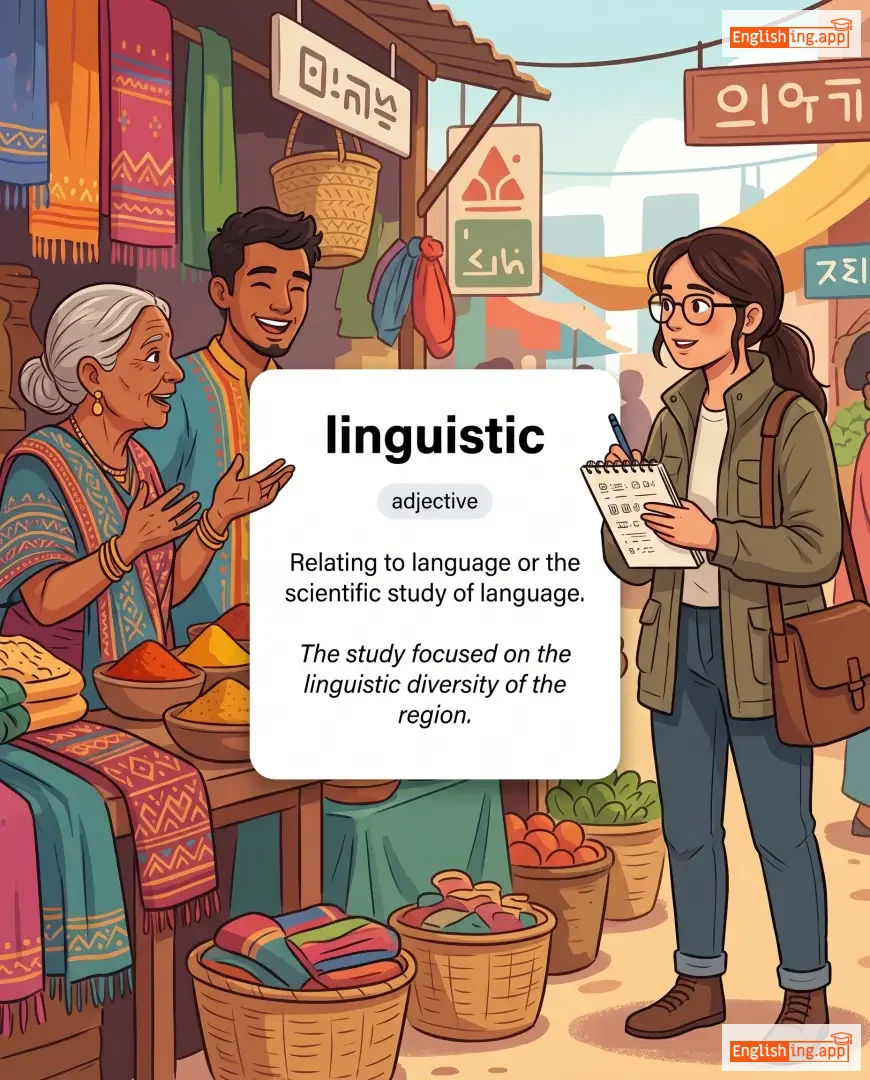
linguistic definition card — visual illustration of the meaning
adjective
/lɪŋˈɡwɪstɪk/
лингвистический (lingvisticheskiy)

Relating to language or the scientific study of language.

"The study focused on the linguistic diversity of the region."

"Исследование сосредоточилось на лингвистическом разнообразии региона." (Issledovaniye sosredotochilos' na lingvisticheskom raznoobrazii regiona.)
noun
/lɪŋˈɡwɪstɪks/
лингвистика (lingvistika)

The scientific study of language and its structure.

"She decided to major in linguistics at university."

"Она решила изучать лингвистику в университете." (Ona reshila izuchat' lingvistiku v universitete.)
noun
/ˈlɪnəmənt/
линмент / лосьон (liniment / loshon)

A liquid or lotion applied to the skin to relieve pain or stiffness.

"He rubbed liniment on his sore muscles after the workout."

"Он растер ланимент на свои болящие мышцы после тренировки." (On raster liniment na svoi boliashchie myshcy posle trenirovki.)
noun, verb
/lɪŋk/
связь (svyaz)

a connection between two things; to connect or associate

"The article includes a link to the official website."

"Статья включает ссылку на официальный сайт." (Statya vklyuchayet ssylku na ofitsial'nyy sayt.)
noun
/lɪˈnoʊ.li.əm/
линолеум (linoleum)

a durable, washable floor covering made from solidified linseed oil, wood flour, or cork dust on a canvas backing

"They decided to cover the kitchen floor with linoleum."

"Они решили покрыть кухонный пол линолеумом." (Oni reshili pokryt' kukhonnij pol linoleumom)
noun
/lɪnt/
пух (puh)

small soft fibers that come off cloth, often found in dryers or on clothes

"There was lint all over his black shirt after the wash."
"После стирки на его черной рубашке был пух." (Posle stirki na ego chernoy rubashke byl pukh.)
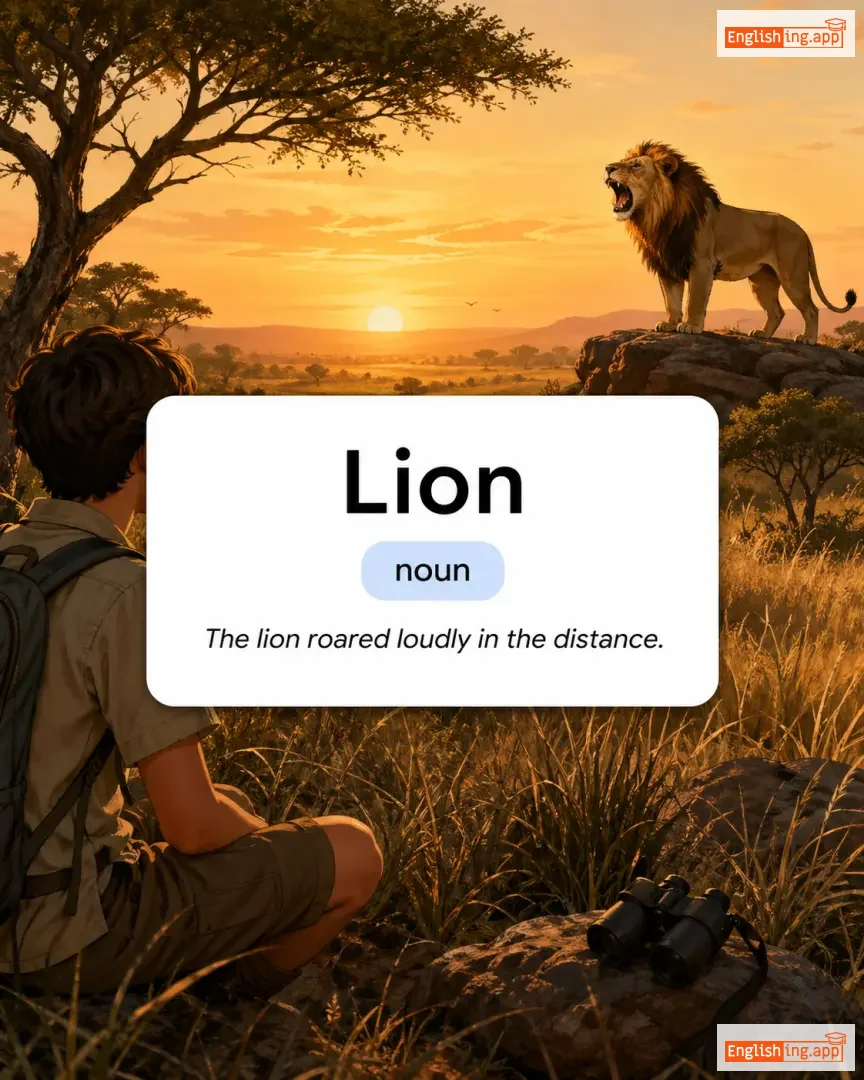
Lion definition card — visual illustration of the meaning
noun
/ˈlaɪən/
лев (lev)

a large wild animal of the cat family that lives in Africa and Asia, known as the king of the jungle

"The lion roared loudly in the distance."
"Лев рычал громко вдалеке." (Lev rychal gromko vdaleke.)
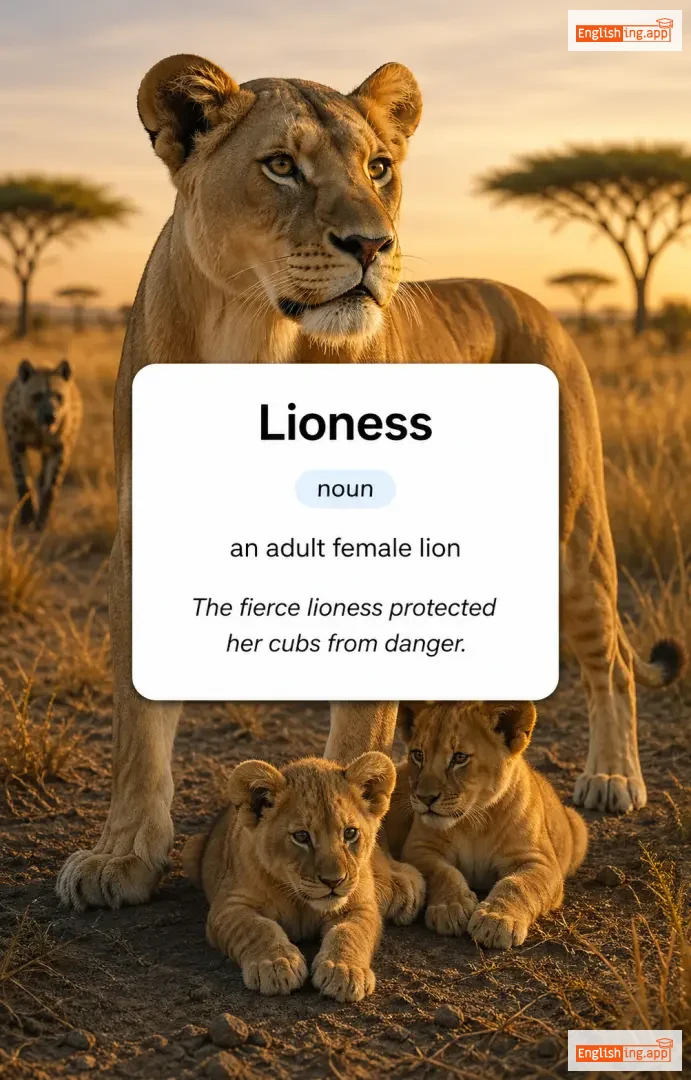
Lioness definition card — visual illustration of the meaning
noun
/ˈlaɪ.ə.nəs/
львица (l'vitsa)

an adult female lion

"The fierce lioness protected her cubs from danger."

"Яростная львица защитила своих детенышей от опасности." (Yarostnaya l'vitsa zashchitila svoikh detenyshikh ot opasnosti.)
verb
/ˈlaɪ.ə.naɪz/
возвеличивать (vozelichivat)

to treat someone as a celebrity or give a lot of public attention

"The press began to lionize the young scientist after his discovery."

"Пресса начала льстить молодому ученому после его открытия." (Pressa nachala l'stit' molodomu uchenomu posle ego otkrytiya.)
noun
/lɪp/
губа (guba)

either of the two soft edges of the mouth

"She smiled and bit her lower lip nervously."

"Она улыбнулась и нервно прикусила свою нижнюю губу." (Ona ulybnulas' i nervno prikusila svoyu nizhnyuyu gubu.)
lipogenesis definition card — visual illustration of the meaning
noun
/ˌlaɪ.pəˈdʒen.ɪ.sɪs/
липогенез (lipogenez)

The metabolic process of fat synthesis where excess carbohydrates are converted into fatty acids and stored as triglycerides.

"Excess carbohydrate intake promotes lipogenesis and fat storage."

"Чрезмерное потребление углеводов способствует липогенезу и накоплению жира." (Chrezmernoye potrebleniye uglevodov sposobyvayet lipogenezu i nakopleniyu zhiro.)
noun
/ˌlɪk.wəˈfeɪ.ʃənt/
жидкость (liquefacient)

a substance that causes something to become liquid

"The chemist explained how the liquefacient worked in the experiment."

"Химик объяснил, как жидкость работала в эксперименте." (Khimik ob'yasnil, kak zhidkost' rabotala v eksperimentye.)
verb
/ˈlɪk.wɪ.faɪ/
расплавлять (liquefy)

to make or become liquid

"The heat will liquefy the butter in a few minutes."

"Тепло заставит масло стать жидким через несколько минут." (Teplo zastavit maslo stat' zhidkim cherez neskol'ko minut.)
noun
/lɪˈkjʊər/
сладкий ликер (sladkiy liker)

A strong, sweet alcoholic drink flavored with fruits, herbs, or spices.

"She served a small glass of cherry liqueur after dinner."

"Она подала маленький стакан вишневого ликера после ужина." (Ona podala malen'kiy stakan vishnevogo likera posle uzhina.)
noun
/ˈlɪkwɪd/
жидкость (zhidkost)

a substance that flows freely but is of constant volume, having a consistency like water or oil.

"Water is a clear liquid that is essential for life."

"Вода - это прозрачная жидкость, которая необходима для жизни." (Voda - eto prozrachnaya zhidkost, kotoraya neobkhodima dlya zhizni.)
verb
/ˈlɪkwɪdeɪt/
ликвидировать (likvidirovat')

To sell assets in order to pay off debts; to close a business and convert assets into cash.

"The company decided to liquidate its assets to pay creditors."

"Компания решила ликвидировать свои активы, чтобы расплатиться с кредиторами." (Kompaniya reshila likvidirovat' svoi aktyvy, chtoby raspaltit'sya s kreditormi.)
liquidity definition card — visual illustration of the meaning
noun
lɪˈkwɪd.ə.ti
ликвидность (likvidnost)

Cash flow, financial fluidity.

"The company maintains high liquidity."

"Компания поддерживает высокую ликвидность." (Kompaniya podderzhivayet vysokuyu likvidnost.)
adjective
/ˈluː.ni/
сумасшедший; глупый; психически нестабильный (sumasshedshij; glupyj; psikhicheski nestabil'nyj)

crazy; silly; mentally unstable

"His loony behavior made everyone laugh."

"Его сумасшедшее поведение заставило всех смеяться." (ego sumasshedshee povedenie zastavilo vsekh smeyatsya)
noun, verb
/laʊndʒ/
гостиная (gostinaya)

A public room for relaxing; or to sit, lie, or stand in a relaxed way.

"They lounged on the sofa after dinner."

"Они развалились на диване после ужина." (Oni razvailsya na divane posle uzhina.)
noun
/lɒx/ or /lɒk/
озеро (ozero)

An Irish or Scottish word for a lake or sea inlet.

"The fishermen lived by the lough for generations."

"Рыбаки жили у озера на протяжении поколений." (Rybaki zhili u ozera na protyazhenii pokoleniy.)
adverb
/ˈlaʊdli/
громко (gromko)

in a way that produces a lot of sound; with a high volume

"He spoke loudly so everyone in the room could hear him."

"Он говорил громко, чтобы все его слышали." (On govoril gromko chtoby vse ego slyshali)
loud definition card — visual illustration of the meaning
adjective/adverb
/laʊd/
громкий (gromkiy)

Producing or capable of producing much noise.

"The music was too loud to concentrate."
"Музыка была слишком громкой, чтобы сосредоточиться." (Muzyka byla slishkom gromkoy, chtoby sosredotochit'sya.)
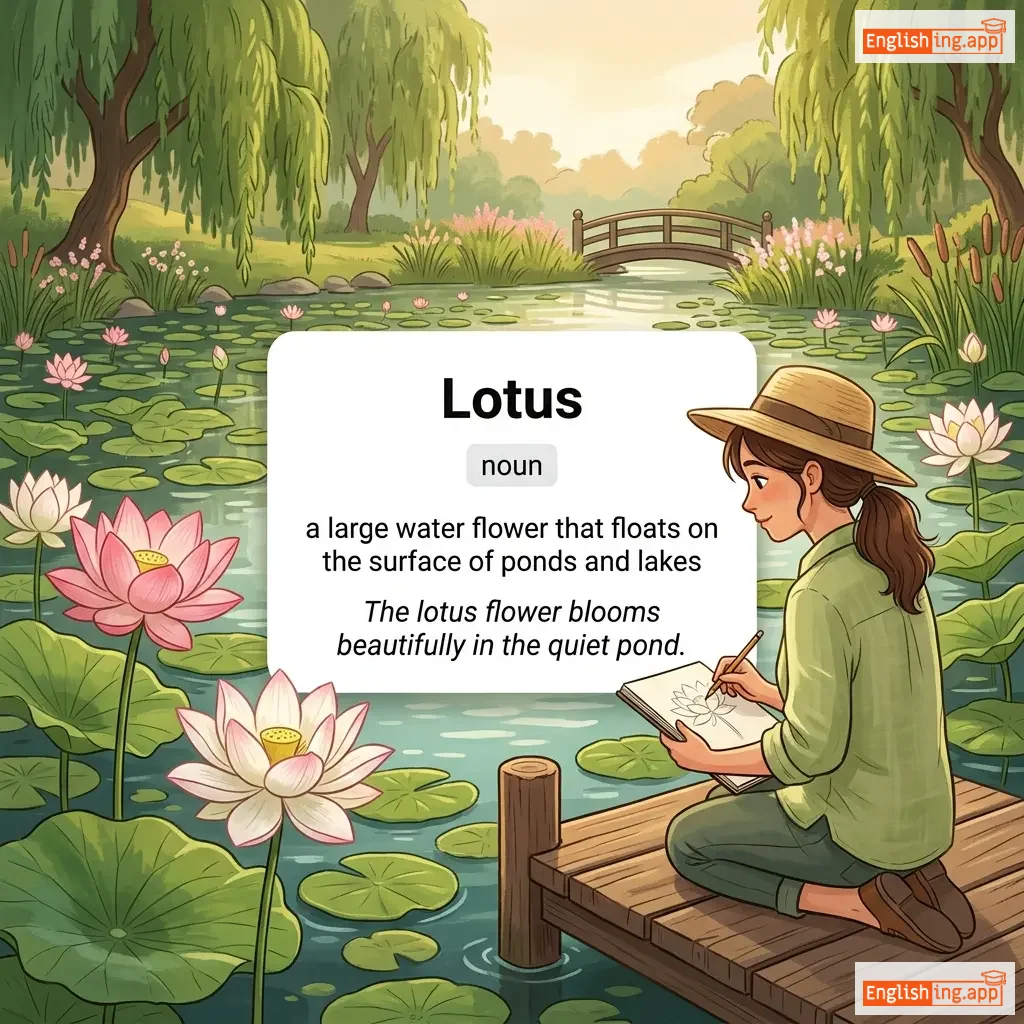
Lotus definition card — visual illustration of the meaning
noun
/ˈloʊ.təs/
лотос (lotos)

a large water flower that floats on the surface of ponds and lakes

"The lotus flower blooms beautifully in the quiet pond."

"Цветок лотоса прекрасно цветёт в тихом пруду." (tsvetok lotosa prekrasno tsvetyot v tikhom prudu)
noun
/ˈlɒtəri/
лотерея (loteriya)

A means of raising money by selling numbered tickets and giving prizes to the holders of numbers drawn at random.

"He won a car in the national lottery."

"Он выиграл машину в национальной лотерее." (On vyigral mashinu v natsional'noi loteree.)
pronoun/noun
/lɒts/
много (mnogo)

A large number or amount of something.

"She has lots of friends in the city."

"У неё много друзей в городе." (U neyo mnogo druzey v gorode.)
noun
/lɒt/
много (mnogo)

A large number or amount; a group or portion.

"She bought a lot of books at the fair."

"Она купила много книг на ярмарке." (Ona kupila mnogo knig na yarmarke.)
verb/adjective
/lɒst/
потерянный (poteryannyy)

Unable to find the way; no longer in possession of something.

"He lost his keys and couldn’t enter the house."

"Он потерял свои ключи и не смог войти в дом." (On poteryal svoi klyuchi i ne smog voyti v dom.)
loss definition card — visual illustration of the meaning
noun
/lɒs/
потеря (poterya)

The state of no longer having something or someone; the harm resulting from losing.

"The company suffered a huge financial loss last year."
"Компания понесла огромные финансовые потери в прошлом году." (Kompaniya ponessla ogromnye finansovye poteri v proshlom godu.)
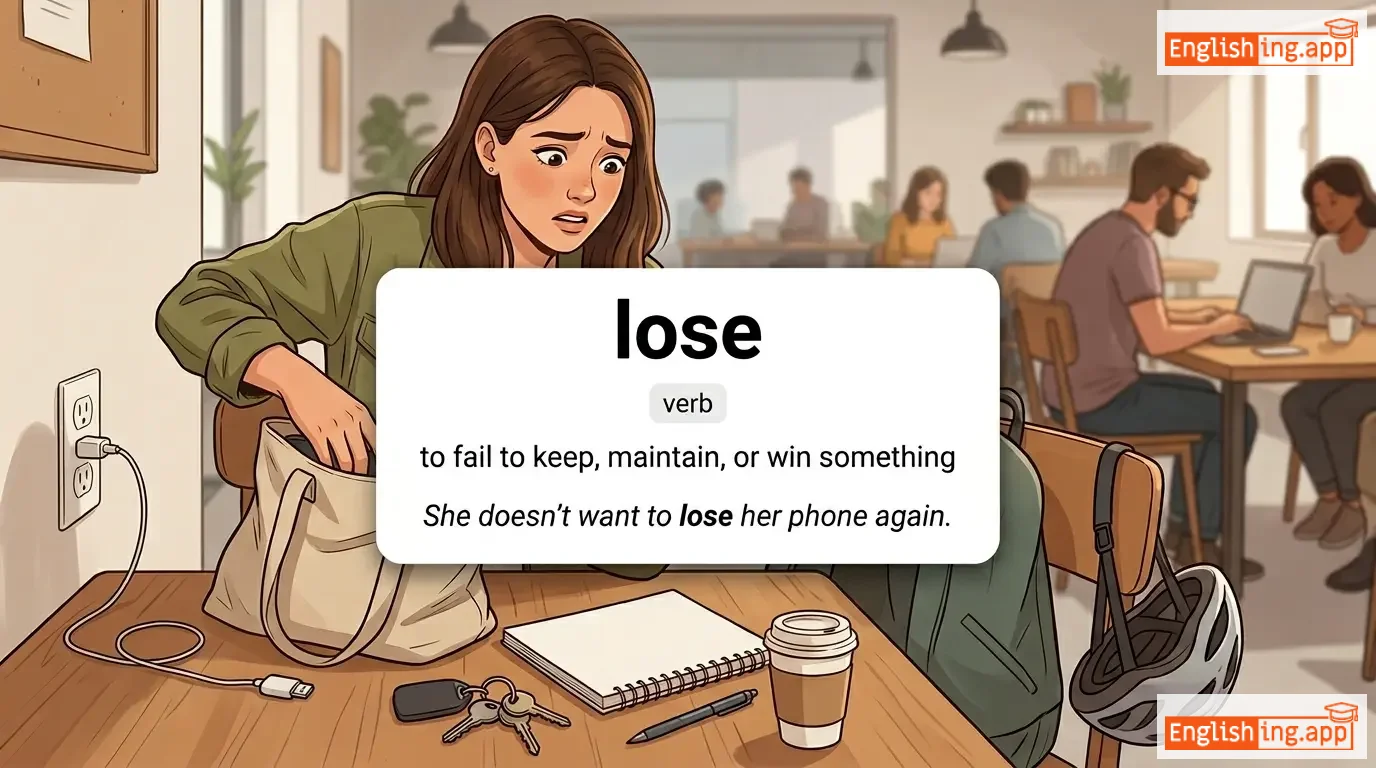
lose definition card — visual illustration of the meaning
verb
/luːz/
счастье (schast'ye)

to fail to keep, maintain, or win something

"She doesn’t want to lose her phone again."

"Она не могла скрыть своего счастья, когда получила награду." (Ona ne mogla skryt' svoego schast'ya, kogda poluchila nagradu.)
noun
/ˈlɔːrdlɪŋ/
молодой лорд (molodoy lord)

A young or petty lord; someone of minor nobility.

"The arrogant lordling demanded respect despite his lack of experience."
"Арогантный лордлинг требовал уважения, несмотря на его отсутствие опыта." (Arogantnyy lordling treboval uzhazheniya, nesmotrya na ego otsutstvie opyta.)
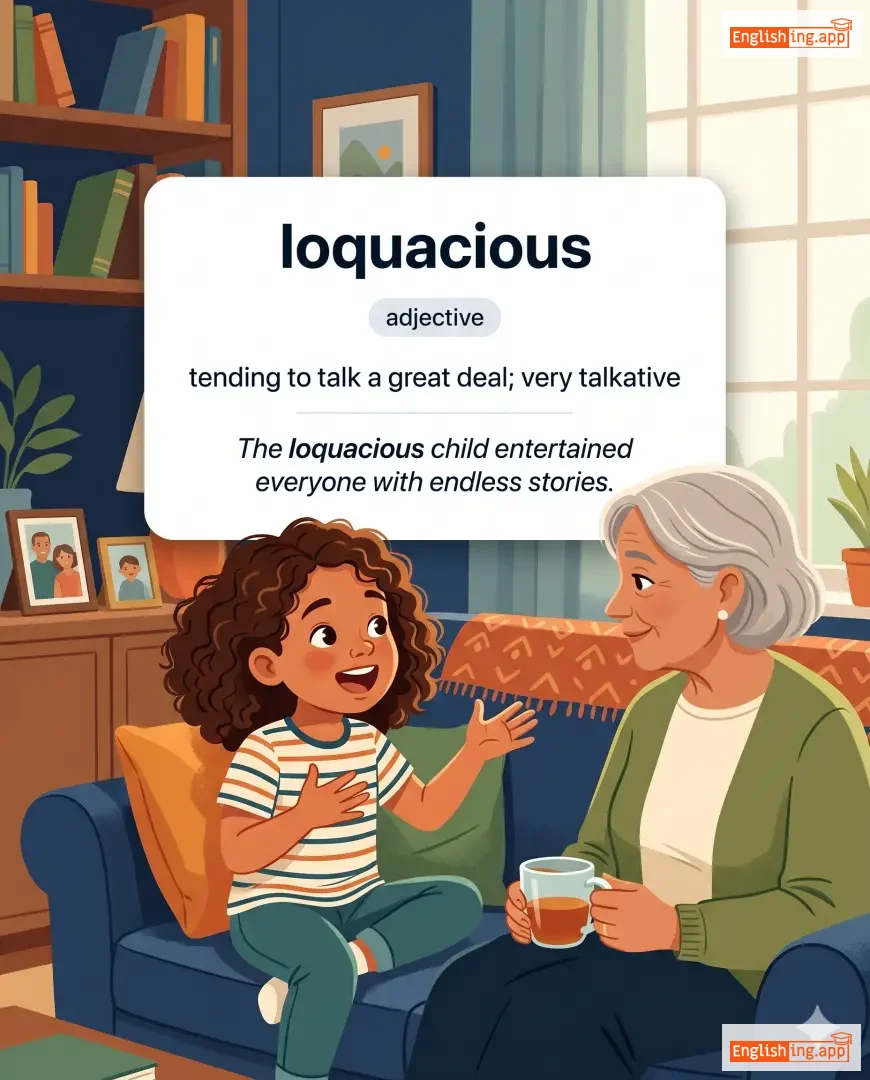
loquacious definition card — visual illustration of the meaning
adjective
/loʊˈkweɪʃəs/
болтливый (boltlivyy)

tending to talk a great deal; very talkative

"The loquacious child entertained everyone with endless stories."

"Болтливый ребёнок развлекал всех бесконечными историями." (Boltlivyy rebyonok razvlekal vsekh beskonechnymi istoryami.)
adjective
/ˈlɑːpˌsaɪdɪd/
косой, неравномерный (kosoy, neravnomernyy)

with one side lower, larger, or different from the other; uneven or imbalanced

"The cake looked lopsided after being decorated in a hurry."

"Торт выглядел неравномерным после того, как его украсили в спешке." (Tort vyglyadel neravnomernym posle togo, kak ego ukrasili v speshke.)
verb
/loʊp/
бежать с длинными, прыгающими шагами (bezhat' s dlinnyimi, prygayushchimi shagami)

to run or move with a long, bounding stride

"The horse loped gracefully across the field."

"Лошадь элегантно бежала по полю." (Loshad' elegantno bezhala po polyu.)
verb
/luːt/
грабить (grabit)

to steal goods, typically during war, riot, or chaos

"The rioters looted several shops during the protest."

"Протестующие ограбили несколько магазинов во время протестов." (Protestuyushchie ograbili neskol'ko magazinov vo vremya protestov.)
adjective
/luːs/
слабый (slaby)

not firmly or tightly fixed in place

"The screw is loose and needs tightening."

"Винт ослаблен и требует подтяжки." (Vint oslablen i trebuet podtyazhki.)
adjective
/ˈluːpi/
сумасшедший (sumasshedshiy)

crazy, silly, or eccentric

"After working all night, he felt a little loopy."

"После работы всю ночь он почувствовал себя немного сумасшедшим." (Posle raboty vsyu noch on pochuvstvoval sebya nemnogo sumasshedshim.)
noun
/luːp/
петля, кольцо (petlya, kol'tso)

a shape produced by a curve that bends around and crosses itself

"The string formed a neat loop around the package."
"Нить образовала аккуратную петлю вокруг пакета." (Nit' obrazovala akuratnuyu petlyu vokrug paketa.)
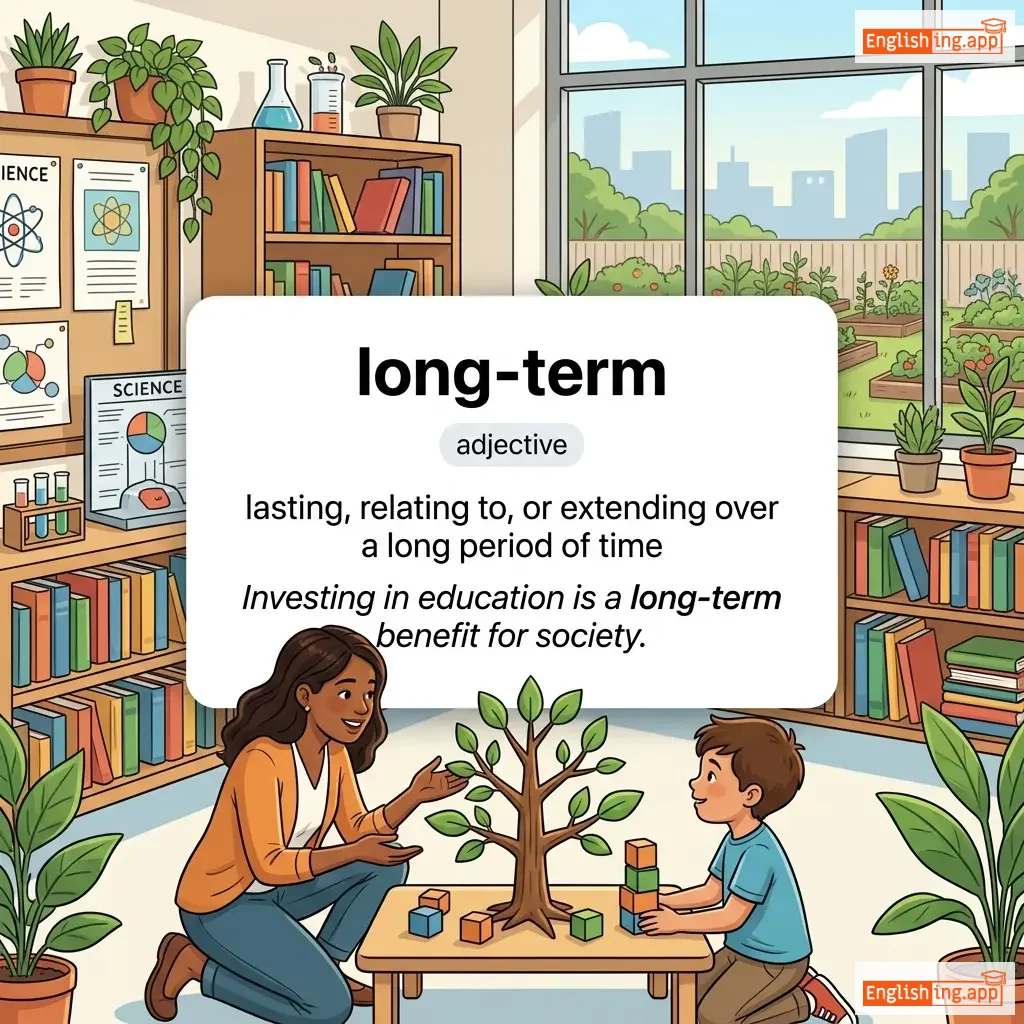
long-term definition card — visual illustration of the meaning
adjective
/ˌlɔːŋ ˈtɜːrm/
долгосрочный (dolgostrochny)

lasting, relating to, or extending over a long period of time

"Investing in education is a long-term benefit for society."
"Инвестиции в образование — это долгосрочная выгода для общества." (Investitsii v obrazovanie — eto dolgostrochnaya vigoda dlya obshchestva.)
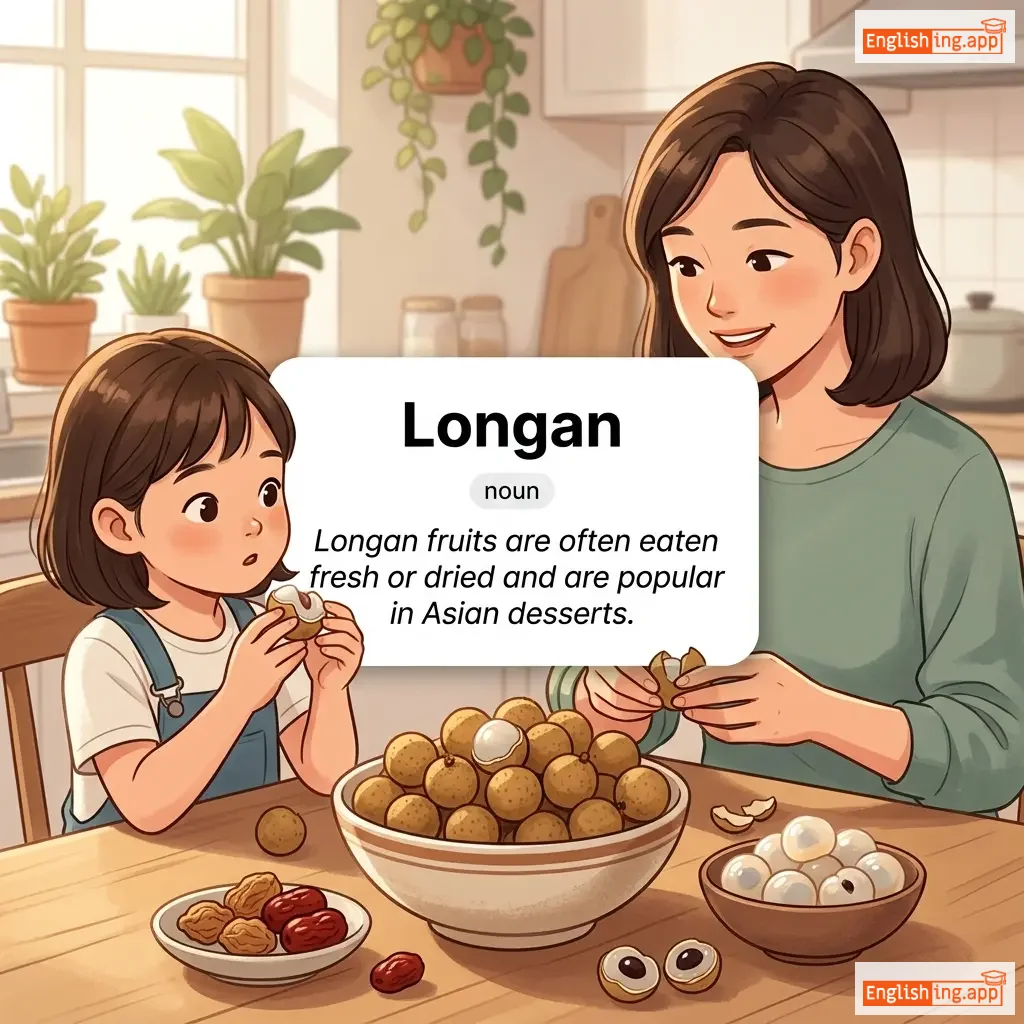
Longan definition card — visual illustration of the meaning
noun
/ˈlɔːŋ.ɡən/

a small round tropical fruit with translucent white flesh and sweet taste, related to lychee

"Longan fruits are often eaten fresh or dried and are popular in Asian desserts."
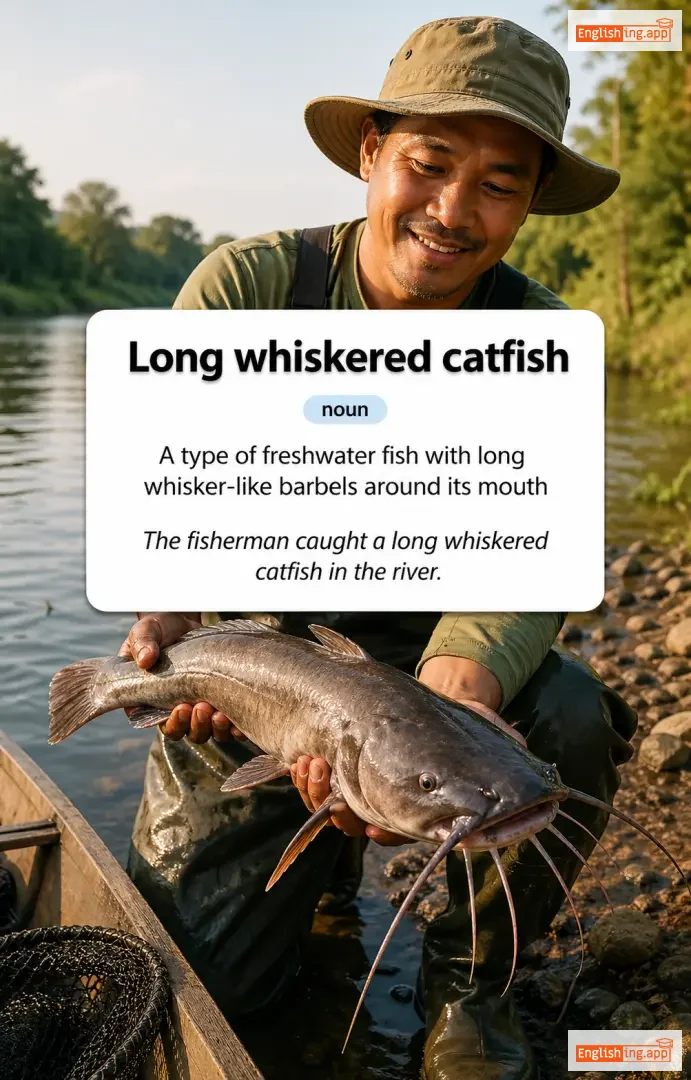
Long whiskered catfish definition card — visual illustration of the meaning
noun
/lɒŋ ˈwɪskəd ˈkætfɪʃ/
сом с длинными усами (som s dlinymi usami)

A type of freshwater fish with long whisker-like barbels around its mouth

"The fisherman caught a long whiskered catfish in the river."

"Рыбак поймал сома с длинными усами в реке." (rybak poimal soma s dlinymi usami v reke)
adjective, adverb
/ˈlɒŋ taɪm/
долгосрочный (dolgosrochnyy)

lasting or existing for a long period of time; having continued for many years

"She is a long-time friend of my family."

"Она давний друг моей семьи." (Ona davniy drug moyey semi)
Long-term memory definition card — visual illustration of the meaning
noun
ˈlɒŋ tɜːm ˈmɛm.ər.i
долговременная память (dolgovremennaya pamyat)

Such memory that remains stored in the brain for a long time

"Repeated practice helps transfer information into long-term memory."
"Повторная практика помогает переносить информацию в долговременную память." (Povtornaya praktika pomogayet perenosit' informatsiyu v dolgovremennuyu pamyat.)
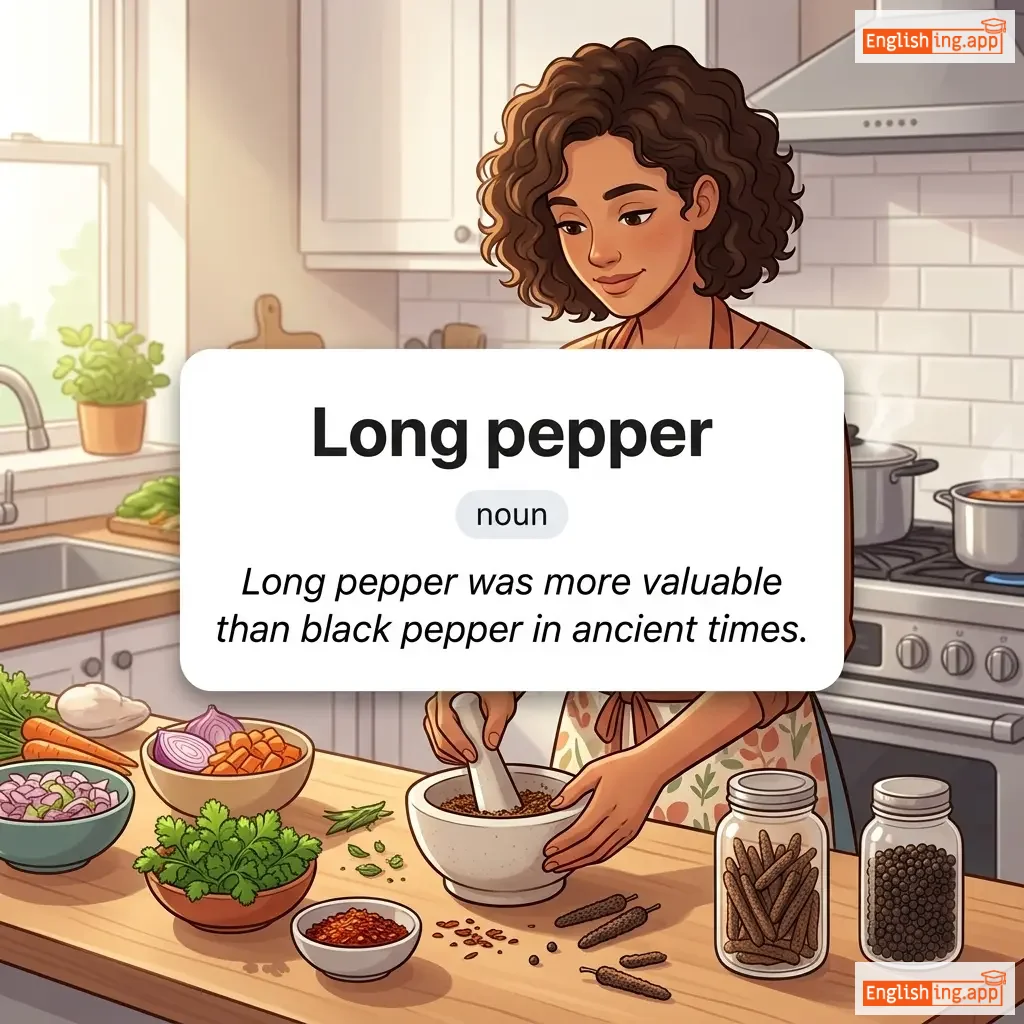
Long pepper definition card — visual illustration of the meaning
noun
/lɔːŋ ˈpepər/
длинный перец (dlinnyy perets)

a flowering vine in the family Piperaceae, cultivated for its fruit which is used as a spice

"Long pepper was more valuable than black pepper in ancient times."

"Длинный перец был более ценен, чем черный перец в древние времена." (Dlinnyy perets byl bolee tsenen, chem chernyy perets v drevnie vremena.)
adjective
/lɔːŋ/
длинный (dlinnyy)

Measuring a great distance from end to end; lasting for a large amount of time.

"They waited a long time for the train."

"Они долго ждали поезд." (Oni dolgo zhдали poyezd.)
Long gourd definition card — visual illustration of the meaning
noun
/lɔːŋ ɡɔːrd/
длинный кабачок (dlinnyy kabachok)

an elongated green vegetable belonging to the cucumber family, used in cooking

"She sliced the long gourd thinly for the stir-fry dish."

"Она нарезала длинный кабачок тонкими ломтями для жареного блюда." (Ona narezala dlinnyy kabachok tonkimi lomtyami dlya zharenogo blyuda.)