वोकैबुलरीज

इंग्लिश वोकैबुलरी डिस्कवर, लर्न और मास्टर करें

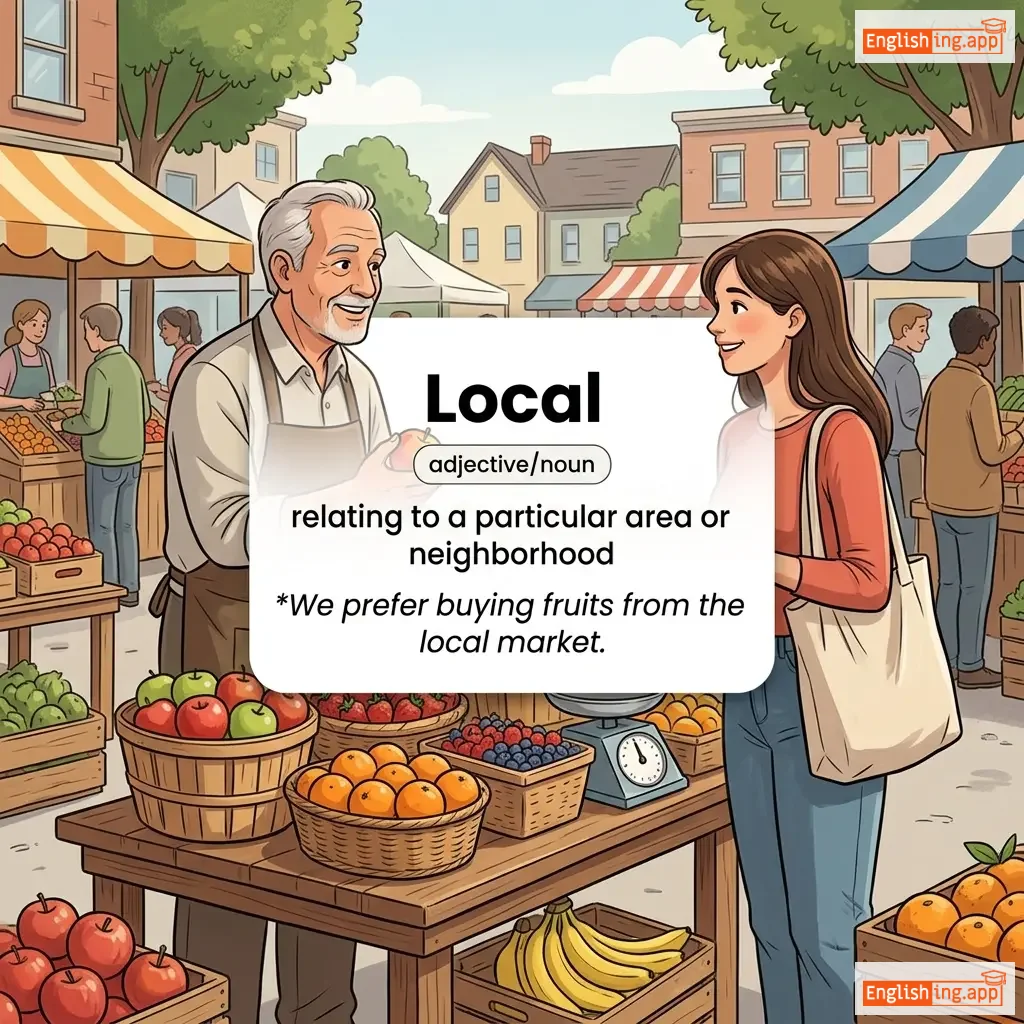
Local definition card — visual illustration of the meaning
adjective/noun
/ˈloʊkəl/
स्थानीय (sthaniya)

relating to a particular area or neighborhood

"We prefer buying fruits from the local market."

"हम स्थानीय बाजार से फल खरीदना पसंद करते हैं।" (ham sthaniya bazar se phal kharidna pasand karte hain.)
verb
/loʊˈkeɪt/
स्थान निर्धारित करना (sthan nirdharit karna)

to find the exact position or place of something

"They managed to locate the missing keys under the couch."

"वे गुम हुई चाबियाँ सोफ़े के नीचे ढूंढने में सफल रहे।" (ve gum hui chabiyan sofa ke niche dhoondhne mein safal rahe.)
noun
/loʊˈkeɪʃən/
स्थान (sthan)

a particular place or position

"This cafe is in a beautiful location near the lake."

"इस कैफे की एक सुंदर जगह झील के पास स्थित है।" (Is cafe ki ek sundar jagah jheel ke paas sthit hai.)
noun
/ˈlɒkətɪv/
स्थानसूचक (sthansuchak)

a grammatical case indicating location or place

"In Latin, the locative case is used to indicate location."

"लैटिन में, लोकटिव केस का उपयोग स्थान सूचक के रूप में किया जाता है।" (Latin mein, locative case ka upyog sthaan suchak ke roop mein kiya jata hai.)
noun
/lɒx/
झील (jheel)

a lake or sea inlet, especially in Scotland

"Tourists visit Loch Ness to search for the legendary monster."

"पर्यटक लोह नेस पर जाते हैं ताकि वे उस पौराणिक राक्षस की खोज कर सकें।" (Paryatak Loch Ness par jate hain taki ve us pauranik raakshas ki khoj kar saken.)
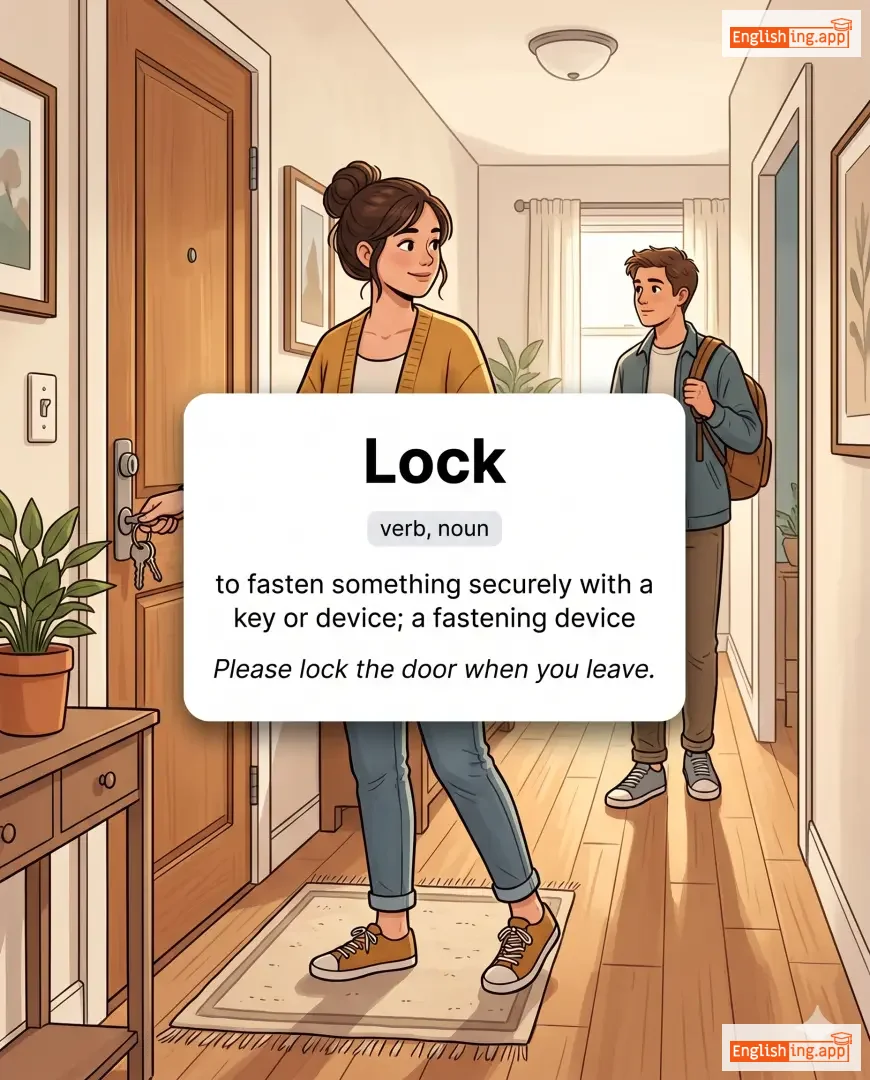
Lock definition card — visual illustration of the meaning
verb, noun
/lɒk/
ताला, ताला लगाना (tala, tala lagana)

to fasten something securely with a key or device; a fastening device

"Please lock the door when you leave."

"कृपया दरवाज़ा बंद करें जब आप जाएं।" (kripya darwaza band karein jab aap jaayein.)
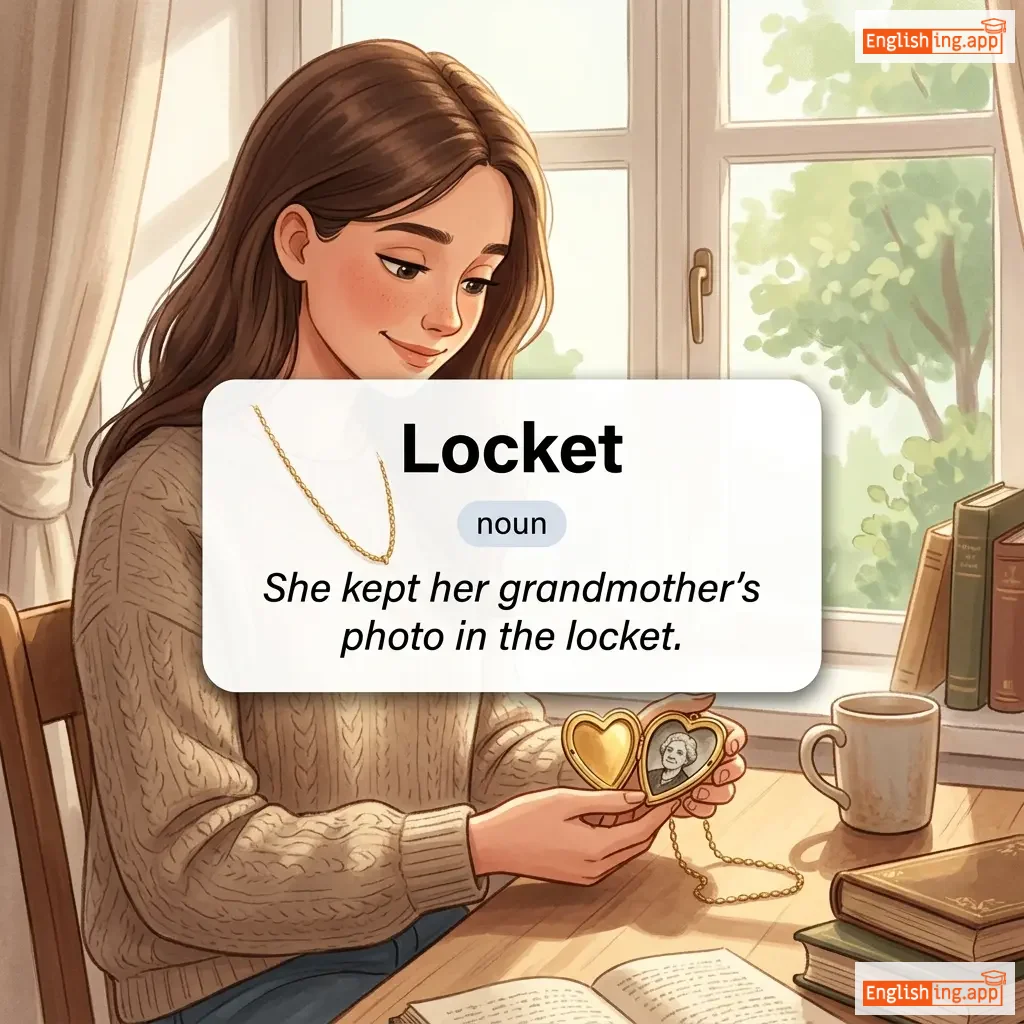
Locket definition card — visual illustration of the meaning
noun
/ˈlɒk.ɪt/
लॉकेट (loket)

a small ornamental case, typically made of gold or silver, worn on a chain around the neck

"She kept her grandmother's photo in the locket."

"उसने अपनी दादी की तस्वीर लॉकेट में रखी।" (usne apni dadi ki tasveer loket mein rakhi)
noun
/ˌloʊkəˈmoʊʃən/
गमन (gaman)

movement or the ability to move from one place to another

"Walking is the most common form of human locomotion."

"चलना मानव गमन का सबसे सामान्य रूप है।" (chalna maanav gaman ka sabse samaanya roop hai.)
noun
/ˌloʊ.kəˈmoʊ.tɪv/
लोकोमोटिव (lokomotiv)

A powered rail vehicle used for pulling trains.

"The old steam locomotive was restored for the museum."

"पुराना भाप लोकोमोटिव संग्रहालय के लिए बहाल किया गया था।" (Purana bhaap lokomotiv sangrahalay ke liye bahaal kiya gaya tha.)
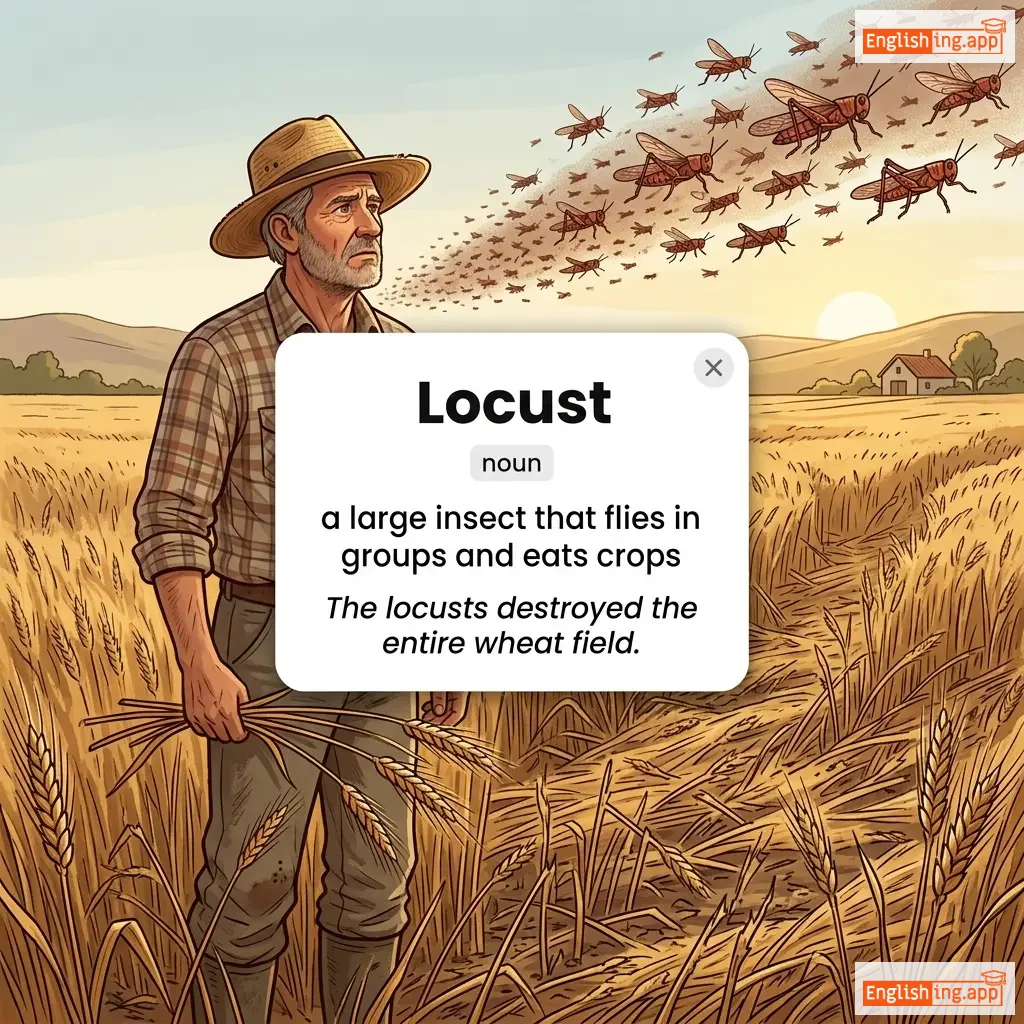
Locust definition card — visual illustration of the meaning
noun
/ˈloʊ.kəst/
टिड्डी (tiddi)

a large insect that flies in groups and eats crops

"The locusts destroyed the entire wheat field."

"टिड्डियों ने पूरे गेहूं के खेत को नष्ट कर दिया।" (tiddiyon ne pure gehun ke khet ko nasht kar diya)
noun
/loʊd/
खनिज शिरा (khonij shira)

A rich source of something, often a vein of valuable metal in the earth.

"The miners discovered a rich lode of silver."

"माइनर्स ने चांदी की एक समृद्ध शिरा खोजी।" (miners ne chandi ki ek samriddh shira khoji.)
noun
/ˈlɒdʒ.mənt/
अस्थायी निवास (asthaayi nivaas)

The act of lodging or a place of temporary stay; also a deposit of something.

"The soldiers found lodgment in the abandoned house."

"सैन्य ने परित्यक्त घर में अस्थायी निवास पाया।" (Sainya ne parityakt ghar mein asthaayi nivaas paaya.)
noun
/lɒft/
लॉफ़्ट (loft)

An upper room or space, often under the roof of a building.

"She converted the old loft into a modern studio."

"उसने पुराने लॉफ़्ट को एक आधुनिक स्टूडियो में बदल दिया।" (Usne purane loft ko ek aadhunik studio mein badal diya.)
adjective
/ˈlɒf.ti/
ऊँचा (uchcha)

Of great height; elevated in character or style; noble.

"He set himself the lofty goal of ending poverty."

"उसने गरीबी समाप्त करने का ऊँचा लक्ष्य निर्धारित किया।" (Usne gareebi samaapt karne ka uchcha lakshya nirdharit kiya.)
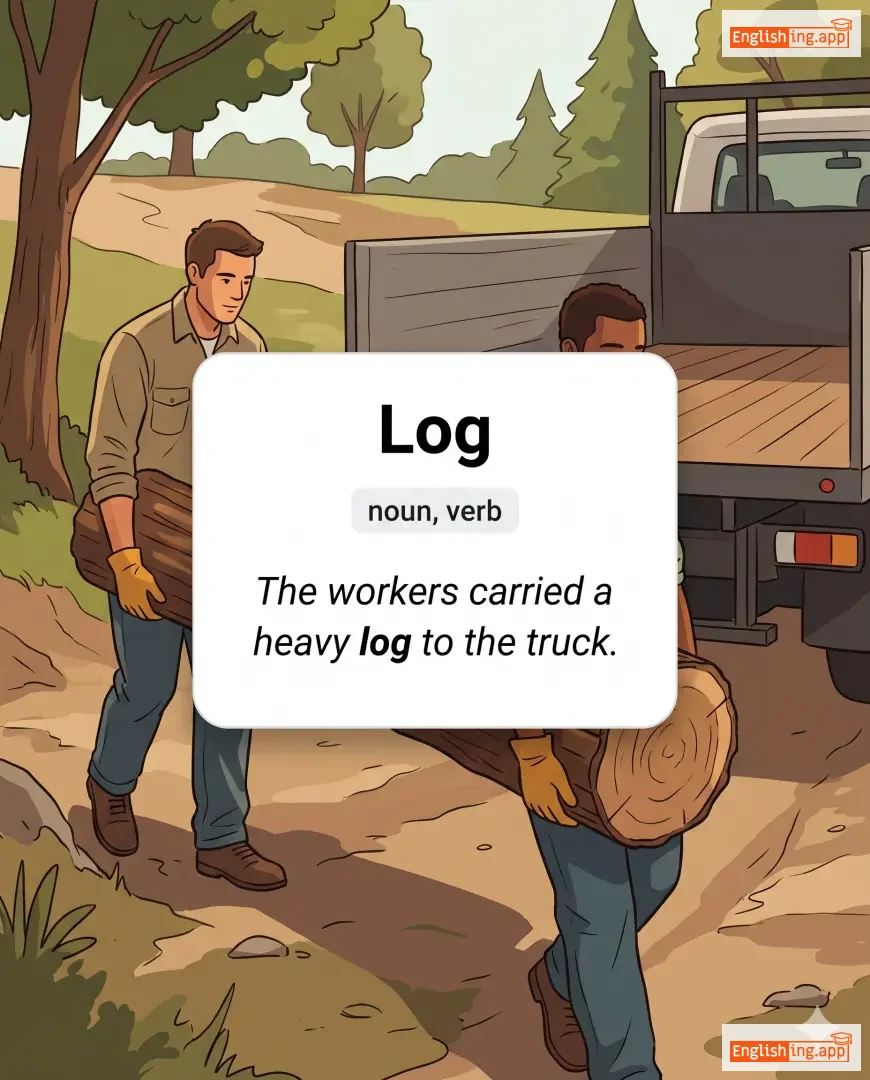
Log definition card — visual illustration of the meaning
noun, verb
/lɒɡ/
लकड़ी, रिकॉर्ड (lakdi, record)

A part of the trunk or a large branch of a tree that has fallen or been cut off; also to record information systematically.

"The workers carried a heavy log to the truck."

"कामकाजी एक भारी लकड़ी को ट्रक में ले गए।" (Kamakaji ek bhari lakdi ko truck mein le gaye.)
noun
/ˈlɒdʒɪk/
तर्क (tark)

Reasoning conducted or assessed according to strict principles of validity.

"Her argument was based on sound logic."

"उसका तर्क ठोस लॉजिक पर आधारित था।" (Uska tark thos logic par aadharit tha.)
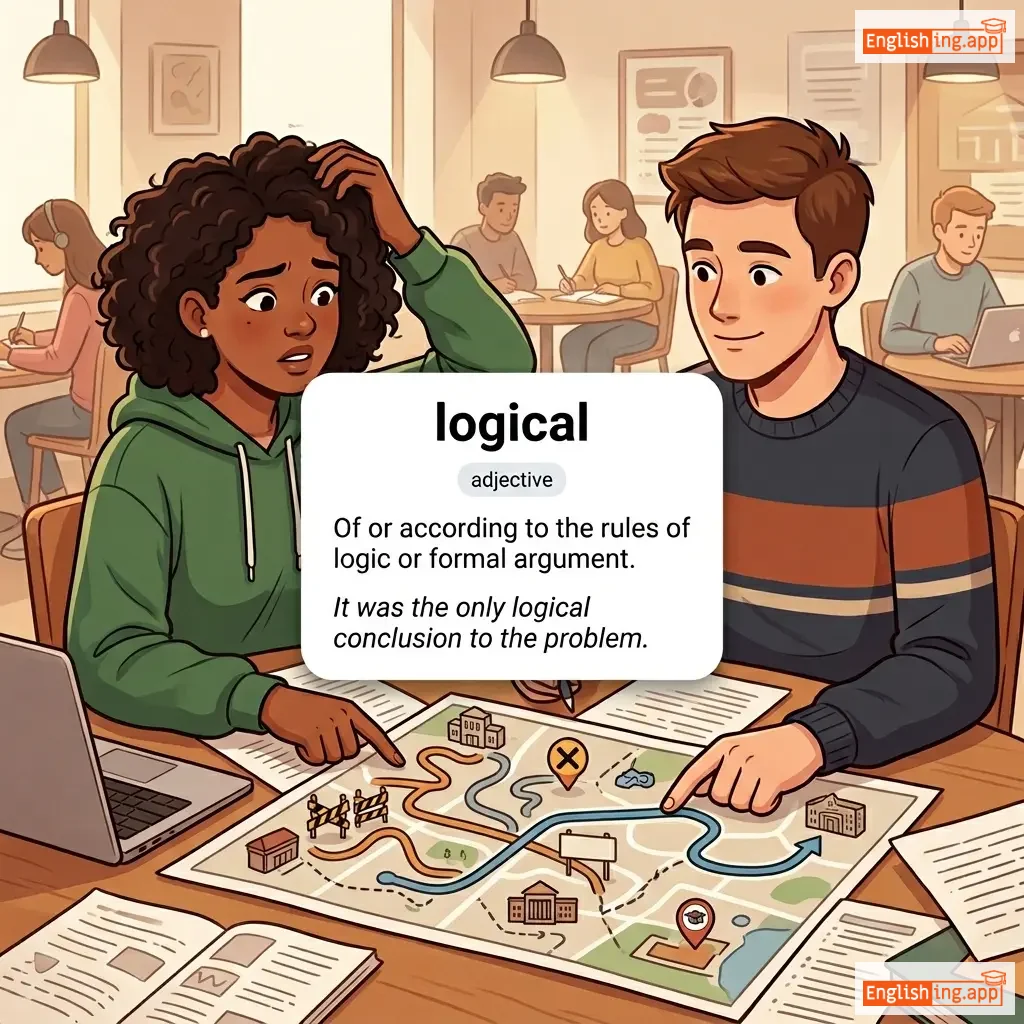
logical definition card — visual illustration of the meaning
adjective
/ˈlɒdʒɪkəl/
तर्कसंगत (tarksangat)

Of or according to the rules of logic or formal argument.

"It was the only logical conclusion to the problem."

"यह समस्या का केवल तर्कसंगत निष्कर्ष था।" (Yah samasya ka keval tarksangat nishkarsh tha.)
noun
/ləˈdʒɪʃən/
तर्कज्ञ (tarkgy)

A person skilled in logic and reasoning.

"Aristotle is considered one of the greatest logicians in history."

"अरिस्टोटल को इतिहास के सबसे महान तर्कज्ञों में माना जाता है।" (Aristotle ko itihas ke sabse mahaan tarkgyon mein maana jaata hai.)
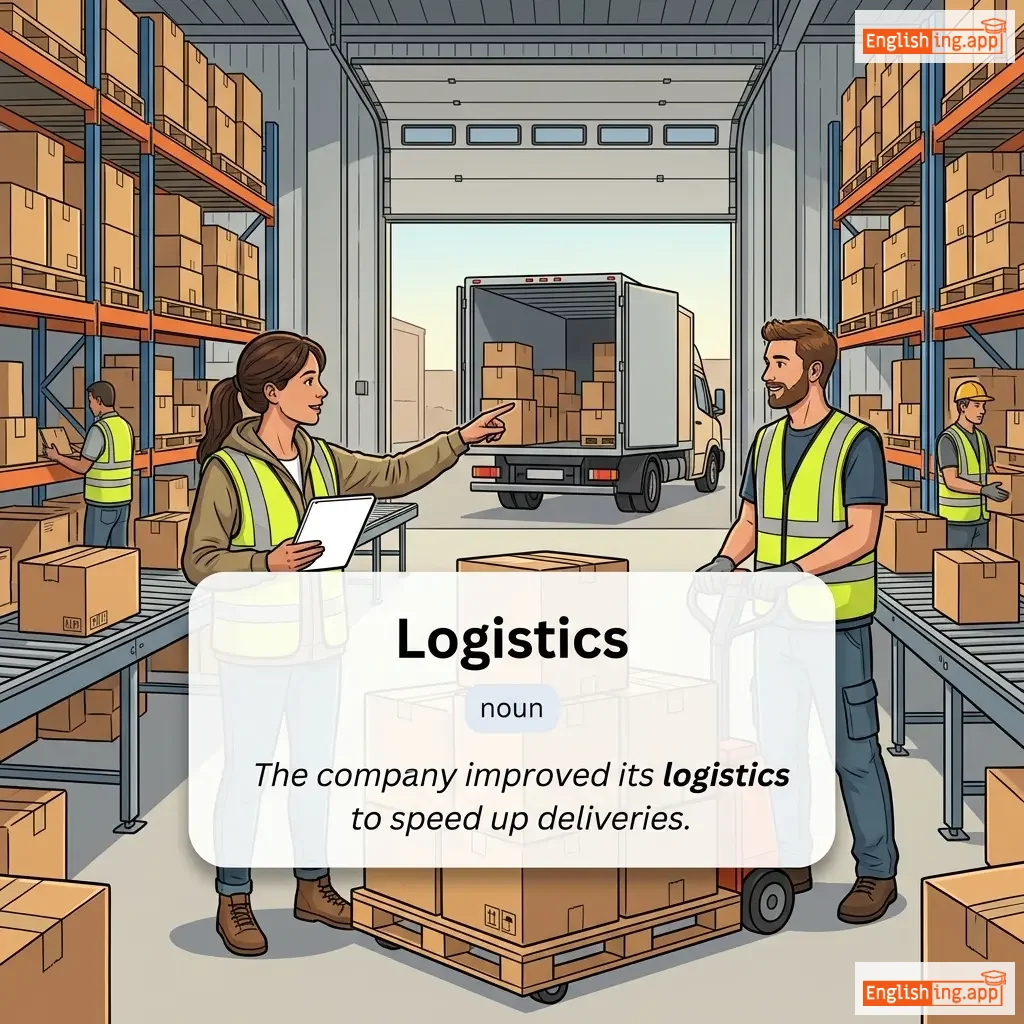
Logistics definition card — visual illustration of the meaning
noun
/ləˈdʒɪs.tɪks/
लॉजिस्टिक्स (lojistics)

Supply chain management or operation, managing the flow of goods, services or information efficiently.

"The company improved its logistics to speed up deliveries."

"कंपनी ने अपनी लॉजिस्टिक्स में सुधार किया ताकि डिलीवरी को तेज किया जा सके।" (Company ne apni lojistics mein sudhaar kiya taaki delivery ko tezz kiya ja sake.)
noun
/ˈləʊɡəʊ/
लोगो (logo)

a symbol or other small design adopted by an organization to identify its products, uniform, vehicles, etc.

"The company's logo was redesigned to reflect its new image."

"कंपनी के लोगो को उनके नए रूप को दर्शाने के लिए फिर से डिज़ाइन किया गया था." (kampani ke logo ko unke naye roop ko darshane ke liye phir se dizain kiya gaya tha.)
verb
/ˈlɔɪtər/
उद्देश्यहीन खड़ा रहना, समय बर्बाद करना (uddeshyheen khada rehna, samay barbaad karna)

To stand or wait around idly without apparent purpose.

"The teenagers were told not to loiter outside the shop."

"किशोरों को दुकान के बाहर उद्देश्यहीन खड़ा होने से मना किया गया था।" (Kishoron ko dukaan ke baahar uddeshyheen khada hone se mana kiya gaya tha.)
noun
/ˈlɔɪtərər/
वह व्यक्ति जो बिना उद्देश्य के एक स्थान पर समय बिताता है (vah vyakti jo bina uddeshya ke ek sthan par samay bitata hai)

A person who lingers aimlessly in a place without purpose.

"The police questioned the loiterer outside the store."

"पुलिस ने दुकान के बाहर लॉइटरर से पूछताछ की।" (Police ne dukaan ke baahar loiterer se puchtaach ki.)
verb
/lɑːl/
आलसी तरीके से बैठना (aalsi tareeke se baithna)

To sit, lie, or stand in a lazy, relaxed way.

"He lolled on the sofa after a long day at work."

"किसी लंबे दिन के बाद वह सोफे पर आलसी तरीके से बैठ गया।" (Kisi lambe din ke baad woh sofe par aalsi tareeke se baith gaya.)
adjective
/ˈlɪvɪd/
क्रोधित (krodhit)

Extremely angry; furious.

"She was livid when she found out about the betrayal."

"वह विश्वासघात के बारे में जानकर क्रोधित हो गई थी।" (Vah vishwasghat ke baare mein jaankar krodhit ho gayi thi.)
noun
/ˈkɪləˌwɒt/
किलोवाट (kilowat)

a unit of power equal to 1,000 watts

"The generator produces ten kilowatts of electricity."

"जनरेटर दस किलोवाट बिजली उत्पन्न करता है।" (Generator das kilowat bijli utpann karta hai.)
noun
/kɪˈlɒmɪtər/ or /ˈkɪləˌmiːtər/
किलोमीटर (kilometer)

a unit of length equal to 1,000 meters

"The village is about five kilometers away from the town."

"गांव शहर से लगभग पाँच किलोमीटर दूर है।" (Gaon shahar se lagbhag paanch kilometer door hai.)
noun
/ˈkɪləˌliːtər/
किलोलिटर (kiloliter)

a unit of capacity equal to 1,000 liters

"The tank can hold up to three kiloliters of water."

"टैंक तीन किलोलिटर पानी रख सकता है।" (Tank teen kiloliter pani rakh sakta hai.)
noun
/ˈkɪləɡræm/
किलोग्राम (kilogram)

the base unit of mass in the metric system equal to 1,000 grams

"The bag of rice weighs five kilograms."

"चावल का थैला पाँच किलोग्राम का है।" (chawal ka thaila paanch kilogram ka hai)
noun
/kɪln/
भट्ठी (bhathhi)

a furnace or oven for burning, baking, or drying, especially one for firing pottery or bricks

"The potter placed the clay pots into the kiln for firing."

"सिलाईकार ने मिट्टी के बर्तनों को भट्ठी में पकाने के लिए रखा।" (Silaikaar ne mitti ke bartanon ko bhathhi mein pakane ke liye rakha.)
noun
/ˈkɪldʒɔɪ/
मजा नष्ट करने वाला (maza nasht karne wala)

a person who spoils the fun or enjoyment of others

"Don’t be a killjoy at the party."

"पार्टी में मजा नष्ट करने वाला मत बनो।" (Party mein maza nasht karne wala mat bano.)
noun
/ˈkɪlɪŋ/
हत्या (hatya)

the act of causing death, especially deliberately

"The movie depicts the brutal killing of the villagers."

"फिल्म में गाँववालों की क्रूर हत्या को दिखाया गया है।" (Film mein gaonwalon ki kroor hatya ko dikhaya gaya hai.)
noun
/ˈkɪlər/
हत्यारा (hatyara)

A person or thing that kills.

"The police caught the killer last night."

"पुलिस ने पिछले रात हत्यारे को पकड़ा।" (Police ne pichle raat hatyare ko pakda.)
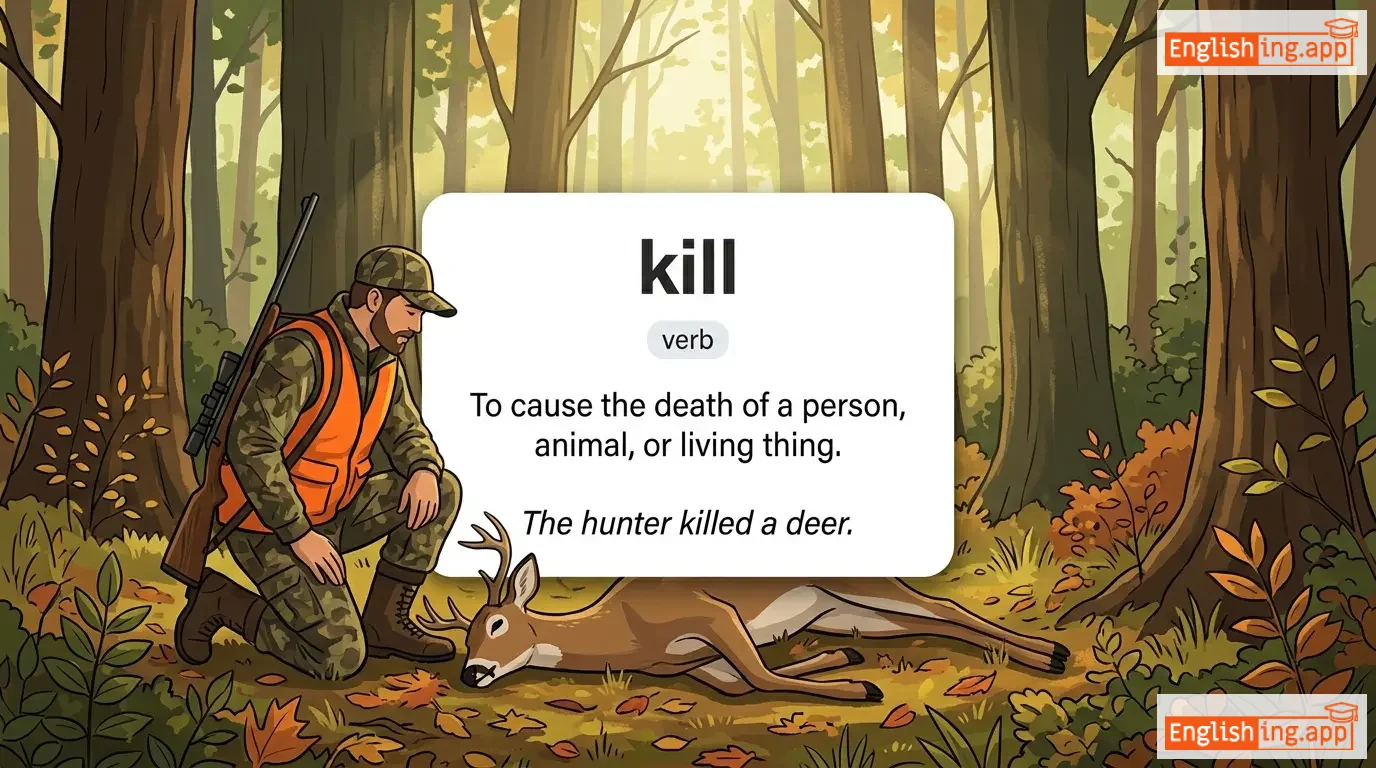
kill definition card — visual illustration of the meaning
verb
/kɪl/
मारना (marna)

To cause the death of a person, animal, or living thing.

"The hunter killed a deer."

"शिकारी ने एक हिरण मारा।" (Shikari ne ek hiran maara.)
noun
/ˈkɪdni/
किडनी (kidney)

a pair of organs in the body that remove waste products from the blood and balance bodily fluids

"The kidney plays a crucial role in filtering waste from the bloodstream."

"किडनी रक्त से अपशिष्ट को छानने में महत्वपूर्ण भूमिका निभाती है।" (Kidney rakt se apshisht ko chhane mein mahatvapurn bhumika nibhati hai.)
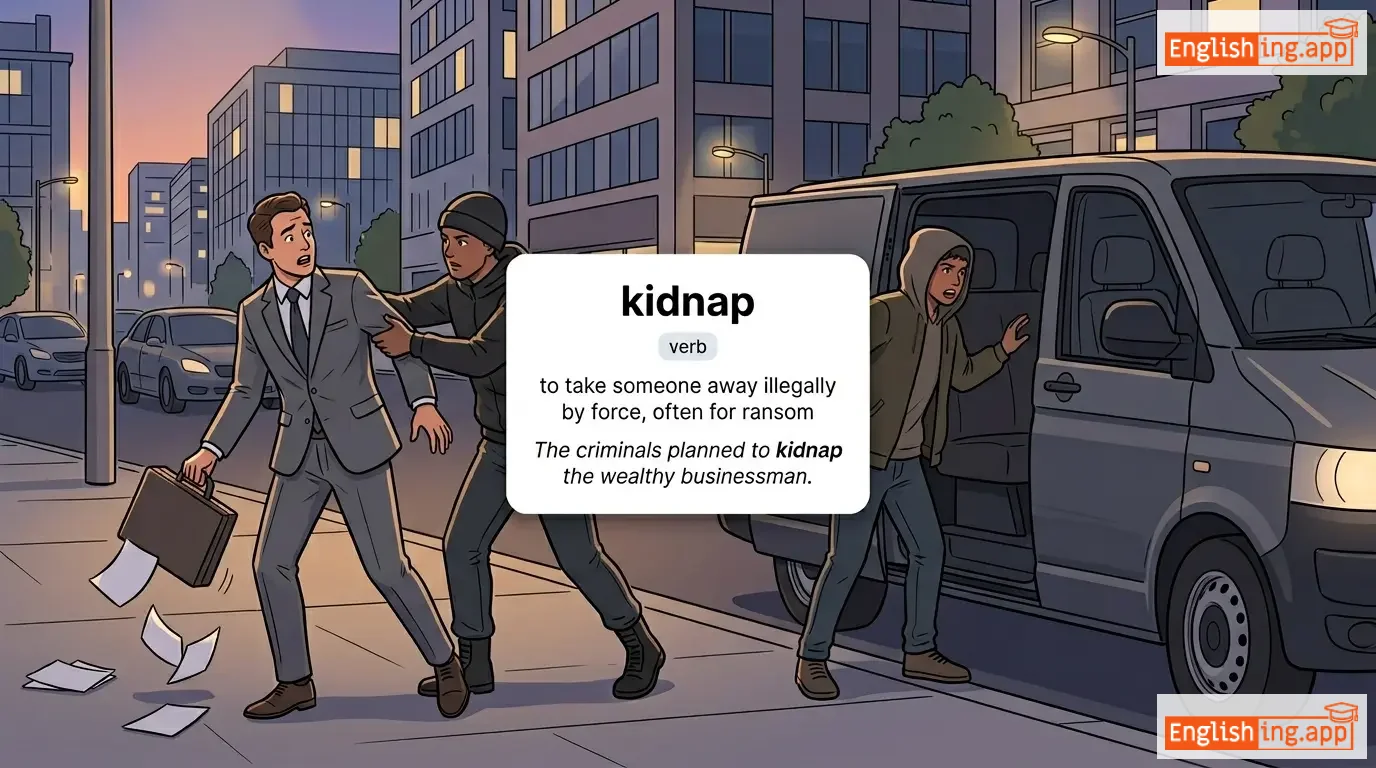
kidnap definition card — visual illustration of the meaning
verb
/ˈkɪdnæp/
अपहरण करना (apaharan karna)

to take someone away illegally by force, often for ransom

"The criminals planned to kidnap the wealthy businessman."

"अपराधियों ने अमीर व्यापारी का अपहरण करने की योजना बनाई।" (Aparadhiyon ne ameer vyapaari ka apaharan karne ki yojna banayi.)
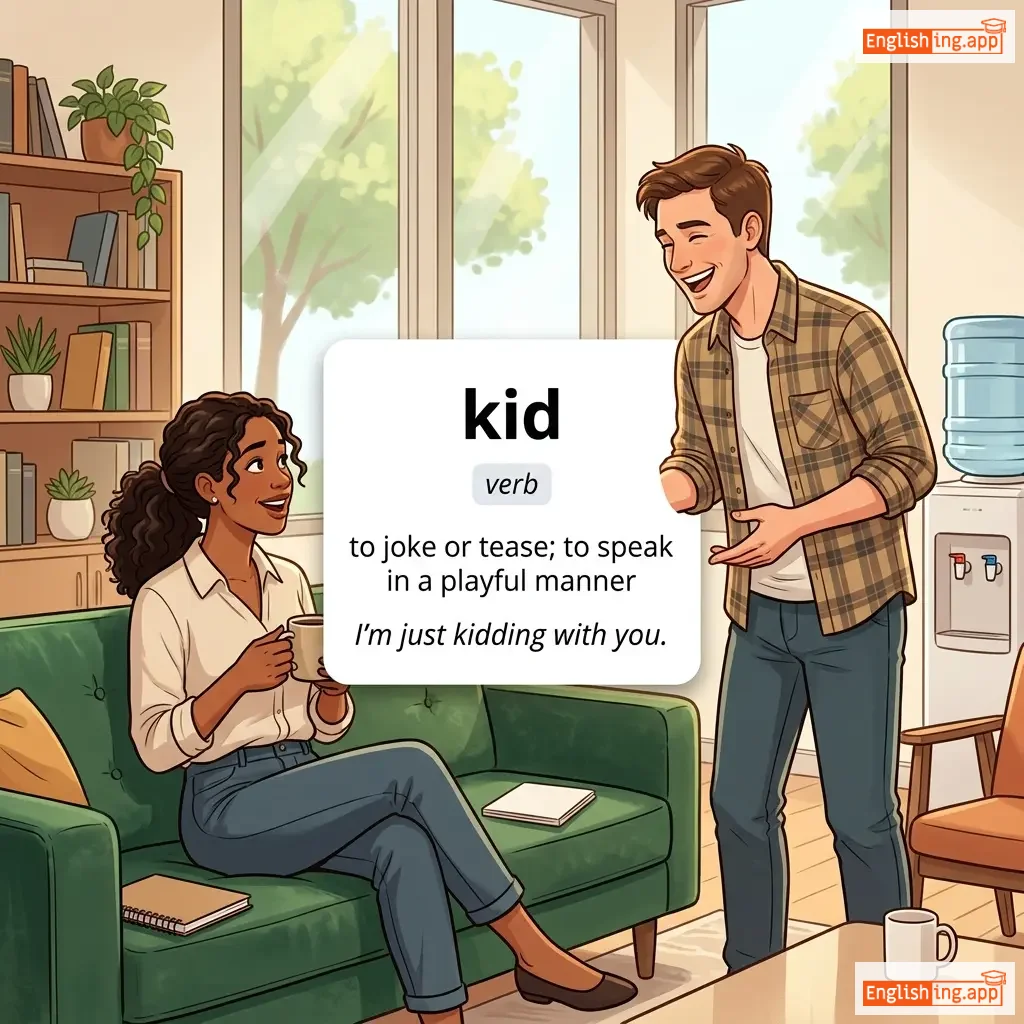
kid definition card — visual illustration of the meaning
noun
/kɪd/
बच्चा (bachcha)

A child or young person.

"The kid was playing in the park."

"बच्चा पार्क में खेल रहा था।" (Baccha park mein khel raha tha.)
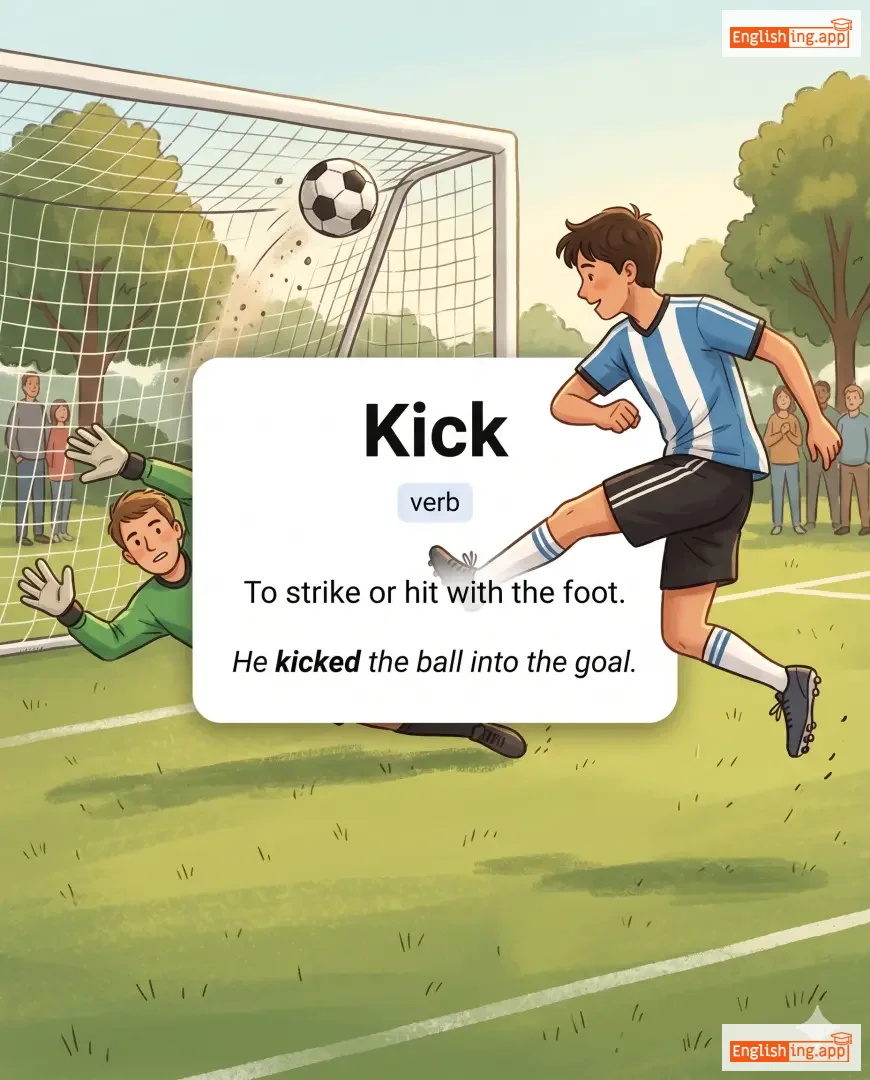
Kick definition card — visual illustration of the meaning
verb
/kɪk/
लात मारना (laat maarna)

To strike or hit with the foot.

"He kicked the ball into the goal."

"उसने गेंद को गोल में किक किया।" (Usne gend ko gol mein kick kiya.)
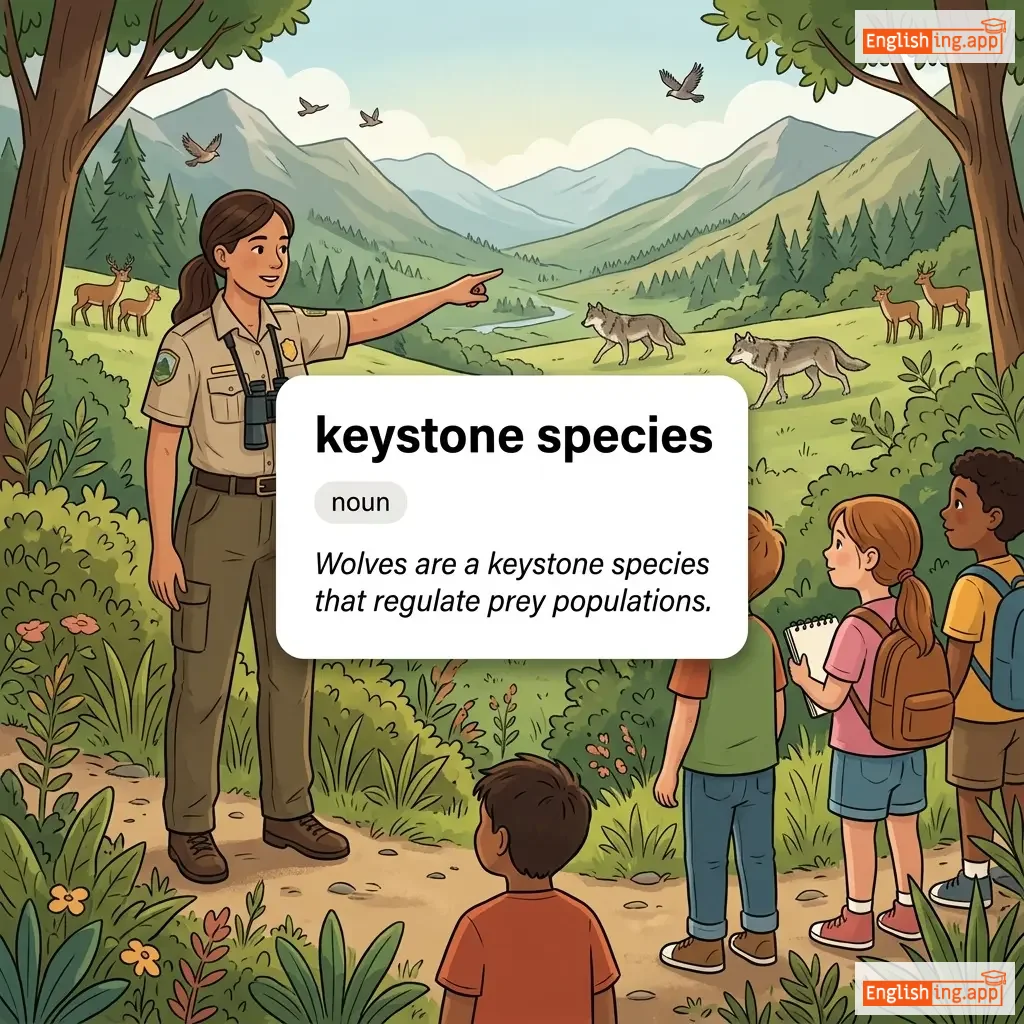
keystone species definition card — visual illustration of the meaning
noun
ˈkiː.stəʊn ˈspiː.ʃiːz
कीस्टोन प्रजाति (keystone prajati)

A species on which other species in an ecosystem largely depend, such that if it were removed the ecosystem would change drastically.

"Wolves are a keystone species that regulate prey populations."

"भेड़िये एक कीस्टोन प्रजाति हैं जो शिकार जनसंख्या को नियंत्रित करते हैं।" (Bhediye ek keystone prajati hain jo shikar jansankhya ko niyantrit karte hain.)
noun
/ˈkiːbɔːrd/
कीबोर्ड (keyboard)

a set of keys used to operate a computer, typewriter, or similar device for inputting text and commands

"She typed the report quickly on her keyboard."

"उसने कीबोर्ड पर जल्दी रिपोर्ट टाइप की।" (usne keyboard par jaldi report type ki)
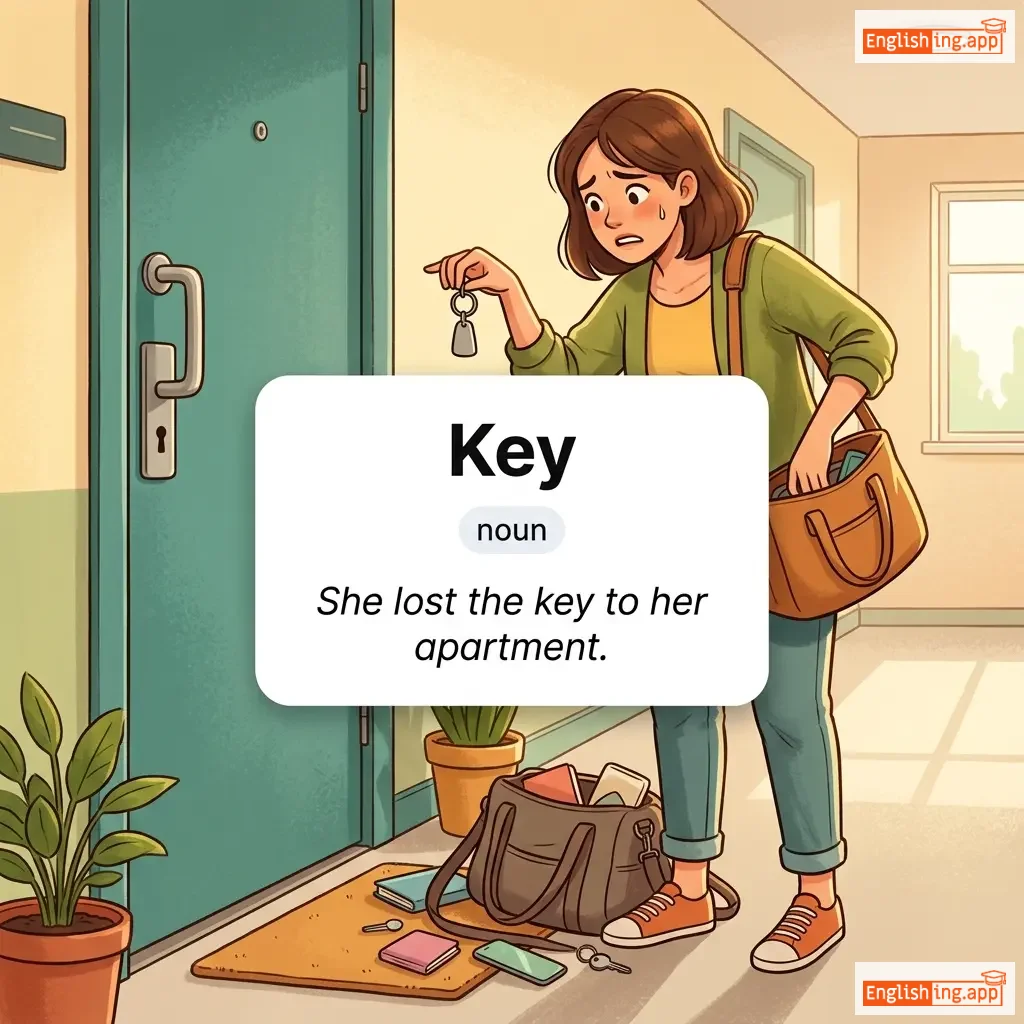
Key definition card — visual illustration of the meaning
noun
/kiː/
चाबी (chabi)

A small piece of shaped metal used to open or close locks, or something crucial and essential.

"She lost the key to her apartment."

"वह अपनी अपार्टमेंट की चाबी खो बैठी।" (Vah apni apartment ki chabi kho baithi.)
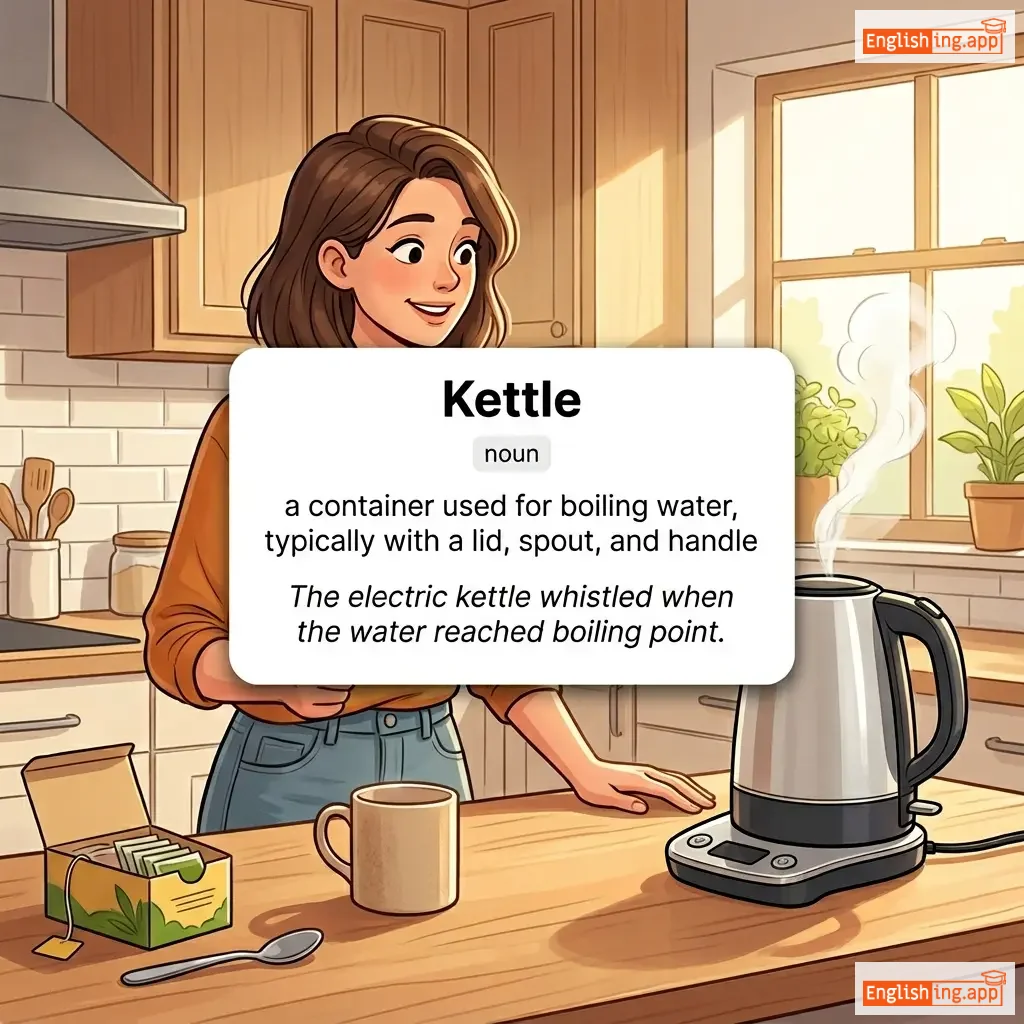
Kettle definition card — visual illustration of the meaning
noun
/ˈket.əl/
केतली (ketli)

a container with a lid, spout, and handle, used for boiling water

"The kettle is boiling on the stove."

"केतली चूल्हे पर उबल रही है।" (ketli chulhe par ubal rahi hai.)
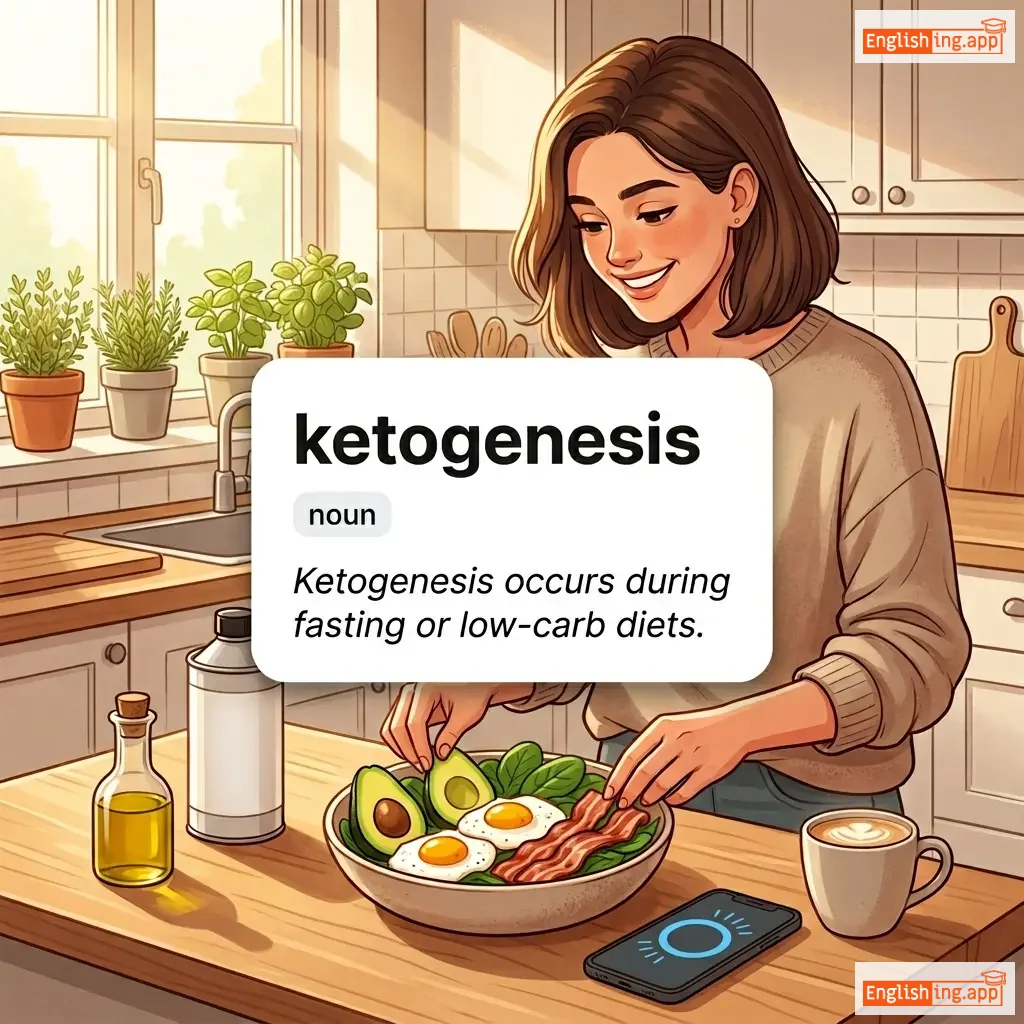
ketogenesis definition card — visual illustration of the meaning
noun
/ˌkiː.təʊˈdʒen.ɪ.sɪs/
केटोन उत्पादन प्रक्रिया (keton utpadan prakriya)

The metabolic process by which the liver produces ketones from fatty acids, providing an alternative energy source during low carbohydrate availability.

"Ketogenesis occurs during fasting or low-carb diets."

"केटोजेनेसिस उपवास या कम-कार्ब आहार के दौरान होता है।" (Ketogenesis upwas ya kam-carb aahar ke dauran hota hai.)
noun
/ˈketʃ.ʌp/
टमाटर की चटनी (tamaatar ki chatni)

a thick sauce made chiefly from tomatoes, vinegar, and spices

"She squeezed some ketchup on her french fries before eating them."

"उसने खाने से पहले अपनी फ्रेंच फ्राइज पर कुछ केचअप डाला।" (Usne khane se pehle apni french fries par kuch ketchup daala.)
noun
/ˈker.ə.siːn/
केरोसिन (kerosin)

a combustible hydrocarbon liquid widely used as a fuel in lamps and heating systems

"The old lamp burned kerosene to provide light during power outages."

"पुराना दीपक पावर आउटेज़ के दौरान प्रकाश देने के लिए केरोसिन जलाता था।" (puraana deepak power outages ke dauraan prakaash dene ke liye kerosin jalaata tha.)
noun
/ˈkɜːrnəl/
अर्थ का सबसे महत्वपूर्ण भाग; किसी नट या बीज का खाद्य भाग (karnel)

the central, most important part of something; the edible part of a nut or seed

"The kernel of the argument was about fairness."

"दलील का मुख्य बिंदु न्याय के बारे में था।" (Daleel ka mukhya bindu nyay ke baare mein tha.)
noun
/ˈkɜːrtʃɪf/
गमछा (gamchha)

a piece of cloth worn around the head or neck

"She wore a red kerchief on her head."

"उसने अपने सिर पर एक लाल गमछा पहना था।" (Usne apne sir par ek lal gamchha pehna tha.)
noun
/ˈken.əl/
कुत्ते के लिए छोटा शेल्टर; कुत्तों के पालन या बोर्डिंग के लिए एक प्रतिष्ठान (kutte ke liye chhota shelter; kutto ke palan ya boarding ke liye ek pratishthan)

a small shelter for a dog; an establishment for the breeding or boarding of dogs

"The dog slept comfortably in his wooden kennel in the backyard."

"कुत्ता अपने लकड़ी के केनेल में पिछवाड़े में आराम से सो रहा था।" (kutta apne lakdi ke kennel mein pichhwade mein aaraam se so raha tha.)
noun
/kɛn/
ज्ञान सीमा (gyan seema)

one's range of knowledge or understanding

"Quantum physics is beyond my ken."

"क्वांटम भौतिकी मेरे ज्ञान से बाहर है।" (Quantum bhautikī mere gyan se baahar hai.)
noun
/ˈkiːpˌseɪk/
स्मृति चिह्न (smriti chihn)

An object kept as a reminder of a person, place, or event.

"She gave me a small locket as a keepsake of our friendship."

"उसने हमारी दोस्ती की याद के रूप में मुझे एक छोटा लॉकेट दिया।" (Usne hamari dosti ki yaad ke roop mein mujhe ek chhota locket diya.)
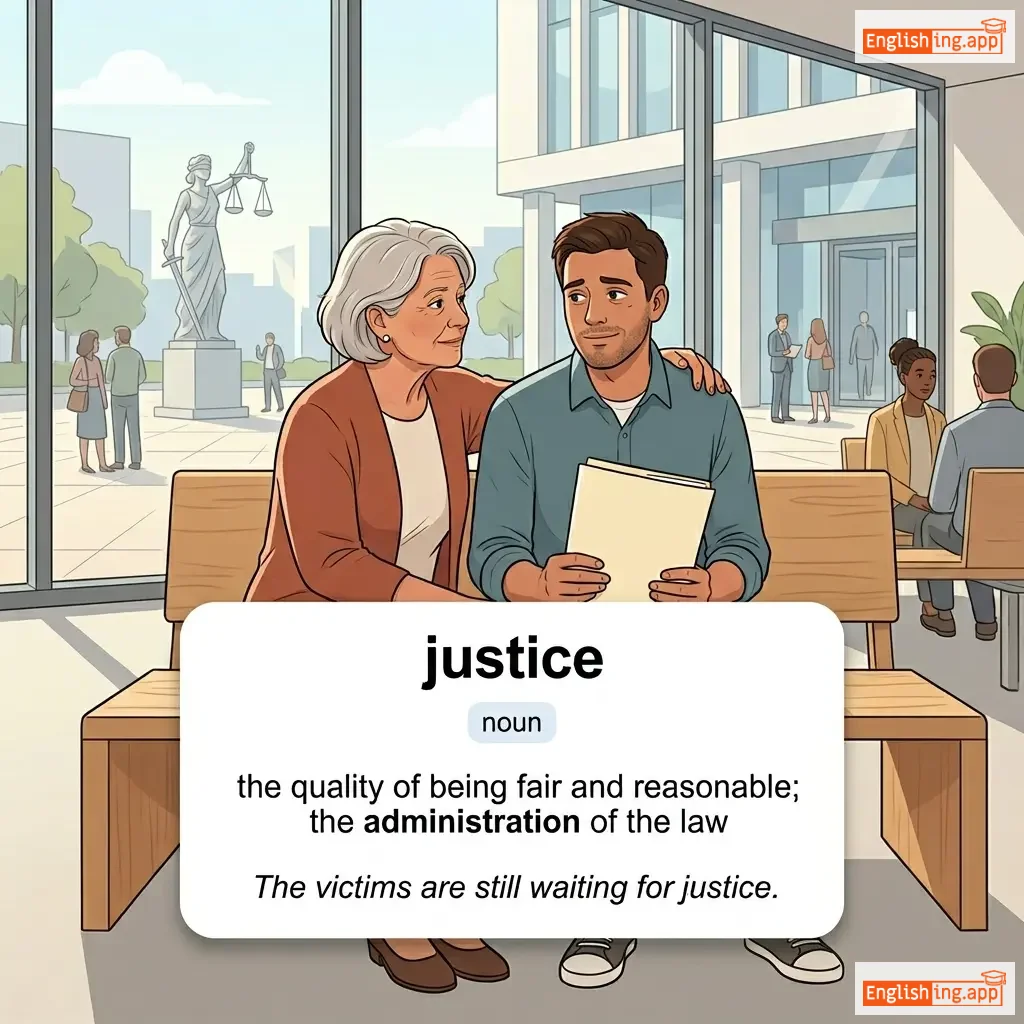
justice definition card — visual illustration of the meaning
noun
/ˈdʒʌstɪs/
न्याय (nyay)

the quality of being fair and reasonable; the administration of the law

"The victims are still waiting for justice."

"पीड़ित अभी भी न्याय का इंतजार कर रहे हैं।" (Peedit abhi bhi nyay ka intezaar kar rahe hain.)