Словари

Словарь английского языка | Значения слов, определения и примеры

verb
/məˈnuː.vər/

To move skillfully or carefully; to guide or manipulate into a desired position.

"The driver skillfully manoeuvered the car through the narrow street."

noun
/ˈmænər/
особняк (osobnyak)

A large country house with lands; the main house of an estate.

"The old manor stood proudly on the hill for centuries."

"Старый особняк стоял гордо на холме веками." (Staryy osobnyak stoyal gordo na kholme vekami.)
mansion definition card — visual illustration of the meaning
noun
/ˈmænʃən/
счастье (schastye)

a large, impressive house

"The billionaire lives in a luxurious mansion overlooking the ocean."

"Она не смогла скрыть свое счастье, когда получила премию." (Ona ne smogla skryt' svoe schast'ye, kogda poluchila premiyu.)
noun
/ˈmæntl̩/
полка над камином (polka nad kaminom)

A shelf above a fireplace, often used for decoration.

"She placed family photos on the mantel above the fireplace."

"Она поставила семейные фотографии на полку над камином." (Ona postavila semeynye fotografii na polku nad kaminom.)
noun
/ˈmæntl̩/
мантия, ответственность (mantiya, otvetstvennost)

A cloak or covering; also the layer of the earth between the crust and the core.

"The leader assumed the mantle of responsibility."

"Лидер принял мантии ответственности." (Lider prinyal manti otvetstvennosti.)
noun
/ˈmænjuəl/
руководство (rukovodstvo)

a handbook or guide that provides instructions on how to do or operate something

"You should read the user manual before setting up the device."

"Перед настройкой устройства вам следует прочитать руководство пользователя." (Pered nastrojkoj ustrojstva vam sleduet prochitat' rukovodstvo pol'zovatelya.)
adverb
/ˈmæn.ju.ə.li/
вручную; с физическим усилием; (vruchnuyu; s fizicheskim usiliem)

by hand; using physical effort rather than machines

"The data was entered manually into the system."

"Данные были введены вручную в систему." (Dannye byli vvedeny vruchnuyu v sistemy.)
manufacture definition card — visual illustration of the meaning
verb
/ˌmænɪˈfæktʃər/
производить (proizvodit')

to make something in large quantities using machinery

"The company manufactures high-quality electronics."

"Компания производит высококачественную электронную продукцию." (Kompaniya proizvodit vysokokachestvennuyu elektronnuyu produktsiyu.)
noun
/ˌmænjəˈfæktʃərər/
производитель (proizvoditel)

A person or company that makes goods in large quantities.

"The manufacturer produces cars for the global market."

"Производитель производит автомобили для мирового рынка." (Proizvoditel proizvodit avtobily dlya mirovoho rynka.)
noun
/ˌmænjəˈfæktʃərɪŋ/
производство (proizvodstvo)

the process of making products on a large scale using machinery

"The country is investing heavily in the manufacturing sector."

"Страна активно инвестирует в производственный сектор." (Strana aktivno investiruet v proizvodstvennyy sektor.)
noun
/ˌmænjəˈmɪʃən/
освобождение рабов (osvobozhdenie rabov)

The act of a slave owner freeing their slaves.

"The manumission of the slaves marked a turning point in history."

"Освобождение рабов стало поворотным моментом в истории." (Osvobozhdenie rabov stalo povorotnym momentom v istorii.)
verb
/ˌmæn.juˈmɪt/
освободить от рабства (osvobodit' ot rabstva)

to release from slavery or servitude; to set free

"The landowner decided to manumit his slaves."
"Землевладелец решил освободить своих рабов." (Zemlevladelets reshil osvobodit' svoikh rabov.)
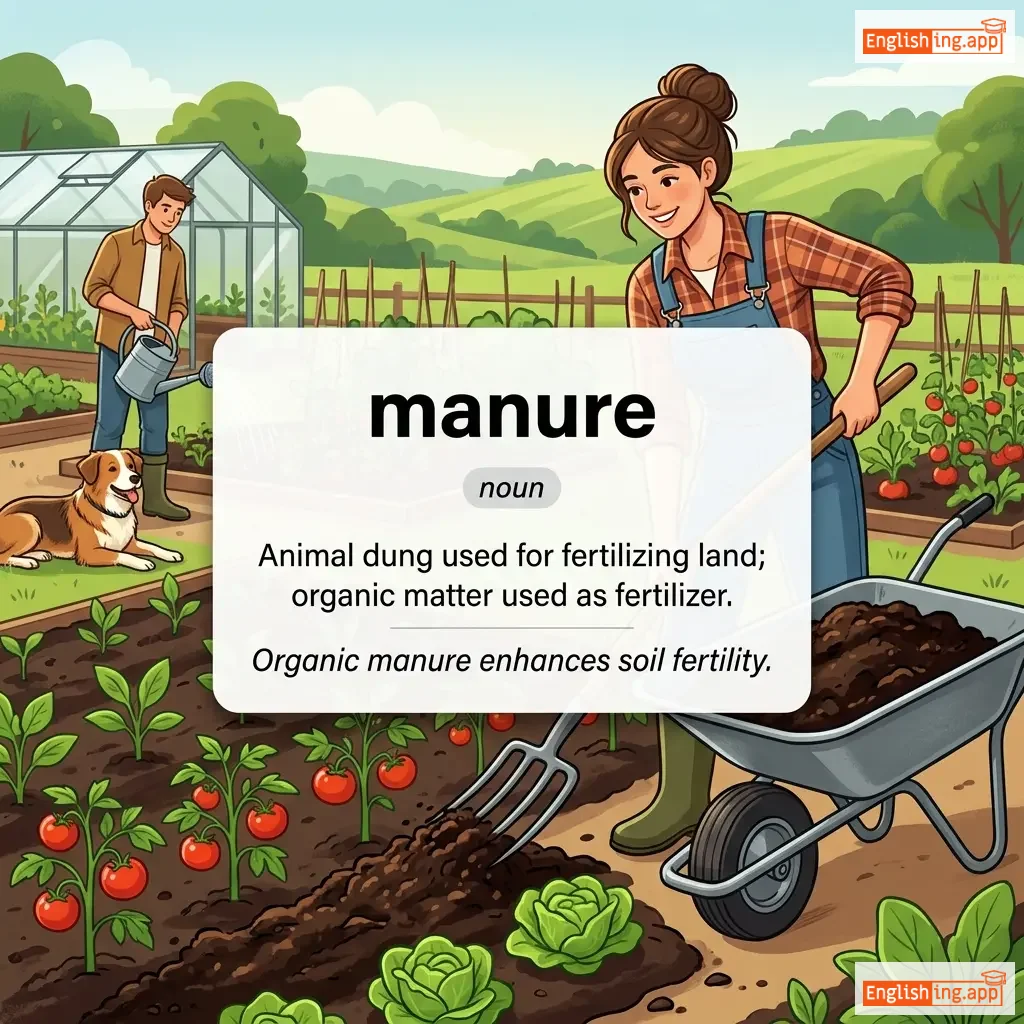
manure definition card — visual illustration of the meaning
noun
məˈnjʊər
навоз, органическое удобрение (navoz, organicheskoe udobrenie)

Animal dung used for fertilizing land; organic matter used as fertilizer.

"Organic manure enhances soil fertility."

"Органический навоз улучшает плодородие почвы." (Organicheskiy navoz uluchshayet plodorodiye pochvy.)
noun
/ˈmæn.juˌskrɪpt/
рукопись (rukopis)

a handwritten or typed document, especially a writer’s draft before publication

"The author submitted her manuscript to the publisher."

"Автор подал свою рукопись издателю." (Avtor podal svoju rukopis' izdatelyu.)
adjective
/ˈmɛni/
много (mnogo)

a large number of

"Many students attended the lecture."

"Множество студентов присутствовало на лекции." (Mnozhestvo studentov prisutstvovalo na lektsii.)
noun
/mæp/
карта (karta)

a drawing that shows the features of an area of land or sea

"He studied the map before starting his journey."

"Он изучил карту перед тем, как начать своё путешествие." (On izuchil kartu pered tem, kak nachat' svoyo puteshestvie.)
verb
/mɑːr/
порчить (porchit)

to spoil or damage the appearance or quality of something

"The scratch will mar the beauty of the painting."

"Царапина испортит красоту картины." (Tsarapina isportit krasotu kartiny.)
noun
/ˈmærəθən/
марафон (marafon)

a long-distance running race, typically 42.195 kilometers (26.2 miles)

"She completed the marathon in under four hours."

"Она завершила марафон за меньше чем четыре часа." (Ona zavershila marafon za men'she chem chetyre chasa.)
verb
/məˈrɔːd/
грабить (grabit)

to roam in search of things to steal or attack

"The bandits marauded through the village at night."

"Бандиты грабили деревню ночью." (Bandity grabili derevnyu noch'yu.)
noun
/məˈrɔː.dər/
мародер (maroder)

a person who roams around in search of things to steal or people to attack

"Villagers feared the marauders who raided their homes."

"Жители деревни боялись мародеров, которые нападали на их дома." (Zhiteli derevni boyalis' maroderov, kotorye napadali na ikh doma.)
noun
/ˈmɑːrbəl/
счастье (schast'ye)

a hard, smooth stone used in building and sculpture, often white with colored lines

"The floor of the palace was made of white marble."

"Она не могла скрыть своего счастья, когда получила награду." (Ona ne mogla skryt' svoego schast'ya, kogda poluchila nagradu.)
🚶‍♂️

March (марш)

verb
/mɑːrtʃ/
маршировать (marshirovat)

to walk in a regular, rhythmic way, often in step with others; to proceed with determination

"The soldiers marched across the field."
"Солдаты маршировали по полю." (Soldaty marshirovali po polyu.)
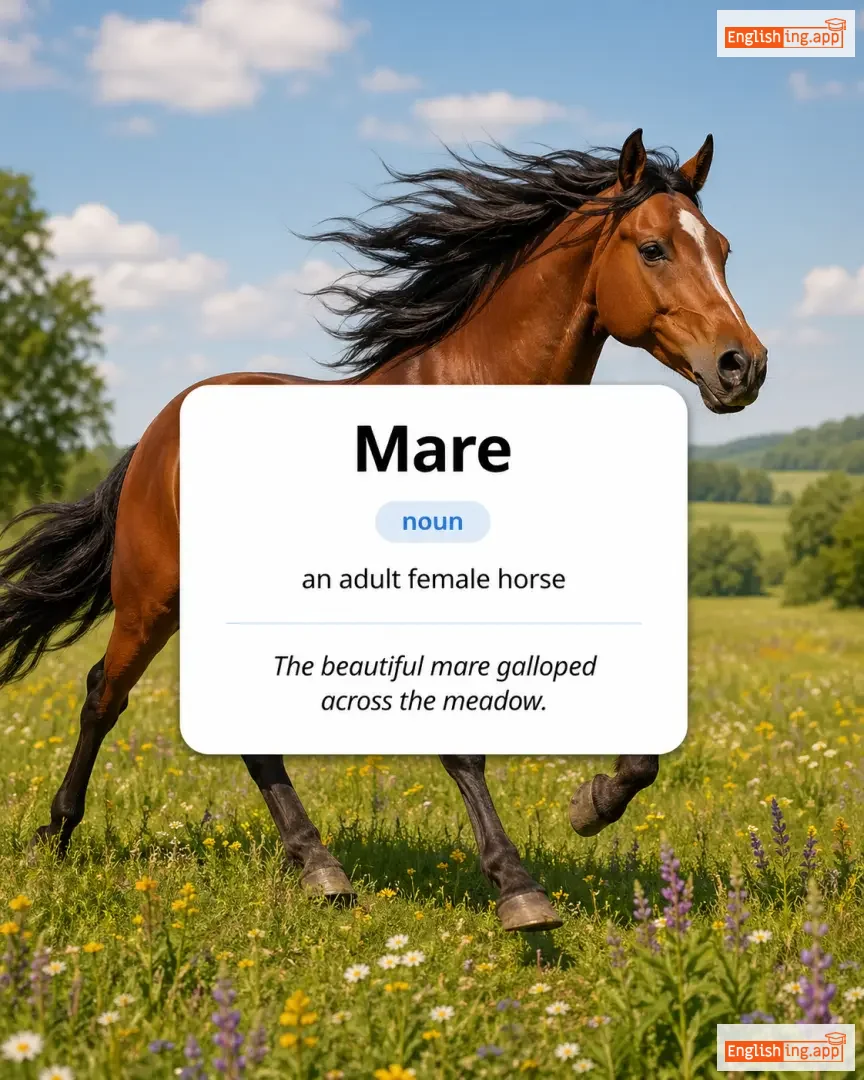
Mare definition card — visual illustration of the meaning
noun
/meər/
кобыла (kobyla)

an adult female horse

"The beautiful mare galloped across the meadow."

"Красивая кобыла галопировала по лугу." (Krasivaya kobyla galopirovala po lugu.)
noun
/ˈmɑːrdʒɪn/
маржа, предел, граница (marzha, predel, granitsa)

The edge or border of something; the amount by which something is won or falls short.

"The company increased its profit margin last year."

"Компания увеличила свою прибыль на марже в прошлом году." (Kompaniya uvelichila svoyu pribyl na marzhe v proshlom godu.)
adjective
/ˈmɑːrdʒɪnəl/
маргинальный, незначительный, малый (marginalny, neznachitelny, malyy)

Relating to or at the edge; small or insignificant in amount or importance.

"He made only a marginal improvement in his grades."
"Он сделал только незначительное улучшение в своих оценках." (On sdelal tol'ko neznachitel'noe uluchshenie v svoikh otsenkakh.)
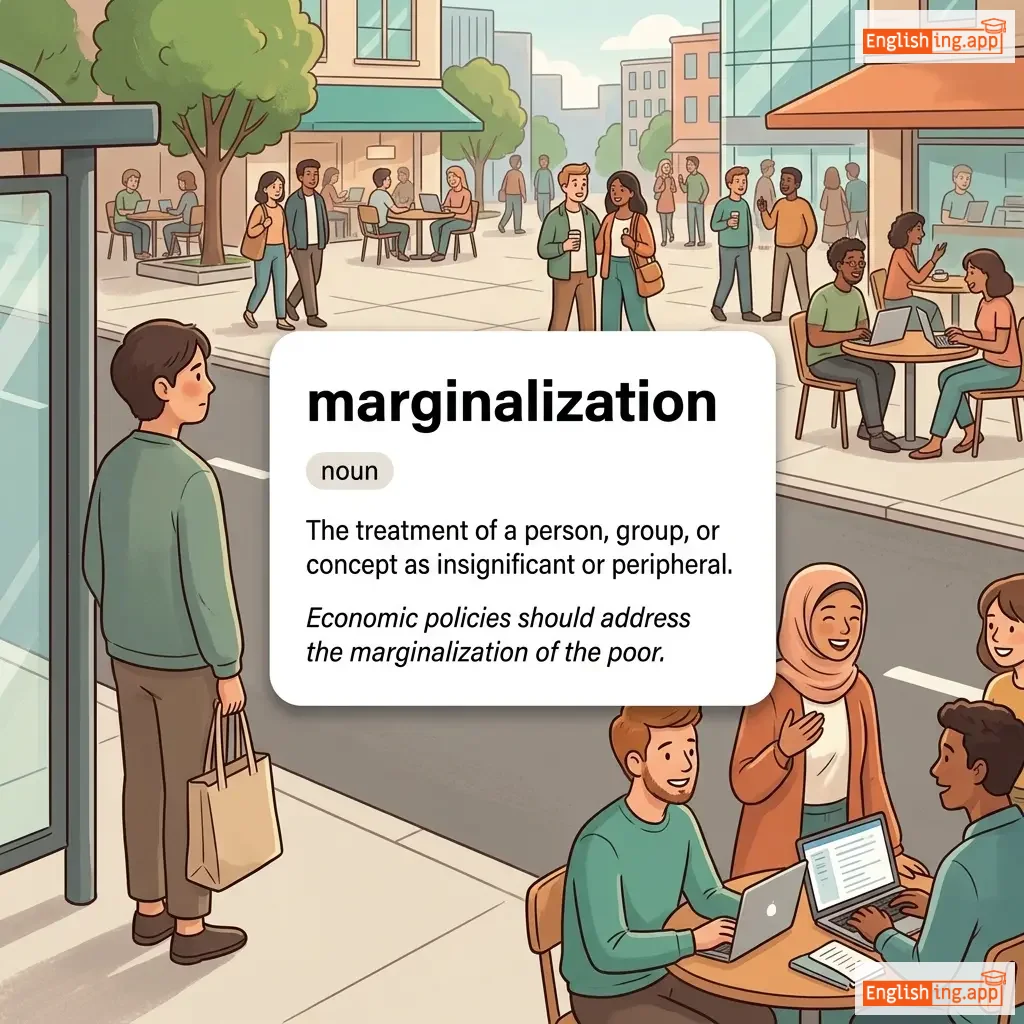
marginalization definition card — visual illustration of the meaning
noun
ˌmɑːr.dʒɪ.nəl.aɪˈzeɪ.ʃən
маргинализация (marginalizatsiya)

The treatment of a person, group, or concept as insignificant or peripheral.

"Economic policies should address the marginalization of the poor."

"Экономическая политика должна решать проблему маргинализации бедных." (Ekonomicheskaya politika dolzhna reshat' problemu marginalizatsii bednykh.)
verb
/ˈmɑːrdʒɪnəlaɪz/
маргинализировать, оттеснять (marginalizirovat', ottesnyat')

To treat a person or group as unimportant or insignificant.

"The policy marginalized minority communities."
"Политика маргинализировала меньшинства." (Politika marginalizirovala men'shinstva.)
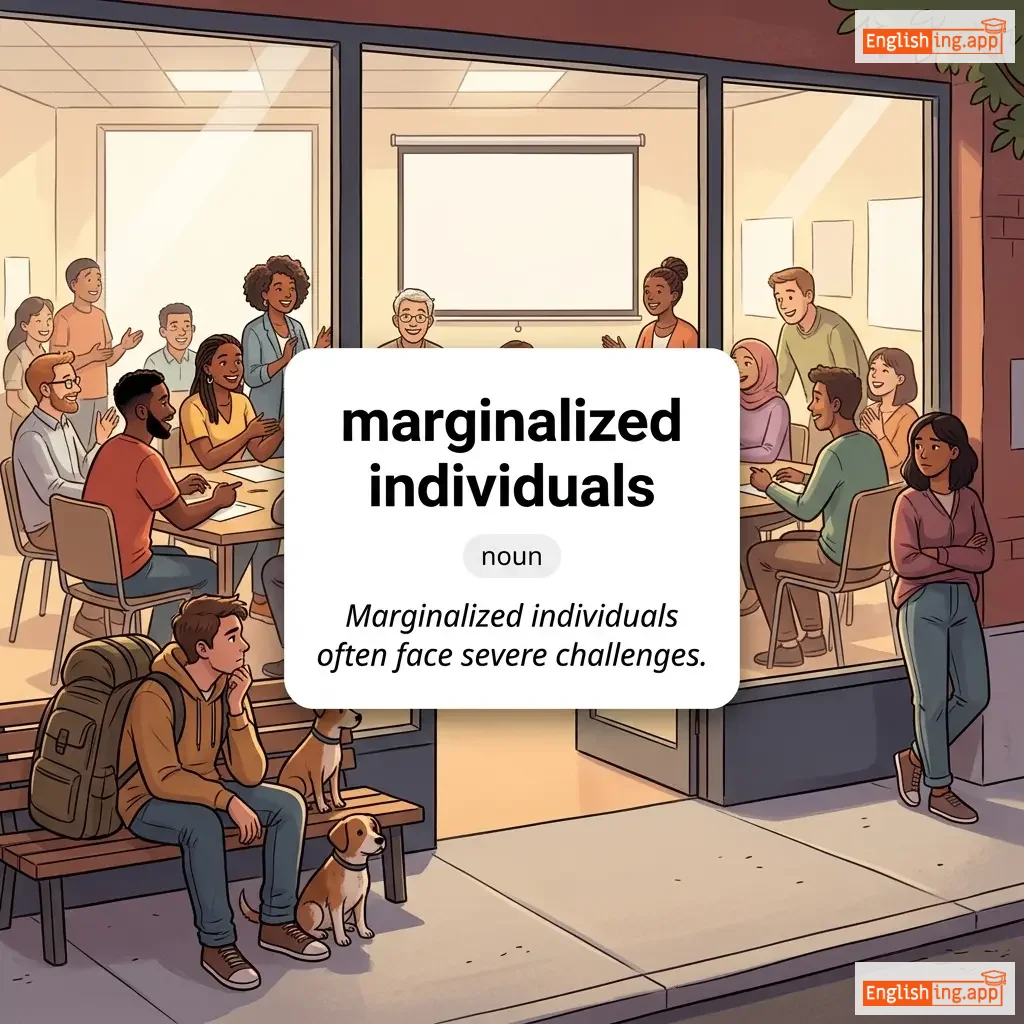
marginalized individuals definition card — visual illustration of the meaning
noun
ˈmɑːrdʒɪnəlaɪzd ˌɪndɪˈvɪdʒuəlz
маргинализированные индивидуумы (marginallizirovannye individuumy)

People who are treated as insignificant or peripheral to society, often excluded from mainstream social, economic, or political activities.

"Marginalized individuals often face severe challenges."
"Маргинализированные индивидуумы часто сталкиваются с серьезными проблемами." (Marginalizirovannye individuumy chasto stalkivayutsya s seryoznymi problemami.)
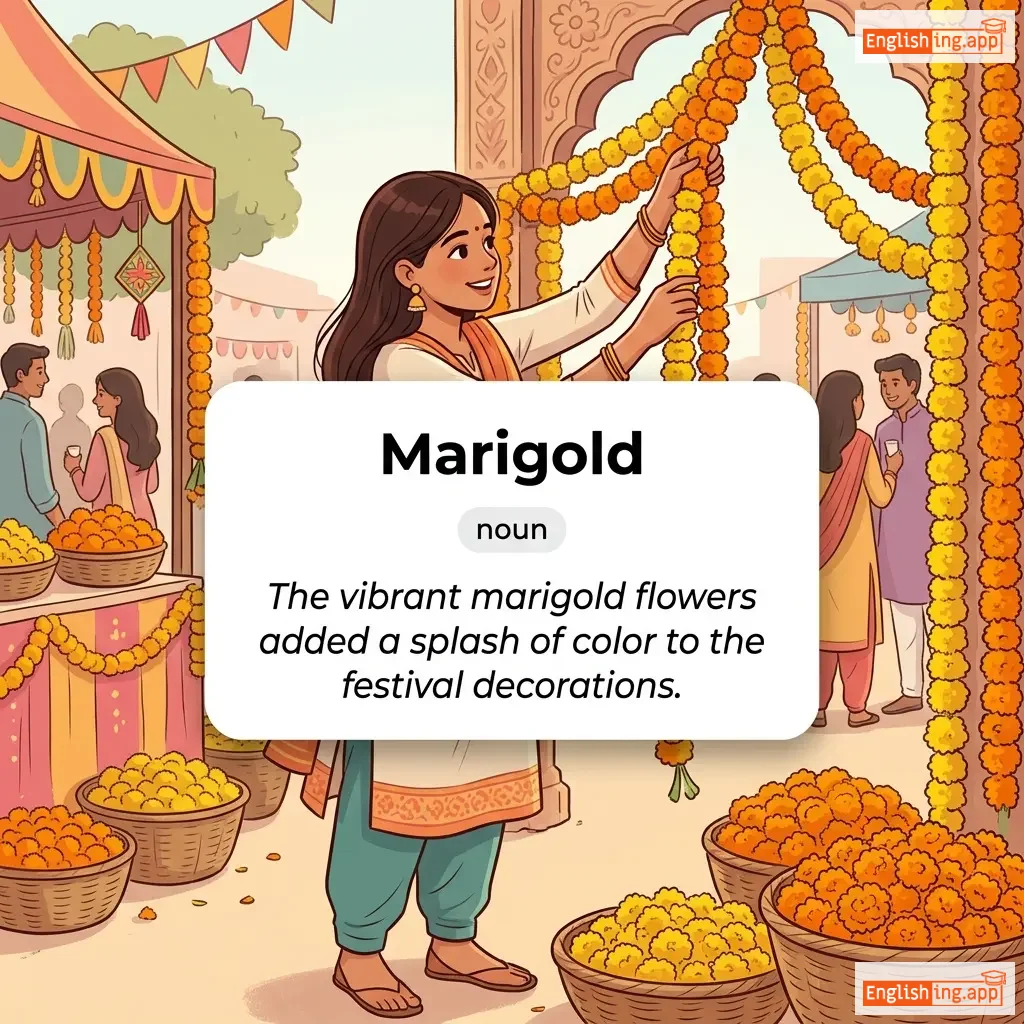
Marigold definition card — visual illustration of the meaning
noun
/ˈmɛrɪɡoʊld/
бархатец (barkhatets)

a bright orange or yellow flower of the daisy family, often used in gardens and ceremonies

"The vibrant marigold flowers added a splash of color to the festival decorations."
"Яркие цветы бархатцев добавили красок в оформление фестиваля." (Yarkie tsvety barkhatsev dobavili krasok v oformlenie festivalya.)
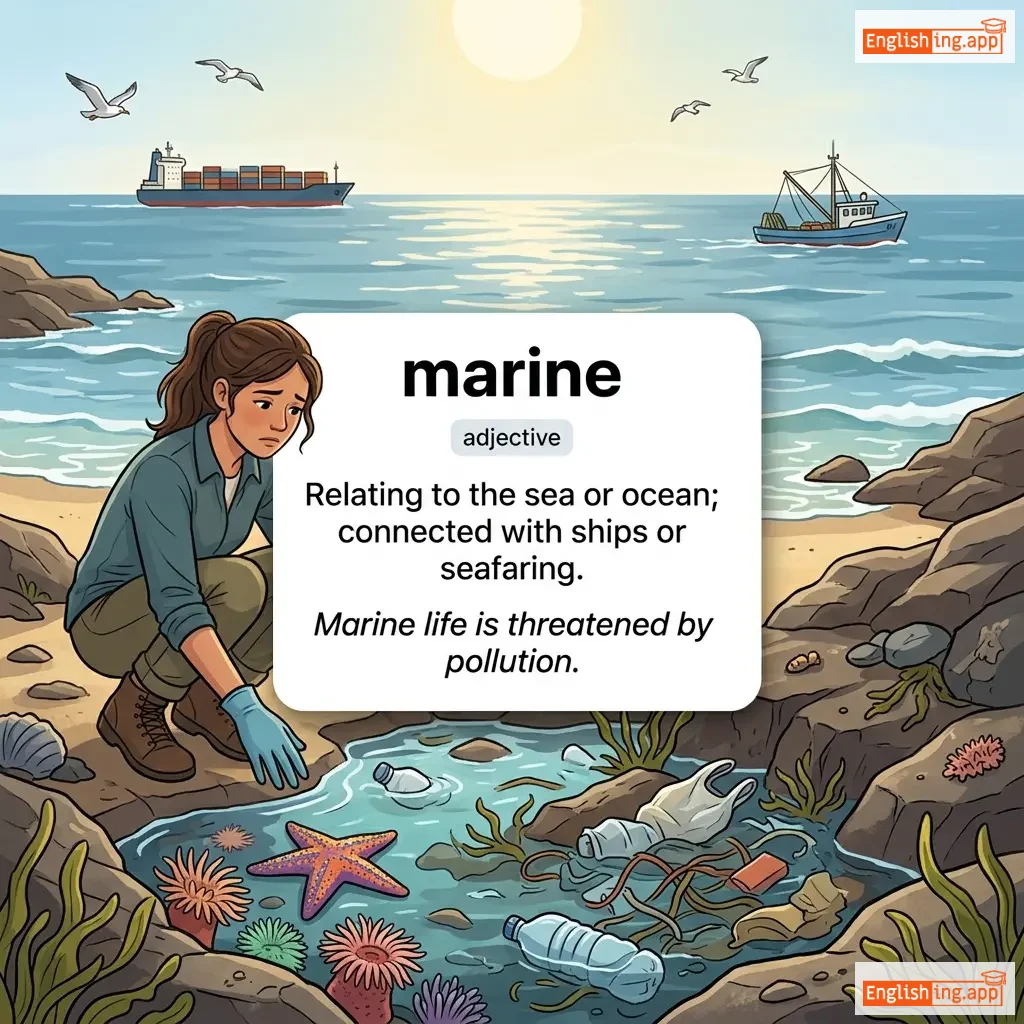
marine definition card — visual illustration of the meaning
adjective
/məˈriːn/
морской (morskoy)

Relating to the sea or ocean; connected with ships or seafaring.

"Marine life is threatened by pollution."
"Морская жизнь под угрозой из-за загрязнения." (Morskaya zhizn pod ugrozoj iz-za zagryazneniya.)
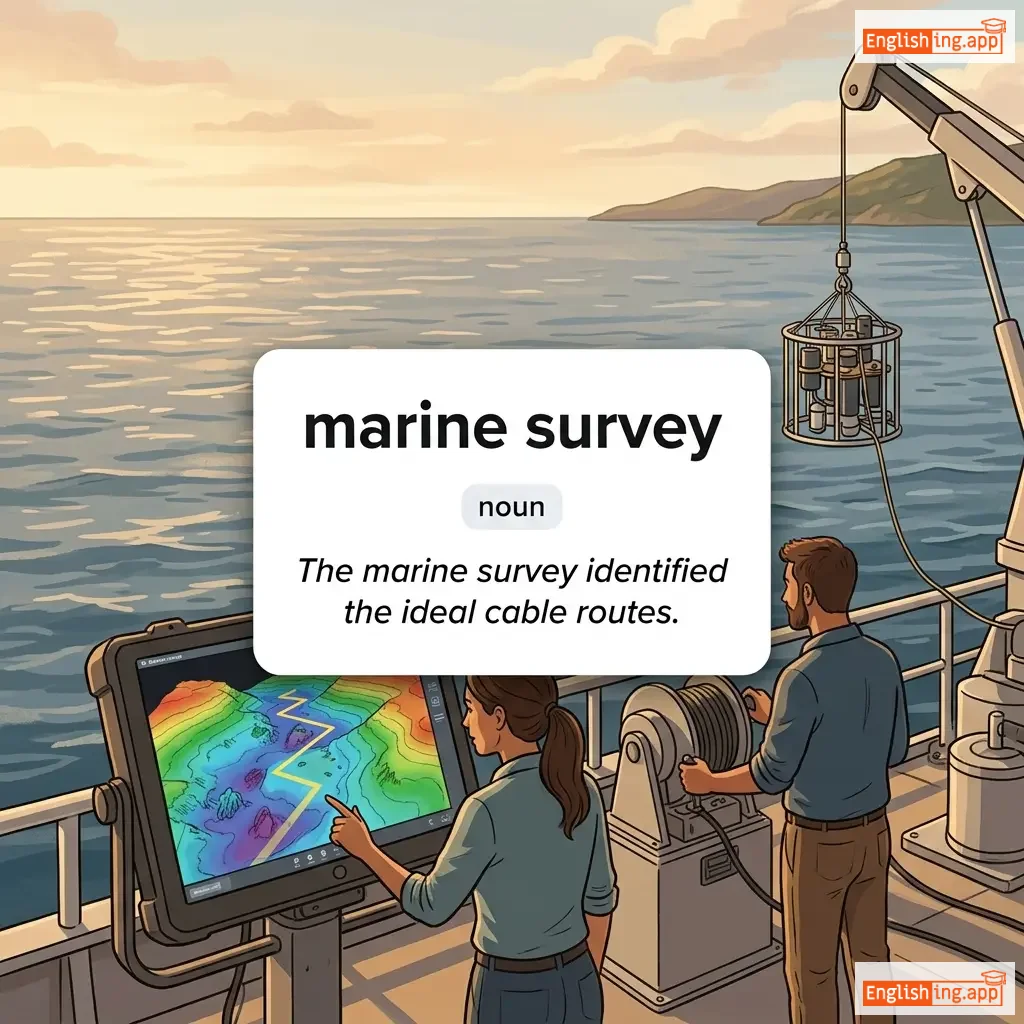
marine survey definition card — visual illustration of the meaning
noun
məˈriːn ˈsɜː.veɪ
морское обследование (morskoe obsledovanie)

A systematic examination of the sea, seabed, and underwater features for the purpose of making maps or gathering other information.

"The marine survey identified the ideal cable routes."

"Морское обследование выявило идеальные маршруты кабелей." (Morskoye obsledovaniye viyavilo idealnye marshruty kabeley.)
adjective
/ˈmɑːrvələs/
удивительный; великолепный; потрясающий (udivitel'nyy; velelipeyskiy; potryasayushchiy)

extremely good; wonderful; causing great wonder

"The view from the mountain was marvellous."

"Вид с горы был замечательным." (Vid s gory byl zamechatelnym.)
verb
/ˈmɑːrʃəl/
организовать (organizovat)

To arrange or organize people, events, or resources in an orderly way.

"The teacher marshaled the students for the field trip."

"Учитель организовал студентов для экскурсии." (Uchitel' organizoval studentov dlya ekskursii.)
noun
/mɑːrˈsuːpiəl/
млекопитающее, которое носит и кормит своих детенышей в сумке (mlekopitayushchee, kotoroe nosit i kormit svoikh detenyshey v sumke)

A type of mammal that carries and nourishes its young in a pouch, like kangaroos and koalas.

"The kangaroo is a well-known marsupial."

"Кенгуру — известный марсупиал." (Kenguru — izvestnyy marsupial.)
adjective
/ˈmɑːrʃəl/
военный (voennyy)

Related to war, soldiers, or military life.

"The country imposed martial law during the crisis."

"Страна ввела военное положение во время кризиса." (Strana vvlela voyennoye polozheniye vo vremya krizisa.)
adjective, noun
/ˈmɑːrʃən/
марсианин (marsianin)

Related to the planet Mars; or an imaginary being from Mars.

"The movie showed a Martian visiting Earth."

"Фильм показал марсианина, посетившего Землю." (Film pokazal marsianina, posetivshego Zemlyu.)
noun
/ˈmɑːr.tɪn/
ласточка (lastochka)

small swift-flying bird that catches insects on the wing

"The martin built its nest under the bridge."

"Ласточка построила свое гнездо под мостом." (Lastochka postroila svoe gnezdo pod mostom.)
noun
/ˌmɑːrtəˈnɛt/
жестокий дисциплинар (zhestokiy disciplinar)

A strict disciplinarian who demands rigid adherence to rules.

"The new manager was such a martinet that even minor infractions were punished."

"Новый менеджер был таким мартинетом, что даже небольшие нарушения наказывались." (Novyy menedzher byl takim martinetom, chto dazhe nebol'shie narusheniya nakazyvalis'.)
noun
/ˈmɑːrtər/
мученик (muchenik)

A person who suffers or dies for their beliefs or cause.

"He was hailed as a martyr for defending his faith."

"Его воспели как мученика за защиту своей веры." (Ego vospeli kak muchenika za zashchitu svoey very.)
noun
/ˈmɑːrtərdəm/
мученичество (muchenichestvo)

The suffering or death of a martyr.

"His martyrdom inspired many to fight for justice."
"Его мученичество вдохновило многих бороться за справедливость." (Ego muchenichestvo vdokhnovilo mnogikh borotsya za spravedlivost'.)
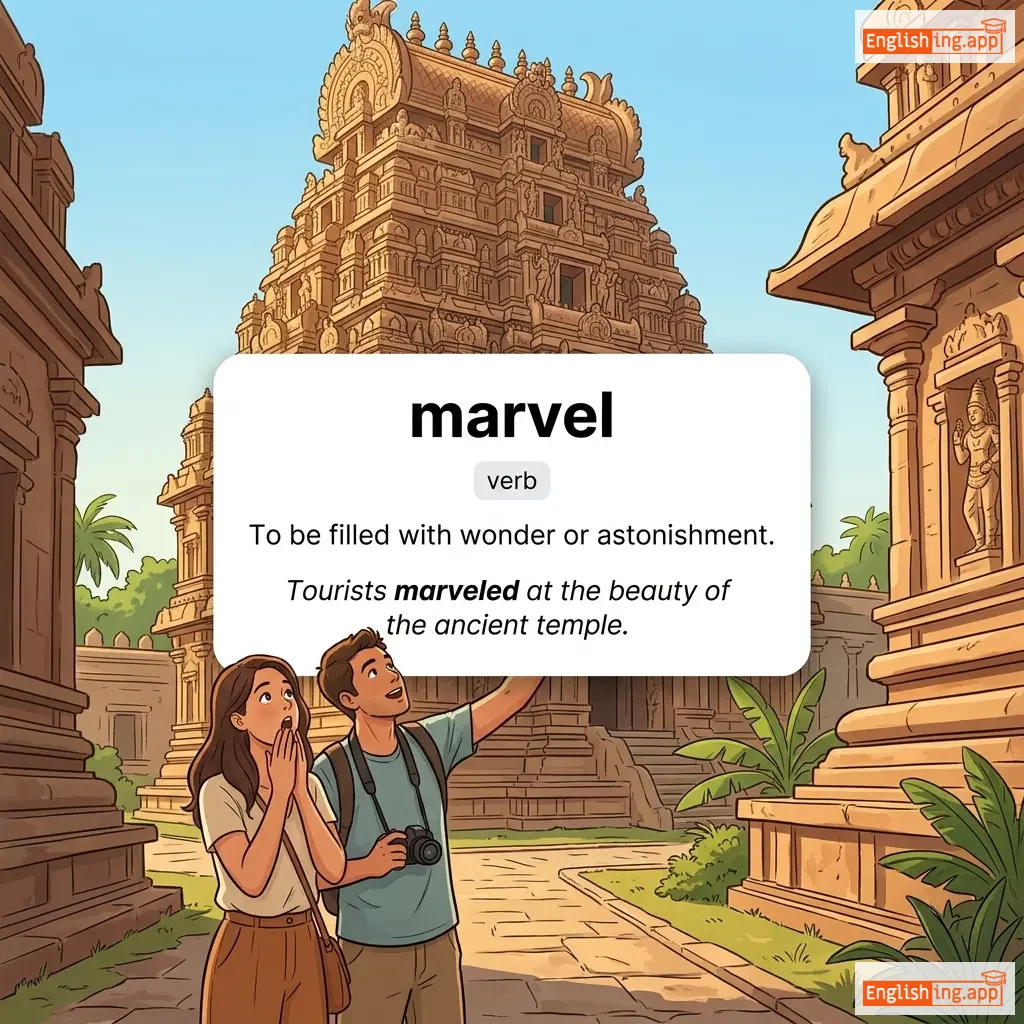
marvel definition card — visual illustration of the meaning
verb
/ˈmɑːrvl/
изумляться (izumlyatsya)

To be filled with wonder or astonishment.

"Tourists marveled at the beauty of the ancient temple."
"Туристы изумлялись красотой древнего храма." (Turisty izumlyalis' krasotoy drevnego khrama.)
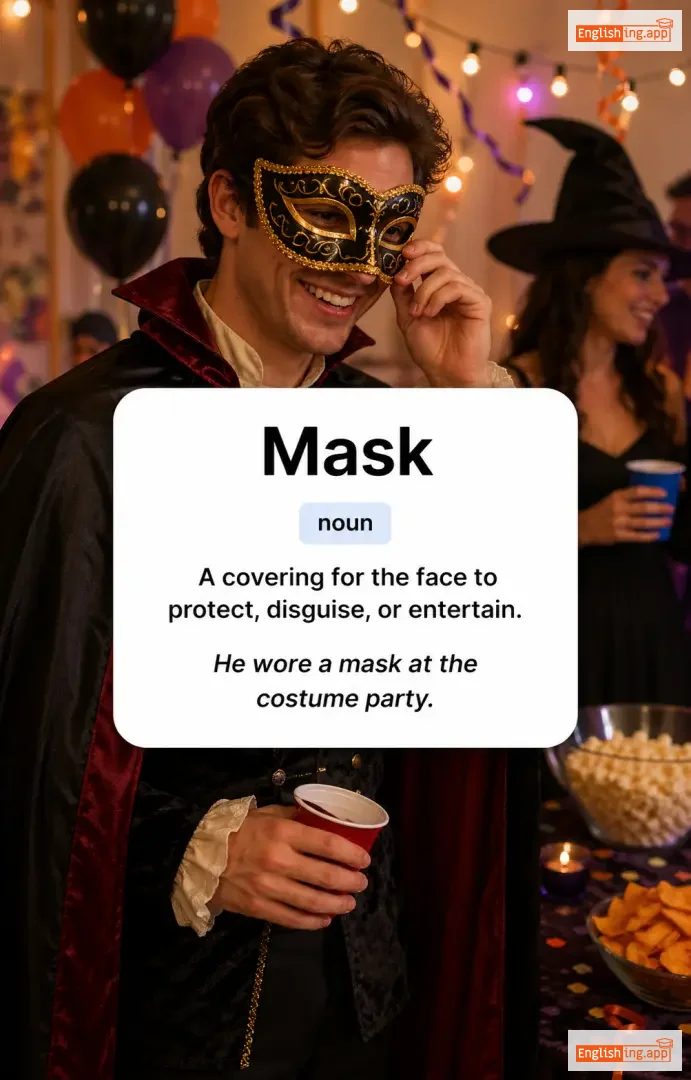
Mask definition card — visual illustration of the meaning
noun
/mæsk/
маска (maska)

A covering for the face to protect, disguise, or entertain.

"He wore a mask at the costume party."

"Он носил маску на костюмированной вечеринке." (On nosil masku na kostyumirovannoy vecherinke.)
adjective
/ˈmærɪtəl/
супружеский (supruzheskiy)

Relating to marriage or the relationship between husband and wife.

"They sought counseling to resolve their marital issues."

"Они обратились за консультацией, чтобы решить свои супружеские проблемы." (Oni obratilis' za konsultatsiey, chtoby reshit' svoi supruzheskie problemy.)
noun
/ˈmeɪsən/
каменщик (kamenshchik)

a person skilled in building with stone, brick, or concrete

"The mason carefully laid the bricks for the new house."

"Каменщик аккуратно уложил кирпичи для нового дома." (Kamenshchik akuratno uluzhil kirpichi dlya novogo doma.)
noun
/ˈmæsəkɪst/
мазохист (mazokhist)

a person who derives pleasure from their own pain or humiliation

"He was called a masochist for enjoying tough challenges."

"Его называли мазохистом за то, что он наслаждался сложными испытаниями." (Yego nazyvali mazochistom za to, chto on naslazhдalsya slozhnymi ispitaniyami.)
masks definition card — visual illustration of the meaning
noun
/mɑːsks/
маска (maska)

Coverings for all or part of the face, worn as a disguise, for protection, or for medical reasons.

"Masks can protect against polluted air."
"Маски могут защитить от загрязненного воздуха." (Maski mogut zashchitit' ot zagrjaznennogo vozdukha.)
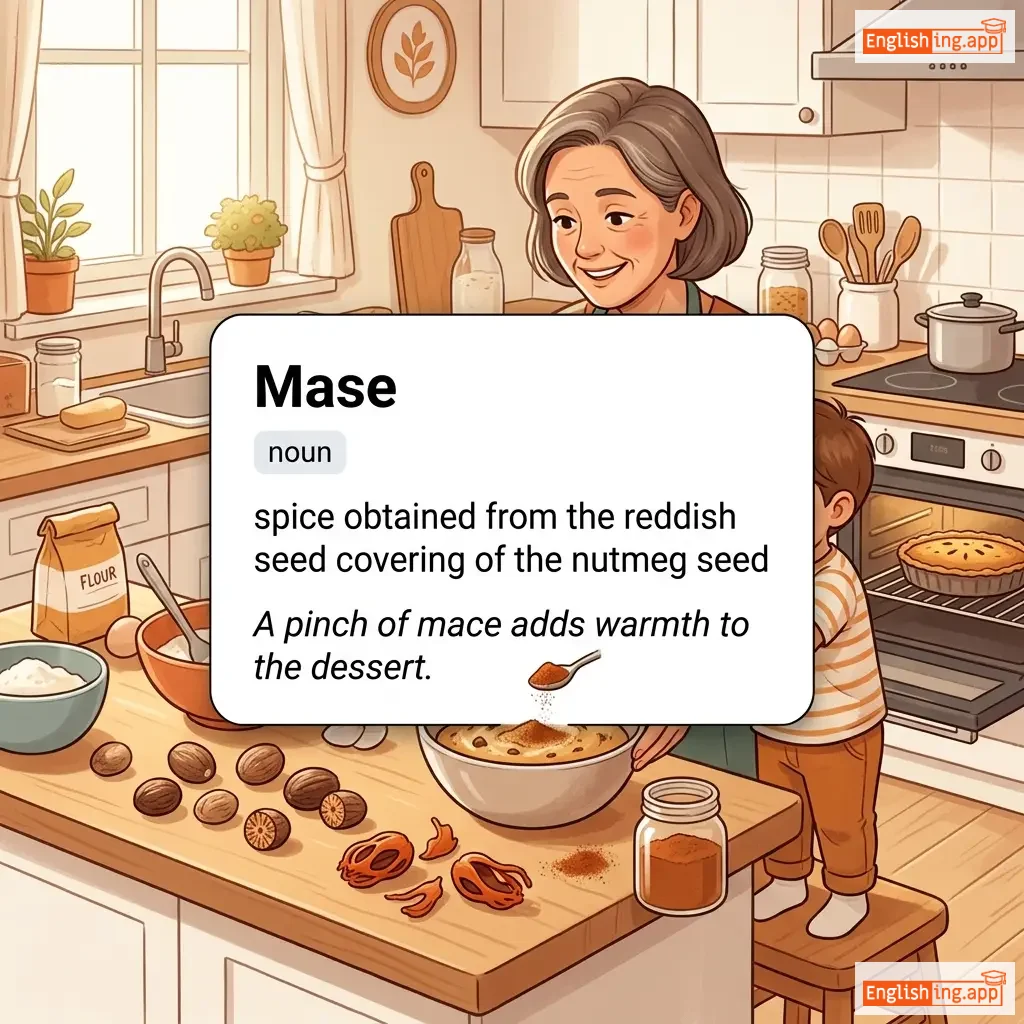
Mase definition card — visual illustration of the meaning
noun
/meɪs/
мускатный цветок (muskatnyy tsvetok)

spice obtained from the reddish seed covering of the nutmeg seed

"A pinch of mace adds warmth to the dessert."

"Щепотка мускатного цветка добавляет теплоту десерту." (Shchepotka muskatnogo tsvetka dobavlyaet teplotu desertu.)
adjective
/ˈmɑːrvələs/
удивительный (udivitel'nyy)

Causing great wonder or delight; extraordinary.

"She gave a marvelous performance on stage."

"Она дала потрясающее выступление на сцене." (Ona dala potryasayushcheye vystupleniye na stsene.)
adjective
/ˈmæskjəlɪn/
мужественный (muzhestvenny)

having qualities traditionally associated with men

"He has a deep, masculine voice."
"У него глубокий, мужественный голос." (U nego glubokij, muzhestvennyj golos.)
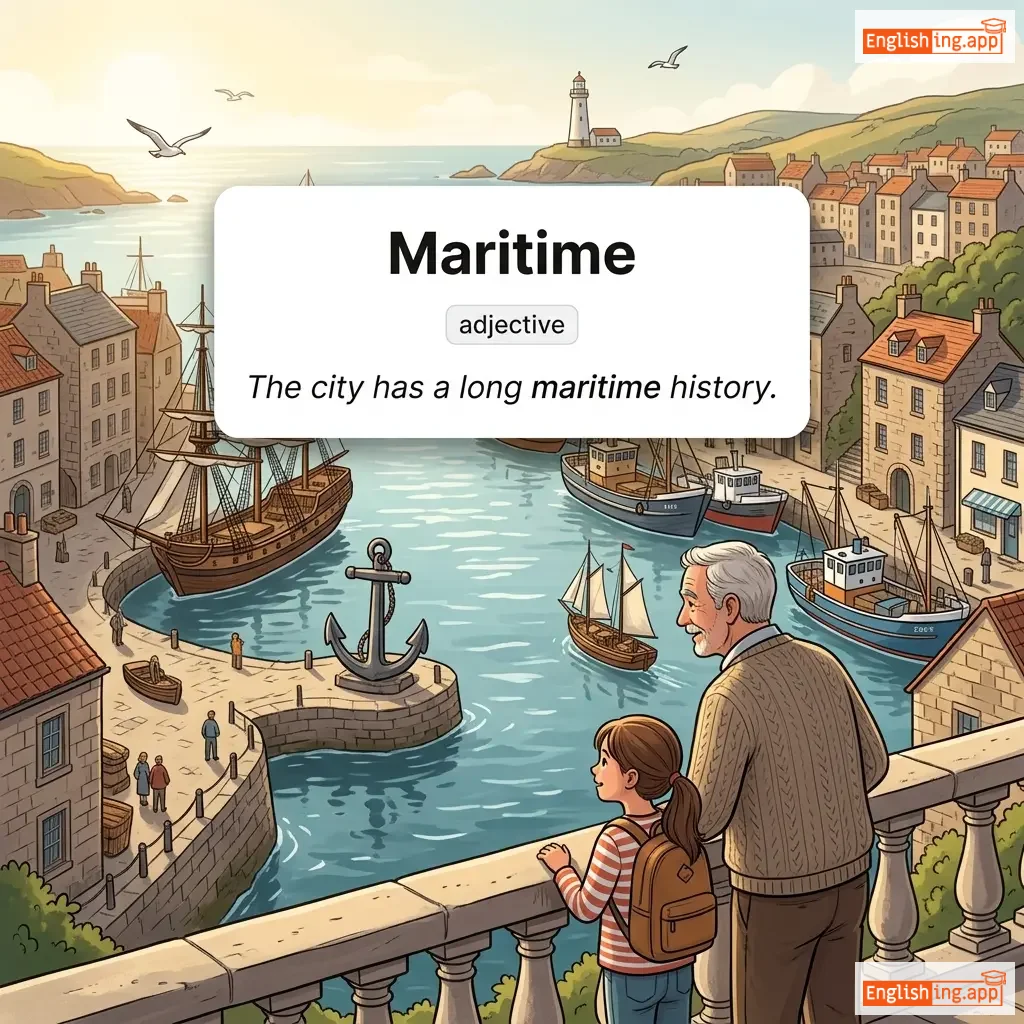
Maritime definition card — visual illustration of the meaning
adjective
/ˈmærɪˌtaɪm/
морской (morskoy)

connected with the sea, especially in relation to seafaring, shipping, or naval matters

"The city has a long maritime history."

"У города есть долгая морская история." (U goroda yest' dolgaya morskaya istoriya.)