Словари

Словарь английского языка | Значения слов, определения и примеры

verb
/ˈmæk.sɪ.maɪz/
максимизировать (maksimizirovat')

to increase something as much as possible

"The company aims to maximize its profits this year."

"Компания ставит цель максимизировать свою прибыль в этом году." (Kompaniya stavit tsel' maksimalizirovat' svoyu pribyl' v etom godu.)
noun
/ˈmæksɪm/
максима (maksima)

a short, well-known statement expressing a general truth or rule of conduct

"Honesty is a timeless maxim valued in every culture."

"Честность — это вечная максима, ценимая во всех культурах." (Chestnost' — eto vechnaya maksima, tsenimaya vo vsekh kul'turakh.)
adjective
/ˈmɔːkɪʃ/
слишком сентиментальный (slishkom sentimentálnyy)

excessively sentimental, often to the point of being sickly

"The movie was criticized for its mawkish sentimentality."
"Фильм был раскритикован за свою чрезмерную сентиментальность." (Film byl raskritikovan za svoyu chrezmernuyu sentimentálnost'.)
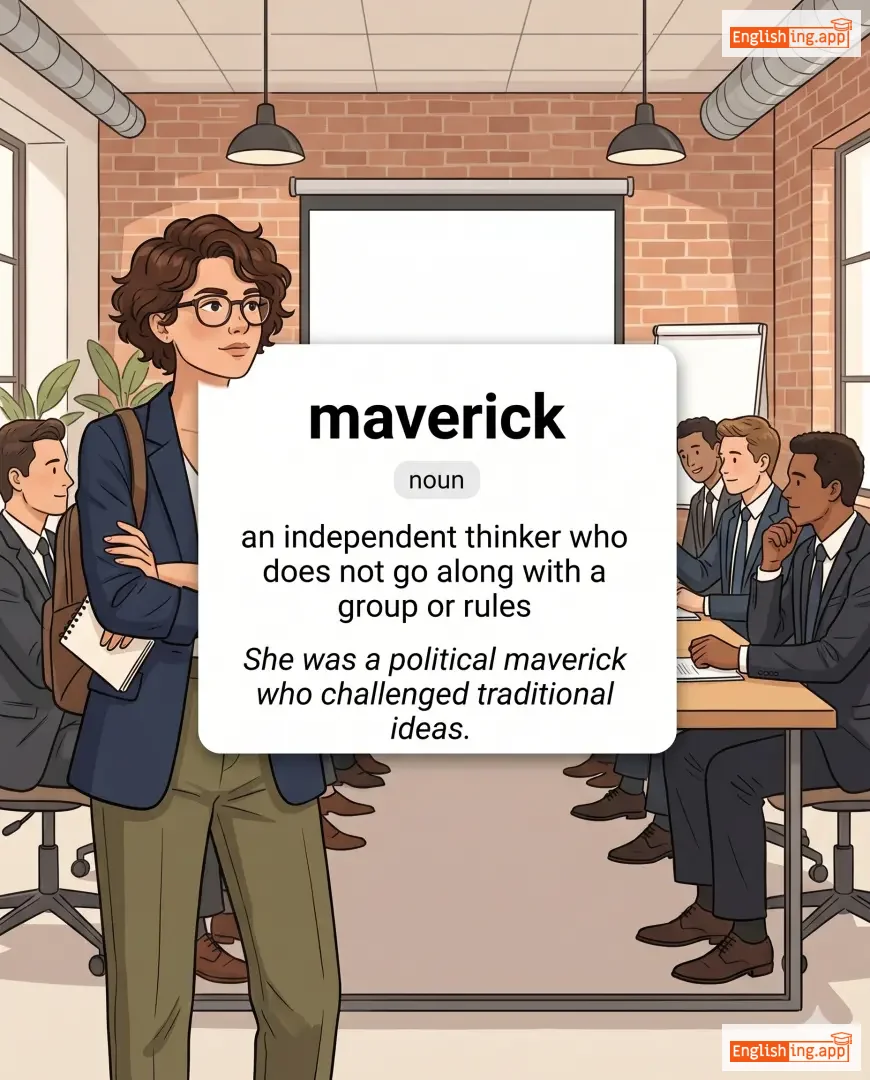
maverick definition card — visual illustration of the meaning
noun
/ˈmævərɪk/
независимый мыслитель (nezavisimyi myslitel)

an independent thinker who does not go along with a group or rules

"She was a political maverick who challenged traditional ideas."

"Она была политическим мавериком, который бросал вызов традиционным идеям." (Ona byla politicheskim maverikom, kotoryi brosal vyzov traditsionnym ideyam.)
noun
/ˈmeɪvən/
эксперт (ekspert)

an expert or connoisseur in a particular field

"He is a tech maven who always knows the latest trends."

"Он — эксперт в области технологий, который всегда знает о последних трендах." (On — ekspert v oblasti tekhnologiy, kotoryy vsegda znayet o poslednikh trendakh.)
adjective
/moʊv/
светло-фиолетовый (svetlo-fioletovyy)

a pale purple color with a grayish or bluish tinge

"She wore a beautiful mauve dress to the party."

"Она была в красивом светло-фиолетовом платье на вечеринке." (Ona byla v krasivom svetlo-fioletovom plat'ye na vecherinke.)
noun
/ˌmɔːzəˈliːəm/
маузолей (mauzoley)

A large stately building that houses a tomb or several tombs.

"The king was buried in a grand mausoleum."

"Царь был похоронен в большом мавзолее." (Tsar' byl pokhoronen v bol'shom mauzolee.)
verb
/ˈmɔːndər/
бессмысленно говорить (bessmyslenno govorit)

To speak or move aimlessly and incoherently.

"He maundered on about his old memories."

"Он бессмысленно говорил о своих старых воспоминаниях." (On bessmyslenno govoril o svoikh starykh vospominaniyakh.)
verb
/mɔːl/
калечить (kalechit')

To wound or injure someone by scratching or tearing; to handle roughly.

"The bear mauled the camper in the forest."

"Медведь калечил туриста в лесу." (Medved' kalechil turista v lesu.)
adjective
/ˈmɔːdlɪn/
слишком сентиментальный (slishkom sentimentálnyy)

Overly sentimental, often tearfully or weakly emotional.

"He became maudlin after a few drinks."

"Он стал сентиментальным после нескольких рюмок." (On stal sentimentálnym posle nekotorykh rjumok.)
noun
/məˈtʃʊrəti/
зрелость (zrelost)

The state of being mature; full development physically or emotionally

"With age comes wisdom and emotional maturity."

"С возрастом приходит мудрость и эмоциональная зрелость." (S vozrastom prikhodit mudrost' i emotsional'naya zrelost'.)
adjective
/məˈtjʊr/
зрелый (zrely)

fully developed or grown, especially emotionally or intellectually

"She has become a mature and confident leader."

"Она стала зрелым и уверенным лидером." (Ona stala zrelym i uverennym liderom.)
Mattress definition card — visual illustration of the meaning
noun
/ˈmætrəs/
матрас (matras)

A large pad used as a bed or part of a bed, typically filled with soft material for sleeping on.

"She bought a new mattress for better sleep comfort."

"Она купила новый матрас для лучшего комфорта сна." (Ona kupila novyy matras dlya luchshego komforta sna.)
noun/verb
/ˈmætərz/
вопросы / иметь значение (voprosy / imet' znachenie)

important topics, concerns, or issues; as a verb, to be of importance or significance

"What she thinks really matters to me."

"То, что она думает, действительно имеет значение для меня." (To, chto ona dumayet, deystvitel'no imeyet znacheniye dlya menya.)
noun, verb
/ˈmætər/
вопрос / значение (vopros / znachenie)

A subject or situation under consideration; to be important.

"It doesn’t matter what others think."

"Не важно, что думают другие." (Ne vazhno, chto dumayut drugie.)
noun
/ˈmeɪ.trɪks/
матрица, структура (matritsa, struktura)

An environment or structure in which something develops; also a mathematical array of numbers.

"The cultural matrix shaped his worldview."

"Культурная матрица сформировала его мировоззрение." (Kul'turnaya matrica sformirovala ego mirovoyzreniye.)
noun
/ˈmætrəˌmoʊni/
брак (brak)

The state of being married; marriage.

"They entered into matrimony after years of friendship."

"Они вступили в брак после многих лет дружбы." (Oni vstupili v brak posle mnogikh let druzhby.)
verb
/məˈtrɪkjʊˌleɪt/

To enroll as a student in a college or university.

"She matriculated at Oxford University last year."

noun
/ˈmætrɪˌsaɪd/
матероубийство (materoubijstvo)

The act of killing one's own mother.

"The crime of matricide shocked the entire town."

"Преступление матероубийства потрясло весь город." (Prestuplenie materoubijstva potryaslo ves' gorod.)
👩‍👩‍👧‍👦

matriarch (матриарх)

noun
/ˈmeɪ.triˌɑːrk/
матриарх (matriarkh)

A woman who is the head of a family or community.

"The matriarch of the family made all important decisions."

"Матриарх семьи принимала все важные решения." (Matriarkh semyi prinimala vse vazhnyye resheniya)
noun
/ˈmætɪneɪ/
послеполуденное представление (poslepoludennoe predstavlenie)

A performance, especially a play or movie, that takes place in the afternoon.

"We bought tickets for the Sunday afternoon matinee."

"Мы купили билеты на воскресное послеполуденное представление." (My kupili bilety na voskresnoe poslepoludjennoe predstavlenie.)
noun
/ˌmæθəˈmætɪks/
математика (matematika)

the abstract science of number, quantity, and space; the study of numbers and their operations

"Mathematics helps us understand patterns in nature and the universe."

"Математика помогает нам понимать закономерности в природе и во Вселенной." (Matematika pomogaet nam ponimat' zakonomernosti v prirode i vo Vselennoi.)
adverb
/ˌmæθəˈmætɪkli/
математически (matematicheski)

in a way that relates to mathematics; using numbers, formulas, or logical calculation

"The problem can be solved mathematically rather than by guesswork."

"Эту задачу можно решить математически, а не наугад." (Etu zadachu mozhno reshit matematicheski a ne naugad)
adjective
/ˌmæθəˈmætɪkəl/
математический (matematicheskiy)

relating to mathematics or the use of mathematics

"The mathematical equation was difficult to solve."

"Математическое уравнение было трудно решить." (Matematicheskoe uravnenie bylo trudno reshit'.)
noun
/mæθ/
математика (matematika)

The study of numbers, quantities, and shapes, also called mathematics.

"She is very good at math."

"Она очень хороша в математике." (Ona ochen' khorosha v matematike.)
noun
/məˈtɜːrnəti/
материнство (maternitstvo)

The state of being a mother; motherhood

"The hospital has an excellent maternity ward for new mothers."

"В больнице есть отличное родильное отделение для новых матерей." (V bol'nitse est' otlichnoe rodil'noe otdelenie dlya novykh materei.)
adjective
/məˈtɜːnəl/
материнский (materinskiy)

Relating to a mother; showing motherly qualities such as care and protection.

"She showed great maternal affection toward the child."

"Она проявила большую материнскую привязанность к ребенку." (Ona proyavila bol'shuyu materinskuyu privyazannost' k rebenku.)
verb
/məˈtɪərɪəlaɪz/
материализоваться (materializovatsya)

To become real or actual; to appear suddenly or in a physical form.

"The opportunity he had been waiting for finally materialized."

"Возможность, которой он ждал, наконец, материализовалась." (Vozmozhnost', kotoroy on zhdal, nakonec materializovalas'.)
materialistic lifestyle definition card — visual illustration of the meaning
noun
məˌtɪərɪəˈlɪstɪk ˈlaɪfstaɪl
материалистический образ жизни (materialisticheskiy obraz zhizni)

A way of living focused on acquiring material possessions and wealth.

"A materialistic lifestyle often leads to moral decline."

"Материалистический образ жизни часто приводит к моральному упадку." (Materialisticheskiy obraz zhizni chasto privodit k moral'nomu upadku.)
noun
/məˈtɪəriəlɪzəm/
материализм (materializm)

A tendency to consider material possessions and physical comfort as more important than spiritual or moral values.

"The novel criticizes society's growing materialism."

"Роман критикует растущий материализм в обществе." (Roman kritikuet rastushchiy materializm v obshchestve.)
noun, adjective
/məˈtɪəriəl/
материал (material)

The substance or matter from which something is made; relating to physical things rather than ideas or emotions.

"The builder brought all the necessary material for the construction."

"Строитель принес весь необходимый материал для строительства." (Stroitel' prines ves' neobkhodimy material dlya stroitel'stva.)
noun
/meɪt/
друг, спутник (drug, sputnik)

a friend or companion; a partner in marriage or reproduction

"He went fishing with his old school mate."
"Он пошел на рыбалку со своим старым школьным другом." (On poshel na rybalku so svoim starym shkol'nym drugom.)
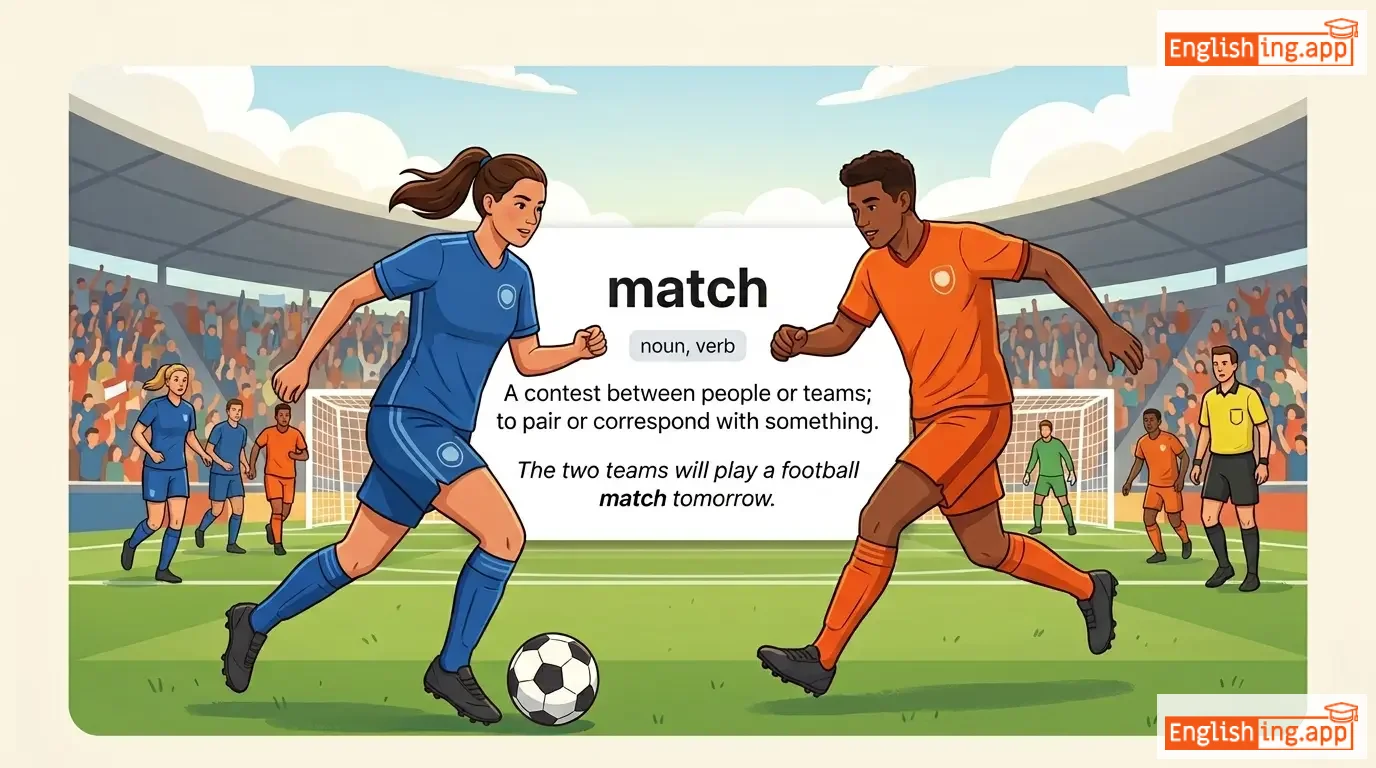
match definition card — visual illustration of the meaning
noun, verb
/mætʃ/
матч / соревнование (match / sorevnovanie)

A contest between people or teams; to pair or correspond with something.

"The two teams will play a football match tomorrow."
"Две команды сыграют футбольный матч завтра." (Dve komandy sygrayut futbol'nyy match zavtra.)
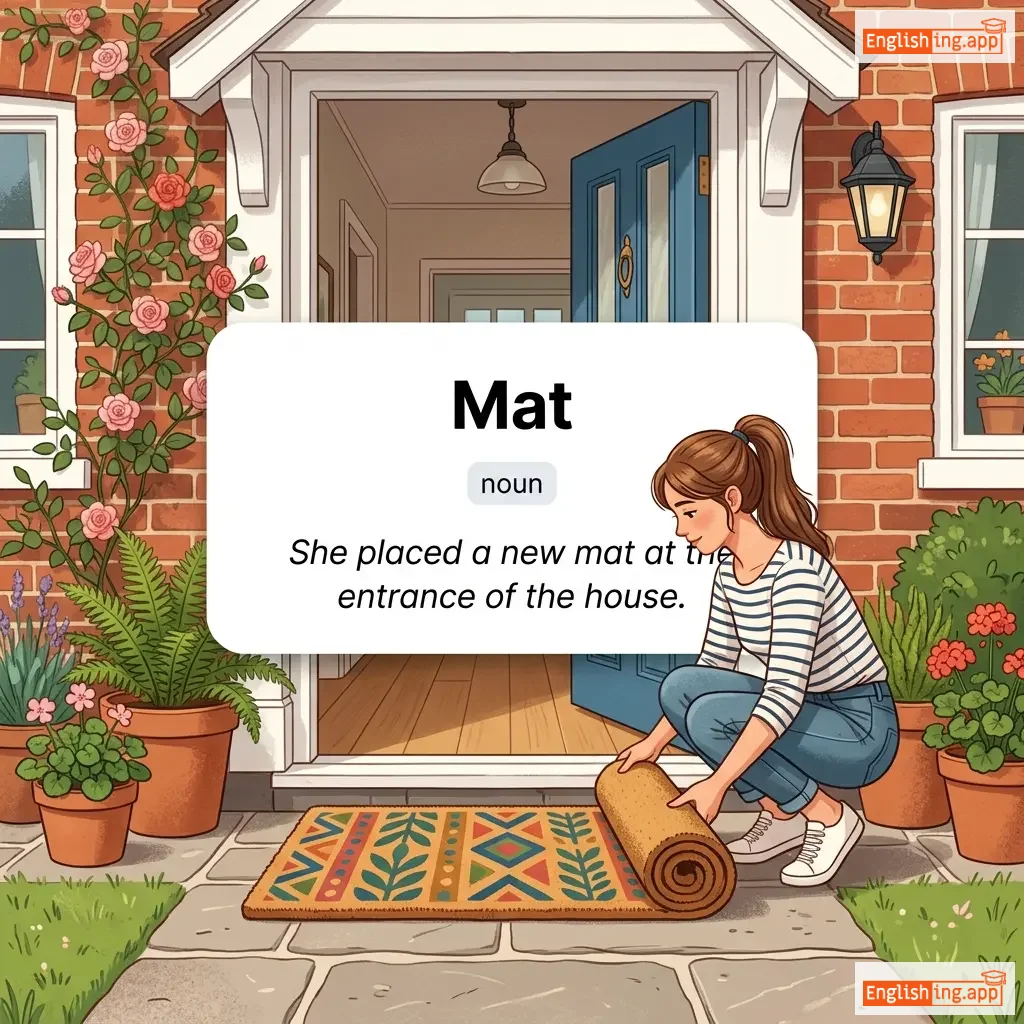
Mat definition card — visual illustration of the meaning
noun
/mæt/
коврик (kovrik)

a piece of fabric material placed on a floor or surface for wiping feet or protection

"She placed a new mat at the entrance of the house."

"Она положила новый коврик на входе в дом." (Ona polozhila novyj kovrik na vkhode v dom.)
verb
/ˈmæstɪkeɪt/
жевать (zhevat')

to chew food thoroughly before swallowing

"He slowly masticated the bread before swallowing."

"Он медленно пережевывал хлеб перед тем, как проглотить его." (On medlenno perezhyval khleb pered tem, kak proglotit' yego.)
noun
/ˈmæstəri/
мастерство (masterstvo)

comprehensive knowledge or skill in a subject or accomplishment

"She has achieved mastery in classical dance."
"Она достигла мастерства в классическом танце." (Ona dostigla masterstva v klassicheskom tantse.)
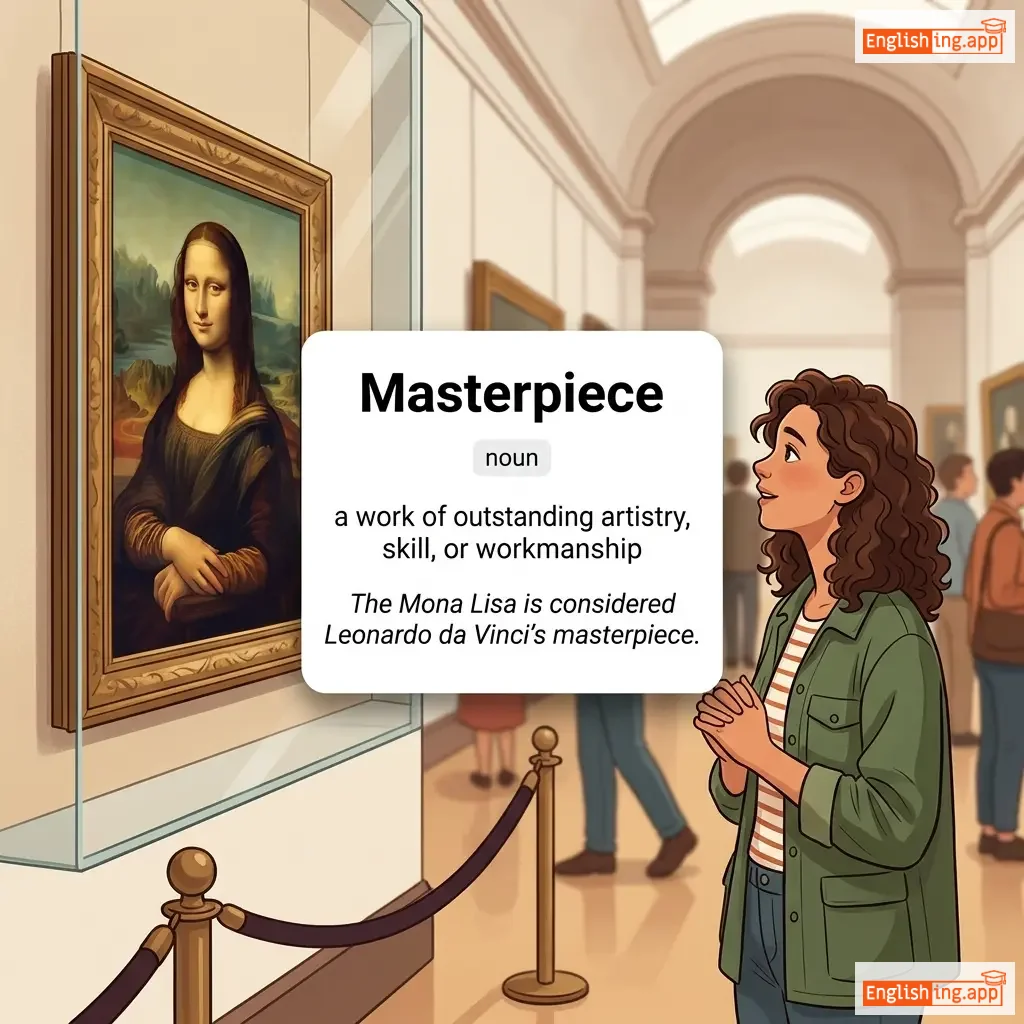
Masterpiece definition card — visual illustration of the meaning
noun
/ˈmæstərˌpiːs/
шедевр (shedevr)

a work of outstanding artistry, skill, or workmanship

"The Mona Lisa is considered Leonardo da Vinci’s masterpiece."

"Мона Лиза считается шедевром Леонардо да Винчи." (Mona Liza schitayetsya shedevrom Leonardo da Vinci.)
noun, verb
/ˈmɑːstər/

A person with great skill or control in a subject or activity; to gain full command over something.

"She mastered the art of cooking Italian dishes."

adjective
/ˈmæsɪv/
огромный (ogromny)

extremely large, heavy, or solid in size or degree

"The company made a massive investment in renewable energy."

"Компания сделала огромные инвестиции в возобновляемую энергию." (Kompaniya sdelala ogromnye investitsii v vozobnovlyaemuyu energiyu.)
verb
/məˈsɑːʒ/
массажировать (massazhirovat)

to rub and press muscles to relieve pain or tension; to manipulate information

"The therapist will massage your back to reduce muscle tension."
"Терапевт будет массировать вашу спину, чтобы уменьшить напряжение в мышцах." (Terapyevt budet massirovat' vashu spinu, chtoby umenshit' napryazhenie v myshczakh.)
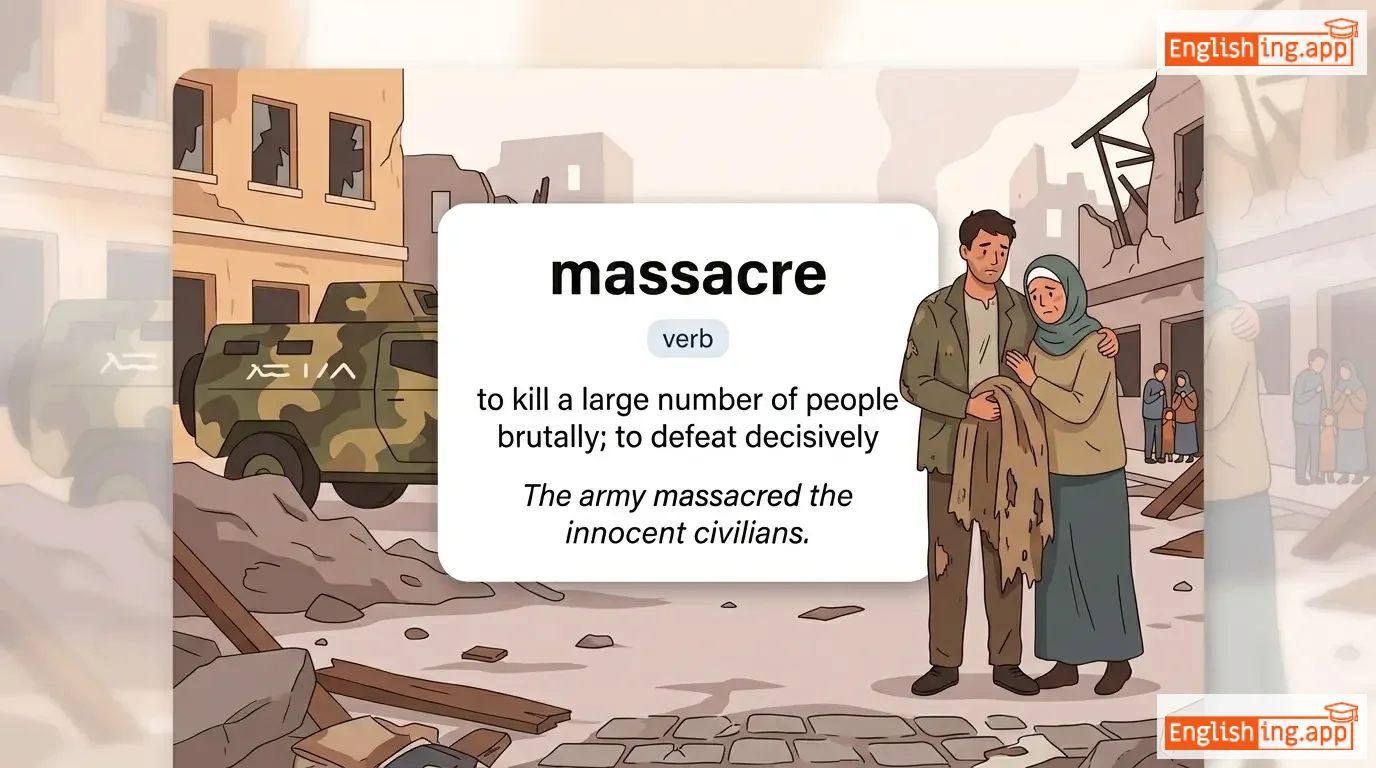
massacre definition card — visual illustration of the meaning
noun
/ˈmæsəkər/
резня (reznya)

the killing of a large number of people, usually in a violent way

"The massacre resulted in the deaths of hundreds of civilians."

"Резня привела к смерти сотен гражданских." (Reznya privela k smerti soten grazhdanskih.)
verb
/mɑːr/
порчить (porchit)

to spoil or damage the appearance or quality of something

"The scratch will mar the beauty of the painting."

"Царапина испортит красоту картины." (Tsarapina isportit krasotu kartiny.)
noun
/ˈmɑːrbəl/
счастье (schast'ye)

a hard, smooth stone used in building and sculpture, often white with colored lines

"The floor of the palace was made of white marble."

"Она не могла скрыть своего счастья, когда получила награду." (Ona ne mogla skryt' svoego schast'ya, kogda poluchila nagradu.)
noun
/məˈrɔː.dər/
мародер (maroder)

a person who roams around in search of things to steal or people to attack

"Villagers feared the marauders who raided their homes."

"Жители деревни боялись мародеров, которые нападали на их дома." (Zhiteli derevni boyalis' maroderov, kotorye napadali na ikh doma.)
verb
/məˈrɔːd/
грабить (grabit)

to roam in search of things to steal or attack

"The bandits marauded through the village at night."

"Бандиты грабили деревню ночью." (Bandity grabili derevnyu noch'yu.)
noun
/ˈmærəθən/
марафон (marafon)

a long-distance running race, typically 42.195 kilometers (26.2 miles)

"She completed the marathon in under four hours."

"Она завершила марафон за меньше чем четыре часа." (Ona zavershila marafon za men'she chem chetyre chasa.)
adjective
/ˈmɛni/
много (mnogo)

a large number of

"Many students attended the lecture."
"Множество студентов присутствовало на лекции." (Mnozhestvo studentov prisutstvovalo na lektsii.)
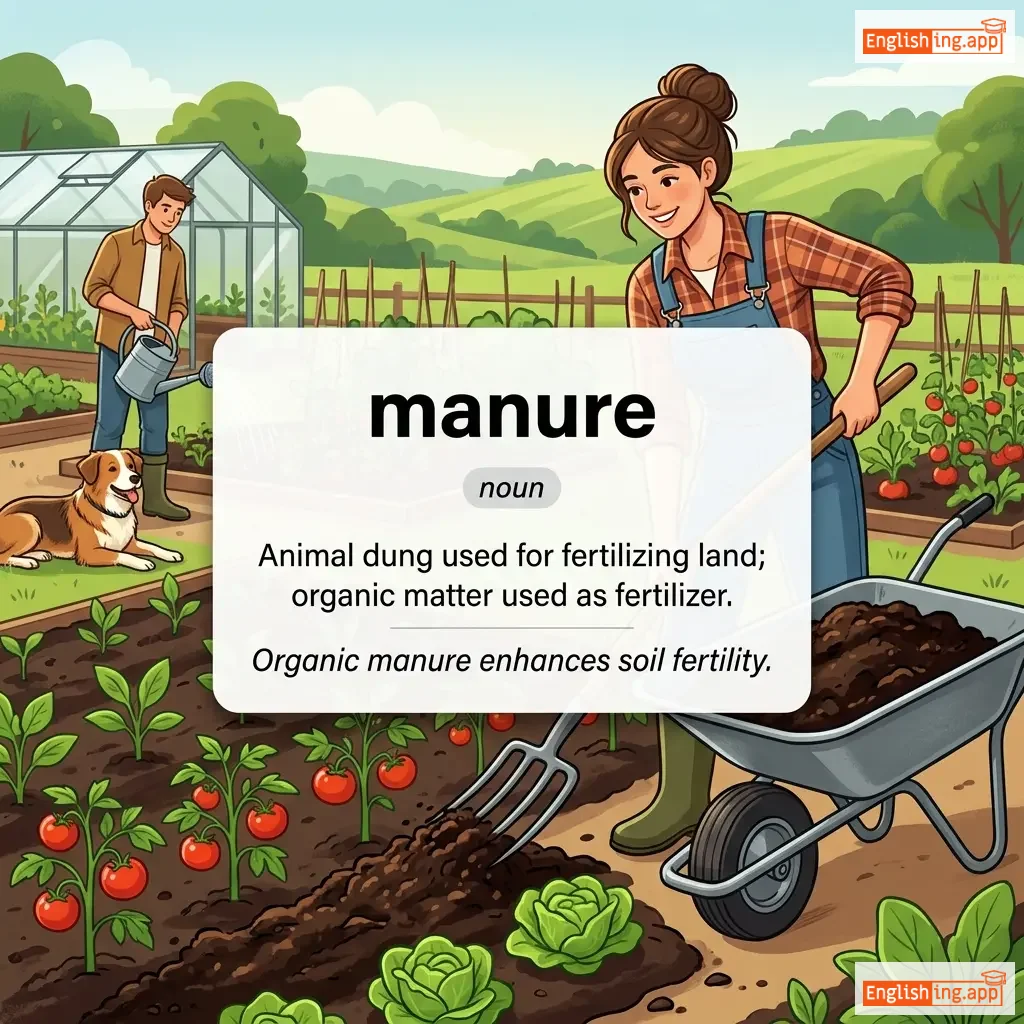
manure definition card — visual illustration of the meaning
noun
məˈnjʊər
навоз, органическое удобрение (navoz, organicheskoe udobrenie)

Animal dung used for fertilizing land; organic matter used as fertilizer.

"Organic manure enhances soil fertility."

"Органический навоз улучшает плодородие почвы." (Organicheskiy navoz uluchshayet plodorodiye pochvy.)
noun
/ˈmæn.juˌskrɪpt/
рукопись (rukopis)

a handwritten or typed document, especially a writer’s draft before publication

"The author submitted her manuscript to the publisher."

"Автор подал свою рукопись издателю." (Avtor podal svoju rukopis' izdatelyu.)
🚶‍♂️

March (марш)

verb
/mɑːrtʃ/
маршировать (marshirovat)

to walk in a regular, rhythmic way, often in step with others; to proceed with determination

"The soldiers marched across the field."

"Солдаты маршировали по полю." (Soldaty marshirovali po polyu.)