語彙集

英単語辞書 | 単語の意味、定義、例文

verb
/ˈmæk.sɪ.maɪz/
最大化する (saidakka suru)

to increase something as much as possible

"The company aims to maximize its profits this year."

"会社は今年、利益を最大化することを目指しています。" (Kaisha wa kotoshi, rieki o saidakka suru koto o mezashiteimasu.)
noun
/ˈmæksɪm/
格言 (kagen)

a short, well-known statement expressing a general truth or rule of conduct

"Honesty is a timeless maxim valued in every culture."

"正直はすべての文化で評価されている永遠の格言です。" (Shoujiki wa subete no bunka de hyouka sareteiru eien no kagen desu.)
adjective
/ˈmɔːkɪʃ/
過度に感傷的 (kado ni kanshō-teki)

excessively sentimental, often to the point of being sickly

"The movie was criticized for its mawkish sentimentality."
"その映画は過度に感傷的だとして批判されました。" (Sono eiga wa kado ni kanshō-teki da to shite hihan saremashita.)
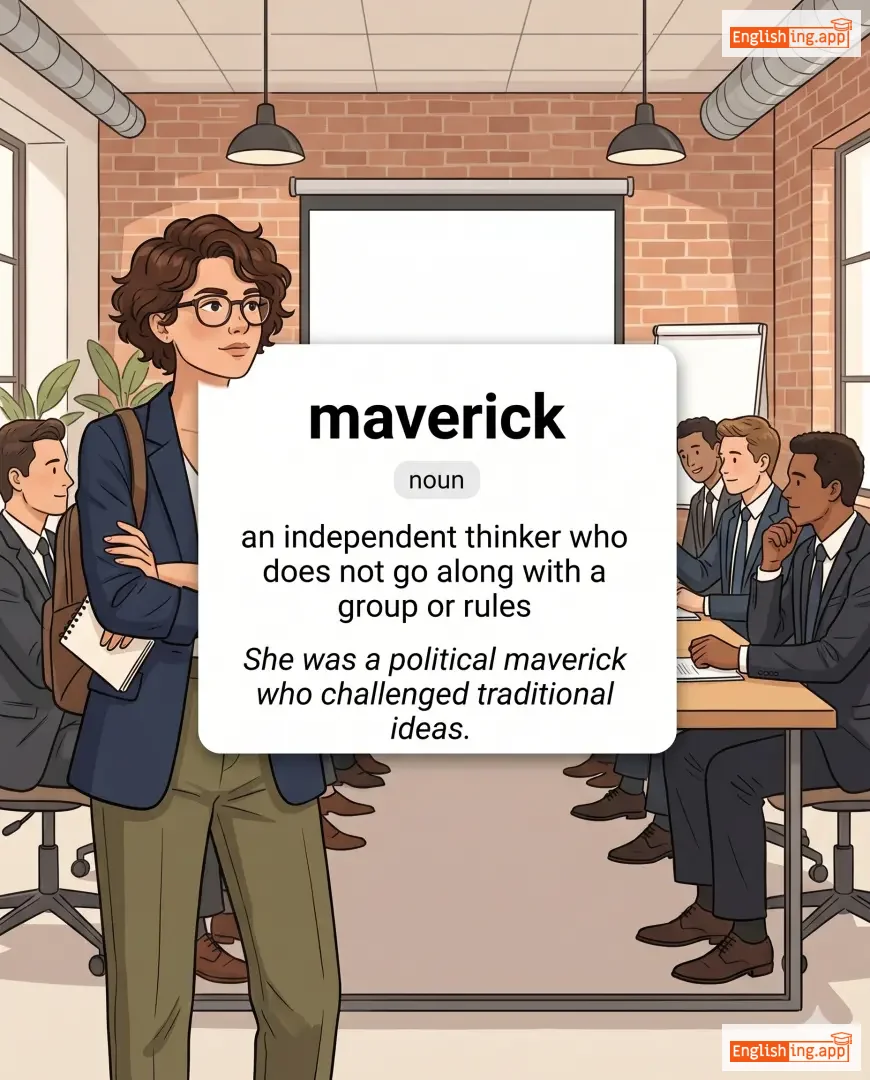
maverick definition card — visual illustration of the meaning
noun
/ˈmævərɪk/
独立独歩 (dokuritsu dokuhō)

an independent thinker who does not go along with a group or rules

"She was a political maverick who challenged traditional ideas."

"彼女は伝統的な考えに挑戦した政治的な独立独歩だった。" (Kanojo wa dentō-teki na kangae ni chōsen shita seiji-teki na dokuritsu dokuhō datta.)
noun
/ˈmeɪvən/
専門家 (senmonka)

an expert or connoisseur in a particular field

"He is a tech maven who always knows the latest trends."

"彼は最新のトレンドをいつも知っているテック専門家です。" (Kare wa saishin no torendo o itsumo shitte iru tekku senmonka desu.)
adjective
/moʊv/
薄紫色 (usui murasaki iro)

a pale purple color with a grayish or bluish tinge

"She wore a beautiful mauve dress to the party."

"彼女はパーティーで美しい薄紫色のドレスを着ていた。" (Kanojo wa paatii de utsukushii usui murasaki iro no doresu o kite ita.)
noun
/ˌmɔːzəˈliːəm/
霊廟 (reibyō)

A large stately building that houses a tomb or several tombs.

"The king was buried in a grand mausoleum."

"王は壮大な霊廟に埋葬されました。" (Ō wa sōdaina reibyō ni maisō saremashita.)
verb
/ˈmɔːndər/
無駄に話す (mudani hanasu)

To speak or move aimlessly and incoherently.

"He maundered on about his old memories."

"彼は古い思い出について無駄に話していました。" (Kare wa furui omoide ni tsuite mudani hanashite imashita.)
verb
/mɔːl/
傷つける (kizutsukeru)

To wound or injure someone by scratching or tearing; to handle roughly.

"The bear mauled the camper in the forest."

"クマは森の中でキャンパーを傷つけました。" (Kuma wa mori no naka de kyanpā o kizutsukemashita.)
adjective
/ˈmɔːdlɪn/
過度に感傷的な (kadoni kanshōteki na)

Overly sentimental, often tearfully or weakly emotional.

"He became maudlin after a few drinks."

"彼は数杯飲んだ後、感傷的になった。" (Kare wa suuhai nonda ato, kanshōteki ni natta.)
noun
/məˈtʃʊrəti/
成熟 (seijuku)

The state of being mature; full development physically or emotionally

"With age comes wisdom and emotional maturity."

"年齢とともに知恵と感情的成熟が訪れる。" (Nenrei to tomoni chie to kanjou-teki seijuku ga otozureru.)
adjective
/məˈtjʊr/
成熟した (seijukushita)

fully developed or grown, especially emotionally or intellectually

"She has become a mature and confident leader."

"彼女は成熟した自信に満ちたリーダーになった。" (Kanojo wa seijukushita jishin ni michita rīdā ni natta.)
Mattress definition card — visual illustration of the meaning
noun
/ˈmætrəs/
マットレス (mattoresu)

A large pad used as a bed or part of a bed, typically filled with soft material for sleeping on.

"She bought a new mattress for better sleep comfort."

"彼女はより快適な睡眠のために新しいマットレスを買いました。" (Kanojo wa yori kaitekina suimin no tame ni atarashī mattoresu o kaimashita.)
noun/verb
/ˈmætərz/
問題 / 重要である (mondai / juuyou de aru)

important topics, concerns, or issues; as a verb, to be of importance or significance

"What she thinks really matters to me."

"彼女が思うことは私にとって本当に重要です。" (kanojo ga omou koto wa watashi ni totte hontou ni juuyou desu.)
noun, verb
/ˈmætər/
問題 / 重要 (mondai / jūyō)

A subject or situation under consideration; to be important.

"It doesn’t matter what others think."

"他人がどう思うかは関係ない。" (Tanin ga dō omou ka wa kankei nai.)
noun
/ˈmeɪ.trɪks/
マトリックス, 構造 (matorikkusu, kōzō)

An environment or structure in which something develops; also a mathematical array of numbers.

"The cultural matrix shaped his worldview."

"文化的なマトリックスは彼の世界観を形成した。" (Bunkateki na matorikkusu wa kare no sekaikan o keisei shita.)
noun
/ˈmætrəˌmoʊni/
結婚 (kekkon)

The state of being married; marriage.

"They entered into matrimony after years of friendship."

"彼らは何年もの友情の後、結婚しました。" (Karera wa nan-nen mo no yūjō no ato, kekkon shimashita.)
verb
/məˈtrɪkjʊˌleɪt/

To enroll as a student in a college or university.

"She matriculated at Oxford University last year."

noun
/ˈmætrɪˌsaɪd/
母親殺し (hahaoyakoro)

The act of killing one's own mother.

"The crime of matricide shocked the entire town."

"母親殺しの犯罪は街全体を驚かせた。" (Hahaoyakoroshi no hanzai wa machi zentai o odorokaseta.)
👩‍👩‍👧‍👦

matriarch

noun
/ˈmeɪ.triˌɑːrk/

A woman who is the head of a family or community.

"The matriarch of the family made all important decisions."

noun
/ˈmætɪneɪ/
午後の公演 (gogo no kouen)

A performance, especially a play or movie, that takes place in the afternoon.

"We bought tickets for the Sunday afternoon matinee."

"私たちは日曜日の午後の公演のチケットを買いました。" (Watashitachi wa nichiyoubi no gogo no kouen no chiketto wo kaimashita.)
noun
/ˌmæθəˈmætɪks/
数学 (sugaku)

the abstract science of number, quantity, and space; the study of numbers and their operations

"Mathematics helps us understand patterns in nature and the universe."

"数学は私たちが自然界や宇宙のパターンを理解するのに役立ちます。" (Sugaku wa watashitachi ga shizenkai ya uchuu no pataan wo rikai suru no ni yakudachimasu.)
adverb
/ˌmæθəˈmætɪkli/
数学的に (suugakuteki ni)

in a way that relates to mathematics; using numbers, formulas, or logical calculation

"The problem can be solved mathematically rather than by guesswork."

"その問題は推測ではなく数学的に解決できる。" (sono mondai wa suisoku dewa naku suugakuteki ni kaiketsu dekiru)
adjective
/ˌmæθəˈmætɪkəl/
数学的 (sūgakuteki)

relating to mathematics or the use of mathematics

"The mathematical equation was difficult to solve."

"その数学的な方程式は解くのが難しかった。" (Sono sūgakuteki na hōteishiki wa toku no ga muzukashikatta.)
noun
/mæθ/
数学 (sugaku)

The study of numbers, quantities, and shapes, also called mathematics.

"She is very good at math."

"彼女は数学が得意です。" (Kanojo wa sugaku ga tokui desu.)
noun
/məˈtɜːrnəti/
母性 (bosei)

The state of being a mother; motherhood

"The hospital has an excellent maternity ward for new mothers."

"その病院は新しい母親のための優れたマタニティ病棟を提供しています。" (Sono byouin wa atarashii hahaoya no tame no sugureta mataniti byoutou wo teikyou shiteimasu.)
adjective
/məˈtɜːnəl/
母性的 (boseiteki)

Relating to a mother; showing motherly qualities such as care and protection.

"She showed great maternal affection toward the child."

"彼女は子供に対して大きな母性的愛情を示しました。" (Kanojo wa kodomo ni taishite ōkina boseiteki aijō o shimashita.)
verb
/məˈtɪərɪəlaɪz/
実現する (jitsugen suru)

To become real or actual; to appear suddenly or in a physical form.

"The opportunity he had been waiting for finally materialized."

"彼が待っていたチャンスはついに実現しました。" (Kare ga matteita chansu wa tsuini jitsugen shimashita.)
materialistic lifestyle definition card — visual illustration of the meaning
noun
məˌtɪərɪəˈlɪstɪk ˈlaɪfstaɪl
物質主義的なライフスタイル (busshitsu shugiteki na raifusutairu)

A way of living focused on acquiring material possessions and wealth.

"A materialistic lifestyle often leads to moral decline."

"物質主義的なライフスタイルは、しばしば道徳的な堕落を招く。" (Busshitsu shugiteki na raifusutairu wa, shibashiba dōtoku-teki na daraku o maneku.)
noun
/məˈtɪəriəlɪzəm/
物質主義 (butsushitsushugi)

A tendency to consider material possessions and physical comfort as more important than spiritual or moral values.

"The novel criticizes society's growing materialism."

"小説は社会の成長する物質主義を批判している。" (Shōsetsu wa shakai no seichō suru butsushitsushugi o hihan shite iru.)
noun, adjective
/məˈtɪəriəl/
素材 (sozai)

The substance or matter from which something is made; relating to physical things rather than ideas or emotions.

"The builder brought all the necessary material for the construction."

"建設業者は建設に必要なすべての素材を持ってきました。" (Kensetsugyosha wa kensetsu ni hitsuyou na subete no sozai o motte kimashita.)
noun
/meɪt/
友達, 相棒 (tomodachi, aibou)

a friend or companion; a partner in marriage or reproduction

"He went fishing with his old school mate."
"彼は古い学校の友達と釣りに行きました。" (Kare wa furui gakkou no tomodachi to tsuri ni ikimashita.)
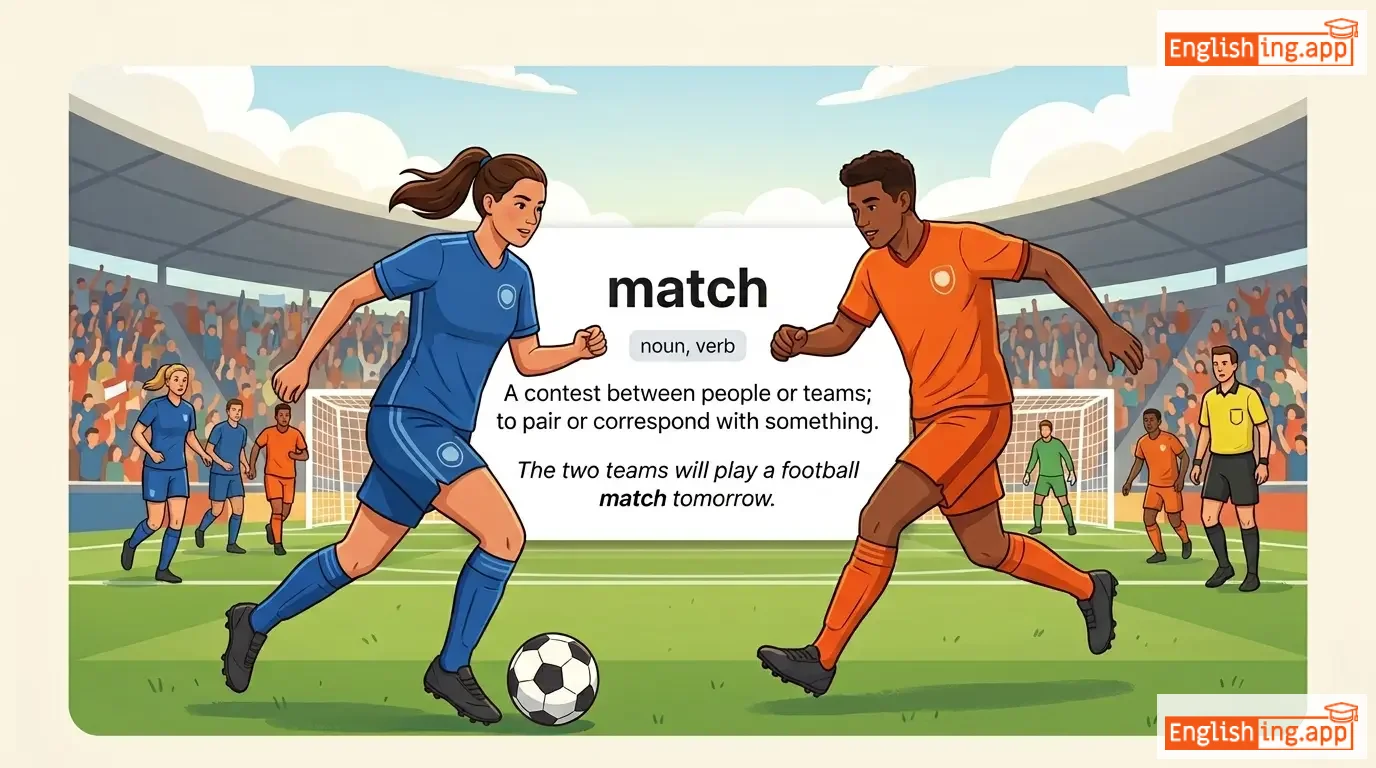
match definition card — visual illustration of the meaning
noun, verb
/mætʃ/
試合 / コンペティション (shiai / konpetishon)

A contest between people or teams; to pair or correspond with something.

"The two teams will play a football match tomorrow."

"2つのチームが明日サッカーマッチを行います。" (Futatsu no chīmu ga ashita sakkā matchi o okonai masu.)
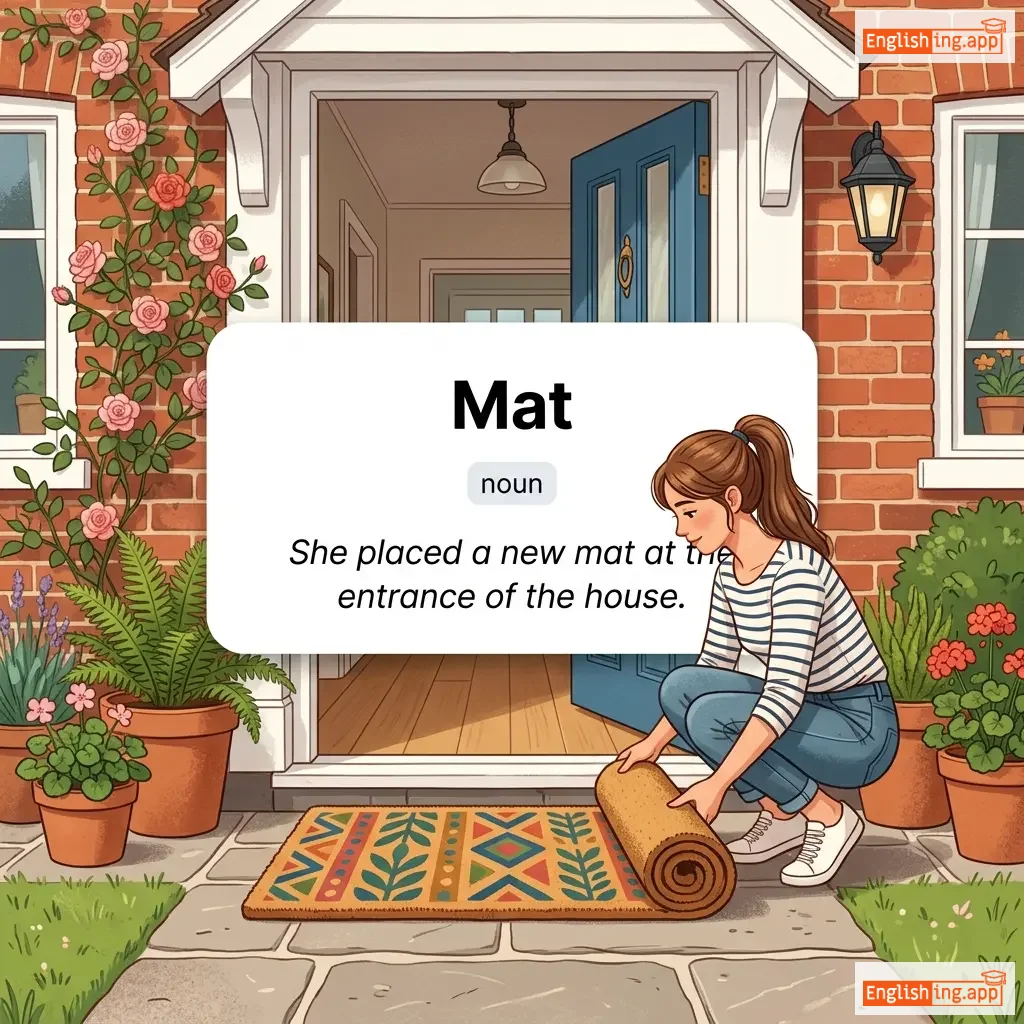
Mat definition card — visual illustration of the meaning
noun
/mæt/
マット (matto)

a piece of fabric material placed on a floor or surface for wiping feet or protection

"She placed a new mat at the entrance of the house."

"彼女は家の入り口に新しいマットを置きました。" (Kanojo wa ie no iriguchi ni atarashī matto o okimashita.)
verb
/ˈmæstɪkeɪt/
噛む (kamu)

to chew food thoroughly before swallowing

"He slowly masticated the bread before swallowing."

"彼はゆっくりとパンを噛んで飲み込んだ。" (Kare wa yukkuri to pan wo kande nomikonda.)
noun
/ˈmæstəri/
熟練 (jukuren)

comprehensive knowledge or skill in a subject or accomplishment

"She has achieved mastery in classical dance."
"彼女はクラシックダンスで熟練を達成しました。" (Kanojo wa kurashikku dansu de jukuren o tassei shimashita.)
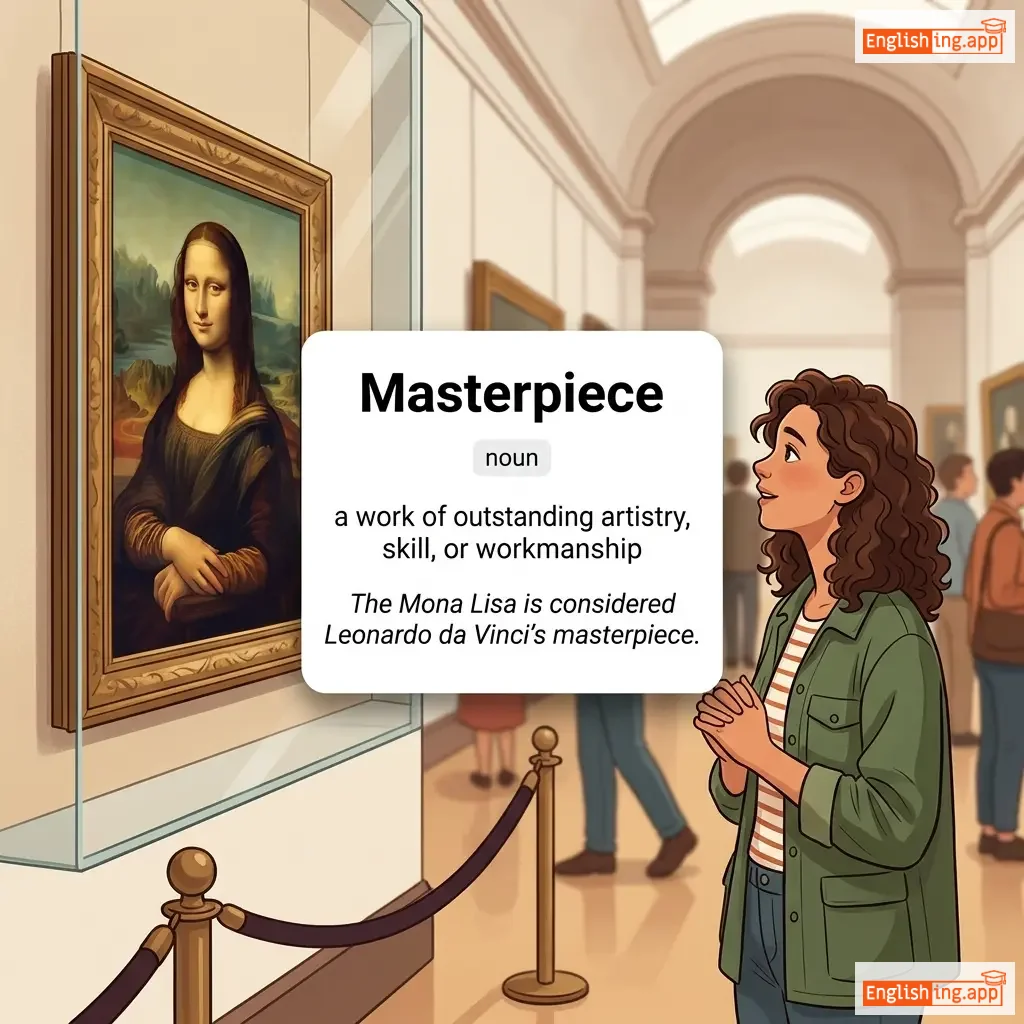
Masterpiece definition card — visual illustration of the meaning
noun
/ˈmæstərˌpiːs/
傑作 (kessaku)

a work of outstanding artistry, skill, or workmanship

"The Mona Lisa is considered Leonardo da Vinci’s masterpiece."

"モナリザはレオナルド・ダ・ヴィンチの傑作とされています。" (Monariza wa Reonarudo Da Vinchi no kessaku to sareteimasu.)
noun, verb
/ˈmɑːstər/

A person with great skill or control in a subject or activity; to gain full command over something.

"She mastered the art of cooking Italian dishes."

adjective
/ˈmæsɪv/
巨大な (kyodaina)

extremely large, heavy, or solid in size or degree

"The company made a massive investment in renewable energy."

"その会社は再生可能エネルギーに巨額の投資をしました。" (Sono kaisha wa saiseikanō enerugī ni kyogaku no tōshi o shimashita.)
verb
/məˈsɑːʒ/
マッサージする (massaji suru)

to rub and press muscles to relieve pain or tension; to manipulate information

"The therapist will massage your back to reduce muscle tension."
"セラピストは筋肉の緊張を和らげるために背中をマッサージします。" (Serapisuto wa kinniku no kinchou o yawarageru tame ni senaka o massaji shimasu.)
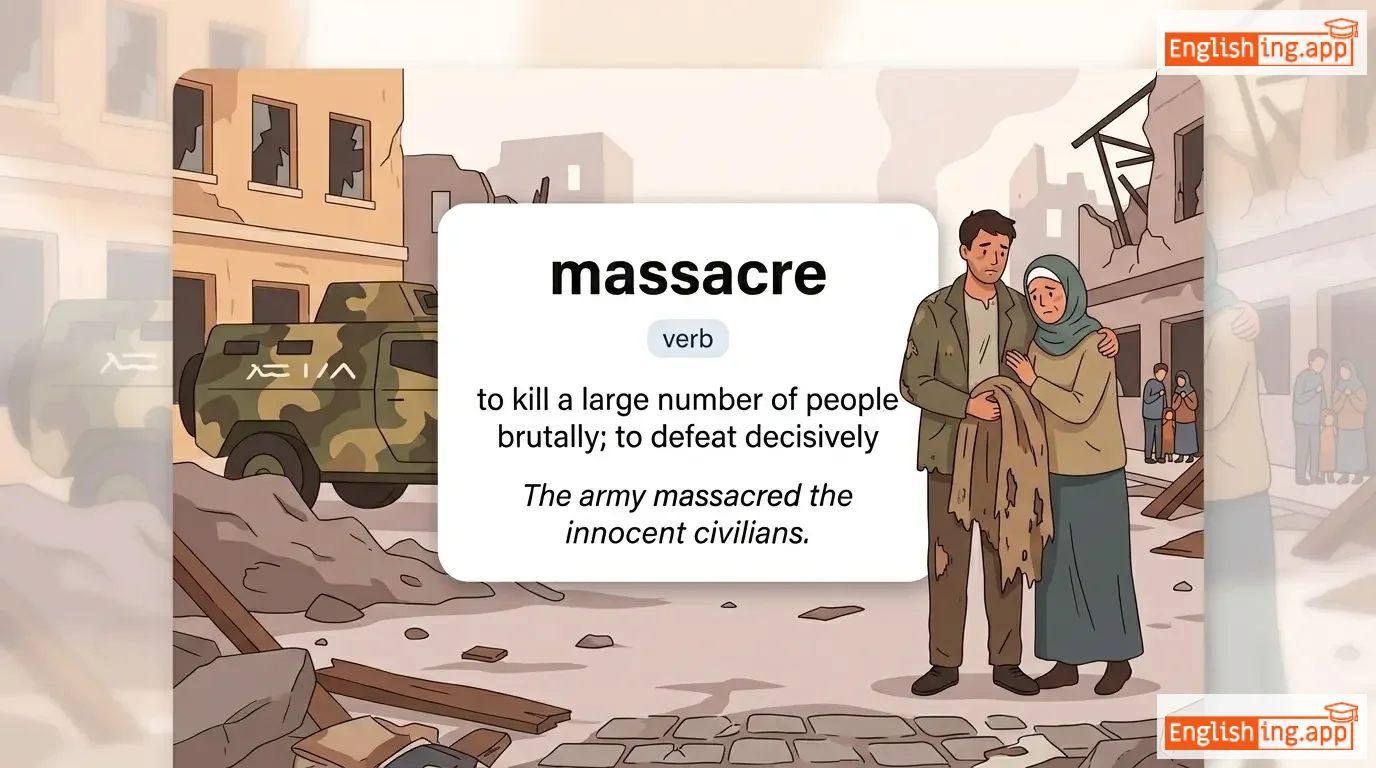
massacre definition card — visual illustration of the meaning
noun
/ˈmæsəkər/
虐殺 (gyakusan)

the killing of a large number of people, usually in a violent way

"The massacre resulted in the deaths of hundreds of civilians."

"虐殺は数百人の市民の死を引き起こしました。" (Gyakusatsu wa suuhyakunin no shimin no shi o hikiokoshimashita.)
verb
/mɑːr/
台無しにする (dainashi ni suru)

to spoil or damage the appearance or quality of something

"The scratch will mar the beauty of the painting."

"その傷は絵画の美しさを台無しにする。" (Sono kizu wa kaiga no utsukushisa o dainashi ni suru.)
🏛️

marble

noun
/ˈmɑːrbəl/

a hard, smooth stone used in building and sculpture, often white with colored lines

"The floor of the palace was made of white marble."

noun
/məˈrɔː.dər/
略奪者 (ryakudatsusha)

a person who roams around in search of things to steal or people to attack

"Villagers feared the marauders who raided their homes."

"村人たちは自分たちの家を襲った略奪者を恐れていた。" (Murabito-tachi wa jibun-tachi no ie o osotta ryakudatsusha o osorete ita.)
verb
/məˈrɔːd/
略奪する (ryakudatsu suru)

to roam in search of things to steal or attack

"The bandits marauded through the village at night."

"バンディットたちは夜に村を略奪しました。" (Banditto-tachi wa yoru ni mura o ryakudatsu shimashita.)
noun
/ˈmærəθən/
マラソン (marason)

a long-distance running race, typically 42.195 kilometers (26.2 miles)

"She completed the marathon in under four hours."

"彼女は4時間以内にマラソンを完走しました。" (Kanojo wa 4 jikan inai ni marason o kansou shimashita.)
adjective
/ˈmɛni/
多くの (ooku no)

a large number of

"Many students attended the lecture."
"多くの学生が講義に参加しました。" (Ooku no gakusei ga kougi ni sanka shimashita.)
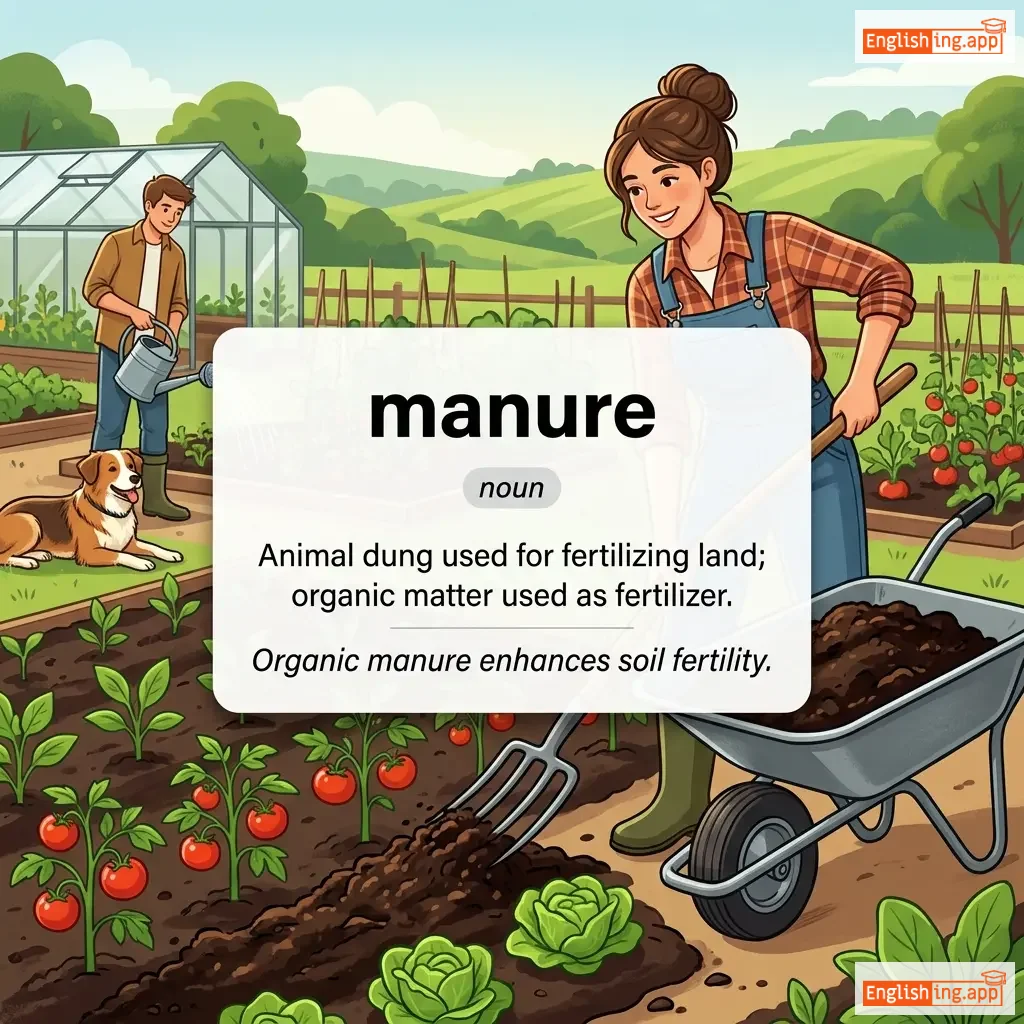
manure definition card — visual illustration of the meaning
noun
məˈnjʊər
肥料, 家畜の糞 (hiryo, kachiku no fun)

Animal dung used for fertilizing land; organic matter used as fertilizer.

"Organic manure enhances soil fertility."

"有機肥料は土壌の肥沃度を高めます。" (Yūki hiryo wa tojō no hiwokudo o takamemasu.)
noun
/ˈmæn.juˌskrɪpt/
手稿 (shukou)

a handwritten or typed document, especially a writer’s draft before publication

"The author submitted her manuscript to the publisher."

"作家は彼女の手稿を出版社に提出しました。" (Sakka wa kanojo no shukou o shuppansha ni teishutsu shimashita.)
🚶‍♂️

March

verb
/mɑːrtʃ/

to walk in a regular, rhythmic way, often in step with others; to proceed with determination

"The soldiers marched across the field."