词汇表

英语词汇词典 | 单词含义、定义和示例

verb
/ˈmɑːrʃəl/
组织 (zuzhi)

To arrange or organize people, events, or resources in an orderly way.

"The teacher marshaled the students for the field trip."
"老师组织学生参加远足。" (Laoshi zuzhi xuesheng canjia yuanzu.)
noun
/mɑːrz/
火星 (Huǒxīng)

The fourth planet from the Sun; the Roman god of war

"Scientists are planning a manned mission to Mars in the next decade."

"科学家们正在计划在下一个十年进行载人火星任务。" (Kēxuéjiāmen zhèngzài jìhuà zài xià yīgè shínián jìnxíng zàirén huǒxīng rènwù.)
marry definition card — visual illustration of the meaning
💒

marry

verb
/ˈmæri/
结婚 (jiehun)

To join in marriage; to take someone as a spouse.

"They plan to marry next spring."

"他们计划明年春天结婚。" (Tamen jihua mingnian chuntian jiehun.)
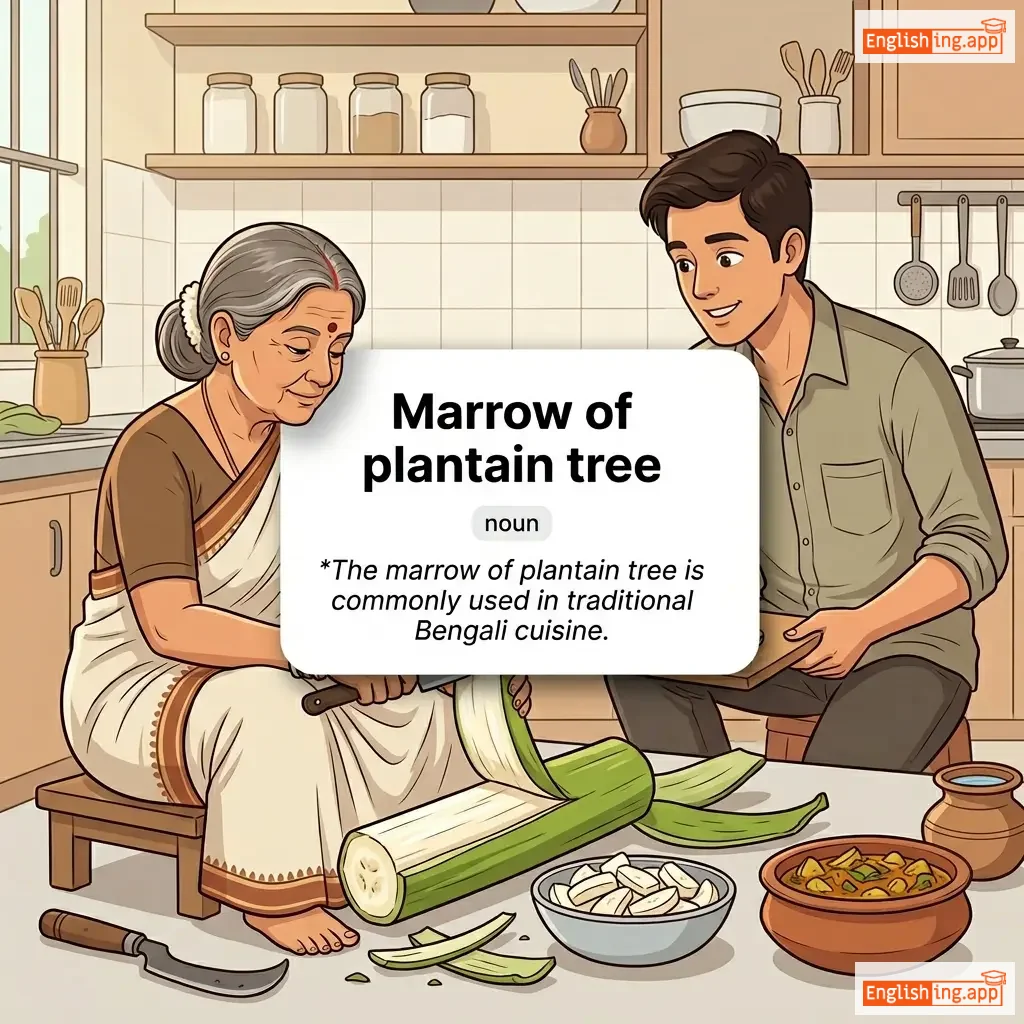
Marrow of plantain tree definition card — visual illustration of the meaning
noun
/ˈmær.oʊ ʌv ˈplæn.tɪn triː/
香蕉树髓 (xiangjiao shu sui)

the soft inner part of the banana plant stem that is used as a vegetable in cooking

"The marrow of plantain tree is commonly used in traditional Bengali cuisine."

"香蕉树的髓质常用于传统的孟加拉菜肴中。" (Xiangjiao shu de suizhi chang yongyu chuantong de Mengjiala caiyao zhong.)
noun
/ˈmæroʊ/
骨髓 (gǔsuǐ)

a soft fatty substance in the cavities of bones, producing blood cells

"Bone marrow is vital for the production of red blood cells."

"骨髓对红血球的生产至关重要。" (Gǔsuǐ duì hóngxuèqiú de shēngchǎn zhìguān zhòngyào.)
👩‍❤️‍👨

Married (海皮尼斯)

adjective
/ˈmærid/
幸福 (xìngfú)

Having a spouse; joined in marriage.

"She is happily married with two children."

"她无法掩饰自己获得奖项时的幸福感。" (Tā wúfǎ yǎnshì zìjǐ huòdé jiǎngxiàng shí de xìngfú gǎn.)
noun
/ˈmærɪdʒ/
幸福 (xìngfú)

The legally or formally recognized union of two people as partners in a personal relationship.

"Their marriage lasted for over thirty years."

"当她获得奖项时,她无法隐藏自己的幸福。" (Dāng tā huò dé jiǎngxiàng shí, tā wúfǎ yǐncáng zìjǐ de xìngfú.)
verb
/mɑːrd/
破坏 (pòhuài)

to spoil or damage the quality or appearance of something

"The celebration was marred by bad weather."

"庆祝活动因坏天气而受损。" (Qìngzhù huódòng yīn huài tiānqì ér shòusǔn.)
verb
/məˈruːn/
遗弃在荒岛 (yíqì zài huāngdǎo)

to leave someone trapped and isolated, especially on an island

"The sailors were marooned on a deserted island."

"水手们被遗弃在一个荒岛上。" (Shuǐshǒu men bèi yíqì zài yīgè huāngdǎo shàng.)
noun
/ˈmɑːrkɪtˌpleɪs/
市场 (shìchǎng)

a place where goods and services are bought and sold; an open area for trade

"The town's marketplace is crowded every Friday morning."

"城市的市场每个星期五早上都很拥挤。" (Chéngshì de shìchǎng měi gè xīngqī wǔ zǎoshang dōu hěn yōngjǐ.)
Marketing definition card — visual illustration of the meaning
noun
/ˈmɑːrkɪtɪŋ/
市场营销 (shìchǎng yíngxiāo)

The action or business of promoting and selling products or services, including market research and advertising.

"The company invested heavily in digital marketing."

"公司在数字营销上进行了大量投资。" (Gōngsī zài shùzì yíngxiāo shàng jìnxíngle dàliàng tóuzī.)
marketability definition card — visual illustration of the meaning
noun
/ˌmɑːr.kɪ.təˈbɪl.ə.ti/
市场适销性 (shìchǎng shìxiāoxìng)

The possibility of commercial success for a product or service

"The new product's marketability depends on consumer demand."

"新产品的市场适销性取决于消费者的需求。" (Xīn chǎnpǐn de shìchǎng shìxiāoxìng qǔjué yú xiāofèizhě de xūqiú.)
Market Penetration definition card — visual illustration of the meaning
noun
/ˈmɑː.kɪt ˌpen.ɪˈtreɪ.ʃən/
市场渗透 (shichang shentou)

A measure of the amount of sales or adoption of a product or service compared to the total theoretical market for that product or service.

"High market penetration ensures competitive dominance."

"高市场渗透确保竞争优势。" (Gao shichang shentou quebao jingzheng youshi.)
market economy definition card — visual illustration of the meaning
noun
ˈmɑːr.kɪt ɪˈkɒn.ə.mi
市场经济 (shichang jingji)

An economic system where production and pricing decisions are controlled by individuals and based on supply and demand.

"A market economy allows businesses to compete freely."

"市场经济允许企业自由竞争。" (Shichang jingji yunxu qiye ziji jingzheng.)
market definition card — visual illustration of the meaning
noun
/ˈmɑːrkɪt/
市场 (shìchǎng)

a place or system where goods and services are bought and sold

"They went to the market to buy fresh vegetables."

"他们去了市场买新鲜的蔬菜。" (Tāmen qùle shìchǎng mǎi xīnxiān de shūcài.)
noun
/ˈmɑːrkər/
马克笔,标记笔 (mǎkè bǐ, biāojì bǐ)

an object used to indicate a position, place, or boundary; a pen with a thick tip used for writing or drawing

"He used a red marker to underline the important points."

"他用红色马克笔强调了重要的要点。" (Tā yòng hóngsè mǎkè bǐ qiángdiào le zhòngyào de yàodiǎn.)
adjective
/mɑːrkt/
显著的 (xian zhu de)

clearly noticeable or significant

"There was a marked improvement in her health."

"她的健康有了显著的改善。" (Ta de jiankang you le xian zhu de gai shan.)
verb
/mɑːrk/
标记 (biāojì)

to make a visible impression or symbol on a surface

"The teacher marked the important points in red."

"老师用红色标出了重要的要点。" (Lǎoshī yòng hóngsè biāo chūle zhòngyào de yàodiǎn.)
noun
/mɑːrʃ/
沼泽 (zhaoze)

An area of low-lying, waterlogged land, often dominated by grasses and reeds.

"The birds nested in the marsh during spring."

"鸟儿在春天时在沼泽中筑巢。" (Niao'er zai chuntian shi zai zhaoze zhong zhuchao.)
noun
/ˈlɪmərɪk/
一种幽默的五行诗 (yi zhong youmo de wu hang shi)

a humorous five-line poem with a specific rhythm and rhyme scheme (AABBA).

"She recited a funny limerick at the party."

"她在派对上背诵了一首有趣的利梅里克。" (Ta zai paidui shang beisong le yi shou youqu de limerick.)
noun
/ˈlaɪm.laɪt/
公众关注的焦点;通过加热石灰圆筒产生的明亮光 (laimlait)

the focus of public attention; a bright light produced by heating a cylinder of lime

"The celebrity enjoyed being in the limelight."

"明星享受站在聚光灯下。" (mingxing xiangshou zhanzai juguangdeng xia)
noun
/ˈlaɪm.stoʊn/
石灰岩 (shihuīyán)

a hard sedimentary rock, composed mainly of calcium carbonate or dolomite, used as building material and in the making of cement

"The ancient building was made of limestone blocks."
"这座古老的建筑是用石灰岩块建造的" (zhè zuò gǔlǎo de jiànzhú shì yòng shíhuīyán kuài jiànzào de)
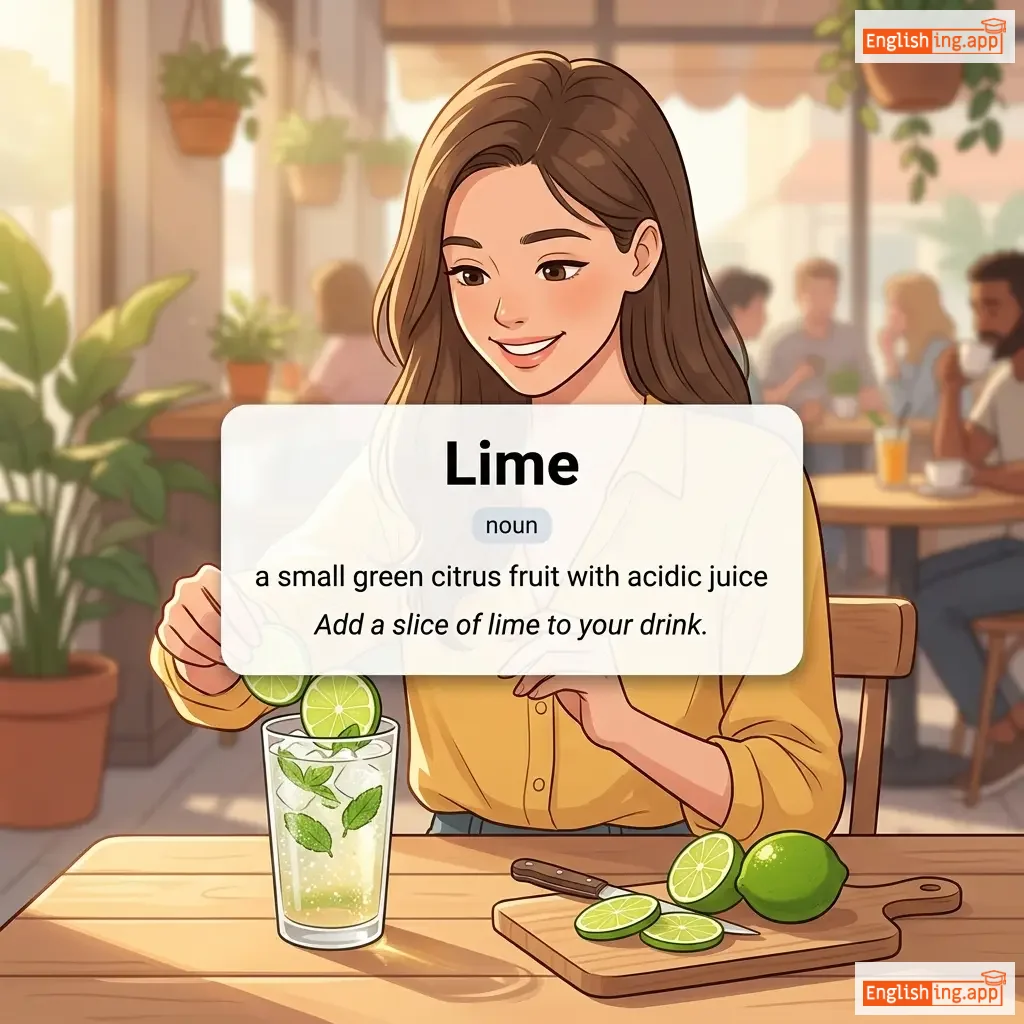
Lime definition card — visual illustration of the meaning
noun
/laɪm/
青柠 (qingling)

a small green citrus fruit with acidic juice

"Add a slice of lime to your drink."

"在你的饮料中加入一片青柠。" (Zài nǐ de yǐnliào zhōng jiārù yī piàn qīnglíng.)
noun
/ˈlɪmboʊ/
不确定,悬而未决的状态 (bù quèdìng, xuán'ér wèi jué de zhuàngtài)

A state of uncertainty or neglect; an intermediate or transitional state.

"The project was left in limbo after the funding was withdrawn."

"该项目在资金撤回后陷入了不确定状态。" (gāi xiàngmù zài zījīn chèhuí hòu xiànrùle bù quèdìng zhuàngtài.)
adjective
/ˈlɪmbər/
灵活和敏捷 (línghuó hé mǐnjié)

Flexible and agile in body or movement.

"Dancers need to stay limber to perform well."

"舞者需要保持灵活才能表现好。" (Wǔzhě xūyào bǎochí línghuó cáinéng biǎoxiàn hǎo.)
noun
/lɪm/
肢体 (zhīti)

an arm or leg of a person or animal; a large branch of a tree

"He broke a limb while climbing the tree."
"他在爬树时摔断了一只肢体。" (Tā zài pá shù shí shuāi duànle yī zhī zhīti.)
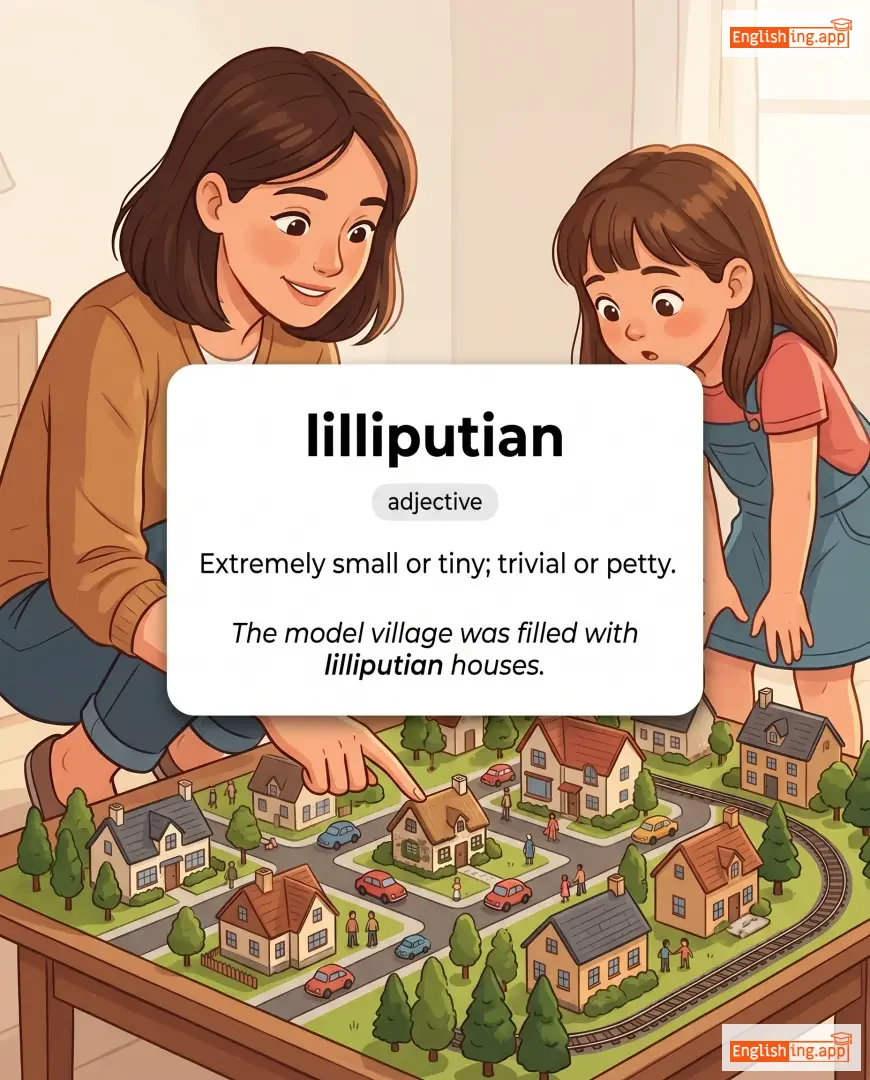
lilliputian definition card — visual illustration of the meaning
adjective
/ˌlɪlɪˈpjuːʃən/
极小的 (jí xiǎo de)

Extremely small or tiny; trivial or petty.

"The model village was filled with lilliputian houses."

"模范村庄里充满了极小的房屋。" (Mófàn cūnzhuāng lǐ chōngmǎnle jí xiǎo de fángwū.)
noun
/ˈlaɪkɪŋ/
喜好, 偏爱 (xǐhào, piān'ài)

A feeling of fondness or preference for something or someone.

"She has a strong liking for classical music."

"她对古典音乐有很强的喜好。" (Tā duì gǔdiǎn yīnyuè yǒu hěn qiáng de xǐhào.)
adverb
/ˈlaɪkˌwaɪz/
同样; 也; 类似地 (tóngyàng; yě; lèisì de)

In the same way; also; similarly.

"She smiled, and he likewise returned the gesture."

"她微笑了,他也回以同样的手势。" (Tā wēixiào le, tā yě huí yǐ tóngyàng de shǒushì.)
noun
/ˈlaɪk.nəs/
相似; 类似 (likeness)

the fact or quality of being alike; resemblance; a portrait or representation

"The portrait shows a strong likeness to her grandmother."

"这幅肖像与她的祖母有很强的相似之处。" (Zhè fú xiàoxiàng yǔ tā de zǔmǔ yǒu hěn qiáng de xiāngsì zhī chù.)
verb
/ˈlaɪ.kən/
比较 (bǐjiào)

to compare one thing to another, often in a figurative way

"He likened her voice to sweet music."

"他把她的声音与甜美的音乐相提并论。" (Tā bǎ tā de shēngyīn yǔ tiánměi de yīnyuè xiāngtíbìnglùn.)
adjective
/ˈlaɪk.li/
可能 (kěnéng)

probable or expected to happen

"It is likely to rain this evening."

"今晚可能会下雨。" (Jīn wǎn kěnéng huì xià yǔ.)
noun
/ˈlaɪ.kli.hʊd/
可能性 (kenengxing)

the chance or probability of something happening

"There is a strong likelihood of rain tomorrow."
"明天有很大的降雨可能性。" (Mingtian you hendà de jiangyu kenengxing.)
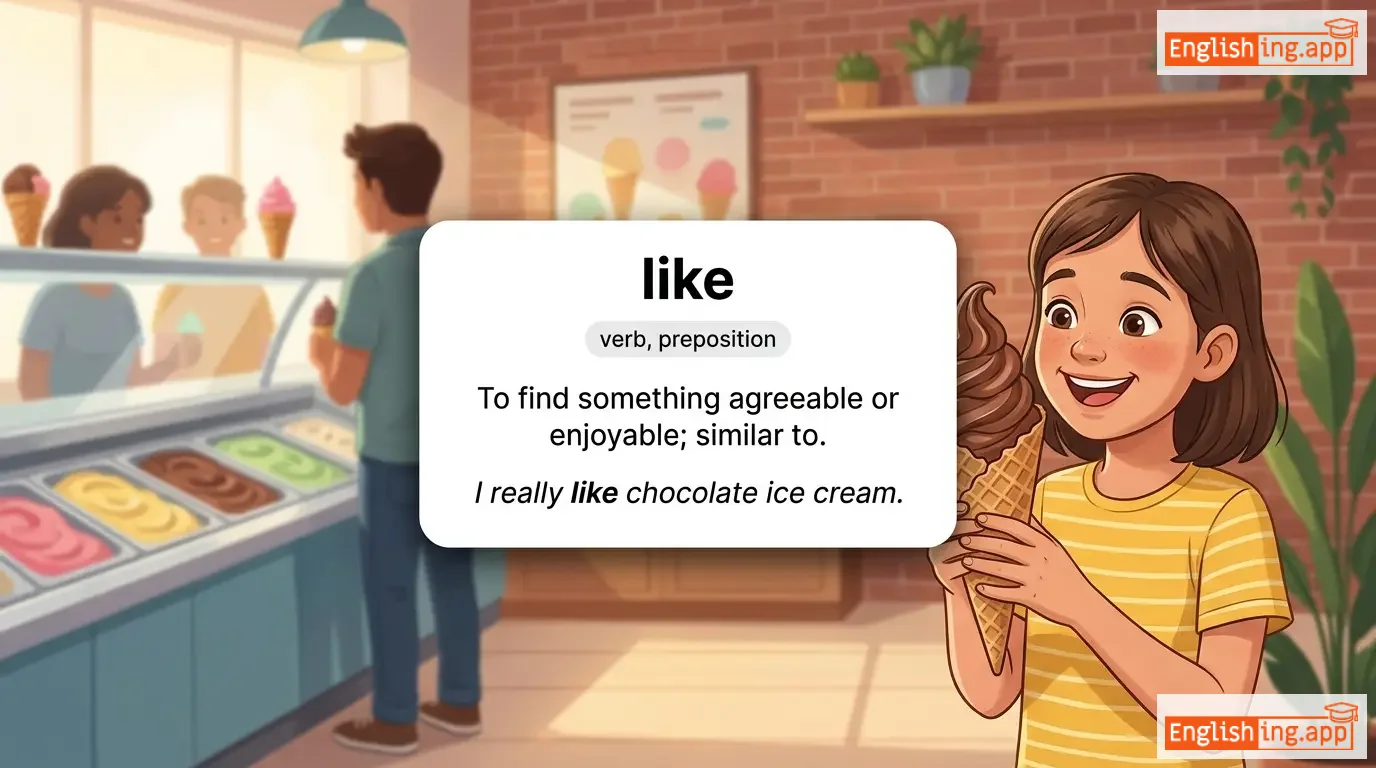
like definition card — visual illustration of the meaning
verb, preposition
/laɪk/
喜欢 (xǐ huān)

To find something agreeable or enjoyable; similar to.

"I really like chocolate ice cream."
"我真的喜欢巧克力冰淇淋。" (Wǒ zhēn de xǐ huān qiǎo kè lì bīng qí lín.)
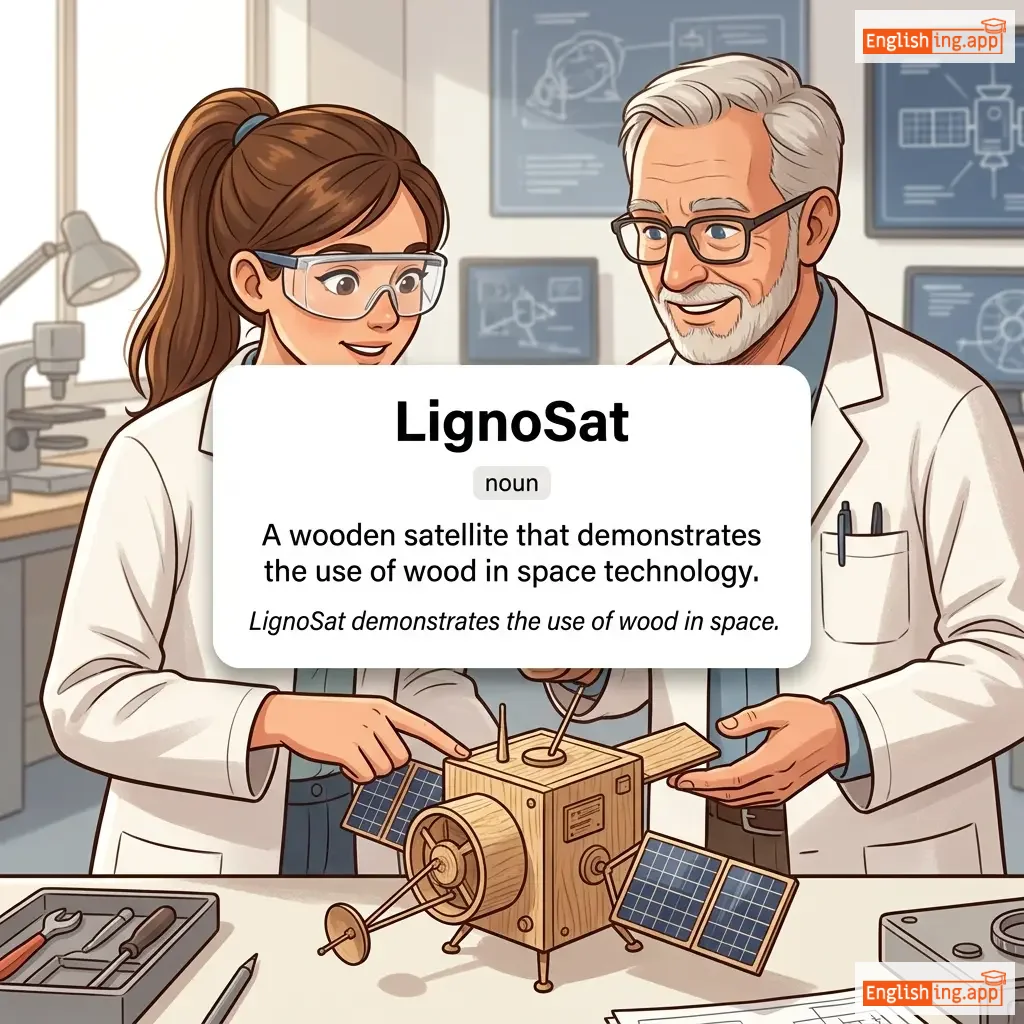
LignoSat definition card — visual illustration of the meaning
noun
ˈlɪɡ.nəʊˌsæt
木卫星 (mu weixing)

A wooden satellite that demonstrates the use of wood in space technology.

"LignoSat demonstrates the use of wood in space."

"LignoSat 展示了木材在太空中的应用。" (LignoSat zhanshi le muci zai taikong zhong de yingyong.)
adjective
/ˈlɪɡ.ni.əs/
木质的 (mù zhì de)

having the texture or appearance of wood; woody

"The ligneous stem supported the heavy flowers."

"木质的茎支撑着沉重的花朵。" (Mù zhì de jīng zhī chēng zhe chén zhòng de huā duǒ.)
noun
/ˈlaɪtnɪŋ/
闪电 (shǎndiàn)

a flash of light in the sky caused by electricity during a storm

"The lightning struck a tree near our house."

"闪电击中了我们家附近的一棵树。" (Shǎndiàn jī zhòngle wǒmen jiā fùjìn de yī kē shù.)
adverb
/ˈlaɪtli/
轻轻地 (qīngqīng de)

gently or with little force or weight

"She touched the baby’s hand lightly."

"她轻轻地触摸了宝宝的手。" (Tā qīngqīng de chùmōle bǎobǎo de shǒu.)
noun
/ˈlɪɡ.əmənt/
韧带组织 (rendai zuzhi)

A tough band of tissue that connects bones at a joint.

"He tore a ligament in his knee while playing football."

"他在踢足球时撕裂了膝盖的韧带。" (Tā zài tī zúqiú shí sīliè le xīgài de rèndài.)
noun
/ˈlaɪər/
说谎者 (shuohuangzhe)

a person who tells lies; an alternative spelling of liar

"No one trusted him because he was known as a habitual lier."

"因为他是个惯常的说谎者,所以没人信任他。" (yinwei ta shi ge guanchang de shuohuangzhe suoyi meiren xinren ta)
noun
/luː/
代替 (daiti)

Instead of; in place of.

"He gave money in lieu of flowers."
"他给了钱代替花。" (Tā gěile qián dàitì huā.)
life definition card — visual illustration of the meaning
noun
/laɪf/
生命 (shengming)

The existence of an individual human being or animal.

"Life is full of challenges and opportunities."
"生命充满了挑战和机会。" (Shēngmìng chōngmǎnle tiǎozhàn hé jīhuì.)
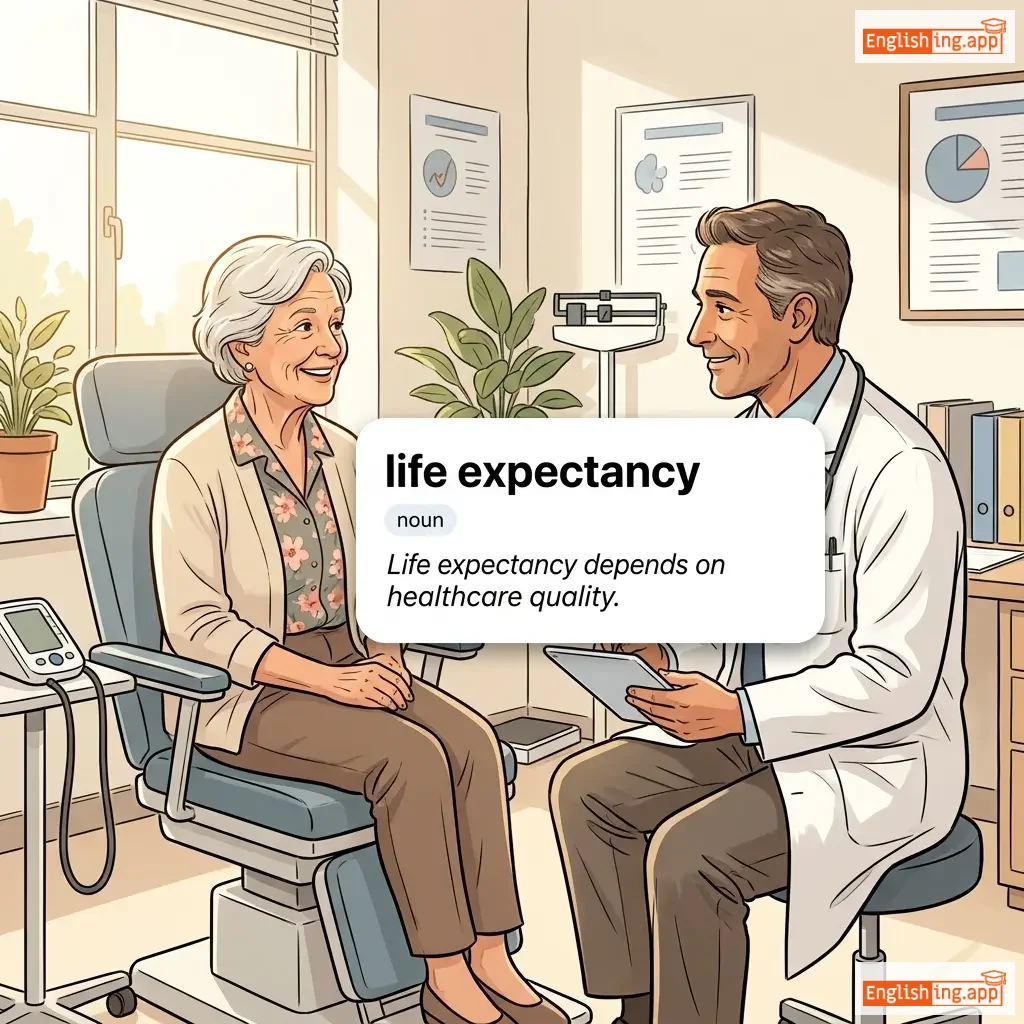
life expectancy definition card — visual illustration of the meaning
noun
ˈlaɪf ɪkˌspek.tən.si
预期寿命 (yùqī shòumìng)

The average period that a person may expect to live; the length of time for which something is expected to last or to continue being effective.

"Life expectancy depends on healthcare quality."

"预期寿命取决于医疗保健质量。" (Yùqī shòumìng qǔjué yú yīliáo bǎojiàn zhìliàng.)
adjective
/ˈlaɪf.laɪk/
栩栩如生 (xǔxǔ rú shēng)

Very similar to a real person, object, or scene; realistic.

"The wax figure was so lifelike that people thought it was a real person."

"这尊蜡像如此栩栩如生,以至于人们以为它是一个真人。" (Zhè zūn làxiàng rúcǐ xǔxǔ rú shēng, yǐ zhì yú rénmen yǐwéi tā shì yīgè zhēn rén.)
adjective
/ˈlaɪf.lɒŋ/
终生 (zhōngshēng)

Lasting or existing for the whole of a person's life.

"They remained lifelong friends."

"他们是终生的朋友。" (Tāmen shì zhōngshēng de péngyǒu.)
noun
/ˈlaɪf.staɪl/
生活方式 (shenghuo fangshi)

The way in which a person or group lives, including habits, attitudes, and possessions.

"A healthy lifestyle includes regular exercise and a balanced diet."

"健康的生活方式包括定期锻炼和均衡饮食。" (Jiankang de shenghuo fangshi baokuo dingqi duanlian he junheng yinshi.)
noun
/ˈlaɪf.taɪm/
一生 (yisheng)

The duration of a person's life or the existence of something.

"She achieved more in her lifetime than most people dream of."

"她在一生中取得的成就,超出了大多数人的梦想。" (Ta zai yisheng zhong qude de chengjiu, chaochule daduoshu ren de mengxiang.)
lift definition card — visual illustration of the meaning
verb
/lɪft/
举起 (juqi)

To raise something to a higher position or level.

"He lifted the heavy box with ease."

"他轻松地抬起了重箱子。" (Ta qingsong de taqi le zhong xiangzi.)
Light Red definition card — visual illustration of the meaning
adjective
/laɪt red/
浅红色 (qian hong se)

a pale or diluted shade of red color

"She wore a light red dress to the party."
"她穿着一件浅红色的裙子去参加派对。" (Ta chuanzhuo yi jian qian hong se de qunzi qu canjia paidui.)
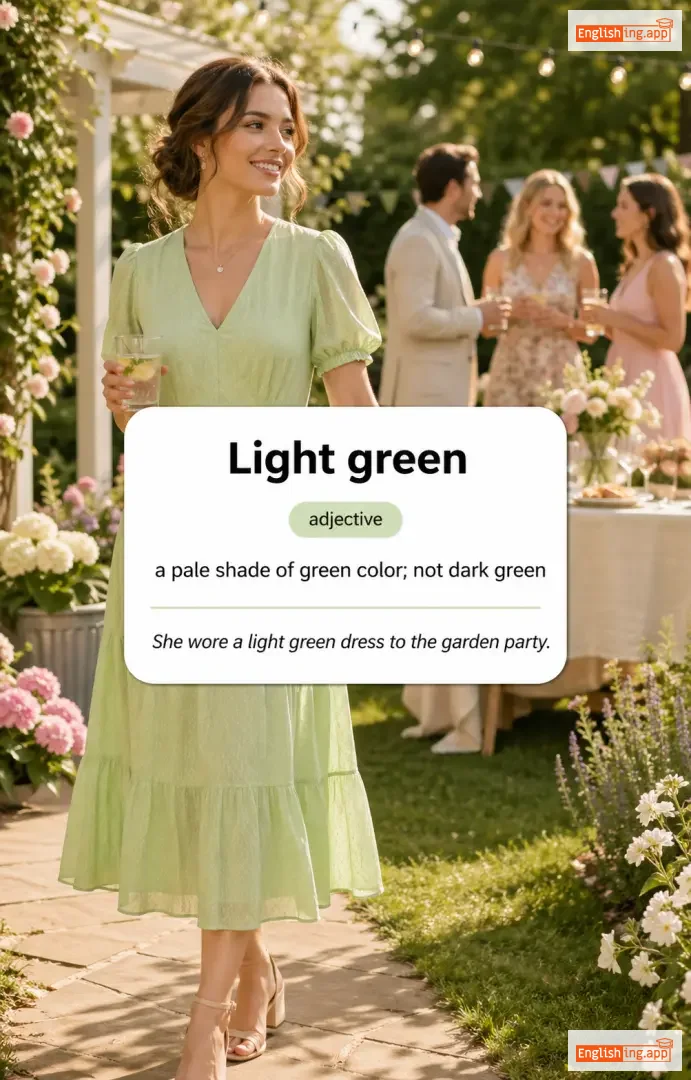
Light green definition card — visual illustration of the meaning
adjective
/laɪt ɡriːn/
浅绿色 (qiǎn lǜsè)

a pale shade of green color; not dark green

"She wore a light green dress to the garden party."

"她穿着一条浅绿色的裙子去参加花园聚会。" (Tā chuānzhuó yītiáo qiǎn lǜsè de qúnzi qù cānjiā huāyuán jùhuì.)