💊medicine (医学)

noun
/ˈmed.ɪ.sən/
药物 (yaowu)

含义

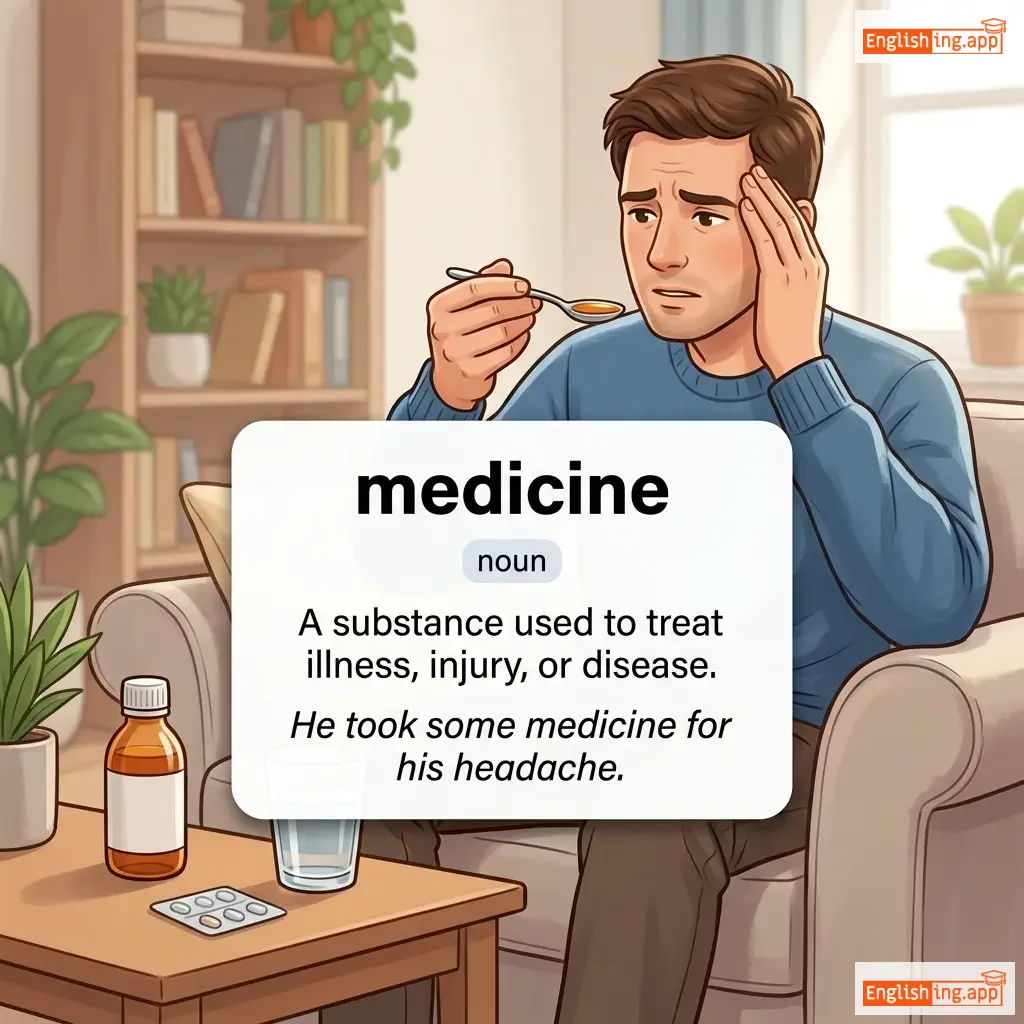
A substance used to treat illness, injury, or disease.
A compound or preparation used for the treatment or prevention of disease.
含义翻译
用于治疗疾病、伤害或疾病的物质。
Yòng yú zhìliáo jíbìng, shānghài huò jíbìng de wùzhí.

例句

He took some medicine for his headache.

他吃了些药物来治疗头痛。
Tā chīle xiē yàowù lái zhìliáo tóutòng.

Modern medicine has made great strides in treating diseases.

现代医学在治疗疾病方面取得了重大进展。
Xiandai yixue zai zhiliao jibing fangmian qude le zhongda jinzhang.

示例表达

take your medicine
吃你的药物
chī nǐ de yàowù

同义词

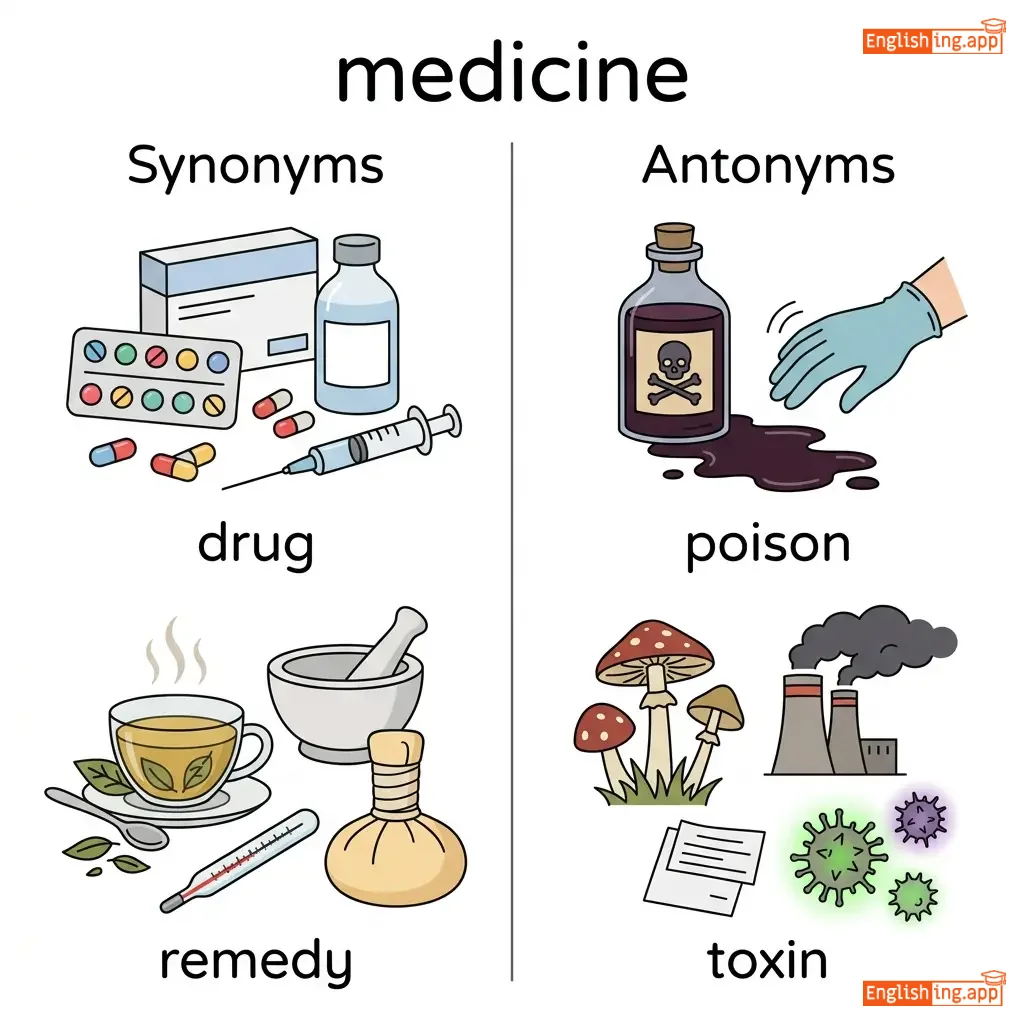
drug, remedy, treatment, cure, medication
条目 1
drug, remedy, treatment, cure
条目 2
medication, treatment, cure

反义词

poison, toxin, harmful substance
条目 1
poison, toxin
条目 2
poison, toxin, harmful substance

搭配词

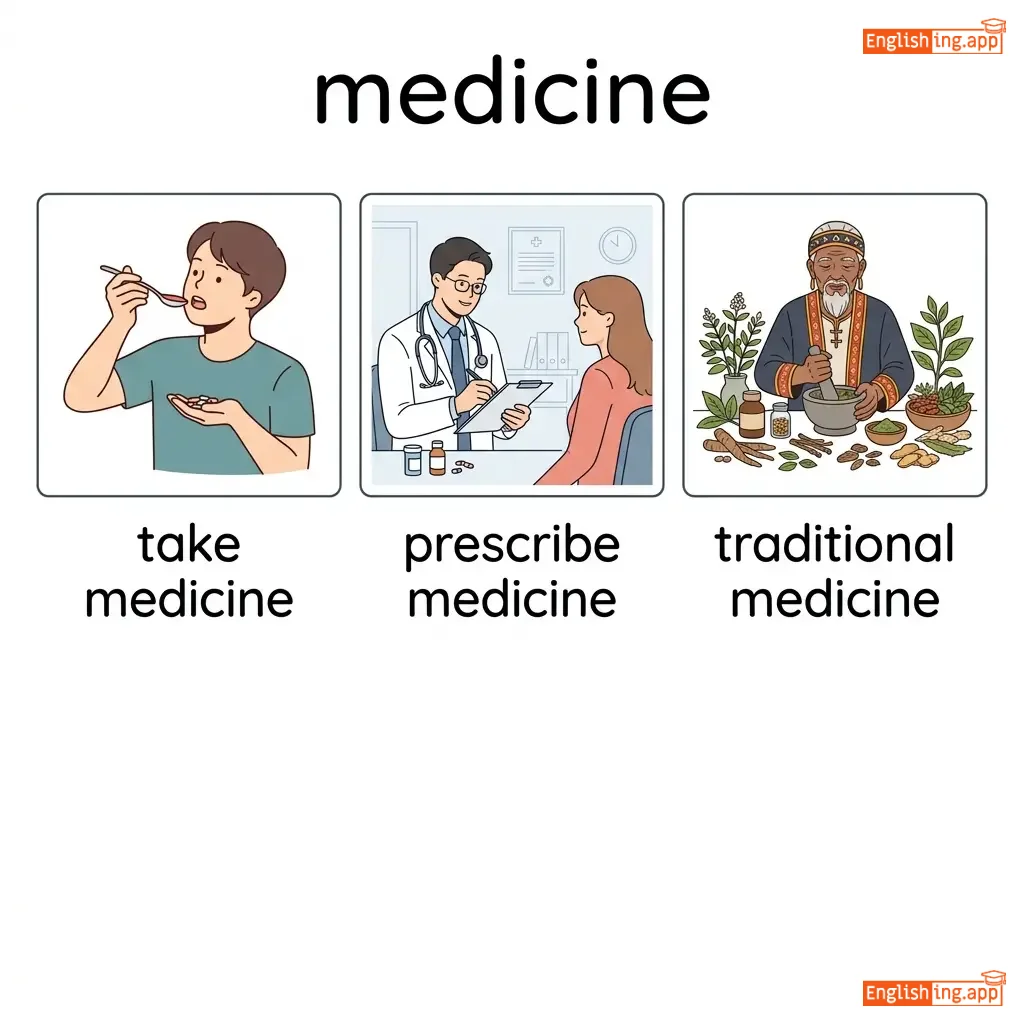
take medicine, prescribe medicine, traditional medicine, modern medicine

更多例句

Can you give me any medicine for itching?

你能给我一些止痒药吗?
Nǐ néng gěi wǒ yīxiē zhǐ yǎng yào ma?

Can you give me any medicine for mild pain?

你能给我一些轻微疼痛的药物吗?
Nǐ néng gěi wǒ yīxiē qīngwēi téngtòng de yàowù ma?

Can you give me any medicine for eye allergy?

你能给我一些眼睛过敏的药物吗?
Nǐ néng gěi wǒ yīxiē yǎnjīng guòmǐn de yàowù ma?

Probably you have a cold. The doctor has prescribed some medicines.

你可能感冒了。医生开了一些药。
Nǐ kěnéng gǎnmào le. Yīshēng kāile yīxiē yào.

The doctor told the patient how the medicine is to be taken three times a day.

医生告诉病人如何每天三次服用药物。
Yīshēng gàosù bìngrén rúhé měitiān sān cì fúyòng yàowù.

A doctor treats a sick child at a hospital who has a high fever and prescribes medicine

一位医生在医院治疗一个发高烧的生病的孩子并开药
Yi wei yisheng zai yiyuan zhiliao yi ge fa gaoshao de shengbing de haizi bing kaiyao

A doctor treats a sick child at a hospital who has a high fever and prescribes medicine to bring down the temperature quickly

一位医生在医院治疗一个发高烧的生病的孩子并开药以快速降低体温
Yi wei yisheng zai yiyuan zhiliao yi ge fa gaoshao de shengbing de haizi bing kaiyao yi kuaisu jiangdi tiwen

Nurse: They are available in any of the medicine shops across the street. You can send anybody to bring them. Our ward-boy will bring that if you ask him.

护士:它们在街对面的任何药店都可以买到。你可以派任何人去取。如果你让他去,我们的护工会把它们拿来。
Hushi: tamen zai jie duimian de renhe yaodian dou keyi maiddao. Ni keyi pai renhe ren qu qu. Ruguo ni rang ta qu women de hugong hui ba tamen nalai.

Nurse: Saline will continue all the time. And these medicines are to be purchased. I’ll come 3 to 4 times a day to give you medication. The doctor will come once daily.

护士:盐水将一直继续。并且这些药物需要购买。我每天会来3到4次给您送药。医生每天会来一次。
Hùshi: yánshuǐ jiāng yīzhí jìxù. Bìngqiě zhèxiē yàowù xūyào gòumǎi. Wǒ měitiān huì lái 3 dào 4 cì gěi nín sòng yào. Yīshēng měitiān huì lái yīcì.

A doctor treats a sick child at a hospital who has a high fever and prescribes medicine to bring down the temperature quickly while explaining the dosage to the parents

一位医生在医院治疗一个发高烧的生病的孩子并开药以快速降低体温,同时向父母解释用药剂量
Yi wei yisheng zai yiyuan zhiliao yi ge fa gaoshao de shengbing de haizi bing kaiyao yi kuaisu jiangdi tiwen, tongshi xiang fumu jieshi yongyao jiliang

相关词汇

the process of dealing with or controlling things or people
A person who copies or imitates the actions, speech, or mannerisms of others
the point in the orbit of the moon or a satellite at which it is nearest to the Earth
A speech sound produced by blocking air flow, or a letter representing such a sound.
the quality of being convenient and practical despite possibly being improper or immoral
a large area of land with very little water and few plants

探索更多