Vocabularios

Descubra, aprenda y domine el vocabulario en inglés

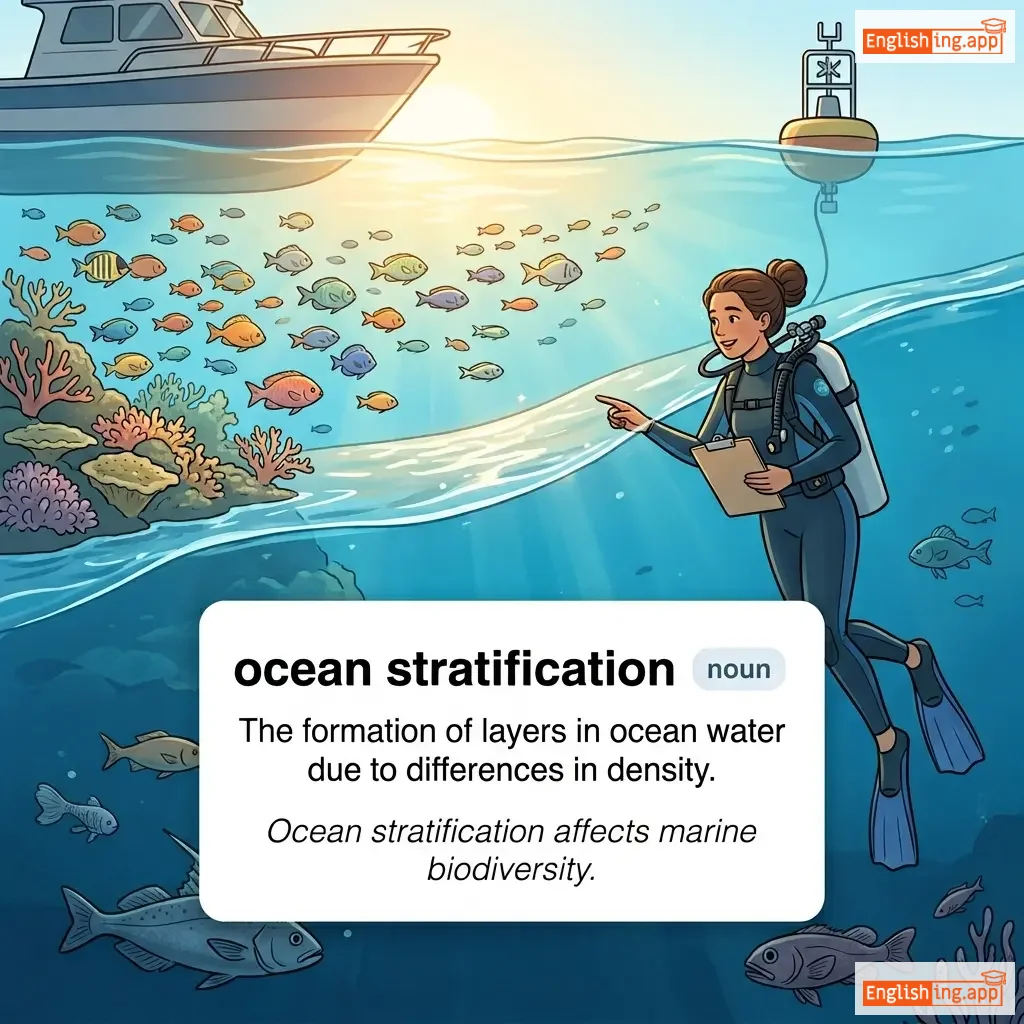
ocean stratification definition card — visual illustration of the meaning
noun
ˈoʊʃən ˌstrætɪfɪˈkeɪʃən
estratificación oceánica (estratificacion oceanica)

The formation of layers in ocean water due to differences in density.

"Ocean stratification affects marine biodiversity."

"La estratificación oceánica afecta la biodiversidad marina." (La estratificacion oceanica afecta la biodiversidad marina.)
noun
/ˈɒktəɡən/
octágono (octagono)

A polygon with eight sides and eight angles.

"The stop sign is shaped like an octagon."

"La señal de alto tiene forma de octágono." (La señal de alto tiene forma de octágono.)
noun
/ˈɒktɪv/
octava (oktava)

A series of eight musical notes, or the interval between one musical pitch and another with double its frequency.

"The singer's voice could easily reach the higher octave."

"La voz del cantante podría alcanzar fácilmente la octava más alta." (La voz del cantante podria alcanzar facilmente la octava mas alta.)
noun
/ɒkˈteɪvoʊ/
octavo (tamaño de libro resultante de doblar una hoja en ocho partes) (oktavo)

A size of book page resulting from folding a sheet of paper into eight leaves (sixteen pages).

"The old library contained rare octavo editions of Shakespeare."

"La antigua biblioteca contenía ediciones raras de octavo de Shakespeare." (La antigua biblioteca contenía ediciones raras de octavo de Shakespeare.)
noun
/ɒkˈtoʊbər/
octubre (octubre)

the tenth month of the year in the Gregorian calendar

"The weather becomes cooler in October."

"El clima se vuelve más fresco en octubre." (el clima se vuelve mas fresco en octubre)
noun
/ˌɒktədʒəˈnɛəriən/
octogenario (octogenario)

A person who is between 80 and 89 years old.

"The octogenarian still jogs every morning to stay healthy."

"El octogenario aún corre todas las mañanas para mantenerse saludable." (El octogenario aun corre todas las mañanas para mantenerse saludable.)
adjective
/ˈɒkjʊlər/
ocular (ocular)

Relating to the eye or vision.

"The patient was referred to a specialist for ocular treatment."

"El paciente fue referido a un especialista para tratamiento ocular." (El paciente fue referido a un especialista para tratamiento ocular.)
noun
/ˈɒkjʊlɪst/
optometrista (optometrista)

An old-fashioned term for an eye doctor or ophthalmologist.

"The village oculist was known for treating various eye diseases."

"El oculista del pueblo era conocido por tratar diversas enfermedades oculares." (El oculista del pueblo era conocido por tratar diversas enfermedades oculares.)
adjective
/ɒd/
extraño (extrano)

different from what is usual or expected; strange or peculiar

"He has some odd habits that surprise everyone."

"Él tiene algunas costumbres extrañas que sorprenden a todos." (El tiene algunas costumbres extrañas que sorprenden a todos.)
noun
/ˈɒdəti/
rareza (rareza)

Something strange or unusual.

"The bright pink building was an oddity in the small town."

"El edificio rosa brillante era una rareza en el pequeño pueblo." (El edificio rosa brillante era una rareza en el pequeño pueblo.)
adverb
/ˈɒdli/
extrañamente (extraniamente)

in a strange or unusual way; unexpectedly

"Oddly, he didn’t seem upset by the bad news."

"Extrañamente, no parecía molesto por la mala noticia." (Extraniamente, no parecia molesto por la mala noticia)
noun
/ɒdz/
probabilidad (probabilidad)

the likelihood or probability of something happening; chances for or against something

"The odds of winning the lottery are very low."

"Las probabilidades de ganar la lotería son muy bajas." (Las probabilidades de ganar la lotería son muy bajas.)
noun
/oʊd/
oda (oda)

a lyrical poem, often expressing praise or strong emotions

"The poet wrote an ode to the beauty of nature."

"El poeta escribió una oda a la belleza de la naturaleza." (El poeta escribió una oda a la belleza de la naturaleza.)
adjective
/ˈoʊdiəs/
odioso (odioso)

extremely unpleasant or repulsive

"The dictator was remembered for his odious crimes."

"El dictador fue recordado por sus odiosos crímenes." (El dictador fue recordado por sus odiosos crimenes.)
noun
/ˈoʊdiəm/
odio (odio)

general or widespread hatred or disgust directed toward someone as a result of their actions

"The scandal brought public odium on the corrupt minister."

"El escándalo trajo odio público al ministro corrupto." (El escándalo trajo odio público al ministro corrupto.)
adjective
/ˌoʊdəˈrɪfərəs/
fragante (fragante)

having or giving off a smell, especially a strong or pleasant one

"The garden was filled with odoriferous flowers."

"El jardín estaba lleno de flores fragantes." (El jardín estaba lleno de flores fragantes.)
adjective
/ˈoʊdərəs/
maloliente (maloliente)

having or giving off a smell, often unpleasant

"The odorous garbage had to be taken out immediately."

"La basura maloliente tuvo que ser sacada inmediatamente." (La basura maloliente tuvo que ser sacada inmediatamente.)
noun
/ˈoʊ.dər/
olor (olor)

a distinctive smell, especially an unpleasant one

"The odour of fresh bread filled the kitchen."

"El olor de pan fresco llenó la cocina." (El olor de pan fresco llenó la cocina.)
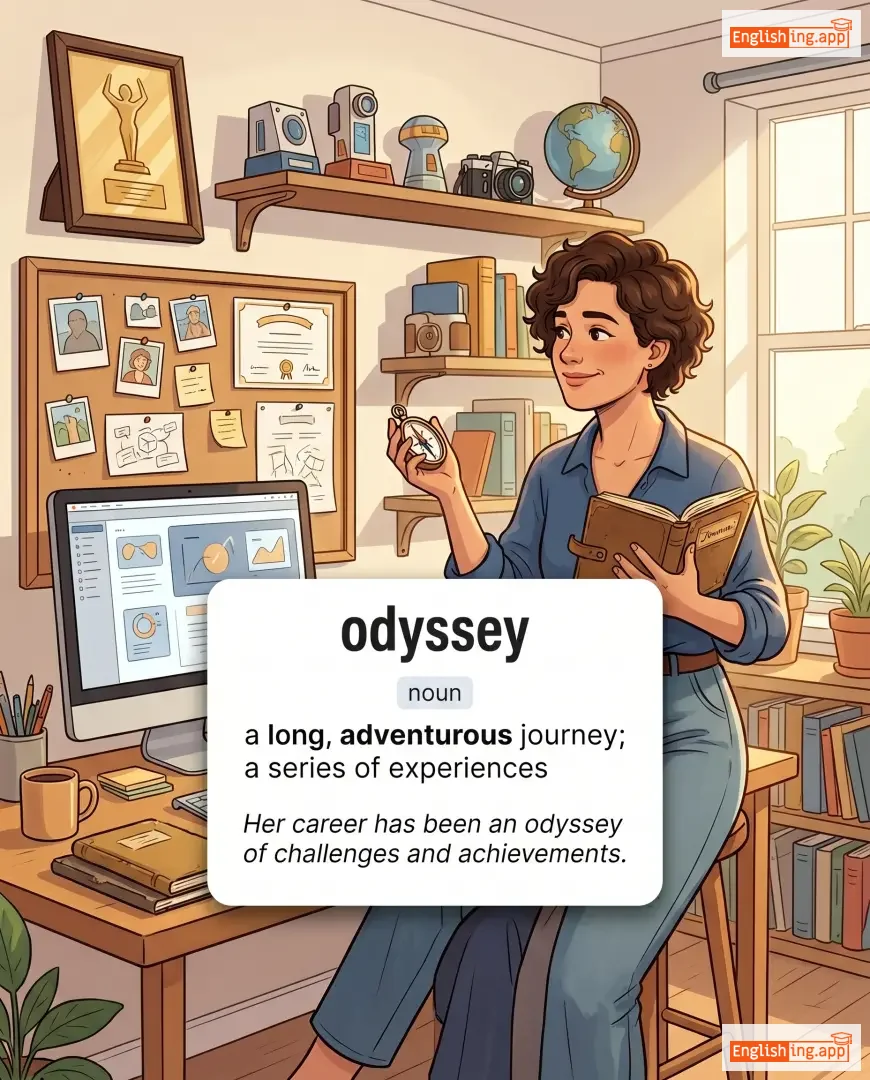
odyssey definition card — visual illustration of the meaning
noun
/ˈɑːdəsi/
viaje largo (viaje largo)

a long, adventurous journey; a series of experiences

"Her career has been an odyssey of challenges and achievements."

"Su carrera ha sido una odisea de desafíos y logros." (Su carrera ha sido una odisea de desafíos y logros.)
preposition
/ʌv/
de (de)

expressing the relationship between a part and a whole

"The book is on the table, in front of the window."

"El libro está sobre la mesa, frente a la ventana." (El libro esta sobre la mesa, frente a la ventana.)
⏹️

off (of)

adverb
/ɔːf/
apagado (apagado)

away from a place, position, or time; not functioning

"He turned off the light before leaving the room."

"Apagó la luz antes de salir de la habitación." (Apago la luz antes de salir de la habitacion.)
adjective
/ˌɔːfˈkiː/
desafinado (desafinado)

out of tune; not in accordance with expected standards

"The singer was slightly off-key during the performance."

"El cantante estaba ligeramente desafinado durante la actuación." (El cantante estaba ligeramente desafinado durante la actuacion.)
noun
/ˈɔːfəl/
vísceras (visceras)

the internal organs and entrails of an animal used as food; waste parts

"The butcher prepared sausages using pork offal."

"El carnicero preparó salchichas usando vísceras de cerdo." (El carnicero preparo salchichas usando visceras de cerdo.)
adjective
/ˈɒf.biːt/
inusual (inusual)

Unusual, unconventional, or different from the norm.

"She has a very offbeat sense of humor."

"Ella tiene un sentido del humor muy inusual." (Ella tiene un sentido del humor muy inusual.)
noun
/əˈfens/
delito; infracción; agravio (delito; infraccion; agravio)

a breach of law or rule; an annoyance or resentment

"Stealing is a serious offence punishable by law."

"El robo es un delito grave castigado por la ley." (El robo es un delito grave castigado por la ley.)
verb
/əˈfɛnd/
ofender (ofender)

to cause someone to feel upset, insulted, or annoyed

"She didn’t mean to offend anyone with her remarks."

"Ella no quería ofender a nadie con sus comentarios." (Ella no quería ofender a nadie con sus comentarios.)
noun
/əˈfɛndər/
delincuente (delincuente)

a person who commits a crime or does something wrong

"The police caught the offender quickly."

"La policía atrapó al delincuente rápidamente." (La policía atrapó al delincuente rápidamente.)
noun
/əˈfɛns/
delito (delito)

an illegal act; a crime

"The offense was committed in broad daylight."

"El delito fue cometido a plena luz del día." (El delito fue cometido a plena luz del día.)
adjective
/əˈfɛnsɪv/
ofensivo (ofensivo)

Causing hurt, anger, or annoyance; also relating to attacking in sports or war.

"His offensive remarks upset everyone at the meeting."

"Sus comentarios ofensivos molestaron a todos en la reunión." (Sus comentarios ofensivos molestaron a todos en la reunion.)
offer definition card — visual illustration of the meaning
verb
/ˈɔːfər/
ofrecer (ofrecer)

to present or give something to someone

"She offered him a gift for his birthday."

"Ella le ofreció un regalo para su cumpleaños." (Ella le ofreció un regalo para su cumpleaños.)
noun
/ˈɒfərɪŋ/
oferta (oferta)

something that is given, especially as a gift or contribution

"The company’s latest offering is an eco-friendly car."

"La última oferta de la empresa es un coche ecológico." (La ultima oferta de la empresa es un coche ecologico.)
noun
/ˈɒfərtɔːri/
ofrenda (ofrenda)

The part of a religious service when offerings are collected; the offering itself.

"The offertory was taken during the Sunday service."

"La ofrenda fue tomada durante el servicio del domingo." (La ofrenda fue tomada durante el servicio del domingo.)
adjective/adverb
/ˌɒfˈhænd/
sin pensar (sin pensar)

Without previous thought or preparation; casual and sometimes dismissive.

"She gave an offhand reply to his serious question."

"Ella dio una respuesta sin pensarlo a su seria pregunta." (Ella dio una respuesta sin pensarlo a su seria pregunta.)
adjective
/ˈɒnɡəʊɪŋ/
en curso (en curso)

continuing; still in progress

"The ongoing project will finish next month."

"El proyecto en curso terminará el próximo mes." (El proyecto en curso terminará el próximo mes.)
noun
/ˈoʊ.mən/
presagio de buena o mala suerte futura (presagio de buena o mala suerte futura)

an event regarded as a sign of future good or bad luck

"Many people consider a black cat crossing your path a bad omen."

"Muchas personas consideran que un gato negro cruzando tu camino es un mal presagio." (Muchas personas consideran que un gato negro cruzando tu camino es un mal presagio.)
adjective
/ˈɒmɪnəs/
amenazante (amenazante)

Giving the impression that something bad or unpleasant is going to happen.

"Dark clouds gave an ominous sign of an approaching storm."

"Las nubes oscuras dieron una señal amenazante de una tormenta que se acercaba." (Las nubes oscuras dieron una señal amenazante de una tormenta que se acercaba.)
noun
/əˈmɪʃən/
omisión (omision)

The act of leaving out or excluding something; something that has been left out.

"Her omission of important details caused confusion."

"Su omisión de detalles importantes causó confusión." (Su omisión de detalles importantes causó confusión.)
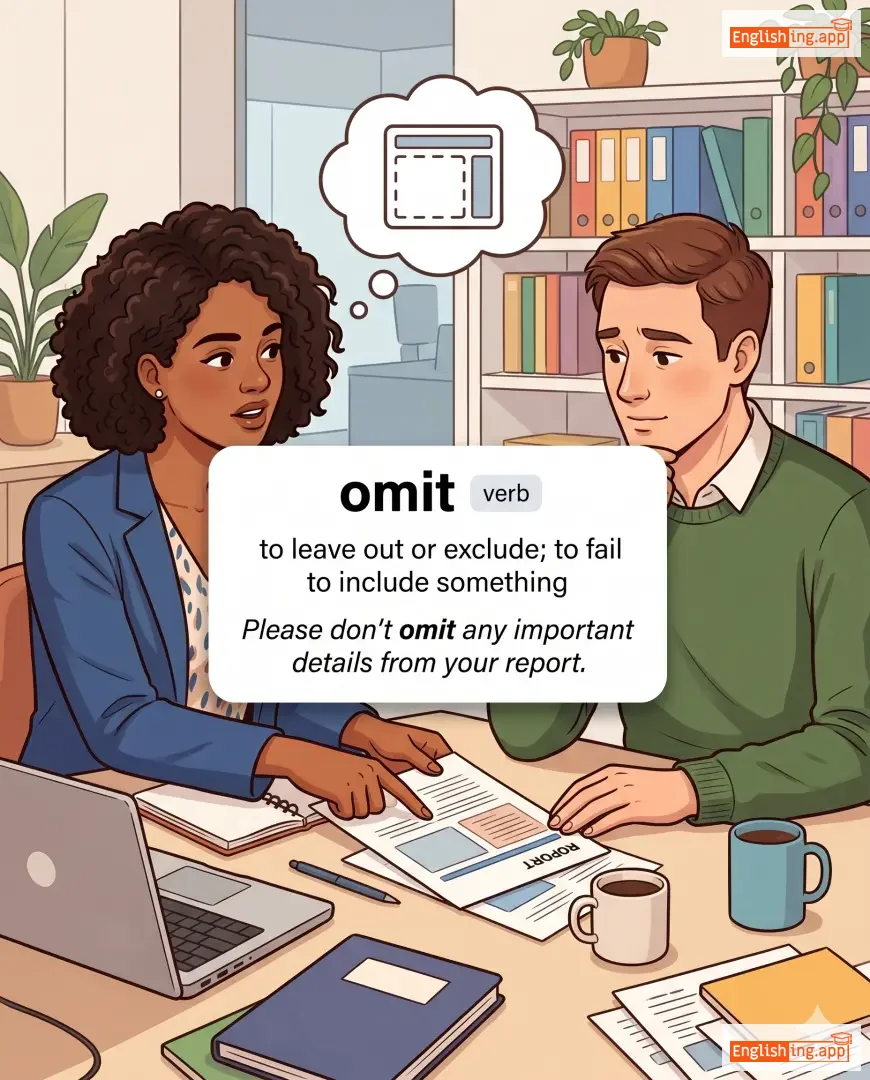
omit definition card — visual illustration of the meaning
verb
/oʊˈmɪt/
omitir (omitir)

to leave out or exclude; to fail to include something

"Please don't omit any important details from your report."

"Por favor, no omitas detalles importantes de tu informe." (Por favor, no omitas detalles importantes de tu informe.)
noun
/ɒmˈnɪpətəns/
omnipotencia (omnipotencia)

The quality of having unlimited power or authority.

"Many religions describe God’s omnipotence as absolute."

"Muchas religiones describen la omnipotencia de Dios como absoluta." (Muchas religiones describen la omnipotencia de Dios como absoluta.)
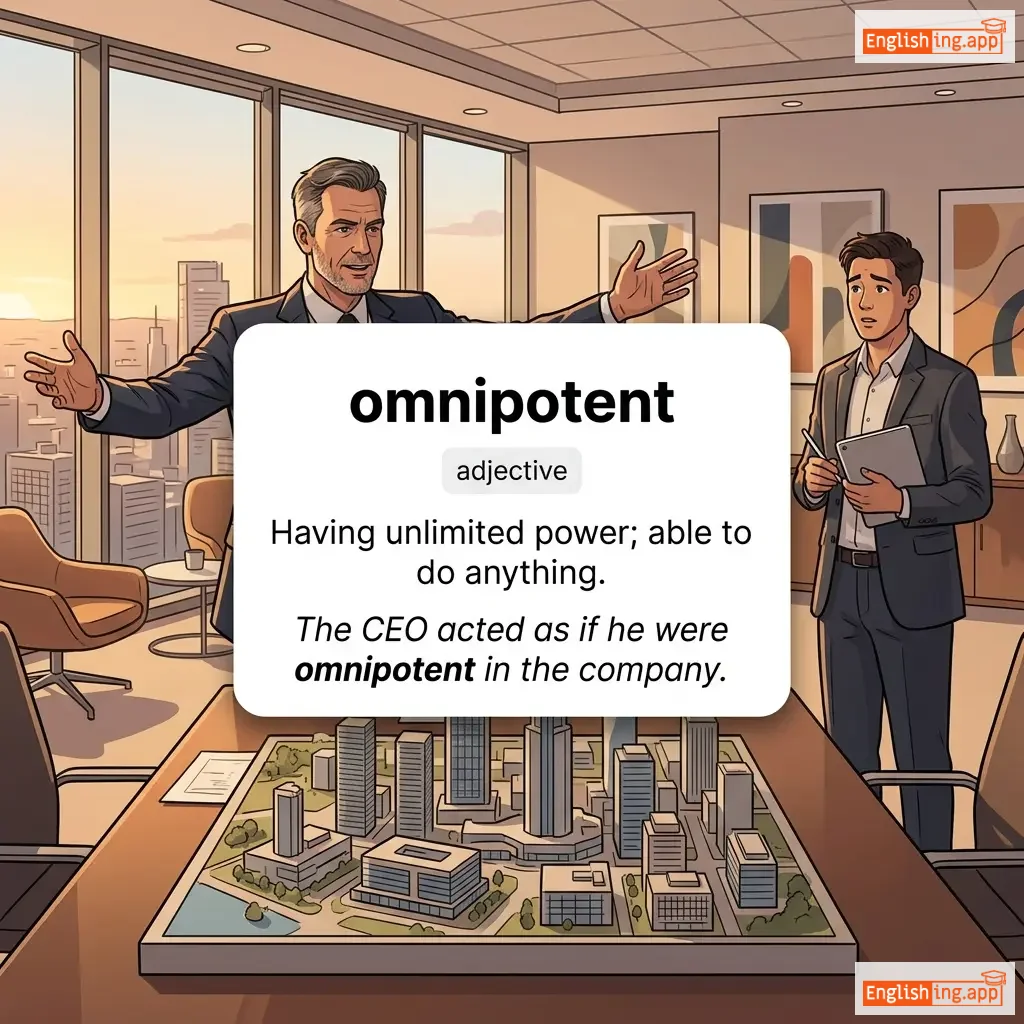
omnipotent definition card — visual illustration of the meaning
adjective
/ɒmˈnɪpətənt/
omnipotente (omnipotente)

Having unlimited power; able to do anything.

"The CEO acted as if he were omnipotent in the company."

"El CEO actuó como si fuera omnipotente en la empresa." (El CEO actuó como si fuera omnipotente en la empresa.)
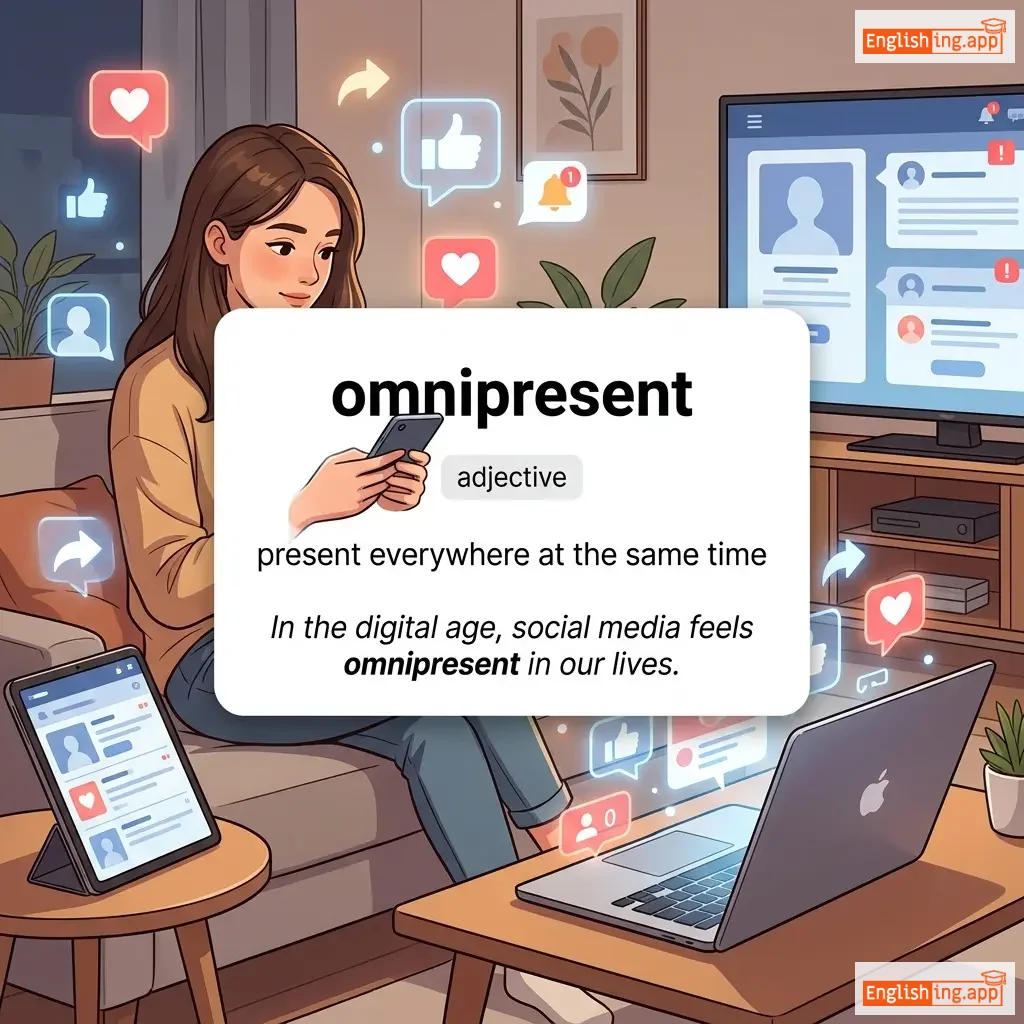
omnipresent definition card — visual illustration of the meaning
adjective
/ˌɒmnɪˈprɛzənt/
omnipresente (omnipresente)

present everywhere at the same time

"In the digital age, social media feels omnipresent in our lives."

"En la era digital, las redes sociales se sienten omnipresentes en nuestras vidas." (En la era digital, las redes sociales se sienten omnipresentes en nuestras vidas.)
noun
/ɒmˈnɪʃəns/
omnisciencia (omnisciencia)

the state of knowing everything

"The novel's narrator has an air of omniscience, revealing every character's thoughts."

"El narrador de la novela tiene un aire de omnisciencia, revelando los pensamientos de cada personaje." (El narrador de la novela tiene un aire de omnisciencia, revelando los pensamientos de cada personaje.)
adjective
/ɒmˈnɪʃənt/
omnisciente (omnisciente)

having complete or unlimited knowledge and awareness

"Some religions describe God as omniscient and all-powerful."

"Algunas religiones describen a Dios como omnisciente y todopoderoso." (Algunas religiones describen a Dios como omnisciente y todopoderoso.)
adjective
/ɒmˈnɪvərəs/
omnívoro (omnivoro)

eating both plants and animals

"Humans are generally considered omnivorous creatures."

"Los humanos generalmente se consideran criaturas omnívoras." (Los humanos generalmente se consideran criaturas omnívoras.)
preposition
/ɒn/
sobre (sobre)

physically in contact with and supported by a surface

"The book is on the table."

"El libro está sobre la mesa." (El libro está sobre la mesa.)
adverb
/wʌns/
una vez (una vez)

on one occasion only; at a time in the past

"She visited Paris once last year."

"Ella visitó París una vez el año pasado." (Ella visitó París una vez el año pasado.)
1️⃣

one (uan)

pronoun, noun, adjective
/wʌn/
uno (uno)

the number equivalent to the sum of zero and one; a single person or thing

"Only one student answered the question."

"Solo un estudiante respondió la pregunta." (Solo un estudiante respondió la pregunta.)
noun
/wʌn θɜːd/
un tercio (un tercio)

one part of something that is divided into three equal parts

"One-third of the class was absent today."

"Un tercio de la clase estaba ausente hoy." (Un tercio de la clase estaba ausente hoy.)
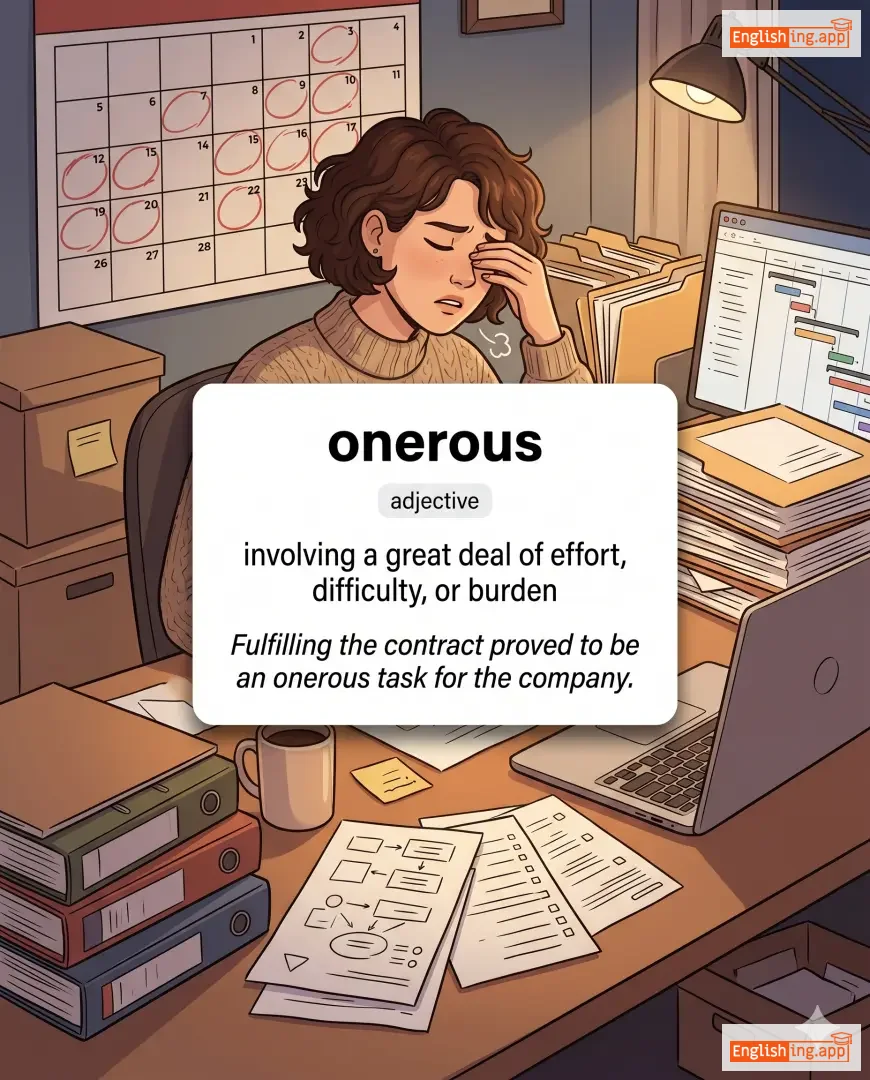
onerous definition card — visual illustration of the meaning
adjective
/ˈəʊnərəs/
arduo (arduo)

involving a great deal of effort, difficulty, or burden

"Fulfilling the contract proved to be an onerous task for the company."

"Cumplir el contrato resultó ser una tarea ardua para la empresa." (Cumplir el contrato resultó ser una tarea ardua para la empresa.)
verb
/uːz/
filtrarse (filtrarse)

to slowly flow or leak out through small openings or pores

"Blood began to ooze from the small cut."

"La sangre comenzó a filtrarse de la pequeña herida." (La sangre comenzó a filtrarse de la pequeña herida.)