Vocabulaires

Découvrez, apprenez et maîtrisez le vocabulaire anglais

noun
/niːs/
nièce (niece)

the daughter of one's brother or sister

"My niece is studying at the university this year."

"Ma nièce étudie à l’université cette année." (Ma niece etudie a l universite cette annee)
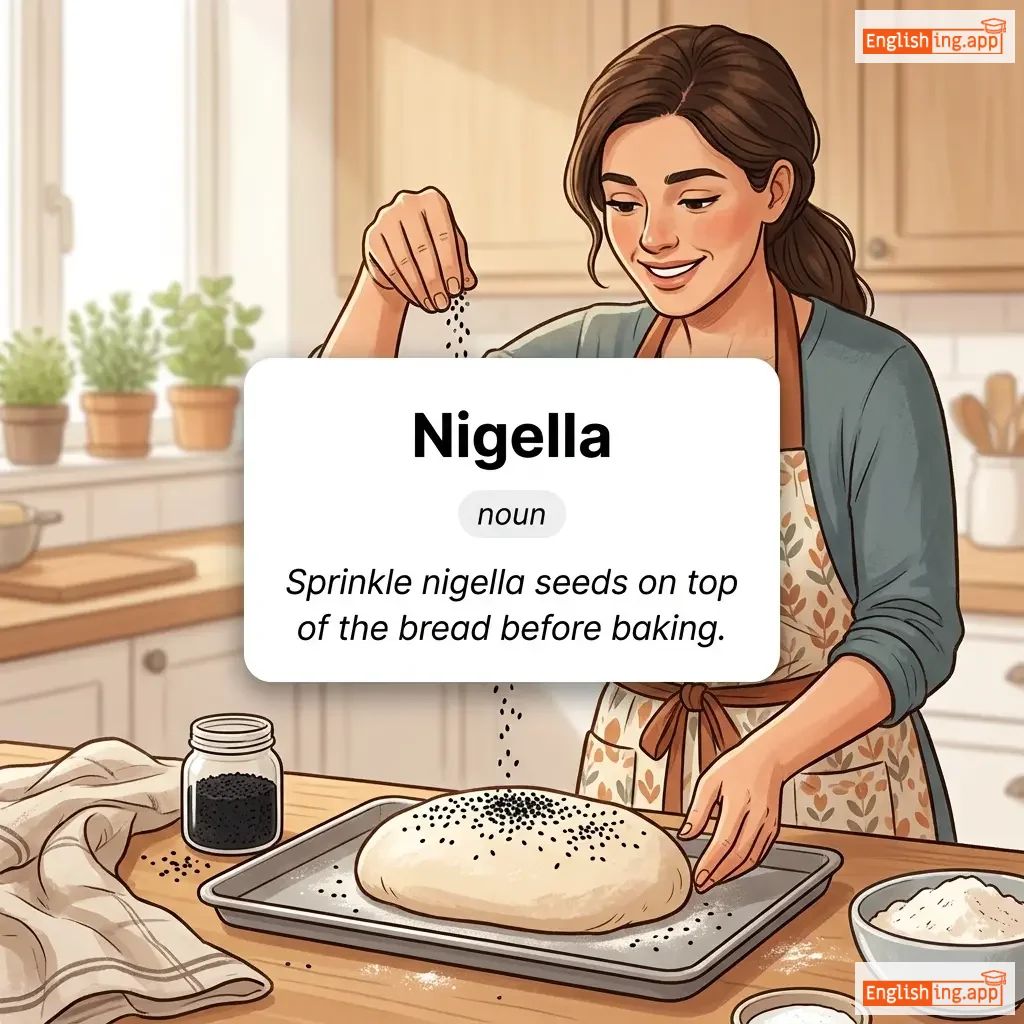
Nigella definition card — visual illustration of the meaning
noun
/naɪˈdʒel.ə/
cumin noir (cumin noir)

small black seeds with a nutty, slightly bitter flavor, also known as black cumin or black seed

"Sprinkle nigella seeds on top of the bread before baking."

"Saupoudrez des graines de cumin noir sur le pain avant de le cuire." (Saupoudrez des graines de cumin noir sur le pain avant de le cuire.)
adjective
/ˈnɪɡərdli/
avare (avare)

unwilling to spend or give; stingy or miserly

"He was too niggardly to leave a decent tip."

"Il était trop avare pour laisser un pourboire décent." (Il était trop avare pour laisser un pourboire décent.)
verb
/ˈnɪɡəl/
causer une légère mais persistante gêne (causer une légère mais persistante gêne)

to cause slight but persistent annoyance, discomfort, or worry

"A small doubt niggled at her mind."

"Un petit doute la perturbait dans son esprit." (Un petit doute la perturbait dans son esprit.)
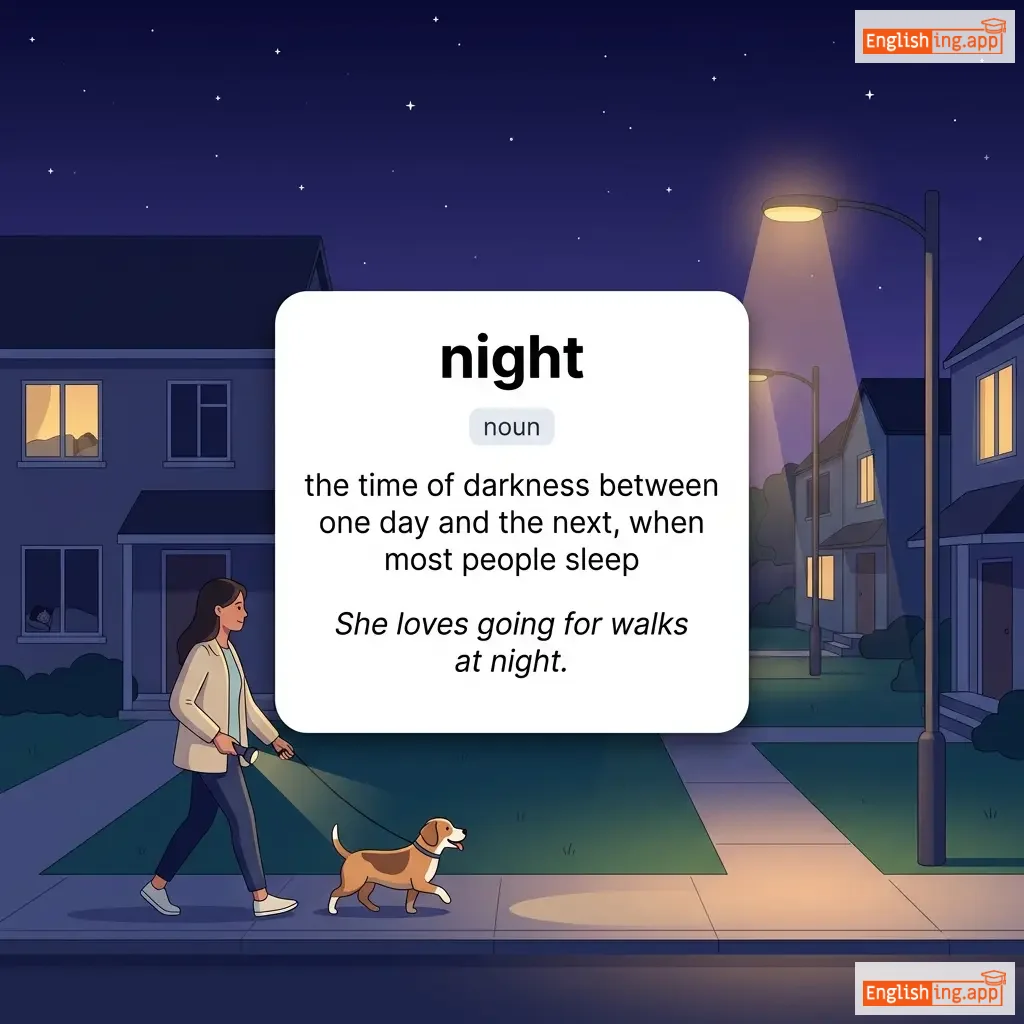
night definition card — visual illustration of the meaning
noun
/naɪt/
nuit (nuit)

the time of darkness between one day and the next, when most people sleep

"She loves going for walks at night."

"Elle aime se promener la nuit." (Elle aime se promener la nuit.)
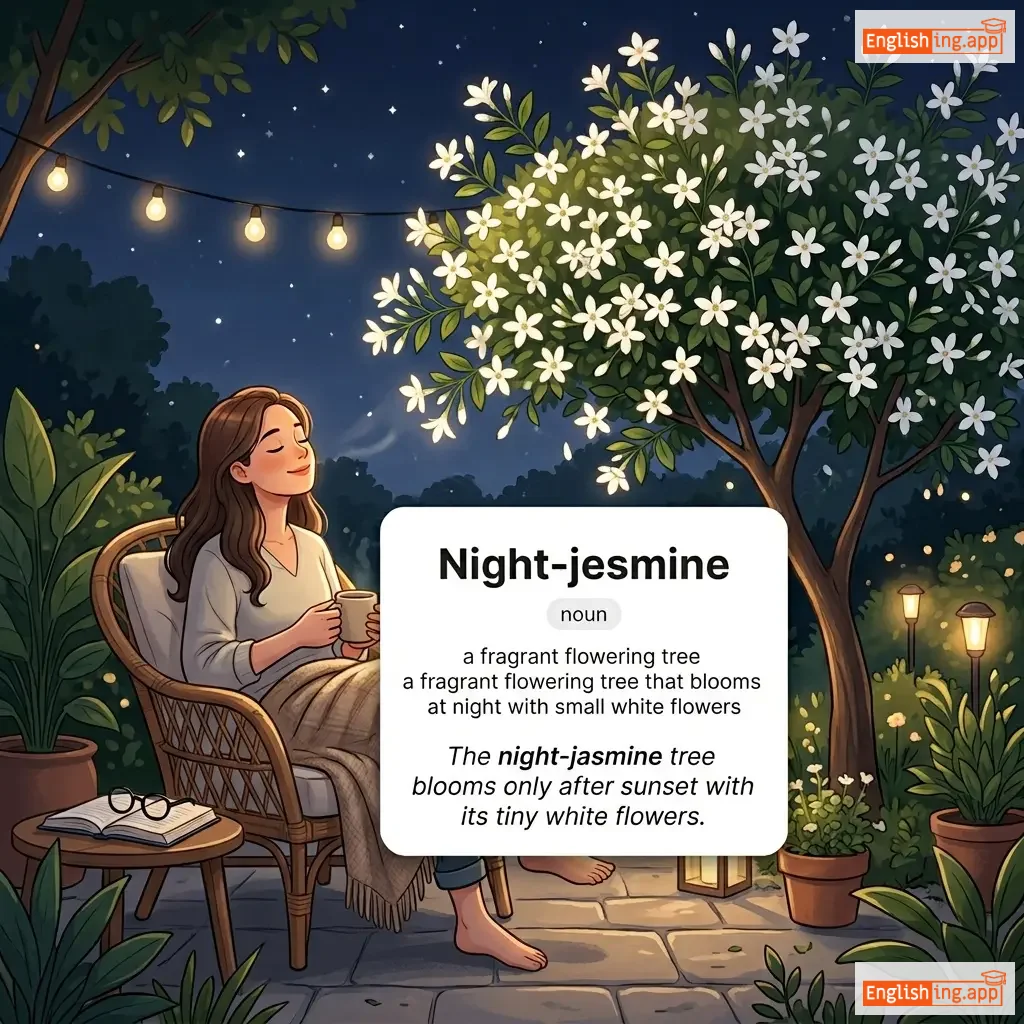
Night-jesmine definition card — visual illustration of the meaning
noun
/naɪt ˈdʒæz.mɪn/
jasmin de nuit (jasmin de nuit)

a fragrant flowering tree that blooms at night with small white flowers

"The night-jasmine tree blooms only after sunset with its tiny white flowers."

"Le jasmin de nuit fleurit seulement après le coucher du soleil avec ses petites fleurs blanches." (le jasmin de nuit fleurit seulement apre le koushe du solei avek ses petites flur blansh.)
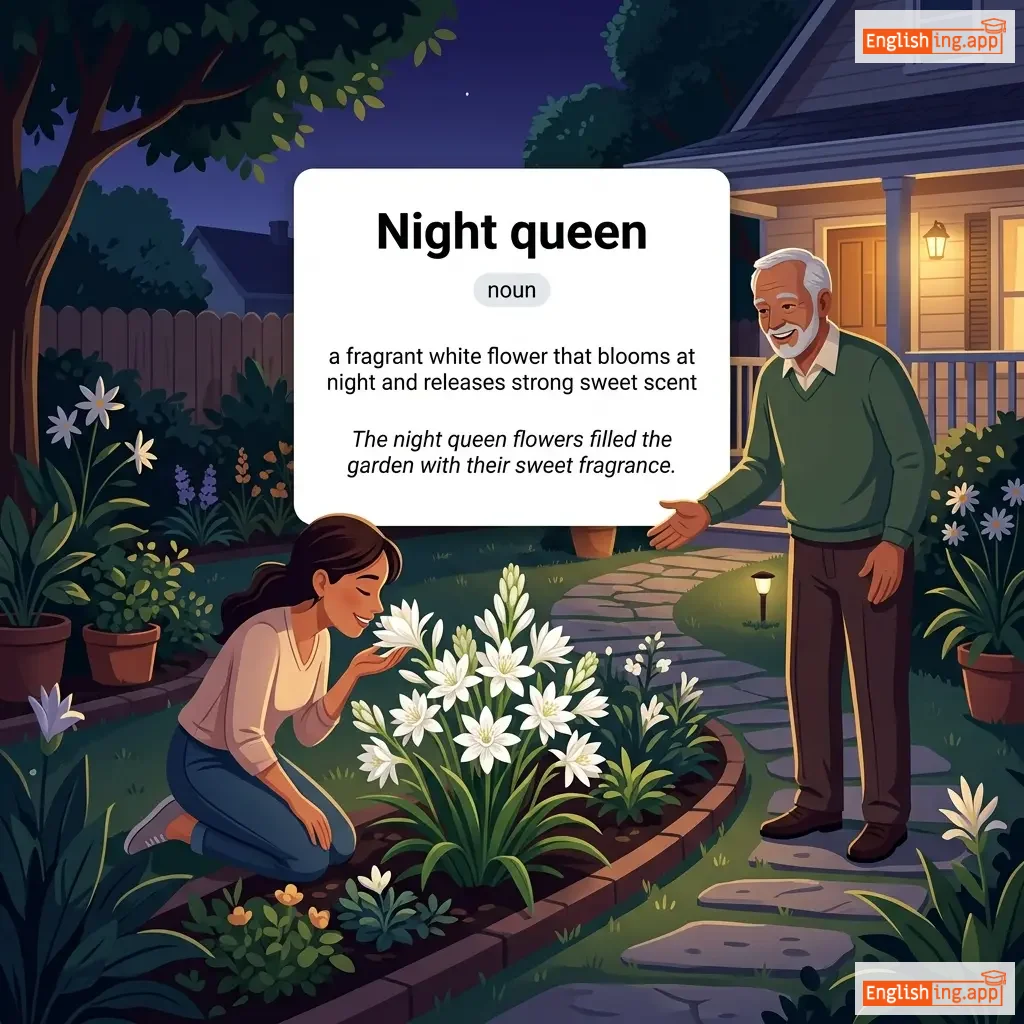
Night queen definition card — visual illustration of the meaning
noun
/naɪt kwiːn/
reine de la nuit (ren de la nui)

a fragrant white flower that blooms at night and releases strong sweet scent

"The night queen flowers filled the garden with their sweet fragrance."

"Les fleurs de la reine de la nuit ont rempli le jardin de leur douce fragrance." (le flor de la ren de la nui on ronpli le jardin de leur dus fragrans)
noun
/ˈnaɪt.fɔːl/
tombe de la nuit (tombe de la nuit)

the time when night begins; dusk

"They decided to return home before nightfall."

"Ils ont décidé de rentrer avant la tombée de la nuit." (Ils ont décidé de rentrer avant la tombeé de la nuit.)
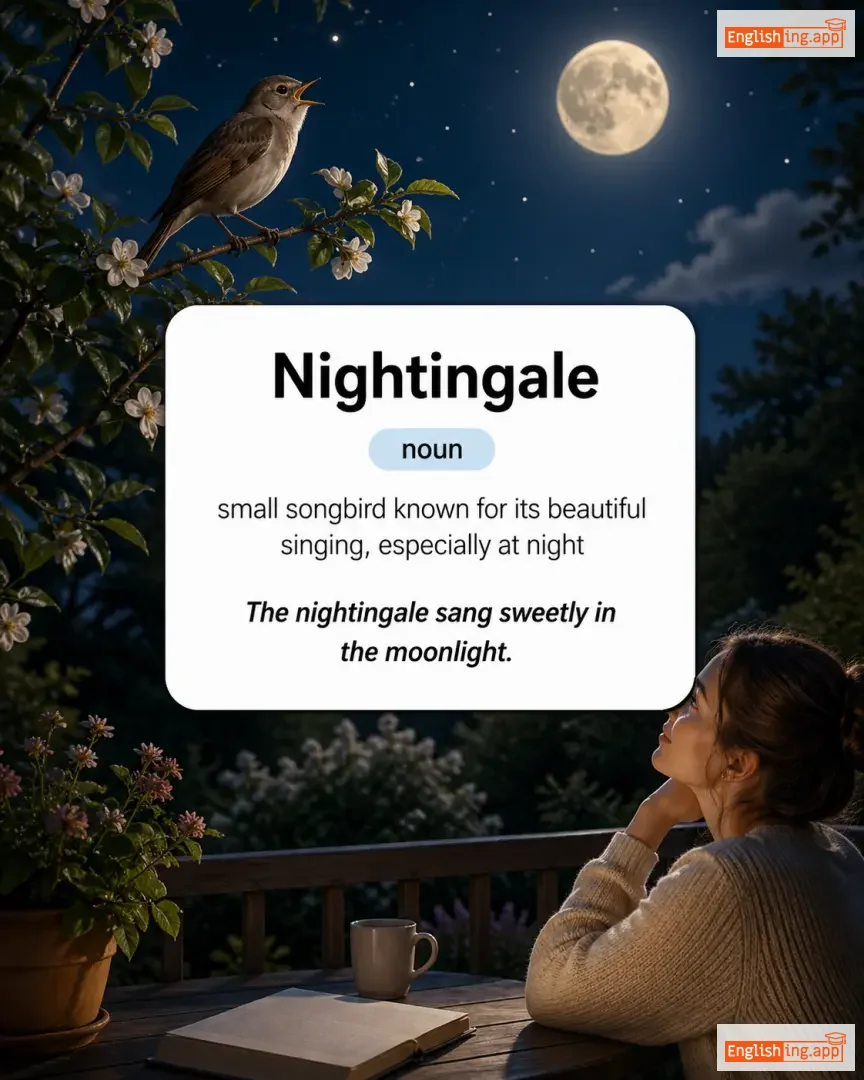
Nightingale definition card — visual illustration of the meaning
noun
/ˈnaɪ.tɪŋ.ɡeɪl/
rossignol (rossignol)

small songbird known for its beautiful singing, especially at night

"The nightingale sang sweetly in the moonlight."

"Le rossignol chanta doucement sous la lumière de la lune." (Le rossignol chanta doucement sous la lumiere de la lune)
noun
/ˈnaɪtˌmɛər/
cauchemar (cauchemar)

a frightening or unpleasant dream; a very distressing experience.

"Last night, she had a terrifying nightmare."

"La nuit dernière, elle a eu un cauchemar terrifiant." (La nuit derniere, elle a eu un cauchemar terrifiant.)
noun
/ˈnaɪɪˌlɪzəm/
nihilisme (nihilisme)

The rejection of all religious and moral principles, often in the belief that life is meaningless.

"The philosopher was criticized for promoting nihilism."

"Le philosophe a été critiqué pour avoir promu le nihilisme." (Le philosophe a été critiqué pour avoir promu le nihilisme.)
noun
/ˈnaɪəlɪst/
nihiliste (nihiliste)

A person who rejects all religious and moral principles, often believing that life is meaningless.

"He was called a nihilist for rejecting all social norms."

"Il a été qualifié de nihiliste pour avoir rejeté toutes les normes sociales." (Il a été qualifié de nihiliste pour avoir rejeté toutes les normes sociales.)
0️⃣

Nil (nil)

noun
/nɪl/
zéro (zero)

Nothing; zero.

"The score remained nil after the first half."

"Le score est resté zéro après la première mi-temps." (Le score est resté zéro après la première mi-temps.)
adjective
/ˈnɪmbəl/
agile (agile)

Quick and light in movement or thought.

"The dancer’s nimble steps impressed the audience."

"Les pas agiles de la danseuse ont impressionné le public." (Les pas agiles de la danseuse ont impressionne le public.)
noun
/naɪn/
neuf (neuf)

the number that is one more than eight

"She has nine books in her collection."

"Elle a neuf livres dans sa collection." (Elle a neuf livres dans sa collection.)
noun
/ˈnɪn.i/
imbécile (imbecile)

a silly or foolish person; someone who lacks common sense

"Don't be such a ninny, use your brain!"

"Ne sois pas un imbécile, utilise ton cerveau!" (Ne sois pas un imbécile, utilise ton cerveau!)
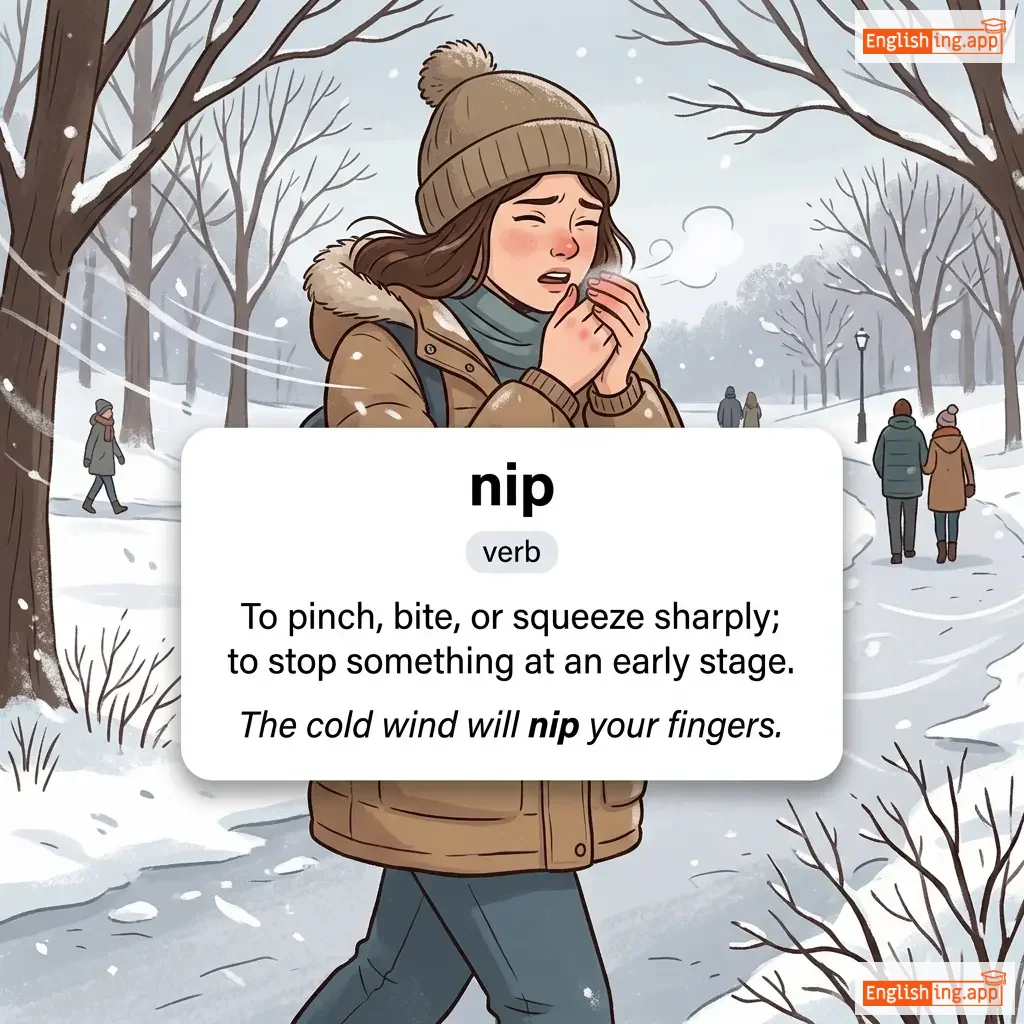
nip definition card — visual illustration of the meaning
verb
/nɪp/
pincer (pincer)

To pinch, bite, or squeeze sharply; to stop something at an early stage.

"The cold wind will nip your fingers."

"Le vent froid va pincer tes doigts." (Le vent froid va pincer tes doigts.)
adjective
/ˈnɪp.i/
froid; frais; rapide et agile en mouvement (froid; frais; rapide et agile en mouvement)

cold; chilly; quick and agile in movement

"It's quite nippy outside today, you should wear a jacket."

"Il fait assez froid dehors aujourd'hui, tu devrais porter une veste." (Il fait assez froid dehors aujourd'hui, tu devrais porter une veste.)
noun
/nɪərˈvɑːnə/
nirvana (nirvana)

A state of perfect happiness, peace, and freedom from suffering; in Buddhism, the ultimate goal of liberation.

"Meditation helps some people seek nirvana in their lives."

"La méditation aide certaines personnes à atteindre le nirvana dans leur vie." (La meditation aide certaines personnes a atteindre le nirvana dans leur vie.)
noun
/nɪt/
œuf de pou (oeuf de pou)

The egg or young form of a louse or other parasitic insect.

"The teacher noticed nits in the child’s hair."

"L'enseignant a remarqué des œufs de pou dans les cheveux de l'enfant." (L'enseignant a remarqué des œufs de pou dans les cheveux de l'enfant.)
verb
/ˈnɪtˌpɪk/
chercher des défauts (chercher des defauts)

To find and criticize small or unimportant faults in someone or something.

"She tends to nitpick about every little detail."

"Elle a tendance à critiquer chaque petit détail." (Elle a tendance à critiquer chaque petit détail.)
adverb
/noʊ/
non (non)

used to give a negative response or to show disagreement

"She said no to the invitation."

"Elle a dit non à l'invitation." (Elle a dit non à l'invitation.)
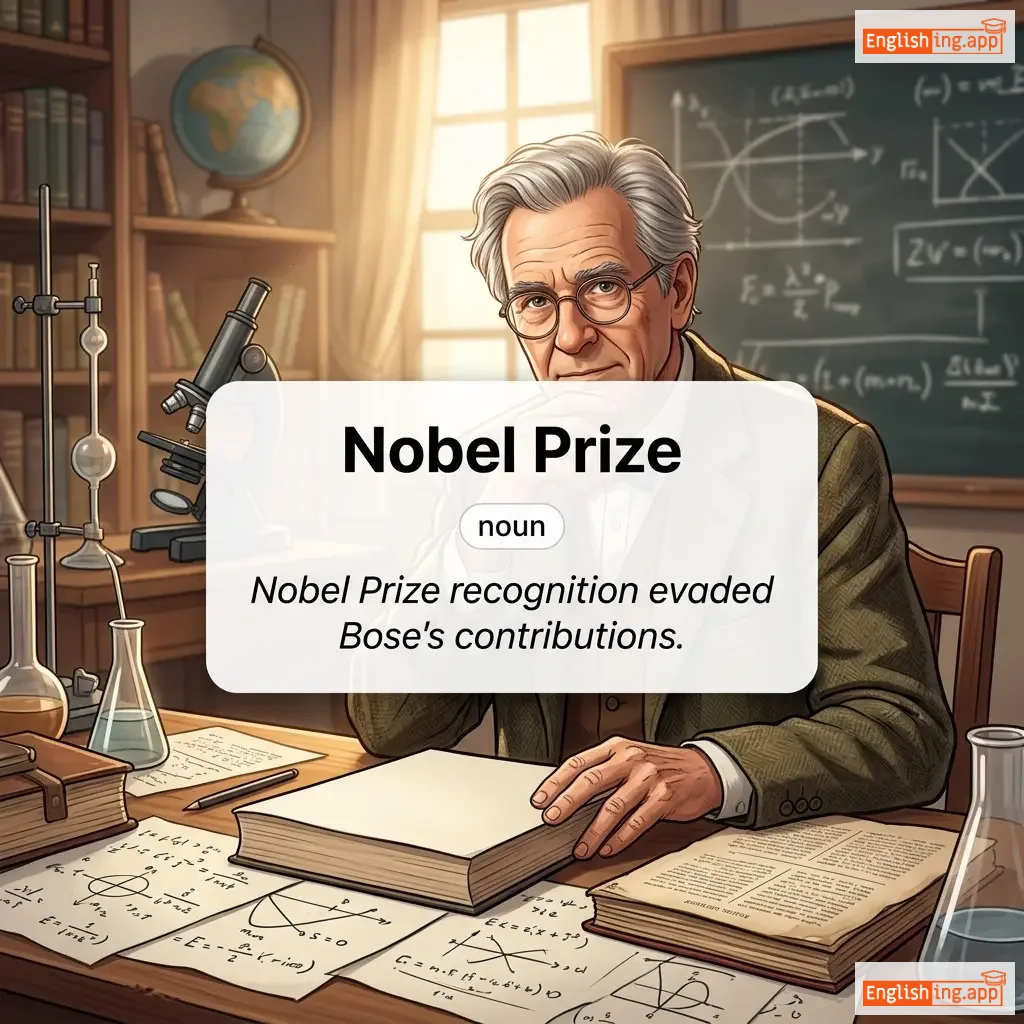
Nobel Prize definition card — visual illustration of the meaning
noun
noʊˈbel praɪz
Prix Nobel (Prix Nobel)

Any of six international prizes awarded annually for outstanding work in physics, chemistry, physiology or medicine, literature, economics, and the promotion of peace.

"Nobel Prize recognition evaded Bose's contributions."

"La reconnaissance du Prix Nobel a échappé aux contributions de Bose." (La reconnaissance du Prix Nobel a échappé aux contributions de Bose.)
noun
/nəʊˈbɪləti/
noblesse (noblesse)

the quality of being noble in character or the group of people belonging to the aristocracy

"The king praised her for her nobility and courage."

"Le roi a loué sa noblesse et son courage." (Le roi a loué sa noblesse et son courage.)
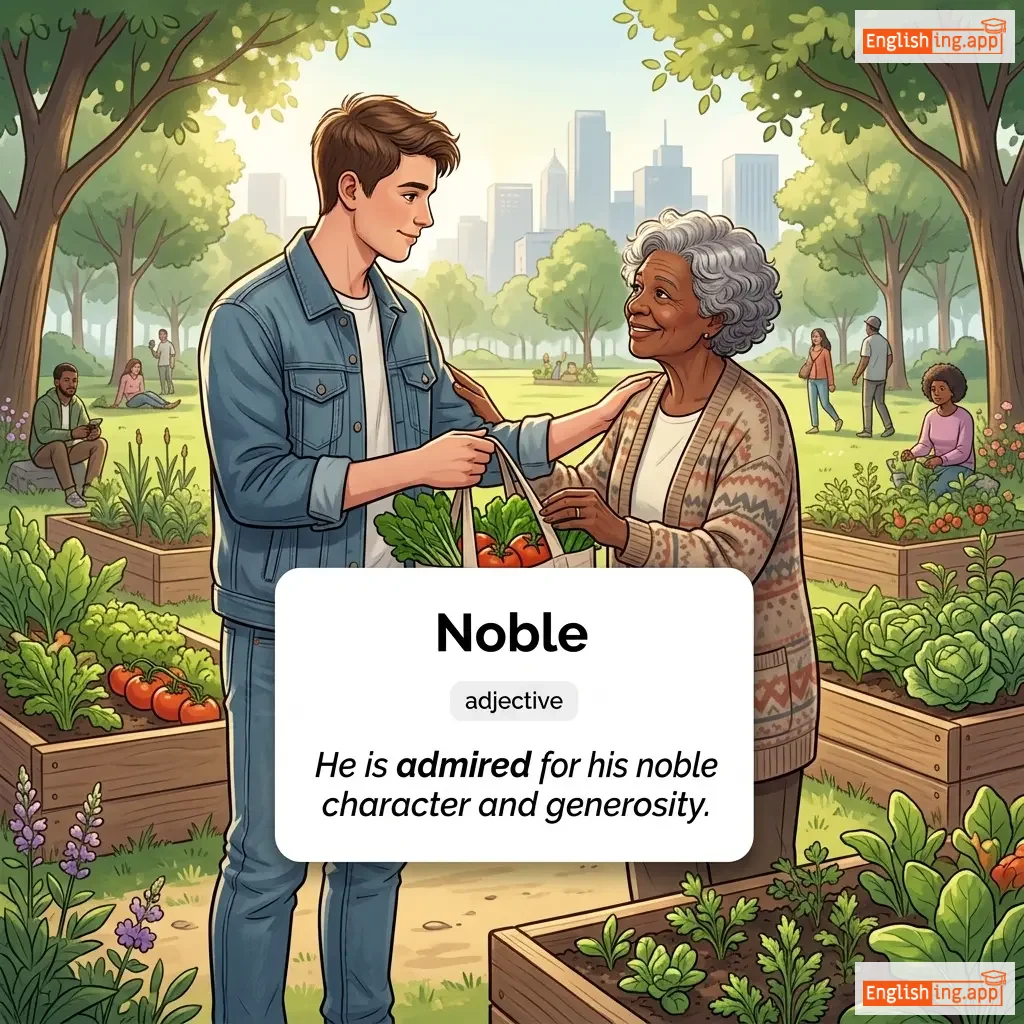
Noble definition card — visual illustration of the meaning
adjective
/ˈnoʊbəl/
ayant ou montrant de grandes qualités personnelles, des principes moraux élevés ou appartenant à une haute classe sociale (ayant ou montrant de grandes qualites personnelles, des principes moraux eleves ou appartenant a une haute classe sociale)

Having or showing fine personal qualities, high moral principles, or being of high social rank.

"He is admired for his noble character and generosity."

"Il est admiré pour son caractère noble et sa générosité." (Il est admire pour son caractere noble et sa generosite.)
🙅‍♂️

nobody (nobody)

pronoun
/ˈnoʊˌbɑːdi/
personne (personne)

no person; not anyone

"Nobody came to the party."

"Personne n'est venu à la fête." (Personne n'est venu à la fête.)
adjective
/nɒkˈtɜːrnəl/
nocturne (nocturne)

Active at night and sleeping during the day.

"Owls are nocturnal animals that hunt at night."

"Les hiboux sont des animaux nocturnes qui chassent la nuit." (Les hiboux sont des animaux nocturnes qui chassent la nuit.)
noun
/ˈnɔːrmən/
Normand (normand)

A member of a people of mixed Scandinavian and Frankish origin who settled in Normandy, or relating to their culture.

"The Normans conquered England in 1066."

"Les Normands ont conquis l'Angleterre en 1066." (Les Normands ont conquis lAngleterre en one thousand sixty six.)
verb
/ˌnɒnˈplʌst/
perplexe (perplexe)

Past tense of nonplus; surprised and confused.

"She was completely nonplused by his sudden decision."

"Elle était complètement perplexe par sa décision soudaine." (Elle était complètement perplexe par sa décision soudaine.)
verb
/ˌnɒnˈplʌst/
déconcerté (deconcerte)

Past tense of nonplus; surprised and unsure how to react.

"He stood nonplussed at the strange remark."

"Il est resté déconcerté par la remarque étrange." (Il est resté déconcerté par la remarque étrange.)
adjective
/ˌnɒnˈprɒfɪt/
organisation à but non lucratif (organisation a but non lucratif)

an organization that does not aim to make a profit, often serving a social or charitable purpose.

"She works for a nonprofit organization that helps children."

"Elle travaille pour une organisation à but non lucratif qui aide les enfants." (Elle travaille pour une organisation a but non lucratif qui aide les enfants.)
noun
/ˈnɒnsəns/
n'importe quoi (nimporte quoi)

Words or ideas that have no meaning or make no sense.

"His explanation was pure nonsense."

"Son explication était purement n'importe quoi." (Son explication était purement n'importe quoi.)
adjective
/ˌnɒnˈtrɪviəl/
non trivial (non trivial)

Not simple or easy; requiring effort or significant thought.

"Solving the equation turned out to be a nontrivial task."

"Résoudre l'équation s'est avéré être une tâche non triviale." (Résoudre l'équation s'est avéré être une tâche non triviale.)
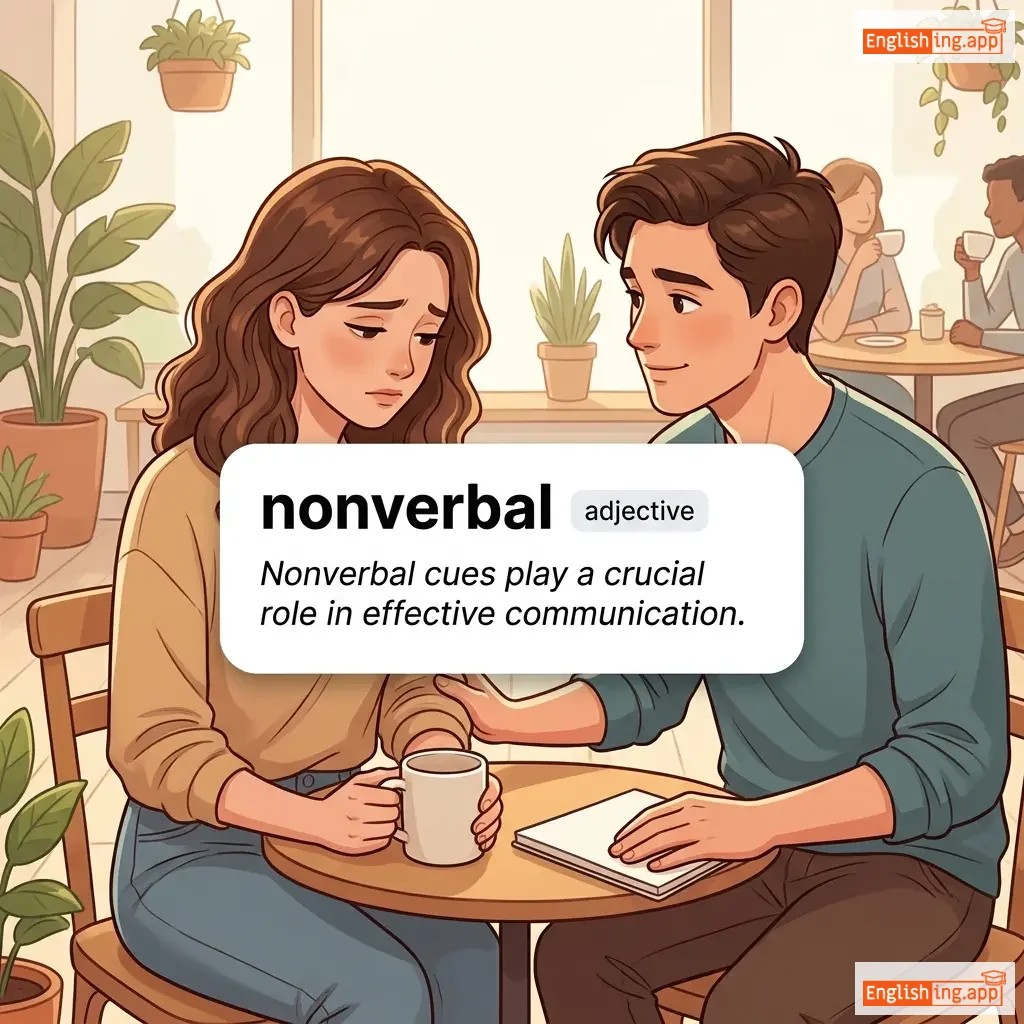
nonverbal definition card — visual illustration of the meaning
adjective
ˌnɒnˈvɜːr.bəl
non verbal (non verbal)

Communication using body language, facial expressions, or gestures instead of words

"Nonverbal cues play a crucial role in effective communication."

"Les indices non verbaux jouent un rôle crucial dans la communication efficace." (Les indices non verbaux jouent un rôle crucial dans la communication efficace.)
noun (plural)
/ˈnuːdəlz/
nouilles (nouilles)

long, thin strips of dough made from flour, water, or eggs, cooked and eaten as food

"She cooked noodles with vegetables for dinner."

"Elle a préparé des nouilles avec des légumes pour le dîner." (elle a prepare des nouilles avec des legumes pour le diner)
noun
/nuːn/
midi (midi)

12 o'clock in the daytime; midday

"The meeting will start at noon."

"La réunion commencera à midi." (La reunion commencera a midi.)
noun
/nuːs/
noeud coulant (noeud coulant)

A loop with a running knot, used especially for trapping or hanging.

"The cowboy tied a noose to catch the wild horse."

"Le cowboy a attaché un nœud pour attraper le cheval sauvage." (Le cowboy a attache un noeud pour attraper le cheval sauvage.)
🚫➡️🚫

nor (nor)

conjunction
/nɔːr/
ni (ni)

used to introduce a negative clause after a negative statement

"He didn't call, nor did he send a message."

"Il n'a pas appelé, ni il n'a envoyé de message." (Il n'a pas appelle, ni il n'a envoye de message.)
noun
/nɔːrm/
norme (norme)

An accepted standard or a usual practice.

"Wearing uniforms is the norm in many schools."

"Porter des uniformes est la norme dans de nombreuses écoles." (Porter des uniformes est la norme dans de nombreuses écoles.)
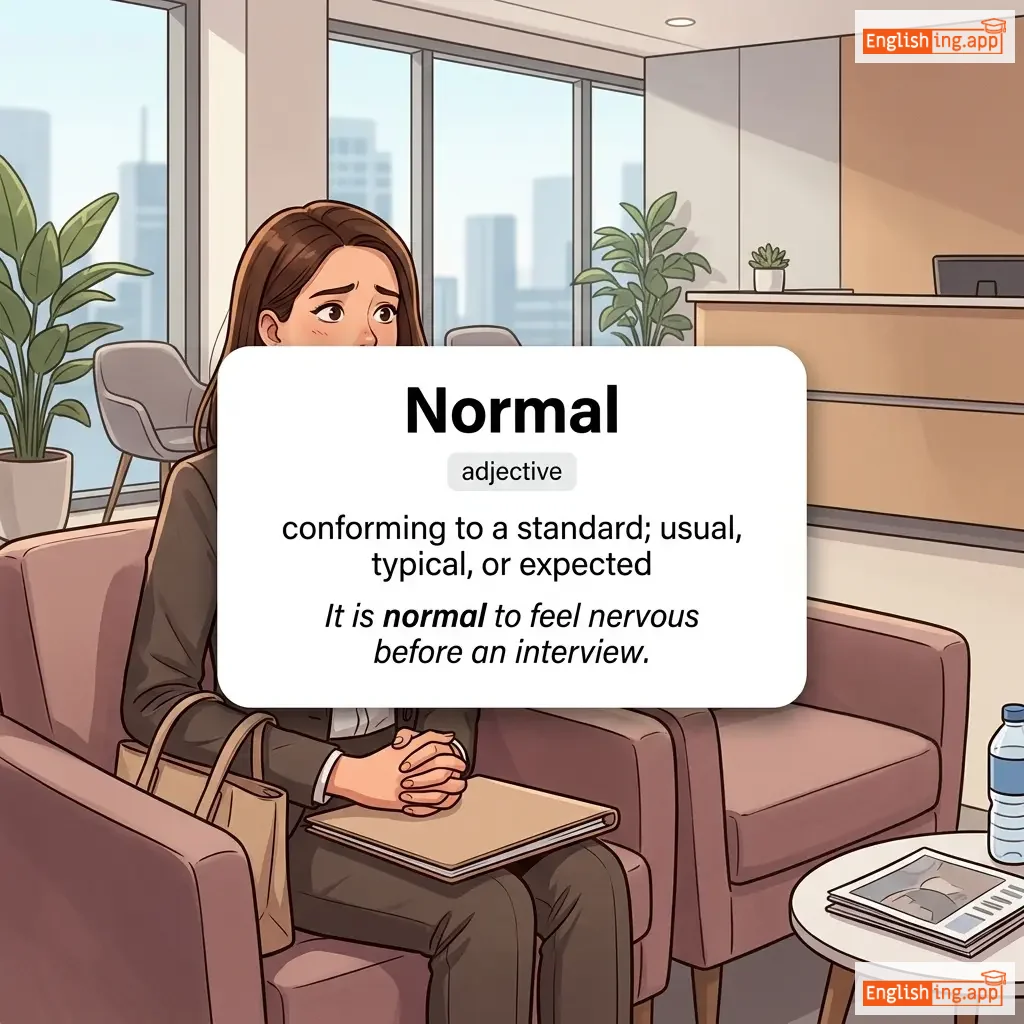
Normal definition card — visual illustration of the meaning
adjective
/ˈnɔː.məl/
normal (normal)

conforming to a standard; usual, typical, or expected

"It is normal to feel nervous before an interview."

"Il est normal de se sentir nerveux avant un entretien." (Il est normal de se sentir nerveux avant un entretien.)
noun
/ˈnɔːrməlsi/
normalité (normalite)

The condition of being normal; a return to usual or expected conditions.

"After the flood, the town struggled to regain a sense of normalcy."

"Après l'inondation, la ville a eu du mal à retrouver un sentiment de normalité." (Apres l'inondation, la ville a eu du mal a retrouver un sentiment de normalite.)
verb
/ˈnɔːrməlaɪz/
normaliser (normaliser)

to bring something back to a normal or standard condition; to make something conform to a standard

"The government took steps to normalize relations with neighboring countries."

"Le gouvernement a pris des mesures pour normaliser les relations." (Le gouvernement a pris des mesures pour normaliser les relations)
adverb
/ˈnɔːməli/
normalement (normalement)

in a usual or expected way

"I normally wake up at 7 AM."

"Je me réveille normalement à 7 h." (Je me réveille normalement à 7 h.)
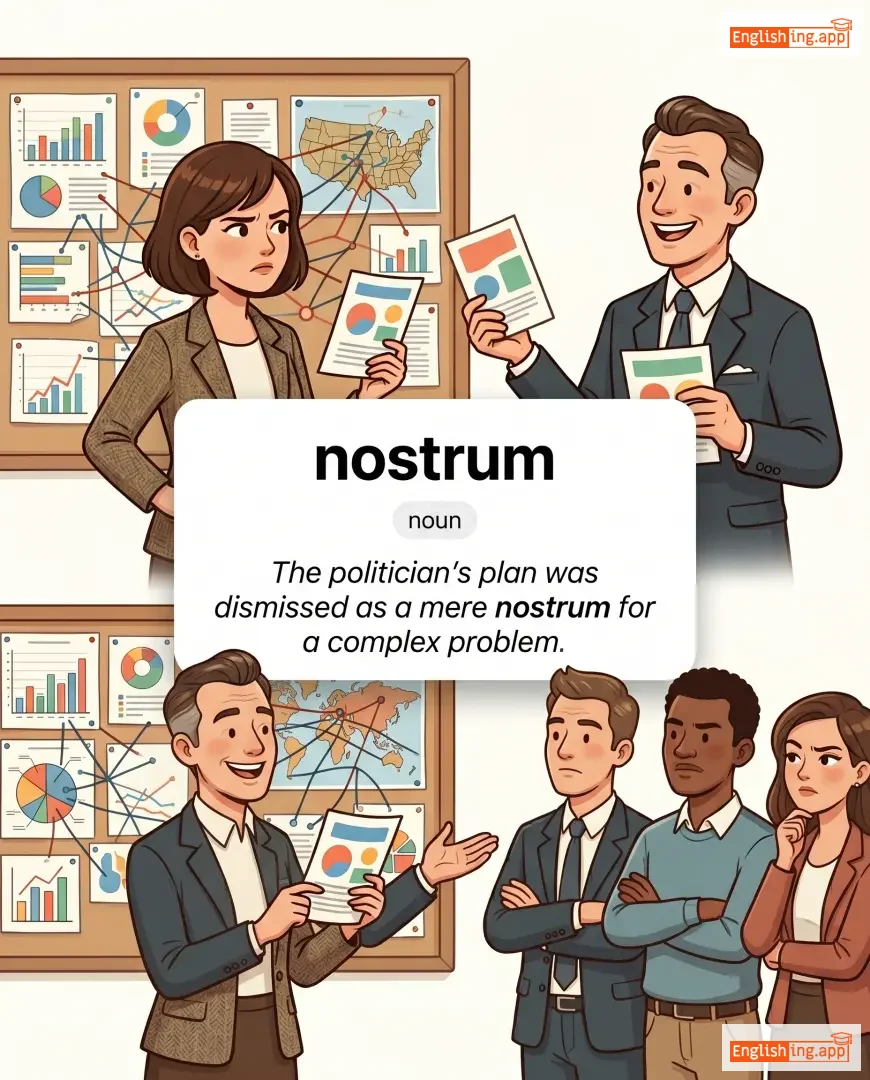
nostrum definition card — visual illustration of the meaning
noun
/ˈnɑːstrəm/
remède inefficace (remède inefficace)

a medicine or remedy, especially one that is not considered effective; a questionable solution

"The politician’s plan was dismissed as a mere nostrum for a complex problem."

"Le plan du politicien a été rejeté comme un simple remède pour un problème complexe." (Le plan du politicien a été rejeté comme un simple remède pour un problème complexe.)
noun
/ˈnoʊzˌɡeɪ/
bouquet de fleurs (bouquet de fleurs)

a small bunch of flowers, typically given as a gift or carried for decoration

"She carried a nosegay of fresh roses to the ceremony."

"Elle a porté un bouquet de roses fraîches à la cérémonie." (Elle a porte un bouquet de roses fraiches a la ceremonie.)
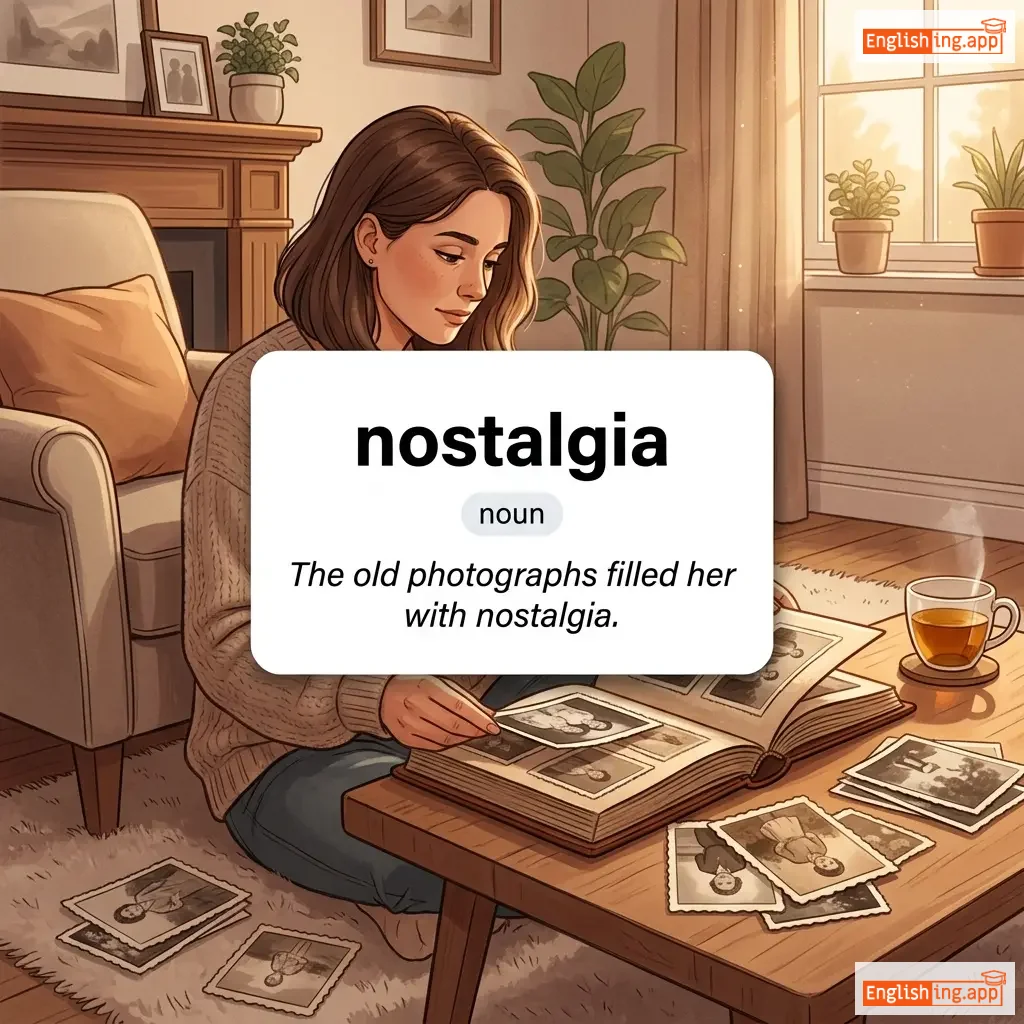
nostalgia definition card — visual illustration of the meaning
noun
/nəˈstældʒə/
nostalgie (nostalgie)

a sentimental longing for the past, often for a period or place with happy memories

"The old photographs filled her with nostalgia."

"Les vieilles photographies la remplissaient de nostalgie." (Les vieilles photographies la remplissaient de nostalgie.)
noun
/ˈnɒs.trɪl/
narine (narine)

either of the two openings in the nose through which air passes

"The doctor checked each nostril for any blockage."

"Le médecin a vérifié chaque narine à la recherche de toute obstruction." (Le médecin a vérifié chaque narine à la recherche de toute obstruction.)
adjective
/ˈnoʊtəbl/
remarquable (remarquable)

worthy of attention or notice; remarkable

"She made a notable contribution to the project."

"Elle a fait une contribution notable au projet." (Elle a fait une contribution notable au projet.)
adverb
/ˈnoʊtəbli/
remarquablement (remarquablement)

used to indicate something worthy of attention or significant

"She is notably talented in painting."

"Elle est remarquablement talentueuse en peinture." (Elle est remarquablement talentueuse en peinture.)
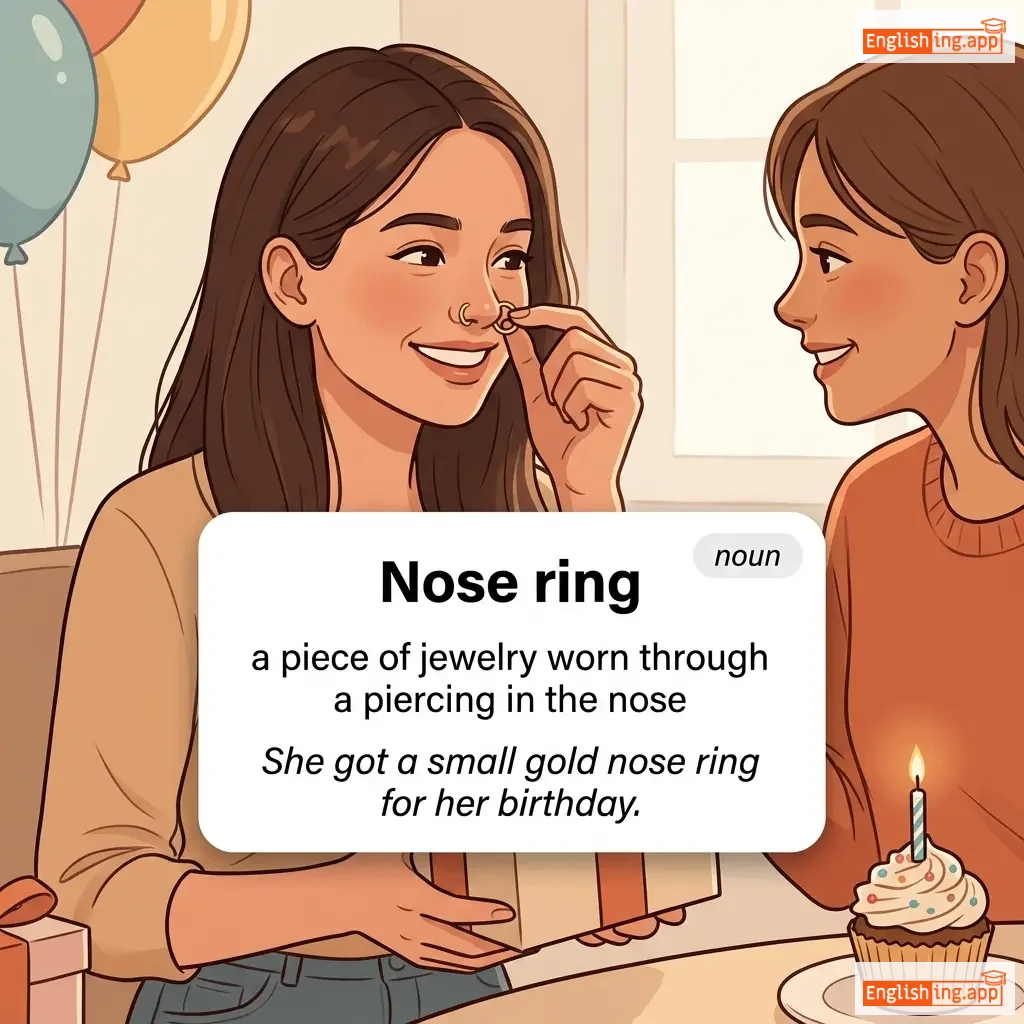
Nose ring definition card — visual illustration of the meaning
noun
/noʊz rɪŋ/
anneau de nez (anneau de nez)

a piece of jewelry worn through a piercing in the nose

"She got a small gold nose ring for her birthday."

"Elle a obtenu un petit anneau en or pour son anniversaire." (Elle a obtenu un petit anneau en or pour son anniversaire.)