ভোকাবুলারিসমূহ

ইংরেজি শব্দের বাংলা অর্থ | English to Bangla Word Meaning Dictionary

noun
/niːs/
ভাতিজি (bhatiji)

the daughter of one's brother or sister

"My niece is studying at the university this year."

"আমার ভাতিজি এ বছর বিশ্ববিদ্যালয়ে পড়ছে।" (amar bhatiji e bochor bishwabidyaloye porchhe)
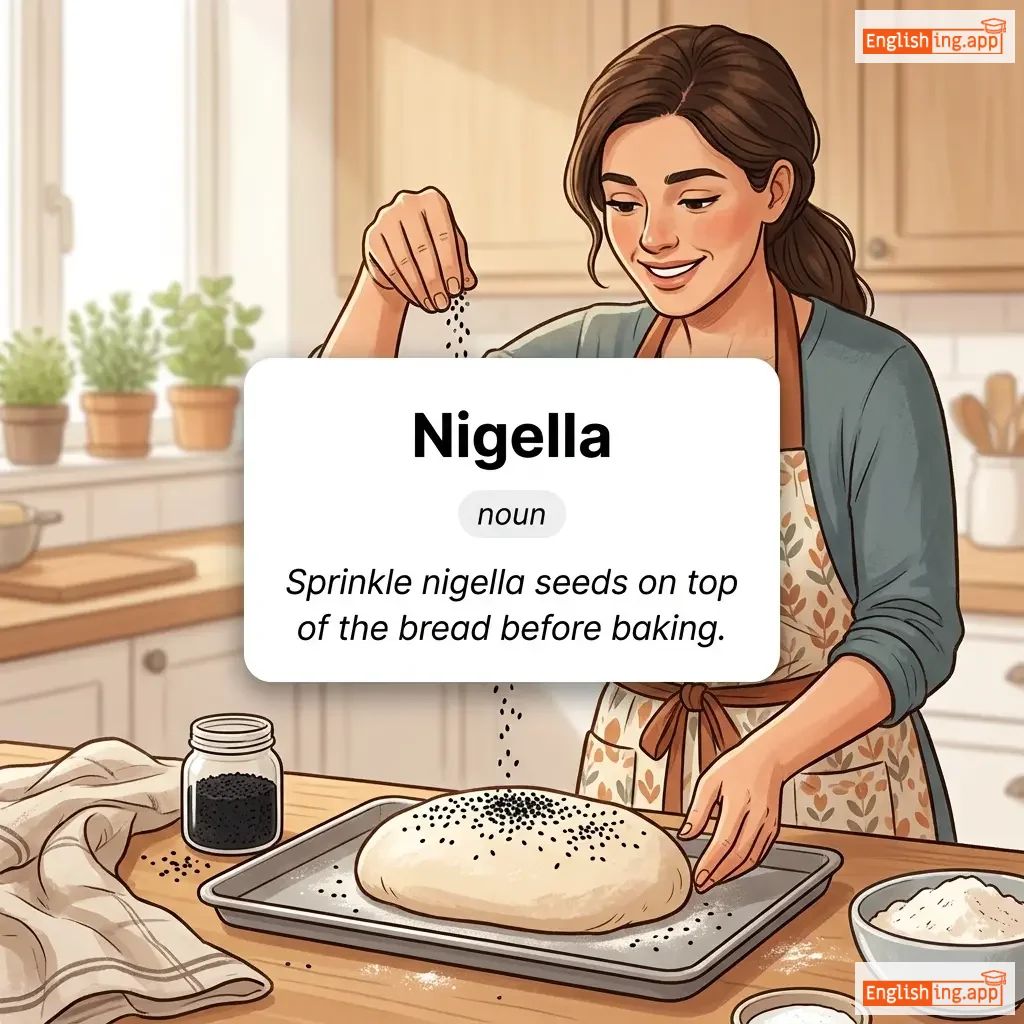
Nigella definition card — visual illustration of the meaning
noun
/naɪˈdʒel.ə/
কালোজিরা (kalojira)

small black seeds with a nutty, slightly bitter flavor, also known as black cumin or black seed

"Sprinkle nigella seeds on top of the bread before baking."

"রুটি বেক করার আগে তার উপরে কালোজিরা ছিটিয়ে দিন।" (ruti bek korar age tar upore kalojira chitiye din)
adjective
/ˈnɪɡərdli/
কৃপণ (kripon)

unwilling to spend or give; stingy or miserly

"He was too niggardly to leave a decent tip."

"সে এত কৃপণ ছিল যে ভালো টিপস দিতে চাইলো না।" (Se eto kripon chilo je bhalo tips dite chailo na.)
verb
/ˈnɪɡəl/
সামান্য বিরক্ত করা (samanno birokt kora)

to cause slight but persistent annoyance, discomfort, or worry

"A small doubt niggled at her mind."

"একটি ছোট সন্দেহ তার মনে বারবার আসছিল।" (Ekti choto sondheho tar mone bar bar aschhilo.)
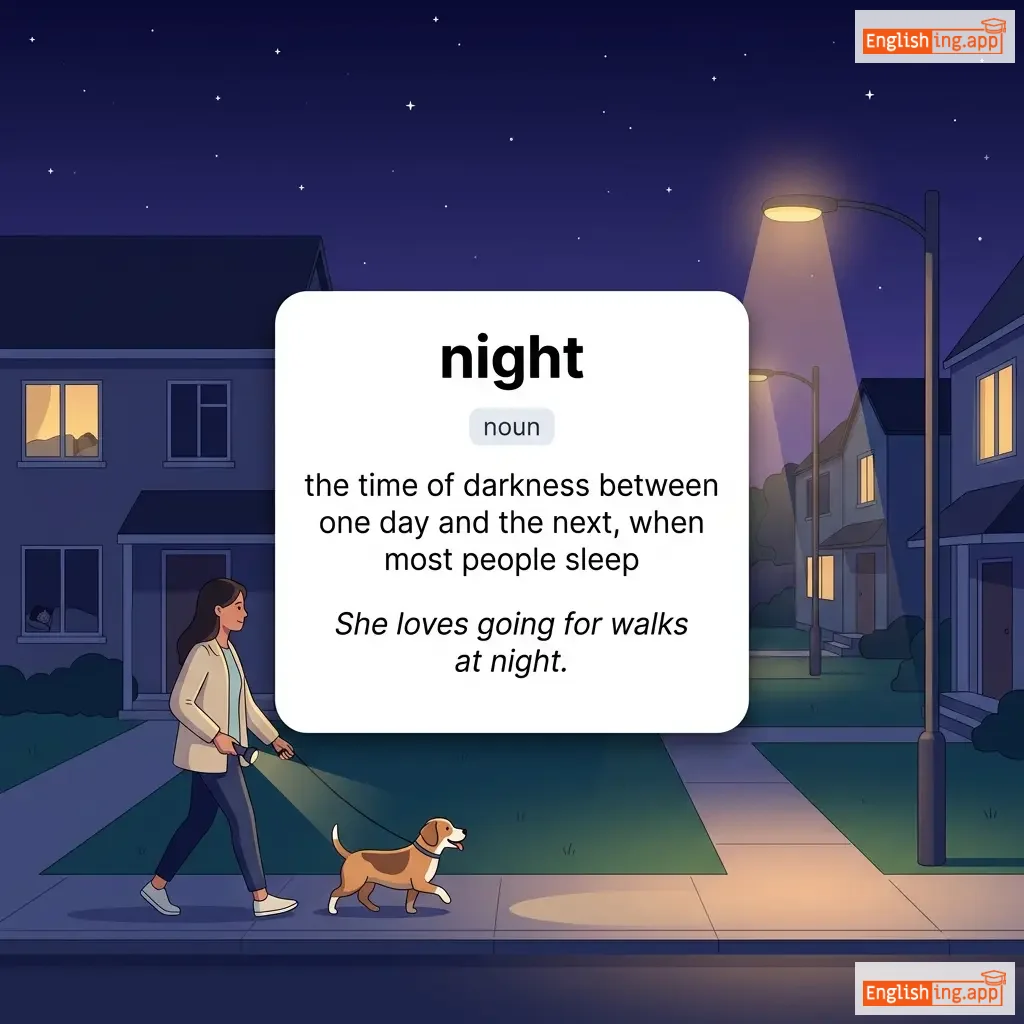
night definition card — visual illustration of the meaning
noun
/naɪt/
রাত্রি (ratri)

the time of darkness between one day and the next, when most people sleep

"She loves going for walks at night."

"সে রাতে হাঁটার জন্য পছন্দ করে।" (Se raate hatar jonno pochondo kore.)
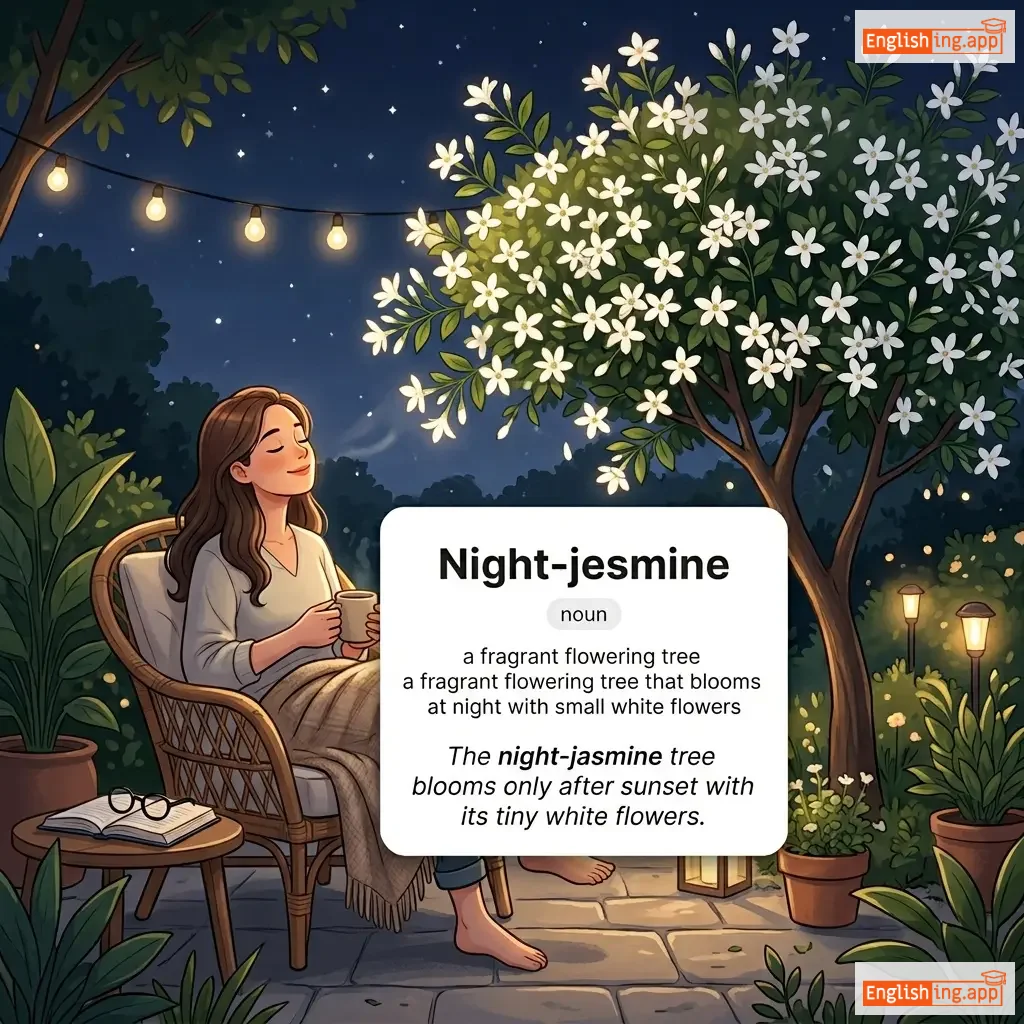
Night-jesmine definition card — visual illustration of the meaning
noun
/naɪt ˈdʒæz.mɪn/
শেফালী (shephali)

a fragrant flowering tree that blooms at night with small white flowers

"The night-jasmine tree blooms only after sunset with its tiny white flowers."

"শেফালী গাছ কেবল সূর্যাস্তের পর তার ছোট সাদা ফুল নিয়ে ফোটে।" (Shephali gach kebol shuryastoer por taar choto shada phul niye photey.)
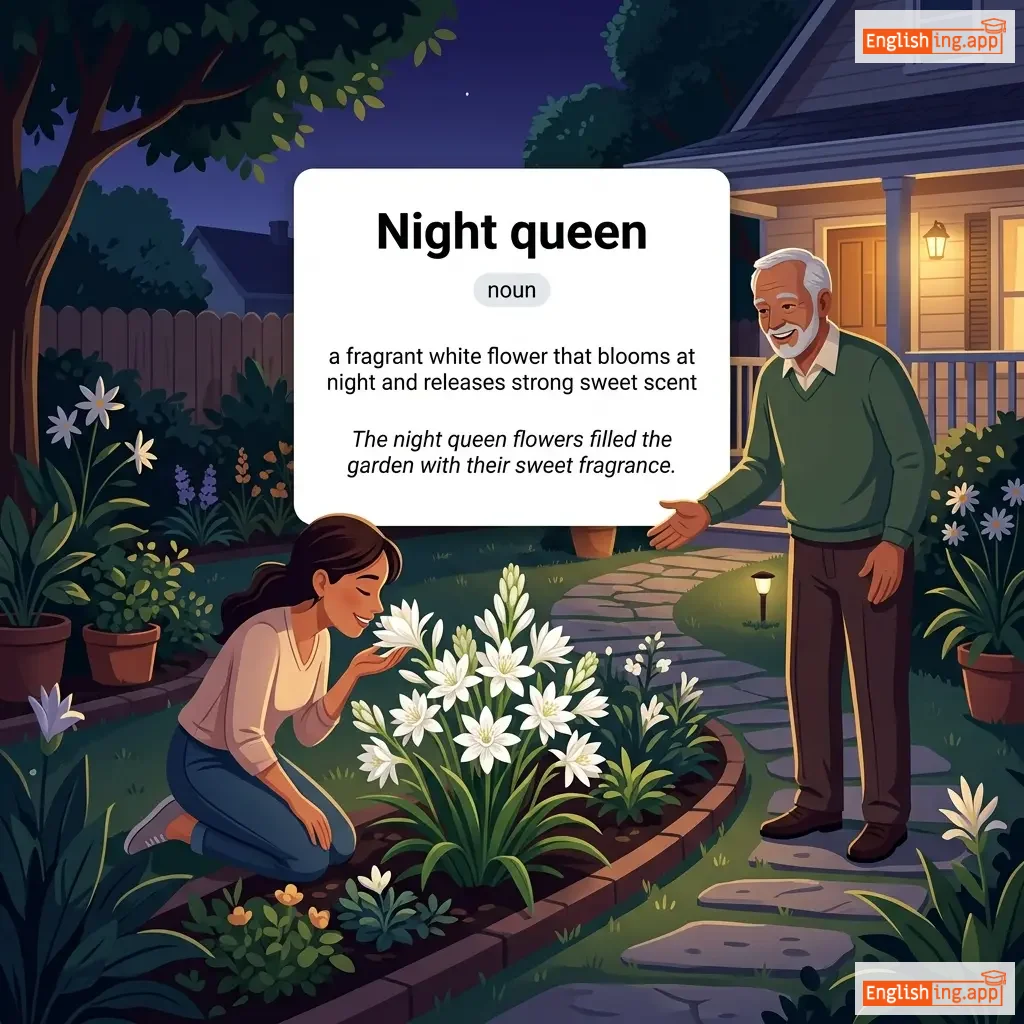
Night queen definition card — visual illustration of the meaning
noun
/naɪt kwiːn/
রজনীগন্ধা (rojnigondha)

a fragrant white flower that blooms at night and releases strong sweet scent

"The night queen flowers filled the garden with their sweet fragrance."

"রজনীগন্ধা ফুলগুলো বাগানকে তাদের মিষ্টি সুগন্ধে ভরিয়ে দিয়েছে।" (rojnigondha fulgulo bagankhe tader mishti sugondhe bhoriye diyeche)
noun
/ˈnaɪt.fɔːl/
সন্ধ্যা (shondha)

the time when night begins; dusk

"They decided to return home before nightfall."

"তারা রাত নামার আগে বাড়ি ফেরার সিদ্ধান্ত নিল।" (tara rat namar age bari ferar shiddhanto nilo.)
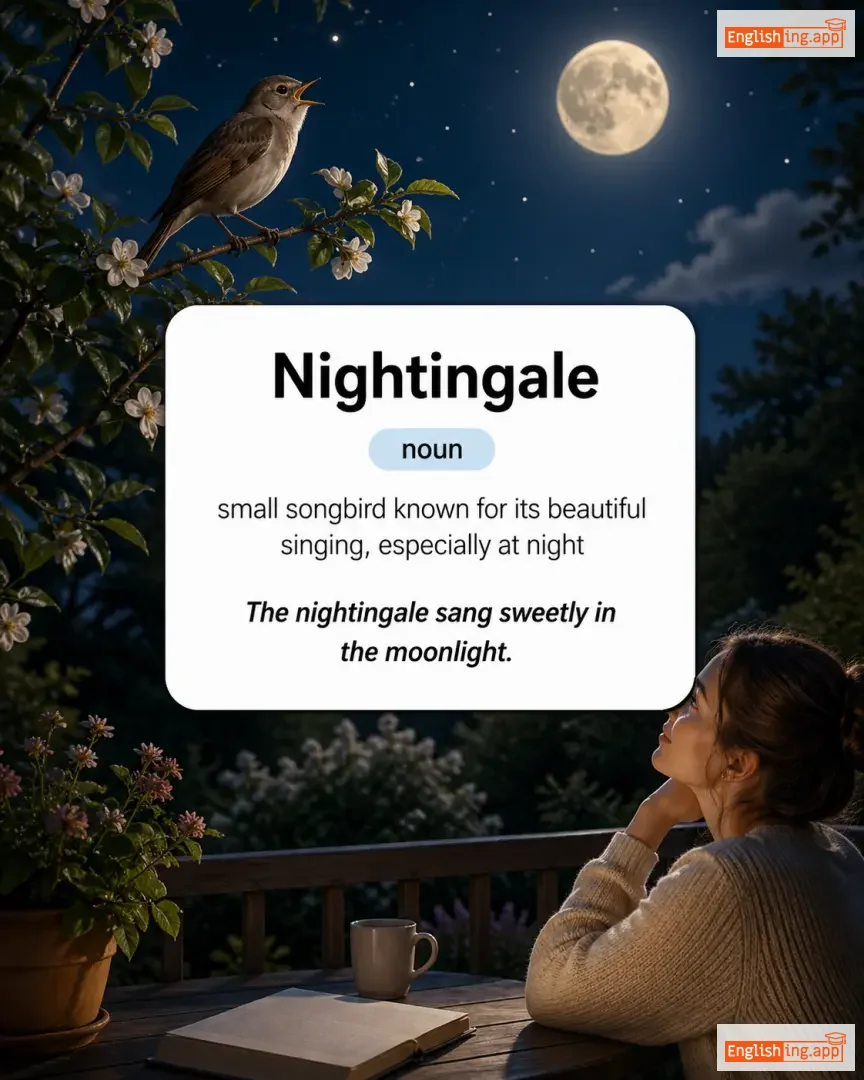
Nightingale definition card — visual illustration of the meaning
noun
/ˈnaɪ.tɪŋ.ɡeɪl/
বুলবুলি (bulbuli)

small songbird known for its beautiful singing, especially at night

"The nightingale sang sweetly in the moonlight."

"বুলবুলি চাঁদের আলোয় মধুর গান গেয়েছিল।" (bulbuli chander aloy modhur gan geyechilo)
noun
/ˈnaɪtˌmɛər/
দুঃস্বপ্ন (duhshopno)

a frightening or unpleasant dream; a very distressing experience.

"Last night, she had a terrifying nightmare."

"গত রাতে সে একটি ভয়ানক দুঃস্বপ্ন দেখেছিল।" (Goto rate se ekti bhoyankor duhshopno dekhechhilo.)
noun
/ˈnaɪɪˌlɪzəm/
নৈরাশ্যবাদ (noirashobad)

The rejection of all religious and moral principles, often in the belief that life is meaningless.

"The philosopher was criticized for promoting nihilism."

"দার্শনিককে নিহিলিজম প্রচারের জন্য সমালোচনা করা হয়েছিল।" (Darshonik ke nihilism procharer jonno somalochona kora hoyechilo.)
noun
/ˈnaɪəlɪst/
নৈরাশ্যবাদী (noirashobadi)

A person who rejects all religious and moral principles, often believing that life is meaningless.

"He was called a nihilist for rejecting all social norms."

"সে সব সামাজিক নিয়ম প্রত্যাখ্যান করার জন্য নৈরাশ্যবাদী বলা হয়েছিল।" (Se sob samajik niyom protyakhyan korar jonno noirashobadi bola hoyechilo.)
noun
/nɪl/
শূন্য (shunno)

Nothing; zero.

"The score remained nil after the first half."

"প্রথমার্ধের পর স্কোর শূন্য রয়ে গেল।" (Prothomardher por skor shunno roye gelo.)
adjective
/ˈnɪmbəl/
চটপটে (chotpotte)

Quick and light in movement or thought.

"The dancer’s nimble steps impressed the audience."

"নৃত্যশিল্পীর চটপটে পদক্ষেপ দর্শকদের মুগ্ধ করেছিল।" (Nrityoshilpir chotpotte podokhep dorkshokder mugdho korechilo.)
noun
/naɪn/
নয় (noy)

the number that is one more than eight

"She has nine books in her collection."

"তার সংগ্রহে নয়টি বই রয়েছে।" (Tar songrohe noyti boi royeche.)
noun
/ˈnɪn.i/
হাবা; বোকাসোকা; (haba)

a silly or foolish person; someone who lacks common sense

"Don't be such a ninny, use your brain!"

"এত হাবা হয়ো না, মাথা ব্যবহার করো!" (eto haba hoyo na, matha byabohar koro!)
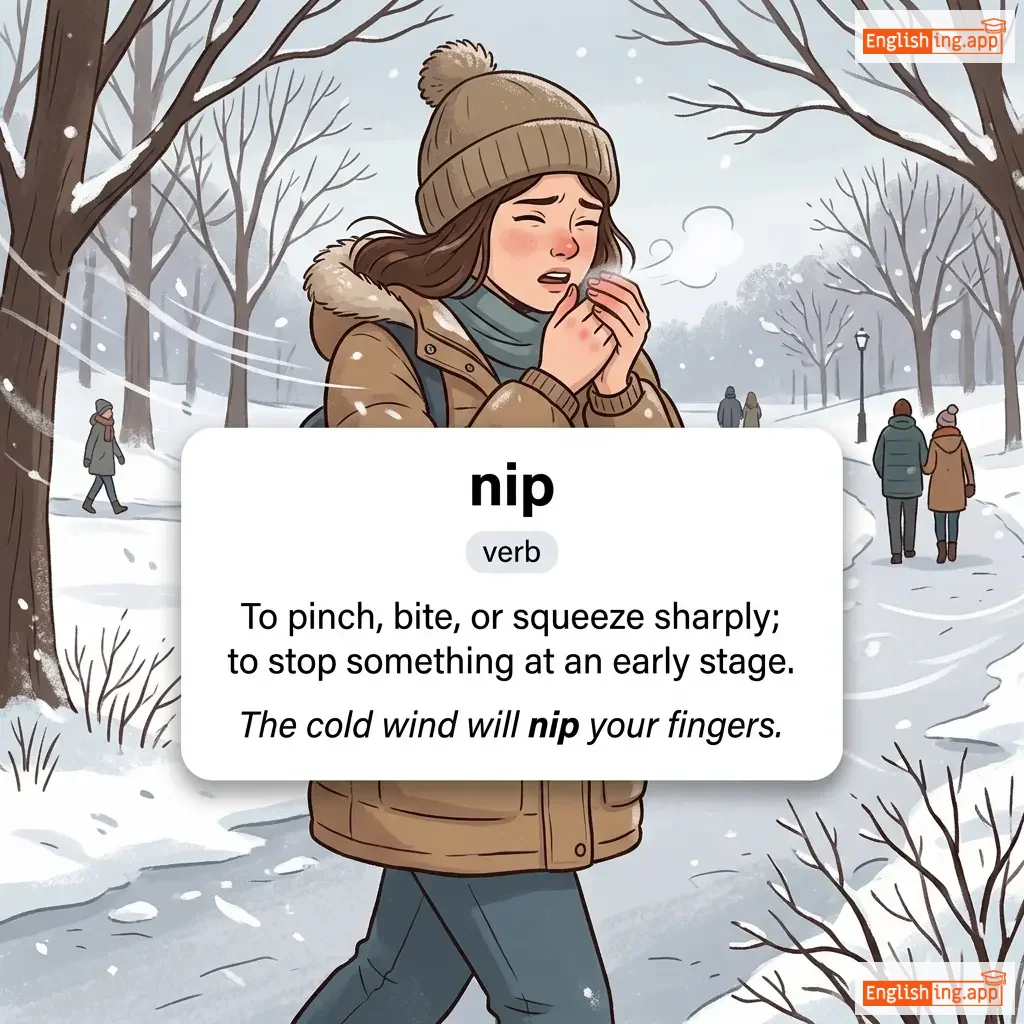
nip definition card — visual illustration of the meaning
verb
/nɪp/
চিমটি কাটা (chimti kata)

To pinch, bite, or squeeze sharply; to stop something at an early stage.

"The cold wind will nip your fingers."

"ঠান্ডা হাওয়া তোমার আঙুল চিমটি কাটবে।" (Thanda hawa tomar angul chimti katbe.)
adjective
/ˈnɪp.i/
কর্পন; ঠান্ডা; (thanda)

cold; chilly; quick and agile in movement

"It's quite nippy outside today, you should wear a jacket."

"আজ বাইরে বেশ ঠান্ডা, তোমার একটি জ্যাকেট পরা উচিত।" (aj baire besh thanda, tomar ekti jacket pora uchit)
noun
/nɪərˈvɑːnə/
নির্বাণ (nirban)

A state of perfect happiness, peace, and freedom from suffering; in Buddhism, the ultimate goal of liberation.

"Meditation helps some people seek nirvana in their lives."

"ধ্যান কিছু মানুষকে তাদের জীবনে নির্বাণ খুঁজতে সাহায্য করে।" (Dhyan kichu manushke tader jibone nirban khujte sahajyo kore.)
noun
/nɪt/
উকুনের ডিম (ukuner dim)

The egg or young form of a louse or other parasitic insect.

"The teacher noticed nits in the child’s hair."

"শিক্ষক শিশুর চুলে উকুনের ডিম লক্ষ্য করলেন।" (Shikkhok shishur chule ukuner dim lokkho korlen.)
verb
/ˈnɪtˌpɪk/
ক্ষুদ্র দোষ খোঁজা (khudro dosh khoja)

To find and criticize small or unimportant faults in someone or something.

"She tends to nitpick about every little detail."

"সে প্রতিটি ছোটখাটো বিষয়ে দোষ খুঁজতে থাকে।" (Se protiti chotkhato bishoye dosh khujte thake.)
adverb
/noʊ/
না (na)

used to give a negative response or to show disagreement

"She said no to the invitation."

"সে আমন্ত্রণে না বলেছিল।" (Se amontron-e na bolechhilo.)
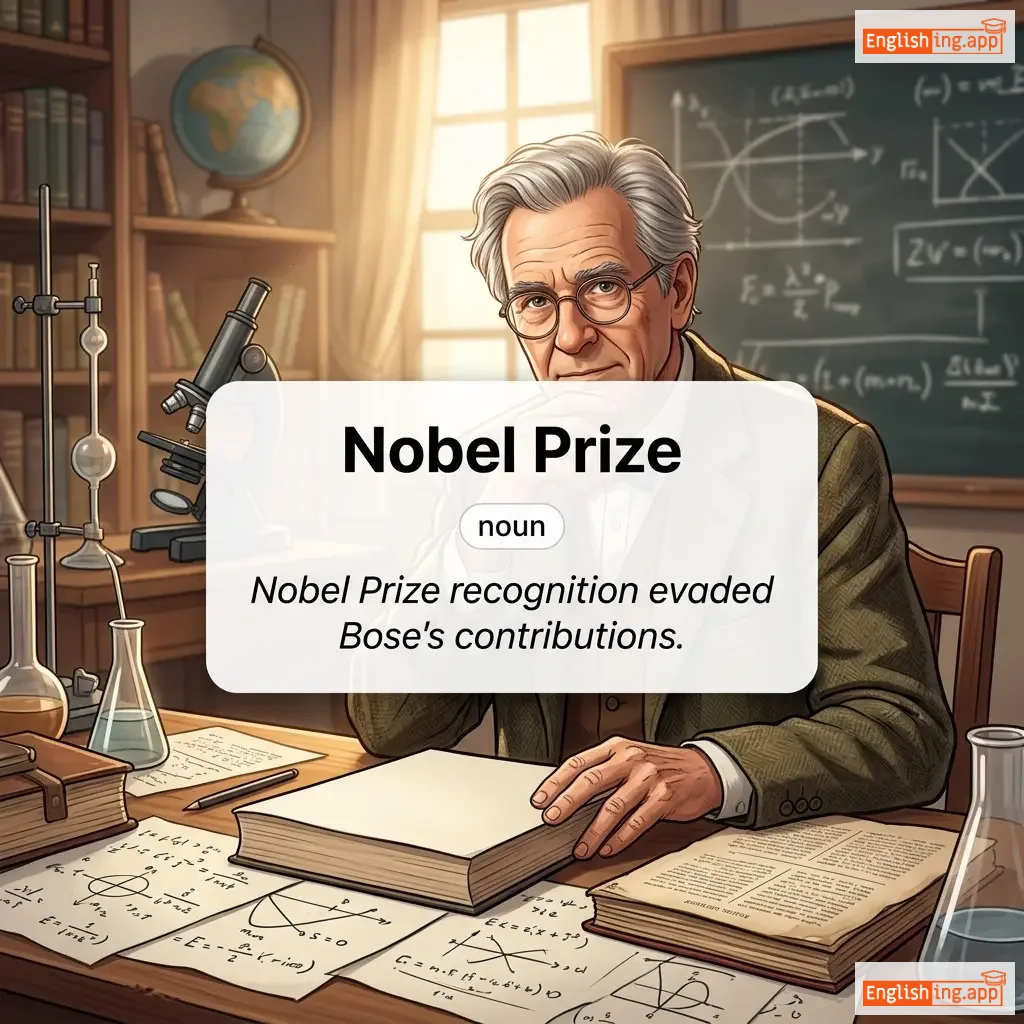
Nobel Prize definition card — visual illustration of the meaning
noun
noʊˈbel praɪz
নোবেল পুরস্কার (Nobel puroshkar)

Any of six international prizes awarded annually for outstanding work in physics, chemistry, physiology or medicine, literature, economics, and the promotion of peace.

"Nobel Prize recognition evaded Bose's contributions."

"নোবেল পুরস্কার বোসের অবদানে স্বীকৃতি দেয়নি।" (Nobel puroshkar Bosher obdane shikkriti deyni.)
noun
/nəʊˈbɪləti/
অভিজাত্য (obhijattyo)

the quality of being noble in character or the group of people belonging to the aristocracy

"The king praised her for her nobility and courage."

"রাজা তার অভিজাত্য এবং সাহসের জন্য তাকে প্রশংসা করেছিলেন।" (raja tar obhijattyo ebong sahoser jonno take proshongsha korechilen.)
Noble definition card — visual illustration of the meaning
adjective
/ˈnoʊbəl/
উচ্চ বংশীয়/উচ্চ নৈতিক গুণসম্পন্ন (uccho bongshio/uccho noitik gunshomponno)

Having or showing fine personal qualities, high moral principles, or being of high social rank.

"He is admired for his noble character and generosity."

"তিনি তার মহৎ চরিত্র এবং উদারতার জন্য প্রশংসিত।" (Tini tar mohot choritro ebong udarotar jonno proshongshit.)
pronoun
/ˈnoʊˌbɑːdi/
কেউ না (keu na)

no person; not anyone

"Nobody came to the party."

"কেউ পার্টিতে আসেনি।" (Keu party-te aseni.)
adjective
/nɒkˈtɜːrnəl/
রাত্রিচর (ratri chor)

Active at night and sleeping during the day.

"Owls are nocturnal animals that hunt at night."

"পেঁচা হলো রাত্রিচর প্রাণী যারা রাতে শিকার করে।" (Pecha holo ratrichor prani jara rate shikar kore.)
noun
/ˈnɔːrmən/
নরম্যান (Norman)

A member of a people of mixed Scandinavian and Frankish origin who settled in Normandy, or relating to their culture.

"The Normans conquered England in 1066."

"নরম্যানরা ১০৬৬ সালে ইংল্যান্ড জয় করেছিল।" (Normanra 1066 sale England joy korechhilo.)
verb
/ˌnɒnˈplʌst/
হতবুদ্ধি হয়েছিল (hotobuddhi hoyechilo)

Past tense of nonplus; surprised and confused.

"She was completely nonplused by his sudden decision."

"তার হঠাৎ সিদ্ধান্তে সে সম্পূর্ণ হতবুদ্ধি হয়ে গিয়েছিল।" (tar hotat siddhante se sompurno hotobuddhi hoye giechilo.)
verb
/ˌnɒnˈplʌst/
হতবুদ্ধি হয়েছিল (hotobuddhi hoyechilo)

Past tense of nonplus; surprised and unsure how to react.

"He stood nonplussed at the strange remark."

"অদ্ভুত মন্তব্যে সে হতবুদ্ধি হয়ে দাঁড়িয়েছিল।" (odbhut mottomoje se hotobuddhi hoye dariyechilo.)
adjective
/ˌnɒnˈprɒfɪt/
অলাভজনক (olabhojonok)

an organization that does not aim to make a profit, often serving a social or charitable purpose.

"She works for a nonprofit organization that helps children."

"সে শিশুদের সাহায্য করে এমন একটি অলাভজনক সংস্থায় কাজ করে।" (Se shishuder sahajjo kore emon ekti olabhojonok sangsthay kaj kore.)
noun
/ˈnɒnsəns/
বাজে কথা (baje kotha)

Words or ideas that have no meaning or make no sense.

"His explanation was pure nonsense."

"তার ব্যাখ্যাটি সম্পূর্ণ বাজে কথা ছিল।" (tar byakkhyati sompurno baje kotha chilo.)
adjective
/ˌnɒnˈtrɪviəl/
জটিল (jotil)

Not simple or easy; requiring effort or significant thought.

"Solving the equation turned out to be a nontrivial task."

"সমীকরণ সমাধান করা একটি জটিল কাজ হয়ে দাঁড়িয়েছিল।" (Somikaron somadhan kora ekti jotil kaj hoye dariyechhilo.)
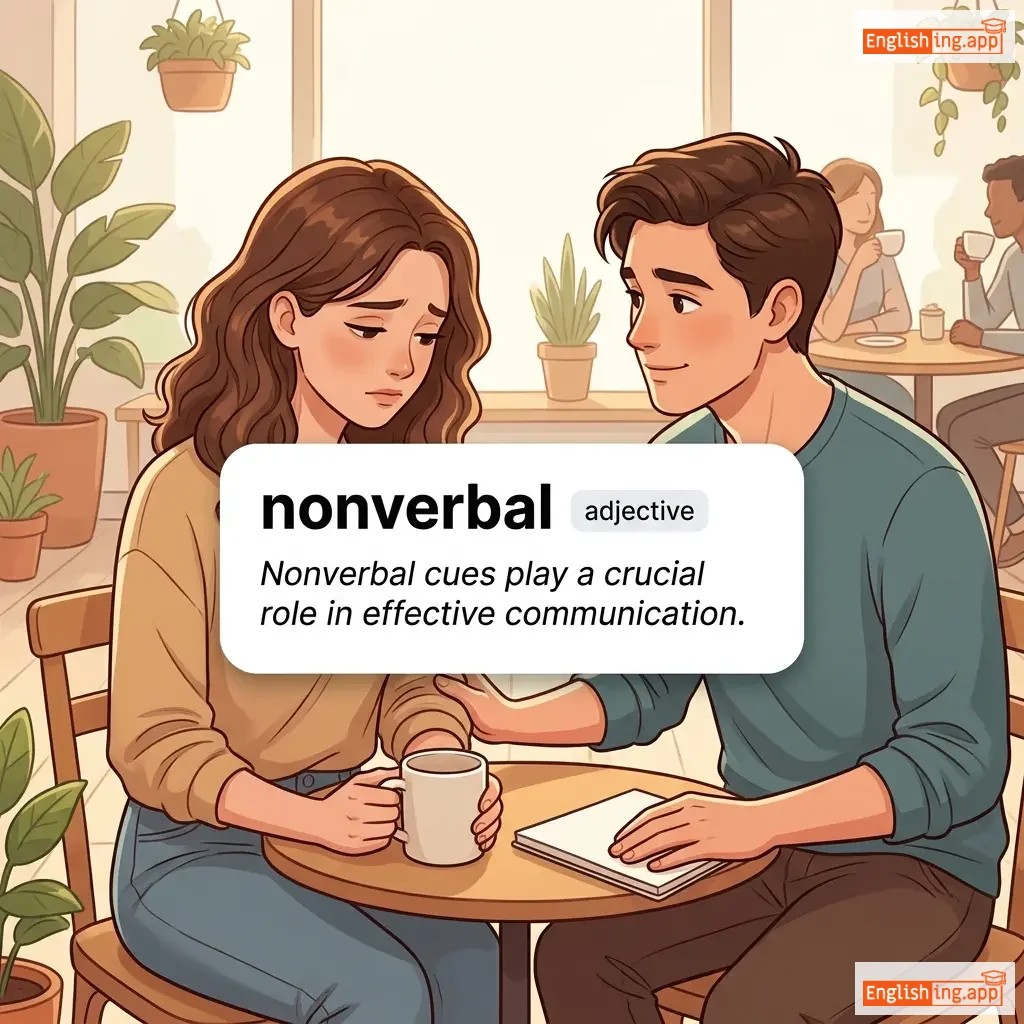
nonverbal definition card — visual illustration of the meaning
adjective
ˌnɒnˈvɜːr.bəl
অবাক ভাষিক (obak bhashik)

Communication using body language, facial expressions, or gestures instead of words

"Nonverbal cues play a crucial role in effective communication."

"অবাক ভাষিক সংকেত কার্যকর যোগাযোগে গুরুত্বপূর্ণ ভূমিকা রাখে।" (Obak bhashik songket karjokor jogatoge gurutbopurno bhumika rakhe.)
noun (plural)
/ˈnuːdəlz/
নুডলস (nudols)

long, thin strips of dough made from flour, water, or eggs, cooked and eaten as food

"She cooked noodles with vegetables for dinner."

"সে রাতের খাবারের জন্য সবজি দিয়ে নুডলস রান্না করেছিল।" (se rater khabarer jonno shobji diye nudols rannna korechilo)
noun
/nuːn/
দুপুর (dupur)

12 o'clock in the daytime; midday

"The meeting will start at noon."

"মিটিং দুপুর বারোটায় শুরু হবে।" (miting dupur barotay shuru hobe.)
noun
/nuːs/
ফাঁস (fas)

A loop with a running knot, used especially for trapping or hanging.

"The cowboy tied a noose to catch the wild horse."

"কাউবয় বন্য ঘোড়া ধরতে একটি ফাঁস বেঁধেছিল।" (Cowboy bonno ghora dhorte ekti fas bendhechhilo.)
🚫➡️🚫

nor (নর)

conjunction
/nɔːr/
অথবা না (othoba na)

used to introduce a negative clause after a negative statement

"He didn't call, nor did he send a message."

"সে কল করেনি, নর সে একটি মেসেজও পাঠায়নি।" (She kol koreni, nor she ekti message-o pathayni.)
noun
/nɔːrm/
প্রচলিত নিয়ম (procholito niyom)

An accepted standard or a usual practice.

"Wearing uniforms is the norm in many schools."

"অনেক স্কুলে ইউনিফর্ম পরা প্রচলিত নিয়ম।" (Onek schoole uniform pora procholito niyom.)
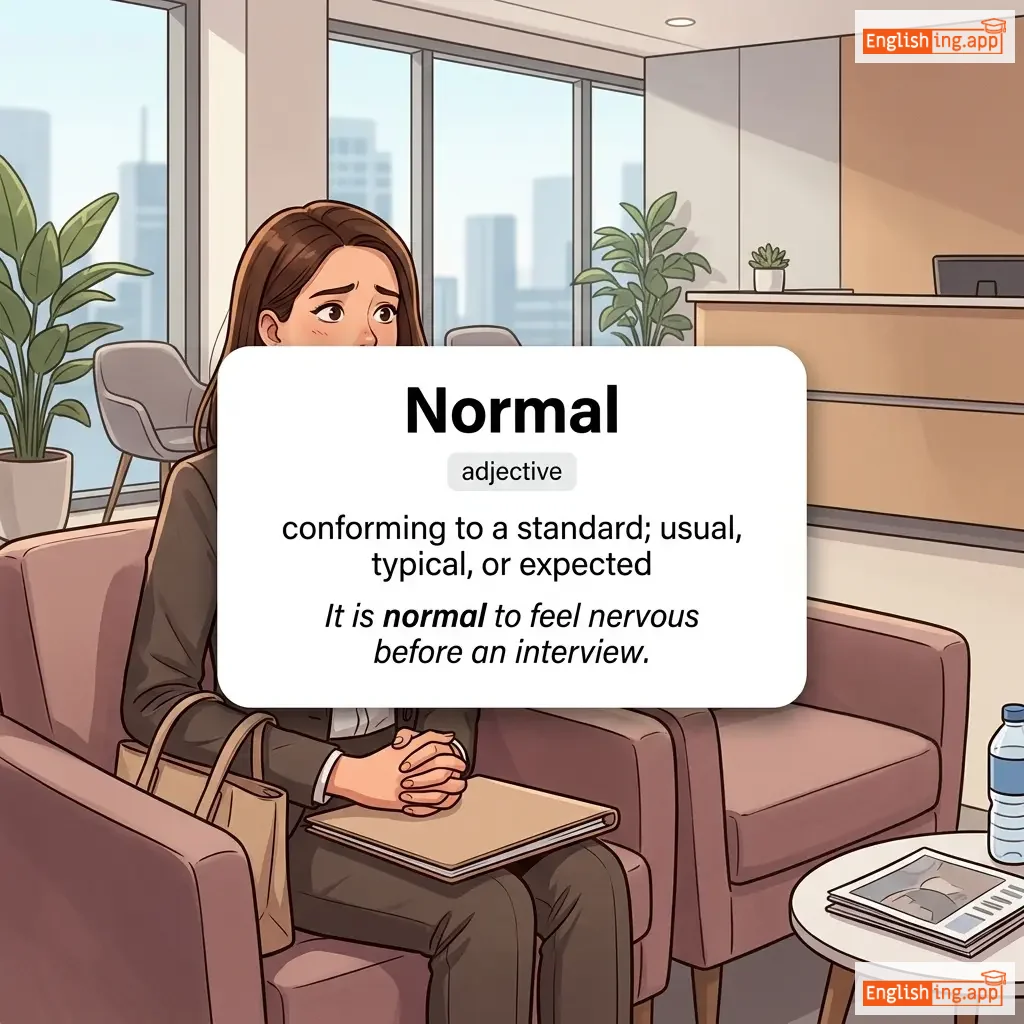
Normal definition card — visual illustration of the meaning
adjective
/ˈnɔː.məl/
স্বাভাবিক (swabhabik)

conforming to a standard; usual, typical, or expected

"It is normal to feel nervous before an interview."

"ইন্টারভিউয়ের আগে নার্ভাস হওয়া স্বাভাবিক।" (interviewer age nervous howa swabhabik.)
noun
/ˈnɔːrməlsi/
স্বাভাবিক অবস্থা (shadharon obostha)

The condition of being normal; a return to usual or expected conditions.

"After the flood, the town struggled to regain a sense of normalcy."

"বন্যার পরে শহরটি স্বাভাবিক অবস্থা ফিরে পেতে লড়াই করেছিল।" (Bonnar pore shohorti shadharon obostha fire pete lorai korechhilo.)
verb
/ˈnɔːrməlaɪz/
স্বাভাবিক করা (swabhabik kora)

to bring something back to a normal or standard condition; to make something conform to a standard

"The government took steps to normalize relations with neighboring countries."

"সরকার প্রতিবেশী দেশগুলোর সঙ্গে সম্পর্ক স্বাভাবিক করতে পদক্ষেপ নিয়েছে।" (sarkar protibeshi deshgulor sathe somporko swabhabik korte podokkhep niyeche)
adverb
/ˈnɔːməli/
সাধারণত (sadharanoto)

in a usual or expected way

"I normally wake up at 7 AM."

"আমি সাধারণত ৭ টায় উঠে।" (Ami sadharanoto 7 ta-e uthe.)
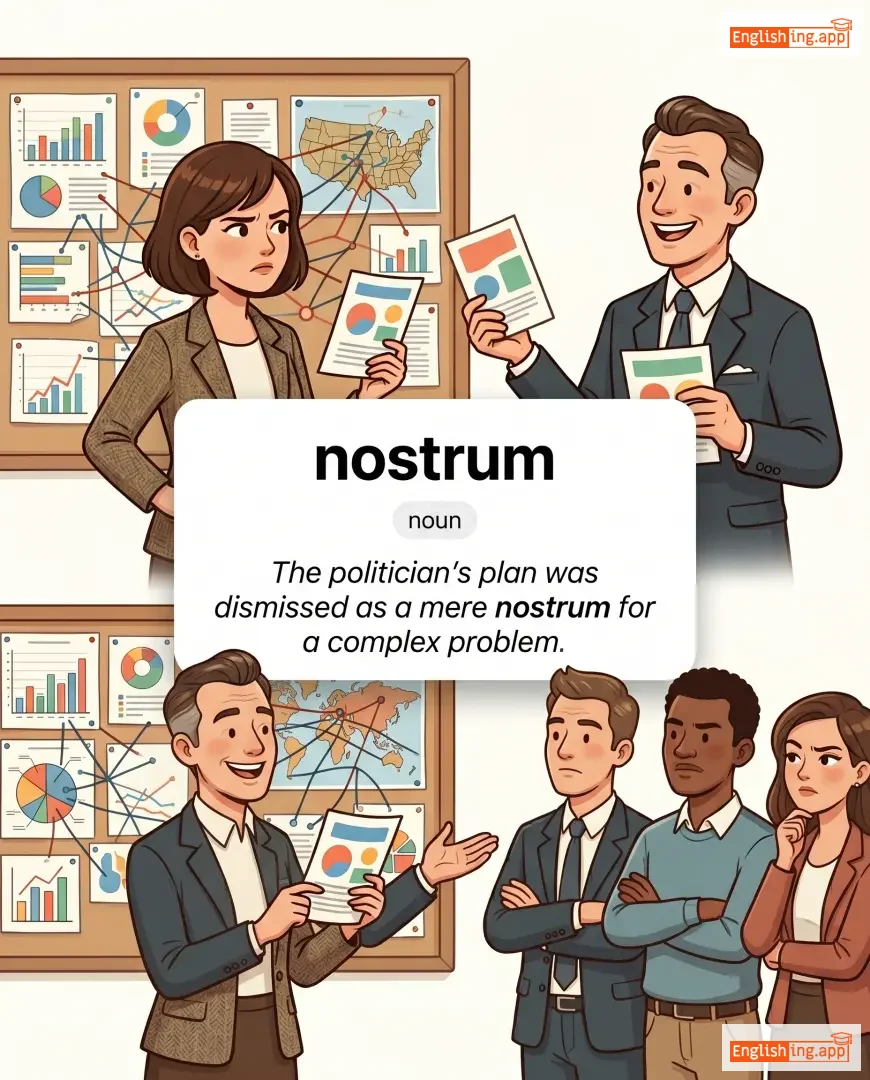
nostrum definition card — visual illustration of the meaning
noun
/ˈnɑːstrəm/
অবিশ্বস্ত ওষুধ (obishwasto oshudh)

a medicine or remedy, especially one that is not considered effective; a questionable solution

"The politician’s plan was dismissed as a mere nostrum for a complex problem."

"রাজনীতিবিদের পরিকল্পনাটি একটি জটিল সমস্যার জন্য কেবলমাত্র এক অবিশ্বস্ত প্রতিকার হিসেবে বাতিল করা হয়েছিল।" (Rajnaitibidder porikolpanati ekti jatil somashyar jonno kebolmatro ek obishwasto protikar hishebe batil kora hoyechhilo.)
noun
/ˈnoʊzˌɡeɪ/
ফুলের তোড়া (fuler tora)

a small bunch of flowers, typically given as a gift or carried for decoration

"She carried a nosegay of fresh roses to the ceremony."

"সে অনুষ্ঠানে তাজা গোলাপের একটি তোড়া বহন করেছিল।" (Se onusthane taja golaper ekti tora bohon korechhilo.)
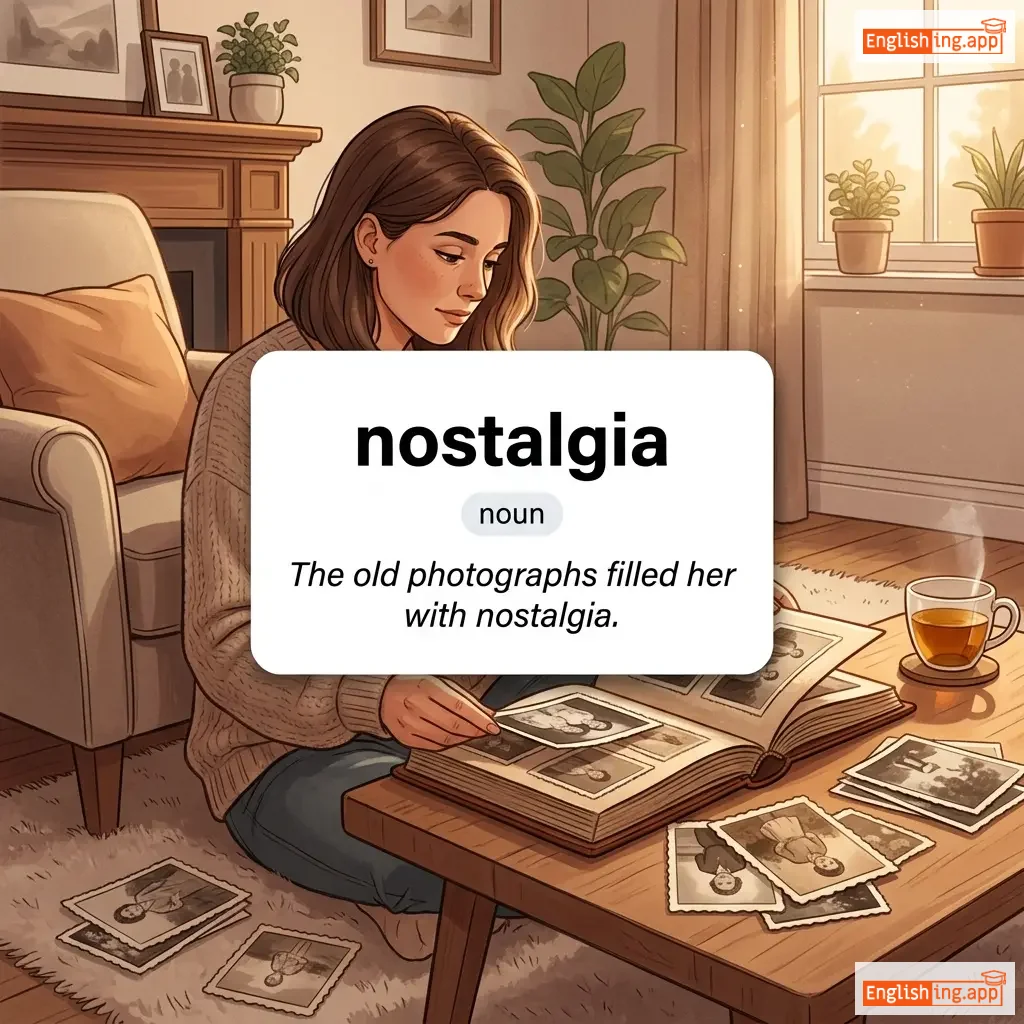
nostalgia definition card — visual illustration of the meaning
noun
/nəˈstældʒə/
অতীত স্মৃতির আকাঙ্ক্ষা (otit smritir akankkha)

a sentimental longing for the past, often for a period or place with happy memories

"The old photographs filled her with nostalgia."

"পুরনো ছবিগুলো তাকে নস্টালজিয়ায় ভরে দিয়েছিল।" (Purono chhbigulo take nostalgiae bhore diyechhilo.)
noun
/ˈnɒs.trɪl/
নাসারন্ধ্র (nasarondhro)

either of the two openings in the nose through which air passes

"The doctor checked each nostril for any blockage."

"ডাক্তার যেকোনো বাধার জন্য প্রতিটি নাসারন্ধ্র পরীক্ষা করলেন।" (daktar jekono badhar jonno protiti nasarondhro poriksha korlen.)
adjective
/ˈnoʊtəbl/
উল্লেখযোগ্য (ullekjoygo)

worthy of attention or notice; remarkable

"She made a notable contribution to the project."

"সে প্রকল্পে একটি উল্লেখযোগ্য অবদান রেখেছিল।" (Se projekte ekti ullekjoygo obodan rekhechhilo.)
adverb
/ˈnoʊtəbli/
বিশেষভাবে (biseshbhabe)

used to indicate something worthy of attention or significant

"She is notably talented in painting."

"সে চিত্রাঙ্কনে নোটাবলি প্রতিভাবান।" (Se chitrânkone biseshbhabe pratibhaban.)
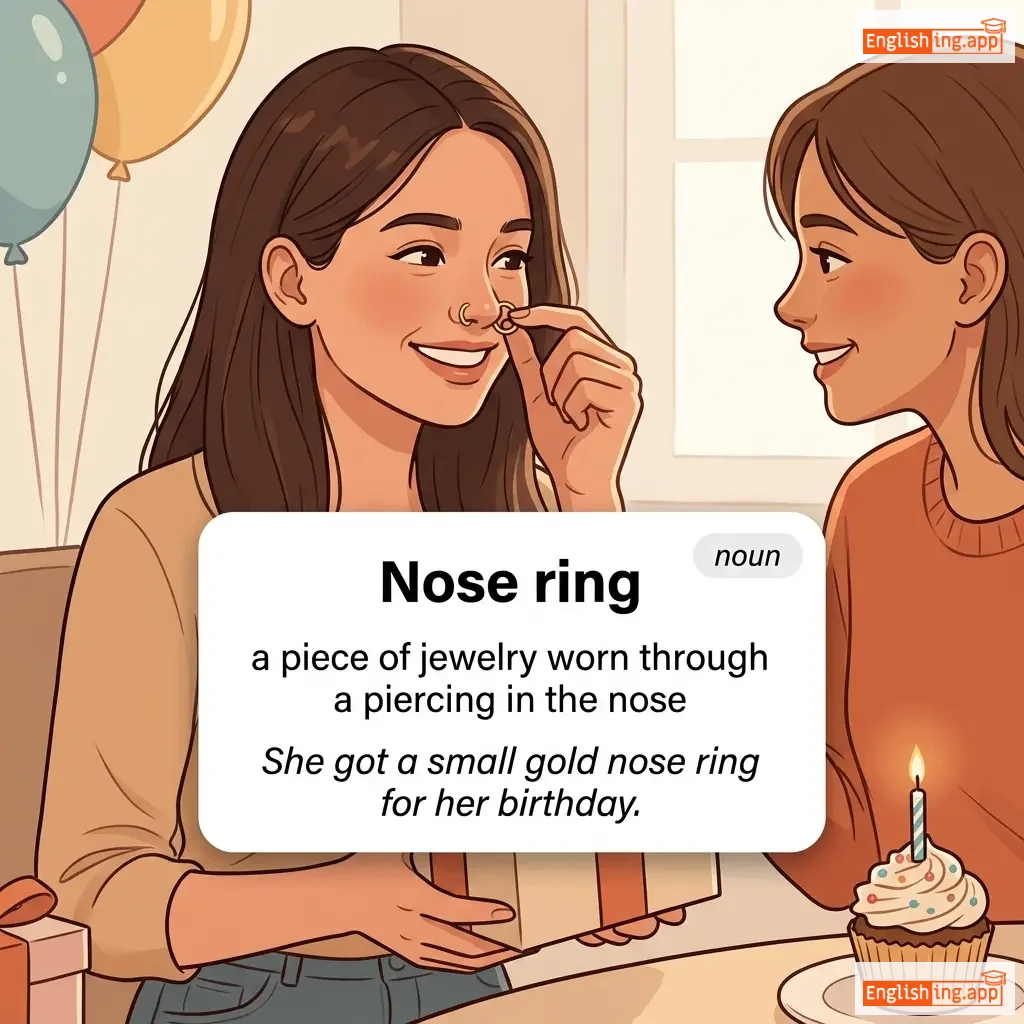
Nose ring definition card — visual illustration of the meaning
noun
/noʊz rɪŋ/
নথ (noth)

a piece of jewelry worn through a piercing in the nose

"She got a small gold nose ring for her birthday."

"তার জন্মদিনে সে একটি ছোট সোনার নথ পেয়েছিল।" (tar jonmodine se ekti choto sonar noth peyechilo.)