Словари

Словарь английского языка | Значения слов, определения и примеры

noun
/ˈnoʊvə/
нова (звезда, показывающая резкое увеличение яркости, а затем медленно возвращающаяся в исходное состояние) (nova)

A star showing a sudden large increase in brightness and then slowly returning to its original state

"Astronomers observed a bright nova in the sky."

"Астрономы наблюдали яркую нову на небе." (Astronomy nablyudali yarkuyu novu na nebe.)
noun/adjective
/ˈnɒvəl/
роман / новый (roman / novyj)

A long fictional narrative; also something new or unusual.

"She spent the weekend reading a historical novel."

"Она провела выходные, читая исторический роман." (Ona provela vykhodnye, chitaya istoricheskij roman.)
noun
/ˈnɒvəlɪst/
писатель романов (pisatel' romanov)

a person who writes novels

"The novelist spent years writing his new book."

"Новелист провел годы, написав свою новую книгу." (Novelist provel gody, napisav svoju novuju knigu.)
noun
/ˌnɒvəˈlɛt/
новеллета (novetta)

A short novel or long short story.

"The author published a novellette as a preview of her upcoming series."
"Автор опубликовал новеллету в качестве превью своей будущей серии." (Avtor opublikoval novettu v kachestve preview svoey budushchey serii.)
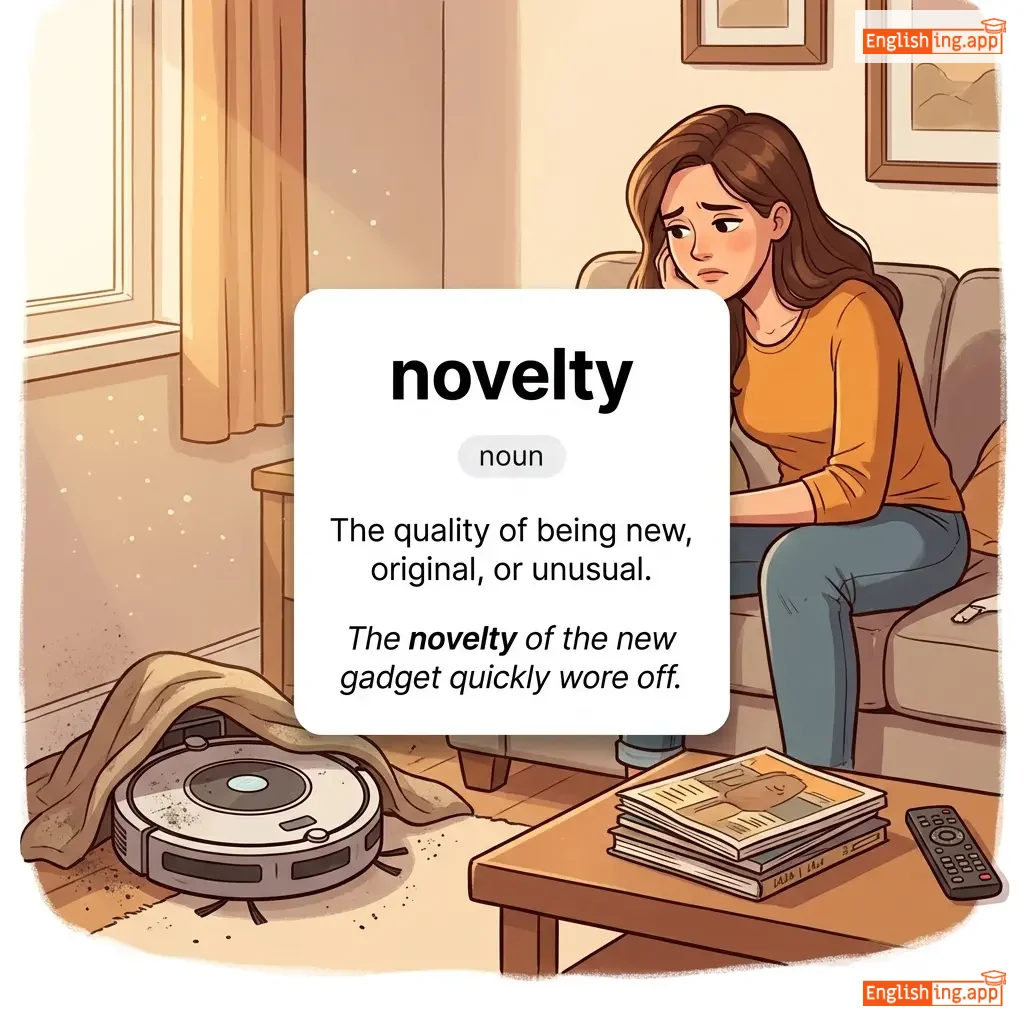
novelty definition card — visual illustration of the meaning
noun
/ˈnɒvəlti/
новизна (novizna)

The quality of being new, original, or unusual.

"The novelty of the new gadget quickly wore off."

"Новизна нового гаджета быстро исчезла." (Novizna novogo gadzheta bыstro ischezla.)
noun
/noʊˈvɛmbər/
ноябрь (noyabr)

the eleventh month of the year in the Gregorian calendar

"November is often cool and quiet before winter begins."

"Ноябрь часто бывает прохладным и тихим перед началом зимы." (noyabr chasto byvaet prokhladnym i tikhim pered nachalom zimy)
noun
/ˈnɒvɪs/
новичок (novichok)

A person new to or inexperienced in a field or activity.

"He is still a novice at playing the guitar."

"Он все еще новичок в игре на гитаре." (On vse eshche novichok v igre na gitare.)
now definition card — visual illustration of the meaning
adverb
/naʊ/
сейчас (sejchas)

at the present moment or time

"I am studying now."

"Я учусь сейчас." (Ya uchus' sejchas.)
adverb
/ˈnaʊədeɪz/
В настоящее время; в наши дни (v nastoyashchee vremya)

at the present time; in these times

"Now-a-days, people prefer online shopping."

"Сейчас люди предпочитают покупки онлайн." (Seychas lyudi predpochitayut pokupki onlayn.)
adverb
/ˈnaʊədeɪz/
в наши дни (v nashi dni)

At the present time; in contrast with the past.

"Nowadays, many people prefer shopping online."

"В наши дни многие люди предпочитают делать покупки онлайн." (V nashi dni mnogie lyudi predpochitayut delat' pokupki onlayn.)
adverb
/ˈnoʊˌwɛr/
нигде (nigde)

in or to no place; not anywhere

"The missing keys were nowhere to be found."

"Потерянные ключи нигде не были найдены." (Poteryannye klyuchi nigde ne byli naydeny.)
adjective
/ˈnɑːkʃəs/
вредный (vrednyy)

harmful, poisonous, or very unpleasant

"The factory released noxious fumes into the air."
"Фабрика выпустила ядовитые пары в воздух." (Fabrika vypustila yodovitye pary v vozdukh.)
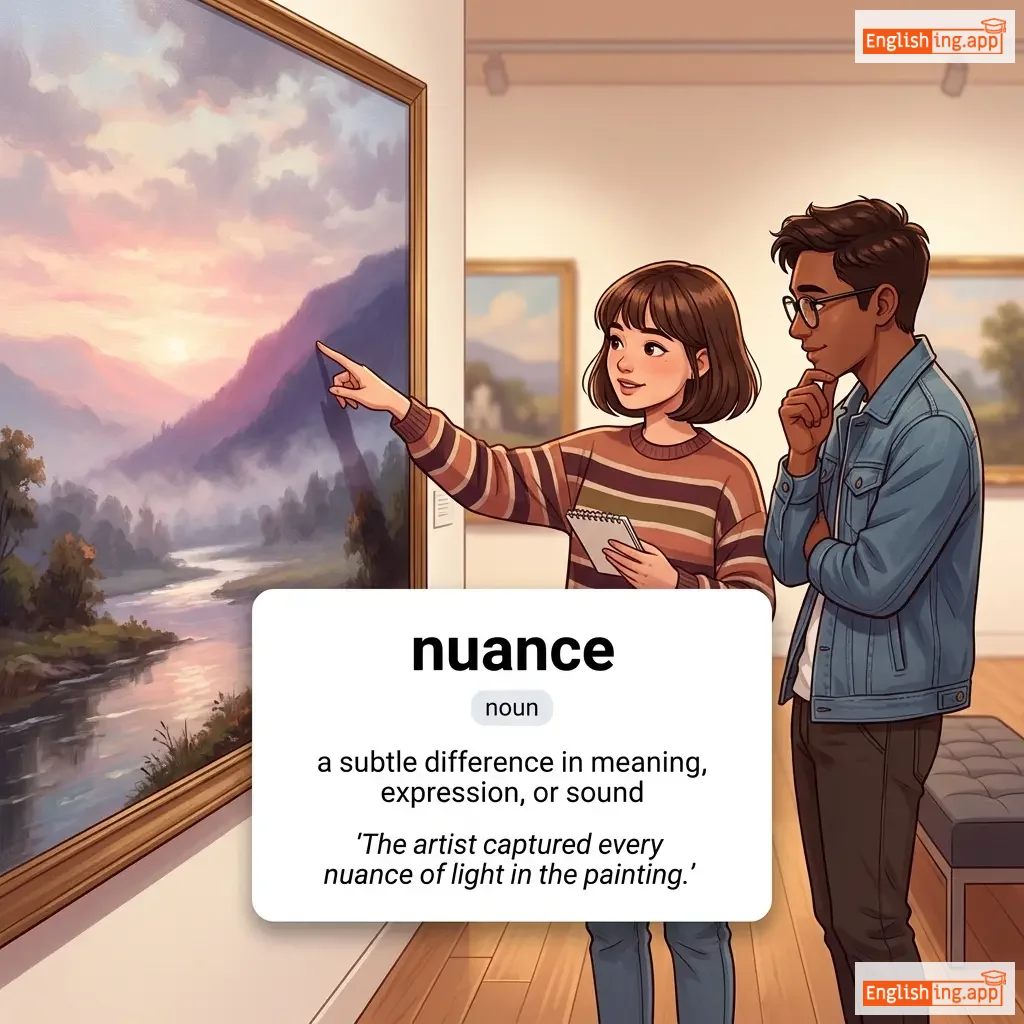
nuance definition card — visual illustration of the meaning
noun
/ˈnuːˌɑːns/
нюанс (nyuans)

a subtle difference in meaning, expression, or sound

"The artist captured every nuance of light in the painting."

"Художник уловил каждый нюанс света в картине." (Khodozhnik ulovil kazhdyy nyuans sveta v kartine.)
adjective
ˈnuː.ɑːnst
нюансированный (nyuansirovannyy)

Characterized by subtle shades of meaning or expression; having or characterized by subtle and often appealingly complex qualities.

"His argument was nuanced and well-structured."

"Его аргументация была нюансированной и хорошо структурированной." (Ego argumentatsiya byla nyuansirovannoy i khorosho struktuirovannoy.)
adjective
/ˈnjuːbaɪl/
девушка (devushka)

of a young woman, sexually mature and suitable for marriage

"The village was celebrating the festival with its nubile maidens dancing."

"Деревня праздновала фестиваль с ее девицами, танцующими." (Derevnya prazdnovala festival s yeye devitsami, tantsuyushchimi.)
adjective
/ˈnuːkliər/
ядерный (yaderny)

relating to the nucleus of an atom or to nuclear energy

"The country is developing nuclear energy."

"Страна разрабатывает ядерную энергию." (Strana razrabatyvayet yadernuju energiyu.)
verb
/ˈnuːkliˌeɪt/
нуклеировать (nukleirovat)

to form into a nucleus or bring together into a central part

"The droplets began to nucleate around tiny particles in the air."
"Капли начали нуклеироваться вокруг мелких частиц в воздухе." (Kapli nachali nukleirovatsya vokrug mel'kikh chastits v vozdukhe.)
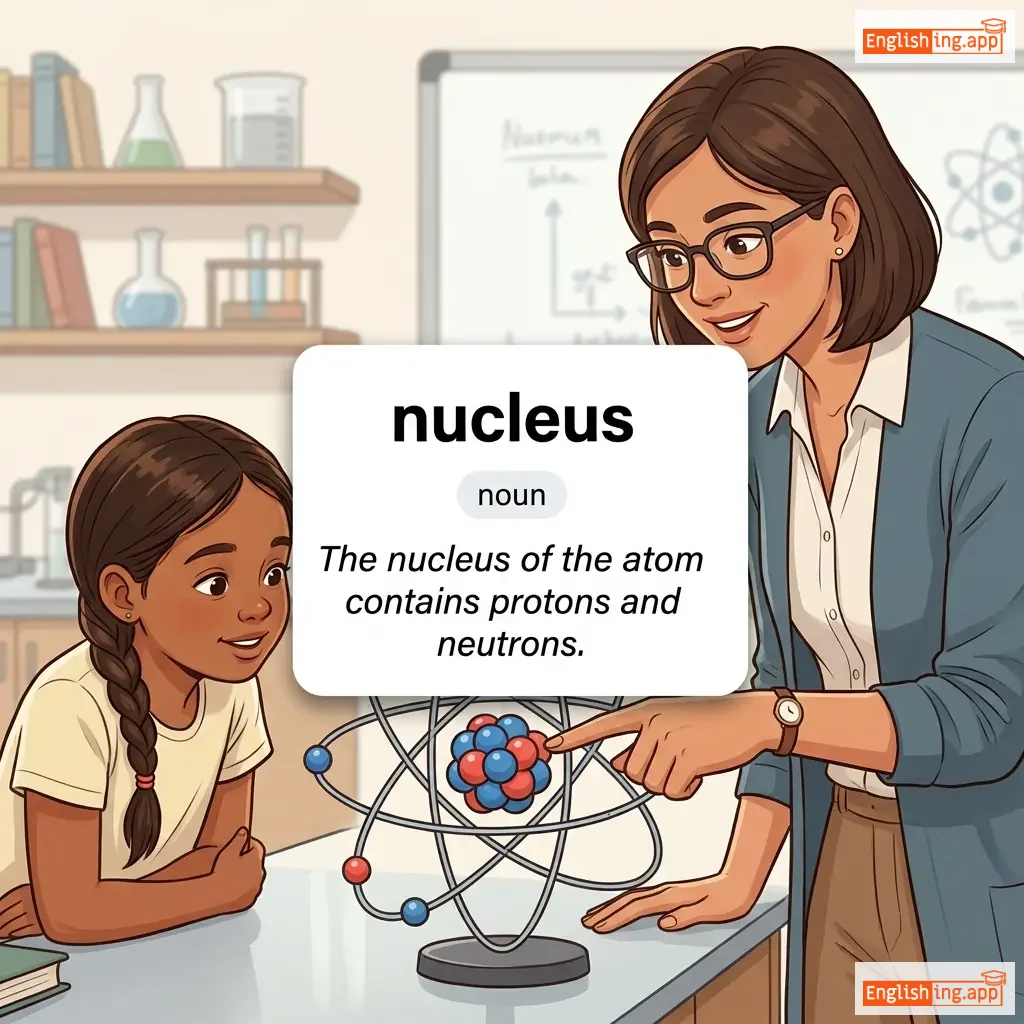
nucleus definition card — visual illustration of the meaning
noun
/ˈnjuː.kli.əs/
ядеро (yadero)

The central and most important part of something, forming the basis for its activity and growth; in biology, the central part of a cell.

"The nucleus of the atom contains protons and neutrons."

"Ядро атома содержит протоны и нейтроны." (Yadro atoma soderzhit protony i neytrony.)
adjective
/nuːd/
обнажённый (obnazhyonny)

Wearing no clothes; naked.

"The artist painted a nude model."

"Художник написал картину с обнажённой моделью." (Khudozhnik napisal kartinu s obnazhyonnoi modelyu.)
verb
/nʌdʒ/
прикоснуться локтем (prikosnut'sya loktem)

To push someone gently, usually with your elbow, in order to attract attention.

"She nudged him to be quiet during the meeting."
"Она толкнула его локтем, чтобы он замолчал во время собрания." (Ona tolkhnula ego loktem, chtoby on zamlchal vo vremya sobrania.)
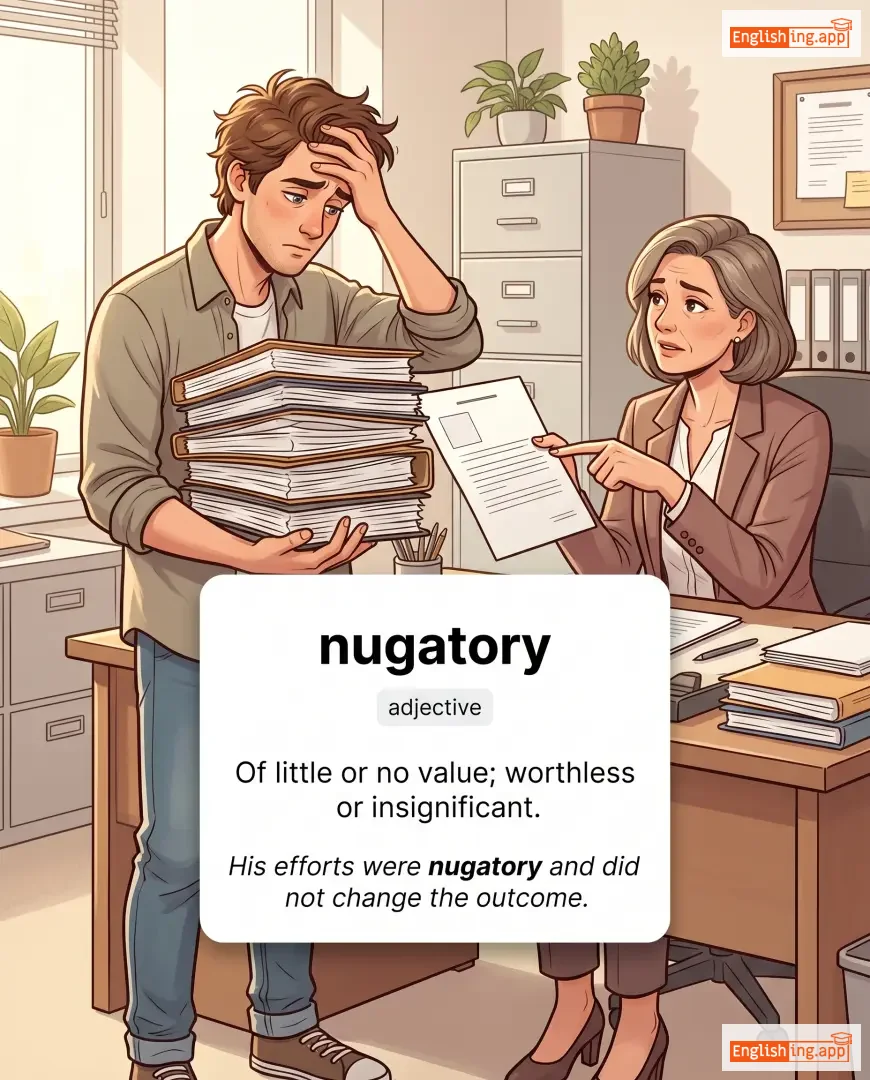
nugatory definition card — visual illustration of the meaning
adjective
/ˈnjuː.ɡə.tɔːr.i/
ничтожный (nischtozhny)

Of little or no value; worthless or insignificant.

"His efforts were nugatory and did not change the outcome."

"Его усилия были ничтожными и не изменили результат." (Ego usiliya byli nichtozhnymi i ne izmenili rezul'tat.)
noun
/ˈnjuː.səns/
неприятность (nepriyatnost)

A person, thing, or situation that causes inconvenience or annoyance.

"The loud construction noise was a nuisance to the neighbors."

"Громкий строительный шум был неприятностью для соседей." (Gromkiy stroitel'nyy shum byl nepriyatnost'yu dlya sosedey.)
nullify definition card — visual illustration of the meaning
verb
/ˈnʌlɪfaɪ/

to make legally null and void; to cancel or invalidate

"The contract was nullified due to fraud."

noun
/ˈnʌmbər/
номер (nomer)

a mathematical value used to count, measure, or label

"She gave me her phone number."

"Она дала мне свой номер телефона." (Ona dala mne svoy nomer telefona.)
adjective
/ˈnjuː.mər.ə.bəl/
считаемый; числяемый (schitayemy; schislyaemy)

capable of being counted; countable

"The stars in the sky are not numerable."

"Звезды на небе не поддаются подсчету." (Zvezdy na nebe ne poddayutsya podschetu.)
noun
/ˌnjuːməˈreɪʃən/
нумерация (númeratsiya)

the action or process of counting or assigning numbers

"The teacher explained the basics of numeration to the students."

"Учитель объяснил основы нумерации студентам." (Uchitel ob'yasnil osnovy numeratsii studentam.)
adjective
/njuːˈmɛrɪkəl/
числовой (chislovoy)

relating to or expressed in numbers

"The report provides numerical data on population growth."

"Доклад предоставляет числовые данные о росте населения." (Doklad predostavlyaet chislovye dannye o roste naseleniya.)
adjective
/ˈnjuːmərəs/
множество (mnozhestvo)

existing in large numbers; many

"There are numerous opportunities for growth in this field."

"Существует множество возможностей для роста в этой области." (Sushchestvuyet mnozhestvo vozmozhnostey dlya rosta v etoy oblasti.)
adjective
/ˈnjuːmɪnəs/
нуминозный (numinozny)

having a strong spiritual or mysterious quality

"The temple had a numinous atmosphere that inspired awe."

"Храм имел в своей атмосфере нечто нуминозное, что вызывало благоговение." (Khram imel v svoey atmosfere nechtо numinoznoe, chto vyzyvalo blagovovenie.)
adjective
/ˌnjuːmɪzˈmætɪk/
нумизматический (numizmaticheskiy)

relating to the study or collection of coins, currency, and medals

"He has a numismatic collection of rare coins from around the world."

"У него есть нумизматическая коллекция редких монет со всего мира." (U nego yest' numizmaticheskaya kollektsiya redkikh monet so vsego mira.)
noun
/njuːˈmɪzmətɪst/
нумизмат (numizmat)

A person who studies or collects coins, paper currency, and medals.

"The numismatist displayed his rare coin collection at the exhibition."

"Нумизмат показал свою редкую коллекцию монет на выставке" (Numizmat pokazal svoju redkuyu kollekciyu monet na vystavke)
👩‍🎓

Nun (нун)

noun
/nʌn/
монахиня (monakhinya)

a woman who has taken vows in a religious order and lives in a convent

"The nun taught at the local Catholic school."

"Монахиня преподавала в местной католической школе." (Monakhinya prepodavala v mestnoy katolicheskoy shkole.)
noun
/ˈnʌnəri/
монастырь (monastyr)

A convent or building where nuns live and work.

"She decided to join the nunnery to devote her life to spiritual practice."

"Она решила присоединиться к монастырю, чтобы посвятить свою жизнь духовной практике." (Ona reshila prisoyedinit'sya k monastyryu, chtoby posvyatit' svoju zhizn' dukhovnoj praktike.)
adjective
/ˈnʌpʃəl/
свадебный (svadebnyy)

Relating to marriage or weddings.

"The couple prepared for their nuptial ceremony with great joy."
"Пара готовилась к своей свадебной церемонии с большой радостью." (Para gotovilas k svoey svadebnoy tseremonii s bol'shoy radost'yu.)
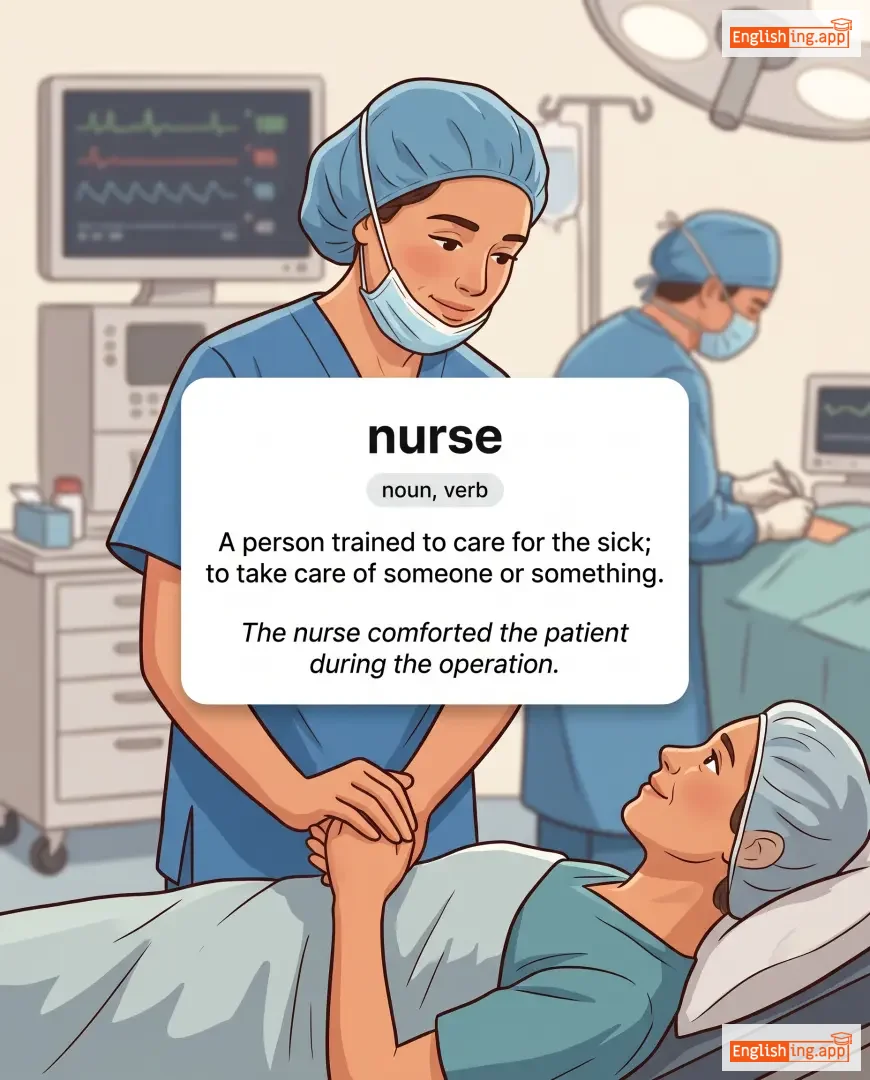
nurse definition card — visual illustration of the meaning
👩‍⚕️

nurse

noun, verb
/nɜːrs/

A person trained to care for the sick; to take care of someone or something.

"The nurse comforted the patient during the operation."

noun
/ˈnɜːrsəri/
ясли (yasli)

a room or place where young children are cared for

"She works in a nursery, taking care of infants."

"Она работает в яслях, заботясь о младенцах." (Ona rabotaet v yaslyakh, zabotyashsya o mladen'tsakh.)
noun
/ˈnɜːrsɪŋ/
сестринское дело (sestrinskoe delo)

the profession or practice of caring for the sick or injured

"She is studying nursing to become a healthcare professional."

"Она изучает сестринское дело, чтобы стать специалистом в области здравоохранения." (Ona izuchayet sestrinskoe delo, chtoby stat' spetsialistom v oblasti zdravookhraneniya.)
verb, noun
/ˈnɜːrtʃər/
вскармливать (vskarmlivat)

To care for and encourage the growth or development of someone or something.

"Parents should nurture their children's talents."
"Родители должны заботиться о талантах своих детей." (Roditeli dolzhny zabotitsya o talantakh svoikh detey.)
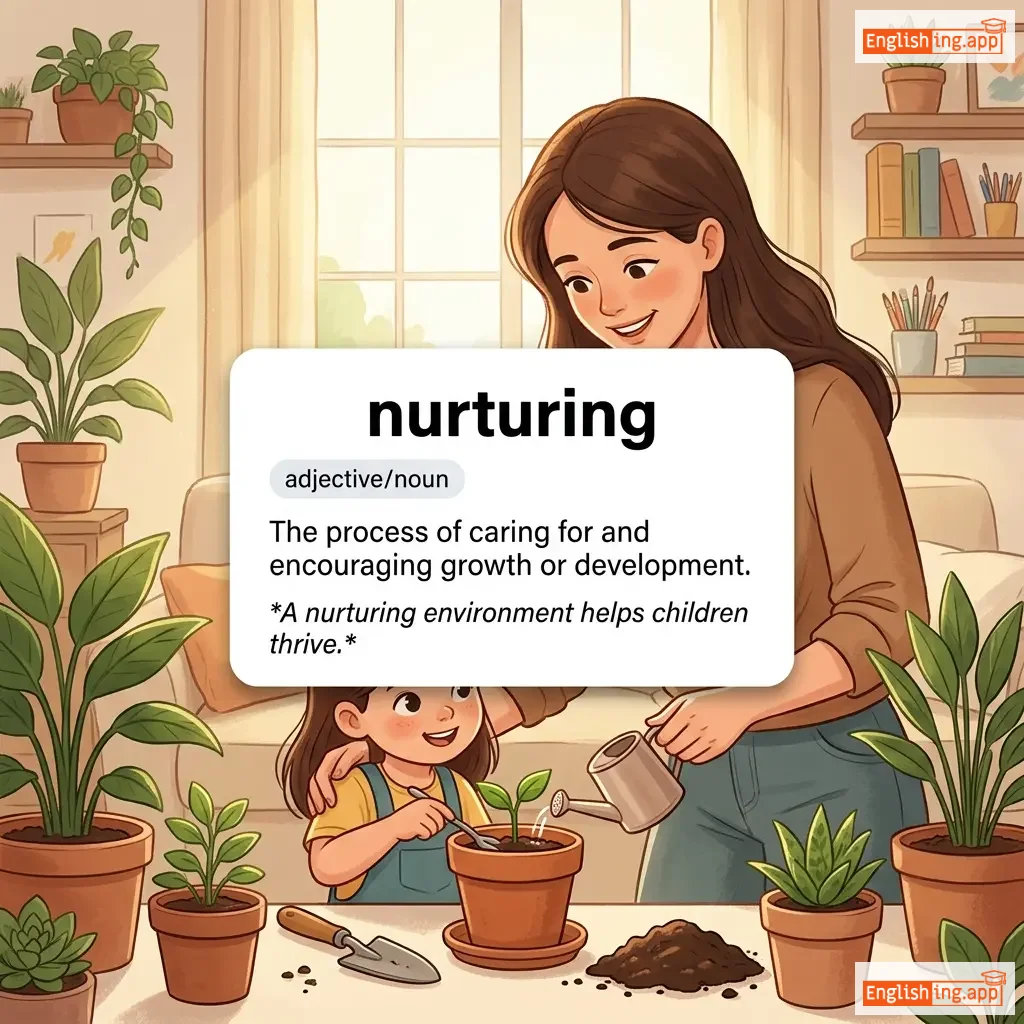
nurturing definition card — visual illustration of the meaning
adjective/noun
/ˈnɜːr.tʃɚ.ɪŋ/
уход, поддержка, развитие (ukhod, podderzhka, razvitie)

The process of caring for and encouraging growth or development.

"A nurturing environment helps children thrive."

"Нуртчаринг окружение помогает детям процветать." (Nurtcharing okruzhenie pomogaet detyam protsvethat'.)
noun
/nʌt/
орех (orekh)

a hard-shelled fruit that contains a seed, or a small metal piece used in machinery

"She ate a peanut, which is a type of nut."

"Она съела арахис, который является видом ореха." (Ona syela arakhis, kotoryy yavyayetsya vidom oreha.)
Nut meg definition card — visual illustration of the meaning
noun
/ˈnʌt.meg/
мускатный орех (muskhatnyy orekh)

a spice made from the seed of the fruit of an evergreen tree, used in cooking and baking

"The recipe called for a teaspoon of ground nutmeg to flavor the custard."
"Рецепт требовал чайную ложку молотого мускатного ореха для придания вкуса крему." (Retsept treboval chaynuyu lozhku molotogo muskatnogo orekha dlya pridayaniya vkusa kremu.)
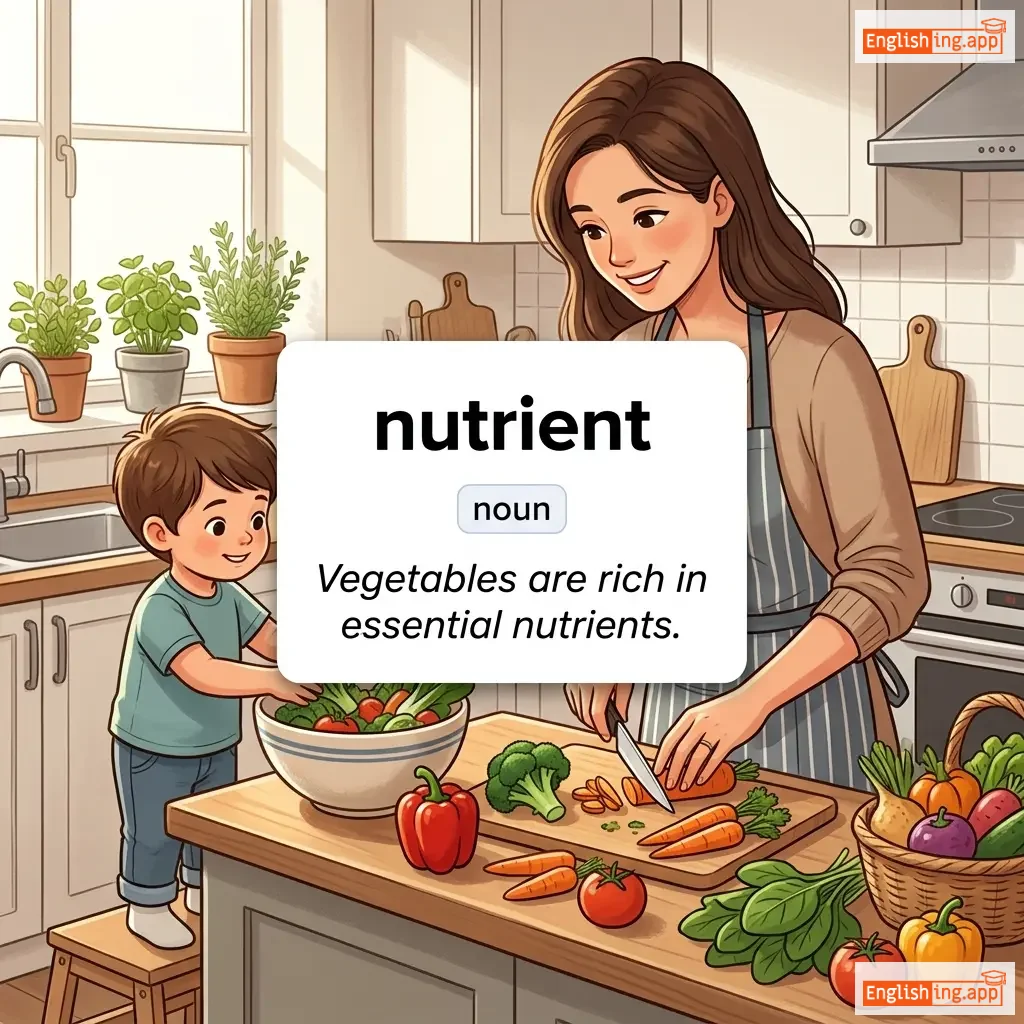
nutrient definition card — visual illustration of the meaning
noun
/ˈnjuː.tri.ənt/
питательное вещество (pitatel'noe veshchestvo)

A substance that provides nourishment essential for growth and the maintenance of life.

"Vegetables are rich in essential nutrients."
"Овощи богаты важными питательными веществами." (Ovoschi bogaty vazhnymi pitatel'nymi veshchestvami.)
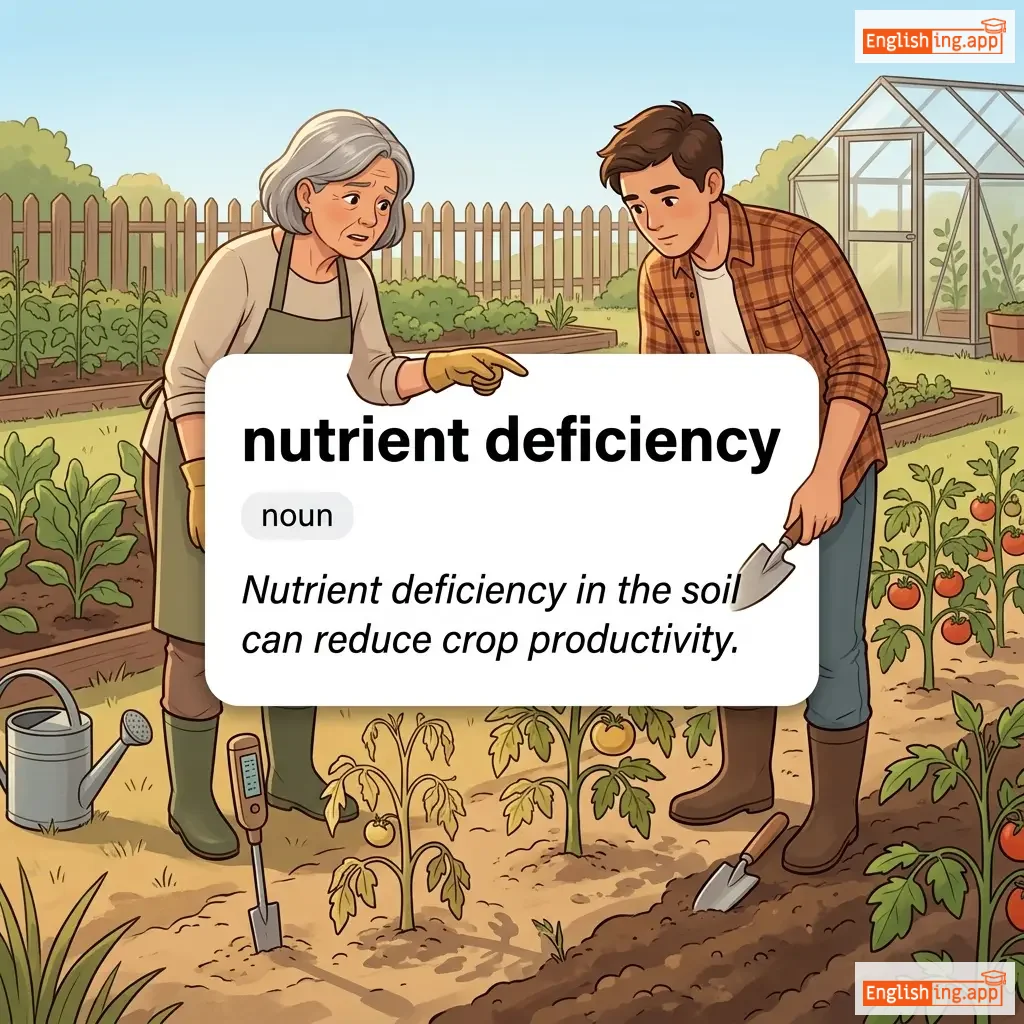
nutrient deficiency definition card — visual illustration of the meaning
noun
/ˈnjuːtrɪənt dɪˈfɪʃənsi/
дефицит питательных веществ (defitsit pitatel'nykh veshchestv)

A lack of essential nutrients required for healthy plant growth, which can result in poor crop development, reduced yields, and increased susceptibility to diseases.

"Nutrient deficiency in the soil can reduce crop productivity."
"Недостаток питательных веществ в почве может снизить продуктивность сельскохозяйственных культур." (Nedostatok pitatel'nykh veshchestv v pochve mozhet snizit' produktivnost' selskokhozyaystvennykh kultur.)
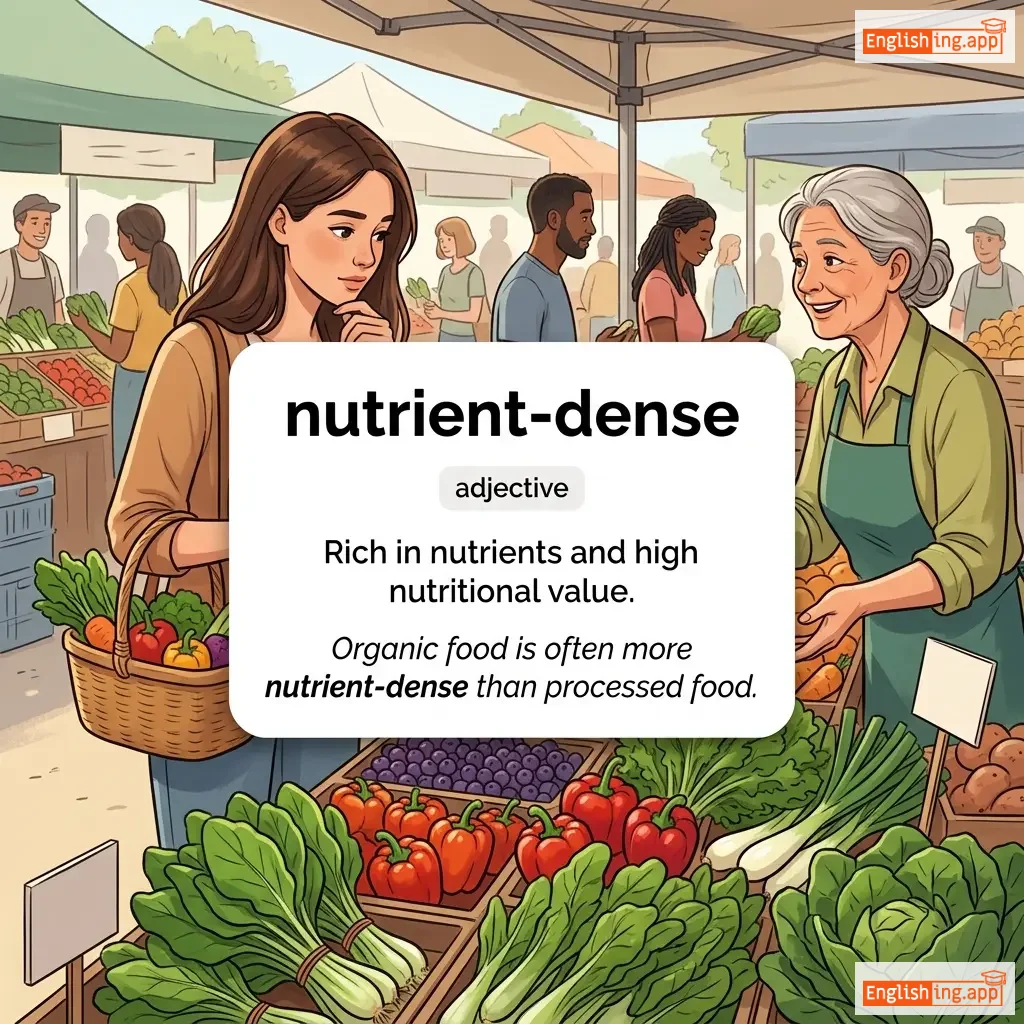
nutrient-dense definition card — visual illustration of the meaning
adjective
/ˈnjuː.tri.ənt dɛns/
питательный (pitatel'nyj)

Rich in nutrients and high nutritional value.

"Organic food is often more nutrient-dense than processed food."

"Органическая пища часто более питательна, чем переработанная." (Organicheskaya pishcha chasto boleye pitatel'na, chem pererabotannaya.)
noun
/ˈnjuː.trɪ.mənt/
питательные вещества (pitatelnye veshchestva)

Something that nourishes; sustenance or food.

"The soil provides nutriment to the plants."

"Почва обеспечивает растения питательными веществами." (Pochva obespechivayet rastenija pitatelnymi veshchestvami.)
noun
/njuːˈtrɪʃ.ən/
питание (pitaniye)

The process of providing or obtaining the food necessary for health and growth.

"Good nutrition is vital for a healthy life."

"Хорошее питание важно для здоровой жизни." (Khoroshee pitaniye vazhno dlya zdorovoy zhizni.)
adjective
/njuːˈtrɪʃ.əs/
питательный (pitatel'nyy)

Providing nourishment; health-giving.

"Milk is a nutritious drink for children."
"Молоко - это питательный напиток для детей." (Moloko - eto pitatel'nyy napitok dlya detey.)
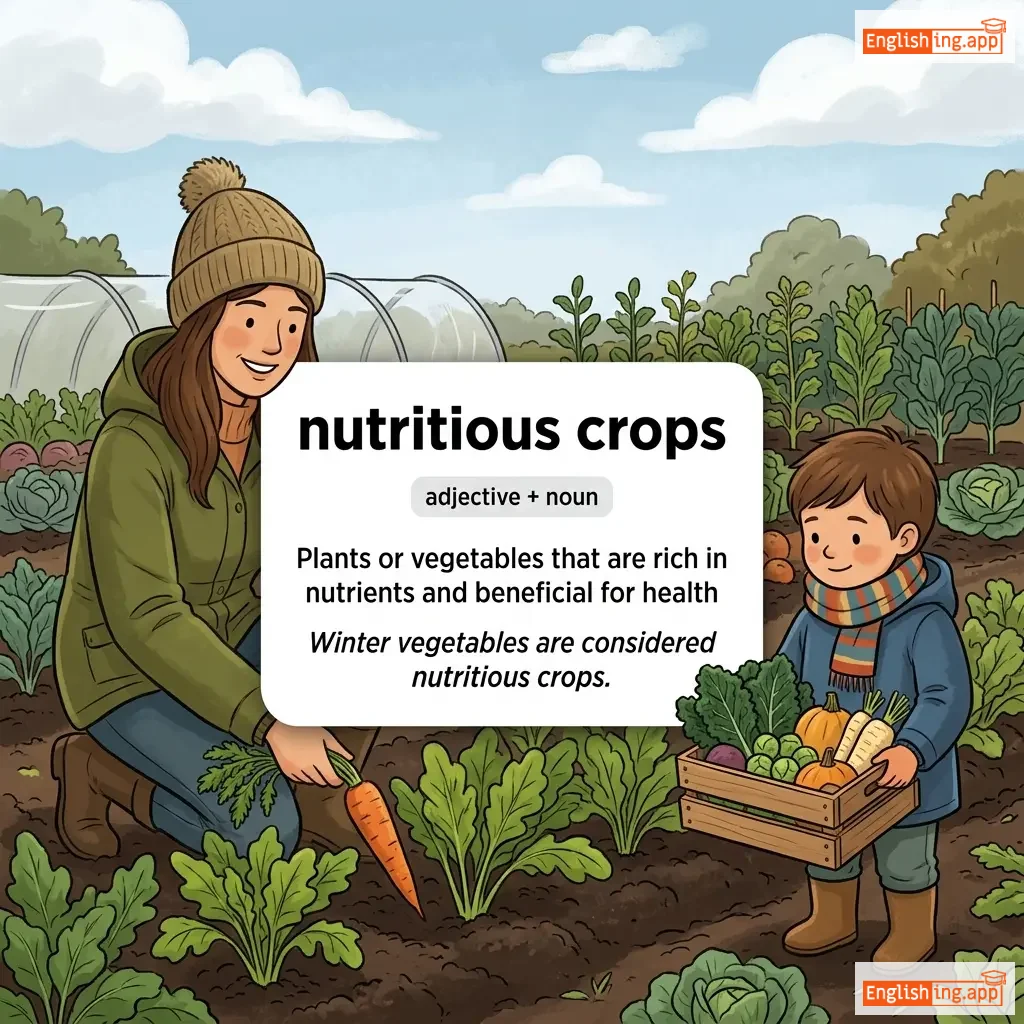
nutritious crops definition card — visual illustration of the meaning
adjective + noun
njuˈtrɪʃəs krɒps
питательные культуры (pitatel'nye kultury)

Plants or vegetables that are rich in nutrients and beneficial for health

"Winter vegetables are considered nutritious crops."

"Овощи зимой считаются питательными культурами." (Ovoschi zimoy schitayutsya pitatel'nymi kulturami.)
adjective, verb
/əbˈskjʊr/
неясный (neyasnyy)

Not clearly expressed or understood; to make something difficult to see or understand.

"The meaning of the poem was obscure to most readers."

"Значение поэмы было непонятно большинству читателей." (Znachenie poemy bylo neponyatno bol'shinstvu chitateley.)
noun
/ˈɒbsɪkwiːz/
погребальные обряды (pogrebal'nye obryady)

Funeral rites or ceremonies.

"The obsequies for the late leader drew thousands of mourners."

"Погребальные обряды для покойного лидера привлекли тысячи скорбящих." (Pogrebal'nye obryady dlya pokoynogo lidera privlekli tysyachi skorbyashchikh.)