词汇表

英语词汇词典 | 单词含义、定义和示例

noun
/ˈnoʊvə/
新星 (一颗星星突然亮度增加,然后缓慢返回到原始状态) (nova)

A star showing a sudden large increase in brightness and then slowly returning to its original state

"Astronomers observed a bright nova in the sky."

"天文学家在天空中观察到了一颗明亮的新星。" (Tian wenxuejia zai tiankong zhong guancha dao le yi ke mingliang de xinxing.)
noun/adjective
/ˈnɒvəl/
小说 / 新的 (xiaoshuo / xin de)

A long fictional narrative; also something new or unusual.

"She spent the weekend reading a historical novel."

"她在周末阅读了一本历史小说。" (Ta zai zhoumo yuedule yi ben lishi xiaoshuo.)
noun
/ˈnɒvəlɪst/
小说家 (xiǎoshuōjiā)

a person who writes novels

"The novelist spent years writing his new book."

"小说家花了多年写他的最新小说。" (Xiǎoshuōjiā huāle duōnián xiě tā de zuìxīn xiǎoshuō.)
noun
/ˌnɒvəˈlɛt/
短篇小说 (duǎnpiān xiǎoshuō)

A short novel or long short story.

"The author published a novellette as a preview of her upcoming series."

"作者作为她即将发布的系列的预览,发布了一个短篇小说。" (Zuòzhě zuòwéi tā jíjiāng fābù de xìliè de yùlǎn, fābùle yīgè duǎnpiān xiǎoshuō.)
novelty definition card — visual illustration of the meaning
noun
/ˈnɒvəlti/
新颖 (xinying)

The quality of being new, original, or unusual.

"The novelty of the new gadget quickly wore off."

"新款小工具的新颖感很快就消失了。" (Xīn kuǎn xiǎo gōngjù de xīnyǐng gǎn hěn kuài jiù xiāoshī le.)
noun
/noʊˈvɛmbər/
十一月 (shiyi yue)

the eleventh month of the year in the Gregorian calendar

"November is often cool and quiet before winter begins."

"十一月通常在冬天开始前比较凉爽而安静。" (shiyi yue tongchang zai dongtian kaishi qian bijiao liangshuang er anjing)
noun
/ˈnɒvɪs/
新手 (xīnshǒu)

A person new to or inexperienced in a field or activity.

"He is still a novice at playing the guitar."

"他在弹吉他时仍然是个新手。" (Tā zài tán jítā shí réngrán shì gè xīnshǒu.)
now definition card — visual illustration of the meaning
adverb
/naʊ/
现在 (xianzai)

at the present moment or time

"I am studying now."

"我现在正在学习。" (Wǒ xiànzài zhèngzài xuéxí.)
adverb
/ˈnaʊədeɪz/
如今; 现在 (rujin; xianzai)

at the present time; in these times

"Now-a-days, people prefer online shopping."

"现在人们更喜欢在线购物。" (Xianzai renmen geng xihuan zaixian gouwu.)
adverb
/ˈnaʊədeɪz/
如今 (rújīn)

At the present time; in contrast with the past.

"Nowadays, many people prefer shopping online."

"如今,许多人更喜欢在线购物。" (Rújīn, xǔduō rén gèng xǐhuān zàixiàn gòuwù.)
adverb
/ˈnoʊˌwɛr/
无处 (wuchu)

in or to no place; not anywhere

"The missing keys were nowhere to be found."

"丢失的钥匙无处可找。" (Diushi de yaoshi wuchu ke zhao.)
adjective
/ˈnɑːkʃəs/
有害的 (youhai de)

harmful, poisonous, or very unpleasant

"The factory released noxious fumes into the air."

"工厂释放了有害气体进入空气。" (Gongchang shifang le youhai qiti jinru kongqi.)
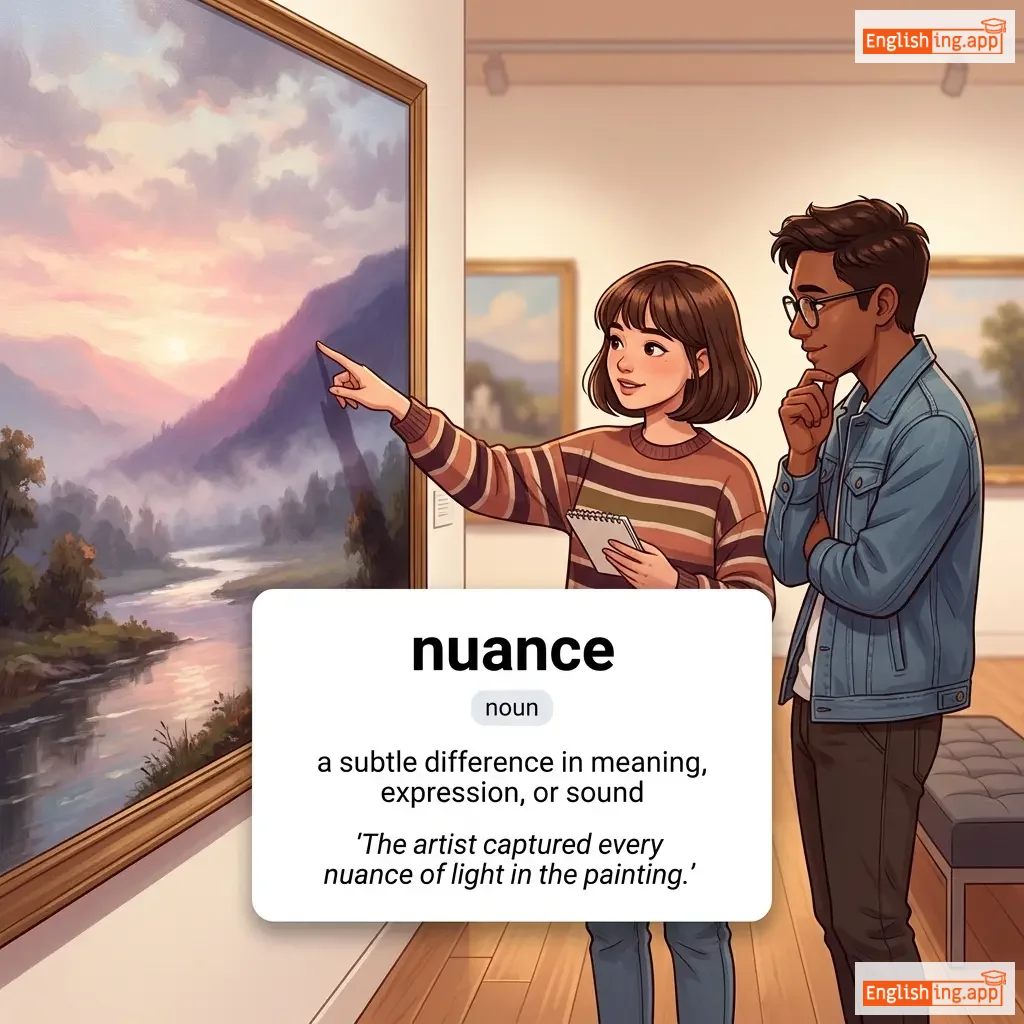
nuance definition card — visual illustration of the meaning
noun
/ˈnuːˌɑːns/

a subtle difference in meaning, expression, or sound

"The artist captured every nuance of light in the painting."

adjective
ˈnuː.ɑːnst
有细微差别的 (yǒu xì wēi chābié de)

Characterized by subtle shades of meaning or expression; having or characterized by subtle and often appealingly complex qualities.

"His argument was nuanced and well-structured."

"他的论点有细微差别且结构良好。" (Tā de lùnzhēng yǒu xì wēi chābié qiě jiégòu liánghǎo.)
adjective
/ˈnjuːbaɪl/
年轻的女孩 (niánqīng de nǚhái)

of a young woman, sexually mature and suitable for marriage

"The village was celebrating the festival with its nubile maidens dancing."

"村庄正在庆祝节日,跳舞的是年轻的女孩。" (Cūnzhuāng zhèngzài qìngzhù jiérì, tiàowǔ de shì niánqīng de nǚhái.)
adjective
/ˈnuːkliər/
核能 (hénéng)

relating to the nucleus of an atom or to nuclear energy

"The country is developing nuclear energy."

"该国正在开发核能。" (Gāi guó zhèngzài kāifā hénéng.)
verb
/ˈnuːkliˌeɪt/
成核 (chenghe)

to form into a nucleus or bring together into a central part

"The droplets began to nucleate around tiny particles in the air."
"水滴开始在空气中的微小颗粒周围形成核。" (Shuǐdī kāishǐ zài kōngqì zhōng de wēi xiǎo kēlì zhōuwéi xíngchéng hé.)
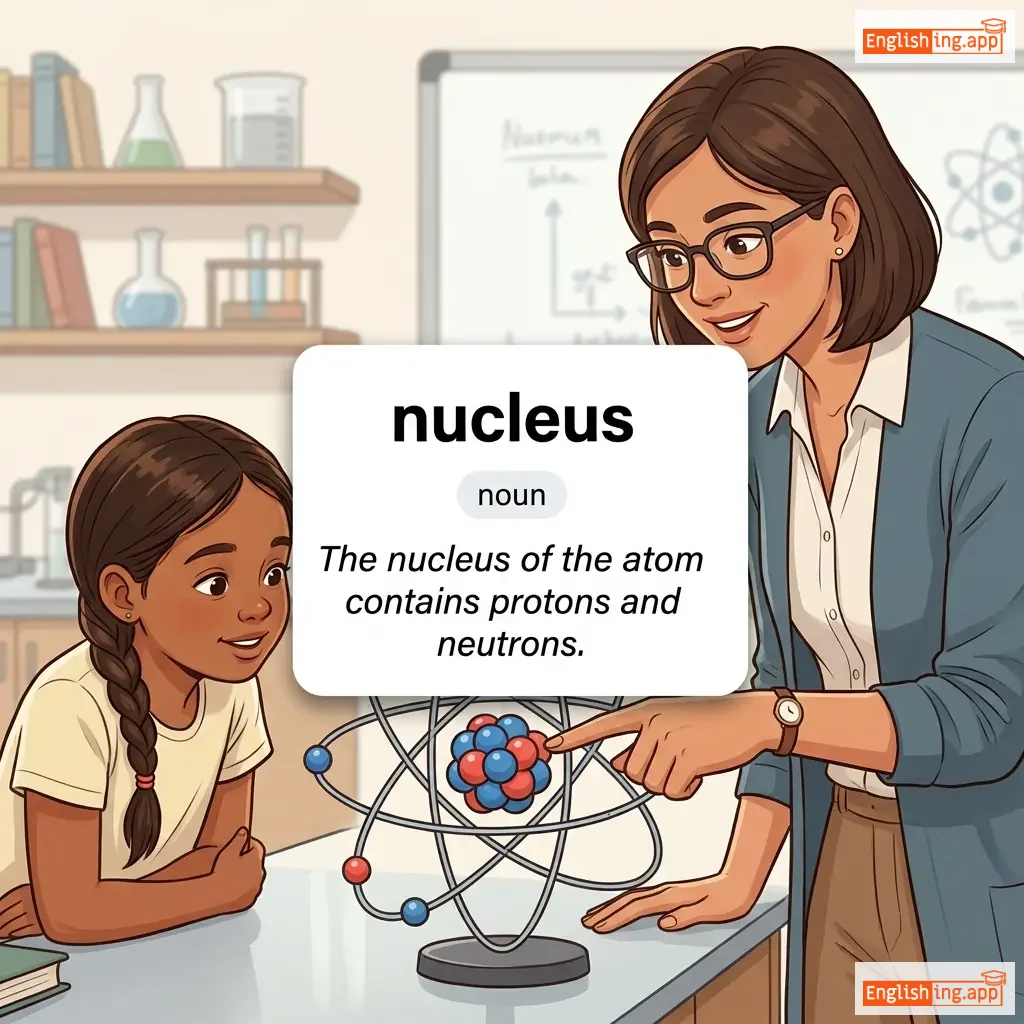
nucleus definition card — visual illustration of the meaning
noun
/ˈnjuː.kli.əs/
原子核 (yuánzǐhé)

The central and most important part of something, forming the basis for its activity and growth; in biology, the central part of a cell.

"The nucleus of the atom contains protons and neutrons."

"原子核包含质子和中子。" (Yuánzǐhé bāohán zhìzǐ hé zhōngzǐ.)
adjective
/nuːd/
裸体 (luǒtǐ)

Wearing no clothes; naked.

"The artist painted a nude model."

"艺术家画了一位裸体模特。" (Yìshùjiā huàle yī wèi luǒtǐ mótè.)
verb
/nʌdʒ/
轻推 (qing tui)

To push someone gently, usually with your elbow, in order to attract attention.

"She nudged him to be quiet during the meeting."
"她在会议中轻轻地用肘部推了他一下,让他保持安静。" (Ta zai huiyi zhong qingqing de yong zhoubu tui le ta yixia, rang ta baochi anjing.)
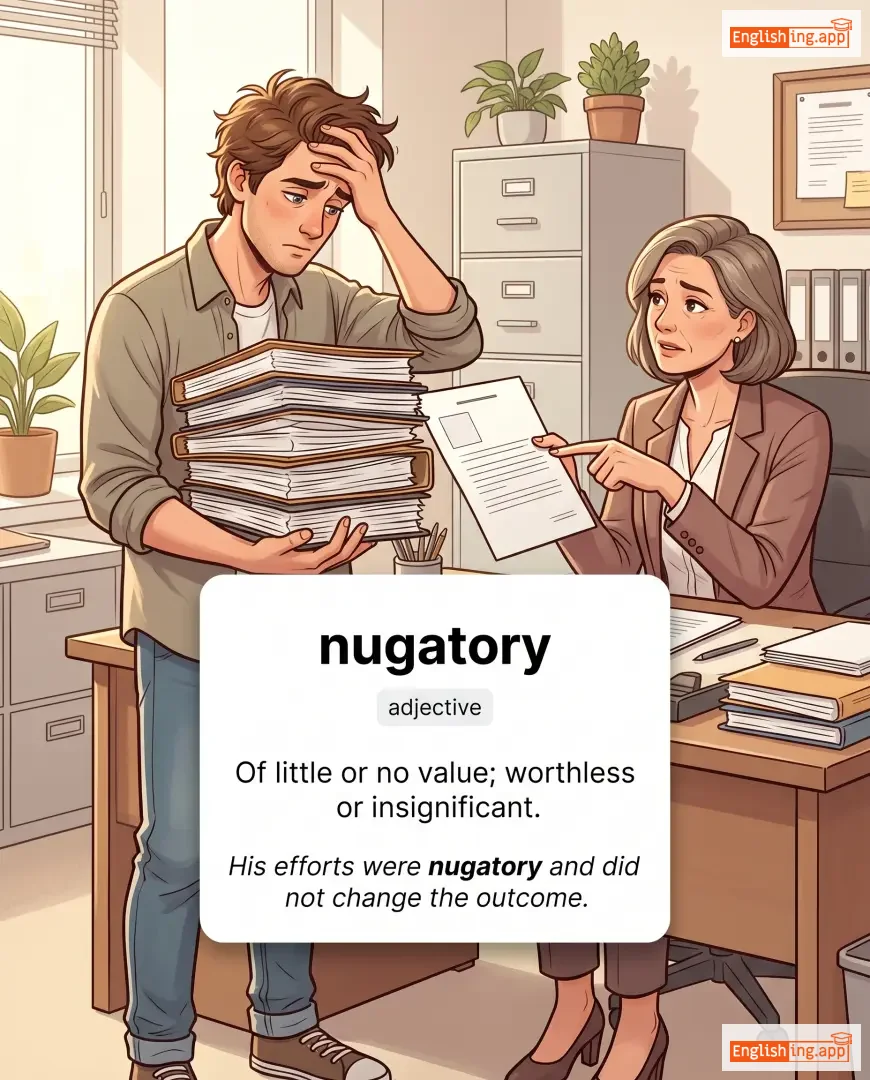
nugatory definition card — visual illustration of the meaning
adjective
/ˈnjuː.ɡə.tɔːr.i/
微不足道 (weibuzhidao)

Of little or no value; worthless or insignificant.

"His efforts were nugatory and did not change the outcome."

"他的努力微不足道,未能改变结果。" (Tade nuli weibuzhidao, wei neng gaibian jieguo.)
noun
/ˈnjuː.səns/
麻烦 (mafan)

A person, thing, or situation that causes inconvenience or annoyance.

"The loud construction noise was a nuisance to the neighbors."

"吵闹的施工噪音是邻居们的麻烦。" (Chao nao de shigong zaoyin shi linjumen de mafan.)
nullify definition card — visual illustration of the meaning
verb
/ˈnʌlɪfaɪ/

to make legally null and void; to cancel or invalidate

"The contract was nullified due to fraud."

noun
/ˈnʌmbər/
号码 (haoma)

a mathematical value used to count, measure, or label

"She gave me her phone number."

"她给了我她的电话号码。" (Ta gei le wo ta de dianhua haoma.)
adjective
/ˈnjuː.mər.ə.bəl/
可计数的; 数得出的 (ke jishu de; shu de chu)

capable of being counted; countable

"The stars in the sky are not numerable."

"天空中的星星是不可计数的。" (tiānkōng zhōng de xīngxīng shì bù kě jìshù de.)
noun
/ˌnjuːməˈreɪʃən/
计数 (jishu)

the action or process of counting or assigning numbers

"The teacher explained the basics of numeration to the students."

"老师向学生解释了计数的基础知识。" (Laoshi xiang xuesheng jieshi le jishu de jichu zhishi.)
adjective
/njuːˈmɛrɪkəl/
数字的 (shuzi de)

relating to or expressed in numbers

"The report provides numerical data on population growth."

"报告提供了有关人口增长的数字数据。" (Baogao tigongle youguan renkou zengzhang de shuzi shuju.)
adjective
/ˈnjuːmərəs/
众多 (zhòngduō)

existing in large numbers; many

"There are numerous opportunities for growth in this field."

"在这个领域有很多机会可以成长。" (Zài zhège lǐngyù yǒu hěnduō jīhuì kěyǐ chéngzhǎng.)
adjective
/ˈnjuːmɪnəs/
神秘的 (shenmide)

having a strong spiritual or mysterious quality

"The temple had a numinous atmosphere that inspired awe."

"这座寺庙有一种神秘的氛围,令人敬畏。" (Zhe zuo simiao you yizhong shenmi de fenwei, lingren jingwei.)
adjective
/ˌnjuːmɪzˈmætɪk/
钱币学的 (qián bì xué de)

relating to the study or collection of coins, currency, and medals

"He has a numismatic collection of rare coins from around the world."

"他拥有来自世界各地的稀有硬币收藏。" (Tā yǒng yǒu lái zì shìjiè gè dì de xīyǒu yìng bì shōu cáng.)
noun
/njuːˈmɪzmətɪst/
钱币学家 (qiánbì xuéjiā)

A person who studies or collects coins, paper currency, and medals.

"The numismatist displayed his rare coin collection at the exhibition."

"钱币学家在展览会上展示了他的稀有硬币收藏" (Qiánbì xuéjiā zài zhǎnlǎn huì shàng zhǎnshìle tā de xīyǒu yìngbì shōucáng)
👩‍🎓

Nun (nān)

noun
/nʌn/
修女 (xiū nǚ)

a woman who has taken vows in a religious order and lives in a convent

"The nun taught at the local Catholic school."

"修女在当地的天主教学校授课。" (Xiū nǚ zài dāngdì de tiānzhǔjiào xuéxiào shòukè.)
noun
/ˈnʌnəri/
修道院 (xiūdàoyuàn)

A convent or building where nuns live and work.

"She decided to join the nunnery to devote her life to spiritual practice."

"她决定加入修道院,献身于精神实践。" (Tā juédìng jiārù xiūdàoyuàn, xiànshēn yú jīngshén shíjiàn.)
adjective
/ˈnʌpʃəl/
婚礼的 (hunli de)

Relating to marriage or weddings.

"The couple prepared for their nuptial ceremony with great joy."

"这对夫妇满怀喜悦地准备他们的婚礼仪式。" (Zhe dui fufu man huai xinyue de zhunbei tamen de hunli yishi.)
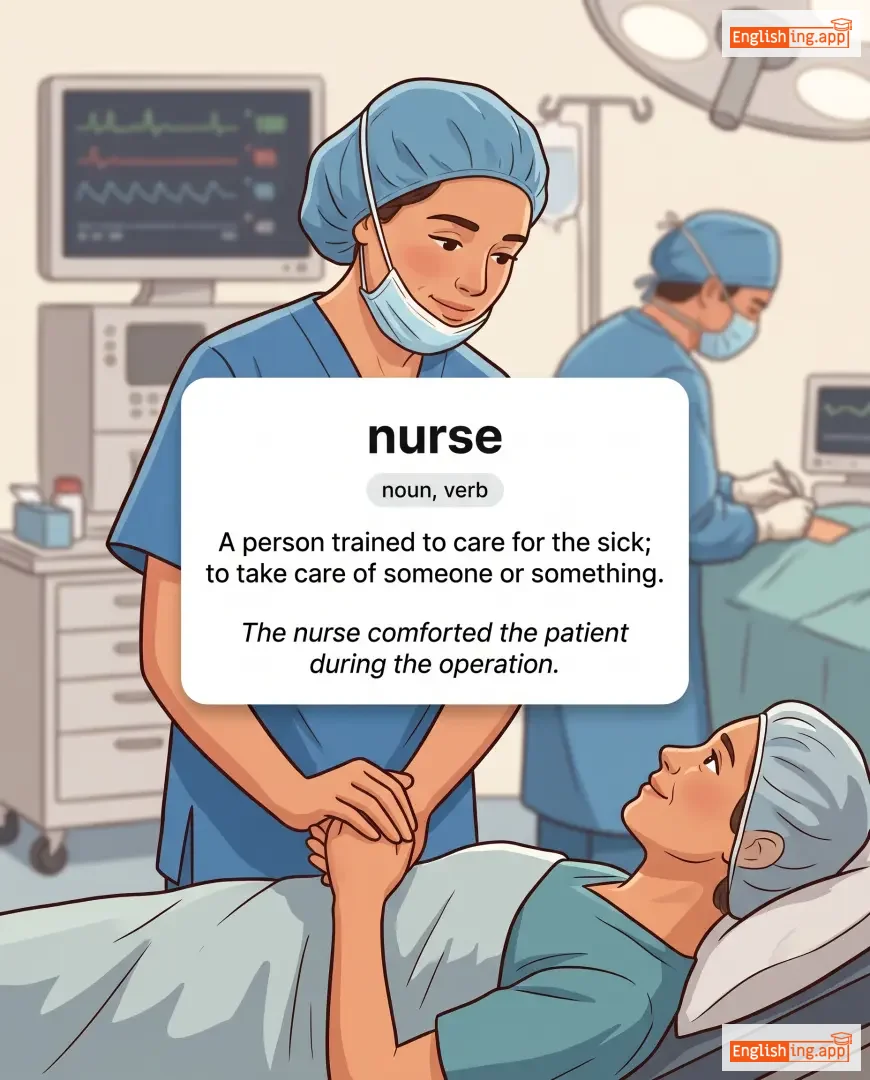
nurse definition card — visual illustration of the meaning
👩‍⚕️

nurse

noun, verb
/nɜːrs/

A person trained to care for the sick; to take care of someone or something.

"The nurse comforted the patient during the operation."

noun
/ˈnɜːrsəri/
托儿所 (tuō'érsuǒ)

a room or place where young children are cared for

"She works in a nursery, taking care of infants."

"她在托儿所工作,照顾婴儿。" (Tā zài tuō'érsuǒ gōngzuò, zhàogù yīng'ér.)
👩‍⚕️

nursing (护理)

noun
/ˈnɜːrsɪŋ/
护理 (huli)

the profession or practice of caring for the sick or injured

"She is studying nursing to become a healthcare professional."

"她在学习护理学,想成为一名医疗专业人员。" (Ta zai xuexi huli xue, xiang chengwei yi ming yiliao zhuanye renyuan.)
verb, noun
/ˈnɜːrtʃər/
培养 (péiyǎng)

To care for and encourage the growth or development of someone or something.

"Parents should nurture their children's talents."
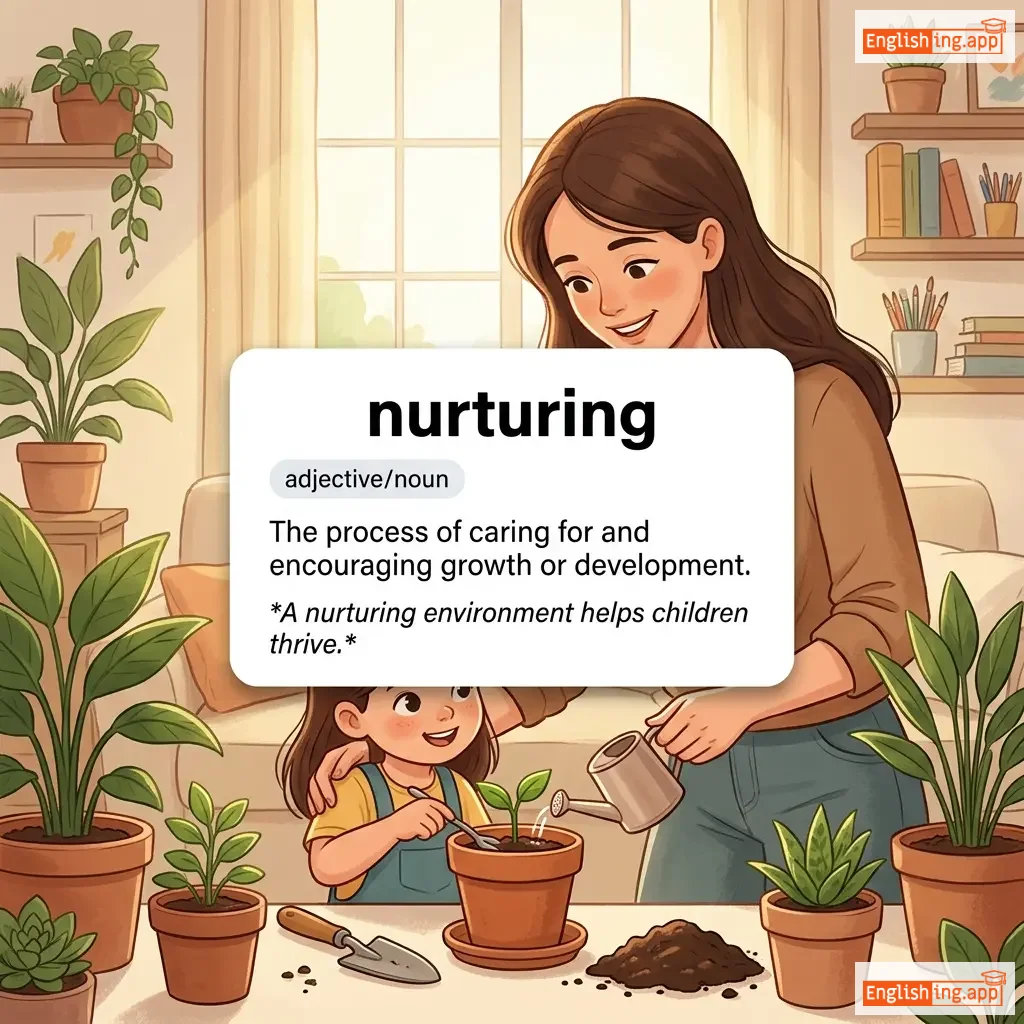
"父母应该培养孩子们的才能。" (Fùmǔ yīnggāi péiyǎng háizimen de cáinéng.)
nurturing definition card — visual illustration of the meaning
adjective/noun
/ˈnɜːr.tʃɚ.ɪŋ/
培养, 促进, 发展 (peiyang, cujin, fazhan)

The process of caring for and encouraging growth or development.

"A nurturing environment helps children thrive."

"一个 nurturing 环境帮助孩子们茁壮成长。" (Yi ge nurturing huanjing bangzhu haizimen zhuo zhuang chengzhang.)
noun
/nʌt/
坚果 (jian guo)

a hard-shelled fruit that contains a seed, or a small metal piece used in machinery

"She ate a peanut, which is a type of nut."

"她吃了一颗花生,这是坚果的一种。" (Tā chīle yī kē huāshēng, zhè shì jiānguǒ de yī zhǒng.)
Nut meg definition card — visual illustration of the meaning
noun
/ˈnʌt.meg/
肉豆蔻 (ròu dòu kòu)

a spice made from the seed of the fruit of an evergreen tree, used in cooking and baking

"The recipe called for a teaspoon of ground nutmeg to flavor the custard."
"食谱中要求用一茶匙磨碎的肉豆蔻来调味蛋奶冻。" (Shípǔ zhōng yāoqiú yòng yī chāchí mó suì de ròu dòu kòu lái tiáowèi dànnǎi dòng.)
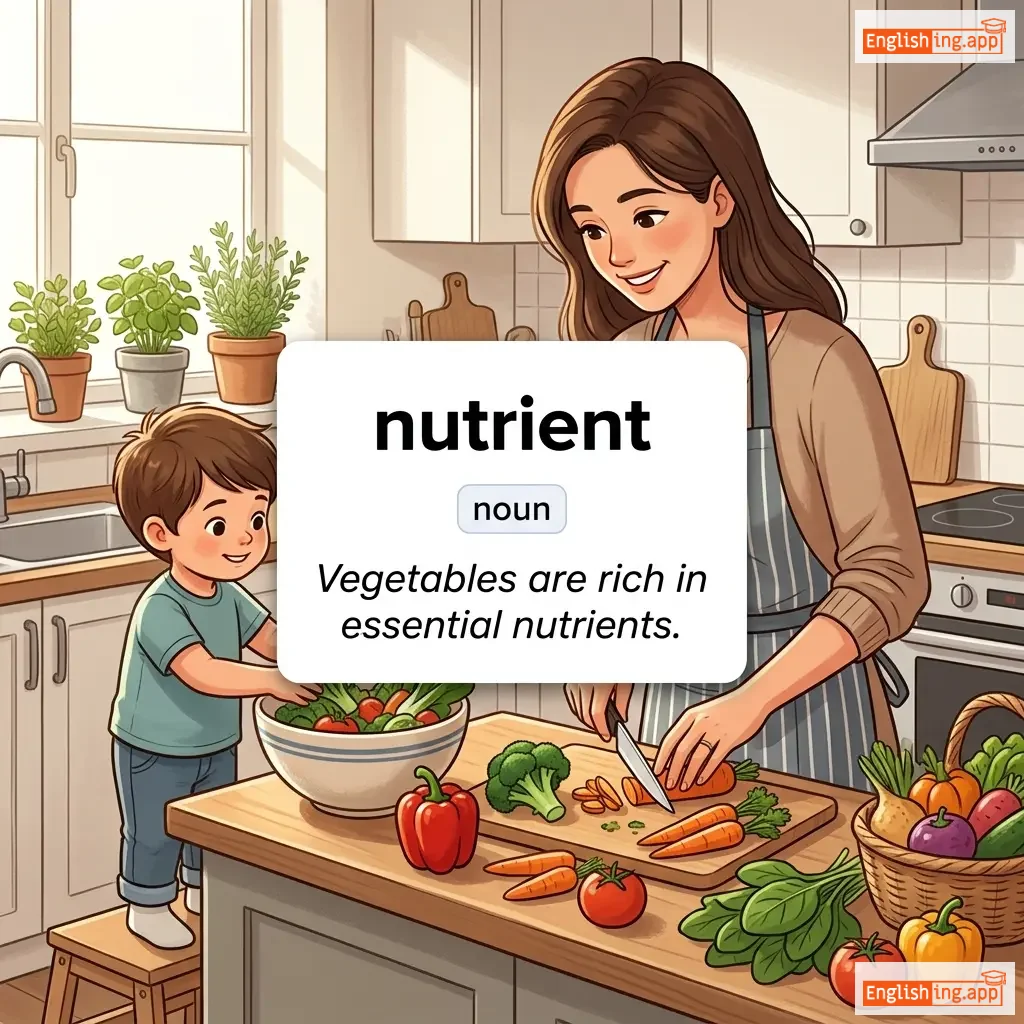
nutrient definition card — visual illustration of the meaning
noun
/ˈnjuː.tri.ənt/
营养物质 (yingyang wuzhi)

A substance that provides nourishment essential for growth and the maintenance of life.

"Vegetables are rich in essential nutrients."
"蔬菜富含必要的营养物质。" (Shucai fuhan bixiao de yingyang wuzhi.)
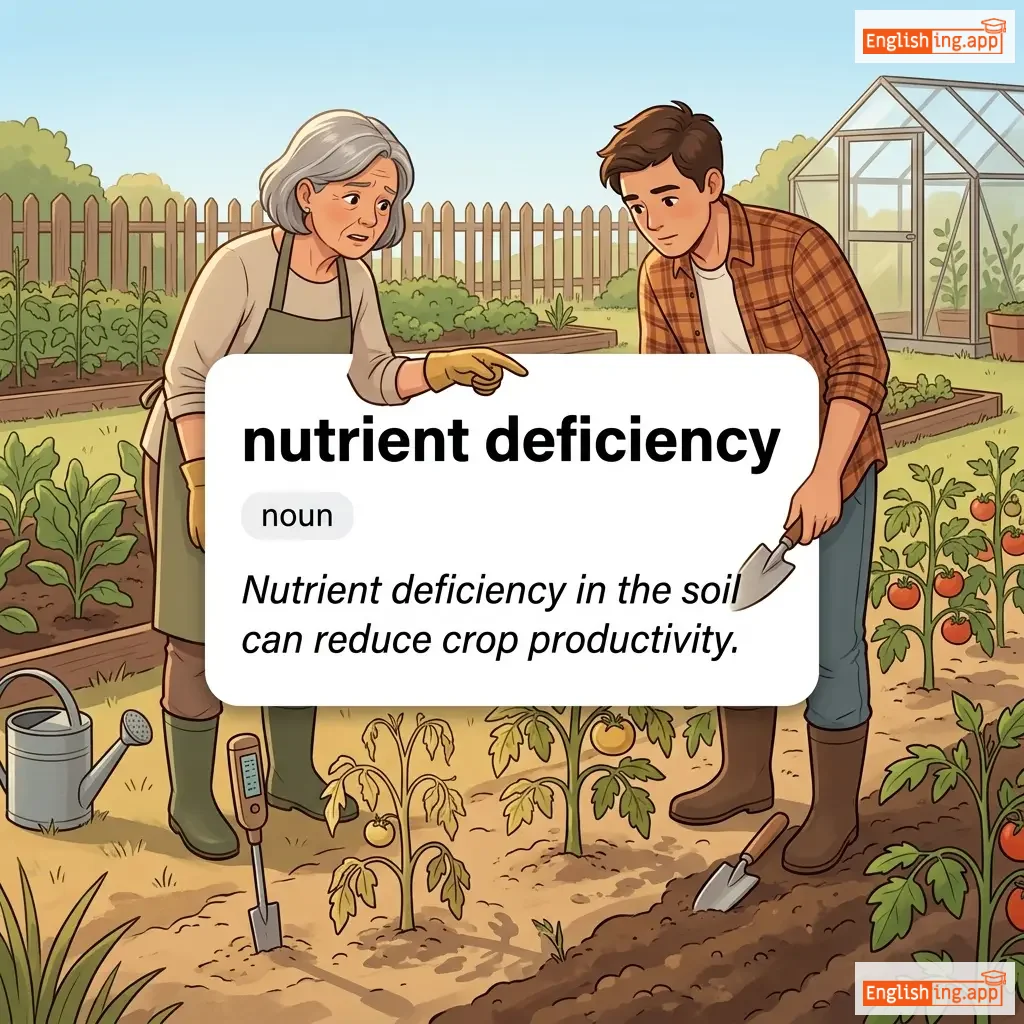
nutrient deficiency definition card — visual illustration of the meaning
noun
/ˈnjuːtrɪənt dɪˈfɪʃənsi/
营养不足 (yingyang buzhu)

A lack of essential nutrients required for healthy plant growth, which can result in poor crop development, reduced yields, and increased susceptibility to diseases.

"Nutrient deficiency in the soil can reduce crop productivity."
"土壤中的营养不足会降低作物的生产力。" (Tǔrǎng zhōng de yíngyǎng bùzú huì jiàngdī zuòwù de shēngchǎnlì.)
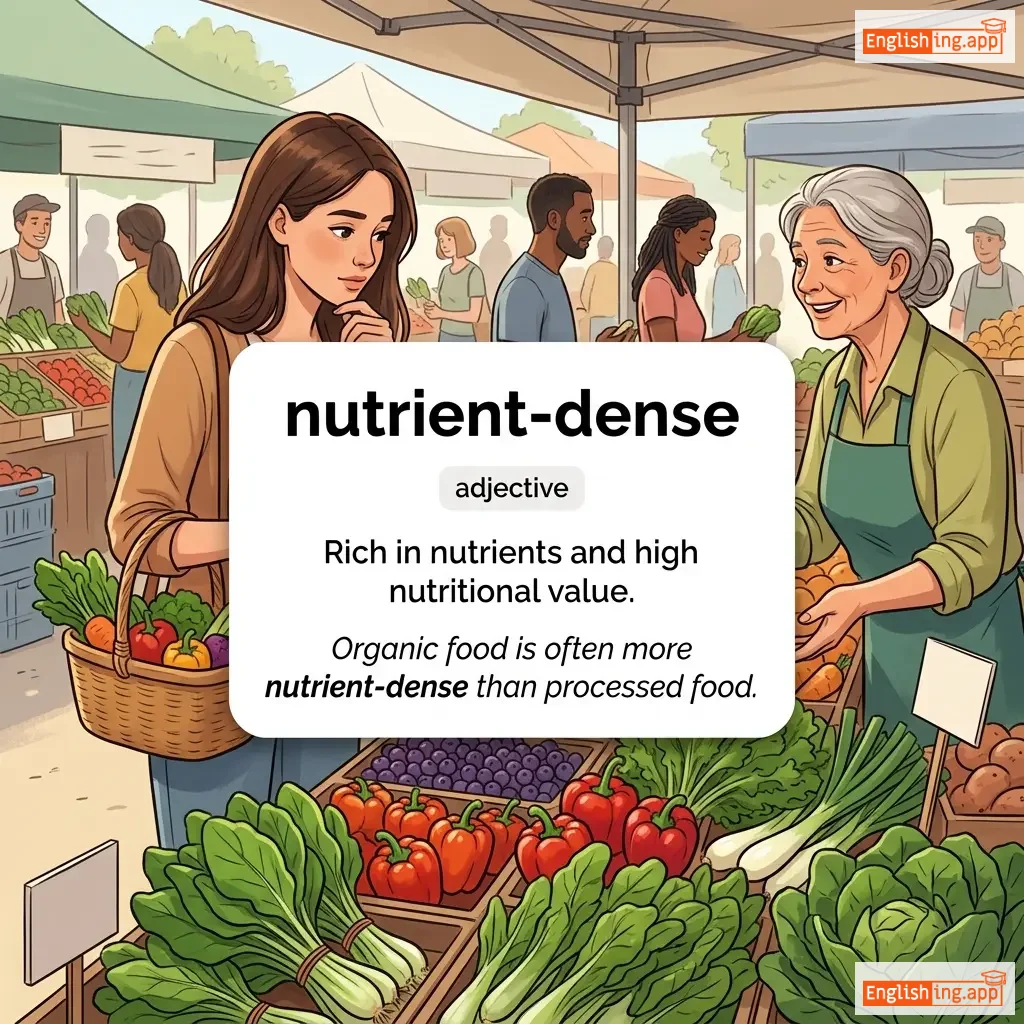
nutrient-dense definition card — visual illustration of the meaning
adjective
/ˈnjuː.tri.ənt dɛns/
营养丰富 (yingyang fengfu)

Rich in nutrients and high nutritional value.

"Organic food is often more nutrient-dense than processed food."

"有机食品通常比加工食品更富含营养。" (Yǒujī shípǐn tōngcháng bǐ jiāgōng shípǐn gèng fù hán yíngyǎng.)
noun
/ˈnjuː.trɪ.mənt/
营养物 (yingyangwu)

Something that nourishes; sustenance or food.

"The soil provides nutriment to the plants."

"土壤为植物提供养分。" (Tǔrǎng wèi zhíwù tígōng yǎngfèn.)
noun
/njuːˈtrɪʃ.ən/
营养 (yingyang)

The process of providing or obtaining the food necessary for health and growth.

"Good nutrition is vital for a healthy life."

"良好的营养对健康生活至关重要。" (Lianghao de yingyang dui jiankang shenghuo zhiguang zhongyao.)
adjective
/njuːˈtrɪʃ.əs/
有营养的 (yǒu yíngyǎng de)

Providing nourishment; health-giving.

"Milk is a nutritious drink for children."
"牛奶是儿童的有营养饮料。" (Niúnǎi shì értóng de yǒu yíngyǎng yǐnliào.)
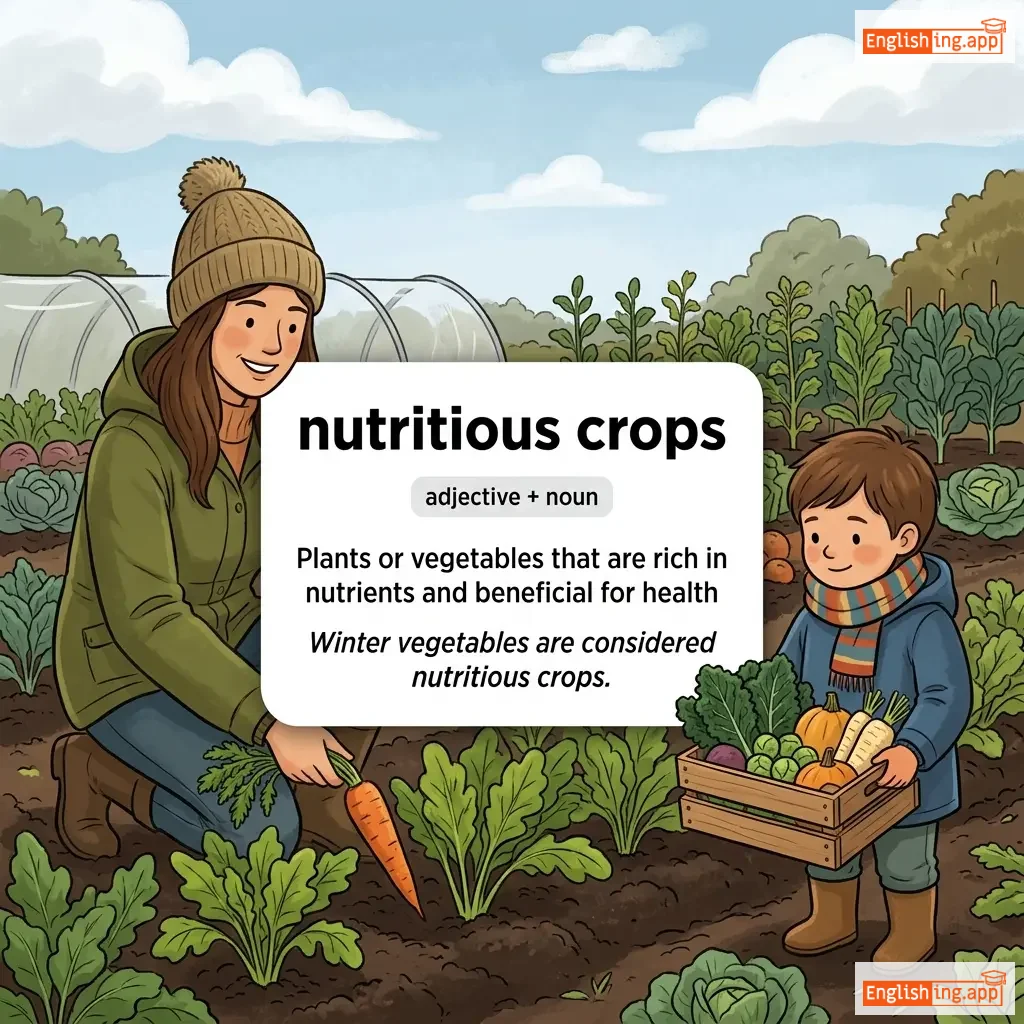
nutritious crops definition card — visual illustration of the meaning
adjective + noun
njuˈtrɪʃəs krɒps
营养丰富的作物 (yíngyǎng fēngfù de zuòwù)

Plants or vegetables that are rich in nutrients and beneficial for health

"Winter vegetables are considered nutritious crops."

"冬季蔬菜被认为是营养丰富的作物。" (Dōngjì shūcài bèi rènwéi shì yíngyǎng fēngfù de zuòwù.)
adjective, verb
/əbˈskjʊr/
模糊 (móhú)

Not clearly expressed or understood; to make something difficult to see or understand.

"The meaning of the poem was obscure to most readers."

"诗的意义对大多数读者来说是模糊的。" (Shī de yìyì duì dàduōshù dúzhě lái shuō shì móhú de.)
noun
/ˈɒbsɪkwiːz/
葬礼仪式 (zangli yishi)

Funeral rites or ceremonies.

"The obsequies for the late leader drew thousands of mourners."

"已故领导人的葬礼吸引了成千上万的哀悼者。" (Yigu lingdaoren de zangli xinyi le chengqian shangwan de aidaozhe.)