词汇表

英语词汇词典 | 单词含义、定义和示例

noun
/ˈpærɪti/
平价 (pingjia)

the state or condition of being equal, especially in status or pay

"The campaign aims to achieve pay parity between men and women."

"这项运动旨在实现男女之间的工资平等。" (Zhe xiang yundong zhi zai shixian nan nu zhijian de gongzi pingdeng.)
adjective
/pəˈrɪʒən/
与巴黎相关 (yu bālí xiāngguān)

relating to Paris or its people

"She wore a Parisian style dress at the party."

"她在派对上穿着巴黎风格的裙子。" (Tā zài pàiduì shàng chuānzhuó bālí fēnggé de qúnzi.)
noun
/pəˈraɪə/
弃儿 (qì ér)

An outcast; someone who is rejected by society or a social group.

"After the scandal, he became a social pariah."

"丑闻过后,他成了一个社会弃儿。" (chǒuwén guò hòu, tā chéngle yīgè shèhuì qì ér.)
noun
/ˈpærɪʃ/
教区 (jiàoqū)

A local church community or the area served by a parish church.

"The parish gathered for Sunday service."
"教区成员为周日的服务聚集在一起。" (jiàoqū chéngyuán wèi zhōurì de fúwù jùjí zài yīqǐ.)
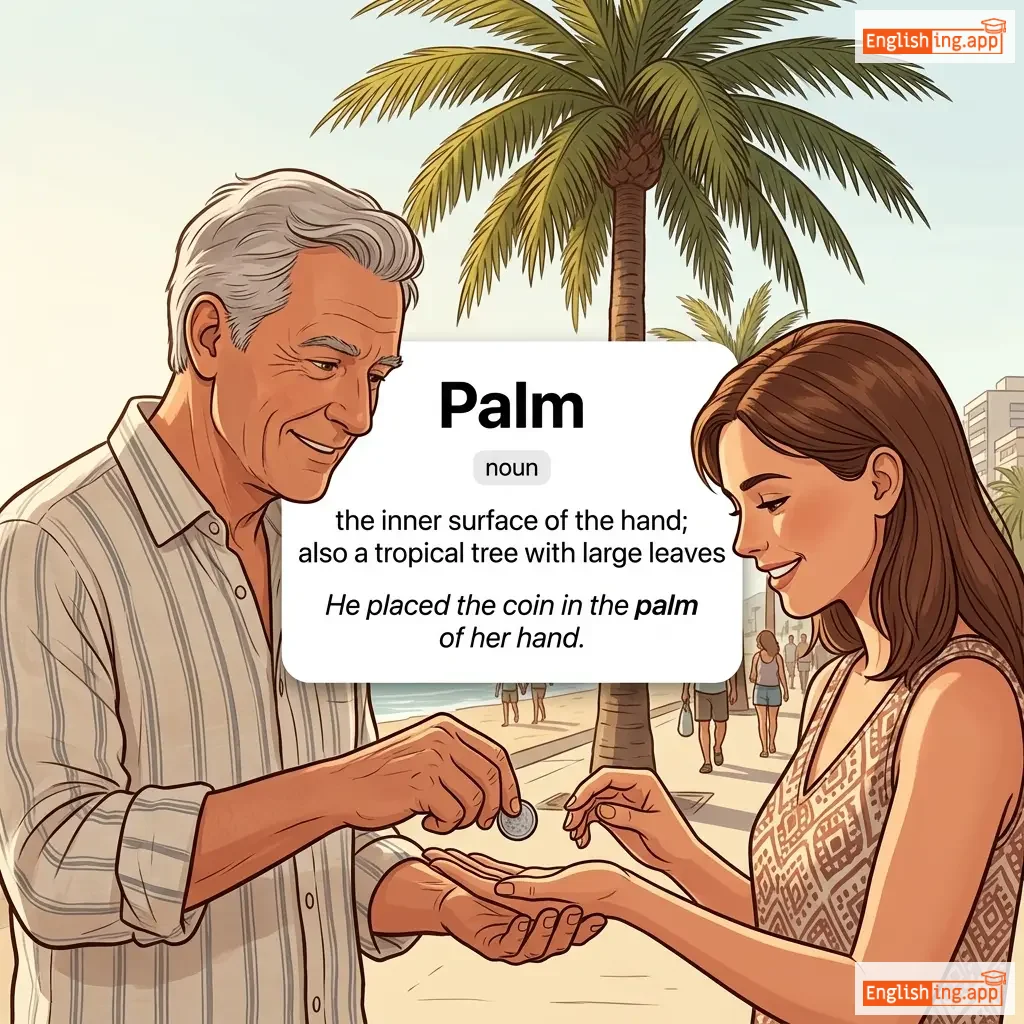
Palm definition card — visual illustration of the meaning
noun
/pɑːm/
手掌 / 棕榈树 (shǒuzhǎng / zōnglǘshù)

the inner surface of the hand; also a tropical tree with large leaves

"He placed the coin in the palm of her hand."

"他把硬币放在她的手掌里。" (Tā bǎ yìngbì fàng zài tā de shǒuzhǎng lǐ.)
adjective
/ˈpɑːmi/
繁荣 / 荣耀 (fánróng / róngyào)

prosperous, flourishing, or relating to palm trees

"He often reminisced about the palmy days of his youth."

"他经常回忆起年轻时的繁荣日子。" (Tā jīngcháng huíyì qǐ niánqīng shí de fánróng rìzi.)
adjective
/ˈpælpəbl̩/
幸福 (xingfu)

easily perceived or felt; so intense as to seem almost tangible

"There was a palpable sense of excitement in the room."

"当她收到奖项时,她无法隐藏自己的幸福感。" (Dang ta shoudao jiangxiang shi, ta wufa yinchang ziji de xingfugan.)
verb
/ˈpælpɪˌteɪt/
快速跳动 (kuài sù tiào dòng)

to beat rapidly and strongly, often because of fear, excitement, or illness

"Her heart began to palpitate with fear."

"她的心脏因恐惧开始剧烈跳动。" (Tā de xīn zàng yīn kǒng jù kāi shǐ jù liè tiào dòng.)
noun
/ˌpæl.pɪˈteɪ.ʃən/
由于激动或医学状况引起的明显快速、强烈或不规则的心跳 (yóu yú jīdòng huò yīxué zhuàngkuàng yǐnqǐ de míngxiǎn kuàisù, qiángliè huò bù guīzé de xīntiào)

a noticeably rapid, strong, or irregular heartbeat due to agitation or medical condition

"She experienced palpitations before her job interview."

"她在面试前感受到了心悸。" (Tā zài miànshì qián gǎnshòu dàole xīnjì.)
noun
/ˈpɔːlzi/
麻痹 (mábì)

a condition of partial or complete paralysis, often with involuntary tremors

"The patient suffered from Bell’s palsy."

"病人患有贝尔麻痹。" (Bìngrén huàn yǒu bèi'ěr mábì.)
verb
/ˈpɔːltər/
含糊其辞,欺骗 (hángu qí cí, qīpiàn)

to act insincerely or deceitfully; to equivocate or lie

"He paltered when asked about his involvement in the deal."

"当被问及是否参与交易时,他回避了问题。" (Dāng bèi wènjí shìfǒu cānyù jiāoyì shí, tā huíbìle wèntí.)
adjective
/ˈpɔːltri/
微不足道, 微小 (wēi bù zú dào, wēi xiǎo)

small or meager; lacking in value or importance

"They offered him a paltry sum for his work."

"他们为他的工作提供了微不足道的报酬。" (Tāmen wèi tā de gōngzuò tígōngle wēi bù zú dào de bàochóu.)
adjective
/ˈpeɪli/
条纹的 (tiaowen de)

striped with different colors, usually used in heraldry

"The knight’s shield was decorated with paly stripes of red and gold."

"骑士的盾牌上装饰着红色和金色的条纹。" (Qishi de dunpai shang zhuangshizhe hongse he jinse de tiaowen.)
verb
/ˈpæmpər/
溺爱 / 宠爱 (nì'ài / chǒng'ài)

to treat with excessive care and attention; to spoil

"Parents often pamper their first child."

"父母常常溺爱他们的第一个孩子。" (Fùmǔ chángcháng nì'ài tāmen de dì yī gè háizi.)
noun
/ˈpæm.flət/
宣传册 (xuān chuán cè)

a small booklet or brochure containing information or arguments about a subject

"The health department distributed a pamphlet about nutrition."

"卫生部门分发了关于营养的宣传册。" (Wèi shēng bùmén fēn fā le guān yú yíng yǎng de xuān chuán cè.)
noun, verb
/ˌpæm.fləˈtɪər/
小册子作者 (xiaocenzi zuozhe)

a person who writes or distributes pamphlets, often to promote a political or social cause

"In the 18th century, many pamphleteers influenced public opinion."

"18世纪,许多小册子作者影响了公众舆论。" (18 shiji, xuduo xiaocenzi zuozhe yingxiang le gongzhong yulun.)
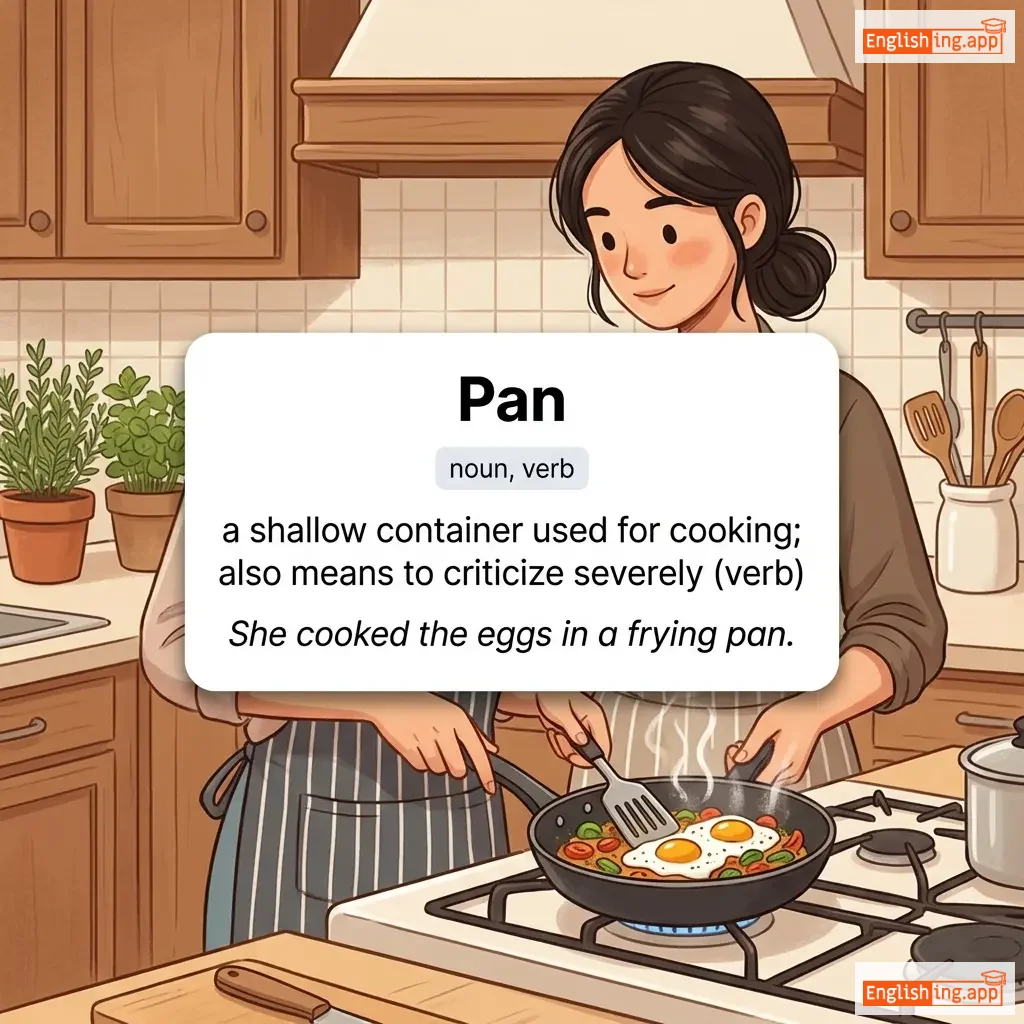
Pan definition card — visual illustration of the meaning
noun, verb
/pæn/
锅, 炒锅 (guo, chao guo)

a shallow container used for cooking; also means to criticize severely (verb)

"She cooked the eggs in a frying pan."

"她在煎锅里煮了鸡蛋。" (Tā zài jiānguō lǐ zhǔle jīdàn.)
adjective
/ˌpæn.əˈmer.ɪ.kən/
泛美洲的 (fàn měi zhōu de)

relating to all the countries of North, Central, and South America

"The Pan-American Games bring together athletes from across the continent."

"泛美洲运动会将整个大陆的运动员汇聚在一起。" (Fàn měi zhōu yùndòng huì jiāng zhěnggè dàlù de yùndòngyuán huìjù zài yīqǐ.)
noun
/ˌpænəˈsiːə/
万灵药 (wàn líng yào)

A solution or remedy for all difficulties or diseases.

"Education is often seen as a panacea for social problems."
"教育通常被视为社会问题的万能药。" (Jiàoyù tōngcháng bèi shì wéi shèhuì wèntí de wànnéng yào.)
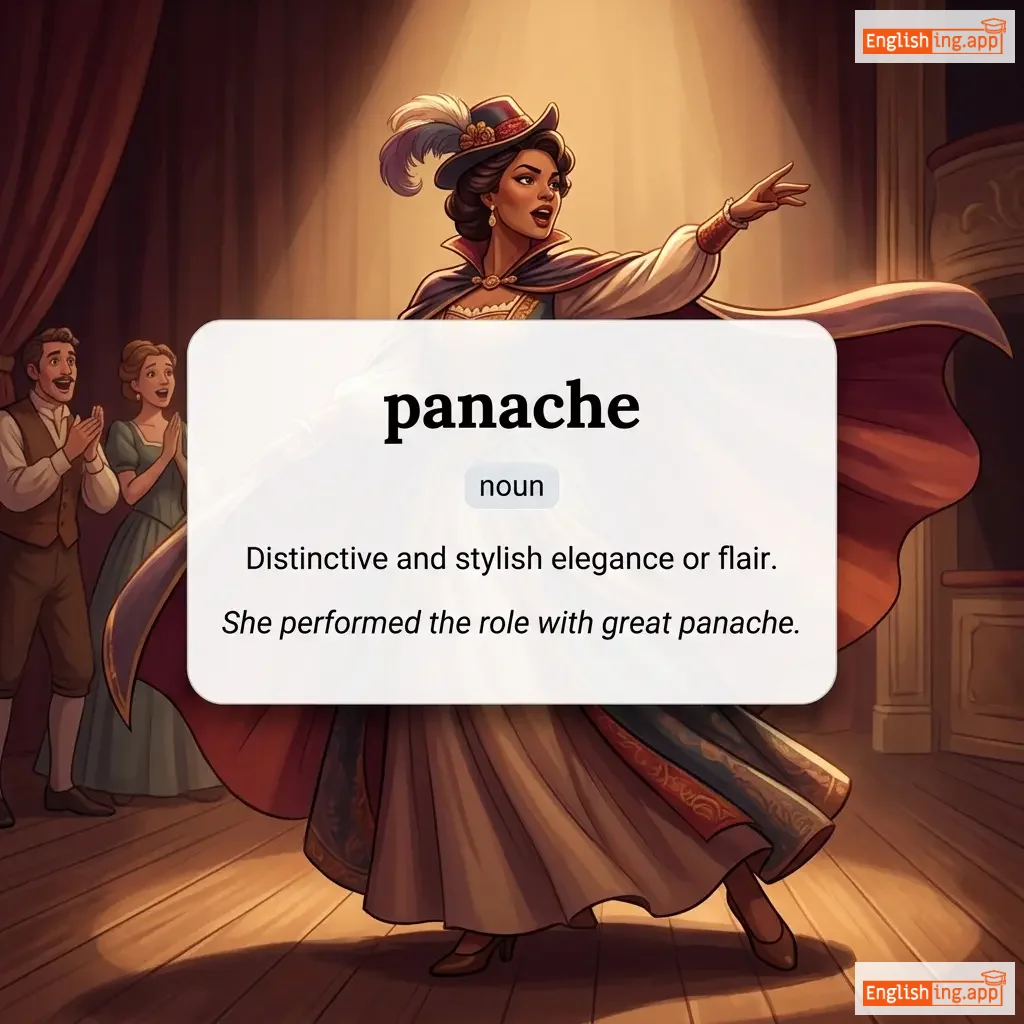
panache definition card — visual illustration of the meaning
noun
/pəˈnæʃ/
独特的优雅 (dútè de yōuyǎ)

Distinctive and stylish elegance or flair.

"She performed the role with great panache."
"她以极大的潘纳什演绎了这个角色。" (Tā yǐ jí dà de pánàshī yǎnyì le zhège juésè.)
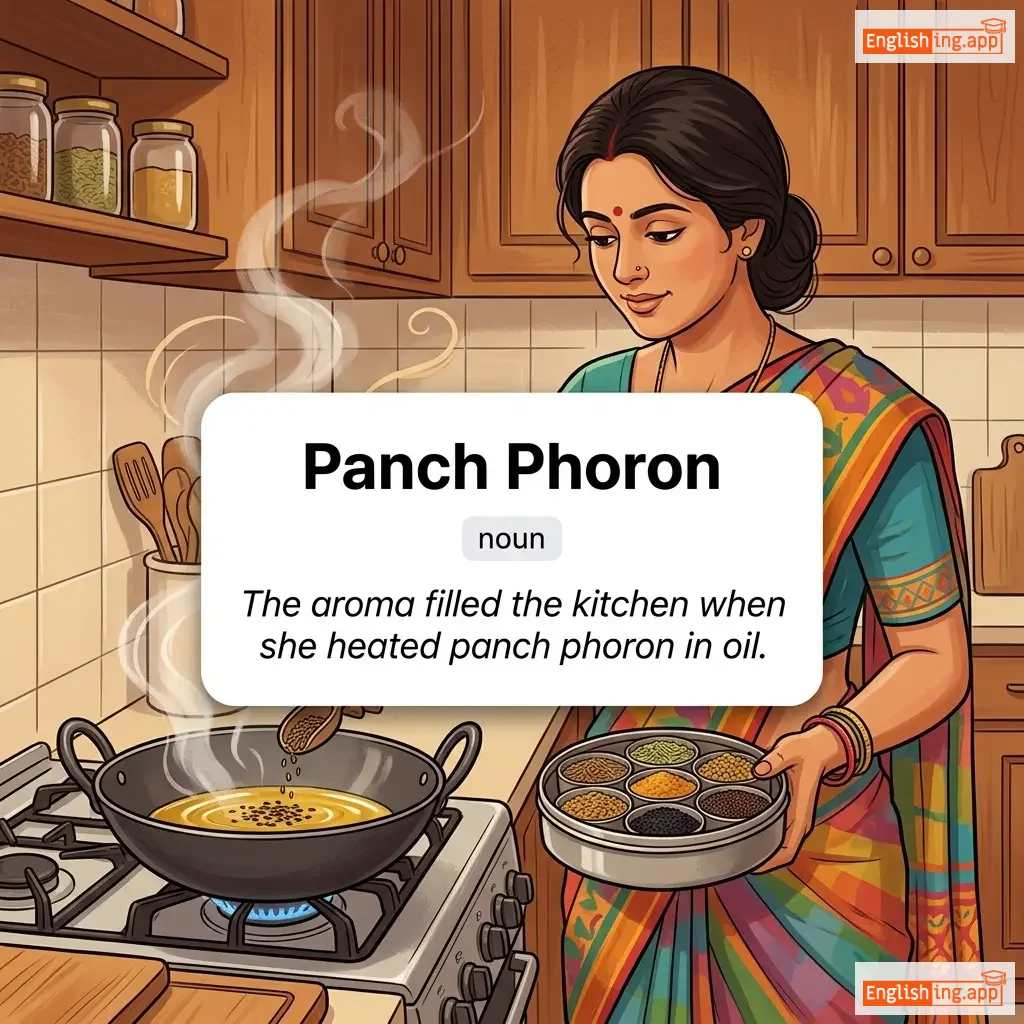
Panch Phoron definition card — visual illustration of the meaning
noun
/pʌntʃ ˈfoʊrən/
五香粉 (wǔ xiāng fěn)

a Bengali spice blend containing five whole spices: cumin, fennel, fenugreek, nigella, and mustard seeds

"The aroma filled the kitchen when she heated panch phoron in oil."

"当她在油中加热五香粉时,香气充满了厨房。" (dāng tā zài yóu zhōng jiārè wǔ xiāng fěn shí, xiāngqì chōngmǎnle chúfáng.)
noun
/ˈpæŋkriəs/
胰腺 (yixian)

A gland in the abdomen that produces insulin and digestive enzymes.

"The pancreas plays a vital role in digestion and blood sugar regulation."

"胰腺在消化和血糖调节中发挥着重要作用。" (Yixian zài xiāohuà hé xuètáng tiáojié zhōng fāhuī zhuó zhòngyào zuòyòng.)
noun
/pænˈdɛmɪk/
大流行病 (dà liúxíng bìng)

An outbreak of a disease that occurs on a global scale.

"The COVID-19 pandemic changed the world dramatically."

"COVID-19 大流行病极大地改变了世界。" (COVID-19 dà liúxíng bìng jí dà de gǎibiànle shìjiè.)
noun
/ˌpændəˈmoʊniəm/
混乱 (hùnluàn)

Wild and noisy disorder or confusion; uproar.

"When the concert was canceled, pandemonium broke out among the crowd."

"当音乐会被取消时,混乱在观众中爆发。" (Dāng yīnyuè huì bèi qǔxiāo shí, hùnluàn zài guānzhòng zhōng bàofā.)
verb
/ˈpændər/
迎合, 奉承 (yínghé, fèngchéng)

to indulge or exploit the weaknesses, desires, or immoral tendencies of others

"The politician was accused of pandering to voters' fears."

"政治家被指控迎合选民的恐惧。" (Zhèngzhìjiā bèi zhǐkòng yínghé xuǎnmín de kǒngjù.)
noun
/ˌpænəˈdʒɪrɪk/
赞美诗, 颂辞 (zanmei shi, songci)

a formal speech or piece of writing in praise of someone or something

"The author wrote a panegyric on the bravery of the soldiers."

"作者写了一篇关于士兵英勇的潘尼吉里克。" (Zuòzhě xiěle yī piān guānyú shìbīng yīngyǒng de pānníjílǐkè.)
noun
/ˈpænəl/
面板, 法官小组 (miànbǎn, fǎguān xiǎozǔ)

a group of people gathered to discuss, judge, or advise on a particular topic

"The panel of judges announced the winner of the competition."

"法官小组宣布了比赛的获胜者。" (Fǎguān xiǎozǔ xuānbùle bǐsài de huòshèng zhě.)
noun
/pæŋ/
突如其来的剧烈疼痛或情绪痛苦 (tū rú qí lái de jù liè téng tòng huò qíng xù tòng kǔ)

a sudden sharp feeling of pain or emotional distress

"She felt a pang of guilt after the argument."
"她在争论后感到一阵内疚的疼痛。" (Tā zài zhēng lùn hòu gǎn dào yí zhèn nèi jiù de téng tòng.)
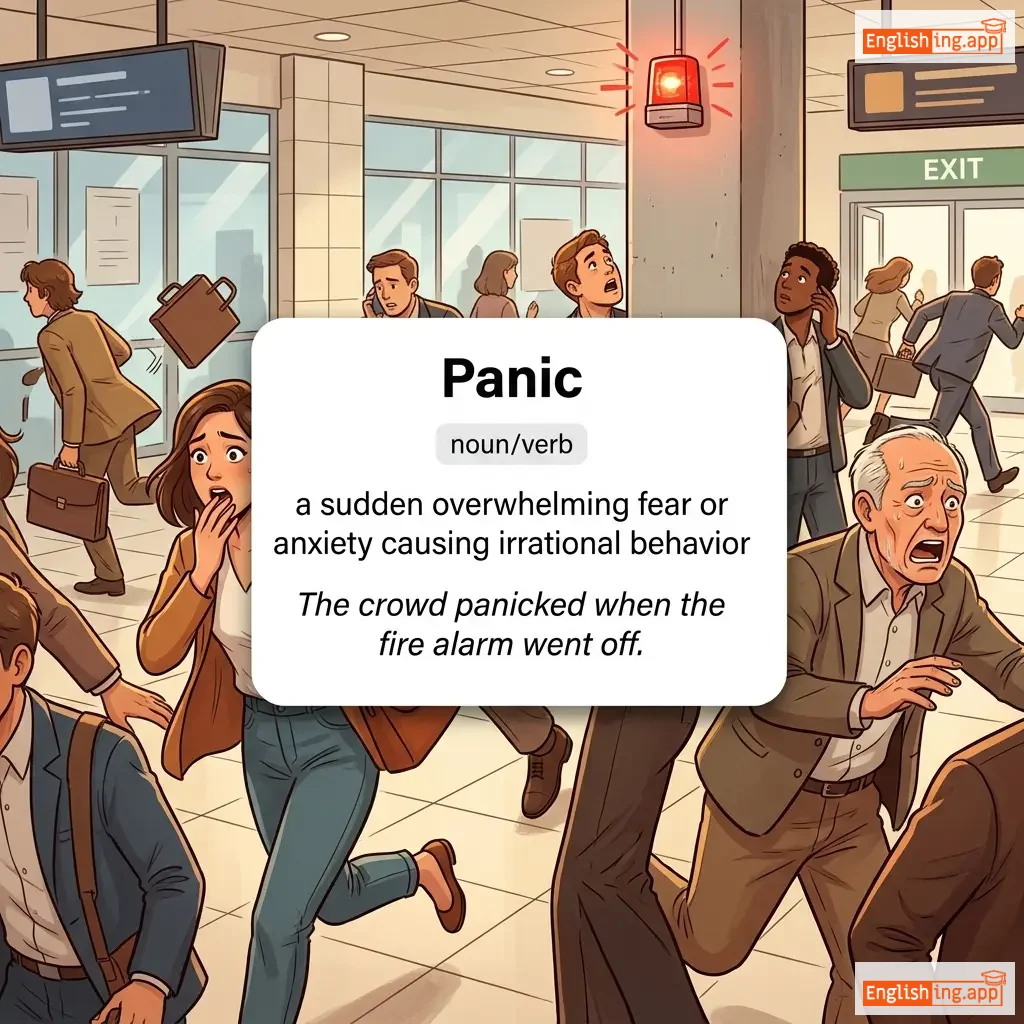
Panic definition card — visual illustration of the meaning
noun/verb
/ˈpænɪk/
幸福 (xìngfú)

a sudden overwhelming fear or anxiety causing irrational behavior

"The crowd panicked when the fire alarm went off."

"当她收到奖项时,她无法掩饰自己的幸福。" (Dāng tā shōu dào jiǎngxiàng shí, tā wúfǎ yǎnshì zìjǐ de xìngfú.)
adjective
/ˈpæn.ɪ.ki/
惊慌的; 焦虑和害怕的 (jīnghuāng de; jiāolǜ hé hàipà de)

feeling or showing panic; anxious and fearful

"The crowd became panicky when the fire alarm sounded."

"当火警响起时,群众变得惊慌失措。" (Dāng huǒjǐng xiǎngqǐ shí, qúnzhòng biàn dé jīnghuāng shīcuò.)
/ˈpæn.ə.pli/
全套装备 (quán tào zhuāng bèi)

A complete or impressive collection of things; a full set of armor.

"The museum displayed a panoply of ancient weapons."

"博物馆展示了一套古代武器的全套装备。" (Bówùguǎn zhǎnshìle yī tào gǔdài wǔqì de quántào zhuāngbèi.)
noun
/ˌpæn.əˈræm.ə/
全景视图 (quánjǐng shìtú)

An unbroken view of the whole region surrounding an observer.

"From the hilltop, we enjoyed a breathtaking panorama of the city."

"从山顶,我们欣赏到城市的壮丽全景。" (cóng shāndǐng, wǒmen xīnshǎng dào chéngshì de zhuànglì quánjǐng.)
adjective
/ˌpæn.əˈræm.ɪk/
全景视图 (quanjing shitu)

Giving a wide view of an extensive area in all directions.

"The hotel offers panoramic views of the ocean."

"酒店提供海洋的全景视野。" (Jiudian tigong haiyang de quanjing shiya.)
Pant definition card — visual illustration of the meaning
noun
/pænt/
裤子 (kùzi)

a piece of clothing worn from the waist down, covering both legs separately

"He wore a pair of blue pants to the party."

"他穿了一条蓝色裤子去参加聚会。" (Tā chuānle yītiáo lán sè kùzi qù cānjiā jùhuì.)
noun
/ˈpæn.θi.ɪ.zəm/
泛神论 (fàn shén lùn)

The belief that God and the universe are identical, or that everything is a manifestation of God.

"Spinoza’s philosophy is often associated with pantheism."

"斯宾诺莎的哲学常与泛神论相关联。" (Sī bīn nuò shā de zhéxué cháng yǔ fàn shén lùn xiāngguān lián.)
noun
/ˈpæn.θi.ən/
所有神明,献给所有神明的庙宇 (suǒyǒu shénmíng, xiàn gěi suǒyǒu shénmíng de miàoyu)

All the gods of a religion collectively; a building dedicated to all gods.

"The Roman Pantheon is one of the best-preserved ancient temples."

"罗马的万神殿是最完好保存的古代神庙之一。" (Luómǎ de wàn shéndiàn shì zuì wánhǎo bǎocún de gǔdài shénmiào zhī yī.)
noun
/ˈpæntəmaɪm/
哑剧 (yaju)

A type of theatrical performance using gestures and movements without spoken words; in Britain, a musical comedy play for families performed at Christmas.

"The children enjoyed the Christmas pantomime at the local theater."

"孩子们在当地剧院观看了圣诞哑剧。" (haizimen zai dangdi juyuan guankan le Shengdan yaju.)
noun
/ˈpæntəˌskoʊp/
提供广泛或全景视图的光学仪器 (tigong guangfan huo quanjing shitu de guangxue yiqi)

An optical instrument that provides a wide or panoramic view.

"The scientist used a pantoscope to observe the entire horizon."

"科学家使用全景镜观察整个地平线。" (Kexuejia shiyong quanjingjing guancha zhengge dipingxian.)
noun
/ˈpæntri/
储藏室 (chǔcáng shì)

A small room or cupboard where food, dishes, and kitchen supplies are stored.

"She stocked the pantry with fresh groceries for the week."

"她用新鲜的杂货为这周装满了储藏室。" (Tā yòng xīnxiān de záhuò wèi zhè zhōu zhuāngmǎn le chǔcáng shì.)
👨‍👧

papa (帕帕)

noun
/ˈpɑːpə/
爸爸 (baba)

an informal or affectionate term for one’s father

"Papa is picking me up from school today."

"爸爸今天来接我放学。" (baba jintian lai jie wo fangxue)
noun
/ˈpeɪpəsi/
教皇职位 (jiàohuáng zhíwèi)

The office or authority of the Pope in the Roman Catholic Church.

"The papacy played a significant role in medieval European politics."
"教皇职位在中世纪欧洲政治中发挥了重要作用。" (Jiàohuáng zhíwèi zài zhōng shìjì Ōuzhōu zhèngzhì zhōng fāhuīle zhòngyào zuòyòng.)
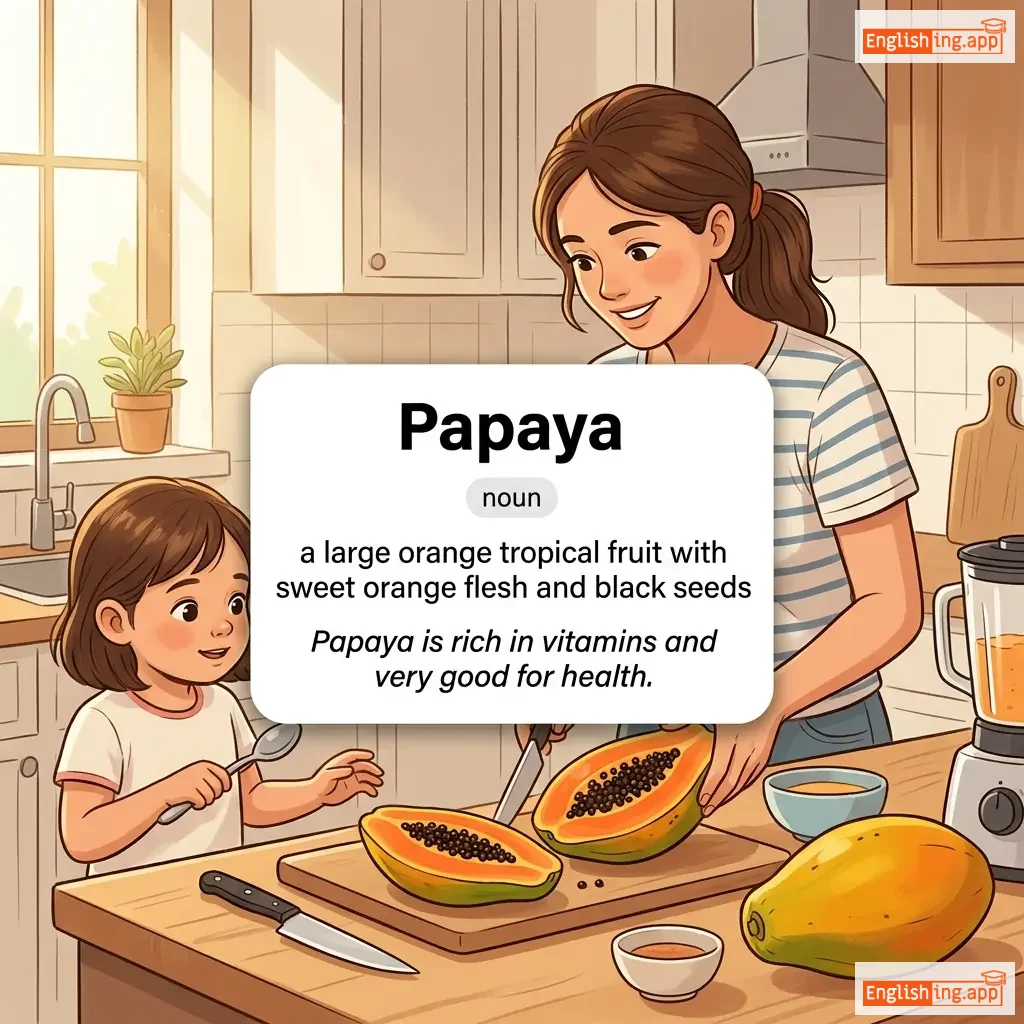
Papaya definition card — visual illustration of the meaning
noun
/pəˈpaɪə/
木瓜 (mugua)

a large orange tropical fruit with sweet orange flesh and black seeds

"Papaya is rich in vitamins and very good for health."
"木瓜富含维生素,对健康非常有益。" (Mugua fuhan weishengsu, dui jiankang feichang youyi.)
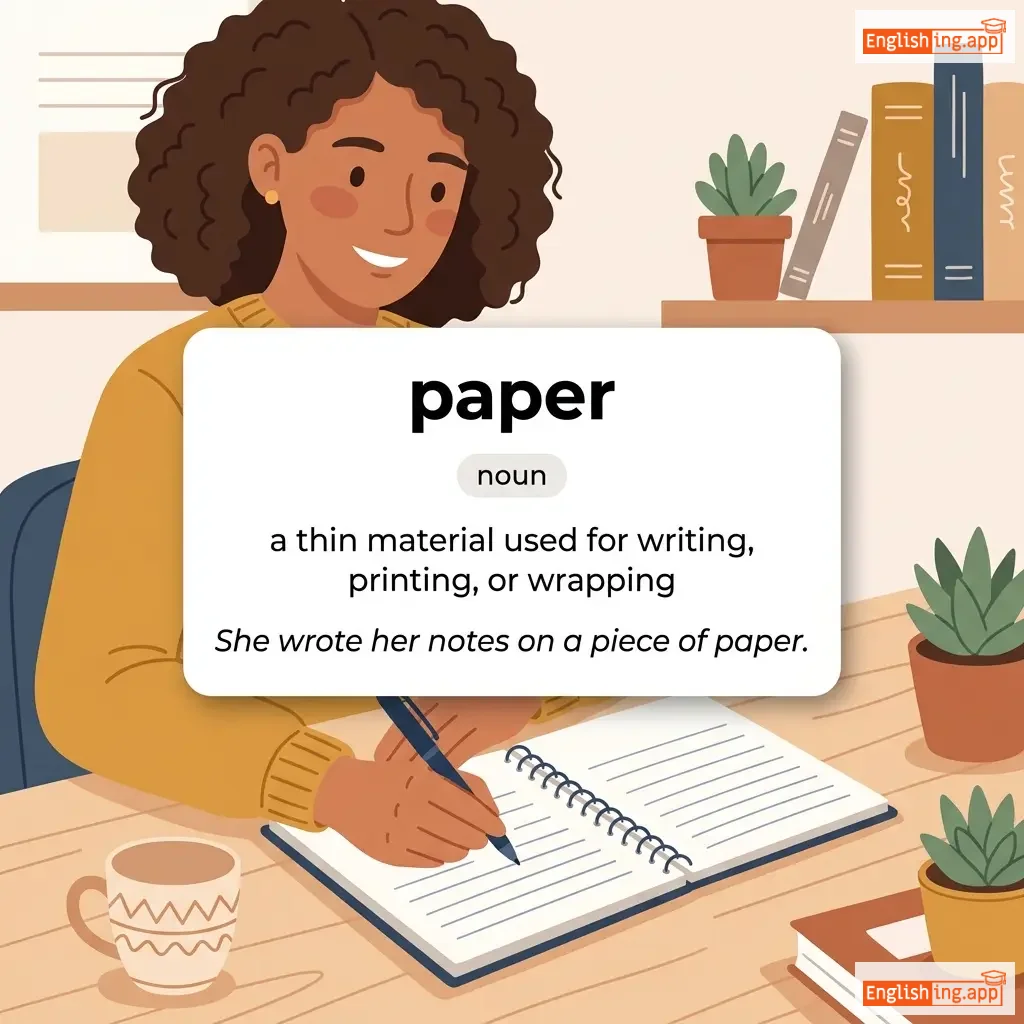
paper definition card — visual illustration of the meaning
noun
/ˈpeɪpər/
(zhi)

a thin material used for writing, printing, or wrapping

"She wrote her notes on a piece of paper."

"她在一张纸上写下了她的笔记。" (Tā zài yī zhāng zhǐ shàng xiěxiàle tā de bǐjì.)
noun
/pəˈpaɪrəs/
纸莎草 (zhǐ shā cǎo)

An ancient writing material made from the pith of the papyrus plant; also refers to the plant itself.

"The ancient scroll was written on papyrus."

"古老的卷轴是用纸莎草写的。" (Gǔlǎo de juǎnzhóu shì yòng zhǐ shā cǎo xiě de.)
noun
/ˈpɑːrtʃmənt/
羊皮纸 (yángpí zhǐ)

a thin material made from animal skin, used in the past for writing

"The ancient manuscript was written on parchment."

"古老的手稿写在羊皮纸上。" (Gǔlǎo de shǒugǎo xiě zài yángpí zhǐ shàng.)
verb
/pɑːrtʃ/
使干燥 (shi ganzao)

to make something extremely dry, especially by exposure to heat

"The scorching sun began to parch the fields."

"炙热的太阳开始把田地弄干。" (Zhire de taiyang kaishi ba tiandi nong gan.)
adjective
/pɑːrtʃt/
极度口渴 (jidù kǒukě)

extremely dry, especially because of heat or thirst

"After walking in the desert, he was parched with thirst."

"在沙漠中走路后,他极度口渴。" (Zài shāmò zhōng zǒulù hòu, tā jídù kǒukě.)
noun
/ˈpɑr.səl/
包裹; 土地块 (baoguo; tudi kuai)

an object or collection of objects wrapped in paper for carrying or sending by mail; a piece of land

"The postman delivered a parcel to our door."

"邮递员把包裹送到我们门口。" (You di yuan ba baoguo song dao women men kou.)
noun
/ˈpɑr.dən/
宽恕; 原谅; (kuanshu)

forgiveness; the action of forgiving or being forgiven for an error or offense

"I beg your pardon for interrupting the meeting."

"打扰会议,我请求宽恕。" (daru huiyi, wo qingqiu kuanshu.)
adjective
/ˈpɑːr.dən.ə.bəl/
可原谅的 (ke yuanliang de)

able to be forgiven; excusable

"His mistake was pardonable given the difficult circumstances."

"他的错误是可以原谅的,鉴于困难的情况。" (tade cuowu shi keyi yuanliang de, jianyu kunnan de qingkuang.)