ভোকাবুলারিসমূহ

ইংরেজি শব্দের বাংলা অর্থ | English to Bangla Word Meaning Dictionary

noun
/ˈpærɪti/
সমতা (somota)

the state or condition of being equal, especially in status or pay

"The campaign aims to achieve pay parity between men and women."

"অভিযানটির লক্ষ্য পুরুষ ও মহিলাদের মধ্যে বেতনের সমতা অর্জন করা।" (Abhijantir lokkho purush o mohila der moddhe betoner somota orjon kora.)
adjective
/pəˈrɪʒən/
প্যারিস সম্পর্কিত (paris somprokito)

relating to Paris or its people

"She wore a Parisian style dress at the party."

"সে পার্টিতে একটি প্যারিসিয়ান ধাঁচের পোশাক পরেছিল।" (Se partite ekti parisian dhacher poshak porechilo.)
noun
/pəˈraɪə/
অচ্ছুত (ochchhuto)

An outcast; someone who is rejected by society or a social group.

"After the scandal, he became a social pariah."

"কেলেঙ্কারির পরে সে সমাজের চোখে একজন অচ্ছুত হয়ে যায়।" (kelenkarir pore se shomajer chokhe ekjon ochchhuto hoye jay.)
noun
/ˈpærɪʃ/
গির্জার এলাকা (girjar elaka)

A local church community or the area served by a parish church.

"The parish gathered for Sunday service."

"গির্জার সম্প্রদায় রবিবারের প্রার্থনার জন্য একত্রিত হয়েছিল।" (girjar shomproday robibarer prarthonar jonno ektrito hoyechhilo.)
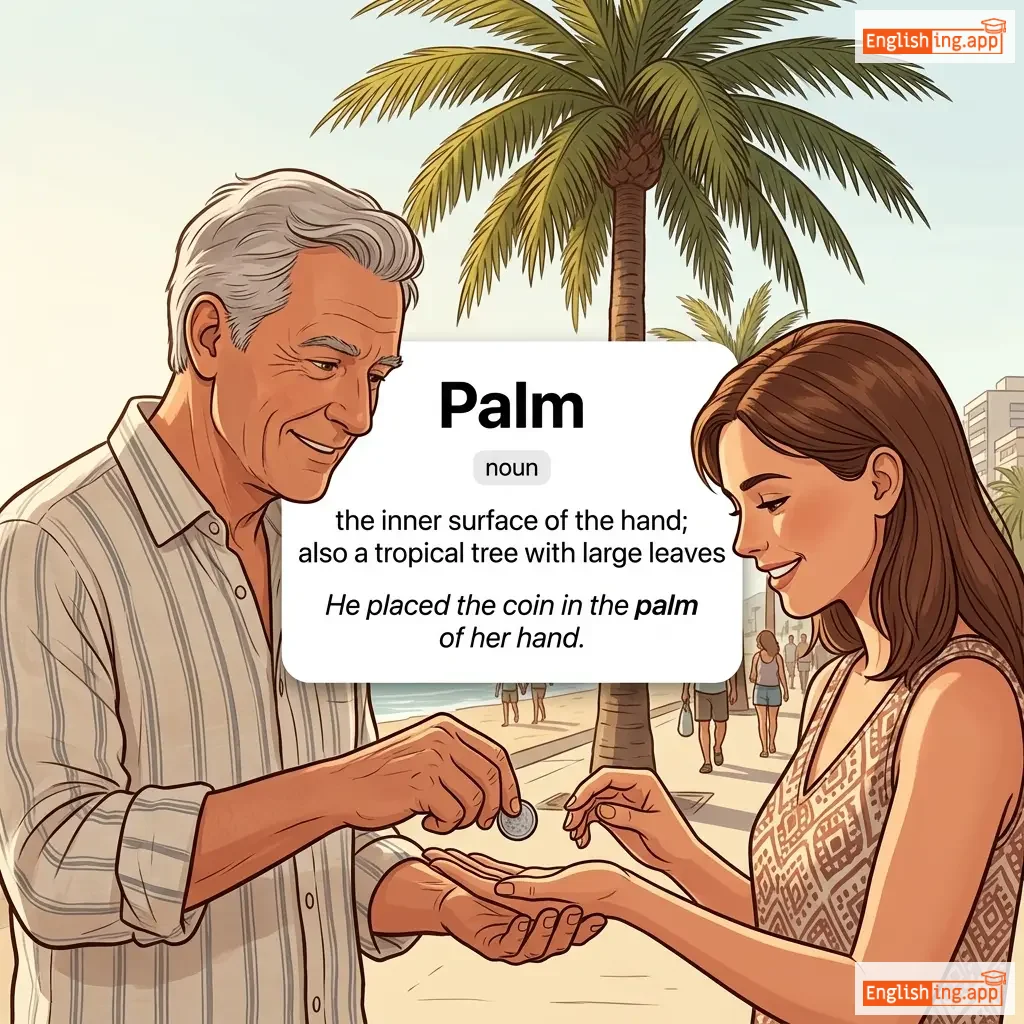
Palm definition card — visual illustration of the meaning
noun
/pɑːm/
হাতের তালু / পাম গাছ (hater talu / pam gach)

the inner surface of the hand; also a tropical tree with large leaves

"He placed the coin in the palm of her hand."

"সে তার হাতের তালুতে মুদ্রাটি রাখল।" (Se tar hater talute mudrati rakhlo.)
adjective
/ˈpɑːmi/
সমৃদ্ধ / গৌরবময় (somriddho / gourobmoy)

prosperous, flourishing, or relating to palm trees

"He often reminisced about the palmy days of his youth."

"সে প্রায়ই তার যৌবনের গৌরবময় দিনের কথা স্মরণ করত।" (Se prai tar jouboner gourobmoy diner kotha smoron korto.)
adjective
/ˈpælpəbl̩/
স্পষ্টভাবে অনুভূত (spostho vabe onuvut)

easily perceived or felt; so intense as to seem almost tangible

"There was a palpable sense of excitement in the room."

"ঘরে একটি স্পষ্ট উত্তেজনার অনুভূতি ছিল।" (Ghoro ekti spostho uttejanar onubhuti chhilo.)
verb
/ˈpælpɪˌteɪt/
হৃদস্পন্দন দ্রুত হওয়া (hridspandan druto howa)

to beat rapidly and strongly, often because of fear, excitement, or illness

"Her heart began to palpitate with fear."

"ভয়ে তার হৃদপিণ্ড দ্রুত স্পন্দিত হতে লাগল।" (Voye tar hridpind druto spondon hote laglo.)
noun
/ˌpæl.pɪˈteɪ.ʃən/
হৃদস্পন্দন দ্রুত; ধড়ফড়ানি; (hridspondo druto)

a noticeably rapid, strong, or irregular heartbeat due to agitation or medical condition

"She experienced palpitations before her job interview."

"চাকরির ইন্টারভিউর আগে তিনি হৃদস্পন্দনের দ্রুততা অনুভব করেছেন।" (chakrir interviewer age tini hridspandoner druttota onubhob korechhen.)
noun
/ˈpɔːlzi/
পক্ষাঘাত (pokkhaghat)

a condition of partial or complete paralysis, often with involuntary tremors

"The patient suffered from Bell’s palsy."

"রোগী বেলের পক্ষাঘাতে ভুগছিলেন।" (Rogi Beler pokkhaghate vugchhilen.)
verb
/ˈpɔːltər/
অস্পষ্টভাবে কথা বলা, ফাঁকি দেওয়া (osposhto vabe kotha bola, fanki deowa)

to act insincerely or deceitfully; to equivocate or lie

"He paltered when asked about his involvement in the deal."

"চুক্তিতে তার অংশগ্রহণ সম্পর্কে জিজ্ঞেস করলে সে অস্পষ্টভাবে উত্তর দেয়।" (Chukti te tar onshogrohon somporke jiggesh korle se osposhto vabe uttar deya.)
adjective
/ˈpɔːltri/
তুচ্ছ, নগণ্য (tuchcho, nogonno)

small or meager; lacking in value or importance

"They offered him a paltry sum for his work."

"তারা তার কাজের জন্য নগণ্য পরিমাণ অর্থ প্রস্তাব করেছিল।" (Tara tar kajer jonno nogonno poriman ortho prostab korechhilo.)
adjective
/ˈpeɪli/
ডোরা কাটা (dora kata)

striped with different colors, usually used in heraldry

"The knight’s shield was decorated with paly stripes of red and gold."

"নাইটের ঢালটি লাল এবং সোনার ডোরা দিয়ে সজ্জিত ছিল।" (Naiter dhalti lal ebong sonar dora diye sojjito chilo.)
verb
/ˈpæmpər/
আদর করা / লালন করা (ador kora / lalon kora)

to treat with excessive care and attention; to spoil

"Parents often pamper their first child."

"অভিভাবকেরা প্রায়ই তাদের প্রথম সন্তানকে অতিরিক্ত আদর করেন।" (Abhibhabokera prayoi tader prothom shontanke otirikto ador koren.)
noun
/ˈpæm.flət/
পুস্তিকা (pustika)

a small booklet or brochure containing information or arguments about a subject

"The health department distributed a pamphlet about nutrition."

"স্বাস্থ্য বিভাগ পুষ্টি সম্পর্কে একটি পুস্তিকা বিতরণ করেছিল।" (Shastho bibhag pushti somporke ekti pustika bitoron korechilo.)
noun, verb
/ˌpæm.fləˈtɪər/
পুস্তিকা লেখক (pustika lekhok)

a person who writes or distributes pamphlets, often to promote a political or social cause

"In the 18th century, many pamphleteers influenced public opinion."

"অষ্টাদশ শতাব্দীতে অনেক পুস্তিকা লেখক জনমতকে প্রভাবিত করেছিলেন।" (Ostadash shotabdite onek pustika lekhok jonmotke prabhabit korechilen.)
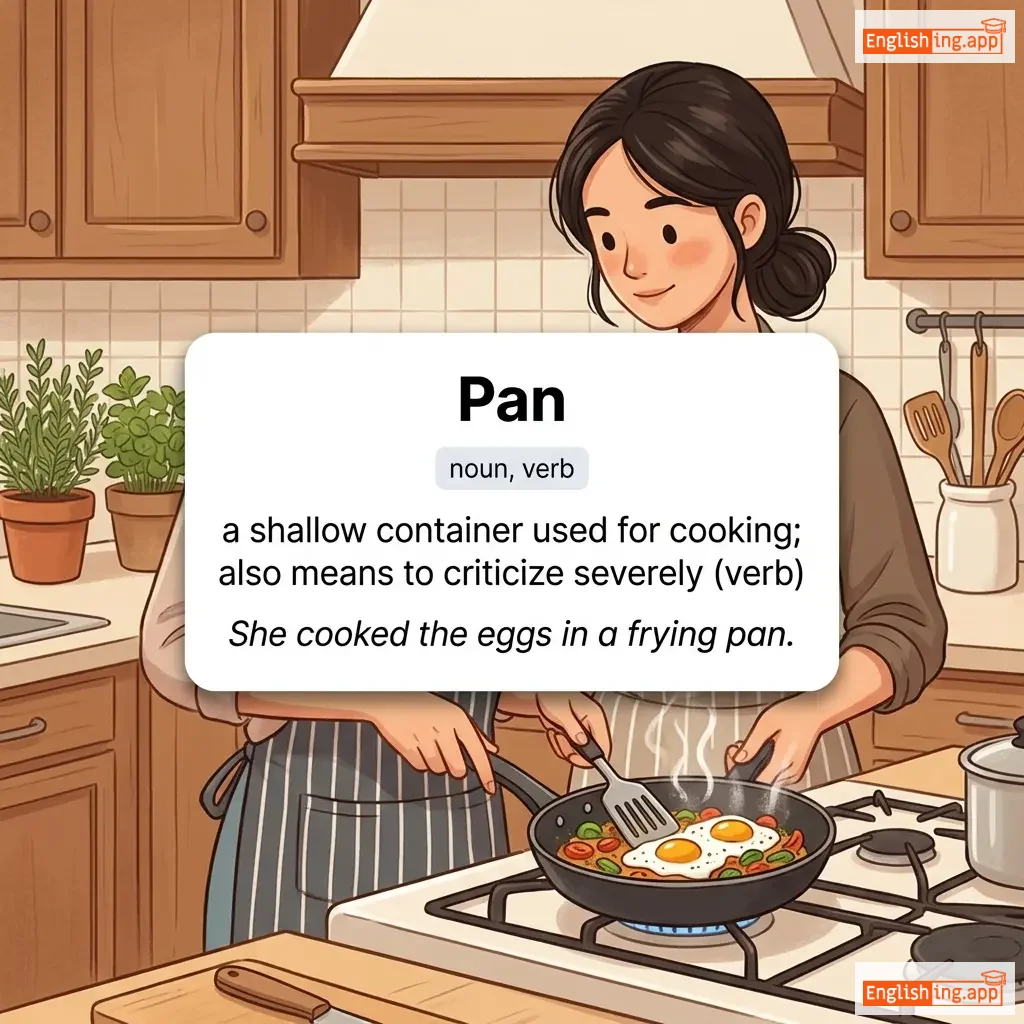
Pan definition card — visual illustration of the meaning
noun, verb
/pæn/
পাত্র, কড়াই (patro, korai)

a shallow container used for cooking; also means to criticize severely (verb)

"She cooked the eggs in a frying pan."

"সে ডিমগুলো একটি ফ্রাইং প্যানে রান্না করেছিল।" (Se dimgulo ekti frying pan-e ranna korechilo.)
adjective
/ˌpæn.əˈmer.ɪ.kən/
সমস্ত আমেরিকা সম্পর্কিত (somosto amerika somporkito)

relating to all the countries of North, Central, and South America

"The Pan-American Games bring together athletes from across the continent."

"প্যান-আমেরিকান গেমস পুরো মহাদেশের খেলোয়াড়দের একত্র করে।" (Pan-American Games puro mohadesher khelowarderder ekotro kore.)
noun
/ˌpænəˈsiːə/
সর্ব রোগের ওষুধ (sarbo roger oshudh)

A solution or remedy for all difficulties or diseases.

"Education is often seen as a panacea for social problems."

"শিক্ষাকে প্রায়ই সামাজিক সমস্যার সর্বজনীন প্রতিকার হিসেবে দেখা হয়।" (Shikkhake prai somajik somossar sarbojonin protikar hisebe dekha hoy.)
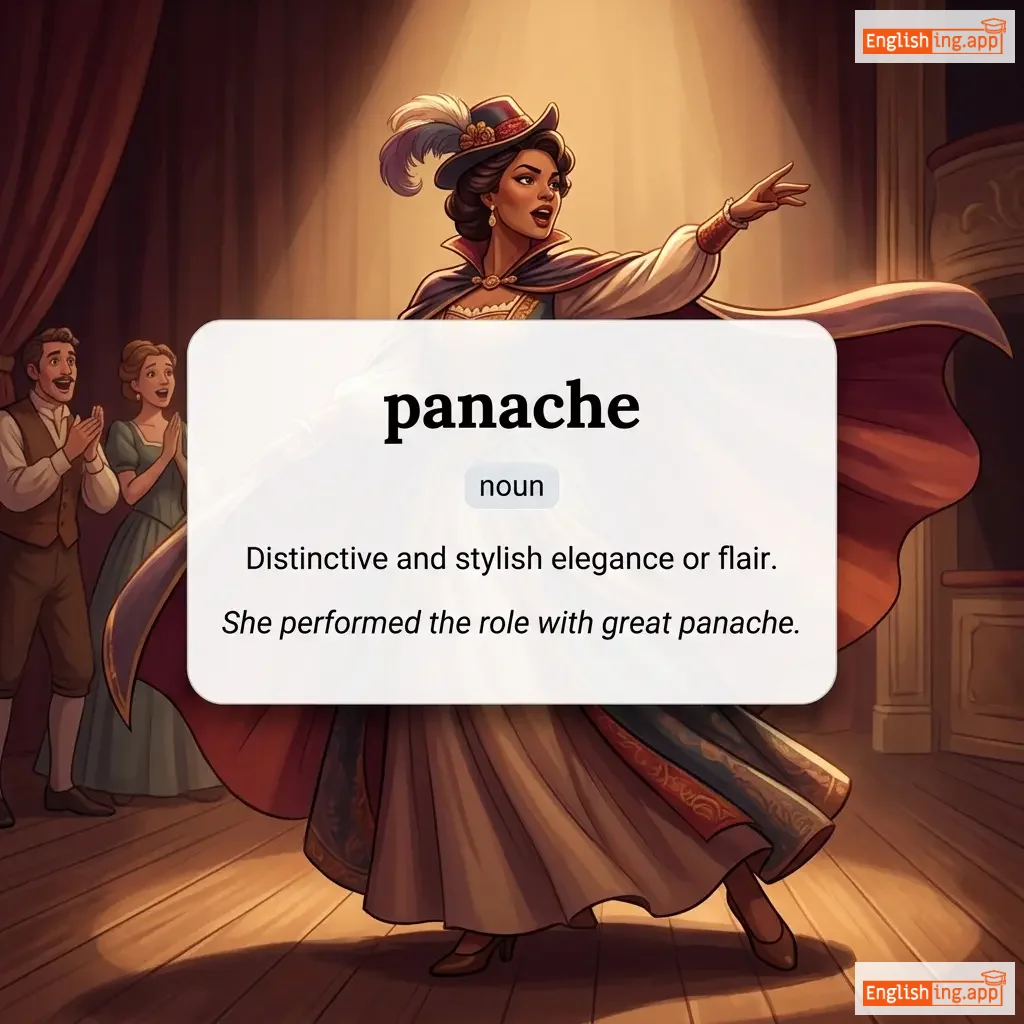
panache definition card — visual illustration of the meaning
noun
/pəˈnæʃ/
অভিজাত ভঙ্গি (obhijat bhongi)

Distinctive and stylish elegance or flair.

"She performed the role with great panache."

"সে ভূমিকাটি মহান ভঙ্গিমায় সম্পাদন করেছিল।" (Se bhumikati mohan bhongimay sompadon korechilo.)
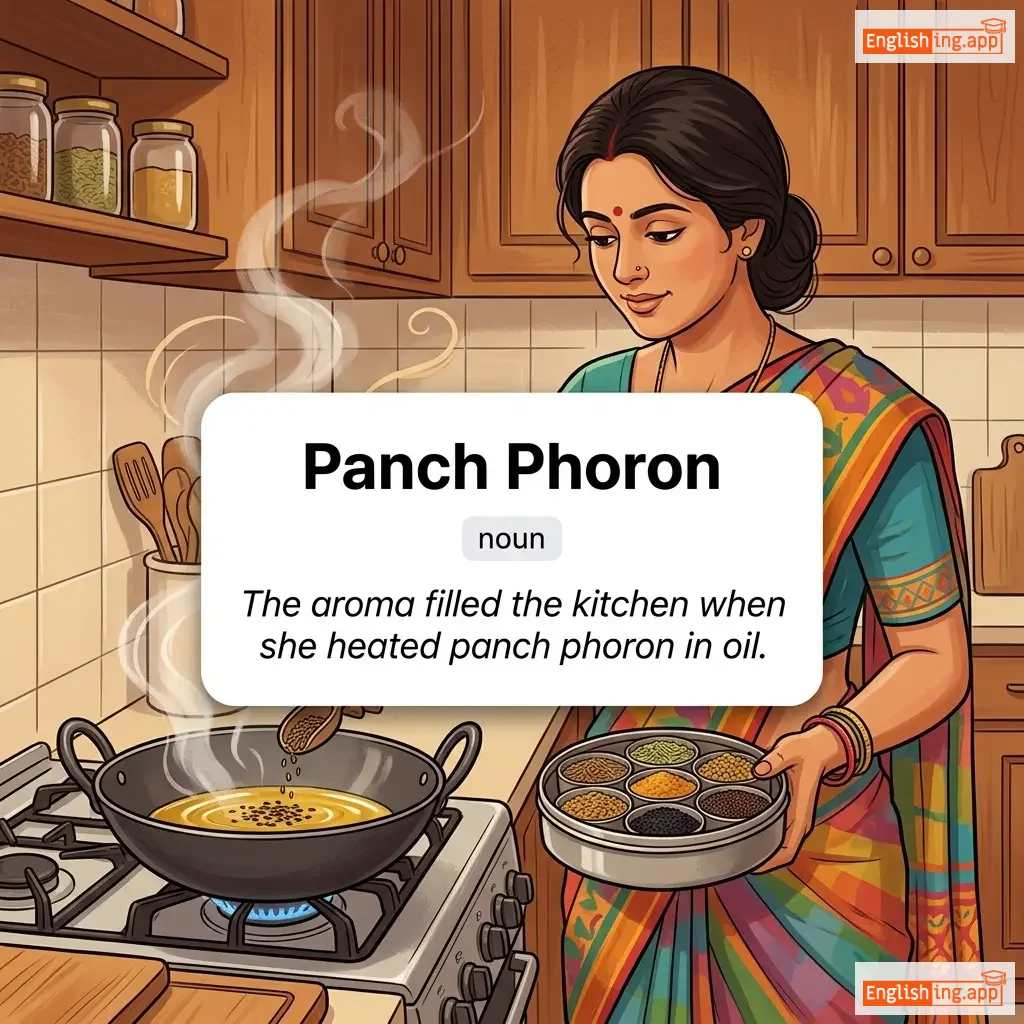
Panch Phoron definition card — visual illustration of the meaning
noun
/pʌntʃ ˈfoʊrən/
পাঁচ ফোড়ন (panch phoron)

a Bengali spice blend containing five whole spices: cumin, fennel, fenugreek, nigella, and mustard seeds

"The aroma filled the kitchen when she heated panch phoron in oil."

"তিনি তেলে পাঁচ ফোড়ন গরম করলে রান্নাঘর সুগন্ধে ভরে গেল।" (tini tele panch phoron gorom korle rannaghoor sugondhe bhore gelo.)
noun
/ˈpæŋkriəs/
অগ্ন্যাশয় (agnyashoy)

A gland in the abdomen that produces insulin and digestive enzymes.

"The pancreas plays a vital role in digestion and blood sugar regulation."

"অগ্ন্যাশয় হজম ও রক্তে শর্করা নিয়ন্ত্রণে গুরুত্বপূর্ণ ভূমিকা পালন করে।" (Agnyashoy hojom o rokter shorkora niyontrone guruttopurno vumikay palon kore.)
noun
/pænˈdɛmɪk/
মহামারী (mohamari)

An outbreak of a disease that occurs on a global scale.

"The COVID-19 pandemic changed the world dramatically."

"কোভিড-১৯ মহামারী পৃথিবীকে নাটকীয়ভাবে পরিবর্তন করেছে।" (Covid-19 mohamari prithibike natokiyovabe poriborton koreche.)
noun
/ˌpændəˈmoʊniəm/
হট্টগোল (hottogol)

Wild and noisy disorder or confusion; uproar.

"When the concert was canceled, pandemonium broke out among the crowd."

"কনসার্ট বাতিল হওয়ার পর ভিড়ের মধ্যে হট্টগোল ছড়িয়ে পড়ে।" (Concert batil howar por bhirer moddhe hottogol choriye pore.)
verb
/ˈpændər/
তুষ্ট করা, চাটুকারিতা করা (tushto kora, chatukarita kora)

to indulge or exploit the weaknesses, desires, or immoral tendencies of others

"The politician was accused of pandering to voters' fears."

"রাজনীতিবিদকে ভোটারদের ভয়ের প্রতি তুষ্ট করার অভিযোগ আনা হয়েছিল।" (Rajnaitibidke votarder bhoyer proti tushto korar obhijog ana hoyechilo.)
noun
/ˌpænəˈdʒɪrɪk/
প্রশংসাপত্র, প্রশস্তি (proshongshapatro, proshosti)

a formal speech or piece of writing in praise of someone or something

"The author wrote a panegyric on the bravery of the soldiers."

"লেখক সৈন্যদের বীরত্বের উপর একটি প্রশস্তি লিখেছিলেন।" (Lekhok soinnoder birattwer upor ekti proshosti likhechilen.)
noun
/ˈpænəl/
প্যানেল, বিচারক দল (panel, bicharok dol)

a group of people gathered to discuss, judge, or advise on a particular topic

"The panel of judges announced the winner of the competition."

"বিচারক প্যানেল প্রতিযোগিতার বিজয়ীর নাম ঘোষণা করলেন।" (Bicharok panel protijogitar bijoyer nam ghoshona korlen.)
noun
/pæŋ/
যন্ত্রণার তীক্ষ্ণ অনুভূতি (jotnar tikshno onubhuti)

a sudden sharp feeling of pain or emotional distress

"She felt a pang of guilt after the argument."

"বিতর্কের পর সে হঠাৎ অপরাধবোধের যন্ত্রণা অনুভব করল।" (Bitorker por se hothat oprodhabodher jotna onubhob korlo.)
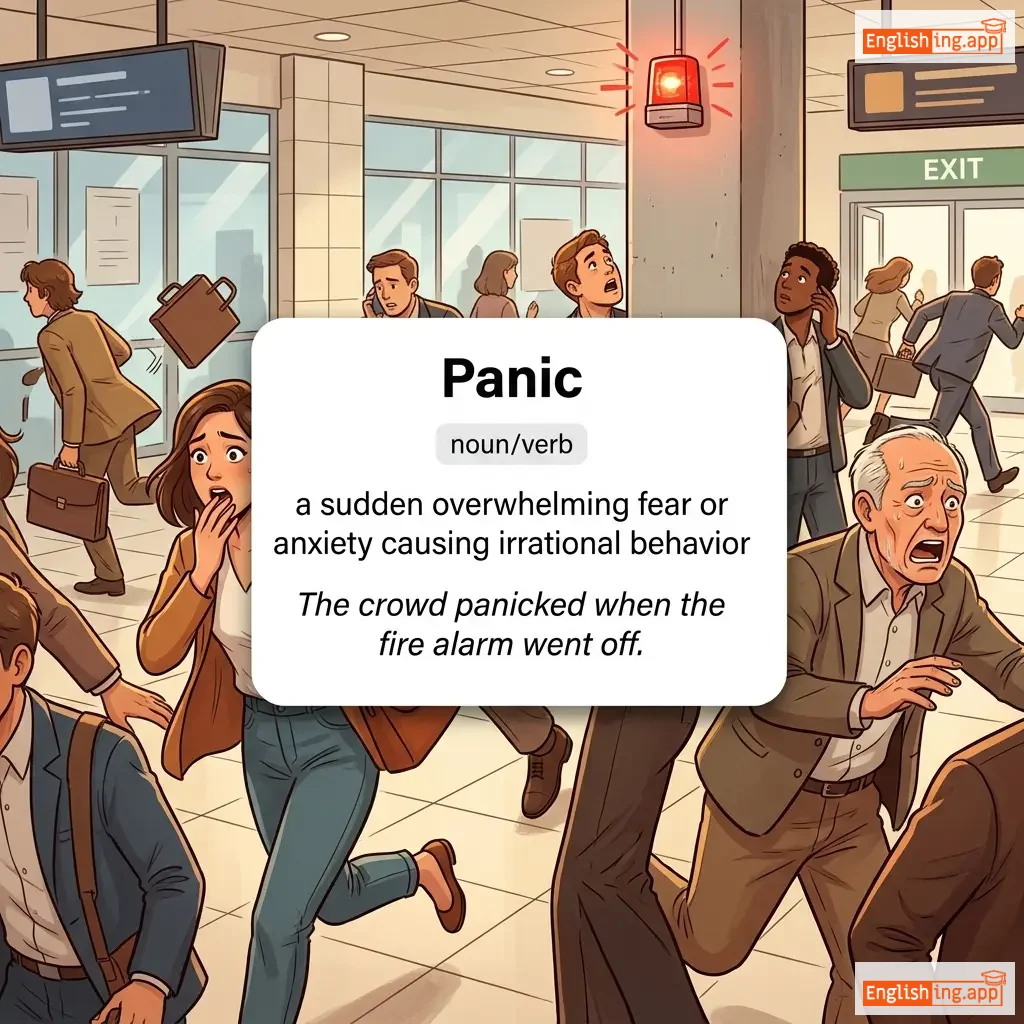
Panic definition card — visual illustration of the meaning
noun/verb
/ˈpænɪk/
আতঙ্ক (atanko)

a sudden overwhelming fear or anxiety causing irrational behavior

"The crowd panicked when the fire alarm went off."

"আগুনের অ্যালার্ম বাজলে ভিড় আতঙ্কিত হয়ে পড়েছিল।" (Aguner alarm bajle bhir atonkito hoye porichhilo.)
adjective
/ˈpæn.ɪ.ki/
আতঙ্কগ্রস্ত; আতঙ্কের ভয় ও আশঙ্কা; (pyanikey)

feeling or showing panic; anxious and fearful

"The crowd became panicky when the fire alarm sounded."

"ফায়ার অ্যালার্ম বাজলে ভিড় আতঙ্কগ্রস্ত হয়ে পড়ল।" (faiyar alarm bajle vir attonkogrostho hoye porlo)
/ˈpæn.ə.pli/
বহুবিধ সংগ্রহ (bohubidho songroho)

A complete or impressive collection of things; a full set of armor.

"The museum displayed a panoply of ancient weapons."

"যাদুঘরে প্রাচীন অস্ত্রের একটি বহুবিধ সংগ্রহ প্রদর্শিত হয়েছিল।" (jadughore prachin osther ekti bohubidho songroho prodorshito hoyechhilo.)
noun
/ˌpæn.əˈræm.ə/
সুন্দর দৃশ্য (shundor drishsho)

An unbroken view of the whole region surrounding an observer.

"From the hilltop, we enjoyed a breathtaking panorama of the city."

"পাহাড়ের চূড়া থেকে আমরা শহরের মনোমুগ্ধকর দৃশ্য উপভোগ করেছিলাম।" (paharer chura theke amra shohorer monomughdhokor drishsho upobhog korechhilam.)
adjective
/ˌpæn.əˈræm.ɪk/
বিস্তৃত দৃশ্যমান (bistrito drishshoman)

Giving a wide view of an extensive area in all directions.

"The hotel offers panoramic views of the ocean."

"হোটেলটি সমুদ্রের বিস্তৃত দৃশ্য প্রদান করে।" (hotelti somudrer bistrito drishsho prodan kore.)
Pant definition card — visual illustration of the meaning
noun
/pænt/
প্যান্ট (pant)

a piece of clothing worn from the waist down, covering both legs separately

"He wore a pair of blue pants to the party."

"সে পার্টিতে নীল প্যান্ট পরেছিল।" (Se party-te nil pant porichilo.)
noun
/ˈpæn.θi.ɪ.zəm/
সর্বেশ্বরবাদ (sorbeshorbad)

The belief that God and the universe are identical, or that everything is a manifestation of God.

"Spinoza’s philosophy is often associated with pantheism."

"স্পিনোজার দর্শন প্রায়শই সর্বেশ্বরবাদের সাথে যুক্ত।" (Spinojar dorshon prayoshoy sorbeshorbad er sathe jukto.)
noun
/ˈpæn.θi.ən/
সকল দেবদেবী, দেবমন্দির (sokol debdebi, debmondir)

All the gods of a religion collectively; a building dedicated to all gods.

"The Roman Pantheon is one of the best-preserved ancient temples."

"রোমান প্যানথিয়ন প্রাচীনতম সংরক্ষিত মন্দিরগুলির একটি।" (Roman Pantheon prachintomo songrokkhito mondirgulir ekti.)
noun
/ˈpæntəmaɪm/
অভিনয়ের মাধ্যমে গল্প বলা (abhinoyer maddhome golpo bola)

A type of theatrical performance using gestures and movements without spoken words; in Britain, a musical comedy play for families performed at Christmas.

"The children enjoyed the Christmas pantomime at the local theater."

"শিশুরা স্থানীয় থিয়েটারে ক্রিসমাস প্যান্টোমাইম উপভোগ করেছিল।" (Shishura sthaniyo theatere Christmas pantomime upovog korechilo.)
noun
/ˈpæntəˌskoʊp/
বিস্তৃত দৃশ্য প্রদর্শক যন্ত্র (bistrito drishyo prodorshok jontra)

An optical instrument that provides a wide or panoramic view.

"The scientist used a pantoscope to observe the entire horizon."

"বিজ্ঞানী পুরো দিগন্ত পর্যবেক্ষণ করতে একটি প্যান্টোস্কোপ ব্যবহার করেছিলেন।" (Bigyani puro digonto porjobekkhon korte ekti pantoscope byabohar korechilen.)
noun
/ˈpæntri/
খাবার রাখার ঘর (khabar rakhar ghor)

A small room or cupboard where food, dishes, and kitchen supplies are stored.

"She stocked the pantry with fresh groceries for the week."

"সে সপ্তাহের জন্য তাজা মুদি জিনিসপত্র দিয়ে প্যান্ট্রি পূর্ণ করেছিল।" (Se saptaher jonno taja mudi jinishpotro diye pantry purno korechilo.)
noun
/ˈpɑːpə/
বাবা (baba)

an informal or affectionate term for one’s father

"Papa is picking me up from school today."

"আজ বাবা আমাকে স্কুল থেকে নিয়ে যাবে।" (aj baba amake school theke niye jabe)
noun
/ˈpeɪpəsi/
পোপের পদ (poper pod)

The office or authority of the Pope in the Roman Catholic Church.

"The papacy played a significant role in medieval European politics."

"মধ্যযুগীয় ইউরোপীয় রাজনীতিতে প্যাপাসি গুরুত্বপূর্ণ ভূমিকা পালন করেছিল।" (Maddhyajugiyo Europiyo rajnitite papacy guruttopurno vumikha palon korechilo.)
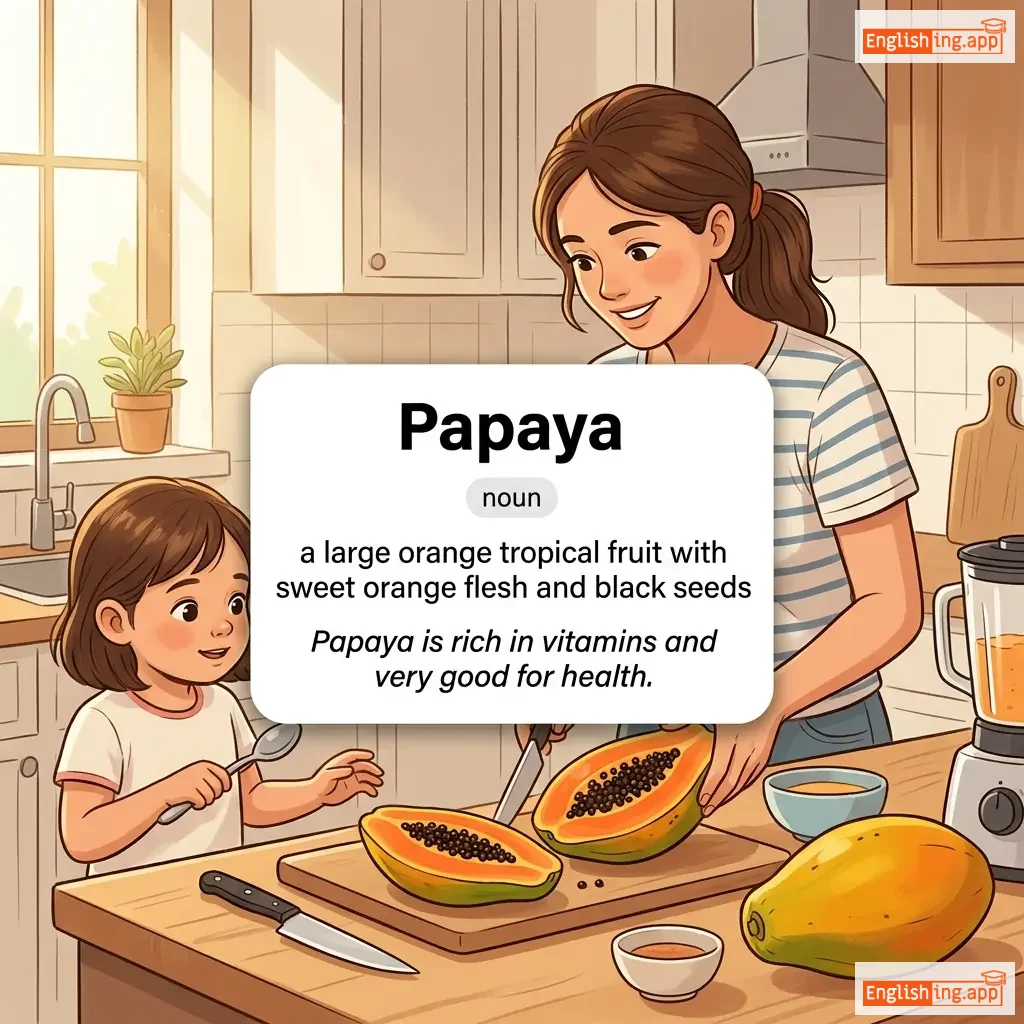
Papaya definition card — visual illustration of the meaning
noun
/pəˈpaɪə/
পেঁপে (pepe)

a large orange tropical fruit with sweet orange flesh and black seeds

"Papaya is rich in vitamins and very good for health."

"পেঁপে ভিটামিন সমৃদ্ধ এবং স্বাস্থ্যের জন্য খুবই ভালো।" (pepe vitamin somridho ebong shasther jonno khuboi bhalo.)
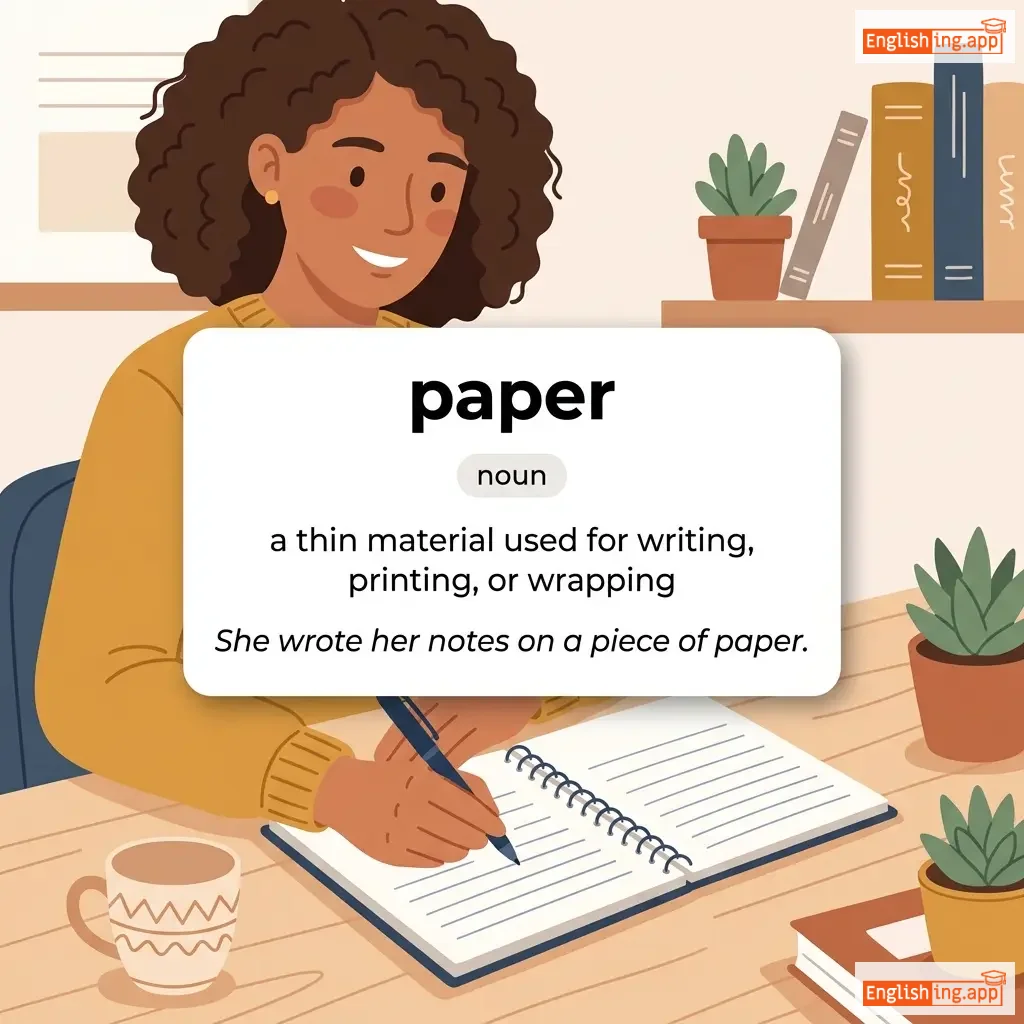
paper definition card — visual illustration of the meaning
noun
/ˈpeɪpər/
কাগজ (kagoj)

a thin material used for writing, printing, or wrapping

"She wrote her notes on a piece of paper."

"সে একটি পেপারে তার নোট লিখেছিল।" (Se ekti paper-e tar note likhechhilo.)
noun
/pəˈpaɪrəs/
প্রাচীন লেখার কাগজ (prachin lekhar kagoj)

An ancient writing material made from the pith of the papyrus plant; also refers to the plant itself.

"The ancient scroll was written on papyrus."

"প্রাচীন পাণ্ডুলিপিটি প্যাপিরাসে লেখা ছিল।" (Prachin pandulipiti papyruse lekha chilo.)
noun
/ˈpɑːrtʃmənt/
চর্মলিপি (chormolipi)

a thin material made from animal skin, used in the past for writing

"The ancient manuscript was written on parchment."

"প্রাচীন পাণ্ডুলিপি চর্মলিপির উপর লেখা ছিল।" (Prachin pandulipi chormolipir upar lekha chhilo.)
verb
/pɑːrtʃ/
শুকিয়ে ফেলা (shukie fela)

to make something extremely dry, especially by exposure to heat

"The scorching sun began to parch the fields."

"প্রচণ্ড রোদ মাঠগুলো শুকিয়ে দিতে শুরু করল।" (Prochondo rod mathgulo shukie dite shuru korlo.)
adjective
/pɑːrtʃt/
অত্যন্ত তৃষ্ণার্ত (otonto trishnarto)

extremely dry, especially because of heat or thirst

"After walking in the desert, he was parched with thirst."

"মরুভূমিতে হাঁটার পর সে তৃষ্ণায় শুকিয়ে গিয়েছিল।" (Moruvumite hantar por se trishnay shukie giyechhilo.)
noun
/ˈpɑr.səl/
মোড়ক; প্যাকেট; (morok)

an object or collection of objects wrapped in paper for carrying or sending by mail; a piece of land

"The postman delivered a parcel to our door."

"ডাকপিয়ন আমাদের দরজায় একটি প্যাকেট পৌঁছে দিয়েছেন।" (dakpiyon amadere dorjay ekti packet pounche diyechhen.)
noun
/ˈpɑr.dən/
ক্ষমা; মার্জনা; (kkhoma)

forgiveness; the action of forgiving or being forgiven for an error or offense

"I beg your pardon for interrupting the meeting."

"সভায় বাধা দেওয়ার জন্য আমি আপনার কাছে ক্ষমা চাই।" (shobhay badha deoyar jonno ami apnar kachhe kkhoma chai.)
adjective
/ˈpɑːr.dən.ə.bəl/
ক্ষমার যোগ্য; (pardonebol)

able to be forgiven; excusable

"His mistake was pardonable given the difficult circumstances."

"কঠিন পরিস্থিতির কারণে তার ভুলটি ক্ষমাযোগ্য ছিল।" (kothin poristhitir karone tar vulti kkhomajoggo chhilo)