词汇表

英语词汇词典 | 单词含义、定义和示例

👨‍👩‍👧

parental (父母的)

adjective
/pəˈrɛntəl/
与父母相关的 (yu fumu xiangguan de)

relating to a parent or parents; characteristic of a mother or father

"Parental guidance is important for a child's development."

"父母的指导对孩子的成长很重要。" (Fumu de zhidao dui haizi de chengzhang hen zhongyao.)
noun
/ˈpɛrəntɪdʒ/
家族背景 (jiazu beijing)

The identity and origins of one's parents; descent or lineage.

"Her noble parentage gave her access to the royal court."

"她的高贵家族背景使她有机会进入皇宫。" (Tā de gāoguì jiāzú bèijǐng shǐ tā yǒu jīhuì jìnrù huánggōng.)
parent definition card — visual illustration of the meaning
noun
/ˈpɛərənt/
父母 (fùmǔ)

a mother or father of a person or animal

"Both of his parents are teachers."

"他的父母是教师。" (Tā de fùmǔ shì jiàoshī.)
noun
/ˌpærəˈɡɔːrɪk/
含鸦片的药物 (hán yāpiàn de yàowù)

a medicine containing opium, once used to relieve pain and diarrhea

"Doctors once prescribed paregoric to treat diarrhea in children."

"医生曾经开具帕雷戈里克来治疗儿童的腹泻。" (Yīshēng céngjīng kāijù Pàléigēlìkè lái zhìliáo értóng de fùxiè.)
verb
/per/
削皮 (xiao pi)

to cut away the outer covering or reduce something gradually

"She pared the apple before eating it."

"她在吃苹果前削了皮。" (Ta zai chi pingguo qian xiao le pi.)
adjective
/ˈpɑːr.dən.ə.bəl/
可原谅的 (ke yuanliang de)

able to be forgiven; excusable

"His mistake was pardonable given the difficult circumstances."

"他的错误是可以原谅的,鉴于困难的情况。" (tade cuowu shi keyi yuanliang de, jianyu kunnan de qingkuang.)
noun
/ˈpɑr.dən/
宽恕; 原谅; (kuanshu)

forgiveness; the action of forgiving or being forgiven for an error or offense

"I beg your pardon for interrupting the meeting."

"打扰会议,我请求宽恕。" (daru huiyi, wo qingqiu kuanshu.)
noun
/ˈpɑːrtʃmənt/
羊皮纸 (yángpí zhǐ)

a thin material made from animal skin, used in the past for writing

"The ancient manuscript was written on parchment."

"古老的手稿写在羊皮纸上。" (Gǔlǎo de shǒugǎo xiě zài yángpí zhǐ shàng.)
adjective
/pɑːrtʃt/
极度口渴 (jidù kǒukě)

extremely dry, especially because of heat or thirst

"After walking in the desert, he was parched with thirst."

"在沙漠中走路后,他极度口渴。" (Zài shāmò zhōng zǒulù hòu, tā jídù kǒukě.)
verb
/pɑːrtʃ/
使干燥 (shi ganzao)

to make something extremely dry, especially by exposure to heat

"The scorching sun began to parch the fields."

"炙热的太阳开始把田地弄干。" (Zhire de taiyang kaishi ba tiandi nong gan.)
noun
/ˈpɑr.səl/
包裹; 土地块 (baoguo; tudi kuai)

an object or collection of objects wrapped in paper for carrying or sending by mail; a piece of land

"The postman delivered a parcel to our door."
"邮递员把包裹送到我们门口。" (You di yuan ba baoguo song dao women men kou.)
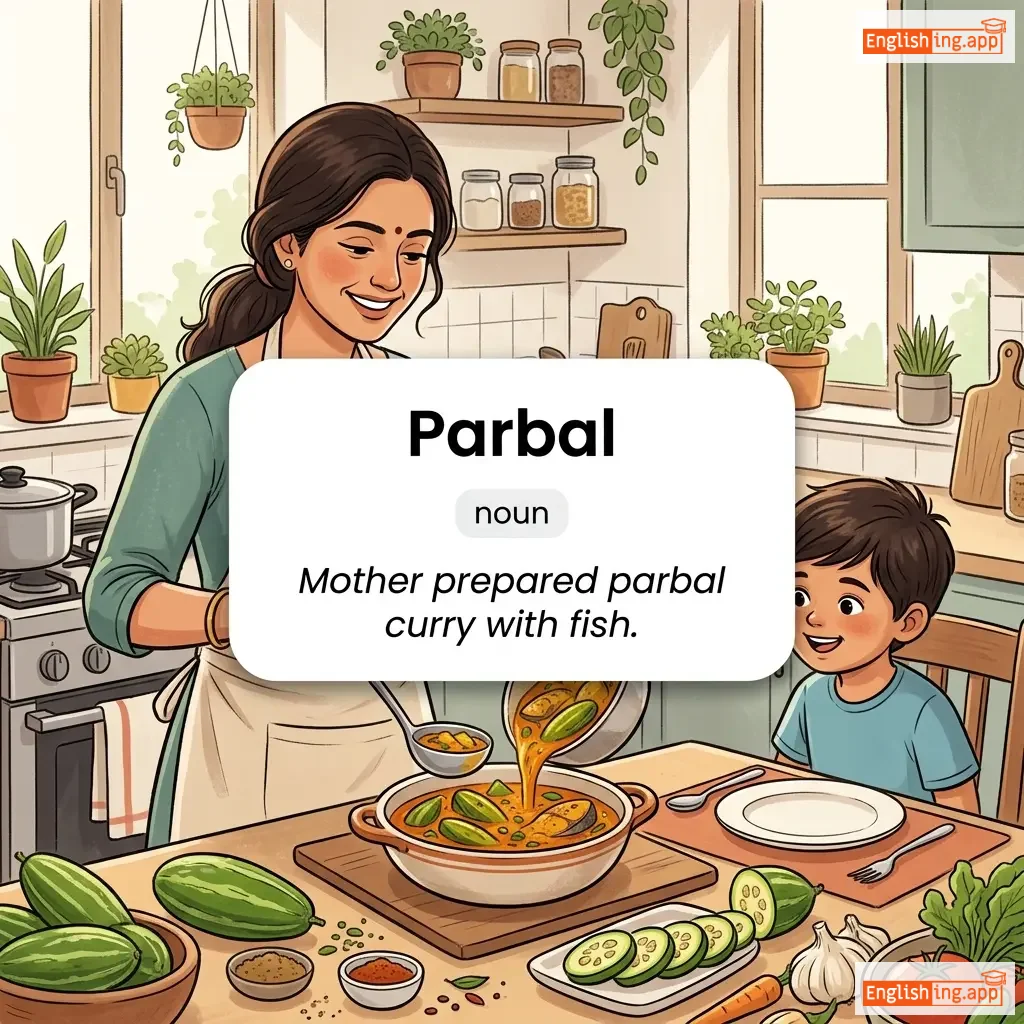
Parbal definition card — visual illustration of the meaning
noun
/ˈpɑr.bəl/
尖瓜 (jian gua)

A green vegetable also known as pointed gourd, commonly used in South Asian cuisine

"Mother prepared parbal curry with fish."

"母亲做了带鱼的尖瓜咖喱。" (Mǔqīn zuòle dài yú de jiān guā gālí)
noun
/ˈpærəsaɪt/
寄生虫 (jìshēngchóng)

An organism that lives in or on another organism and benefits at the host’s expense.

"The parasite weakened the tree by feeding on its nutrients."

"寄生虫通过吸取树木的营养,使其变弱。" (Jìshēngchóng tōngguò xīqǔ shùmù de yíngyǎng, shǐ qí biàn ruò.)
verb
/ˈpærəfreɪz/
幸福 (xingfu)

To express the meaning of something using different words, often to make it clearer.

"The teacher asked the students to paraphrase the poem in their own words."

"当她收到奖项时,她无法掩饰自己的幸福。" (Dāng tā shōudào jiǎngxiàng shí, tā wúfǎ yǎnshì zìjǐ de xìngfú.)
noun
/ˌpærəfəˈneɪliə/
设备 (shebei)

Miscellaneous articles, especially equipment needed for a particular activity.

"The fisherman carried all his fishing paraphernalia in a large box."

"渔夫把所有钓鱼设备放在一个大盒子里。" (Yufu ba suoyou diaoyu shebei fang zai yige da hezi li.)
adjective
/ˈpær.ə.nɔɪd/
对他人有不合理的恐惧或怀疑 (duì tārén yǒu bù hé lǐ de kǒngjù huò huáiyí)

having an unreasonable fear or suspicion of others

"She became paranoid after hearing strange noises outside."

"她在听到外面奇怪的声音后变得偏执。" (Tā zài tīngdào wàimiàn qíguài de shēngyīn hòu biàn dé piānzhí.)
noun
/ˈpærəpɛt/
防护墙 (fanghu qiang)

A low protective wall along the edge of a roof, balcony, or bridge.

"The soldier hid behind the parapet for protection."
"士兵躲在防护墙后面以保障安全。" (Shibing duozai fanghu qiang houmian yi baozhang anquan.)
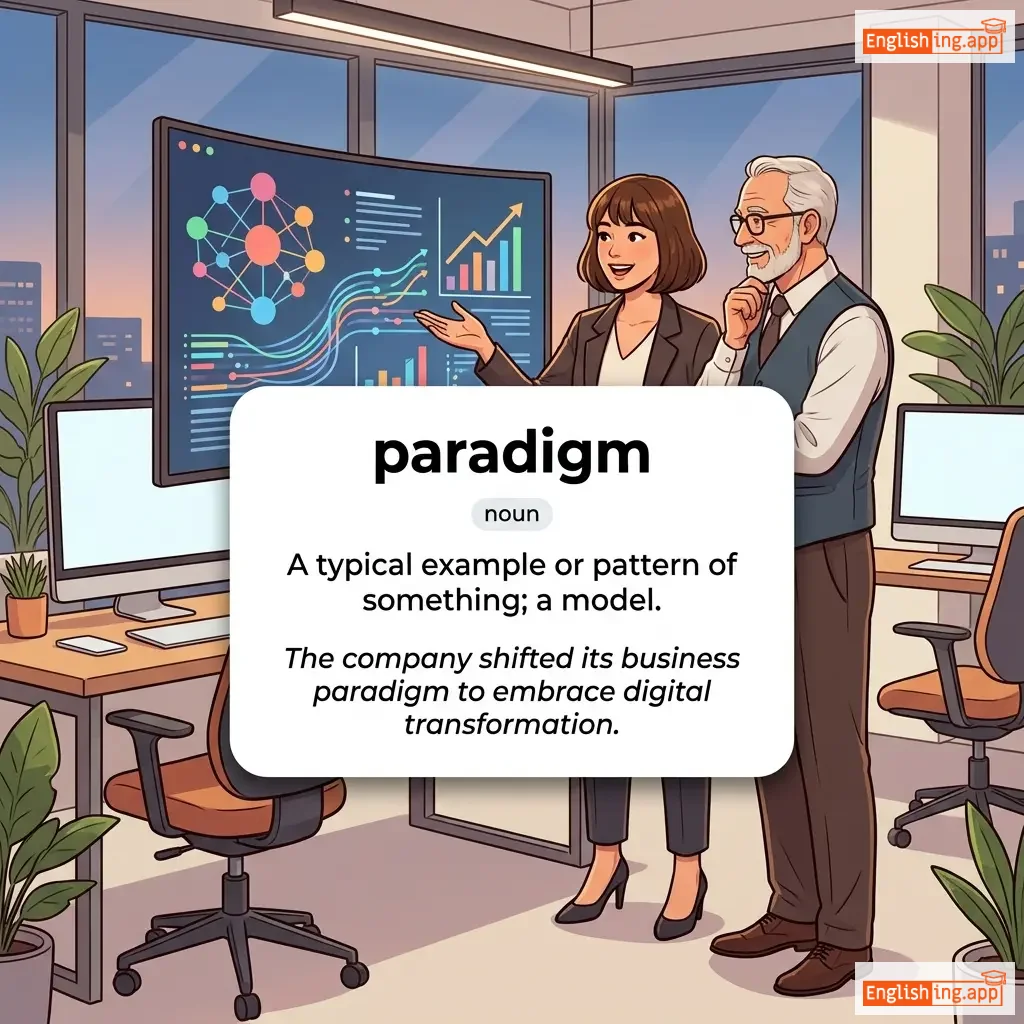
paradigm definition card — visual illustration of the meaning
noun
/ˈpærədaɪm/
模式 (moshi)

A typical example or pattern of something; a model.

"The company shifted its business paradigm to embrace digital transformation."

"公司改变了其商业模式,以适应数字化转型。" (Gongsi gaibian le qi shangye moshi, yi shiying shuzihua zhuanxing.)
adjective
/ˌpærəˈdɪɡmətɪk/
典范的 (diǎnfàn de)

Serving as a typical example or model of something.

"Her success story is paradigmatic of the opportunities education can provide."

"她的成功故事是教育可以提供的机会的典范。" (Tā de chénggōng gùshì shì jiàoyù kěyǐ tígōng de jīhuì de diǎnfàn.)
noun
/ˈpærədaɪs/
天堂 (tiāntáng)

An ideal or perfect place of happiness; often thought of as heaven.

"The tropical island felt like a true paradise."

"这个热带岛屿感觉就像一个真正的天堂。" (Zhège rèdài dǎoyǔ gǎnjué jiù xiàng yī gè zhēnzhèng de tiāntáng.)
paradox definition card — visual illustration of the meaning
noun
/ˈpærədɒks/
悖论 (bèilùn)

A statement or situation that seems contradictory but may reveal a deeper truth.

"It is a paradox that computers make our lives easier but also more stressful."

"这是一个悖论,计算机让我们的生活更轻松,但也更有压力。" (Zhè shì yīgè bèilùn, jìsuànjī ràng wǒmen de shēnghuó gèng qīngsōng, dàn yě gèng yǒu yālì.)
adjective
/ˌpærəˈdɒksɪkəl/
矛盾的 (máodùn de)

Seemingly contradictory or opposed to common sense, yet possibly true.

"It is paradoxical that standing is often more tiring than walking."
"站立常常比走路更累,这很矛盾。" (Zhànlì chángcháng bǐ zǒulù gèng lèi, zhè hěn máodùn.)
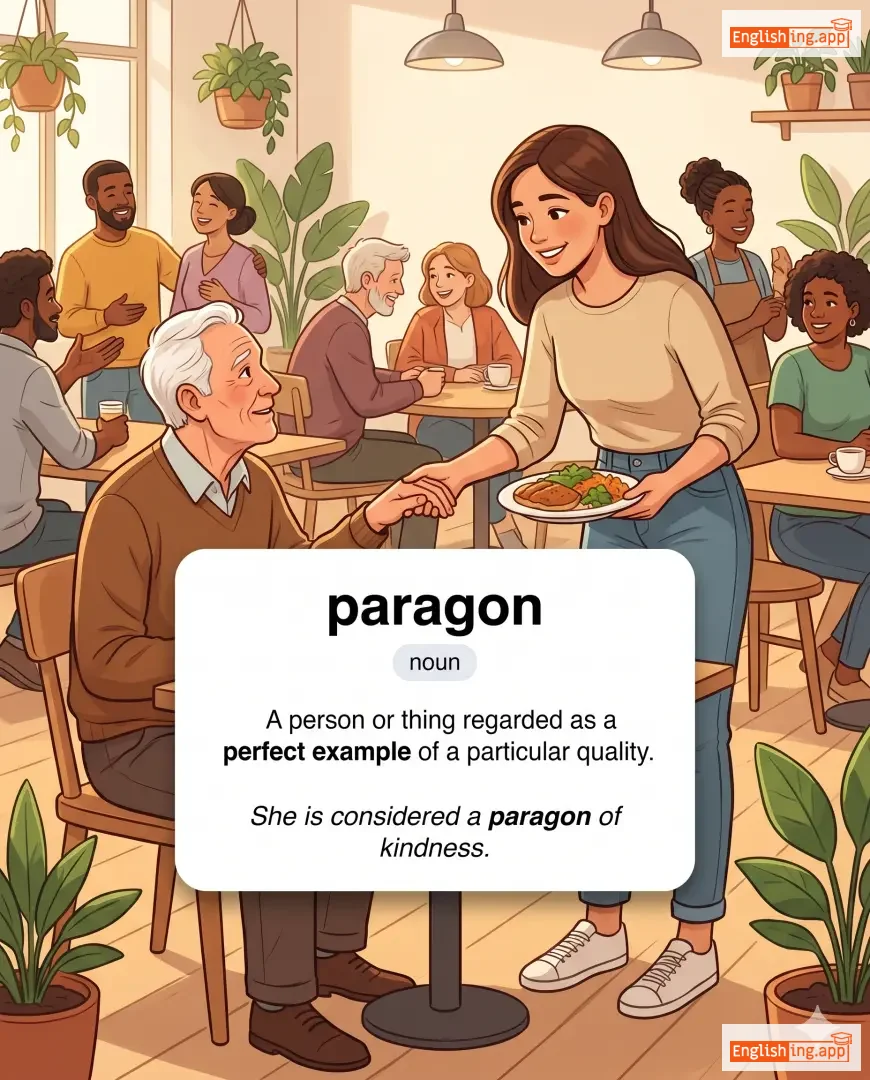
paragon definition card — visual illustration of the meaning
noun
/ˈpærəɡɒn/
典范 (dianfan)

A person or thing regarded as a perfect example of a particular quality.

"She is considered a paragon of kindness."
"她被认为是善良的典范。" (Ta bei renwei shi shanliang de dianfan.)
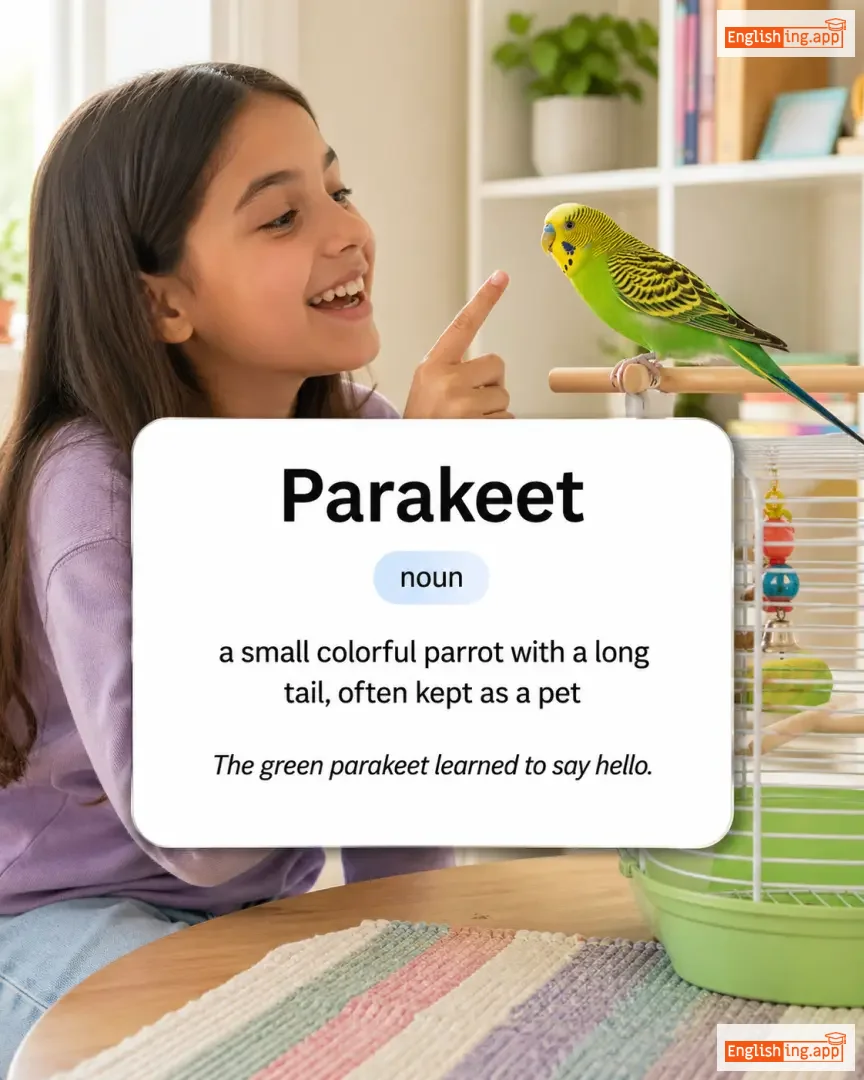
Parakeet definition card — visual illustration of the meaning
noun
/ˈpær.ə.kiːt/
鹦鹉 (yīngwǔ)

a small colorful parrot with a long tail, often kept as a pet

"The green parakeet learned to say hello."
"绿色鹦鹉学会了说你好。" (Lǜsè yīngwǔ xuéhuìle shuō nǐ hǎo.)
noun, adjective, verb
/ˈpærəˌlɛl/

Lines, objects, or events that are side by side and never meet; similarity or comparison.

"The road runs parallel to the railway."

parallels definition card — visual illustration of the meaning
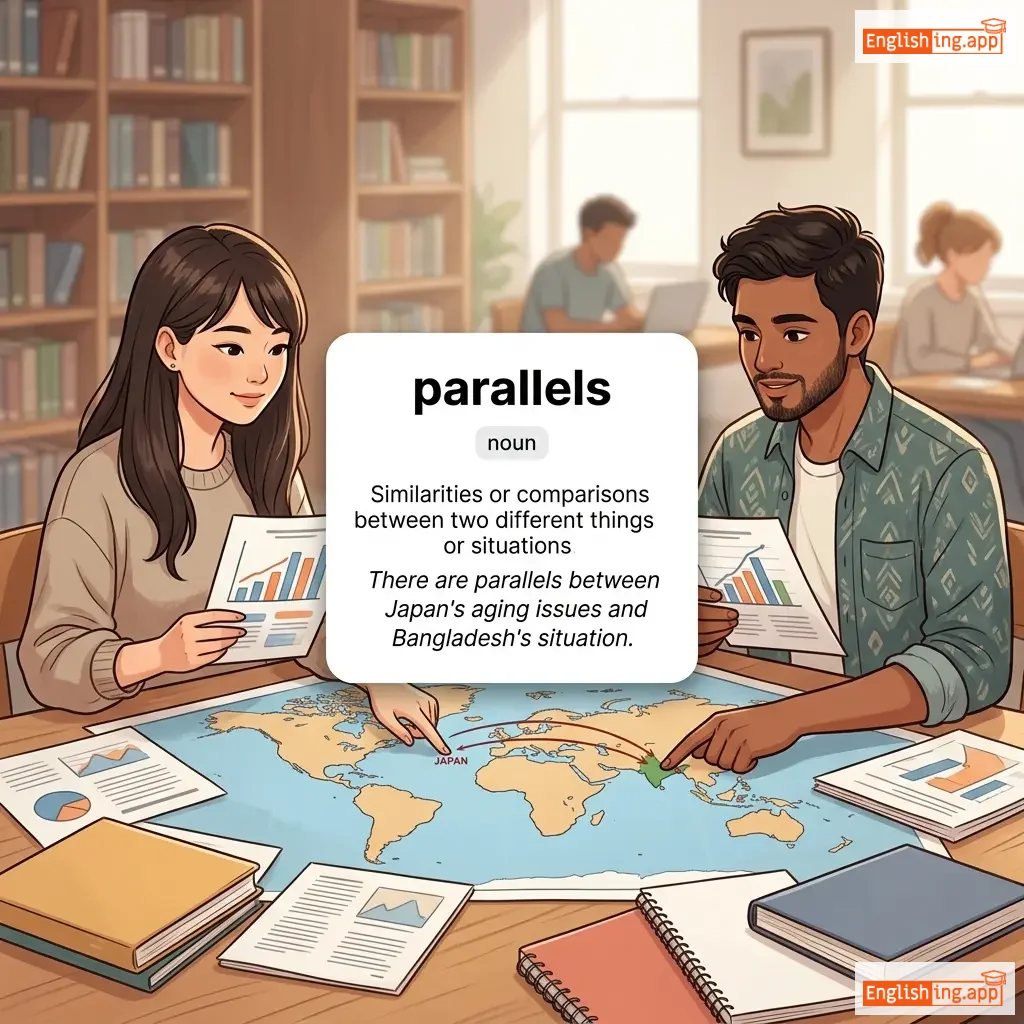
noun
ˈpærəˌlɛlz
相似之处 (xiangsi zhichu)

Similarities or comparisons between two different things or situations

"There are parallels between Japan's aging issues and Bangladesh's situation."

"日本的老龄化问题和孟加拉国的情况之间存在相似之处。" (Riben de laolinghua wenti he Mengjialaguo de qingkuang zhijian cunzai xiangsi zhichu.)
noun
/pəˈræləsɪs/
麻痹 (mábì)

Loss of the ability to move in part or most of the body, typically as a result of illness or injury.

"The accident left him with partial paralysis."

"事故使他部分瘫痪。" (Shìgù shǐ tā bùfen tānhuàn.)
verb
/ˈpærəlaɪz/
麻痹 (mábì)

to cause someone or something to lose the ability to move or function normally

"The sudden shock seemed to paralyze him."

"突如其来的冲击似乎使他麻痹。" (Túrúqílái de chōngjí shìhū shǐ tā mábì.)
noun
/pəˈræmɪtər/
参数 (canshu)

a limit, boundary, or measurable factor that defines or determines something

"We need to set clear parameters for this project."

"我们需要为这个项目设定明确的参数。" (Women xuyao wei zhege xiangmu sheding mingque de canshu.)
adjective
/ˈpærəmaʊnt/
至关重要 (zhì guān zhòng yào)

more important than anything else; supreme

"Safety is of paramount importance in this factory."

"在这家工厂里,安全至关重要。" (Zài zhè jiā gōngchǎng lǐ, ānquán zhì guān zhòng yào.)
noun
/ˈpærəmʊr/
情人 (qingren)

a lover, especially an illicit one

"The secret paramour was finally revealed."

"秘密情人终于被揭露。" (Mìmì qíngrén zhōngyú bèi jiēlù.)
noun
/ˌpærəˈnɔɪə/
一种不合理且持续的感觉,认为别人想要伤害你或一直在监视你 (yī zhǒng bù hé lǐ qiě chí xù de gǎn jué, rèn wéi bié rén xiǎng yào shāng hài nǐ huò yī zhí zài jiān shì nǐ)

an irrational and persistent feeling that people are 'out to get you' or are constantly watching you

"His constant paranoia made it hard for him to trust anyone."

"他不断的偏执让他很难信任任何人。" (Tā bù duàn de piān zhí ràng tā hěn nán xìn rèn rèn hé rén.)
noun
/ˌpærəˈnɔɪæk/
偏执的人 (piān zhí de rén)

A person who suffers from paranoia or exhibits extreme, irrational distrust and suspicion.

"The paranoiac refused to leave his house, fearing everyone was against him."

"这个偏执的人拒绝离开家,因为他害怕每个人都反对他。" (Zhè gè piān zhí de rén jù jué lí kāi jiā, yīnwèi tā hài pà měi gè rén dōu fǎn duì tā.)
noun
/ˈpærəˌlɛlɪzəm/
平行主义 (pingxing zhuyi)

The state of being parallel or similar; in literature, the use of components in a sentence that are grammatically the same or similar in construction.

"The writer used parallelism to give rhythm to his prose."

"作家使用平行主义为他的散文增添了节奏。" (Zuojia shiyong pingxing zhuyi wei tade sanwen zengtian le jiezou.)
👩‍🎓

Nun (nān)

noun
/nʌn/
修女 (xiū nǚ)

a woman who has taken vows in a religious order and lives in a convent

"The nun taught at the local Catholic school."

"修女在当地的天主教学校授课。" (Xiū nǚ zài dāngdì de tiānzhǔjiào xuéxiào shòukè.)
noun
/njuːˈmɪzmətɪst/
钱币学家 (qiánbì xuéjiā)

A person who studies or collects coins, paper currency, and medals.

"The numismatist displayed his rare coin collection at the exhibition."

"钱币学家在展览会上展示了他的稀有硬币收藏" (Qiánbì xuéjiā zài zhǎnlǎn huì shàng zhǎnshìle tā de xīyǒu yìngbì shōucáng)
adjective
/ˌnjuːmɪzˈmætɪk/
钱币学的 (qián bì xué de)

relating to the study or collection of coins, currency, and medals

"He has a numismatic collection of rare coins from around the world."

"他拥有来自世界各地的稀有硬币收藏。" (Tā yǒng yǒu lái zì shìjiè gè dì de xīyǒu yìng bì shōu cáng.)
adjective
/ˈnjuːmɪnəs/
神秘的 (shenmide)

having a strong spiritual or mysterious quality

"The temple had a numinous atmosphere that inspired awe."

"这座寺庙有一种神秘的氛围,令人敬畏。" (Zhe zuo simiao you yizhong shenmi de fenwei, lingren jingwei.)
adjective
/ˈnjuːmərəs/
众多 (zhòngduō)

existing in large numbers; many

"There are numerous opportunities for growth in this field."

"在这个领域有很多机会可以成长。" (Zài zhège lǐngyù yǒu hěnduō jīhuì kěyǐ chéngzhǎng.)
adjective
/njuːˈmɛrɪkəl/
数字的 (shuzi de)

relating to or expressed in numbers

"The report provides numerical data on population growth."

"报告提供了有关人口增长的数字数据。" (Baogao tigongle youguan renkou zengzhang de shuzi shuju.)
noun
/ˌnjuːməˈreɪʃən/
计数 (jishu)

the action or process of counting or assigning numbers

"The teacher explained the basics of numeration to the students."

"老师向学生解释了计数的基础知识。" (Laoshi xiang xuesheng jieshi le jishu de jichu zhishi.)
adjective
/ˈnjuː.mər.ə.bəl/
可计数的; 数得出的 (ke jishu de; shu de chu)

capable of being counted; countable

"The stars in the sky are not numerable."

"天空中的星星是不可计数的。" (tiānkōng zhōng de xīngxīng shì bù kě jìshù de.)
verb
/nʌdʒ/
轻推 (qing tui)

To push someone gently, usually with your elbow, in order to attract attention.

"She nudged him to be quiet during the meeting."

"她在会议中轻轻地用肘部推了他一下,让他保持安静。" (Ta zai huiyi zhong qingqing de yong zhoubu tui le ta yixia, rang ta baochi anjing.)
verb
/ˈnuːkliˌeɪt/
成核 (chenghe)

to form into a nucleus or bring together into a central part

"The droplets began to nucleate around tiny particles in the air."
"水滴开始在空气中的微小颗粒周围形成核。" (Shuǐdī kāishǐ zài kōngqì zhōng de wēi xiǎo kēlì zhōuwéi xíngchéng hé.)
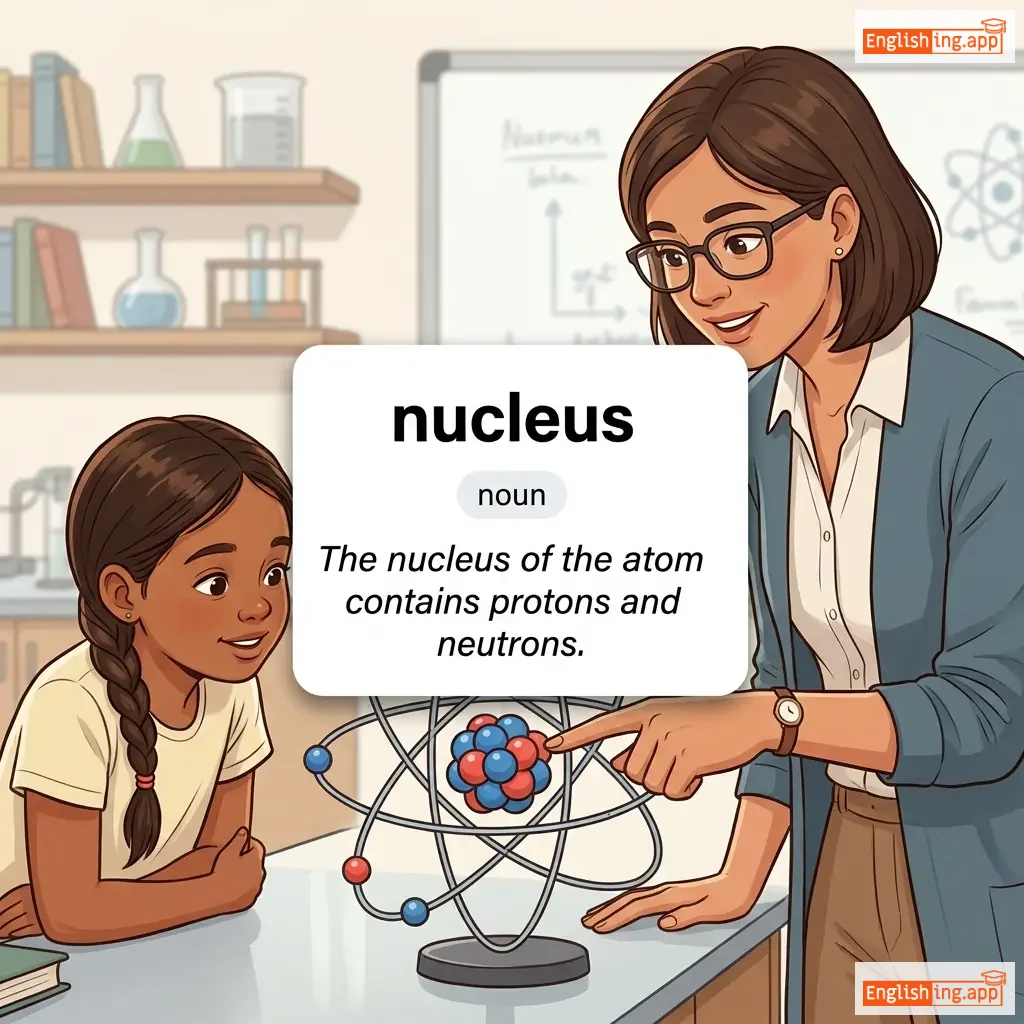
nucleus definition card — visual illustration of the meaning
noun
/ˈnjuː.kli.əs/
原子核 (yuánzǐhé)

The central and most important part of something, forming the basis for its activity and growth; in biology, the central part of a cell.

"The nucleus of the atom contains protons and neutrons."

"原子核包含质子和中子。" (Yuánzǐhé bāohán zhìzǐ hé zhōngzǐ.)
adjective
/nuːd/
裸体 (luǒtǐ)

Wearing no clothes; naked.

"The artist painted a nude model."

"艺术家画了一位裸体模特。" (Yìshùjiā huàle yī wèi luǒtǐ mótè.)
noun
/ˈnjuː.səns/
麻烦 (mafan)

A person, thing, or situation that causes inconvenience or annoyance.

"The loud construction noise was a nuisance to the neighbors."

"吵闹的施工噪音是邻居们的麻烦。" (Chao nao de shigong zaoyin shi linjumen de mafan.)
nullify definition card — visual illustration of the meaning
verb
/ˈnʌlɪfaɪ/

to make legally null and void; to cancel or invalidate

"The contract was nullified due to fraud."

noun
/ˈnʌmbər/
号码 (haoma)

a mathematical value used to count, measure, or label

"She gave me her phone number."

"她给了我她的电话号码。" (Ta gei le wo ta de dianhua haoma.)
nugatory definition card — visual illustration of the meaning
adjective
/ˈnjuː.ɡə.tɔːr.i/
微不足道 (weibuzhidao)

Of little or no value; worthless or insignificant.

"His efforts were nugatory and did not change the outcome."

"他的努力微不足道,未能改变结果。" (Tade nuli weibuzhidao, wei neng gaibian jieguo.)