paradox (パラドックス)

noun
/ˈpærədɒks/
逆説 (gyakusetsu)

意味

A statement or situation that seems contradictory but may reveal a deeper truth.
A seemingly contradictory statement or situation that may be true; an apparent inconsistency.
A seemingly absurd or contradictory statement or proposition which when investigated may prove to be well founded or true.
意味の翻訳
矛盾しているように見えるが、より深い真実を明らかにする可能性のある声明または状況。
Mujun shite iru yō ni mieru ga, yori fukai shinjitsu o akiraka ni suru kanōsei no aru seimei matawa jōkyō.

例文

It is a paradox that computers make our lives easier but also more stressful.

コンピュータが私たちの生活をより簡単にする一方で、ストレスも増加させるという逆説があります。
Konpyūta ga watashitachi no seikatsu o yori kantan ni suru ippō de, sutoresu mo zōka saseru to iu gyakusetsu ga arimasu.

The paradox of freedom is that it requires rules.

自由の逆説は、それに規則が必要であるということです。
Jiyū no gyakusetsu wa, sore ni kisoku ga hitsuyō de aru to iu koto desu.

The paradox of freedom is that it requires rules.
自由のパラドックスは、それに規則が必要だということです。
Jiyuu no paradox wa, sore ni kisoku ga hitsuyou da to iu koto desu.

表現例

the paradox of choice
選択の逆説
sentaku no gyakusetsu

同義語

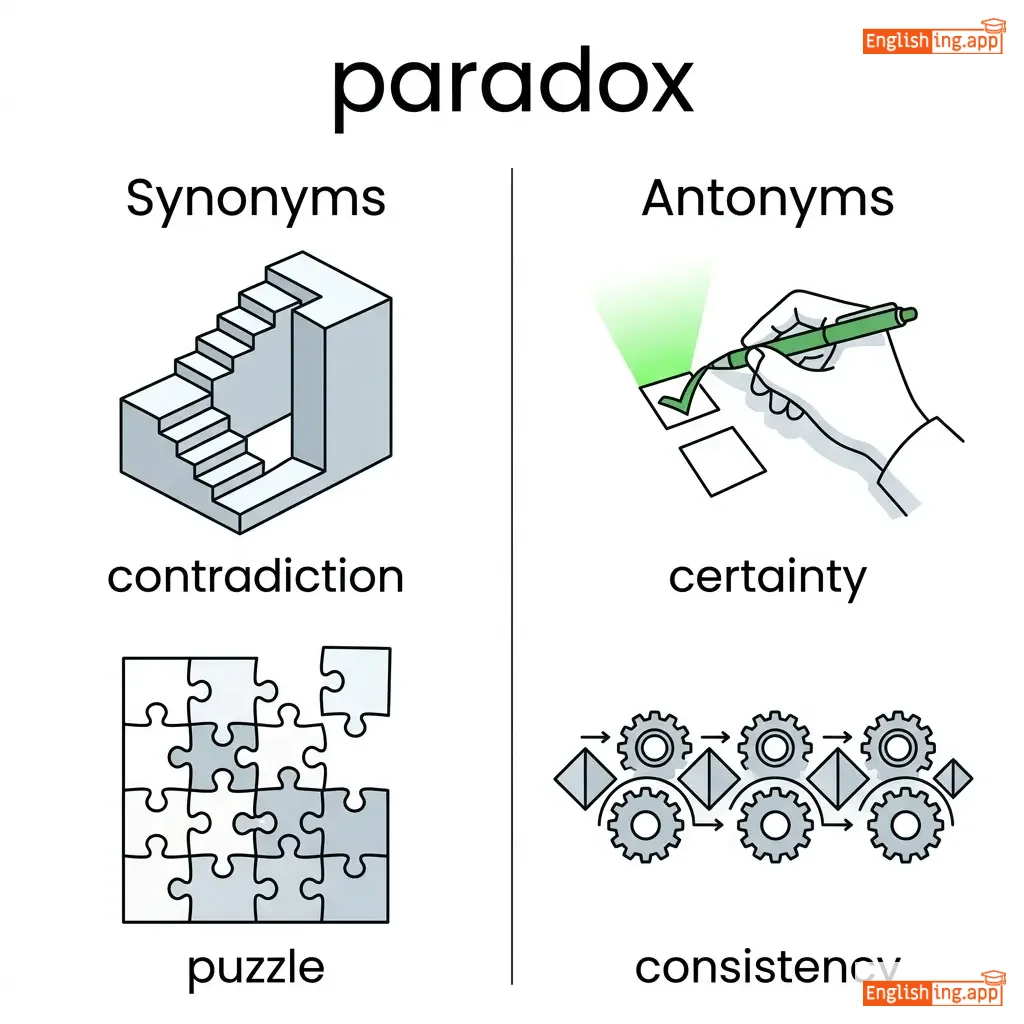
contradiction, puzzle, irony, anomaly, inconsistency
エントリー 1
contradiction, puzzle, irony, anomaly
エントリー 2
contradiction, irony, inconsistency
エントリー 3
contradiction, irony, inconsistency

対義語

certainty, consistency, harmony, agreement
エントリー 1
certainty, consistency
エントリー 2
consistency, harmony, agreement
エントリー 3
consistency, harmony, agreement

コロケーション

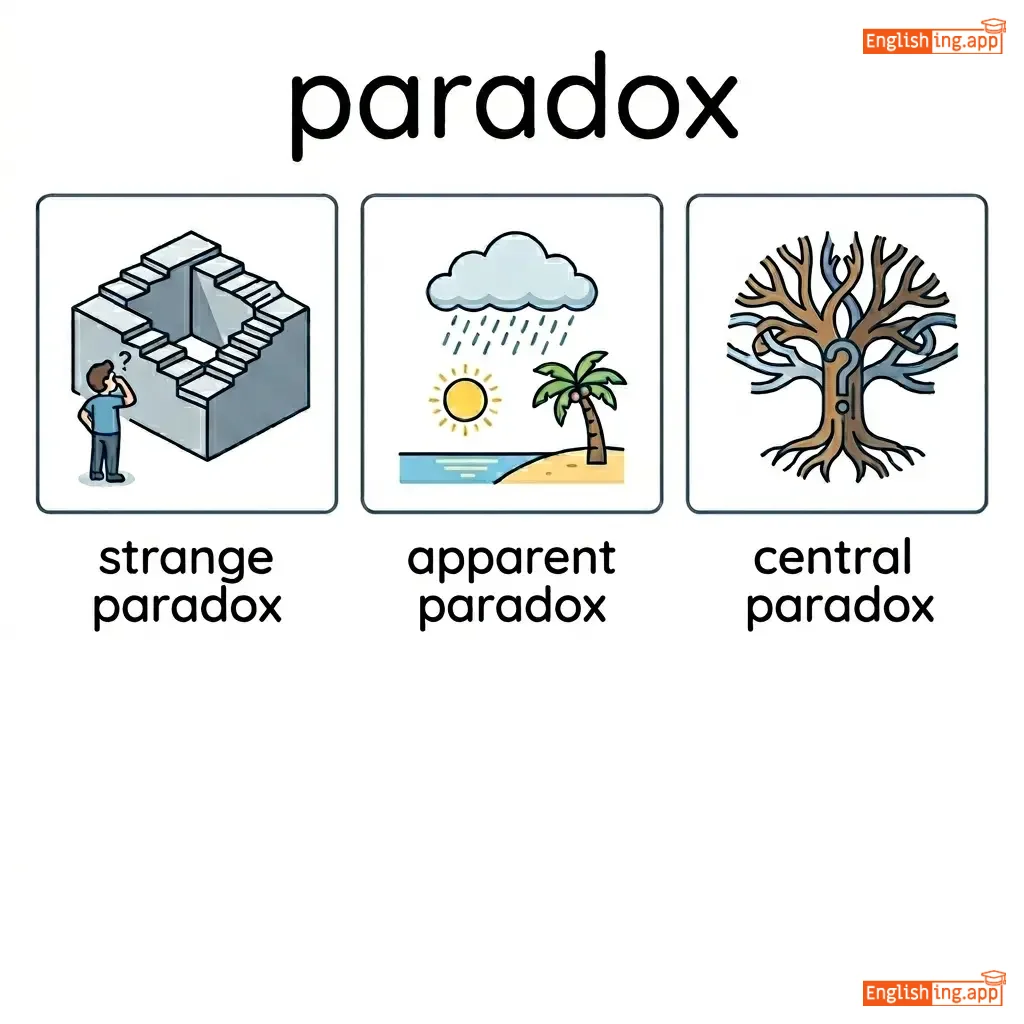
strange paradox, apparent paradox, central paradox, paradox of choice

関連語彙

a person who takes responsibility for another's performance of an undertaking, such as appearing in...
a round citrus fruit with orange skin and juicy flesh
The process of decline or deterioration in structure or function.
The action of stopping something from happening or arising.
a party or gathering where people wear masks and costumes; a false outward show
The science of communications and automatic control systems in both machines and living things.

さらに探索