वोकैबुलरीज

इंग्लिश वोकैबुलरी डिस्कवर, लर्न और मास्टर करें

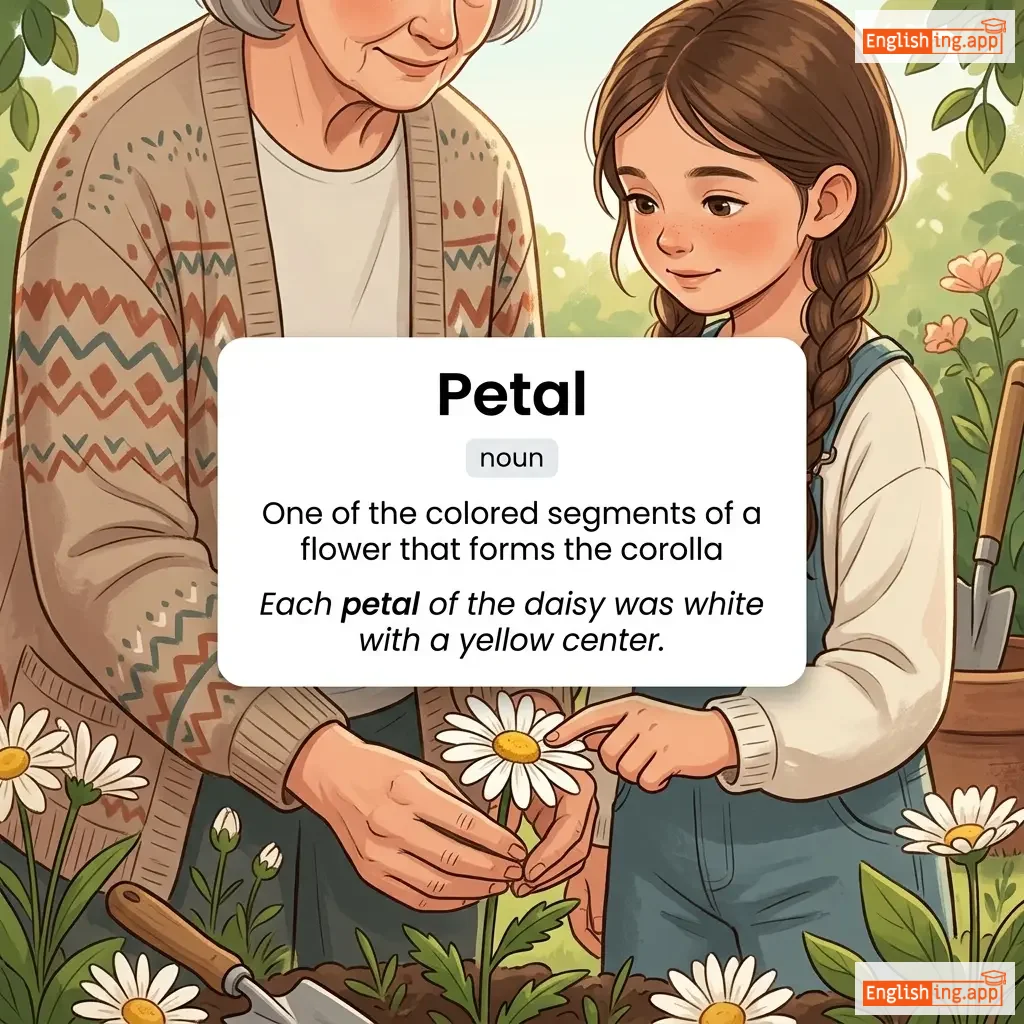
Petal definition card — visual illustration of the meaning
noun
/ˈpetəl/
पंखुड़ी (pankhudi)

One of the colored segments of a flower that forms the corolla

"Each petal of the daisy was white with a yellow center."

"डेज़ी के हर पंखुड़ी का रंग सफेद था और केंद्र पीला था।" (dezi ke har pankhudi ka rang safed tha aur kendra peela tha)
verb
/ˈpiːtər/
धीरे-धीरे घटित होना (dheere-dheere ghatit hona)

to diminish gradually and come to an end; to fade or dwindle away

"The excitement of the event began to peter out after a few hours."

"इवेंट की उत्तेजना कुछ घंटों बाद धीरे-धीरे कम होने लगी।" (Event ki uttejana kuch ghanton baad dheere-dheere kam hone lagi.)
noun
/pəˈtɪʃən/
याचिका (yaachika)

a formal written request, typically signed by many people, appealing to authority about a cause

"They signed a petition to improve road safety in the area."

"उन्होंने क्षेत्र में सड़क सुरक्षा सुधारने के लिए एक याचिका पर हस्ताक्षर किए।" (Unhone kshetra mein sadak suraksha sudharne ke liye ek yaachika par hastakshar kiye.)
verb
/ˈpɛtrɪfaɪ/
परेशान करना (pareshan karna)

to make someone so frightened that they are unable to move or think; to turn into stone

"The loud noise petrified the little child."

"उच्च आवाज़ ने छोटे बच्चे को डर के मारे पत्थर बना दिया।" (Ucch awaaz ne chhote bachche ko dar ke maare patthar bana diya.)
noun
/ˈpɛtrəˌɡræf/
चट्टानों का वर्णन (chhatano ka varnan)

a description or representation of rocks, especially in detailed scientific writing

"The scientist studied the petrograph to understand the rock composition."

"वैज्ञानिक ने चट्टानों की संरचना को समझने के लिए पेट्रोग्राफ का अध्ययन किया।" (Vaigyanik ne chhatano ki sanrachna ko samajhne ke liye petrograph ka adhyayan kiya.)
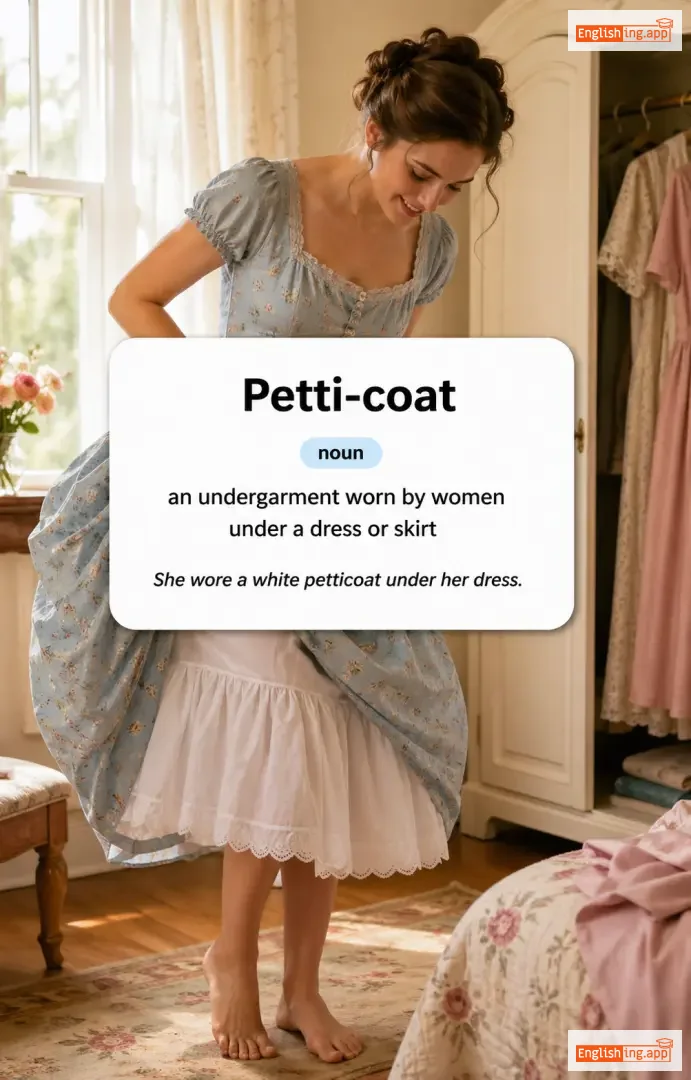
Petti-coat definition card — visual illustration of the meaning
noun
/ˈpetɪkoʊt/
पेटीकोट (petikot)

an undergarment worn by women under a dress or skirt

"She wore a white petticoat under her dress."

"वह अपनी ड्रेस के नीचे एक सफेद पेटीकोट पहने हुए थी।" (vah apni dress ke niche ek safed petikot pahne hue thi.)
verb
/ˈpɛtɪˌfɒɡ/
तुच्छ मुद्दों पर तर्क करना (tuchchha muddon par tark karna)

to argue or quibble over trivial matters; to engage in petty, dishonest practices

"The lawyer was accused of trying to pettifog instead of addressing the real issue."

"वकील पर असली मुद्दे को संबोधित करने के बजाय तुच्छ बातों पर झगड़ने का आरोप लगाया गया था।" (Vakil par asli mudde ko sambodhit karne ke bajaye tuchchha baaton par jhagadne ka aarop lagaya gaya tha.)
adjective
/ˈpɛti/
तुच्छ (tuchchha)

Of little importance or trivial; also describes a person overly concerned with small or unimportant matters.

"She often gets upset over the most petty things."

"वह अक्सर सबसे तुच्छ बातों पर गुस्सा हो जाती है।" (Wah aksar sabse tuchchha bato par gussa ho jati hai.)
noun
/ˈpɛtjʊləns/
चिड़चिड़ापन (chidhchidhapan)

The quality of being childishly sulky or bad-tempered.

"His petulance during the meeting annoyed everyone."

"उसकी पेटुलेंस ने मीटिंग के दौरान सभी को परेशान कर दिया।" (Uski petulance ne meeting ke dauran sabhi ko pareshan kar diya.)
adjective
/ˈpɛtjʊlənt/
चिड़चिड़ा (chidhchidhā)

Childishly sulky or bad-tempered.

"The child became petulant when denied more candy."

"बच्चा चॉकलेट और अधिक न मिलने पर चिड़चिड़ा हो गया।" (Baccha chocolate aur adhik na milne par chidhchidhā ho gayā.)
noun
/ˈfeɪlæŋks/
सारिबद्ध दल (saribaddh dal)

A group of people or things arranged in a compact, close formation; also an ancient Greek military formation.

"A phalanx of reporters waited outside the courthouse."

"रिपोर्टर्स का एक समूह अदालत के बाहर इंतजार कर रहा था।" (Reporters ka ek samuh adalat ke baahar intezaar kar raha tha.)
noun
/ˈfænˌtæzəm/
भूत (bhoot)

an illusion, ghost, or figment of the imagination

"The child claimed to see a phantasm in the old house."

"बच्चे ने दावा किया कि उसने पुराने घर में एक भूत देखा था।" (Bacche ne dawa kiya ki usne purane ghar mein ek bhoot dekha tha.)
adjective
/ˌfæntæzməˈɡɒrɪkəl/
कल्पनाशील (kalpanasheel)

Having a fantastic, dreamlike, or surreal appearance, often shifting or illusory.

"The movie created a phantasmagorical vision of another world."

"फिल्म ने एक फैंटास्मागॉरिकल दृष्टि बनाई, जो दूसरे दुनिया का था।" (Film ne ek phantasmagorical drishti banayi, jo doosre duniya ka tha.)
adjective
/ˌfærɪˈseɪɪkəl/
पाखंडी (pakhandi)

Excessively concerned with formal rules or outward show of morality, often in a hypocritical way.

"His pharisaical behavior made people doubt his sincerity."

"उसका पाखंडी व्यवहार लोगों को उसकी ईमानदारी पर शक करता था।" (Uska pakhandi vyavhaar logon ko uski imandari par shak karta tha.)
noun
/ˈfærɪsiː/
धार्मिक hypocritical व्यक्ति (dharmik hypocritical vyakti)

A member of an ancient Jewish sect; by extension, a self-righteous or hypocritical person.

"He acted like a pharisee, judging others while ignoring his own faults."

"वह एक फरीसी की तरह व्यवहार कर रहा था, दूसरों का न्याय करता हुआ जबकि अपनी खुद की गलतियों को अनदेखा कर रहा था।" (Wah ek Pharisee ki tarah vyavhaar kar raha tha, doosron ka nyaay karta hua jabki apni khud ki galtiyon ko andekha kar raha tha.)
noun
/ˌfɑːrməkəˈpiːə/
औषधि सूची (aushadhi soochi)

An official book listing medicinal drugs, their effects, and directions for use.

"The doctor referred to the pharmacopoeia to check the drug's proper dosage."

"डॉक्टर ने दवाओं के सही मात्रा की जांच करने के लिए औषधि सूची का संदर्भ लिया।" (Doktar ne davaon ke sahi matra ki jaanch karne ke liye aushadhi soochi ka sandarbh liya.)
noun
/ˈfɑːrməsi/
दवाख़ाना (dawakhana)

A place where medicinal drugs are prepared and sold.

"I went to the pharmacy to buy antibiotics."

"मैं एंटीबायोटिक खरीदने के लिए फार्मेसी गया था।" (Main antibiotic kharidne ke liye farmesi gaya tha.)
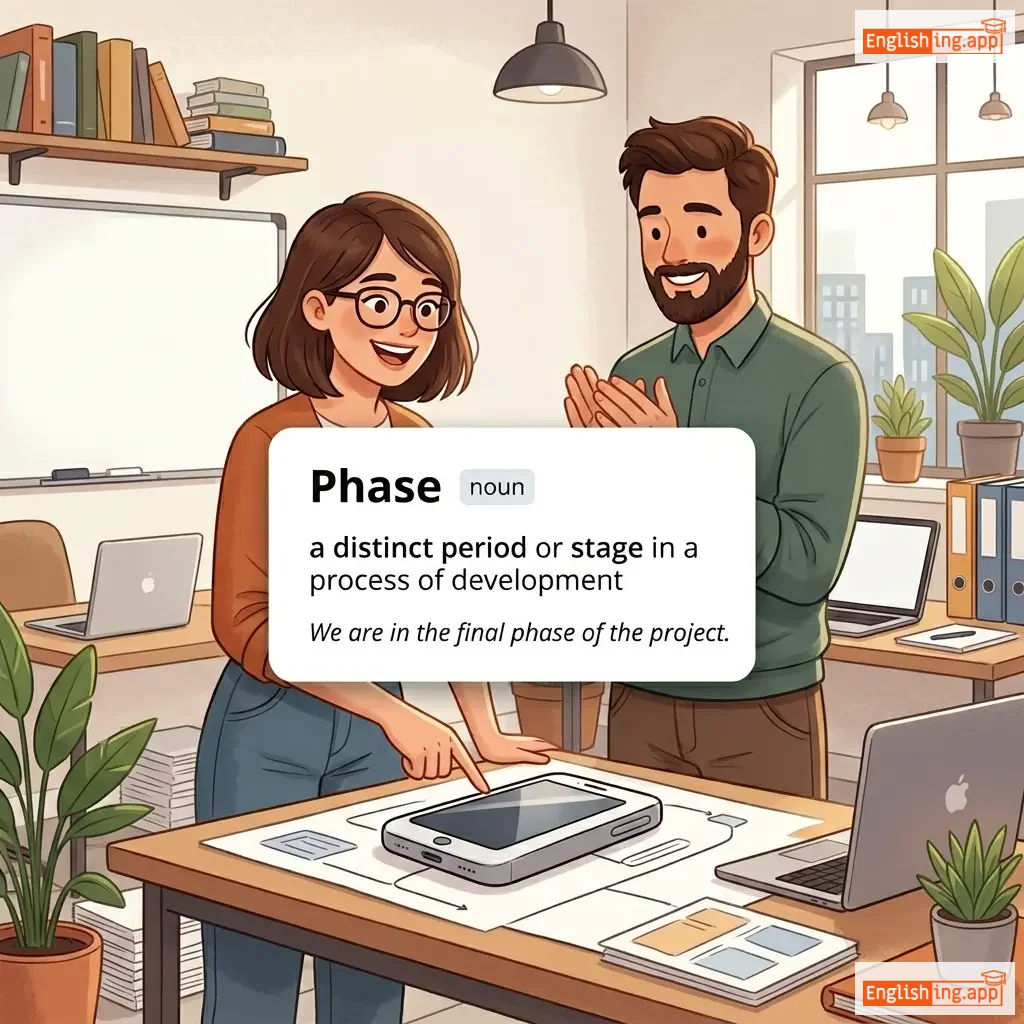
Phase definition card — visual illustration of the meaning
noun
/feɪz/
चरण (charan)

a distinct period or stage in a process of development

"We are in the final phase of the project."

"हम परियोजना के अंतिम चरण में हैं।" (Ham pariyojana ke antim charan mein hain.)
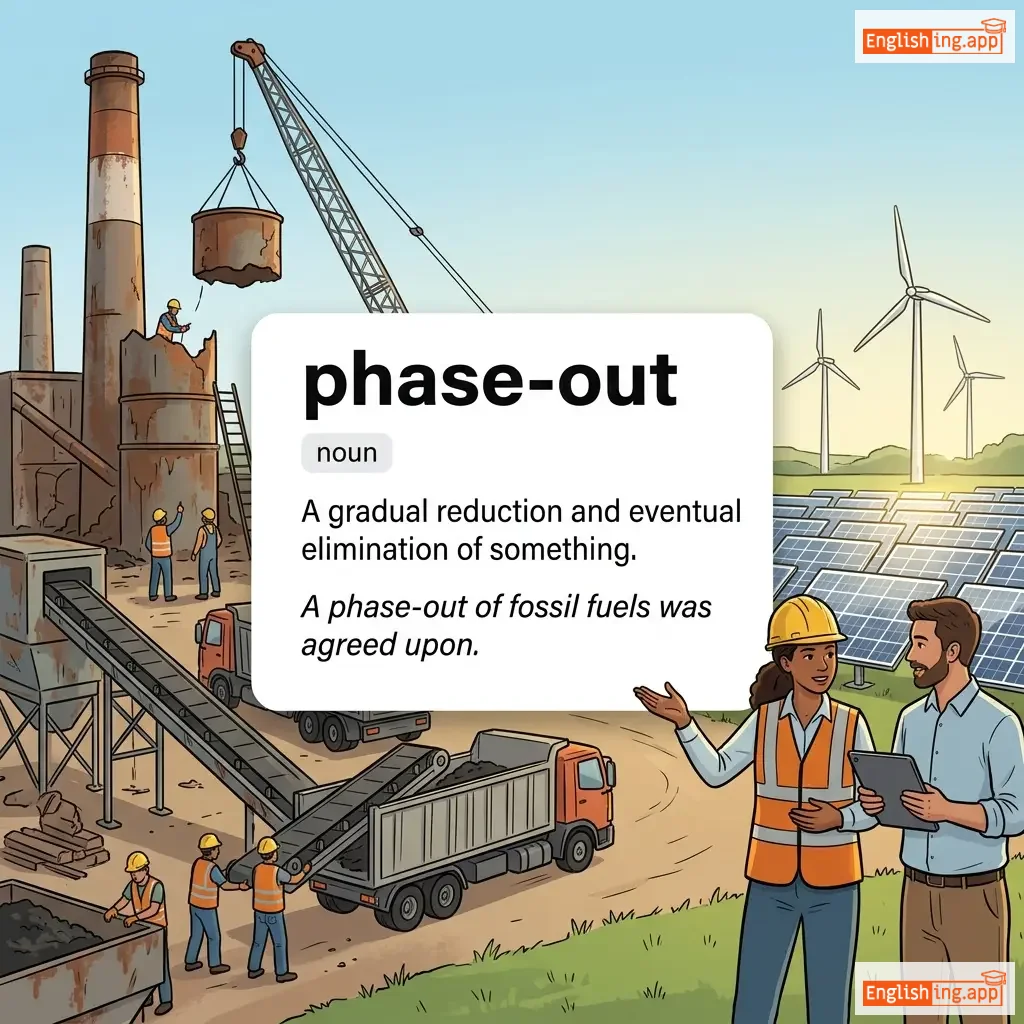
phase-out definition card — visual illustration of the meaning
noun
ˈfeɪz.aʊt
चरणबद्ध समाप्ति (charanbadh samapti)

A gradual reduction and eventual elimination of something.

"A phase-out of fossil fuels was agreed upon."

"जीवाश्म ईंधन की चरणबद्ध समाप्ति पर सहमति बनी।" (Jeevashm indhan ki charanbadh samapti par sahmati bani.)
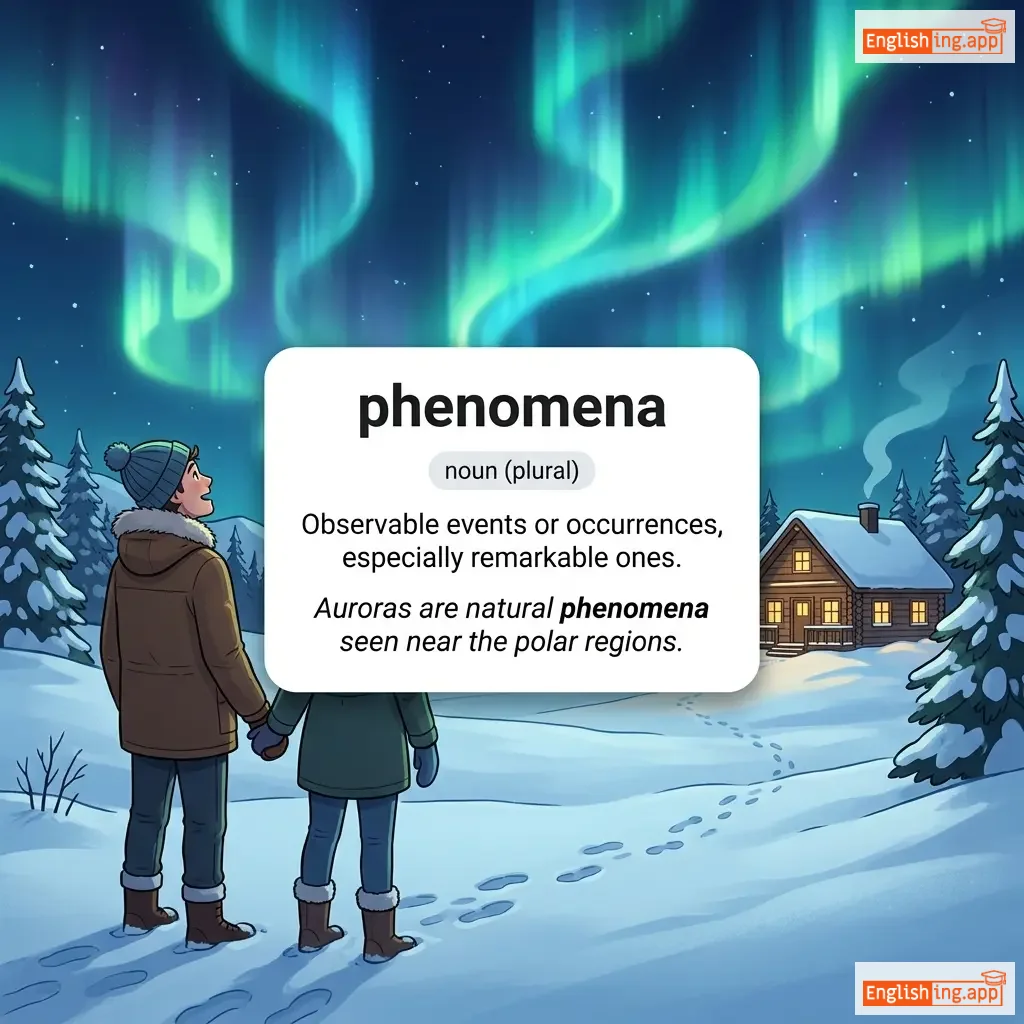
phenomena definition card — visual illustration of the meaning
noun (plural)
/fəˈnɒmɪnə/
घटनाएँ (ghatanaen)

Observable events or occurrences, especially remarkable ones.

"Auroras are natural phenomena seen near the polar regions."

"ऑरोरा पोलर क्षेत्रों के पास देखी जाने वाली प्राकृतिक घटनाएँ हैं।" (Aurora polar kshetron ke paas dekhi jaane wali prakritik ghatnaen hain.)
adjective
/fəˈnɒmɪnəl/
असाधारण (asadharan)

extraordinary, remarkable, or exceptional in a way that is very impressive

"The team achieved phenomenal success in the tournament."

"टीम ने टूर्नामेंट में असाधारण सफलता प्राप्त की।" (ṭīm ne ṭurnāmeṇṭ meṁ asādhāraṇ safaltā prāpt kī.)
noun
/fəˈnɒmɪnən/
घटना (ghatna)

an observable event, fact, or occurrence, often unusual or remarkable

"The Northern Lights are a natural phenomenon."

"उत्तरदायी लाइट्स एक प्राकृतिक घटना हैं।" (uttardayi lights ek prakritik ghatna hain)
noun
/ˈfaɪəl/
छोटा कांच का पात्र (chhota kaanch ka patra)

a small glass container for liquids, especially medicines

"The doctor gave her a phial of medicine."

"डॉक्टर ने उसे दवाइयों का एक फायल दिया।" (Doktor ne use davaiyon ka ek phial diya.)
verb
/fɪˈlændər/
चक्कर चलाना (chakkar chalana)

to engage in casual or frivolous romantic or sexual relationships

"He was known to philander with many women in town."

"वह शहर में कई महिलाओं के साथ प्रेम संबंध बनाने के लिए प्रसिद्ध था।" (Vah shahar mein kai mahilao ke saath prem sambandh banane ke liye prasiddh tha.)
noun
/fɪˈlændərər/
व्यभिचारी (vyabhichari)

a man who habitually engages in casual romantic or sexual affairs

"The politician was exposed as a notorious philanderer."

"राजनेता को एक कुख्यात व्यभिचारी के रूप में उजागर किया गया था।" (Rajneta ko ek kukhyat vyabhichari ke roop mein ujagar kiya gaya tha.)
adjective
/ˌfɪl.ænˈθrɒp.ɪk/
परोपकारी (paropkari)

showing concern for the welfare of others; generous and charitable

"She is known for her philanthropic activities in the city."

"वह शहर में अपनी परोपकारी गतिविधियों के लिए प्रसिद्ध है।" (Vah shahar mein apni paropkari gatividhiyon ke liye prasiddh hai.)
noun
/fɪˈlæn.θrə.pɪst/
परोपकारी (paropkaari)

a person who seeks to promote the welfare of others, especially by donating money to good causes

"The philanthropist donated millions to build schools in rural areas."

"परोपकारी ने ग्रामीण क्षेत्रों में स्कूल बनाने के लिए लाखों का दान किया।" (Paropkaari ne gramin kshetron mein school banane ke liye lakhon ka daan kiya.)
noun
/fɪˈlæn.θrə.pi/
परोपकार (paropkar)

the desire to promote the welfare of others, often expressed by the generous donation of money to good causes

"Philanthropy has helped improve healthcare in many developing countries."

"परोपकार ने कई विकासशील देशों में स्वास्थ्य देखभाल में सुधार किया है।" (Paropkar ne kai vikas-sheel deshon mein swasthya dekhbhaal mein sudhaar kiya hai.)
noun
/fɪˈlæt.əl.ɪst/
डाक टिकट संग्रहकर्ता (daak tikat sangrahkarta)

a person who collects or studies postage stamps

"The philatelist spent years building a rare stamp collection."

"डाक टिकट संग्रहकर्ता ने वर्षों तक दुर्लभ डाक टिकट संग्रह बनाने में समय बिताया।" (Daak tikat sangrahkarta ne varsho tak durlabh daak tikat sangrah banane mein samay bitaya.)
noun
/fɪˈlæt.əl.i/
डाक टिकट संग्रह (daak tikat sangrah)

the collection and study of postage stamps

"Philately is a hobby enjoyed by people of all ages."

"डाक टिकट संग्रह एक शौक है जिसे सभी उम्र के लोग पसंद करते हैं।" (Daak tikat sangrah ek shauk hai jise sabhi umr ke log pasand karte hain.)
adjective
/ˌfɪl.hɑːrˈmɒn.ɪk/
संगीतमाला से संबंधित (sangeetmala se sambandhit)

relating to a symphony orchestra or its music

"The philharmonic orchestra performed a stunning rendition of Beethoven's Ninth Symphony."

"फिलहार्मोनिक ऑर्केस्ट्रा ने बीथोवेन की नाइंथ सिम्फनी का शानदार प्रदर्शन किया।" (Philharmonic orkestra ne Beethoven ki Ninth Symphony ka shandaar pradarshan kiya.)
noun
/ˈfɪl.ɪ.staɪn/
संस्कृति और कला के प्रति उदासीन व्यक्ति (sanskruti aur kala ke prati udaseen vyakti)

a person who is indifferent or hostile to culture and the arts

"He was criticized as a philistine for dismissing modern art."

"उसे आधुनिक कला को नकारने के लिए एक फिलिस्टाइन के रूप में आलोचना की गई थी।" (Use aadhunik kala ko nakarne ke liye ek philistine ke roop mein alochna ki gayi thi.)
noun
/ˈfɪl.ə.dʒɪ.nɪst/
महिलाओं से प्रेम करने वाला व्यक्ति (mahilao se prem karne wala vyakti)

a person who loves or admires women

"As a known philogynist, he advocated for women's education."

"एक प्रसिद्ध फिलोजिनिस्ट के रूप में, उन्होंने महिलाओं की शिक्षा के पक्ष में समर्थन किया।" (Ek prasiddh philogynist ke roop mein, unhone mahilaon ki shiksha ke paksh mein samarthan kiya.)
noun
/fɪˈlɒl.ə.dʒɪst/
भाषाविद् (bhashavid)

a person who studies languages and their history

"The philologist analyzed ancient texts to understand language evolution."

"भाषाविद् ने प्राचीन ग्रंथों का विश्लेषण किया ताकि भाषा के विकास को समझ सकें।" (Bhashavid ne prachin granthon ka vishleshan kiya taki bhasha ke vikas ko samajh sakein.)
noun
/fɪˈlɒl.ə.dʒi/
भाषा और उसके लिखित ऐतिहासिक स्रोतों का अध्ययन; भाषा विज्ञान (bhasha aur uske likhit aitihasik sroton ka adhyayan; bhasha vigyan)

the study of language in written historical sources; linguistics

"She devoted her career to philology, researching ancient manuscripts."

"उसने अपने करियर को फिलोलॉजी में समर्पित किया, प्राचीन पांडुलिपियों पर शोध करते हुए।" (Usne apne career ko philology mein samarpit kiya, prachin pandulipiyon par shodh karte huye.)
noun
/fɪˈlɒsəfə/
दार्शनिक (darshanik)

a person engaged in the study of philosophy or in serious thinking about fundamental questions

"Socrates was a famous philosopher of ancient Greece."

"सोक्रेट्स प्राचीन ग्रीस के एक प्रसिद्ध दार्शनिक थे।" (Socrates prachin Greece ke ek prasiddh darshanik the.)
adjective
/ˌfɪl.əˈsɒf.ɪ.kəl/
दार्शनिक (darshanik)

relating to the study of the fundamental nature of knowledge, reality, and existence

"She maintained a calm and philosophical attitude during the crisis."

"उसने संकट के समय शांत और दार्शनिक दृष्टिकोण बनाए रखा।" (Usne sankat ke samay shaant aur darshanik drishtikon banaye rakha.)
verb
/fɪˈlɒs.ə.faɪz/
दर्शन करना (darshan karna)

to think or talk about the fundamental nature of knowledge, reality, and existence

"He likes to philosophize about life and its meaning."

"वह जीवन और उसके अर्थ पर विचार करना पसंद करता है।" (Wah jeevan aur uske arth par vichar karna pasand karta hai.)
noun
/fɪˈlɒs.ə.fi/
दर्शनशास्त्र (darshanshastr)

the study of the fundamental nature of knowledge, reality, and existence

"Her philosophy emphasizes kindness and empathy."

"उसकी दर्शनशास्त्र दयालुता और सहानुभूति पर जोर देती है।" (Uski darshanshastr dayaluta aur sohanubhuti par zor deti hai.)
phishing definition card — visual illustration of the meaning
noun
/ˈfɪʃ.ɪŋ/
धोखाधड़ी सूचना चोरी (dhokhadhadi soochna chori)

Deceptive technique for stealing personal information unauthorized

"Phishing emails trick users into revealing passwords."

"फिशिंग ईमेल उपयोगकर्ताओं को पासवर्ड उजागर करने के लिए धोखा देती है।" (Phishing email upyogkartao ko password ujagar karne ke liye dhokha deti hai.)
phlegmatic definition card — visual illustration of the meaning
adjective
/flɛgˈmæt.ɪk/
निर्विकार (nirvikar)

having an unemotional and stolidly calm disposition

"Despite the chaos, he remained phlegmatic and composed."

"अराजकता के बावजूद, वह निर्विकार और शांत रहा।" (Arajakta ke bawjood, vah nirvikar aur shaant raha.)
noun
/ˈfəʊ.bi.ə/
भय (bhay)

an extreme or irrational fear of something

"She has a phobia of heights and avoids tall buildings."

"उसे ऊँचाई का भय है और वह ऊँची इमारतों से बचती है।" (Use unchai ka bhay hai aur wah unchi imaraton se bachti hai.)
phrasal verb
/pɪk ʌp/
उठाना; लेने जाना; सीख लेना (uthana; lene jana; sikh lena)

to lift something; to collect or receive someone or something; to learn or acquire gradually; to improve or increase

"She picked up the book from the floor."

"उसने फर्श से किताब उठा ली।" (usne farsh se kitab utha li)
noun
/ˈpɪkəloʊ/
छोटा बांसुरी (chhota baansuri)

a small flute, higher in pitch than the regular flute

"She played a lively tune on the piccolo during the concert."

"उसने कॉन्सर्ट के दौरान पिकोलो पर एक जीवंत धुन बजाई।" (Usne concert ke dauran piccolo par ek jeevant dhun bajayi.)
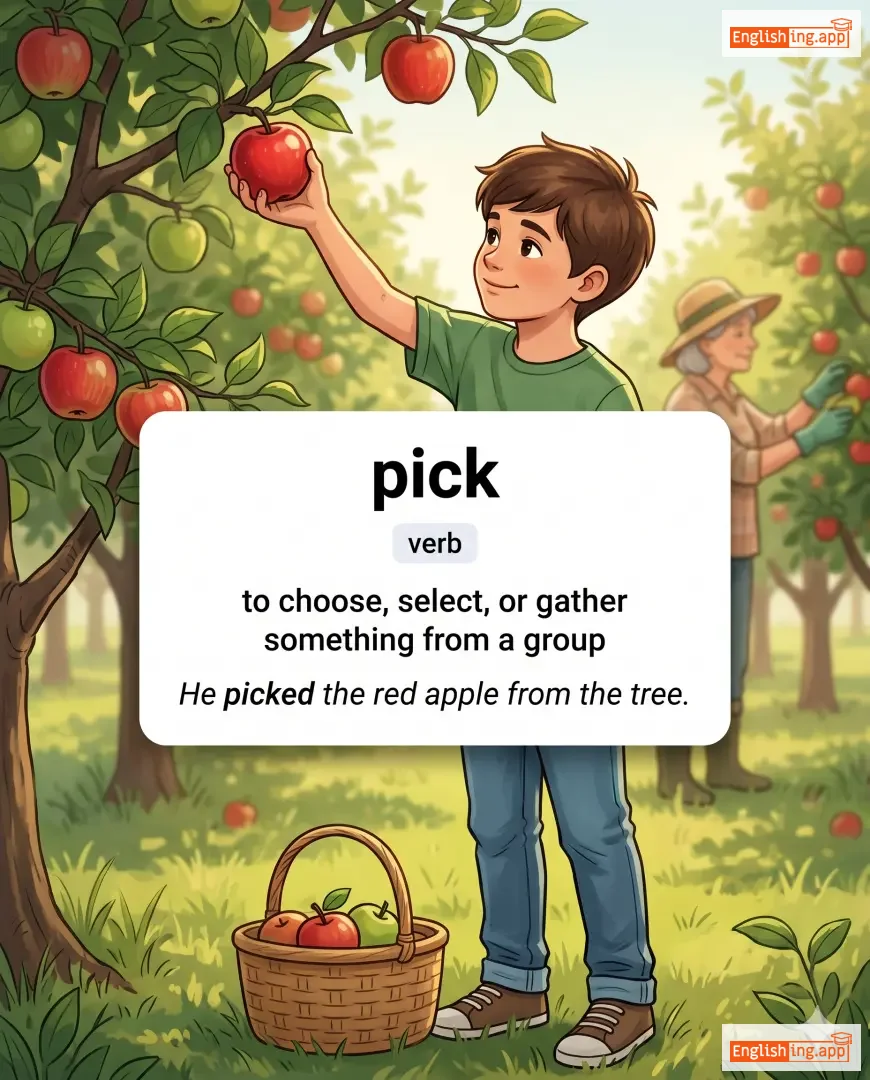
pick definition card — visual illustration of the meaning
verb
/pɪk/
चुनना (chunna)

to choose, select, or gather something from a group

"He picked the red apple from the tree."

"उसने पेड़ से लाल सेब चुना।" (Usne ped se lal seb chuna.)
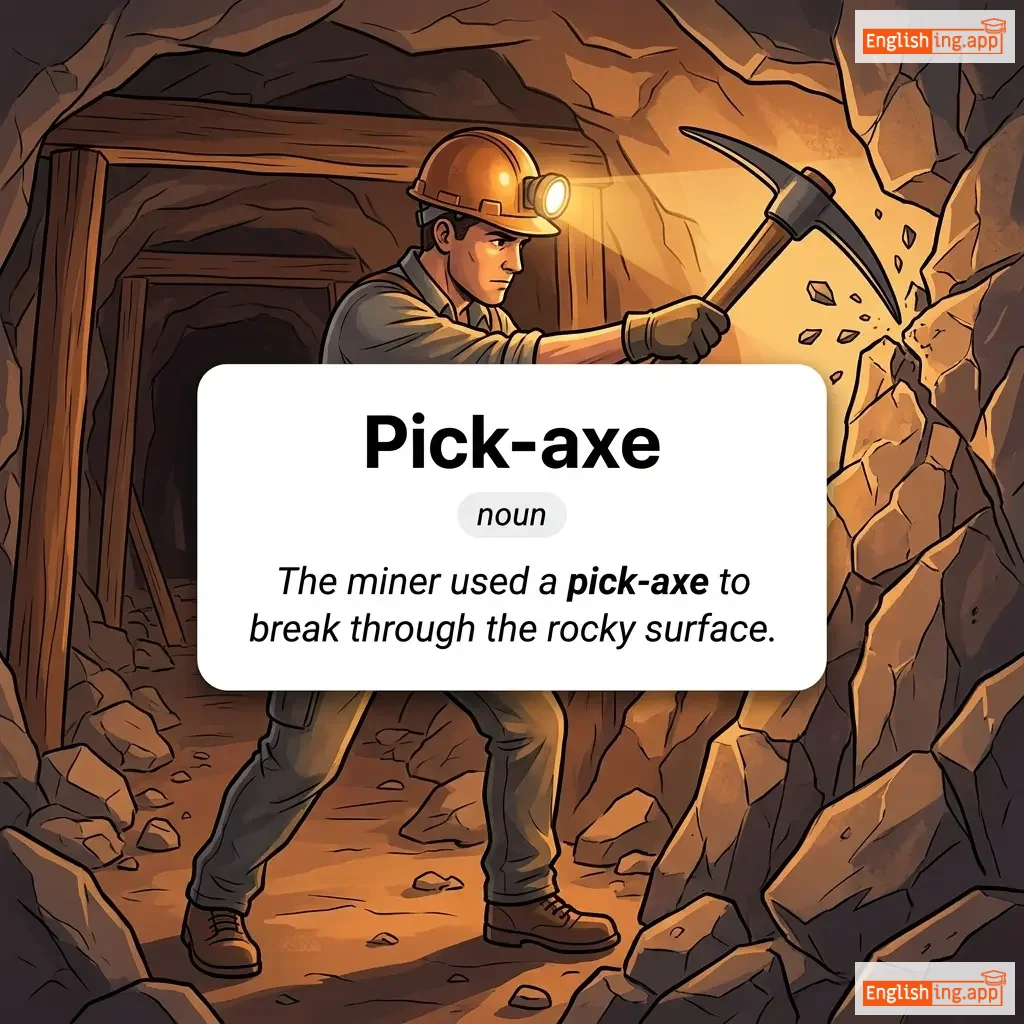
Pick-axe definition card — visual illustration of the meaning
noun
/ˈpɪk.æks/
फावड़ा (fawda)

a tool with a heavy metal head and long handle used for breaking up hard ground or rock

"The miner used a pick-axe to break through the rocky surface."

"खनिक ने चट्टानी सतह को तोड़ने के लिए एक फावड़ा का इस्तेमाल किया।" (khnik ne chattani satah ko todne ke liye ek fawda ka istemal kiya.)
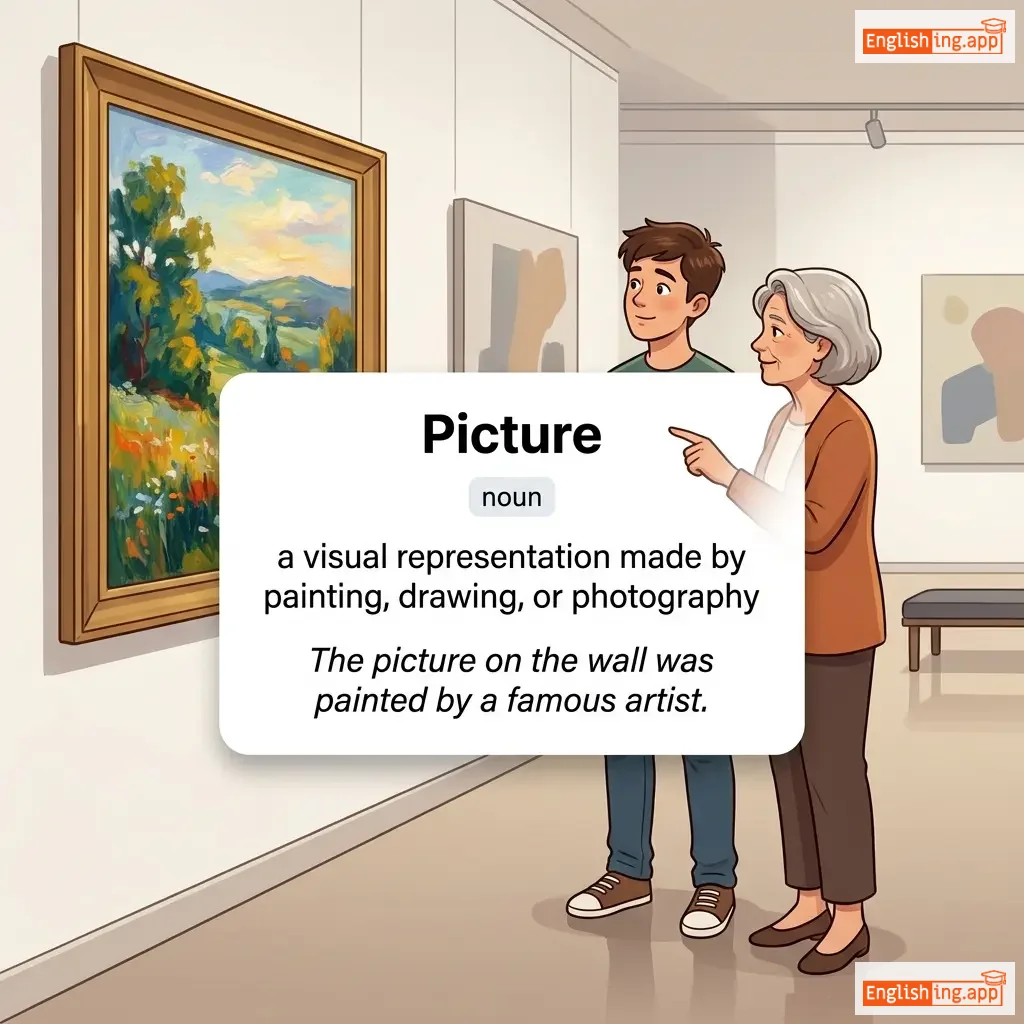
Picture definition card — visual illustration of the meaning
noun
/ˈpɪktʃər/
चित्र (chitra)

a visual representation made by painting, drawing, or photography

"The picture on the wall was painted by a famous artist."

"दीवार पर चित्र एक प्रसिद्ध कलाकार द्वारा चित्रित किया गया था।" (Deewar par chitra ek prasiddh kalakar dwara chitrait kiya gaya tha.)
adjective
/ˈpɪdlɪŋ/
तुच्छ, मामूली (tuchchh, mamooli)

trivial or insignificant; very small

"He made a piddling amount of money from that deal."

"उसने उस सौदे से मामूली रकम कमाई।" (Usne us saude se mamooli rakam kamai.)
adjective
/ˌpɪkəˈjuːn/
तुच्छ, महत्वहीन (tuchchh, mahatvahin)

of little value or importance; trivial

"He complained about the picayune details of the contract."

"उसने अनुबंध के तुच्छ विवरणों पर शिकायत की।" (Usne anubandh ke tuchchh vivarno par shikayat ki.)
noun
/ˈpɪkʌp/
खुले पिछले हिस्से वाला छोटा ट्रक; किसी चीज़ को इकट्ठा करना या सुधारना (khule pichhle hisse wala chhota truck; kisi cheez ko ikattha karna ya sudhaarna)

a small truck with an open back; the act of collecting or improving something

"The company scheduled a pickup for the returned goods."

"कंपनी ने लौटाए गए सामान के लिए एक पिकअप शेड्यूल किया।" (Kampani ne lautaye gaye samaan ke liye ek pickup scheduled kiya.)