वोकैबुलरीज

इंग्लिश वोकैबुलरी डिस्कवर, लर्न और मास्टर करें

noun
/ˈpaɪrət/
डाकू, समुद्री डाकू (daku, samudri daku)

a person who attacks and robs ships at sea; someone who illegally copies or uses another's work

"The pirate captured the merchant ship and stole its treasure."

"समुद्री डाकू ने व्यापारिक जहाज को कब्जा कर लिया और उसका खजाना चुरा लिया।" (Samudri daku ne vyaparik jahaj ko kabja kar liya aur uska khajana chura liya.)
noun
/ˈpaɪ.rə.si/
पायरेसी (paayaresi)

the practice of attacking and robbing ships at sea; the unauthorized use or reproduction of copyrighted material

"Software piracy costs companies billions of dollars annually."

"सॉफ्टवेयर पायरेसी सालाना कंपनियों को अरबों डॉलर का नुकसान पहुंचाती है." (softwear paayaresi saalaana kampaniyon ko arabon dollar ka nuksan pahunchati hai)
verb
/piːk/
उत्तेजित करना (uttejit karna)

to stimulate interest or curiosity; to arouse resentment or anger

"Her remarks piqued his curiosity about the secret project."

"हैरी की टिप्पणियों ने उसके गुप्त परियोजना के बारे में जिज्ञासा बढ़ा दी।" (Harry ki tippaniyon ne uske gupt pariyojna ke baare mein jigyasa badha di.)
adjective
/ˈpiːkənt/
तीखा (teekha)

having a pleasantly sharp or spicy taste; interestingly provocative

"The chef added a piquant sauce to the dish to enhance its flavor."

"शेफ ने स्वाद बढ़ाने के लिए डिश में तीखा सॉस डाला।" (Shef ne swaad badhane ke liye dish mein teekha sos daala.)
noun
/ˈpaɪpˌlaɪn/
पाइपलाइन (pipeline)

a long tube through which liquids or gases are transported

"The company is building a new pipeline to transport natural gas."

"कंपनी प्राकृतिक गैस परिवहन करने के लिए एक नया पाइपलाइन बना रही है।" (Kampani prakritik gas parivahan karne ke liye ek naya pipeline bana rahi hai.)
noun
/paɪp/
नल (nal)

a tube used for conveying liquids or gases

"The plumber fixed the broken pipe."

"प्लंबर ने टूटी हुई नल को ठीक किया।" (Plumber ne tooti hui nal ko theek kiya.)
adjective
/ˈpaɪəs/
धार्मिक (dharmik)

devoutly religious or showing strong moral and spiritual devotion

"He led a pious life, always helping those in need."

"वह एक धार्मिक जीवन जीते थे, हमेशा जरूरतमंदों की मदद करते थे।" (Vah ek dharmik jeevan jeete the, hamesha zaruratmandon ki madad karte the.)
pioneering mission definition card — visual illustration of the meaning
adjective + noun
ˌpaɪəˈnɪərɪŋ ˈmɪʃən
पथप्रदर्शक मिशन (pathpradarshak mission)

A groundbreaking or innovative undertaking that leads the way in a particular field.

"Artemis is a pioneering mission in space exploration."

"आर्टेमिस एक पायनियरिंग मिशन है अंतरिक्ष अन्वेषण में।" (Artemis ek pioneering mission hai antariksh anveshan mein.)
pioneering definition card — visual illustration of the meaning
adjective
ˌpaɪəˈnɪə.rɪŋ
पथप्रदर्शक (pathpradarshak)

Involving new ideas or methods; being the first to develop or use new methods, ideas, or products.

"The scientist made pioneering discoveries."

"विज्ञानी ने पथप्रदर्शक खोज की।" (Vigyani ne pathpradarshak khoj ki.)
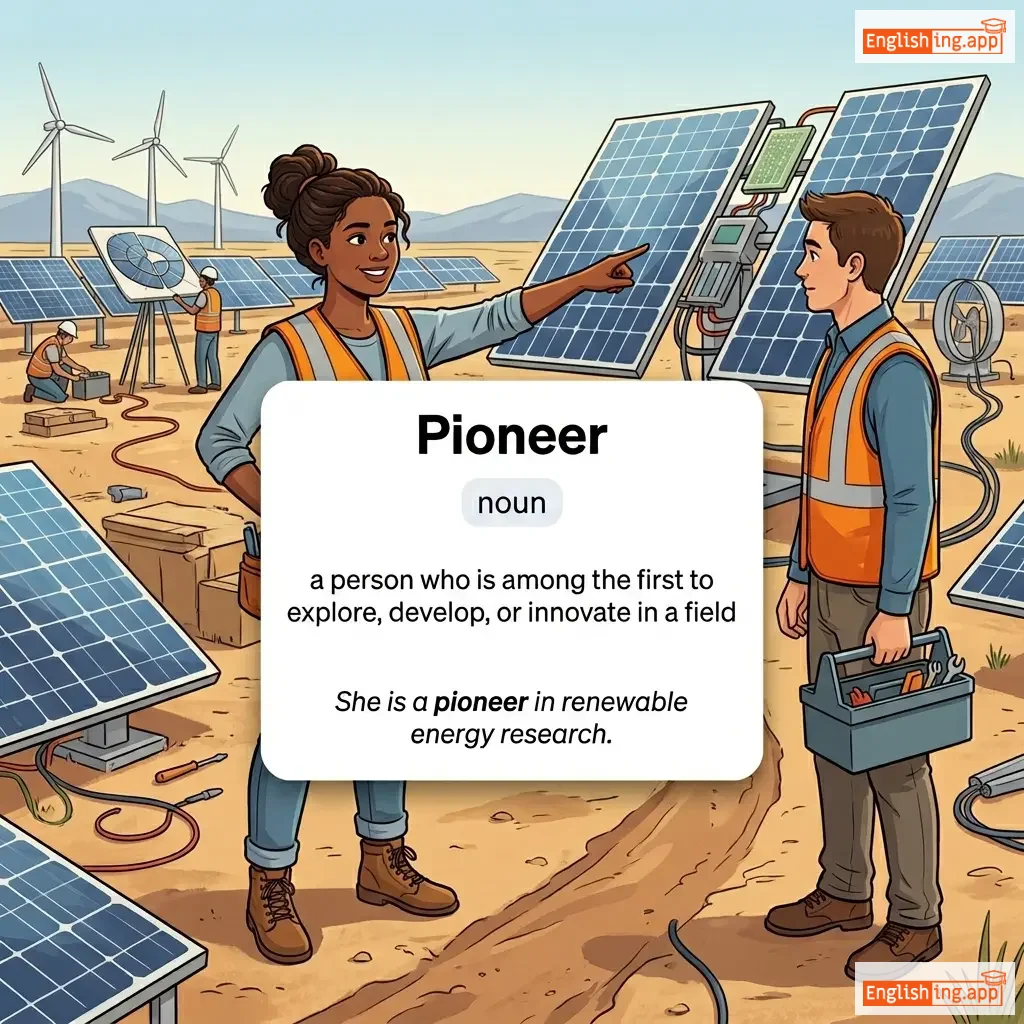
Pioneer definition card — visual illustration of the meaning
noun
/ˌpaɪəˈnɪər/
आधिकारिक व्यक्ति (aadhikarik vyakti)

a person who is among the first to explore, develop, or innovate in a field

"She is a pioneer in renewable energy research."

"वह नवीकरणीय ऊर्जा अनुसंधान में एक अग्रणी है।" (vah navikaranīya urja anusandhan mein ek agrani hai)
verb
/ˈpɪnpɔɪnt/
सटीक रूप से स्थान का पता लगाना (sateek roop se sthan ka pata lagana)

to locate or identify something with precision

"The detective was able to pinpoint the exact location of the suspect."

"जासूस ने संदिग्ध का सही स्थान सटीक रूप से पहचान लिया।" (Jasoos ne sandigdh ka sahi sthan sateek roop se pehchaan liya.)
noun
/ˈpɪnəkəl/
शिखर (shikhar)

the highest point or peak of something, especially of success or achievement

"Winning the Nobel Prize was the pinnacle of her career."

"नोबेल पुरस्कार जीतना उसके करियर का शिखर था।" (Nobel puraskar jeetna uske career ka shikhar tha.)
noun
/ˈpɪnəs/
छोटी नाव (chhoti naav)

a small boat, often carried by a larger ship

"The sailors used a pinnace to reach the shore."

"नाविकों ने तट तक पहुँचने के लिए एक पिनेस का इस्तेमाल किया।" (Navikon ne tat tak pahuchne ke liye ek pinnace ka istemal kiya.)
adjective
/pɪŋk/
गुलाबी (gulabi)

a color between red and white

"She wore a pink dress to the party."

"वह पार्टी में गुलाबी रंग का कपड़ा पहने हुए थी।" (Vah party mein gulabi rang ka kapda pehne hue thi.)
noun
/ˈpɪnjən/
छोटा गियर या पक्षी के पंख का बाहरी हिस्सा; रोकना या निष्क्रिय करना (chhota gear ya pakshi ke pankh ka baahari hissa; rokna ya nishkriya karna)

a small gear or the outer part of a bird's wing; to restrain or immobilize

"The bird's pinion was injured, preventing it from flying."

"पक्षी के पिनियन को चोट लगने के कारण वह उड़ नहीं पा रहा था।" (Pakshi ke pinion ko chot lagne ke kaaran wah ud nahin paa raha tha.)
noun
/ˈpaɪnˌæpəl/
अनानास (ananas)

a tropical fruit with a rough spiky skin, sweet yellow flesh, and a leafy crown

"She added fresh pineapple to the fruit salad."

"उसने फलों के सलाद में ताज़ा अनानास डाला।" (usne phalon ke salad mein taaza ananas dala)
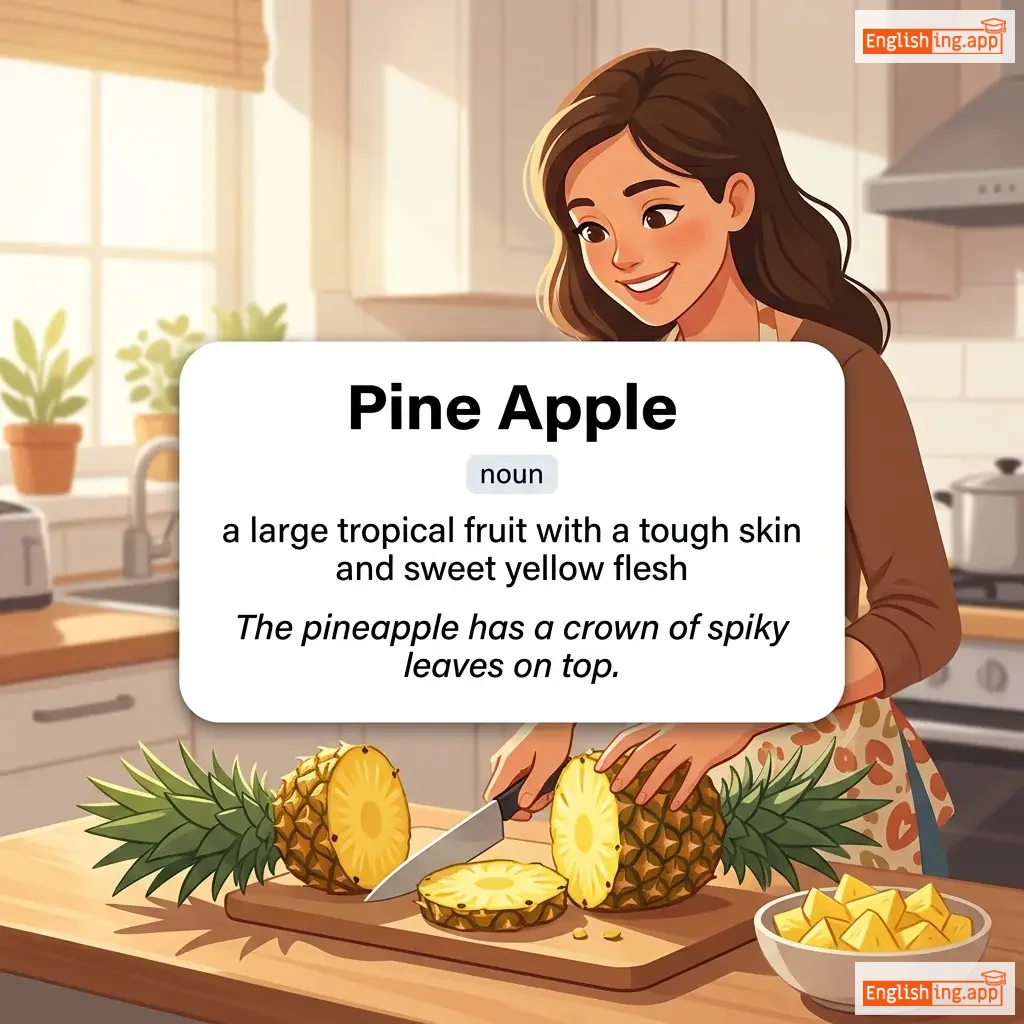
Pine Apple definition card — visual illustration of the meaning
noun
/ˈpaɪn.æp.əl/
अनानास (ananas)

a large tropical fruit with a tough skin and sweet yellow flesh

"The pineapple has a crown of spiky leaves on top."

"अनानास के ऊपर कांटेदार पत्तों का मुकुट होता है।" (ananas ke upar kaantedaara patton ka mukut hota hai)
verb
/paɪn/
बेहद चाहत रखना (behad chahat rakhna)

to long intensely for something or someone; to suffer from longing

"He pined for his hometown after moving abroad."

"विदेश जाने के बाद वह अपने घर के लिए बहुत तड़प रहा था।" (Videsh jane ke baad vah apne ghar ke liye bahut tadap raha tha.)
noun
/ˈpɪntʃərz/
पिंचर (pinchar)

a tool used for gripping or squeezing objects

"Use the pinchers to remove the hot coal safely."

"गर्म कोयला सुरक्षित रूप से हटाने के लिए पिनचर्स का उपयोग करें।" (Garm koyla surakshit roop se hatane ke liye pinchers ka upyog karein.)
verb
/pɪntʃ/
मसलना (masalna)

to squeeze tightly between the fingers; to take a small amount

"She pinched a bit of salt into the soup."

"उसने सूप में थोड़ा सा नमक डाला।" (Usne soup mein thoda sa namak dala.)
Pincers definition card — visual illustration of the meaning
noun
/ˈpɪnsərz/
पिन्सर्स (pinsers)

a gripping tool with two arms used for holding or pulling objects

"He used pincers to remove the hot nail from the wood."

"उसने लकड़ी से गर्म कील निकालने के लिए पिन्सर्स का उपयोग किया।" (Usne lakdi se garm keel nikaalne ke liye pinsers ka upyog kiya.)
noun
/pɪn/
पिन (pin)

a small thin piece of metal used to fasten or hold things together

"She used a pin to attach the note to the board."

"उसने बोर्ड पर नोट चिपकाने के लिए एक पिन का उपयोग किया।" (Usne board par not chipkane ke liye ek pin ka upyog kiya.)
noun
/ˈpɪm.pəl/
पिंपल (pimpl)

a small, inflamed elevation of the skin; a spot on the skin, especially on the face

"She was embarrassed about the pimple on her forehead."

"वह अपनी माथे पर पिम्पल के बारे में शर्मिंदा थी।" (vah apni mathe par pimpl ke baare mein sharminda thi.)
Pilot definition card — visual illustration of the meaning
noun/verb
/ˈpaɪlət/
पायलट (pilot)

a person who operates an aircraft / to guide or lead through a trial

"She piloted the plane safely through the storm."

"उसने तूफान के बीच विमान को सुरक्षित रूप से उड़ाया।" (Usne toofan ke beech vimaan ko surakshit roop se udaaya.)
Pillow definition card — visual illustration of the meaning
noun
/ˈpɪloʊ/
तकिया (takiya)

a soft cushion filled with material used to support the head while sleeping or resting

"She placed her head on the soft pillow and fell asleep quickly."

"उसने सिर को मुलायम तकिए पर रखा और जल्दी से सो गई।" (Usne sir ko mulaayam takiye par rakha aur jaldi se so gayi.)
noun/verb
/ˈpɪləri/
सजा देने का यंत्र (saja dene ka yantra)

a device for publicly punishing someone / to expose to public ridicule

"The corrupt official was placed in the pillory for the town to jeer at."

"दुराचारपूर्ण अधिकारी को शहर के सामने पिलोरी में रखा गया था।" (Duracharpoorn adhikari ko shahar ke samne pillory mein rakha gaya tha.)
Pillaw definition card — visual illustration of the meaning
noun
/pɪˈlɑːf/
पिलाव (pilav)

a dish of rice cooked in seasoned broth, often with meat and vegetables

"We enjoyed a delicious chicken pillaw for dinner."

"हमने डिनर के लिए स्वादिष्ट चिकन पिलाव का आनंद लिया।" (hamne dinner ke liye swadisht chicken pilav ka anand liya)
noun
/ˈpɪlər/
स्तंभ (stambh)

a strong vertical support or mainstay of a structure or system

"The ancient temple was supported by massive stone pillars."

"प्राचीन मंदिर को विशाल पत्थर के स्तंभों द्वारा समर्थित किया गया था।" (Prachin mandir ko vishal patthar ke stambhon dwara samarthit kiya gaya tha.)
verb
/ˈpɪlɪdʒ/
लूटपाट करना (lootpaat karna)

to rob or plunder a place, especially during war

"The invading army pillaged the village and took all valuables."

"आक्रमणकारी सेना ने गाँव को लूटपाट किया और सारी कीमती चीज़ें ले लीं।" (Aakramankari sena ne gaav ko lootpaat kiya aur saari keemti cheezein le li.)
noun
/fɪˈlæn.θrə.pɪst/
परोपकारी (paropkaari)

a person who seeks to promote the welfare of others, especially by donating money to good causes

"The philanthropist donated millions to build schools in rural areas."

"परोपकारी ने ग्रामीण क्षेत्रों में स्कूल बनाने के लिए लाखों का दान किया।" (Paropkaari ne gramin kshetron mein school banane ke liye lakhon ka daan kiya.)
noun
/ˈfænˌtæzəm/
भूत (bhoot)

an illusion, ghost, or figment of the imagination

"The child claimed to see a phantasm in the old house."

"बच्चे ने दावा किया कि उसने पुराने घर में एक भूत देखा था।" (Bacche ne dawa kiya ki usne purane ghar mein ek bhoot dekha tha.)
adjective
/ˌfæntæzməˈɡɒrɪkəl/
कल्पनाशील (kalpanasheel)

Having a fantastic, dreamlike, or surreal appearance, often shifting or illusory.

"The movie created a phantasmagorical vision of another world."

"फिल्म ने एक फैंटास्मागॉरिकल दृष्टि बनाई, जो दूसरे दुनिया का था।" (Film ne ek phantasmagorical drishti banayi, jo doosre duniya ka tha.)
adjective
/ˌfærɪˈseɪɪkəl/
पाखंडी (pakhandi)

Excessively concerned with formal rules or outward show of morality, often in a hypocritical way.

"His pharisaical behavior made people doubt his sincerity."

"उसका पाखंडी व्यवहार लोगों को उसकी ईमानदारी पर शक करता था।" (Uska pakhandi vyavhaar logon ko uski imandari par shak karta tha.)
noun
/ˈfærɪsiː/
धार्मिक hypocritical व्यक्ति (dharmik hypocritical vyakti)

A member of an ancient Jewish sect; by extension, a self-righteous or hypocritical person.

"He acted like a pharisee, judging others while ignoring his own faults."

"वह एक फरीसी की तरह व्यवहार कर रहा था, दूसरों का न्याय करता हुआ जबकि अपनी खुद की गलतियों को अनदेखा कर रहा था।" (Wah ek Pharisee ki tarah vyavhaar kar raha tha, doosron ka nyaay karta hua jabki apni khud ki galtiyon ko andekha kar raha tha.)
noun
/ˌfɑːrməkəˈpiːə/
औषधि सूची (aushadhi soochi)

An official book listing medicinal drugs, their effects, and directions for use.

"The doctor referred to the pharmacopoeia to check the drug's proper dosage."

"डॉक्टर ने दवाओं के सही मात्रा की जांच करने के लिए औषधि सूची का संदर्भ लिया।" (Doktar ne davaon ke sahi matra ki jaanch karne ke liye aushadhi soochi ka sandarbh liya.)
noun
/ˈfɑːrməsi/
दवाख़ाना (dawakhana)

A place where medicinal drugs are prepared and sold.

"I went to the pharmacy to buy antibiotics."

"मैं एंटीबायोटिक खरीदने के लिए फार्मेसी गया था।" (Main antibiotic kharidne ke liye farmesi gaya tha.)
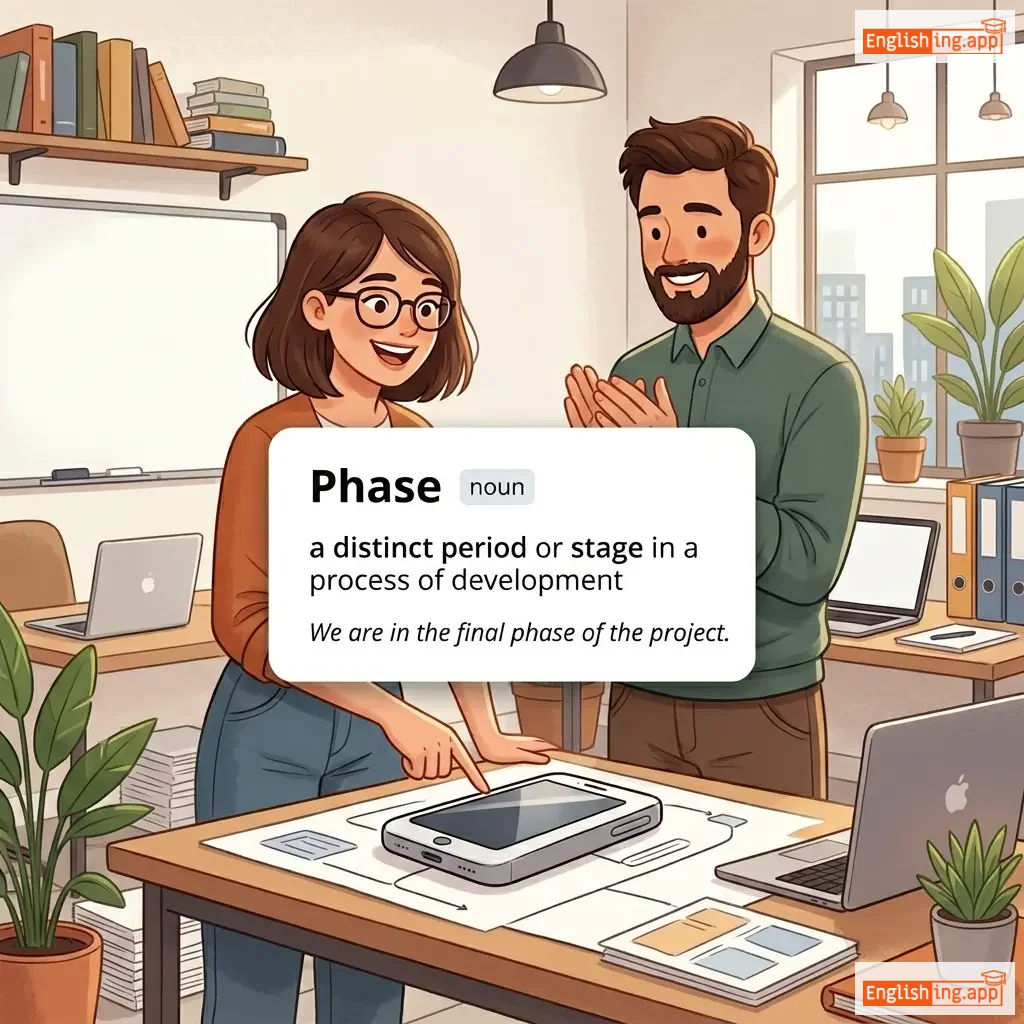
Phase definition card — visual illustration of the meaning
noun
/feɪz/
चरण (charan)

a distinct period or stage in a process of development

"We are in the final phase of the project."

"हम परियोजना के अंतिम चरण में हैं।" (Ham pariyojana ke antim charan mein hain.)
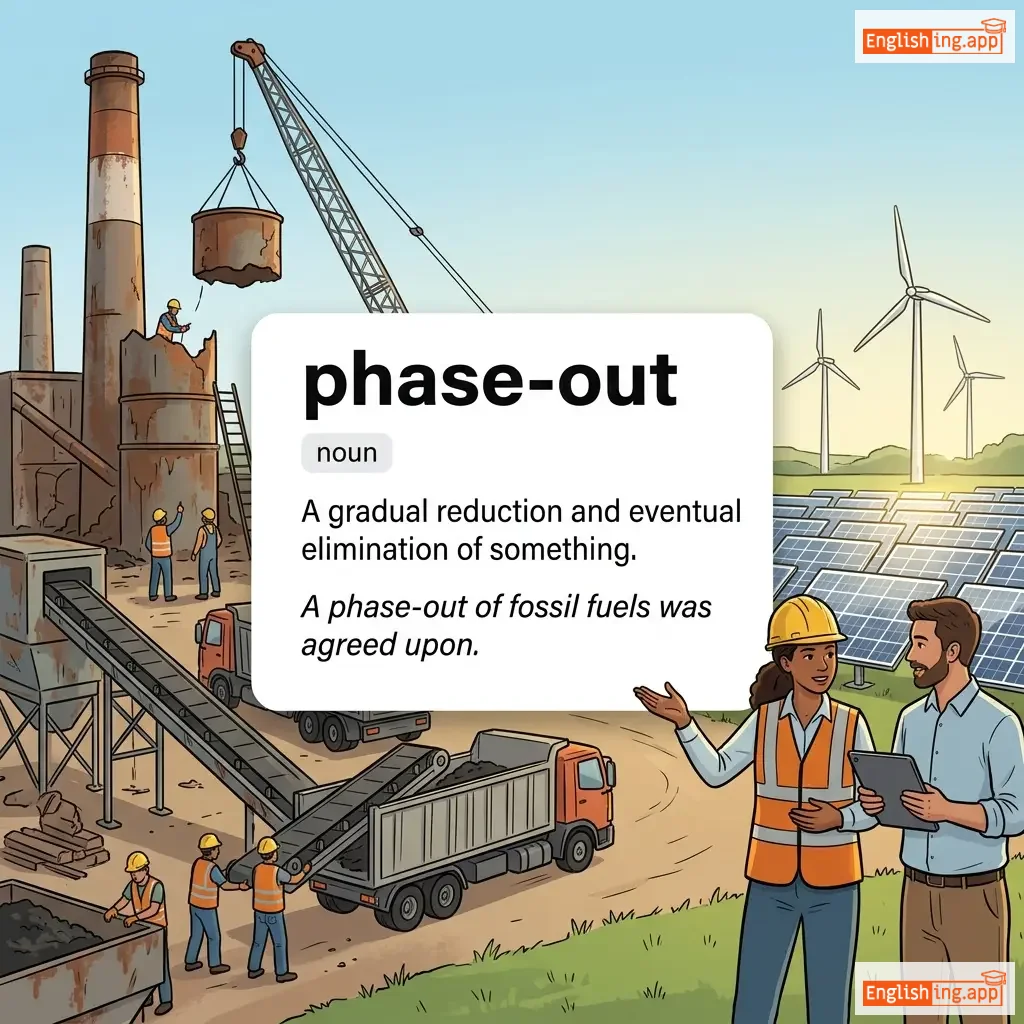
phase-out definition card — visual illustration of the meaning
noun
ˈfeɪz.aʊt
चरणबद्ध समाप्ति (charanbadh samapti)

A gradual reduction and eventual elimination of something.

"A phase-out of fossil fuels was agreed upon."

"जीवाश्म ईंधन की चरणबद्ध समाप्ति पर सहमति बनी।" (Jeevashm indhan ki charanbadh samapti par sahmati bani.)
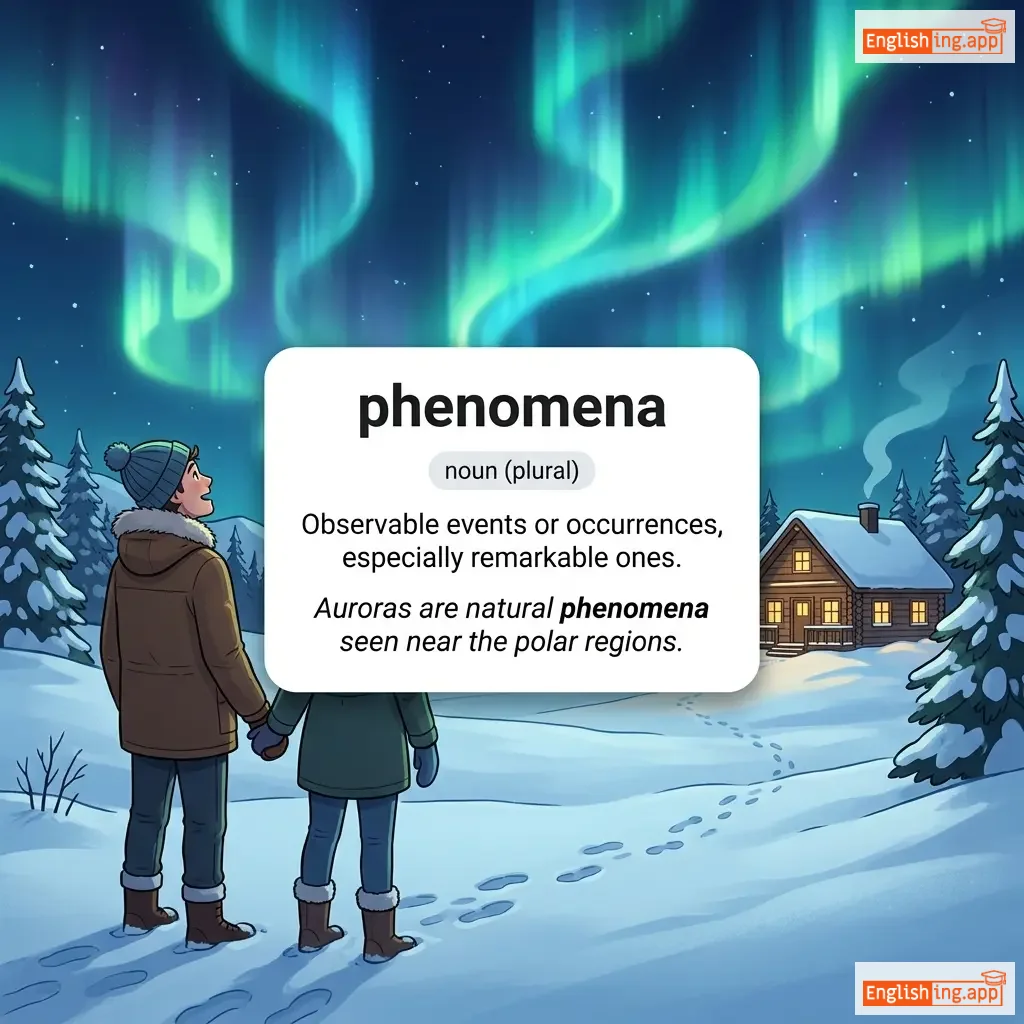
phenomena definition card — visual illustration of the meaning
noun (plural)
/fəˈnɒmɪnə/
घटनाएँ (ghatanaen)

Observable events or occurrences, especially remarkable ones.

"Auroras are natural phenomena seen near the polar regions."

"ऑरोरा पोलर क्षेत्रों के पास देखी जाने वाली प्राकृतिक घटनाएँ हैं।" (Aurora polar kshetron ke paas dekhi jaane wali prakritik ghatnaen hain.)
adjective
/fəˈnɒmɪnəl/
असाधारण (asadharan)

extraordinary, remarkable, or exceptional in a way that is very impressive

"The team achieved phenomenal success in the tournament."

"टीम ने टूर्नामेंट में असाधारण सफलता प्राप्त की।" (ṭīm ne ṭurnāmeṇṭ meṁ asādhāraṇ safaltā prāpt kī.)
noun
/fəˈnɒmɪnən/
घटना (ghatna)

an observable event, fact, or occurrence, often unusual or remarkable

"The Northern Lights are a natural phenomenon."

"उत्तरदायी लाइट्स एक प्राकृतिक घटना हैं।" (uttardayi lights ek prakritik ghatna hain)
noun
/ˈfaɪəl/
छोटा कांच का पात्र (chhota kaanch ka patra)

a small glass container for liquids, especially medicines

"The doctor gave her a phial of medicine."

"डॉक्टर ने उसे दवाइयों का एक फायल दिया।" (Doktor ne use davaiyon ka ek phial diya.)
verb
/fɪˈlændər/
चक्कर चलाना (chakkar chalana)

to engage in casual or frivolous romantic or sexual relationships

"He was known to philander with many women in town."

"वह शहर में कई महिलाओं के साथ प्रेम संबंध बनाने के लिए प्रसिद्ध था।" (Vah shahar mein kai mahilao ke saath prem sambandh banane ke liye prasiddh tha.)
noun
/fɪˈlændərər/
व्यभिचारी (vyabhichari)

a man who habitually engages in casual romantic or sexual affairs

"The politician was exposed as a notorious philanderer."

"राजनेता को एक कुख्यात व्यभिचारी के रूप में उजागर किया गया था।" (Rajneta ko ek kukhyat vyabhichari ke roop mein ujagar kiya gaya tha.)
adjective
/ˌfɪl.ænˈθrɒp.ɪk/
परोपकारी (paropkari)

showing concern for the welfare of others; generous and charitable

"She is known for her philanthropic activities in the city."

"वह शहर में अपनी परोपकारी गतिविधियों के लिए प्रसिद्ध है।" (Vah shahar mein apni paropkari gatividhiyon ke liye prasiddh hai.)
noun
/fɪˈlɒs.ə.fi/
दर्शनशास्त्र (darshanshastr)

the study of the fundamental nature of knowledge, reality, and existence

"Her philosophy emphasizes kindness and empathy."

"उसकी दर्शनशास्त्र दयालुता और सहानुभूति पर जोर देती है।" (Uski darshanshastr dayaluta aur sohanubhuti par zor deti hai.)
noun
/fɪˈlɒsəfə/
दार्शनिक (darshanik)

a person engaged in the study of philosophy or in serious thinking about fundamental questions

"Socrates was a famous philosopher of ancient Greece."

"सोक्रेट्स प्राचीन ग्रीस के एक प्रसिद्ध दार्शनिक थे।" (Socrates prachin Greece ke ek prasiddh darshanik the.)
adjective
/ˌfɪl.əˈsɒf.ɪ.kəl/
दार्शनिक (darshanik)

relating to the study of the fundamental nature of knowledge, reality, and existence

"She maintained a calm and philosophical attitude during the crisis."

"उसने संकट के समय शांत और दार्शनिक दृष्टिकोण बनाए रखा।" (Usne sankat ke samay shaant aur darshanik drishtikon banaye rakha.)
verb
/fɪˈlɒs.ə.faɪz/
दर्शन करना (darshan karna)

to think or talk about the fundamental nature of knowledge, reality, and existence

"He likes to philosophize about life and its meaning."

"वह जीवन और उसके अर्थ पर विचार करना पसंद करता है।" (Wah jeevan aur uske arth par vichar karna pasand karta hai.)
phlegmatic definition card — visual illustration of the meaning
adjective
/flɛgˈmæt.ɪk/
निर्विकार (nirvikar)

having an unemotional and stolidly calm disposition

"Despite the chaos, he remained phlegmatic and composed."

"अराजकता के बावजूद, वह निर्विकार और शांत रहा।" (Arajakta ke bawjood, vah nirvikar aur shaant raha.)