ভোকাবুলারিসমূহ

ইংরেজি শব্দের বাংলা অর্থ | English to Bangla Word Meaning Dictionary

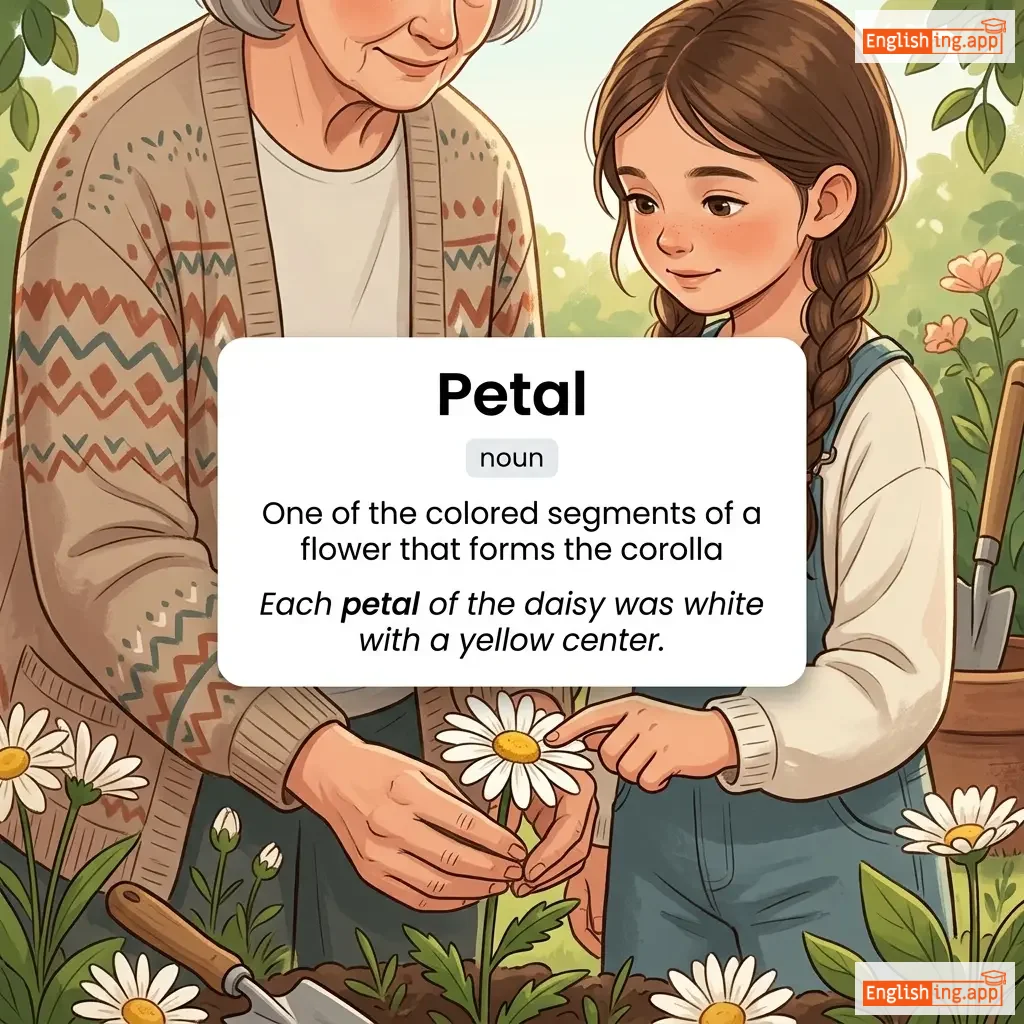
Petal definition card — visual illustration of the meaning
noun
/ˈpetəl/
পাপড়ি (papri)

One of the colored segments of a flower that forms the corolla

"Each petal of the daisy was white with a yellow center."

"ডেইজির প্রতিটি পাপড়ি সাদা ছিল এবং কেন্দ্রটি হলুদ ছিল।" (deiji-r protiti papri shada chilo ebong kendro-ti holud chilo)
verb
/ˈpiːtər/
ধীরে ধীরে ক্ষীণ হওয়া (dhire dhire khin howa)

to diminish gradually and come to an end; to fade or dwindle away

"The excitement of the event began to peter out after a few hours."

"ইভেন্টের উত্তেজনা কয়েক ঘণ্টা পর ধীরে ধীরে ক্ষীণ হতে শুরু করল।" (Eventer uttejana koyek ghonta por dhire dhire khin hote shuru korlo.)
noun
/pəˈtɪʃən/
আবেদনপত্র (abedonpotro)

a formal written request, typically signed by many people, appealing to authority about a cause

"They signed a petition to improve road safety in the area."

"তারা এলাকায় সড়ক নিরাপত্তা উন্নত করতে একটি আবেদনপত্রে স্বাক্ষর করেছিল।" (Tara elakay sorok nirapotta unnot korte ekti abedonpotre shakshor korechilo.)
verb
/ˈpɛtrɪfaɪ/
ভয়ে জমে যাওয়া (bhoye jome jaoa)

to make someone so frightened that they are unable to move or think; to turn into stone

"The loud noise petrified the little child."

"উচ্চ শব্দটি ছোট শিশুটিকে ভয়ে জমে যেতে বাধ্য করল।" (Uchcho shobdoti chhoto shishutike bhoye jome jete badhyo korlo.)
noun
/ˈpɛtrəˌɡræf/
শিলার বর্ণনা (shilar bornoa)

a description or representation of rocks, especially in detailed scientific writing

"The scientist studied the petrograph to understand the rock composition."

"বিজ্ঞানী শিলার গঠন বোঝার জন্য পেট্রোগ্রাফটি অধ্যয়ন করেছিলেন।" (Biggani shilar gothon bojhar jonno petrograph ti oddhoyon korechilen.)
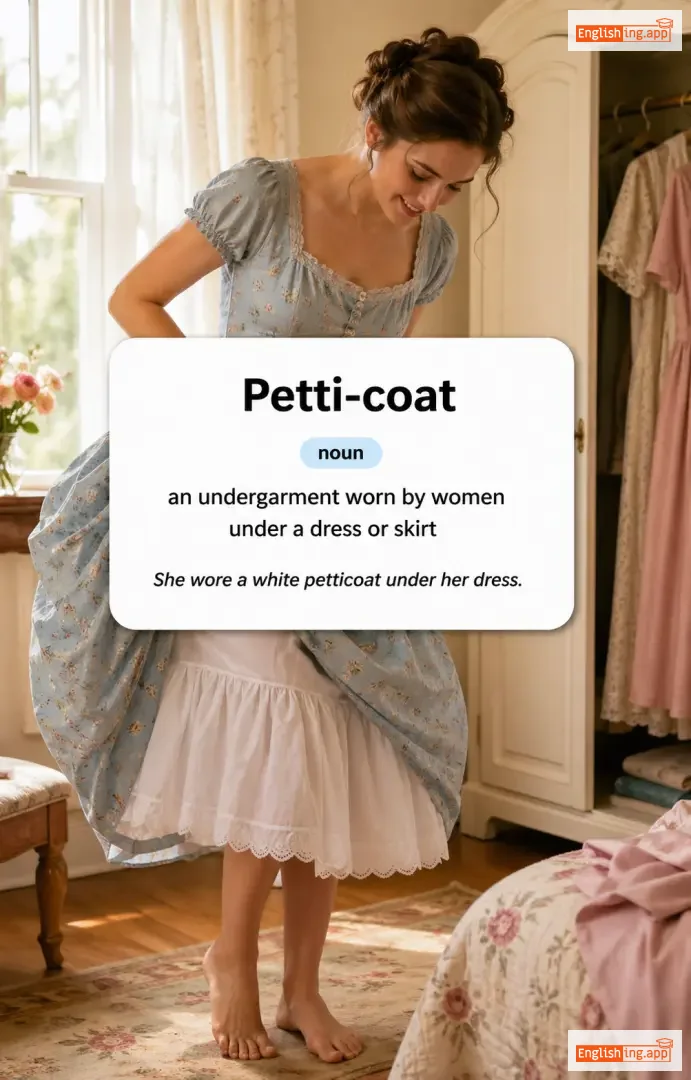
Petti-coat definition card — visual illustration of the meaning
noun
/ˈpetɪkoʊt/
সায়া (shaya)

an undergarment worn by women under a dress or skirt

"She wore a white petticoat under her dress."

"তিনি তার পোশাকের নিচে একটি সাদা সায়া পরেছিলেন।" (tini tar poshaher niche ekti shada shaya porechilen.)
verb
/ˈpɛtɪˌfɒɡ/
তুচ্ছ বিষয়ে তর্ক করা (tuchcho bishoye torko kora)

to argue or quibble over trivial matters; to engage in petty, dishonest practices

"The lawyer was accused of trying to pettifog instead of addressing the real issue."

"আইনজীবীকে আসল বিষয় সমাধানের পরিবর্তে তুচ্ছ বিষয়ে তর্ক করার অভিযোগ আনা হয়েছিল।" (Ainjibi ke asal bishoy somadhaner poriborte tuchcho bishoye torko korar obhijog ana hoyechilo.)
adjective
/ˈpɛti/
তুচ্ছ (tuchcho)

Of little importance or trivial; also describes a person overly concerned with small or unimportant matters.

"She often gets upset over the most petty things."

"সে প্রায়ই সবচেয়ে তুচ্ছ বিষয়ে বিরক্ত হয়।" (Se prayoi sobcheye tuchcho bishoye birokt hoy.)
noun
/ˈpɛtjʊləns/
খিটখিটে স্বভাব (khitkhite shobhav)

The quality of being childishly sulky or bad-tempered.

"His petulance during the meeting annoyed everyone."

"মিটিং চলাকালীন তার খিটখিটে স্বভাব সবাইকে বিরক্ত করেছিল।" (Meeting cholakaline tar khitkhite shobhav sobaike birokt korechilo.)
adjective
/ˈpɛtjʊlənt/
খিটখিটে (khitkhite)

Childishly sulky or bad-tempered.

"The child became petulant when denied more candy."

"বেশি ক্যান্ডি না দেওয়ায় শিশুটি খিটখিটে হয়ে উঠল।" (Besi candy na deoway shishuti khitkhite hoye uthlo.)
noun
/ˈfeɪlæŋks/
সারিবদ্ধ দল (sariboddho dol)

A group of people or things arranged in a compact, close formation; also an ancient Greek military formation.

"A phalanx of reporters waited outside the courthouse."

"একটি সারিবদ্ধ রিপোর্টারদের দল আদালতের বাইরে অপেক্ষা করছিল।" (Ekti sariboddho reporter der dol adaloter baire opekkha korchilo.)
noun
/ˈfænˌtæzəm/
প্রেতাত্মা (pretatma)

an illusion, ghost, or figment of the imagination

"The child claimed to see a phantasm in the old house."

"শিশুটি দাবি করল যে সে পুরনো বাড়িতে একটি প্রেতাত্মা দেখেছে।" (Shishuti dabi korlo je se purono barite ekti pretatma dekhechhe.)
adjective
/ˌfæntæzməˈɡɒrɪkəl/
কল্পনাপ্রবণ (kolponaprobhon)

Having a fantastic, dreamlike, or surreal appearance, often shifting or illusory.

"The movie created a phantasmagorical vision of another world."

"সিনেমাটি আরেকটি বিশ্বের কল্পনাপ্রবণ চিত্র তৈরি করেছিল।" (Cinemati arekti bishwer kolponaprobhon chhitra toiri korechilo.)
adjective
/ˌfærɪˈseɪɪkəl/
ভণ্ডামিপূর্ণ (bhondamipurno)

Excessively concerned with formal rules or outward show of morality, often in a hypocritical way.

"His pharisaical behavior made people doubt his sincerity."

"তার ভণ্ডামিপূর্ণ আচরণ মানুষকে তার আন্তরিকতা নিয়ে সন্দিহান করেছিল।" (Tar bhondamipurno acharon manushke tar antorikota niye sondihan korechilo.)
noun
/ˈfærɪsiː/
ভণ্ড ধার্মিক (bhondo dharmik)

A member of an ancient Jewish sect; by extension, a self-righteous or hypocritical person.

"He acted like a pharisee, judging others while ignoring his own faults."

"সে একজন ভণ্ড ফারিসির মতো আচরণ করেছিল, অন্যদের বিচার করছিল কিন্তু নিজের ভুল উপেক্ষা করছিল।" (Se ekjon bhondo Pharisi moto acharon korechilo, onnoder bichar korchilo kintu nijer vul upekkha korechilo.)
noun
/ˌfɑːrməkəˈpiːə/
ঔষধ তালিকা (aushodh talika)

An official book listing medicinal drugs, their effects, and directions for use.

"The doctor referred to the pharmacopoeia to check the drug's proper dosage."

"ডাক্তার সঠিক ডোজ পরীক্ষা করতে ঔষধ তালিকা দেখলেন।" (Daktar shothik doze porikkha korte aushodh talika dekhlen.)
noun
/ˈfɑːrməsi/
ঔষধের দোকান (aushodher dokan)

A place where medicinal drugs are prepared and sold.

"I went to the pharmacy to buy antibiotics."

"আমি অ্যান্টিবায়োটিক কিনতে ফার্মেসিতে গিয়েছিলাম।" (Ami antibiotic kinte farmesi te giechilam.)
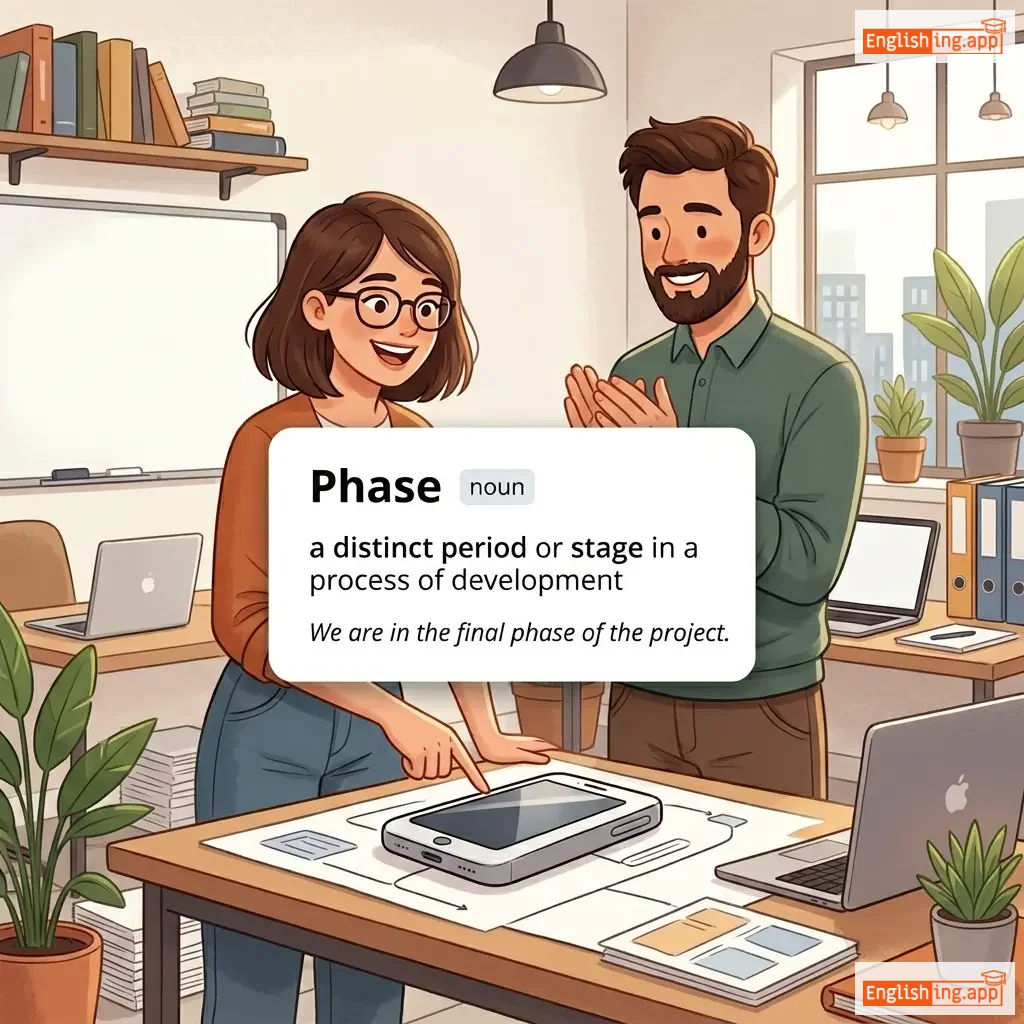
Phase definition card — visual illustration of the meaning
noun
/feɪz/
পর্যায় (porjay)

a distinct period or stage in a process of development

"We are in the final phase of the project."

"আমরা প্রকল্পের চূড়ান্ত পর্যায়ে আছি।" (Amra prokolper churanto porjay e achi.)
phase-out definition card — visual illustration of the meaning
noun
ˈfeɪz.aʊt
পর্যায়ক্রমে বিলোপ (porjayokrome bilop)

A gradual reduction and eventual elimination of something.

"A phase-out of fossil fuels was agreed upon."

"জীবাশ্ম জ্বালানির পর্যায়ক্রমে বিলোপে সম্মতি দেওয়া হয়েছে।" (Jibashm jwalanir porjayokrome bilope shommoti deoya hoyeche.)
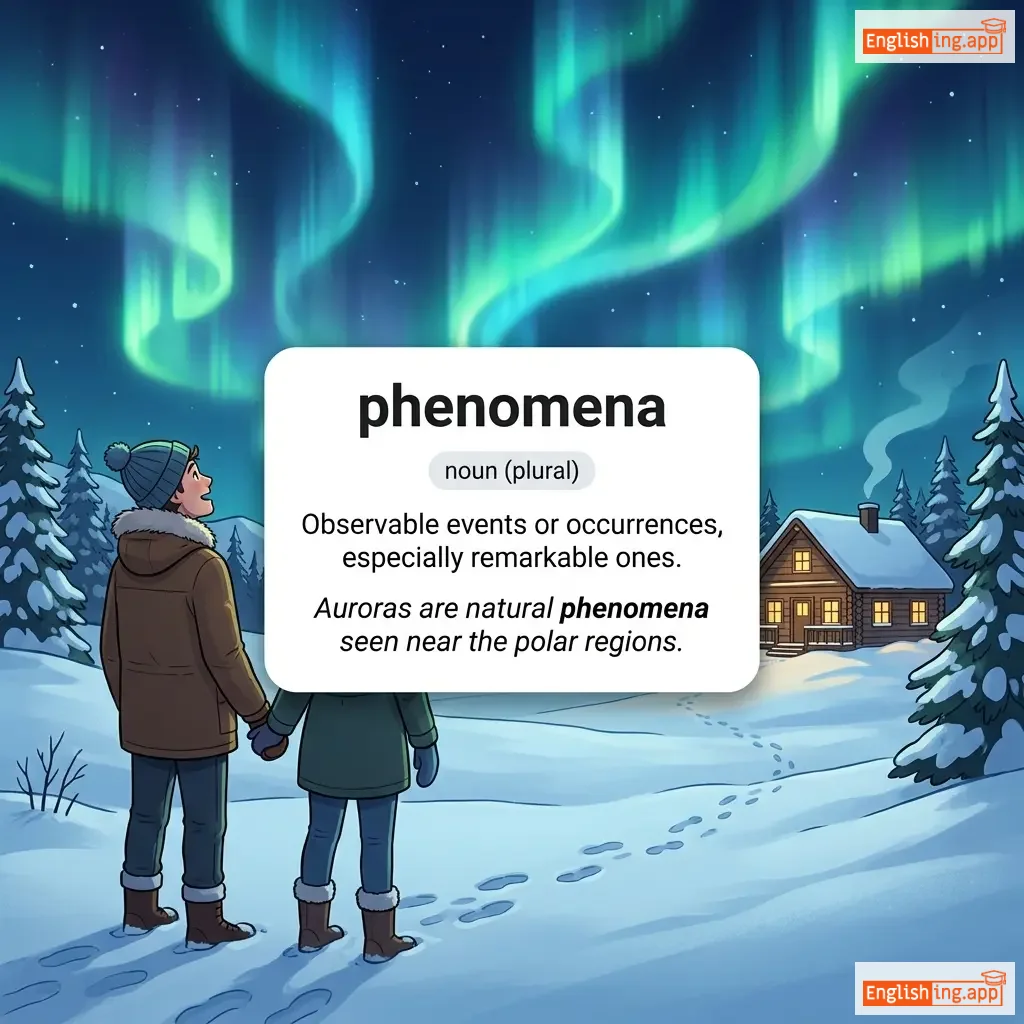
phenomena definition card — visual illustration of the meaning
noun (plural)
/fəˈnɒmɪnə/
ঘটনাবলি (ghotonaboli)

Observable events or occurrences, especially remarkable ones.

"Auroras are natural phenomena seen near the polar regions."

"অরোরা হলো প্রাকৃতিক ঘটনাবলি যা মেরু অঞ্চলে দেখা যায়।" (Aurora holo prakritik ghotonaboli ja meru onchole dekha jay.)
adjective
/fəˈnɒmɪnəl/
অসাধারণ (osadharon)

extraordinary, remarkable, or exceptional in a way that is very impressive

"The team achieved phenomenal success in the tournament."

"দলটি টুর্নামেন্টে অসাধারণ সাফল্য অর্জন করেছে।" (Dalti tournament e osadharon safollo arjon koreche.)
noun
/fəˈnɒmɪnən/
ঘটনা (ghotona)

an observable event, fact, or occurrence, often unusual or remarkable

"The Northern Lights are a natural phenomenon."

"নর্দান লাইটস একটি প্রাকৃতিক ঘটনা।" (Northern Lights ekti prakritik ghotona.)
noun
/ˈfaɪəl/
ছোট কাঁচের বোতল (choto kancher botal)

a small glass container for liquids, especially medicines

"The doctor gave her a phial of medicine."

"ডাক্তার তাকে একটি ওষুধের ফায়াল দিলেন।" (Daktar take ekti oshudher phial dilen.)
verb
/fɪˈlændər/
নারীঘটিত হতে (narighotito hote)

to engage in casual or frivolous romantic or sexual relationships

"He was known to philander with many women in town."

"সে শহরে অনেক নারীর সাথে প্রেমের খেলায় লিপ্ত ছিল।" (Se shohore onek narir sathe premer khelay lipto chilo.)
noun
/fɪˈlændərər/
নারীঘটিত ব্যক্তি (narighotito bekti)

a man who habitually engages in casual romantic or sexual affairs

"The politician was exposed as a notorious philanderer."

"রাজনীতিবিদকে একজন কুখ্যাত নারীঘটিত ব্যক্তি হিসেবে প্রকাশ করা হয়েছিল।" (Rajnaitibidke ekjon kukhyat narighotito bekti hisebe prokash kora hoyechhilo.)
adjective
/ˌfɪl.ænˈθrɒp.ɪk/
পরোপকারী (poropkari)

showing concern for the welfare of others; generous and charitable

"She is known for her philanthropic activities in the city."

"সে শহরে তার পরোপকারী কার্যক্রমের জন্য পরিচিত।" (Se shahore tar poropkari karyakromer jonno porichito.)
noun
/fɪˈlæn.θrə.pɪst/
পরোপকারী ব্যক্তি (poropkari bekti)

a person who seeks to promote the welfare of others, especially by donating money to good causes

"The philanthropist donated millions to build schools in rural areas."

"পরোপকারী ব্যক্তি গ্রামীণ এলাকায় স্কুল তৈরি করতে মিলিয়ন দান করেছেন।" (Poropkari bekti gramin elakae school toiri korte million dan korechhen.)
noun
/fɪˈlæn.θrə.pi/
পরোপকারিতা (poropkarita)

the desire to promote the welfare of others, often expressed by the generous donation of money to good causes

"Philanthropy has helped improve healthcare in many developing countries."

"পরোপকারিতা অনেক উন্নয়নশীল দেশে স্বাস্থ্যসেবার উন্নতি করতে সাহায্য করেছে।" (Poropkarita onek unnoyonshil deshe shasthoshebar unnati korte sahajjo korechhe.)
noun
/fɪˈlæt.əl.ɪst/
ডাকটিকিট সংগ্রাহক (daktikit songrahok)

a person who collects or studies postage stamps

"The philatelist spent years building a rare stamp collection."

"ডাকটিকিট সংগ্রাহক অনেক বছর ব্যয় করে একটি বিরল সংগ্রহ তৈরি করেছেন।" (Daktikit songrahok onek bochor byay kore ekti biral songrah toiri korechhen.)
noun
/fɪˈlæt.əl.i/
ডাকটিকিট সংগ্রহশাস্ত্র (daktikit songrahoshastro)

the collection and study of postage stamps

"Philately is a hobby enjoyed by people of all ages."

"ডাকটিকিট সংগ্রহশাস্ত্র একটি শখ যা সব বয়সের মানুষ উপভোগ করে।" (Daktikit songrahoshastro ekti shokh ja shob boyosher manush upobhog kore.)
adjective
/ˌfɪl.hɑːrˈmɒn.ɪk/
সিমফনি বা অর্কেস্ট্রার সাথে সম্পর্কিত (symphoni ba orkestrar sathe somprokito)

relating to a symphony orchestra or its music

"The philharmonic orchestra performed a stunning rendition of Beethoven's Ninth Symphony."

"ফিলহারমনিক অর্কেস্ট্রা বেতোভেনের নবম সিমফনির চমৎকার পরিবেশন করল।" (Philharmonic orkestr a Beethoven er nabom symphoni r chomtkar poribeson korlo.)
noun
/ˈfɪl.ɪ.staɪn/
সংস্কৃতি ও শিল্পের প্রতি উদাসীন ব্যক্তি (sanskriti o shilper proti udasin bekti)

a person who is indifferent or hostile to culture and the arts

"He was criticized as a philistine for dismissing modern art."

"তিনি আধুনিক শিল্পকে উপেক্ষা করার জন্য ফিলিস্তিন হিসেবে সমালোচিত হন।" (Tini adhunik shilp ke upekha korar jonno philistine hisebe somalochito hon.)
noun
/ˈfɪl.ə.dʒɪ.nɪst/
নারীদের প্রতি অনুরাগী ব্যক্তি (narider proti onuragi bekti)

a person who loves or admires women

"As a known philogynist, he advocated for women's education."

"একজন পরিচিত ফিলোজিনিস্ট হিসেবে, তিনি নারীদের শিক্ষার পক্ষে সমর্থন জ্ঞাপন করেছিলেন।" (Ekjôn porichito philogynist hisebe, tini narider shikhar pokkhe somorthon gnyapan korechilen.)
noun
/fɪˈlɒl.ə.dʒɪst/
ভাষা ও তার ইতিহাস অধ্যয়নকারী ব্যক্তি (bhasha o tar itihas odhyayonkari bekti)

a person who studies languages and their history

"The philologist analyzed ancient texts to understand language evolution."

"ফিলোলজিস্ট প্রাচীন লেখাগুলি বিশ্লেষণ করে ভাষার বিবর্তন বোঝার চেষ্টা করলেন।" (Philologist prachin lekhaguli bishleshon kore bhasar biborton bojhar chesta korlen.)
noun
/fɪˈlɒl.ə.dʒi/
ভাষা ও তার লিখিত ঐতিহাসিক উৎস অধ্যয়ন (bhasha o tar likhito oitihasik utsho odhyayon)

the study of language in written historical sources; linguistics

"She devoted her career to philology, researching ancient manuscripts."

"তিনি তার ক্যারিয়ারকে ফিলোলজির প্রতি উৎসর্গ করেছেন, প্রাচীন পাণ্ডুলিপি নিয়ে গবেষণা করছেন।" (Tini tar career ke philology er proti utsorgo korechhen, prachin pandulipi niye gobeshona korchhen.)
noun
/fɪˈlɒsəfə/
দার্শনিক (darshonik)

a person engaged in the study of philosophy or in serious thinking about fundamental questions

"Socrates was a famous philosopher of ancient Greece."

"সক্রেটিস প্রাচীন গ্রীসের একজন বিখ্যাত দার্শনিক ছিলেন।" (Sokratis prachin Greece-er ekjon bikhyato darshonik chhilen.)
adjective
/ˌfɪl.əˈsɒf.ɪ.kəl/
দর্শনসংক্রান্ত (darshonsongkranto)

relating to the study of the fundamental nature of knowledge, reality, and existence

"She maintained a calm and philosophical attitude during the crisis."

"সে সংকটের সময় একটি শান্ত এবং দর্শনসংক্রান্ত মনোভাব রাখেছিল।" (Se songkoter somoy ekti shanto ebong darshonsongkranto monobhab rakhechilo.)
verb
/fɪˈlɒs.ə.faɪz/
দর্শন চিন্তা করা (darshon chinta kora)

to think or talk about the fundamental nature of knowledge, reality, and existence

"He likes to philosophize about life and its meaning."

"সে জীবনের অর্থ নিয়ে দর্শন চিন্তা করতে পছন্দ করে।" (Se jibon er ortho niye darshon chinta korte pachondo kore.)
noun
/fɪˈlɒs.ə.fi/
দর্শনশাস্ত্র (darshonshastr)

the study of the fundamental nature of knowledge, reality, and existence

"Her philosophy emphasizes kindness and empathy."

"তার দর্শনশাস্ত্র সদয়তা এবং সহানুভূতির উপর জোর দেয়।" (Tar darshonshastr sodayota ebong sohanubhuti er upor jor dey.)
phishing definition card — visual illustration of the meaning
noun
/ˈfɪʃ.ɪŋ/
প্রতারণামূলক তথ্য চুরি (protaranamulek tothyo churi)

Deceptive technique for stealing personal information unauthorized

"Phishing emails trick users into revealing passwords."

"ফিশিং ইমেইল ব্যবহারকারীদের পাসওয়ার্ড প্রকাশে প্রতারণা করে।" (Phishing email byaboharkarider password prokashe protarana kore.)
phlegmatic definition card — visual illustration of the meaning
adjective
/flɛgˈmæt.ɪk/
শান্তপ্রকৃতির (shantoprokritir)

having an unemotional and stolidly calm disposition

"Despite the chaos, he remained phlegmatic and composed."

"অব্যবস্থার মধ্যে সে শান্তপ্রকৃতির এবং স্থির থাকল।" (Obyobosthar moddhe se shantoprokritir ebong sthir thaklo.)
noun
/ˈfəʊ.bi.ə/
ভীতি (bhiti)

an extreme or irrational fear of something

"She has a phobia of heights and avoids tall buildings."

"সে উচ্চতার ভয় পায় এবং উঁচু ভবন এড়ায়।" (Se uchchoter bhoy pay ebong unchu bhobon erai.)
phrasal verb
/pɪk ʌp/
তোলা; সংগ্রহ করা; শিখে নেওয়া (tola; songroho kora; shikhe neoya)

to lift something; to collect or receive someone or something; to learn or acquire gradually; to improve or increase

"She picked up the book from the floor."

"সে মেঝে থেকে বইটি তুলে নিল।" (se mejhe theke boiti tule nilo)
noun
/ˈpɪkəloʊ/
ছোট বাঁশি (choto bashi)

a small flute, higher in pitch than the regular flute

"She played a lively tune on the piccolo during the concert."

"সে কনসার্টে পিককোলে প্রাণবন্ত সুর বাজিয়েছিল।" (Se concert-e piccolo-te pranbonto sur bajiechhilo.)
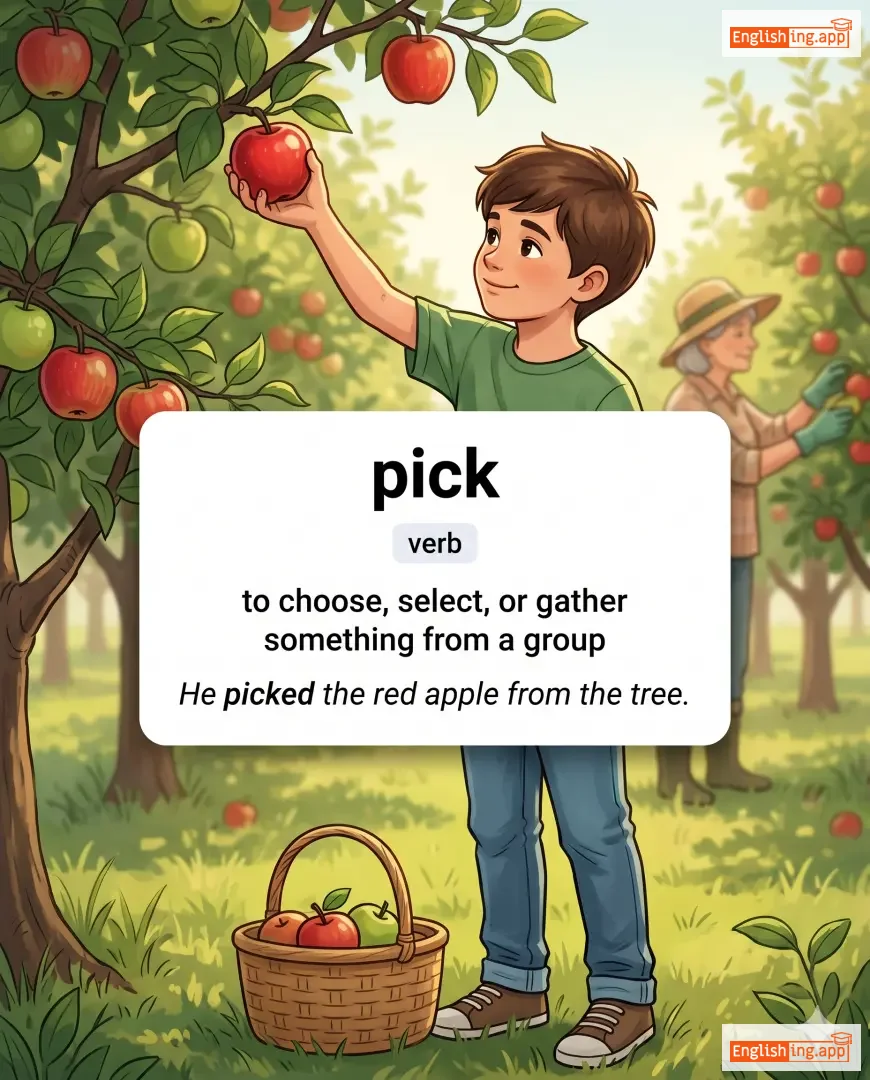
pick definition card — visual illustration of the meaning
verb
/pɪk/
নির্বাচন করা (nirbachon kora)

to choose, select, or gather something from a group

"He picked the red apple from the tree."

"সে গাছ থেকে লাল আপেল পিক করেছে।" (Se gach theke lal apel pik korechhe.)
Pick-axe definition card — visual illustration of the meaning
noun
/ˈpɪk.æks/
গাঁইতি (gaiti)

a tool with a heavy metal head and long handle used for breaking up hard ground or rock

"The miner used a pick-axe to break through the rocky surface."

"খনি শ্রমিক পাথুরে পৃষ্ঠ ভাঙার জন্য একটি গাঁইতি ব্যবহার করেছিল।" (khoni shromik pathure prishtha bhanger jonno ekti gaiti byabohar korechilo.)
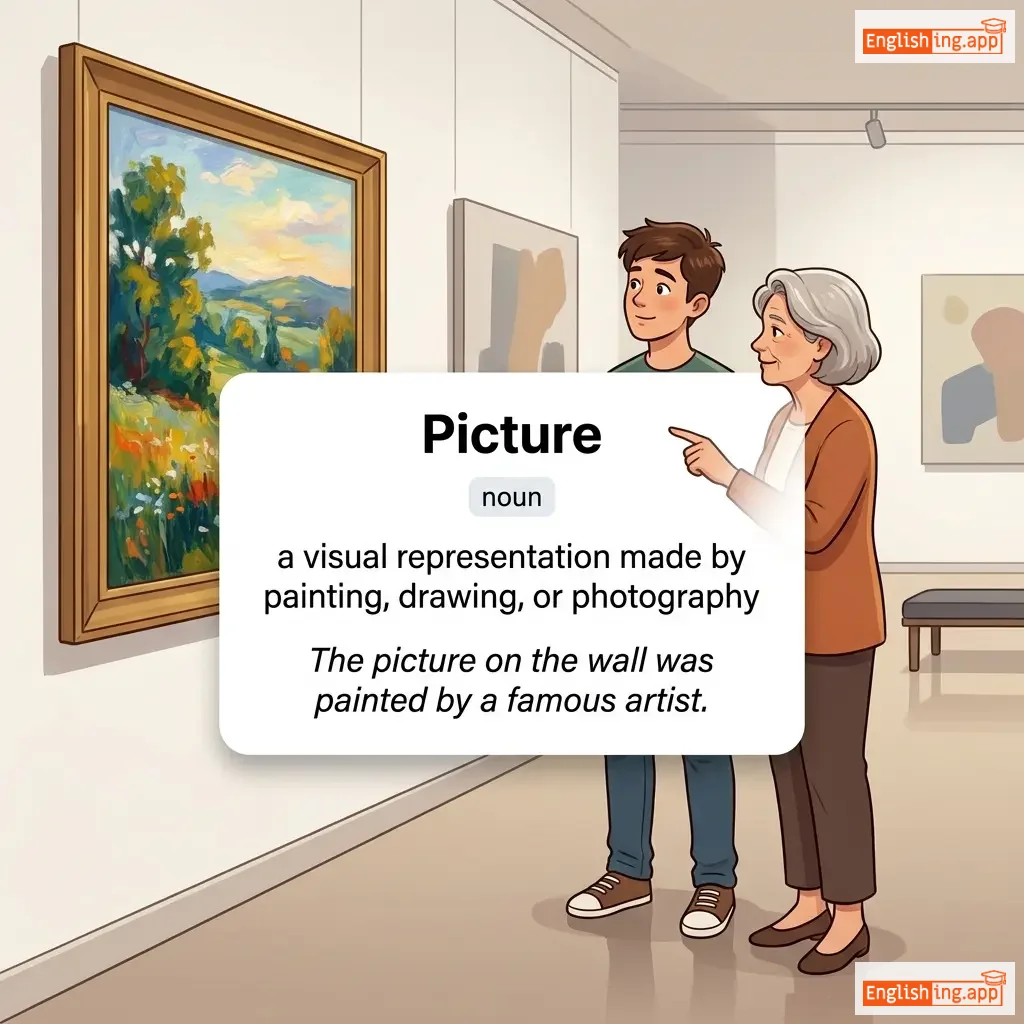
Picture definition card — visual illustration of the meaning
noun
/ˈpɪktʃər/
ছবি (chhobi)

a visual representation made by painting, drawing, or photography

"The picture on the wall was painted by a famous artist."

"দেয়ালের পিকচারটি একজন বিখ্যাত চিত্রশিল্পী দ্বারা আঁকা হয়েছিল।" (Deyaler chhobiti ekjon bikhyato chitrashilpi dara aka hoyechhilo.)
adjective
/ˈpɪdlɪŋ/
ছোটখাটো, তুচ্ছ (chotokhato, tuchcho)

trivial or insignificant; very small

"He made a piddling amount of money from that deal."

"সে সেই চুক্তি থেকে খুবই সামান্য অর্থ উপার্জন করেছে।" (Se sei chukti theke khubi samanyo ortho uparjon korechhe.)
adjective
/ˌpɪkəˈjuːn/
তুচ্ছ, অপ্রয়োজনীয় (tuchcho, aprobjoniyo)

of little value or importance; trivial

"He complained about the picayune details of the contract."

"সে চুক্তির ছোটখাটো বিশদ নিয়ে অভিযোগ করেছিল।" (Se chuktir chotokhato bishod niye ovijog korechhilo.)
noun
/ˈpɪkʌp/
খোলা পেছনের ছোট ট্রাক; কিছু তোলা বা সংগ্রহ (khola pechner choto truck; kichu tola ba songroho)

a small truck with an open back; the act of collecting or improving something

"The company scheduled a pickup for the returned goods."

"কোম্পানিটি ফেরত আসা পণ্যের জন্য একটি পিকআপ নির্ধারণ করেছিল।" (Kompani ti ferot asha ponner jonno ekti pickup nirdharon korechilo.)