词汇表

英语词汇词典 | 单词含义、定义和示例

adjective
/rɪˈmiːdiəbl/
可修复的 (ke xiufu de)

capable of being corrected or cured

"The mistake was serious but still remediable."

"这个错误很严重,但仍然是可修复的。" (Zhege cuowu hen yanzhong, dan rengran shi ke xiufu de.)
adjective
/rɪˈmiːdiəl/
补救的 (bujiu de)

intended to correct or improve a situation, especially related to learning or health

"The school offers remedial classes in mathematics."

"学校提供数学补救课程。" (Xuéxiào tígōng shùxué bǔjiù kèchéng.)
noun
/ˈrɛmɪdi/
疗法 (liaofa)

a treatment or solution for a problem or illness

"The doctor prescribed a remedy for the cough."

"医生开了一种治疗咳嗽的疗法。" (Yisheng kai le yizhong liaofa kesou de liaofa.)
remember definition card — visual illustration of the meaning
verb
/rɪˈmɛmbər/
记得 (jìdé)

to recall to the mind; to keep in memory

"I can't remember the last time we met."

"我记不得我们最后一次见面是什么时候。" (Wǒ jì bù dé wǒmen zuìhòu yīcì jiànmiàn shì shénme shíhòu.)
noun
/rɪˈmɛmbrəns/
纪念 (jinian)

the act of remembering or honoring someone or something

"A service was held in remembrance of the fallen soldiers."

"为阵亡士兵举行了纪念仪式。" (wèi zhènwáng shìbīng jǔxíngle jìniàn yíshì.)
remind definition card — visual illustration of the meaning
verb
/rɪˈmaɪnd/
提醒 (tíxǐng)

to cause someone to remember something

"Please remind me to call her tomorrow."

"请提醒我明天打电话给她。" (Qǐng tíxǐng wǒ míngtiān dǎ diànhuà gěi tā.)
noun
/rɪˈmaɪndər/
提醒 (tixing)

something that helps you remember a fact, event, or action that you need to do or recall

"He set a reminder to call his mother on her birthday."

"他设置了一个提醒,提醒自己在母亲的生日打电话给她。" (Ta shezhi le yige tixing, tixing ziji zai muqin de shengri da dianhua gei ta.)
noun
/ˌrɛmɪˈnɪsəns/
回忆 (huiyi)

a story or memory about past events

"He shared a reminiscence of his childhood days in the village."

"他分享了他在村庄的童年时光的回忆。" (Ta fenxiang le ta zai cunzhuang de tongnian shiguang de huiyi.)
adjective
/ˌrɛmɪˈnɪsənt/
唤起回忆的 (huànqǐ huíyì de)

Tending to remind one of something; suggestive of something in the past.

"The smell of rain is reminiscent of my childhood in the village."

"雨的气味让我想起了我在村里的童年。" (Yǔ de qìwèi ràng wǒ xiǎngqǐle wǒ zài cūn lǐ de tóngnián.)
adjective
/rɪˈmɪs/
疏忽 (shūhu)

Negligent in performing a duty or responsibility.

"The manager was remiss in not checking the financial reports carefully."

"经理在没有仔细检查财务报告时疏忽了。" (Jīnglǐ zài méiyǒu zǐxì jiǎnchá cáiwù bàogào shí shūhūle.)
noun
/rɪˈmɪʃən/

A temporary or permanent decrease or disappearance of disease symptoms; forgiveness of sins or debts.

"The patient’s cancer is in remission after the treatment."

verb
/rɪˈmɪt/
汇款 / 免除 (huì kuǎn / miǎnchú)

To send money in payment or as a gift; to cancel or refrain from exacting a debt or punishment.

"He promised to remit the payment by the end of the week."
"他承诺在本周末之前汇款。" (Tā chéngnuò zài běn zhōumò zhīqián huìkuǎn.)
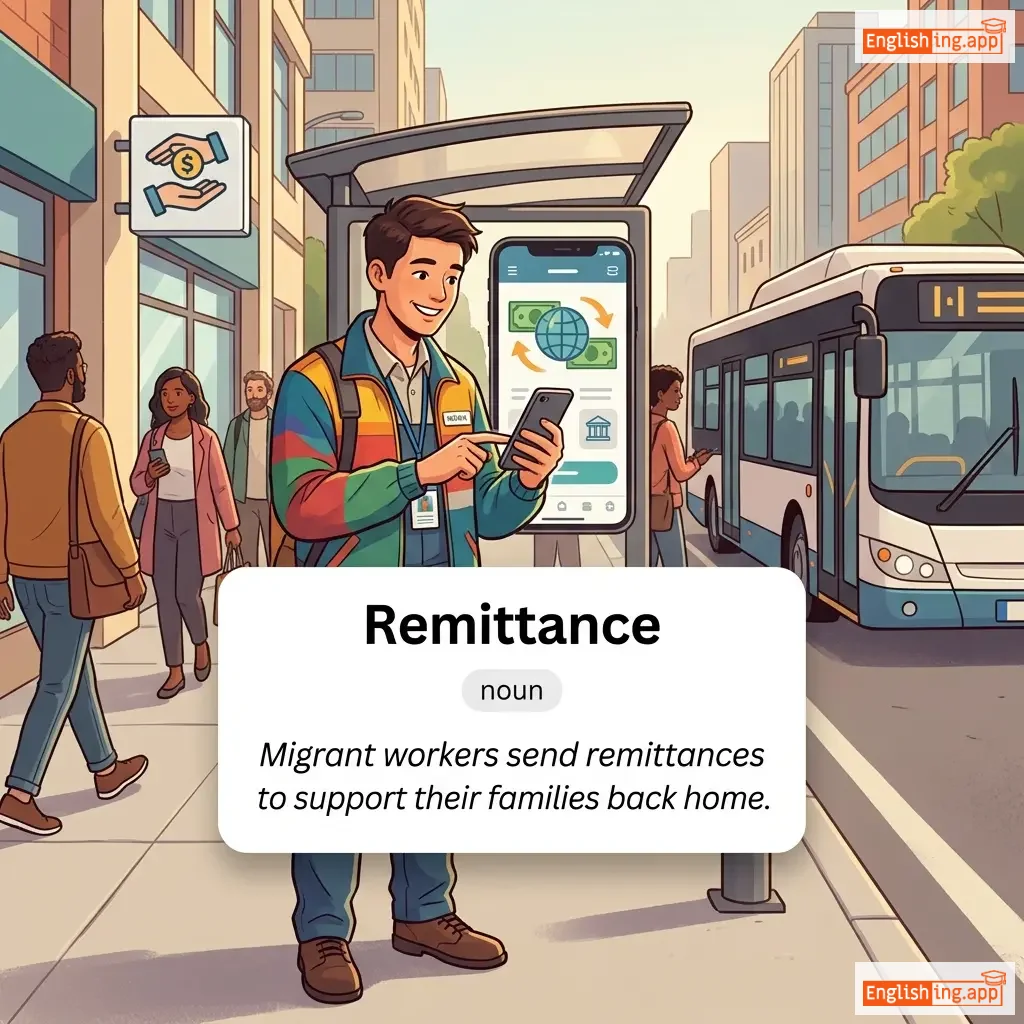
Remittance definition card — visual illustration of the meaning
noun
/rɪˈmɪtəns/
汇款 / 资金转移 (huì kuǎn / zī jīn zhuǎn yí)

A sum of money sent, especially by mail or electronic transfer, as payment or gift.

"Migrant workers send remittances to support their families back home."

"外来务工人员将汇款寄回家乡,支持他们的家庭。" (Wàilái wùgōng rényuán jiāng huìkuǎn jì huí jiāxiāng, zhīchí tāmen de jiātíng.)
noun
/ˈrɛmnənt/
残余 (cán yú)

A small remaining part of something that once existed or was larger.

"The old house still had remnants of its former glory."
"那座老房子仍然保留着它曾经的辉煌的残余。" (Nà zuò lǎo fángzi réngrán bǎoliúzhe tā céngjīng de huīhuáng de cán yú.)
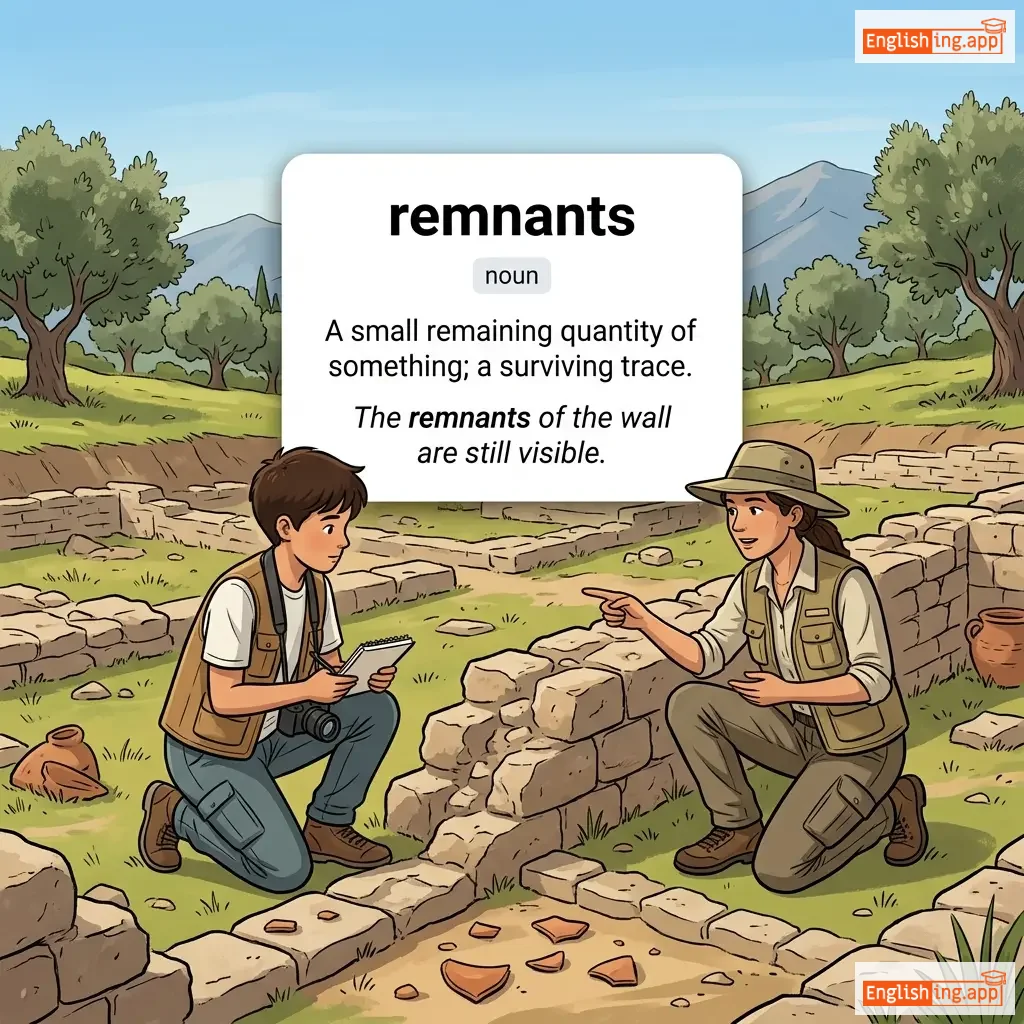
remnants definition card — visual illustration of the meaning
noun
ˈremnənts
残余 (cányú)

A small remaining quantity of something; a surviving trace.

"The remnants of the wall are still visible."

"墙的残余部分仍然可见。" (Qiáng de cányú bùfen réngrán kějiàn.)
verb
/ˌriːˈmɒdəl/
重新装修 (chóngxīn zhuāngxiū)

To change the structure or form of something, especially a building.

"They decided to remodel their kitchen last summer."

"他们决定去年夏天重新装修厨房。" (Tāmen juédìng qùnián xiàtiān chóngxīn zhuāngxiū chúfáng.)
noun
/rɪˈmɒnstrəns/
抗议 (kangyi)

A forceful protest or objection.

"The workers’ remonstrance against unfair treatment was ignored."

"工人的抗议反对不公平待遇被忽视了。" (Gongren de kangyi fandui bu gongping daiyu bei hushi le.)
noun/adjective
/rɪˈmɒnstrənt/
抗议者 (kàngyì zhě)

A person who makes a forceful protest (noun); protesting or objecting (adjective).

"He was a remonstrant voice in the assembly."
"他是会议中的抗议声音。" (Tā shì huìyì zhōng de kàngyì shēngyīn.)
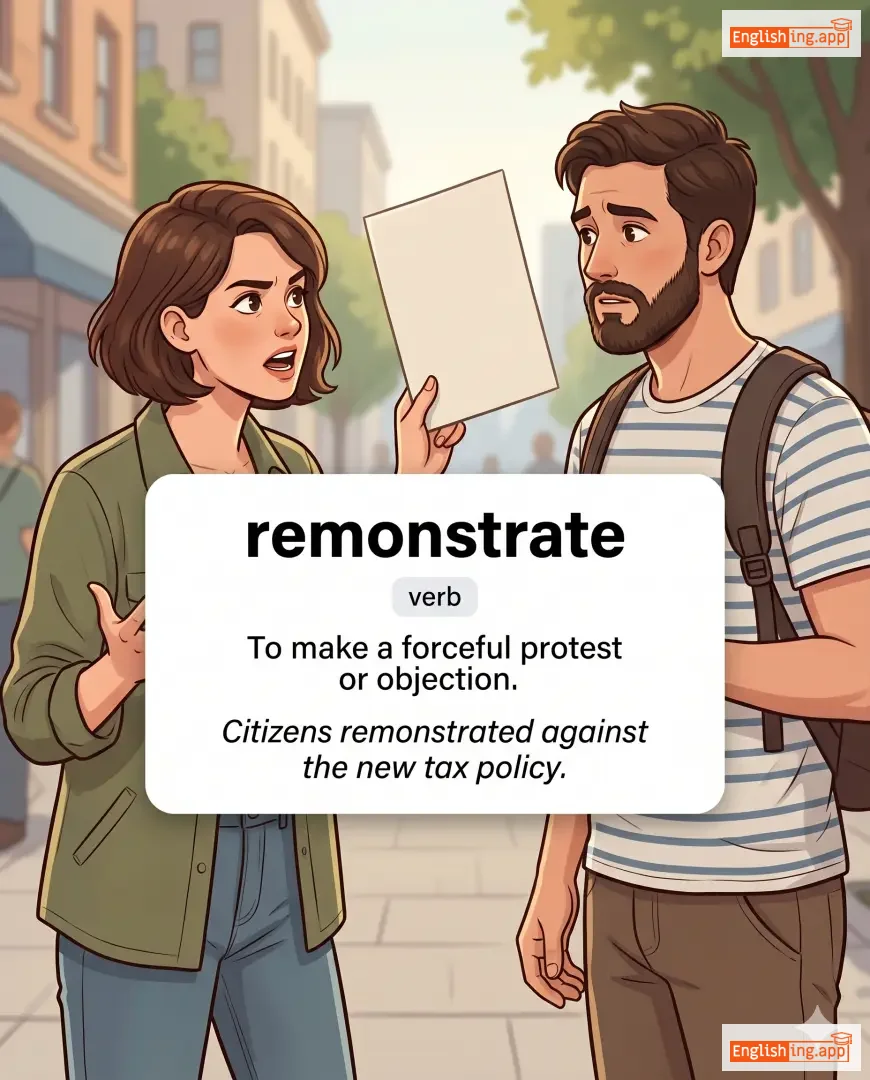
remonstrate definition card — visual illustration of the meaning
verb
/rɪˈmɒnstreɪt/
抗议 (kàngyì)

To make a forceful protest or objection.

"Citizens remonstrated against the new tax policy."

"公民们抗议新税政策。" (Gōngmínmen kàngyì xīn shuì zhèngcè.)
noun
/rɪˈmɔːrs/
悔恨 (huǐhèn)

A deep feeling of regret or guilt for a wrong committed.

"He was filled with remorse after lying to his friend."
"他在对朋友撒谎后充满了悔恨。" (Tā zài duì péngyǒu sāhuǎng hòu chōngmǎnle huǐhèn.)
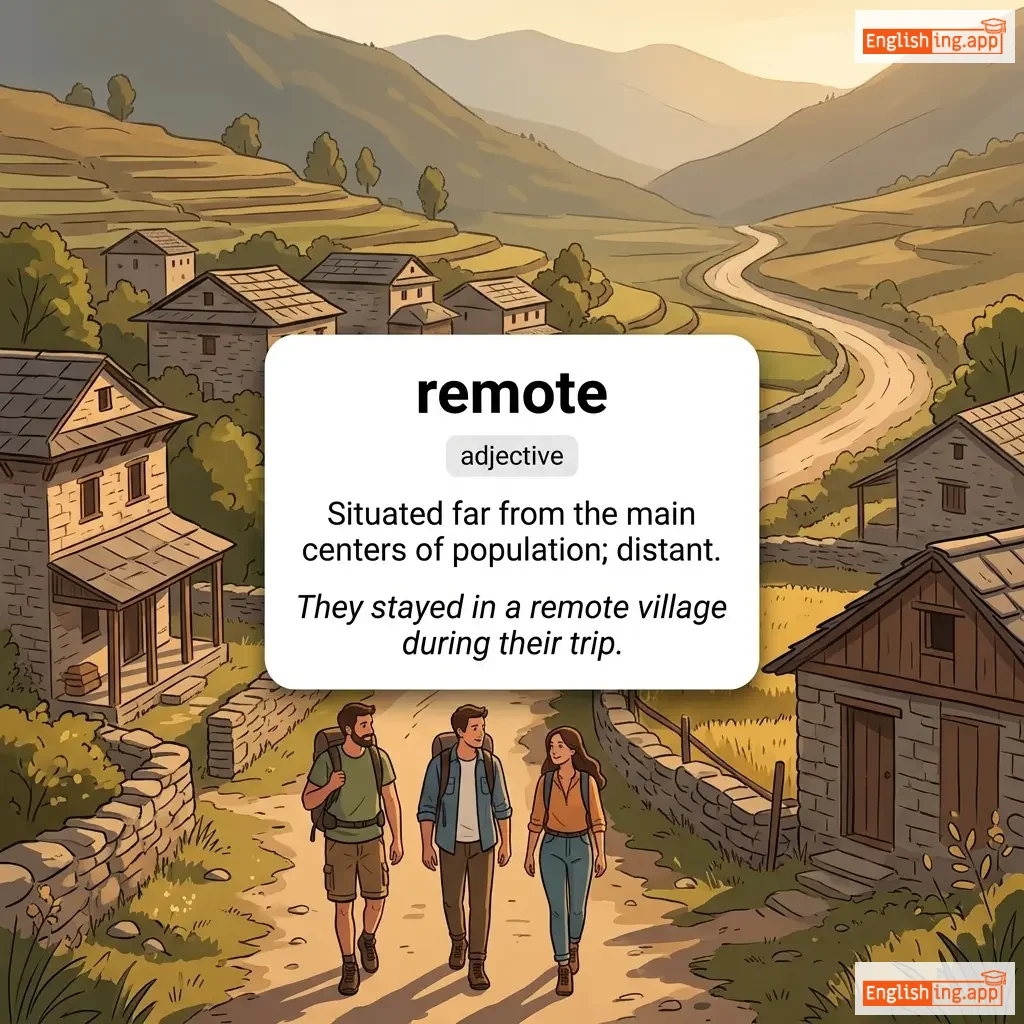
remote definition card — visual illustration of the meaning
adjective
/rɪˈmoʊt/
远程 (yuan cheng)

Situated far from the main centers of population; distant.

"They stayed in a remote village during their trip."

"他们在旅行期间住在一个偏远的村庄。" (Tāmen zài lǚxíng qījiān zhù zài yīgè piānyuǎn de cūnzhuāng.)
adjective
/rɪˈmoʊtɪd/
远程的 (yuǎnchéng de)

placed at a distance; made remote

"The system was remoted to a secure location."

"系统已被远程到一个安全的地方。" (Xitong yi bei yuancheng dao yige anquan de difang.)
adjective
/rɪˈmuːvəbəl/
可拆卸的 (ke chai xie de)

able to be removed or taken away

"This phone has a removable battery."

"这款手机有一块可拆卸的电池。" (Zhe kuan shouji you yi kuai ke chaixie de dianchi.)
noun
/rɪˈmuːvəl/
移除 (yíchú)

the act of taking something or someone away or out of a place

"The removal of old furniture made the room look spacious."

"移除旧家具使房间看起来更宽敞。" (Yíchú jiù jiājù shǐ fángjiān kàn qǐlái gèng kuānchǎng.)
remove definition card — visual illustration of the meaning
verb
/rɪˈmuːv/
移除 (yíchú)

to take away or off from the position occupied

"She asked me to remove the books from the table."

"她让我把书从桌子上拿走。" (Tā ràng wǒ bǎ shū cóng zhuōzi shàng ná zǒu.)
verb
/rɪˈmjuːnəreɪt/
支付 (zhī fù)

To pay someone for services or work done.

"The company will remunerate employees fairly for their overtime."

"公司将公平地支付员工的加班费。" (Gōngsī jiāng gōngpíng de zhīfù yuángōng de jiābān fèi.)
noun
/rɪˌmjuːnəˈreɪʃən/
报酬 (baochou)

Money paid for work or a service.

"The remuneration for this job is quite generous."

"这份工作的报酬相当慷慨。" (Zhe fen gongzuo de baochou xiangdang kangkai.)
adjective
/rɪˈmjuːnərətɪv/
有利可图 (you li ke tu)

Financially rewarding or profitable.

"He chose a remunerative career in medicine."

"他选择了医学领域一个有利可图的职业。" (Ta xuanze le yixue lingyu yige you li ke tu de zhiye.)
noun
/ˈrɛnəˌsɑːns/
文艺复兴 (wenyi fuxing)

a revival of art, culture, or learning; a period of renewed interest and growth

"The city experienced a cultural renaissance during the 1990s."

"这座城市在1990年代经历了文化复兴。" (Zhe zuo chengshi zai 1990 niandai jingli le wenhua fuxing.)
verb
/rɛnd/
撕裂 (silie)

to tear something apart violently or forcefully

"The explosion rent the air with a deafening noise."

"爆炸以震耳欲聋的声音撕裂了空气。" (Bàozhà yǐ zhèng'ěr yù lóng de shēngyīn sīlièle kōngqì.)
render definition card — visual illustration of the meaning
verb
/ˈrɛndər/
提供 (tigong)

to provide, give, or cause something to be in a certain state

"The service rendered great help to the community."

"提供的服务给社区带来了很大的帮助。" (Tigong de fuwu gei shequ daile hen da de bangzhu.)
noun
/ˈrɒndɪvuː/
约会 (yuēhuì)

a meeting or appointment at an agreed time and place

"They arranged a secret rendezvous at the café."

"他们在咖啡馆安排了一次秘密的会面。" (Tāmen zài kāfēiguǎn ānpái le yīcì mìmì de huìmiàn.)
noun
/rɛnˈdɪʃən/
演绎 (yǎn yì)

a performance or interpretation of a piece of art, music, or text

"The singer gave a moving rendition of the classic song."

"歌手献上了一场感人的经典歌曲演绎。" (Gēshǒu xiàn shàng le yī chǎng gǎn rén de jīngdiǎn gēqǔ yǎn yì.)
noun
/ˈrɛnɪˌɡeɪd/
叛徒 (pantu)

a person who deserts or betrays an organization, country, or principles

"He was labeled a renegade after leaving the party and criticizing its policies."

"他在离开党派并批评其政策后被贴上了叛徒的标签。" (Ta zai likai dangpai bing piping qi zhengce hou bei tie shang le pantu de biaoqian.)
renege definition card — visual illustration of the meaning
verb
/rɪˈnɛɡ/
违约 (wéiyuē)

to go back on a promise, agreement, or commitment

"The company reneged on its promise to increase wages."

"公司违背了他们提高工资的承诺。" (Gōngsī wéibèi le tāmen tígāo gōngzī de chéngnuò.)
🔄

renew

verb
/rɪˈnuː/

to make something new again or extend its period of validity

"I need to renew my passport before traveling."

renewable definition card — visual illustration of the meaning
adjective
rɪˈnjuː.ə.bəl
可再生 (kě zàishēng)

A source of energy that is not depleted when used, such as wind or solar power.

"Renewable energy is the future of global power."
"可再生能源是全球能源的未来。" (Kě zàishēng néngyuán shì quánqiú néngyuán de wèilái.)
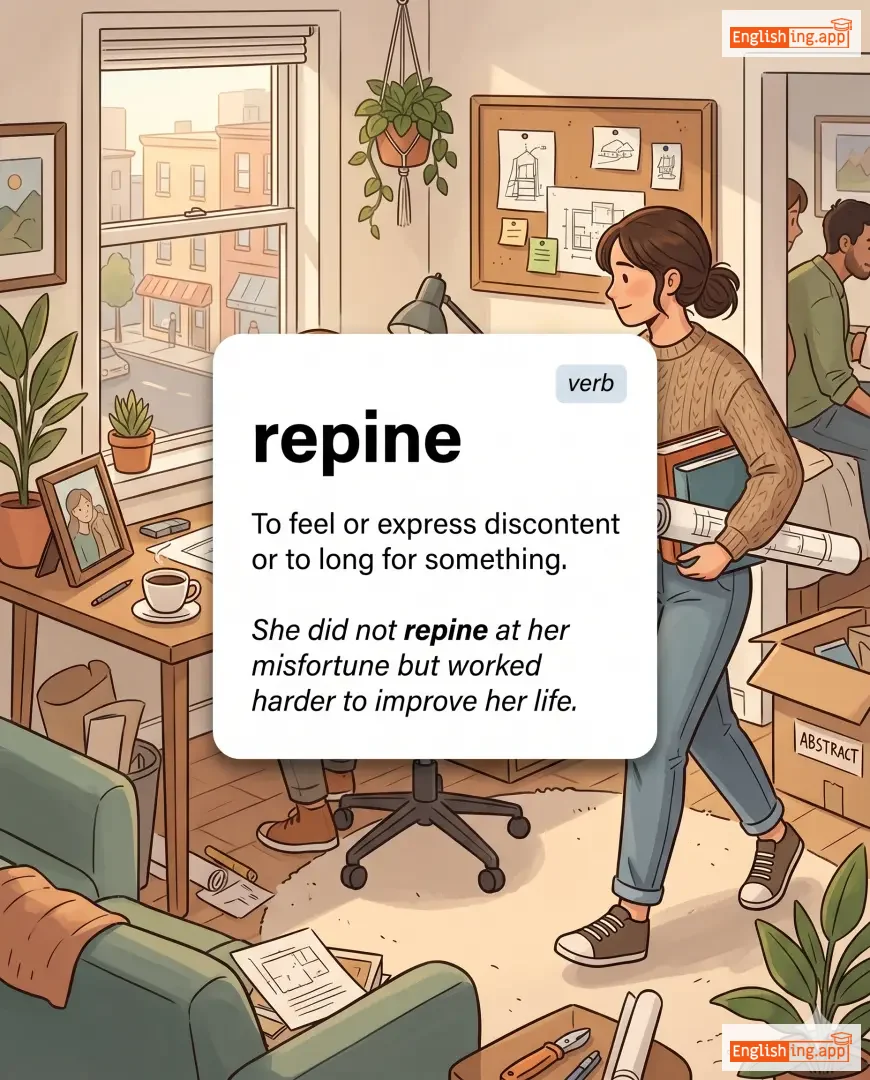
repine definition card — visual illustration of the meaning
verb
/rɪˈpaɪn/
感到不满 (gǎndào bùmǎn)

To feel or express discontent or to long for something.

"She did not repine at her misfortune but worked harder to improve her life."

"她没有为自己的不幸而感到悲伤,而是更加努力地工作来改善她的生活。" (Tā méiyǒu wèi zìjǐ de bùxìng ér gǎndào bēishāng, ér shì gèngjiā nǔlì de gōngzuò lái gǎishàn tā de shēnghuó.)
repel definition card — visual illustration of the meaning
verb
/rɪˈpɛl/
击退 (jī tuì)

To drive back or push away, especially an attack or something unwanted.

"The army managed to repel the enemy forces."

"军队成功地击退了敌军。" (Jūnduì chénggōng de jī tuì le dí jūn.)
adjective
/rɪˈpɛlənt/
驱虫剂 (qūchóng jì)

Able to drive away something, especially insects or unpleasant things; causing disgust or distaste.

"This cream is highly effective as a mosquito repellent."

"这款乳霜在防蚊方面非常有效。" (Zhè kuǎn rǔshuāng zài fáng wén fāngmiàn fēicháng yǒuxiào.)
noun
/rɪˈpɛntəns/
忏悔 (chanhui)

Deep regret or remorse for wrongdoing; sincere sorrow for one's sins or mistakes.

"He showed true repentance after apologizing for his mistakes."

"他在为自己的错误道歉后表现出了真正的忏悔。" (Tā zài wèi zìjǐ de cuòwù dàoqiàn hòu biǎoxiàn chūle zhēnzhèng de chànhuǐ.)
adjective
/rɪˈpen.tənt/
悔过的; 懊悔的; 后悔的 (huǐguò de; àohuǐ de; hòuhuǐ de)

feeling or expressing sincere regret and remorse; sorry for one's actions

"The repentant thief returned the stolen money."
"悔过的窃贼归还了被盗的钱。" (Huǐguò de qièzéi guīhuán le bèi dào de qián.)
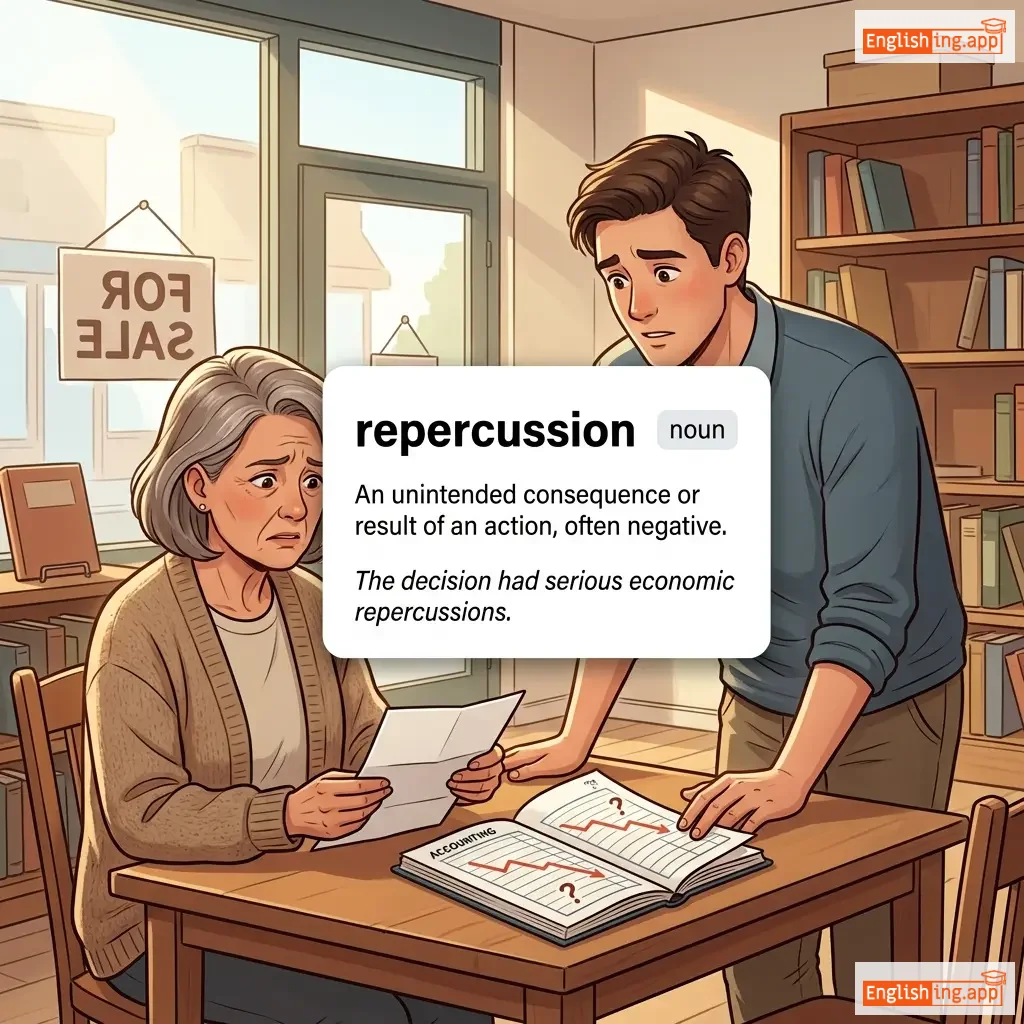
repercussion definition card — visual illustration of the meaning
noun
/ˌriːpərˈkʌʃən/

An unintended consequence or result of an action, often negative.

"The decision had serious economic repercussions."
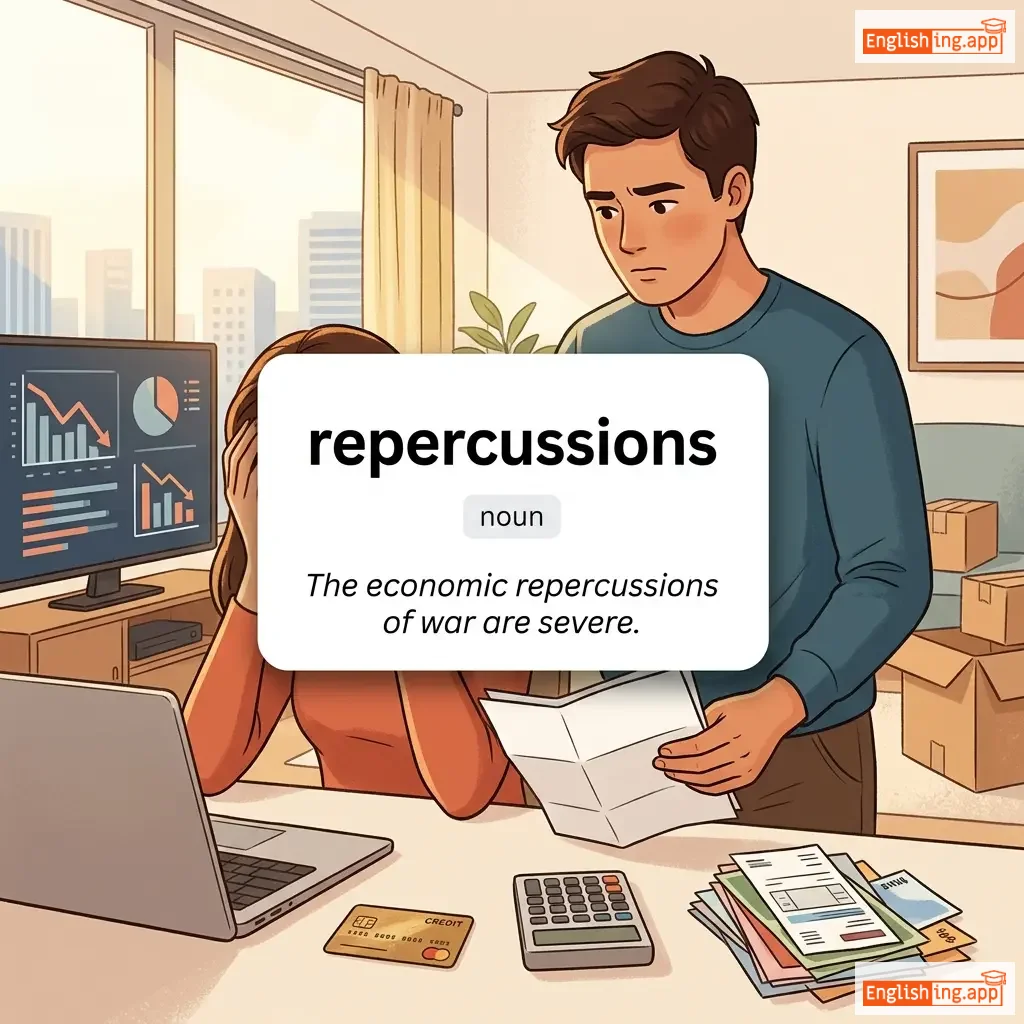
repercussions definition card — visual illustration of the meaning
noun
/ˌriː.pəˈkʌʃ.ənz/
后果 (houguo)

An unintended consequence occurring some time after an event or action; the effects or results of something.

"The economic repercussions of war are severe."

"战争的经济后果是严重的。" (Zhànzhēng de jīngjì hòuguǒ shì yánzhòng de.)
repertoire definition card — visual illustration of the meaning
noun
/ˈrɛpərˌtwɑːr/
曲目 (qumu)

The entire range of skills, works, or pieces that a person or group is prepared to perform or use.

"The singer added a new song to her repertoire."

"这位歌手将一首新歌加入了她的曲目。" (Zhè wèi gēshǒu jiāng yī shǒu xīn gē jiārùle tā de qǔmù.)
adjective
/ˌrɛpərˈtɔːriəl/
报道的 (baodao de)

Relating to or characteristic of a repertoire, especially in journalism or performance contexts.

"The journalist's repertorial style captured every detail of the unfolding story."

"记者的报道风格捕捉了展开故事的每个细节。" (Jìzhě de bàodào fēnggé bǔzhuōle zhǎnkāi gùshì de měi gè xìjié.)
noun
/ˈrɛpərˌtɔːri/
剧目 (jumu)

A collection of works that a company, performer, or institution regularly performs; also a storehouse of information or skills.

"The theater has a repertory of classic plays."

"剧院有一系列经典剧目的演出。" (Juyuan you yi xilie jingdian jumuke de yanchu.)
noun
/ˌrɛpɪˈtɪʃən/
重复 (chóngfù)

The action of repeating something that has already been said, written, or done.

"The teacher emphasized the importance of repetition in learning new vocabulary."

"老师强调了在学习新词汇时重复的重要性。" (Lǎoshī qiángdiàole zài xuéxí xīn cíhuì shí chóngfù de zhòngyào xìng.)
report definition card — visual illustration of the meaning
noun, verb
/rɪˈpɔːrt/
报告 (baogao)

to give a detailed account of something or to make an official statement

"The journalist will report on the recent events."

"记者将报告最近的事件。" (Jizhe jiang baogao zuijin de shijian.)
verb
/ˈrɛplɪkeɪt/
复制 (fuzhi)

to copy, reproduce, or duplicate something exactly

"The scientist tried to replicate the experiment for accuracy."

"科学家尝试复制实验以确保准确性。" (Kexuejia changshi fuzhi shiyan yi quebao zhunquexing.)